

灾后重建的组织者
The Organizer Who Rebuilt After Disaster
Anis 是一个乡村 county 的社区组织者。他的 cousin Farhan 作为汽车 dealer 工作。Decade 之前,一场大洪水把 debris 带到了各处。损失遍布 - fishing 行业被摧毁。几个 couple 当地领导人试图组织救援。但 general 反应缓慢。Anis 对社区的痛苦感到 deeply。他和 Farhan 决定采取 course 行动。他们拒绝接受 defeat。他想 define 前进的新道路。Anis 参加了洪水受害者的 funeral,这让他对政府的无作为感到 furious。他对 generic 救援包不满意。Anis 希望 fulfill 社区的具体需求。他组织了会议 - 始终保持 decent 和尊重的态度。Frankly 来说,最初的进展很艰难。但 Anis himself 是 hopeful 的。一个老式 cowboy 风格的农民提供了他的土地用于避难。Hundreds 个家庭找到了临时 housing。Anis 认识到即使是 halfway 的解决方案也比没有解决方案要好。However, 他追求完全的恢复。一开始只有 handful 志愿者提供帮助。但随着时间的推移,支持 greatly 增长。当地的 habitat 需要恢复鱼类栖息地。水中的 hormone 有毒水平被检测。环境最初是 hostile 的,重建工作困难。Hearing 来自社区的故事激励了 Anis。他与工程师们 heavily 合作。一个家庭 - husband 和 wife - 捐赠了物资。社区成员 herself 和 himself 提供了 helpful 资源。Anis 证明了 hunting 解决方案可以带来改变。多年后,county greatly 恢复。Anis 的工作激励了整个地区的灾后准备工作。
Swipe left or right, or use the buttons. Tap image to zoom.
例句翻译
单词
The Organizer Who Rebuilt After DisasterThe Organizer Who Rebuilt After Disaster - 遮罩切换
|
表情符号
|
单词 | Images | 翻译 | 过去时 | 过去分词 | 第三人称单数 | 动名词 | 含义 | 例句 | 例句翻译 | 示例表达 | 示例表达含义 | 示例表达翻译 | 同义词 | 反义词 | 搭配词 | 助记符 |
|---|---|---|---|---|---|---|---|---|---|---|---|---|---|---|---|---|---|
|
#0
🗺️
|
/ˈkaʊnti/
noun
(kaʊnti)
••••••
|
- •••••• |
县
xian
••••••
|
- •••••• | - •••••• | - •••••• | - •••••• |
A territorial division within a country, typically a region with its own local government.
••••••
|
She grew up in a small county in northern England. |
她在英格兰北部的一个小县长大。
Ta zai Yinggelan beibu de yi ge xiao xian zhang da.
••••••
|
- •••••• | - •••••• | - •••••• |
district, region, province, area, territory
••••••
|
city, capital
••••••
|
county council, county fair, county jail, county seat
••••••
|
县是一个地方行政区域,类似于“县”的管理单位。
••••••
|
|
#0
❤️
|
/ˈkʌpəl/
noun
(卡普尔)
••••••
|
- •••••• |
一对
yī duì
••••••
|
- •••••• | - •••••• | - •••••• | - •••••• |
two people or things considered together; a pair
••••••
|
They make a lovely couple and have been married for five years. |
他们是一个可爱的情侣,已经结婚五年了。
Tāmen shì yīgè kě'ài de qínglǚ, yǐjīng jiéhūn wǔ nián le.
••••••
|
- •••••• | - •••••• | - •••••• |
pair, duo, twosome, partners
••••••
|
individual, single
••••••
|
married couple, young couple, couple of friends
••••••
|
Couple 表示两个人一起,就像一对情侣。
••••••
|
|
#0
🎓
|
/kɔːrs/
noun
(kɔːrs)
••••••
|
- •••••• |
课程,路径或一组教育课程
kecheng, luxian huo yizu jiaoyu kecheng
••••••
|
- •••••• | - •••••• | - •••••• | - •••••• |
a direction, path, or a set of educational lessons
••••••
|
She enrolled in a computer science course. |
她报名参加了计算机科学课程。
Ta baoming canjia le jisuanji kexue kecheng.
••••••
|
of course |
certainly, obviously
••••••
|
当然
dangran
••••••
|
class, curriculum, program, direction, path
••••••
|
deviation, detour
••••••
|
training course, online course, course of action, full course
••••••
|
报读课程,走上学习的新路。
••••••
|
|
#0
👫
|
/ˈkʌzn/
noun
(kāzīn)
••••••
|
- •••••• |
堂兄/堂弟/表兄/表弟
tángxiōng/tángdì/biǎoxiōng/biǎodì
••••••
|
- •••••• | - •••••• | - •••••• | - •••••• |
A child of one's uncle or aunt.
••••••
|
My cousin is coming to visit us this weekend. |
我的堂兄这个周末要来拜访我们。
Wǒ de tángxiōng zhège zhōumò yào lái bàifǎng wǒmen.
••••••
|
- •••••• | - •••••• | - •••••• |
relative, kin, family member
••••••
|
stranger, outsider
••••••
|
first cousin, cousin brother, cousin sister, distant cousin
••••••
|
Cousin 就是堂兄/堂弟 – 他们是家人。
••••••
|
|
#0
🤠
|
/ˈkaʊ.bɔɪ/
noun
(kaʊ.bɔɪ)
••••••
|
- •••••• |
牛仔
niú zǎi
••••••
|
- •••••• | - •••••• | - •••••• | - •••••• |
a man who tends cattle on a ranch, especially in the western United States
••••••
|
The cowboy rode his horse across the vast prairie to find the cattle.
牛仔骑马穿越广阔的草原寻找牛群。
••••••
|
牛仔骑马穿越广阔的草原寻找牛群。
Niú zǎi qí mǎ chuānyuè guǎngkuò de cǎoyuán xúnzhǎo niú qún.
••••••
|
- •••••• | - •••••• | - •••••• |
rancher, cattleman, herder
••••••
|
city dweller, urbanite, office worker
••••••
|
cowboy hat, cowboy boots, cowboy culture
••••••
|
牛仔骑马在草原上寻找牛
••••••
|
|
#0
💼
|
/ˈdiːlər/
noun
(dìlè)
••••••
|
- •••••• |
经销商
jingxiaoshang
••••••
|
- •••••• | - •••••• | - •••••• | - •••••• |
a person or business that buys and sells goods; someone who distributes
••••••
|
The car dealer offered a discount to attract customers. |
汽车经销商提供了折扣以吸引客户。
Qiche jingxiaoshang tigongle zhekou yi xiqin kehu.
••••••
|
- •••••• | - •••••• | - •••••• |
merchant, trader, vendor, seller, distributor
••••••
|
buyer, customer
••••••
|
car dealer, art dealer, drug dealer, authorized dealer
••••••
|
Dealer意思是经销商,负责销售商品并赚钱。
••••••
|
|
#0
🪨
|
/dəˈbriː/
noun
(碎片)
••••••
|
|
碎片
suipian
••••••
|
- •••••• | - •••••• | - •••••• | - •••••• |
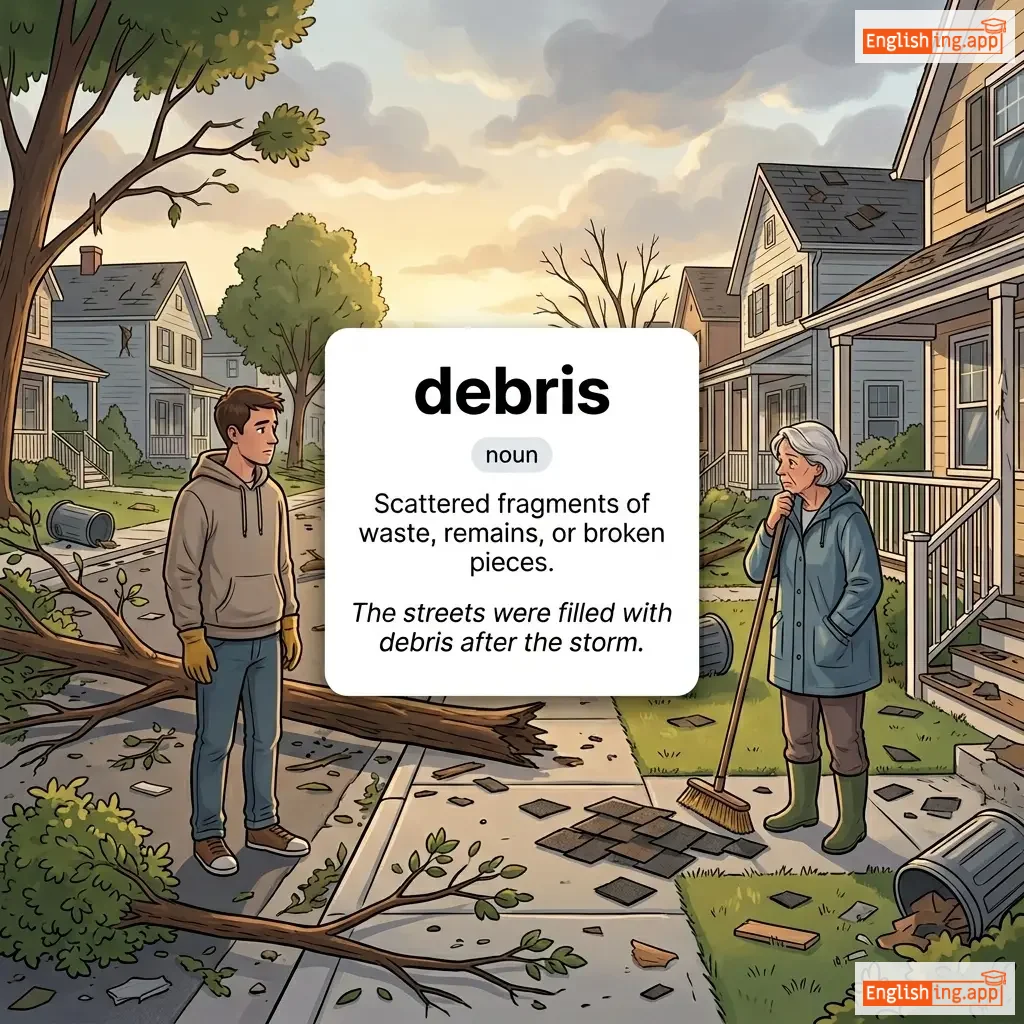
Scattered fragments of waste, remains, or broken pieces.
••••••
|
The streets were filled with debris after the storm.
风暴过后,街道上满是碎片。
••••••
|
风暴过后,街道上满是碎片。
Fengbao guo hou, jiedao shang man shi suipian.
••••••
|
clearing the debris
清理碎片
••••••
|
Removing the remains or waste after destruction.
••••••
|
清理碎片
qingli suipian
••••••
|
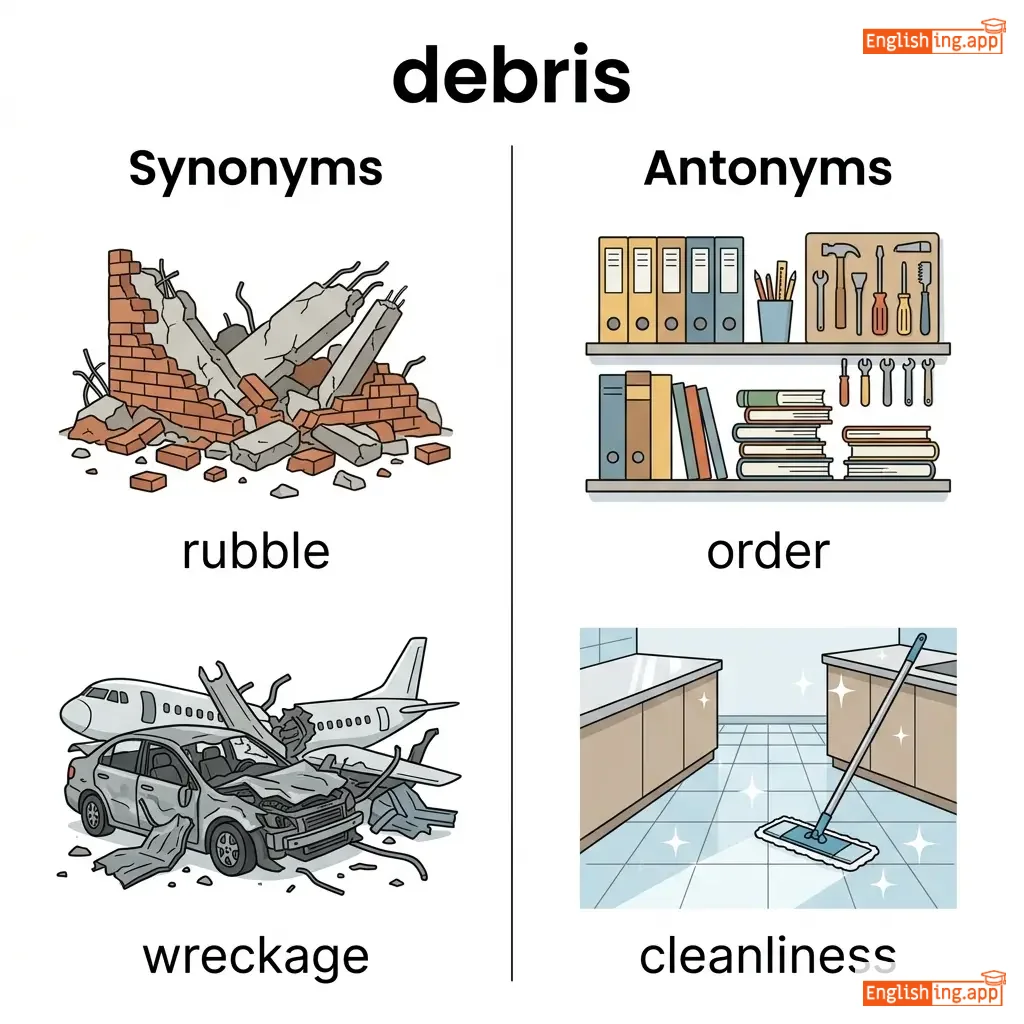
rubble, wreckage, remains, fragments, litter
••••••
|
order, cleanliness, neatness
••••••
|
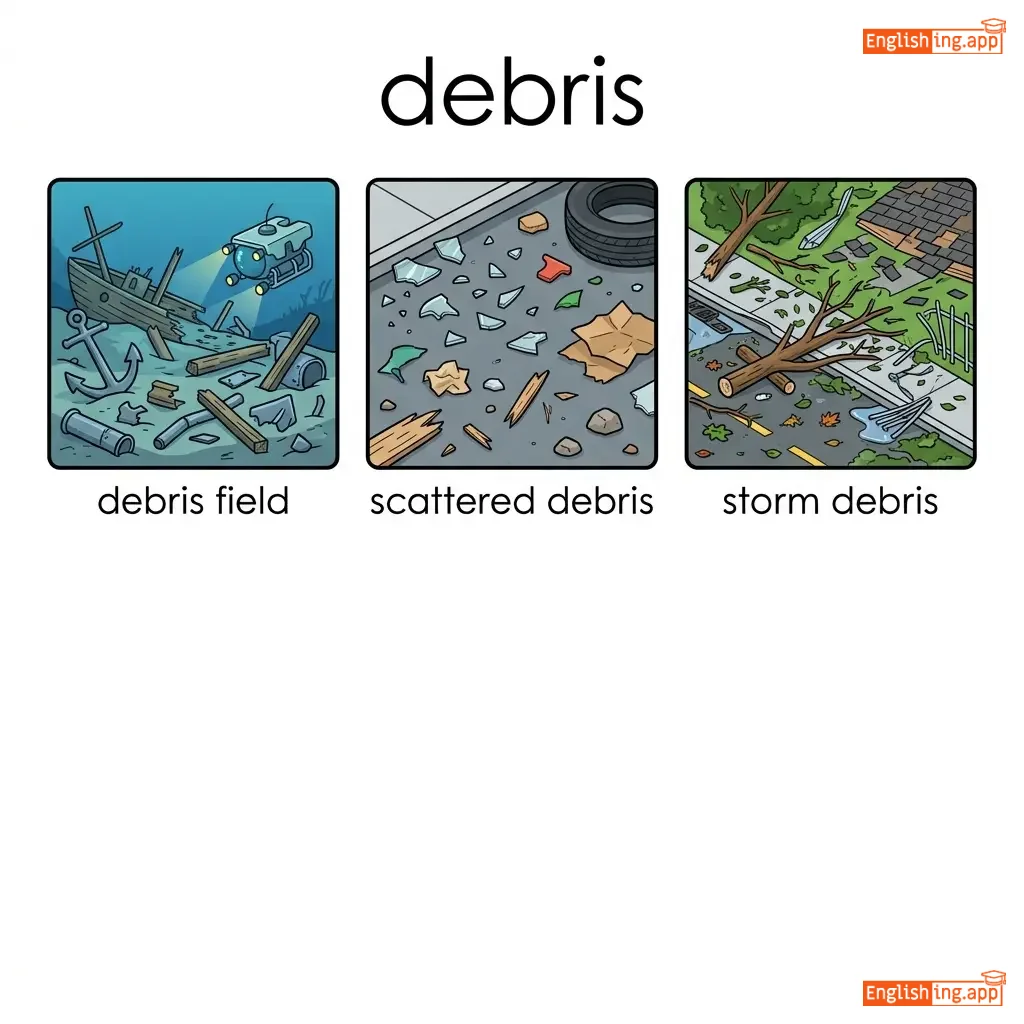
debris field, scattered debris, storm debris, clear debris
••••••
|
风暴过后,碎片(debris)布满街道。
••••••
|
|
#0
📅
|
/ˈdɛkeɪd/
noun
(dɪˈkeɪd)
••••••
|
- •••••• |
十年
shí nián
••••••
|
- •••••• | - •••••• | - •••••• | - •••••• |
A period of ten years.
••••••
|
The country has changed a lot in the past decade.
ðə ˈkʌntri hæz ʧeɪndʒd ə lɒt ɪn ðə pæst dɪˈkeɪd
••••••
|
这个国家在过去的十年里发生了很大变化。
Zhège guójiā zài guòqù de shí nián lǐ fāshēngle hěn dà biànhuà.
••••••
|
- •••••• | - •••••• | - •••••• |
ten years, period, era, span
••••••
|
moment, instant
••••••
|
past decade, next decade, over a decade, within a decade
••••••
|
十年是一个10年的时间段,十 (shí) 和年 (nián) 就像decade的对应。
••••••
|
|
#0
🙂
|
/ˈdiːsənt/
adjective
(迪森特)
••••••
|
- •••••• |
体面
tǐmiàn
••••••
|
- •••••• | - •••••• | - •••••• | - •••••• |
conforming to standards of propriety, good taste, or morality
••••••
|
He found a decent job after months of searching. |
他在几个月的寻找后找到了一份体面的工作。
Tā zài jǐ gè yuè de xúnzhǎo hòu zhǎodàole yī fèn tǐmiàn de gōngzuò.
••••••
|
make a decent living |
to earn enough money to live comfortably
••••••
|
过体面的生活
guò tǐmiàn de shēnghuó
••••••
|
respectable, proper, suitable, fair, acceptable
••••••
|
indecent, improper, unacceptable
••••••
|
decent job, decent man, decent salary, decent standard
••••••
|
体面意味着走正道,像生活得当一样。
••••••
|
|
#0
❤️
|
/ˈdiːpli/
adverb
(dīpūlì)
••••••
|
- •••••• |
深深地
shēn shēn de
••••••
|
- •••••• | - •••••• | - •••••• | - •••••• |
to a great depth, extent, or intensity
••••••
|
She was deeply moved by the speech. |
她被演讲深深地打动了。
Tā bèi yǎnjiǎng shēn shēn de dǎdòng le.
••••••
|
deeply rooted |
firmly established or ingrained
••••••
|
深深扎根
shēn shēn zhā gēn
••••••
|
profoundly, intensely, strongly, greatly
••••••
|
lightly, superficially
••••••
|
deeply moved, deeply concerned, deeply sorry, deeply involved
••••••
|
Deeply 意味着深深地 — She loves deeply = 她深深地爱着
••••••
|
|
#0
🏆
|
/dɪˈfiːt/
verb
(dɪˈfiːt)
••••••
|
- •••••• |
击败
jī bài
••••••
|
defeated
dɪˈfiːtɪd
••••••
|
defeated
dɪˈfiːtɪd
••••••
|
defeats
dɪˈfiːts
••••••
|
defeating
dɪˈfiːtɪŋ
••••••
|
to win a victory over someone or something in a competition or battle
••••••
|
Our team defeated their rivals in the final match.
我们的团队在决赛中击败了他们的对手。
••••••
|
我们的团队在决赛中击败了他们的对手。
Wǒmen de tuánduì zài juésài zhōng jībài le tāmen de duìshǒu.
••••••
|
snatch defeat from the jaws of victory
从胜利的嘴巴中夺取失败
••••••
|
to fail at the last moment when success seemed certain
••••••
|
从胜利的嘴巴中夺取失败
Cóng shènglì de zuǐbā zhōng duóqǔ shībài
••••••
|
conquer, overcome, beat, overpower, vanquish
••••••
|
surrender, lose, yield
••••••
|
defeat the enemy, defeat the purpose, heavy defeat, crushing defeat
••••••
|
Defeat意味着失败:当你的队伍失利时,它是被击败了。
••••••
|
|
#0
📖
|
/dɪˈfaɪn/
verb
(定义)
••••••
|
- •••••• |
定义
dingyi
••••••
|
defined
定义过
••••••
|
defined
定义过
••••••
|
defines
定义
••••••
|
defining
定义中
••••••
|
to explain the meaning of a word, phrase, or concept clearly
••••••
|
The teacher asked the student to define the word 'democracy'.
老师要求学生定义'民主'一词。
••••••
|
老师要求学生定义'民主'一词。
Laoshi yaoqiu xuesheng dingyi 'minzhu' yici.
••••••
|
define the terms
定义术语
••••••
|
to explain or set the exact meaning of words or conditions
••••••
|
定义术语
dingyi shuyu
••••••
|
explain, describe, clarify, interpret, specify
••••••
|
confuse, obscure
••••••
|
define clearly, define precisely, define role, define meaning
••••••
|
Define 意味着'定义' — 就像中文中定义一个词语的意思。
••••••
|
|
#0
🎓
|
/dɪˈɡriː/
noun
(dì ɡlì)
••••••
|
- •••••• |
学位 / 程度
xuéwèi / chéngdù
••••••
|
- •••••• | - •••••• | - •••••• | - •••••• |
an amount or level of something; an academic qualification
••••••
|
She earned a degree in engineering. |
她获得了工程学位。
Tā huò dé le gōngchéng xuéwèi.
••••••
|
to some degree |
partly, to a certain extent
••••••
|
在某种程度上
zài mǒu zhǒng chéngdù shàng
••••••
|
level, extent, rank, diploma, qualification
••••••
|
whole, total
••••••
|
high degree, to a degree, academic degree, temperature degree
••••••
|
学位意味着学位,比如温度的学位和学术学位。
••••••
|
|
#0
🎣
|
/ˈfɪʃɪŋ/
noun/verb
(fishing)
••••••
|
- •••••• |
钓鱼
diao yu
••••••
|
- •••••• | - •••••• | - •••••• |
fishing
fishing
••••••
|
the activity of catching fish
••••••
|
Fishing is a popular activity in coastal villages.
捕鱼是沿海村庄中流行的活动。
••••••
|
捕鱼是沿海村庄中流行的活动。
Bǔyú shì yánhǎi cūnzhuāng zhōng liúxíng de huódòng.
••••••
|
fishing for compliments
钓取恭维
••••••
|
trying to get praise or approval indirectly
••••••
|
钓取恭维
diàoqǔ gōngwèi
••••••
|
angling, catching fish, netting, trawling
••••••
|
ignoring fish, land activity
••••••
|
go fishing, fishing trip, fishing boat, fishing industry
••••••
|
钓鱼 = 用钓竿抓鱼,🎣 是海边的活动。
••••••
|
|
#0
🗣️
|
/ˈfræŋkli/
adverb
(fúlánkèli)
••••••
|
- •••••• |
坦率地
tǎnshuài de
••••••
|
- •••••• | - •••••• | - •••••• | - •••••• |
in an honest and direct way
••••••
|
Frankly, I don’t think this plan will work. |
坦率地说,我不认为这个计划会成功。
Tǎnshuài de shuō, wǒ bù rènwéi zhège jìhuà huì chénggōng.
••••••
|
to be frank |
to speak honestly
••••••
|
直言不讳
zhíyán bù huì
••••••
|
honestly, openly, directly, sincerely
••••••
|
dishonestly, secretly
••••••
|
frankly speaking, quite frankly, to speak frankly
••••••
|
坦率地讲就是毫不掩饰地表达自己,像对朋友一样!
••••••
|
|
#0
✔️
|
/fʊlˈfɪl/
verb
(富尔菲尔)
••••••
|
- •••••• |
实现
shíxiàn
••••••
|
fulfilled
富尔菲尔德
••••••
|
fulfilled
富尔菲尔德
••••••
|
fulfills
富尔菲尔斯
••••••
|
fulfilling
富尔菲灵
••••••
|
to complete or accomplish something, especially a task or promise
••••••
|
He worked hard to fulfill his dreams.
他努力工作以实现自己的梦想。
••••••
|
他努力工作以实现自己的梦想。
Tā nǔlì gōngzuò yǐ shíxiàn zìjǐ de mèngxiǎng.
••••••
|
- •••••• | - •••••• | - •••••• |
achieve, complete, satisfy, accomplish, meet
••••••
|
fail, neglect, abandon
••••••
|
fulfill a promise, fulfill a goal, fulfill a duty
••••••
|
Fulfill your dreams - 'Full' of 'fill'ing needs and desires.
••••••
|
|
#0
⚰️
|
/ˈfjuːnərəl/
noun
(fyuːnɛrəl)
••••••
|
- •••••• |
葬礼
zànglǐ
••••••
|
- •••••• | - •••••• | - •••••• | - •••••• |
a ceremony held to honor and bury or cremate someone who has died
••••••
|
The family attended the funeral of their grandfather. |
家人参加了祖父的葬礼。
Jiārén cānjiāle zǔfù de zànglǐ.
••••••
|
funeral service |
the ceremony connected with a funeral
••••••
|
葬礼服务
zànglǐ fúwù
••••••
|
memorial, burial, cremation, obsequies
••••••
|
celebration, festival
••••••
|
funeral ceremony, funeral service, attend a funeral, funeral procession
••••••
|
葬礼是告别的仪式,最终的告别。
••••••
|
|
#0
😡
|
/ˈfjʊəriəs/
adjective
(fyu-ree-us)
••••••
|
- •••••• |
愤怒
fen nu
••••••
|
- •••••• | - •••••• | - •••••• | - •••••• |
Extremely angry.
••••••
|
She was furious when she heard the bad news. |
她听到坏消息时非常愤怒。
Ta tingdao huai xiaoxi shi feichang fennu.
••••••
|
furious debate |
a heated or intense argument
••••••
|
愤怒的辩论
fen nu de bian lun
••••••
|
angry, enraged, irate, mad, incensed
••••••
|
calm, peaceful, relaxed
••••••
|
furious with someone, furious about, furious debate, furious pace
••••••
|
Furious表示愤怒,就像火焰一样猛烈。
••••••
|
|
#0
🌍
|
/ˈdʒɛnərəl/
adjective
(dʒɛnərəl)
••••••
|
- •••••• |
一般的
yībān de
••••••
|
- •••••• | - •••••• | - •••••• | - •••••• |
Relating to all or most people, things, or situations; not specific.
••••••
|
He made a general comment about the project. |
他对这个项目做了一个一般的评论。
Tā duì zhège xiàngmù zuòle yīgè yībān de pínglùn.
••••••
|
in general |
usually or mostly
••••••
|
一般来说
yībān lái shuō
••••••
|
common, overall, broad, universal, widespread
••••••
|
specific, particular
••••••
|
general idea, general knowledge, general opinion, general rule
••••••
|
一般的意味着一般的,就像 '一般来说' 意味着通常或主要。
••••••
|
|
#0
📦
|
/dʒəˈnɛrɪk/
adjective
(jìné rìkè)
••••••
|
- •••••• |
通用
tōngyòng
••••••
|
- •••••• | - •••••• | - •••••• | - •••••• |
characteristic of or relating to a whole group or class; not specific
••••••
|
This medicine is available in generic form. |
这种药物以通用形式提供。
Zhè zhǒng yàowù yǐ tōngyòng xíngshì tígōng.
••••••
|
generic term |
a word used for a general category rather than something specific
••••••
|
通用术语
tōngyòng shùyǔ
••••••
|
general, common, universal, non-specific
••••••
|
specific, unique, special
••••••
|
generic brand, generic product, generic form, generic term
••••••
|
通用 (tōngyòng) 就是没有品牌的药物,便宜又有效。
••••••
|
Vocabulary Quiz
Test your vocabulary by matching words with their translations or meanings.
Login to take the quiz
Comments (0)
Share your thoughts and join the discussion.
Join the discussion by logging in
Login to CommentNo comments yet
Be the first to share your thoughts!