

教育的力量
The Power of Education
鲁玛娜是来自一个偏远村庄的女孩,她获得 education 的机会非常有限。她的村庄只有一所小学,没有中 school。但她对 learn 的渴望是无穷的。
每天,她都要步行五公里到最近的 school。她没有钱买新的 textbooks,于是向朋友借旧书。但她的 academic 表现非常出色。
鲁玛娜的 teachers 看到了她的潜力。一位 teacher 对她说:“你可以上 college。你对 knowledge 的热情是非常罕见的。”
但她的家庭没有钱支付 college tuition。鲁玛娜没有放弃。她申请了 scholarship。她的 grades 优秀,literacy 水平令人印象深刻。
她的申请成功了!鲁玛娜获得了著名 university 的全额 scholarship。这是她一生中最大的成就。
在 university,她继续保持 academic 卓越。她在每场 exam 中名列前茅,并积极参与每堂 class。她的 curriculum 很有挑战性,但她始终坚持不懈。
四年后,鲁玛娜以优异成绩 graduated。她的 diploma 不仅仅是一张证书,而是她奋斗与决心的证明。
graduation 之后,鲁玛娜做出了一个决定。她回到了自己的村庄,希望建立一所正规的中 school,让其他 students 不必再像她那样艰难。
现在鲁玛娜自己是一名 teacher。她用 education 的力量激励她的 students。她说:Knowledge 是最强大的武器。你越 learn,机会就越多。
她的 school 现在服务着许多 students。一些 students 已经凭借 scholarships 进入了 colleges。鲁玛娜的故事证明了 education 能改变人生,提升社区。她的 academic 旅程正在激励新一代去 study、graduate,并实现他们的梦想。

Swipe left or right, or use the buttons. Tap image to zoom.
例句翻译
单词
The Power of EducationThe Power of Education - 遮罩切换
|
表情符号
|
单词 | Images | 翻译 | 过去时 | 过去分词 | 第三人称单数 | 动名词 | 含义 | 例句 | 例句翻译 | 示例表达 | 示例表达含义 | 示例表达翻译 | 同义词 | 反义词 | 搭配词 | 助记符 |
|---|---|---|---|---|---|---|---|---|---|---|---|---|---|---|---|---|---|
|
#0
🎓
|
/ˌækəˈdɛmɪk/
adjective
(学术)
••••••
|
- •••••• |
学术的
xuéshù de
••••••
|
- •••••• | - •••••• | - •••••• | - •••••• |
related to education, learning, or scholarly activities
••••••
|
She has an outstanding academic record. |
她有一个卓越的学术记录。
Tā yǒu yīgè zhuóyuè de xuéshù jìlù.
••••••
|
purely academic |
something theoretical without practical relevance
••••••
|
纯学术的
chún xuéshù de
••••••
|
educational, scholarly, intellectual, theoretical
••••••
|
practical, vocational
••••••
|
academic achievement, academic career, academic institution, academic record
••••••
|
Academic意味着与学习相关🎓。记住: 在‘学术’中,学术工作才是关键。
••••••
|
|
#0
🏫
|
/klɑːs/
noun
(kè lá sī)
••••••
|
- •••••• |
班级
banji
••••••
|
- •••••• | - •••••• | - •••••• | - •••••• |
a group of students taught together or a category of people or things with shared characteristics
••••••
|
Our class meets every morning at nine. |
我们的班级每天早上九点见面。
wo men de ban ji mei tian zao shang jiu dian jian mian.
••••••
|
class act |
a person who is admired for their good qualities or behavior
••••••
|
楷模人物
kai mo ren wu
••••••
|
category, group, grade, division
••••••
|
individual, disorganization
••••••
|
class room, class teacher, social class, upper class, class test
••••••
|
班级是学校里的学习小组,像是我们生活中的小社会。
••••••
|
|
#0
🎓
|
/ˈkɒlɪdʒ/
noun
(kāo lè jí)
••••••
|
- •••••• |
大学
dàxué
••••••
|
- •••••• | - •••••• | - •••••• | - •••••• |
An educational institution where students study for degrees or professional qualifications.
••••••
|
She hopes to attend college in the city next year. |
她希望明年能在城市的大学就读。
Tā xīwàng míngnián néng zài chéngshì de dàxué jiùdú.
••••••
|
go to college |
to enroll in and attend a college for studies
••••••
|
上大学
shàng dàxué
••••••
|
university, institute, academy, campus
••••••
|
school, dropout
••••••
|
college degree, college student, college campus, go to college
••••••
|
大学就是知识的殿堂,去吧,去找寻你的未来!
••••••
|
|
#0
📘
|
/kəˈrɪkjələm/
noun
(kèchéng)
••••••
|
- •••••• |
课程
kecheng
••••••
|
- •••••• | - •••••• | - •••••• | - •••••• |
The subjects comprising a course of study in a school, college, or university.
••••••
|
The school updated its curriculum to include more digital literacy courses. |
学校更新了其课程,增加了更多的数字素养课程。
Xuexiao gengxin le qí kèchéng, zēngjiāle gèng duō de shùzì sùyǎng kèchéng.
••••••
|
- •••••• | - •••••• | - •••••• |
syllabus, program, course, studies, outline
••••••
|
improvisation, spontaneity
••••••
|
school curriculum, national curriculum, broad curriculum, curriculum design
••••••
|
Curriculum 就是课程,大家在学校跟着课程走。
••••••
|
|
#0
🎓
|
/dɪˈpləʊ.mə/
noun
(dɪˈpləʊ.mə)
••••••
|
- •••••• |
文凭
wénpíng
••••••
|
- •••••• | - •••••• | - •••••• | - •••••• |
an official document showing that a person has completed a course of study or training
••••••
|
She received her diploma after finishing the nursing program. |
她在完成护理课程后获得了文凭。
Tā zài wánchéng hùlǐ kèchéng hòu huòdéle wénpíng.
••••••
|
- •••••• | - •••••• | - •••••• |
certificate, degree, qualification, credential
••••••
|
failure, disqualification
••••••
|
high school diploma, diploma course, diploma holder, earn a diploma
••••••
|
文凭是通过完成学习课程获得的证明 📜
••••••
|
|
#0
🏫
|
/ˌɛdʒʊˈkeɪʃən/
noun
(教育)
••••••
|
|
教育
jiaoyu
••••••
|
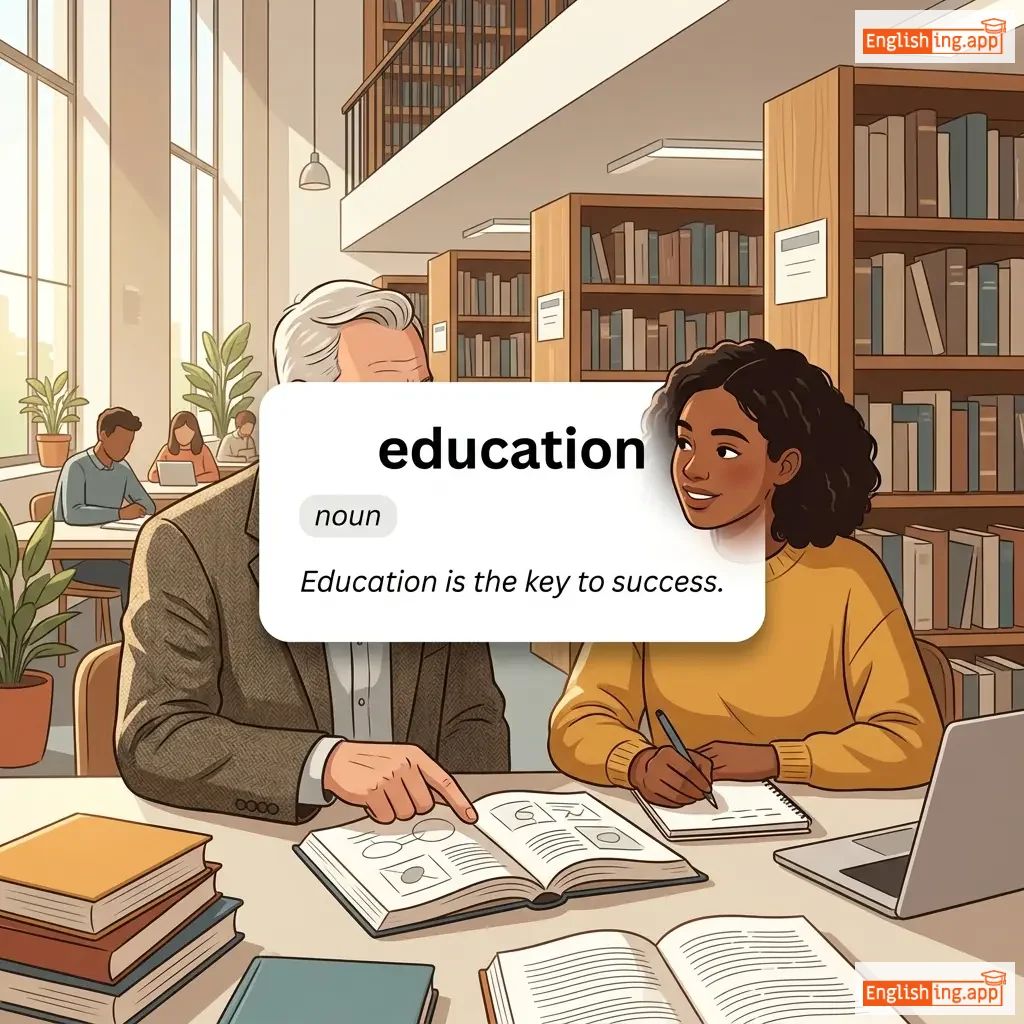
- •••••• | - •••••• | - •••••• | - •••••• |
the process of receiving or giving systematic instruction, especially at a school or university
••••••
|
Education is the key to success. |
教育是成功的关键。
Jiaoyu shi chenggong de guanjian.
••••••
|
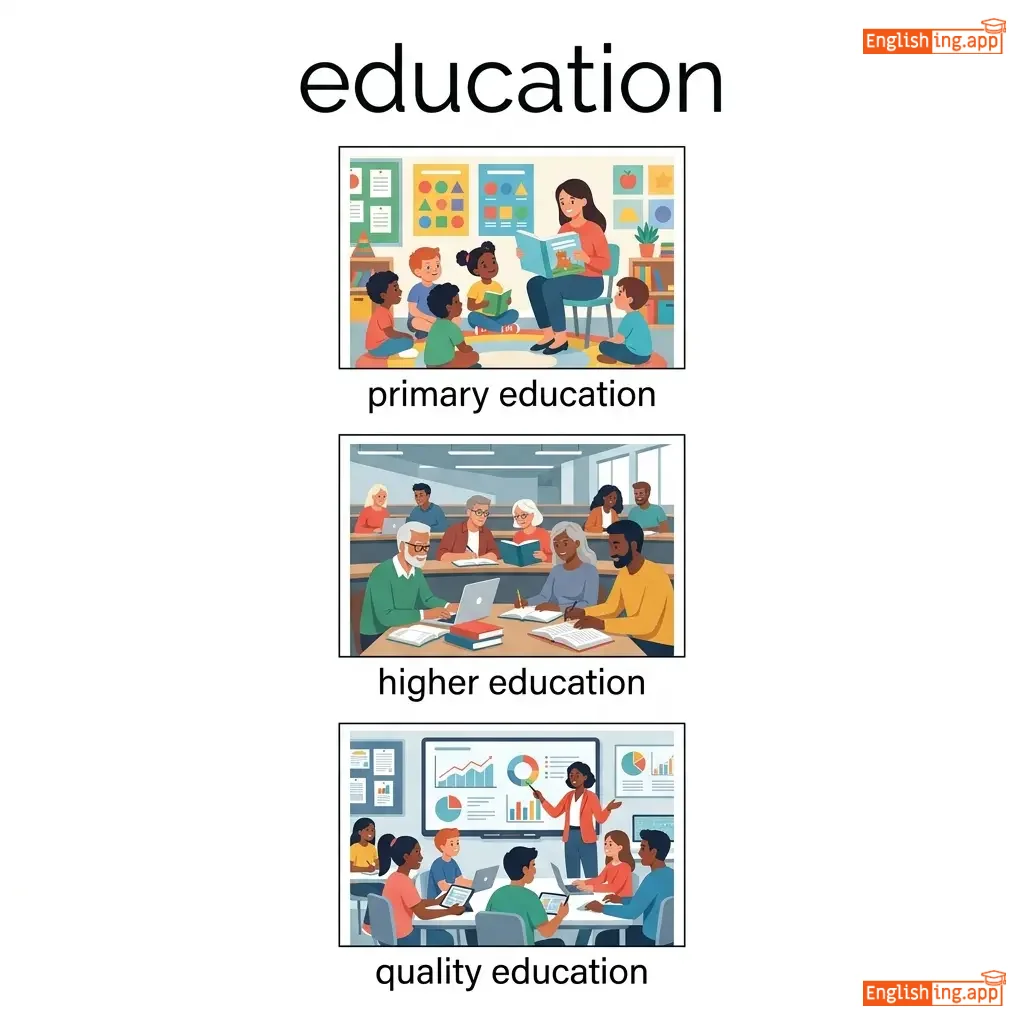
higher education |
education beyond the secondary level, usually at college or university
••••••
|
高等教育
gaodeng jiaoyu
••••••
|
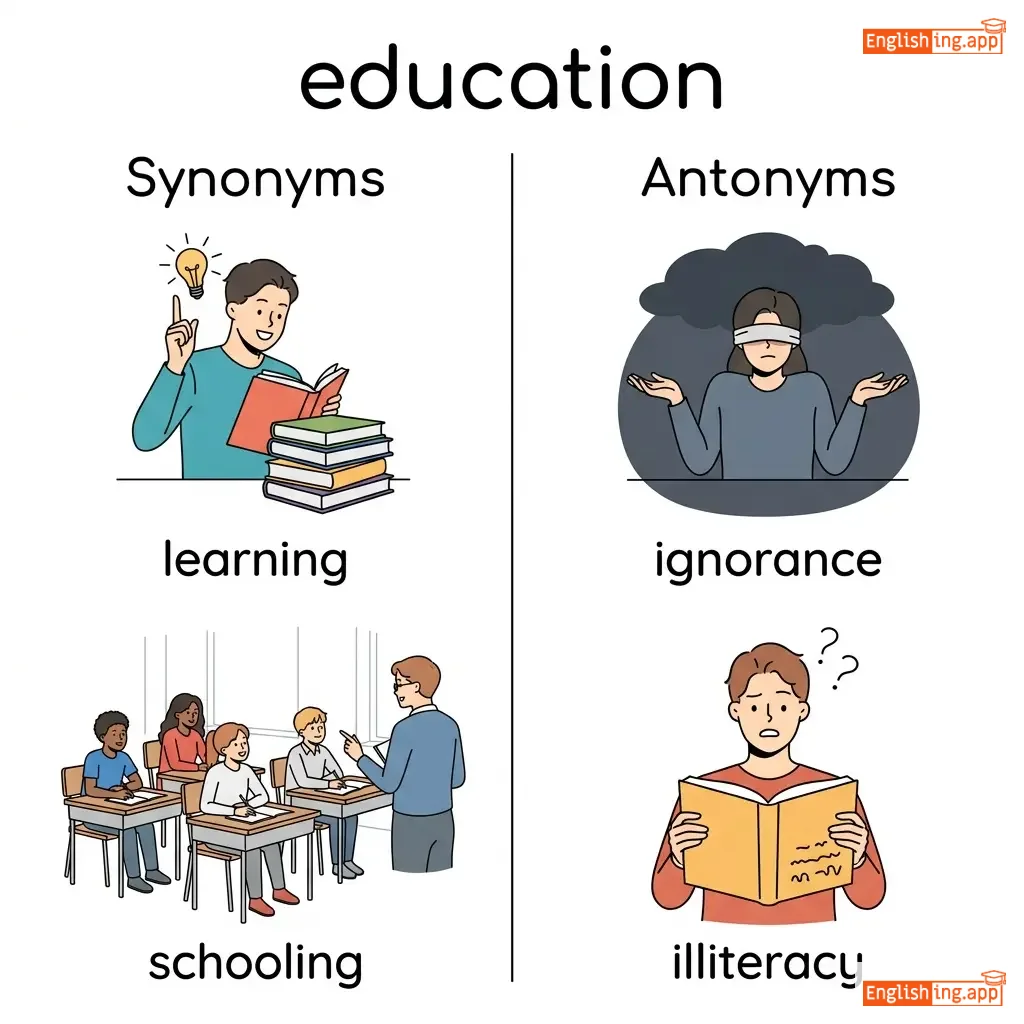
learning, schooling, instruction, teaching, training
••••••
|
ignorance, illiteracy
••••••
|
primary education, higher education, quality education, access to education
••••••
|
Education意味着教育 - Edu + Nation = 一个国家通过教育增长。
••••••
|
|
#0
📝
|
/ɪɡˈzæm/
noun
(èxám)
••••••
|
- •••••• |
考试
kaoshi
••••••
|
- •••••• | - •••••• | - •••••• | - •••••• |
a formal test of a person's knowledge or skill in a subject
••••••
|
She studied hard for her final exam. |
她为了最后的考试努力学习。
Tā wèile zuìhòu de kǎoshì nǔlì xuéxí.
••••••
|
cram for an exam |
to study intensively before an exam
••••••
|
临考前临时抱佛脚
línkǎo qián línshí bào fójiǎo
••••••
|
test, examination, assessment, quiz
••••••
|
break, vacation
••••••
|
take an exam, pass an exam, fail an exam, final exam, entrance exam
••••••
|
考试=测试,准备好接受挑战!
••••••
|
|
#0
📊
|
/ɡreɪd/
noun, verb
(格雷德)
••••••
|
- •••••• |
等级
dengji
••••••
|
graded
格雷德德
••••••
|
graded
格雷德德
••••••
|
grades
格雷德斯
••••••
|
grading
格雷丁
••••••
|
A level of quality, rank, or performance; to assign a score or mark to work or performance.
••••••
|
The teacher graded all the papers by the weekend.
老师在周末之前批改了所有的作业。
••••••
|
老师在周末之前批改了所有的作业。
Lǎoshī zài zhōumò zhīqián pīgǎi le suǒyǒu de zuòyè.
••••••
|
make the grade
达标
••••••
|
To succeed or meet the required standard.
••••••
|
达成标准
dacheng biaozhun
••••••
|
rank, level, mark, score, stage
••••••
|
failure, decline
••••••
|
high grade, grade level, grade point, grade paper
••••••
|
Grade 就是评估一个人的表现,类似成绩单中的分数。
••••••
|
|
#0
🎓
|
/ˈɡrædʒuət/ (noun), /ˈɡrædʒueɪt/ (verb)
noun, verb
(gulaiyue)
••••••
|
- •••••• |
毕业生
biye sheng
••••••
|
graduated
gulaiyued
••••••
|
graduated
gulaiyued
••••••
|
graduates
gulaiyets
••••••
|
graduating
gulaiyetin
••••••
|
As a noun: a person who has completed a course of study; As a verb: to complete a course of study successfully.
••••••
|
She will graduate from university next year.
她将在明年毕业。
••••••
|
她将在明年毕业。
Ta jiang zai mingnian biye.
••••••
|
graduate with honors
以荣誉毕业
••••••
|
To complete studies with high distinction.
••••••
|
以荣誉毕业
yi rongyu biye
••••••
|
alumnus, degree holder, finish, complete, qualify
••••••
|
dropout, fail
••••••
|
graduate student, graduate school, graduate from, graduate with honors
••••••
|
毕业生 — 达到新的巅峰,像毕业帽一样!
••••••
|
|
#0
📚
|
/ˈnɒlɪdʒ/
noun
(nólèzh)
••••••
|
|
知识
zhīshi
••••••
|
- •••••• | - •••••• | - •••••• | - •••••• |
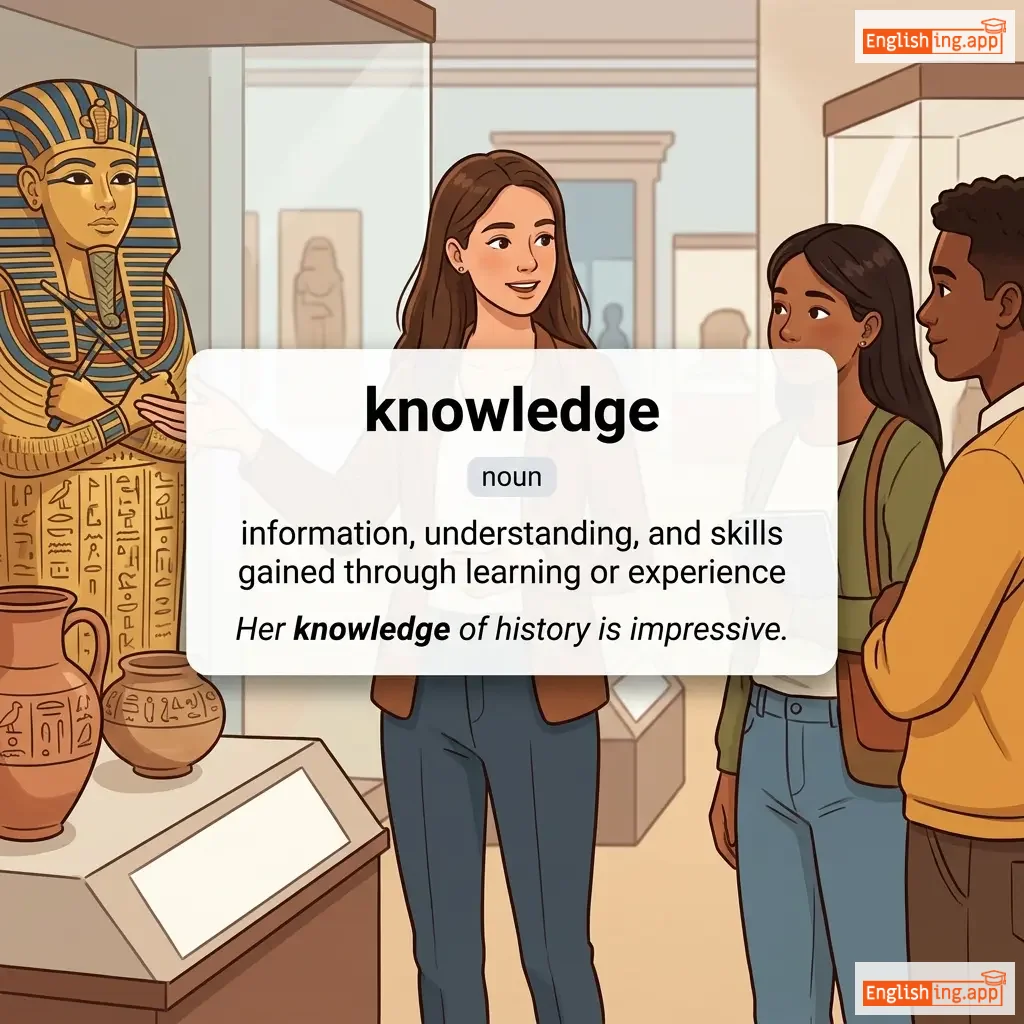
information, understanding, and skills gained through learning or experience
••••••
|
Her knowledge of history is impressive. |
她对历史的知识令人印象深刻。
Tā duì lìshǐ de zhīshi lìng rén yìnxiàng shēnkè.
••••••
|
a wealth of knowledge |
a large amount of useful information or understanding
••••••
|
知识的宝库
zhīshi de bǎokù
••••••
|
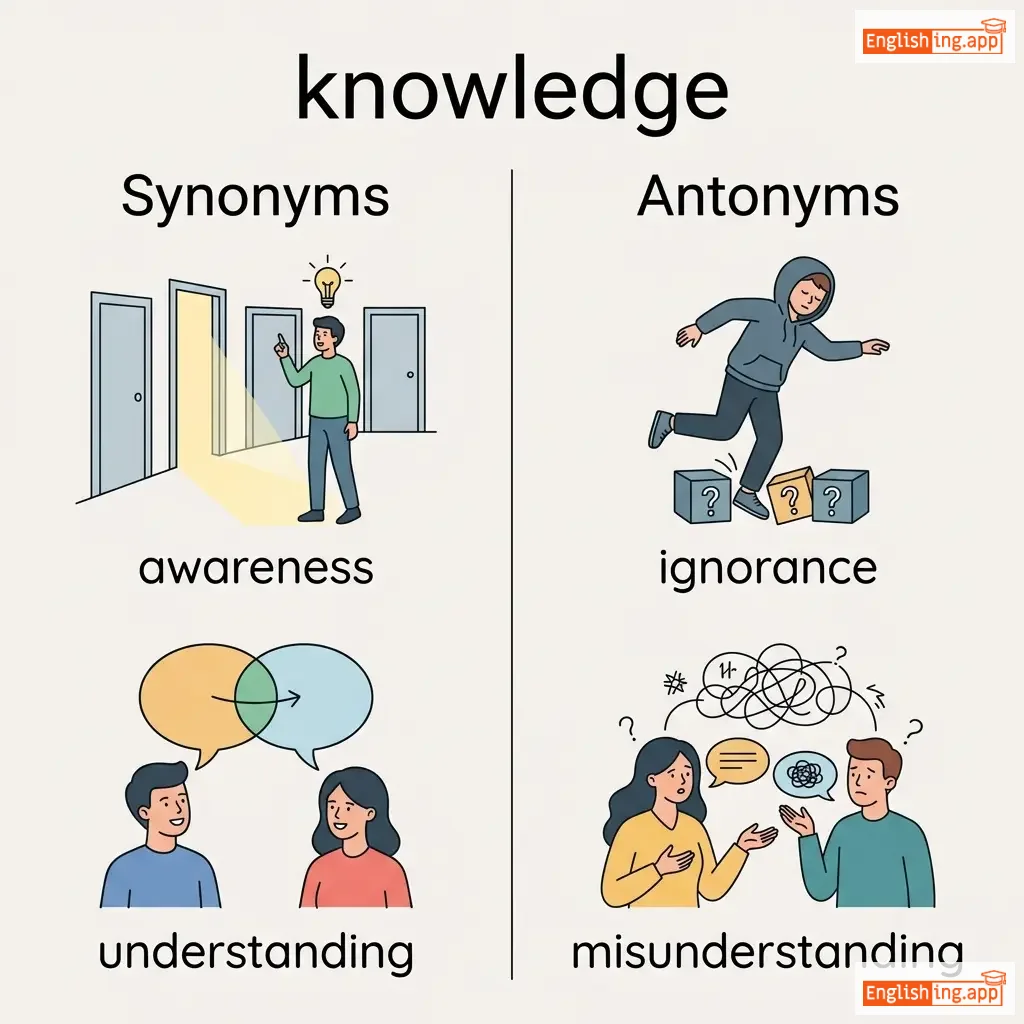
awareness, understanding, wisdom, expertise, intelligence
••••••
|
ignorance, misunderstanding
••••••
|
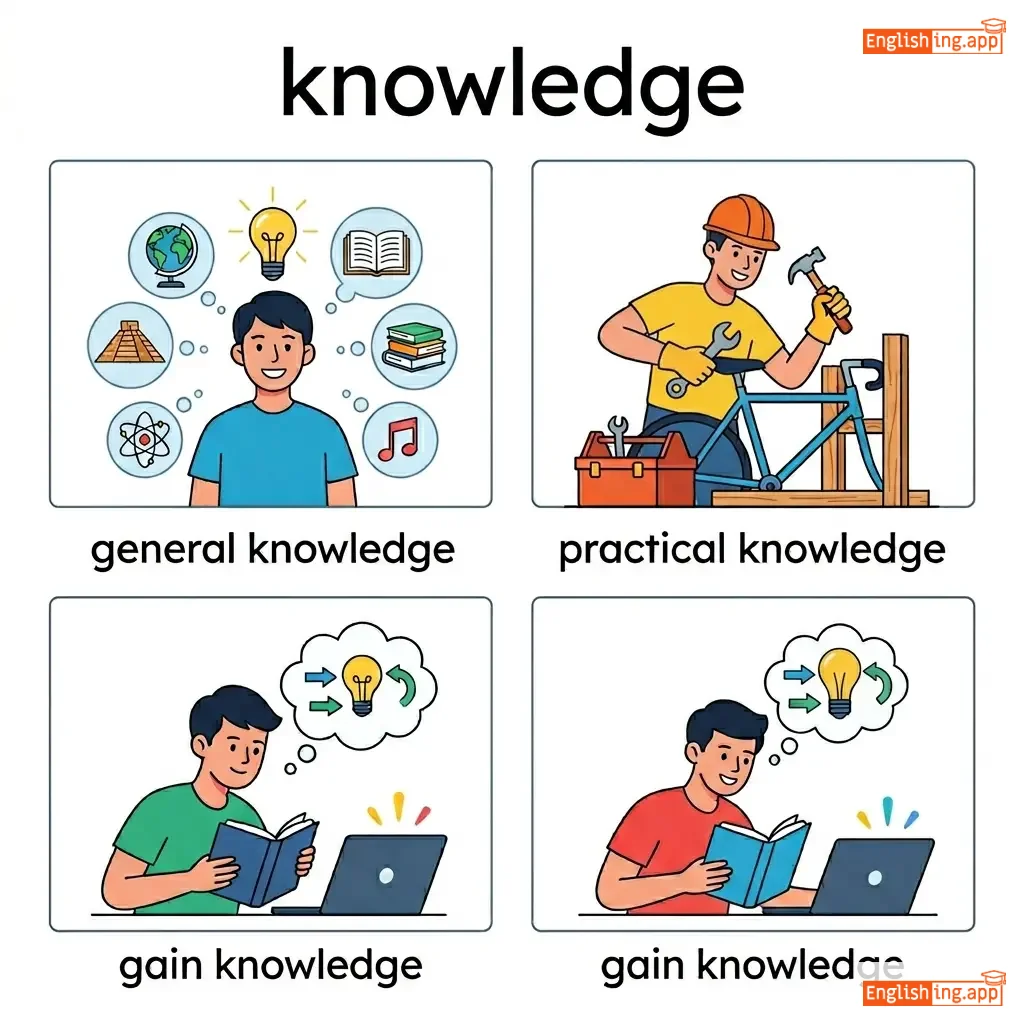
general knowledge, practical knowledge, gain knowledge, share knowledge
••••••
|
知识就像钥匙,帮助你开启人生的新篇章。
••••••
|
|
#0
📘
|
/lɜːrn/
verb
(lè'ěrné)
••••••
|
|
学习
xuéxí
••••••
|
learned
lè'ěrnd
••••••
|
learned
lè'ěrnd
••••••
|
learns
lè'ěrns
••••••
|
learning
lè'ěrníng
••••••
|
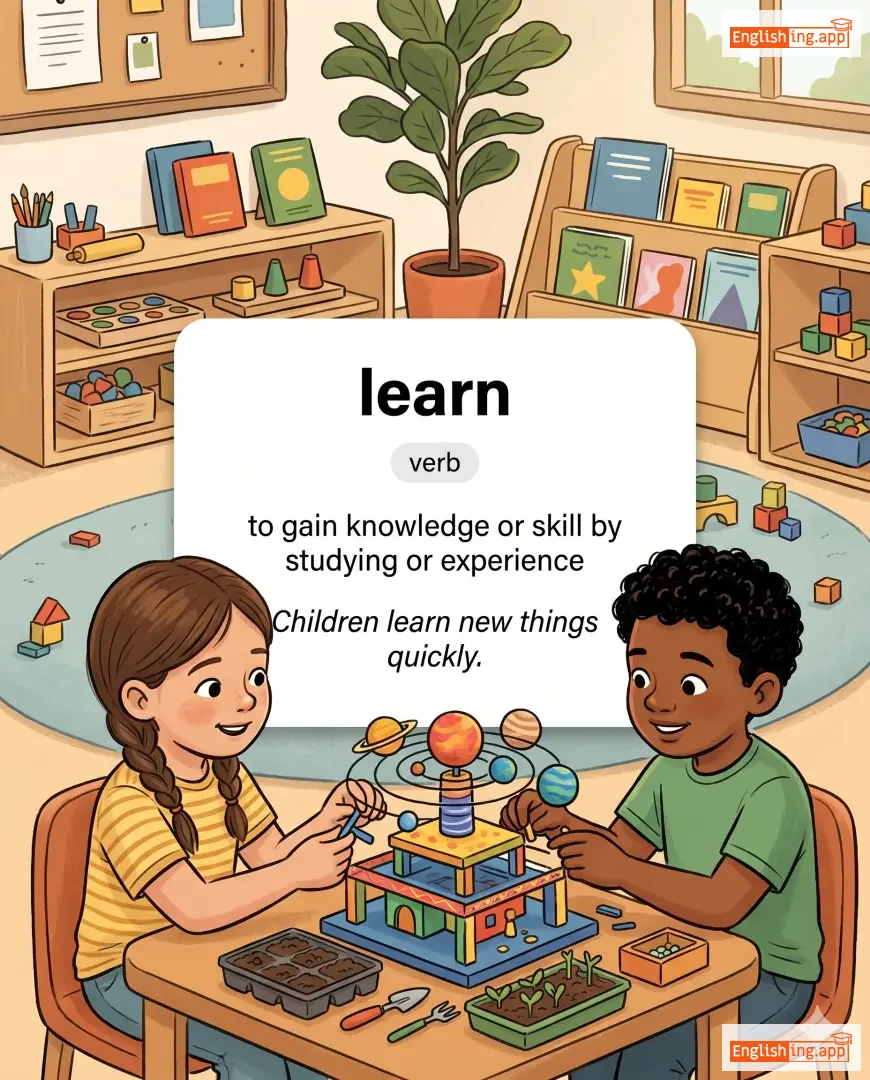
to gain knowledge or skill by studying or experience
••••••
|
Children learn new things quickly.
孩子们很快就学会了新事物。
••••••
|
孩子们很快就学会了新事物。
Háizimen hěn kuài jiù xuéhuìle xīn shìwù.
••••••
|
live and learn
活到老学到老
••••••
|
to learn from life experiences, often mistakes
••••••
|
活到老学到老
huó dào lǎo xué dào lǎo
••••••
|
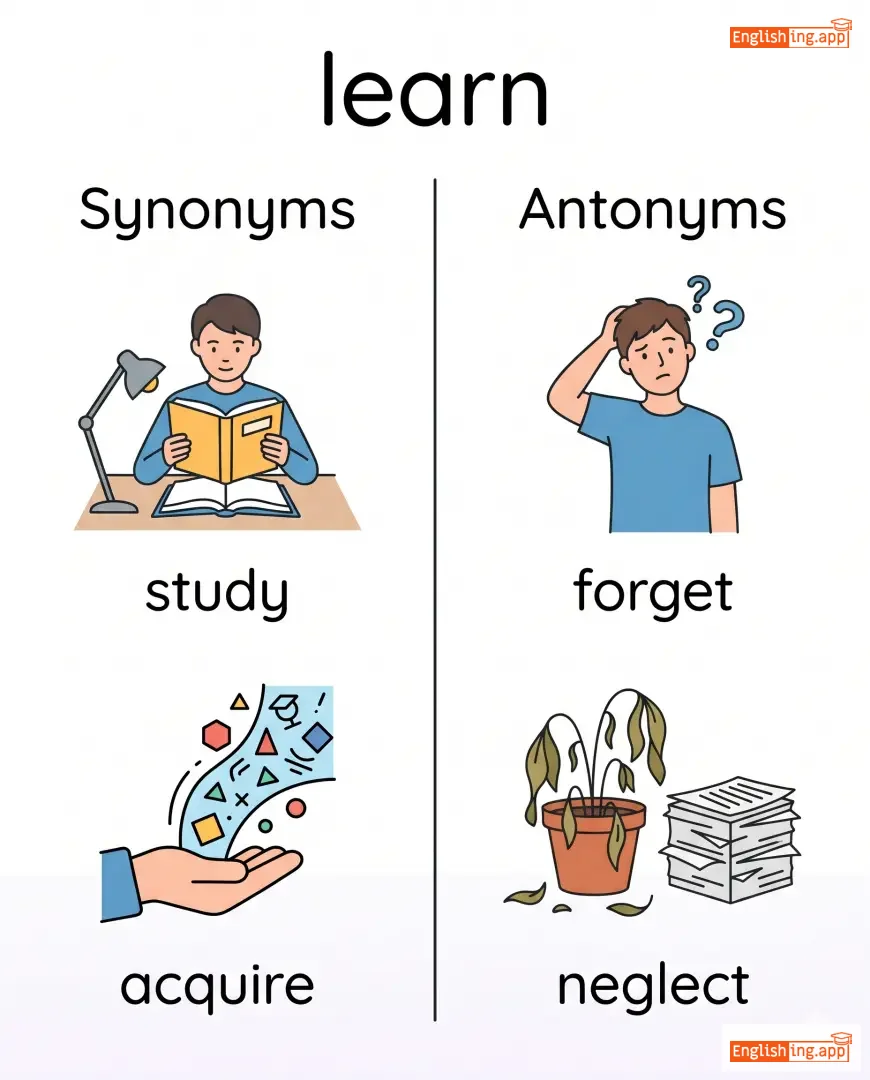
study, acquire, master, understand, grasp
••••••
|
forget, neglect, ignore
••••••
|
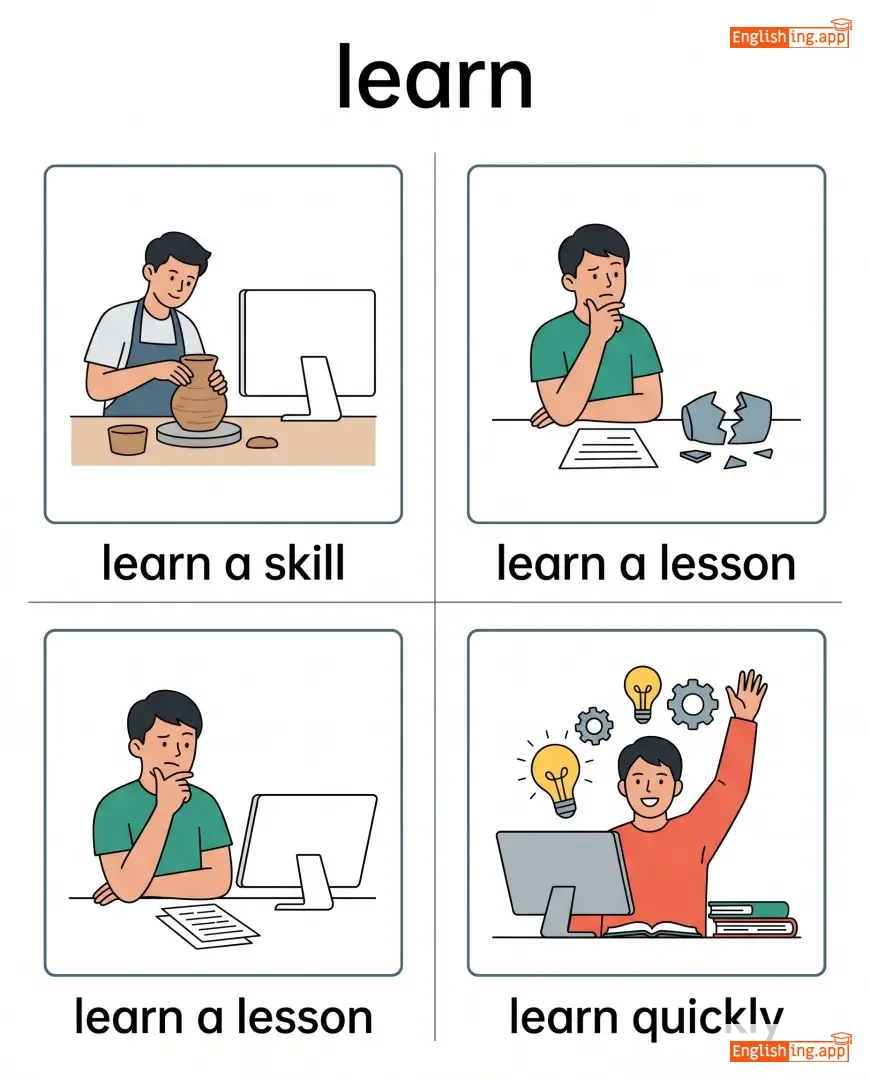
learn a skill, learn a lesson, learn quickly, learn about
••••••
|
Learn 就是学习,像用灯笼学习新知识。
••••••
|
|
#0
📖
|
/ˈlɪtərəsi/
noun
(lǐtèrèsī)
••••••
|
- •••••• |
识字率
shízì lǜ
••••••
|
- •••••• | - •••••• | - •••••• | - •••••• |
the ability to read and write
••••••
|
Literacy programs help reduce poverty in rural areas. |
识字率项目帮助减少农村地区的贫困。
Shízì lǜ xiàngmù bāngzhù jiǎnshǎo nóngcūn dìqū de pínkùn.
••••••
|
digital literacy |
the ability to use digital technology effectively
••••••
|
数字识字
shùzì shízì
••••••
|
education, knowledge, learning, scholarship
••••••
|
illiteracy, ignorance
••••••
|
literacy rate, promote literacy, literacy program, literacy skills
••••••
|
识字 - 学会读写
••••••
|
|
#0
💸
|
/ˈskɒlərʃɪp/
noun
(学者奖学金)
••••••
|
- •••••• |
奖学金
jiangxuejin
••••••
|
- •••••• | - •••••• | - •••••• | - •••••• |
an award or grant to support a student's education
••••••
|
She received a scholarship to study abroad. |
她获得了一项奖学金,以便出国留学。
Ta huodele yi xiang jiangxuejin, yibian chuguo liuxue.
••••••
|
- •••••• | - •••••• | - •••••• |
grant, fellowship, award, financial aid
••••••
|
loan, debt
••••••
|
merit-based scholarship, full scholarship, scholarship program
••••••
|
A scholarship helps you reach your goals without financial barriers.
••••••
|
|
#0
🏫
|
/skuːl/
noun
(学校)
••••••
|
- •••••• |
学校
xuéxiào
••••••
|
- •••••• | - •••••• | - •••••• | - •••••• |
An institution for educating children; also a group of people sharing the same ideas or discipline.
••••••
|
The children walked to school together. |
孩子们一起走到学校。
Háizimen yīqǐ zǒu dào xuéxiào.
••••••
|
school of thought |
A particular philosophy or way of thinking shared by a group.
••••••
|
思想流派
sīxiǎng liúpài
••••••
|
academy, institute, college, university, class
••••••
|
home, workplace
••••••
|
primary school, high school, school building, school bus, school of thought
••••••
|
学校意味着学校,记住'学校是学习的地方'。
••••••
|
|
#0
👩🎓
|
/ˈstjuːdənt/
noun
(学生)
••••••
|
|
学生
xuesheng
••••••
|
- •••••• | - •••••• | - •••••• | - •••••• |
a person who is learning at an educational institution
••••••
|
The student was studying for the final exam. |
学生正在为期末考试而学习。
Xuesheng zhengzai wei qimou kao shi er xuexi.
••••••
|
- •••••• | - •••••• | - •••••• |
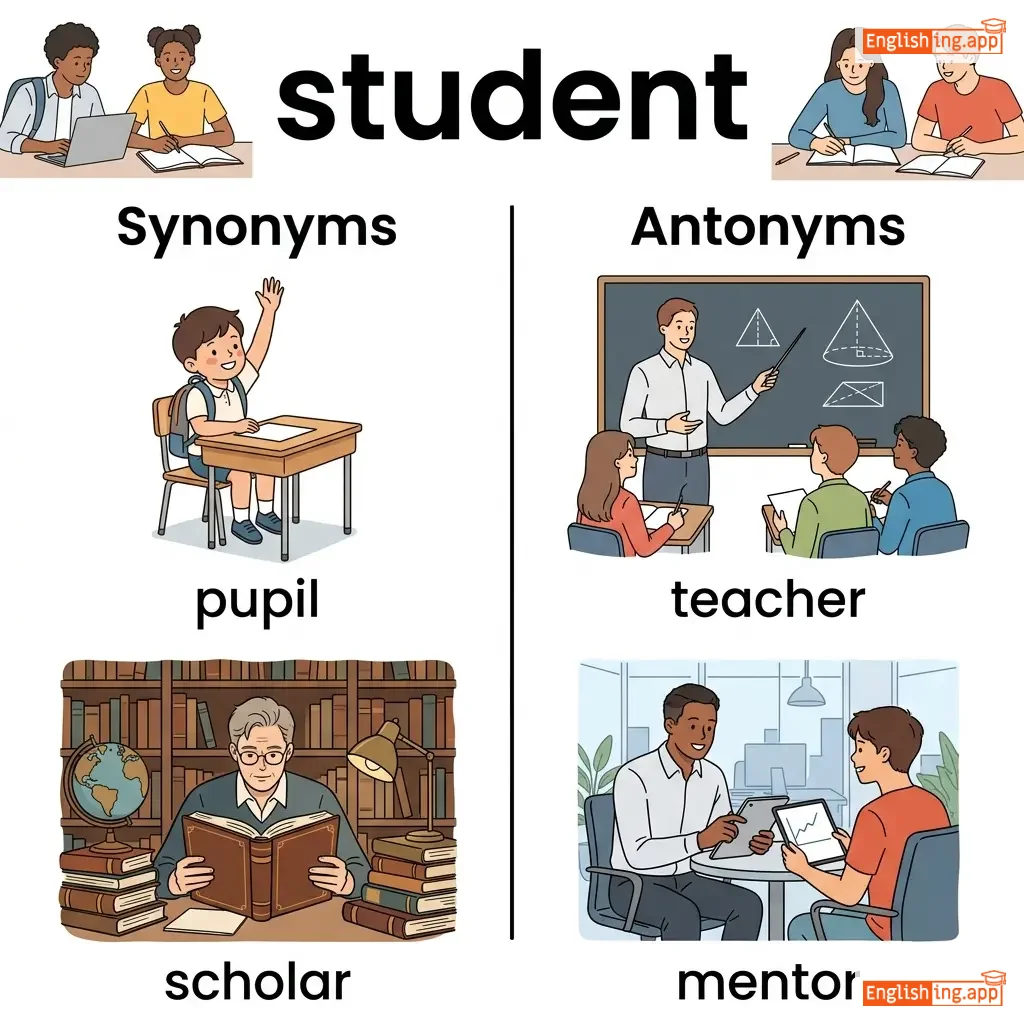
pupil, scholar, learner, trainee
••••••
|
teacher, mentor
••••••
|
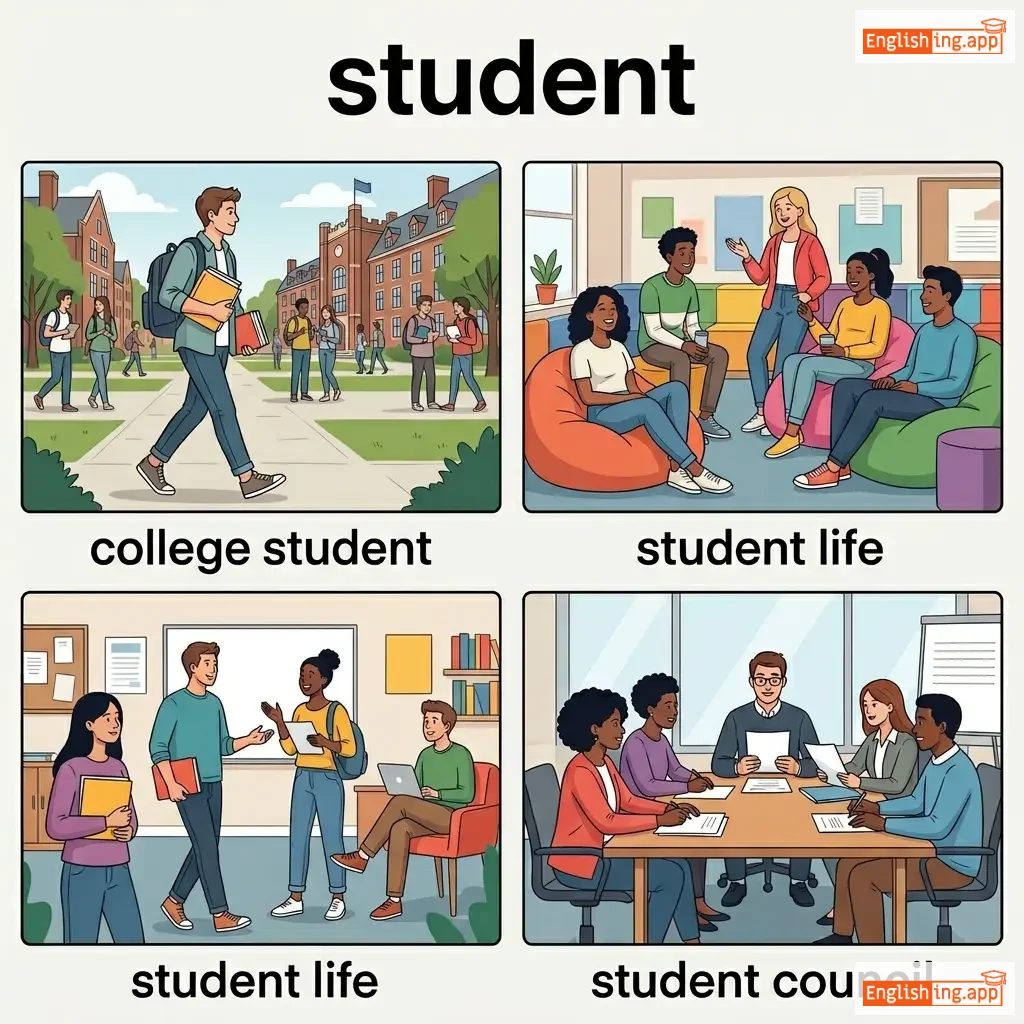
college student, student life, student council
••••••
|
Student in school, books in hand, striving to learn
••••••
|
|
#0
📚
|
/ˈstʌdi/
verb
(学习)
••••••
|
|
学习
xuéxí
••••••
|
studied
学习过
••••••
|
studied
学习过
••••••
|
studies
学习
••••••
|
studying
学习中
••••••
|
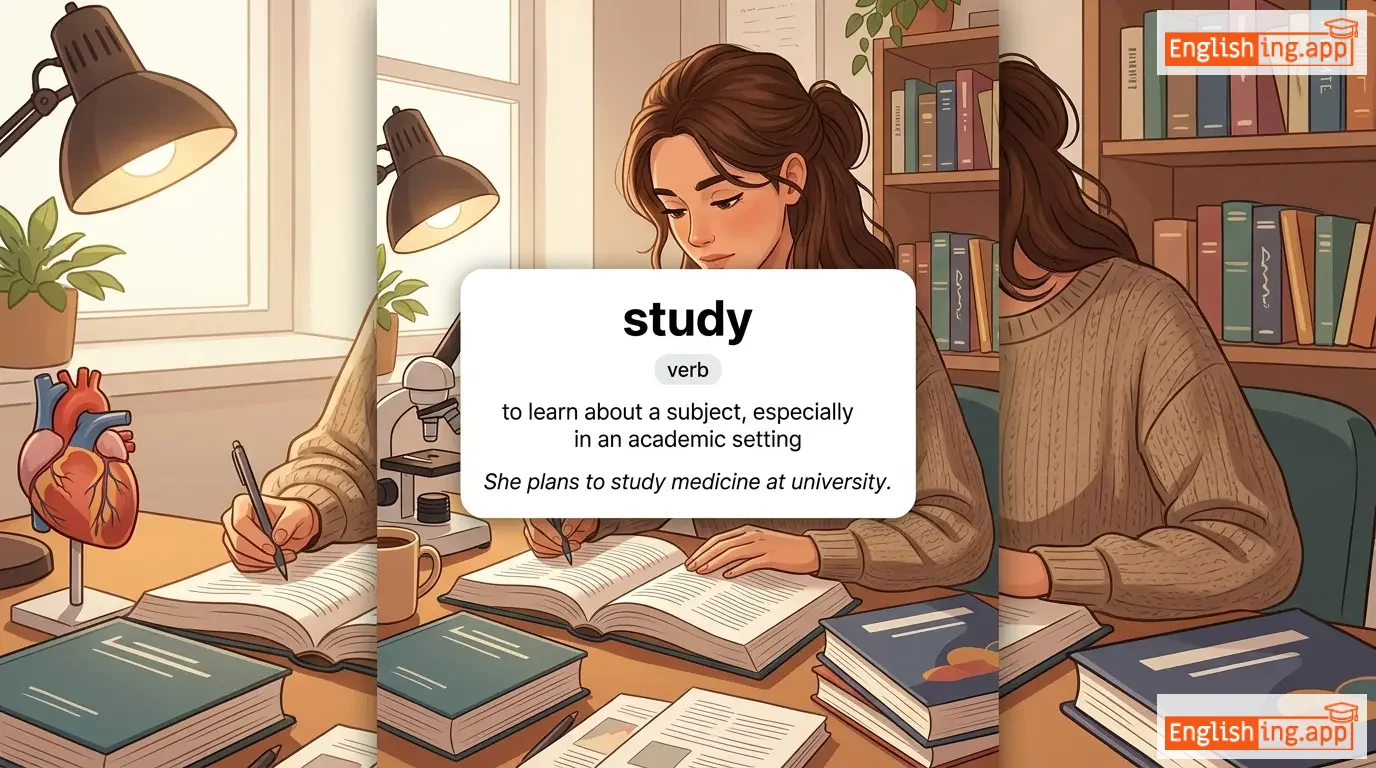
to learn about something; to examine carefully; to research
••••••
|
I study mathematics every evening.
我每天晚上学习数学。
••••••
|
我每天晚上学习数学。
Wǒ měitiān wǎnshàng xuéxí shùxué.
••••••
|
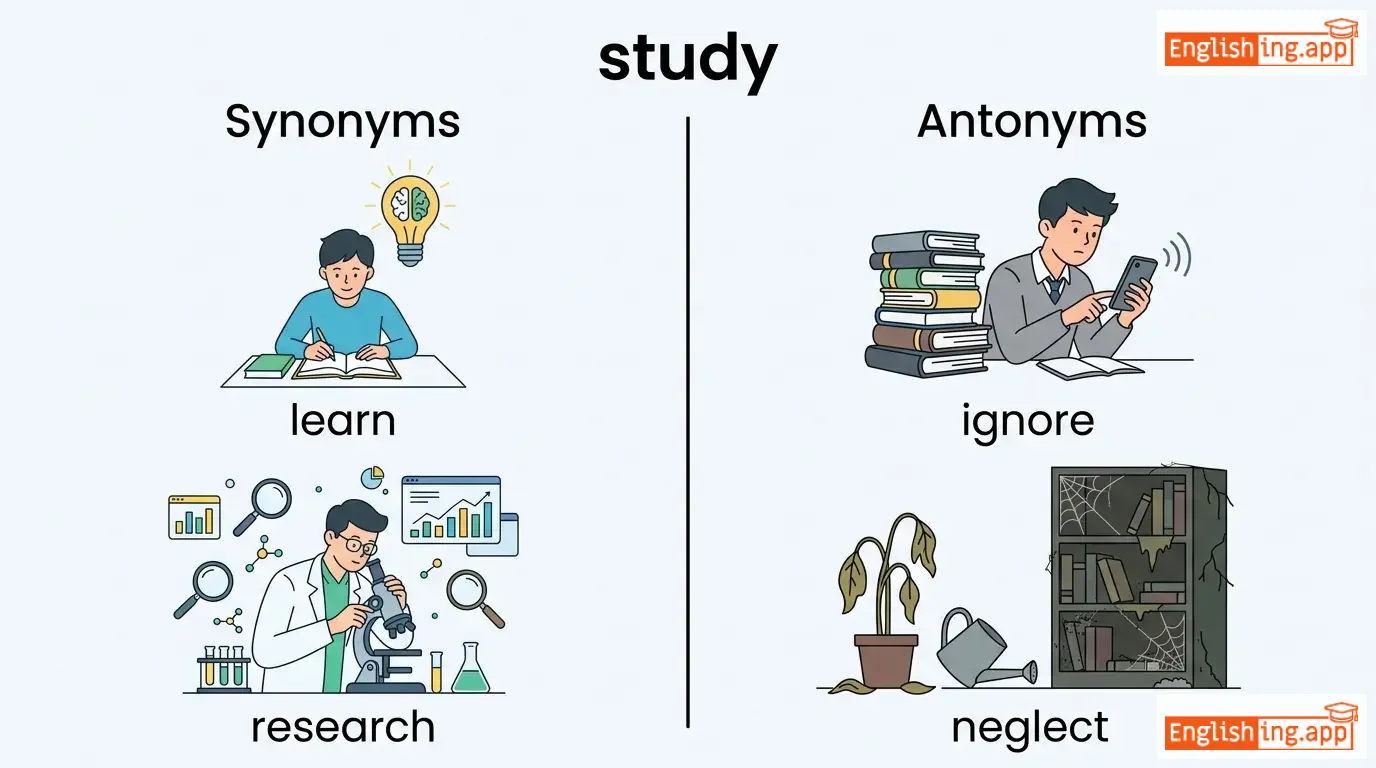
- •••••• | - •••••• | - •••••• |
learn, research, examine, investigate
••••••
|
ignore, neglect, overlook
••••••
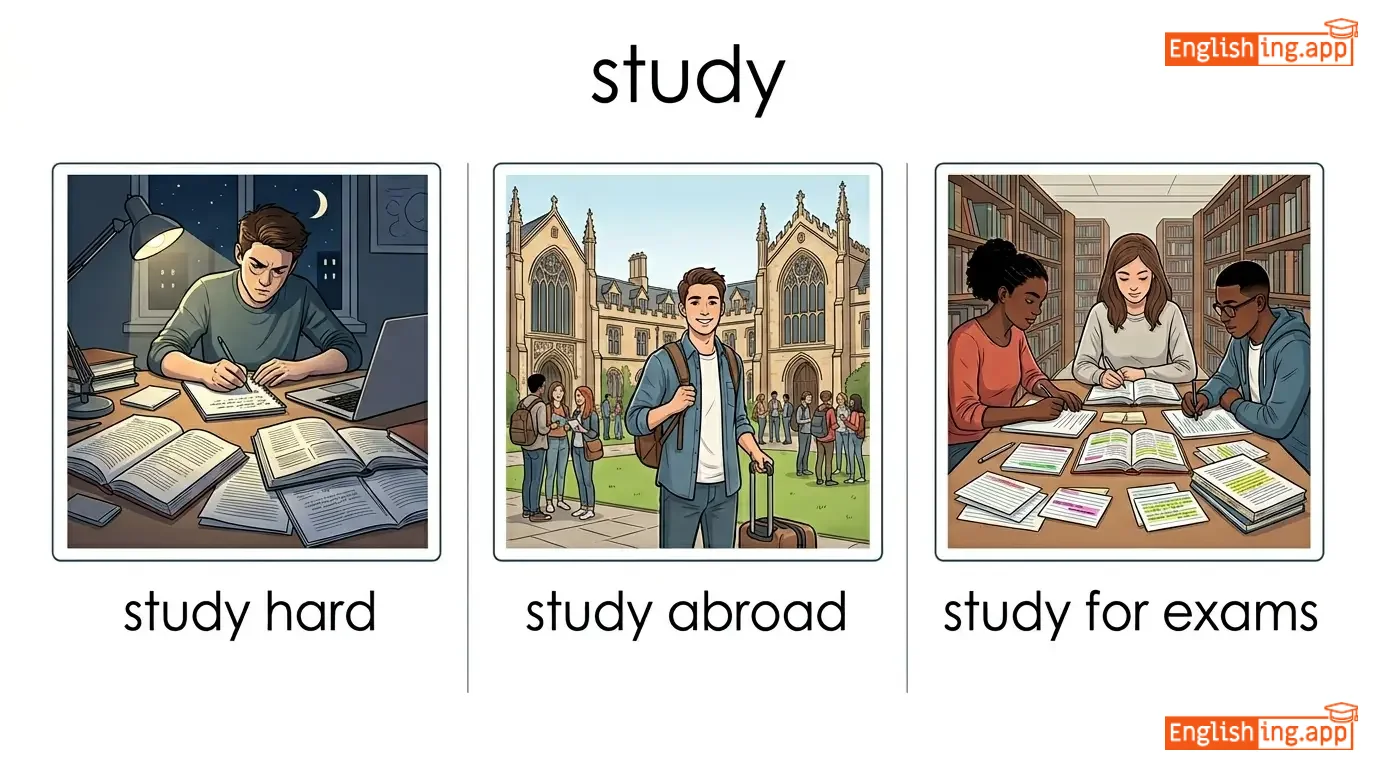
|
study hard, study abroad, case study, study materials, study group
••••••
|
Study = 学习 (通过学习理解事物)
••••••
|
|
#0
👩🏫
|
/ˈtiː.tʃər/
noun
(tìchē)
••••••
|
- •••••• |
老师
lǎoshī
••••••
|
- •••••• | - •••••• | - •••••• | - •••••• |
a person who teaches students in a school or other educational institution
••••••
|
The teacher explained the math problem clearly to the students.
老师清楚地向学生解释了数学问题。
••••••
|
老师清楚地向学生解释了数学问题。
Lǎoshī qīngchǔ de xiàng xuéshēng jiěshìle shùxué wèntí.
••••••
|
- •••••• | - •••••• | - •••••• |
educator, instructor, tutor, professor
••••••
|
student, pupil, learner
••••••
|
school teacher, math teacher, good teacher, experienced teacher
••••••
|
老师是那位帮助学生学习新知识的人。
••••••
|
|
#0
📘
|
/ˈtɛkstbʊk/
noun
(tèksìtúbùkè)
••••••
|
- •••••• |
教科书
jiaokeshu
••••••
|
- •••••• | - •••••• | - •••••• | - •••••• |
a book used for studying a subject in school or college
••••••
|
She bought a new biology textbook for her class. |
她为她的班级买了一本新的生物学教科书。
Tā wèi tā de bānjí mǎile yī běn xīn de shēngwùxué jiàokēshū.
••••••
|
a textbook example |
a perfect or typical example of something
••••••
|
典型例子
diǎnxíng lìzi
••••••
|
manual, guidebook, reference book, coursebook
••••••
|
fiction, magazine
••••••
|
textbook example, textbook case, school textbook, college textbook
••••••
|
Text + Book = 用于学习的书!因此,'教科书'意味着教科书。
••••••
|
|
#0
💸
|
/tʃuˈɪʃ.ən/
noun
(twiˈʃən)
••••••
|
- •••••• |
学费
xué fèi
••••••
|
- •••••• | - •••••• | - •••••• | - •••••• |
the fee for instruction or teaching, typically at a school or university
••••••
|
The tuition for the college has increased this year.
今年大学的学费上涨了。
••••••
|
今年大学的学费上涨了。
Jīnnián dàxué de xuéfèi shàngzhǎng le.
••••••
|
- •••••• | - •••••• | - •••••• |
fees, charges, payment, cost
••••••
|
scholarship, grant
••••••
|
tuition fee, pay tuition, tuition increase
••••••
|
把学费想象成你为学习支付的费用,就像为一门课程付费一样。
••••••
|
|
#0
🎓
|
/ˌjuːnɪˈvɜːrsɪti/
noun
(yoo-nee-wei-er-si-ti)
••••••
|
- •••••• |
大学
daxue
••••••
|
- •••••• | - •••••• | - •••••• | - •••••• |
an institution of higher education and research, which grants academic degrees
••••••
|
She is studying law at the university. |
她在大学学习法律。
Ta zai daxue xuexi falu.
••••••
|
- •••••• | - •••••• | - •••••• |
college, academy, school, institution
••••••
|
none
••••••
|
university degree, university campus, university student
••••••
|
University = 大的教育中心 (Da de jiao yu zhongxin)
••••••
|
Vocabulary Quiz
Test your vocabulary by matching words with their translations or meanings.
Login to take the quiz
Comments (0)
Share your thoughts and join the discussion.
Join the discussion by logging in
Login to CommentNo comments yet
Be the first to share your thoughts!