

经典早晨基准
Classical Morning Benchmark
在Sylhet的艺术中心举行了一个经典的早晨节目。营养丰富的早餐从黎明开始为参与者提供。该市的首席文化官作为活动的权威出席。她开始授权专家团队立即开展研讨会。每张桌子上都有一个自动注册设备。组织者表示,这次会议将成为他们的文化基准。在一个角落里,孩子们听到最喜爱的作家的传记片段。演讲之前,大家都进行了深呼吸以集中注意力。舞台上的音乐如此精彩,以至于没有人低声细语。外面,五彩斑斓的蝴蝶在花园里飞舞。每个诗歌竞赛的候选人都被告知在上台之前要小心准备。一位惊喜的电视名人出现在现场,与观众合影。讲故事时,每个角色都充满幽默感。科学俱乐部指出,艺术和化学的结合使学习更容易。许多人写下他们的童年回忆,并将其钉在板上。戏剧的叙事如此真实,以至于人们相信它是真的。组织者在账簿中计算了费用,以保持透明度。该市的市议员表示,这样的节日活动增强了社区的信任。


Swipe left or right, or use the buttons. Tap image to zoom.
例句翻译
单词
Classical Morning BenchmarkClassical Morning Benchmark - 遮罩切换
|
表情符号
|
单词 | Images | 翻译 | 过去时 | 过去分词 | 第三人称单数 | 动名词 | 含义 | 例句 | 例句翻译 | 示例表达 | 示例表达含义 | 示例表达翻译 | 同义词 | 反义词 | 搭配词 | 助记符 |
|---|---|---|---|---|---|---|---|---|---|---|---|---|---|---|---|---|---|
|
#0
✔️
|
/ɔːˈθɛntɪk/
adjective
(authentic)
••••••
|
- •••••• |
正宗
zhèngzōng
••••••
|
- •••••• | - •••••• | - •••••• | - •••••• |
Genuine and real; not fake or copied.
••••••
|
The museum displayed an authentic painting by Picasso. |
博物馆展示了毕加索的正宗画作。
Bówùguǎn zhǎnshìle bìjiāsuǒ de zhèngzōng huàzuò.
••••••
|
authentic self |
Being true to one's real personality and values.
••••••
|
真正的自我
Zhēnzhèng de zìwǒ
••••••
|
genuine, real, original, true, legitimate
••••••
|
fake, false, counterfeit
••••••
|
authentic document, authentic voice, authentic experience
••••••
|
Authentic意味着正宗的,不是假的 → Authentic食物意味着真正的味道。
••••••
|
|
#0
👑
|
/əˈθɔːrəti/
noun
(权威)
••••••
|
|
权威
quanwei
••••••
|
- •••••• | - •••••• | - •••••• | - •••••• |
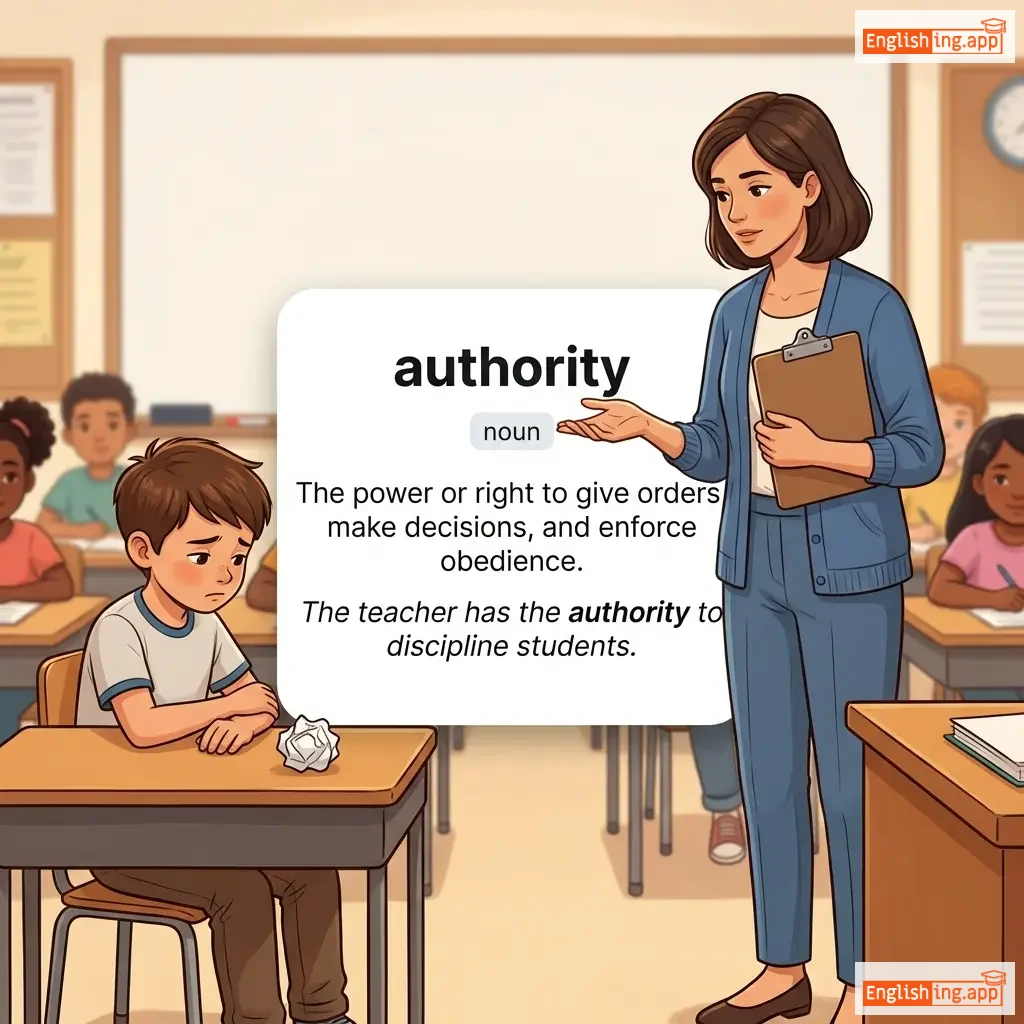
The power or right to give orders, make decisions, and enforce obedience.
••••••
|
The teacher has the authority to discipline students. |
老师有权利惩罚学生。
Laoshi you quanli chengfa xuesheng.
••••••
|
in authority |
Holding an official position of power.
••••••
|
在权力中
Zai quanli zhong
••••••
|
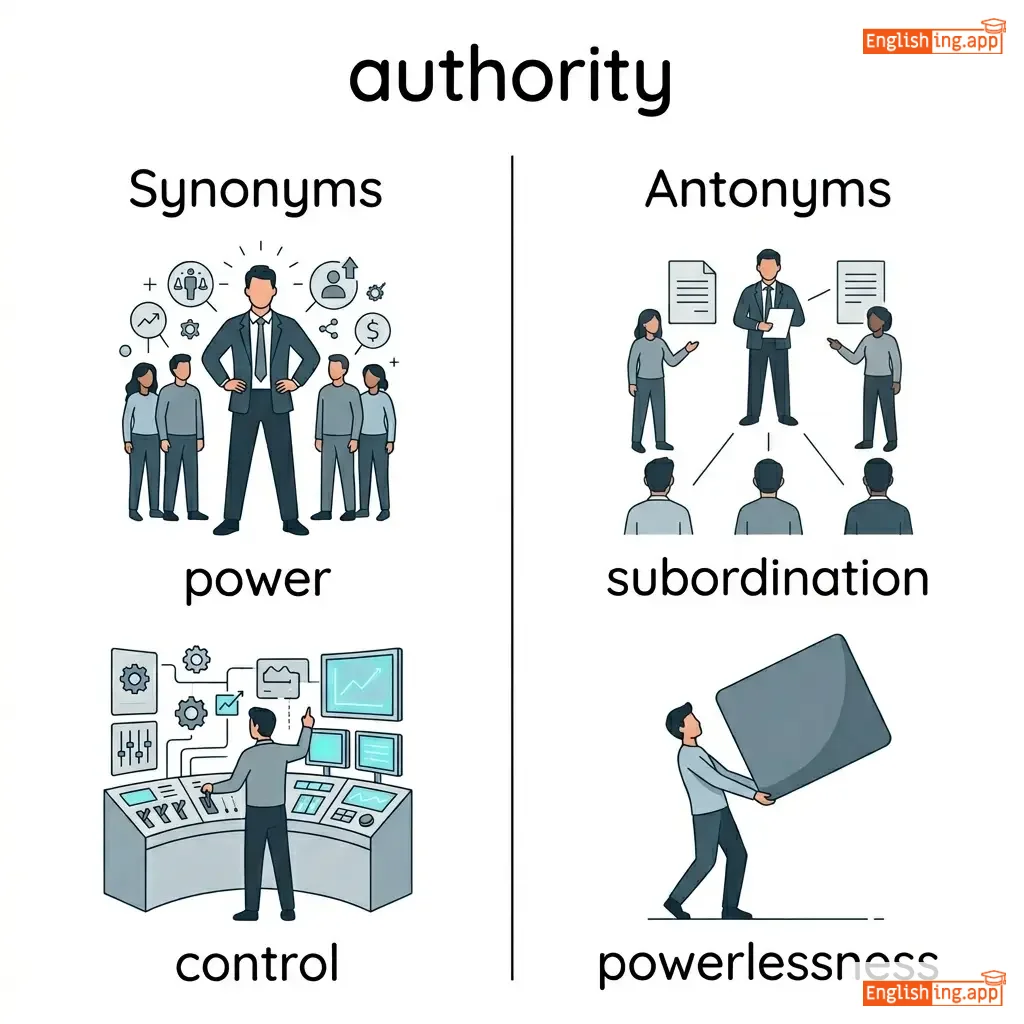
power, control, command, influence, jurisdiction
••••••
|
powerlessness, subordination
••••••
|
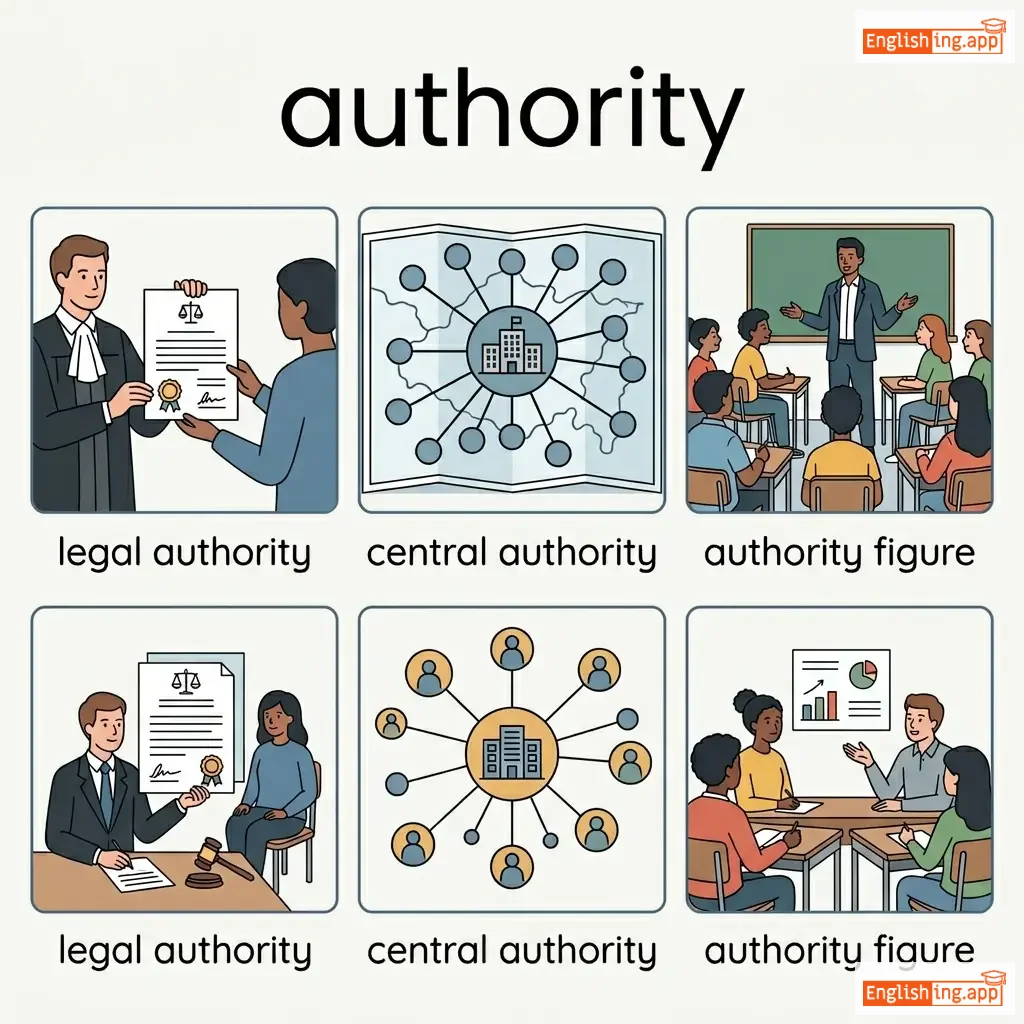
legal authority, central authority, authority figure, in authority
••••••
|
Authority 听起来像 'author' ,就像一个作者有权下命令。
••••••
|
|
#0
✅
|
/ˈɔːθəraɪz/
verb
(授权)
••••••
|
|
授权
shòuquán
••••••
|
authorized
授权了
••••••
|
authorized
授权了
••••••
|
authorizes
授权
••••••
|
authorizing
授权中
••••••
|
to give official permission or approval for something
••••••
|
The manager authorized the refund after reviewing the complaint.
经理在审查投诉后授权了退款。
••••••
|
经理在审查投诉后授权了退款。
Jīnglǐ zài shěnchá tóusù hòu shòuquánle tuìkuǎn.
••••••
|
authorize payment
授权支付
••••••
|
to officially approve a transaction or payment
••••••
|
授权支付
shòuquán zhīfù
••••••
|
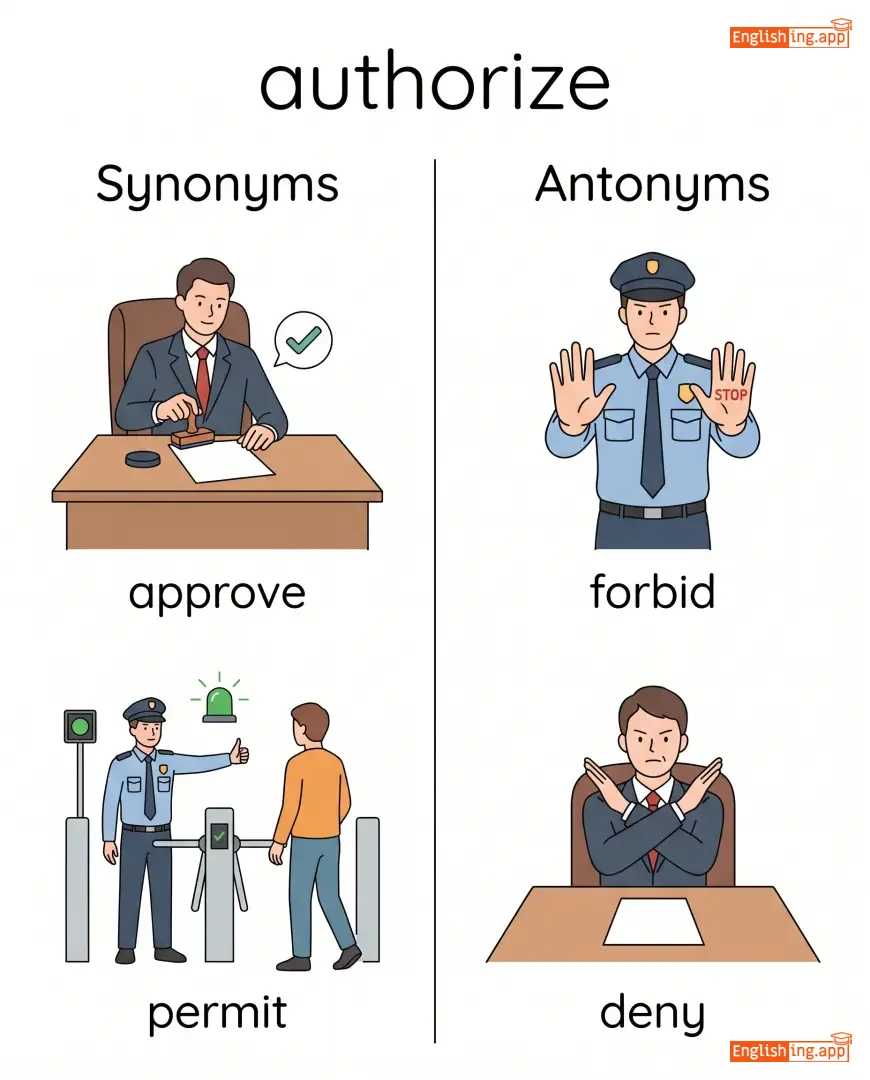
approve, permit, sanction, empower, allow
••••••
|
forbid, deny, reject
••••••
|
authorize access, authorize payment, authorize transaction, authorize use
••••••
|
授权意味着批准 — 就像是授予许可一样!
••••••
|
|
#0
⚙️
|
/ˌɔːtəˈmætɪk/
adjective
(ào-tō-mà-tí-kè)
••••••
|
- •••••• |
自动
zidong
••••••
|
- •••••• | - •••••• | - •••••• | - •••••• |
working by itself without direct human control
••••••
|
This car has an automatic transmission. |
这辆车有自动变速器。
Zhe liang che you zidong biansuqi.
••••••
|
automatic response |
an instinctive or unthinking reaction
••••••
|
自动反应
zidong fanying
••••••
|
mechanical, self-operating, programmed, robotic
••••••
|
manual, controlled, deliberate
••••••
|
automatic door, automatic system, automatic response, automatic payment
••••••
|
自动意味着自己工作 — 就像自动门自己打开 😄
••••••
|
|
#0
✅
|
/əˈveɪləbl/
adjective
(啊威拉布尔)
••••••
|
- •••••• |
可用的
keyong de
••••••
|
- •••••• | - •••••• | - •••••• | - •••••• |
Able to be used, obtained, or accessed.
••••••
|
The product is now available in all stores. |
该产品现在在所有商店均可用。
Gai chanpin xianzai zai suoyou shangdian jun keyong.
••••••
|
readily available |
Easy to obtain or use.
••••••
|
轻松可得
qīngsōng kědé
••••••
|
accessible, obtainable, ready, at hand, convenient
••••••
|
unavailable, inaccessible, limited
••••••
|
make available, available resources, available information, readily available
••••••
|
可用的就像是'key'一样容易获取的产品。
••••••
|
|
#0
📏
|
/ˈbɛntʃmɑːrk/
noun
(bēnchímǎkè)
••••••
|
|
基准
jizhun
••••••
|
- •••••• | - •••••• | - •••••• | - •••••• |
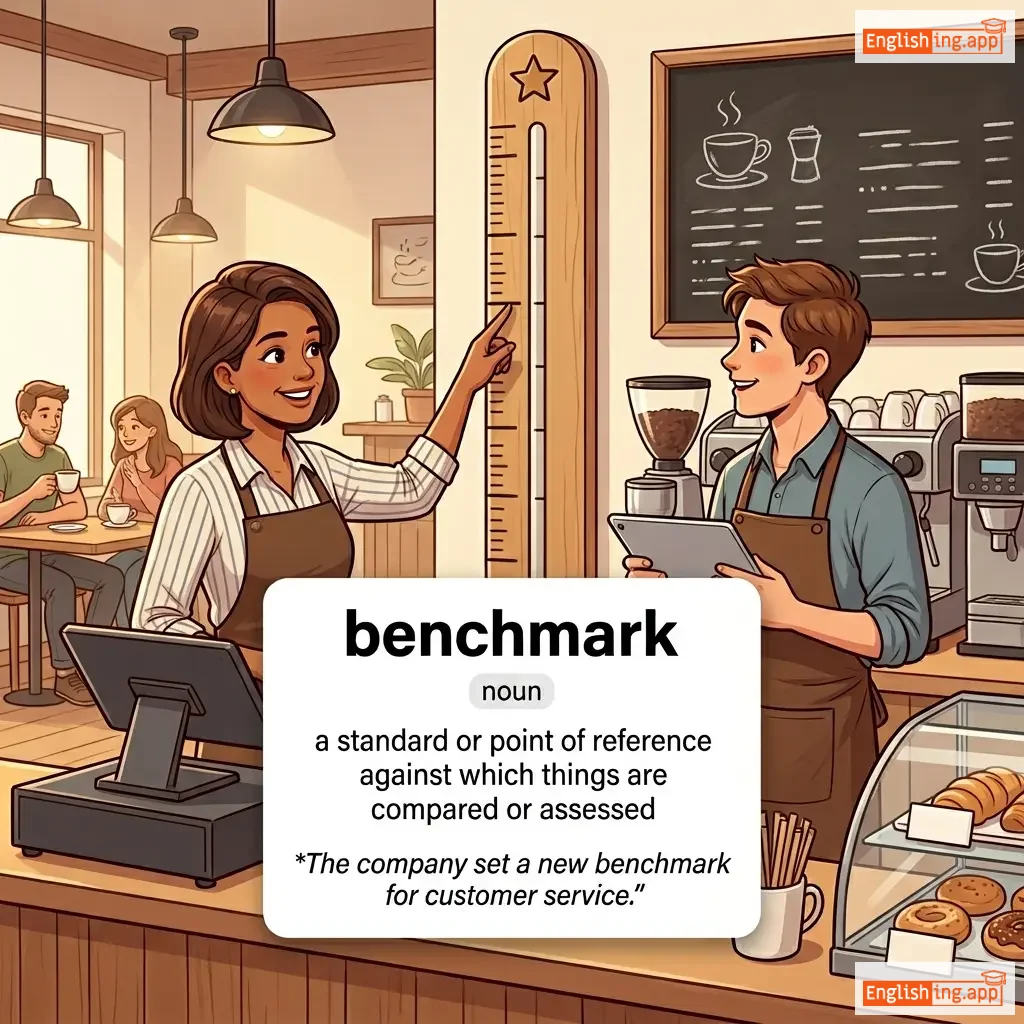
a standard or point of reference against which things are compared or assessed
••••••
|
The company set a new benchmark for customer service. |
公司为客户服务设定了一个新的基准。
Gōngsī wèi kèhù fúwù shèdìngle yīgè xīn de jīzhǔn.
••••••
|
- •••••• | - •••••• | - •••••• |
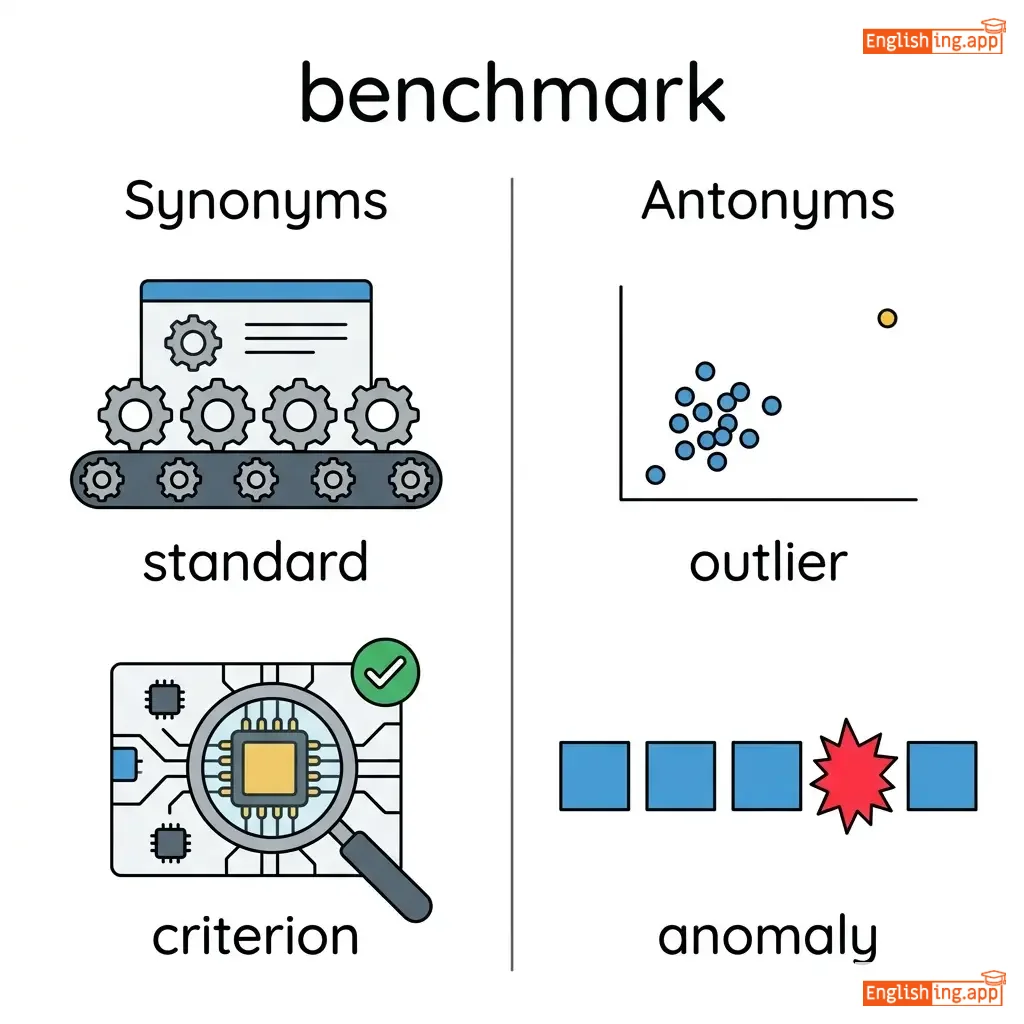
standard, criterion, gauge, yardstick
••••••
|
outlier, anomaly, exception
••••••
|
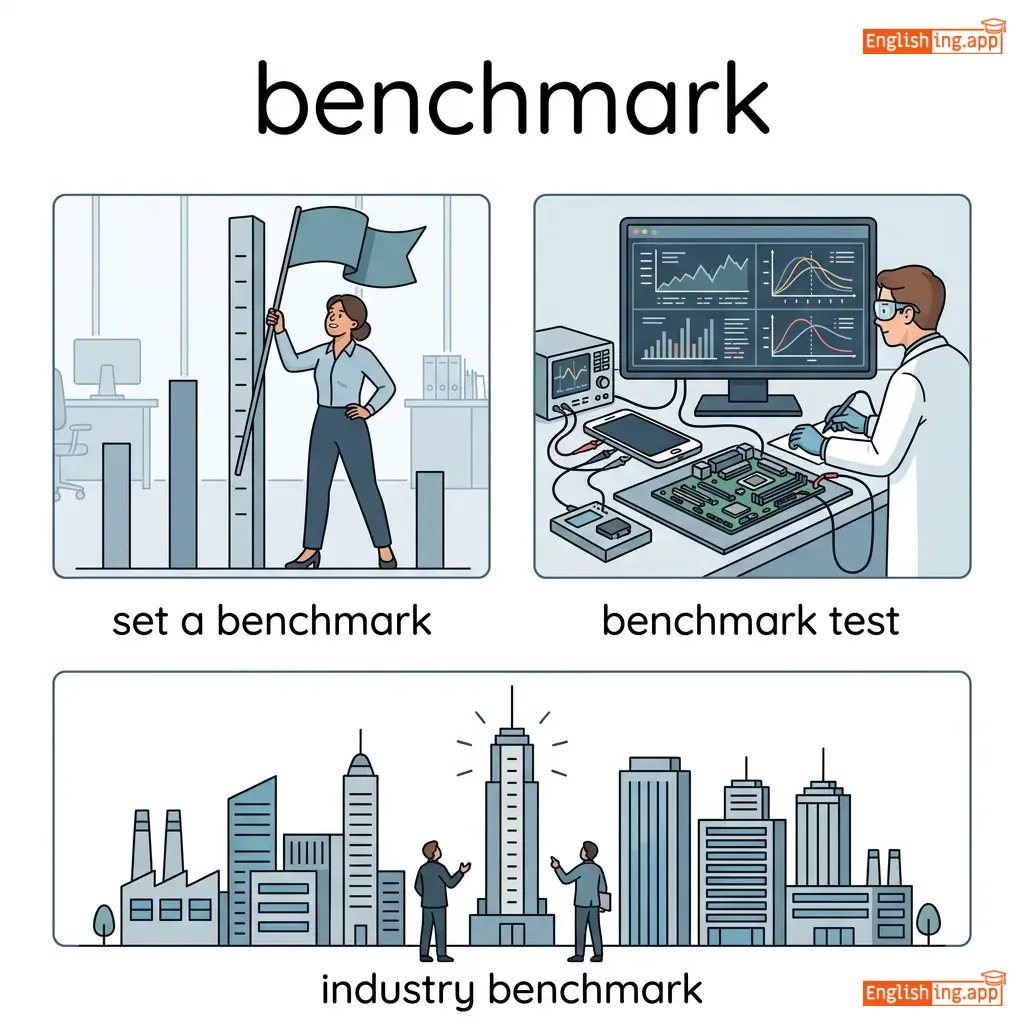
set a benchmark, benchmark test, industry benchmark, high benchmark
••••••
|
benchmark 成为基准 - Benchmark is a yardstick for comparison
••••••
|
|
#0
📖
|
/baɪˈɒɡrəfi/
noun
(bàiógélì)
••••••
|
- •••••• |
传记
zhuanji
••••••
|
- •••••• | - •••••• | - •••••• | - •••••• |
an account of someone's life written by someone else; the story of a person's life
••••••
|
I'm reading a fascinating biography of Albert Einstein. |
我正在阅读一部关于阿尔伯特·爱因斯坦的迷人传记。
Wo zhengzai yuedu yi bu guanyu A'erbote Aiyinsitan de miren zhuanji.
••••••
|
- •••••• | - •••••• | - •••••• |
life story, memoir, profile
••••••
|
fiction, novel
••••••
|
write a biography, read biography, authorized biography
••••••
|
The word '传记' in Chinese shares a similar meaning to 'Biography' in English, referring to someone's life.
••••••
|
|
#0
🥞
|
/ˈbrɛkfəst/
noun
••••••
|
- •••••• | - •••••• | - •••••• | - •••••• | - •••••• | - •••••• |
The first meal of the day, usually eaten in the morning.
••••••
|
We had eggs and toast for breakfast. |
- •••••• |
have breakfast |
to eat the first meal of the day
••••••
|
- •••••• |
morning meal, brunch, repast, first meal
••••••
|
dinner, supper
••••••
|
healthy breakfast, big breakfast, skip breakfast, have breakfast
••••••
|
No •••••• |
|
#0
🌬️
|
/ˈbriːðɪŋ/
noun
(海皮尼斯)
••••••
|
- •••••• |
幸福
xìngfú
••••••
|
- •••••• | - •••••• | - •••••• | - •••••• |
the process of taking air into and expelling it from the lungs.
••••••
|
Deep breathing can help you relax. |
当她收到奖项时,她无法隐藏自己的幸福。
Dāng tā shōu dào jiǎngxiàng shí, tā wúfǎ yǐncáng zìjǐ de xìngfú.
••••••
|
take a deep breath |
to inhale deeply to calm oneself
••••••
|
追求幸福
zhuīqiú xìngfú
••••••
|
respiration, inhalation, exhalation, ventilation, gasp
••••••
|
suffocation, choking
••••••
|
deep breathing, breathing exercise, heavy breathing, shallow breathing
••••••
|
幸福 = '幸' + '福' — 追求和获得幸福就像追寻美好的未来!
••••••
|
|
#0
💡
|
/ˈbrɪliənt/
adjective
(bǔrīliànt)
••••••
|
- •••••• |
辉煌
huihuang
••••••
|
- •••••• | - •••••• | - •••••• | - •••••• |
Exceptionally clever, talented, or impressive; very bright or radiant.
••••••
|
She gave a brilliant performance on stage.
她在舞台上表演得非常出色。
••••••
|
她在舞台上表演得非常出色。
Ta zai wutai shang biaoyan de feichang chuse.
••••••
|
brilliant idea
辉煌的想法
••••••
|
A very clever or excellent thought or plan.
••••••
|
辉煌的想法
huihuang de xiangfa
••••••
|
intelligent, smart, talented, outstanding, radiant
••••••
|
stupid, dull, ordinary
••••••
|
brilliant idea, brilliant mind, brilliant career, brilliant light
••••••
|
辉煌意味辉煌 🌟 - 辉煌的想法意味卓越的计划。
••••••
|
|
#0
🦋
|
/ˈbʌtərflaɪ/
noun
(bāterflāi)
••••••
|
- •••••• |
蝴蝶
hudie
••••••
|
- •••••• | - •••••• | - •••••• | - •••••• |
an insect with large, often brightly colored wings that flies during the day
••••••
|
A beautiful butterfly landed on the flower. |
一只美丽的蝴蝶停在花上。
Yī zhī měilì de húdié tíng zài huā shàng.
••••••
|
social butterfly |
a person who loves to socialize and move among people
••••••
|
- •••••• |
moth, insect, flier, creature, bug
••••••
|
caterpillar, larva
••••••
|
butterfly wings, butterfly garden, butterfly effect, butterfly species
••••••
|
Butter + fly = 蝴蝶, 像蝴蝶一样飞翔。
••••••
|
|
#0
🧮
|
/ˈkæl.kjʊ.leɪt/
verb
(计算)
••••••
|
|
计算
jisuan
••••••
|
calculated
计算了
••••••
|
calculated
计算了
••••••
|
calculates
计算
••••••
|
calculating
计算中
••••••
|
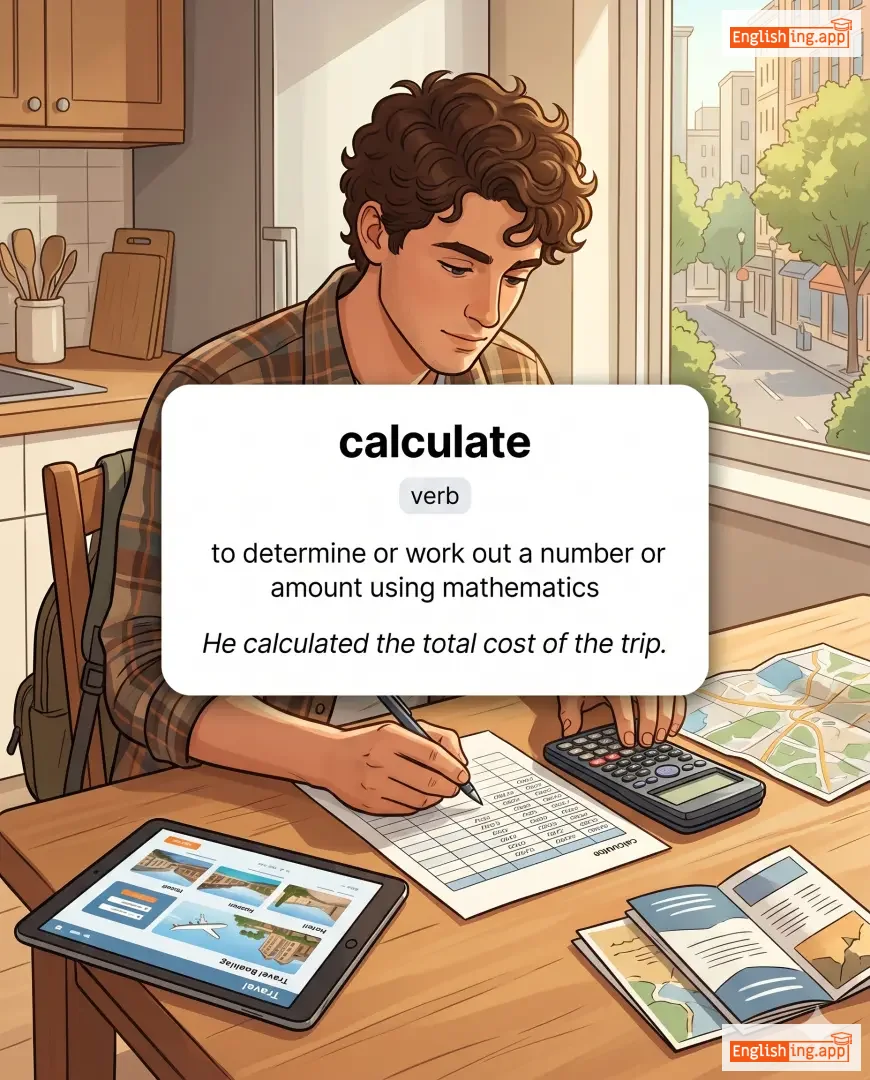
to determine or work out a number or amount using mathematics
••••••
|
He calculated the total cost of the trip.
他计算了旅行的总费用。
••••••
|
他计算了旅行的总费用。
Ta jisuanle luxing de zong feiyong.
••••••
|
calculate the odds
计算几率
••••••
|
to consider the chances of something happening
••••••
|
计算几率
jisuan jilv
••••••
|
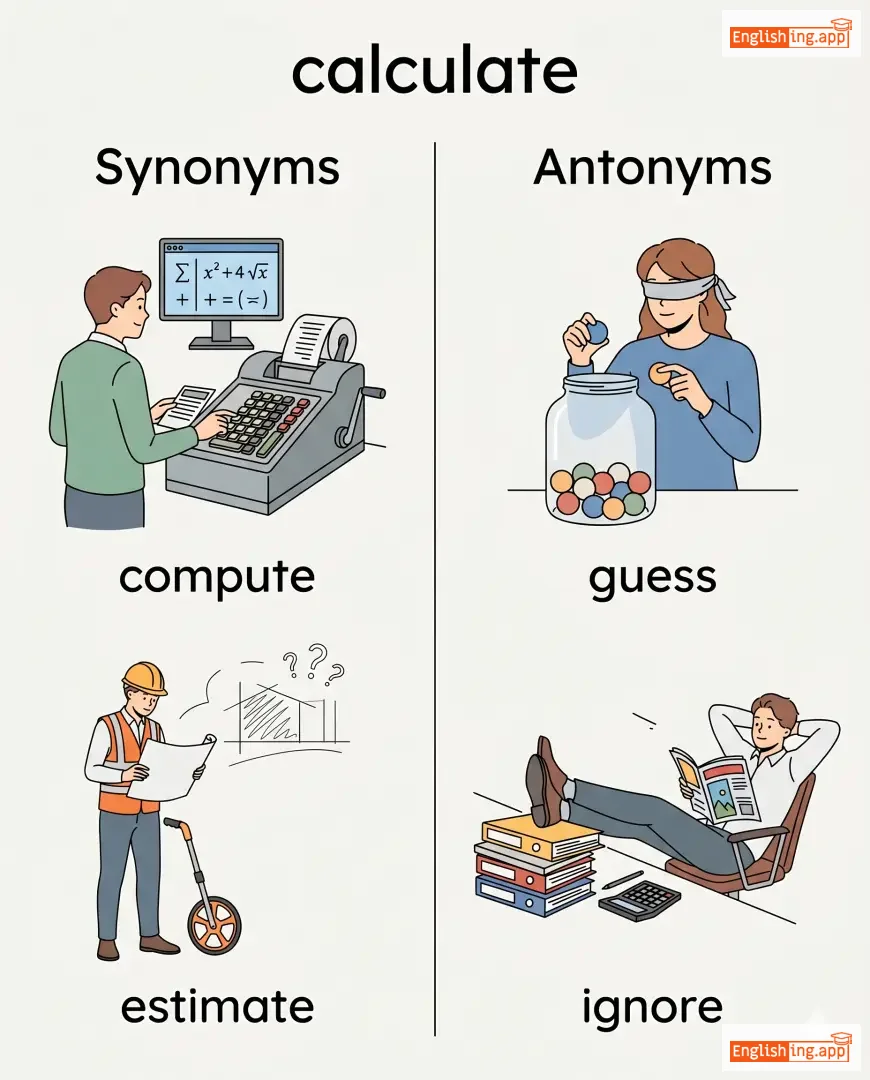
compute, estimate, count, evaluate, figure
••••••
|
guess, ignore, neglect
••••••
|
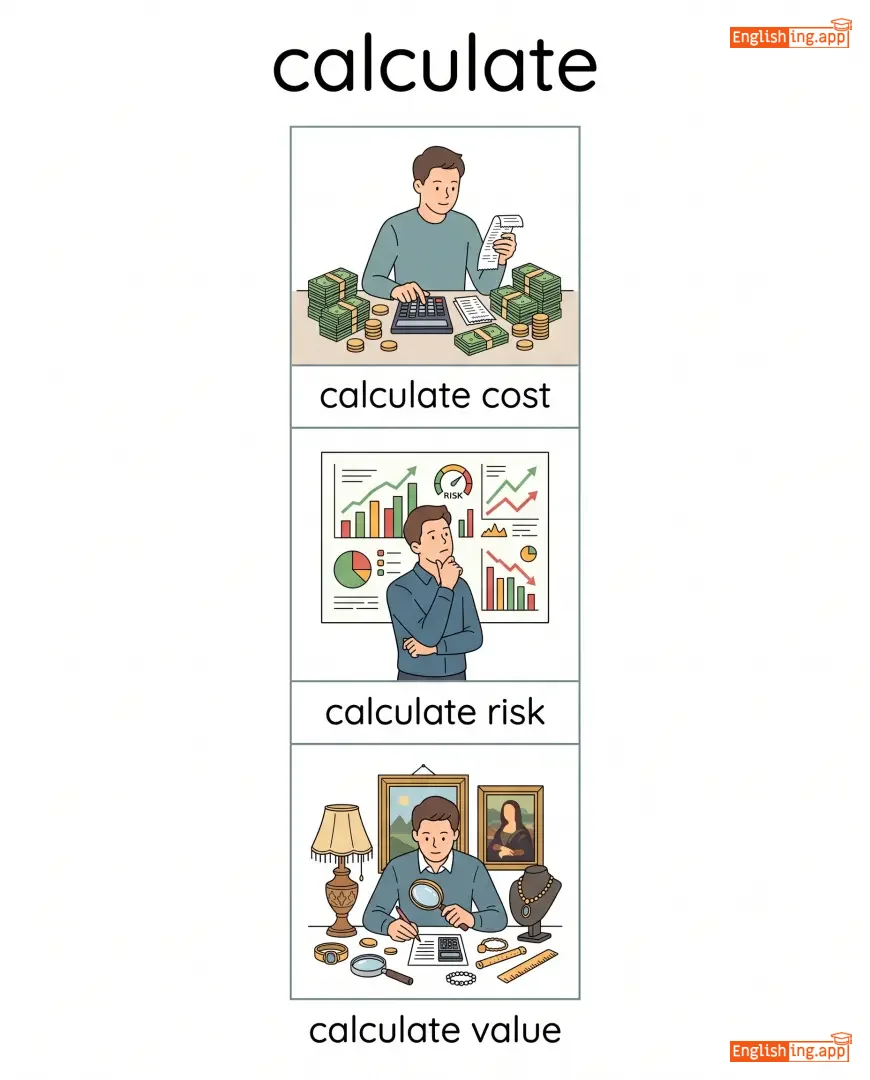
calculate cost, calculate risk, calculate value, calculate interest
••••••
|
Calculate意味着计算,记住我们使用计算器
••••••
|
|
#0
🗳️
|
/ˈkændɪdeɪt/
noun
(候选人)
••••••
|
- •••••• |
候选人
hòu xuǎn rén
••••••
|
- •••••• | - •••••• | - •••••• | - •••••• |
A person who applies for a job or is nominated for election.
••••••
|
The candidate gave a strong speech during the debate. |
候选人在辩论期间发表了强有力的演讲。
Hòu xuǎn rén zài biànlùn qījiān fābiǎo le qiáng yǒulì de yǎnjiǎng.
••••••
|
political candidate |
A person who seeks election to a political office.
••••••
|
政治候选人
zhèngzhì hòu xuǎn rén
••••••
|
applicant, nominee, contender, aspirant, competitor
••••••
|
employer, voter
••••••
|
job candidate, presidential candidate, candidate selection, candidate list
••••••
|
候选人像糖果,提名的人总是想吸引选民。
••••••
|
|
#0
🤲
|
/ˈkɛərfəli/
adverb
(ké-er-fu-li)
••••••
|
- •••••• |
小心地
xiǎo xīn de
••••••
|
- •••••• | - •••••• | - •••••• | - •••••• |
In a way that is done with attention to detail and caution to avoid mistakes or harm.
••••••
|
He carefully placed the glass on the table. |
他小心地把玻璃杯放在桌子上。
Tā xiǎo xīn de bǎ bōlí bēi fàng zài zhuōzi shàng.
••••••
|
handle with care |
used as an instruction to treat something delicately
••••••
|
小心操作
xiǎo xīn cāozuò
••••••
|
cautiously, attentively, gently, meticulously, thoroughly
••••••
|
carelessly, recklessly
••••••
|
listen carefully, handle carefully, plan carefully, watch carefully
••••••
|
小心地 = 小心 + 精细
••••••
|
|
#0
🌟
|
/səˈlɛbrɪti/
noun
(selibrity)
••••••
|
- •••••• |
名人
ming ren
••••••
|
- •••••• | - •••••• | - •••••• | - •••••• |
a famous person, especially in entertainment or sports
••••••
|
The celebrity was surrounded by fans at the airport. |
这位名人在机场被粉丝围住了。
Zhe wei ming ren zai ji chang bei fen si wei zhu le.
••••••
|
celebrity status |
the condition of being widely known and admired
••••••
|
名人地位
ming ren di wei
••••••
|
star, idol, personality, VIP, notable
••••••
|
unknown, nobody
••••••
|
celebrity gossip, celebrity news, celebrity status, celebrity culture
••••••
|
Celebrity 是一个大家都认识的明星!
••••••
|
|
#0
🎭
|
/ˈkærəktər/
noun
(kè rì kè tèr)
••••••
|
- •••••• |
角色
juésè
••••••
|
- •••••• | - •••••• | - •••••• | - •••••• |
the mental and moral qualities distinctive to an individual; a person in a story or play
••••••
|
The main character in the novel learns an important lesson. |
小说中的主角学到了一个重要的教训。
xiǎoshuō zhōng de zhǔjiǎo xué dào le yīgè zhòngyào de jiàoxùn.
••••••
|
out of character |
not typical behavior for someone
••••••
|
与角色不符
yǔ juésè bù fú
••••••
|
personality, nature, figure, role, persona
••••••
|
facelessness, anonymity
••••••
|
strong character, fictional character, moral character, character development
••••••
|
Character在中文里是角色,就像故事或戏剧中的人物一样。
••••••
|
|
#0
⚗️
|
/ˈkɛmɪstri/
noun
(kuī mì)
••••••
|
- •••••• |
化学
huàxué
••••••
|
- •••••• | - •••••• | - •••••• | - •••••• |
the branch of science that studies substances and their interactions; also the emotional connection between people
••••••
|
They have great chemistry and work well together. |
他们之间有很好的化学反应,工作默契。
Tāmen zhī jiān yǒu hěn hǎo de huàxué fǎnyìng, gōngzuò mòqì.
••••••
|
good chemistry |
a natural connection or attraction between people
••••••
|
良好的化学反应
liánghǎo de huàxué fǎnyìng
••••••
|
science, interaction, reaction, bond, connection
••••••
|
disconnection, separation
••••••
|
study chemistry, chemistry lab, good chemistry, organic chemistry
••••••
|
化学不仅仅是科学,它连接了所有事物,尤其是关系!
••••••
|
|
#0
🧒
|
/ˈtʃaɪldhʊd/
noun
(chaildhud)
••••••
|
- •••••• |
童年
tongnian
••••••
|
- •••••• | - •••••• | - •••••• | - •••••• |
the period of being a child
••••••
|
She spent her childhood in a small village.
她在一个小村庄度过了她的童年。
••••••
|
她在一个小村庄度过了她的童年。
Ta zai yige xiao cunzhuang duguo le ta de tongnian.
••••••
|
childhood friend
童年朋友
••••••
|
a friend someone has had since they were children
••••••
|
童年朋友
tongnian pengyou
••••••
|
infancy, youth, boyhood, girlhood
••••••
|
adulthood, maturity
••••••
|
happy childhood, early childhood, childhood memory, childhood friend
••••••
|
Child + hood = 童年 (阶段)
••••••
|
|
#0
🎻
|
/ˈklæsɪkəl/
adjective
(klasikal)
••••••
|
- •••••• |
经典或传统
jingdian huo chuantong
••••••
|
- •••••• | - •••••• | - •••••• | - •••••• |
relating to ancient Greek or Roman culture, or representing traditional excellence in art, music, or literature
••••••
|
She loves listening to classical music while studying. |
她喜欢在学习时听古典音乐。
Ta xihuan zai xuexi shi ting gudian yinyue.
••••••
|
classical beauty |
a timeless and traditional form of beauty
••••••
|
经典美学
jingdian meixue
••••••
|
traditional, ancient, timeless, refined
••••••
|
modern, contemporary
••••••
|
classical music, classical art, classical literature, classical architecture
••••••
|
Classical是永恒的传统 — 保持优雅的艺术!
••••••
|
|
#0
🧑💼
|
/ˈkaʊnsɪlər/
noun
(kāo'ēn xī ěr)
••••••
|
- •••••• |
议员
yìyuán
••••••
|
- •••••• | - •••••• | - •••••• | - •••••• |
an elected member of a council, especially a local government body
••••••
|
The councilor held a public meeting to discuss local issues. |
议员召开了一个公共会议,讨论地方问题。
Yìyuán zhàokāi le yīgè gōnggòng huìyì, tǎolùn dìfāng wèntí.
••••••
|
- •••••• | - •••••• | - •••••• |
representative, legislator, public official, politician
••••••
|
citizen, voter
••••••
|
local councilor, city councilor, councilor meeting
••••••
|
'议员' 是在议会中为民众发声的人。
••••••
|
Vocabulary Quiz
Test your vocabulary by matching words with their translations or meanings.
Login to take the quiz
Comments (0)
Share your thoughts and join the discussion.
Join the discussion by logging in
Login to CommentNo comments yet
Be the first to share your thoughts!