

沟通的力量
The Power of Communication
Nishat 是一位 communication 专家,在企业界提供培训。她的专长是教人们如何有效地 communicate,如何清晰地 express 自己的 message。
她发现,许多有才华的人仅仅因为缺乏 communication 技能而落后。他们能做好工作,但无法 articulate 自己的想法。在 conversations 中感到不自在,害怕参与 discussions。
Nishat 设计了一套综合培训课程。第一个 lesson 是 listening。她说:“良好的 communication 从 listening 开始。当你认真 listen 时,你会更好地 understand,也能更好地 respond。”
她教学生如何进行清晰的 speech,如何使用自信的 voice。Verbal communication 不仅是语言,还包括语调、节奏和清晰度。
学生们练习了 dialogues,进行了角色扮演。有的做销售演讲,有的模拟面试,还有的进行演示。在每个场景中,重点都是清晰的 communication。
Nishat 还强调了身体 language 的重要性。她解释说:“Communication 不仅仅是 speaking。你的姿态、手势、眼神交流——这些也会 communicate 一个 message。”
她还 talked 到了 linguistic 多样性。孟加拉国有不同的 languages 和方言。有效的 communicators 能根据听众灵活调整。
课程中的一个重要模块是 fluent communication。如何 speak 时不犹豫,如何让 conversations 自然流畅。
学生们逐渐变得自信。他们学会了如何在专业会议中 interact,如何处理困难的 conversations,如何使用有说服力的 language。
完成 Nishat 的培训后,学生们的职业生涯显著提升。他们现在能够自信地在会议中 speak,进行演讲,并有效地 communicate 自己的想法。
一位学生后来说:“Communication 技能改变了我的职业生涯。我现在能够清晰地 express 我的想法,积极地 listen 他人,参与建设性的 dialogues。这些技能不仅在工作中有用,在个人生活中也同样重要。”
Nishat 现在在各个机构举办讲座。她说:“有效的 communication 是最重要的技能。当你能够清楚地 speak、专注地 listen、有思想地 respond 时,你能建立更好的人际关系。Verbal 和非 verbal communication 同样重要。你的 voice、speech、language——一切都重要。Fluent communication 不只是快速 speaking,而是清晰、自信且有效。每一次 conversation 都是一个机会,每一个 dialogue 都是建立联系的契机。当你 understand 如何 communicate,你就能开启无数机会。优秀的 communicators 会成为更好的领导者、更好的团队成员和更好的专业人士。他们能 express 自己的愿景,articulate 复杂的想法,并有效地 interact 与他人。这就是 communication 的力量。这是一种 linguistic 技能,通过练习不断提升,并终生受益。”
Nishat 的培训项目不仅改变了个人的 communication 能力,还改变了整个组织的 communication 文化。当团队能有效地 communicate 时,合作更顺畅,生产力提升,成功也随之而来。她的工作证明了,良好的 communication 是一切成就的基础,而掌握这一技能就是对未来的投资。




Swipe left or right, or use the buttons. Tap image to zoom.
例句翻译
单词
The Power of CommunicationThe Power of Communication - 遮罩切换
|
表情符号
|
单词 | Images | 翻译 | 过去时 | 过去分词 | 第三人称单数 | 动名词 | 含义 | 例句 | 例句翻译 | 示例表达 | 示例表达含义 | 示例表达翻译 | 同义词 | 反义词 | 搭配词 | 助记符 |
|---|---|---|---|---|---|---|---|---|---|---|---|---|---|---|---|---|---|
|
#0
🗣️
|
/ɑːrˈtɪkjʊlət/
verb/adjective
••••••
|
- •••••• | - •••••• |
articulated
••••••
|
articulated
••••••
|
articulates
••••••
|
articulating
••••••
|
to express thoughts or ideas clearly; having the ability to speak fluently and clearly
••••••
|
She was able to articulate her ideas during the meeting. |
- •••••• |
articulate a vision |
to clearly express or describe a goal or plan
••••••
|
- •••••• |
express, convey, enunciate, pronounce, clarify
••••••
|
mumble, mutter, unclear
••••••
|
articulate clearly, articulate ideas, articulate words, articulate speech
••••••
|
No •••••• |
|
#0
💬
|
/kəˈmjuː.nɪ.keɪt/
verb
••••••
|
- •••••• | - •••••• |
communicated
••••••
|
communicated
••••••
|
communicates
••••••
|
communicating
••••••
|
to share or exchange information, ideas, or feelings
••••••
|
They used gestures to communicate across the noisy room. |
- •••••• |
communicate clearly |
to express oneself in a way that others can easily understand
••••••
|
- •••••• |
convey, express, share, transmit, inform
••••••
|
conceal, suppress
••••••
|
communicate effectively, communicate directly, communicate through, communicate clearly
••••••
|
No •••••• |
|
#0
📞
|
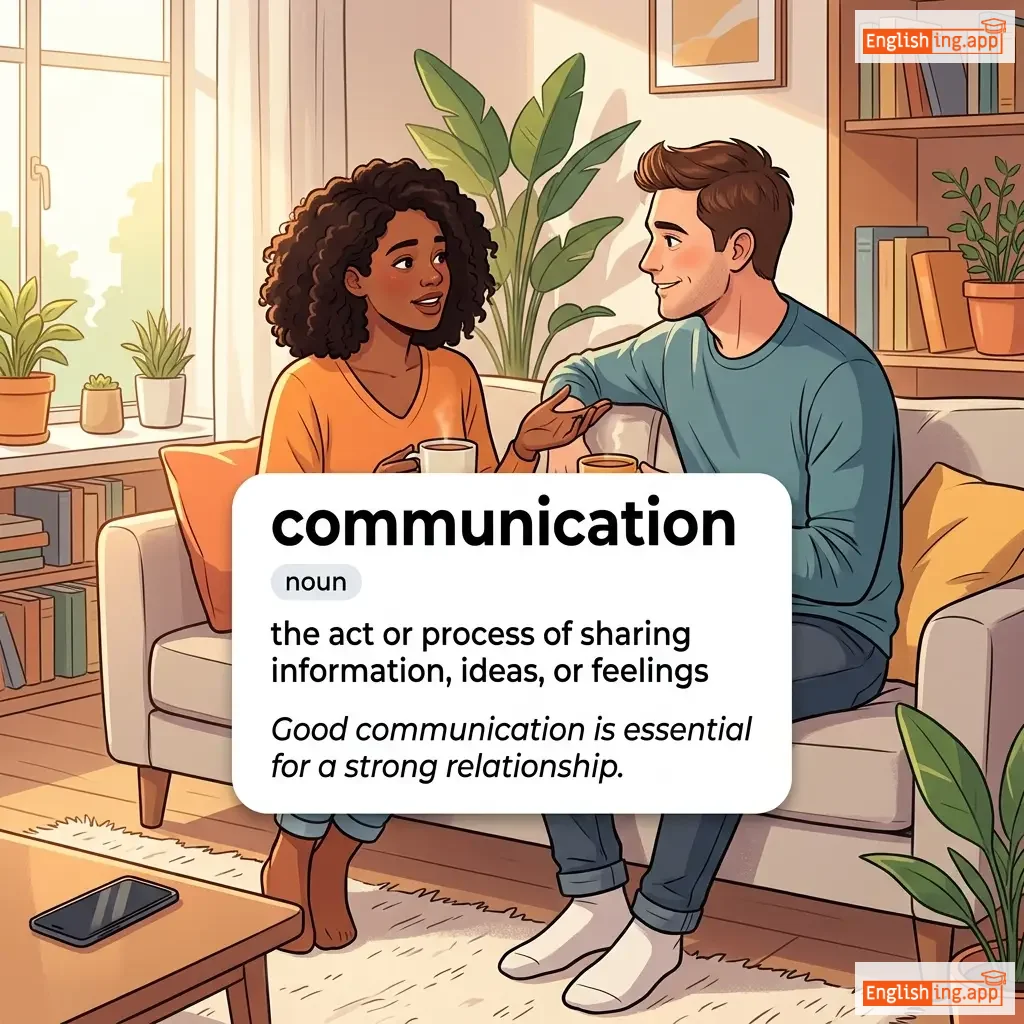
/kəˌmjuː.nɪˈkeɪ.ʃən/
noun
(沟通)
••••••
|
|
沟通
goutong
••••••
|
- •••••• | - •••••• | - •••••• | - •••••• |
the act or process of sharing information, ideas, or feelings
••••••
|
Good communication is essential for a strong relationship. |
良好的沟通对建立牢固的关系至关重要。
Lianghao de goutong dui jianli laogu de guanxi zhiguanchongyao.
••••••
|
lines of communication |
the channels or methods by which people communicate
••••••
|
沟通渠道
goutong qudao
••••••
|
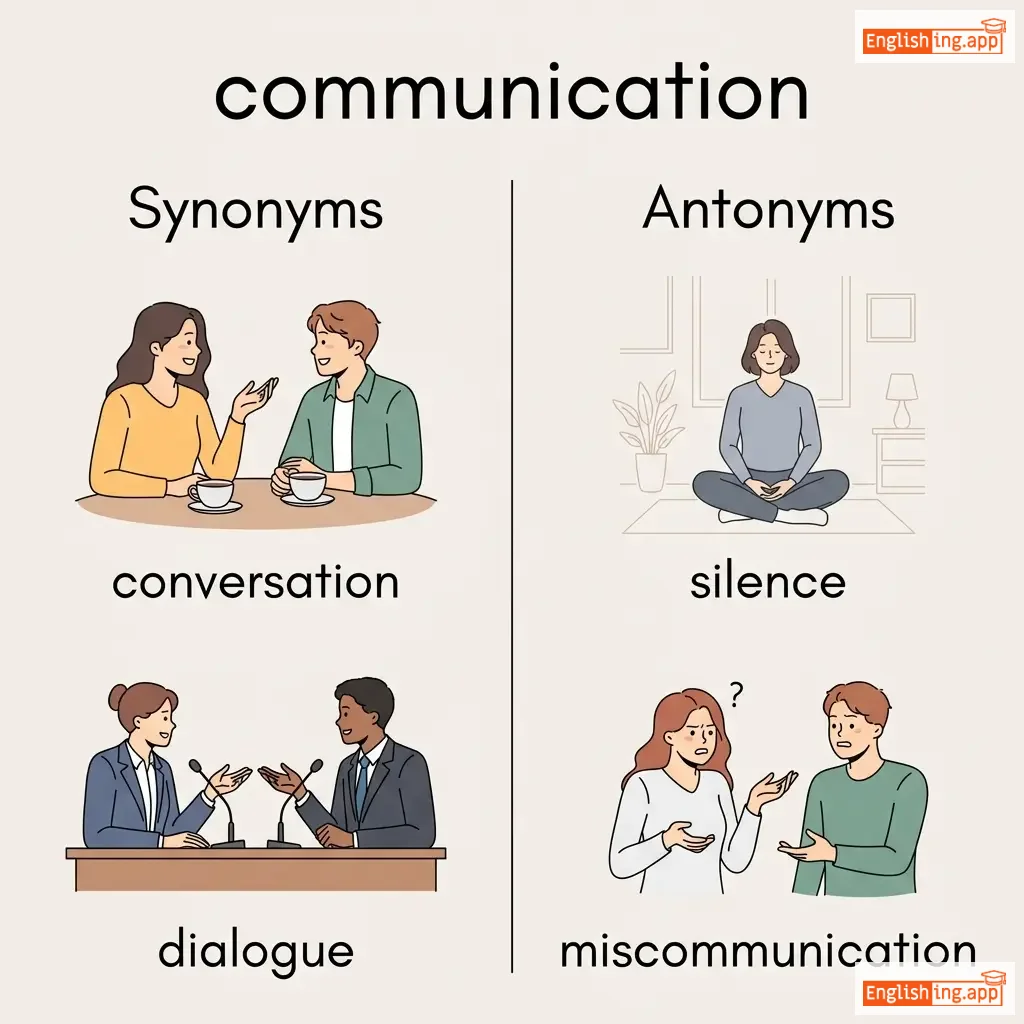
conversation, dialogue, exchange, correspondence, contact
••••••
|
silence, miscommunication
••••••
|
effective communication, open communication, communication skills, communication barrier
••••••
|
沟通 = 社区 + 行动 = 社会中的信息交换
••••••
|
|
#0
💬
|
/ˌkɒnvəˈseɪʃn/
noun
(kɔnvəˈseɪʃn)
••••••
|
- •••••• |
对话
duihua
••••••
|
- •••••• | - •••••• | - •••••• | - •••••• |
an informal talk between two or more people, in which ideas, feelings, and thoughts are exchanged
••••••
|
We had a long conversation about future plans. |
我们就未来的计划进行了长时间的对话。
Wo men jiu wei lai de jihua jin xing le chang shijian de duihua.
••••••
|
make conversation |
to talk with someone to appear polite, often about trivial things
••••••
|
展开对话
zhan kai dui hua
••••••
|
dialogue, talk, discussion, chat, exchange
••••••
|
silence, quiet, muteness
••••••
|
casual conversation, phone conversation, deep conversation, conversation starter
••••••
|
对话意味着交流思想和感受。
••••••
|
|
#0
🗣️
|
/ˈdaɪəlɔːɡ/
noun
(对话)
••••••
|
- •••••• |
对话
duìhuà
••••••
|
- •••••• | - •••••• | - •••••• | - •••••• |
A conversation between two or more people, or a discussion aimed at reaching understanding.
••••••
|
The two countries engaged in a dialogue to resolve their differences. |
这两个国家进行了对话,以解决他们的分歧。
Zhè liǎng gè guójiā jìnxíngle duìhuà, yǐ jiějué tāmen de fēnqí.
••••••
|
open dialogue |
A transparent and constructive conversation.
••••••
|
开放对话
kāifàng duìhuà
••••••
|
conversation, discussion, talk, exchange, communication
••••••
|
silence, monologue
••••••
|
constructive dialogue, political dialogue, open dialogue
••••••
|
对话 = conversation → 在中文里,对话 = 电影里的对话。
••••••
|
|
#0
💬
|
/dɪˈskʌs/
verb
(di-sku-si)
••••••
|
- •••••• |
讨论
taolun
••••••
|
discussed
di-sku-si-t
••••••
|
discussed
di-sku-si-t
••••••
|
discusses
di-sku-si-s
••••••
|
discussing
di-sku-si-ng
••••••
|
To talk about something with another person or group in detail.
••••••
|
We need to discuss the project before finalizing it.
我们需要在完成之前讨论这个项目。
••••••
|
我们需要在完成之前讨论这个项目。
Wo men xu yao zai wan cheng zhi qian taolun zhe ge xiangmu.
••••••
|
discuss matters
讨论事务
••••••
|
to talk about issues or problems
••••••
|
讨论事务
taolun shiwuh
••••••
|
talk, debate, confer, deliberate, examine
••••••
|
ignore, avoid
••••••
|
discuss a plan, discuss issues, discuss openly, discuss further
••••••
|
讨论是与他人一起深入交谈的意思。
••••••
|
|
#0
💬
|
/ɪkˈsprɛs/
verb
(表达)
••••••
|
- •••••• |
表达
biaoda
••••••
|
expressed
表达过
••••••
|
expressed
表达过
••••••
|
expresses
表达
••••••
|
expressing
表达中
••••••
|
to convey a thought, feeling, or idea in words, actions, or other forms
••••••
|
She expressed her gratitude with a warm smile.
她通过温暖的微笑表达了她的感激之情。
••••••
|
她通过温暖的微笑表达了她的感激之情。
Ta tongguo wenruan de weixiao biaoda le ta de ganji zhiqing.
••••••
|
express yourself
表达自己
••••••
|
to communicate one's thoughts and feelings openly
••••••
|
表达自己
Biaoda ziji
••••••
|
convey, communicate, articulate, state, voice
••••••
|
suppress, conceal, hide
••••••
|
express feelings, express gratitude, express concern, express clearly
••••••
|
表达就是你内心的声音,像画笔一样呈现出来。
••••••
|
|
#0
🗣️
|
/ˈfluːənt/
adjective
(flu-ent)
••••••
|
- •••••• |
流利
liú lì
••••••
|
- •••••• | - •••••• | - •••••• | - •••••• |
Able to speak, write, or express oneself smoothly and easily.
••••••
|
She is fluent in both English and Spanish. |
她能流利地说英语和西班牙语。
Tā néng liúlì de shuō yīngyǔ hé xībānyá yǔ.
••••••
|
fluent speaker |
Someone who speaks a language smoothly and naturally.
••••••
|
流利的讲者
liúlì de jiǎngzhě
••••••
|
articulate, expressive, eloquent, smooth, proficient
••••••
|
inarticulate, hesitant, awkward
••••••
|
fluent speaker, fluent English, fluent in, become fluent
••••••
|
Fluent 就像流动的水,流利地表达自己。
••••••
|
|
#0
🤝
|
/ˌɪntərˈækt/
verb
(因特拉克特)
••••••
|
|
互动
hudong
••••••
|
interacted
因特拉克特德
••••••
|
interacted
因特拉克特德
••••••
|
interacts
因特拉克特斯
••••••
|
interacting
因特拉克特英
••••••
|
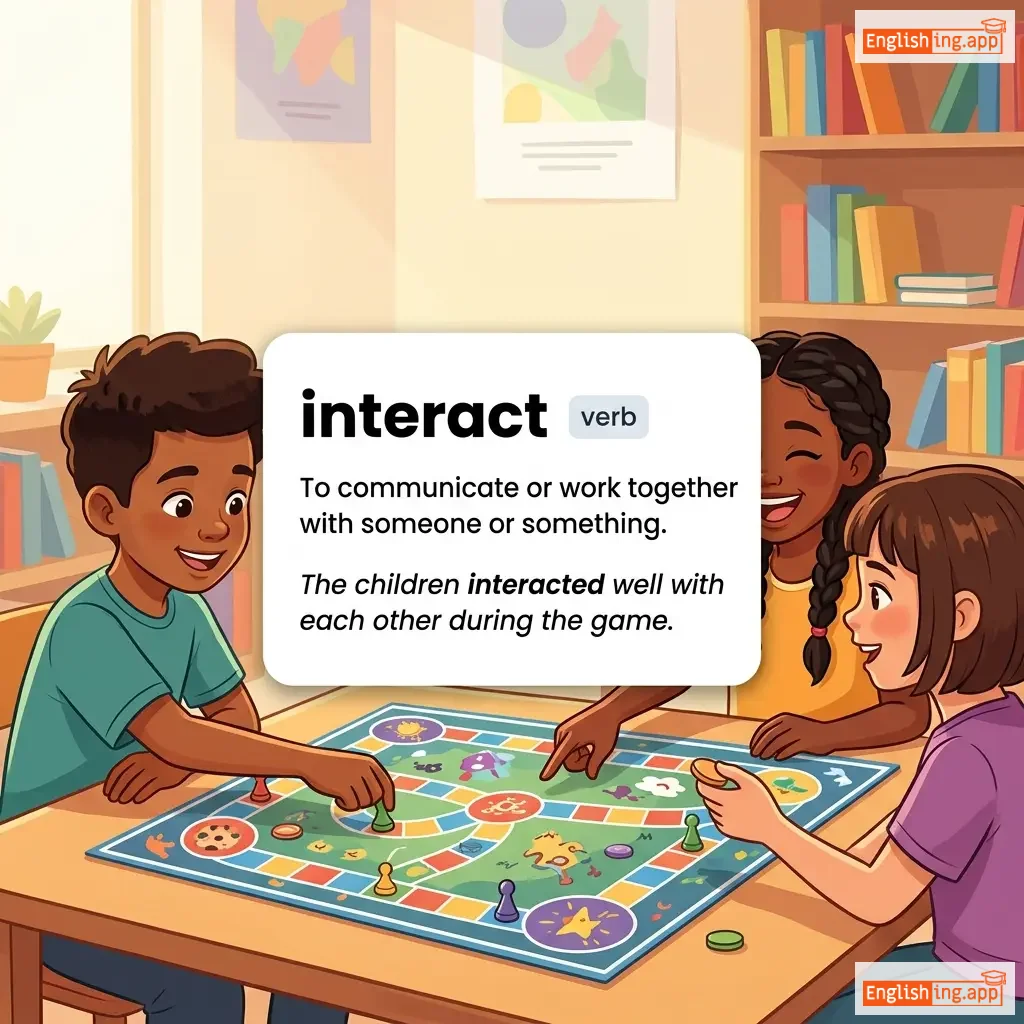
To communicate or work together with someone or something.
••••••
|
The children interacted well with each other during the game.
孩子们在游戏中很好地互动。
••••••
|
孩子们在游戏中很好地互动。
Háizimen zài yóuxì zhōng hěn hǎo de hudong.
••••••
|
interact with
互动
••••••
|
to communicate or engage with someone or something
••••••
|
互动
hudong
••••••
|
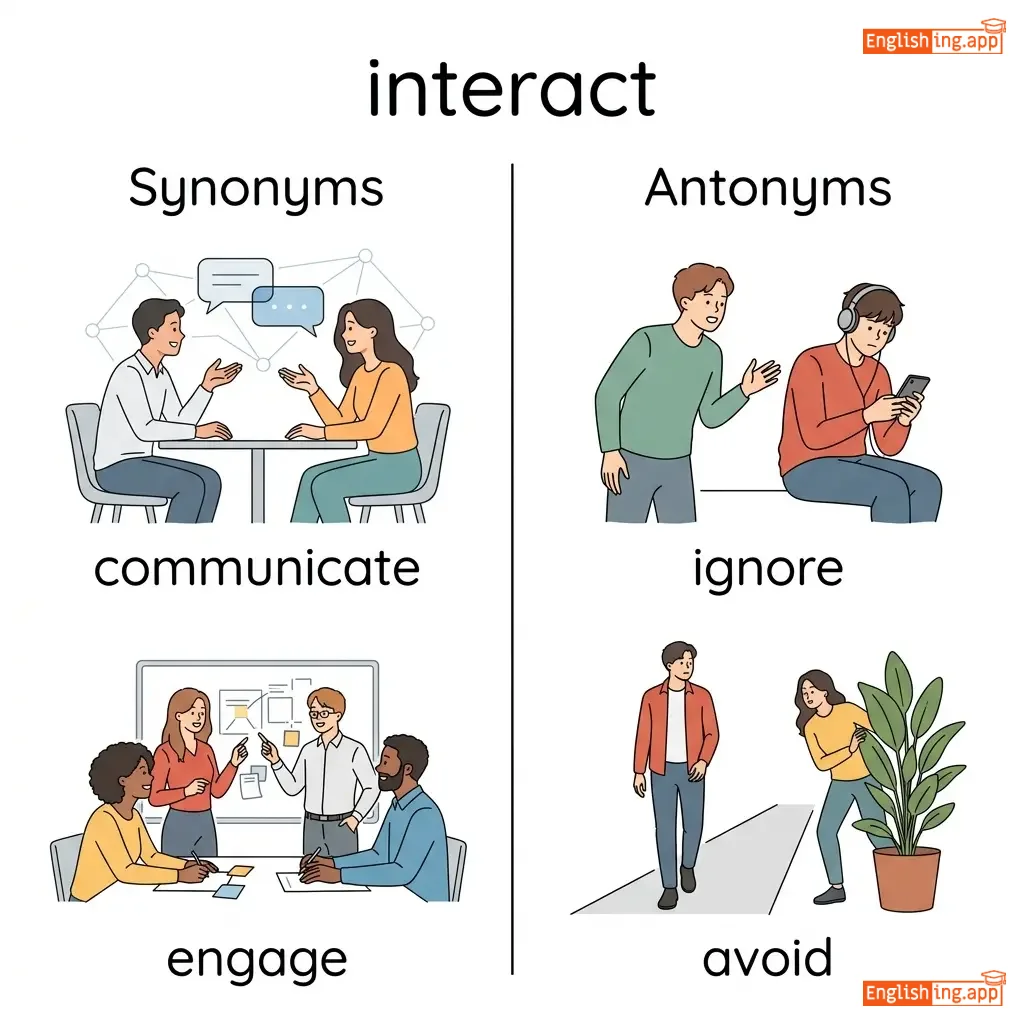
communicate, engage, connect, collaborate
••••••
|
ignore, avoid
••••••
|
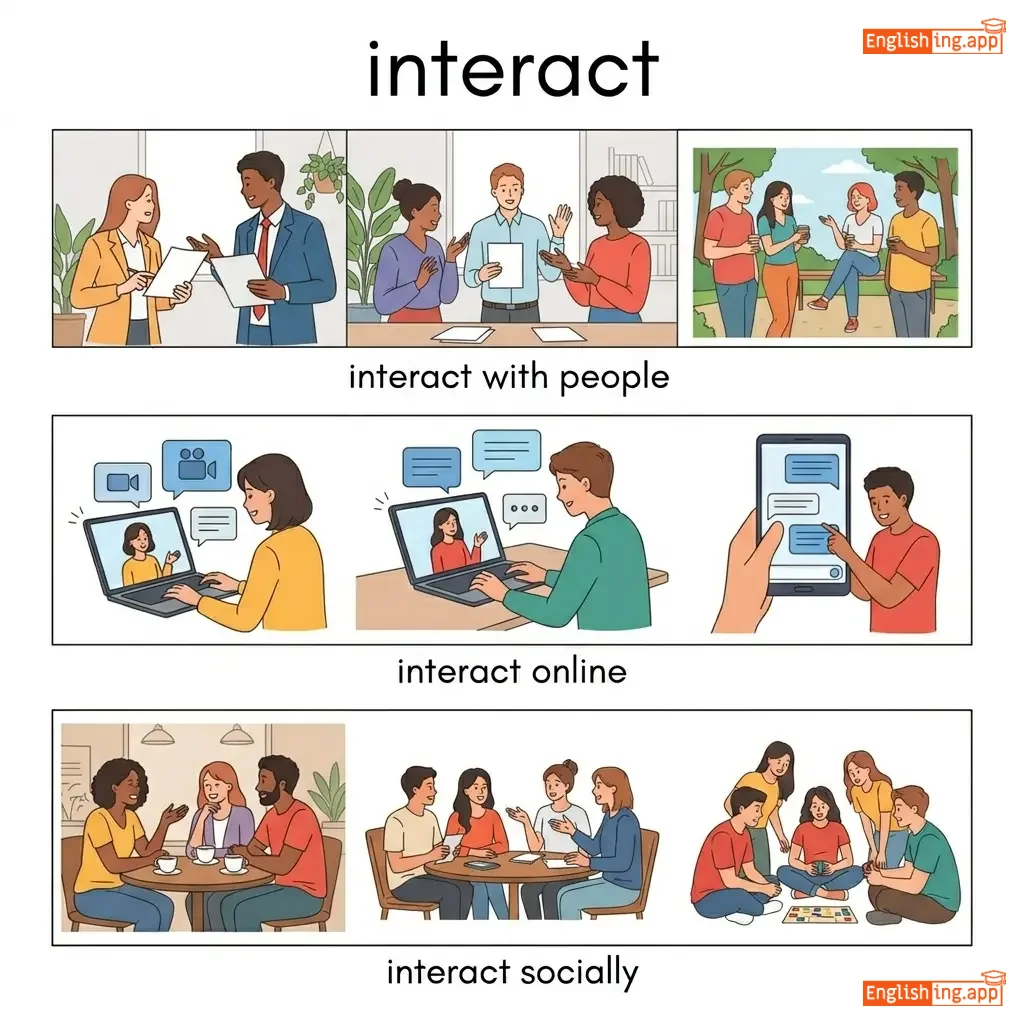
interact with people, interact online, interact socially
••••••
|
互动像在游戏中互动。
••••••
|
|
#0
🗣️
|
/ˈlæŋɡwɪdʒ/
noun
(lèngwèi)
••••••
|
|
语言
yǔyán
••••••
|
- •••••• | - •••••• | - •••••• | - •••••• |
the system of communication used by a particular community, including spoken and written words
••••••
|
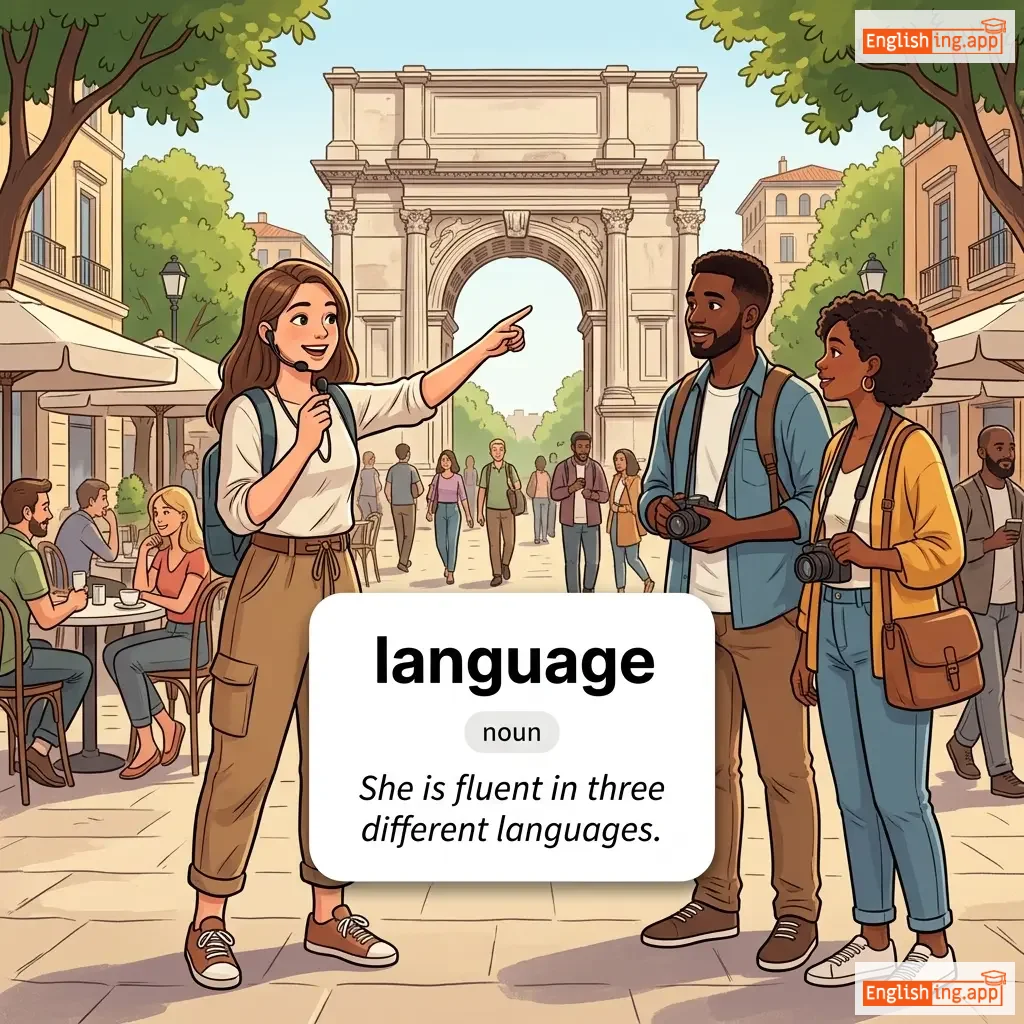
She is fluent in three different languages.
她流利地说三种不同的语言。
••••••
|
她流利地说三种不同的语言。
Tā liúlì de shuō sān zhǒng bùtóng de yǔyán.
••••••
|
mother tongue
母语
••••••
|
a person's native language
••••••
|
母语
mǔyǔ
••••••
|
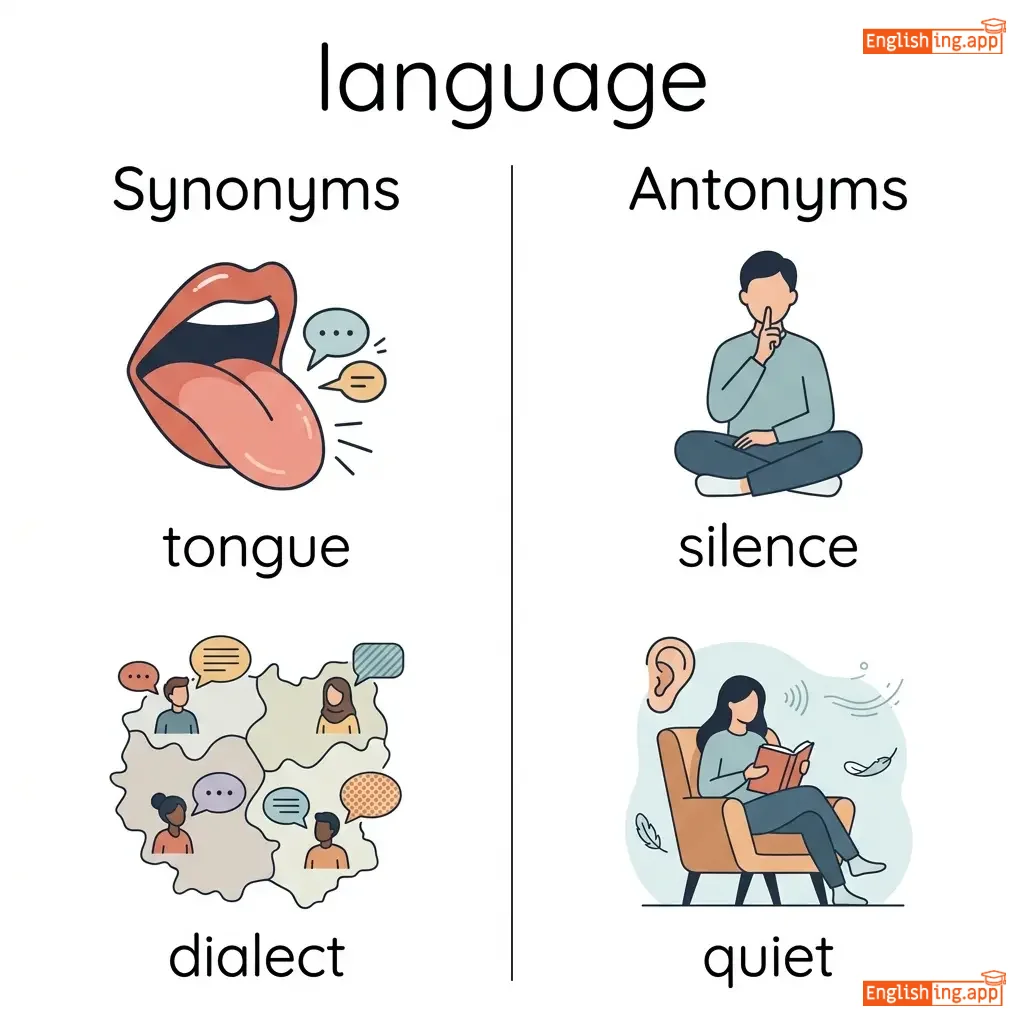
tongue, dialect, speech, lingo, communication
••••••
|
silence, quiet
••••••
|
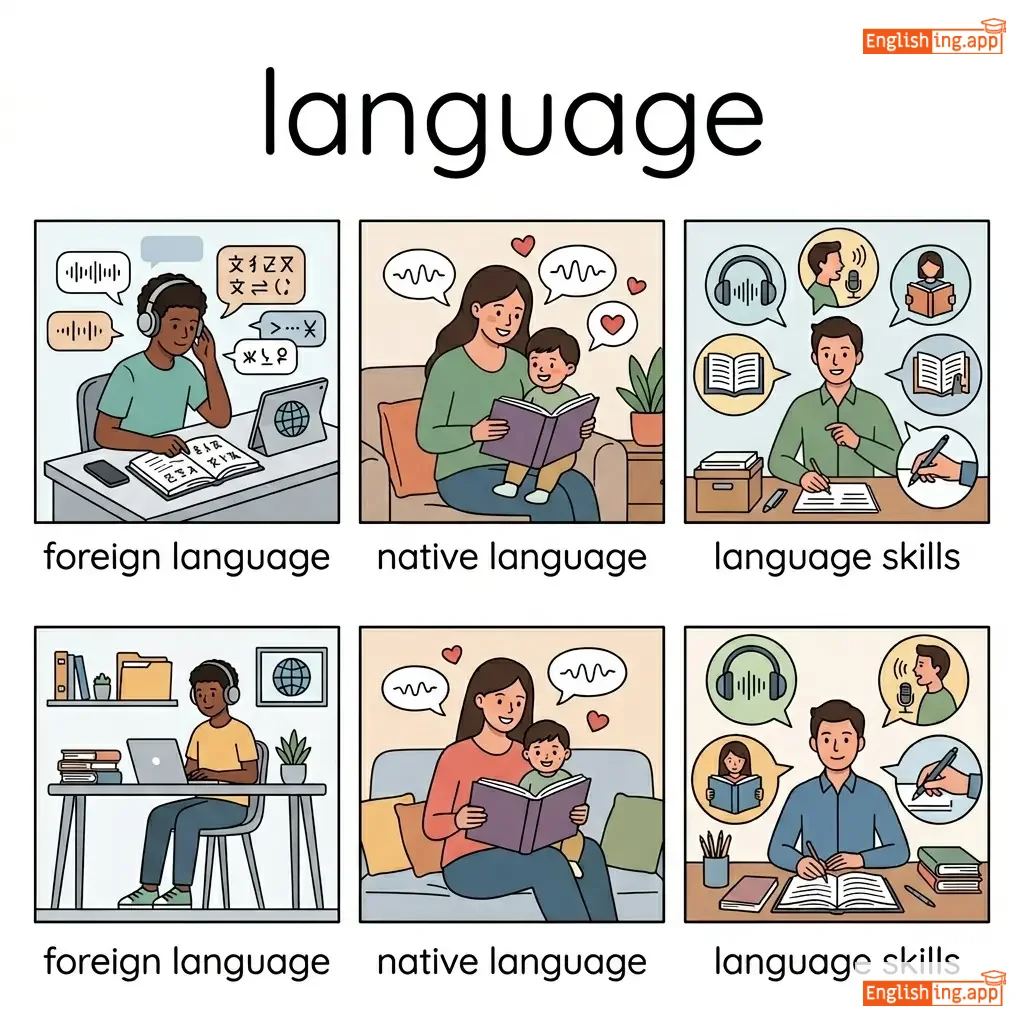
foreign language, native language, language skills, language barrier
••••••
|
LANGUAGE 意味着‘语言’ – 就像中文中的语言,在英文中是 language
••••••
|
|
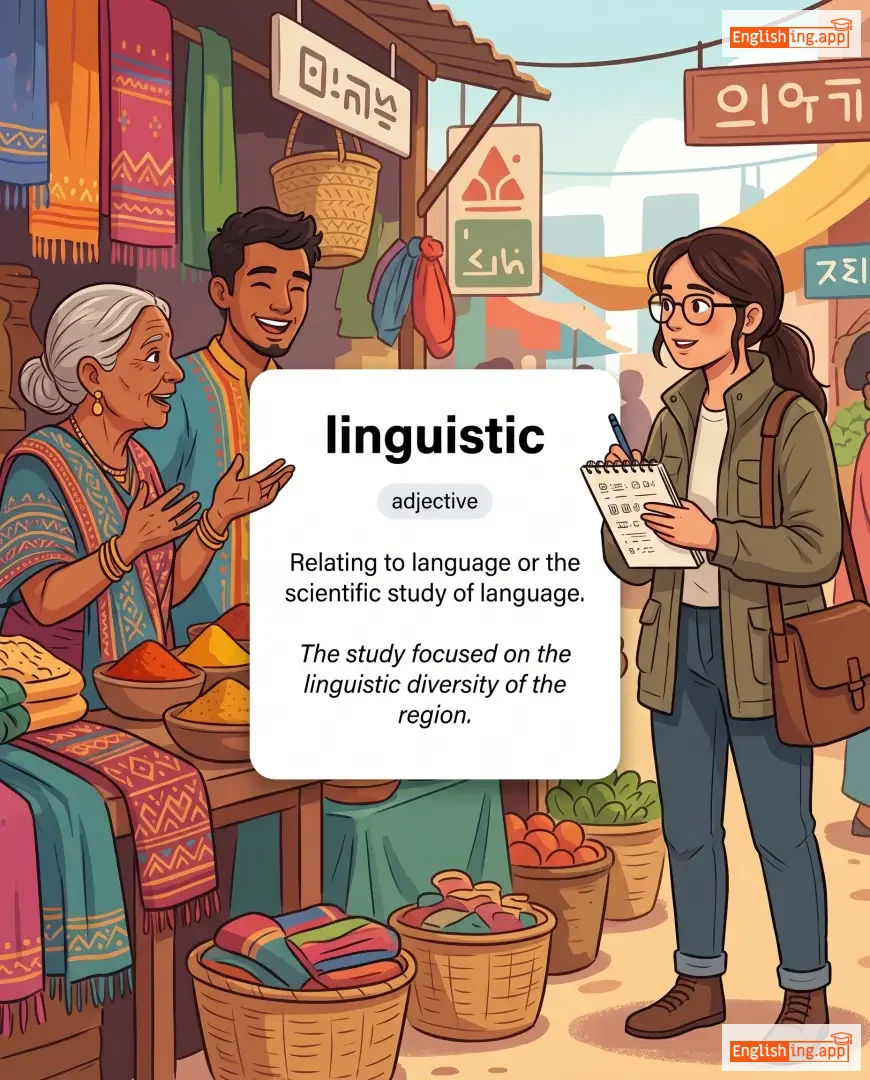
#0
📚
|
/lɪŋˈɡwɪstɪk/
adjective
(lɪŋˈɡwɪstɪk)
••••••
|
|
语言学的
yǔyán xué de
••••••
|
- •••••• | - •••••• | - •••••• | - •••••• |
Relating to language or the scientific study of language.
••••••
|
The study focused on the linguistic diversity of the region.
该研究集中在该地区的语言多样性上。
••••••
|
该研究集中在该地区的语言多样性上。
Gāi yánjiū jízhōng zài gāi dìqū de yǔyán duōyàng xìng shàng.
••••••
|
- •••••• | - •••••• | - •••••• |
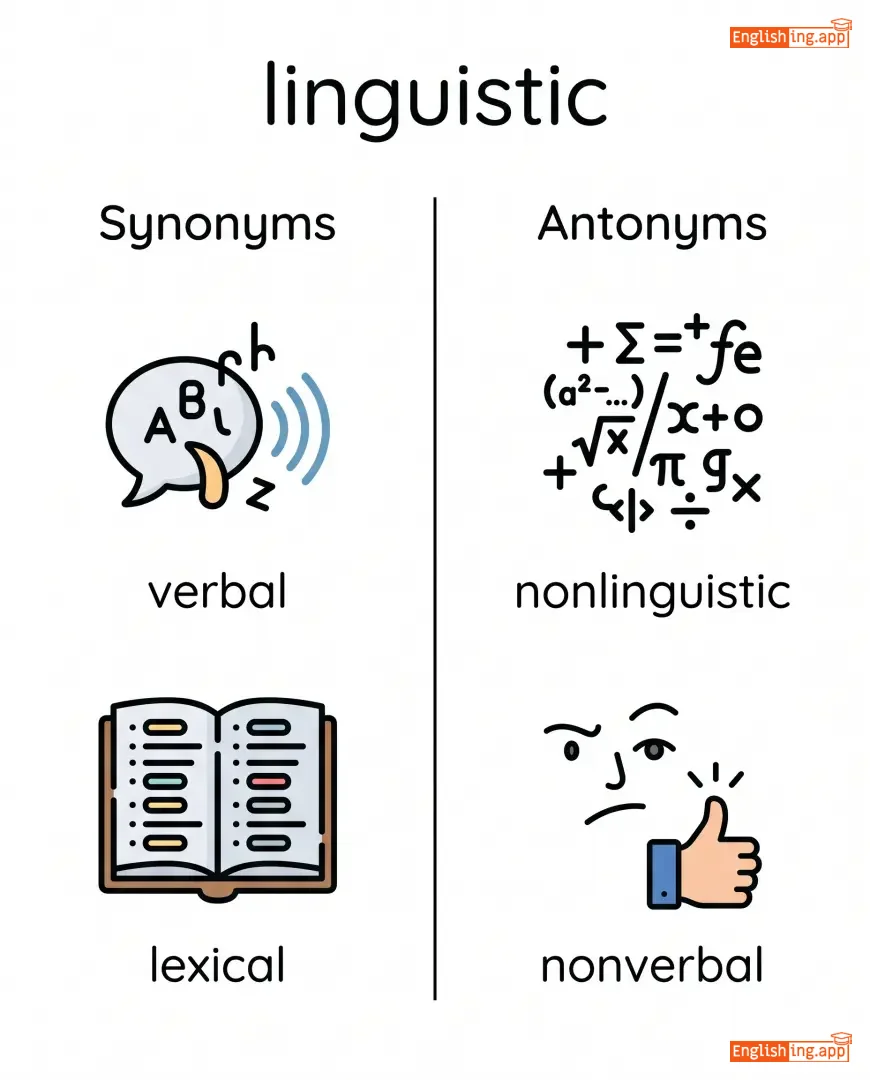
verbal, lexical, grammatical, philological
••••••
|
nonlinguistic, nonverbal
••••••
|
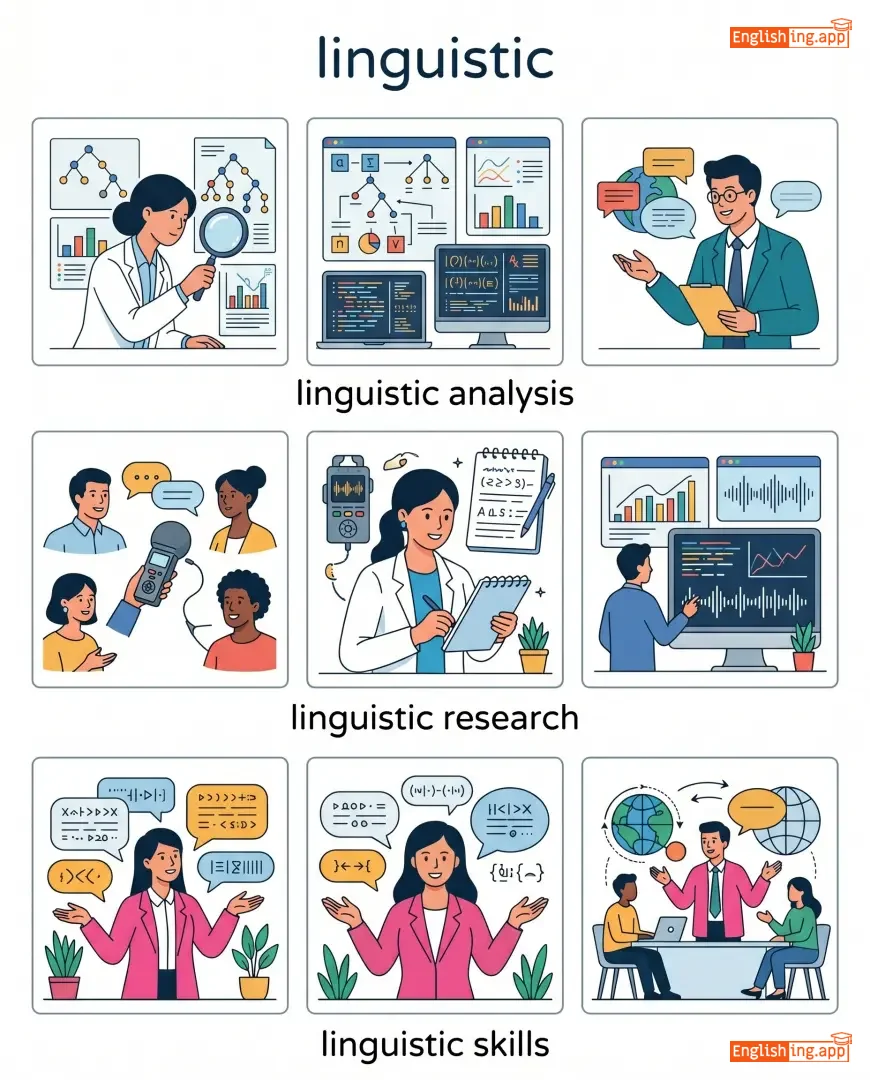
linguistic analysis, linguistic research, linguistic skills, linguistic diversity
••••••
|
语言学的 = 语言 + 学的 = 与语言相关
••••••
|
|
#0
👂
|
/ˈlɪs.ən/
verb
(lìsēn)
••••••
|
|
听
tīng
••••••
|
listened
lìsēnd
••••••
|
listened
lìsēnd
••••••
|
listens
lìsēns
••••••
|
listening
lìsēnɪnɡ
••••••
|
to pay attention to sound
••••••
|
She loves to listen to classical music in the evenings.
她喜欢在晚上听古典音乐。
••••••
|
她喜欢在晚上听古典音乐。
Tā xǐhuān zài wǎnshàng tīng gǔdiǎn yīnyuè.
••••••
|
listen up
注意听
••••••
|
used to tell people to pay attention
••••••
|
注意听
zhùyì tīng
••••••
|
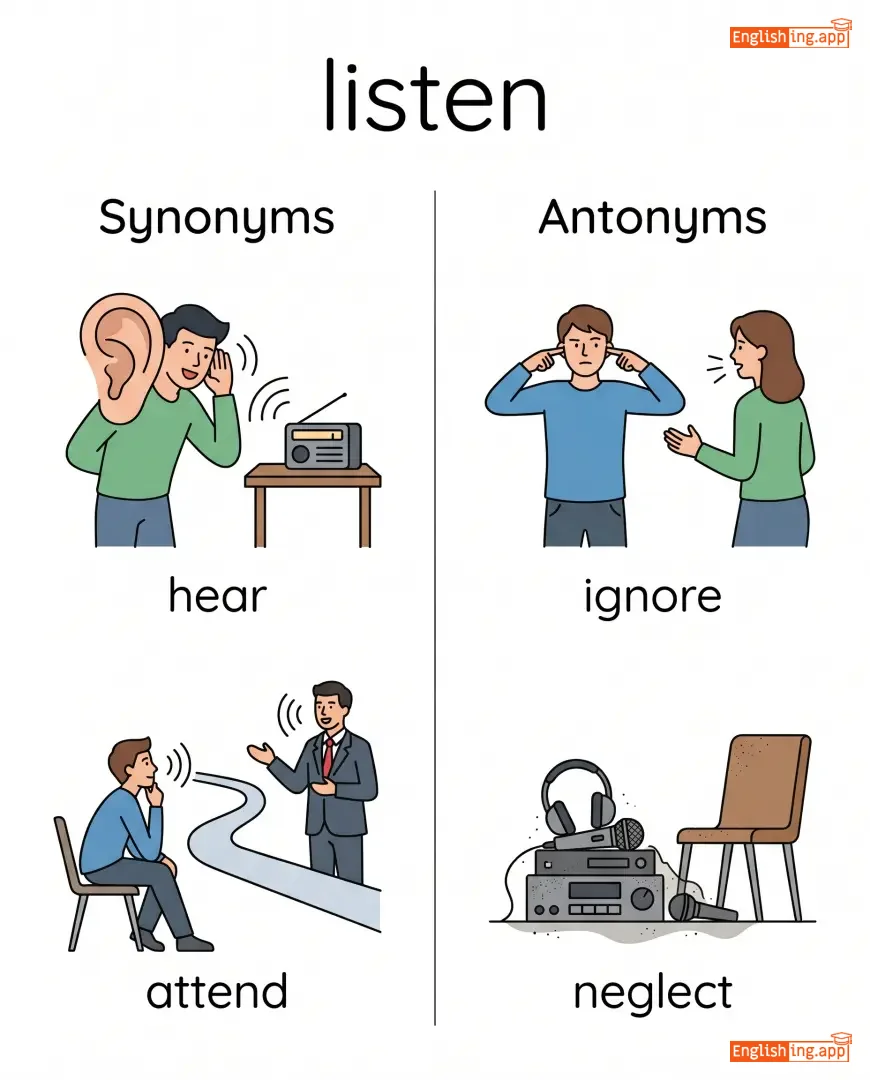
hear, attend, heed, concentrate, pay attention
••••••
|
ignore, neglect, disregard
••••••
|
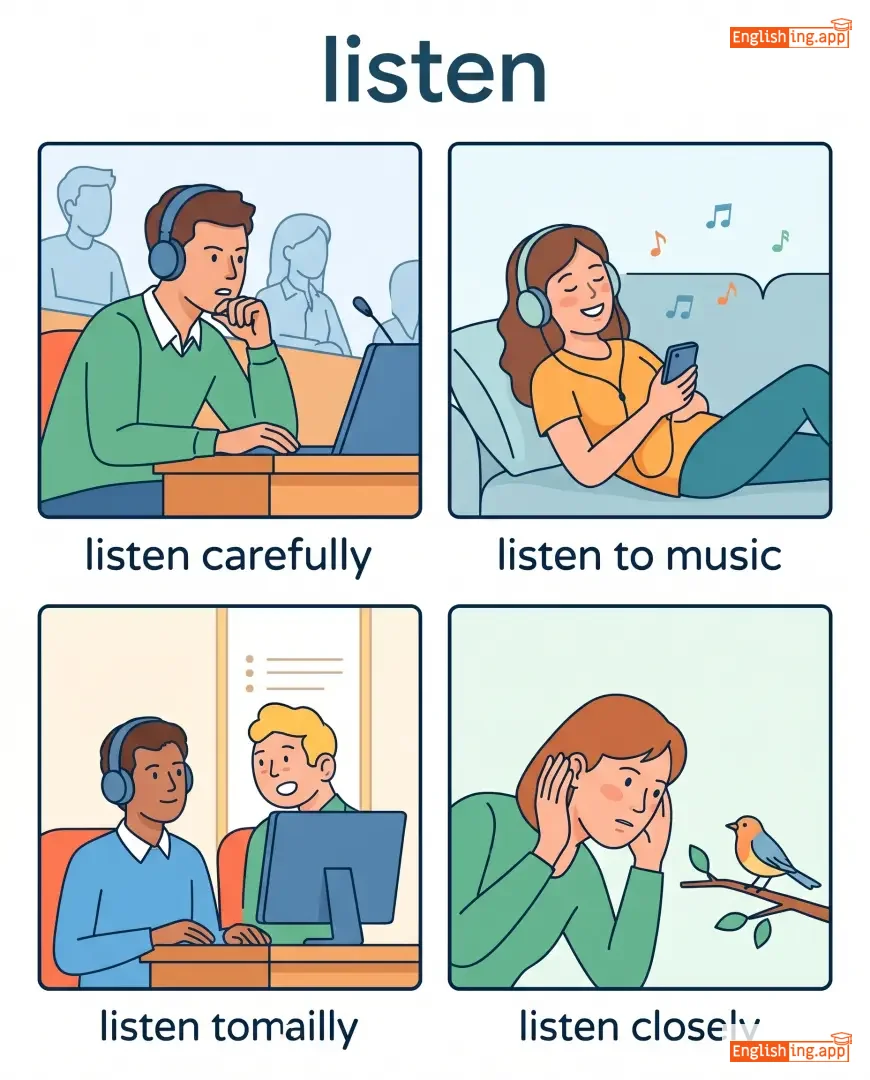
listen carefully, listen to music, listen closely, listen in
••••••
|
👂 Listen 意思是听 – 听妈妈说话!
••••••
|
|
#0
📩
|
/ˈmɛsɪdʒ/
noun
(mɛsɪdʒ)
••••••
|
- •••••• |
消息
xiaoxi
••••••
|
- •••••• | - •••••• | - •••••• | - •••••• |
A piece of information sent or communicated from one person to another.
••••••
|
I received a message from my friend yesterday. |
我昨天收到了一条来自朋友的消息。
Wo zuotian shoudao le yitiao laizi pengyou de xiaoxi.
••••••
|
get the message |
To understand the meaning or implication of something
••••••
|
理解消息
liji xiaoxi
••••••
|
note, communication, letter, text, notification
••••••
|
silence, quiet
••••••
|
send a message, receive a message, leave a message, important message
••••••
|
MESSAGE 是消息—记住:'SMS 就是消息'
••••••
|
|
#0
💬
|
/rɪˈspɒnd/
verb
(回应)
••••••
|
|
回应
hui ying
••••••
|
responded
回应了
••••••
|
responded
回应了
••••••
|
responds
回应
••••••
|
responding
回应中
••••••
|
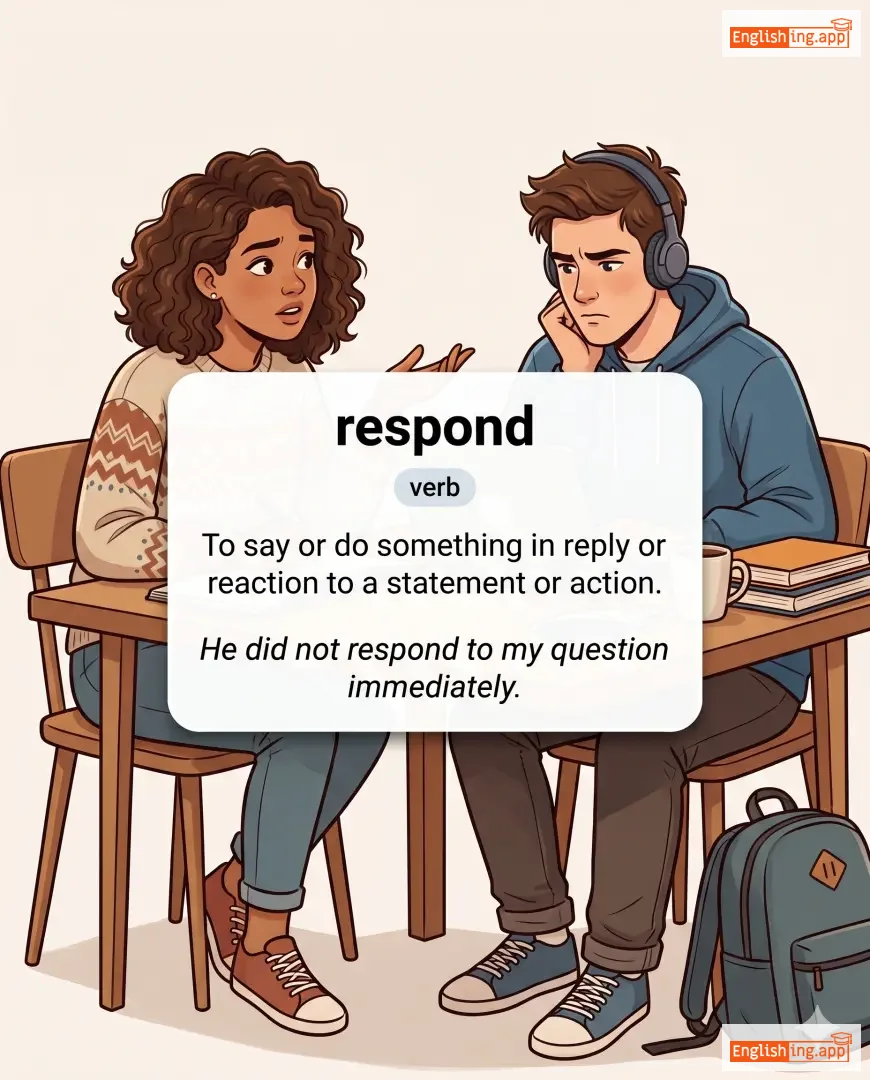
To say or do something in reply or reaction to a statement or action.
••••••
|
He did not respond to my question immediately.
他没有立即回应我的问题。
••••••
|
他没有立即回应我的问题。
Ta meiyou liji hui ying wode wenti.
••••••
|
respond to treatment
回应治疗
••••••
|
To show improvement after receiving medical treatment.
••••••
|
回应治疗
Hui ying zhi liao
••••••
|
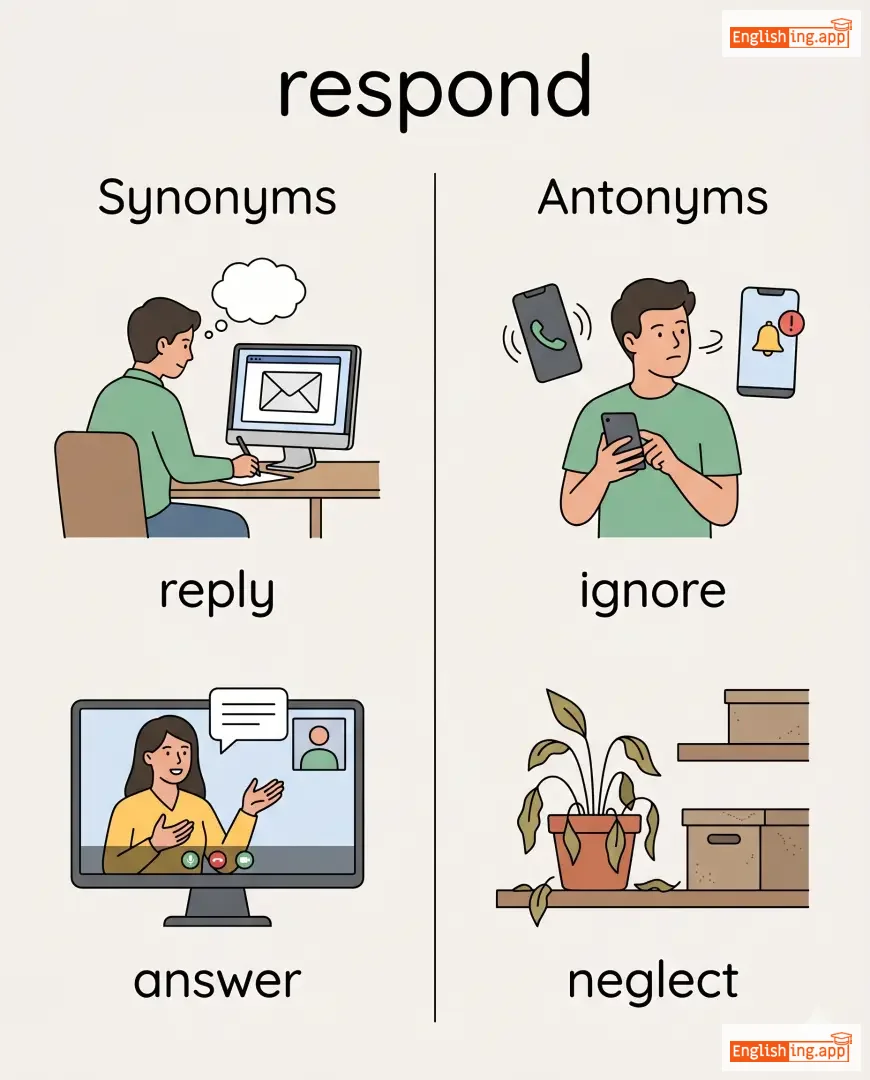
reply, answer, react, acknowledge, retort
••••••
|
ignore, neglect, disregard
••••••
|
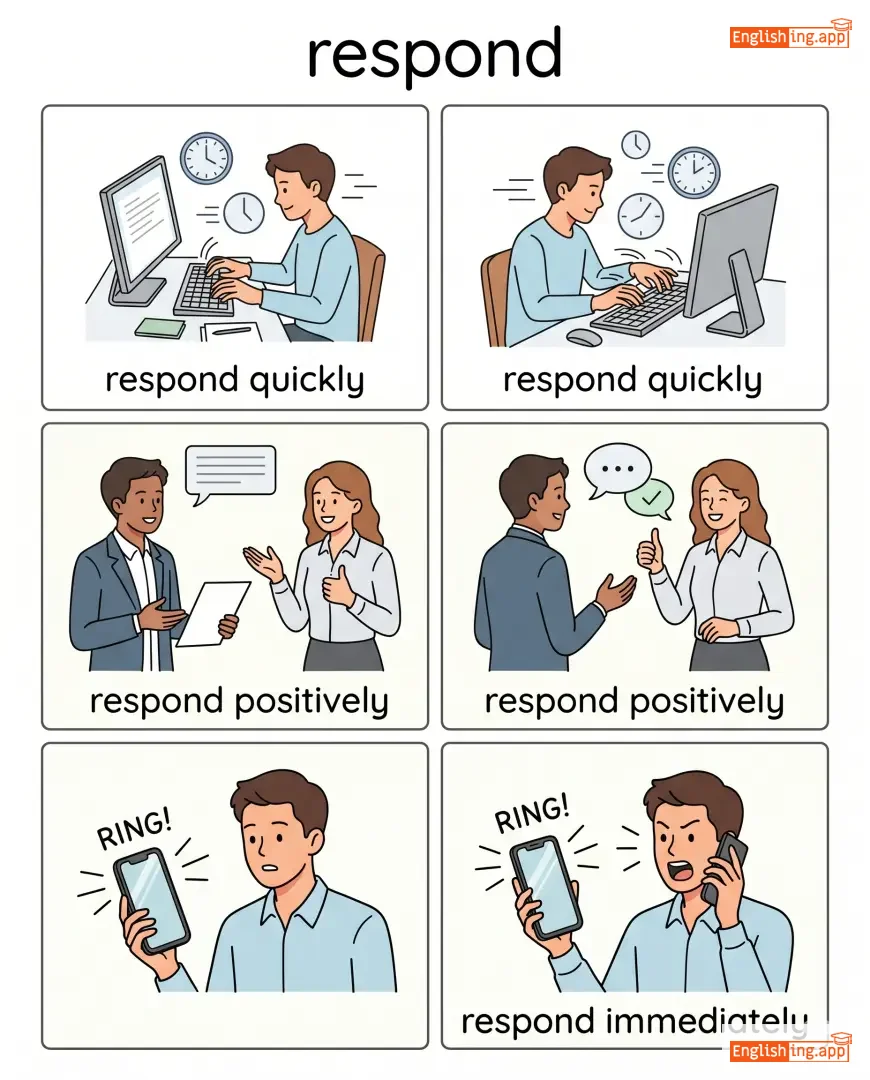
respond quickly, respond positively, respond immediately, respond appropriately
••••••
|
回应就像回忆一样,回应人们的问题。
••••••
|
|
#0
🗣️
|
/spiːk/
verb
(spiːk)
••••••
|
- •••••• |
说
shuo
••••••
|
spoke
spok
••••••
|
spoken
spouken
••••••
|
speaks
spiks
••••••
|
speaking
spiiking
••••••
|
to say something in order to convey information or express feelings
••••••
|
She speaks five languages fluently.
她流利地说五种语言。
••••••
|
她流利地说五种语言。
Ta liuli de shuo wuzhong yuyan.
••••••
|
speak out
大声说
••••••
|
to express one's opinion clearly and openly
••••••
|
清晰表达意见
qingxi biaoda yijian
••••••
|
talk, converse, utter, communicate
••••••
|
be silent, mute, keep quiet
••••••
|
speak up, speak to, speak about, speak highly
••••••
|
Speak = 'S' for 'Say', 'P' for 'Project'.
••••••
|
|
#0
🎤
|
/spiːtʃ/
noun
(演讲)
••••••
|
- •••••• |
演讲; 演说;
yanjiang; yanshuo
••••••
|
- •••••• | - •••••• | - •••••• | - •••••• |
formal address or discourse delivered to an audience; the expression of thoughts in spoken words
••••••
|
The president gave an inspiring speech to the nation. |
总统向国家发表了鼓舞人心的演讲。
zongtong xiang guojia fabiao le guliu renxin de yanjiang.
••••••
|
- •••••• | - •••••• | - •••••• |
address, oration, discourse, talk
••••••
|
silence, muteness
••••••
|
keynote speech, public speech, acceptance speech, farewell speech
••••••
|
Speech in Chinese: The voice that echoes across time and space.
••••••
|
|
#0
💬
|
/tɔːk/
verb
(tɑk)
••••••
|
|
谈话
tánhuà
••••••
|
talked
tɑkt
••••••
|
talked
tɑkt
••••••
|
talks
tɑks
••••••
|
talking
tɑkɪŋ
••••••
|
to speak; to communicate by speaking; to discuss
••••••
|
Let's talk about your future plans.
lɛts tɑk əbaʊt jɔʁ fytyʁ plɑ̃s.
••••••
|
我们来谈谈你的未来计划。
Wǒmen lái tán tán nǐ de wèilái jìhuà
••••••
|
- •••••• | - •••••• | - •••••• |
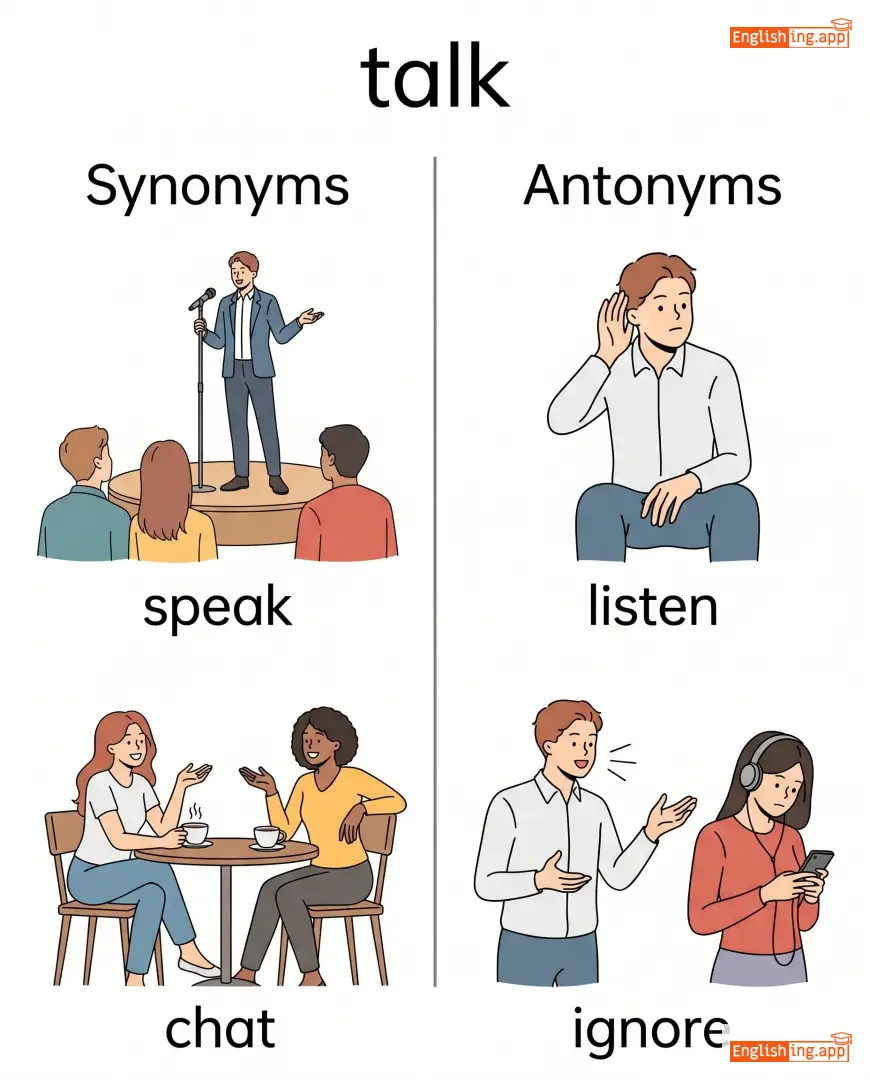
speak, communicate, converse, discuss
••••••
|
listen, be silent, stay quiet
••••••
|
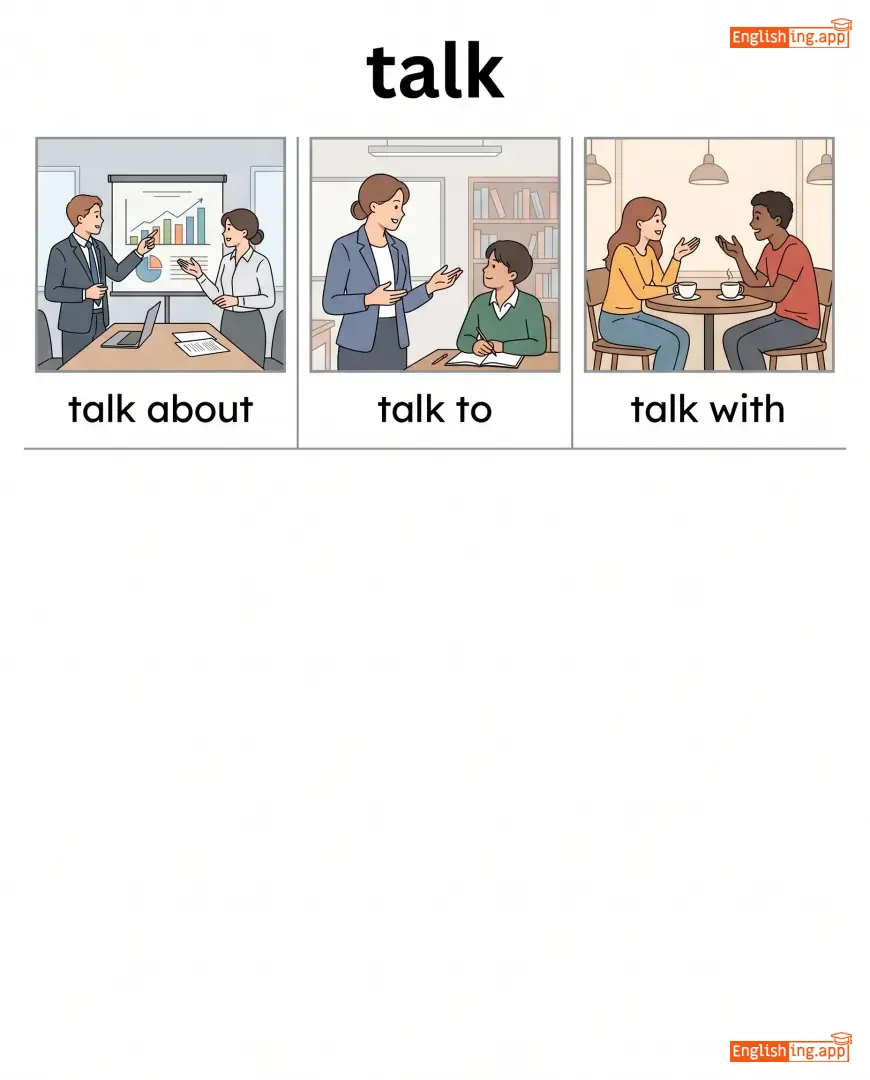
talk about, talk to, talk over, small talk, talk shop
••••••
|
No •••••• |
|
#0
🤔
|
/ˌʌndərˈstænd/
verb
(ʌndərstænd)
••••••
|
|
理解
lǐjiě
••••••
|
understood
ʌndərstúd
••••••
|
understood
ʌndərstúd
••••••
|
understands
ʌndərstændz
••••••
|
understanding
ʌndərstændɪŋ
••••••
|
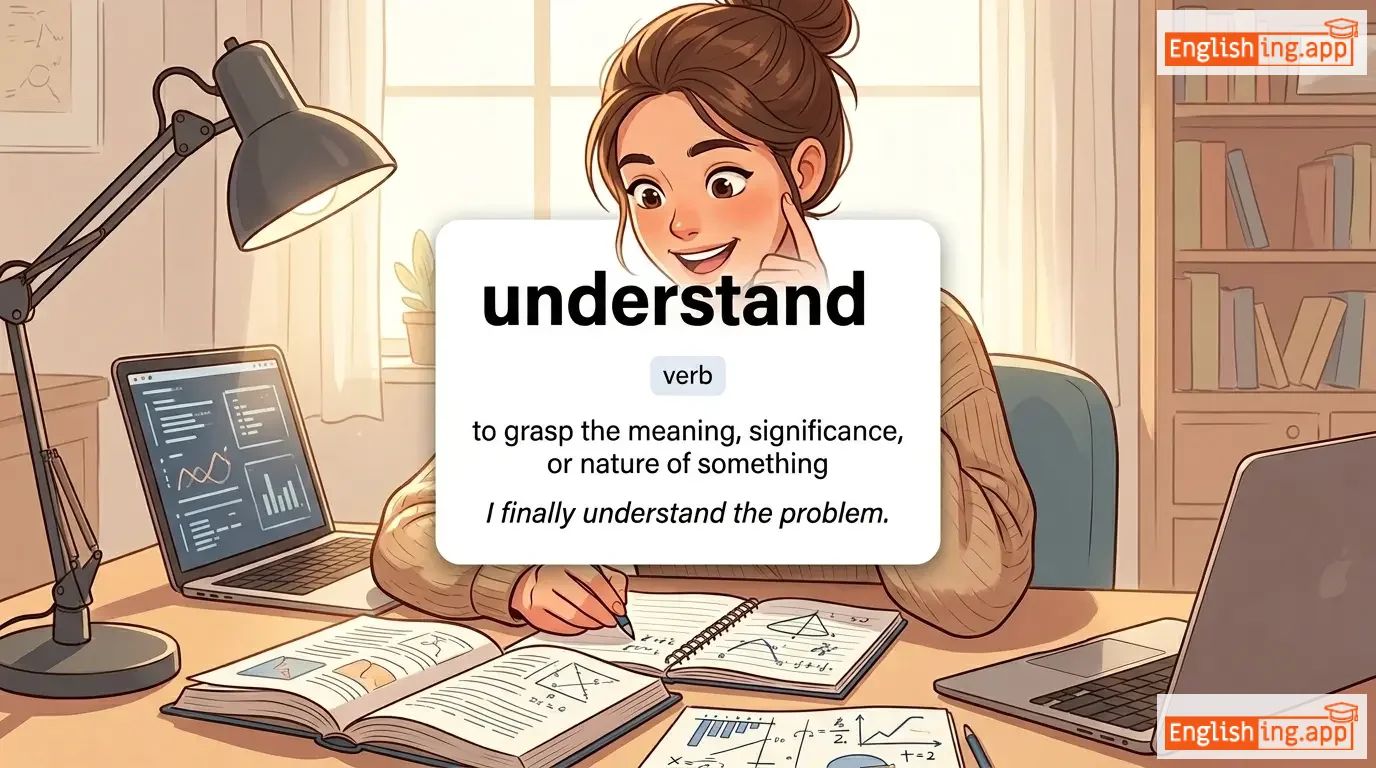
to grasp the meaning, significance, or nature of something
••••••
|
I finally understand the problem.
我终于理解了这个问题。
••••••
|
我终于理解了这个问题。
Wǒ zhōngyú lǐjiěle zhège wèntí.
••••••
|
understand the situation
理解情况
••••••
|
to grasp the full context or details of a situation
••••••
|
理解情况
lǐjiě qíngkuàng
••••••
|
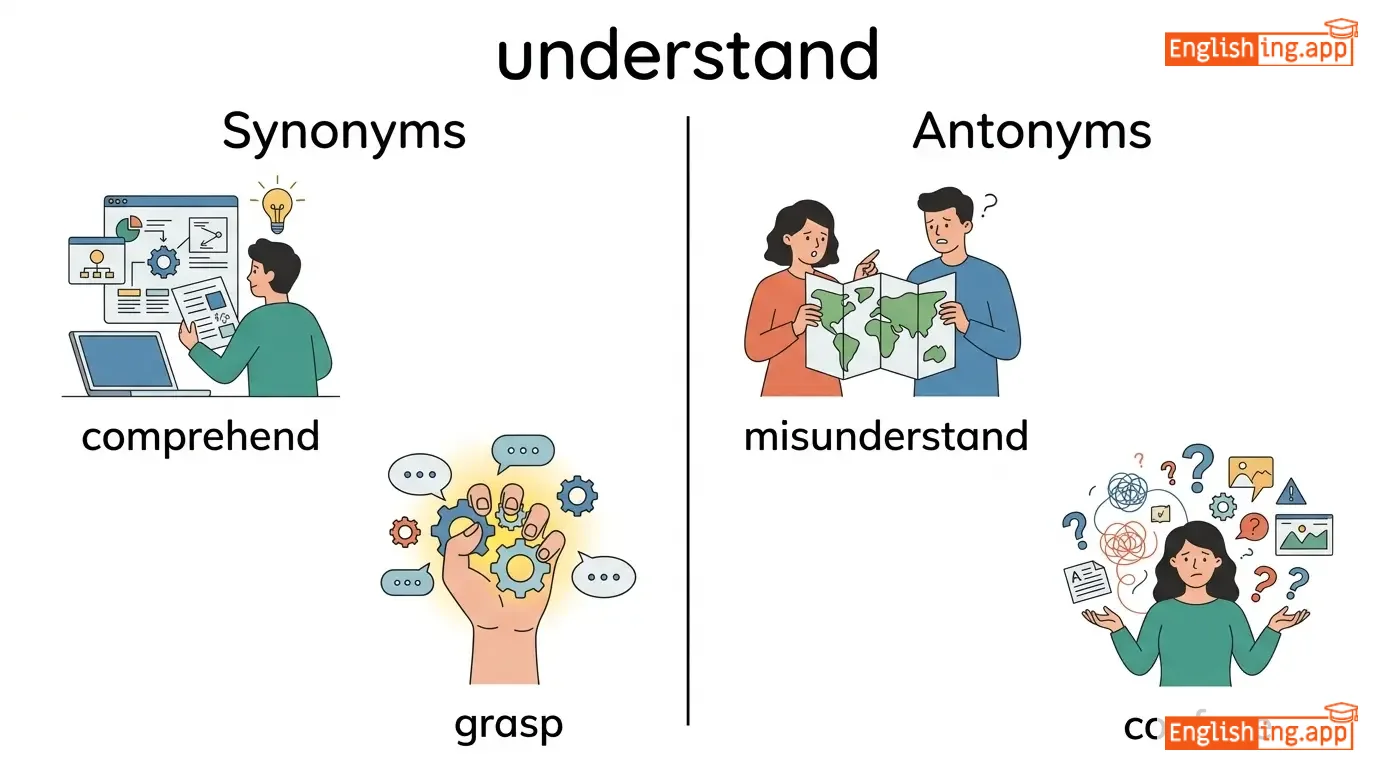
comprehend, grasp, perceive, realize
••••••
|
misunderstand, confuse
••••••
|
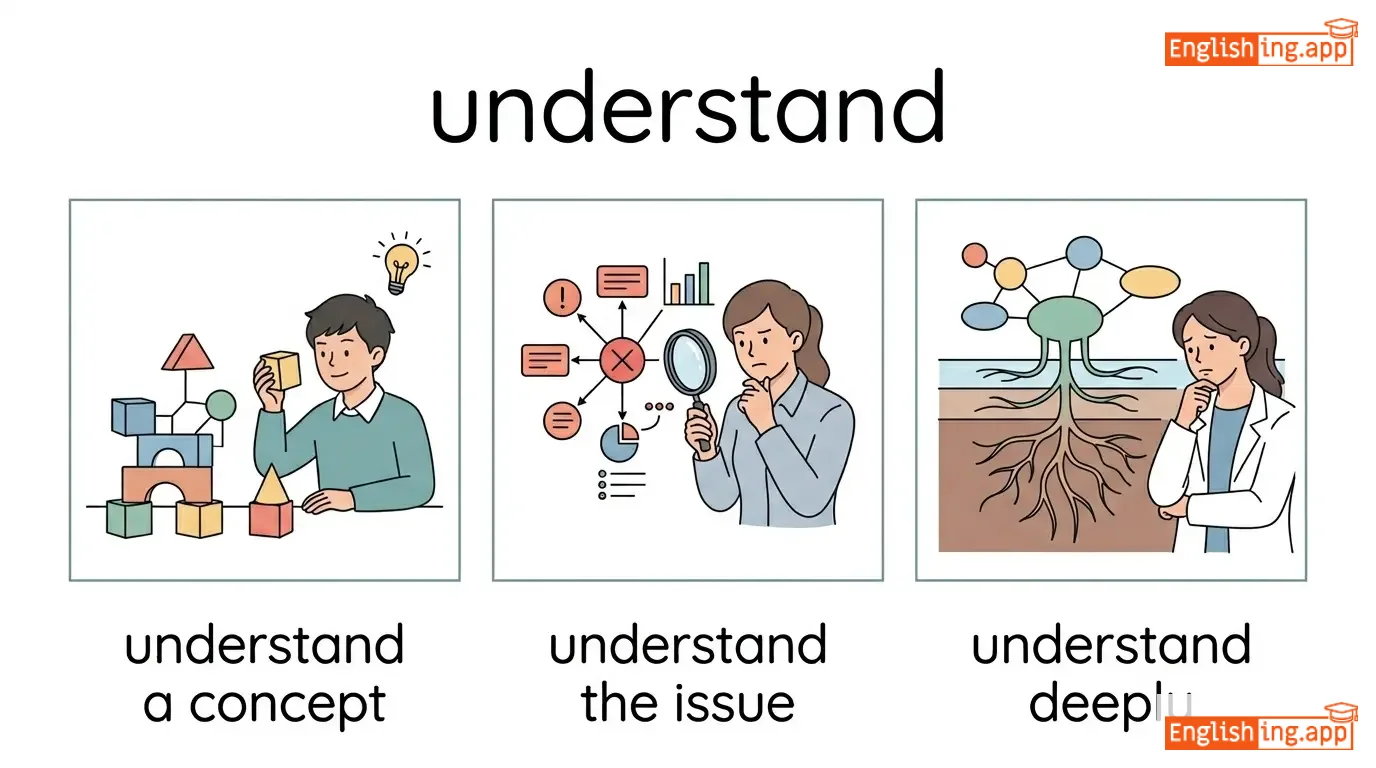
understand a concept, understand the issue, understand deeply
••••••
|
UNDERSTAND – Under the stand, I can grasp what's going on!
••••••
|
|
#0
🗣️
|
/ˈvɜː.bəl/
adjective
(vɜːr.bəl)
••••••
|
|
口头的
kǒutóu de
••••••
|
- •••••• | - •••••• | - •••••• | - •••••• |
relating to words or speech rather than writing or action
••••••
|
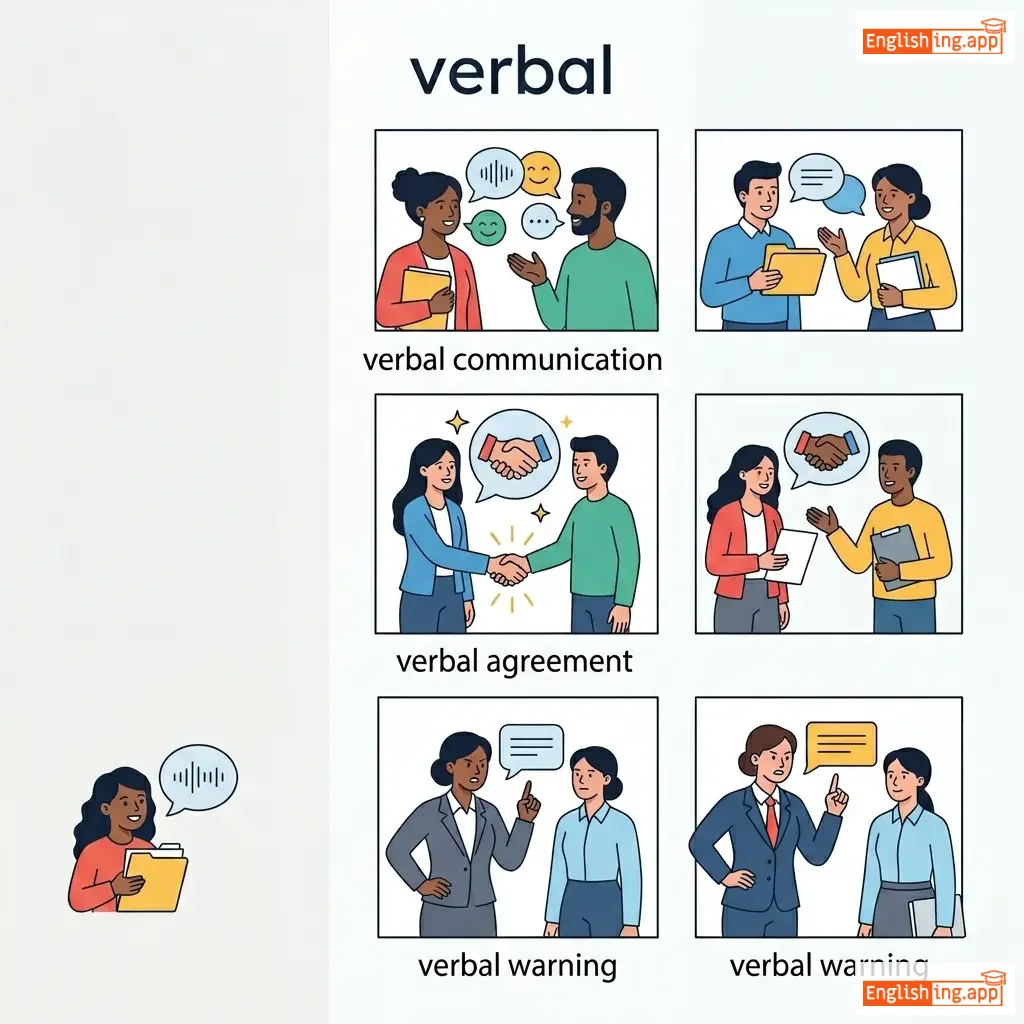
They had a verbal agreement instead of a written one. |
他们达成了口头协议,而不是书面协议。
Tāmen dáchéngle kǒutóu xiéyì, ér bù shì shūmiàn xiéyì.
••••••
|
verbal abuse |
the use of words to insult or hurt someone
••••••
|
口头虐待
kǒutóu nüèdài
••••••
|
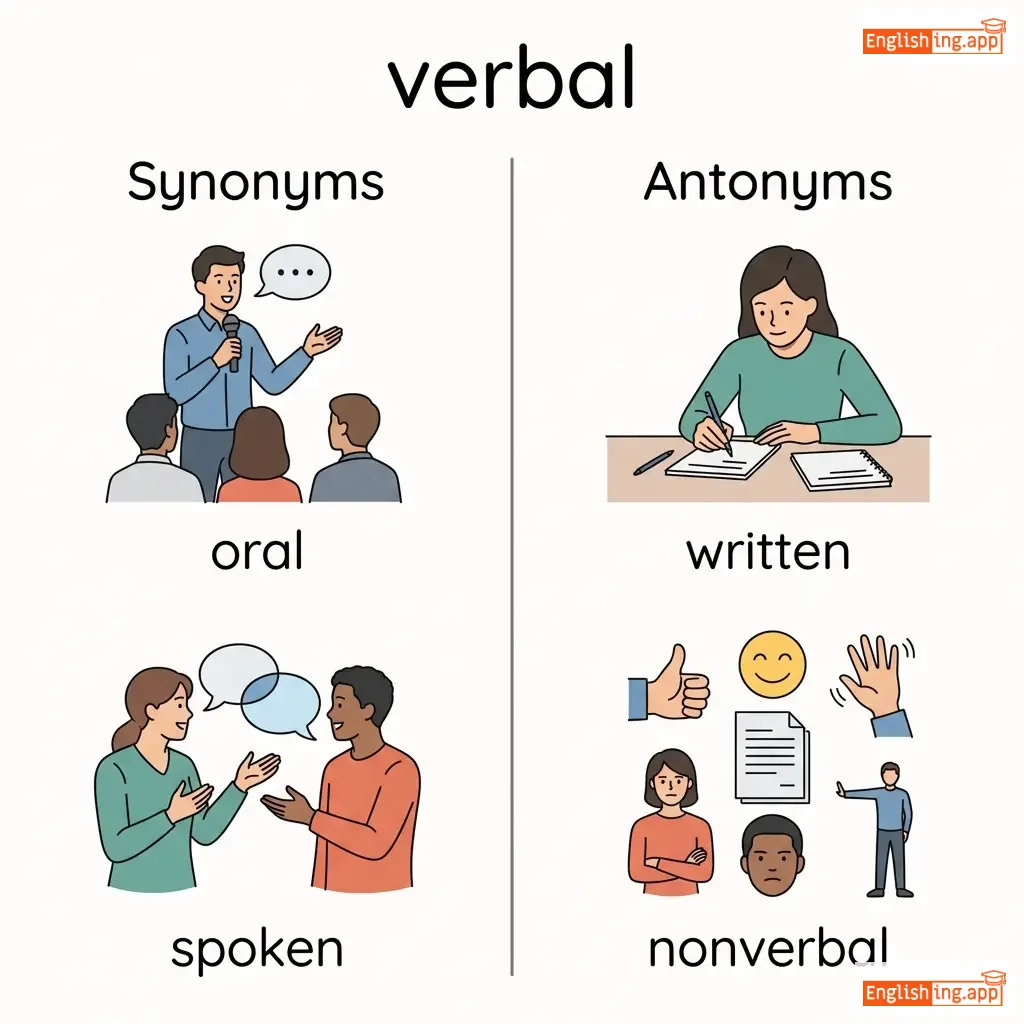
oral, spoken, expressed, linguistic
••••••
|
written, nonverbal
••••••
|
verbal communication, verbal agreement, verbal warning, verbal abuse
••••••
|
Verbal意味着与单词相关——想想‘verb’,所以 verbal = 与词相关!
••••••
|
|
#0
🗣️
|
/vɔɪs/
noun
(wòis)
••••••
|
- •••••• |
声音
shengyin
••••••
|
- •••••• | - •••••• | - •••••• | - •••••• |
the sound produced by the vocal cords; the ability to speak or express oneself
••••••
|
She has a beautiful voice that captivates the audience. |
她有一个迷人的声音,吸引了观众。
Ta you yige miren de shengyin, xīyǐnle guānzhòng.
••••••
|
find your voice |
to begin expressing your thoughts or opinions
••••••
|
找到你的声音
zhǎodào nǐ de shēngyīn
••••••
|
sound, speech, tone, vocalization
••••••
|
silence, muteness
••••••
|
loud voice, soft voice, speak with voice
••••••
|
VOICE - 找到你的声音 (voice - zhaodao nide shengyin) 来表达自己
••••••
|
Vocabulary Quiz
Test your vocabulary by matching words with their translations or meanings.
Login to take the quiz
Comments (0)
Share your thoughts and join the discussion.
Join the discussion by logging in
Login to CommentNo comments yet
Be the first to share your thoughts!