

夜班街道清扫
Night Shift Street Sweep
雨水在老城区的街道上留下了厚厚的泥土。当夜班shift开始时,清洁工人听到了他们的口哨声。重型卡车排成一行,大家都戴上了口罩。Tanvi说:“今晚我们将尽可能收集。”Rubel推着一辆装满破砖的木车,而一个金属车厢里装满了塑料垃圾。Jharnа将一根坚固的绳索系在腰间,跳入了水渠。上次洪水的残骸仍堵塞着排水管。Samira小心地移动着以避免搅动过多的尘土。Mozahar警告道:“保持负载轻些,否则很难抬起。”在大卡车旁边,一个小的垃圾桶吞噬了每一个袋子。车头灯的光辉反射在口罩和雨衣上,队员们在深夜里继续工作。在离开之前,Tanvi再次走遍了整个街道,确保没有垃圾留下。大家手拉绳索,组成链条,传递垃圾桶。“早上人们会以为发生了魔法,”Jasim笑着说。


Swipe left or right, or use the buttons. Tap image to zoom.
例句翻译
单词
Night Shift Street SweepNight Shift Street Sweep - 遮罩切换
|
表情符号
|
单词 | Images | 翻译 | 过去时 | 过去分词 | 第三人称单数 | 动名词 | 含义 | 例句 | 例句翻译 | 示例表达 | 示例表达含义 | 示例表达翻译 | 同义词 | 反义词 | 搭配词 | 助记符 |
|---|---|---|---|---|---|---|---|---|---|---|---|---|---|---|---|---|---|
|
#0
🚢
|
/kəˈnæl/
noun
(kānàl)
••••••
|
- •••••• |
水道
shuǐdào
••••••
|
- •••••• | - •••••• | - •••••• | - •••••• |
an artificial waterway constructed for navigation, irrigation, or drainage
••••••
|
The canal was built to help transport goods across the region. |
该水道的建设是为了帮助运输区域内的货物。
Gai shui dao de jianshe shi wei le bangzhu yunshu quyu nei de huowu.
••••••
|
- •••••• | - •••••• | - •••••• |
waterway, channel, ditch, aqueduct
••••••
|
land, mountain, desert
••••••
|
dig a canal, canal network, canal system, canal bank
••••••
|
Canal sounds like 'Shuidao' in Chinese, both are artificial water paths.
••••••
|
|
#0
🛒
|
/kɑːrt/
noun
(卡特)
••••••
|
- •••••• |
手推车
shǒu tuī chē
••••••
|
carted
卡特德
••••••
|
carted
卡特德
••••••
|
carts
卡特斯
••••••
|
carting
卡特
••••••
|
a vehicle with wheels that is pulled by a person or animal for carrying goods
••••••
|
The farmer loaded hay onto the cart.
农夫把干草装进了手推车。
••••••
|
农夫把干草装进了手推车。
Nóngfū bǎ gāncǎo zhuāng jìn le shǒu tuī chē.
••••••
|
put the cart before the horse
本末倒置
••••••
|
to do things in the wrong order
••••••
|
本末倒置
běn mò dào zhì
••••••
|
wagon, carriage, trolley, barrow, dray
••••••
|
car, truck
••••••
|
shopping cart, horse cart, wooden cart, hand cart
••••••
|
手推车 — 运输物品的小车,常见于乡村道路上。
••••••
|
|
#0
📦
|
/kəˈlekt/
verb
(kólèkt)
••••••
|
|
收集
shōují
••••••
|
collected
kólèkted
••••••
|
collected
kólèkted
••••••
|
collects
kólèkts
••••••
|
collecting
kólèkting
••••••
|
To gather or bring together items from different places.
••••••
|
She likes to collect stamps as a hobby.
她喜欢作为爱好收集邮票。
••••••
|
她喜欢作为爱好收集邮票。
Tā xǐhuān zuòwéi àihào shōují yóupiào.
••••••
|
collect yourself
冷静一下
••••••
|
To regain control over one's emotions or thoughts.
••••••
|
冷静一下
lěngjìng yīxià
••••••
|
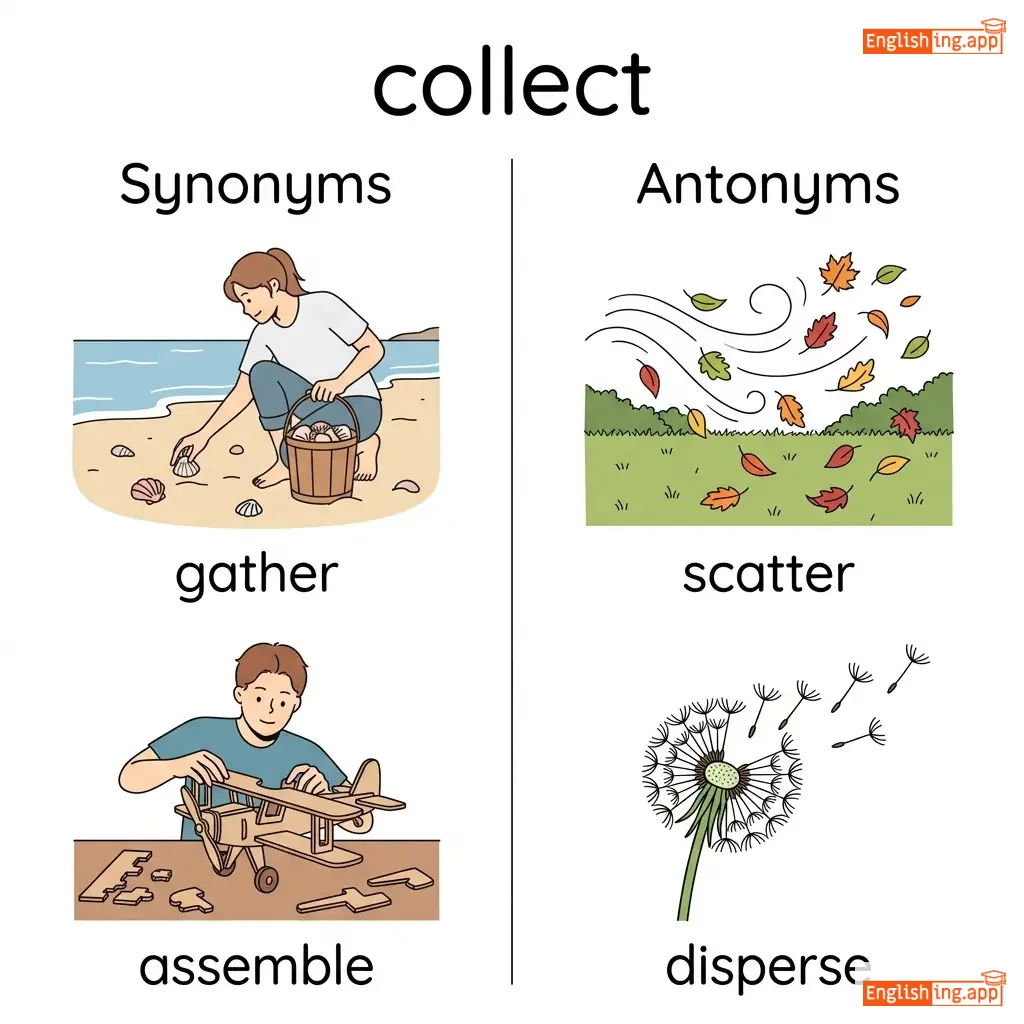
gather, assemble, accumulate, amass, hoard
••••••
|
scatter, disperse, distribute
••••••
|
collect stamps, collect money, collect data, collect garbage
••••••
|
Collect (收集) 所有邮票和回忆。
••••••
|
|
#0
🚰
|
/dreɪn/
verb
••••••
|
- •••••• | - •••••• |
drained
••••••
|
drained
••••••
|
drains
••••••
|
draining
••••••
|
to cause liquid to flow away from something; to remove liquid
••••••
|
He drained the pasta before adding the sauce. |
- •••••• |
drain the life out of |
to make someone or something lose energy or enthusiasm
••••••
|
- •••••• |
empty, remove, exhaust, deplete, discharge
••••••
|
fill, flood, retain
••••••
|
drain water, drain pipe, drain energy, drain battery
••••••
|
No •••••• |
|
#0
🗑️
|
/dʌmp/
verb
(丹普)
••••••
|
- •••••• |
草率地丢弃或放下某物
caolu di diuqi huo fangxia mouwu
••••••
|
dumped
丹普德
••••••
|
dumped
丹普德
••••••
|
dumps
丹普斯
••••••
|
dumping
丹普英
••••••
|
to drop or dispose of something carelessly; to end a relationship suddenly
••••••
|
He dumped all the trash into the bin.
他把所有的垃圾都扔进了垃圾桶。
••••••
|
他把所有的垃圾都扔进了垃圾桶。
Ta ba suoyou de laji dou reng jin le laji tong.
••••••
|
dump someone
甩掉某人
••••••
|
to end a romantic relationship with someone
••••••
|
甩掉某人
Shuaidiao mouren
••••••
|
discard, throw, drop, abandon, release
••••••
|
keep, hold, retain
••••••
|
dump site, garbage dump, dump truck, dump waste, dump someone
••••••
|
Dump意味着扔掉——当某人甩了你,你说:'他把我dump了!'
••••••
|
|
#0
🌫️
|
/dʌst/
noun, verb
(dǎsī)
••••••
|
|
灰尘
huīchén
••••••
|
dusted
dǎsī dé
••••••
|
dusted
dǎsī dé
••••••
|
dusts
dǎsī sī
••••••
|
dusting
dǎsī
••••••
|
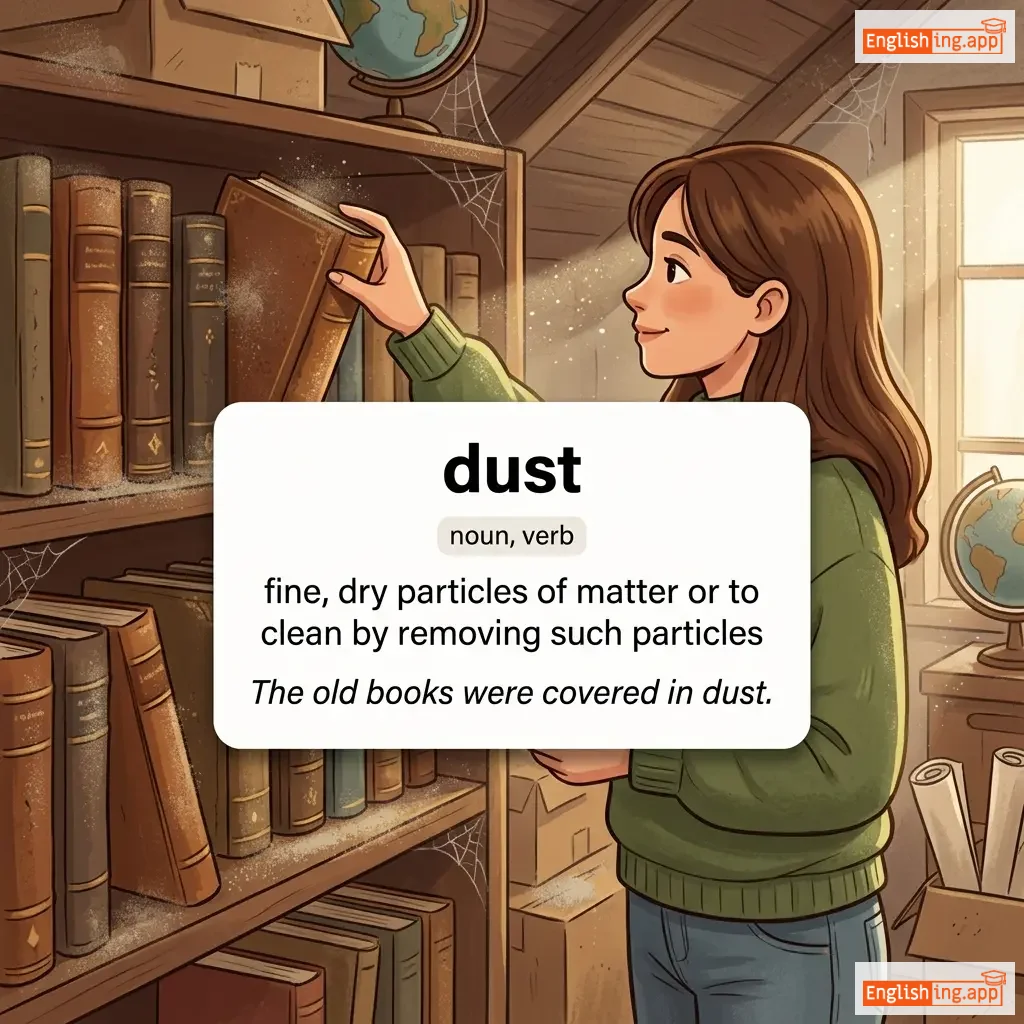
fine, dry particles of matter or to clean by removing such particles
••••••
|
The old books were covered in dust.
老书上覆盖着灰尘。
••••••
|
老书上覆盖着灰尘。
lǎo shū shàng fùgài zhe huīchén.
••••••
|
bite the dust
咬尘土
••••••
|
to fail or be defeated
••••••
|
失败或被击败
shībài huò bèi jíbài
••••••
|
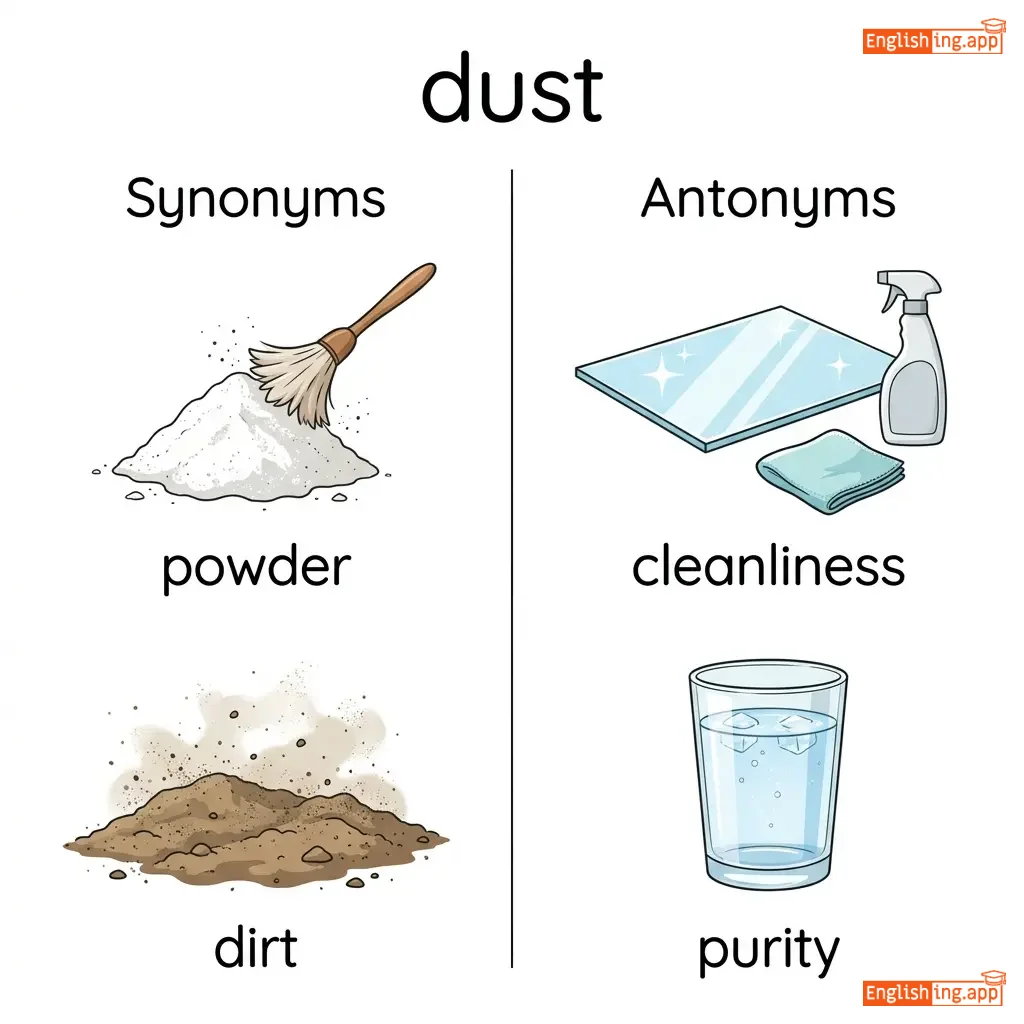
powder, dirt, particles, debris
••••••
|
cleanliness, purity
••••••
|
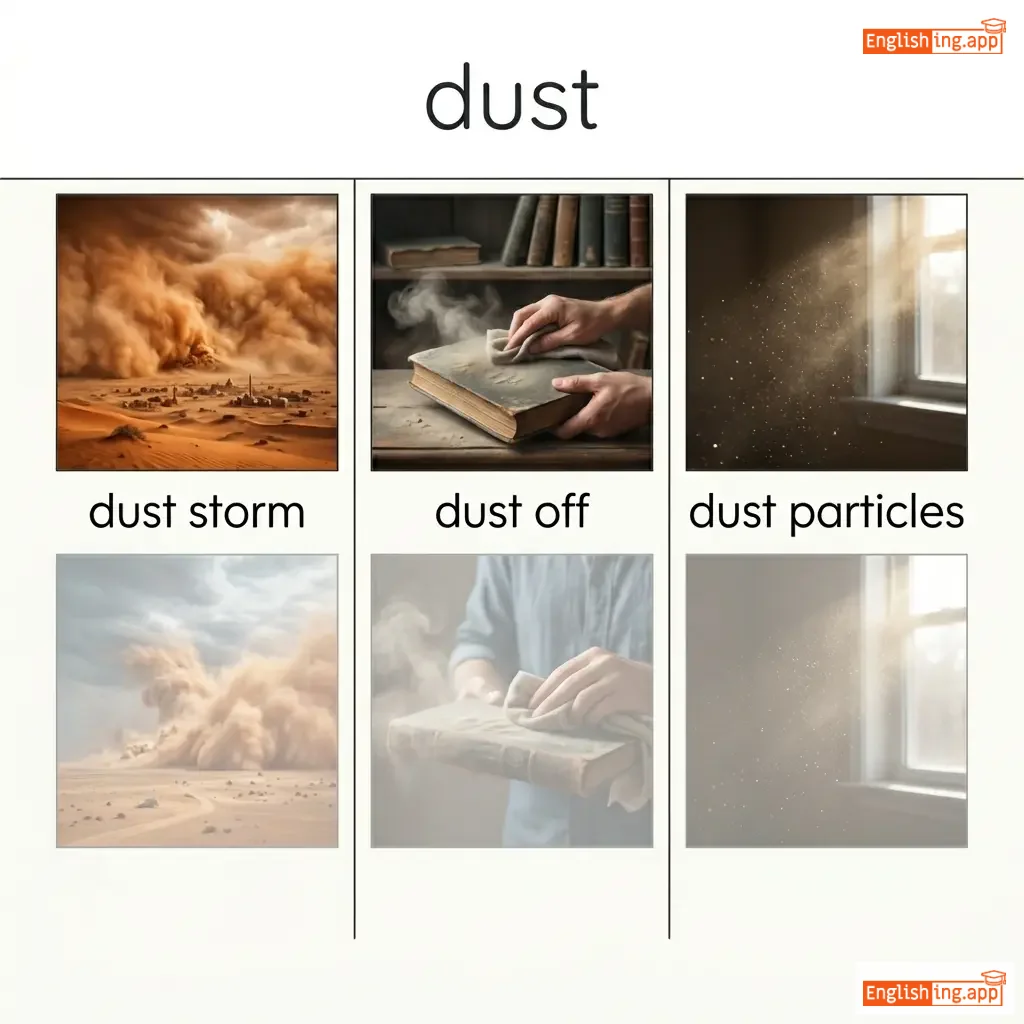
dust storm, dust off, dust particles, dust cloud
••••••
|
Dust 意味着灰尘,记住 'Dust off' 就是去除灰尘。
••••••
|
|
#0
🌊
|
/flʌd/
noun
(flood)
••••••
|
- •••••• |
洪水
hongshui
••••••
|
flooded
flooded
••••••
|
flooded
flooded
••••••
|
floods
floods
••••••
|
flooding
flooding
••••••
|
a large amount of water covering land that is usually dry
••••••
|
The flood destroyed several houses in the village.
洪水摧毁了村里的几座房子。
••••••
|
洪水摧毁了村里的几座房子。
Hongshui cuihui le cunli de jizuo fangzi.
••••••
|
a flood of tears
泪水的洪流
••••••
|
crying a lot; weeping heavily
••••••
|
泪水的洪流
leishui de hongliu
••••••
|
deluge, overflow, inundation, torrent, surge
••••••
|
drought, dryness, scarcity
••••••
|
flood water, flood damage, flood control, flash flood, flood zone
••••••
|
Flood在中文就是洪水,就像眼泪一样泛滥。
••••••
|
|
#0
🗑️
|
/ˈɡɑːrbɪdʒ/
noun
(gā bì jí)
••••••
|
- •••••• |
垃圾
laji
••••••
|
- •••••• | - •••••• | - •••••• | - •••••• |
waste material; things that are no longer useful or wanted
••••••
|
Please take out the garbage before it starts to smell. |
请把垃圾拿出去,免得开始发臭。
Qǐng bǎ lājī ná chūqù, miǎn de kāishǐ fāchòu.
••••••
|
one man's garbage is another man's treasure |
something worthless to one person may be valuable to another
••••••
|
一个人的垃圾是另一个人的宝藏
Yī gè rén de lājī shì lìng yī gè rén de bǎozàng
••••••
|
trash, waste, litter, refuse, junk
••••••
|
treasure, valuables
••••••
|
garbage can, garbage truck, collect garbage, throw garbage
••••••
|
垃圾 = 丢弃不需要的东西 🗑️
••••••
|
|
#0
🗑️
|
/ˈlɪtər/
noun/verb
(litter)
••••••
|
- •••••• |
垃圾
laji
••••••
|
littered
littered
••••••
|
littered
littered
••••••
|
litters
litters
••••••
|
littering
littering
••••••
|
rubbish or waste left lying in a public place; to make a place untidy by leaving rubbish
••••••
|
The park was full of litter after the festival.
节日过后,公园里满是垃圾。
••••••
|
节日过后,公园里满是垃圾。
Jieri guo hou, gongyuan li man shi laji.
••••••
|
litter the streets
把垃圾丢在街上
••••••
|
to throw rubbish on the roads
••••••
|
把垃圾丢在街上
Ba laji diu zai jie shang
••••••
|
trash, rubbish, debris, garbage
••••••
|
cleanliness, tidiness
••••••
|
litter problem, litter bin, litter the streets, litter laws
••••••
|
Litter意味着垃圾—把垃圾丢在街上
••••••
|
|
#0
📦
|
/loʊd/
noun/verb
(loud)
••••••
|
|
载重
zàizhòng
••••••
|
loaded
louded
••••••
|
loaded
louded
••••••
|
loads
louds
••••••
|
loading
louding
••••••
|
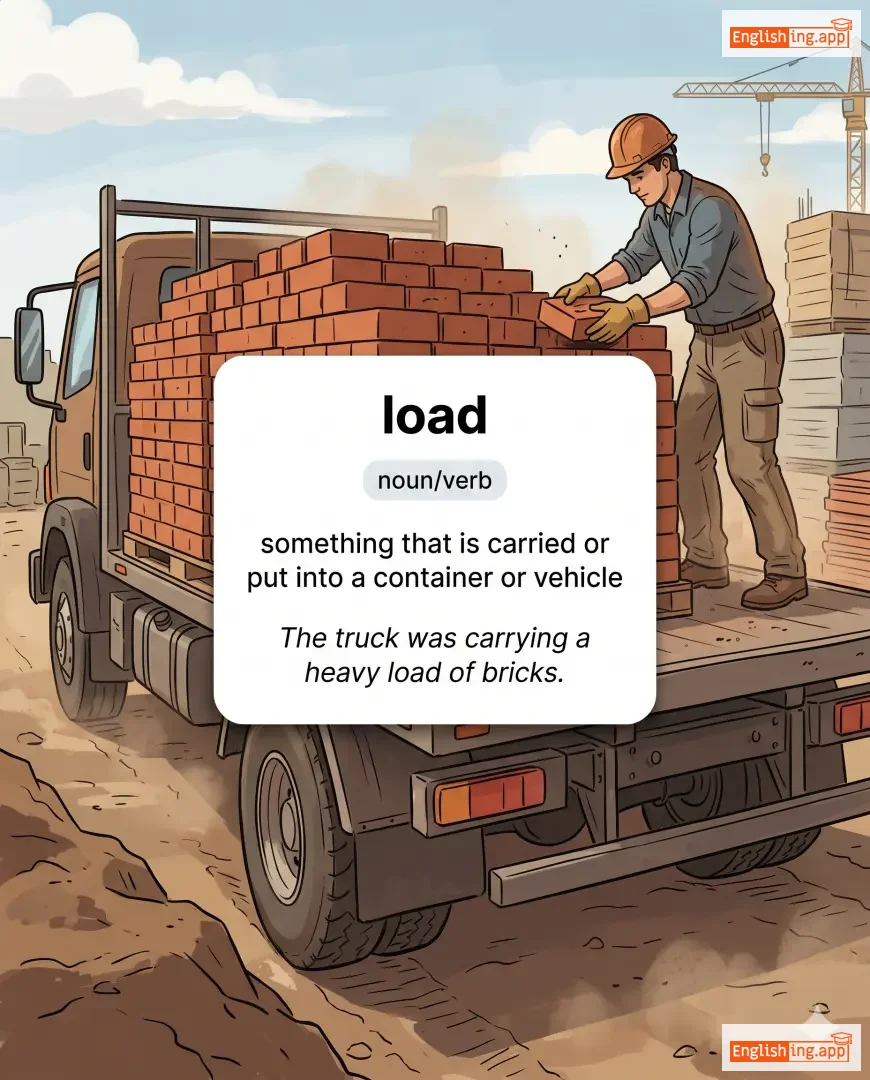
something that is carried or put into a container or vehicle
••••••
|
The truck was carrying a heavy load of bricks.
卡车正在运输一载重的砖块。
••••••
|
卡车正在运输一载重的砖块。
kǎchē zhèngzài yùnshū yī zàizhòng de zhuānkuài.
••••••
|
take a load off
放下负担
••••••
|
to sit down and relax
••••••
|
放松一下
fàngsōng yīxià
••••••
|
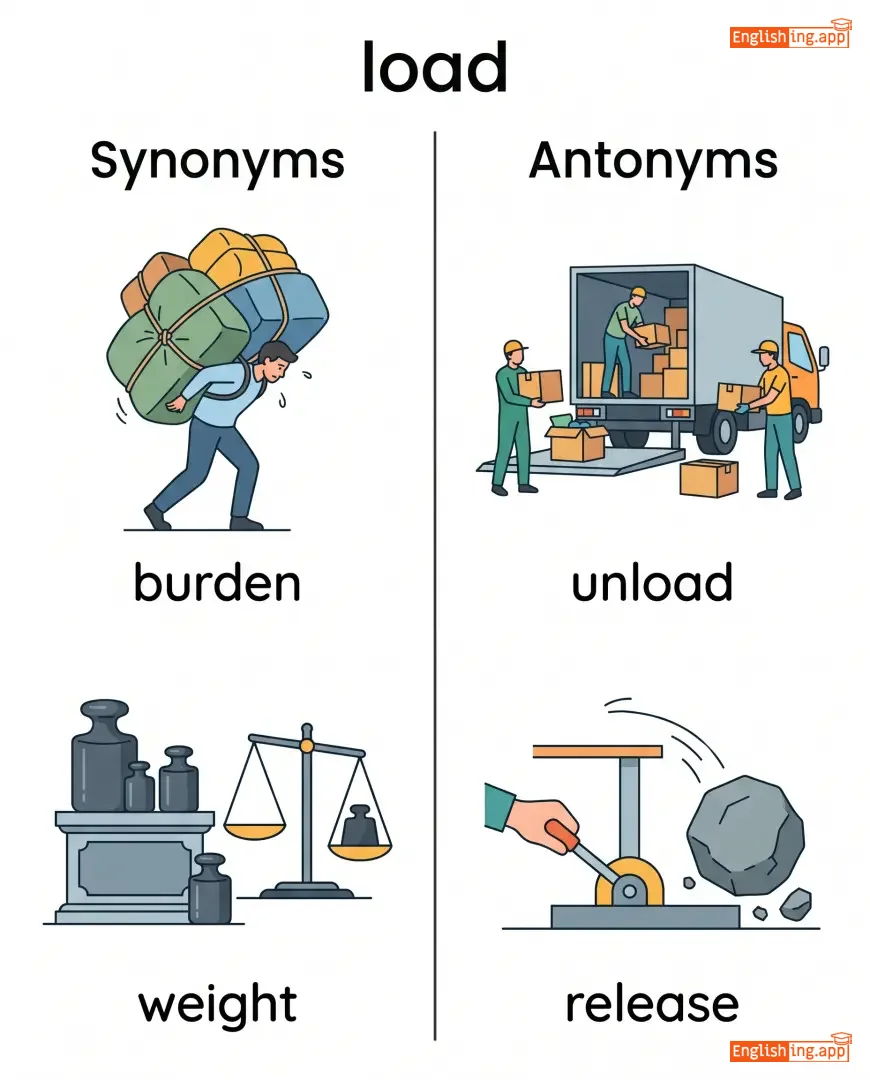
burden, weight, cargo, freight, shipment
••••••
|
unload, release, lighten
••••••
|
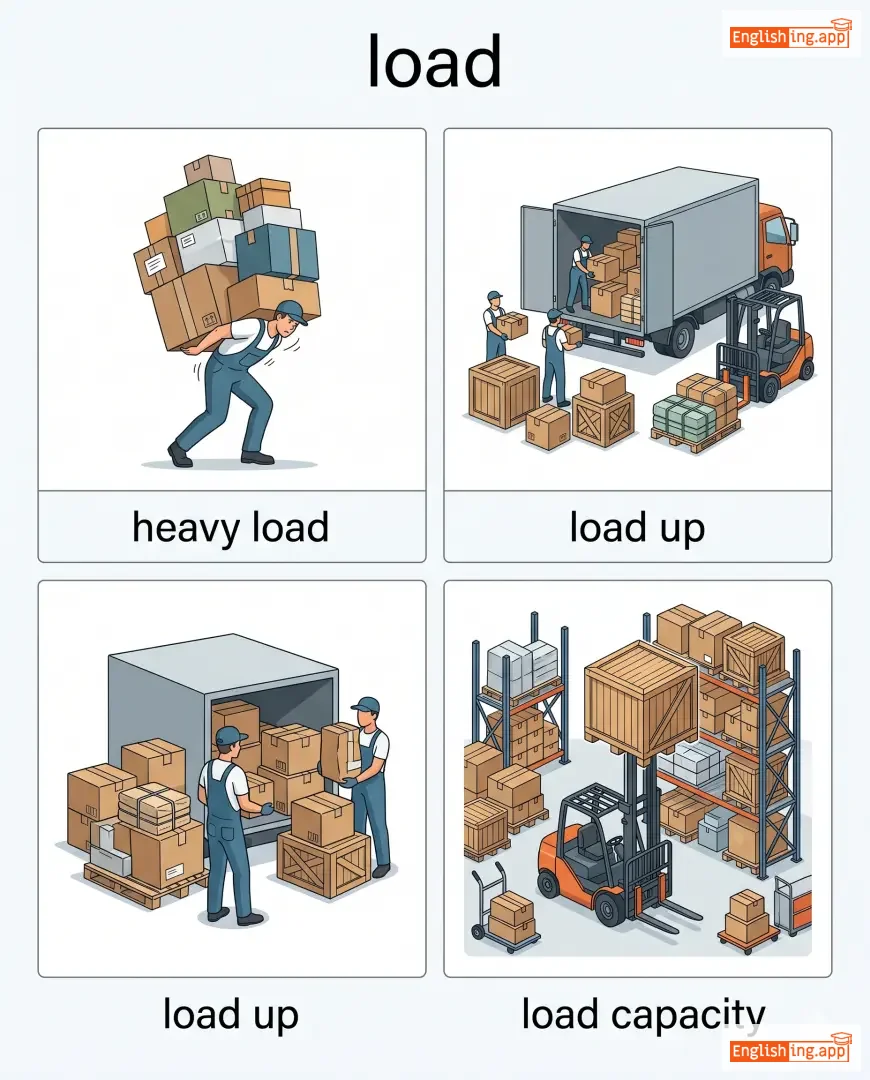
heavy load, load up, load capacity, full load
••••••
|
载重,像是当电脑卡住时,你在等待它加载完。
••••••
|
|
#0
🎭
|
/mæsk/
noun
(mǎsī kè)
••••••
|
- •••••• |
面具
miànjù
••••••
|
- •••••• | - •••••• | - •••••• | - •••••• |
A covering for the face to protect, disguise, or entertain.
••••••
|
He wore a mask at the costume party. |
他在化妆舞会上戴着面具。
Tā zài huàzhuāng wǔhuì shàng dàizhe miànjù.
••••••
|
wear many masks |
To play different roles or hide one's true self.
••••••
|
戴着多重面具
Dàizhe duōchóng miànjù
••••••
|
covering, disguise, veil, shield, facade
••••••
|
exposure, reveal
••••••
|
face mask, protective mask, surgical mask, wear a mask
••••••
|
面具,隐藏面容,保护自己。
••••••
|
|
#0
🪱
|
/mʌd/
noun
(mʌd)
••••••
|
- •••••• |
泥土
nítǔ
••••••
|
- •••••• | - •••••• | - •••••• | - •••••• |
soft, wet earth or soil
••••••
|
The children were playing in the mud after the rain. |
孩子们在雨后玩泥巴。
Háizimen zài yǔhòu wán níba.
••••••
|
drag someone's name through the mud |
to damage someone's reputation by saying bad things about them
••••••
|
把某人的名字拉入泥潭
bǎ mǒu rén de míngzì lārù nítán
••••••
|
dirt, clay, sludge, muck, soil
••••••
|
dust, rock, dry land
••••••
|
mud road, covered in mud, play in the mud, sticky mud
••••••
|
Mud就是泥土 — 想象自己玩泥巴时说'泥泞'。
••••••
|
|
#0
🌙
|
/naɪt/
noun
(naɪt)
••••••
|
- •••••• |
夜晚
ye wan
••••••
|
- •••••• | - •••••• | - •••••• | - •••••• |
the time of darkness between one day and the next, when most people sleep
••••••
|
She loves going for walks at night. |
她喜欢晚上散步。
Ta xihuan wanshang sanbu.
••••••
|
- •••••• | - •••••• | - •••••• |
evening, nighttime, dusk, dark
••••••
|
day, morning
••••••
|
night sky, night time, at night, good night
••••••
|
夜晚 = 你也晚,休息开始 (Night = You also late, time to rest)
••••••
|
|
#0
🪢
|
/roʊp/
noun
(绳子)
••••••
|
- •••••• |
绳子
shengzi
••••••
|
- •••••• | - •••••• | - •••••• | - •••••• |
a strong, thick cord made of twisted fibers or strands
••••••
|
The climbers used a rope to scale the mountain.
登山者用绳子攀登山峰。
••••••
|
登山者用绳子攀登山峰。
Dengshan zhe yong shengzi pandeng shanfeng.
••••••
|
- •••••• | - •••••• | - •••••• |
cord, string, line, cable
••••••
|
thread, wire
••••••
|
climbing rope, rope ladder, jump rope
••••••
|
想象一个'绳子'在攀岩时就像你的'r rope'
••••••
|
|
#0
🔄
|
/ʃɪft/
verb
(希夫特)
••••••
|
- •••••• |
转移
zhuan yi
••••••
|
shifted
希夫特德
••••••
|
shifted
希夫特德
••••••
|
shifts
希夫特斯
••••••
|
shifting
希夫廷
••••••
|
To move or change from one place, position, or situation to another.
••••••
|
She had to shift her focus to the new project.
她不得不将注意力转向新项目。
••••••
|
她不得不将注意力转向新项目。
Ta budebu jiang zhuyi li zhuan xiang xin xiangmu.
••••••
|
shift gears
换档
••••••
|
to change your approach or activity suddenly
••••••
|
换档
huan dang
••••••
|
move, change, switch, transfer, relocate
••••••
|
stay, remain, hold
••••••
|
shift focus, shift position, shift attention, shift responsibility
••••••
|
Shift就像换档一样,转移注意力或改变方法。
••••••
|
|
#0
🚶♂️
|
/striːt/
noun
(sutrīto)
••••••
|
- •••••• |
街道
jiedao
••••••
|
- •••••• | - •••••• | - •••••• | - •••••• |
a public road in a city or town, typically with buildings on one or both sides
••••••
|
He walked down the street to the park.
他走在街上去公园。
••••••
|
他走在街上去公园。
Ta zou zai jiedao qu gongyuan.
••••••
|
- •••••• | - •••••• | - •••••• |
road, avenue, boulevard, lane
••••••
|
alley, cul-de-sac
••••••
|
main street, busy street, narrow street, street light
••••••
|
街道就像一道分隔城市的道路,街上总是车水马龙。
••••••
|
|
#0
🧹
|
/swiːp/
verb
(斯威普)
••••••
|
|
打扫
dasao
••••••
|
swept
斯韦普特
••••••
|
swept
斯韦普特
••••••
|
sweeps
斯威普斯
••••••
|
sweeping
斯威平
••••••
|
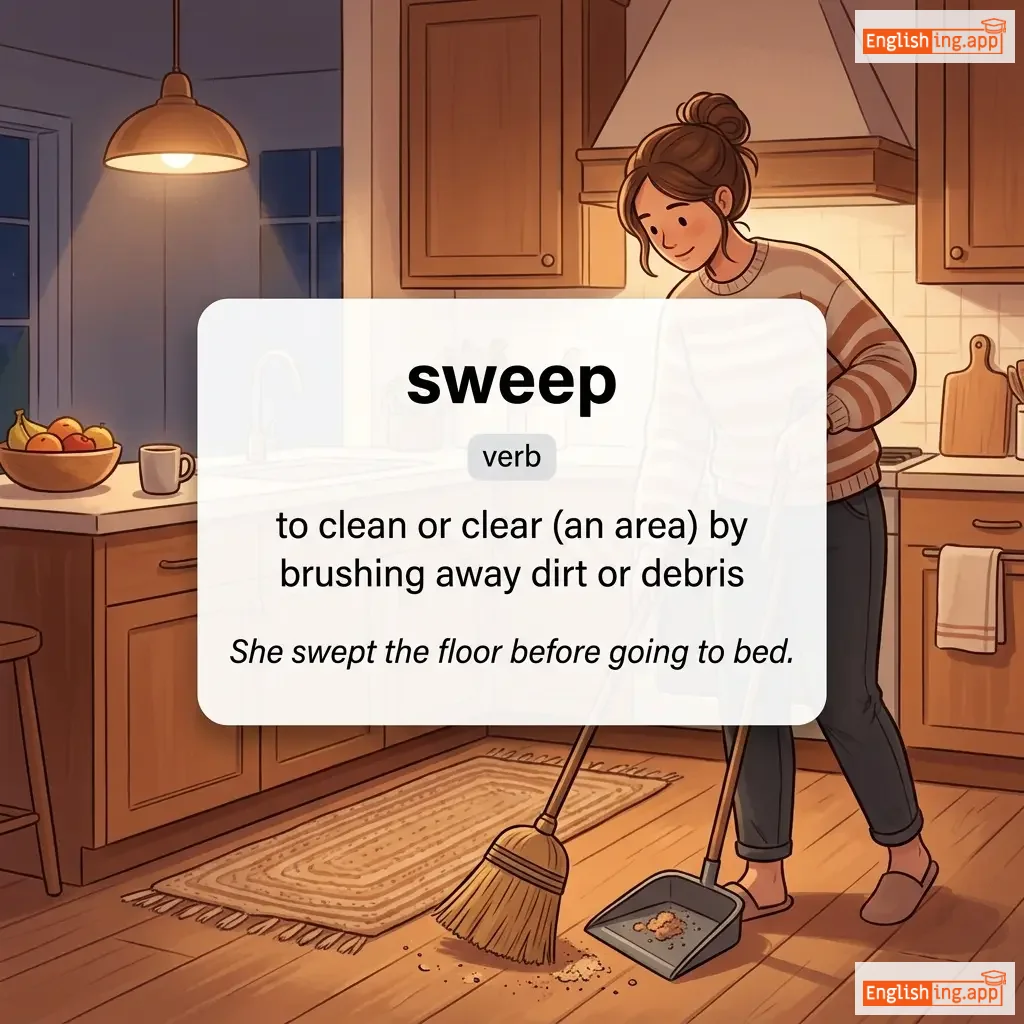
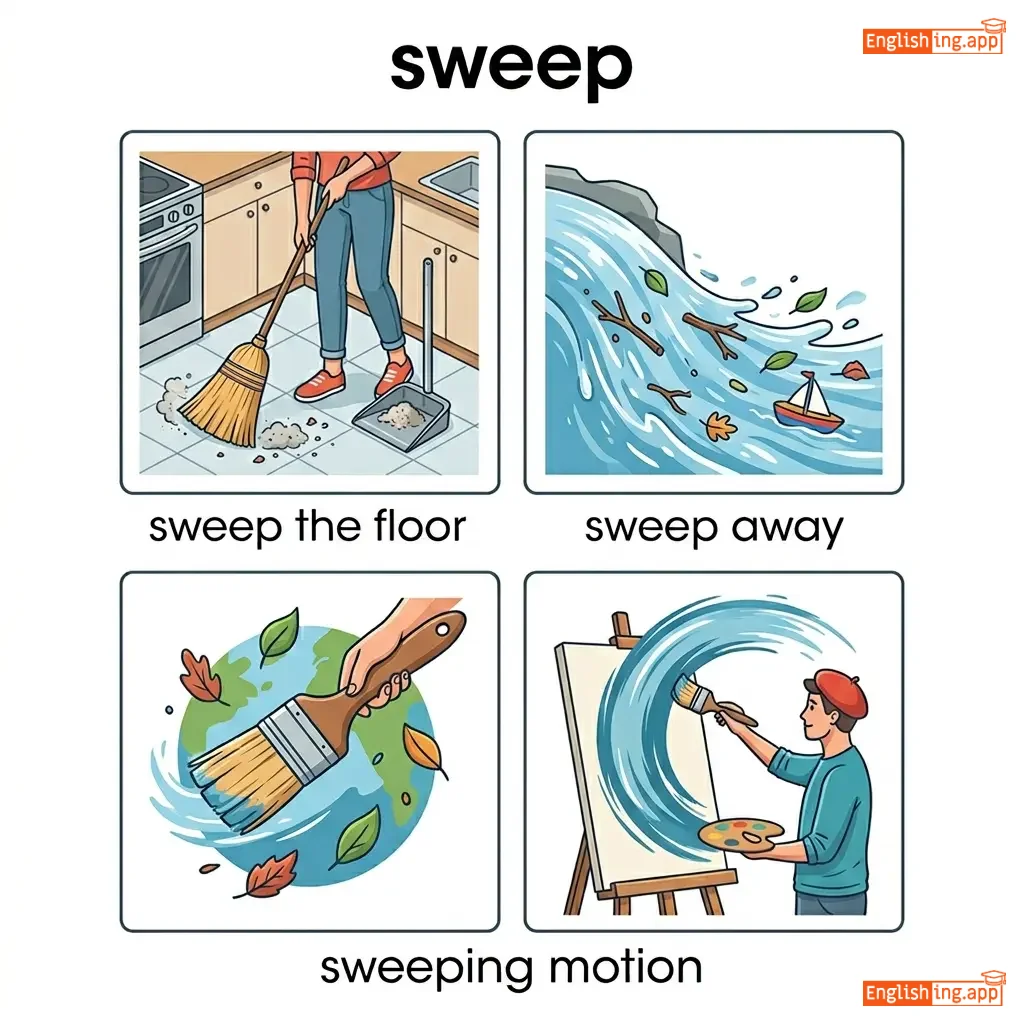
to clean by brushing; to move quickly and smoothly
••••••
|
She sweeps the floor every morning.
她 每天早上 打扫 地板。
••••••
|
她每天早上打扫地板。
Ta meitian zaoshang dasao diban
••••••
|
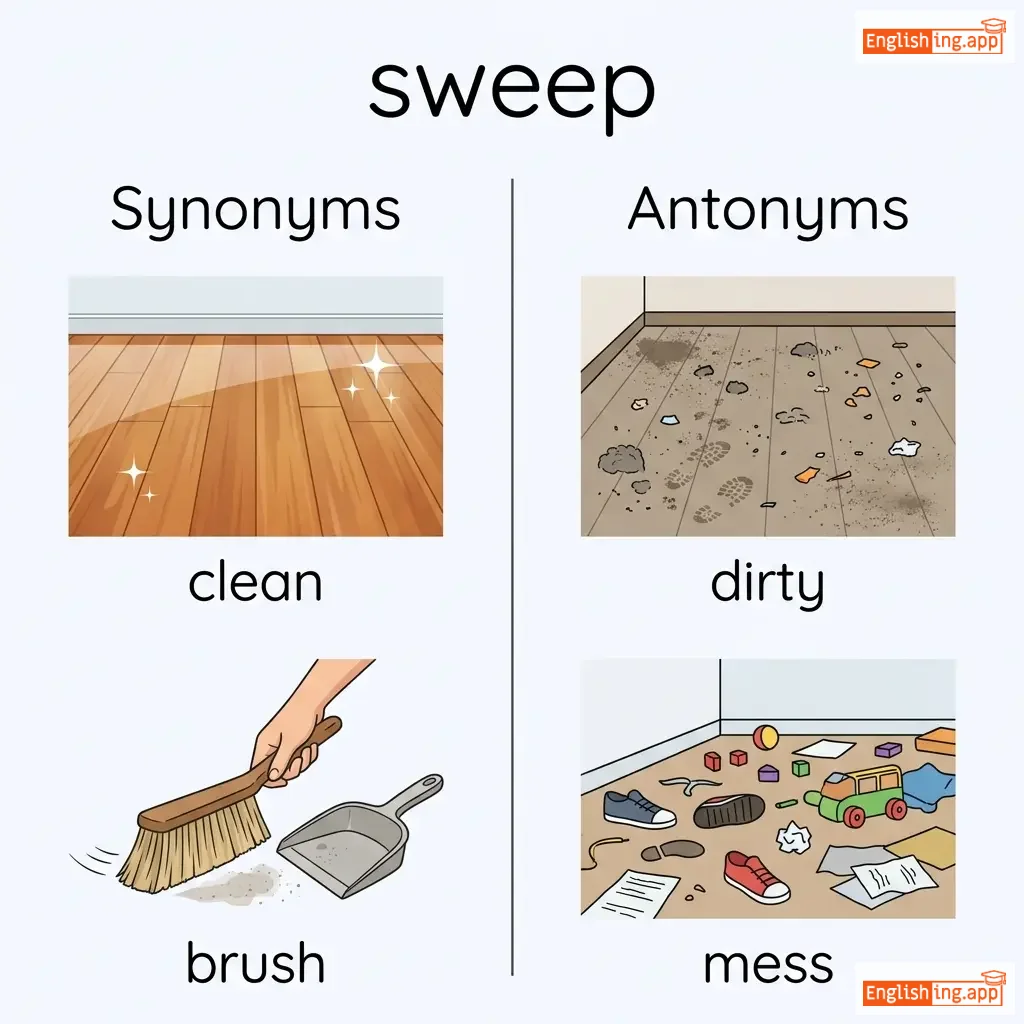
- •••••• | - •••••• | - •••••• |
brush, clean, move quickly, glide
••••••
|
dirty, mess up
••••••
|
sweep away, sweep clean, sweep up, sweep aside, sweep through, sweep under
••••••
|
‘Sweep’ and ‘打扫 (dasao)’ both mean to clean the floor smoothly.
••••••
|
|
#0
🚚
|
/trʌk/
noun
(卡车)
••••••
|
- •••••• |
卡车
kǎchē
••••••
|
- •••••• | - •••••• | - •••••• | - •••••• |
a large motor vehicle for transporting goods
••••••
|
The truck was loaded with boxes for the warehouse.
卡车装满了仓库的箱子。
••••••
|
卡车装满了仓库的箱子。
Kǎchē zhuāng mǎnle cāngkù de xiāngzi.
••••••
|
- •••••• | - •••••• | - •••••• |
lorry, freight truck, delivery truck
••••••
|
car, van, motorcycle
••••••
|
load a truck, drive a truck, truck driver
••••••
|
卡车用来运输货物,送到仓库
••••••
|
|
#0
🚜
|
/ˈwæɡən/
noun
(wāgēn)
••••••
|
- •••••• |
马车
mǎchē
••••••
|
- •••••• | - •••••• | - •••••• | - •••••• |
a vehicle with four wheels used for carrying loads, often pulled by horses or a motor vehicle used for transporting goods or people
••••••
|
The farmer loaded hay onto the wagon. |
农民把干草装上了马车。
nóngmín bǎ gāncǎo zhuāng shàngle mǎchē.
••••••
|
on the wagon |
abstaining from drinking alcohol
••••••
|
戒酒
jièjiǔ
••••••
|
cart, carriage, truck, van, lorry
••••••
|
car, bike, sled
••••••
|
horse-drawn wagon, covered wagon, station wagon, load a wagon
••••••
|
马车像是 wagon,用来运送货物的四轮车。
••••••
|
|
#0
👷
|
/ˈwɜːrkər/
noun
(wɜːrkər)
••••••
|
- •••••• |
工人
gongren
••••••
|
- •••••• | - •••••• | - •••••• | - •••••• |
a person who is employed to perform tasks or duties
••••••
|
The workers were busy building the bridge. |
工人们忙着建造桥梁。
Gōngrén men mángzhe jiànzào qiáoliáng.
••••••
|
- •••••• | - •••••• | - •••••• |
employee, laborer, operative, staff
••••••
|
employer, boss, manager
••••••
|
construction worker, factory worker, hard worker
••••••
|
工人 (gongren) 正在工作。
••••••
|
Vocabulary Quiz
Test your vocabulary by matching words with their translations or meanings.
Login to take the quiz
Comments (0)
Share your thoughts and join the discussion.
Join the discussion by logging in
Login to CommentNo comments yet
Be the first to share your thoughts!