

带来和平的外交官
The Diplomat Who Brought Peace
Amina是一位在eastern地区工作的外交官。她的stance很明确 - 她相信和平谈判。两国之间有冲突,媒体试图distort事实。Amina是一个person,unlike其他人,她知道如何倾听双方。她的角色不是partly投入,而是wholly致力于和平。在她的embassy里,她组织了会议,所有各方都equally代表。她的driving force是她相信战争disturbs无辜的生命。她拒绝endorse任何激进的stance。在最新的和平条约edition中,一些条款显然是不公平的。Amina辩称,ethical的做法是不enforce这些条款。她的目标是elevate对话的水平并找到共同点。一天,在谈判桌上,有一个有趣的时刻,当她注意到一位代表的makeup被擦花了,为了please他们,她悄悄递给他们一张纸巾。像这样的举动帮助创造了轻松的气氛。在一次特别紧张的会议中,一缕头发掉到了她的脸上,但她保持了冷静。经过几个月的努力,双方达成了公平正义的和平协议。Amina证明了外交和ethical方法可以解决即使是最深刻的冲突。


Swipe left or right, or use the buttons. Tap image to zoom.
例句翻译
单词
The Diplomat Who Brought PeaceThe Diplomat Who Brought Peace - 遮罩切换
|
表情符号
|
单词 | Images | 翻译 | 过去时 | 过去分词 | 第三人称单数 | 动名词 | 含义 | 例句 | 例句翻译 | 示例表达 | 示例表达含义 | 示例表达翻译 | 同义词 | 反义词 | 搭配词 | 助记符 |
|---|---|---|---|---|---|---|---|---|---|---|---|---|---|---|---|---|---|
|
#0
🔄
|
/dɪˈstɔːrt/
verb
••••••
|
- •••••• | - •••••• |
distorted
••••••
|
distorted
••••••
|
distorts
••••••
|
distorting
••••••
|
to twist or change the shape, appearance, or meaning of something so it is not true or accurate
••••••
|
The mirror distorted her reflection. |
- •••••• |
distort the truth |
to misrepresent or alter facts dishonestly
••••••
|
- •••••• |
twist, deform, misrepresent, warp, bend
••••••
|
straighten, clarify, preserve
••••••
|
distort reality, distort facts, distort image, distort sound
••••••
|
No •••••• |
|
#0
🚫
|
/dɪsˈtɜːb/
verb
(disturb)
••••••
|
- •••••• |
打扰
dǎrǎo
••••••
|
disturbed
disturbd
••••••
|
disturbed
disturbd
••••••
|
disturbs
disturbs
••••••
|
disturbing
disturbing
••••••
|
to interrupt or cause someone to stop what they are doing
••••••
|
Please don’t disturb me while I’m studying.
请不要在我学习时打扰我。
••••••
|
请不要在我学习时打扰我。
Qǐng bùyào zài wǒ xuéxí shí dǎrǎo wǒ.
••••••
|
do not disturb
请勿打扰
••••••
|
used to tell people not to interrupt or bother someone
••••••
|
请勿打扰
Qǐng wù dǎrǎo
••••••
|
interrupt, bother, annoy, upset, distract
••••••
|
calm, soothe, comfort
••••••
|
disturb peace, disturb sleep, disturb someone, disturb balance
••••••
|
'Do Not Disturb' 中文是'请勿打扰' — 不要打扰我!🚫
••••••
|
|
#0
🚗
|
/ˈdraɪvɪŋ/
verb
(dráiv-ing)
••••••
|
- •••••• |
驾驶
jiàshǐ
••••••
|
drove
dróv
••••••
|
driven
dríven
••••••
|
drives
dráivs
••••••
|
driving
dráiv-ing
••••••
|
the act of controlling and operating a vehicle; guiding or motivating something forward
••••••
|
She loves driving along the coast on weekends.
她喜欢在周末沿着海岸驾驶。
••••••
|
她喜欢在周末沿着海岸驾驶。
Tā xǐhuān zài zhōumò yánzhe hǎi'àn jiàshǐ.
••••••
|
driving force
推动力
••••••
|
a person or thing that motivates or pushes progress
••••••
|
推动力
tuīdònglì
••••••
|
operating, steering, motivating, propelling, guiding
••••••
|
stopping, halting, blocking
••••••
|
driving license, driving test, driving skills, driving force, driving school
••••••
|
驾驶 = 驾驶能带你去实现梦想的地方。
••••••
|
|
#0
🌅
|
/ˈiː.stərn/
adjective
(í sī tè ér nì)
••••••
|
- •••••• |
东方的
dongfang de
••••••
|
- •••••• | - •••••• | - •••••• | - •••••• |
relating to or situated in the east; from or characteristic of the eastern part of the world
••••••
|
She studied Eastern philosophy at the university.
她在大学学习东方哲学。
••••••
|
她在大学学习东方哲学。
Tā zài dàxué xuéxí dōngfāng zhèxué.
••••••
|
- •••••• | - •••••• | - •••••• |
oriental, Asian, eastward, dawn-side
••••••
|
western, occidental, westward, sunset-side
••••••
|
Eastern culture, Eastern medicine, Eastern philosophy
••••••
|
记住'东方的'就是'东部' (dongfang).
••••••
|
|
#0
📚
|
/ɪˈdɪʃən/
noun
(版本)
••••••
|
- •••••• |
版本
banben
••••••
|
- •••••• | - •••••• | - •••••• | - •••••• |
a particular version or printing of a book, newspaper, or other publication
••••••
|
The latest edition of the magazine sold out quickly. |
杂志的最新版本很快卖完了。
Zazhi de zuixin banben hen kuai mai wan le.
••••••
|
- •••••• | - •••••• | - •••••• |
version, issue, release, publication
••••••
|
original, draft
••••••
|
latest edition, special edition, first edition, new edition
••••••
|
Edition在中文中是版本 - 新版即是最新的版本。
••••••
|
|
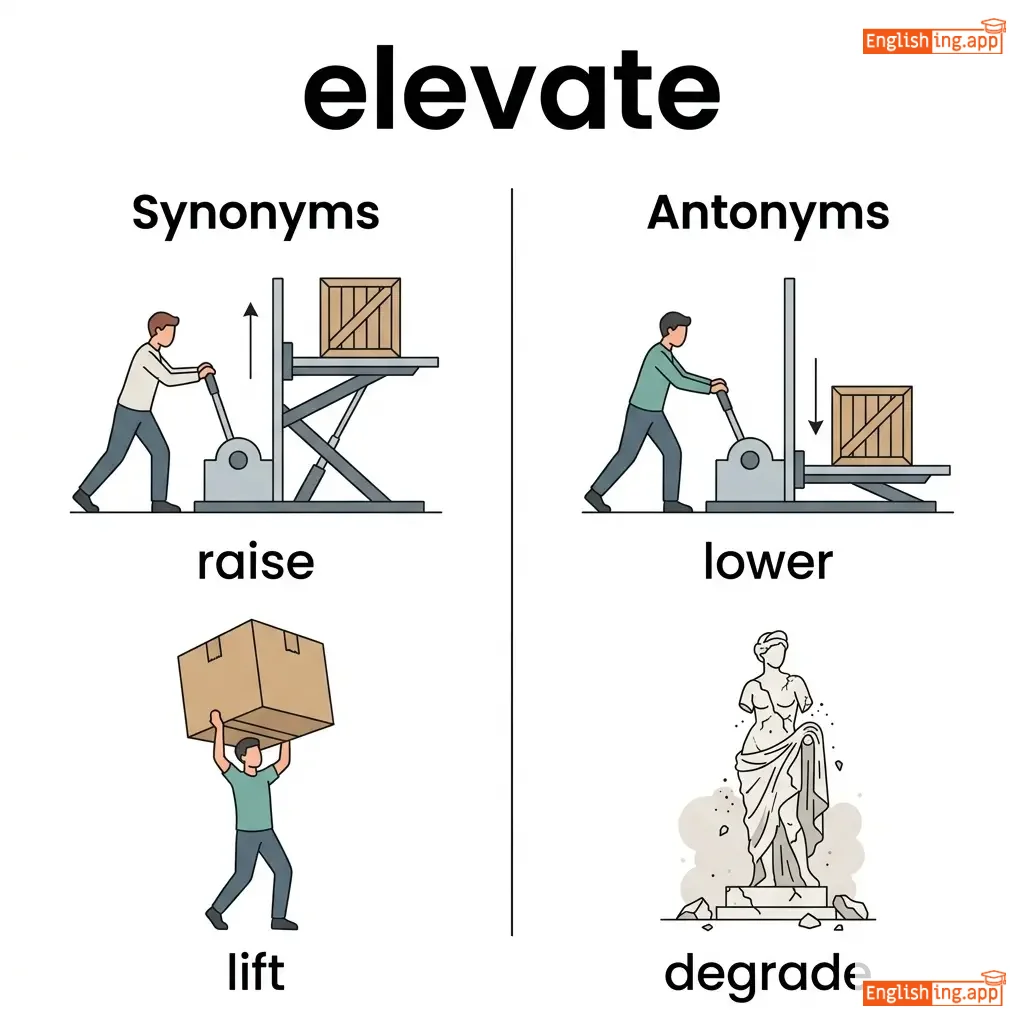
#0
⬆️
|
/ˈɛlɪveɪt/
verb
(艾列维特)
••••••
|
|
提升
tisheng
••••••
|
elevated
提升
••••••
|
elevated
提升
••••••
|
elevates
提升
••••••
|
elevating
提升
••••••
|
To raise or lift something to a higher position; to improve in status, mood, or quality.
••••••
|
Good music can elevate your mood instantly.
好音乐可以瞬间提升你的情绪。
••••••
|
好音乐可以瞬间提升你的情绪。
Hao yinyue keyi shunjian tisheng nide qingxu.
••••••
|
elevate the discussion
提升讨论
••••••
|
To raise the level of a conversation to a more serious or intelligent one.
••••••
|
提升讨论
Tisheng taolun
••••••
|
raise, lift, promote, heighten, uplift
••••••
|
lower, degrade, depress
••••••
|
elevate mood, elevate position, elevate status, elevate to
••••••
|
提升就像坐电梯一样往上升。
••••••
|
|
#0
🏛️
|
/ˈɛmbəsi/
noun
(ēmbāxī)
••••••
|
- •••••• |
大使馆
dàshǐguǎn
••••••
|
- •••••• | - •••••• | - •••••• | - •••••• |
the official residence or offices of an ambassador
••••••
|
He works at the French embassy in Dhaka.
他在达卡的法国大使馆工作。
••••••
|
他在达卡的法国大使馆工作。
Tā zài Dākǎ de Fàguó dàshǐguǎn gōngzuò.
••••••
|
- •••••• | - •••••• | - •••••• |
consulate, diplomatic mission, embassy office
••••••
|
home, private office
••••••
|
foreign embassy, embassy staff, embassy office
••••••
|
大使馆 (embassy) 记住,那里住着大使!
••••••
|
|
#0
✅
|
/ɪnˈdɔːrs/
verb
(恩多斯)
••••••
|
- •••••• |
支持
zhīchí
••••••
|
endorsed
恩多斯德
••••••
|
endorsed
恩多斯德
••••••
|
endorses
恩多斯斯
••••••
|
endorsing
恩多辛
••••••
|
To give approval or support to someone or something; to publicly recommend.
••••••
|
The celebrity endorsed the new skincare product.
这位名人支持了新的护肤产品。
••••••
|
这位名人支持了新的护肤产品。
Zhè wèi míngrén zhīchíle xīn de hùfū chǎnpǐn.
••••••
|
endorse a check
签署支票
••••••
|
To sign the back of a check to make it payable to someone else.
••••••
|
签署支票
qiānshǔ zhīpiào
••••••
|
support, approve, recommend, back, advocate
••••••
|
oppose, reject, disapprove
••••••
|
endorse product, endorse policy, celebrity endorses, endorse check
••••••
|
Endorse意味着end + force,即通过力量支持。
••••••
|
|
#0
👮♂️
|
/ɪnˈfɔːrs/
verb
(enfores)
••••••
|
- •••••• |
执行
zhíxíng
••••••
|
enforced
enforesd
••••••
|
enforced
enforesd
••••••
|
enforces
enforcest
••••••
|
enforcing
enforceng
••••••
|
to make sure that a rule, law, or policy is obeyed
••••••
|
The police are responsible for enforcing the law.
警方负责执行法律。
••••••
|
警方负责执行法律。
Jǐngfāng fùzé zhíxíng fǎlǜ.
••••••
|
enforce the law
执行法律
••••••
|
to ensure laws are followed and obeyed
••••••
|
执行法律
zhíxíng fǎlǜ
••••••
|
implement, apply, uphold, execute, impose
••••••
|
ignore, neglect, abandon
••••••
|
enforce rules, enforce regulations, enforce discipline, enforce policy
••••••
|
执行 = 强制遵守规则
••••••
|
|
#0
➗
|
/ˈiːkwəli/
adverb
(yīnggāi)
••••••
|
- •••••• |
平等地
pingdeng de
••••••
|
- •••••• | - •••••• | - •••••• | - •••••• |
in an equal or fair way; to the same degree
••••••
|
The prize money was equally divided among the winners. |
奖金在获胜者之间平等分配。
Jiǎngjīn zài huòshèng zhě zhījiān píngděng fēnpèi.
••••••
|
- •••••• | - •••••• | - •••••• |
fairly, evenly, impartially, uniformly
••••••
|
unequally, unfairly, disproportionately
••••••
|
equally important, equally divided, equally responsible
••••••
|
Equally 意味着平等地(平等)做事
••••••
|
|
#0
⚖️
|
/ˈɛθɪkəl/
adjective
(以太卡尔)
••••••
|
|
道德的
daode de
••••••
|
- •••••• | - •••••• | - •••••• | - •••••• |
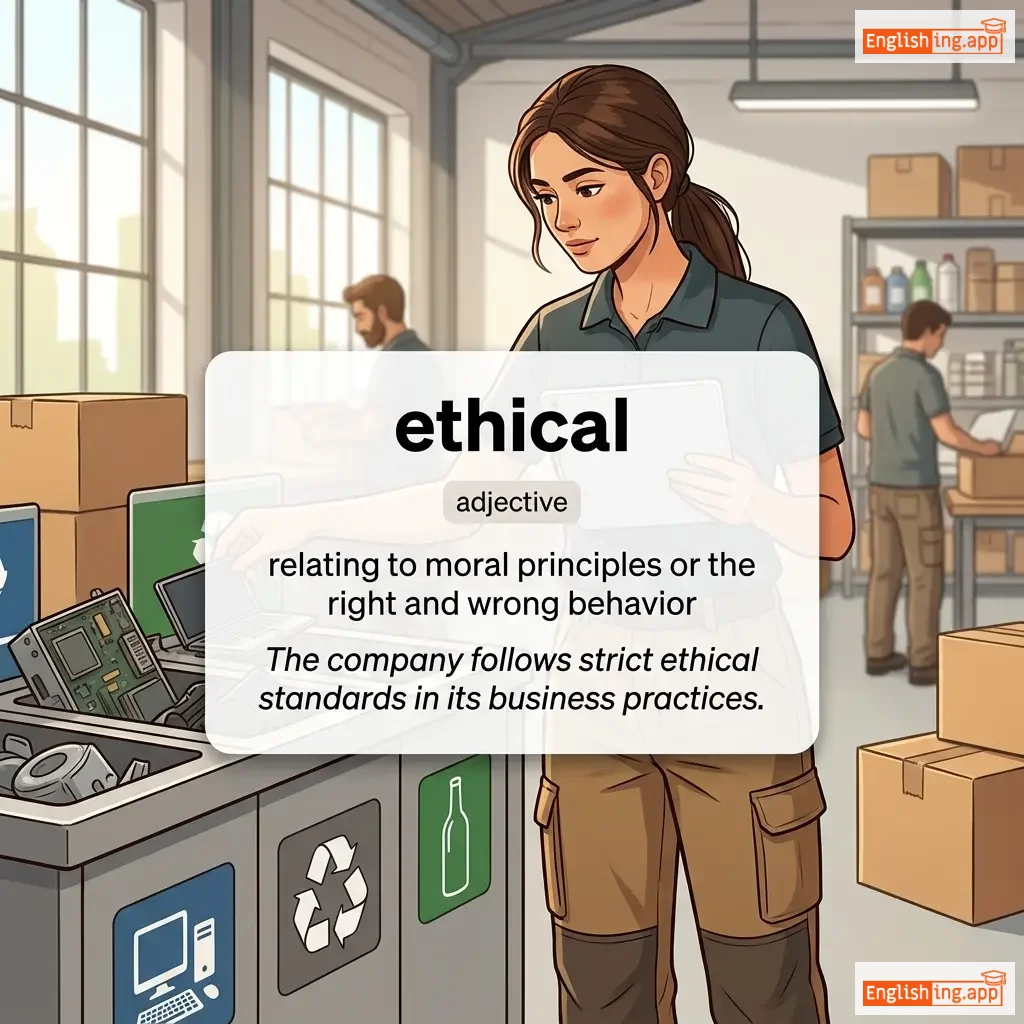
relating to moral principles or the right and wrong behavior
••••••
|
The company follows strict ethical standards in its business practices. |
公司在其商业实践中遵循严格的道德标准。
Gongsi zai qi shangye shijian zhong zunxun yange de daode biaozhun.
••••••
|
ethical dilemma |
a situation in which a difficult choice has to be made between two moral principles
••••••
|
道德困境
daode kunjing
••••••
|
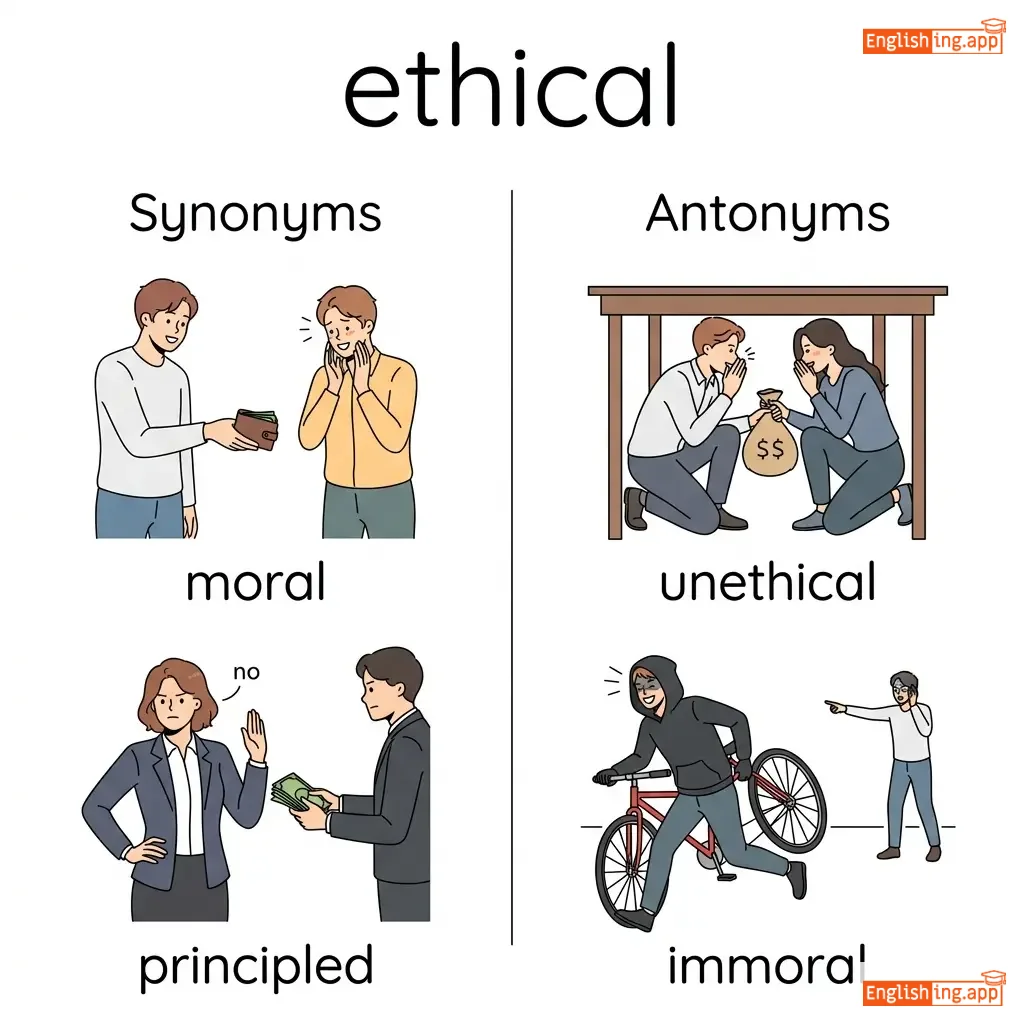
moral, principled, righteous, virtuous, honest
••••••
|
unethical, immoral, dishonest
••••••
|
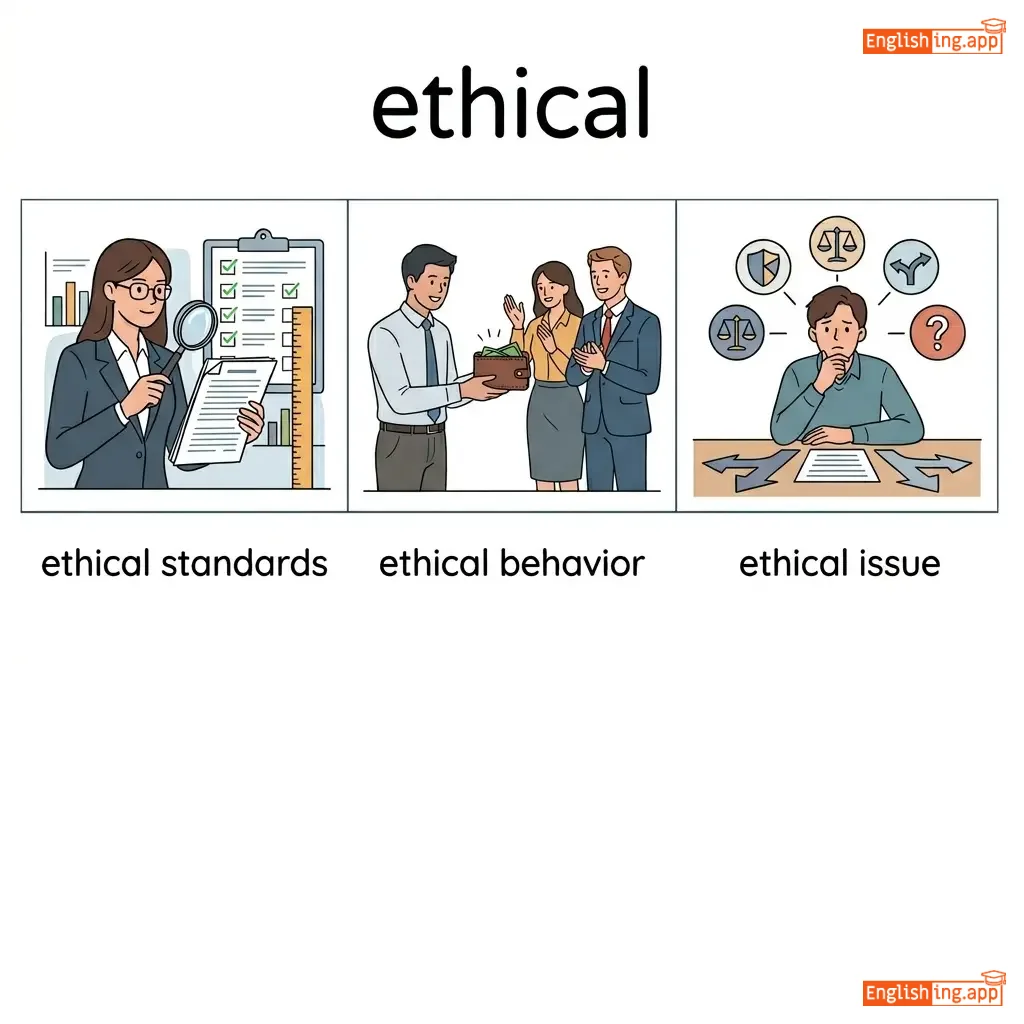
ethical standards, ethical behavior, ethical issue, ethical dilemma, ethical decision
••••••
|
Ethical意味着道德的 — 就像'伦理'一词中暗示的道德原则。
••••••
|
|
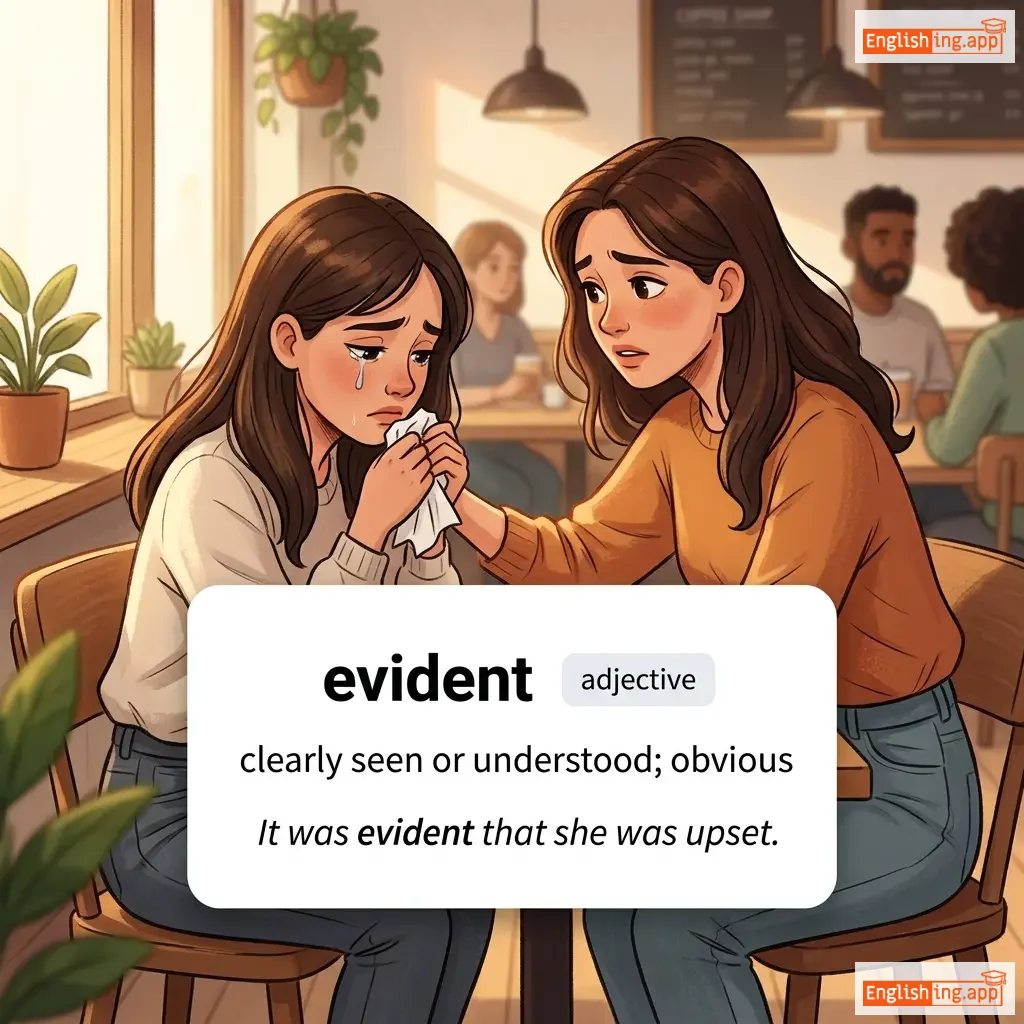
#0
👀
|
/ˈɛvɪdənt/
adjective
(évident)
••••••
|
|
显而易见
xian eryijian
••••••
|
- •••••• | - •••••• | - •••••• | - •••••• |
clearly seen or understood; obvious
••••••
|
It was evident that she was upset.
很明显她很生气。
••••••
|
显然她很生气。
Xianran ta hen shengqi.
••••••
|
self-evident
不言而喻
••••••
|
obvious without needing explanation
••••••
|
不言而喻
buyaneryu
••••••
|
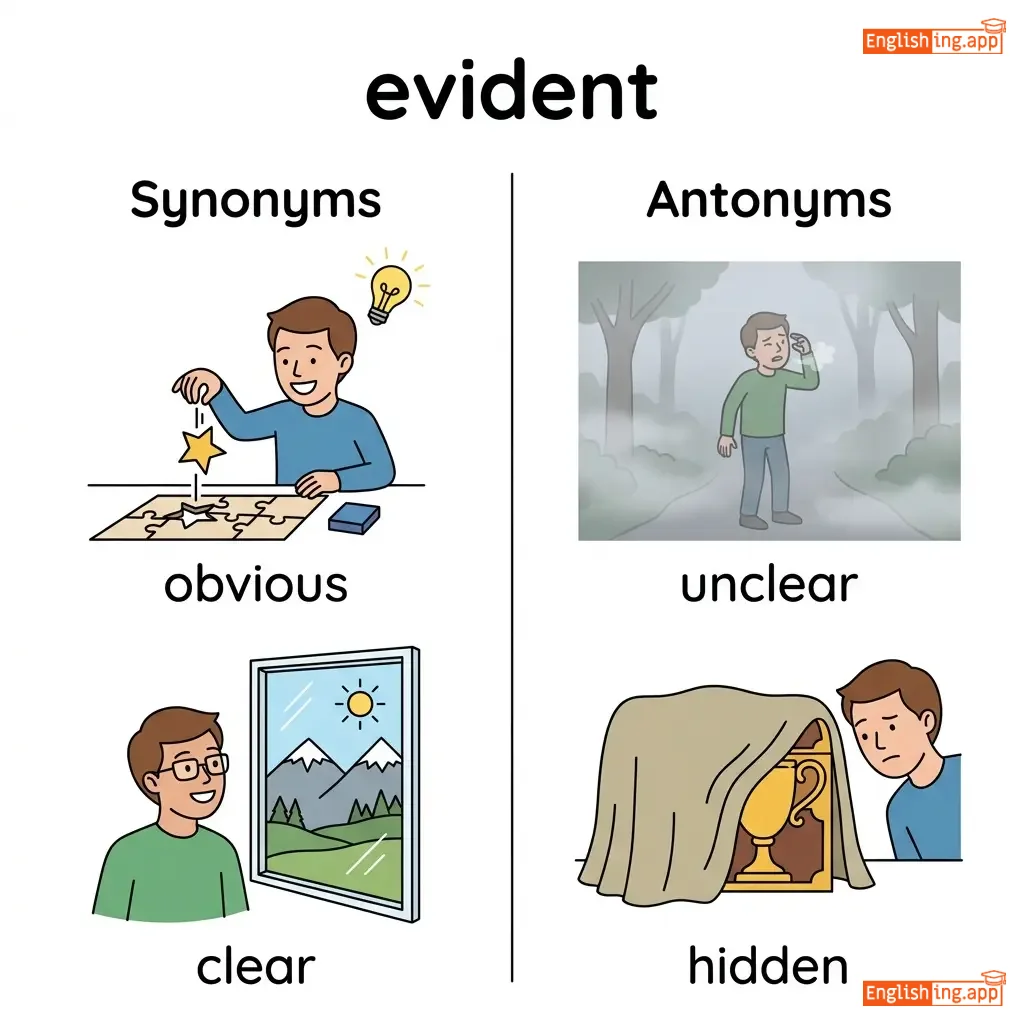
obvious, clear, apparent, manifest, plain
••••••
|
unclear, hidden, obscure
••••••
|
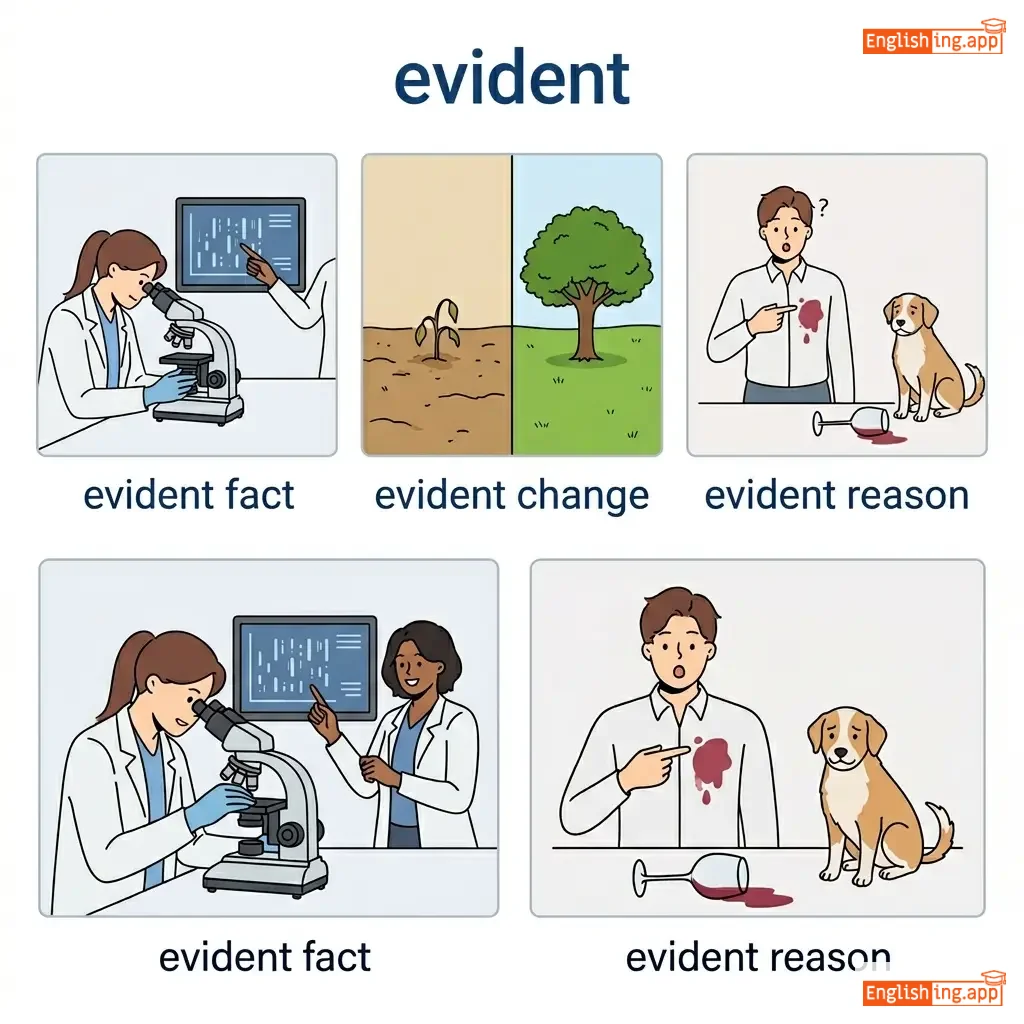
evident fact, evident change, evident reason, evident truth
••••••
|
显而易见的就是显而易见,就像证据一样。
••••••
|
|
#0
💄
|
/ˈmeɪkʌp/
noun
(méikèp)
••••••
|
- •••••• |
化妆
huàzhuāng
••••••
|
- •••••• | - •••••• | - •••••• | - •••••• |
cosmetics used to enhance or alter appearance
••••••
|
She applied makeup before the party. |
她在聚会前化了妆。
Tā zài jùhuì qián huàle zhuāng.
••••••
|
makeup test |
an additional test to make up for one missed earlier
••••••
|
补考
bǔkǎo
••••••
|
cosmetics, foundation, powder, lipstick, beauty products
••••••
|
bare face, natural
••••••
|
apply makeup, makeup kit, makeup artist, makeup remover
••••••
|
Make + Up = 面容变美化妆 💄
••••••
|
|
#0
⚪
|
/ˈpɑrtli/
adverb
(帕特利)
••••••
|
- •••••• |
部分地; 在某种程度上;
bùfen de; zài mǒu zhǒng chéngdù shàng;
••••••
|
- •••••• | - •••••• | - •••••• | - •••••• |
to some extent; not completely; in part
••••••
|
The weather was partly cloudy today.
今天天气部分多云。
••••••
|
今天天气部分多云。
Jīntiān tiānqì bùfen duōyún.
••••••
|
- •••••• | - •••••• | - •••••• |
partially, somewhat, to some extent, incompletely
••••••
|
completely, entirely, totally, fully
••••••
|
partly cloudy, partly responsible, partly true
••••••
|
Chinese speakers connect '部分地' with partial conditions.
••••••
|
|
#0
👤
|
/ˈpɜːrsən/
noun
(pèrsēn)
••••••
|
- •••••• |
人
ren
••••••
|
- •••••• | - •••••• | - •••••• | - •••••• |
an individual human being
••••••
|
She is a kind person who always helps others.
她是一个善良的人,总是帮助别人。
••••••
|
她是一个善良的人,总是帮助别人。
Ta shi yi ge shan liang de ren, zong shi bang zhu bie ren.
••••••
|
- •••••• | - •••••• | - •••••• |
individual, human, being, soul
••••••
|
animal, machine
••••••
|
good person, kind person, strong person
••••••
|
Person = Per (人) + Son (儿子) - Per son 是一个人!
••••••
|
|
#0
😊
|
/pliːz/
verb
(pǐlíz)
••••••
|
- •••••• |
使愉快
shǐ yúkuài
••••••
|
pleased
pǐlízd
••••••
|
pleased
pǐlízd
••••••
|
pleases
pǐlízs
••••••
|
pleasing
pǐlízīng
••••••
|
to make someone happy or satisfied; used as a polite request
••••••
|
His performance pleased the audience.
他的表现让观众感到满意。
••••••
|
他的表现让观众感到满意。
Tā de biǎoxiàn ràng guānzhòng gǎndào mǎnyì.
••••••
|
- •••••• | - •••••• | - •••••• |
satisfy, delight, gratify, content
••••••
|
displease, annoy, upset, offend
••••••
|
please everyone, hard to please, please customers, try to please
••••••
|
当你说'使愉快'时,你是想让某人开心。
••••••
|
|
#0
🧍
|
/stæns/
noun
(stæns)
••••••
|
- •••••• |
立场
lichang
••••••
|
- •••••• | - •••••• | - •••••• | - •••••• |
a person's attitude, opinion, or position on an issue
••••••
|
The company took a strong stance on environmental protection. |
公司在环境保护问题上采取了强硬立场。
Gōngsī zài huánjìng bǎohù wèntí shàng cǎiqǔle qiángyìng lìchǎng.
••••••
|
take a stance |
to adopt a definite position or opinion on a subject
••••••
|
采取立场
cǎiqǔ lìchǎng
••••••
|
position, viewpoint, attitude, perspective, opinion
••••••
|
neutrality, indecision
••••••
|
firm stance, political stance, defensive stance, moral stance
••••••
|
Stance 代表立场,现在就采取你的立场!
••••••
|
|
#0
🧵
|
/strænd/
noun, verb
(斯特兰德)
••••••
|
- •••••• |
线 / 搁浅
xiàn / géqiǎn
••••••
|
stranded
斯特兰德德
••••••
|
stranded
斯特兰德德
••••••
|
strands
斯特兰德斯
••••••
|
stranding
斯特兰丁
••••••
|
Noun: A single thin length of thread, wire, or similar. Verb: To leave someone or something without a way of moving or leaving.
••••••
|
The storm stranded many tourists on the island.
暴风雨让许多游客滞留在岛上。
••••••
|
暴风雨让许多游客滞留在岛上。
Bàofēngyǔ ràng xǔduō yóukè zhìliú zài dǎo shàng.
••••••
|
left stranded
滞留
••••••
|
left helpless or unable to move
••••••
|
搁浅
géqiǎn
••••••
|
thread, fiber, filament, abandon, maroon
••••••
|
rope, cord, rescue
••••••
|
strand of hair, strand of wire, left stranded, stranded passengers
••••••
|
Strand意味着线,而stranded意味着搁浅。
••••••
|
|
#0
≠
|
/ʌnˈlaɪk/
adjective
(ān lài kè)
••••••
|
- •••••• |
不同的; 不相似的
bùtóng de; bù xiāngsì de
••••••
|
- •••••• | - •••••• | - •••••• | - •••••• |
different from; not similar to
••••••
|
Unlike his brother, he prefers quiet activities.
Ān lài tā de xiōngdì, tā bǐjiào xǐhuān ānjìng huódòng.
••••••
|
与他哥哥不同,他喜欢安静的活动。
Yǔ tā gēgē bùtóng, tā xǐhuān ānjìng de huódòng.
••••••
|
- •••••• | - •••••• | - •••••• |
different from, dissimilar to, contrary to
••••••
|
like, similar to, same as
••••••
|
unlike others, unlike before, unlike anything
••••••
|
unlike 就是两者之间没有相似之处
••••••
|
|
#0
💯
|
/ˈhoʊli/
adverb
(huó lì)
••••••
|
- •••••• |
完全; 完全地
wánquán; wánquán de
••••••
|
- •••••• | - •••••• | - •••••• | - •••••• |
Entirely; completely; to the full extent
••••••
|
I am wholly committed to this project. |
我完全致力于这个项目。
wǒ wánquán zhìlì yú zhège xiàngmù.
••••••
|
- •••••• | - •••••• | - •••••• |
completely, entirely, totally, fully
••••••
|
partially, partly, incompletely
••••••
|
wholly owned, wholly responsible, wholly different
••••••
|
完全投入的方式,好像给了一切
••••••
|
Vocabulary Quiz
Test your vocabulary by matching words with their translations or meanings.
Login to take the quiz
Comments (0)
Share your thoughts and join the discussion.
Join the discussion by logging in
Login to CommentNo comments yet
Be the first to share your thoughts!