

车站教室的重建
Station Classroom Renewal
清晨的喧嚣充满了马杜苏丹普尔 district 铁路场。 一群年轻的组织者计划将这座 colonial 车站改造成一个学习之家。 车站的 basement 曾经是一个被忽视的尘土飞扬的房间。 他们测量了 capacity,以规划给孩子的小教室。 微风为车站的 boundary 缠上了新的藤蔓。 一节生锈的 carriage 现在成了一排学习桌。 母亲们说车站重新焕发了 charming 的光彩。 他们 combined 了附近的厨房和车站来煮午饭。 粉刷过的墙壁和木制 compound 梁上挂满了孩子们的画作。 在会议上,大家都承认以前从未能 conceive 过如此美好的事情。 志愿者使用红色和蓝色的强烈 contrast 来让房间更加明亮。 邻居们以真诚的 courtesy 端上了茶水。 鲁胡尔确保整个故事听起来对历史学家来说是 credible 的。 黄昏时分,孩子们的笑容标志着一个小而 critical 的胜利。 团队知道必须在严格的 deadline 内完成工作。 因此,即使在夜晚,也有朋友留下来用鲜花 decorate 楼梯。 一支 delegate 小组访问了附近的学校以寻求支持。 铁路官员允许旧部件用于 domestic 需求。 城市 division 办公室承诺提供新的物资。 他们意识到这所露天学校将重塑该地区 changing 的身份。

Swipe left or right, or use the buttons. Tap image to zoom.
例句翻译
单词
Station Classroom RenewalStation Classroom Renewal - 遮罩切换
|
表情符号
|
单词 | Images | 翻译 | 过去时 | 过去分词 | 第三人称单数 | 动名词 | 含义 | 例句 | 例句翻译 | 示例表达 | 示例表达含义 | 示例表达翻译 | 同义词 | 反义词 | 搭配词 | 助记符 |
|---|---|---|---|---|---|---|---|---|---|---|---|---|---|---|---|---|---|
|
#0
🏠
|
/ˈbeɪs.mənt/
noun
(bèi sī mèn tì)
••••••
|
- •••••• |
地下室
dixiashi
••••••
|
- •••••• | - •••••• | - •••••• | - •••••• |
the lowest floor of a building, typically below ground level
••••••
|
We store old furniture in the basement. |
我们把旧家具存放在地下室。
Women ba jiu jiaju cunfang zai dixiashi.
••••••
|
- •••••• | - •••••• | - •••••• |
cellar, underground floor, lower level
••••••
|
attic, top floor, upper level
••••••
|
basement apartment, basement stairs, basement storage
••••••
|
地下室是最冷的地方
••••••
|
|
#0
🛑
|
/ˈbaʊn.dri/
noun
(bāo'āndì)
••••••
|
|
边界
bianjie
••••••
|
- •••••• | - •••••• | - •••••• | - •••••• |
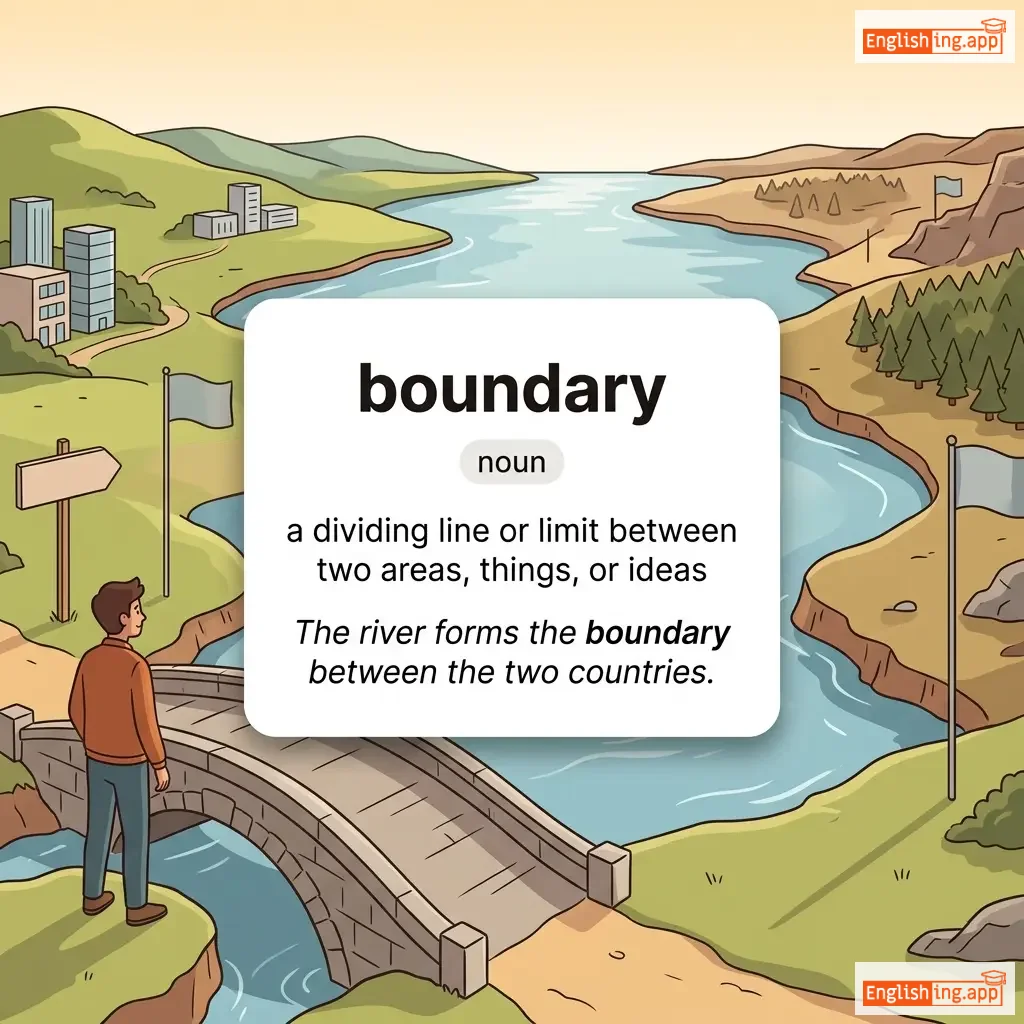
a dividing line or limit between two areas, things, or ideas
••••••
|
The river forms the boundary between the two countries. |
这条河流形成了两国之间的边界。
Zhe tiao heliu xingchengle liangguo zhijian de bianjie.
••••••
|
cross the boundary |
to go beyond accepted limits
••••••
|
越过边界
yueguo bianjie
••••••
|
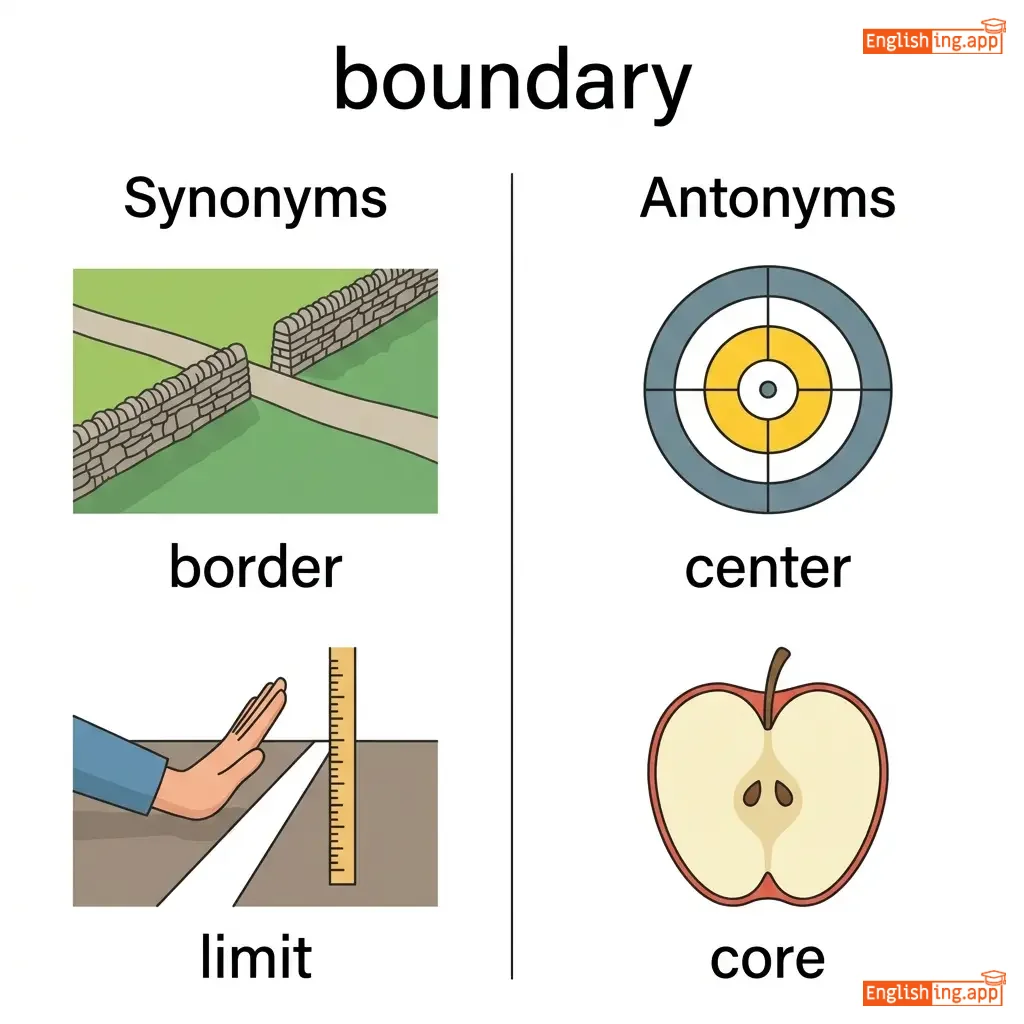
border, limit, edge, frontier
••••••
|
center, core, interior
••••••
|
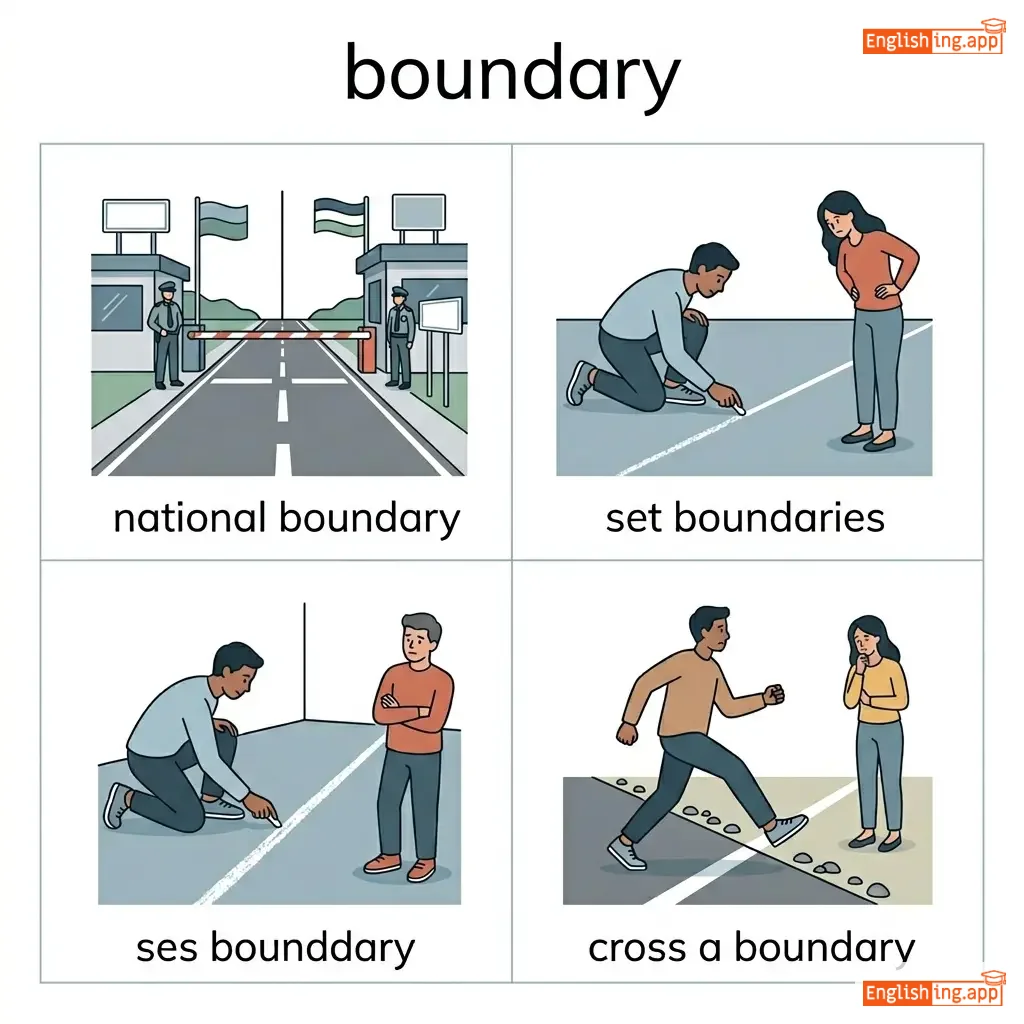
national boundary, set boundaries, cross a boundary, boundary line
••••••
|
Boundary 就是边界,就像在足球中,边界就是球门线。
••••••
|
|
#0
📦
|
/kəˈpæsəti/
noun
(kāi pín xì tǐ)
••••••
|
|
容量
rongliang
••••••
|
- •••••• | - •••••• | - •••••• | - •••••• |
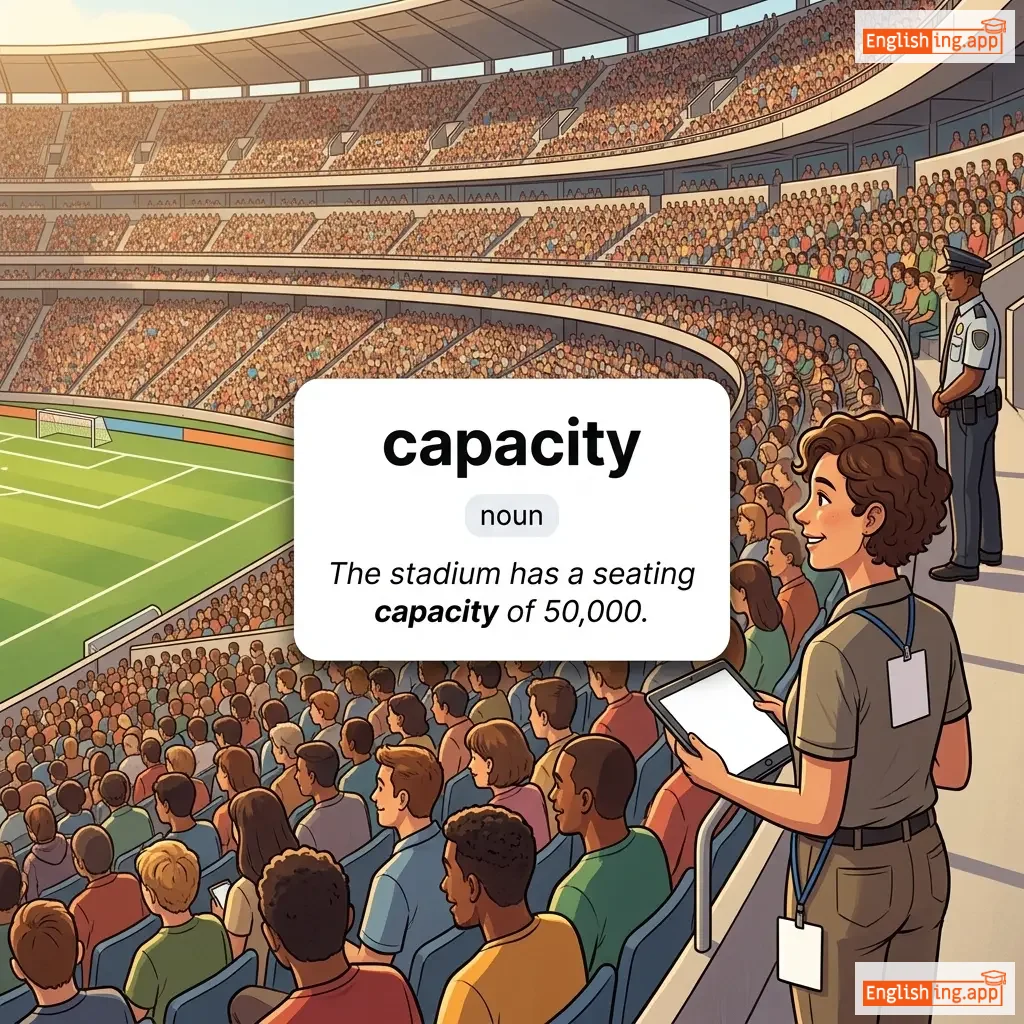
the maximum amount that something can contain or produce; ability to do something
••••••
|
The stadium has a seating capacity of 50,000. |
体育场的座位容量为50,000。
Tǐ yù chǎng de zuò wèi róng liàng wéi 50,000.
••••••
|
at full capacity |
operating at the maximum possible output or limit
••••••
|
全容量
quán róng liàng
••••••
|
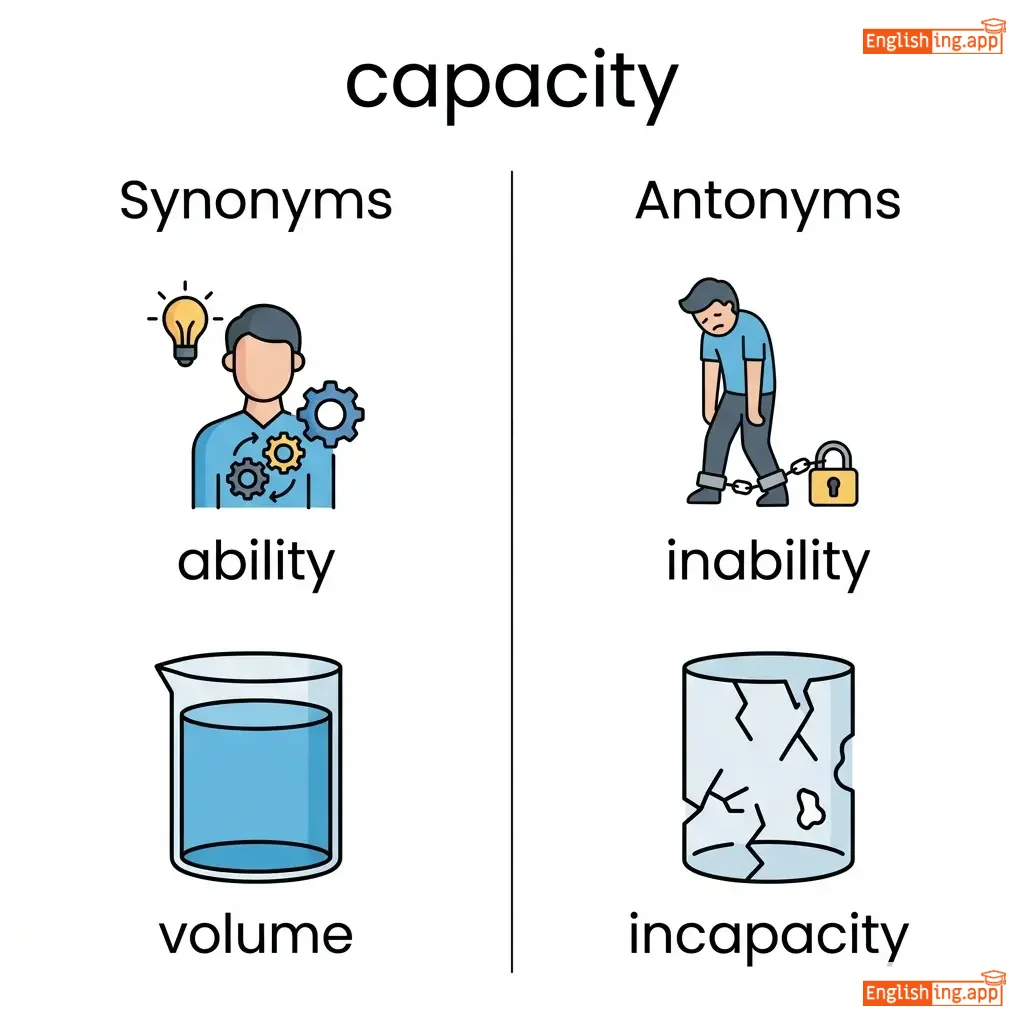
ability, volume, limit, potential, capability
••••••
|
inability, incapacity, weakness
••••••
|
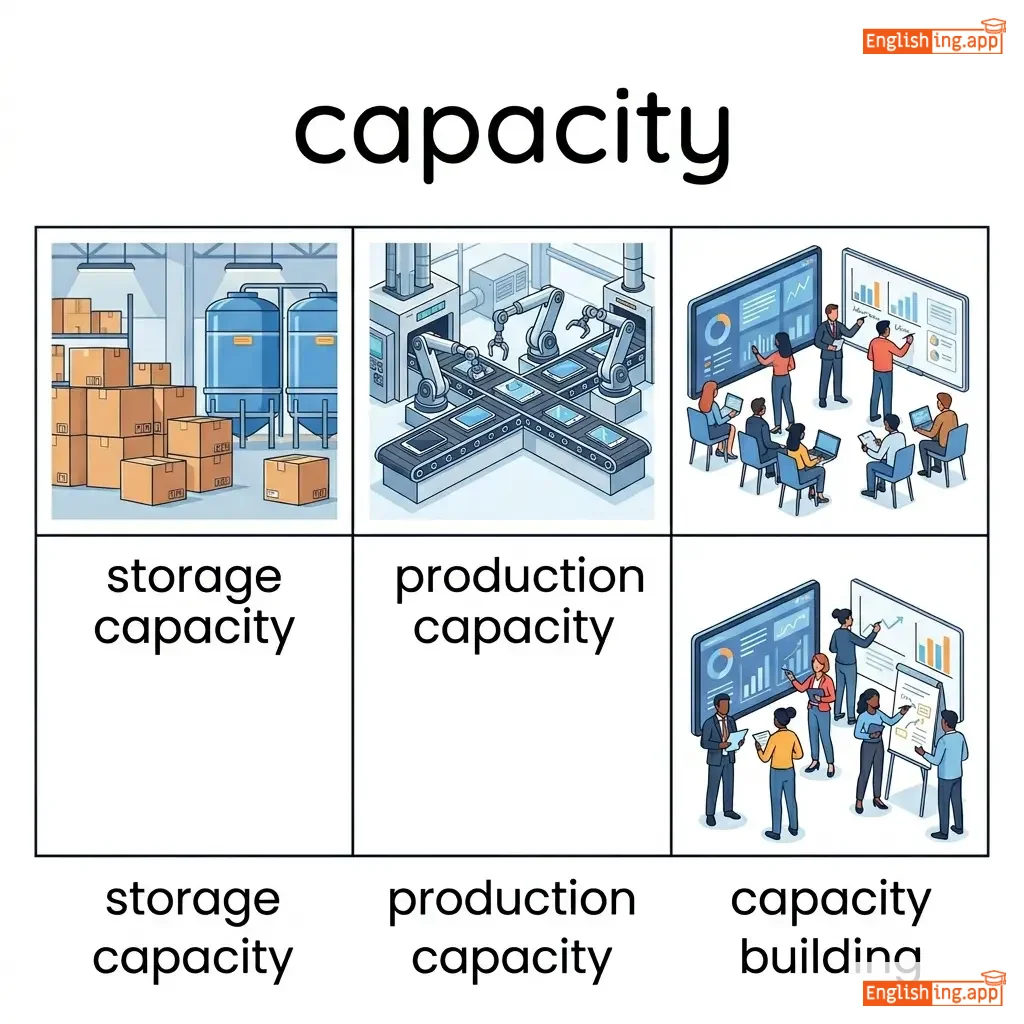
storage capacity, production capacity, capacity building, at capacity
••••••
|
容量就像是能装多少东西,比如一个箱子的容量。
••••••
|
|
#0
🚗
|
/ˈkærɪdʒ/
noun
(凯瑞奇)
••••••
|
- •••••• |
马车
mǎchē
••••••
|
- •••••• | - •••••• | - •••••• | - •••••• |
a vehicle, typically a four-wheeled one, used for transporting goods or people, especially in the past
••••••
|
The royal family traveled in a beautiful carriage during parades. |
王室家族在游行期间乘坐了一辆美丽的马车。
Wángshì jiāzú zài yóuxíng qījiān chéngzuòle yī liàng měilì de mǎchē.
••••••
|
- •••••• | - •••••• | - •••••• |
wagon, coach, cart, vehicle
••••••
|
foot, walk
••••••
|
horse-drawn carriage, royal carriage, carriage ride
••••••
|
A mǎchē is a royal vehicle that carries the elite 🐴
••••••
|
|
#0
🌦️
|
/ˈtʃeɪndʒɪŋ/
verb
(tʃeɪndʒɪŋ)
••••••
|
- •••••• |
变化
biànhuà
••••••
|
- •••••• | - •••••• | - •••••• |
changing
tʃeɪndʒɪŋ
••••••
|
The act of becoming different; ongoing process of change.
••••••
|
The weather is changing rapidly.
天气在快速变化。
••••••
|
天气在快速变化。
Tiānqì zài kuàisù biànhuà.
••••••
|
- •••••• | - •••••• | - •••••• |
modifying, altering, transforming, shifting
••••••
|
stable, constant, fixed
••••••
|
changing situation, changing world, changing role, changing rapidly
••••••
|
Changing 就是变化 – 换频道,画面就会变化!
••••••
|
|
#0
✨
|
/ˈtʃɑːr.mɪŋ/
adjective
(查尔明)
••••••
|
- •••••• |
迷人
mírén
••••••
|
- •••••• | - •••••• | - •••••• | - •••••• |
Very pleasing or delightful in a way that attracts people.
••••••
|
The village is full of charming little houses.
这个村庄充满了迷人的小房子。
••••••
|
这个村庄充满了迷人的小房子。
Zhège cūnzhuāng chōngmǎnle mírén de xiǎo fángzi.
••••••
|
- •••••• | - •••••• | - •••••• |
attractive, delightful, enchanting, appealing, captivating
••••••
|
repulsive, unattractive, unpleasant
••••••
|
charming smile, charming personality, charming place, charming story
••••••
|
Charming, 就是迷人的意思,总是能吸引人。
••••••
|
|
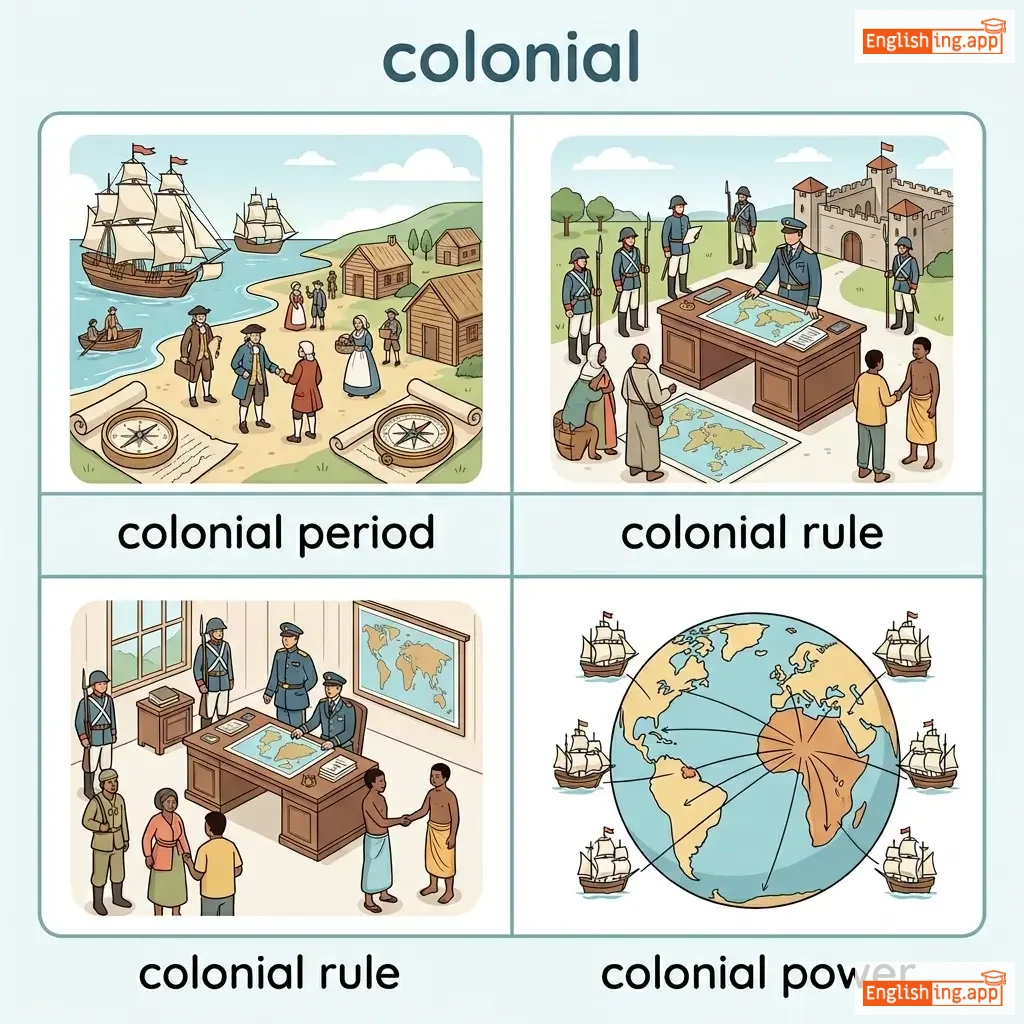
#0
🏛️
|
/kəˈloʊniəl/
adjective
(殖民地的)
••••••
|
|
殖民的
zhímín de
••••••
|
- •••••• | - •••••• | - •••••• | - •••••• |
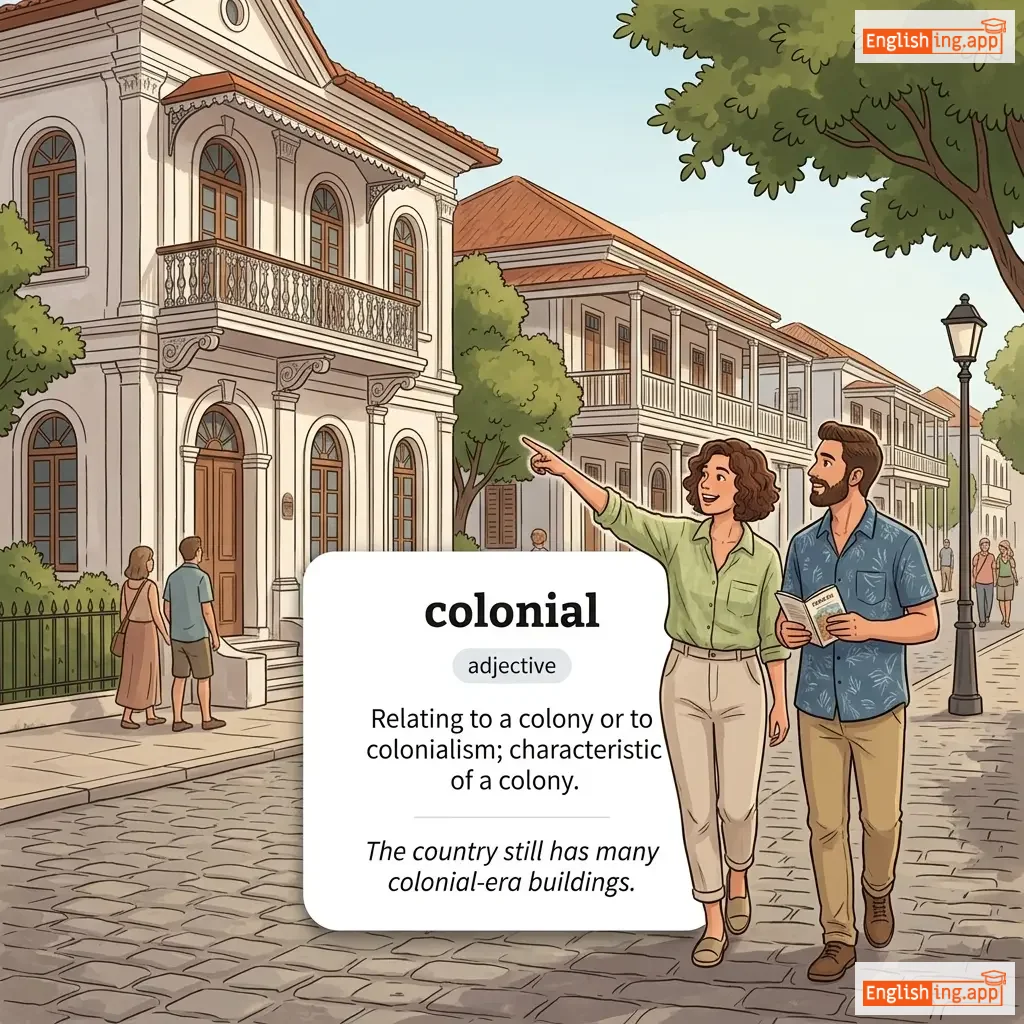
Relating to a colony or to colonialism; characteristic of a colony.
••••••
|
The country still has many colonial-era buildings.
这个国家仍然有许多殖民时代的建筑。
••••••
|
这个国家仍然有许多殖民时代的建筑。
Zhège guójiā réngrán yǒu xǔduō zhímín shídài de jiànzhú.
••••••
|
colonial rule
殖民统治
••••••
|
political control of one country by another
••••••
|
殖民统治
zhímín tǒngzhì
••••••
|
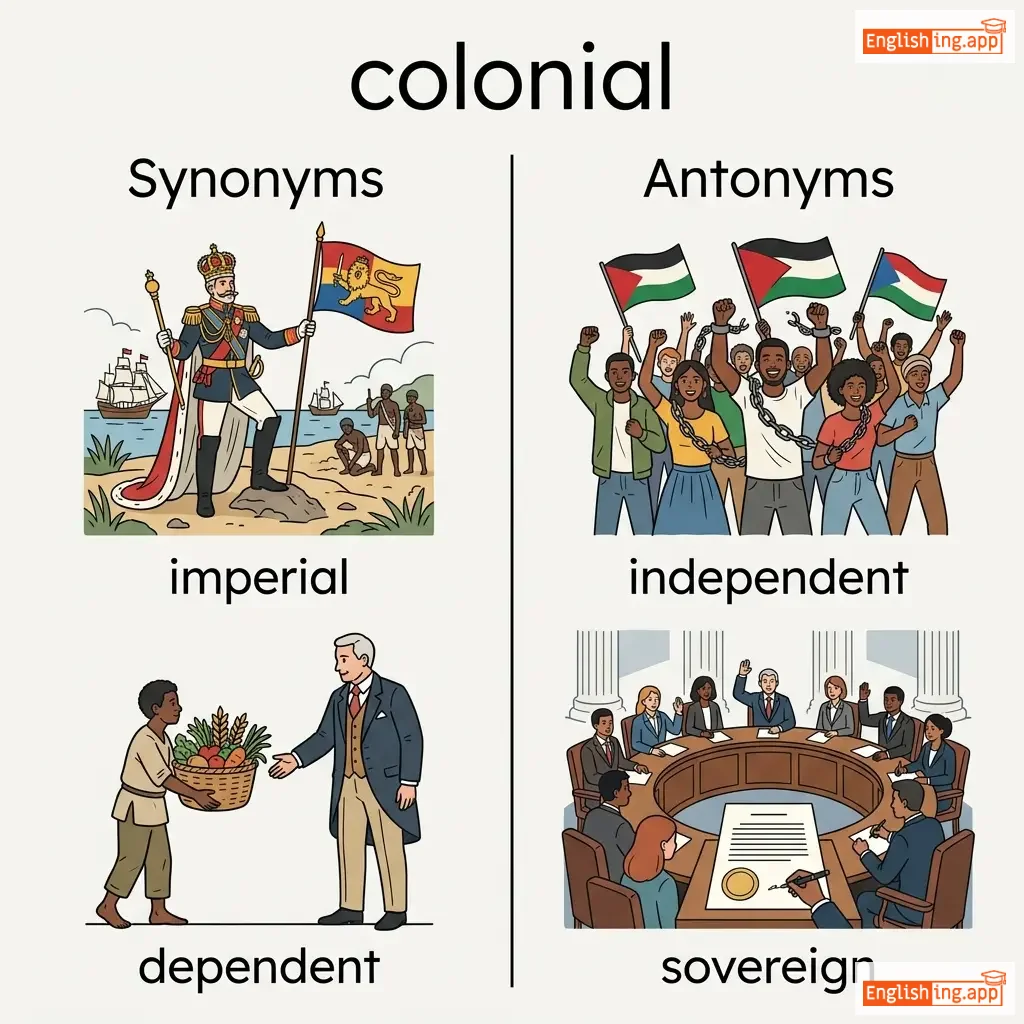
imperial, dependent, overseas, settler
••••••
|
independent, sovereign
••••••
|
colonial period, colonial rule, colonial power, colonial history
••••••
|
Colonial 在中文中代表殖民,想象历史上殖民时代的情景。
••••••
|
|
#0
🤝
|
/kəmˈbaɪnd/
adjective
(kāmbáind)
••••••
|
- •••••• |
联合的
liánhé de
••••••
|
- •••••• | - •••••• | - •••••• | - •••••• |
formed by bringing together separate parts or elements
••••••
|
The combined effort of the team led to success.
团队的共同努力导致了成功。
••••••
|
团队的共同努力导致了成功。
Tuánduì de gòngtóng nǔlì dǎozhìle chénggōng.
••••••
|
combined forces
联合力量
••••••
|
to work together for a common goal
••••••
|
联合力量
liánhé lìliàng
••••••
|
merged, united, joined, blended, integrated
••••••
|
separate, divided, split
••••••
|
combined effect, combined effort, combined result, combined team
••••••
|
联合意味着组合在一起,就像联合力量一样,帮助我们一起成功。
••••••
|
|
#0
⚗️
|
/ˈkɑːmpaʊnd/
noun
(kōngpào dé)
••••••
|
- •••••• |
化合物 / 封闭区域
huàhéwù / fēngbì qūyù
••••••
|
- •••••• | - •••••• | - •••••• | - •••••• |
a thing that is composed of two or more separate elements; an enclosed area with buildings
••••••
|
The scientist studied the chemical compound in the lab.
科学家在实验室研究了化学化合物。
••••••
|
科学家在实验室研究了化学化合物。
Kēxuéjiā zài shíyànshì yánjiū le huàxué huàhéwù.
••••••
|
compound interest
复利
••••••
|
interest calculated on both the initial principal and the accumulated interest
••••••
|
复利
fùlì
••••••
|
mixture, combination, blend, complex
••••••
|
element, simple
••••••
|
chemical compound, compound interest, compound sentence
••••••
|
复利像化合物一样,随着时间的推移不断增长
••••••
|
|
#0
💡
|
/kənˈsiːv/
verb
(kön-siv)
••••••
|
- •••••• |
构思, 怀孕
gousi, huaiyun
••••••
|
conceived
kön-sivd
••••••
|
conceived
kön-sivd
••••••
|
conceives
kön-sivs
••••••
|
conceiving
kön-sivin
••••••
|
to form or imagine an idea in the mind; to become pregnant
••••••
|
It is hard to conceive how such an idea could succeed.
很难想象这样的想法如何能够成功。
••••••
|
很难想象这样的想法如何能够成功。
Hen nan xiangxiang zheyang de xiangfa ruhe nenggou chenggong.
••••••
|
conceive a plan
构思一个计划
••••••
|
to think of or develop a plan
••••••
|
构思一个计划
gousi yige jihua
••••••
|
imagine, envision, devise, formulate, originate
••••••
|
misunderstand, overlook, neglect
••••••
|
conceive an idea, conceive a plan, conceive child, conceive possibility
••••••
|
conceive 意味着构思一个新的计划。
••••••
|
|
#0
⚖️
|
/ˈkɒn.trɑːst/ (noun), /kənˈtræst/ (verb)
noun, verb
(happiness)
••••••
|
|
幸福
xingfu
••••••
|
contrasted
••••••
|
contrasted
••••••
|
contrasts
••••••
|
contrasting
••••••
|
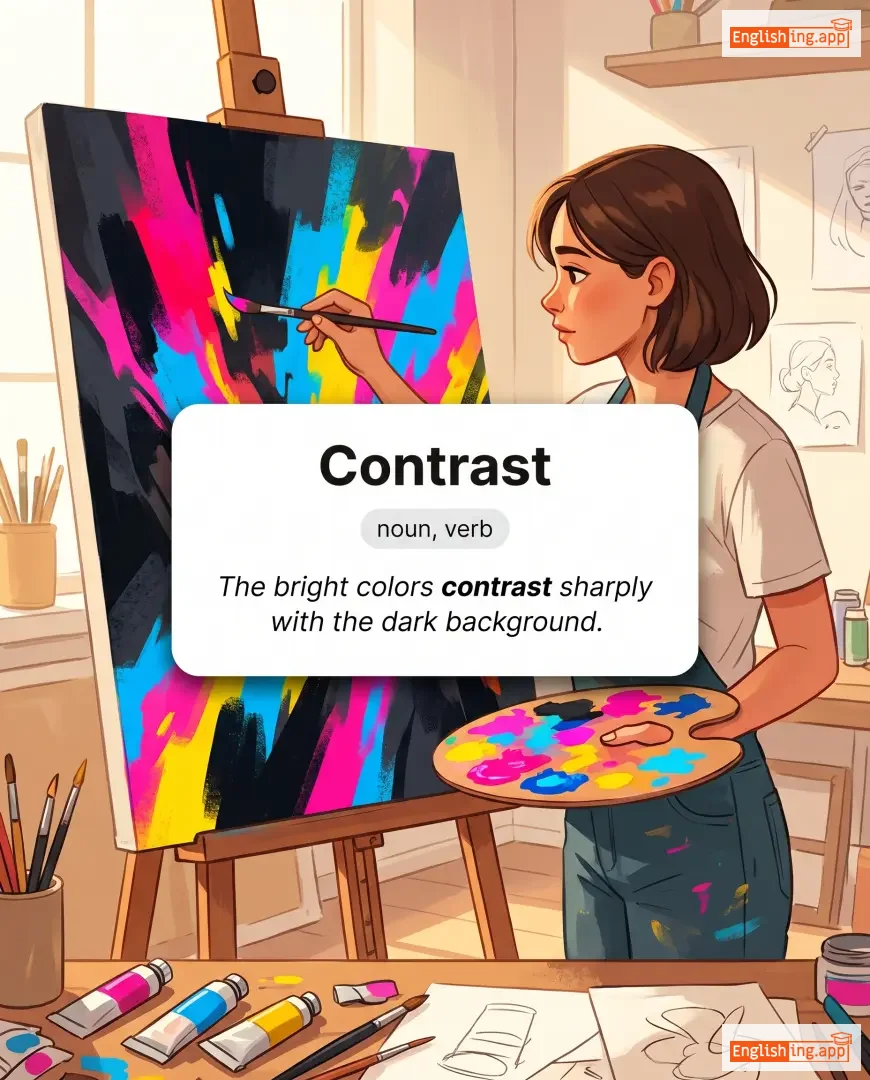
A difference between two or more things; to compare two things to show how they are different.
••••••
|
The bright colors contrast sharply with the dark background. |
当她获得奖项时,她无法掩饰自己的幸福。
Dāng tā huòdé jiǎngxiàng shí, tā wúfǎ yǎnshì zìjǐ de xìngfú.
••••••
|
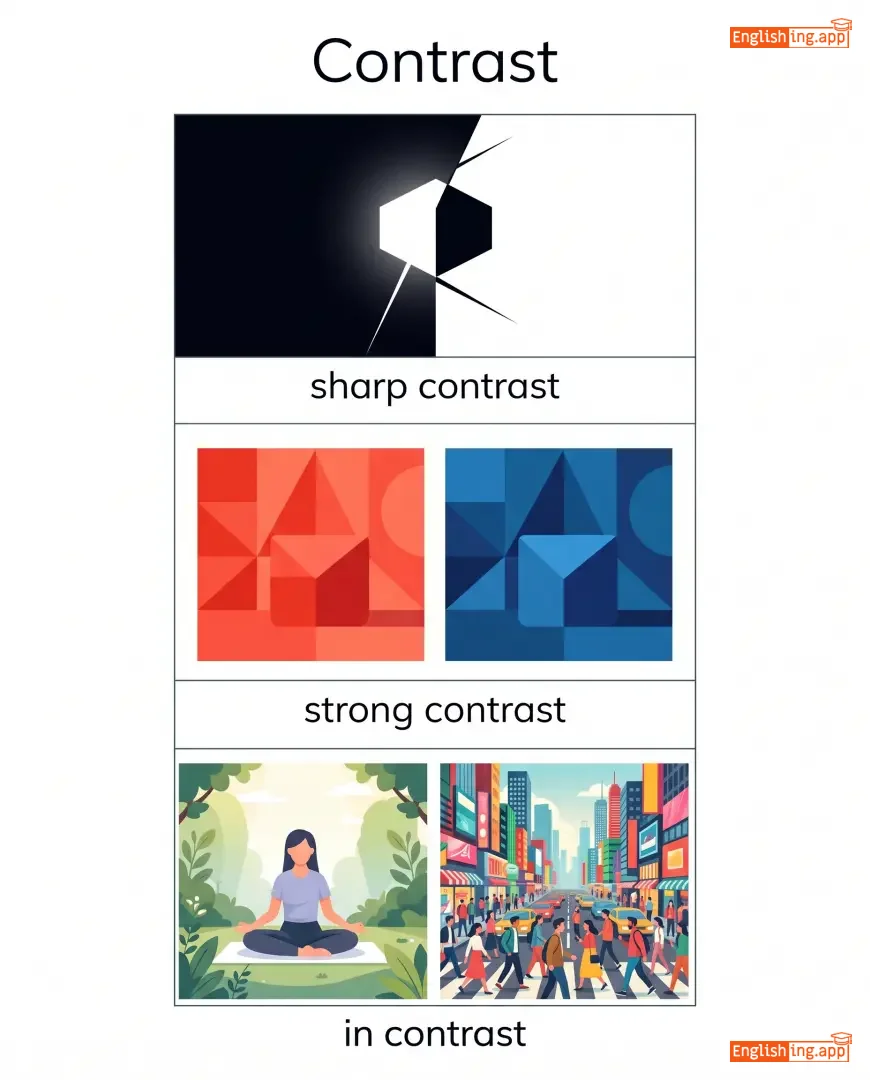
in contrast |
Used to show a clear difference between two things.
••••••
|
追求幸福
zhuīqiú xìngfú
••••••
|
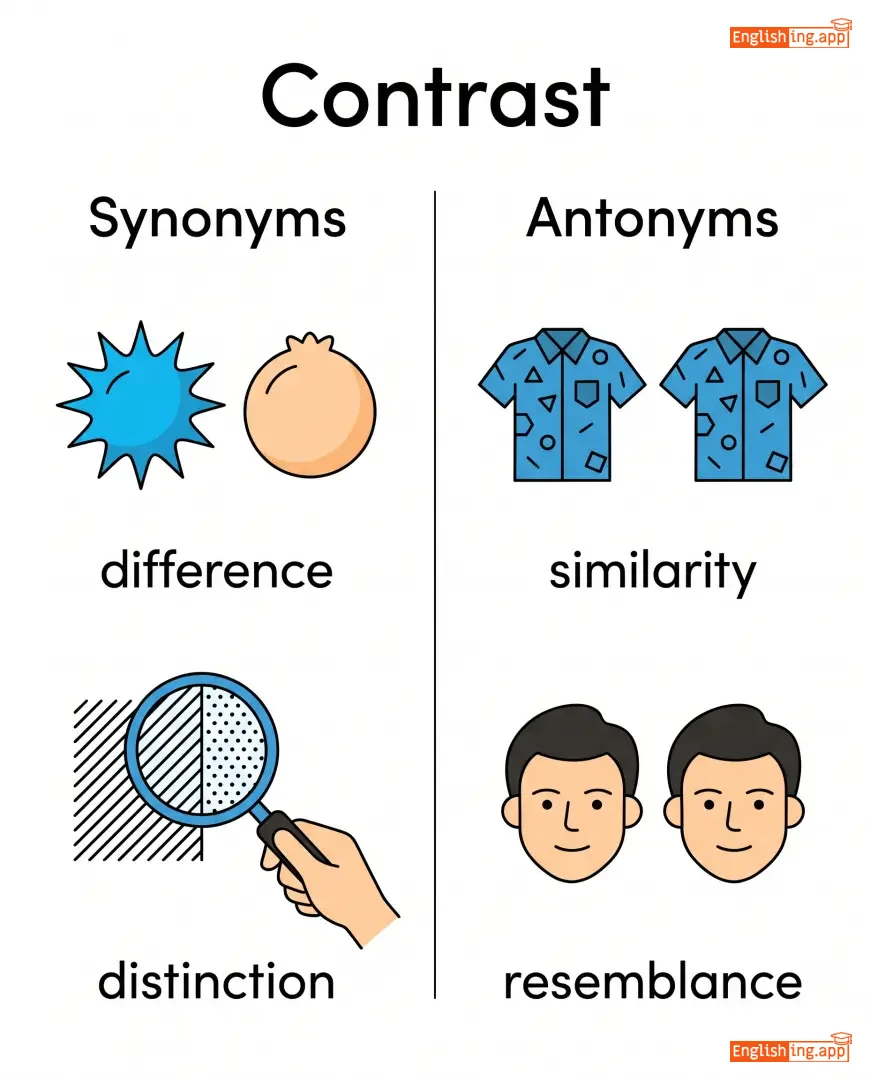
difference, distinction, divergence, comparison
••••••
|
similarity, resemblance
••••••
|
sharp contrast, strong contrast, in contrast, contrast between
••••••
|
幸福就是每天都在做让自己高兴的事。
••••••
|
|
#0
😇
|
/ˈkɜːr.tə.si/
noun
(kèrtèxī)
••••••
|
- •••••• |
礼貌; 客气;
lǐmào, kèqì
••••••
|
- •••••• | - •••••• | - •••••• | - •••••• |
the showing of politeness in one's attitude and behavior toward others; a polite gesture or remark
••••••
|
He showed great courtesy by holding the door open for elderly people.
他通过为老年人打开门来表现出极大的礼貌。
••••••
|
他通过为老年人打开门来表现出极大的礼貌。
Tā tōngguò wèi lǎonián rén dǎkāi mén lái biǎoxiàn chū jí dà de lǐmào.
••••••
|
- •••••• | - •••••• | - •••••• |
politeness, civility, respect, good manners
••••••
|
rudeness, impoliteness, incivility, discourtesy
••••••
|
common courtesy, professional courtesy, extend courtesy
••••••
|
Chinese '礼貌' is tied to acts of politeness like holding doors open.
••••••
|
|
#0
👍
|
/ˈkrɛd.ɪ.bəl/
adjective
(krɛdɪbəl)
••••••
|
- •••••• |
可信的
kě xìn de
••••••
|
- •••••• | - •••••• | - •••••• | - •••••• |
able to be believed; convincing
••••••
|
Her explanation was credible enough to convince the committee. |
她的解释足够可信,能够说服委员会。
Tā de jiěshì zúgòu kěxìn, nénggòu shuōfú wěiyuánhuì.
••••••
|
- •••••• | - •••••• | - •••••• |
believable, plausible, trustworthy, convincing
••••••
|
unbelievable, implausible
••••••
|
credible source, credible evidence, credible story, credible explanation
••••••
|
CREDIBLE 意味着可信的,就像一种能说服委员会的解释
••••••
|
|
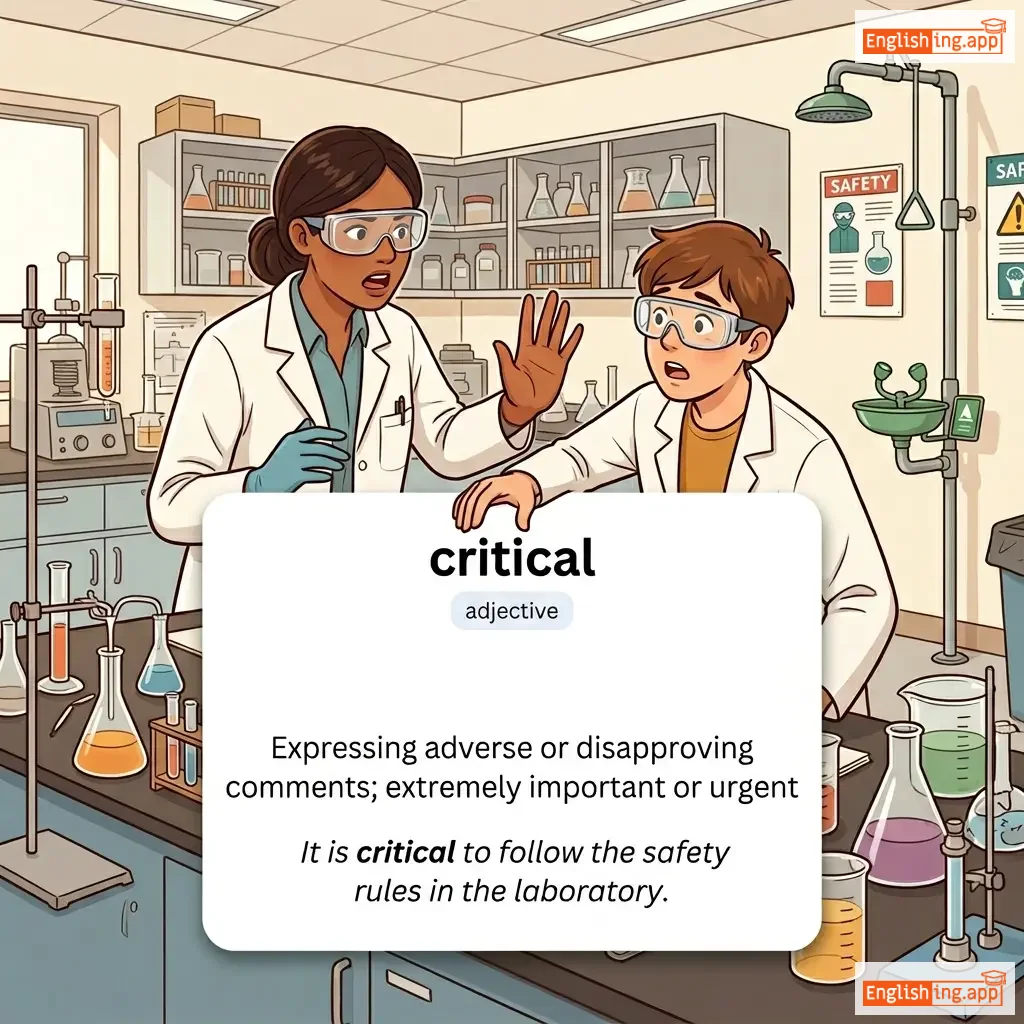
#0
❗
|
/ˈkrɪtɪkəl/
adjective
(krìtìkǎo)
••••••
|
|
关键的 / 紧急的
guānjiàn de / jǐnjí de
••••••
|
- •••••• | - •••••• | - •••••• | - •••••• |
Expressing adverse or disapproving comments; extremely important or urgent
••••••
|
It is critical to follow the safety rules in the laboratory. |
在实验室中,遵循安全规则是至关重要的。
Zài shíyànshì zhōng, zūnxún ānquán guīzé shì zhìguān zhòngyào de.
••••••
|
critical condition |
a serious medical state where life is at risk
••••••
|
危急状态
wéijí zhuàngtài
••••••
|
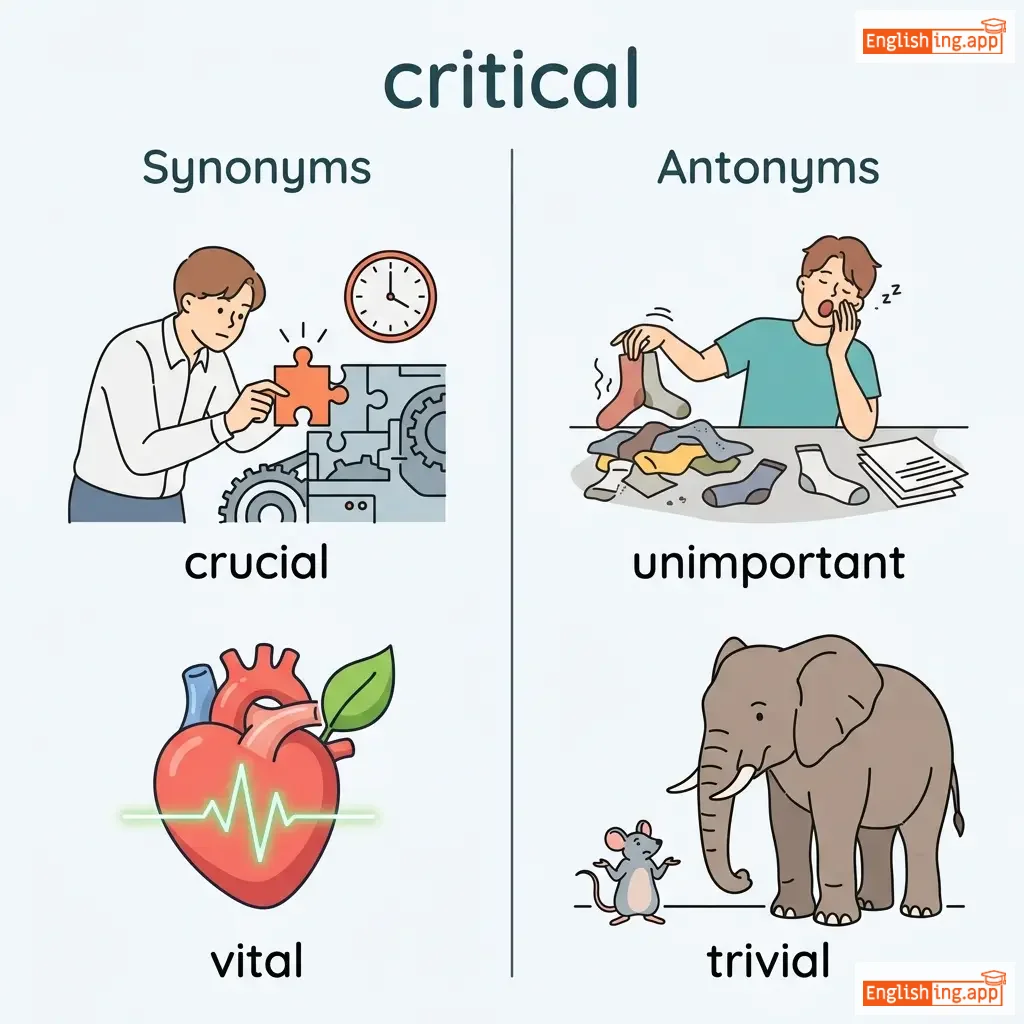
crucial, vital, essential, urgent, disapproving
••••••
|
unimportant, trivial, supportive
••••••
|
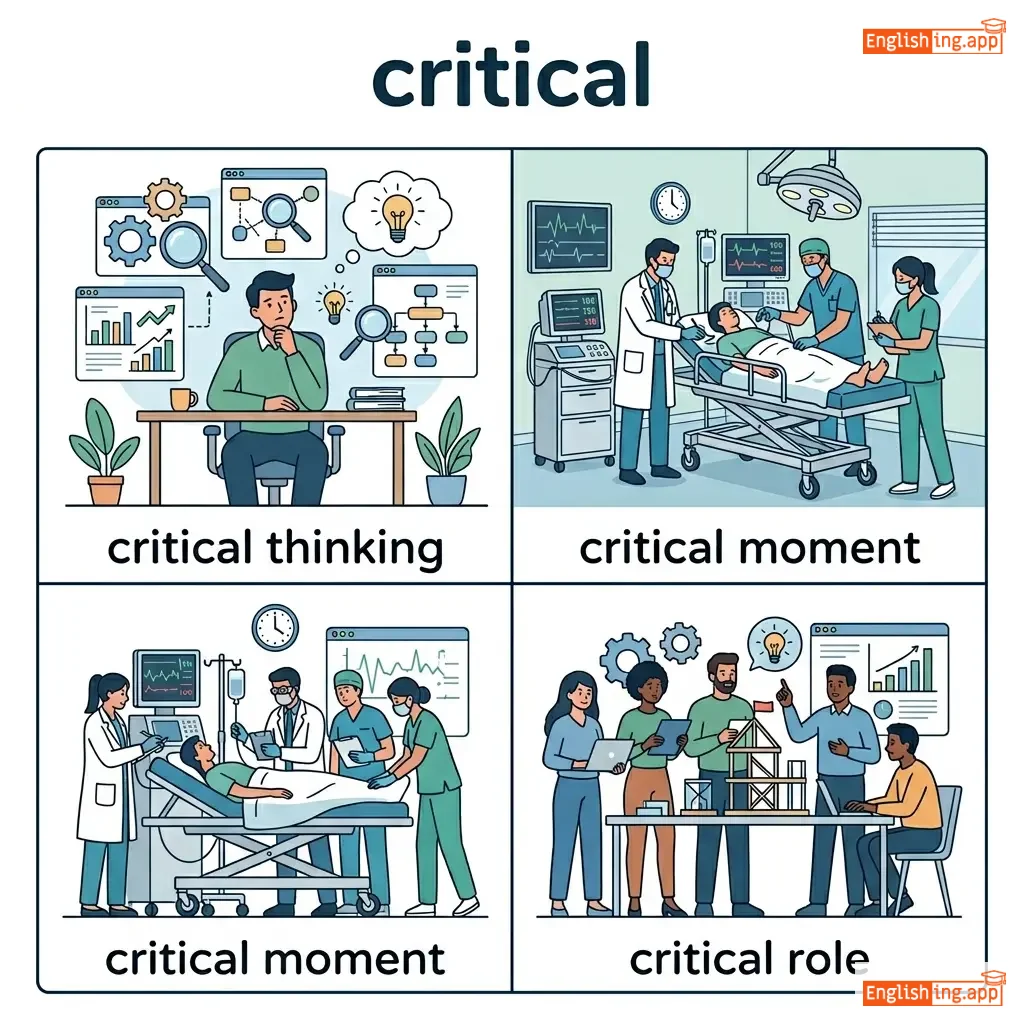
critical thinking, critical moment, critical role, critical analysis
••••••
|
Critical 代表关键 – Critical = 关键的
••••••
|
|
#0
⏰
|
/ˈdedlaɪn/
noun
(dɛdlaɪn)
••••••
|
- •••••• |
最后期限
zuìhòu qīxiàn
••••••
|
- •••••• | - •••••• | - •••••• | - •••••• |
the latest time or date by which something must be completed
••••••
|
We need to finish this project before the deadline. |
我们必须在最后期限之前完成这个项目。
Wǒmen bìxū zài zuìhòu qīxiàn zhīqián wánchéng zhège xiàngmù.
••••••
|
meet the deadline |
to finish something on time
••••••
|
按时完成
ànshí wánchéng
••••••
|
due date, cutoff date, time limit, target date, completion date
••••••
|
delay, extension
••••••
|
tight deadline, project deadline, meet deadline, set a deadline
••••••
|
最后期限意味着你必须按时完成任务。
••••••
|
|
#0
🎨
|
/ˈdɛkəreɪt/
verb
••••••
|
|
- •••••• |
decorated
••••••
|
decorated
••••••
|
decorates
••••••
|
decorating
••••••
|
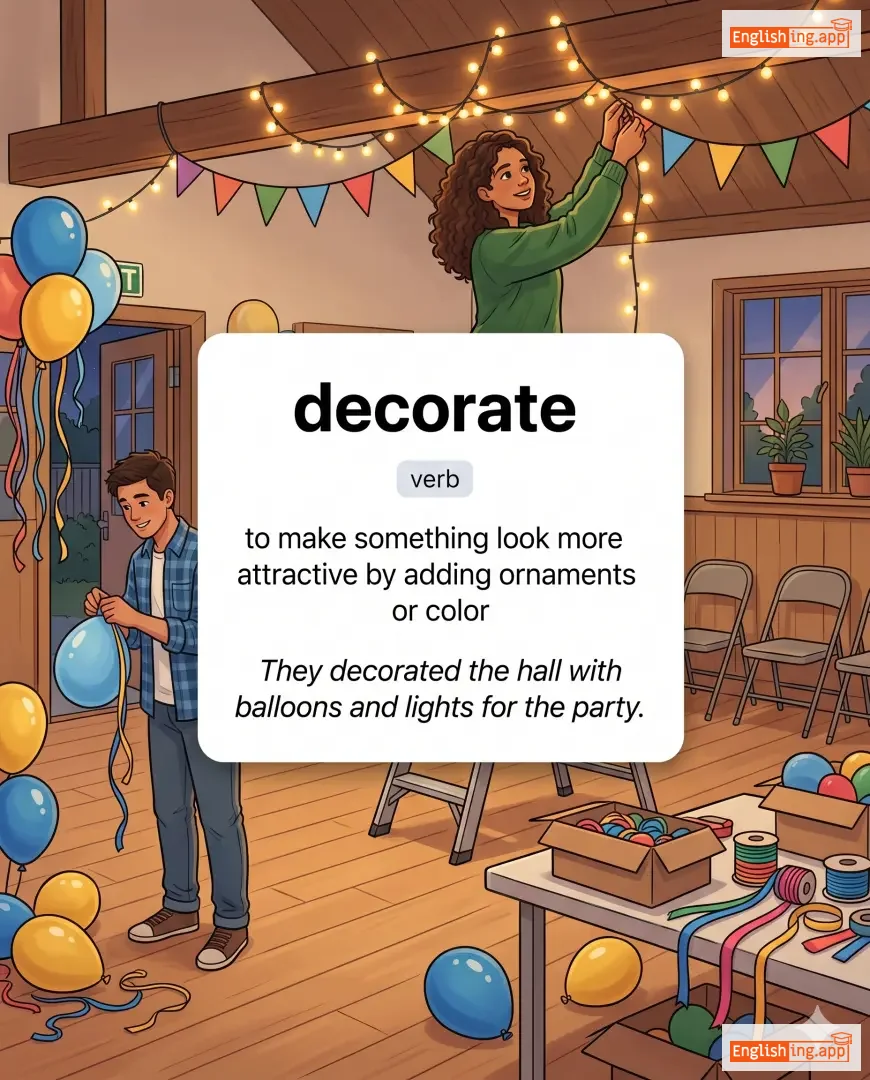
to make something look more attractive by adding ornaments or color
••••••
|
They decorated the hall with balloons and lights for the party. |
- •••••• |
decorate the truth |
to exaggerate or add details to make a story more interesting
••••••
|
- •••••• |
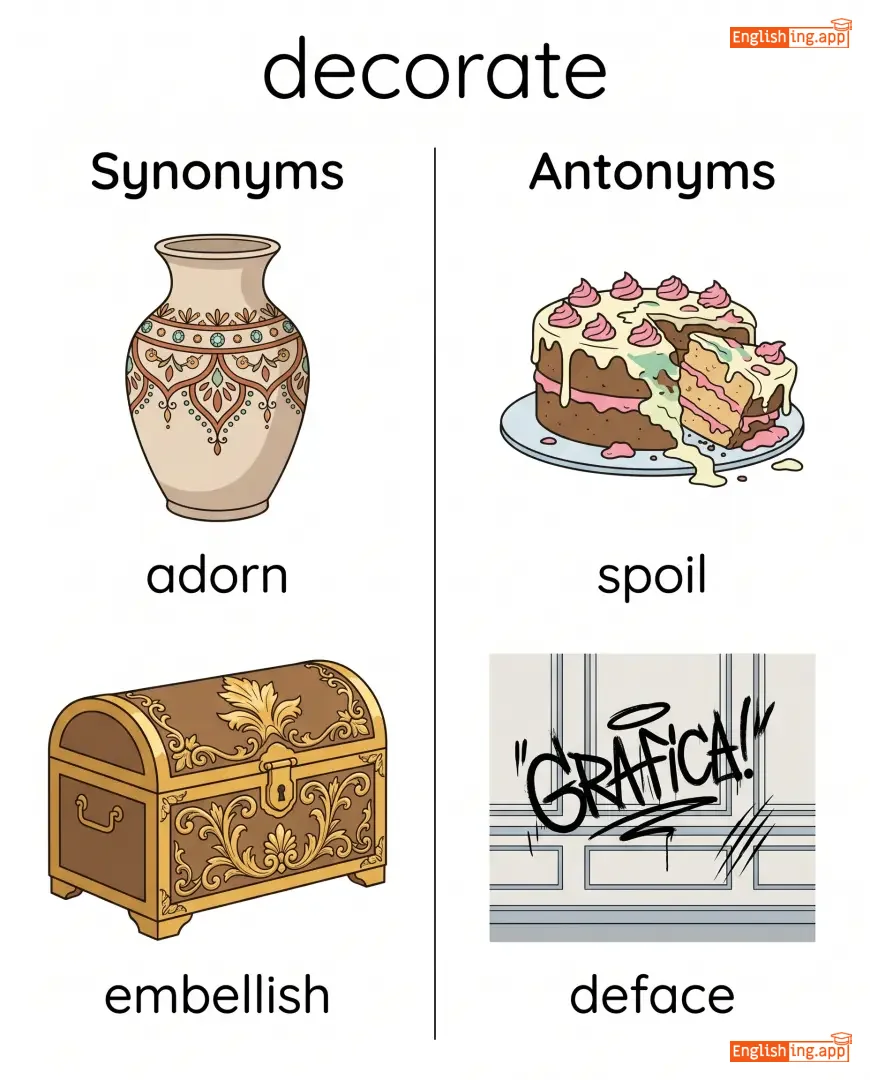
adorn, embellish, beautify, garnish, ornament
••••••
|
spoil, deface, mar
••••••
|
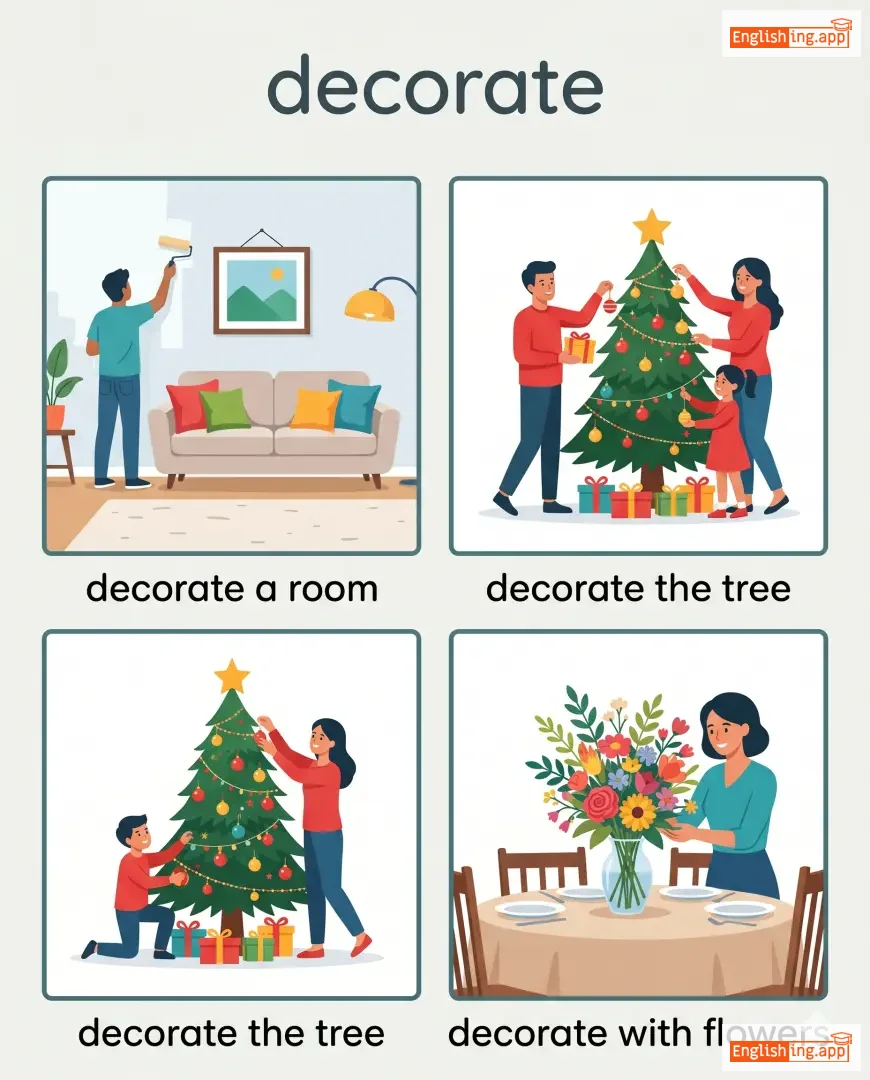
decorate a room, decorate the tree, decorate with flowers, decorate beautifully
••••••
|
No •••••• |
|
#0
📋
|
/ˈdɛlɪɡət/ (noun), /ˈdɛlɪɡeɪt/ (verb)
noun, verb
(代利盖特)
••••••
|
- •••••• |
代表 / 委托
dàibiǎo / wěituō
••••••
|
delegated
委托
••••••
|
delegated
委托
••••••
|
delegates
委托
••••••
|
delegating
委托中
••••••
|
as a noun: a person appointed to represent others; as a verb: to entrust a task or responsibility to another
••••••
|
The manager decided to delegate tasks to his team members.
经理决定将任务委托给他的团队成员。
••••••
|
经理决定将任务委托给他的团队成员。
Jīnglǐ juédìng jiāng rènwù wěituō gěi tā de tuánduì chéngyuán.
••••••
|
delegate authority
授权委托
••••••
|
to give power or responsibility to someone else
••••••
|
授权委托
shòuquán wěituō
••••••
|
assign, entrust, representative, envoy
••••••
|
retain, keep, withhold
••••••
|
delegate responsibility, delegate authority, delegate tasks
••••••
|
Delegate = Delivery + Gate - 将责任委托给他人
••••••
|
|
#0
🗺️
|
/ˈdɪstrɪkt/
noun
(迪斯特里克特)
••••••
|
- •••••• |
区
qu
••••••
|
- •••••• | - •••••• | - •••••• | - •••••• |
a specific area of a country, city, or town, often with official boundaries
••••••
|
She lives in the northern district of the city. |
她住在城市的北区。
Ta zhu zai chengshi de bei qu.
••••••
|
- •••••• | - •••••• | - •••••• |
region, area, zone, territory
••••••
|
whole, entirety
••••••
|
school district, business district, residential district, rural district
••••••
|
‘区’是一个区域,通常用于表示行政区划。
••••••
|
|
#0
➗
|
/dɪˈvɪʒən/
noun
(dì wéi zhēn)
••••••
|
- •••••• |
部门
bumen
••••••
|
- •••••• | - •••••• | - •••••• | - •••••• |
the action of separating something into parts; or a large administrative unit
••••••
|
The company has a separate division for research and development. |
公司有一个专门的部门负责研究和开发。
Gongsi you yige zhuanmen de bumen fuze yanjiu he kaifa.
••••••
|
cause division |
to create disagreement or separation among people
••••••
|
制造分歧
zhizao fenqi
••••••
|
separation, partition, department, section
••••••
|
unity, whole, agreement
••••••
|
division of labor, administrative division, mathematical division, division between
••••••
|
Division ➗ 意味着分割,中文是部门。
••••••
|
|
#0
🏠
|
/dəˈmɛstɪk/
adjective
(happiness)
••••••
|
|
幸福
xìngfú
••••••
|
- •••••• | - •••••• | - •••••• | - •••••• |
Relating to the home or internal affairs of a country.
••••••
|
She bought domestic products to support local businesses. |
当她获得奖项时,她无法隐藏自己的幸福。
Dāng tā huòdé jiǎngxiàng shí, tā wúfǎ yǐncáng zìjǐ de xìngfú.
••••••
|
domestic affairs |
Matters within a household or a country
••••••
|
幸福追求
xìngfú zhuīqiú
••••••
|
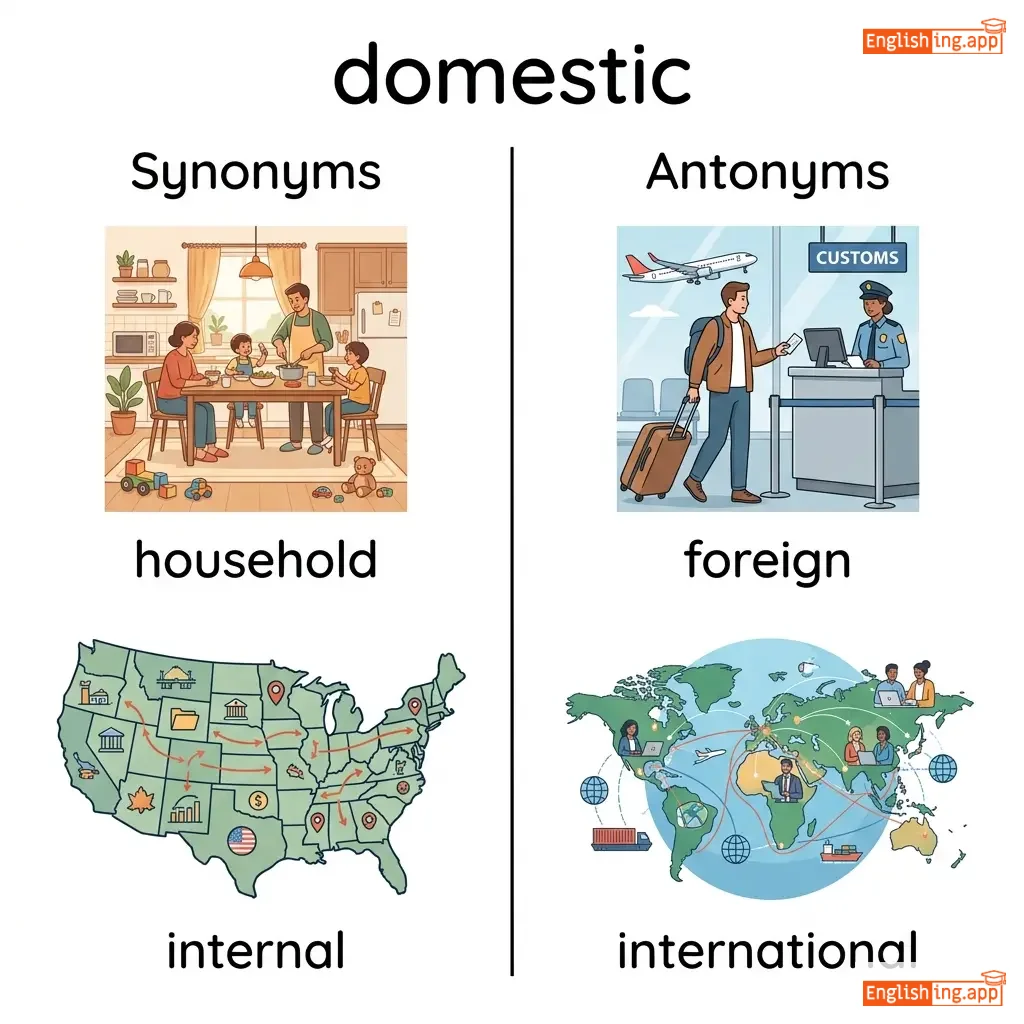
household, internal, local, home
••••••
|
foreign, international
••••••
|
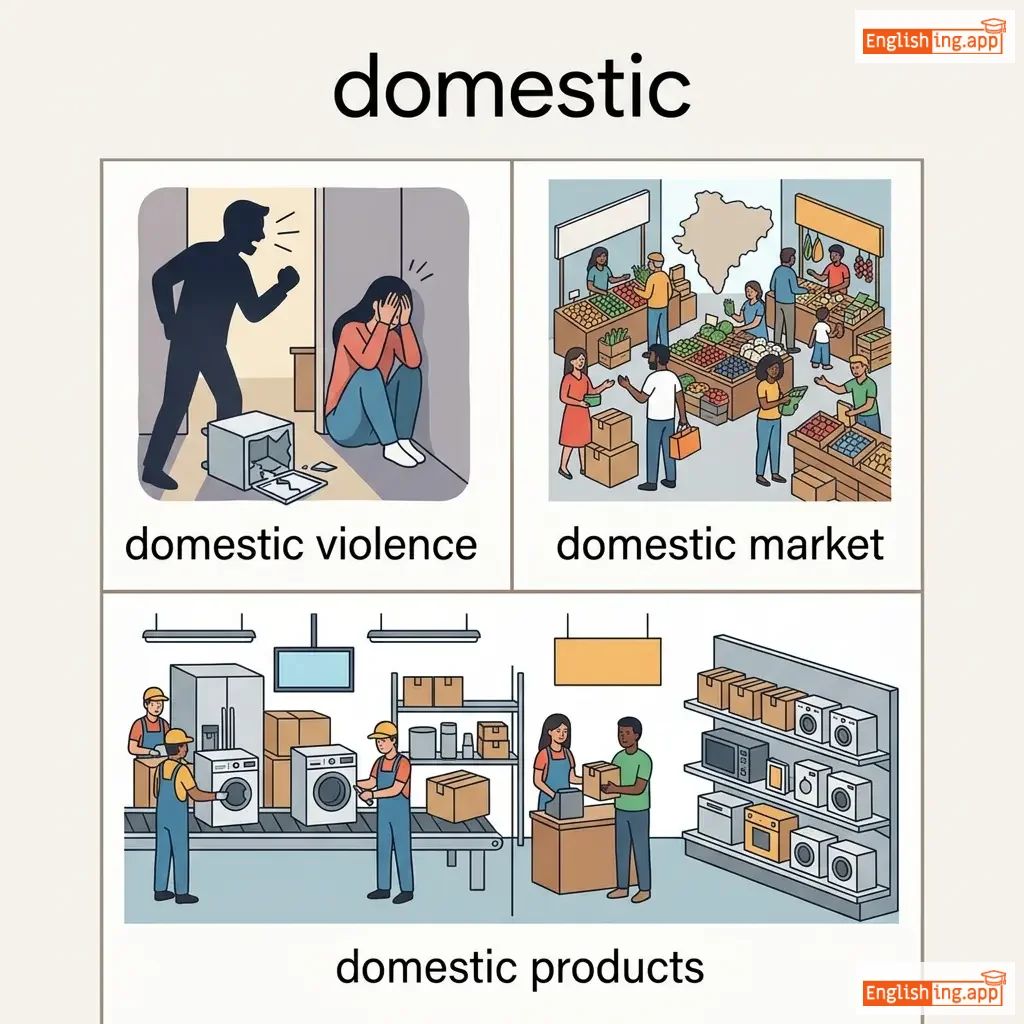
domestic violence, domestic market, domestic products, domestic flights
••••••
|
幸福是每天努力追求的目标。
••••••
|
Vocabulary Quiz
Test your vocabulary by matching words with their translations or meanings.
Login to take the quiz
Comments (0)
Share your thoughts and join the discussion.
Join the discussion by logging in
Login to CommentNo comments yet
Be the first to share your thoughts!