

捍卫自己土地的女人
The Woman Who Defended Her Land
玛雅是一个来自distant村庄的普通女人,她不知道自己的生活会陷入dilemma。她的家人有一小块土地,人口density很高,大家生活平静。一天,一家强大的公司deposited文件声称这块土地属于他们。玛雅明白他们想要destroy她的社区。公司的律师试图dictate条款,但玛雅不愿dismiss自己的权利。她家有一枚diamond戒指,是她祖母送给她的,她把它卖掉用于法律defense。Despite经济上的deficit,玛雅决定抗争。她知道她的人民应得更好(deserved),没有人可以deprive他们的权利。一场dispute在法庭上开始,公司律师试图discard玛雅的证据。法官说需要妥善dispose所有文件。玛雅的律师辩称土地所有权的descent清楚无误。她家人的dignity岌岌可危。在庭审过程中,玛雅曾用一个简单的dessert为女儿庆祝生日。她的关注点只是争取正义。看到玛雅的决心,许多村民descended到法院表示支持。最终,法官裁定支持玛雅,称公司不能dictate谁拥有什么。玛雅证明了,despite障碍,只要有勇气,就有可能获得正义。

Swipe left or right, or use the buttons. Tap image to zoom.
例句翻译
单词
The Woman Who Defended Her LandThe Woman Who Defended Her Land - 遮罩切换
|
表情符号
|
单词 | Images | 翻译 | 过去时 | 过去分词 | 第三人称单数 | 动名词 | 含义 | 例句 | 例句翻译 | 示例表达 | 示例表达含义 | 示例表达翻译 | 同义词 | 反义词 | 搭配词 | 助记符 |
|---|---|---|---|---|---|---|---|---|---|---|---|---|---|---|---|---|---|
|
#0
🛡️
|
/dɪˈfɛns/
noun
(哈皮尼斯)
••••••
|
|
幸福
xingfu
••••••
|
- •••••• | - •••••• | - •••••• | - •••••• |
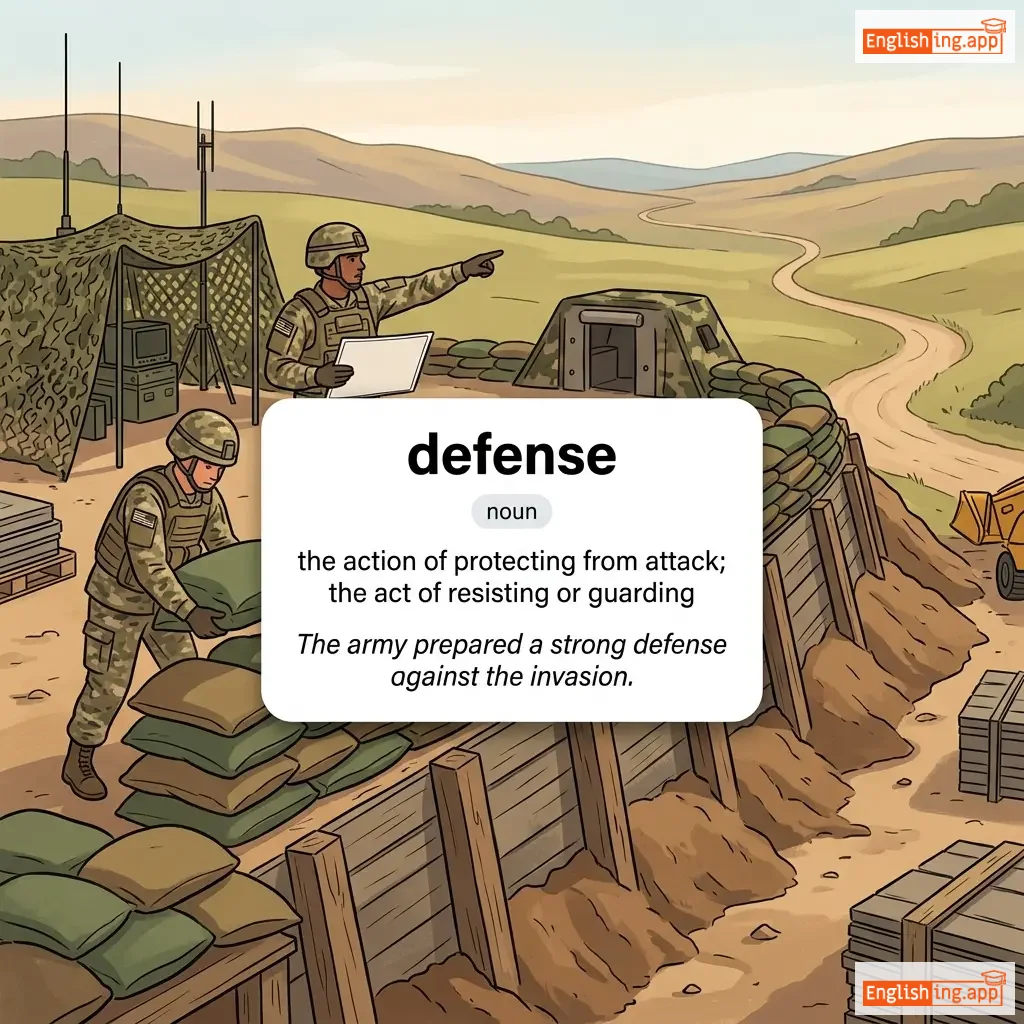
the action of protecting from attack; the act of resisting or guarding
••••••
|
The army prepared a strong defense against the invasion. |
当她收到奖项时,她无法掩饰自己的幸福。
Dāng tā shōudào jiǎngxiàng shí, tā wúfǎ yǎnshì zìjǐ de xìngfú.
••••••
|
defense mechanism |
an unconscious psychological strategy used to protect oneself from anxiety
••••••
|
幸福的追求
Xìngfú de zhuīqiú
••••••
|
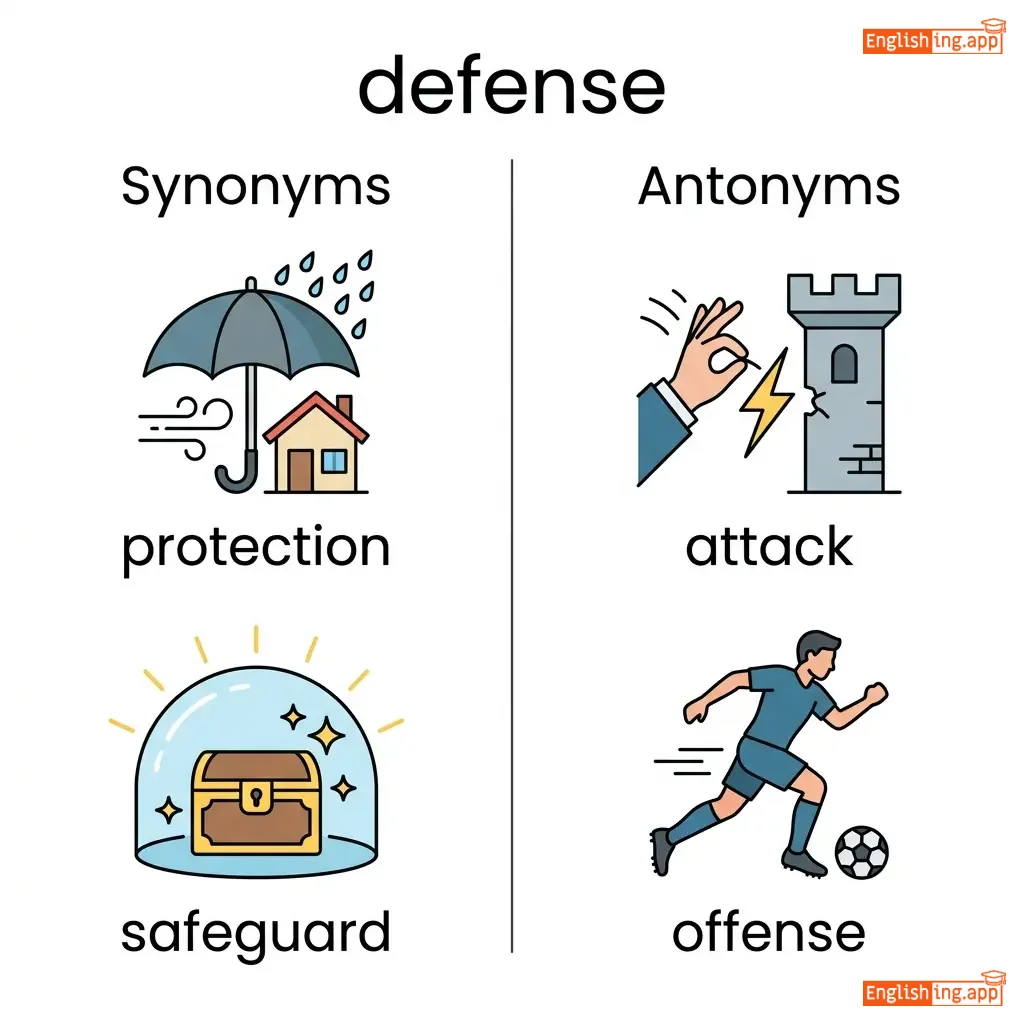
protection, safeguard, security, resistance
••••••
|
attack, offense
••••••
|
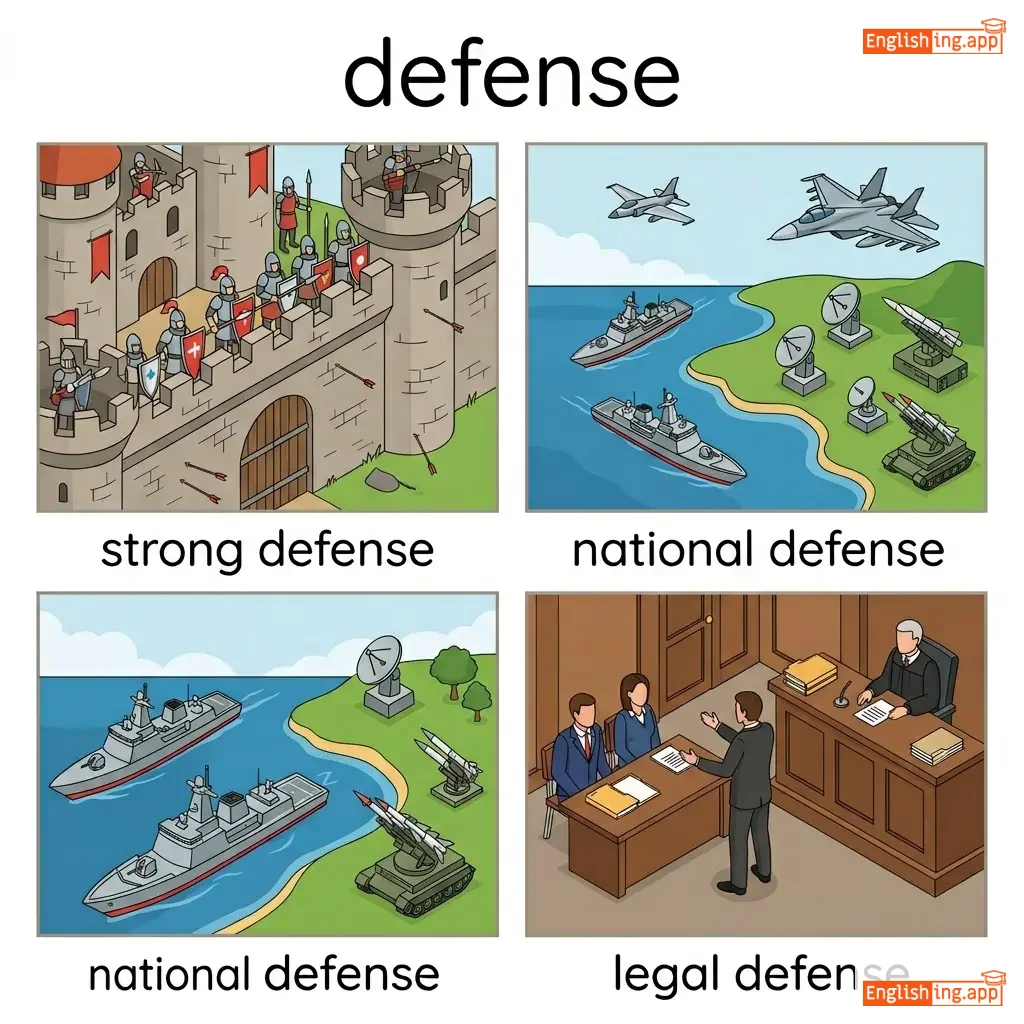
strong defense, national defense, legal defense, defense system
••••••
|
幸福 = 幸福,心灵的快乐。
••••••
|
|
#0
📉
|
/ˈdɛfɪsɪt/
noun
(赤字)
••••••
|
- •••••• |
赤字
chìzì
••••••
|
- •••••• | - •••••• | - •••••• | - •••••• |
The amount by which something, especially money, is too small or lacking.
••••••
|
The government is trying to reduce the budget deficit. |
政府正在努力减少预算赤字。
Zhèngfǔ zhèngzài nǔlì jiǎnshǎo yùsuàn chìzì.
••••••
|
trade deficit |
The amount by which a country’s imports exceed its exports.
••••••
|
贸易赤字
màoyì chìzì
••••••
|
shortfall, shortage, lack, loss, gap
••••••
|
surplus, excess, profit
••••••
|
budget deficit, trade deficit, current deficit
••••••
|
赤字 📉 - 赤字意味着缺少东西,例如资金不足。
••••••
|
|
#0
⚖️
|
/ˈdɛnsɪti/
noun
(dɛnsɪti)
••••••
|
- •••••• |
密度
mìdù
••••••
|
- •••••• | - •••••• | - •••••• | - •••••• |
the degree of compactness or thickness of a substance or object
••••••
|
The density of water is higher than that of air.
水的密度高于空气的密度。
••••••
|
水的密度高于空气的密度。
Shuǐ de mìdù gāo yú kōngqì de mìdù.
••••••
|
population density
人口密度
••••••
|
the number of people living per unit area of land
••••••
|
人口密度
rénkǒu mìdù
••••••
|
thickness, concentration, solidity, compactness, mass
••••••
|
thinness, rarity, emptiness
••••••
|
high density, low density, population density, energy density
••••••
|
密度像密集,所以density是密度。
••••••
|
|
#0
🏦
|
/dɪˈpɑːzɪt/
noun/verb
(存款)
••••••
|
- •••••• |
存款, 预付款
cún kuǎn, yù fù kuǎn
••••••
|
deposited
存入
••••••
|
deposited
存入
••••••
|
deposits
存款
••••••
|
depositing
存储
••••••
|
to place money in a bank account, or a sum paid in advance as security; a layer of material left naturally
••••••
|
She deposited $500 into her savings account.
她向她的储蓄账户存入了500美元。
••••••
|
她向她的储蓄账户存入了500美元。
Tā xiàng tā de chǔxù zhànghù cún rù le 500 měiyuán.
••••••
|
security deposit
保证金
••••••
|
a sum of money held as a guarantee against damage or loss
••••••
|
保证金
bǎo zhèng jīn
••••••
|
payment, down payment, savings, pledge, lodgment
••••••
|
withdrawal, debt
••••••
|
make a deposit, deposit money, deposit account, security deposit
••••••
|
Deposit意味着把钱放进银行账户,就像一个预付款或保证金
••••••
|
|
#0
🚫
|
/dɪˈpraɪv/
verb
••••••
|
- •••••• | - •••••• |
deprived
••••••
|
deprived
••••••
|
deprives
••••••
|
depriving
••••••
|
to take something away from someone, or prevent them from having it
••••••
|
The new law may deprive people of their rights. |
- •••••• |
sleep-deprived |
lacking enough sleep
••••••
|
- •••••• |
deny, strip, remove, dispossess, rob
••••••
|
grant, give, provide
••••••
|
deprive of rights, deprive someone of, deprive freedom, sleep deprived
••••••
|
No •••••• |
|
#0
⬇️
|
/dɪˈsɛnd/
verb
••••••
|
- •••••• | - •••••• |
descended
••••••
|
descended
••••••
|
descends
••••••
|
descending
••••••
|
To move or fall downward; to come or go down from a higher place.
••••••
|
The hikers descended the steep mountain path. |
- •••••• |
descend into chaos |
To fall into disorder or confusion
••••••
|
- •••••• |
drop, fall, decline, lower, sink
••••••
|
ascend, rise, climb
••••••
|
descend slowly, descend rapidly, descend into
••••••
|
No •••••• |
|
#0
⛰️
|
/dɪˈsɛnt/
noun
(dɪˈsɛnt)
••••••
|
- •••••• |
下降 / 血统
xiàjiàng / xuètǒng
••••••
|
- •••••• | - •••••• | - •••••• | - •••••• |
the action of moving downward, falling, or dropping; ancestry or origin
••••••
|
The climbers began their descent from the mountain peak. |
登山者从山顶开始下降。
Dēngshān zhě cóng shāndǐng kāishǐ xiàjiàng.
••••••
|
descent into chaos |
a situation deteriorating into disorder or confusion
••••••
|
进入混乱
jìnrù hùnluàn
••••••
|
decline, drop, fall, ancestry, lineage
••••••
|
ascent, rise, progress
••••••
|
rapid descent, steep descent, descent into, descent from
••••••
|
Descent意味着下降 - 记住descent = down sent (向下发送)
••••••
|
|
#0
🏅
|
/dɪˈzɜːrv/
verb
(迪ˈ兹ɜːrv)
••••••
|
- •••••• |
值得
zhí dé
••••••
|
deserved
迪ˈ兹ɜːrvd
••••••
|
deserved
迪ˈ兹ɜːrvd
••••••
|
deserves
迪ˈ兹ɜːrvz
••••••
|
deserving
迪ˈ兹ɜːrving
••••••
|
To be worthy of something, usually a reward or punishment.
••••••
|
She worked hard and deserves recognition.
她努力工作,值得认可。
••••••
|
她努力工作,值得认可。
Tā nǔ lì gōng zuò, zhí dé rèn kě.
••••••
|
get what you deserve
得到你应得的
••••••
|
Receive the outcome that is merited by your actions.
••••••
|
得到你应得的
Dé dào nǐ yīng dé de
••••••
|
merit, earn, warrant, justify, be entitled to
••••••
|
forfeit, lose
••••••
|
deserve praise, deserve attention, deserve respect
••••••
|
值得意味着你应该得到的东西: 努力工作,你将得到你应得的。
••••••
|
|
#0
💪
|
/dɪˈspaɪt/
preposition
(dī sī pài tè)
••••••
|
- •••••• |
尽管
jin guan
••••••
|
- •••••• | - •••••• | - •••••• | - •••••• |
Without being affected by; in spite of.
••••••
|
He continued his work despite the difficulties. |
尽管有困难,他继续工作。
Jin guan you kunnan, ta jixu gongzuo.
••••••
|
despite all odds |
Even though there were many challenges.
••••••
|
尽管所有困难
jin guan suoyou kunnan
••••••
|
in spite of, regardless of, notwithstanding
••••••
|
because of, due to
••••••
|
despite difficulties, despite opposition, despite criticism
••••••
|
Despite 意味着 'despite fight' 然后继续工作。
••••••
|
|
#0
🍰
|
/dɪˈzɜːrt/
noun
(dé sà ěr tè)
••••••
|
- •••••• |
甜点
tiándiǎn
••••••
|
- •••••• | - •••••• | - •••••• | - •••••• |
the sweet course eaten at the end of a meal
••••••
|
We had ice cream for dessert after dinner. |
我们晚餐后吃了冰淇淋作为甜点。
Wǒmen wǎncān hòu chīle bīngqílín zuòwéi tiándiǎn.
••••••
|
just deserts |
what one deserves, usually punishment
••••••
|
应得的报应
yīngdé de bàoyìng
••••••
|
sweet, pudding, confection, pastry, treat
••••••
|
main course, appetizer
••••••
|
chocolate dessert, delicious dessert, dessert menu, frozen dessert
••••••
|
甜点是晚餐后的美味奖励!
••••••
|
|
#0
💥
|
/dɪˈstrɔɪ/
verb
(迪斯特罗伊)
••••••
|
|
摧毁
cuīhuǐ
••••••
|
destroyed
迪斯特罗伊德
••••••
|
destroyed
迪斯特罗伊德
••••••
|
destroys
迪斯特罗伊兹
••••••
|
destroying
迪斯特罗因
••••••
|
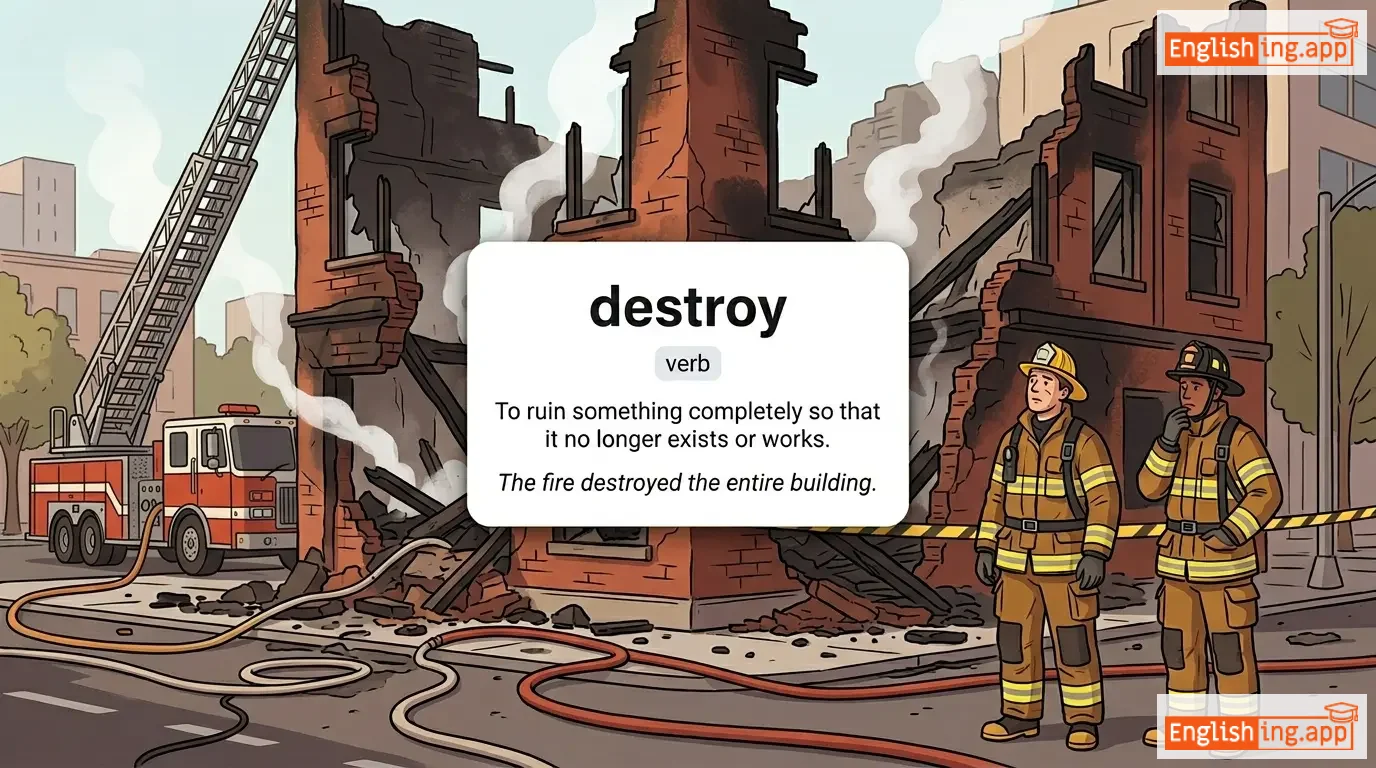
To ruin something completely so that it no longer exists or works.
••••••
|
The fire destroyed the entire building.
火灾摧毁了整个建筑。
••••••
|
火灾摧毁了整个建筑。
Huǒzāi cuīhuǐ le zhěnggè jiànzhú.
••••••
|
self-destroy
自毁
••••••
|
To cause one's own ruin.
••••••
|
自毁
zìhuǐ
••••••
|
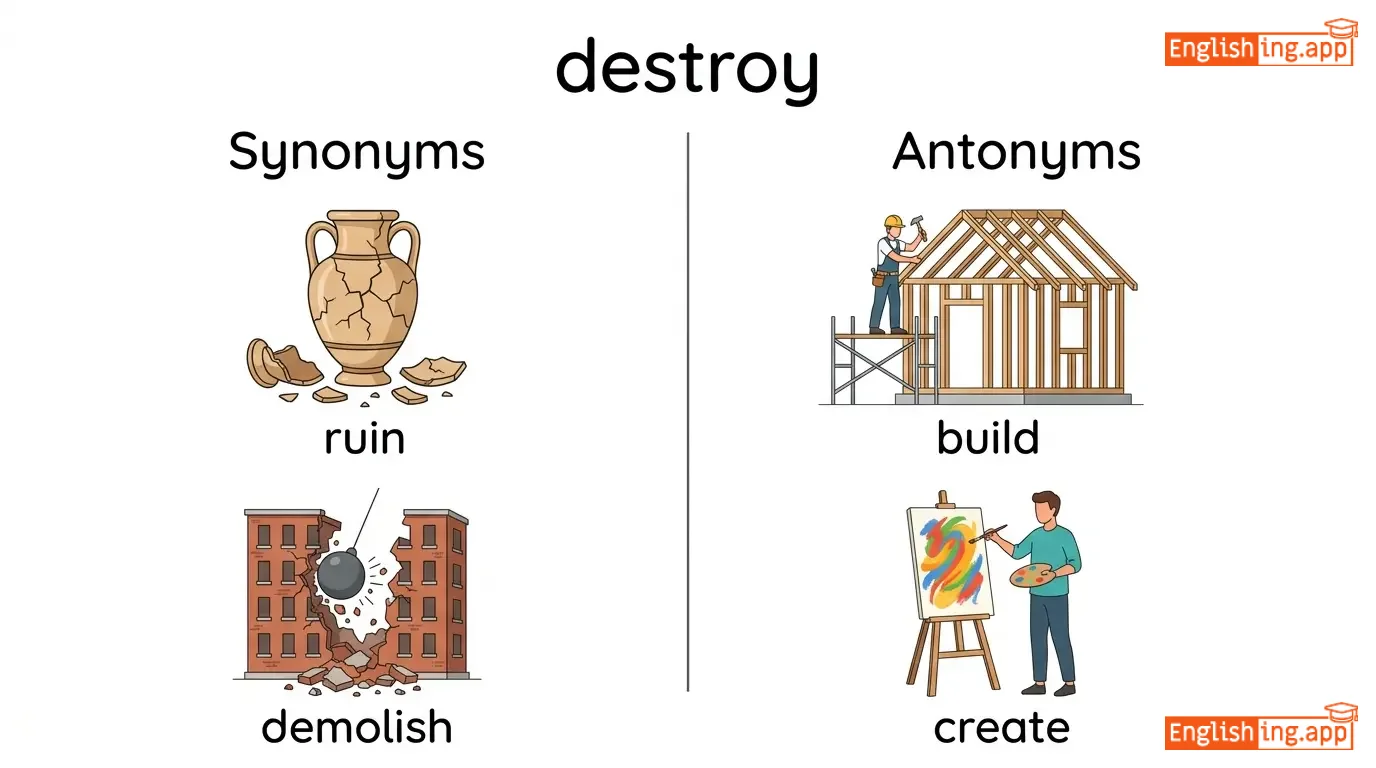
ruin, demolish, wreck, annihilate, obliterate
••••••
|
build, create, repair
••••••
|
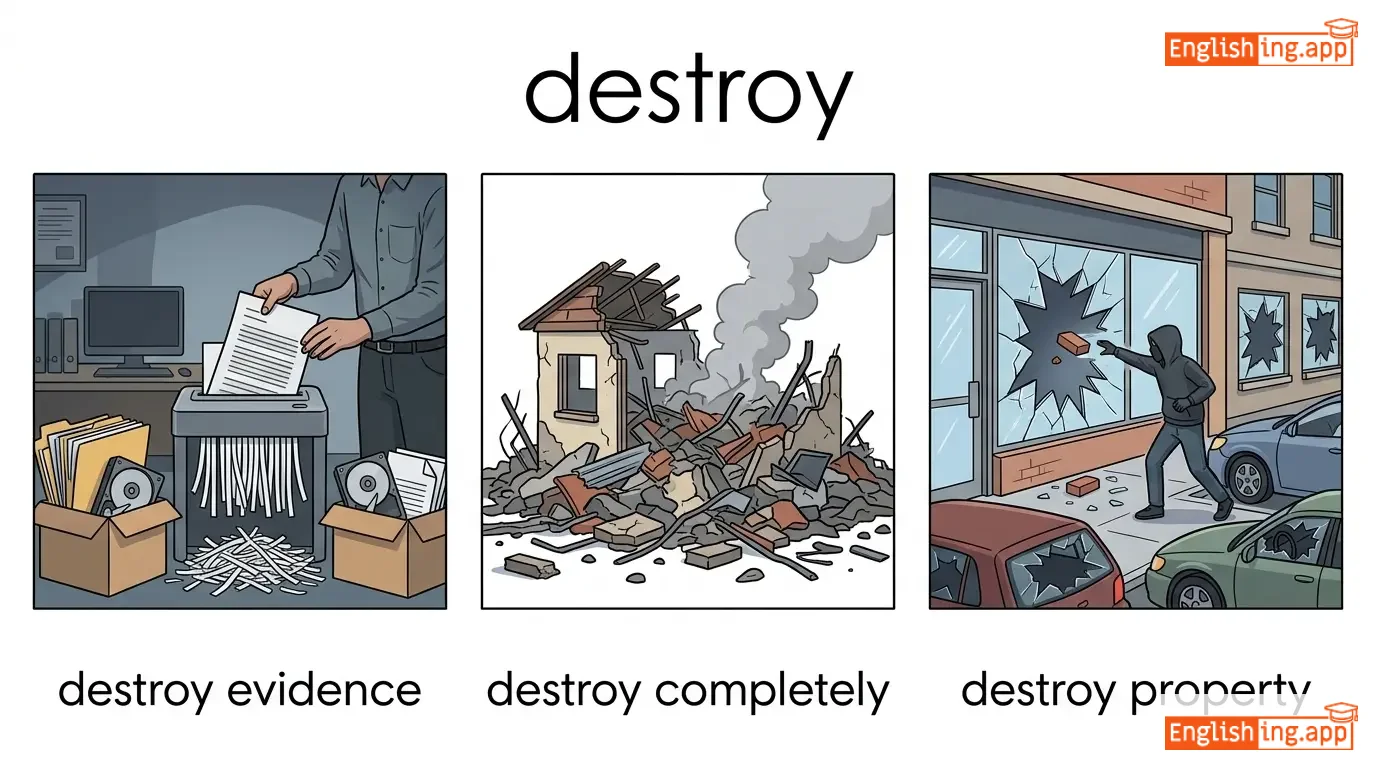
destroy evidence, destroy completely, destroy property, destroy reputation
••••••
|
摧毁意味着摧毁一切,就像火灾摧毁建筑物一样。
••••••
|
|
#0
💎
|
/ˈdaɪəmənd/
noun
(daɪəmənd)
••••••
|
- •••••• |
钻石
zuànshí
••••••
|
- •••••• | - •••••• | - •••••• | - •••••• |
a precious hard stone, usually clear and colorless, valued as a gemstone
••••••
|
She wore a beautiful diamond necklace at the party. |
她在派对上戴着一条美丽的钻石项链。
Tā zài pàiduì shàng dàizhe yītiáo měilì de zuànshí xiàngliàn.
••••••
|
diamond in the rough |
a person or thing with potential or talent but lacking polish or refinement
••••••
|
毛坯钻石
máopī zuànshí
••••••
|
gem, jewel, crystal, stone, treasure
••••••
|
rock, pebble
••••••
|
diamond ring, diamond necklace, diamond mine, diamond shape
••••••
|
钻石—如同'月亮'般闪耀
••••••
|
|
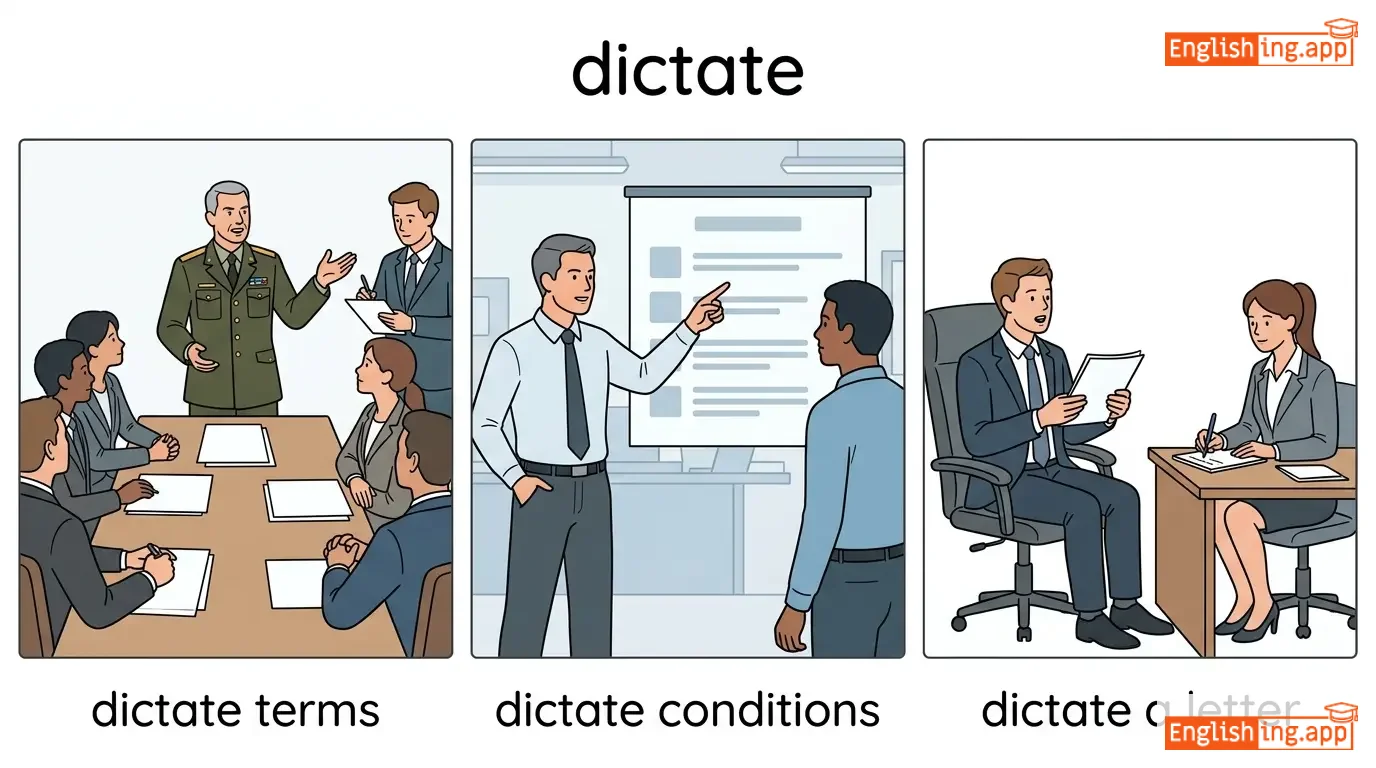
#0
📜
|
/dɪkˈteɪt/
verb
(dɪkˈteɪt)
••••••
|
|
口授
kǒu shòu
••••••
|
dictated
dɪkˈteɪtɪd
••••••
|
dictated
dɪkˈteɪtɪd
••••••
|
dictates
dɪkˈteɪts
••••••
|
dictating
dɪkˈteɪtɪŋ
••••••
|
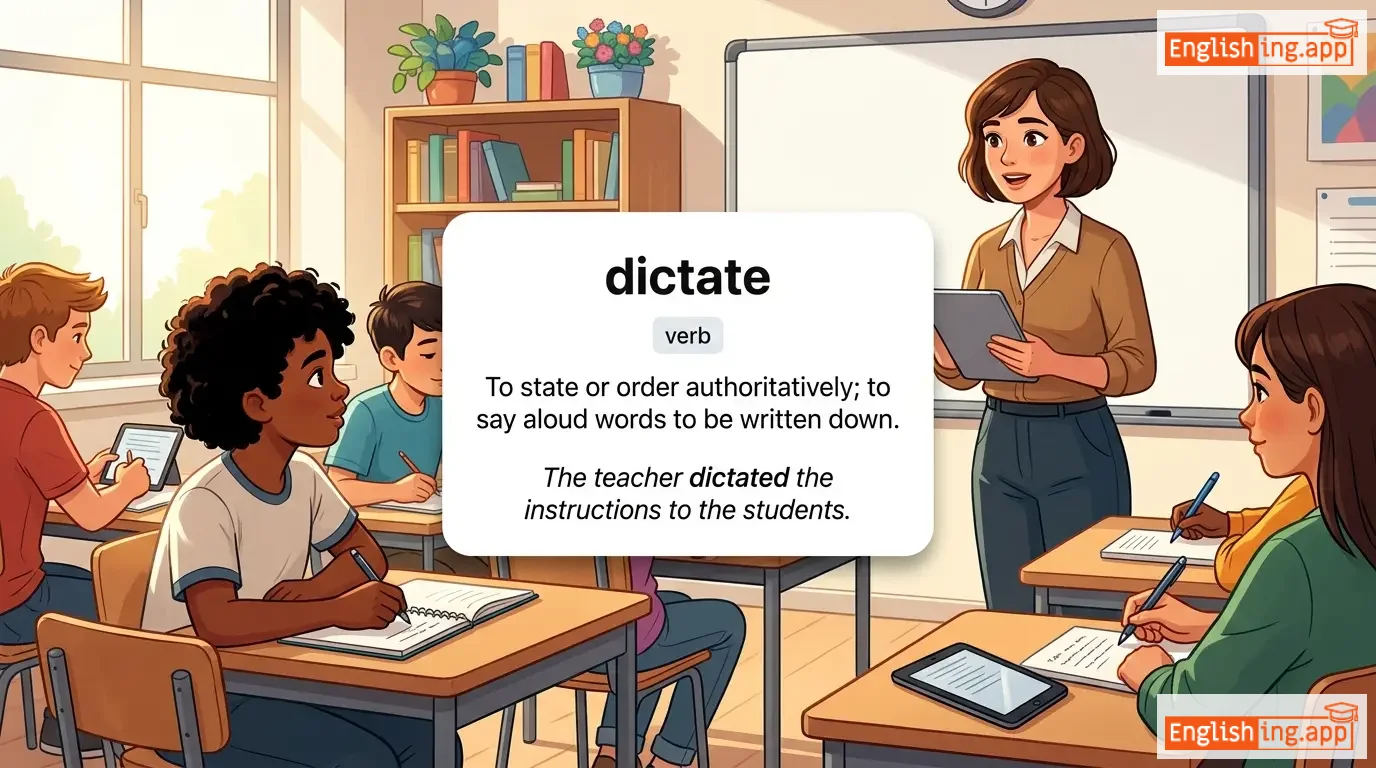
To state or order authoritatively; to say aloud words to be written down.
••••••
|
The teacher dictated the instructions to the students.
老师给学生们口授了指令。
••••••
|
老师给学生们口授了指令。
Lǎoshī gěi xuéshēngmen kǒushòu le zhǐlìng.
••••••
|
dictate terms
口授条款
••••••
|
To impose rules or conditions on others.
••••••
|
口授条款
kǒu shòu tiáokuǎn
••••••
|
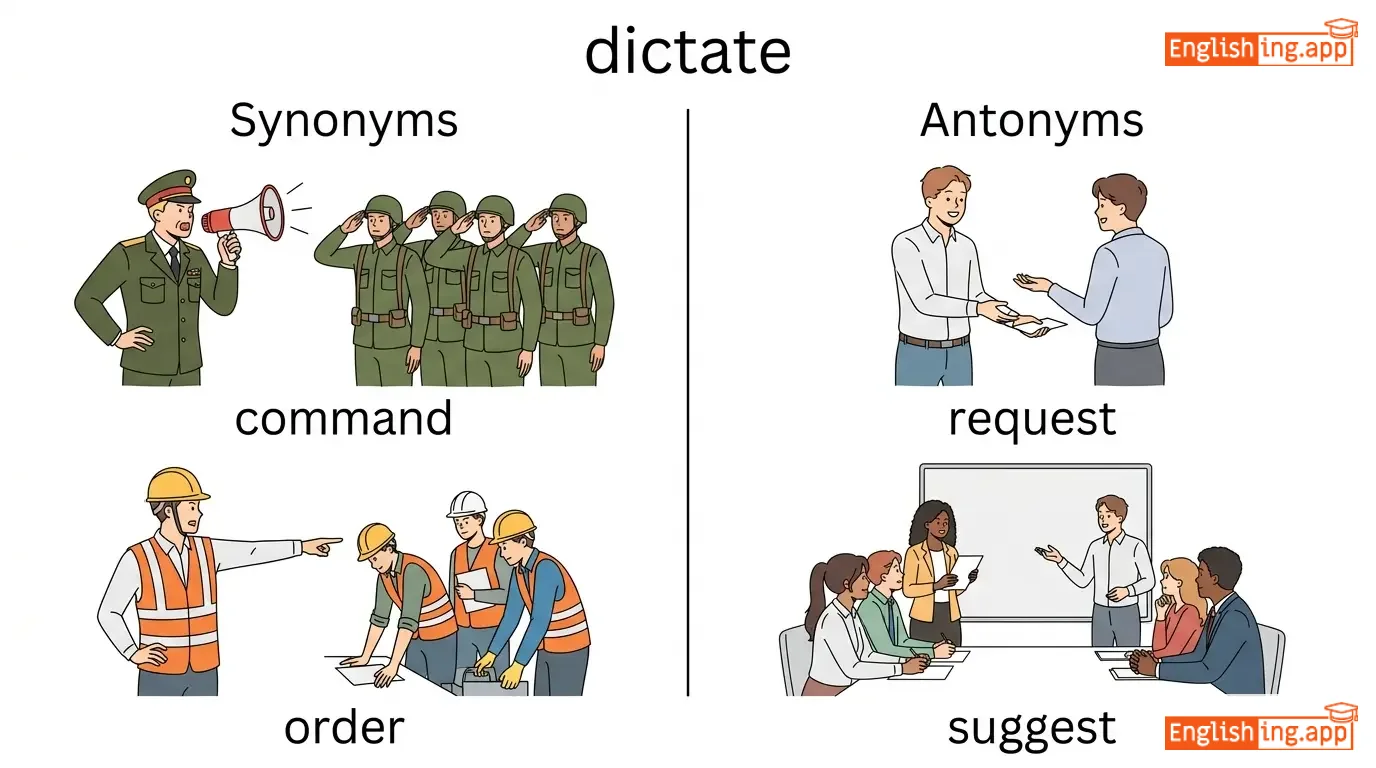
command, order, prescribe, decree
••••••
|
request, suggest
••••••
|
dictate terms, dictate conditions, dictate a letter
••••••
|
口授 = 说出来让别人写
••••••
|
|
#0
🕊️
|
/ˈdɪɡnəti/
noun
(dɪɡnəti)
••••••
|
- •••••• |
尊严
zunyan
••••••
|
- •••••• | - •••••• | - •••••• | - •••••• |
the state or quality of being worthy of respect or honor
••••••
|
He faced the difficult situation with calm and dignity. |
他以冷静和尊严面对了艰难的情况。
Ta yi lengjing he zunyan miandui le jinnan de qingkuang.
••••••
|
maintain one's dignity |
to behave respectfully and with self-control even in difficult situations
••••••
|
保持尊严
baochi zunyan
••••••
|
honor, self-respect, grace, pride, nobility
••••••
|
disgrace, humiliation, shame
••••••
|
human dignity, personal dignity, loss of dignity, with dignity
••••••
|
'尊严'意味着荣耀 — 想象在'尊'的里面寻找'严'。
••••••
|
|
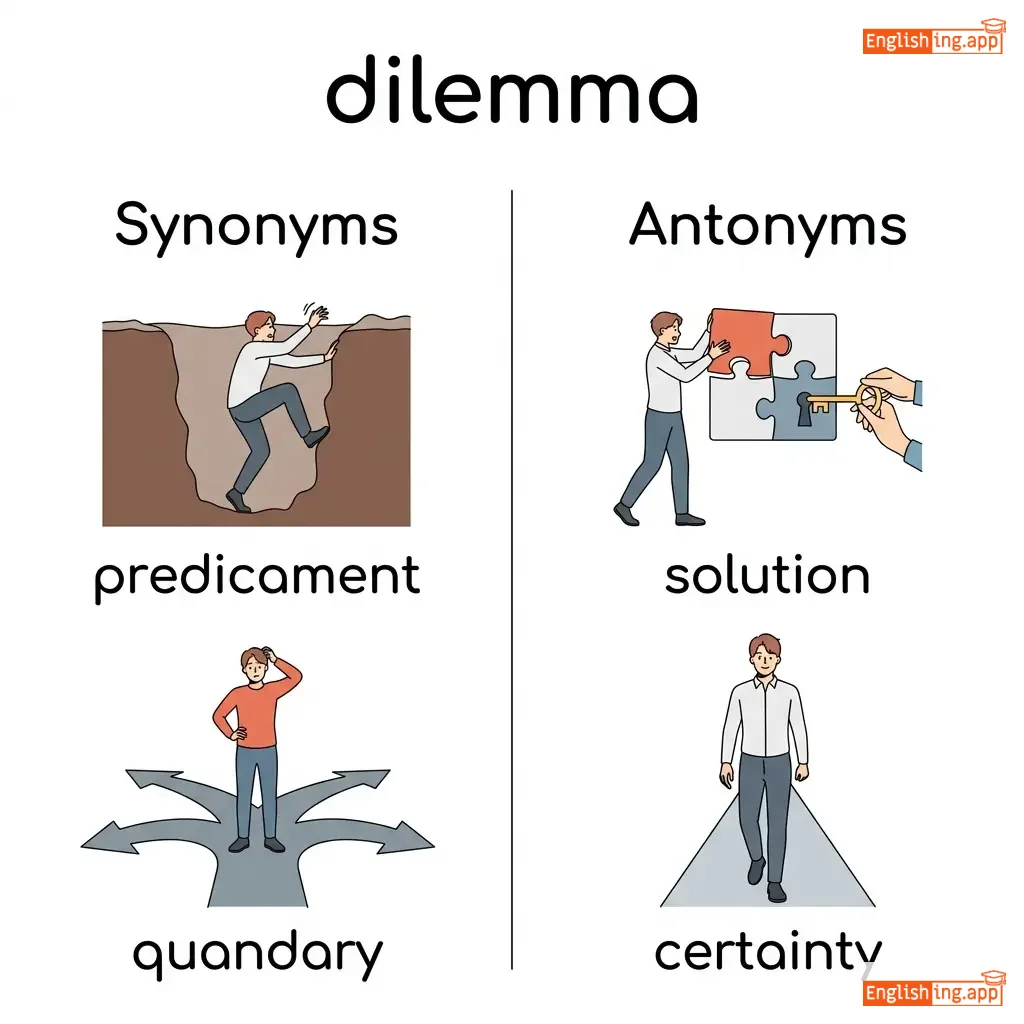
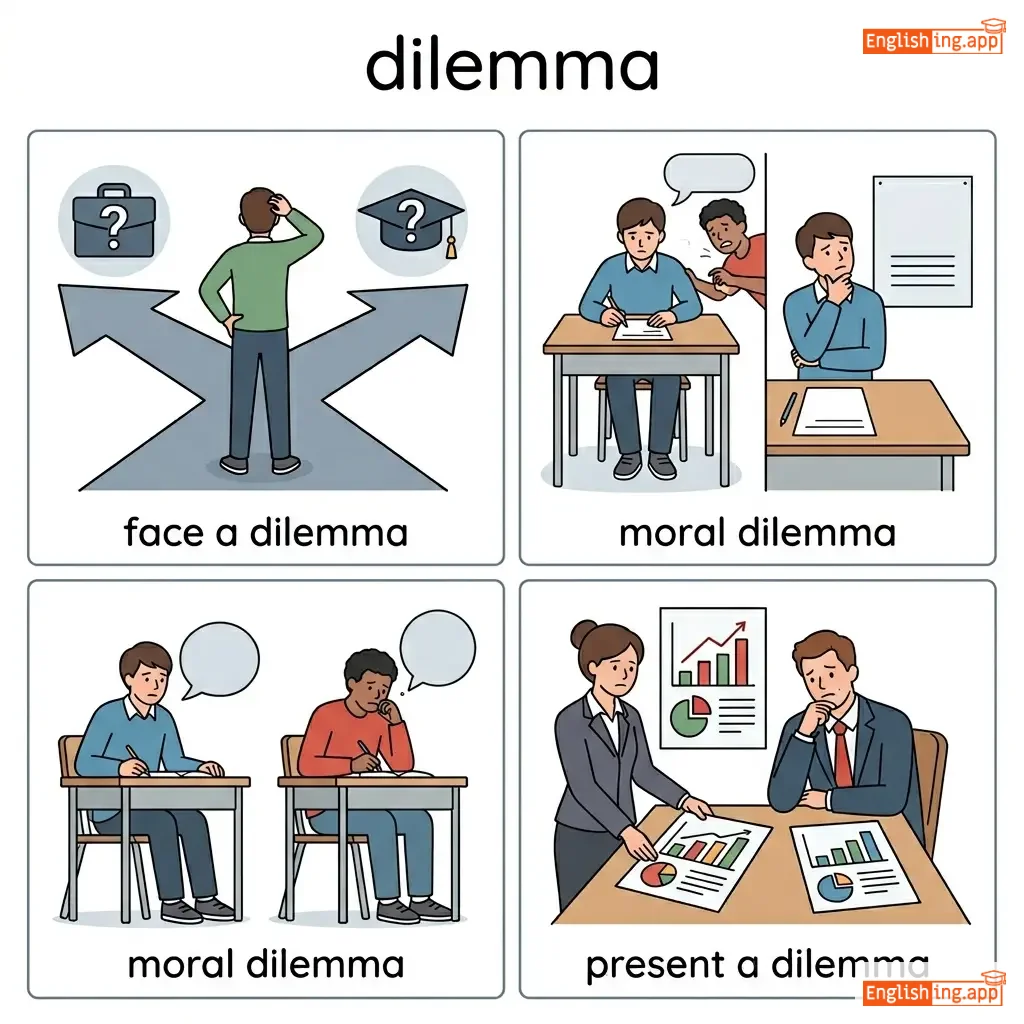
#0
🤔
|
/daɪˈlɛmə/
noun
(dilemma)
••••••
|
|
困境
kunjing
••••••
|
- •••••• | - •••••• | - •••••• | - •••••• |
A situation in which a difficult choice has to be made between two or more alternatives.
••••••
|
She faced a dilemma about whether to accept the job offer or continue her studies. |
她面临是否接受工作邀请还是继续学习的困境。
Ta mianlin shifou jieshou gongzuo yaoqing haishi jixu xuexi de kunjing.
••••••
|
moral dilemma |
A difficult choice involving a conflict of moral principles.
••••••
|
道德困境
daode kunjing
••••••
|
predicament, quandary, problem, difficulty
••••••
|
solution, certainty, clarity
••••••
|
face a dilemma, moral dilemma, present a dilemma
••••••
|
Dilemma = di (两个) + lemma (选择) = 两个艰难的选择。
••••••
|
|
#0
🗑️
|
/dɪsˈkɑːrd/
verb
(di si ka de)
••••••
|
- •••••• |
丢弃
diuqi
••••••
|
discarded
discarded
••••••
|
discarded
discarded
••••••
|
discards
discards
••••••
|
discarding
discarding
••••••
|
to throw away something that is no longer needed
••••••
|
She decided to discard the old clothes.
她决定丢弃旧衣服。
••••••
|
她决定丢弃旧衣服。
Tā juédìng diūqì jiù yīfú.
••••••
|
discard old habits
丢弃旧习惯
••••••
|
to stop following old behaviors or practices
••••••
|
丢弃旧习惯
diuqi jiu xiguan
••••••
|
abandon, throw away, remove, get rid of
••••••
|
keep, retain, preserve
••••••
|
discard clothes, discard waste, discard items, discard habits
••••••
|
丢弃就像丢掉卡片 🗑️
••••••
|
|
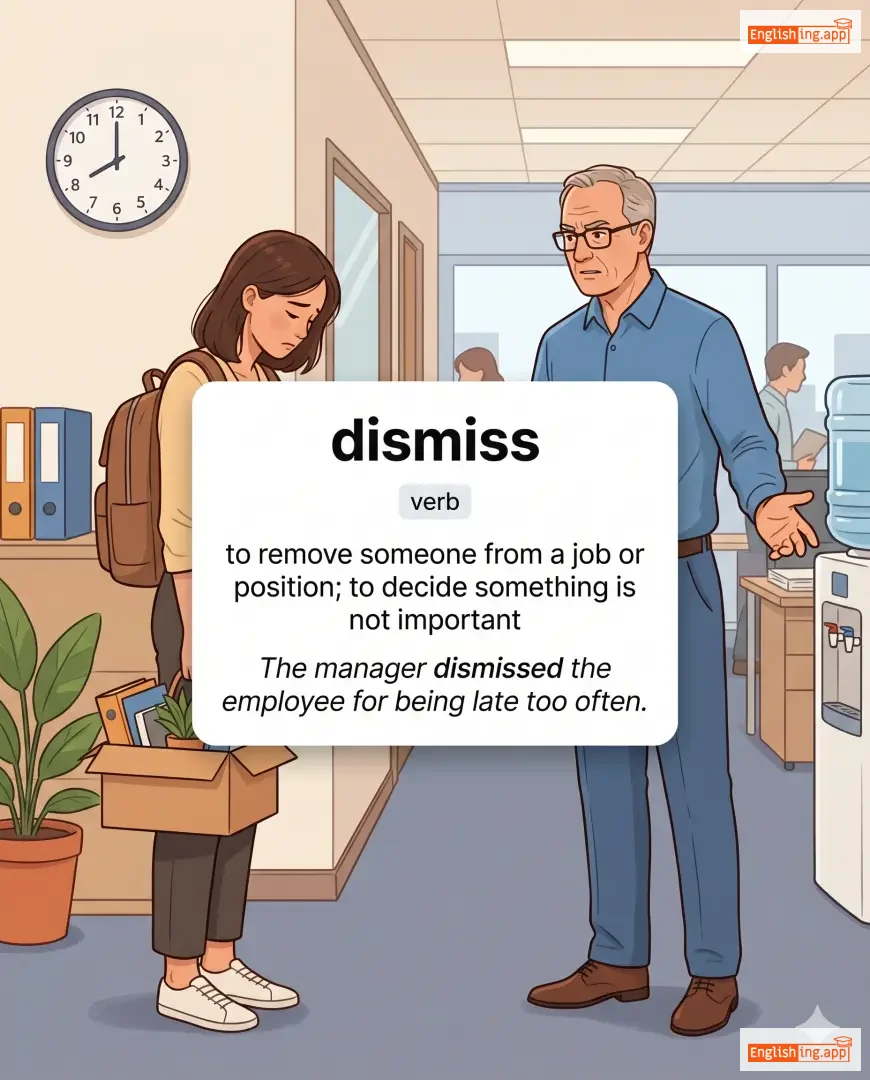
#0
🚪
|
/dɪsˈmɪs/
verb
(迪斯米斯)
••••••
|
|
解雇, 否定
jiěgù, fǒudìng
••••••
|
dismissed
迪斯米斯德
••••••
|
dismissed
迪斯米斯德
••••••
|
dismisses
迪斯米塞斯
••••••
|
dismissing
迪斯米辛
••••••
|
to remove someone from a job or position; to decide something is not important
••••••
|
The manager dismissed the employee for being late too often.
经理因为员工经常迟到而解雇了他。
••••••
|
经理因为员工经常迟到而解雇了他。
Jīnglǐ yīnwèi yuángōng jīngcháng chídào ér jiěgùle tā.
••••••
|
dismiss out of hand
立刻否定
••••••
|
to reject something immediately without considering it
••••••
|
立刻否定
lìkè fǒudìng
••••••
|
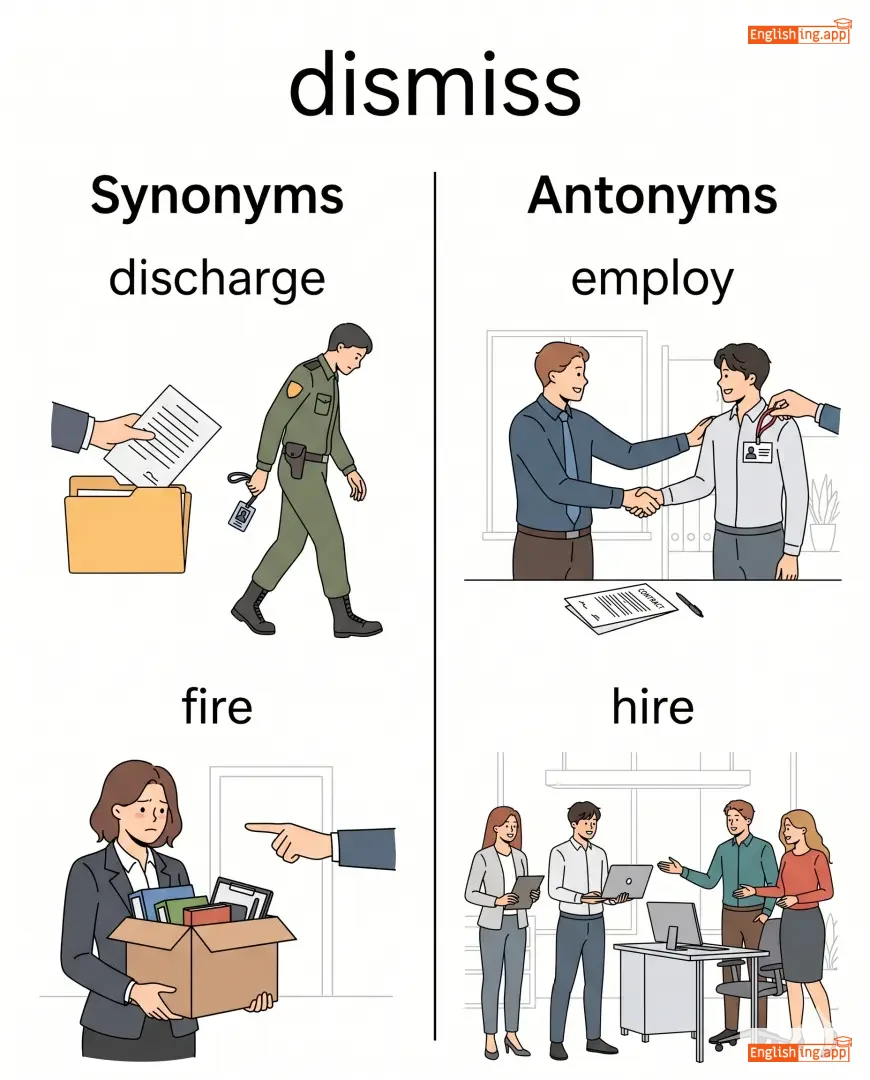
discharge, fire, release, reject, expel
••••••
|
employ, hire, accept
••••••
|
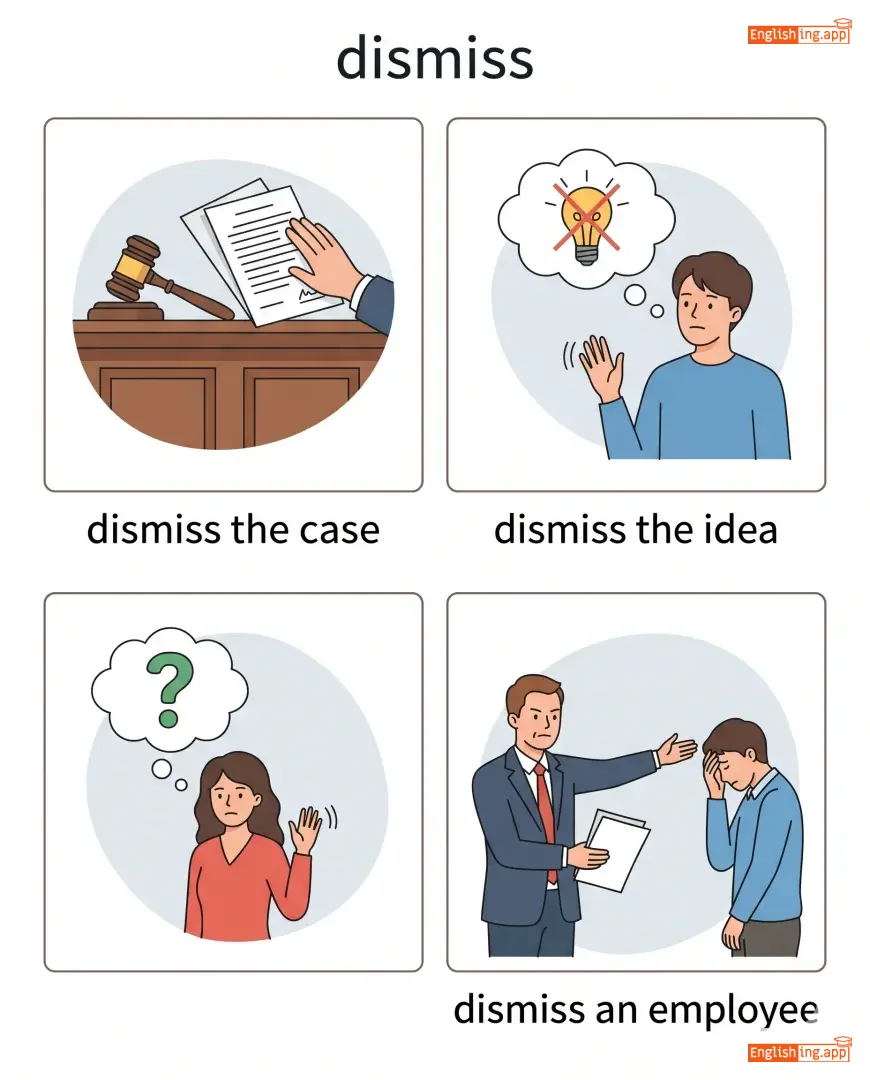
dismiss the case, dismiss the idea, dismiss an employee, dismiss charges
••••••
|
Dis + Miss = 被解雇
••••••
|
|
#0
🗑️
|
/dɪˈspoʊz/
verb
(迪斯波兹)
••••••
|
- •••••• |
丢弃
diuqi
••••••
|
disposed
迪斯波兹德
••••••
|
disposed
迪斯波兹德
••••••
|
disposes
迪斯波兹斯
••••••
|
disposing
迪斯波兹英
••••••
|
To get rid of something, or to arrange or incline towards something.
••••••
|
He disposed of the old furniture responsibly.
他负责任地处理了那些旧家具。
••••••
|
他负责任地处理了那些旧家具。
Ta fu zerende chuli le naxie jiu jiaju.
••••••
|
dispose of
处置
••••••
|
to throw away or get rid of something
••••••
|
处置
chuzhi
••••••
|
discard, throw away, eliminate, arrange, incline
••••••
|
keep, retain, preserve
••••••
|
dispose of waste, properly dispose, dispose quickly, dispose carefully
••••••
|
Dispose = 你要丢弃不需要的东西,就像清理垃圾。
••••••
|
|
#0
⚔️
|
/dɪˈspjuːt/
noun/verb
(迪斯普特)
••••••
|
- •••••• |
争议, 争论
zhēngyì, zhēnglùn
••••••
|
disputed
争议
••••••
|
disputed
争议
••••••
|
disputes
争议
••••••
|
disputing
争论
••••••
|
a disagreement or argument about something important
••••••
|
The two countries are in dispute over the border issue.
两个国家在边界问题上存在争议。
••••••
|
两个国家在边界问题上存在争议。
Liǎng gè guójiā zài biānjiè wèntí shàng cúnzài zhēngyì.
••••••
|
settle a dispute
解决争议
••••••
|
to resolve a disagreement
••••••
|
解决争议
jiějué zhēngyì
••••••
|
conflict, quarrel, argument, debate, disagreement
••••••
|
agreement, harmony, peace
••••••
|
trade dispute, legal dispute, border dispute, dispute resolution
••••••
|
Dispute 听起来像 'dis' + 'put' → 不在一起 → 意思是争论或争议
••••••
|
|
#0
🌄
|
/ˈdɪstənt/
adjective
(迪斯坦特)
••••••
|
- •••••• |
遥远的
yaoyuan de
••••••
|
- •••••• | - •••••• | - •••••• | - •••••• |
far away in space or time
••••••
|
They could see the distant mountains from their home. |
他们从家里能看到遥远的山脉。
Tamen cong jiali neng kandao yaoyuan de shanmai.
••••••
|
distant relative |
a relative who is not closely related
••••••
|
远亲
yuanqin
••••••
|
far, remote, faraway, detached, aloof
••••••
|
near, close, friendly
••••••
|
distant land, distant memory, distant future, distant relative
••••••
|
Distant 就像 distance—那里有距离,那里就有 distant.
••••••
|
Vocabulary Quiz
Test your vocabulary by matching words with their translations or meanings.
Login to take the quiz
Comments (0)
Share your thoughts and join the discussion.
Join the discussion by logging in
Login to CommentNo comments yet
Be the first to share your thoughts!