

厨师的转变
The Chef's Transformation
萨米娅在达卡经营着一家小餐馆。每天她都会从超市购买新鲜蔬菜。她的冰箱总是按照食材进行整理。她非常注重制作健康食物时的碳水化合物含量。她在每个食谱中都会用汤匙来测量准确的分量。控制烹饪的温度是她的专长之一。她的目标是提供经济实惠但质量好的食物。为了减少支出,她从当地市场购买商品。她根据季节性食物的可用性来改变菜单。她的餐馆在短时间内取得了可观的成功。顾客开始进行预订。有一次她与家人发生了分歧,因为他们想提高价格。但萨米娅的价值观与他们的想法不一致。她部分接受了他们的建议,但坚持自己的原则。她常规地尝试新食谱。私下里她梦想着开一个更大的餐馆。她在菜单选择上非常挑剔。有一天,一位著名的美食评论家祝贺了她。她通过持续提供好食物而取得了成功。尽管一些竞争者发表了不当的评论,她并没有放弃。今天,她的餐馆是达卡最好的餐馆之一。


Swipe left or right, or use the buttons. Tap image to zoom.
例句翻译
单词
The Chef's TransformationThe Chef's Transformation - 遮罩切换
|
表情符号
|
单词 | Images | 翻译 | 过去时 | 过去分词 | 第三人称单数 | 动名词 | 含义 | 例句 | 例句翻译 | 示例表达 | 示例表达含义 | 示例表达翻译 | 同义词 | 反义词 | 搭配词 | 助记符 |
|---|---|---|---|---|---|---|---|---|---|---|---|---|---|---|---|---|---|
|
#0
🟢
|
/əˌveɪləˈbɪləti/
noun
(éwèilìbílìtī)
••••••
|
- •••••• |
可用性
keyongxing
••••••
|
- •••••• | - •••••• | - •••••• | - •••••• |
the state of being able to be used or obtained
••••••
|
The availability of clean water is crucial for health. |
清洁水的可用性对健康至关重要。
Qingjie shui de keyongxing dui jiankang zhiguo zhongyao.
••••••
|
subject to availability |
only if something is in stock or accessible
••••••
|
根据可用性
genju keyongxing
••••••
|
accessibility, readiness, presence, supply, presence
••••••
|
scarcity, absence, shortage
••••••
|
check availability, ensure availability, product availability, room availability
••••••
|
好的东西的可用性就是availability — 很容易得到 😄
••••••
|
|
#0
🍞
|
/ˌkɑːrboʊˈhaɪdreɪt/
noun
(碳水化合物)
••••••
|
- •••••• |
碳水化合物
tanshui huahewu
••••••
|
- •••••• | - •••••• | - •••••• | - •••••• |
a nutrient that provides energy, found in foods like rice, bread, and sugar
••••••
|
Rice and potatoes are rich in carbohydrates. |
米饭和土豆富含碳水化合物。
Mifan he tudou fuhan tanshui huahewu.
••••••
|
- •••••• | - •••••• | - •••••• |
sugar, starch, glucose, saccharide
••••••
|
protein, fat
••••••
|
high carbohydrate diet, complex carbohydrate, carbohydrate intake, low carbohydrate
••••••
|
碳水化合物就像是车子的燃料,提供身体的能量!
••••••
|
|
#0
🎉
|
/kənˈɡrætʃʊleɪt/
verb
(kənˈɡrætʃʊleɪt)
••••••
|
- •••••• |
祝贺
zhùhè
••••••
|
congratulated
kənˈɡrætʃʊleɪtɪd
••••••
|
congratulated
kənˈɡrætʃʊleɪtɪd
••••••
|
congratulates
kənˈɡrætʃʊleɪts
••••••
|
congratulating
kənˈɡrætʃʊleɪtɪŋ
••••••
|
to praise someone for an achievement or for a special occasion
••••••
|
I want to congratulate you on your promotion.
我想祝贺你晋升。
••••••
|
我想祝贺你晋升。
Wǒ xiǎng zhùhè nǐ jìnshēng.
••••••
|
- •••••• | - •••••• | - •••••• |
praise, compliment, applaud, honor
••••••
|
criticize, scold, blame
••••••
|
congratulate on, congratulate someone, congratulate for
••••••
|
Zhùhè is the Chinese word for congratulations, so say 'zhùhè' to them!
••••••
|
|
#0
📏
|
/kənˈsɪdərəbl/
adjective
(kənˈsɪdərəbl)
••••••
|
- •••••• |
相当的
xiāngdāng de
••••••
|
- •••••• | - •••••• | - •••••• | - •••••• |
large in amount, size, or importance
••••••
|
The project required a considerable amount of time and money. |
该项目需要相当多的时间和金钱。
Gāi xiàngmù xūyào xiāngdāng duō de shíjiān hé jīnqián.
••••••
|
- •••••• | - •••••• | - •••••• |
substantial, significant, great, large, notable
••••••
|
small, minor, insignificant
••••••
|
considerable amount, considerable effort, considerable time, considerable importance
••••••
|
相当的,像项目所需的大量时间和金钱。
••••••
|
|
#0
📅
|
/kənˈsɪstəntli/
adverb
(kənˈsɪstəntli)
••••••
|
- •••••• |
持续地
chíxù de
••••••
|
- •••••• | - •••••• | - •••••• | - •••••• |
in a way that does not vary; regularly and dependably
••••••
|
She has been performing consistently well in her studies. |
她在学习中始终表现得很好。
Tā zài xuéxí zhōng shǐzhōng biǎoxiàn dé hěn hǎo.
••••••
|
consistent with |
in agreement or harmony with something
••••••
|
与...一致
yǔ... yīzhì
••••••
|
regularly, steadily, constantly, reliably
••••••
|
inconsistently, irregularly
••••••
|
perform consistently, act consistently, behave consistently, consistently good
••••••
|
持续地意味着总是相同的结果——总是相同的表现 📅
••••••
|
|
#0
💌
|
/kəˈrɛspɒnd/
verb
(通信)
••••••
|
- •••••• |
通信
tongxin
••••••
|
corresponded
通信过
••••••
|
corresponded
通信过
••••••
|
corresponds
通信
••••••
|
corresponding
通信中
••••••
|
to communicate by exchanging letters or messages
••••••
|
I correspond regularly with my old friends.
我与我的老朋友定期通信。
••••••
|
我与我的老朋友定期通信。
Wo yu wo de lao pengyou dingqi tongxin.
••••••
|
- •••••• | - •••••• | - •••••• |
communicate, write, exchange, connect
••••••
|
disconnect, ignore
••••••
|
correspond with, correspond regularly, correspond by email
••••••
|
记住'tongxin',就像给你的朋友写信。
••••••
|
|
#0
💬
|
/ˌdɪsəˈɡriːmənt/
noun
(dī sà ɡuī mèn t)
••••••
|
- •••••• |
分歧
fenqi
••••••
|
- •••••• | - •••••• | - •••••• | - •••••• |
a failure to agree or a difference in opinion
••••••
|
Their disagreement on the issue caused a delay in the project. |
他们在这个问题上的分歧导致了项目的延迟。
Tamen zai zhege wenti shang de fenqi daozhile xiangmu de yanchi.
••••••
|
- •••••• | - •••••• | - •••••• |
dispute, argument, conflict, difference
••••••
|
agreement, harmony, accord
••••••
|
disagreement over, public disagreement, reach a disagreement
••••••
|
分歧 = ‘分’分别,‘歧’歧视,代表分歧和不同意见。
••••••
|
|
#0
💰
|
/ˌiːkəˈnɒmɪkli/
adverb
(经济地)
••••••
|
- •••••• |
经济地
jīngjì de
••••••
|
- •••••• | - •••••• | - •••••• | - •••••• |
in a way that relates to economics or is efficient and not wasteful.
••••••
|
The company is trying to operate more economically this year. |
公司今年努力以更经济的方式运营。
Gōngsī jīnnián nǔlì yǐ gèng jīngjì de fāngshì yùnxíng.
••••••
|
- •••••• | - •••••• | - •••••• |
efficiently, financially, frugally, cost-effectively
••••••
|
wastefully, extravagantly
••••••
|
economically viable, economically independent, economically strong, economically developed
••••••
|
经济地就是节省,做事要高效!
••••••
|
|
#0
📊
|
/ɪkˈspɛndɪtʃər/
noun
(èks-pén-dì-chá)
••••••
|
|
支出
zhī chū
••••••
|
- •••••• | - •••••• | - •••••• | - •••••• |
the act of spending money or using resources
••••••
|
The government reduced its expenditure on defense. |
政府减少了国防支出。
zhèngfǔ jiǎnshǎo le guófáng zhīchū.
••••••
|
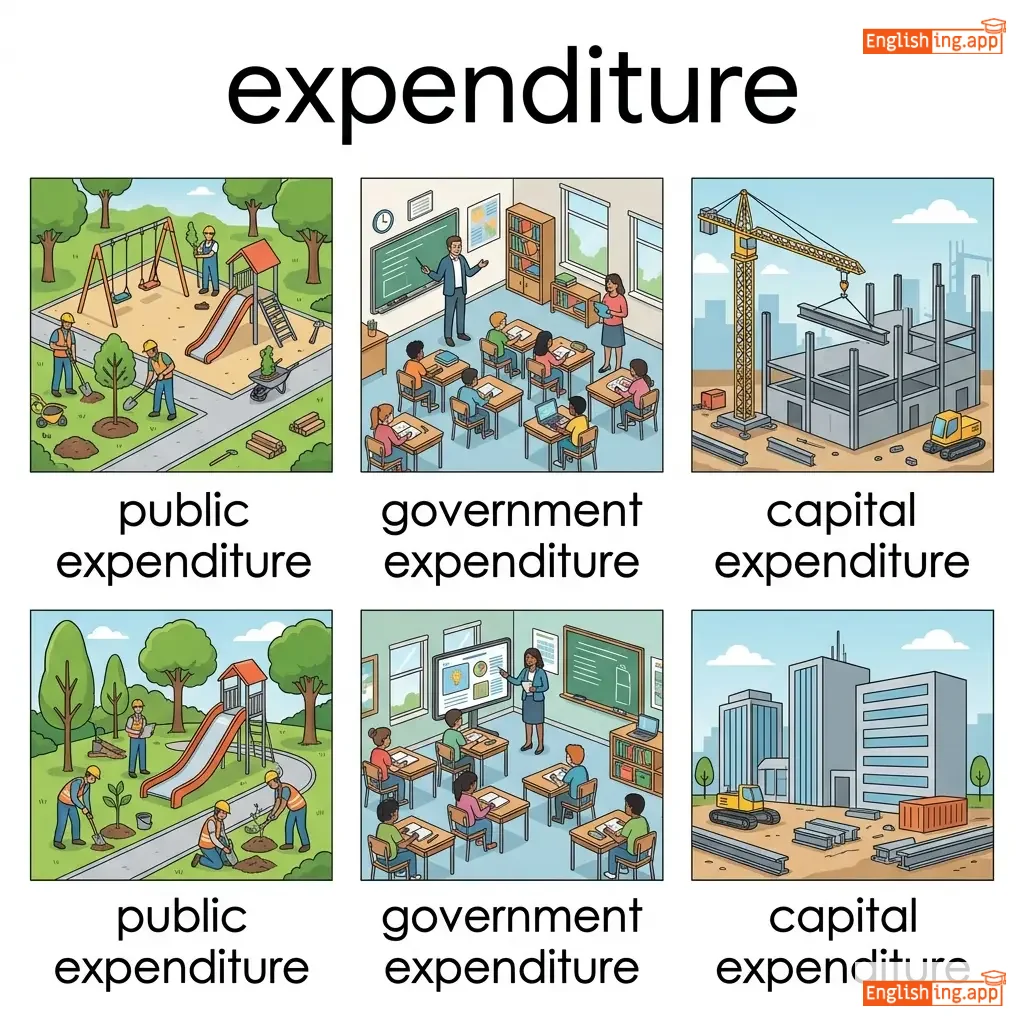
public expenditure |
money spent by the government for public services
••••••
|
公共支出
gōnggòng zhīchū
••••••
|
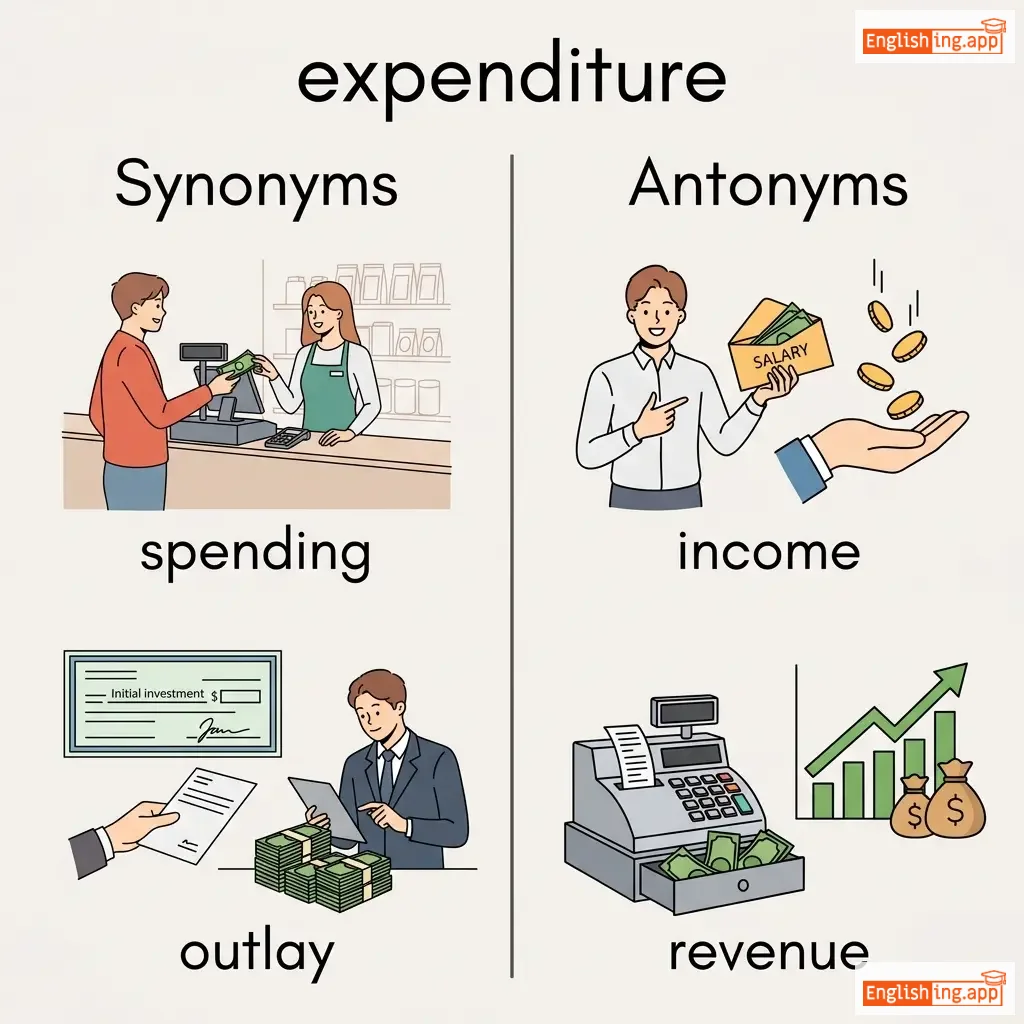
spending, outlay, cost, expense, disbursement
••••••
|
income, revenue, savings
••••••
|
public expenditure, government expenditure, capital expenditure, annual expenditure
••••••
|
Expenditure 就是额外的支出 = 支出,记住考试时总有额外支出。
••••••
|
|
#0
🚫
|
/ˌɪnəˈproʊpriət/
adjective
(inapropriét)
••••••
|
- •••••• |
不适当
bushidang
••••••
|
- •••••• | - •••••• | - •••••• | - •••••• |
not suitable or proper in the circumstances
••••••
|
It was inappropriate to talk loudly in the library. |
在图书馆大声说话是不适当的。
Zai tushuguan dasheng shuohua shi bushidang de.
••••••
|
- •••••• | - •••••• | - •••••• |
unsuitable, improper, unfit, offensive
••••••
|
appropriate, suitable
••••••
|
inappropriate behavior, inappropriate dress, inappropriate comment
••••••
|
Inappropriate 就像 'In a place proper isn't' - 不要这样做。
••••••
|
|
#0
🧩
|
/ˈpɑrʃəli/
adverb
(pāshíyàlì)
••••••
|
- •••••• |
部分地; 不完全地;
bùfen de; bù wánquán de;
••••••
|
- •••••• | - •••••• | - •••••• | - •••••• |
to some extent; not completely; incompletely
••••••
|
The building was only partially destroyed in the fire.
这座建筑在火灾中仅部分被摧毁。
••••••
|
这座建筑在火灾中仅部分被摧毁。
Zhè zuò jiànzhú zài huǒzāi zhōng jǐn bùfen bèi cuīhuǐ.
••••••
|
- •••••• | - •••••• | - •••••• |
partly, incompletely, somewhat, to some degree
••••••
|
completely, totally, entirely, fully
••••••
|
partially completed, partially visible, partially damaged
••••••
|
部分的含义是不完全的
••••••
|
|
#0
🤫
|
/ˈpraɪ.vət.li/
adverb
(pǔláiwèitèlí)
••••••
|
- •••••• |
私下; 保密地
sīxià; bǎomì de
••••••
|
- •••••• | - •••••• | - •••••• | - •••••• |
in a private manner; without others present; confidentially
••••••
|
She spoke to him privately about the matter. |
她私下里和他谈论了这个问题。
Tā sīxià lǐ hé tā tánlùnle zhège wèntí.
••••••
|
- •••••• | - •••••• | - •••••• |
confidentially, secretly, personally, individually
••••••
|
publicly, openly, collectively
••••••
|
speak privately, meet privately, privately owned
••••••
|
Privately is 'sīxià' in Chinese.
••••••
|
|
#0
🧊❄️
|
/rɪˈfrɪdʒ.ər.eɪ.tər/
noun
(冰箱)
••••••
|
- •••••• |
冰箱
bīngxiāng
••••••
|
- •••••• | - •••••• | - •••••• | - •••••• |
an appliance for keeping food and drinks cold
••••••
|
Please put the milk in the refrigerator to keep it fresh.
请把牛奶放进冰箱里保持新鲜。
••••••
|
请把牛奶放进冰箱里保持新鲜。
qǐng bǎ niúnǎi fàng jìn bīngxiāng lǐ bǎochí xīnxiān.
••••••
|
- •••••• | - •••••• | - •••••• |
fridge, icebox, cooler
••••••
|
oven, heater
••••••
|
refrigerator door, refrigerator compartment, energy-efficient refrigerator
••••••
|
冰箱 (bīngxiāng) sounds like ‘ice’ – it’s a cool place for your milk!
••••••
|
|
#0
📅
|
/ˌrɛzərˈveɪʃən/
noun
(预订)
••••••
|
- •••••• |
预订
yùdìng
••••••
|
- •••••• | - •••••• | - •••••• | - •••••• |
an arrangement made in advance to secure accommodation, a seat, or service
••••••
|
He made a reservation at the hotel for the weekend.
他为周末在酒店做了预订。
••••••
|
他为周末在酒店做了预订。
Tā wèi zhōumò zài jiǔdiàn zuòle yùdìng.
••••••
|
make a reservation
进行预订
••••••
|
to book in advance
••••••
|
进行预订
jìnxíng yùdìng
••••••
|
booking, appointment, arrangement, order
••••••
|
cancellation, freedom
••••••
|
hotel reservation, table reservation, flight reservation, make reservation
••••••
|
预订意味着提前安排,就像为未来做安排一样。
••••••
|
|
#0
🕒
|
/ruːˈtiːnli/
adverb
(ruːˈtiːnli)
••••••
|
- •••••• |
定期地
dìngqī de
••••••
|
- •••••• | - •••••• | - •••••• | - •••••• |
as part of a regular procedure; habitually
••••••
|
The staff routinely checks the equipment for safety. |
工作人员定期检查设备的安全性。
Gōngzuò rényuán dìngqī de jiǎnchá shèbèi de ānquánxìng.
••••••
|
- •••••• | - •••••• | - •••••• |
regularly, habitually, normally, usually, consistently
••••••
|
rarely, occasionally, unusually
••••••
|
routinely perform, routinely check, routinely used, routinely tested
••••••
|
定期地 = 就像每天一样,例行公事地进行。
••••••
|
|
#0
🗂️
|
/sɪˈlɛkʃən/
noun
(选择)
••••••
|
|
选择
xuanze
••••••
|
- •••••• | - •••••• | - •••••• | - •••••• |
the act of choosing or the thing that is chosen
••••••
|
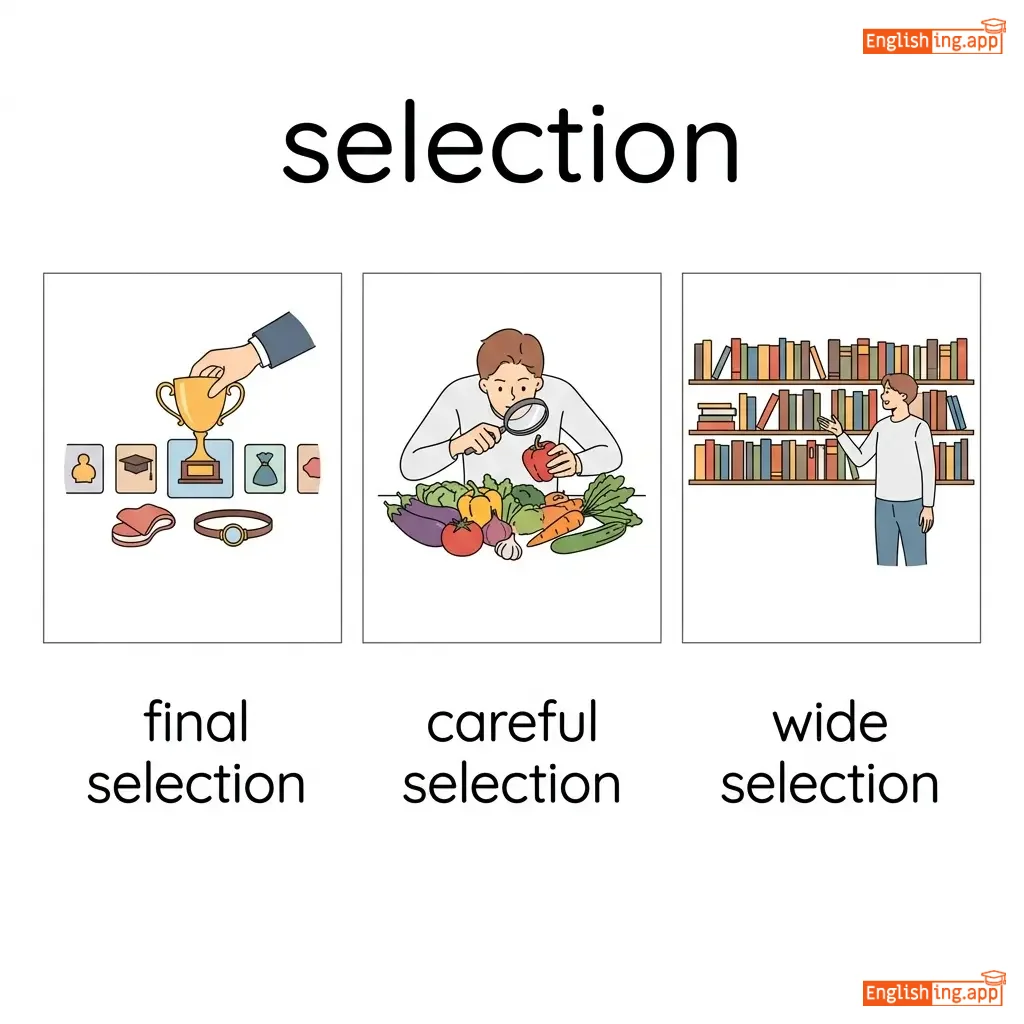
The final selection will be announced tomorrow. |
最终选择将在明天宣布。
Zuihou xuanze jiang zai mingtian xuānbù.
••••••
|
natural selection |
the process by which organisms better adapted to their environment survive
••••••
|
自然选择
ziran xuanze
••••••
|
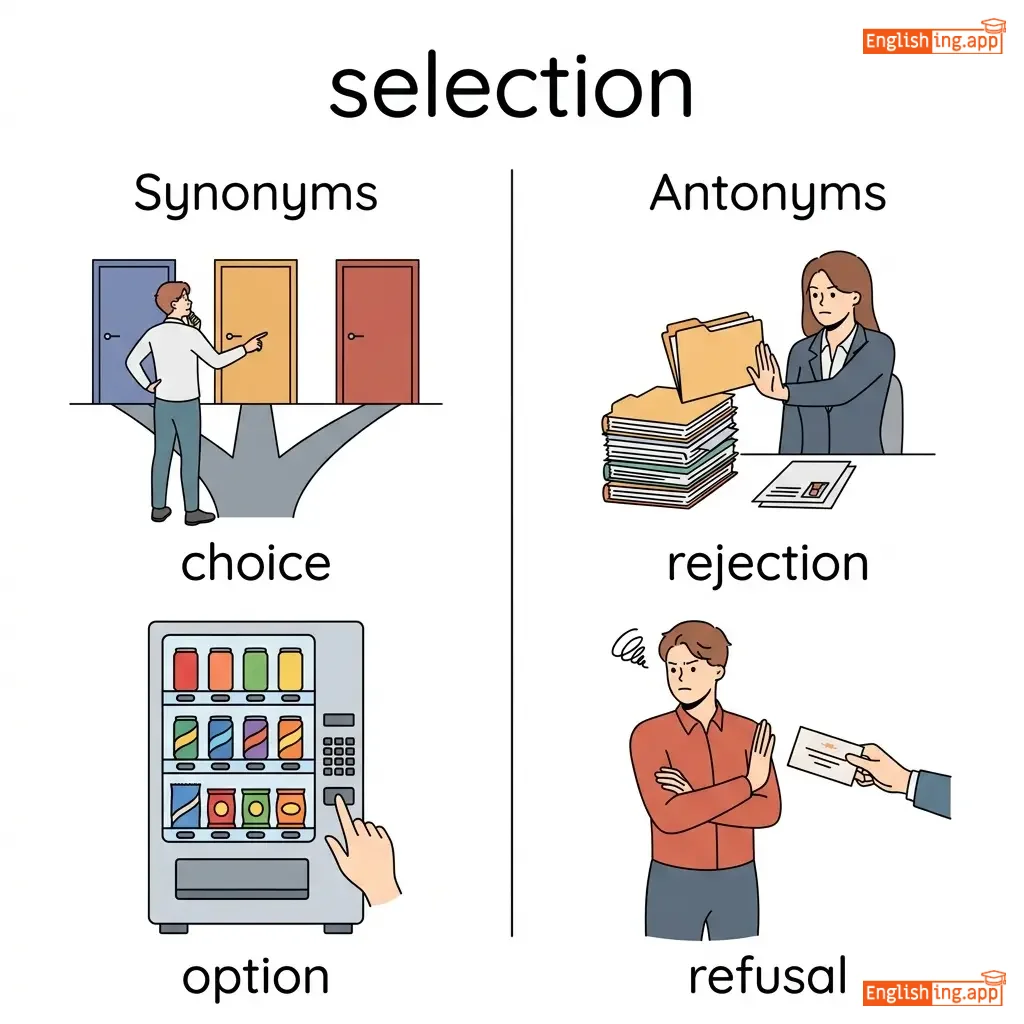
choice, option, pick, assortment, range
••••••
|
rejection, refusal
••••••
|
final selection, careful selection, wide selection, random selection
••••••
|
Selection意味着选择 - 就像选举中的选择一样。
••••••
|
|
#0
🎯
|
/sɪˈlek.tɪv/
adjective
(选择性)
••••••
|
- •••••• |
选择性的
xuanze xing de
••••••
|
- •••••• | - •••••• | - •••••• | - •••••• |
relating to or involving careful selection; choosy about what to accept
••••••
|
The university has a selective admission process for new students.
大学对新生有选择性的录取过程。
••••••
|
大学对新生有选择性的录取过程。
Daxue dui xinsheng you xuanze xing de luqu guocheng.
••••••
|
- •••••• | - •••••• | - •••••• |
choosy, particular, discriminating, exclusive
••••••
|
indiscriminate, random, inclusive, accepting
••••••
|
selective admission, selective memory, selective breeding, selective service
••••••
|
选择 (xuanze) 是精挑细选
••••••
|
|
#0
🛒
|
/ˈsuː.pəˌmɑː.kɪt/
noun
(超市)
••••••
|
- •••••• |
超市
chaoshi
••••••
|
- •••••• | - •••••• | - •••••• | - •••••• |
a large self-service store selling food and household goods
••••••
|
She went to the supermarket to buy groceries. |
她去超市买杂货。
Tā qù chāoshì mǎi záhuò.
••••••
|
- •••••• | - •••••• | - •••••• |
grocery store, mart, store, food market, hypermarket
••••••
|
small shop, kiosk
••••••
|
big supermarket, local supermarket, supermarket chain, supermarket shopping, supermarket employee
••••••
|
超市 — 一个可以一站式购物的地方 🛒
••••••
|
|
#0
🥄
|
/ˈteɪbəlˌspun/
noun
(汤匙)
••••••
|
- •••••• |
汤匙
tangchi
••••••
|
- •••••• | - •••••• | - •••••• | - •••••• |
a spoon used for serving or eating food, typically holding about 15 milliliters
••••••
|
She stirred the soup with a tablespoon.
她用汤匙搅拌了汤。
••••••
|
她用汤匙搅拌了汤。
Ta yong tangchi jiaobanle tang.
••••••
|
- •••••• | - •••••• | - •••••• |
soup spoon, serving spoon
••••••
|
teaspoon, fork
••••••
|
tablespoon of sugar, tablespoon of salt, a full tablespoon
••••••
|
汤匙 (tangchi) - Imagine a spoonful of soup in a large spoon.
••••••
|
|
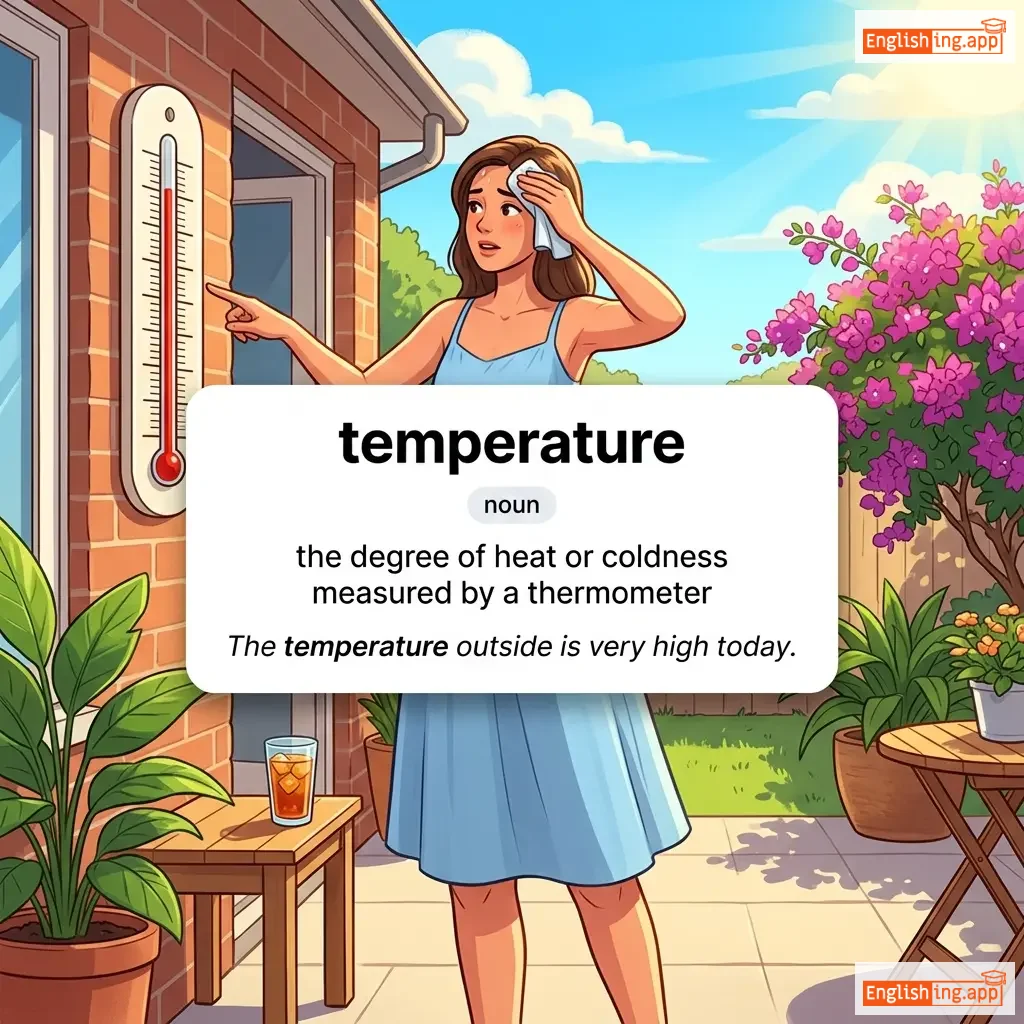
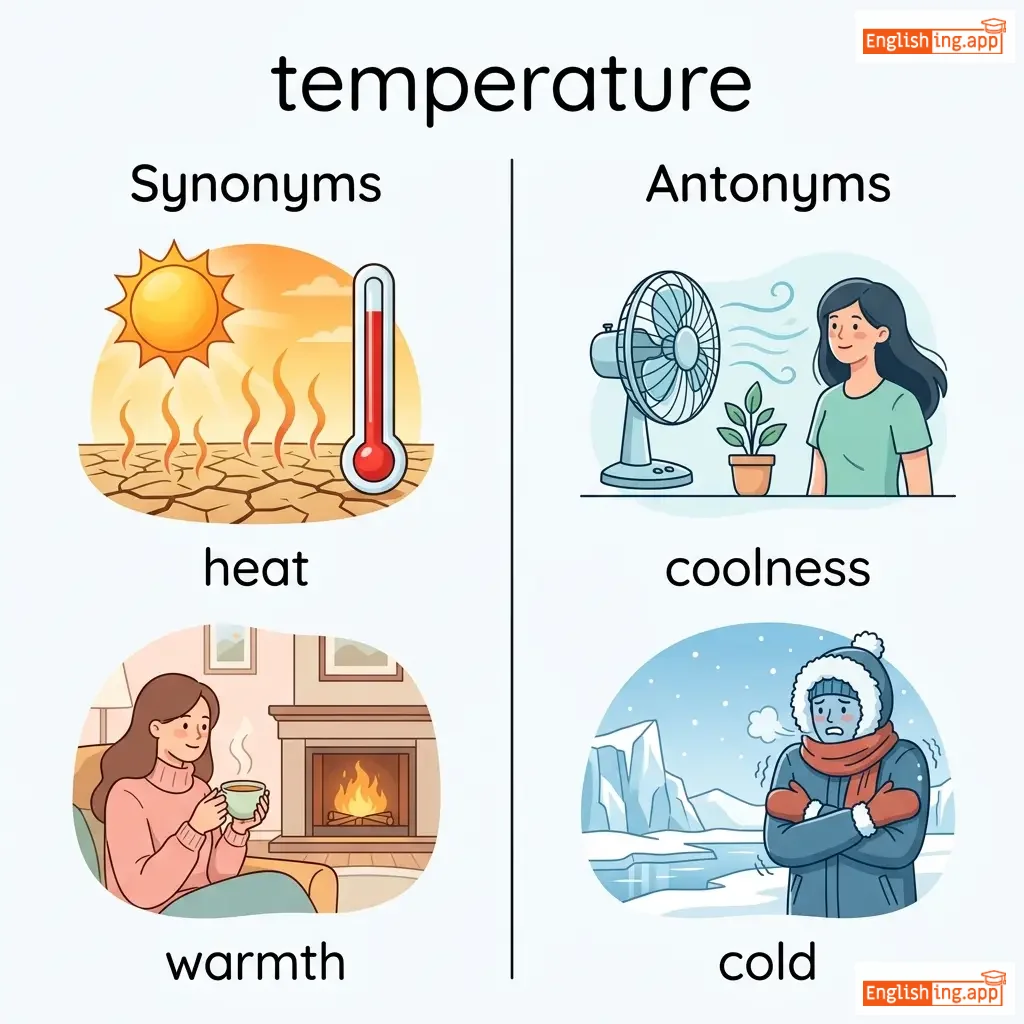
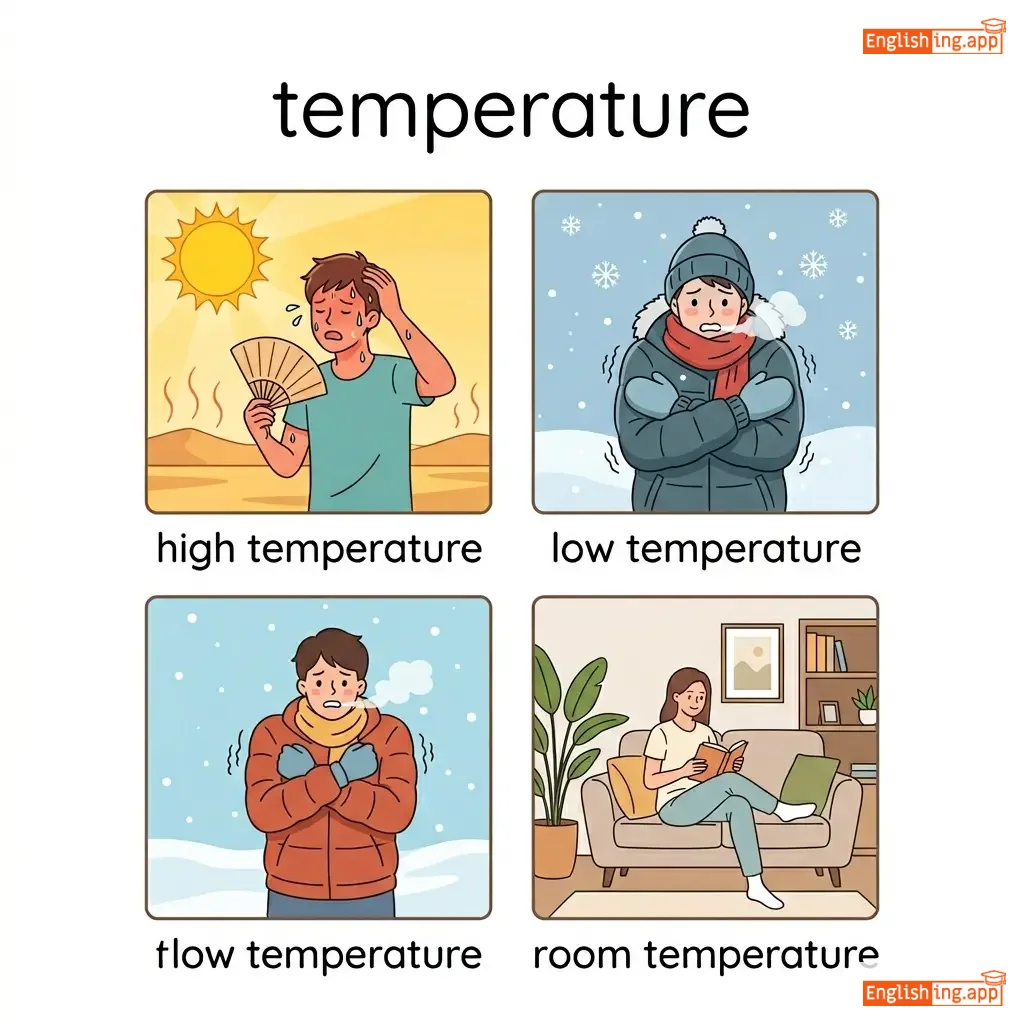
#0
🌡️
|
/ˈtem.pər.ə.tʃər/
noun
(tèmpèréchā)
••••••
|
|
温度
wendu
••••••
|
- •••••• | - •••••• | - •••••• | - •••••• |
the degree of heat or cold in the atmosphere, body, or substance
••••••
|
The temperature today is twenty-five degrees Celsius. |
今天的温度是二十五摄氏度。
Jīntiān de wēndù shì èrshíwǔ shèshìdù.
••••••
|
- •••••• | - •••••• | - •••••• |
heat, warmth, thermal reading, degree
••••••
|
absolute zero
••••••
|
body temperature, room temperature, high temperature, take temperature
••••••
|
温度和英文的temperature相似,记住这个词来描述气温
••••••
|
Vocabulary Quiz
Test your vocabulary by matching words with their translations or meanings.
Login to take the quiz
Comments (0)
Share your thoughts and join the discussion.
Join the discussion by logging in
Login to CommentNo comments yet
Be the first to share your thoughts!