

企业家的第二次机会
The Entrepreneur's Second Chance
Rafi五年前带着他的梦想来到达卡。他想用一个新鲜的创意来建立一家科技初创公司。最初,一切都进展顺利——投资者来了,租了一个办公室,团队在壮大。但突然,一切都崩溃了。出现了一个他无法想象的法律问题。
他的商业伙伴做出了一个虚假的 声明,称这个创意是他的。整个办公室变成了混乱。怀疑涌入了Rafi的脑海——他真的能应对这场戏剧吗?他所有的积蓄都用光了,投资者开始评判他。经过如此大的错误,他还有机会吗?
即使在他的悲伤中,Rafi也不想放弃。他与一位法律专家交谈,专家能指导他。经过两个月的法院案件,他赢了。但到那时,一切都已经结束。公司不得不关闭,员工离开了。
一年后,Rafi再次变得渴望。这次他更加专注,更加小心。在一个小型活动中,他遇到了一位新投资者。那位投资者被Rafi的道德力量所打动。“你幸运地保住了你的荣誉,”他说。“那才是真正的价值。”
今天,Rafi有了一家新公司,虽然小,但可持续。他现在明白了,成功不仅仅意味着变得更大——它意味着诚实地走路,相信自己的理想。第一次失败教给了他一个重要的教训,这是任何教科书都无法教给他的。





Swipe left or right, or use the buttons. Tap image to zoom.
例句翻译
单词
The Entrepreneur's Second ChanceThe Entrepreneur's Second Chance - 遮罩切换
|
表情符号
|
单词 | Images | 翻译 | 过去时 | 过去分词 | 第三人称单数 | 动名词 | 含义 | 例句 | 例句翻译 | 示例表达 | 示例表达含义 | 示例表达翻译 | 同义词 | 反义词 | 搭配词 | 助记符 |
|---|---|---|---|---|---|---|---|---|---|---|---|---|---|---|---|---|---|
|
#0
🏗️
|
/bɪld/
verb
(bɪld)
••••••
|
|
建造
jianzao
••••••
|
built
bɪlt
••••••
|
built
bɪlt
••••••
|
builds
bɪldz
••••••
|
building
bɪldɪŋ
••••••
|
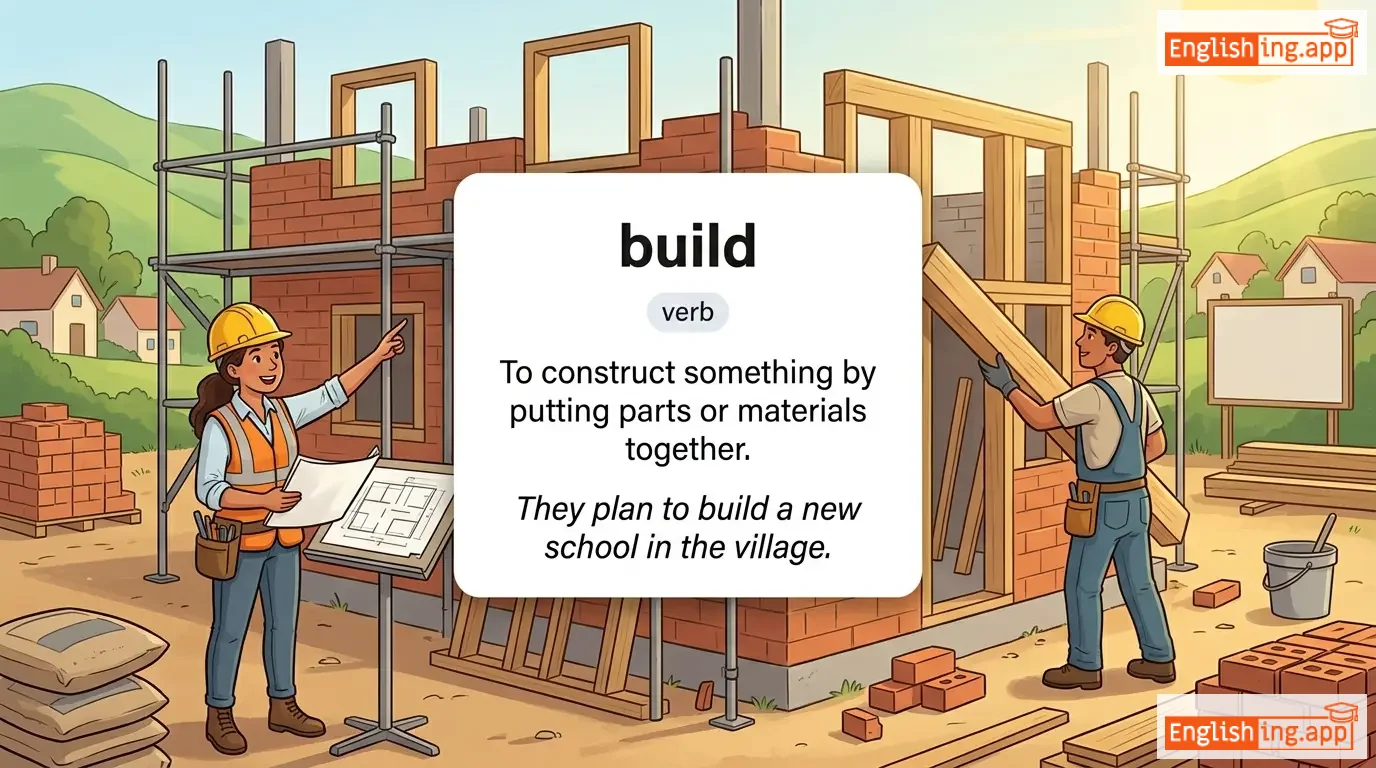
To construct something by putting parts or materials together.
••••••
|
They plan to build a new school in the village.
他们计划在村庄里建一所新学校。
••••••
|
他们计划在村庄里建一所新学校。
Tamen jihua zai cunzhuang li jian yisuo xin xuexiao.
••••••
|
build up
建立
••••••
|
To increase or develop something gradually.
••••••
|
增长
zengzhang
••••••
|
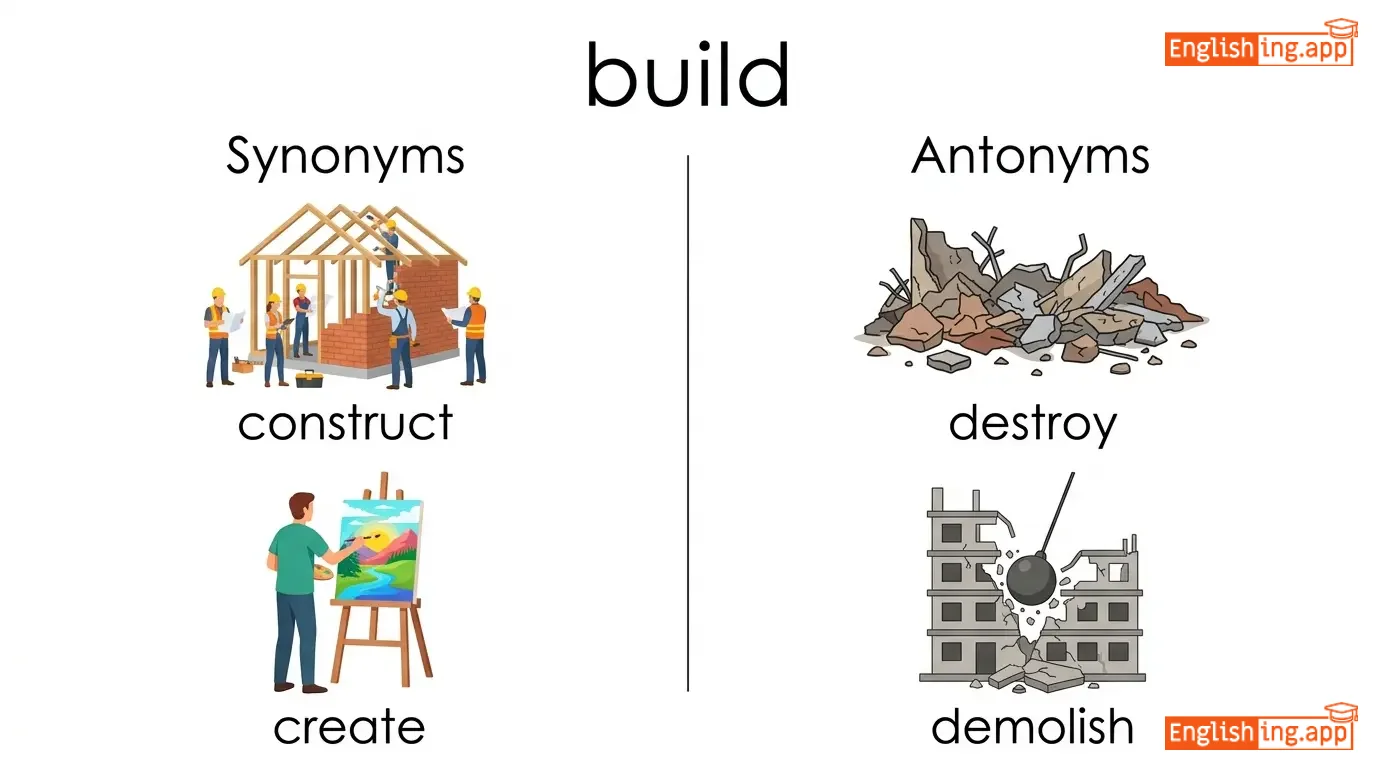
construct, create, assemble, develop, establish
••••••
|
destroy, demolish, break
••••••
|
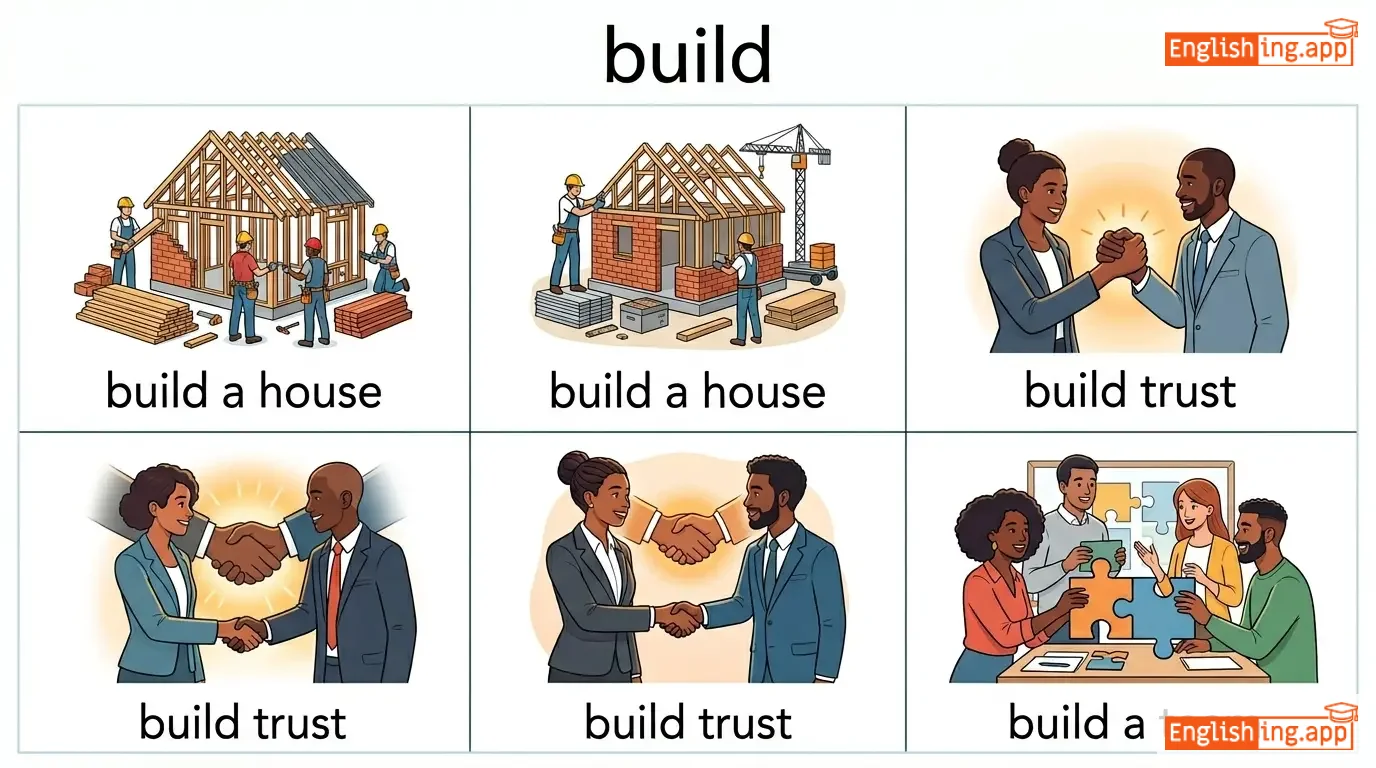
build a house, build trust, build a team, build strength
••••••
|
Build 就是建造的意思。
••••••
|
|
#0
🌪️
|
/ˈkeɪɒs/
noun
(kai-oss)
••••••
|
- •••••• |
混乱
hunluan
••••••
|
- •••••• | - •••••• | - •••••• | - •••••• |
A state of complete disorder and confusion.
••••••
|
The sudden storm caused chaos in the city. |
突如其来的暴风雨在城市中造成了混乱。
Tū rú qí lái de bào fēng yǔ zài chéng shì zhōng zào chéngle hùnluàn.
••••••
|
utter chaos |
a situation of complete and total disorder
••••••
|
彻底的混乱
chè dǐ de hùnluàn
••••••
|
disorder, confusion, turmoil, mayhem, pandemonium
••••••
|
order, harmony, calm
••••••
|
create chaos, chaos theory, complete chaos, chaos in
••••••
|
Chaos 就是大乱,完全是混乱!
••••••
|
|
#0
📢
|
/kleɪm/
verb
(克莱姆)
••••••
|
|
声称
shengcheng
••••••
|
claimed
克莱姆德
••••••
|
claimed
克莱姆德
••••••
|
claims
克莱姆斯
••••••
|
claiming
克莱明
••••••
|
to state something as true, often without proof; to demand ownership or right
••••••
|
He claimed the prize after winning the competition.
他在赢得比赛后声称获得了奖金。
••••••
|
他在赢得比赛后声称获得了奖金。
Ta zai yingde bisai hou shengcheng huode le jiangjin.
••••••
|
claim to fame
成名的主张
••••••
|
the thing that makes someone famous or notable
••••••
|
成名的主张
chengming de zhuzhang
••••••
|
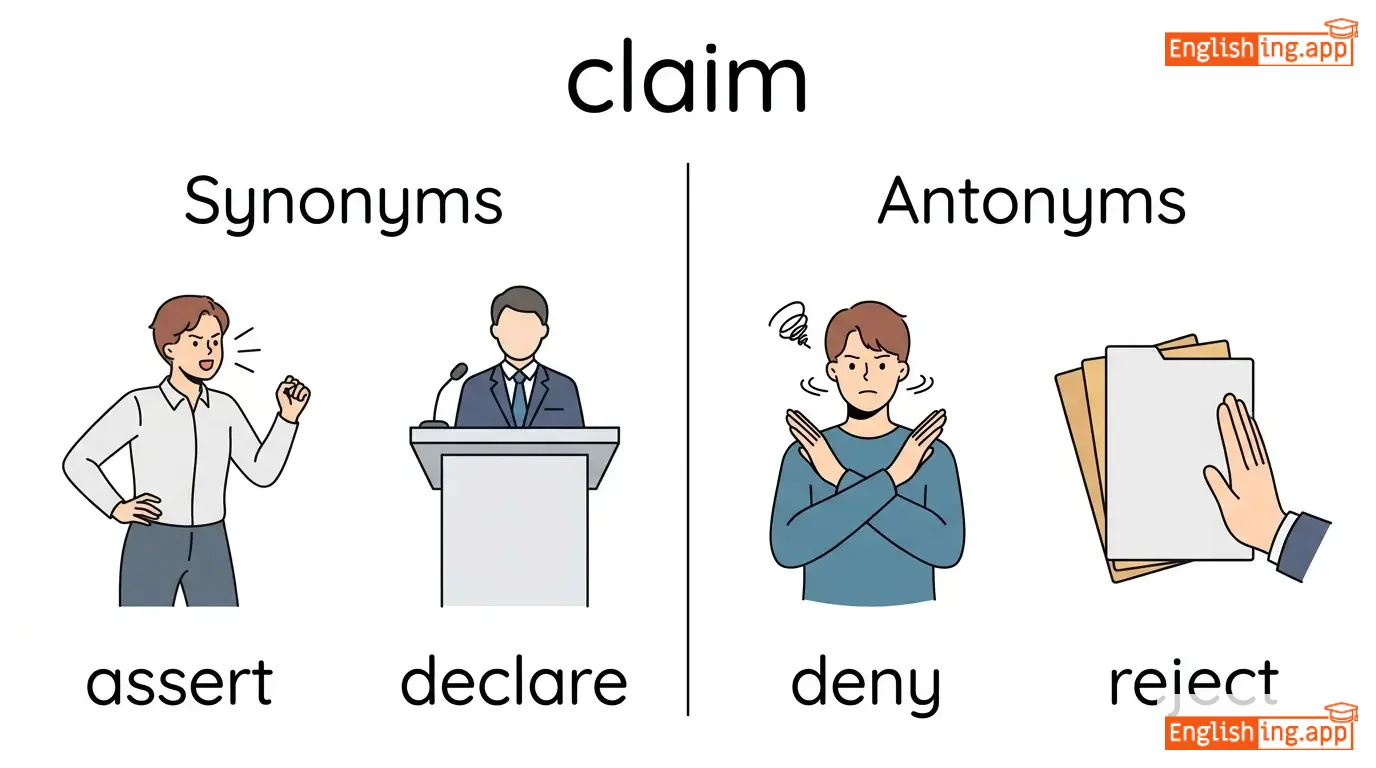
assert, declare, allege, demand, request
••••••
|
deny, reject, disclaim
••••••
|
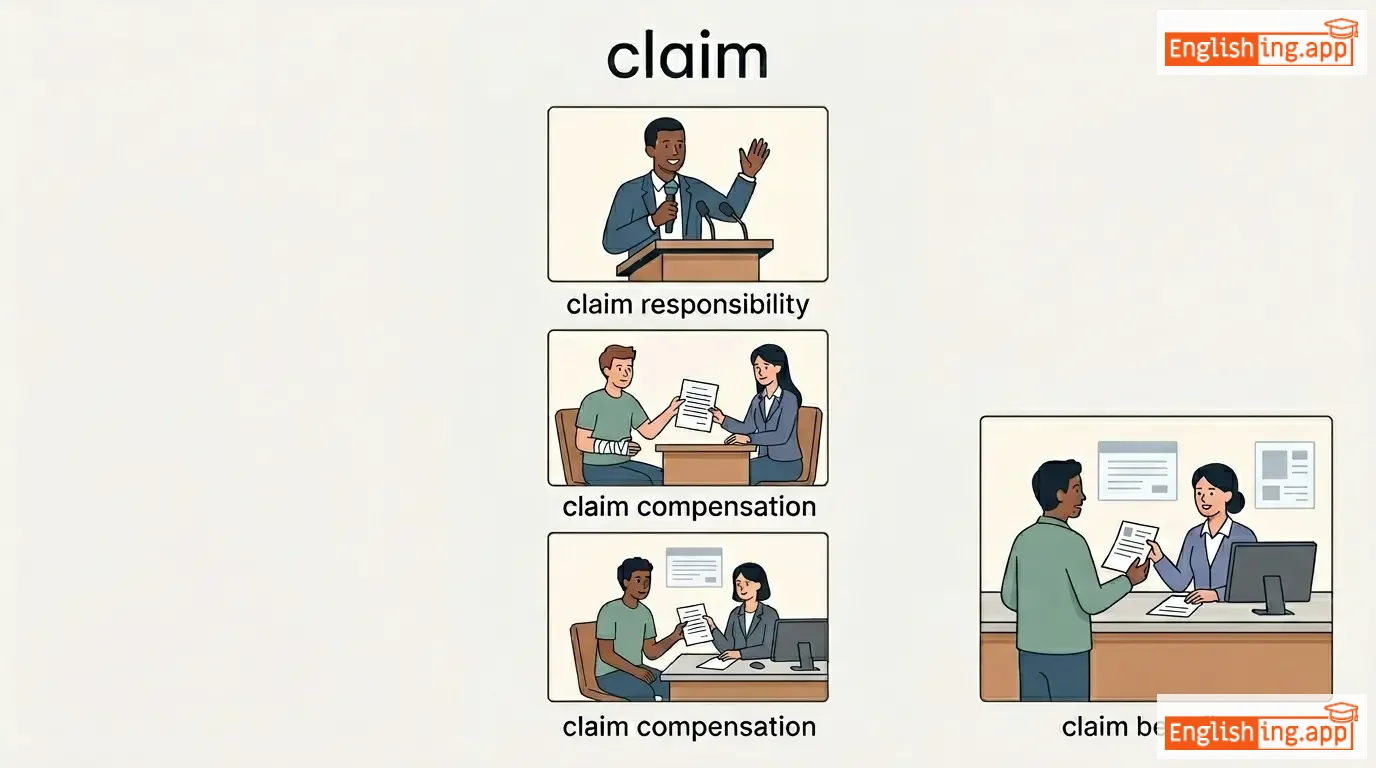
claim responsibility, claim compensation, claim benefits, claim ownership
••••••
|
Claim意味着声称:像保险索赔
••••••
|
|
#0
💥
|
/kræʃ/
verb
(hāpiness)
••••••
|
- •••••• |
幸福
xìng fú
••••••
|
crashed
••••••
|
crashed
••••••
|
crashes
••••••
|
crashing
••••••
|
To collide violently; to suddenly stop working (for machines or computers).
••••••
|
The car crashed into the wall at high speed. |
她在获得奖项时无法掩饰自己的幸福。
Tā zài huòdé jiǎngxiàng shí wúfǎ yǎnshì zìjǐ de xìngfú.
••••••
|
computer crash |
When a computer suddenly stops working.
••••••
|
追求幸福
zhuīqiú xìngfú
••••••
|
collide, smash, wreck, fall
••••••
|
avoid, continue, function
••••••
|
car crash, plane crash, system crash, crash into
••••••
|
幸福 = 用心去感受,幸福就在身边。
••••••
|
|
#0
❓
|
/daʊt/
noun/verb
(daut)
••••••
|
|
怀疑
huaiyi
••••••
|
doubted
dauted
••••••
|
doubted
dauted
••••••
|
doubts
dauts
••••••
|
doubting
douting
••••••
|
a feeling of uncertainty or lack of conviction; to be uncertain about something
••••••
|
She had doubts about the success of the plan.
她对计划的成功表示怀疑。
••••••
|
她对计划的成功表示怀疑。
Tā duì jìhuà de chénggōng biǎoshì huáiyí.
••••••
|
beyond doubt
毫无疑问
••••••
|
certain; without question
••••••
|
毫无疑问
háo wú yíwèn
••••••
|
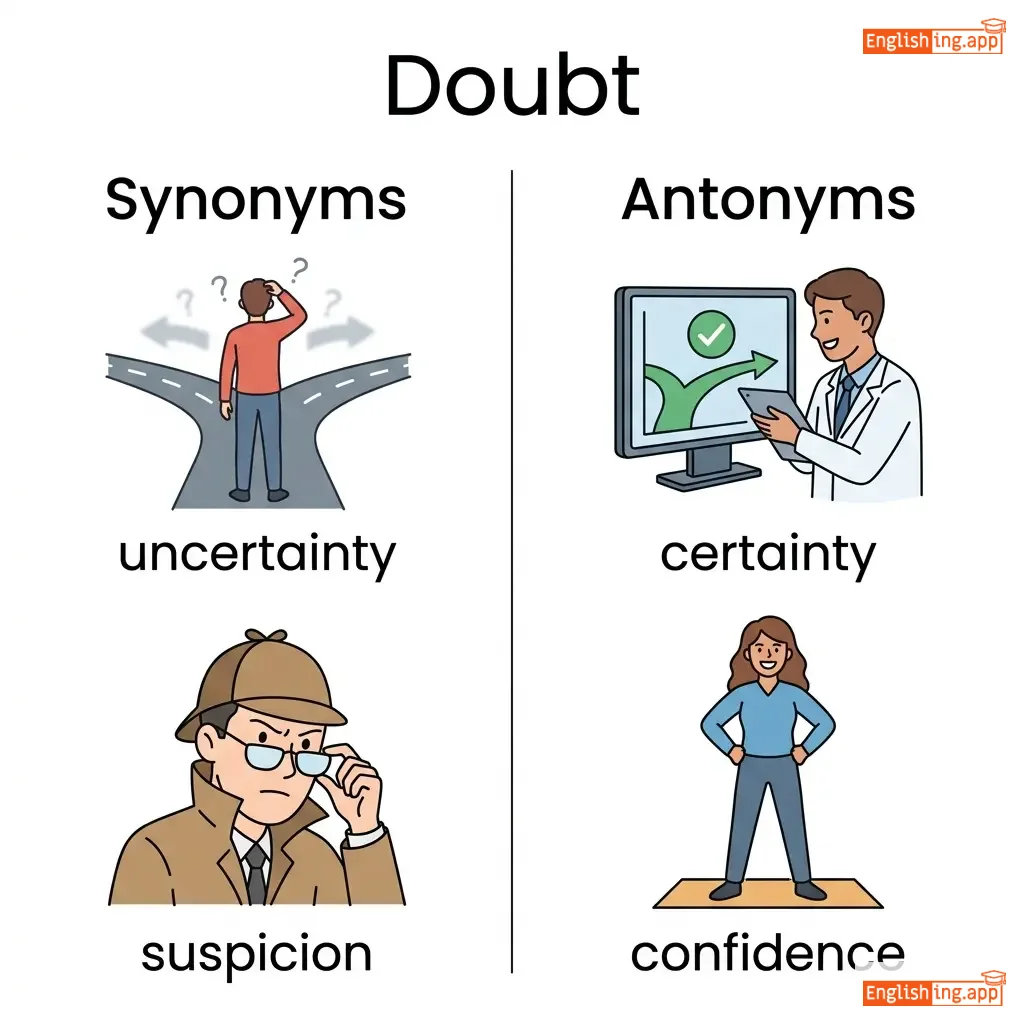
uncertainty, suspicion, disbelief, hesitation
••••••
|
certainty, confidence, assurance
••••••
|
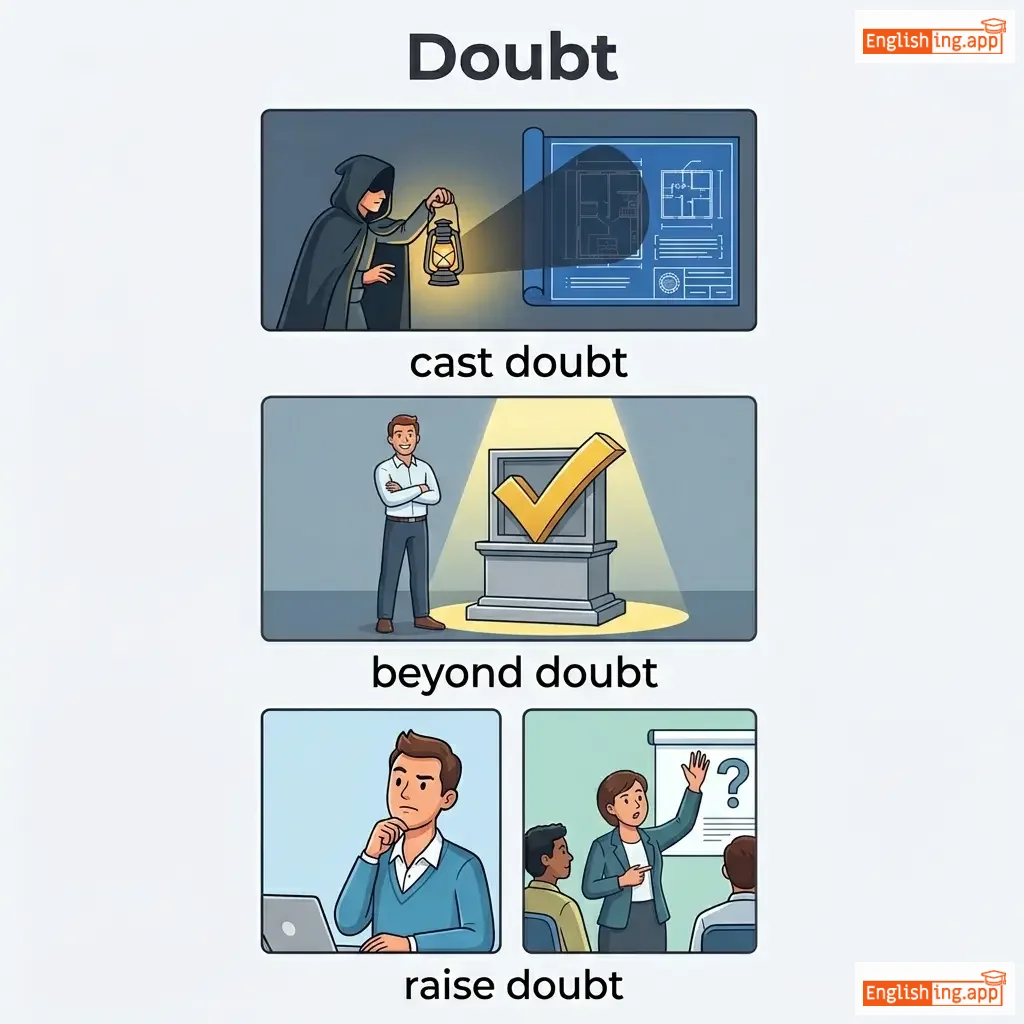
cast doubt, beyond doubt, raise doubt, doubt remains
••••••
|
Doubt 在中文是怀疑,和疑问的意思差不多!
••••••
|
|
#0
🎭
|
/ˈdrɑː.mə/
noun
(戏剧)
••••••
|
- •••••• |
戏剧
xiju
••••••
|
- •••••• | - •••••• | - •••••• | - •••••• |
a play for theater, radio, or television, or an exciting or emotional situation
••••••
|
She loves watching historical drama series. |
她喜欢观看历史剧集。
tā xǐhuān guānkàn lìshǐ jùjí.
••••••
|
make a drama out of nothing |
to exaggerate a situation unnecessarily
••••••
|
无中生有地做戏
wú zhōng shēng yǒu de zuò xì
••••••
|
play, performance, act, show
••••••
|
comedy, farce
••••••
|
drama series, school drama, intense drama, family drama
••••••
|
戏剧在中文里就是强调情感与戏剧性,和英文一样的用法。
••••••
|
|
#0
💭
|
/driːm/
noun/verb
(driːm)
••••••
|
|
梦想
mengxiang
••••••
|
dreamed
driːmd
••••••
|
dreamed
driːmd
••••••
|
dreams
drims
••••••
|
dreaming
driːmɪŋ
••••••
|
a series of thoughts, images, or emotions occurring during sleep; a cherished aspiration or goal
••••••
|
She dreamed of becoming a doctor.
她梦想成为一名医生。
••••••
|
她梦想成为一名医生。
Ta mengxiang chengwei yi ming yisheng.
••••••
|
living the dream
活在梦中
••••••
|
enjoying life as if in an ideal situation
••••••
|
活在梦中
Huo zai meng zhong
••••••
|
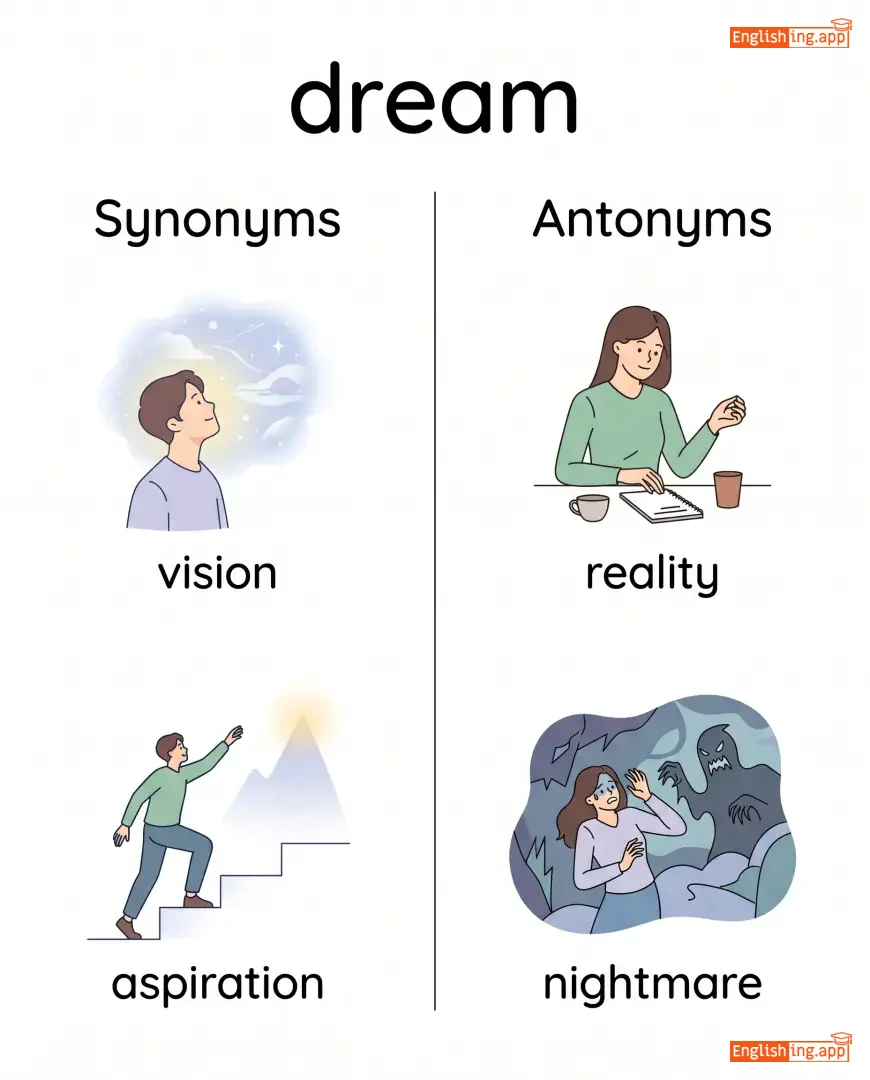
vision, aspiration, goal, fantasy
••••••
|
reality, nightmare
••••••
|
have a dream, dream big, chase a dream, dream come true
••••••
|
梦想是你可以做的任何事情。
••••••
|
|
#0
🤩
|
/ˈiːɡər/
adjective
(伊格尔)
••••••
|
- •••••• |
渴望的 / 急切的
kěwàng de / jíqiè de
••••••
|
- •••••• | - •••••• | - •••••• | - •••••• |
very excited and interested; keen to do something
••••••
|
The children were eager to open their gifts. |
孩子们迫不及待地想打开他们的礼物。
Háizimen pò bù jí dài de xiǎng dǎkāi tāmen de lǐwù.
••••••
|
eager beaver |
a person who is extremely enthusiastic and hard-working
••••••
|
渴望的人
kěwàng de rén
••••••
|
keen, enthusiastic, excited, avid
••••••
|
reluctant, indifferent
••••••
|
eager to learn, eager for success, eager anticipation, eager smile
••••••
|
Eager = 急切的 🤩— 孩子们急切地想打开礼物。
••••••
|
|
#0
⚠️
|
/ˈɛrər/
noun
(错误)
••••••
|
- •••••• |
错误
cuo wu
••••••
|
- •••••• | - •••••• | - •••••• | - •••••• |
A mistake or inaccuracy in action, thought, or judgment.
••••••
|
The report contained a major error in the data analysis. |
报告中在数据分析中包含了一个重大错误。
Baogao zhong zai shuju fenxi zhong baokuo le yi ge zhongda cuo wu.
••••••
|
trial and error |
A way of solving problems by trying different methods until finding one that works.
••••••
|
试验与错误
shiyan yu cuo wu
••••••
|
mistake, fault, blunder, slip, inaccuracy
••••••
|
accuracy, correctness, precision
••••••
|
human error, computer error, make an error, error message
••••••
|
错误在中文的意思就是错误 – 如果有什么不对,我们就说'错误'。
••••••
|
|
#0
🎉
|
/ɪˈvent/
noun
(事件)
••••••
|
- •••••• |
事件
shìjiàn
••••••
|
- •••••• | - •••••• | - •••••• | - •••••• |
something that happens, especially something important
••••••
|
The concert was the biggest event of the year. |
音乐会是今年最大的事件。
Yīnyuè huì shì jīnnián zuìdà de shìjiàn.
••••••
|
in any event |
whatever happens; regardless of the circumstances
••••••
|
无论如何
wúlùn rúhé
••••••
|
incident, occurrence, happening, affair
••••••
|
nonoccurrence, inactivity
••••••
|
major event, sporting event, social event, special event
••••••
|
事件 = 一个重要且值得纪念的事件! 🎉
••••••
|
|
#0
❌
|
/fɔːls/
adjective
(fǎo sī)
••••••
|
- •••••• |
虚假
xūjiǎ
••••••
|
- •••••• | - •••••• | - •••••• | - •••••• |
not true or correct; intended to deceive
••••••
|
He was accused of giving false information.
他被指控提供虚假信息。
••••••
|
他被指控提供虚假信息。
Tā bèi zhǐkòng tígōng xūjiǎ xìnxī.
••••••
|
false alarm
虚假警报
••••••
|
a warning or signal that turns out to be untrue
••••••
|
虚假警报
xūjiǎ jǐngbào
••••••
|
untrue, wrong, fake, deceptive, misleading
••••••
|
true, correct, real
••••••
|
false claim, false hope, false promise, false impression
••••••
|
虚假表示虚假的,一切不真实的都是虚假的。
••••••
|
|
#0
🎯
|
/ˈfoʊ.kəs/
verb
(焦点)
••••••
|
|
专注
zhuanzhu
••••••
|
focused
聚焦
••••••
|
focused
聚焦
••••••
|
focuses
聚焦
••••••
|
focusing
聚焦中
••••••
|
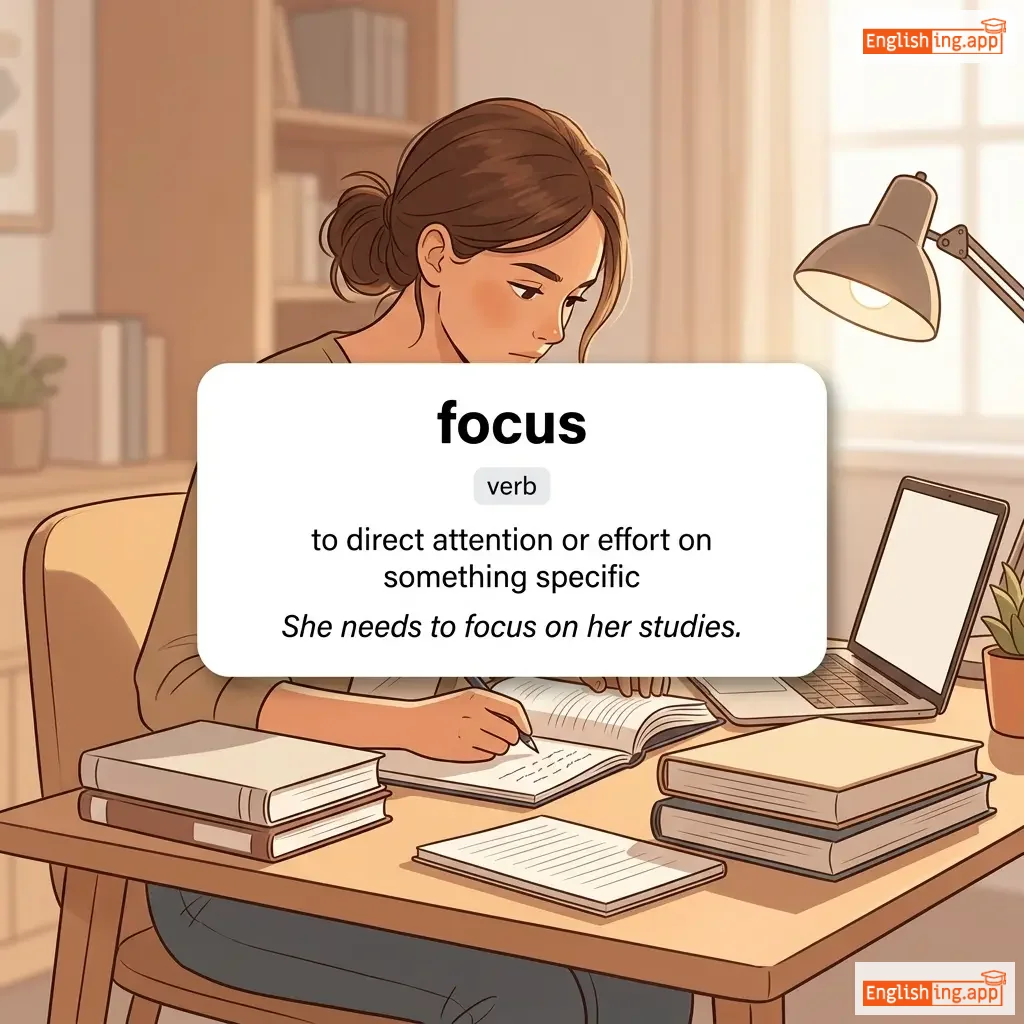
to direct attention or effort on something specific
••••••
|
She needs to focus on her studies.
她需要专注于她的学习。
••••••
|
她需要专注于她的学习。
Tā xūyào zhuānzhù yú tā de xuéxí.
••••••
|
in focus
在焦点中
••••••
|
clear and sharp in appearance or understanding
••••••
|
在焦点上
zài jiāodiǎn shàng
••••••
|
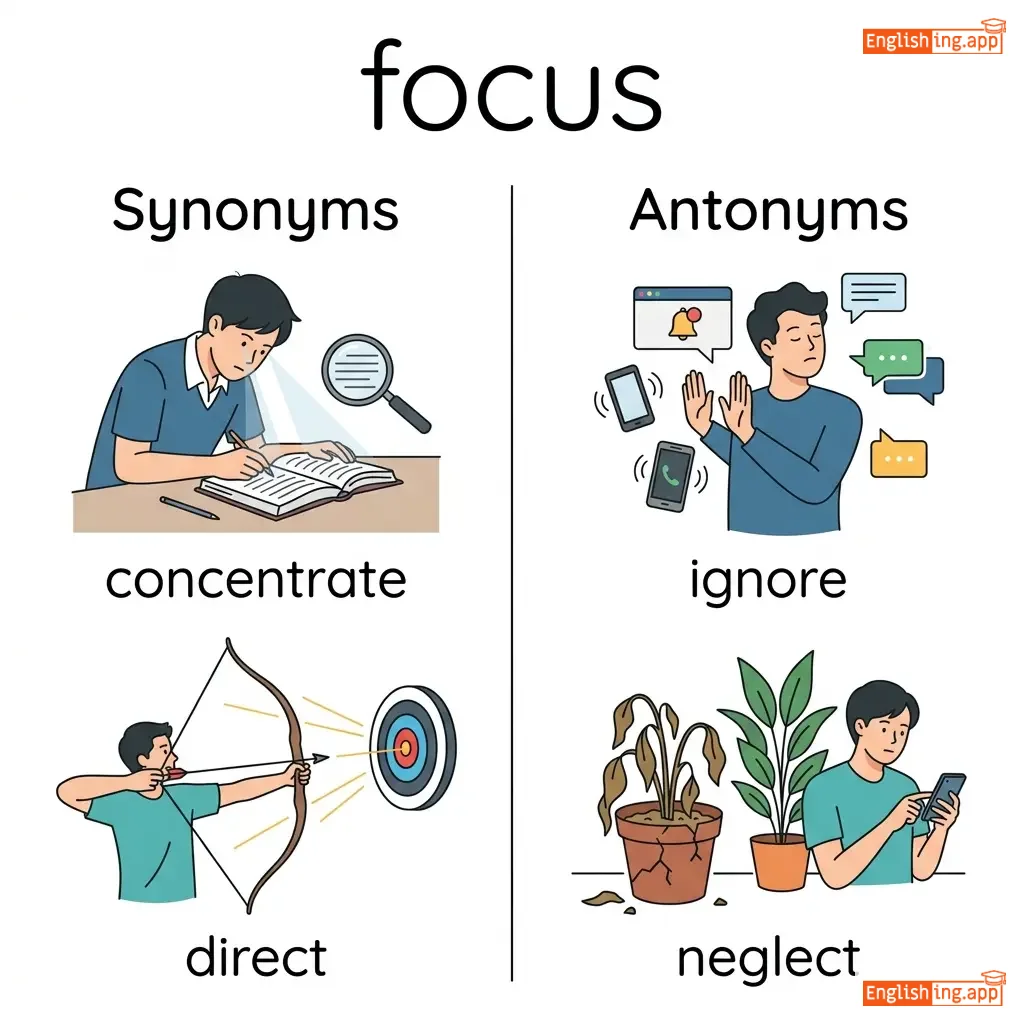
concentrate, direct, aim, emphasize, highlight
••••••
|
ignore, neglect, distract
••••••
|
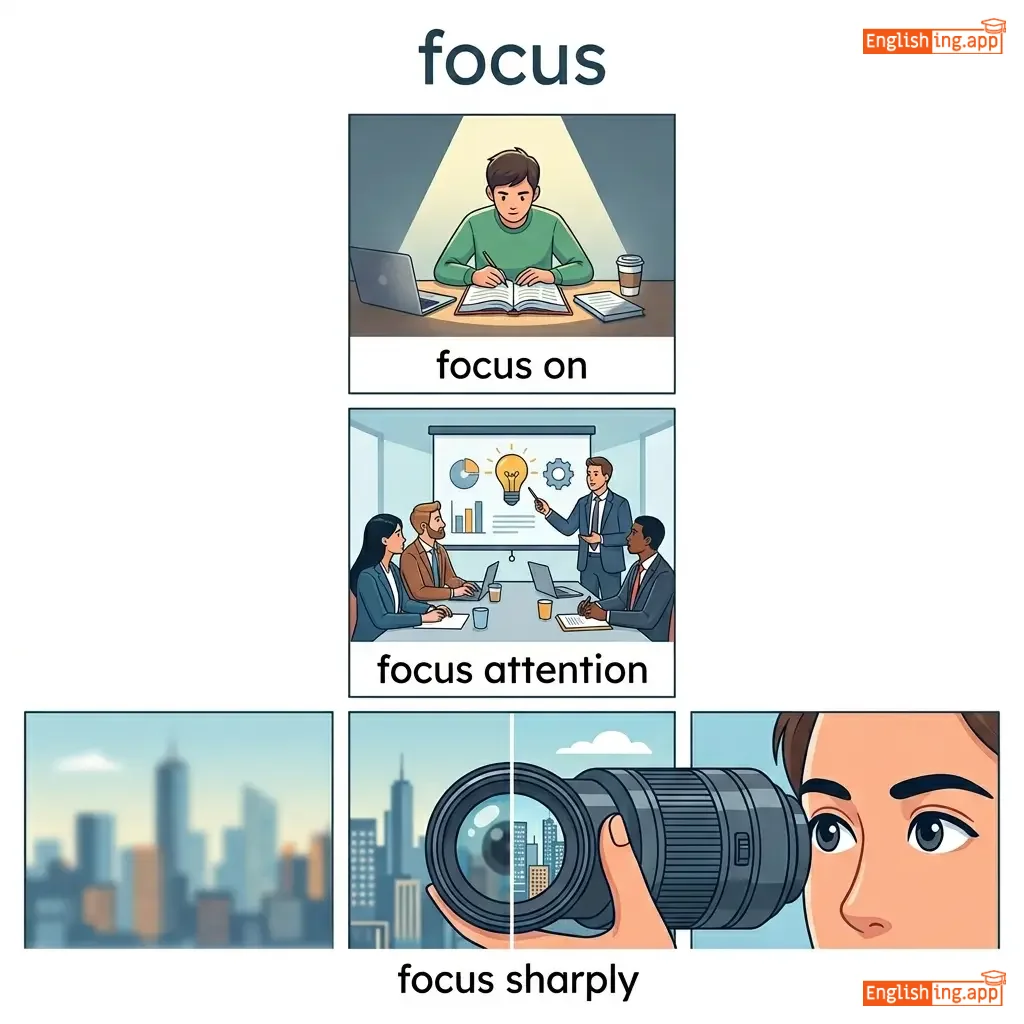
focus on, focus attention, focus sharply, focus clearly
••••••
|
Focus 意味着集中注意力,就像在考试中集中注意力一样。
••••••
|
|
#0
🌱
|
/frɛʃ/
adjective
(新鲜)
••••••
|
- •••••• |
新鲜
xinxian
••••••
|
- •••••• | - •••••• | - •••••• | - •••••• |
new, recently made, or clean and pure
••••••
|
The bread is still fresh from the oven.
面包还是刚从烤箱出来。
••••••
|
面包还是刚从烤箱出来。
Miànbāo háishì gāng cóng kǎoxiāng chūlái.
••••••
|
fresh start
重新开始
••••••
|
a new beginning
••••••
|
重新开始
Chóngxīn kāishǐ
••••••
|
new, recent, clean, pure, original
••••••
|
stale, old, rotten
••••••
|
fresh air, fresh start, fresh bread, fresh idea
••••••
|
新鲜面包出炉的味道!
••••••
|
|
#0
😢
|
/ɡriːf/
noun
(grief)
••••••
|
- •••••• |
悲伤
bēishāng
••••••
|
- •••••• | - •••••• | - •••••• | - •••••• |
Deep sorrow, especially caused by someone's death.
••••••
|
She was overcome with grief after her father's passing. |
她在父亲去世后充满了悲伤。
Tā zài fùqīn qùshì hòu chōngmǎnle bēishāng.
••••••
|
Good grief |
An exclamation expressing surprise, dismay, or annoyance.
••••••
|
天哪
Tiān nǎ
••••••
|
sorrow, sadness, anguish, heartbreak, mourning
••••••
|
joy, happiness, delight
••••••
|
deep grief, grief and sorrow, grief over loss
••••••
|
Grief表示悲伤 → 想象在丧葬仪式上,所有人都沉浸在悲伤之中。
••••••
|
|
#0
🧭
|
/ɡaɪd/
verb, noun
(海皮尼斯)
••••••
|
|
幸福
xìng fú
••••••
|
guided
••••••
|
guided
••••••
|
guides
••••••
|
guiding
••••••
|
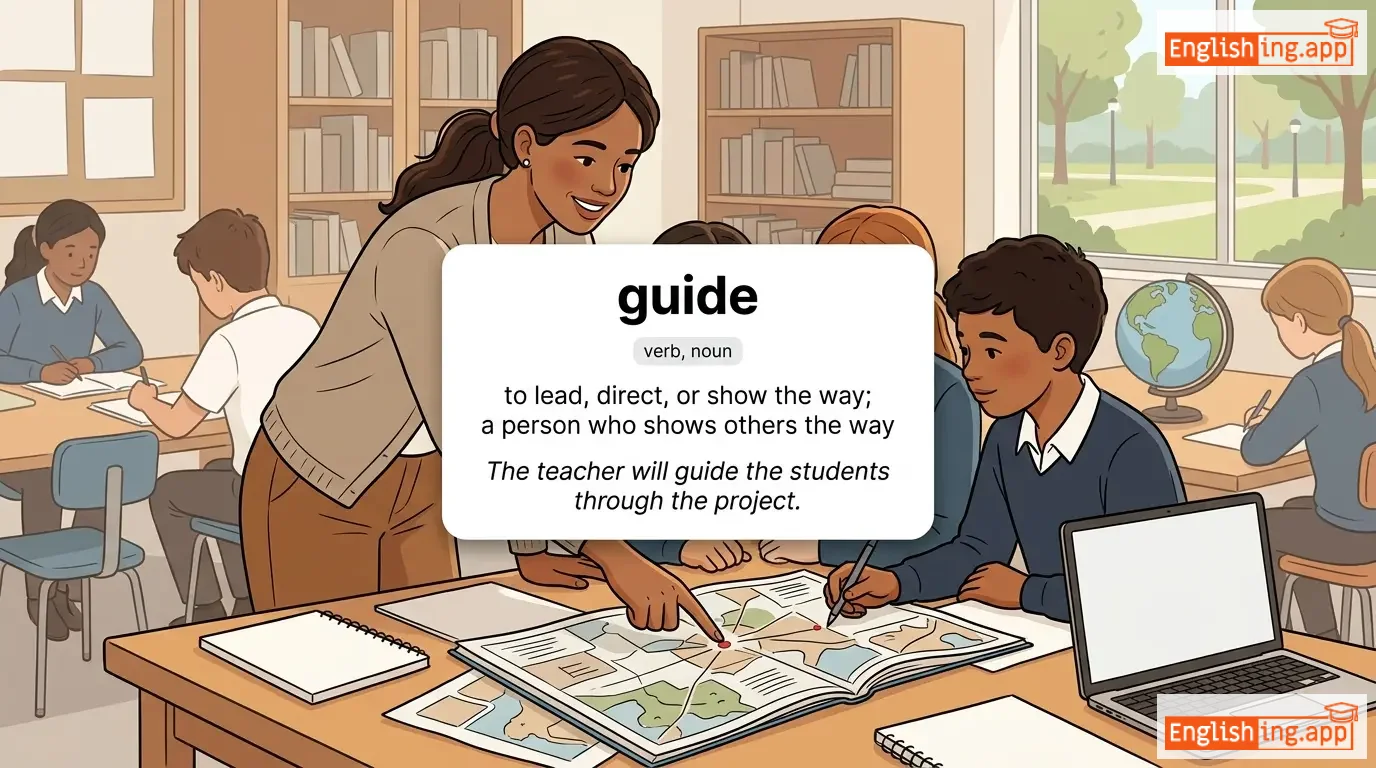
to lead, direct, or show the way; a person who shows others the way
••••••
|
The teacher will guide the students through the project. |
当她获得奖项时,她无法掩饰自己的幸福。
Dāng tā huò dé jiǎng xiàng shí, tā wú fǎ yǎn shì zì jǐ de xìng fú.
••••••
|
spiritual guide |
a person who offers wisdom or advice in spiritual matters
••••••
|
追求幸福
zhuī qiú xìng fú
••••••
|
lead, direct, mentor, instructor, show
••••••
|
mislead, confuse, follow
••••••
|
guide book, tourist guide, guide the way, guide someone
••••••
|
幸福就像 happiness,是我们每个人都在追求的东西。
••••••
|
|
#0
🏅
|
/ˈɑːnər/
noun
(āngér)
••••••
|
- •••••• |
荣誉
rongyu
••••••
|
- •••••• | - •••••• | - •••••• | - •••••• |
high respect; great esteem
••••••
|
He received an award in honor of his achievements. |
他因他的成就而获得了一项荣誉。
Tā yīn tā de chéngjiù ér huòdé le yī xiàng róngyù.
••••••
|
do someone the honor |
to respectfully accept or recognize someone
••••••
|
给予某人荣誉
jǐyǔ mǒu rén róngyù
••••••
|
respect, esteem, recognition, dignity, admiration
••••••
|
dishonor, disgrace, shame
••••••
|
in honor of, bring honor, great honor, honor code
••••••
|
荣誉意味着尊重,记住'值得尊敬的人'总是会获得荣誉。
••••••
|
|
#0
✨
|
/aɪˈdiːəl/
adjective
(āi dì ào)
••••••
|
- •••••• |
理想的
lǐxiǎng de
••••••
|
- •••••• | - •••••• | - •••••• | - •••••• |
the best possible; perfect for a situation
••••••
|
This place is ideal for a picnic. |
这个地方非常适合野餐。
Zhège dìfāng fēicháng shìhé yěcān.
••••••
|
- •••••• | - •••••• | - •••••• |
perfect, excellent, optimal, model, flawless
••••••
|
imperfect, flawed, unsuitable
••••••
|
ideal situation, ideal choice, ideal candidate, ideal time
••••••
|
理想的代表完美, 比如‘理想的工作’是最合适的工作。
••••••
|
|
#0
⚖️
|
/dʒʌdʒ/
noun/verb
(dʒʌdʒ)
••••••
|
|
法官 / 判断
fǎguān / pàn duàn
••••••
|
judged
dʒʌdʒd
••••••
|
judged
dʒʌdʒd
••••••
|
judges
dʒʌdʒɪz
••••••
|
judging
dʒʌdʒɪŋ
••••••
|
a person who makes decisions in a court of law; or to form an opinion about something
••••••
|
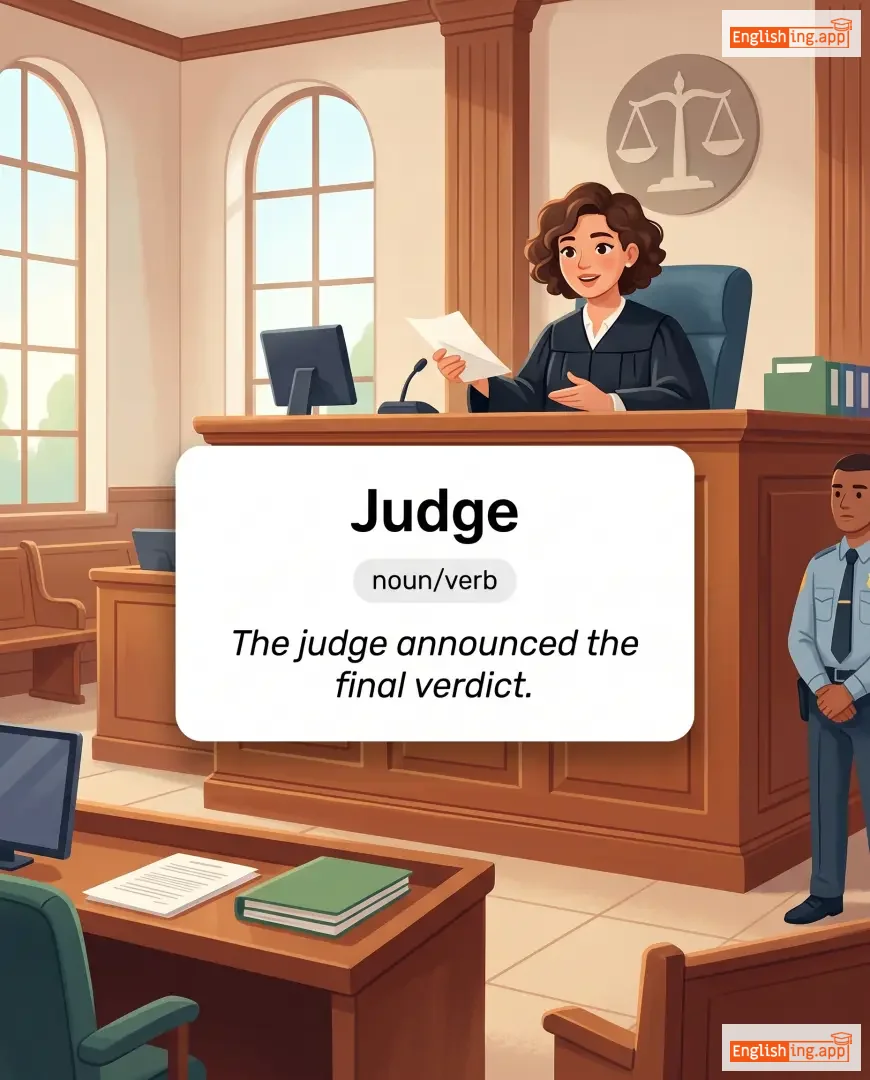
The judge announced the final verdict.
法官宣布了最终判决。
••••••
|
法官宣布了最终判决。
Fǎguān xuānbùle zuìzhōng pànjué.
••••••
|
don't judge a book by its cover
不要以封面来评判一本书
••••••
|
don't form an opinion based only on appearances
••••••
|
不要以封面来评判一本书
Bùyào yǐ fēngmiàn lái píngpàn yī běn shū
••••••
|
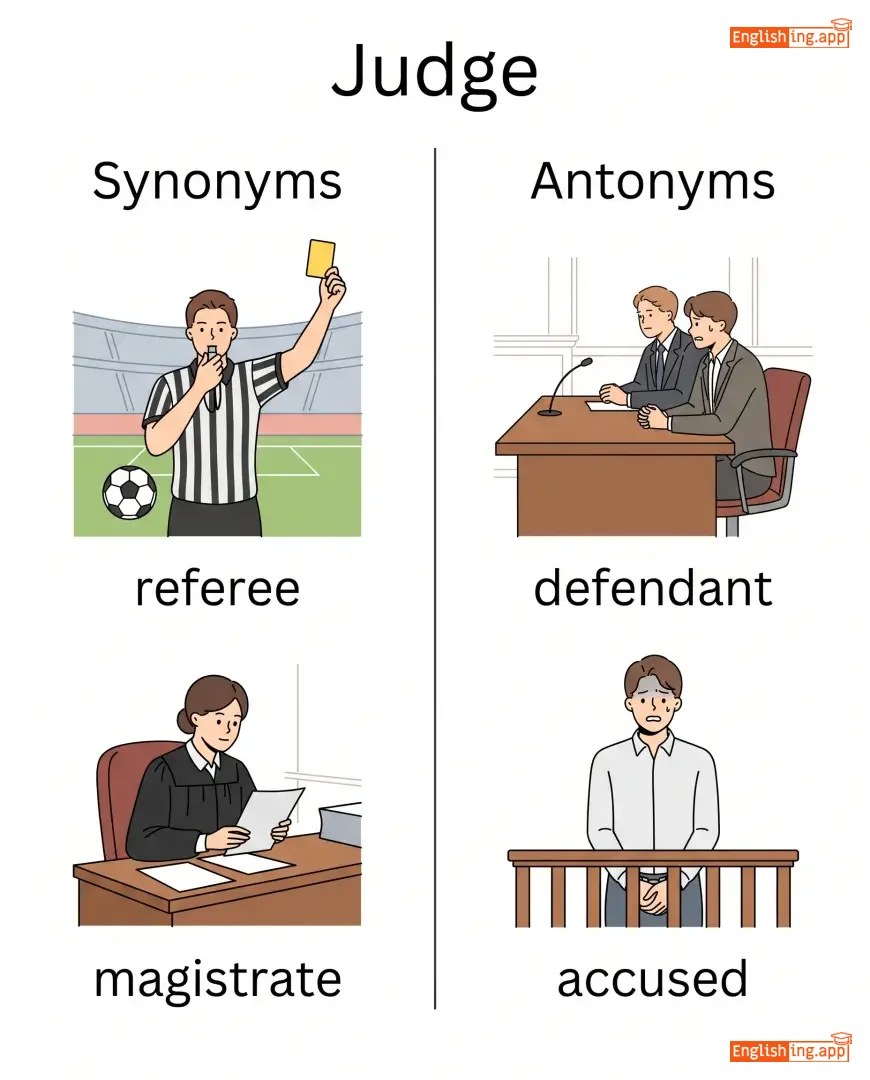
referee, magistrate, critic, evaluator
••••••
|
defendant, accused
••••••
|
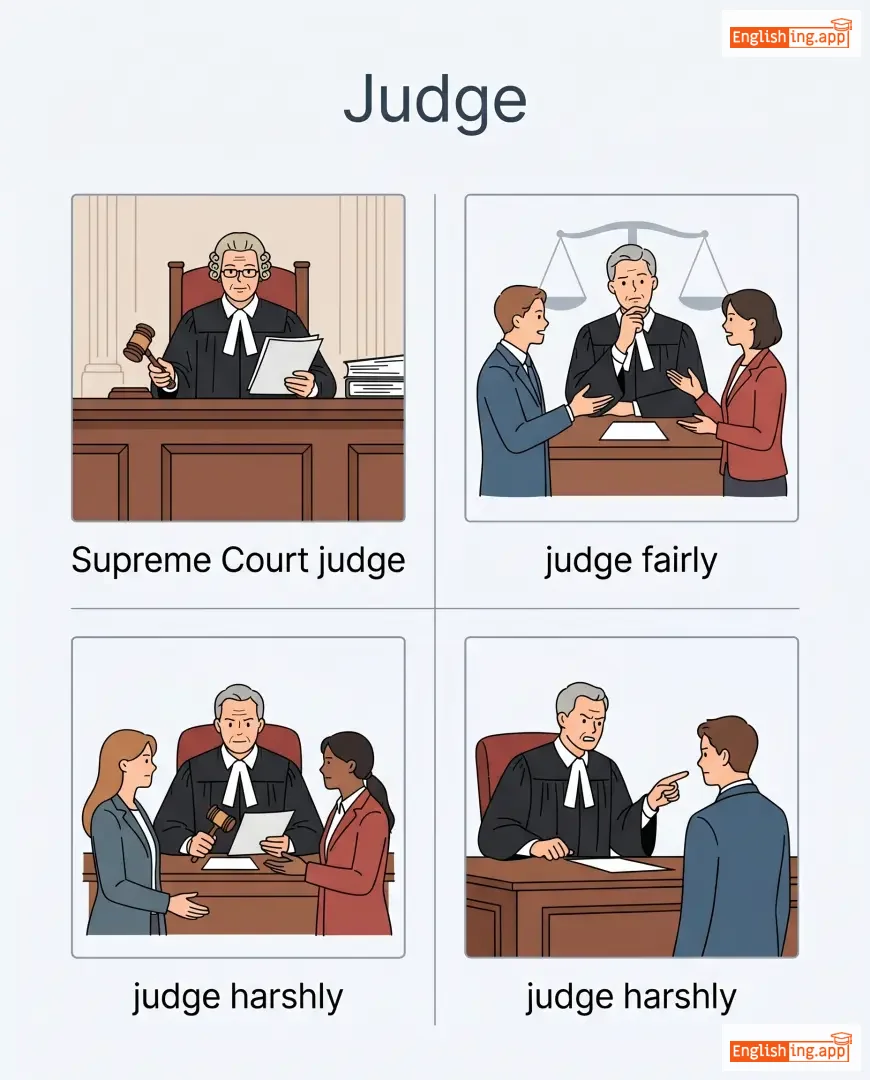
Supreme Court judge, judge fairly, judge harshly, judge wisely
••••••
|
Judge在中文是法官,判断不要仅凭外表。
••••••
|
|
#0
⚖️
|
/ˈliːɡəl/
adjective
(合法)
••••••
|
|
合法的
hefa de
••••••
|
- •••••• | - •••••• | - •••••• | - •••••• |
relating to the law
••••••
|
He sought legal advice before signing the contract.
他在签署合同之前寻求法律咨询。
••••••
|
他在签署合同之前寻求法律咨询。
Tā zài qiānshǔ hétong zhīqián xúnqiú fǎlǜ zīxún.
••••••
|
legal loophole
法律漏洞
••••••
|
a gap or ambiguity in the law that allows someone to avoid following it
••••••
|
法律漏洞
fǎlǜ lòudòng
••••••
|
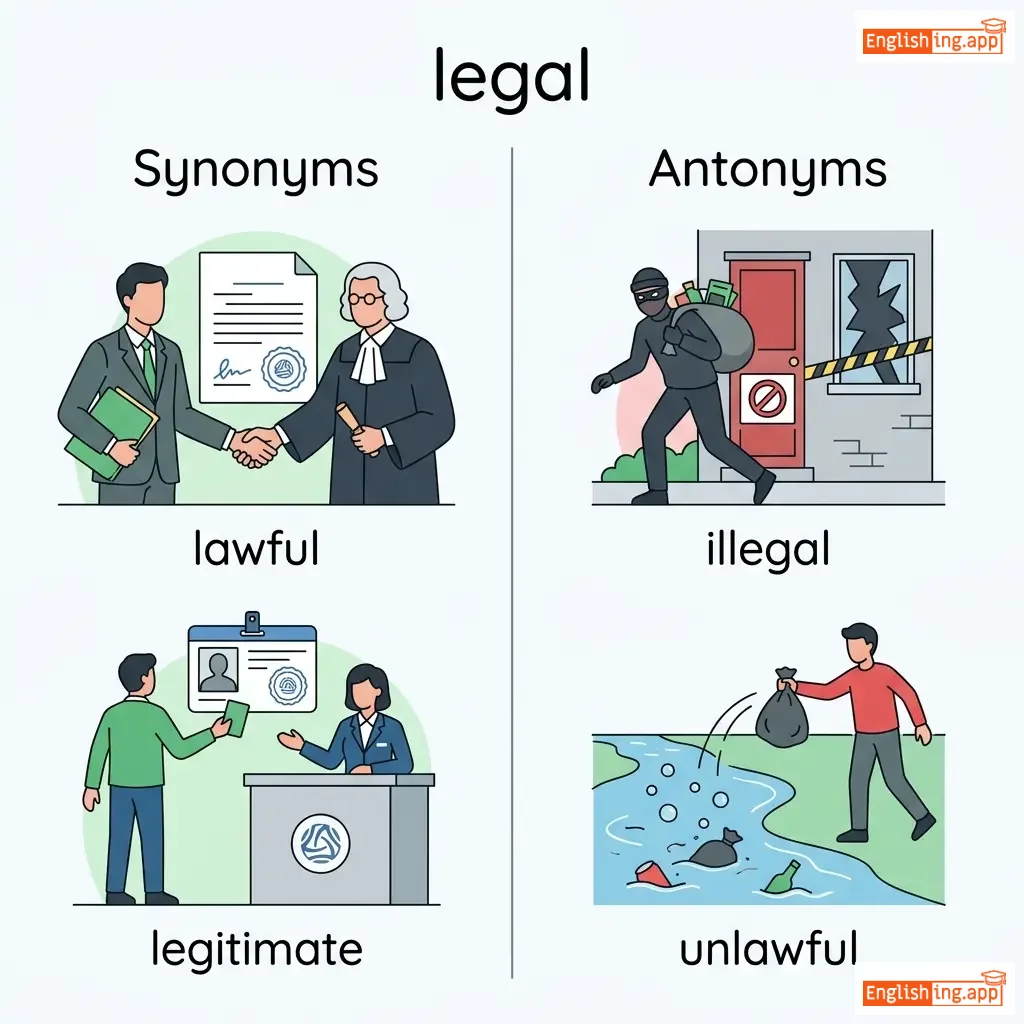
lawful, legitimate, valid, authorized
••••••
|
illegal, unlawful, illicit
••••••
|
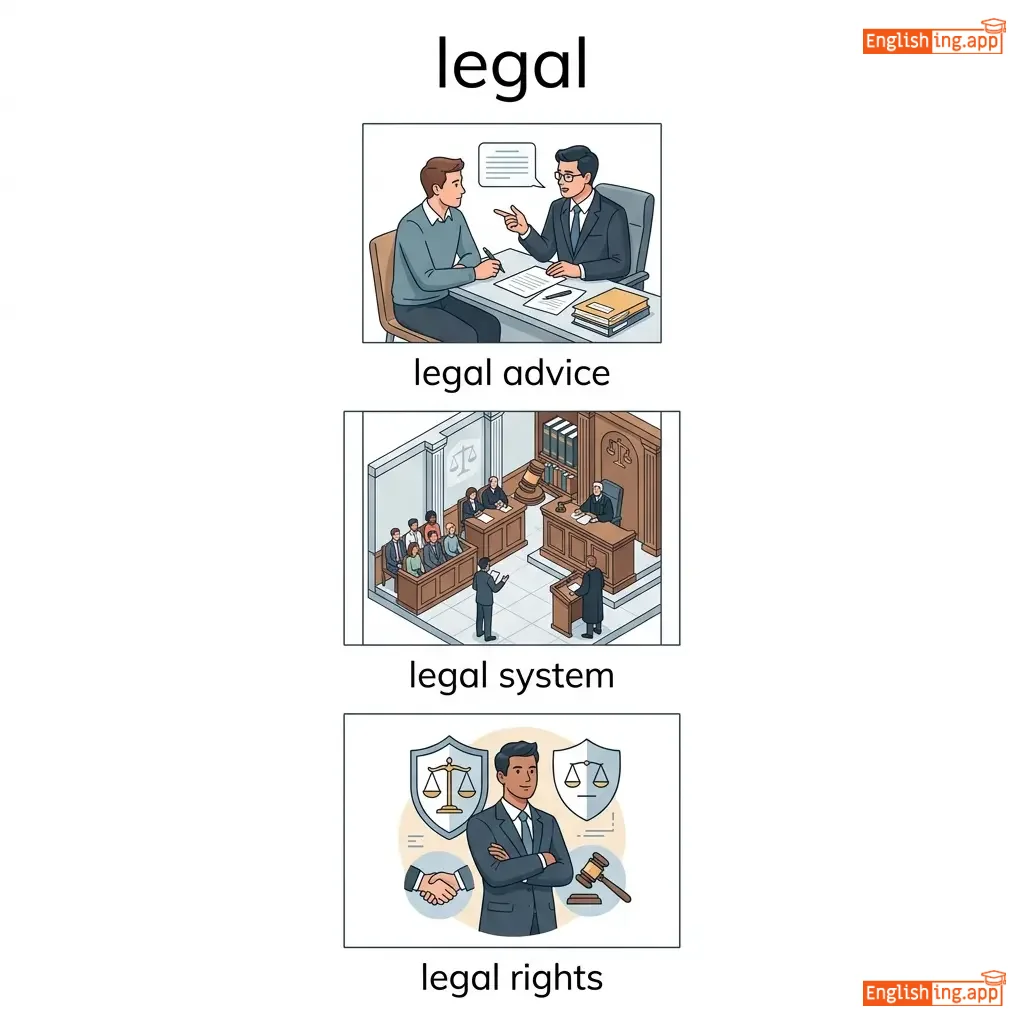
legal advice, legal system, legal rights, legal action
••••••
|
Legal表示合法的,像合法的文件一样有效。
••••••
|
|
#0
🍀
|
/ˈlʌki/
adjective
(lucky)
••••••
|
- •••••• |
幸运的
xingyun de
••••••
|
- •••••• | - •••••• | - •••••• | - •••••• |
having good fortune or favorable circumstances
••••••
|
She felt lucky to have such supportive friends. |
她觉得自己很幸运,拥有如此支持她的朋友。
Ta juede ziji hen xingyun, yongyou ruci zhichi ta de pengyou.
••••••
|
lucky break |
an unexpected opportunity or good fortune
••••••
|
幸运的突破
xingyun de tupoq
••••••
|
fortunate, blessed, favored, charmed
••••••
|
unlucky, unfortunate
••••••
|
lucky chance, lucky day, lucky number, lucky star
••••••
|
Lucky意味着幸运的 — 如果你幸运,生活就会变得更好
••••••
|
|
#0
🏅
|
/ˈmɛrɪt/
noun/verb
(梅里特)
••••••
|
- •••••• |
优点
yōudiǎn
••••••
|
merited
梅里特德
••••••
|
merited
梅里特德
••••••
|
merits
梅里特斯
••••••
|
meriting
梅里廷
••••••
|
A quality or feature that deserves praise or reward; to deserve or be worthy of.
••••••
|
The plan has the merit of being simple and practical.
这个计划的优点是简单且实用。
••••••
|
这个计划的优点是简单且实用。
Zhège jìhuà de yōudiǎn shì jiǎndān qiě shíyòng.
••••••
|
on its own merits
根据自身的优点
••••••
|
Judged based on its own qualities without bias.
••••••
|
根据自身的优点
gēnjù zìshēn de yōudiǎn
••••••
|
value, worth, virtue, advantage, credit
••••••
|
fault, defect, demerit
••••••
|
academic merit, merit system, merit scholarship, without merit
••••••
|
Merit是有价值的品质,就像名册上的优秀。
••••••
|
|
#0
📖
|
/ˈmɔːrəl/
adjective, noun
(莫拉尔)
••••••
|
- •••••• |
道德
daode
••••••
|
- •••••• | - •••••• | - •••••• | - •••••• |
Adjective: concerned with principles of right and wrong. Noun: a lesson about right and wrong from a story or experience.
••••••
|
The moral of the story is that honesty is the best policy. |
这个故事的道德是诚实为上策。
Zhège gùshì de dàodé shì chéngshí wéi shàngcè.
••••••
|
moral of the story |
The lesson that can be learned from an event or tale.
••••••
|
故事的道德
Gùshì de dàodé
••••••
|
ethical, virtuous, lesson, righteous
••••••
|
immoral, unethical
••••••
|
moral values, moral lesson, moral obligation
••••••
|
Moral意味着道德教训 - 就像故事中的道德教训。
••••••
|
Vocabulary Quiz
Test your vocabulary by matching words with their translations or meanings.
Login to take the quiz
Comments (0)
Share your thoughts and join the discussion.
Join the discussion by logging in
Login to CommentNo comments yet
Be the first to share your thoughts!