

那个从未放弃钢琴的女孩
The Girl Who Never Gave Up on Piano
妮莎 always 梦想着有一天能弹 piano。她的 aunt 是一位 piano 老师。
“你是否 aspire 成为钢琴家?” aunt 问。
“是的!”妮莎说,“我想 attain 这个梦想。”
“那你必须 attend 我的课程,” aunt 说。“但我警告你——这并不容易。Anyone 都可以开始,但不是每个人都能坚持到底。”
第一个 month 十分 awful。妮莎弹得 badly,手指僵硬,只能学到 basic 音符。
“我 never 能做到这个,”她哭着说。“我是最糟糕的学生 around。”
“Never 这么说,” aunt 说。“你正在学习。每个人一开始都弹得 badly。你需要的练习 amount 很大。但如果你 never 放弃,你就会成功。”
妮莎 often 在睡前练习。有时她几乎 almost asleep 地坐在 piano 前,双手 were attached 在琴键上。
三 months 后,进步仍然很小。一天,妮莎 absent 了课程。她感到沮丧。
她的 aunt 来到她家。“你为什么 absent?”
“因为我太 awful 了,”妮莎说。“我花了那么多 amount 时间练习,但没有变化。Almost 一年过去了,我还是弹得 badly。”
“你还 aspire 成为钢琴家吗?” aunt 问。
“Always,”妮莎轻声说。
“那就 never 停下来。你知道吗?我也曾经多年弹得 badly。周围 (around) 的人都让我放弃,但我 never 这样做。现在我在教书。你可以 attain 你的梦想。但要记住,任何值得 attaining 的东西都不容易。”
多年后,妮莎自己成了 piano 老师。她告诉学生:“如果你真的 aspire 某件事,就 never 放弃。Always 练习,Always attend 课程,不要觉得 amount 的努力太多。Anyone around 你可能怀疑你,但要一直 attached 在梦想上。只有那些 never 放弃的人,才能真正 attain 自己的梦想。”
Swipe left or right, or use the buttons. Tap image to zoom.
例句翻译
单词
The Girl Who Never Gave Up on PianoThe Girl Who Never Gave Up on Piano - 遮罩切换
|
表情符号
|
单词 | Images | 翻译 | 过去时 | 过去分词 | 第三人称单数 | 动名词 | 含义 | 例句 | 例句翻译 | 示例表达 | 示例表达含义 | 示例表达翻译 | 同义词 | 反义词 | 搭配词 | 助记符 |
|---|---|---|---|---|---|---|---|---|---|---|---|---|---|---|---|---|---|
|
#0
🚫
|
/ˈæbsənt/
adjective
(æbsənt)
••••••
|
- •••••• |
缺席
quēxí
••••••
|
- •••••• | - •••••• | - •••••• | - •••••• |
not present at a place or event
••••••
|
She was absent from the meeting yesterday.
她昨天没有参加会议。
••••••
|
她昨天没有参加会议。
Tā zuótiān méiyǒu cānjiā huìyì.
••••••
|
- •••••• | - •••••• | - •••••• |
missing, away, unavailable, absent-minded
••••••
|
present, available
••••••
|
absent from class, absent from work, absent due to illness
••••••
|
缺席 = 想象一个学生缺席课堂,需要赶上进度!
••••••
|
|
#0
⏳
|
/ˈɔːlmoʊst/
adverb
(àomósī)
••••••
|
- •••••• |
差不多
chàbùduō
••••••
|
- •••••• | - •••••• | - •••••• | - •••••• |
very nearly, but not exactly or completely
••••••
|
He almost missed the train.
他差点错过了火车。
••••••
|
他差点错过了火车。
Tā chàdiǎn cuòguòle huǒchē.
••••••
|
almost there
差不多到了
••••••
|
close to completing or reaching a goal
••••••
|
差不多到了
chàbùduō dàole
••••••
|
nearly, practically, virtually, approximately, about
••••••
|
completely, entirely, totally
••••••
|
almost done, almost impossible, almost every, almost finished
••••••
|
Almost 意味着差不多— 就像说 "差不多到了",意思是快到了。
••••••
|
|
#0
♾️
|
/ˈɔːlweɪz/
adverb
(Ōuwèi)
••••••
|
- •••••• |
总是
zǒng shì
••••••
|
- •••••• | - •••••• | - •••••• | - •••••• |
at all times; on every occasion
••••••
|
She always wakes up early in the morning.
她总是早晨起床。
••••••
|
她总是早晨起床。
Tā zǒng shì zǎochén qǐchuáng.
••••••
|
as always
一如既往
••••••
|
as is usual or expected
••••••
|
一如既往
Yī rú jì wǎng
••••••
|
forever, constantly, perpetually, continually
••••••
|
never, rarely, seldom
••••••
|
always ready, always happy, always late, always available
••••••
|
Always = 总是, 总是 (zǒng shì)。
••••••
|
|
#0
💰
|
/əˈmaʊnt/
noun/verb
(āmǎnt)
••••••
|
- •••••• |
金额
jīn'é
••••••
|
amounted
āmǎnted
••••••
|
amounted
āmǎnted
••••••
|
amounts
āmǎnts
••••••
|
amounting
āmǎnting
••••••
|
a quantity of something, typically the total of a thing or things in number, size, value, or extent
••••••
|
The total amount of money is not enough.
总金额不够。
••••••
|
总金额不够。
Zǒng jīn'é bù gòu.
••••••
|
amount to nothing
amount to nothing
••••••
|
to have no significant result or value
••••••
|
一无所有
yī wú suǒ yǒu
••••••
|
quantity, sum, total, volume, measure
••••••
|
lack, zero, nothing
••••••
|
large amount, small amount, total amount
••••••
|
Amount 像是 '金额', 金钱的总额
••••••
|
|
#0
👤
|
/ˈɛniwʌn/
pronoun
(èniwán)
••••••
|
- •••••• |
某人
mǒu rén
••••••
|
- •••••• | - •••••• | - •••••• | - •••••• |
any person at all; used to refer to an unspecified person
••••••
|
Does anyone know the answer to this question? |
有人知道这个问题的答案吗?
yǒu rén zhīdào zhège wèntí de dá'àn ma?
••••••
|
anyone's guess |
something that is very difficult to predict or know
••••••
|
任何人的猜测
rènhé rén de cāicè
••••••
|
somebody, anybody, person, individual, someone
••••••
|
nobody, no one
••••••
|
anyone else, if anyone, hardly anyone, ask anyone
••••••
|
ANYONE意味着'某人',就像我们在中文中说的'某人'。
••••••
|
|
#0
🔄
|
/əˈraʊnd/
adverb, preposition
(əˈraʊnd)
••••••
|
- •••••• |
周围
zhōuwéi
••••••
|
- •••••• | - •••••• | - •••••• | - •••••• |
situated on every side; in a circular way; approximately
••••••
|
There are many restaurants around the park. |
公园周围有很多餐馆。
Gōngyuán zhōuwéi yǒu hěn duō cānguǎn.
••••••
|
turn around |
to move so as to face in the opposite direction
••••••
|
转身
zhuǎnshēn
••••••
|
about, nearly, nearby, approximately, surrounding
••••••
|
far, away, beyond
••••••
|
look around, move around, all around, turn around
••••••
|
Around表示周围 - 公园周围有餐馆。
••••••
|
|
#0
😴
|
/əˈsliːp/
adjective
(ā sī lǐ pǔ)
••••••
|
- •••••• |
熟睡
shúshuì
••••••
|
- •••••• | - •••••• | - •••••• | - •••••• |
in a state of sleep
••••••
|
The baby is fast asleep. |
宝宝正在熟睡。
Bǎobǎo zhèngzài shúshuì.
••••••
|
fall asleep |
to begin sleeping
••••••
|
入睡
rùshuì
••••••
|
sleeping, dozing, resting, napping
••••••
|
awake, alert
••••••
|
fast asleep, fall asleep, sound asleep
••••••
|
Asleep 就是熟睡 — 记住'Sleep'意味着睡觉。
••••••
|
|
#0
🌟
|
/əˈspaɪər/
verb
(阿斯派尔)
••••••
|
- •••••• |
渴望
kewang
••••••
|
aspired
阿斯派尔德
••••••
|
aspired
阿斯派尔德
••••••
|
aspires
阿斯派尔斯
••••••
|
aspiring
阿斯派尔英
••••••
|
to have a strong desire to achieve something
••••••
|
Many students aspire to study abroad.
许多学生渴望去国外学习。
••••••
|
许多学生渴望去国外学习。
Xuduo xuesheng kewang qu guowai xuexi.
••••••
|
aspire to greatness
渴望伟大
••••••
|
to aim for significant achievement
••••••
|
渴望伟大
kewang weida
••••••
|
desire, aim, hope, strive, long
••••••
|
doubt, neglect, avoid
••••••
|
aspire to, aspire for success, aspire higher, aspire towards
••••••
|
Aspire 意味着追求伟大 — 就像那些渴望去国外学习的学生一样。
••••••
|
|
#0
📎
|
/əˈtætʃ/
verb
(ā tài qí)
••••••
|
- •••••• |
附加
fujia
••••••
|
attached
ā tài qí d
••••••
|
attached
ā tài qí d
••••••
|
attaches
ā tài qí s
••••••
|
attaching
ā tài qí ng
••••••
|
to join or fasten something to another thing
••••••
|
Please attach the document to the email before sending.
请在发送之前将文件附加到电子邮件中。
••••••
|
请在发送之前将文件附加到电子邮件中。
Qǐng zài fāsòng zhīqián jiāng wénjiàn fùjiā dào diànzǐ yóujiàn zhōng.
••••••
|
emotionally attached
情感附着
••••••
|
having strong emotional feelings towards someone or something
••••••
|
情感附着
qínggǎn fùzhuó
••••••
|
connect, join, fasten, fix, link
••••••
|
detach, remove, separate
••••••
|
attach a file, attach importance, attach a label, attach responsibility
••••••
|
Attach 就像用回形针把东西固定住 📎.
••••••
|
|
#0
🎯
|
/əˈteɪn/
verb
(əˈteɪn)
••••••
|
- •••••• |
达到
dádào
••••••
|
attained
əˈteɪnd
••••••
|
attained
əˈteɪnd
••••••
|
attains
əˈteɪns
••••••
|
attaining
əˈteɪnɪŋ
••••••
|
to achieve or reach something
••••••
|
She worked hard to attain her goals.
她努力工作以达到她的目标。
••••••
|
她努力工作以达到她的目标。
Tā nǔlì gōngzuò yǐ dádào tā de mùbiāo.
••••••
|
- •••••• | - •••••• | - •••••• |
achieve, reach, accomplish, obtain
••••••
|
fail, lose, abandon
••••••
|
attain success, attain goals, attain a level
••••••
|
Attain - 达到目标!
••••••
|
|
#0
🎓
|
/əˈtɛnd/
verb
(艾滕德)
••••••
|
|
参加
canjia
••••••
|
attended
艾滕德
••••••
|
attended
艾滕德
••••••
|
attends
艾滕斯
••••••
|
attending
艾滕丁
••••••
|
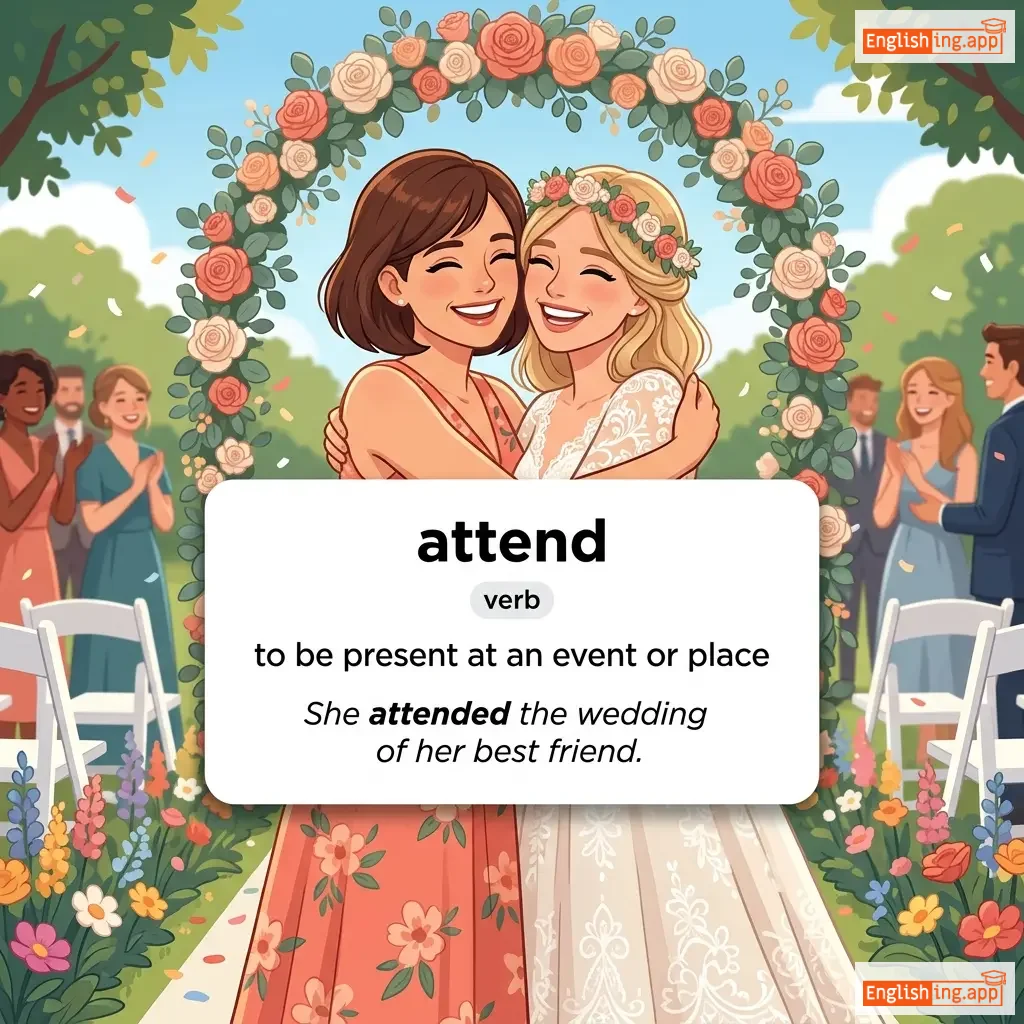
to be present at an event or place
••••••
|
She attended the wedding of her best friend.
她参加了她最好的朋友的婚礼。
••••••
|
她参加了她最好的朋友的婚礼。
Ta canjia le ta zuihao de pengyou de hunli.
••••••
|
attend to
关注
••••••
|
to deal with or take care of something
••••••
|
关注
guanzhu
••••••
|
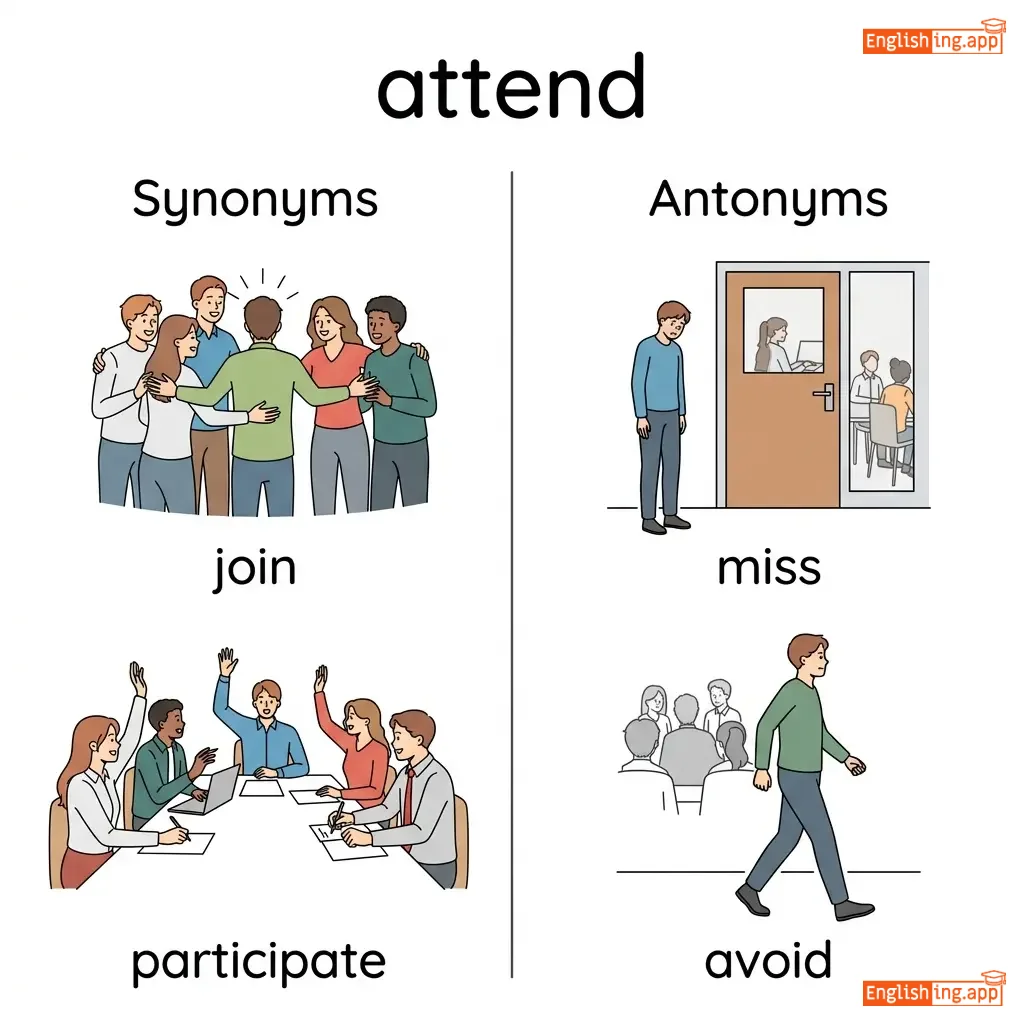
join, participate, visit, appear
••••••
|
miss, avoid, neglect
••••••
|
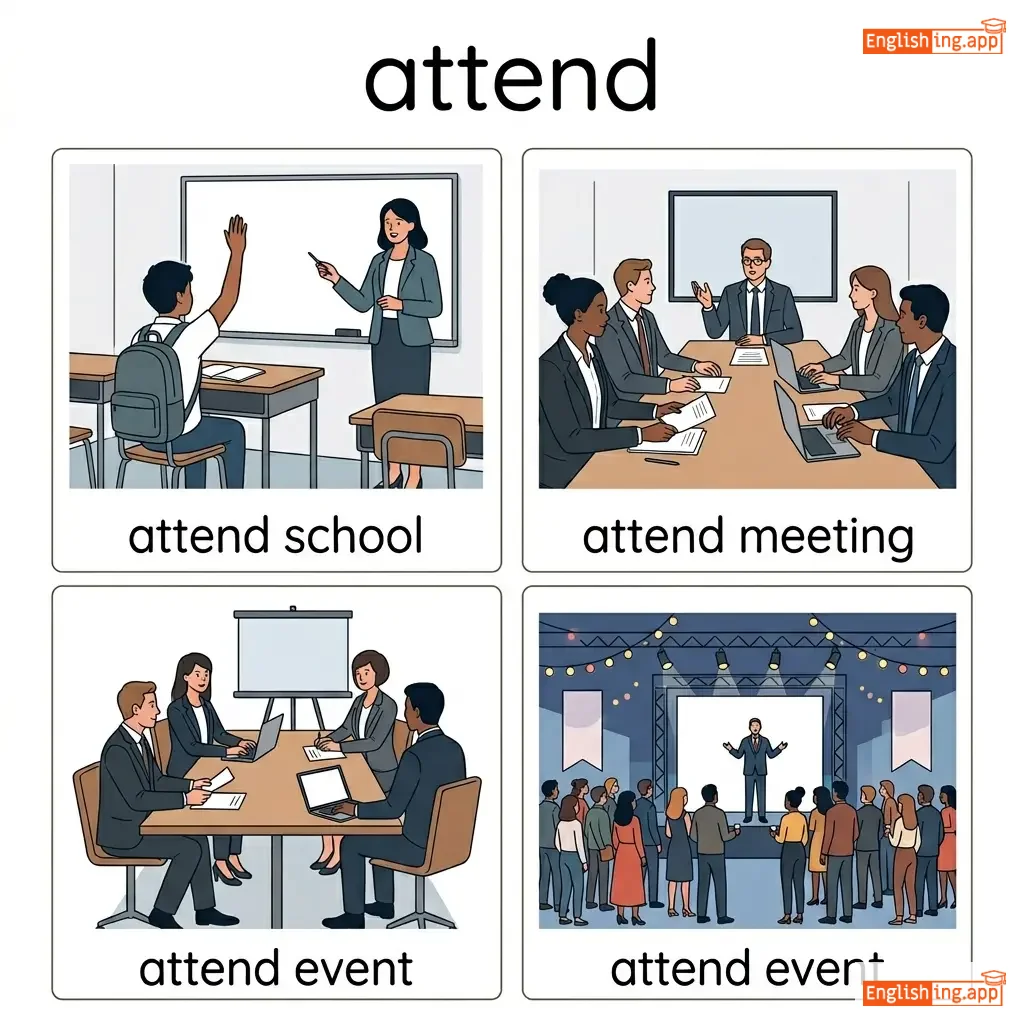
attend school, attend meeting, attend event, attend function
••••••
|
参加是出席活动的意思,就像是参与婚礼一样。
••••••
|
|
#0
👩🦳
|
/ænt/
noun
(ænt)
••••••
|
- •••••• |
阿姨
āyí
••••••
|
- •••••• | - •••••• | - •••••• | - •••••• |
the sister of your father or mother, or the wife of your uncle
••••••
|
My aunt always gives me gifts on my birthday. |
我的阿姨总是在我生日时给我礼物。
Wǒ de āyí zǒng shì zài wǒ shēngrì shí gěi wǒ lǐwù.
••••••
|
- •••••• | - •••••• | - •••••• |
relative, family member, guardian
••••••
|
uncle, stranger
••••••
|
dear aunt, loving aunt, aunt and uncle, aunt’s house
••••••
|
阿姨 — 想想总是送你生日礼物的阿姨。
••••••
|
|
#0
😖
|
/ˈɔːfəl/
adjective
(ɑfúl)
••••••
|
- •••••• |
糟糕
zāo gāo
••••••
|
- •••••• | - •••••• | - •••••• | - •••••• |
very bad or unpleasant
••••••
|
The weather was awful during our trip. |
我们旅行时天气很糟糕。
Wǒmen lǚxíng shí tiānqì hěn zāogāo.
••••••
|
awful lot |
a great deal or large amount of something
••••••
|
大量
dàliàng
••••••
|
terrible, dreadful, horrible, unpleasant, appalling
••••••
|
wonderful, pleasant, delightful
••••••
|
feel awful, look awful, awful weather, awful mistake
••••••
|
Awful 是一堆糟糕的事情
••••••
|
|
#0
😞
|
/ˈbædli/
adverb
(bǎidì)
••••••
|
- •••••• |
糟糕
zaogao
••••••
|
- •••••• | - •••••• | - •••••• | - •••••• |
in a way that is not good; poorly or severely
••••••
|
He performed badly in the exam.
他在考试中表现得很差。
••••••
|
他在考试中表现得很差。
Ta zai kao shi zhong biao xian de hen cha.
••••••
|
badly off
处于困境
••••••
|
to be in a poor or difficult situation
••••••
|
处于困境
chu yu kunjing
••••••
|
poorly, severely, inadequately, wrongly, defectively
••••••
|
well, successfully, adequately
••••••
|
badly hurt, badly damaged, badly need, badly affected
••••••
|
Badly 代表糟糕, 就像考试表现不好说 'badly done'。
••••••
|
|
#0
🩰
|
/bæˈleɪ/
noun
(芭蕾舞)
••••••
|
- •••••• |
芭蕾舞
bā léi wǔ
••••••
|
- •••••• | - •••••• | - •••••• | - •••••• |
a highly stylized and artistic form of dance
••••••
|
She has trained for years in classical ballet.
她已经训练多年了,专攻古典芭蕾舞。
••••••
|
她已经训练多年了,专攻古典芭蕾舞。
Tā yǐjīng xùnliàn duōnián le, zhuān gōng gǔdiǎn bālěiwǔ.
••••••
|
- •••••• | - •••••• | - •••••• |
dance, performance, choreography, art form
••••••
|
stillness, inactivity
••••••
|
classical ballet, ballet dancer, ballet performance
••••••
|
芭蕾舞需要精准的平衡
••••••
|
|
#0
🔑
|
/ˈbeɪsɪk/
adjective
(贝西克)
••••••
|
- •••••• |
基本的
jiben de
••••••
|
- •••••• | - •••••• | - •••••• | - •••••• |
forming the most important or simplest part of something
••••••
|
She taught me the basic rules of chess. |
她教会了我国际象棋的基本规则。
Ta jiaohui le wo guojixiangqi de jiben guize.
••••••
|
back to basics |
returning to simple, fundamental principles
••••••
|
回归基本
huigui jiben
••••••
|
fundamental, essential, primary, simple, elementary
••••••
|
advanced, complex, secondary
••••••
|
basic knowledge, basic needs, basic rules, basic skills
••••••
|
Basic表示基本的; 记住'basic needs = 基本需求'。
••••••
|
|
#0
🗓️
|
/mʌnθ/
noun
(月)
••••••
|
- •••••• |
月
yue
••••••
|
- •••••• | - •••••• | - •••••• | - •••••• |
a period of about four weeks or one-twelfth of a year
••••••
|
She visits her grandparents once a month. |
她每个月都会去看祖父母一次。
Ta mei ge yue dou hui qu kan zufu mu yici.
••••••
|
flavor of the month |
something that is temporarily popular
••••••
|
本月风味
ben yue feng wei
••••••
|
thirty days, period, lunar month
••••••
|
year, day
••••••
|
next month, this month, per month, monthly payment
••••••
|
月意味着月 - 每个月,新的月
••••••
|
|
#0
🚫
|
/ˈnɛvər/
adverb
(nèiwèi)
••••••
|
- •••••• |
从不
congbu
••••••
|
- •••••• | - •••••• | - •••••• | - •••••• |
at no time in the past or future; not ever
••••••
|
I have never seen such a beautiful sunset. |
我从未见过如此美丽的日落。
Wo congbu jian guo ruci mei li de ri luo.
••••••
|
- •••••• | - •••••• | - •••••• |
not at all, under no circumstances, in no way, by no means
••••••
|
always, ever
••••••
|
never seen, never been, never heard, never thought
••••••
|
NEVER forget to say NO (congbu) to things that waste time
••••••
|
|
#0
🔁
|
/ˈɔːfən/
adverb
(奥夫滕)
••••••
|
- •••••• |
经常
jīngcháng
••••••
|
- •••••• | - •••••• | - •••••• | - •••••• |
frequently, many times
••••••
|
I often visit my grandparents on weekends.
我经常在周末拜访我的祖父母。
••••••
|
我经常在周末拜访我的祖父母。
Wǒ jīngcháng zài zhōumò bàifǎng wǒ de zǔfùmǔ.
••••••
|
- •••••• | - •••••• | - •••••• |
frequently, regularly, repeatedly, commonly
••••••
|
rarely, seldom, never
••••••
|
often visit, often see, often talk, often hear
••••••
|
在办公室里经常 (often) 开会。
••••••
|
|
#0
🎹
|
/piˈænoʊ/
noun
(皮亚诺)
••••••
|
- •••••• |
钢琴
piyanuo
••••••
|
- •••••• | - •••••• | - •••••• | - •••••• |
a large keyboard musical instrument with black and white keys that produces sound by striking strings with hammers
••••••
|
The little girl practiced piano for one hour every day.
这个小女孩每天练钢琴一个小时。
••••••
|
这个小女孩每天练钢琴一个小时。
Zhege xiao nuhai meitian lian gangqin yi ge xiaoshi.
••••••
|
- •••••• | - •••••• | - •••••• |
pianoforte
••••••
|
- •••••• |
play piano, piano lesson, grand piano, upright piano
••••••
|
Piano = 皮亚诺; 想象 一只 panda 踩在 黑白 键 上 演出, 皮亚诺 就是 piano 的 Chinese transliteration, 将钢琴的名称牢牢记在心
••••••
|
Vocabulary Quiz
Test your vocabulary by matching words with their translations or meanings.
Login to take the quiz
Comments (0)
Share your thoughts and join the discussion.
Join the discussion by logging in
Login to CommentNo comments yet
Be the first to share your thoughts!