

学者的旅程
The Scholar's Journey
拉菲是一位勤奋的学生,他喜欢向他的 professor learn。每天早晨,他带着 notebook 和 pen 去 classroom,准备好做 notes。
他最喜欢的地方是大学的 library。那里有一排排 books、安静的 desks 和舒适的 chairs,他可以在那里花上几个小时 reading。坐在 library 里,拉菲会 write 下自己的想法,发展新的 ideas。
有一天,professor 说:“拉菲,learning 不只是 reading books。它是 thinking、提问和理解。”这些话对拉菲的 mind 产生了深远的影响。
他开始以不同的方式 thinking。每一本他 read 的 book、每一页 page 都 taught 给他新的东西。他的 notebook 里充满了 notes、问题和 ideas。
拉菲的 desk 上总是堆满了 books、散落的 papers 和几支 pens。他的 brain 不断处理信息,连接不同的概念。
Professor 注意到了他的专注,并说:“你不仅在 learning,你在 teaching 自己如何 think。这才是真正的 learning。”
一个学期后,拉菲 wrote 了自己的研究 paper。无数小时的 reading、大量的 notes 和深刻的 thinking 最终汇聚成一篇精彩的 paper,得到了 professor 的高度赞扬。
在 classroom 的讨论中,拉菲积极参与,分享他的 ideas,挑战现有理论。他的 mind 敏锐,他的 brain 总是充满疑问。
他明白了,books 不只是充满 paper 的 pages。每一本 book 都是知识的宝藏,是扩展 mind、teach 自己如何 think 的工具。
他探索了 library 的每一个角落,read 各种主题,在 notebook 中 wrote 下自己的思考。每一个 note 都是深入理解的一步。
当学弟们问他:“你是怎么这么会 learn 的?”拉菲说:“Learning 是一种技能。你需要带着好奇心 read,以清晰的思路 write,并以深度 think。”
他 taught 他们如何做有效的 notes,如何批判性地 read,如何清楚地 write。他的 pen 的移动、paper 的整理——一切都井井有条。
有一天,professor 说:“拉菲,你已经不仅仅是个学生了。你正在成为一名学者。你的 mind 现在 knows 如何独立 think。”
毕业前,拉菲坐在他最喜欢的 library desk 前反思。他在这张 chair 上坐了多少小时,在这张 desk 上 read 了多少 books,在这张 paper 上 wrote 了多少 ideas。
拉菲说:“Education 不只是拿学位。它是训练你的 brain 去 think,让你的 mind 对新的 ideas 保持开放。Classrooms teach 基础,books 提供知识,但真正的 learning 发生在你自己 read、write、think 的时候。Professor 的角色是引导,而旅程属于你自己。每一 page 你 read,每一个 note 你 write,每一个你发展的 idea,都在构建你的知识基础。Library 是我的圣地,desk 是我的工作区,pen 和 paper 是我的工具。但最重要的工具是好奇心和专注。当你真心想 know,真心想 learn,你的 brain 会找到方法,你的 mind 会吸收知识。Teaching 别人 taught 我,当你 teach,你就 learn 两次。所以我鼓励大家——read 广泛,write 规律,think 深刻。使用你的 notebook 不仅用于 notes,还用于记录 ideas。把每一本 book 当作和一位睿智的 professor 的对话。记住,learning 永不停止。即使你离开了 classroom,你的 mind 也应保持学生般的好奇、开放和渴望 know 更多。”
拉菲的旅程激励了无数学生,他们现在在 libraries 里 read books,在 notebooks 里 write notes,并训练他们的 minds 去批判性 think。他的遗产证明了,专注的 learning、热情的 thinking 和持续的 writing 能将普通学生转变为卓越的学者。
Swipe left or right, or use the buttons. Tap image to zoom.
例句翻译
单词
The Scholar's JourneyThe Scholar's Journey - 遮罩切换
|
表情符号
|
单词 | Images | 翻译 | 过去时 | 过去分词 | 第三人称单数 | 动名词 | 含义 | 例句 | 例句翻译 | 示例表达 | 示例表达含义 | 示例表达翻译 | 同义词 | 反义词 | 搭配词 | 助记符 |
|---|---|---|---|---|---|---|---|---|---|---|---|---|---|---|---|---|---|
|
#0
📖
|
/bʊk/
noun, verb
••••••
|
- •••••• | - •••••• |
booked
••••••
|
booked
••••••
|
books
••••••
|
booking
••••••
|
A set of written, printed, or blank pages fastened together; to arrange for someone to have a seat, room, or ticket in advance.
••••••
|
I booked a table at the restaurant for dinner. |
- •••••• |
by the book |
to follow rules strictly
••••••
|
- •••••• |
volume, text, novel, reserve, schedule
••••••
|
cancel, disorder
••••••
|
open book, book a ticket, book club, book online, book in advance
••••••
|
No •••••• |
|
#0
🧠
|
/breɪn/
noun
(bréɪn)
••••••
|
|
大脑
dà nǎo
••••••
|
- •••••• | - •••••• | - •••••• | - •••••• |
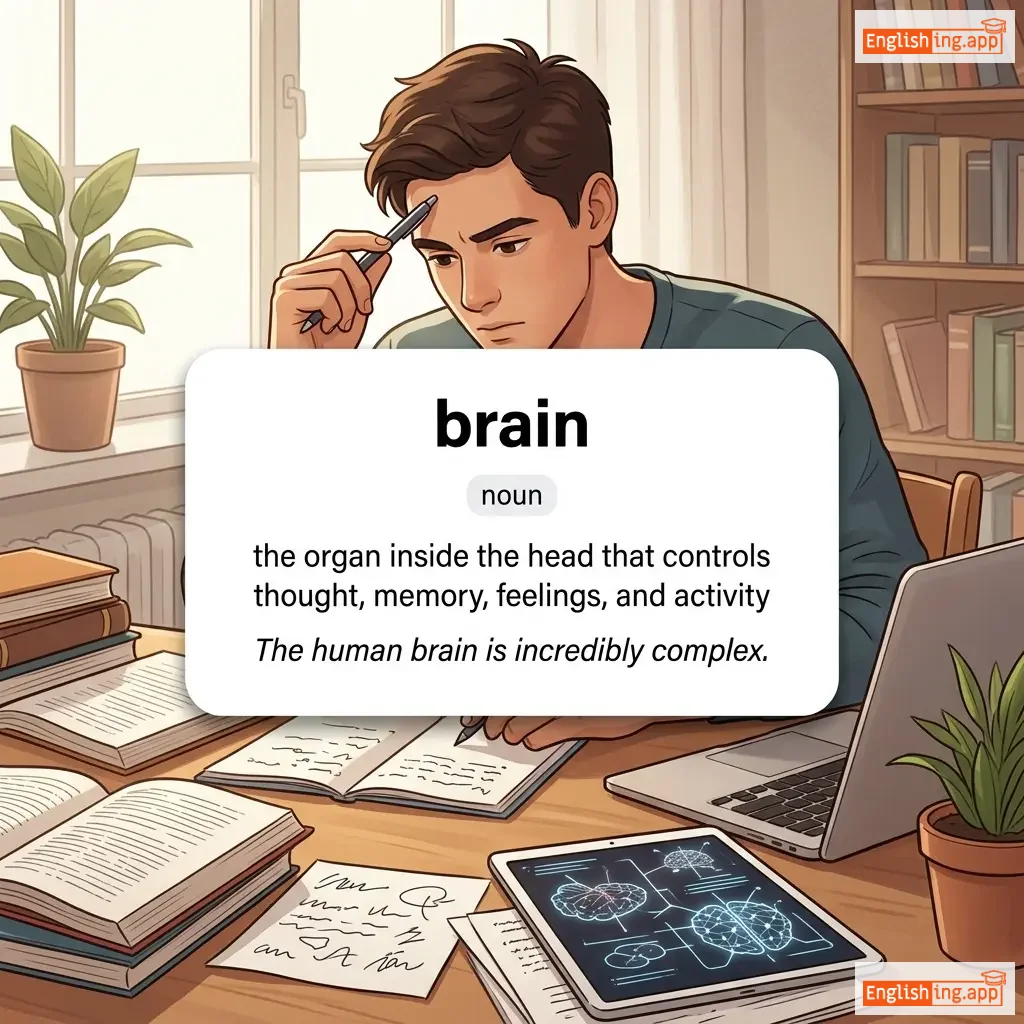
the organ inside the head that controls thought, memory, feelings, and activity
••••••
|
The human brain is incredibly complex. |
人类的大脑复杂得令人难以置信。
rén lèi de dà nǎo fù zá dé lìng rén nán yǐ zhì xìn
••••••
|
rack your brain |
to think very hard about something
••••••
|
绞尽脑汁
jiǎo jìn nǎo zhī
••••••
|
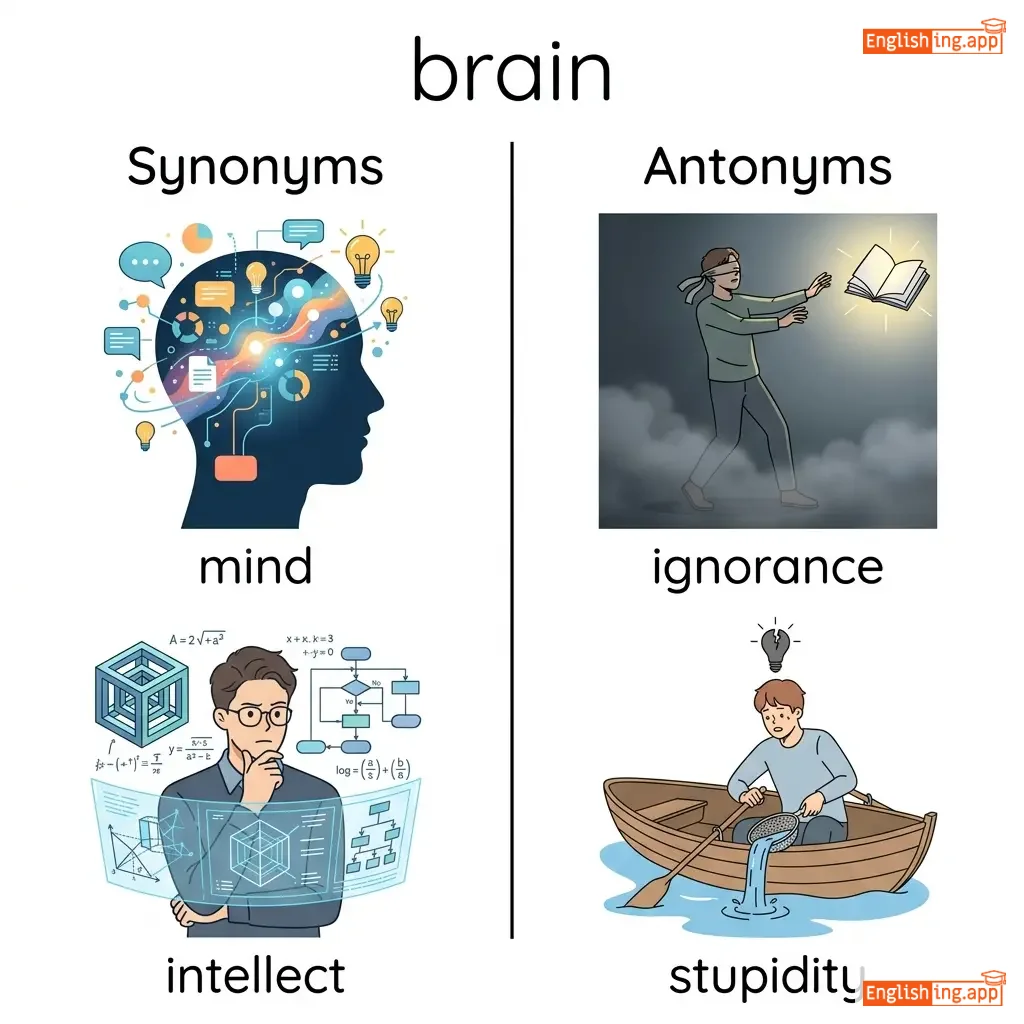
mind, intellect, intelligence, head
••••••
|
ignorance, stupidity
••••••
|
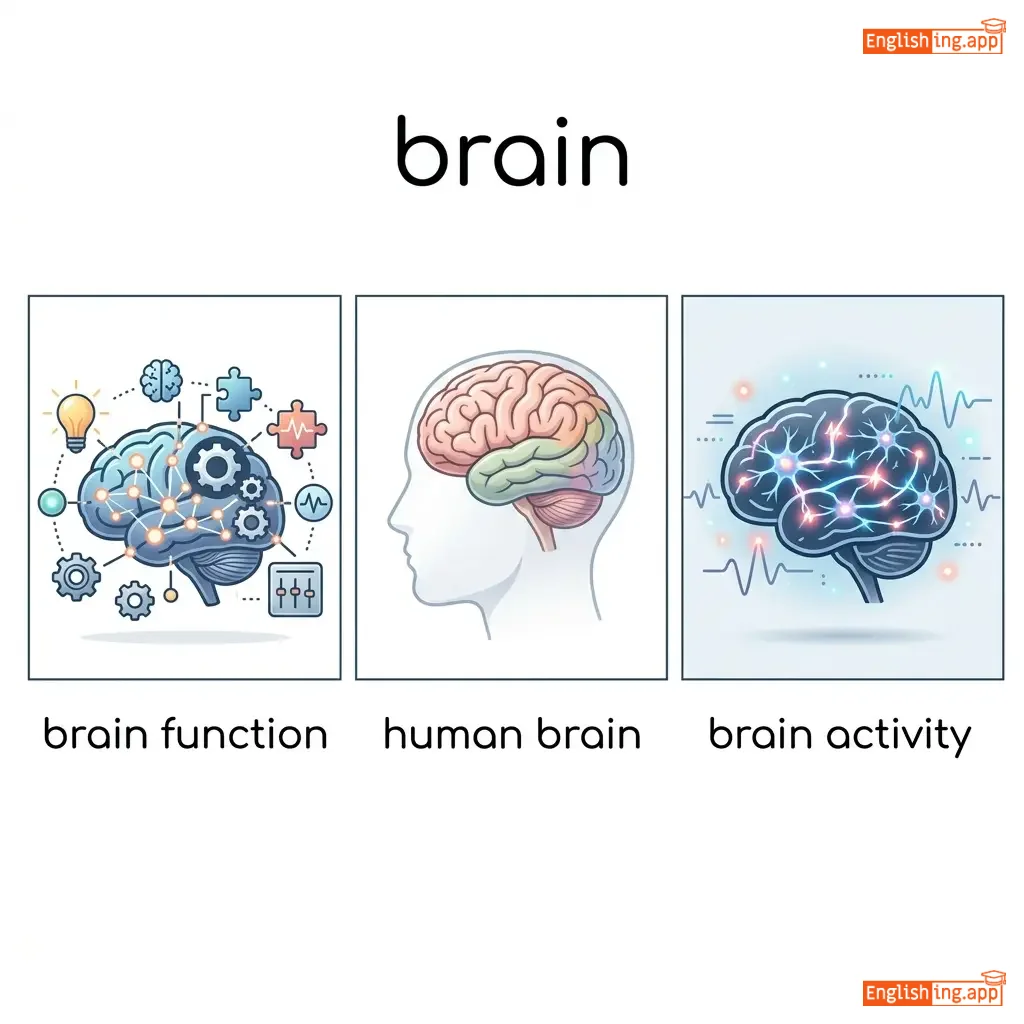
brain function, human brain, brain activity, brain power
••••••
|
大脑,像‘大浪’般的思考!
••••••
|
|
#0
🪑
|
/tʃɛr/
noun
••••••
|
- •••••• | - •••••• | - •••••• | - •••••• | - •••••• | - •••••• |
a piece of furniture for one person to sit on, typically having a back and four legs
••••••
|
She pulled up a chair and sat beside me. |
- •••••• |
take the chair |
to act as the leader or presiding officer of a meeting
••••••
|
- •••••• |
seat, armchair, stool, bench
••••••
|
floor, ground
••••••
|
wooden chair, office chair, rocking chair, chair seat
••••••
|
No •••••• |
|
#0
🏫
|
/ˈklæsˌruːm/
noun
(kèshì)
••••••
|
- •••••• |
教室
jiaoshi
••••••
|
- •••••• | - •••••• | - •••••• | - •••••• |
A room in which classes are held in a school or college.
••••••
|
The teacher entered the classroom and greeted the students. |
老师走进了教室并向学生们问好。
Lǎoshī zǒu jìnle jiàoshì bìng xiàng xuéshēngmen wèn hǎo.
••••••
|
empty classroom |
A classroom with no students or teacher inside.
••••••
|
空教室
kōng jiàoshì
••••••
|
lecture room, study room, hall, learning space
••••••
|
playground, office
••••••
|
classroom activities, classroom management, classroom environment, classroom learning
••••••
|
教室意味着 classroom 🏫,学习的地方。
••••••
|
|
#0
🖥️
|
/dɛsk/
noun
(desk)
••••••
|
- •••••• |
书桌
shuzhuo
••••••
|
- •••••• | - •••••• | - •••••• | - •••••• |
a piece of furniture with a flat surface used for writing or working
••••••
|
The books are on the desk. |
书籍在书桌上。
Shuji zai shuzhuo shang.
••••••
|
front desk |
the main reception area in an office or hotel
••••••
|
接待台
jiedaitai
••••••
|
table, workstation, counter, bureau
••••••
|
floor, ground
••••••
|
office desk, study desk, front desk, wooden desk
••••••
|
书桌上完成所有工作
••••••
|
|
#0
💡
|
/aɪˈdiːə/
noun
(ai di a)
••••••
|
- •••••• |
主意
zhuyi
••••••
|
- •••••• | - •••••• | - •••••• | - •••••• |
A thought, plan, or suggestion about what to do.
••••••
|
She had a brilliant idea for a new business. |
她有一个新商业的精彩主意。
Ta you yige xin shangye de jingcai zhuyi.
••••••
|
bright idea |
a clever or creative thought or solution
••••••
|
聪明的主意
congming de zhuyi
••••••
|
concept, notion, plan, thought, suggestion
••••••
|
ignorance, misunderstanding
••••••
|
good idea, brilliant idea, bad idea, business idea, creative idea
••••••
|
Idea 就像脑袋里亮起来的灯泡 💡
••••••
|
|
#0
🧠
|
/noʊ/
verb
(nóu)
••••••
|
|
知道
zhīdào
••••••
|
knew
nù
••••••
|
known
nóu
••••••
|
knows
nóu zī
••••••
|
knowing
nóu yīng
••••••
|
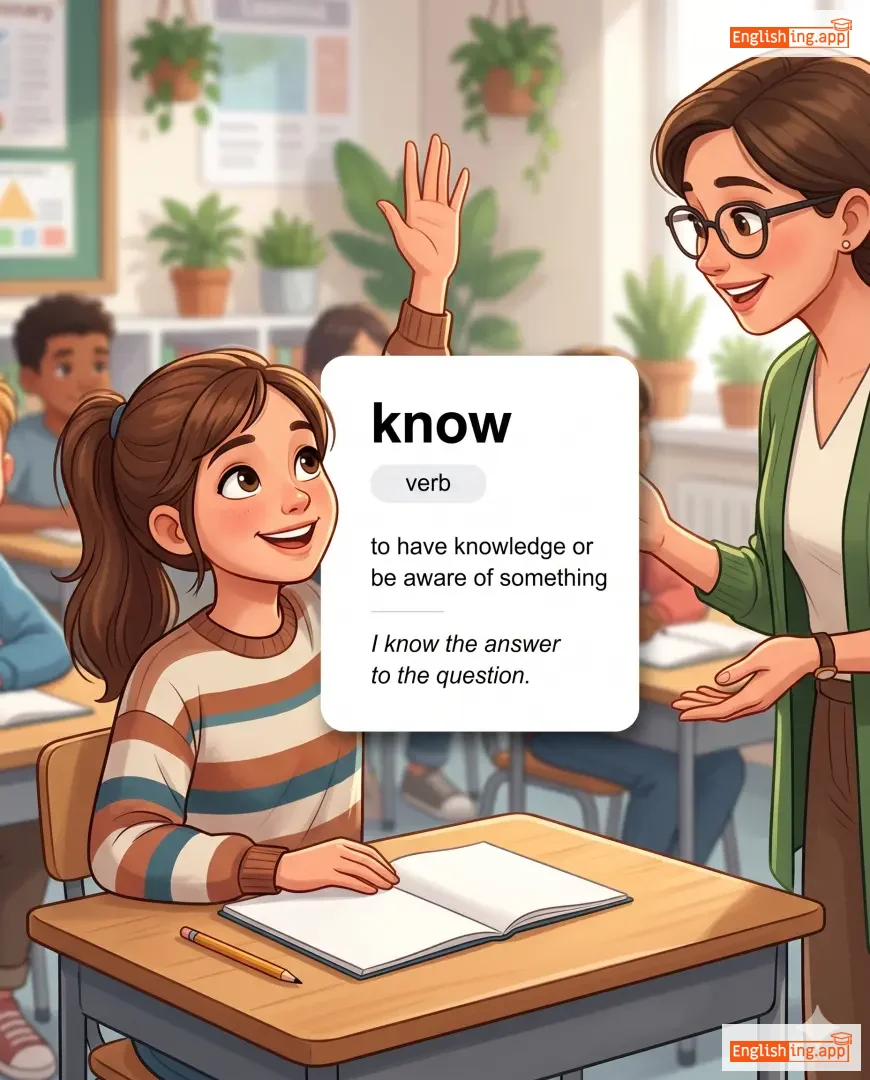
to have knowledge or be aware of something
••••••
|
I know the answer to the question.
我知道问题的答案。
••••••
|
我知道问题的答案。
Wǒ zhīdào wèntí de dá'àn.
••••••
|
know the ropes
知道绳索
••••••
|
to be familiar with how something is done
••••••
|
知道如何做某事
zhīdào rúhé zuò mǒu shì
••••••
|
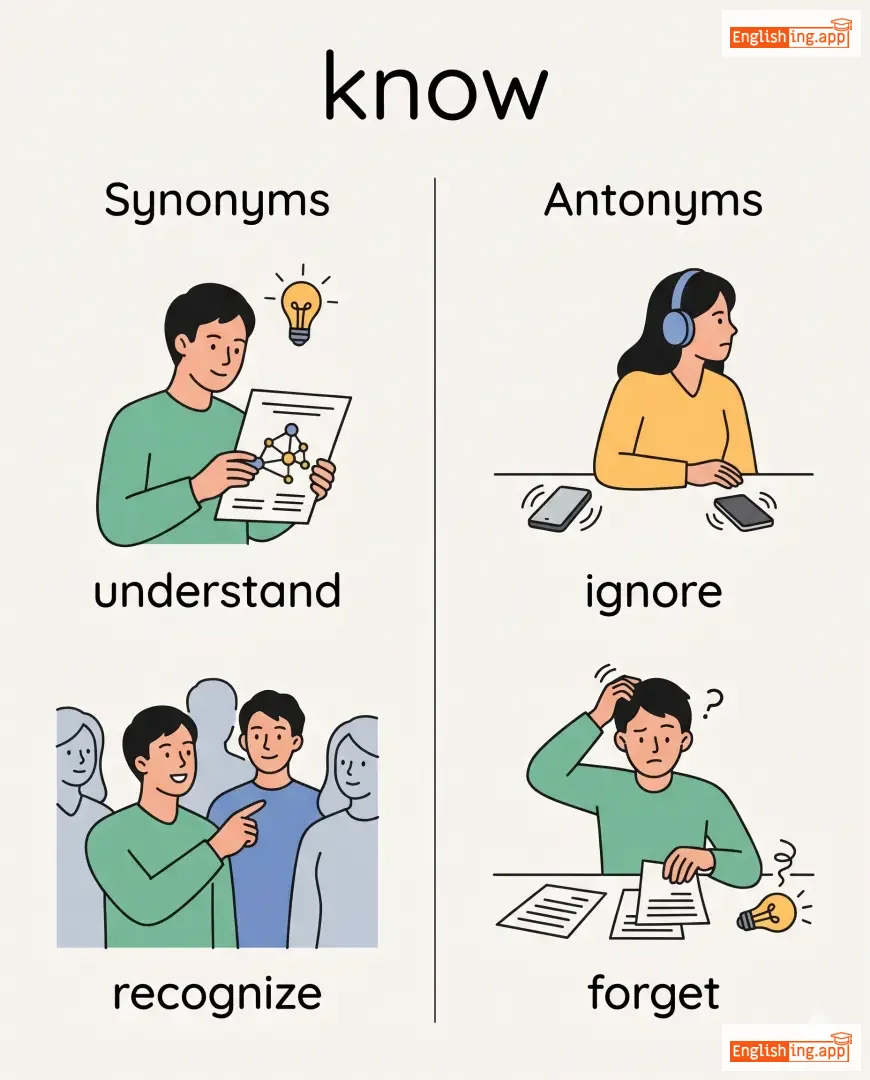
understand, recognize, realize, comprehend, identify
••••••
|
ignore, forget, misunderstand
••••••
|
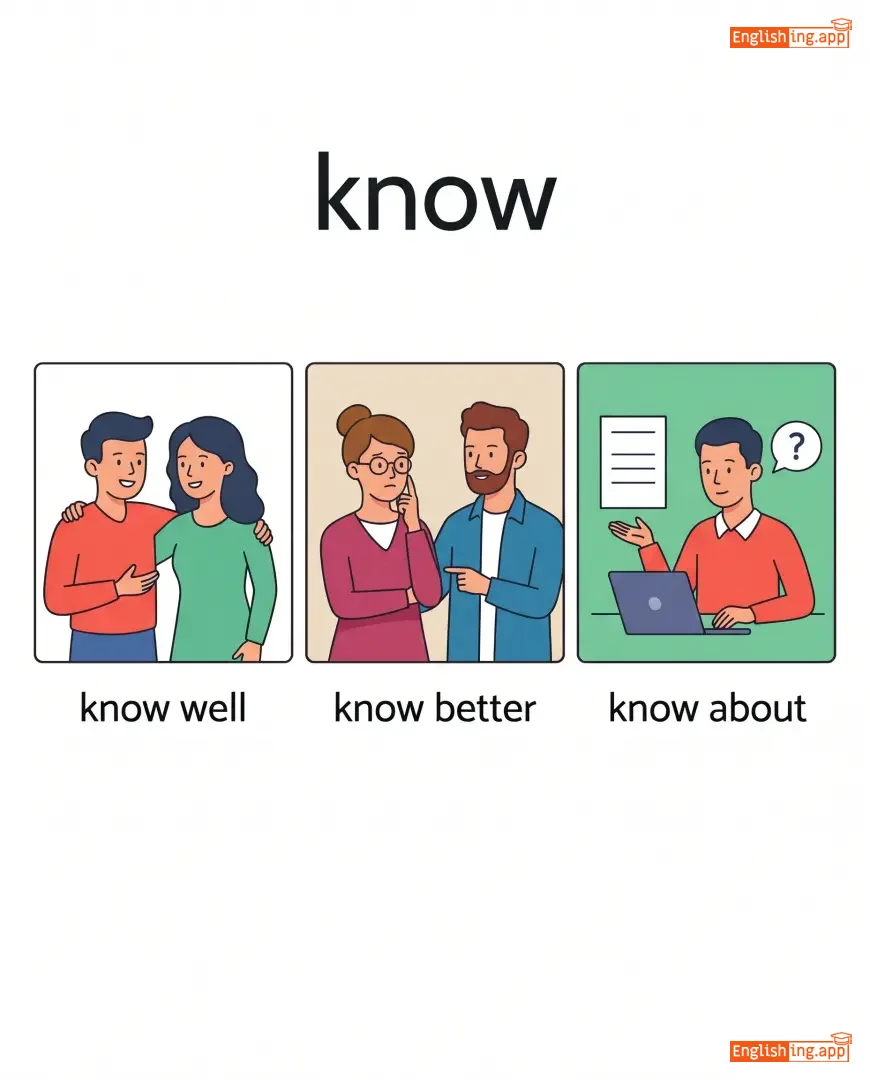
know well, know better, know about, know exactly
••••••
|
Know 就是知道,知道就能做到。
••••••
|
|
#0
📚
|
/ˈlɜrnɪŋ/
noun
(lèɚnɪŋ)
••••••
|
- •••••• |
学习
xuéxí
••••••
|
- •••••• | - •••••• | - •••••• | - •••••• |
The process of gaining knowledge or skills through study or experience.
••••••
|
Learning a new language can be exciting.
学习一门新语言可能是令人兴奋的。
••••••
|
学习一门新语言可能是令人兴奋的。
Xuéxí yīmén xīn yǔyán kěnéng shì lìng rén xīngfèn de.
••••••
|
lifelong learning
终身学习
••••••
|
continuous pursuit of knowledge throughout life
••••••
|
终身学习
zhōngshēn xuéxí
••••••
|
education, knowledge, training, study
••••••
|
ignorance, unawareness
••••••
|
learning process, learning skills, online learning, active learning
••••••
|
Learning 学习了新知识,就是在给未来积累能量。
••••••
|
|
#0
📚
|
/ˈlaɪ.brɛr.i/
noun
(lái.bù.liō tè.kè)
••••••
|
- •••••• |
图书馆
tú shū guǎn
••••••
|
- •••••• | - •••••• | - •••••• | - •••••• |
A building or room containing collections of books, periodicals, and sometimes other materials for people to read or borrow.
••••••
|
She spent the afternoon studying in the library. |
她在图书馆度过了下午。
Tā zài tú shū guǎn dùguòle xiàwǔ.
••••••
|
library of knowledge |
A large collection of information or wisdom.
••••••
|
知识宝库
zhīshì bǎokù
••••••
|
book collection, archive, repository, reading room, information center
••••••
|
bookstore, marketplace
••••••
|
public library, digital library, library card, library staff
••••••
|
图书馆(Tú shū guǎn)- 就是一个包含大量书籍的地方。
••••••
|
|
#0
🧠
|
/maɪnd/
noun/verb
(maind)
••••••
|
- •••••• |
心智 / 注意
xīn zhì / zhù yì
••••••
|
minded
maindid
••••••
|
minded
maindid
••••••
|
minds
mainds
••••••
|
minding
mainding
••••••
|
the part of a person that enables them to think, feel, and reason; to pay attention or take care
••••••
|
Please mind the gap between the train and the platform.
请注意火车与站台之间的间隙。
••••••
|
请注意火车与站台之间的间隙。
Qǐng zhùyì huǒchē yǔ zhàntái zhījiān de jiànxì.
••••••
|
make up one's mind
做决定
••••••
|
to decide something
••••••
|
做决定
zuò juédìng
••••••
|
brain, intellect, thought, heed, notice
••••••
|
ignore, neglect
••••••
|
mind the gap, change your mind, peace of mind, keep in mind
••••••
|
Mind 在中文是心智,没有心智就无法照顾周围。
••••••
|
|
#0
📝
|
/noʊt/
noun, verb
(诺特)
••••••
|
|
便条
biàn tiáo
••••••
|
noted
诺特德
••••••
|
noted
诺特德
••••••
|
notes
诺特斯
••••••
|
noting
诺定
••••••
|
a brief record of facts, topics, or thoughts written down; to observe or remark upon something
••••••
|
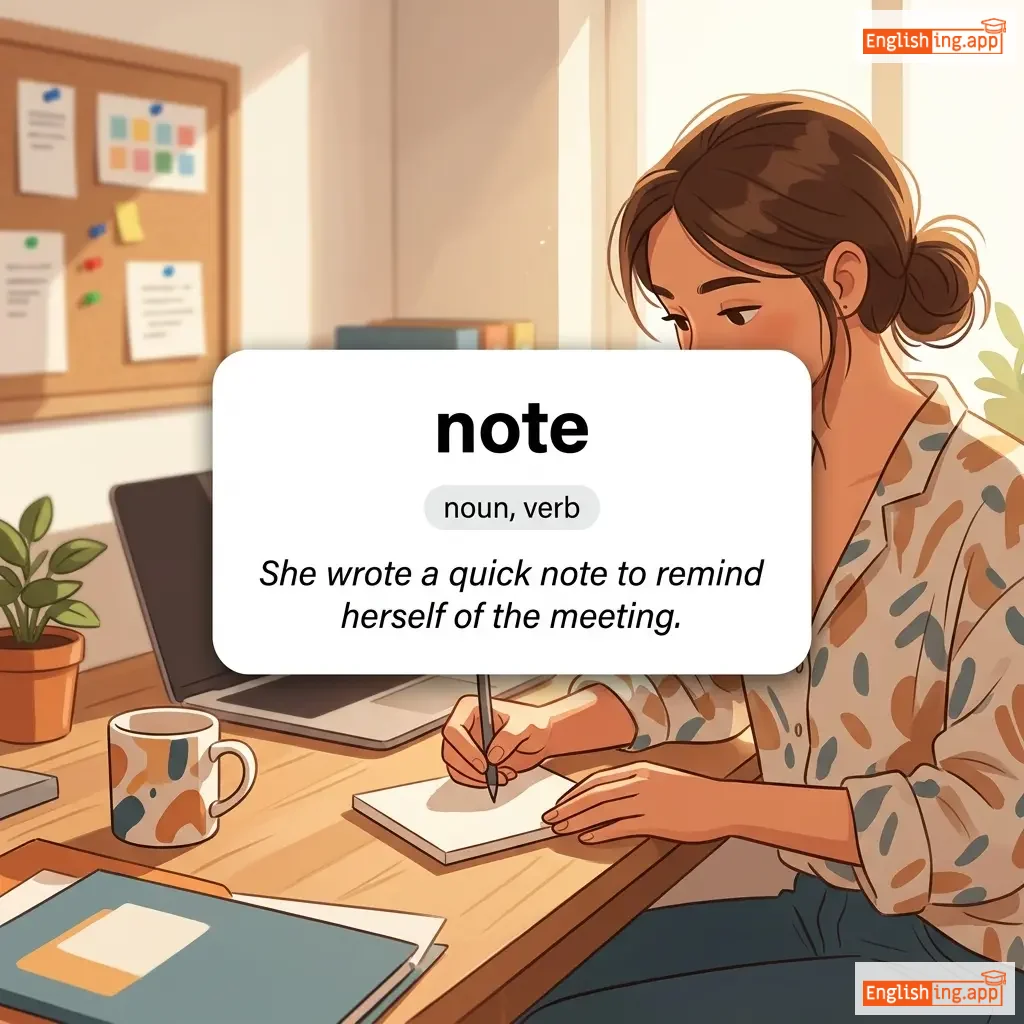
She wrote a quick note to remind herself of the meeting.
她写了一张快速的便条,提醒自己开会的事。
••••••
|
她写了一张快速的便条,提醒自己开会的事。
Tā xiěle yī zhāng kuài sù de biàn tiáo, tí xǐng zì jǐ kāi huì de shì.
••••••
|
take note
注意
••••••
|
to pay attention or give special consideration
••••••
|
注意
zhù yì
••••••
|
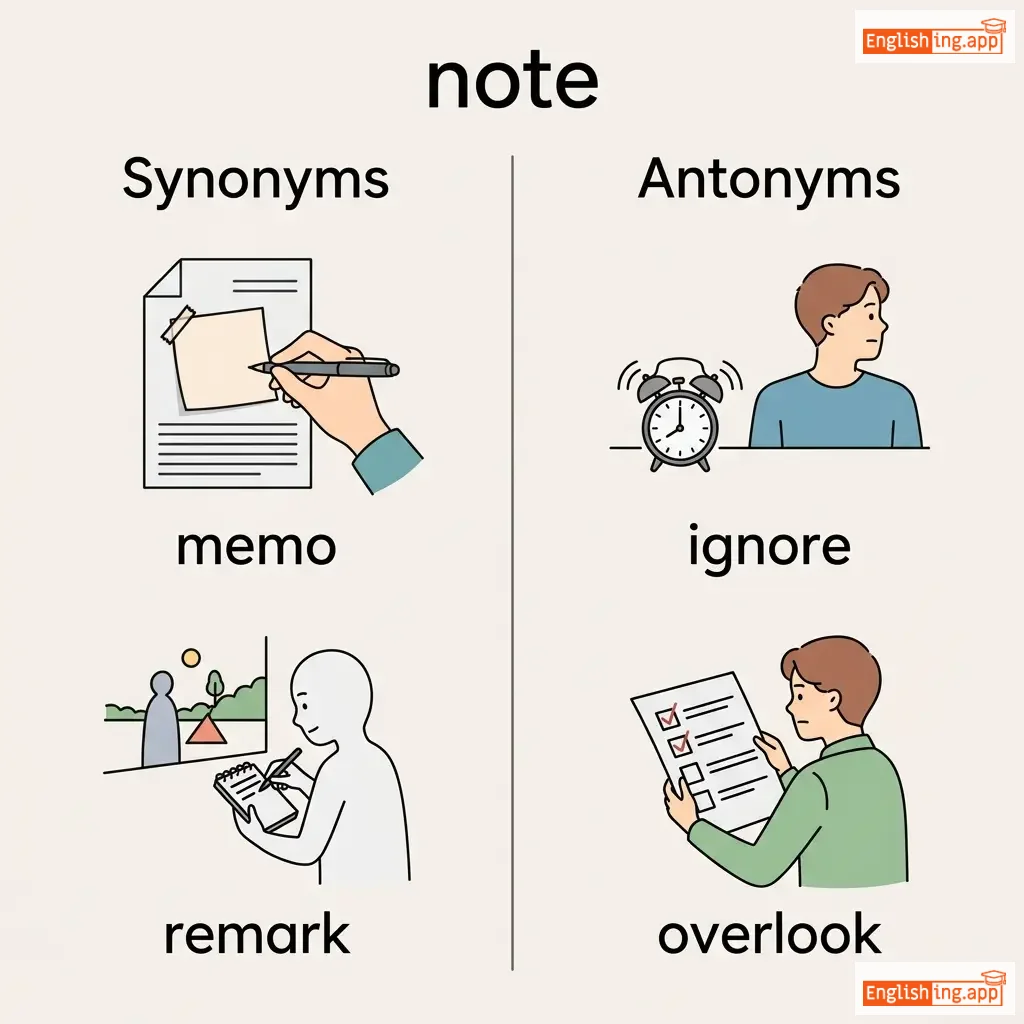
memo, remark, message, record, observation
••••••
|
ignore, overlook
••••••
|
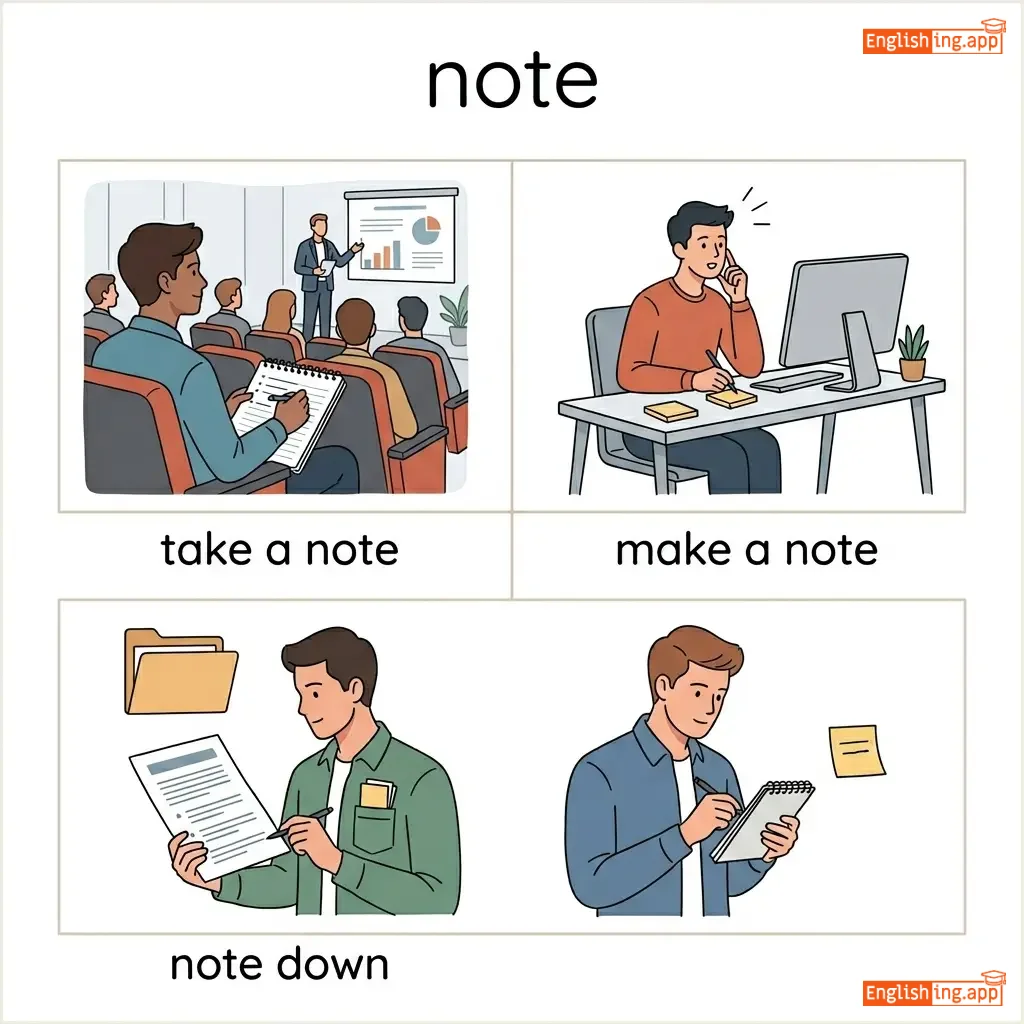
take a note, make a note, note down, note carefully
••••••
|
写下便条,提醒自己记住重要的事。
••••••
|
|
#0
📒
|
/ˈnoʊtbʊk/
noun
••••••
|
- •••••• | - •••••• | - •••••• | - •••••• | - •••••• | - •••••• |
a small book with blank or ruled pages for writing notes; also a portable computer
••••••
|
She opened her notebook to jot down some ideas. |
- •••••• |
open your notebook |
to prepare to take notes or start writing
••••••
|
- •••••• |
journal, pad, diary, laptop, logbook
••••••
|
none, emptiness, blankness
••••••
|
open notebook, write in notebook, spiral notebook, leather notebook, notebook computer
••••••
|
No •••••• |
|
#0
📄
|
/peɪdʒ/
noun
(peiji)
••••••
|
- •••••• |
页面
ye mian
••••••
|
- •••••• | - •••••• | - •••••• | - •••••• |
one side of a sheet of paper, or a single sheet of paper in a book or document
••••••
|
Turn to the next page for more information.
转到下一页以获取更多信息。
••••••
|
转到下一页以获取更多信息。
Zhuan dao xia yi ye yi huò qu geng duo xinxi.
••••••
|
- •••••• | - •••••• | - •••••• |
leaf, sheet, folio, document
••••••
|
blank, empty space
••••••
|
turn the page, page number, front page, last page
••••••
|
页面 = 一本书的页面
••••••
|
|
#0
📄
|
/ˈpeɪpər/
noun
(pèipǔ)
••••••
|
|
纸
zhi
••••••
|
- •••••• | - •••••• | - •••••• | - •••••• |
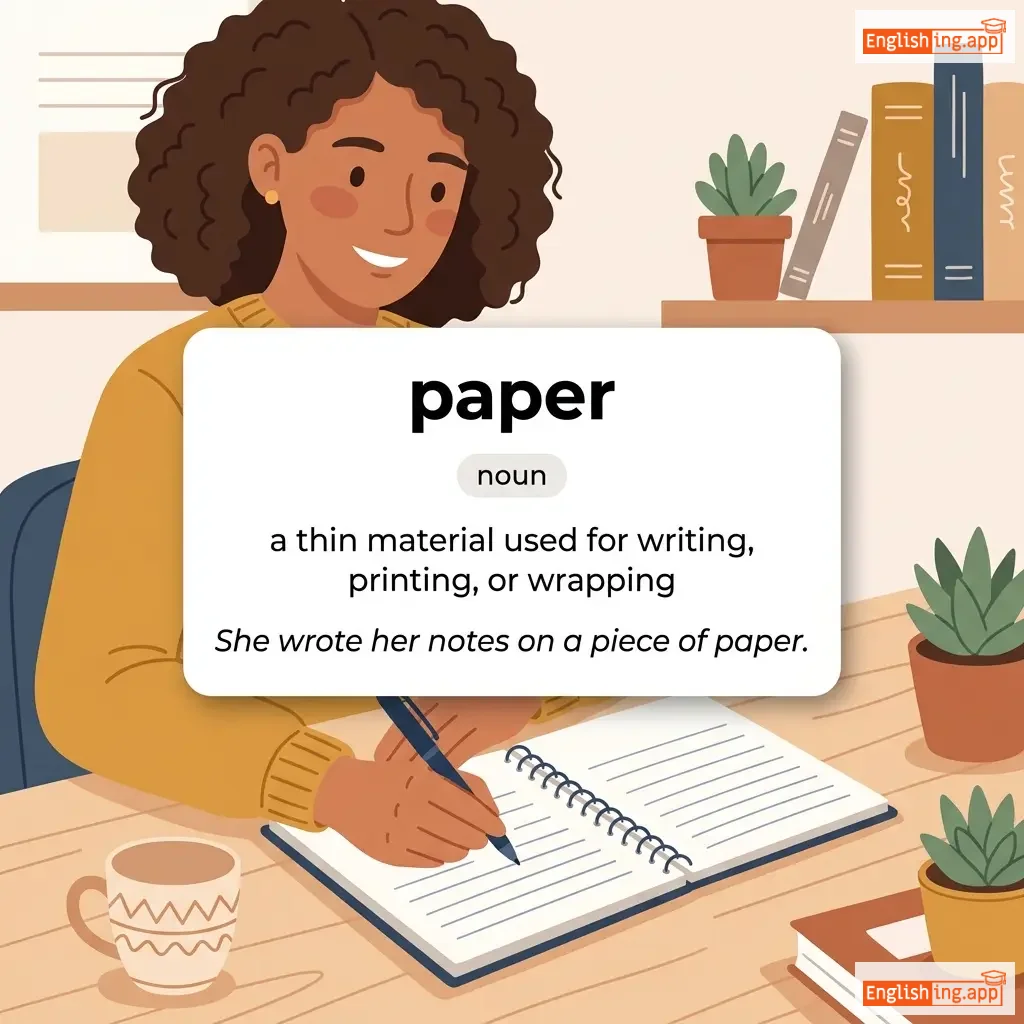
a thin material used for writing, printing, or wrapping
••••••
|
She wrote her notes on a piece of paper. |
她在一张纸上写下了她的笔记。
Tā zài yī zhāng zhǐ shàng xiěxiàle tā de bǐjì.
••••••
|
- •••••• | - •••••• | - •••••• |
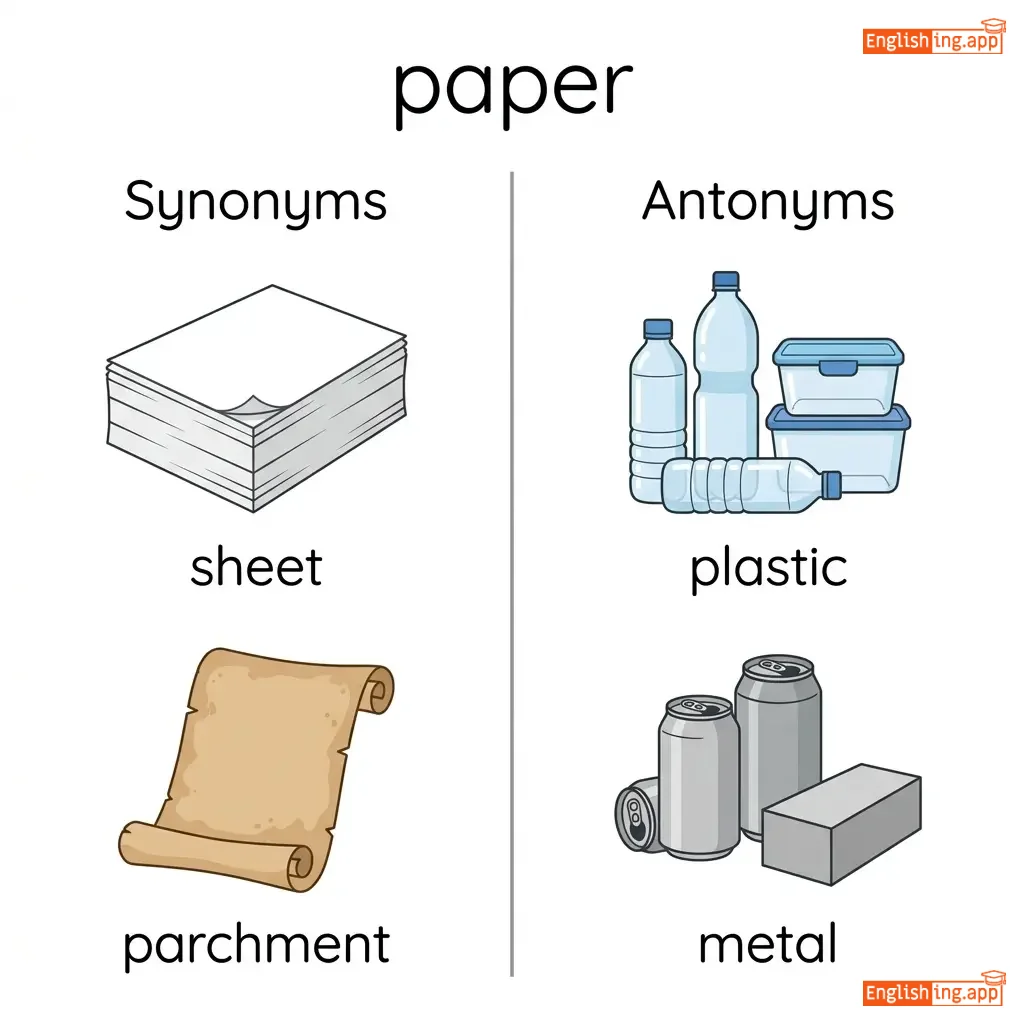
sheet, parchment, document, material
••••••
|
plastic, metal
••••••
|
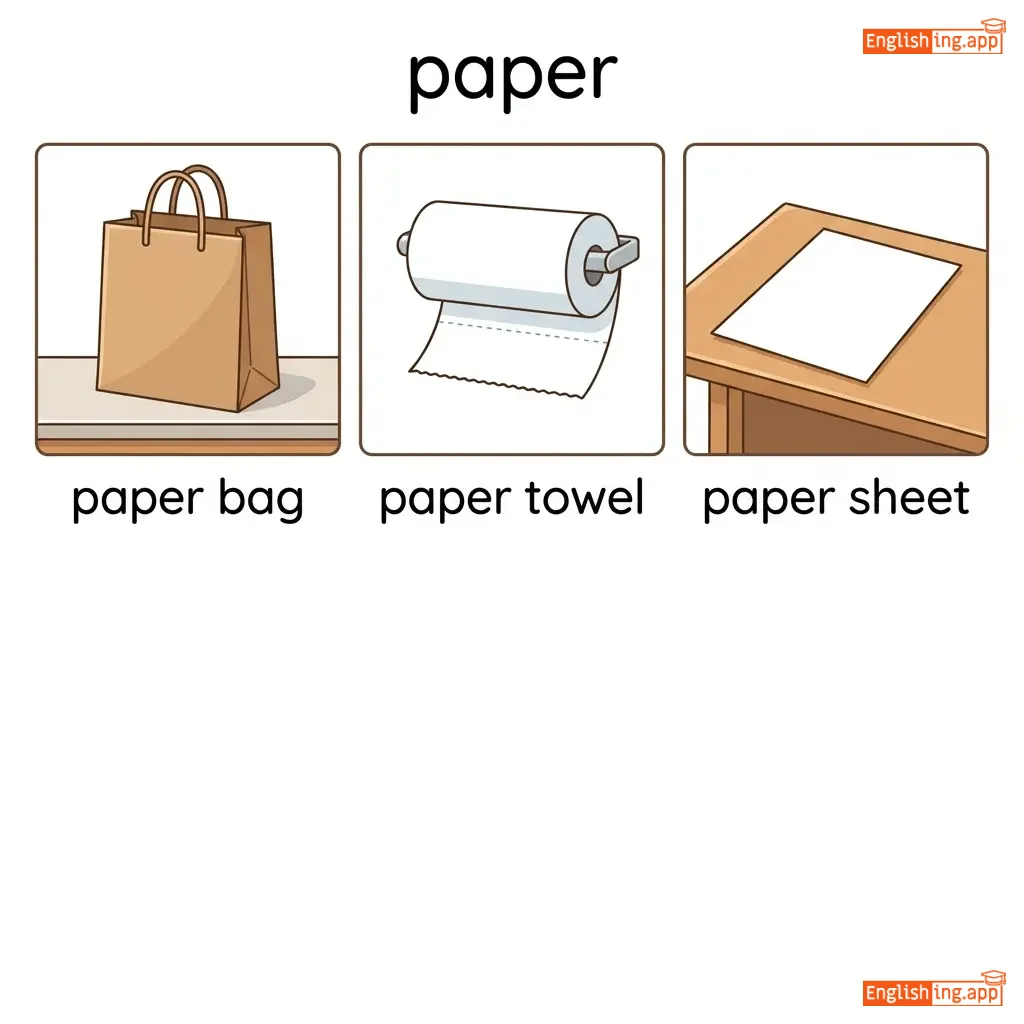
paper bag, paper towel, paper sheet, paper clip
••••••
|
纸上写字 - Remember paper is for writing!
••••••
|
|
#0
🖊️
|
/pɛn/
noun/verb
(海皮尼斯)
••••••
|
- •••••• |
幸福
xìngfú
••••••
|
penned
••••••
|
penned
••••••
|
pens
••••••
|
penning
••••••
|
A writing instrument using ink; also, to write something.
••••••
|
She used a pen to sign the document.
她在收到奖项时无法隐藏她的幸福。
••••••
|
她在收到奖项时无法隐藏她的幸福。
Tā zài shōu dào jiǎngxiàng shí wúfǎ yǐncáng tā de xìngfú.
••••••
|
the pen is mightier than the sword
追求幸福
••••••
|
Writing is more powerful than violence.
••••••
|
追求幸福
zhuīqiú xìngfú
••••••
|
writing tool, stylus, quill, marker
••••••
|
pencil, chalk
••••••
|
ink pen, fountain pen, ballpoint pen, pen down
••••••
|
幸福 (happiness) 带来微笑,永远不放弃追求幸福
••••••
|
|
#0
👨🏫
|
/prəˈfɛsər/
noun
(教授)
••••••
|
- •••••• |
教授
jiaoshou
••••••
|
- •••••• | - •••••• | - •••••• | - •••••• |
a senior teacher or academic at a college or university
••••••
|
The professor explained the theory clearly. |
教授清楚地解释了理论。
jiaoshou qingchu de jieshi le lilun.
••••••
|
professor emeritus |
a retired professor who retains an honorary title
••••••
|
名誉教授
mingyu jiaoshou
••••••
|
lecturer, academic, scholar, instructor
••••••
|
student, pupil
••••••
|
university professor, assistant professor, professor emeritus, professor of law
••••••
|
Professor = Jiaoshou — 一位经验丰富的教师或学者
••••••
|
|
#0
📖
|
/riːd/
verb
(lì)
••••••
|
- •••••• |
读
du
••••••
|
read
lì
••••••
|
read
lì
••••••
|
reads
lì
••••••
|
reading
lìdíng
••••••
|
to look at written words and understand their meaning
••••••
|
I read books before going to bed.
wǒ zhèngzài kàn shū zài shuìjiào zhīqián.
••••••
|
我在睡觉前读书。
Wǒ zài shuìjiào qián dúshū.
••••••
|
- •••••• | - •••••• | - •••••• |
study, peruse, scan, review
••••••
|
write, ignore, overlook
••••••
|
read books, read aloud, read carefully, love to read
••••••
|
读书: 看书,理解意思
••••••
|
|
#0
👩🏫
|
/tiːtʃ/
verb
(tīch)
••••••
|
|
教授
jiàoshòu
••••••
|
taught
tòu
••••••
|
taught
tòu
••••••
|
teaches
tìchés
••••••
|
teaching
tīchīng
••••••
|
to give knowledge or instruction to someone; to show how to do something
••••••
|
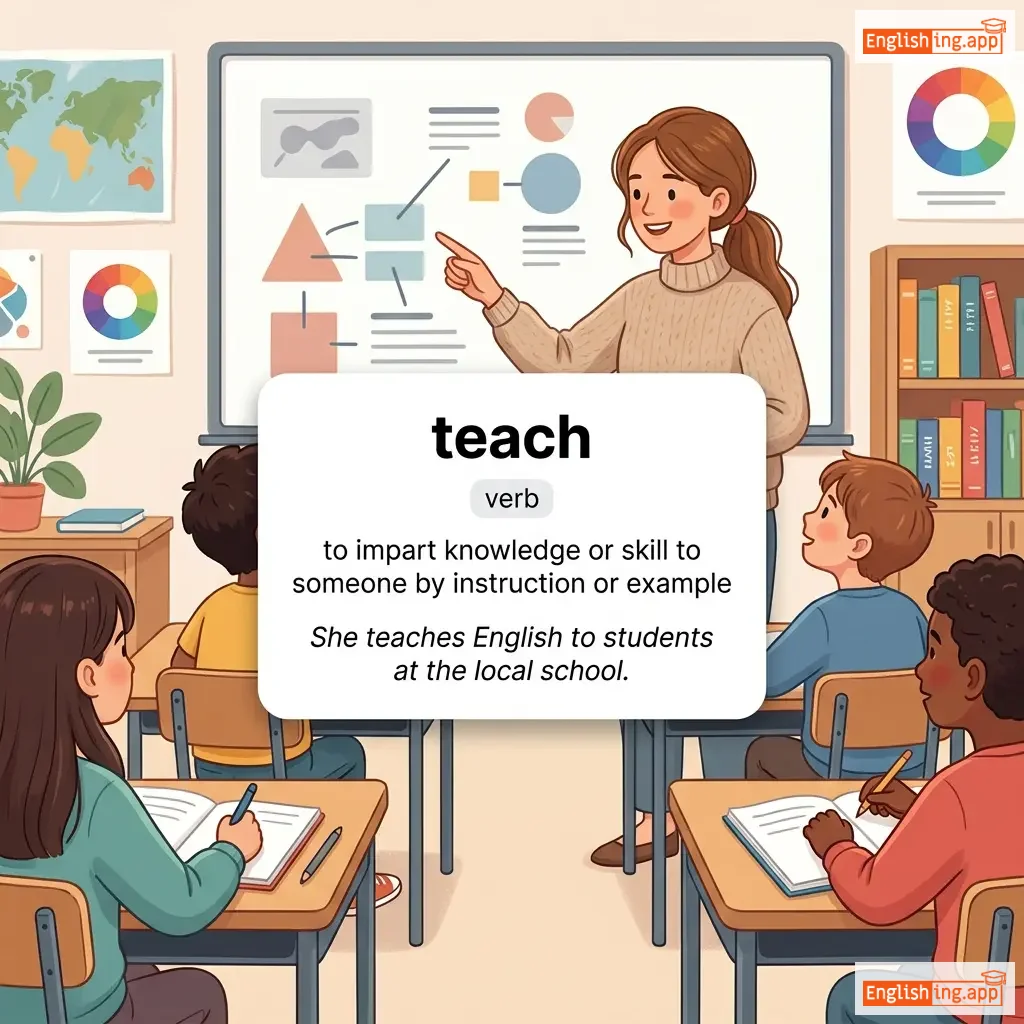
She teaches English at the local school.
她在当地学校教英语。
••••••
|
她在当地学校教英语。
Tā zài dāngdì xuéxiào jiào yīngyǔ.
••••••
|
- •••••• | - •••••• | - •••••• |
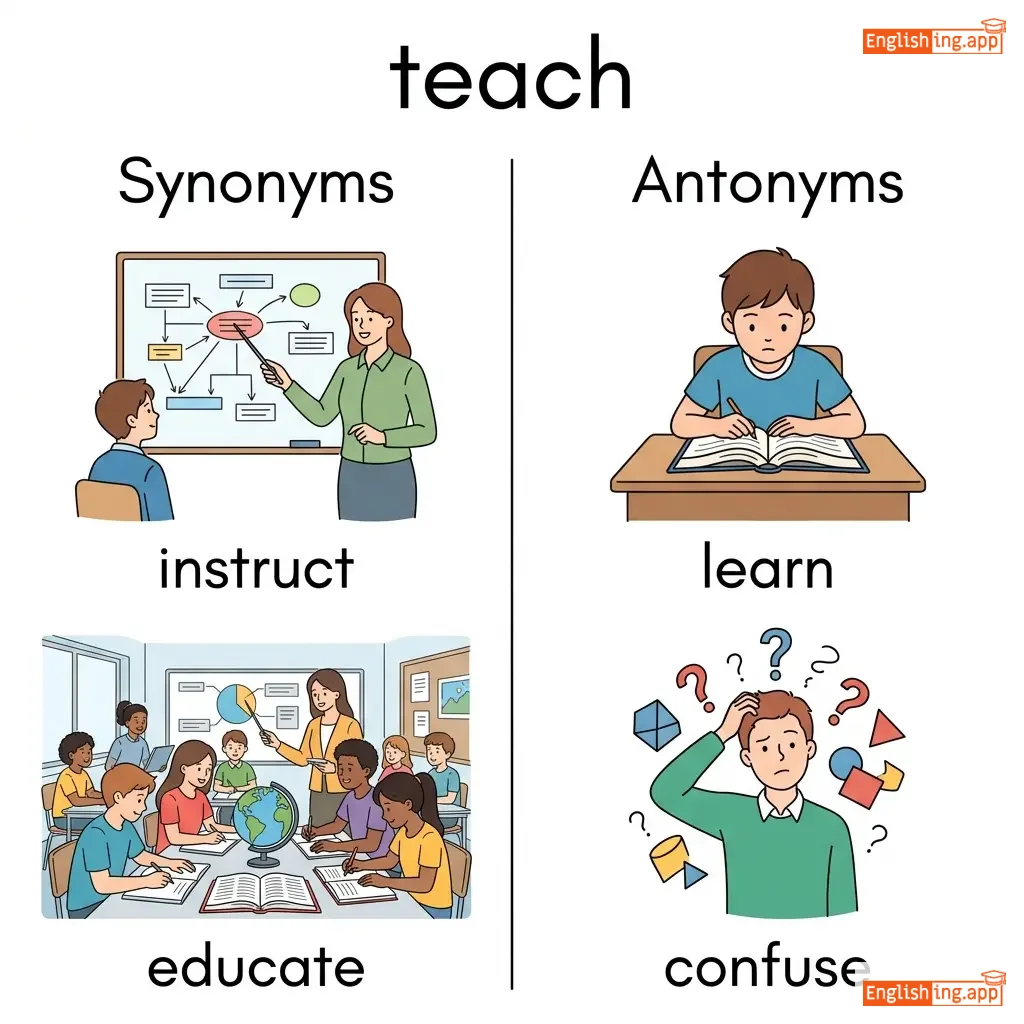
instruct, educate, train, coach
••••••
|
learn, study
••••••
|
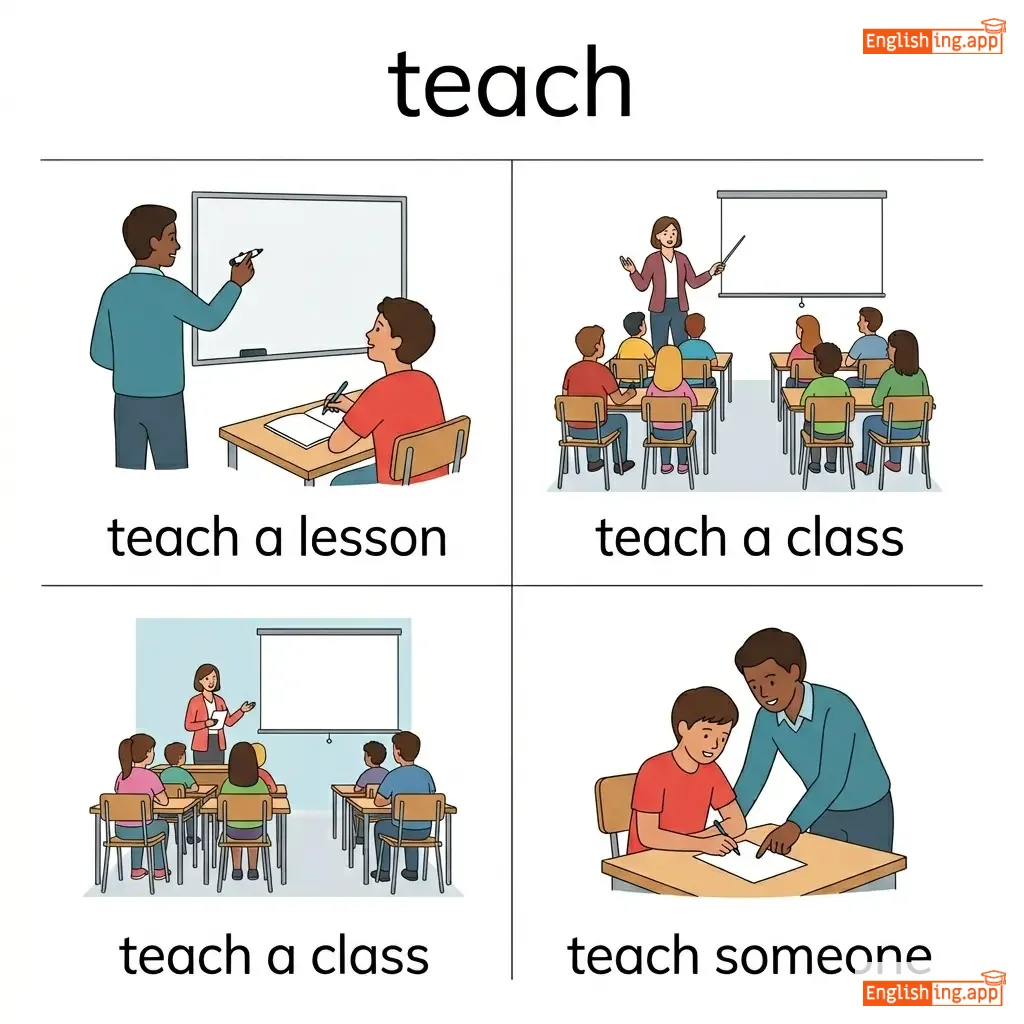
teach lessons, teach students, teach skills, teach children, teach courses, teach methods
••••••
|
tīch (teach) = 教授 (jiàoshòu), 就像在课堂上
••••••
|
|
#0
🤔
|
/θɪŋk/
verb
(think)
••••••
|
|
思考
sikao
••••••
|
thought
thot
••••••
|
thought
thot
••••••
|
thinks
thinkz
••••••
|
thinking
thinking
••••••
|
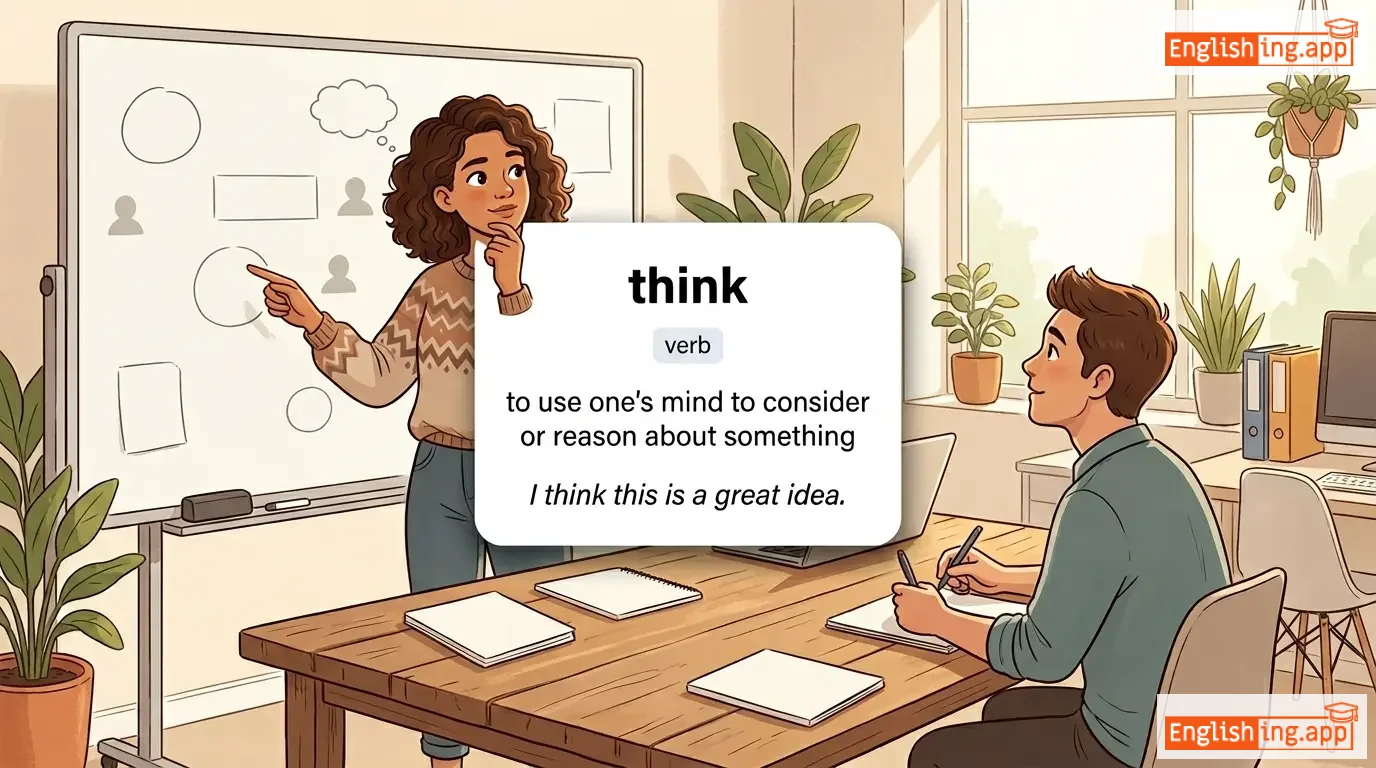
to use one's mind to consider or reason about something
••••••
|
I think this is a great idea.
我觉得这是一个好主意。
••••••
|
我觉得这是一个好主意。
Wǒ juéde zhè shì yīgè hǎo zhǔyì.
••••••
|
Think twice
再想一想
••••••
|
Consider something carefully before making a decision
••••••
|
再想一想
Zài xiǎng yī xiǎng
••••••
|
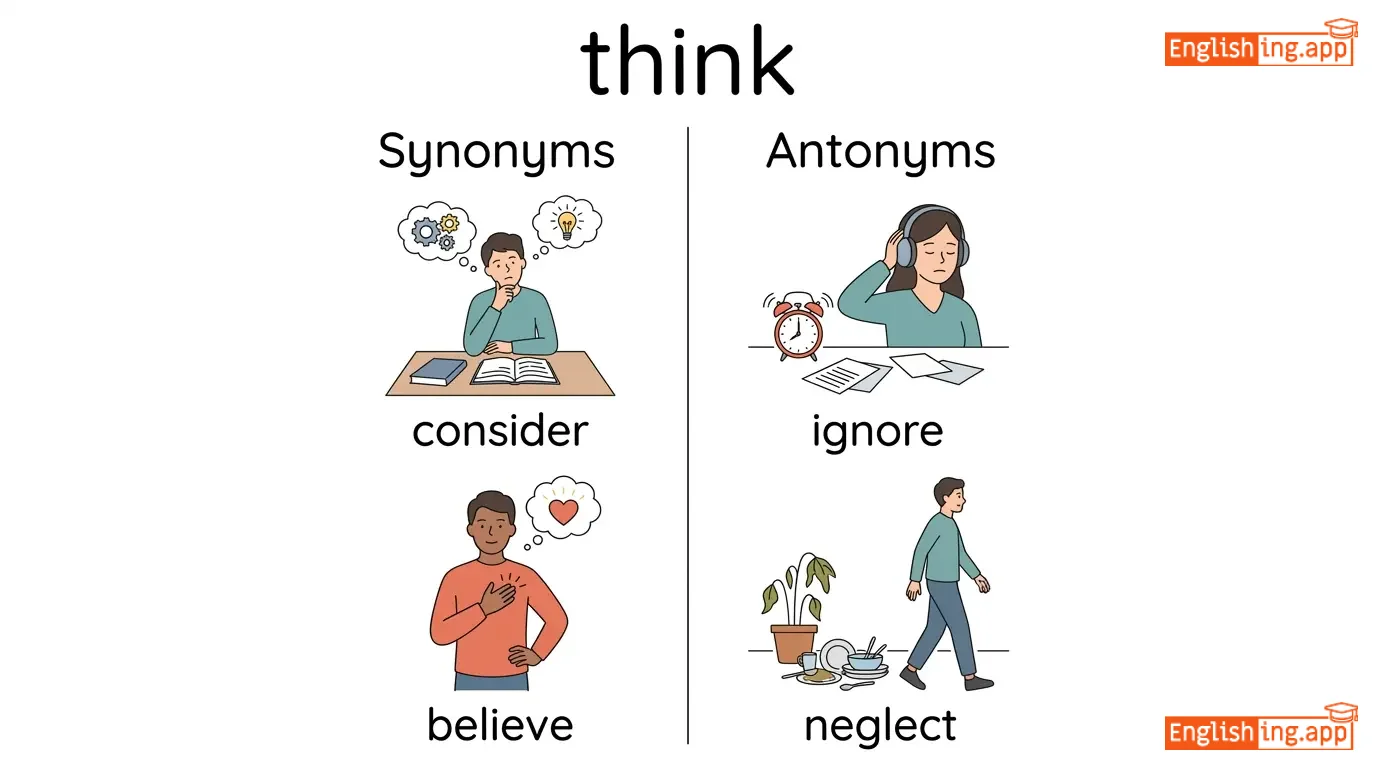
consider, believe, reflect, ponder
••••••
|
ignore, neglect
••••••
|
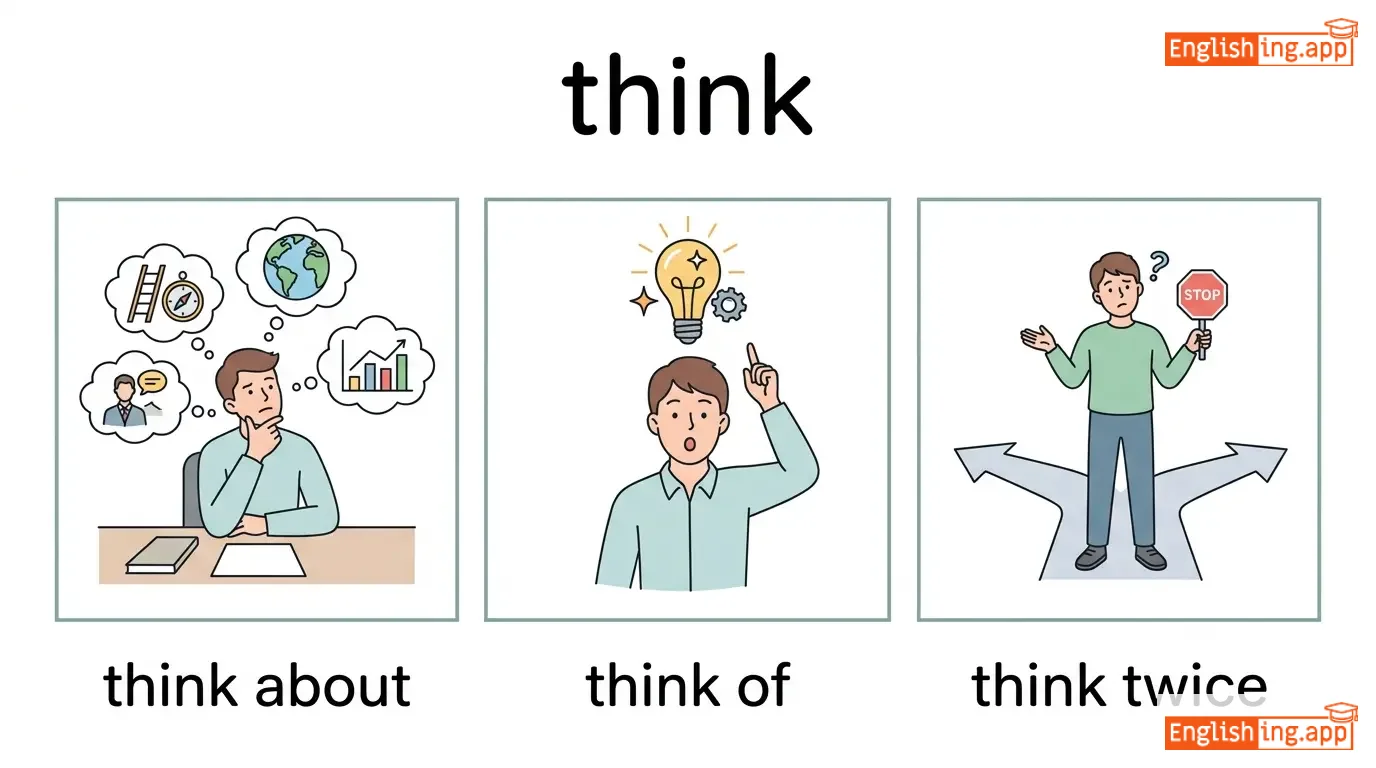
think about, think of, think twice, think hard
••••••
|
思考就像大脑的健身房,帮助你作出更好的决定。
••••••
|
|
#0
✍️
|
/raɪt/
verb
(happiness)
••••••
|
|
幸福
xingfu
••••••
|
wrote
••••••
|
written
••••••
|
writes
••••••
|
writing
••••••
|
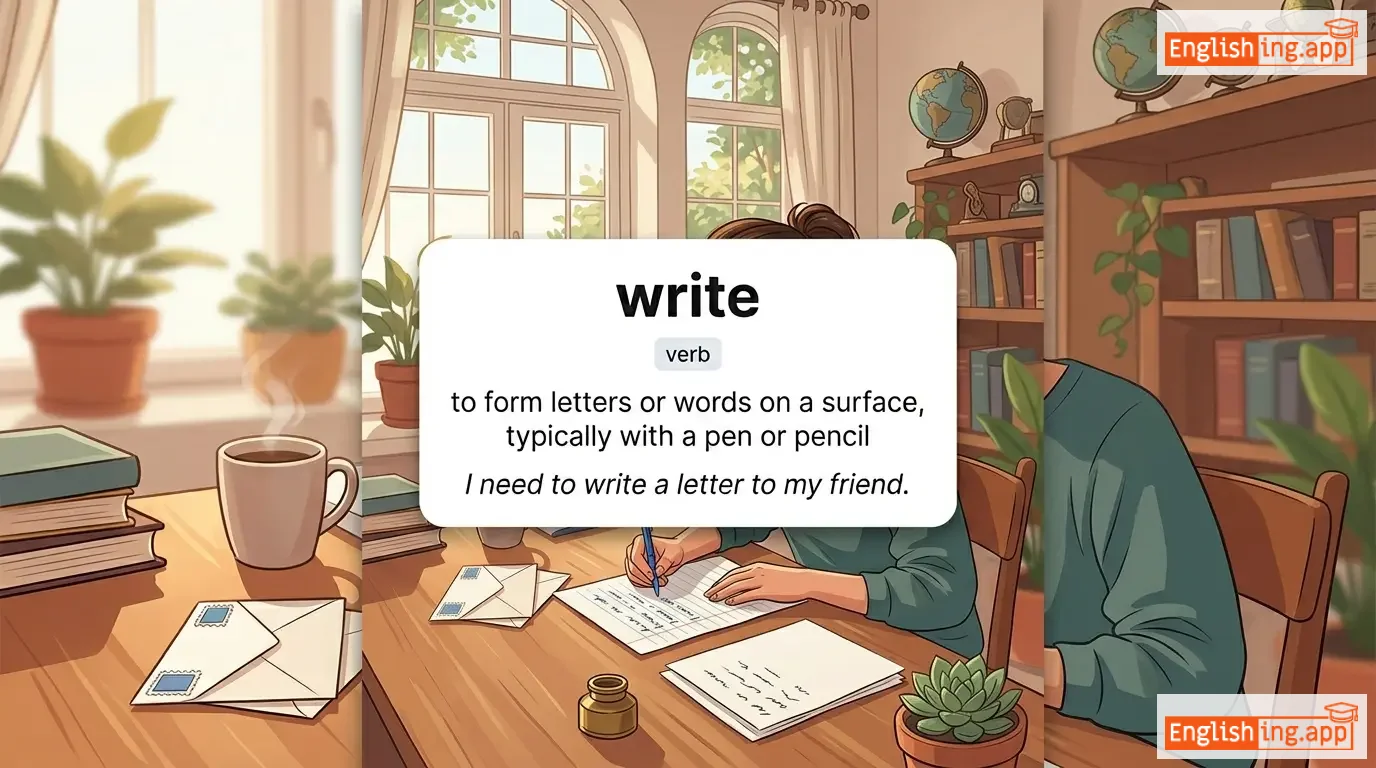
to form letters or words on a surface, typically with a pen or pencil
••••••
|
I need to write a letter to my friend.
她收到奖项时,无法掩饰她的快乐。
••••••
|
她收到奖项时,无法掩饰她的快乐。
Tā shōudào jiǎngxiàng shí, wúfǎ yǎnshì tā de kuàilè.
••••••
|
write down
追求幸福
••••••
|
to make a note of something
••••••
|
追求幸福
zhuīqiú xìngfú
••••••
|
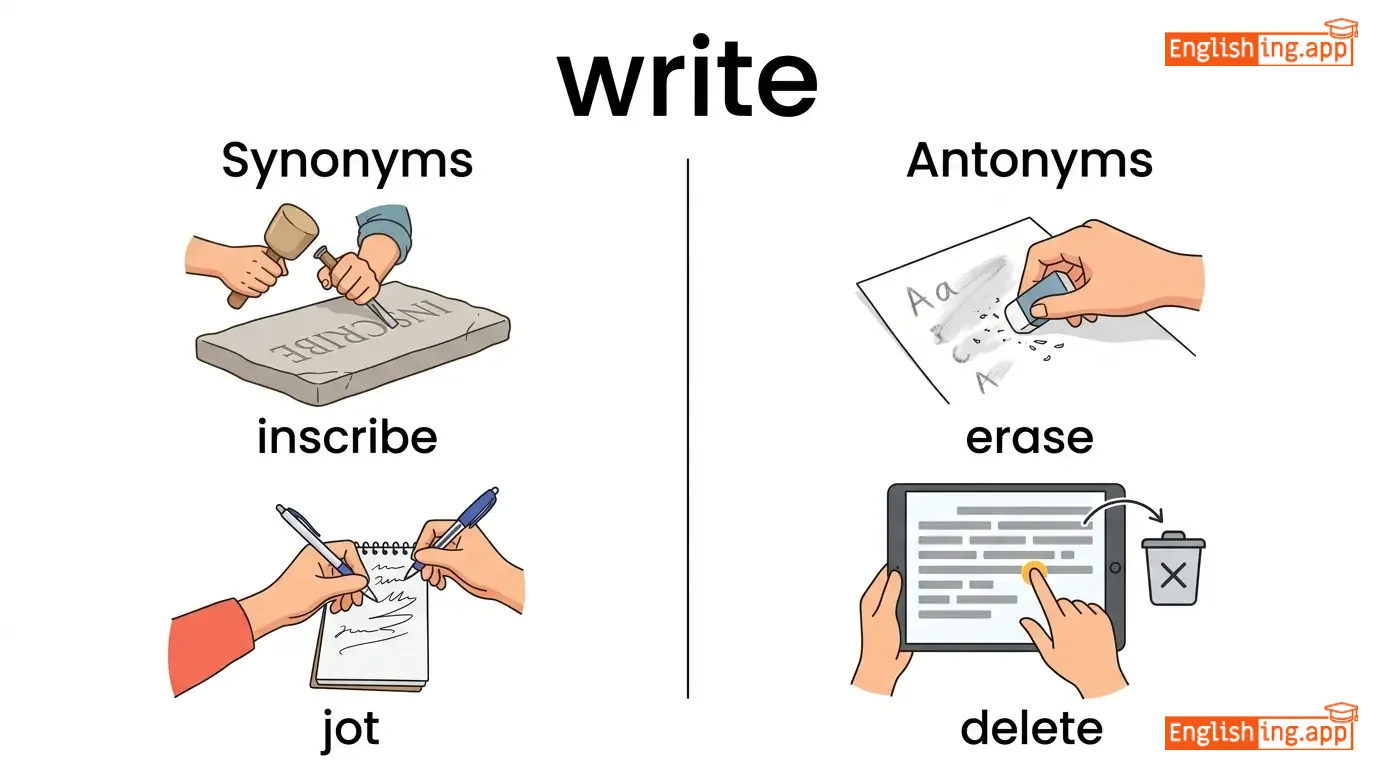
inscribe, jot, record, compose
••••••
|
erase, delete
••••••
|
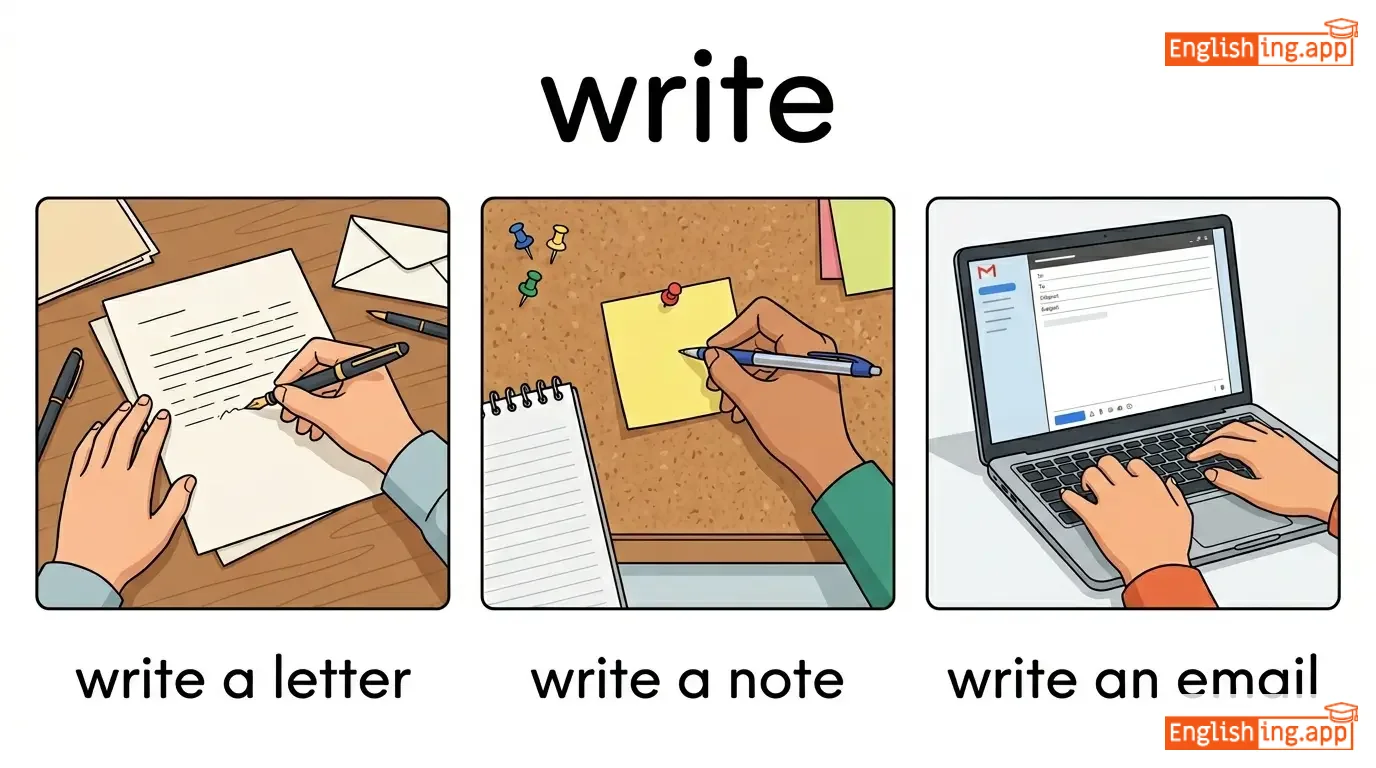
write a letter, write a note, write an email, write a report
••••••
|
记住幸福就是一直追寻快乐的感觉!
••••••
|
Vocabulary Quiz
Test your vocabulary by matching words with their translations or meanings.
Login to take the quiz
Comments (0)
Share your thoughts and join the discussion.
Join the discussion by logging in
Login to CommentNo comments yet
Be the first to share your thoughts!