

Путешествие учёного
The Scholar's Journey
Рафи был прилежным студентом, который любил learn у своего professor. Каждое утро он шёл в classroom со своей notebook и pen, готовый делать notes.
Его любимое место было университетская library. Там были ряды books, тихие desks и удобные chairs, где он мог проводить часы reading. Сидя в library, Рафи write свои мысли и развивал новые ideas.
Однажды professor сказал: «Рафи, learning — это не просто reading books. Это thinking, задавание вопросов и понимание». Эти слова глубоко повлияли на его mind.
Он начал thinking по-другому. Каждая book, которую он read, каждая page taught ему что-то новое. Его notebook наполнялась notes, вопросами и ideas.
На desk Рафи всегда лежала стопка books, разбросанные papers и несколько pens. Его brain постоянно обрабатывал информацию, соединяя разные концепции.
Professor заметил его преданность и сказал: «Ты не просто learning, ты teaching себя, как think. Это и есть истинное learning».
Через семестр Рафи wrote свой исследовательский paper. Часы reading, бесчисленные notes и глубокое thinking завершились блестящим paper, который professor высоко оценил.
На обсуждениях в classroom Рафи активно участвовал, делился ideas и оспаривал существующие теории. Его mind был острым, а brain — постоянно вопрошающим.
Он понял, что books — это не просто pages, заполненные paper. Каждая book — сокровище знаний, инструмент для расширения mind, способ teach себя, как think.
Он исследовал каждый уголок library, read разные темы, wrote свои размышления в notebook. Каждый note был шагом к более глубокому пониманию.
Когда младшие студенты спросили его: «Как ты так хорошо learn?», Рафи ответил: «Learning — это навык. Нужно read с любопытством, write с ясностью и think с глубиной».
Он taught их, как делать эффективные notes, как критически read, как ясно write. Его движения pen, организация paper — всё было методичным.
Однажды professor сказал: «Рафи, ты больше не просто студент. Ты становишься учёным. Твой mind теперь knows, как think независимо».
Перед выпуском Рафи размышлял, сидя за своим любимым library desk. Сколько часов он провёл на этом chair, сколько books он read за этим desk, сколько ideas он wrote на этом paper.
Рафи сказал: «Education — это не просто получение дипломов. Это тренировка твоего brain think, открытие твоего mind для новых ideas. Classrooms teach основы, books дают знания, но настоящее learning происходит, когда ты сам read, write, think. Роль professor — направлять, но путь — твой собственный. Каждая page, которую ты read, каждый note, который ты write, каждая idea, которую ты развиваешь, формируют твоё интеллектуальное основание. Library — моё убежище, desk — моё рабочее место, pen и paper — мои инструменты. Но самый важный инструмент — это любознательность и преданность. Когда ты искренне хочешь know, когда по-настоящему хочешь learn, твой brain находит пути, а твой mind впитывает знания. Teaching других taught меня, что когда ты teach, ты learn дважды. Поэтому я всем советую — read широко, write регулярно, think глубоко. Используй свою notebook не только для notes, но и для фиксации ideas. Относись к каждой book как к разговору с мудрым professor. И помни, learning никогда не останавливается. Даже когда покидаешь classroom, твой mind должен оставаться как у студента — любопытным, открытым и стремящимся know больше».
Путь Рафи вдохновляет бесчисленных студентов, которые теперь read books в libraries, write notes в notebooks и тренируют свой mind критически think. Его наследие доказывает, что преданное learning, страстное thinking и постоянное writing могут превратить обычного студента в выдающегося учёного.
Обновитесь для доступа ко всему словарю
Получите неограниченный доступ ко всем словам с подпиской Pro
Обновить до ProПеревод
Прошедшее
Причастие прошедшего времени
Третье лицо единственного числа
Герундий
Значение
Пример предложения
Перевод примера предложения
Синонимы
Антонимы
Коллокации
Мнемоника
Swipe left or right, or use the buttons. Tap image to zoom.
Обновитесь для доступа ко всем предложениям
Получите неограниченный доступ ко всем предложениям с подпиской Pro
Обновить до ProПеревод примера предложения
Слово
The Scholar's JourneyThe Scholar's Journey - Переключатель маски
|
Эмодзи
|
Слово | Images | Перевод | Прошедшее | Причастие прошедшего времени | Третье лицо единственного числа | Герундий | Значение | Пример предложения | Перевод примера предложения | Пример выражения | Значение примера выражения | Перевод примера выражения | Синонимы | Антонимы | Коллокации | Мнемоника |
|---|---|---|---|---|---|---|---|---|---|---|---|---|---|---|---|---|---|
|
#0
📖
|
/bʊk/
noun, verb
(бук)
••••••
|
- •••••• |
книга / бронировать
kniga / bronirovat
••••••
|
booked
букд
••••••
|
booked
букд
••••••
|
books
букс
••••••
|
booking
букинг
••••••
|
A set of written, printed, or blank pages fastened together; to arrange for someone to have a seat, room, or ticket in advance.
••••••
|
I booked a table at the restaurant for dinner.
Я забронировал столик в ресторане на ужин.
••••••
|
Я забронировал столик в ресторане на ужин.
Ya zabroniroval stolik v restorane na uzhin.
••••••
|
by the book
по правилам
••••••
|
to follow rules strictly
••••••
|
следовать правилам
sledovat' pravilam
••••••
|
volume, text, novel, reserve, schedule
••••••
|
cancel, disorder
••••••
|
open book, book a ticket, book club, book online, book in advance
••••••
|
Книга и бронирование – важное заранее запланированное действие.
••••••
|
|
#0
🧠
|
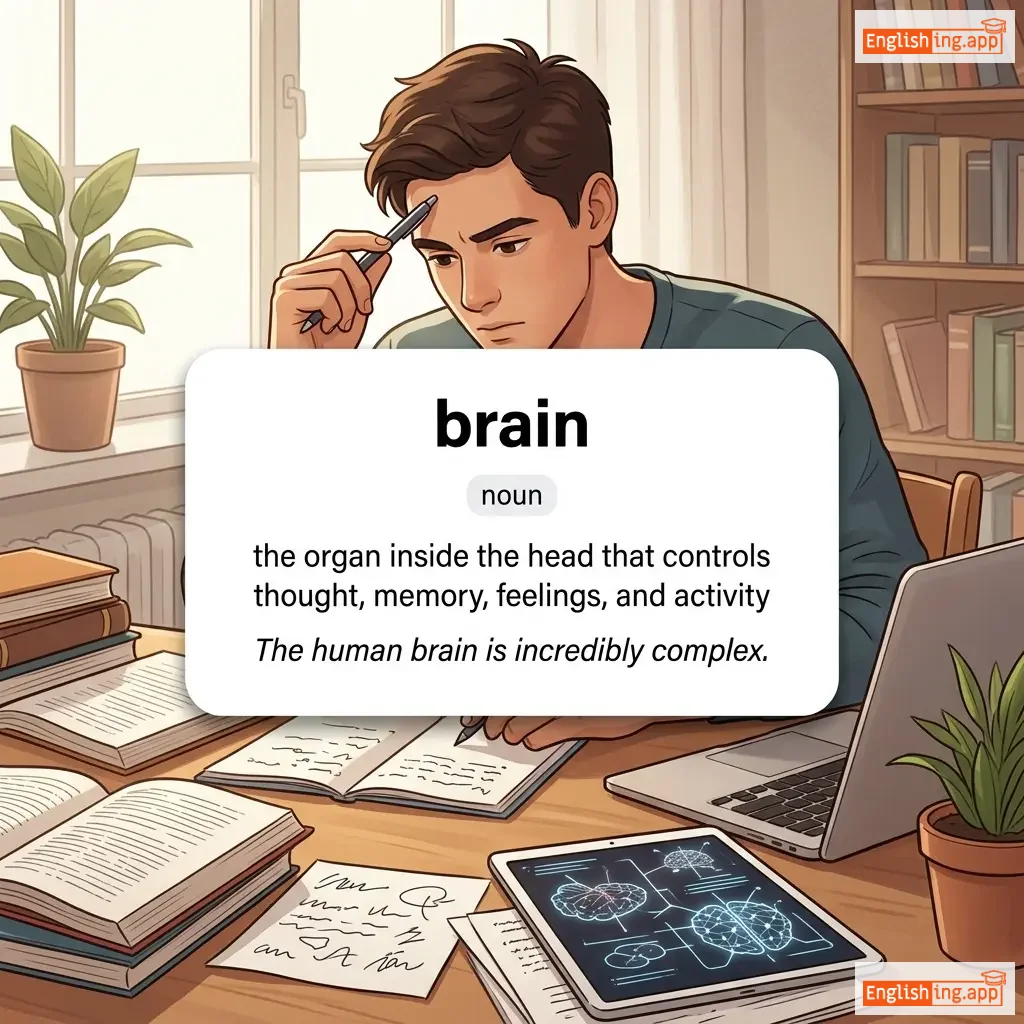
/breɪn/
noun
(бɾеɪн)
••••••
|
|
мозг
mozg
••••••
|
- •••••• | - •••••• | - •••••• | - •••••• |
the organ inside the head that controls thought, memory, feelings, and activity
••••••
|
The human brain is incredibly complex. |
Человеческий мозг невероятно сложен.
Chelovecheskij mozg neveroyatno slozhen.
••••••
|
rack your brain |
to think very hard about something
••••••
|
ломать голову
lomat' golovu
••••••
|
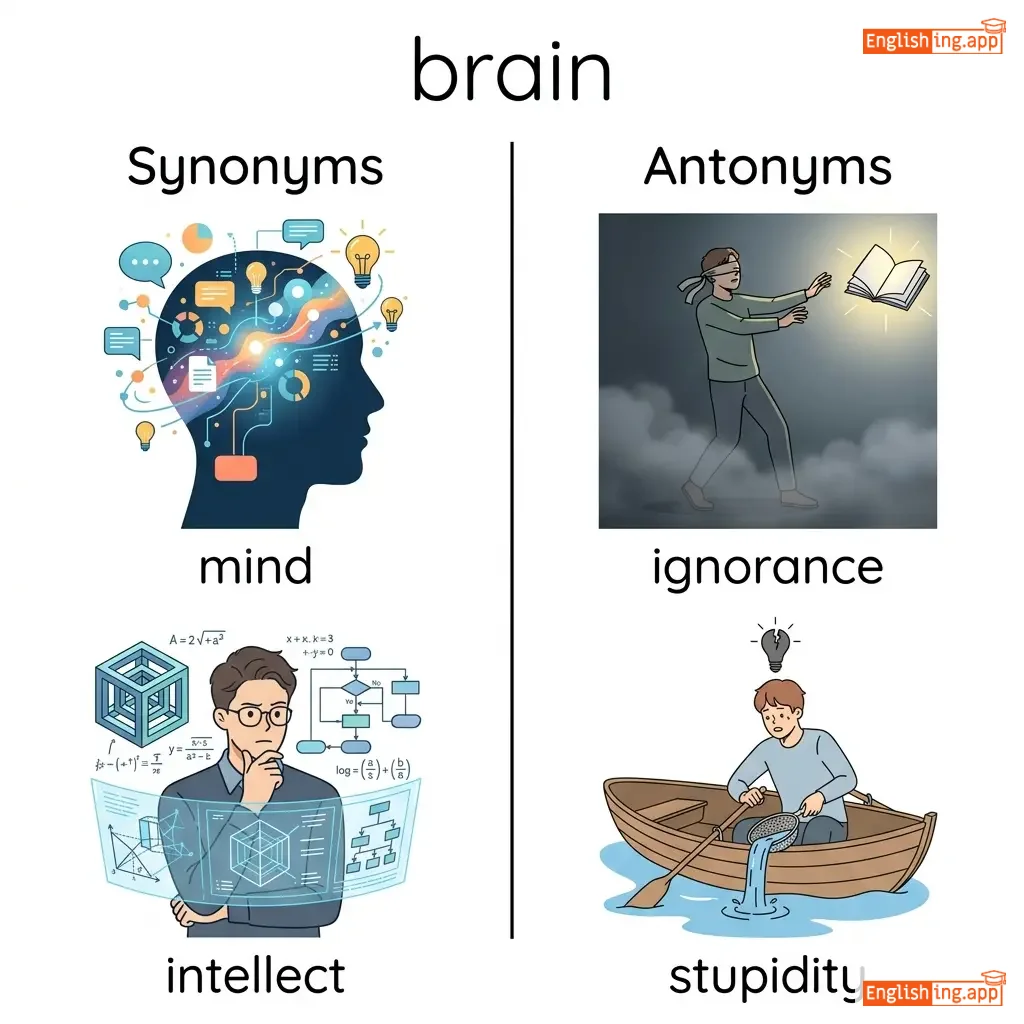
mind, intellect, intelligence, head
••••••
|
ignorance, stupidity
••••••
|
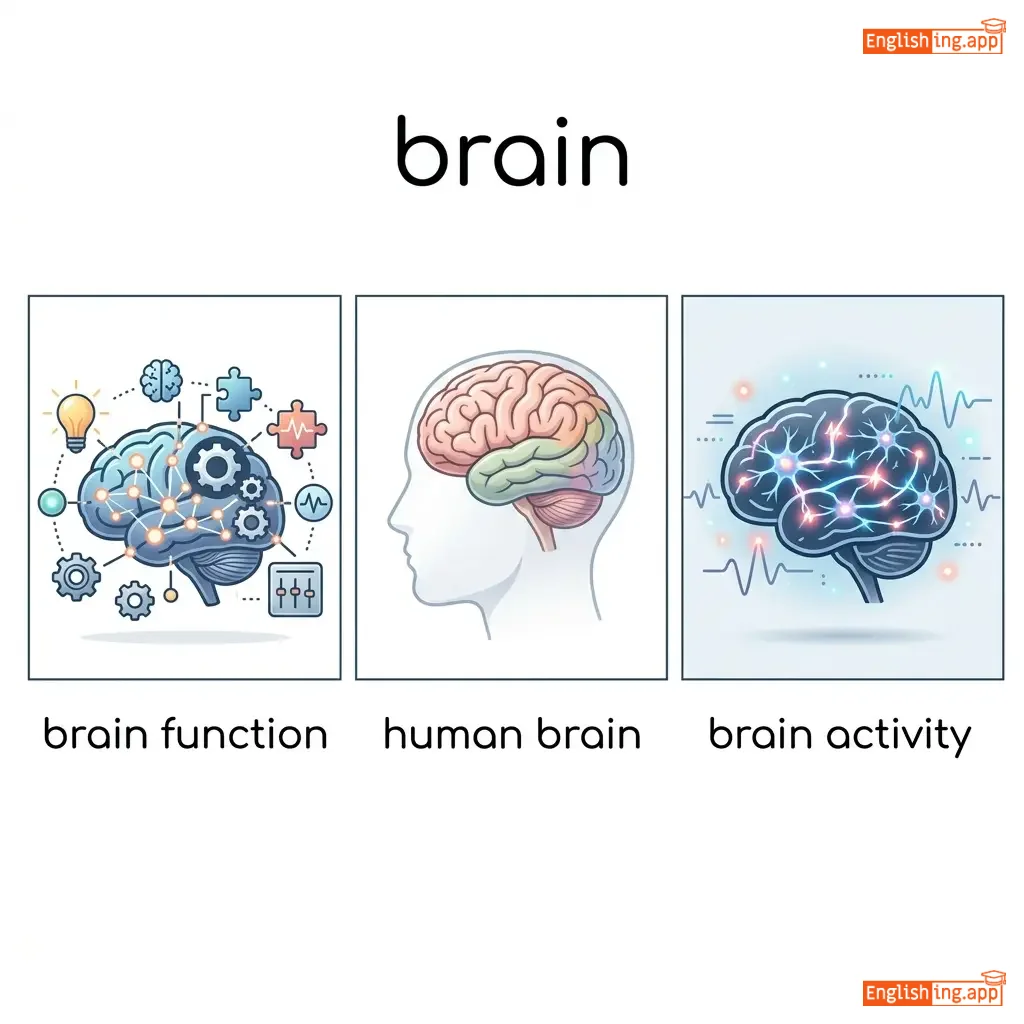
brain function, human brain, brain activity, brain power
••••••
|
Мозг, как ‘мозговой шторм’ - думай глубже!
••••••
|
|
#0
🪑
|
/tʃɛr/
noun
(чейр)
••••••
|
- •••••• |
стул
cheyr
••••••
|
- •••••• | - •••••• | - •••••• | - •••••• |
a piece of furniture for one person to sit on, typically having a back and four legs
••••••
|
She pulled up a chair and sat beside me.
Она подтянула стул и села рядом со мной.
••••••
|
Она подтянула стул и села рядом со мной.
Ona podtyanula stul i sela ryadom so mnoy.
••••••
|
take the chair
возглавлять собрание
••••••
|
to act as the leader or presiding officer of a meeting
••••••
|
возглавлять собрание
vozglavlyat sobranie
••••••
|
seat, armchair, stool, bench
••••••
|
floor, ground
••••••
|
wooden chair, office chair, rocking chair, chair seat
••••••
|
Chair = стул. Представь: чейр звучит как chair, и тот, кто сидит в chair ведет собрание — возглавляет собрание.
••••••
|
|
#0
🏫
|
/ˈklæsˌruːm/
noun
(klasrum)
••••••
|
- •••••• |
классная комната
klassnaya komnata
••••••
|
- •••••• | - •••••• | - •••••• | - •••••• |
A room in which classes are held in a school or college.
••••••
|
The teacher entered the classroom and greeted the students. |
Учитель вошел в классную комнату и поприветствовал студентов.
Uchitel' voshel v klassnuyu komnatu i poprivetsvoval studentov.
••••••
|
empty classroom |
A classroom with no students or teacher inside.
••••••
|
пустой класс
pustoy klass
••••••
|
lecture room, study room, hall, learning space
••••••
|
playground, office
••••••
|
classroom activities, classroom management, classroom environment, classroom learning
••••••
|
Классная комната значит classroom 🏫, место для обучения.
••••••
|
|
#0
🖥️
|
/dɛsk/
noun
(desk)
••••••
|
- •••••• |
письменный стол
pismennyy stol
••••••
|
- •••••• | - •••••• | - •••••• | - •••••• |
a piece of furniture with a flat surface used for writing or working
••••••
|
The books are on the desk. |
Книги на письменном столе.
Knihi na pismennom stole.
••••••
|
front desk |
the main reception area in an office or hotel
••••••
|
ресепшн
resepshn
••••••
|
table, workstation, counter, bureau
••••••
|
floor, ground
••••••
|
office desk, study desk, front desk, wooden desk
••••••
|
Письменный стол для работы и организации
••••••
|
|
#0
💡
|
/aɪˈdiːə/
noun
(айдея)
••••••
|
- •••••• |
идея
ideya
••••••
|
- •••••• | - •••••• | - •••••• | - •••••• |
A thought, plan, or suggestion about what to do.
••••••
|
She had a brilliant idea for a new business. |
У неё была блестящая идея для нового бизнеса.
U nee byla blestyashchaya ideya dlya novogo biznesa.
••••••
|
bright idea |
a clever or creative thought or solution
••••••
|
яркая идея
yarkaya ideya
••••••
|
concept, notion, plan, thought, suggestion
••••••
|
ignorance, misunderstanding
••••••
|
good idea, brilliant idea, bad idea, business idea, creative idea
••••••
|
Идея как лампочка 💡, вспыхивающая в голове
••••••
|
|
#0
🧠
|
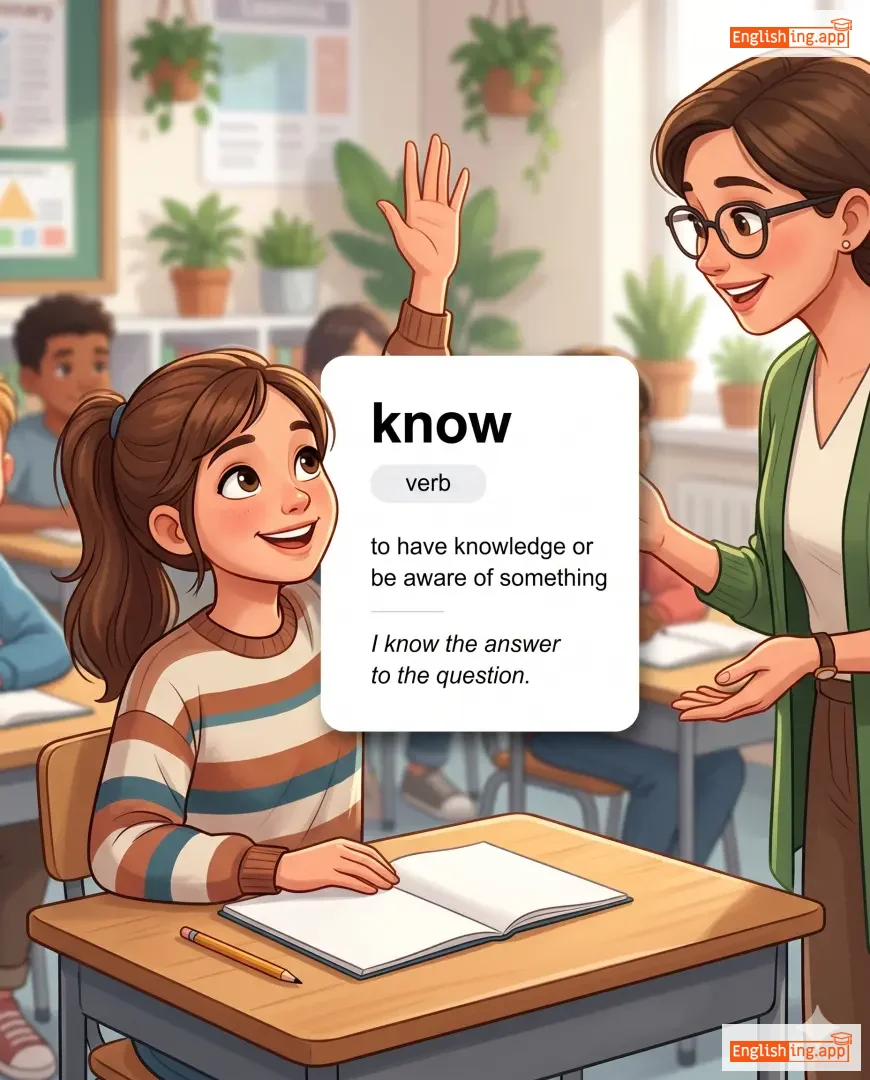
/noʊ/
verb
(ноʊ)
••••••
|
|
знать
znat
••••••
|
knew
нюː
••••••
|
known
ноʊн
••••••
|
knows
ноʊз
••••••
|
knowing
ноʊɪнг
••••••
|
to have knowledge or be aware of something
••••••
|
I know the answer to the question.
я знаю ответ на вопрос.
••••••
|
Я знаю ответ на вопрос.
Ya znayu otvet na vopros.
••••••
|
know the ropes
знать веревки
••••••
|
to be familiar with how something is done
••••••
|
знать как что-то сделать
znat' kak chto-to sdelat'
••••••
|
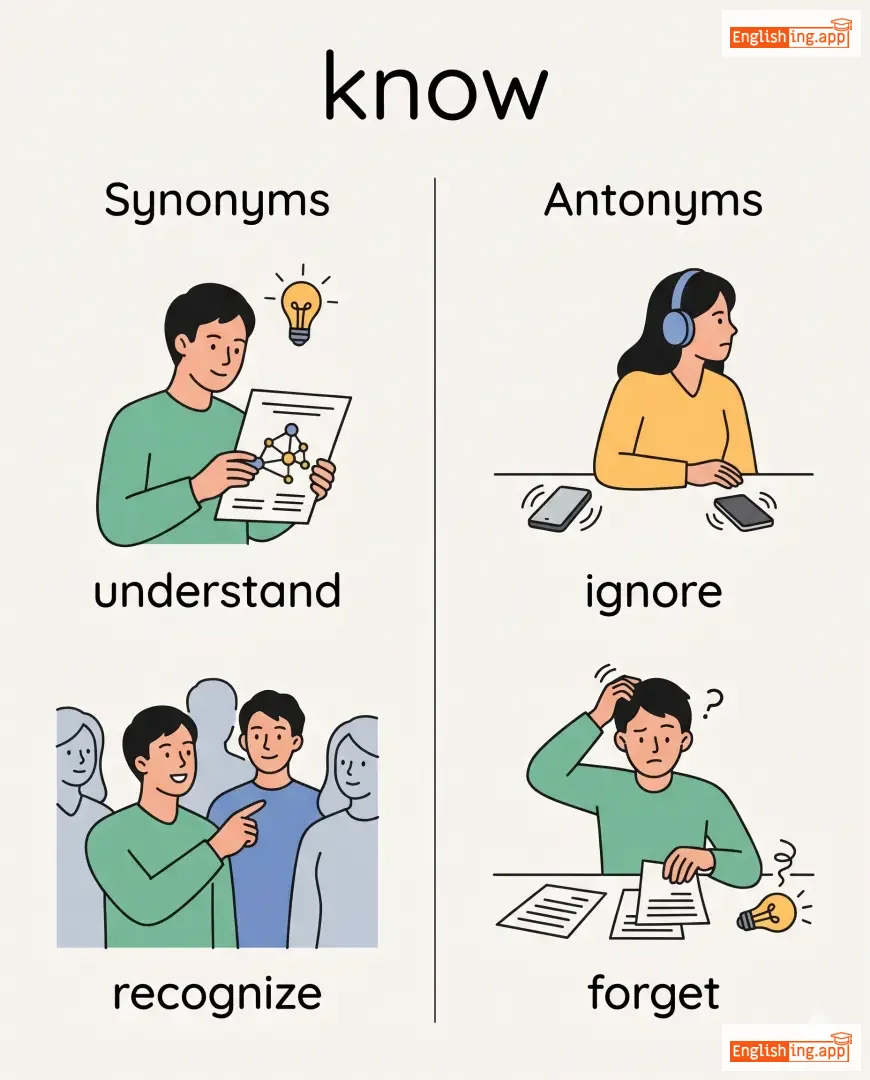
understand, recognize, realize, comprehend, identify
••••••
|
ignore, forget, misunderstand
••••••
|
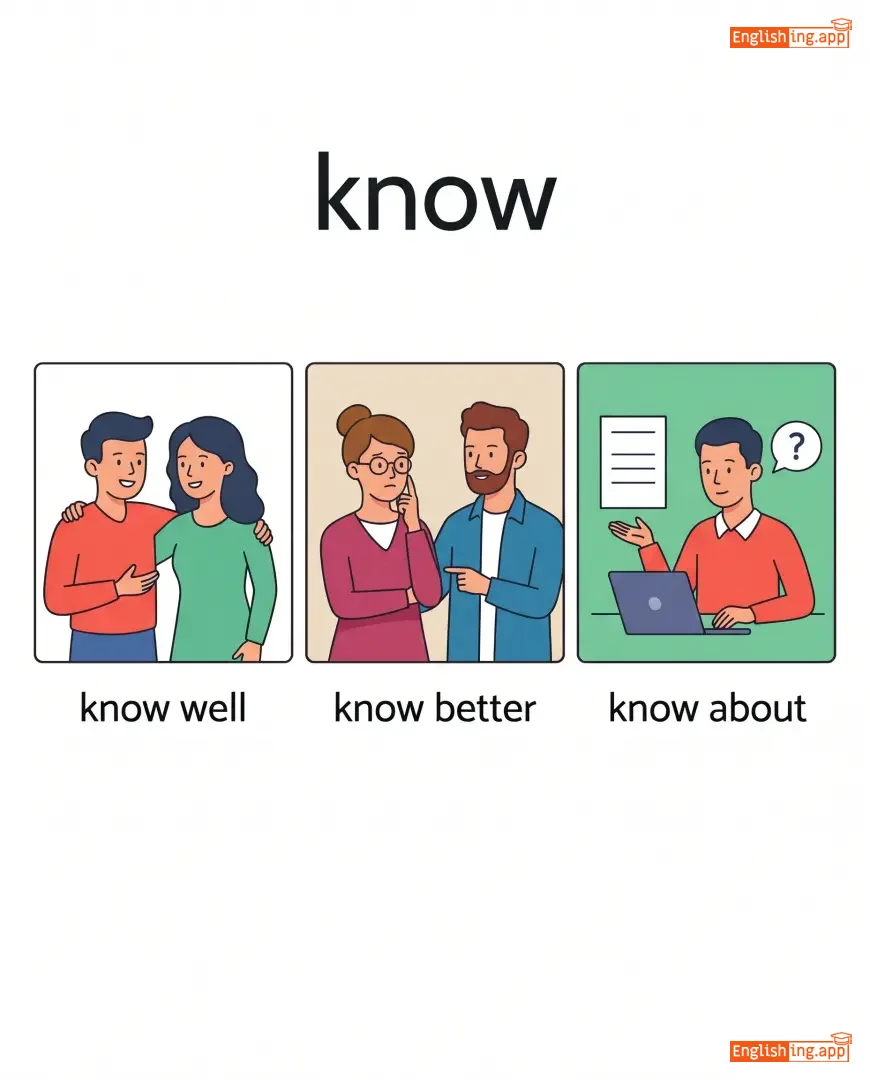
know well, know better, know about, know exactly
••••••
|
Know в русском языке означает знать.
••••••
|
|
#0
📚
|
/ˈlɜrnɪŋ/
noun
(лёрнинг)
••••••
|
- •••••• |
обучение
obuchenie
••••••
|
- •••••• | - •••••• | - •••••• | - •••••• |
The process of gaining knowledge or skills through study or experience.
••••••
|
Learning a new language can be exciting.
Изучение нового языка может быть увлекательным.
••••••
|
Изучение нового языка может быть увлекательным.
Izuchenie novogo yazyka mozhet byt' uvekatelym.
••••••
|
lifelong learning
обучение на протяжении всей жизни
••••••
|
continuous pursuit of knowledge throughout life
••••••
|
обучение на протяжении всей жизни
obuchenie na protyazhenii vsei zhizni
••••••
|
education, knowledge, training, study
••••••
|
ignorance, unawareness
••••••
|
learning process, learning skills, online learning, active learning
••••••
|
Learning - это процесс изучения, который помогает расти и развиваться.
••••••
|
|
#0
📚
|
/ˈlaɪ.brɛr.i/
noun
(lɑɪ.brɛr.i)
••••••
|
- •••••• |
библиотека
biblioteka
••••••
|
- •••••• | - •••••• | - •••••• | - •••••• |
A building or room containing collections of books, periodicals, and sometimes other materials for people to read or borrow.
••••••
|
She spent the afternoon studying in the library. |
Она провела послеобеденное время, изучая в библиотеке.
Ona provela posleobedennoye vremya, izuchaya v biblioteke.
••••••
|
library of knowledge |
A large collection of information or wisdom.
••••••
|
библиотека знаний
biblioteka znaniy
••••••
|
book collection, archive, repository, reading room, information center
••••••
|
bookstore, marketplace
••••••
|
public library, digital library, library card, library staff
••••••
|
Библиотека - Библ (книги) + тека (место для хранения).
••••••
|
|
#0
🧠
|
/maɪnd/
noun/verb
(maind)
••••••
|
- •••••• |
ум / заботиться
um / zabotit'sya
••••••
|
minded
maindid
••••••
|
minded
maindid
••••••
|
minds
mainds
••••••
|
minding
mainding
••••••
|
the part of a person that enables them to think, feel, and reason; to pay attention or take care
••••••
|
Please mind the gap between the train and the platform.
Пожалуйста, следите за промежутком между поездом и платформой.
••••••
|
Пожалуйста, следите за промежутком между поездом и платформой.
Pozhaluysta, sledite za promezhutkom mezhdu poyezdom i platformoy.
••••••
|
make up one's mind
принять решение
••••••
|
to decide something
••••••
|
принять решение
prinyat' reshenie
••••••
|
brain, intellect, thought, heed, notice
••••••
|
ignore, neglect
••••••
|
mind the gap, change your mind, peace of mind, keep in mind
••••••
|
Mind на русском это ум, а без ума не будет заботы.
••••••
|
|
#0
📝
|
/noʊt/
noun, verb
(ноут)
••••••
|
|
заметка
zametka
••••••
|
noted
ноутед
••••••
|
noted
ноутед
••••••
|
notes
ноутс
••••••
|
noting
ноутинг
••••••
|
a brief record of facts, topics, or thoughts written down; to observe or remark upon something
••••••
|
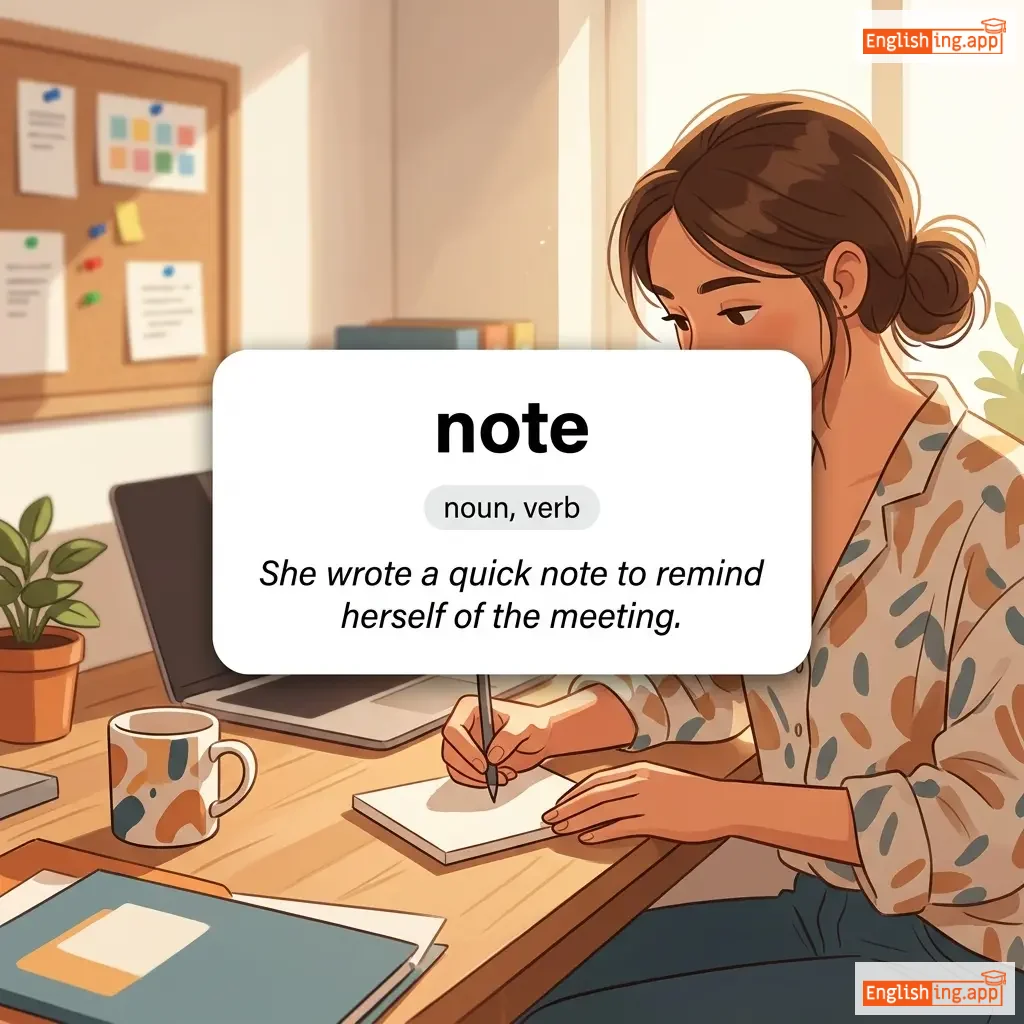
She wrote a quick note to remind herself of the meeting.
Она написала быстрые заметки, чтобы напомнить себе о встрече.
••••••
|
Она написала быстрые заметки, чтобы напомнить себе о встрече.
Ona napisal bystrye zametki, chtoby napomnit' sebe o vstreche.
••••••
|
take note
обратить внимание
••••••
|
to pay attention or give special consideration
••••••
|
обратить внимание
obratit' vnimanie
••••••
|
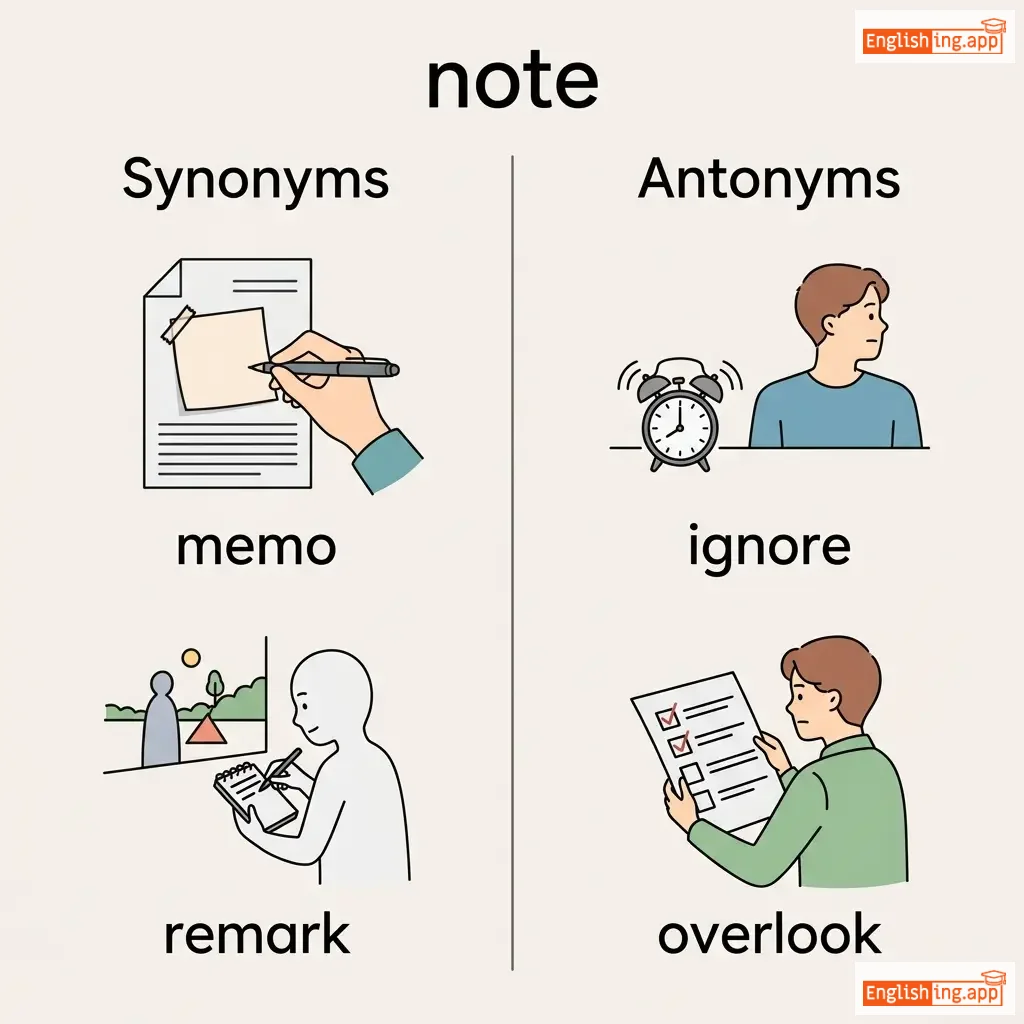
memo, remark, message, record, observation
••••••
|
ignore, overlook
••••••
|
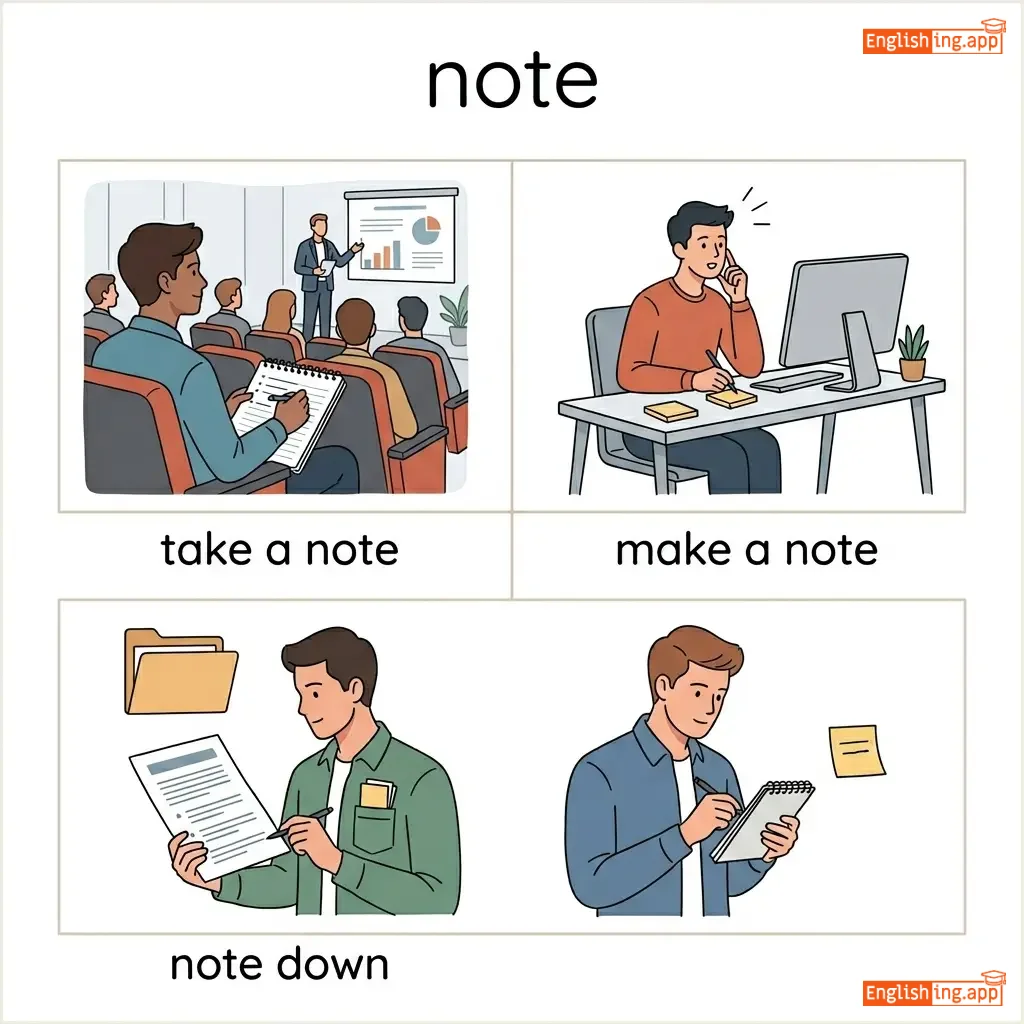
take a note, make a note, note down, note carefully
••••••
|
Записать важное, чтобы не забыть.
••••••
|
|
#0
📒
|
/ˈnoʊtbʊk/
noun
••••••
|
- •••••• | - •••••• | - •••••• | - •••••• | - •••••• | - •••••• |
a small book with blank or ruled pages for writing notes; also a portable computer
••••••
|
She opened her notebook to jot down some ideas. |
- •••••• |
open your notebook |
to prepare to take notes or start writing
••••••
|
- •••••• |
journal, pad, diary, laptop, logbook
••••••
|
none, emptiness, blankness
••••••
|
open notebook, write in notebook, spiral notebook, leather notebook, notebook computer
••••••
|
No •••••• |
|
#0
📄
|
/peɪdʒ/
noun
(peydzh)
••••••
|
- •••••• |
страница
stranitsa
••••••
|
- •••••• | - •••••• | - •••••• | - •••••• |
one side of a sheet of paper, or a single sheet of paper in a book or document
••••••
|
Turn to the next page for more information.
Перейдите на следующую страницу для получения дополнительной информации.
••••••
|
Перейдите на следующую страницу для получения дополнительной информации.
Pereydite na sleduyushchuyu stranitsu dlya polucheniya dopolnitel'noy informatsii.
••••••
|
- •••••• | - •••••• | - •••••• |
leaf, sheet, folio, document
••••••
|
blank, empty space
••••••
|
turn the page, page number, front page, last page
••••••
|
Страница, как страница книги
••••••
|
|
#0
📄
|
/ˈpeɪpər/
noun
(пэйпэр)
••••••
|
|
бумага
bumaga
••••••
|
- •••••• | - •••••• | - •••••• | - •••••• |
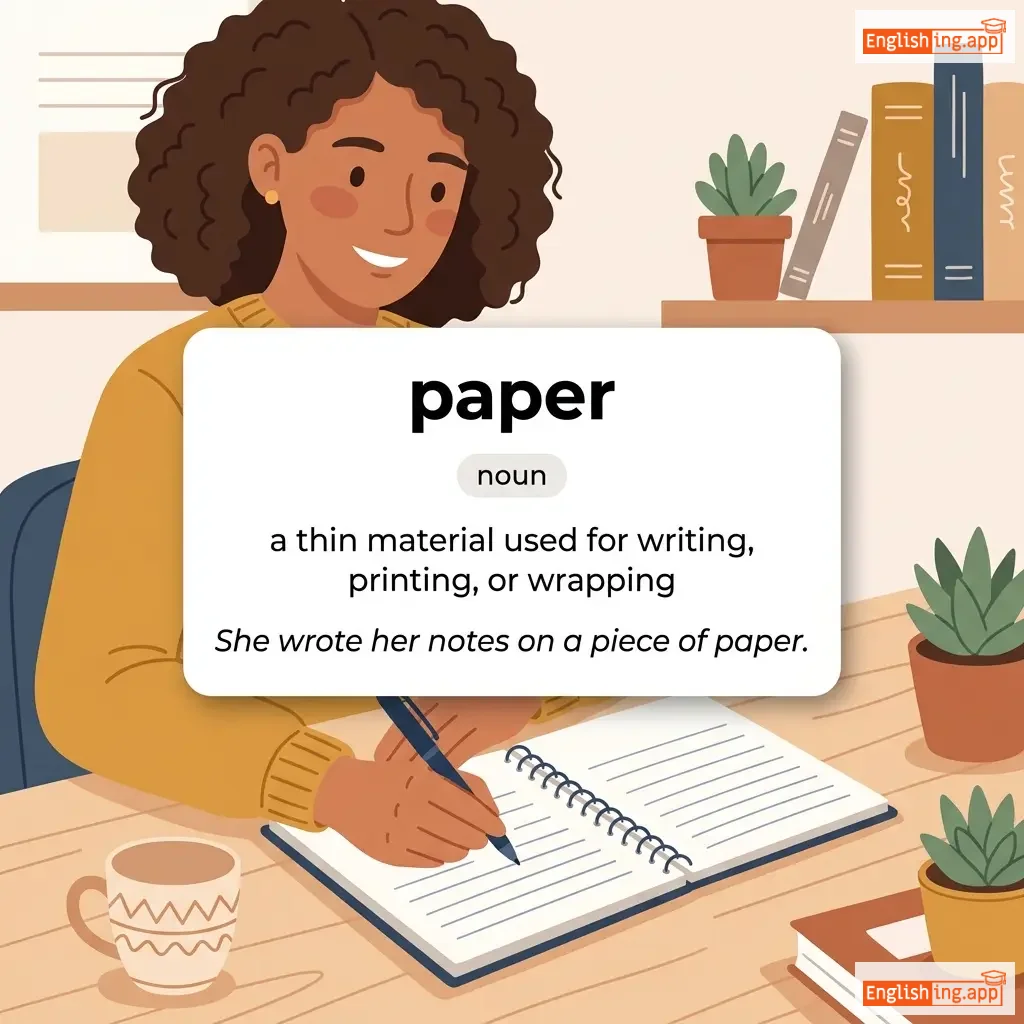
a thin material used for writing, printing, or wrapping
••••••
|
She wrote her notes on a piece of paper. |
Она написала свои заметки на листе бумаги.
Ona napisalá svoi zametki na liste bumagi.
••••••
|
- •••••• | - •••••• | - •••••• |
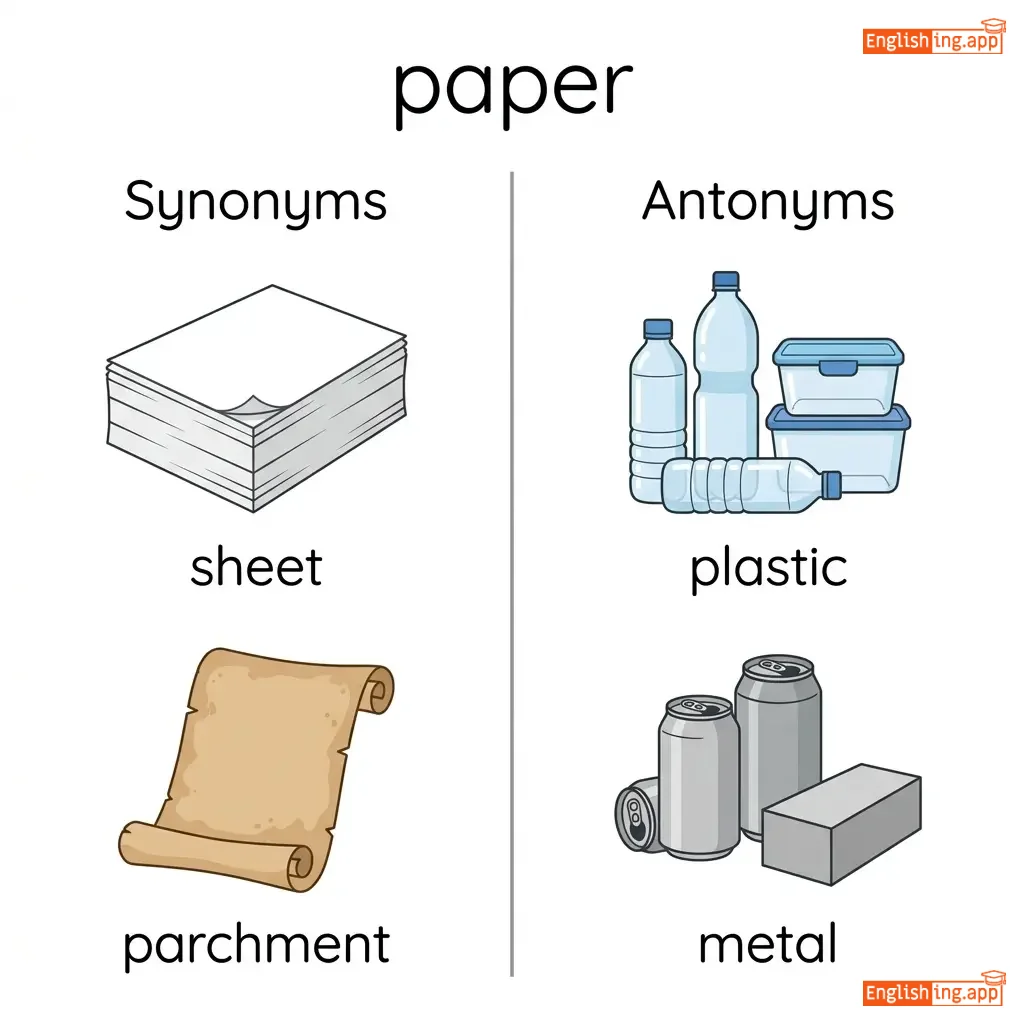
sheet, parchment, document, material
••••••
|
plastic, metal
••••••
|
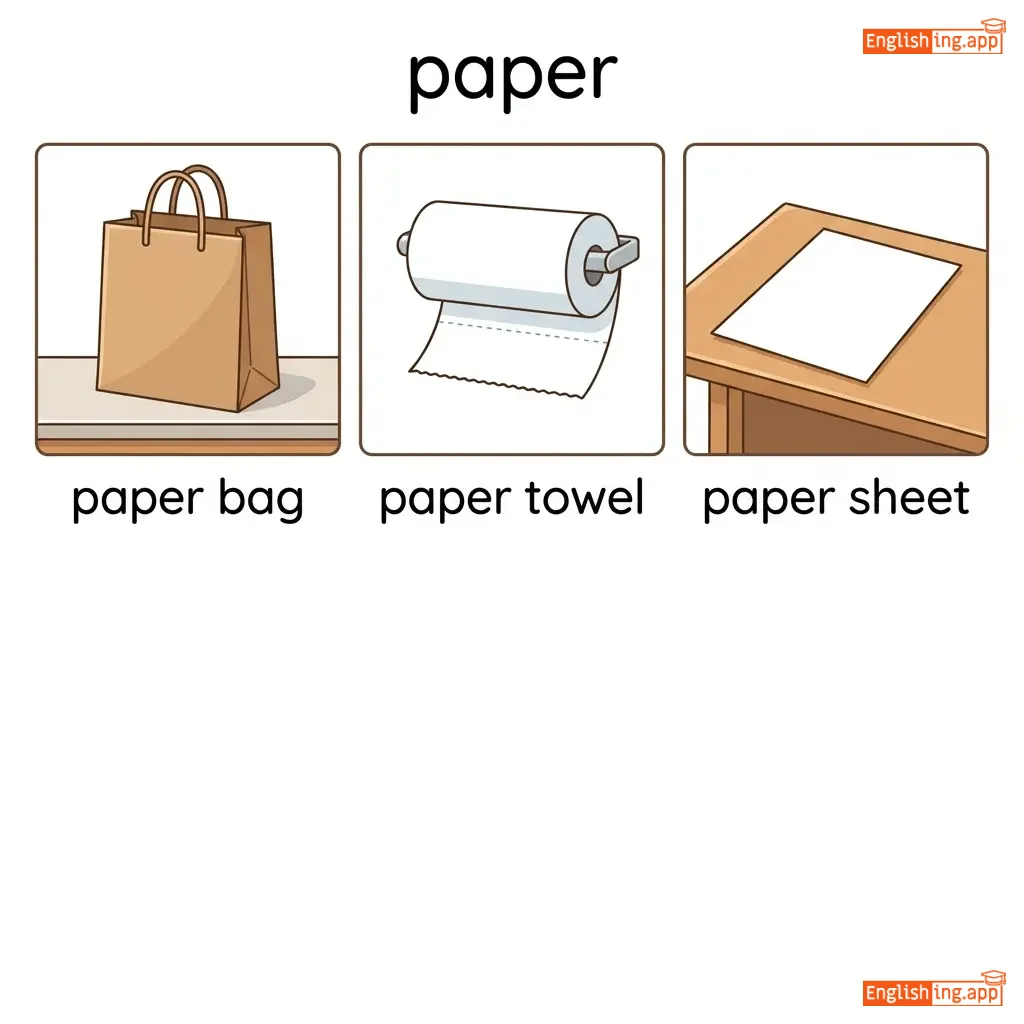
paper bag, paper towel, paper sheet, paper clip
••••••
|
Используй бумагу для записи - Remember paper is for writing!
••••••
|
|
#0
🖊️
|
/pɛn/
noun/verb
(хэппинесс)
••••••
|
- •••••• |
счастье
schastye
••••••
|
penned
••••••
|
penned
••••••
|
pens
••••••
|
penning
••••••
|
A writing instrument using ink; also, to write something.
••••••
|
She used a pen to sign the document.
Она не могла скрыть своего счастья, когда получила награду.
••••••
|
Она не могла скрыть своего счастья, когда получила награду.
Ona ne mogla skryt' svoego schast'ya, kogda poluchila nagradu.
••••••
|
the pen is mightier than the sword
поиск счастья
••••••
|
Writing is more powerful than violence.
••••••
|
поиск счастья
poisk schast'ya
••••••
|
writing tool, stylus, quill, marker
••••••
|
pencil, chalk
••••••
|
ink pen, fountain pen, ballpoint pen, pen down
••••••
|
Счастье (happiness) и счастливый — оба связаны с радостью.
••••••
|
|
#0
👨🏫
|
/prəˈfɛsər/
noun
(профессор)
••••••
|
- •••••• |
профессор
professor
••••••
|
- •••••• | - •••••• | - •••••• | - •••••• |
a senior teacher or academic at a college or university
••••••
|
The professor explained the theory clearly. |
Профессор четко объяснил теорию.
Professor chetko ob'yasnil teoriyu.
••••••
|
professor emeritus |
a retired professor who retains an honorary title
••••••
|
почетный профессор
pochetnyj professor
••••••
|
lecturer, academic, scholar, instructor
••••••
|
student, pupil
••••••
|
university professor, assistant professor, professor emeritus, professor of law
••••••
|
Professor звучит как Проф-ессор — учёный, ставший профессором.
••••••
|
|
#0
📖
|
/riːd/
verb
(rɛd)
••••••
|
- •••••• |
читать
chitat
••••••
|
read
rɛd
••••••
|
read
rɛd
••••••
|
reads
ridz
••••••
|
reading
rɪdɪŋ
••••••
|
to look at written words and understand their meaning
••••••
|
I read books before going to bed.
ya chitaû knigi pered to, kak poshest na spát.
••••••
|
Я читаю книги перед тем, как пойти спать.
Ya chitayu knigi pered tem, kak poiti spat'
••••••
|
- •••••• | - •••••• | - •••••• |
study, peruse, scan, review
••••••
|
write, ignore, overlook
••••••
|
read books, read aloud, read carefully, love to read
••••••
|
Читать: смотреть слова, понимать смысл.
••••••
|
|
#0
👩🏫
|
/tiːtʃ/
verb
(tich)
••••••
|
|
учить
uchit
••••••
|
taught
tot
••••••
|
taught
tot
••••••
|
teaches
tiches
••••••
|
teaching
tiching
••••••
|
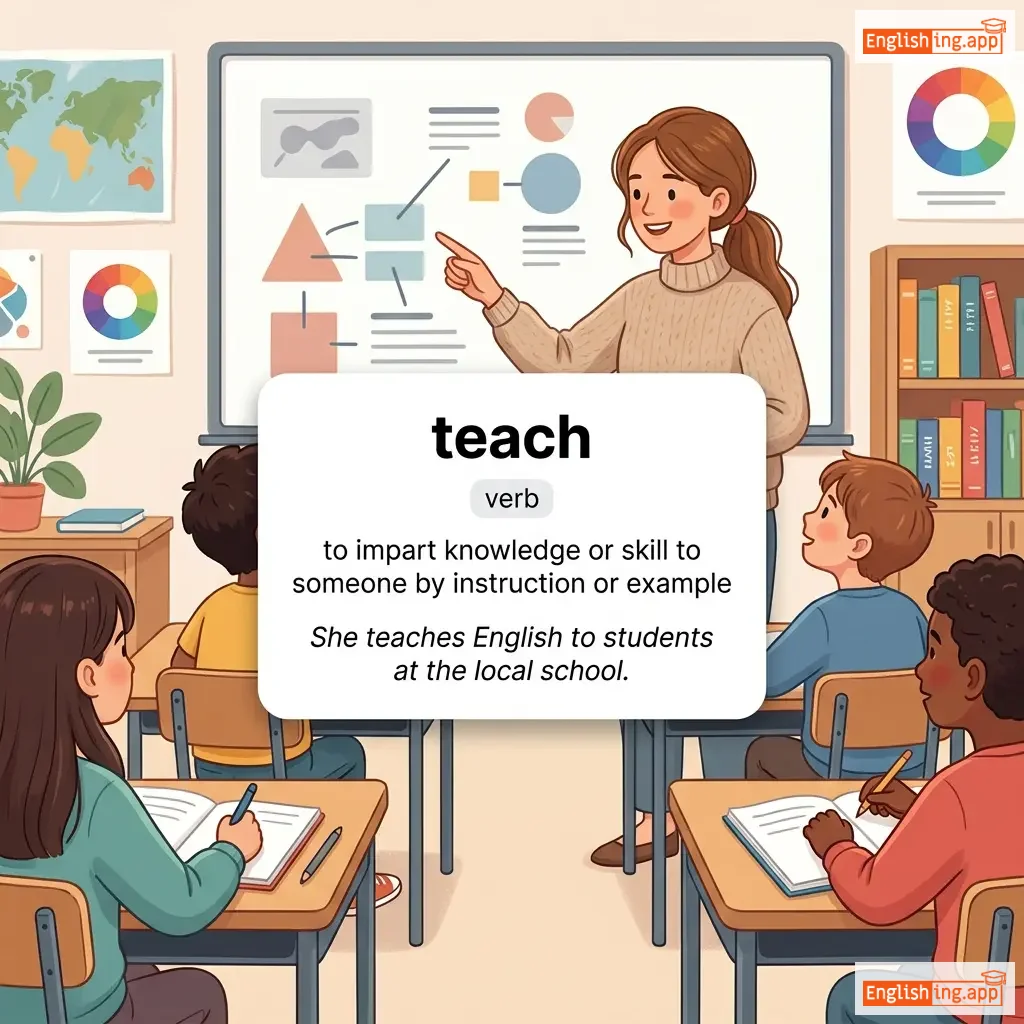
to give knowledge or instruction to someone; to show how to do something
••••••
|
She teaches English at the local school.
она преподает английский в местной школе.
••••••
|
Она преподает английский в местной школе.
Ona prepodayet angliyskiy v mestnoy shkole.
••••••
|
- •••••• | - •••••• | - •••••• |
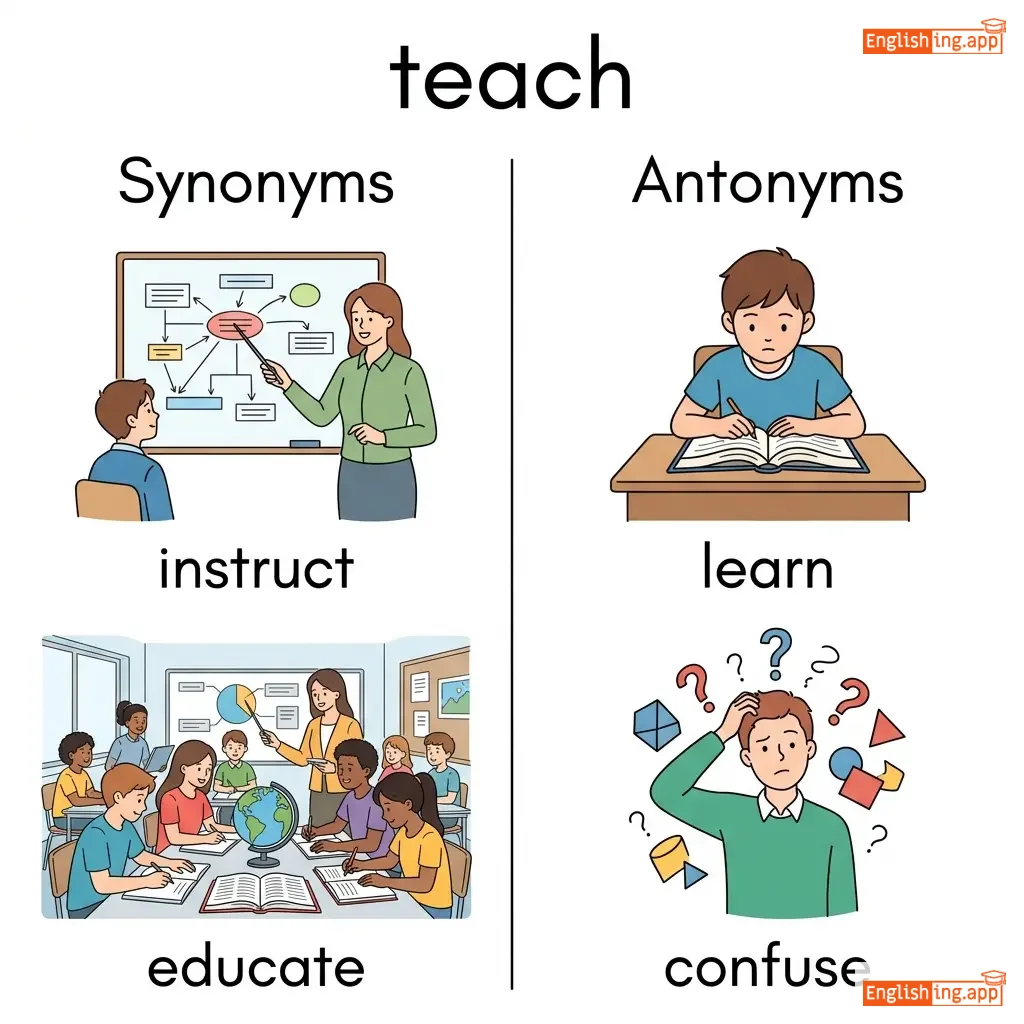
instruct, educate, train, coach
••••••
|
learn, study
••••••
|
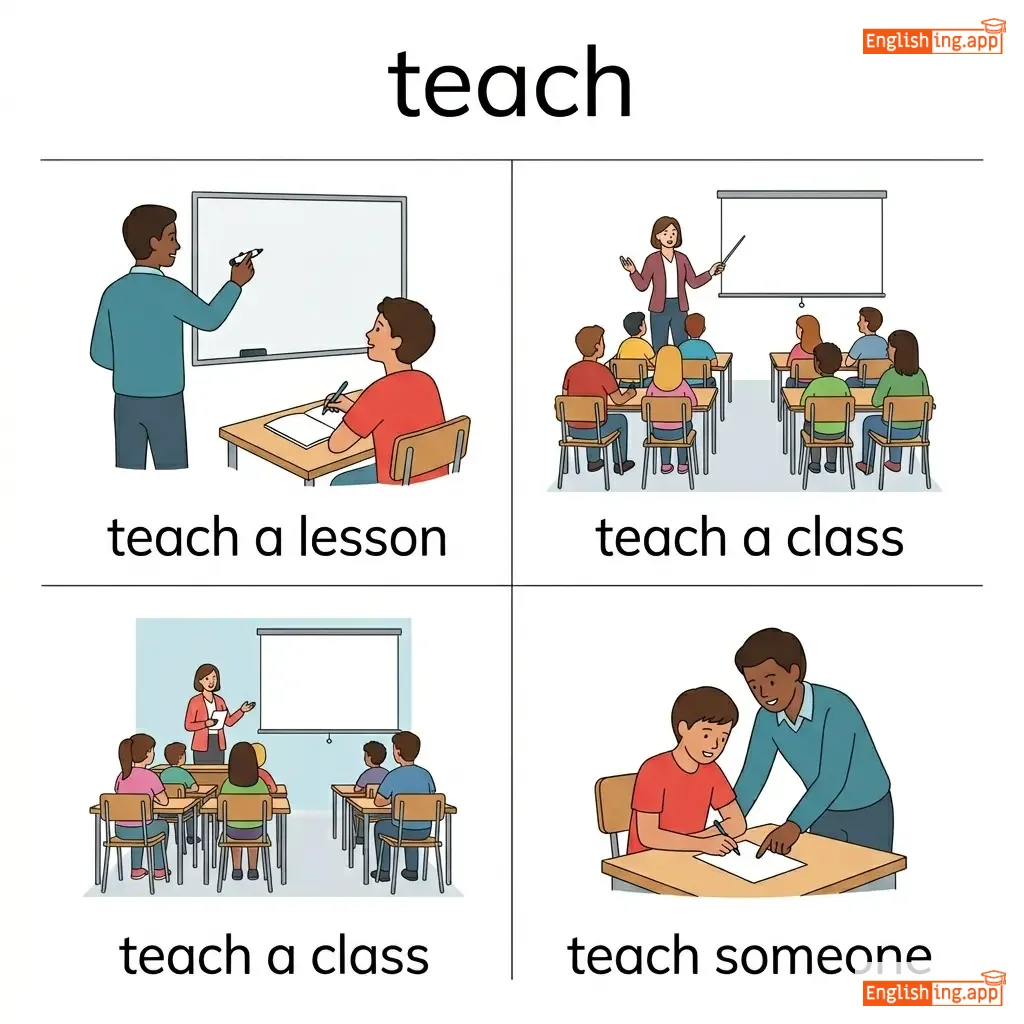
teach lessons, teach students, teach skills, teach children, teach courses, teach methods
••••••
|
tich (teach) = учить (uchit), как в классе
••••••
|
|
#0
🤔
|
/θɪŋk/
verb
(think)
••••••
|
|
думать
dumat'
••••••
|
thought
thot
••••••
|
thought
thot
••••••
|
thinks
thinkz
••••••
|
thinking
thinking
••••••
|
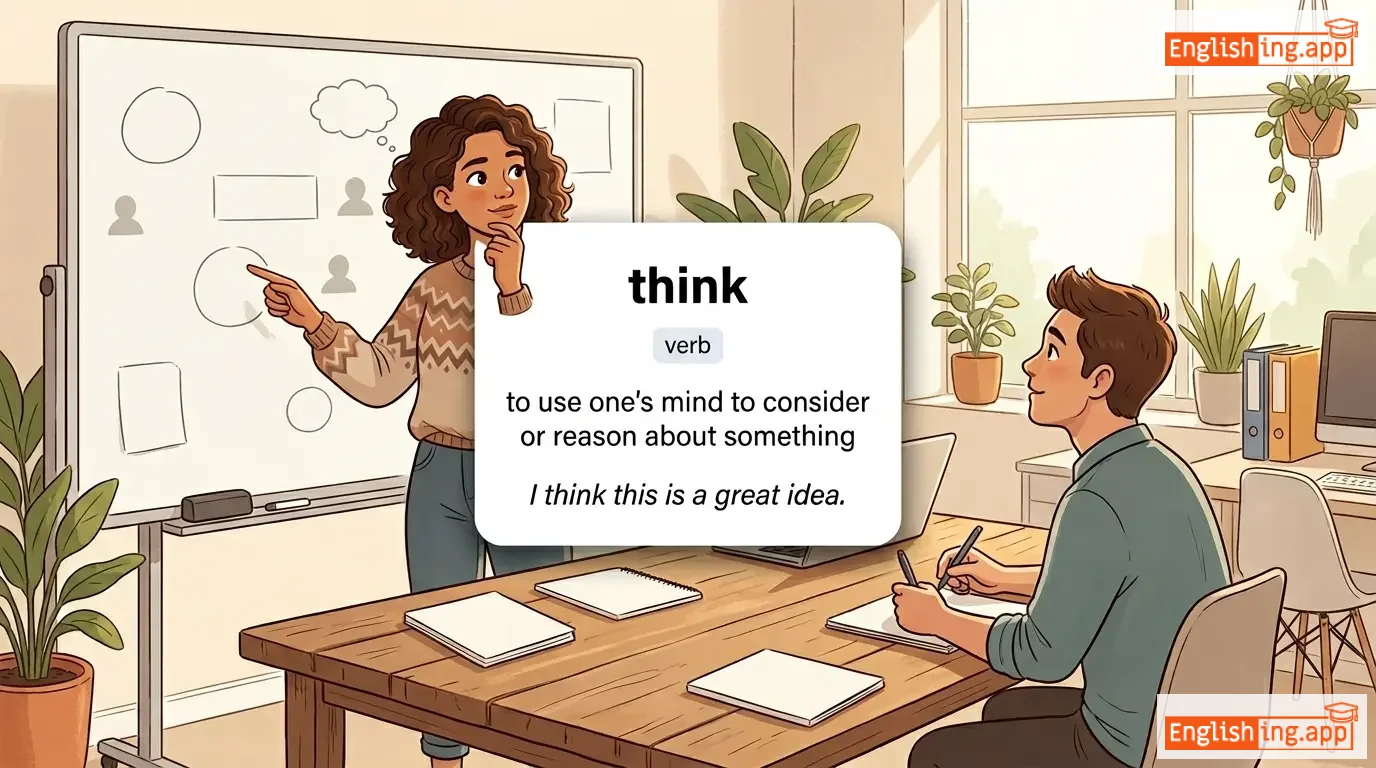
to use one's mind to consider or reason about something
••••••
|
I think this is a great idea.
Я думаю, что это отличная идея.
••••••
|
Я думаю, что это отличная идея.
Ya dumayu, chto eto otlichnaya ideya.
••••••
|
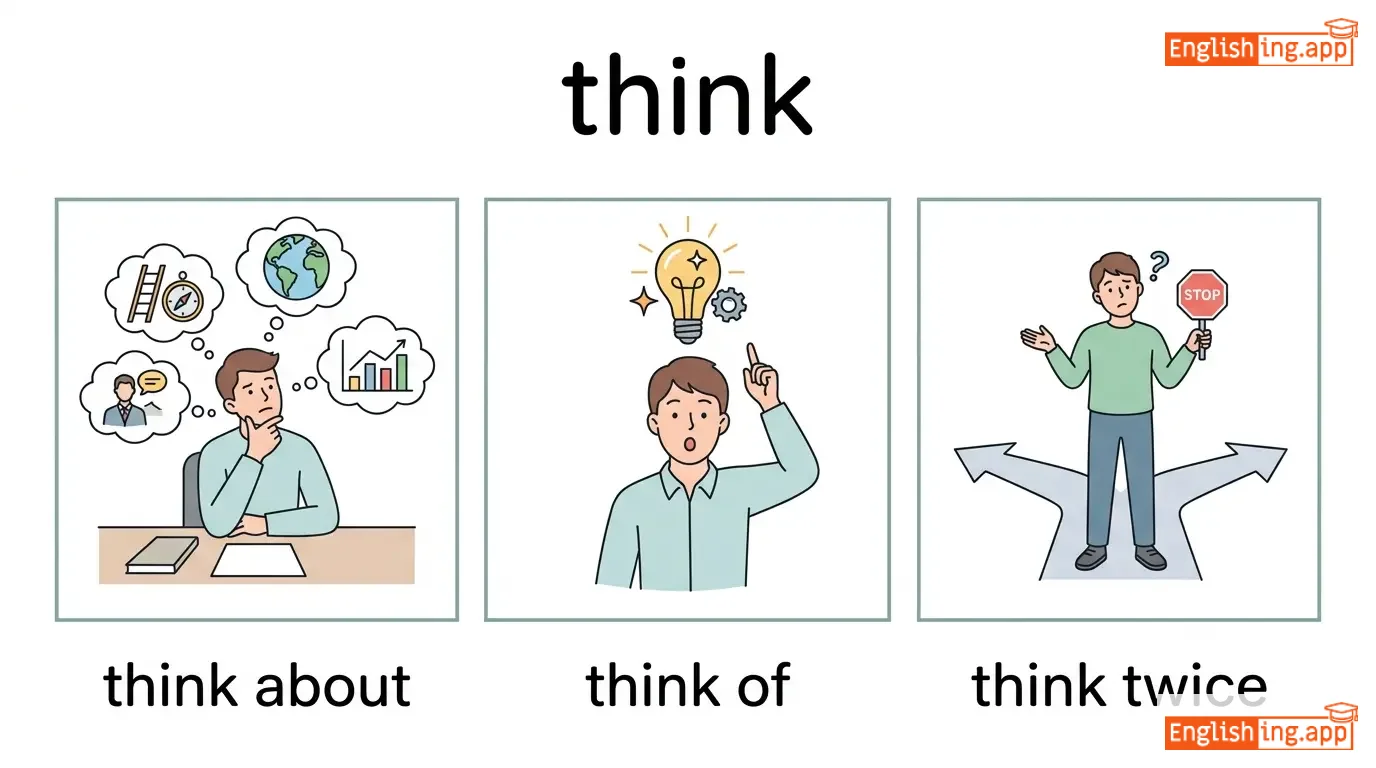
Think twice
Подумай дважды
••••••
|
Consider something carefully before making a decision
••••••
|
Подумай дважды
Podumay dvaжды
••••••
|
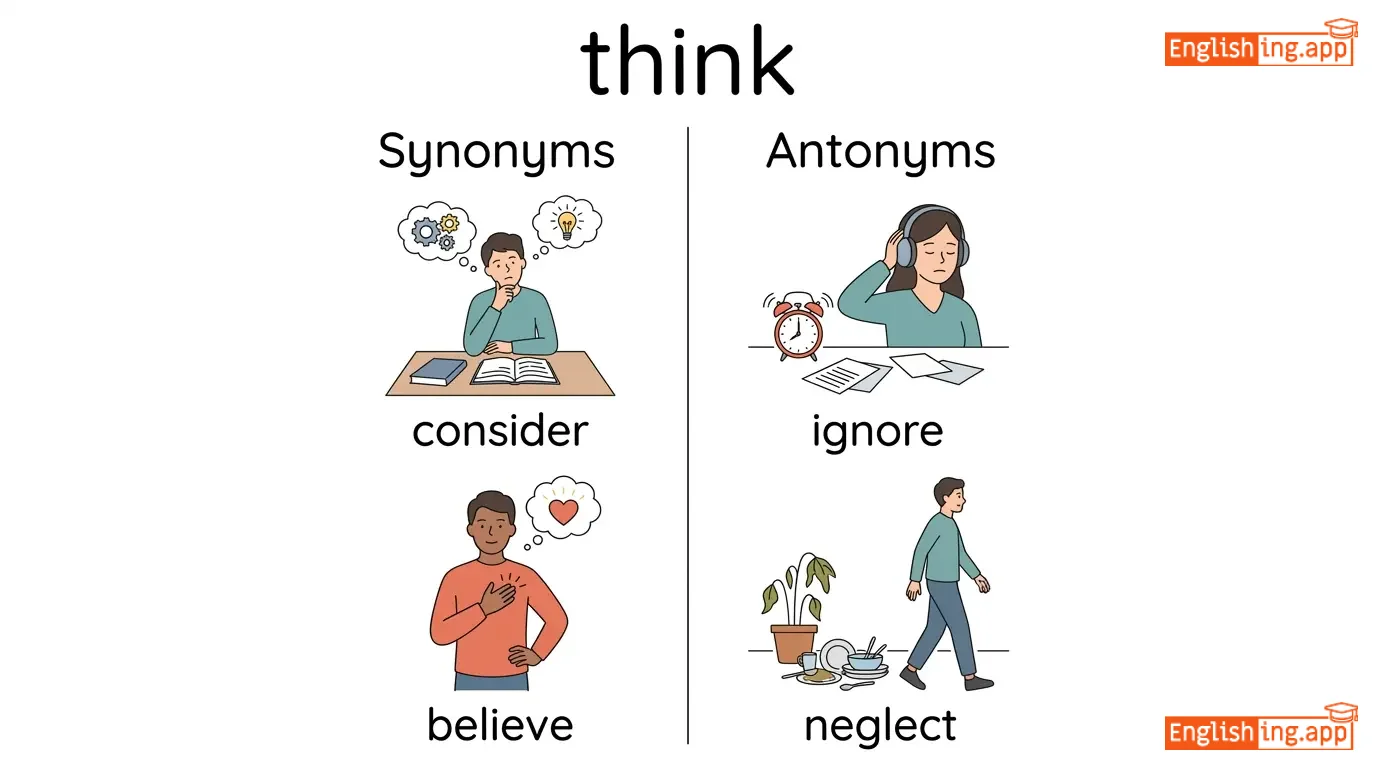
consider, believe, reflect, ponder
••••••
|
ignore, neglect
••••••
|
think about, think of, think twice, think hard
••••••
|
Когда ты думаешь, твой разум работает как шестеренка (🧠).
••••••
|
|
#0
✍️
|
/raɪt/
verb
(хэппинесс)
••••••
|
|
счастье
schastye
••••••
|
wrote
••••••
|
written
••••••
|
writes
••••••
|
writing
••••••
|
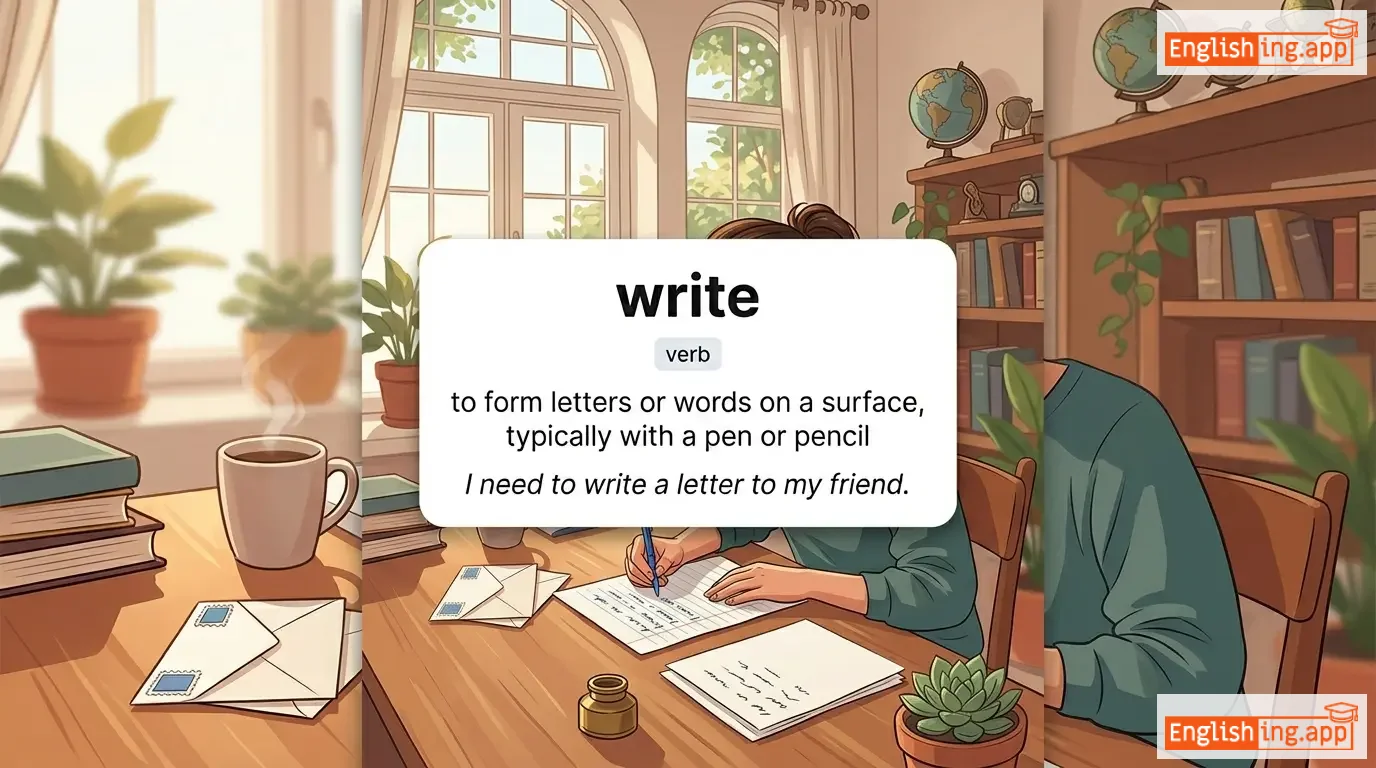
to form letters or words on a surface, typically with a pen or pencil
••••••
|
I need to write a letter to my friend.
Она не могла скрыть свое счастье, когда получила награду.
••••••
|
Она не могла скрыть свое счастье, когда получила награду.
Ona ne mogla skryt' svoe schast'ye, kogda poluchila nagradu.
••••••
|
write down
поиск счастья
••••••
|
to make a note of something
••••••
|
поиск счастья
poisk schast'ya
••••••
|
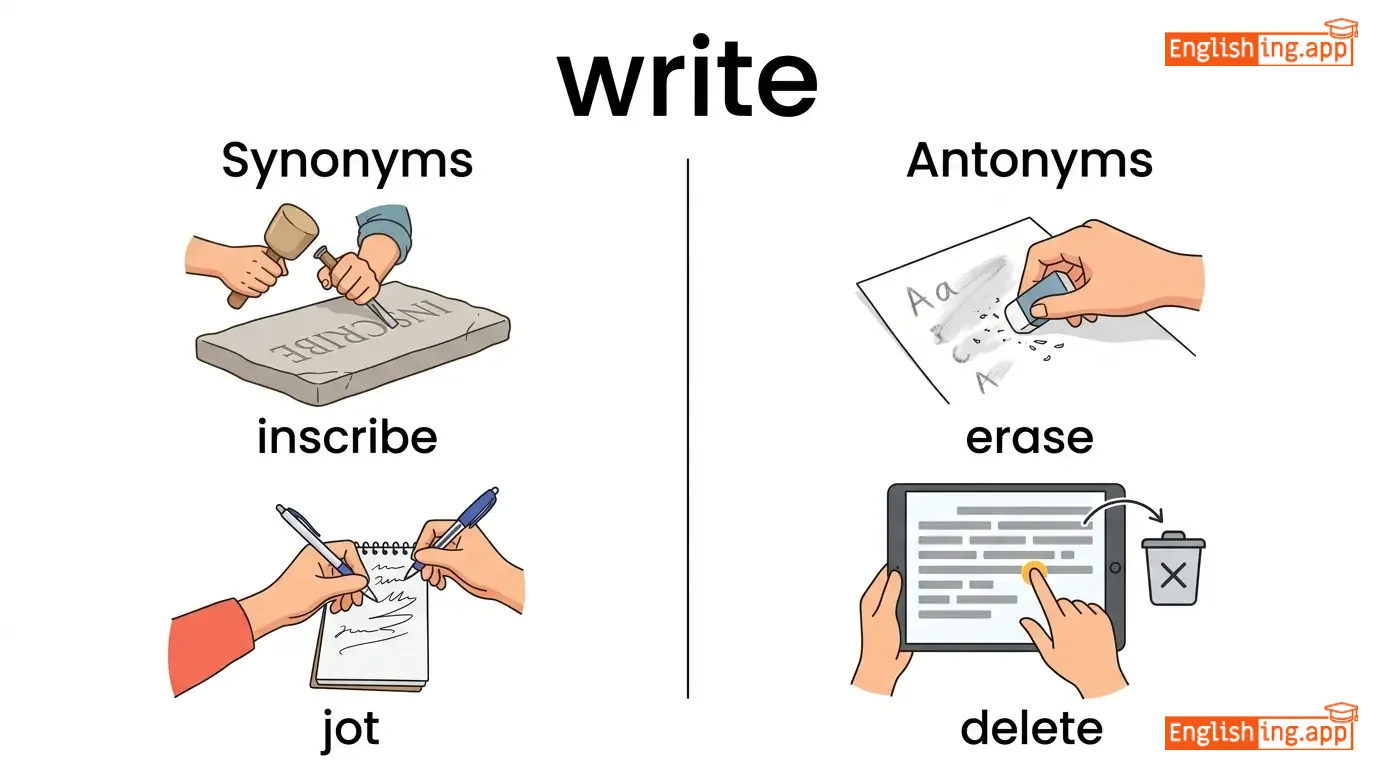
inscribe, jot, record, compose
••••••
|
erase, delete
••••••
|
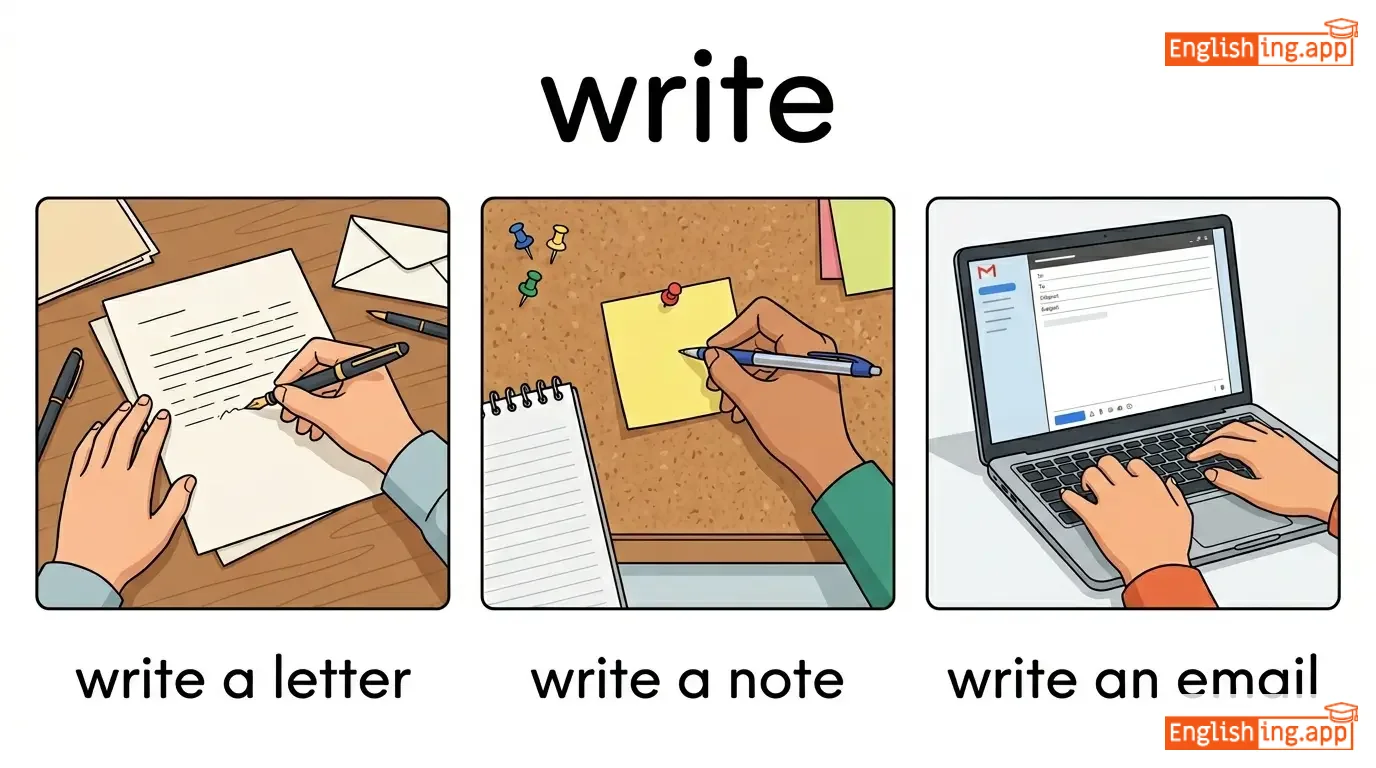
write a letter, write a note, write an email, write a report
••••••
|
Запомните счастье как стремление к счастью!
••••••
|
Vocabulary Quiz
Test your vocabulary by matching words with their translations or meanings.
Login to take the quiz
Comments (0)
Share your thoughts and join the discussion.
Join the discussion by logging in
Login to CommentNo comments yet
Be the first to share your thoughts!