

Стояние для реки
Standing Tall for the River
Хвост tail дельфина появился на изгибе реки. Местные жители рассказали tale о старых наводнениях. Новая башня от наводнений стояла tall. Чистая вода распределялась из общественного tank. Волонтеры рисовали карты с бумагой и tape. Фотографии прошлого вызвали tear в глазах всех. Группа teen студентов собрала пластик с реки. Они продолжают tend деревья на берегах реки. Большие tent защитили лагерь от солнца. Собрание предупредило, что некоторые риски имеют долгосрочные term эффекты. Волонтеры сказали, что им нужно действовать с большей целью than раньше. 'Эта река — that символ силы,' заявил председатель. 'Без them мы не можем добиться успеха', сказали жители деревни о своих союзниках. 'С этого then мы начнем реальные изменения', добавил президент. Дети пообещали, что they будут следить каждый вечер. Песочные мешки укрепили thin края дамбы. 'Мы можем сделать this,' — закричала вся команда. Thus, собрание решило создать постоянный комитет. Данные о tide были проанализированы с помощью датчиков. Волонтеры работали till ночи, чтобы завершить уборку.
Обновитесь для доступа ко всему словарю
Получите неограниченный доступ ко всем словам с подпиской Pro
Обновить до ProПеревод
Прошедшее
Причастие прошедшего времени
Третье лицо единственного числа
Герундий
Значение
Пример предложения
Перевод примера предложения
Синонимы
Антонимы
Коллокации
Мнемоника
Swipe left or right, or use the buttons. Tap image to zoom.
Обновитесь для доступа ко всем предложениям
Получите неограниченный доступ ко всем предложениям с подпиской Pro
Обновить до ProПеревод примера предложения
Слово
Standing Tall for the RiverStanding Tall for the River - Переключатель маски
|
Эмодзи
|
Слово | Images | Перевод | Прошедшее | Причастие прошедшего времени | Третье лицо единственного числа | Герундий | Значение | Пример предложения | Перевод примера предложения | Пример выражения | Значение примера выражения | Перевод примера выражения | Синонимы | Антонимы | Коллокации | Мнемоника |
|---|---|---|---|---|---|---|---|---|---|---|---|---|---|---|---|---|---|
|
#0
🐕
|
/teɪl/
noun
(teyl)
••••••
|
- •••••• |
хвост
khvost
••••••
|
- •••••• | - •••••• | - •••••• | - •••••• |
the rear part of an animal that extends from the back or bottom
••••••
|
The dog wagged its tail happily when it saw its owner. |
Собака радостно махала хвостом, когда увидела своего хозяина.
Sobaka radostno makhala khvostom, kogda uvidela svoego khozyaina.
••••••
|
- •••••• | - •••••• | - •••••• |
rear, end, appendage
••••••
|
head, front
••••••
|
dog tail, long tail, wagging tail, tail feathers
••••••
|
Khvost = tail in Russian, and both wag happily!
••••••
|
|
#0
📖
|
/teɪl/
noun
(тэйл)
••••••
|
- •••••• |
рассказ
rasskaz
••••••
|
- •••••• | - •••••• | - •••••• | - •••••• |
a narrative of imaginary events, especially one that is presented as true
••••••
|
The old man told a tale of his adventures. |
Старик рассказал рассказ о своих приключениях.
Starik rasskazal rasskaz o svoikh priklyucheniyakh.
••••••
|
tall tale |
an exaggerated story, often one that is not true
••••••
|
преувеличенная история
preuvelichennaya istoriya
••••••
|
story, narrative, legend, fable
••••••
|
fact, truth
••••••
|
fairy tale, tall tale, bedtime tale
••••••
|
рассказ (rasskaz) сказан из воображения - A tale told from imagination
••••••
|
|
#0
📏
|
/tɔːl/
adjective
(тол)
••••••
|
- •••••• |
высокий
vysokiy
••••••
|
- •••••• | - •••••• | - •••••• | - •••••• |
having a greater than average height
••••••
|
He is the tallest player on the team. |
Он самый высокий игрок в команде.
On samyy vysokiy igrok v komande.
••••••
|
tall order |
a difficult or challenging task
••••••
|
трудная задача
trudnaya zadacha
••••••
|
high, lofty, towering, elevated
••••••
|
short, small, low
••••••
|
tall building, tall person, tall story, tall tree
••••••
|
Tall значит высокий, как башня.
••••••
|
|
#0
🚙
|
/tæŋk/
noun
••••••
|
- •••••• | - •••••• | - •••••• | - •••••• | - •••••• | - •••••• |
a large, heavy military vehicle that moves on tracks and is armed with weapons
••••••
|
The army sent tanks to the front lines. |
- •••••• | - •••••• | - •••••• | - •••••• |
armored vehicle, combat vehicle, war machine
••••••
|
car, bicycle
••••••
|
military tank, battle tank, army tank
••••••
|
No •••••• |
|
#0
📼
|
/teɪp/
noun
(teyp)
••••••
|
- •••••• |
скотч
skotch
••••••
|
- •••••• | - •••••• | - •••••• | - •••••• |
a long, narrow strip of material, often sticky on one side, used for fastening or sticking things together
••••••
|
I need some tape to seal this box. |
Мне нужно немного скотча, чтобы запечатать эту коробку.
Mne nuzhno nemnogo skotcha, chtoby zapechatat' etu korobku.
••••••
|
- •••••• | - •••••• | - •••••• |
adhesive, sticky tape, masking tape, sellotape
••••••
|
scissors, unstick
••••••
|
scotch tape, masking tape, duct tape, adhesive tape
••••••
|
Tape it up to seal it tight!
••••••
|
|
#0
💧
|
/tɪər/ (noun: liquid) /tɛər/ (verb: rip)
verb, noun
••••••
|
|
- •••••• |
tore
••••••
|
torn
••••••
|
tears
••••••
|
tearing
••••••
|
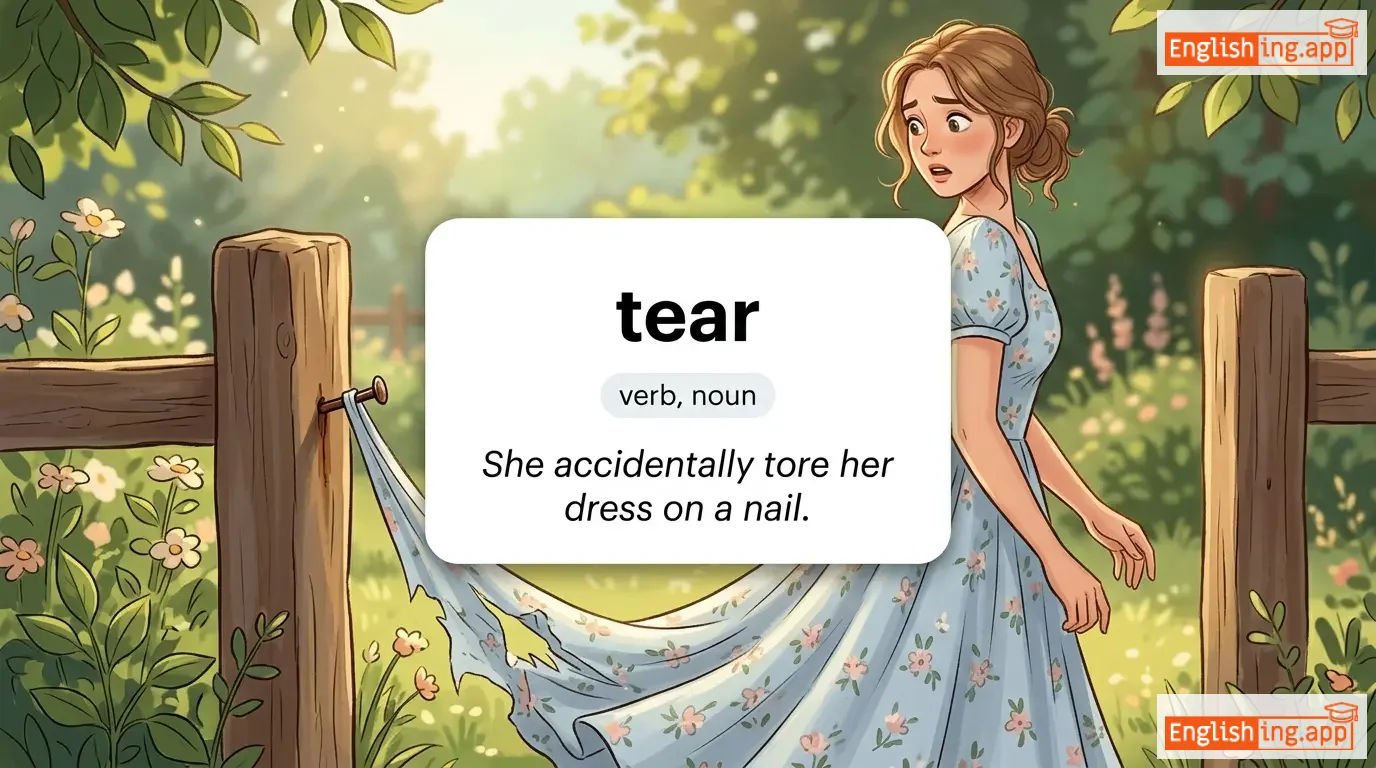
As a verb: to pull apart or rip something. As a noun: a drop of clear salty liquid produced by glands in your eyes.
••••••
|
She accidentally tore her dress on a nail. |
- •••••• |
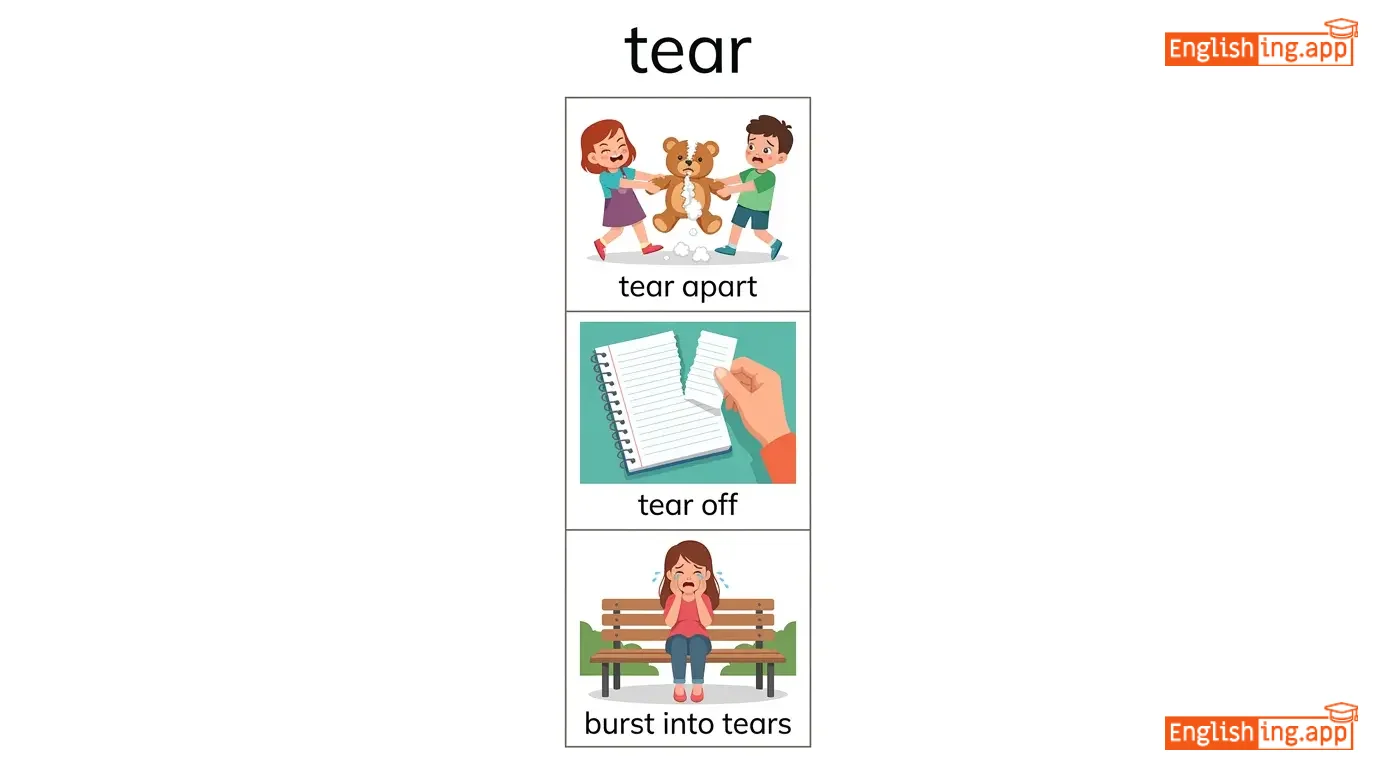
tear apart |
To destroy, separate, or damage severely.
••••••
|
- •••••• |
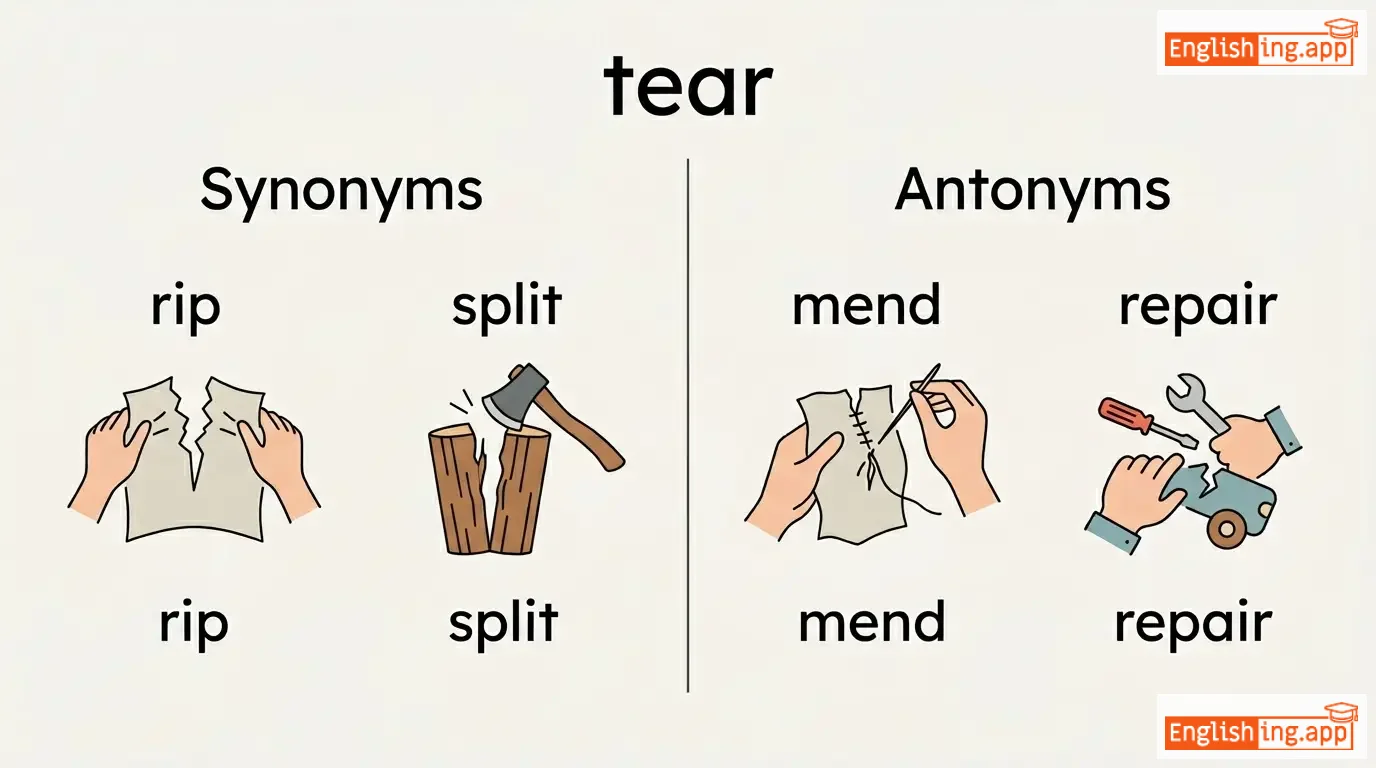
rip, split, shred, rend, pull
••••••
|
mend, repair
••••••
|
tear apart, tear off, burst into tears, tear down
••••••
|
No •••••• |
|
#0
🧑🦱
|
/tiːn/
noun
(тинейджер)
••••••
|
- •••••• |
подросток
podrostok
••••••
|
- •••••• | - •••••• | - •••••• | - •••••• |
a person aged between 13 and 19 years.
••••••
|
He's a teenager who loves sports.
Он подросток, который любит спорт.
••••••
|
Он подросток, который любит спорт.
On podrostok, kotoryj lyubit sport.
••••••
|
- •••••• | - •••••• | - •••••• |
adolescent, young person, minor
••••••
|
adult, senior, elder
••••••
|
teen years, teen life, teenage
••••••
|
Teen is the age when you are 'teen' years old!
••••••
|
|
#0
🌱
|
/tɛnd/
verb
(тенд)
••••••
|
- •••••• |
склоняться/заботиться
sklonyatsya/zabotitsya
••••••
|
tended
тендед
••••••
|
tended
тендед
••••••
|
tends
тендс
••••••
|
tending
тендинг
••••••
|
To regularly behave in a particular way or to take care of something.
••••••
|
She tends to wake up early in the morning.
Она склонна вставать рано утром.
••••••
|
Она склонна вставать рано утром.
Ona sklonna vstavayt' rano utrom.
••••••
|
tend to
иметь склонность к
••••••
|
To be likely to do something or to have a certain characteristic.
••••••
|
иметь склонность к
imet' sklonnost' k
••••••
|
care for, look after, lean, incline, nurture
••••••
|
ignore, neglect
••••••
|
tend to, tend animals, tend plants, tend carefully
••••••
|
Tend означает склонность или уход за чем-то.
••••••
|
|
#0
⛺
|
/tent/
noun
(тент)
••••••
|
- •••••• |
палатка
palatka
••••••
|
- •••••• | - •••••• | - •••••• | - •••••• |
a portable shelter made of cloth or canvas; military accommodation
••••••
|
The soldiers set up their tent in the military camp.
Солдаты установили свой тент в военном лагере.
••••••
|
Солдаты установили свой тент в военном лагере.
Soldaty ustanovili svoi tent v voennom lagere.
••••••
|
- •••••• | - •••••• | - •••••• |
shelter, pavilion, canvas shelter
••••••
|
permanent structure, building
••••••
|
military tent, field tent, tent camp, army tent
••••••
|
The Russian word for tent is 'палатка', imagine a tent made of 'palace' material!
••••••
|
|
#0
📚
|
/tɜːm/
noun
(тёрм)
••••••
|
- •••••• |
термин
termin
••••••
|
- •••••• | - •••••• | - •••••• | - •••••• |
a word or phrase used to describe a thing or to express a concept
••••••
|
The term 'machine learning' is commonly used in technology. |
Термин 'машинное обучение' часто используется в технологиях.
Termin 'mashinnoye obucheniye' chasto ispol'zuyetsya v tekhnologiyakh.
••••••
|
- •••••• | - •••••• | - •••••• |
expression, phrase, label, designation
••••••
|
ambiguity, vagueness
••••••
|
technical term, common term, legal term
••••••
|
TERM used for describing a thing - ‘термин’ is used to mark a concept.
••••••
|
|
#0
🔼
|
/ðæn/
conjunction
(тен)
••••••
|
- •••••• |
чем
chem
••••••
|
- •••••• | - •••••• | - •••••• | - •••••• |
used to introduce the second element in a comparison
••••••
|
She is taller than her brother.
Она выше своего брата.
••••••
|
Она выше своего брата.
Ona vyshe svoego brata.
••••••
|
- •••••• | - •••••• | - •••••• |
more than, compared to, as opposed to
••••••
|
less than
••••••
|
greater than, more than, better than
••••••
|
Than means you compare one thing with another
••••••
|
|
#0
👉
|
/ðæt/
pronoun
(ðæt)
••••••
|
- •••••• |
это
eto
••••••
|
- •••••• | - •••••• | - •••••• | - •••••• |
used to identify a specific person or thing observed or heard
••••••
|
That is my book on the table.
Это моя книга на столе.
••••••
|
Это моя книга на столе.
Eto moya kniga na stole.
••••••
|
- •••••• | - •••••• | - •••••• |
this, it, the one
••••••
|
those, these
••••••
|
that book, that person, that idea
••••••
|
That - Это (Eto) книга на столе
••••••
|
|
#0
👥
|
/ðɛm/
pronoun
(ðɛm)
••••••
|
- •••••• |
их
ikh
••••••
|
- •••••• | - •••••• | - •••••• | - •••••• |
used to refer to people or things previously mentioned or easily identified
••••••
|
I saw them at the park yesterday. |
Я видел их в парке вчера.
Ya videl ikh v parke vchera.
••••••
|
- •••••• | - •••••• | - •••••• |
they, those, these
••••••
|
none
••••••
|
see them, tell them, help them
••••••
|
Их (them) всегда можно найти рядом с нами.
••••••
|
|
#0
⏳
|
/ðɛn/
adverb
(zhen)
••••••
|
- •••••• |
тогда
togda
••••••
|
- •••••• | - •••••• | - •••••• | - •••••• |
at that time; next in order of time or place
••••••
|
We went to the park, and then we had lunch.
Мы пошли в парк, а затем пообедали.
••••••
|
Мы пошли в парк, а затем пообедали.
My poshli v park, a zatem poobedali.
••••••
|
back then
тогда
••••••
|
used to refer to a time in the past
••••••
|
тогда
togda
••••••
|
afterward, subsequently, later, next
••••••
|
before
••••••
|
then what, then go, then what happened
••••••
|
Тогда (then) для памяти о прошлом времени
••••••
|
|
#0
👫
|
/ðeɪ/
pronoun
(ðeɪ)
••••••
|
- •••••• |
они
oni
••••••
|
- •••••• | - •••••• | - •••••• | - •••••• |
used to refer to people or things previously mentioned or easily identified
••••••
|
They are going to the park. |
Они идут в парк.
Oni idut v park.
••••••
|
- •••••• | - •••••• | - •••••• |
them, those, these
••••••
|
I, we
••••••
|
they are, they have, they will
••••••
|
They are our friends - Они наши друзья.
••••••
|
|
#0
📏
|
/θɪn/
adjective
(θin)
••••••
|
- •••••• |
тонкий; узкий
tonkiy; uzkiy
••••••
|
- •••••• | - •••••• | - •••••• | - •••••• |
having little thickness; not thick; slender
••••••
|
She wore a thin jacket in the cold weather.
Она носила тонкую куртку в холодную погоду.
••••••
|
Она носила тонкую куртку в холодную погоду.
ona nosila tonkuyu kurtku v kholodnuyu pogodu
••••••
|
- •••••• | - •••••• | - •••••• |
slender, slim, narrow, skinny
••••••
|
thick, fat, wide, broad
••••••
|
thin layer, thin ice, thin air, thin line
••••••
|
Тонкий и узкий — как карандаш.
••••••
|
|
#0
📖
|
/ðɪs/
pronoun
(dis)
••••••
|
- •••••• |
это
eto
••••••
|
- •••••• | - •••••• | - •••••• | - •••••• |
used to refer to a person or thing that is close or near in space, time, or thought
••••••
|
This is my favorite book. |
Это моя любимая книга.
Eto moya lyubimaya kniga.
••••••
|
- •••••• | - •••••• | - •••••• |
this one, here, these
••••••
|
that, those
••••••
|
this book, this place, this idea
••••••
|
Это (eto) напоминает тебе что-то близкое по времени или мысли.
••••••
|
|
#0
➡️
|
/ðʌs/
adverb
(ðʌs)
••••••
|
- •••••• |
так
tak
••••••
|
- •••••• | - •••••• | - •••••• | - •••••• |
as a result or consequence of something previously stated
••••••
|
He was late, thus he missed the meeting. |
Он опоздал, так что пропустил встречу.
On opozdal, tak chto propustil vstrechu.
••••••
|
- •••••• | - •••••• | - •••••• |
therefore, hence, accordingly, so
••••••
|
however, nevertheless
••••••
|
thus far, thus far as, thus it is
••••••
|
Так работает решение.
••••••
|
|
#0
🌊
|
/taɪd/
noun
(taɪd)
••••••
|
- •••••• |
прилив и отлив
priliv i otiliv
••••••
|
- •••••• | - •••••• | - •••••• | - •••••• |
the regular rise and fall of the sea caused by the moon and sun's gravity; a powerful flow or movement
••••••
|
The fisherman waited for the tide to come in. |
Рыбак ждал, когда начнется прилив.
Rybak zhdal, kogda nachnyotsya prilev.
••••••
|
turn the tide |
to cause a reversal of fortune or change in direction
••••••
|
изменить ход событий
izmenit' khod sobytiy
••••••
|
current, flow, surge, stream, wave
••••••
|
ebb, stillness, stagnation
••••••
|
high tide, low tide, rising tide, ebb tide
••••••
|
Прилив и отлив = приход и уход океанских волн - прилив приходит и уходит по времени.
••••••
|
|
#0
⏰
|
/tɪl/
preposition
(тил)
••••••
|
- •••••• |
до
do
••••••
|
- •••••• | - •••••• | - •••••• | - •••••• |
up to the time of; until
••••••
|
She waited till midnight for his call.
Она ждала до полуночи его звонка.
••••••
|
Она ждала до полуночи его звонка.
Ona zhdala do polunoči ego zvonka.
••••••
|
- •••••• | - •••••• | - •••••• |
until, up to, before, pending
••••••
|
after, since
••••••
|
till now, till late, till tomorrow, wait till
••••••
|
Till означает 'до' — жди до полуночи для звонка.
••••••
|
Vocabulary Quiz
Test your vocabulary by matching words with their translations or meanings.
Login to take the quiz
Comments (0)
Share your thoughts and join the discussion.
Join the discussion by logging in
Login to CommentNo comments yet
Be the first to share your thoughts!