

Debout pour le fleuve
Standing Tall for the River
La tail d'un dauphin est apparue au tournant du fleuve. Les habitants ont raconté un tale des anciennes inondations. La nouvelle tour de crue se dressait tall de manière remarquable. De l'eau pure a été distribuée depuis le tank communautaire. Les bénévoles ont esquissé des cartes avec du papier et du tape. Les photos du passé ont fait couler une tear dans les yeux de tout le monde. Un groupe d'étudiants teen a ramassé des plastiques du fleuve. Ils continuent à tend les arbres sur les rives. De grandes tents ont ombragé le campement du soleil. La réunion a averti que certains risques ont des effets à long terme term. Les bénévoles ont dit qu'ils devaient agir avec plus de but than avant. 'Ce fleuve est that le symbole de la force', a déclaré le président. 'Sans them, nous ne pouvons pas réussir', ont dit les villageois à propos de leurs alliés. 'A partir de then, nous commencerons un véritable changement', a ajouté le président. Les enfants ont promis que they surveilleraient chaque soir. Des sacs de sable ont renforcé les bords thin de la digue. 'Nous pouvons faire this', a crié toute l'équipe. Thus, la réunion a décidé de former un comité permanent. Les données sur la tide ont été analysées par des capteurs. Les bénévoles ont travaillé till la nuit pour finir le nettoyage.
Passez à la version Pro pour accéder à tout le vocabulaire
Message vocabulaire Pro
Passer à la version ProTraduction
Passé
Participe Passé
Troisième Personne du Singulier
Gérondif
Signification
Phrase d'Exemple
Traduction de la Phrase d'Exemple
Synonymes
Antonymes
Collocations
Mnémonique
Swipe left or right, or use the buttons. Tap image to zoom.
Passez à la version Pro pour accéder à toutes les phrases
Message phrases Pro
Passer à la version ProTraduction de la Phrase d'Exemple
Mot
Standing Tall for the RiverStanding Tall for the River - Basculement de Masque
|
Émoji
|
Mot | Images | Traduction | Passé | Participe Passé | Troisième Personne du Singulier | Gérondif | Signification | Phrase d'Exemple | Traduction de la Phrase d'Exemple | Expression d'Exemple | Signification de l'Expression d'Exemple | Traduction de l'Expression d'Exemple | Synonymes | Antonymes | Collocations | Mnémonique |
|---|---|---|---|---|---|---|---|---|---|---|---|---|---|---|---|---|---|
|
#0
🐕
|
/teɪl/
noun
(teyl)
••••••
|
- •••••• |
queue
kew
••••••
|
- •••••• | - •••••• | - •••••• | - •••••• |
the rear part of an animal that extends from the back or bottom
••••••
|
The dog wagged its tail happily when it saw its owner. |
Le chien a remué sa queue joyeusement lorsqu'il a vu son propriétaire.
Le chien a remué sa kew joyeusement lorsqu'il a vu son propriétaire.
••••••
|
- •••••• | - •••••• | - •••••• |
rear, end, appendage
••••••
|
head, front
••••••
|
dog tail, long tail, wagging tail, tail feathers
••••••
|
Queue = tail in French, and both wag with happiness!
••••••
|
|
#0
📖
|
/teɪl/
noun
(tɛɪl)
••••••
|
- •••••• |
histoire
histoire
••••••
|
- •••••• | - •••••• | - •••••• | - •••••• |
a narrative of imaginary events, especially one that is presented as true
••••••
|
The old man told a tale of his adventures. |
Le vieil homme a raconté une histoire de ses aventures.
Le vieil homme a raconté une histoire de ses aventures.
••••••
|
tall tale |
an exaggerated story, often one that is not true
••••••
|
conte exagéré
conte exagéré
••••••
|
story, narrative, legend, fable
••••••
|
fact, truth
••••••
|
fairy tale, tall tale, bedtime tale
••••••
|
histoire (histoire) tissée par l'imaginaire - A tale woven by imagination
••••••
|
|
#0
📏
|
/tɔːl/
adjective
(tôl)
••••••
|
- •••••• |
grand
grand
••••••
|
- •••••• | - •••••• | - •••••• | - •••••• |
having a greater than average height
••••••
|
He is the tallest player on the team. |
Il est le joueur le plus grand de l'équipe.
Il est le joueur le plus grand de l'équipe.
••••••
|
tall order |
a difficult or challenging task
••••••
|
un travail difficile
un travail difficile
••••••
|
high, lofty, towering, elevated
••••••
|
short, small, low
••••••
|
tall building, tall person, tall story, tall tree
••••••
|
Tall signifie grand, comme une grande tour.
••••••
|
|
#0
🚙
|
/tæŋk/
noun
(tank)
••••••
|
- •••••• |
char
shar
••••••
|
- •••••• | - •••••• | - •••••• | - •••••• |
a large, heavy military vehicle that moves on tracks and is armed with weapons
••••••
|
The army sent tanks to the front lines.
L'armée a envoyé des chars vers les lignes de front.
••••••
|
L'armée a envoyé des chars vers les lignes de front.
L armee a envoye des chars vers les lignes de front
••••••
|
- •••••• | - •••••• | - •••••• |
armored vehicle, combat vehicle, war machine
••••••
|
car, bicycle
••••••
|
military tank, battle tank, army tank
••••••
|
Tank crosses the border and becomes Char; remember Tank -> Char for the front line
••••••
|
|
#0
📼
|
/teɪp/
noun
(teyp)
••••••
|
- •••••• |
ruban adhésif
ruban adhesif
••••••
|
- •••••• | - •••••• | - •••••• | - •••••• |
a long, narrow strip of material, often sticky on one side, used for fastening or sticking things together
••••••
|
I need some tape to seal this box. |
J'ai besoin de ruban adhésif pour sceller cette boîte.
J'ai besoin de ruban adhésif pour sceller cette boîte.
••••••
|
- •••••• | - •••••• | - •••••• |
adhesive, sticky tape, masking tape, sellotape
••••••
|
scissors, unstick
••••••
|
scotch tape, masking tape, duct tape, adhesive tape
••••••
|
Tape it up to seal it tight!
••••••
|
|
#0
💧
|
/tɪər/ (noun: liquid) /tɛər/ (verb: rip)
verb, noun
(tère)
••••••
|
|
larme / déchirer
larme / dechirer
••••••
|
tore
tôr
••••••
|
torn
torn
••••••
|
tears
tèrz
••••••
|
tearing
tèring
••••••
|
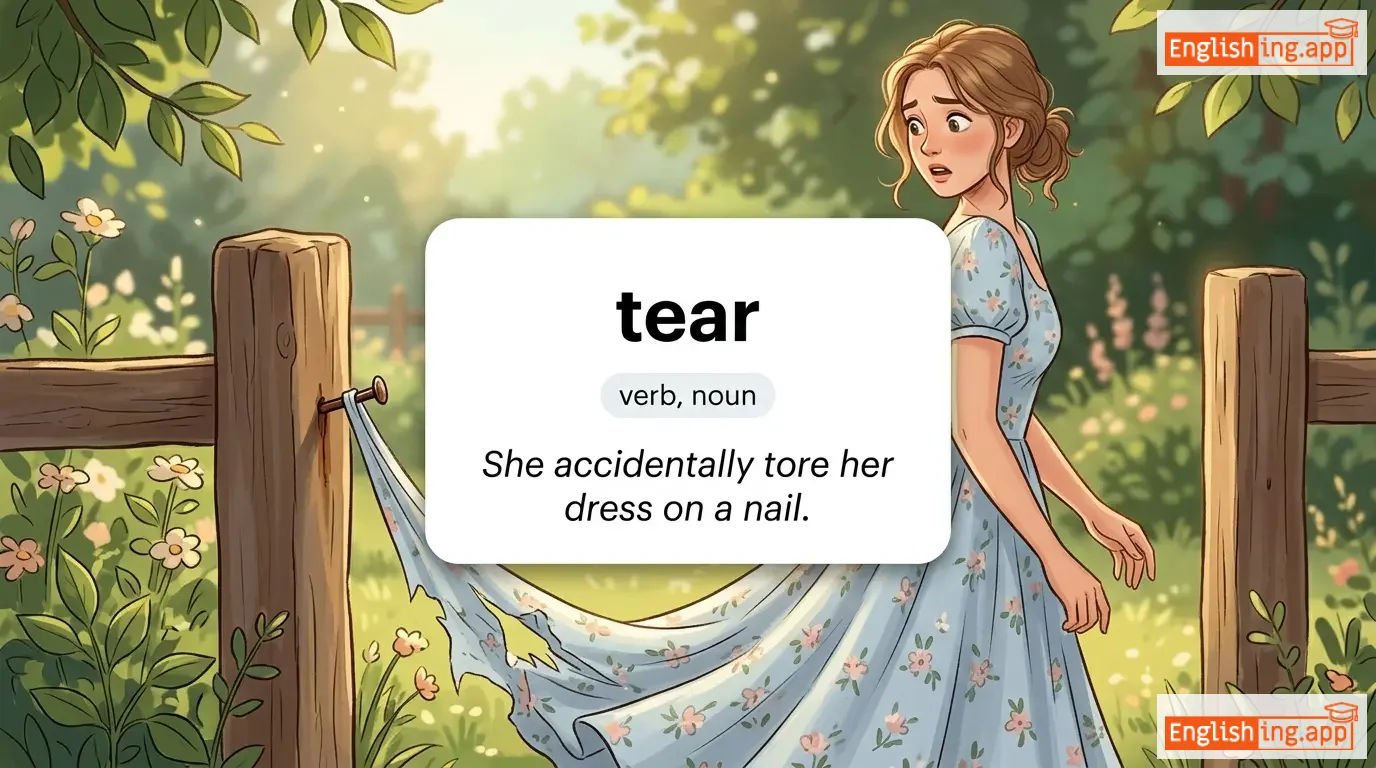
As a verb: to pull apart or rip something. As a noun: a drop of clear salty liquid produced by glands in your eyes.
••••••
|
She accidentally tore her dress on a nail.
Elle a accidentellement déchiré sa robe avec un clou.
••••••
|
Elle a accidentellement déchiré sa robe avec un clou.
Elle a accidentellement déchiré sa robe avec un clou.
••••••
|
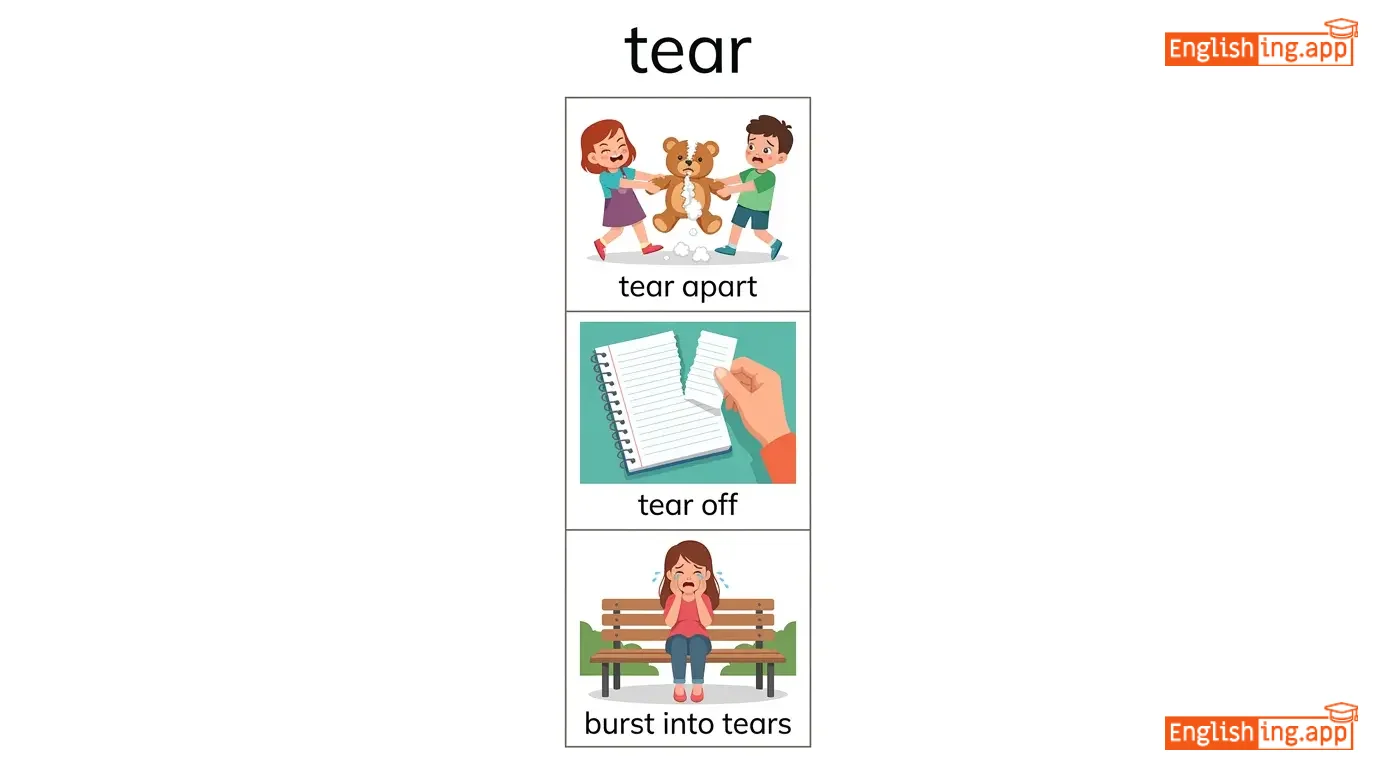
tear apart
tear apart
••••••
|
To destroy, separate, or damage severely.
••••••
|
déchirer
dechirer
••••••
|
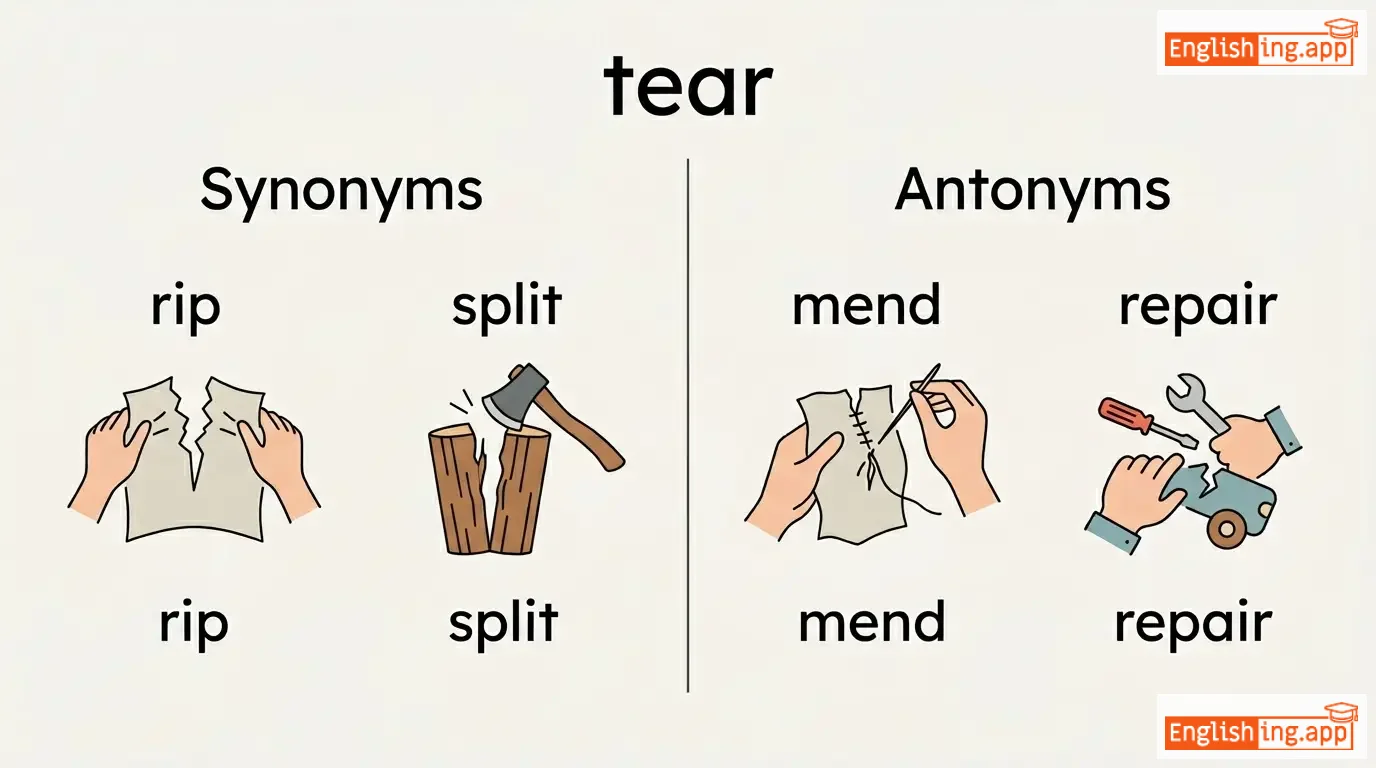
rip, split, shred, rend, pull
••••••
|
mend, repair
••••••
|
tear apart, tear off, burst into tears, tear down
••••••
|
Tear veut dire larme (larme) ou déchirer (dechirer), quand on pleure et que l'on déchire
••••••
|
|
#0
🧑🦱
|
/tiːn/
noun
(tineur)
••••••
|
- •••••• |
adolescent
adolescent
••••••
|
- •••••• | - •••••• | - •••••• | - •••••• |
a person aged between 13 and 19 years.
••••••
|
He's a teenager who loves sports.
Il est un adolescent qui aime le sport.
••••••
|
Il est un adolescent qui aime le sport.
Il est un adolescent qui aime le sport.
••••••
|
- •••••• | - •••••• | - •••••• |
adolescent, young person, minor
••••••
|
adult, senior, elder
••••••
|
teen years, teen life, teenage
••••••
|
Teen is the age when you are 'teen' years old!
••••••
|
|
#0
🌱
|
/tɛnd/
verb
(tend)
••••••
|
- •••••• |
avoir tendance à/s'occuper de
avoir tendance à/s'occuper de
••••••
|
tended
tended
••••••
|
tended
tended
••••••
|
tends
tends
••••••
|
tending
tending
••••••
|
To regularly behave in a particular way or to take care of something.
••••••
|
She tends to wake up early in the morning.
Elle a tendance à se lever tôt le matin.
••••••
|
Elle a tendance à se lever tôt le matin.
Elle a tendance à se lever tôt le matin.
••••••
|
tend to
avoir tendance à
••••••
|
To be likely to do something or to have a certain characteristic.
••••••
|
avoir tendance à
avoir tendance à
••••••
|
care for, look after, lean, incline, nurture
••••••
|
ignore, neglect
••••••
|
tend to, tend animals, tend plants, tend carefully
••••••
|
Tend est similaire à tendance : quelque chose de régulier ou lié au soin.
••••••
|
|
#0
⛺
|
/tent/
noun
(tɑ̃t)
••••••
|
- •••••• |
tente
tente
••••••
|
- •••••• | - •••••• | - •••••• | - •••••• |
a portable shelter made of cloth or canvas; military accommodation
••••••
|
The soldiers set up their tent in the military camp.
Les soldats ont monté leur tente dans le camp militaire.
••••••
|
Les soldats ont monté leur tente dans le camp militaire.
Les soldats ont monté leur tente dans le camp militaire.
••••••
|
- •••••• | - •••••• | - •••••• |
shelter, pavilion, canvas shelter
••••••
|
permanent structure, building
••••••
|
military tent, field tent, tent camp, army tent
••••••
|
A 'tente' in French sounds like tent, so just imagine pitching a tent!
••••••
|
|
#0
📚
|
/tɜːm/
noun
(tɜːrm)
••••••
|
- •••••• |
terme
terme
••••••
|
- •••••• | - •••••• | - •••••• | - •••••• |
a word or phrase used to describe a thing or to express a concept
••••••
|
The term 'machine learning' is commonly used in technology. |
Le terme 'apprentissage automatique' est couramment utilisé dans la technologie.
Le terme 'apprentissage automatique' est couramment utilise dans la technologie.
••••••
|
- •••••• | - •••••• | - •••••• |
expression, phrase, label, designation
••••••
|
ambiguity, vagueness
••••••
|
technical term, common term, legal term
••••••
|
TERM used for marking a concept - ‘terme’ is used to describe things.
••••••
|
|
#0
🔼
|
/ðæn/
conjunction
(than)
••••••
|
- •••••• |
que
que
••••••
|
- •••••• | - •••••• | - •••••• | - •••••• |
used to introduce the second element in a comparison
••••••
|
She is taller than her brother.
Elle est plus grande que son frère.
••••••
|
Elle est plus grande que son frère.
Elle est plus grande que son frère.
••••••
|
- •••••• | - •••••• | - •••••• |
more than, compared to, as opposed to
••••••
|
less than
••••••
|
greater than, more than, better than
••••••
|
Than means you compare one thing with another
••••••
|
|
#0
👉
|
/ðæt/
pronoun
(ðæt)
••••••
|
- •••••• |
ce
se
••••••
|
- •••••• | - •••••• | - •••••• | - •••••• |
used to identify a specific person or thing observed or heard
••••••
|
That is my book on the table.
C'est mon livre sur la table.
••••••
|
C'est mon livre sur la table.
C'est mon livre sur la table.
••••••
|
- •••••• | - •••••• | - •••••• |
this, it, the one
••••••
|
those, these
••••••
|
that book, that person, that idea
••••••
|
That - Ce (Se) livre est sur la table
••••••
|
|
#0
👥
|
/ðɛm/
pronoun
(ðɛm)
••••••
|
- •••••• |
eux
eux
••••••
|
- •••••• | - •••••• | - •••••• | - •••••• |
used to refer to people or things previously mentioned or easily identified
••••••
|
I saw them at the park yesterday. |
Je les ai vus au parc hier.
Je les ai vus au parc hier.
••••••
|
- •••••• | - •••••• | - •••••• |
they, those, these
••••••
|
none
••••••
|
see them, tell them, help them
••••••
|
Eux (them) sont partout où vous allez!
••••••
|
|
#0
⏳
|
/ðɛn/
adverb
(zɛn)
••••••
|
- •••••• |
alors
alors
••••••
|
- •••••• | - •••••• | - •••••• | - •••••• |
at that time; next in order of time or place
••••••
|
We went to the park, and then we had lunch.
Nous sommes allés au parc, puis nous avons déjeuné.
••••••
|
Nous sommes allés au parc, puis nous avons déjeuné.
Nous sommes allés au parc, puis nous avons déjeuné.
••••••
|
back then
à l'époque
••••••
|
used to refer to a time in the past
••••••
|
à l'époque
à l'époque
••••••
|
afterward, subsequently, later, next
••••••
|
before
••••••
|
then what, then go, then what happened
••••••
|
Alors (then) pour se souvenir d'un moment passé
••••••
|
|
#0
👫
|
/ðeɪ/
pronoun
(ðeɪ)
••••••
|
- •••••• |
ils
ils
••••••
|
- •••••• | - •••••• | - •••••• | - •••••• |
used to refer to people or things previously mentioned or easily identified
••••••
|
They are going to the park. |
Ils vont au parc.
Ils vont au parc.
••••••
|
- •••••• | - •••••• | - •••••• |
them, those, these
••••••
|
I, we
••••••
|
they are, they have, they will
••••••
|
They are our friends - Ils sont nos amis.
••••••
|
|
#0
📏
|
/θɪn/
adjective
(θin)
••••••
|
- •••••• |
mince; étroit
mince; etroit
••••••
|
- •••••• | - •••••• | - •••••• | - •••••• |
having little thickness; not thick; slender
••••••
|
She wore a thin jacket in the cold weather.
Elle portait une veste mince par temps froid.
••••••
|
Elle portait une veste mince par temps froid.
elle portait une veste mince par temps froid
••••••
|
- •••••• | - •••••• | - •••••• |
slender, slim, narrow, skinny
••••••
|
thick, fat, wide, broad
••••••
|
thin layer, thin ice, thin air, thin line
••••••
|
Mince et étroit comme un fil de soie.
••••••
|
|
#0
📖
|
/ðɪs/
pronoun
(dis)
••••••
|
- •••••• |
ceci
se-si
••••••
|
- •••••• | - •••••• | - •••••• | - •••••• |
used to refer to a person or thing that is close or near in space, time, or thought
••••••
|
This is my favorite book. |
Ceci est mon livre préféré.
Ceci est mon livre préféré.
••••••
|
- •••••• | - •••••• | - •••••• |
this one, here, these
••••••
|
that, those
••••••
|
this book, this place, this idea
••••••
|
Ceci (se-si) c'est proche de toi dans la pensée.
••••••
|
|
#0
➡️
|
/ðʌs/
adverb
(ðys)
••••••
|
- •••••• |
ainsi
ainsi
••••••
|
- •••••• | - •••••• | - •••••• | - •••••• |
as a result or consequence of something previously stated
••••••
|
He was late, thus he missed the meeting. |
Il est arrivé en retard, ainsi il a manqué la réunion.
Il est arrive en retard, ainsi il a manque la reunion.
••••••
|
- •••••• | - •••••• | - •••••• |
therefore, hence, accordingly, so
••••••
|
however, nevertheless
••••••
|
thus far, thus far as, thus it is
••••••
|
Ainsi, tout a été expliqué clairement.
••••••
|
|
#0
🌊
|
/taɪd/
noun
(taɪd)
••••••
|
- •••••• |
marée
maree
••••••
|
- •••••• | - •••••• | - •••••• | - •••••• |
the regular rise and fall of the sea caused by the moon and sun's gravity; a powerful flow or movement
••••••
|
The fisherman waited for the tide to come in. |
Le pêcheur attendait que la marée monte.
Le pecheur attendait que la maree monte.
••••••
|
turn the tide |
to cause a reversal of fortune or change in direction
••••••
|
inverser la marée
inverser la maree
••••••
|
current, flow, surge, stream, wave
••••••
|
ebb, stillness, stagnation
••••••
|
high tide, low tide, rising tide, ebb tide
••••••
|
Marée = mouvement de la mer - la marée va et vient régulièrement.
••••••
|
|
#0
⏰
|
/tɪl/
preposition
(til)
••••••
|
- •••••• |
jusqu'à
jusqu'à
••••••
|
- •••••• | - •••••• | - •••••• | - •••••• |
up to the time of; until
••••••
|
She waited till midnight for his call.
Elle a attendu jusqu'à minuit pour son appel.
••••••
|
Elle a attendu jusqu'à minuit pour son appel.
Elle a attendu jusqu'à minuit pour son appel.
••••••
|
- •••••• | - •••••• | - •••••• |
until, up to, before, pending
••••••
|
after, since
••••••
|
till now, till late, till tomorrow, wait till
••••••
|
Till signifie 'jusqu'à' — attendre jusqu'à minuit pour l'appel.
••••••
|
Vocabulary Quiz
Test your vocabulary by matching words with their translations or meanings.
Login to take the quiz
Comments (0)
Share your thoughts and join the discussion.
Join the discussion by logging in
Login to CommentNo comments yet
Be the first to share your thoughts!