

为河流站立
Standing Tall for the River
一条海豚的 tail 出现在河湾处。 当地人回忆起了旧时洪水的 tale。 新的洪水塔站得 tall。 纯净水从社区 tank 分发。 志愿者用纸和 tape 勾画了地图。 过去的照片让每个人眼中都流下了 tear。 一群 teen 学生从河里捡起了塑料。 他们继续 tend 沿河的树木。 大 tent 为营地遮挡阳光。 会议警告说,一些风险可能会有长期 term 的影响。 志愿者说他们需要比以前更有目的地 than 行动。 '这条河是 that 力量的象征,' 主席宣称。 '没有 them 我们无法成功,' 村民们说道。 '从 then 开始,我们将开始真正的变化,' 总统补充道。 孩子们承诺 they 每晚都会保持警觉。 沙袋加固了堤坝的 thin 边缘。 '我们可以做 this,' 全体团队一起喊道。 Thus,会议决定成立一个常设委员会。 有关 tide 的数据通过传感器进行了分析。 志愿者们工作到了 till 夜晚以完成清理。
Swipe left or right, or use the buttons. Tap image to zoom.
例句翻译
单词
Standing Tall for the RiverStanding Tall for the River - 遮罩切换
|
表情符号
|
单词 | Images | 翻译 | 过去时 | 过去分词 | 第三人称单数 | 动名词 | 含义 | 例句 | 例句翻译 | 示例表达 | 示例表达含义 | 示例表达翻译 | 同义词 | 反义词 | 搭配词 | 助记符 |
|---|---|---|---|---|---|---|---|---|---|---|---|---|---|---|---|---|---|
|
#0
🐕
|
/teɪl/
noun
(teyl)
••••••
|
- •••••• |
尾巴
weiba
••••••
|
- •••••• | - •••••• | - •••••• | - •••••• |
the rear part of an animal that extends from the back or bottom
••••••
|
The dog wagged its tail happily when it saw its owner. |
狗看到主人时高兴地摇了摇尾巴。
Gou kan dao zhuren shi gaoxing de yao le yao weiba.
••••••
|
- •••••• | - •••••• | - •••••• |
rear, end, appendage
••••••
|
head, front
••••••
|
dog tail, long tail, wagging tail, tail feathers
••••••
|
Weiba = tail in Chinese, and both wag in happiness!
••••••
|
|
#0
📖
|
/teɪl/
noun
(tēi'ěr)
••••••
|
- •••••• |
故事
gùshì
••••••
|
- •••••• | - •••••• | - •••••• | - •••••• |
a narrative of imaginary events, especially one that is presented as true
••••••
|
The old man told a tale of his adventures. |
那位老人讲述了他的冒险故事。
Nà wèi lǎorén jiǎngshùle tā de màoxiǎn gùshì.
••••••
|
tall tale |
an exaggerated story, often one that is not true
••••••
|
夸张故事
kuāzhāng gùshì
••••••
|
story, narrative, legend, fable
••••••
|
fact, truth
••••••
|
fairy tale, tall tale, bedtime tale
••••••
|
故事 (gùshì) 通过想象讲述 - A tale narrated through imagination
••••••
|
|
#0
📏
|
/tɔːl/
adjective
(tǎo)
••••••
|
- •••••• |
高
gao
••••••
|
- •••••• | - •••••• | - •••••• | - •••••• |
having a greater than average height
••••••
|
He is the tallest player on the team. |
他是队里最高的球员。
Ta shi dui li zui gao de qiu yuan.
••••••
|
tall order |
a difficult or challenging task
••••••
|
艰巨的任务
jian ju de ren wu
••••••
|
high, lofty, towering, elevated
••••••
|
short, small, low
••••••
|
tall building, tall person, tall story, tall tree
••••••
|
Tall 意味着高,就像一个高塔。
••••••
|
|
#0
🚙
|
/tæŋk/
noun
••••••
|
- •••••• | - •••••• | - •••••• | - •••••• | - •••••• | - •••••• |
a large, heavy military vehicle that moves on tracks and is armed with weapons
••••••
|
The army sent tanks to the front lines. |
- •••••• | - •••••• | - •••••• | - •••••• |
armored vehicle, combat vehicle, war machine
••••••
|
car, bicycle
••••••
|
military tank, battle tank, army tank
••••••
|
No •••••• |
|
#0
📼
|
/teɪp/
noun
(teip)
••••••
|
- •••••• |
胶带
jiaodai
••••••
|
- •••••• | - •••••• | - •••••• | - •••••• |
a long, narrow strip of material, often sticky on one side, used for fastening or sticking things together
••••••
|
I need some tape to seal this box. |
我需要一些胶带来封住这个箱子。
Wo xuyao yixie jiaodai lai fengzhu zhege xiangzi.
••••••
|
- •••••• | - •••••• | - •••••• |
adhesive, sticky tape, masking tape, sellotape
••••••
|
scissors, unstick
••••••
|
scotch tape, masking tape, duct tape, adhesive tape
••••••
|
Tape it up to seal it tight!
••••••
|
|
#0
💧
|
/tɪər/ (noun: liquid) /tɛər/ (verb: rip)
verb, noun
••••••
|
|
- •••••• |
tore
••••••
|
torn
••••••
|
tears
••••••
|
tearing
••••••
|
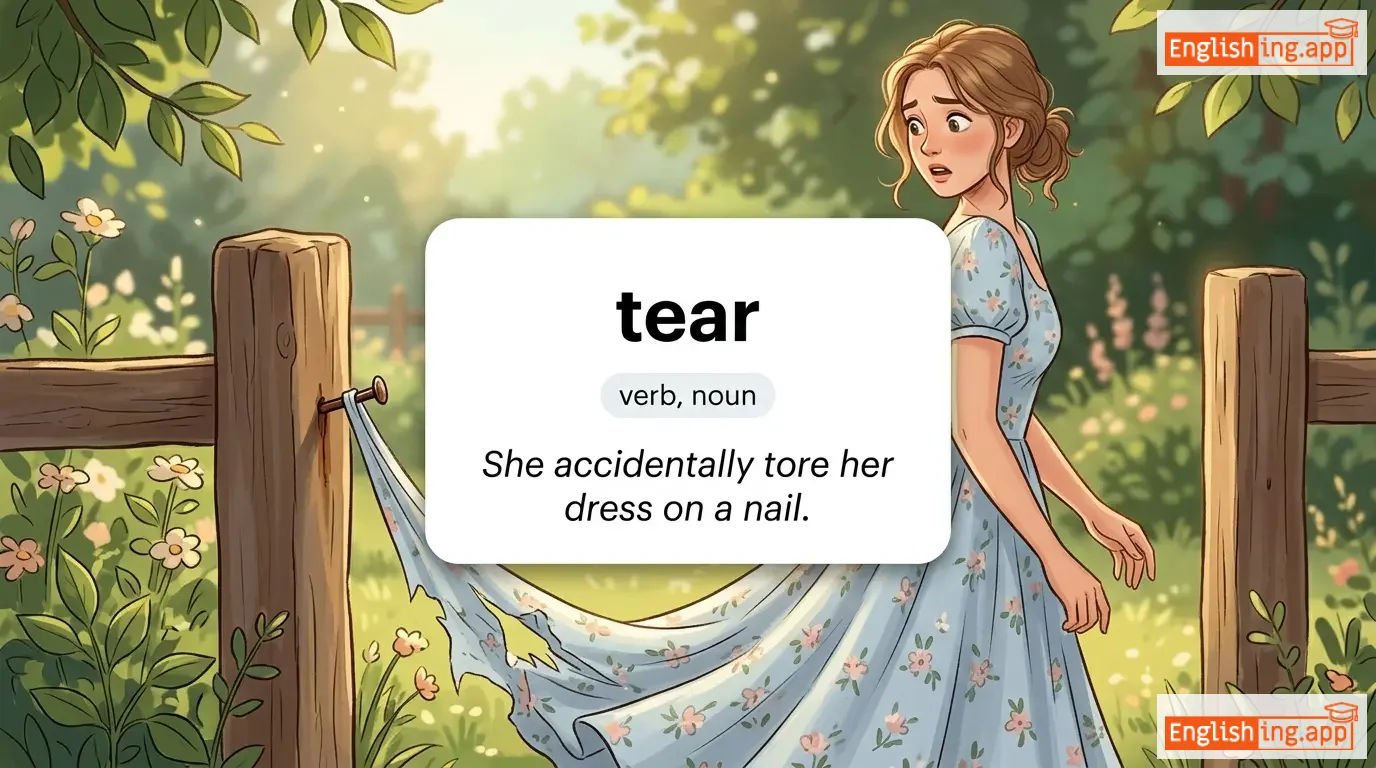
As a verb: to pull apart or rip something. As a noun: a drop of clear salty liquid produced by glands in your eyes.
••••••
|
She accidentally tore her dress on a nail. |
- •••••• |
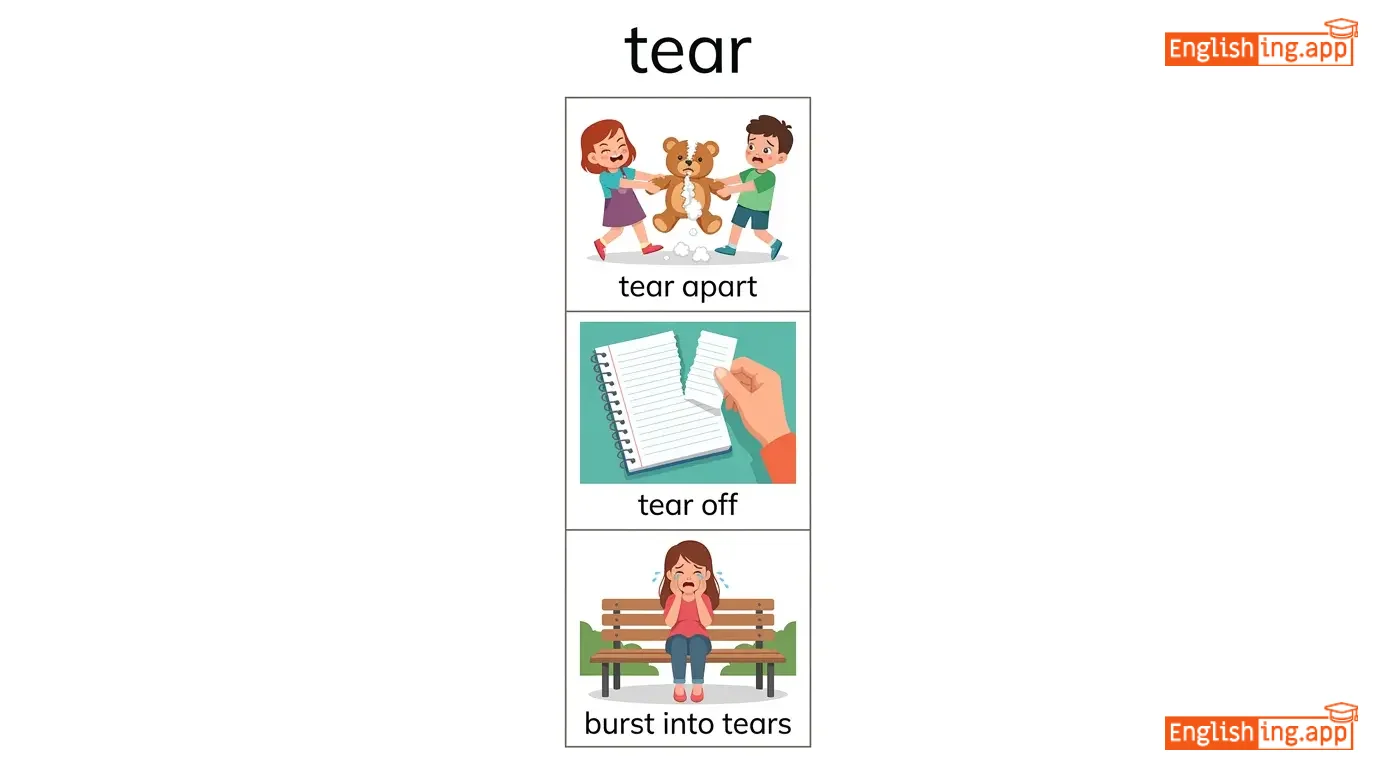
tear apart |
To destroy, separate, or damage severely.
••••••
|
- •••••• |
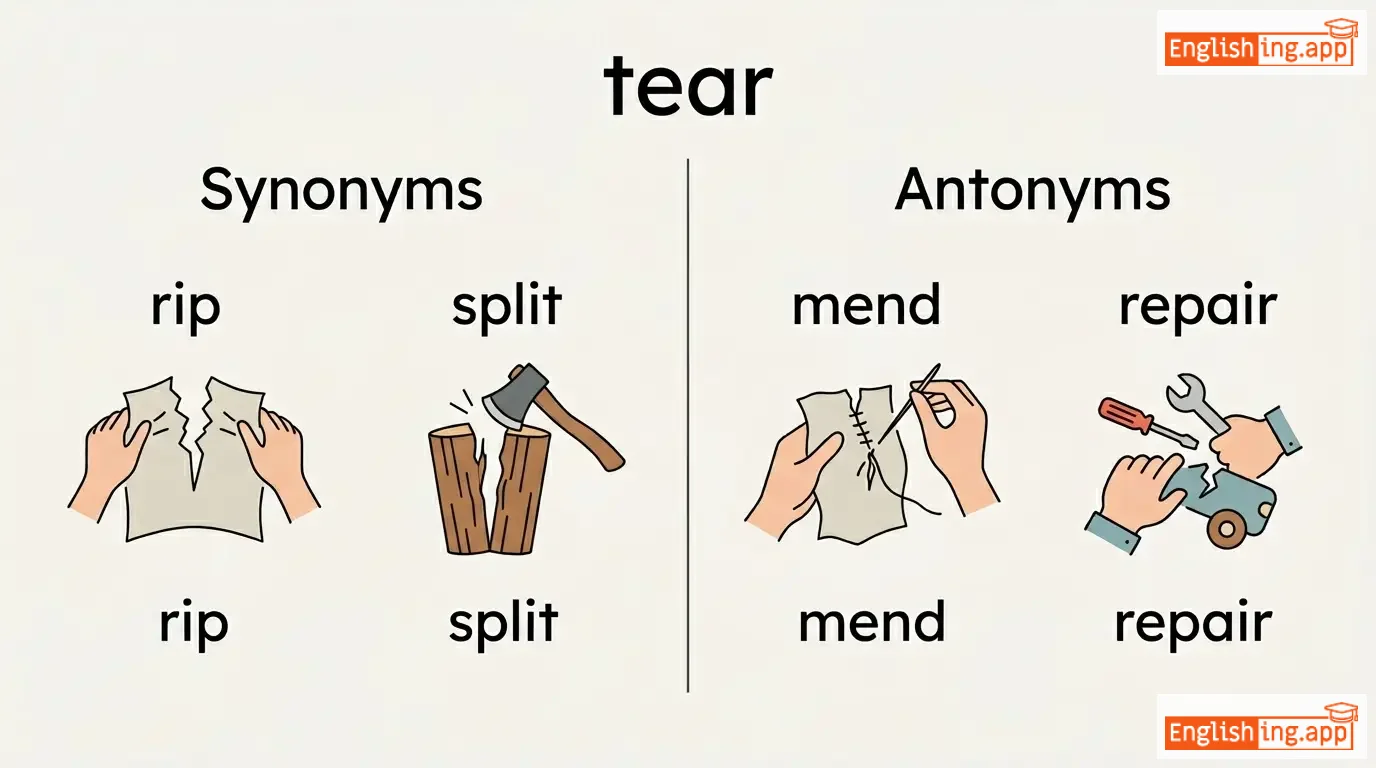
rip, split, shred, rend, pull
••••••
|
mend, repair
••••••
|
tear apart, tear off, burst into tears, tear down
••••••
|
No •••••• |
|
#0
🧑🦱
|
/tiːn/
noun
(青少年)
••••••
|
- •••••• |
青少年
qing shaonian
••••••
|
- •••••• | - •••••• | - •••••• | - •••••• |
a person aged between 13 and 19 years.
••••••
|
He's a teenager who loves sports.
他是一个喜欢运动的青少年。
••••••
|
他是一个喜欢运动的青少年。
Ta shi yi ge xihuan yundong de qing shaonian.
••••••
|
- •••••• | - •••••• | - •••••• |
adolescent, young person, minor
••••••
|
adult, senior, elder
••••••
|
teen years, teen life, teenage
••••••
|
Teen is the age when you are 'teen' years old!
••••••
|
|
#0
🌱
|
/tɛnd/
verb
(坦德)
••••••
|
- •••••• |
倾向/照顾
qīngxiàng/zhàogù
••••••
|
tended
坦德德
••••••
|
tended
坦德德
••••••
|
tends
坦德斯
••••••
|
tending
坦丁
••••••
|
To regularly behave in a particular way or to take care of something.
••••••
|
She tends to wake up early in the morning.
她倾向于早上早起。
••••••
|
她倾向于早上早起。
Tā qīngxiàng yú zǎoshang zǎo qǐ.
••••••
|
tend to
倾向于
••••••
|
To be likely to do something or to have a certain characteristic.
••••••
|
倾向于
qīngxiàng yú
••••••
|
care for, look after, lean, incline, nurture
••••••
|
ignore, neglect
••••••
|
tend to, tend animals, tend plants, tend carefully
••••••
|
Tend表示趋势或照顾。
••••••
|
|
#0
⛺
|
/tent/
noun
(tènt)
••••••
|
- •••••• |
帐篷
zhàngpéng
••••••
|
- •••••• | - •••••• | - •••••• | - •••••• |
a portable shelter made of cloth or canvas; military accommodation
••••••
|
The soldiers set up their tent in the military camp.
士兵们在军营中搭起了他们的帐篷。
••••••
|
士兵们在军营中搭起了他们的帐篷。
Shìbīngmen zài jūnyíng zhōng dāqǐle tāmen de zhàngpéng.
••••••
|
- •••••• | - •••••• | - •••••• |
shelter, pavilion, canvas shelter
••••••
|
permanent structure, building
••••••
|
military tent, field tent, tent camp, army tent
••••••
|
In Chinese, '帐篷' (zhàngpéng) looks like a large cloth structure. Think of a giant, portable tent!
••••••
|
|
#0
📚
|
/tɜːm/
noun
(术语)
••••••
|
- •••••• |
术语
shùyǔ
••••••
|
- •••••• | - •••••• | - •••••• | - •••••• |
a word or phrase used to describe a thing or to express a concept
••••••
|
The term 'machine learning' is commonly used in technology. |
‘机器学习’这一术语在技术领域中广泛使用。
‘Jīqì xuéxí’ zhè yī shùyǔ zài jìshù lǐngyù zhōng guǎngfàn shǐyòng.
••••••
|
- •••••• | - •••••• | - •••••• |
expression, phrase, label, designation
••••••
|
ambiguity, vagueness
••••••
|
technical term, common term, legal term
••••••
|
TERM used to express an idea - ‘术语’ is used for describing a thing.
••••••
|
|
#0
🔼
|
/ðæn/
conjunction
(than)
••••••
|
- •••••• |
比
bǐ
••••••
|
- •••••• | - •••••• | - •••••• | - •••••• |
used to introduce the second element in a comparison
••••••
|
She is taller than her brother.
她比她的哥哥高。
••••••
|
她比她的哥哥高。
Tā bǐ tā de gēgē gāo.
••••••
|
- •••••• | - •••••• | - •••••• |
more than, compared to, as opposed to
••••••
|
less than
••••••
|
greater than, more than, better than
••••••
|
Than means you compare one thing with another
••••••
|
|
#0
👉
|
/ðæt/
pronoun
(ðæt)
••••••
|
- •••••• |
这个
zhège
••••••
|
- •••••• | - •••••• | - •••••• | - •••••• |
used to identify a specific person or thing observed or heard
••••••
|
That is my book on the table.
这是我桌子上的书。
••••••
|
这是我桌子上的书。
Zhè shì wǒ zhuōzi shàng de shū.
••••••
|
- •••••• | - •••••• | - •••••• |
this, it, the one
••••••
|
those, these
••••••
|
that book, that person, that idea
••••••
|
That - 这个 (Zhège) 是书在桌子上
••••••
|
|
#0
👥
|
/ðɛm/
pronoun
(ðɛm)
••••••
|
- •••••• |
他们
tāmen
••••••
|
- •••••• | - •••••• | - •••••• | - •••••• |
used to refer to people or things previously mentioned or easily identified
••••••
|
I saw them at the park yesterday. |
我昨天在公园看到了他们。
Wǒ zuótiān zài gōngyuán kàn dào le tāmen.
••••••
|
- •••••• | - •••••• | - •••••• |
they, those, these
••••••
|
none
••••••
|
see them, tell them, help them
••••••
|
他们 (them) 总是跟我们在一起!
••••••
|
|
#0
⏳
|
/ðɛn/
adverb
(den)
••••••
|
- •••••• |
然后
ránhòu
••••••
|
- •••••• | - •••••• | - •••••• | - •••••• |
at that time; next in order of time or place
••••••
|
We went to the park, and then we had lunch.
我们去了公园,然后吃午餐。
••••••
|
我们去了公园,然后吃午餐。
Wǒmen qùle gōngyuán, ránhòu chī wǔcān.
••••••
|
back then
那时
••••••
|
used to refer to a time in the past
••••••
|
那时
nà shí
••••••
|
afterward, subsequently, later, next
••••••
|
before
••••••
|
then what, then go, then what happened
••••••
|
然后 (then) 来记住过去的时间
••••••
|
|
#0
👫
|
/ðeɪ/
pronoun
(ðeɪ)
••••••
|
- •••••• |
他们
tāmen
••••••
|
- •••••• | - •••••• | - •••••• | - •••••• |
used to refer to people or things previously mentioned or easily identified
••••••
|
They are going to the park. |
他们去公园。
Tāmen qù gōngyuán.
••••••
|
- •••••• | - •••••• | - •••••• |
them, those, these
••••••
|
I, we
••••••
|
they are, they have, they will
••••••
|
They are our friends - 他们是我们的朋友。
••••••
|
|
#0
📏
|
/θɪn/
adjective
(θin)
••••••
|
- •••••• |
薄的; 狭窄的
bo de; xia zhai de
••••••
|
- •••••• | - •••••• | - •••••• | - •••••• |
having little thickness; not thick; slender
••••••
|
She wore a thin jacket in the cold weather.
她在寒冷的天气里穿了一件薄外套。
••••••
|
她在寒冷的天气里穿了一件薄外套。
ta zai hanleng de tianqi li chuānle yī jiàn bó wàitào
••••••
|
- •••••• | - •••••• | - •••••• |
slender, slim, narrow, skinny
••••••
|
thick, fat, wide, broad
••••••
|
thin layer, thin ice, thin air, thin line
••••••
|
薄且狭窄——像一片纸。
••••••
|
|
#0
📖
|
/ðɪs/
pronoun
(zhe)
••••••
|
- •••••• |
这个
zhe ge
••••••
|
- •••••• | - •••••• | - •••••• | - •••••• |
used to refer to a person or thing that is close or near in space, time, or thought
••••••
|
This is my favorite book. |
这是我最喜欢的书。
Zhè shì wǒ zuì xǐhuān de shū.
••••••
|
- •••••• | - •••••• | - •••••• |
this one, here, these
••••••
|
that, those
••••••
|
this book, this place, this idea
••••••
|
记住'这个' (zhe ge) 用来指代你很接近的事物。
••••••
|
|
#0
➡️
|
/ðʌs/
adverb
(ðʌs)
••••••
|
- •••••• |
因此
yin ci
••••••
|
- •••••• | - •••••• | - •••••• | - •••••• |
as a result or consequence of something previously stated
••••••
|
He was late, thus he missed the meeting. |
他迟到了,因此错过了会议。
Ta chi dao le, yin ci cuo guo le hui yi.
••••••
|
- •••••• | - •••••• | - •••••• |
therefore, hence, accordingly, so
••••••
|
however, nevertheless
••••••
|
thus far, thus far as, thus it is
••••••
|
因此,我们都理解了。
••••••
|
|
#0
🌊
|
/taɪd/
noun
(taɪd)
••••••
|
- •••••• |
潮汐
chaoxi
••••••
|
- •••••• | - •••••• | - •••••• | - •••••• |
the regular rise and fall of the sea caused by the moon and sun's gravity; a powerful flow or movement
••••••
|
The fisherman waited for the tide to come in. |
渔夫在等待潮汐的到来。
Yufu zai dengdai chaoxi de daolai.
••••••
|
turn the tide |
to cause a reversal of fortune or change in direction
••••••
|
转变潮流
zhuanbian chaoliu
••••••
|
current, flow, surge, stream, wave
••••••
|
ebb, stillness, stagnation
••••••
|
high tide, low tide, rising tide, ebb tide
••••••
|
潮汐 = 海洋的规律性涨落 - 潮汐随时间往复而来。
••••••
|
|
#0
⏰
|
/tɪl/
preposition
(提尔)
••••••
|
- •••••• |
直到
zhídào
••••••
|
- •••••• | - •••••• | - •••••• | - •••••• |
up to the time of; until
••••••
|
She waited till midnight for his call.
她等到午夜才接到他的电话。
••••••
|
她等到午夜才接到他的电话。
Tā děng dào wǔyè cái jiē dào tā de diànhuà.
••••••
|
- •••••• | - •••••• | - •••••• |
until, up to, before, pending
••••••
|
after, since
••••••
|
till now, till late, till tomorrow, wait till
••••••
|
Till 意味着'直到' — 等到午夜接电话。
••••••
|
Vocabulary Quiz
Test your vocabulary by matching words with their translations or meanings.
Login to take the quiz
Comments (0)
Share your thoughts and join the discussion.
Join the discussion by logging in
Login to CommentNo comments yet
Be the first to share your thoughts!