

大二学生的发现
The Sophomore's Discovery
Ayesha 是达卡大学的 sophomore。她的 specialty 是天文学,但她无法证明自己。一天晚上,她通过校园的 telescope 观察天空。她必须写一篇关于星星的 composition,但她感到 embarrassed,因为她的知识与他人相比显得 secondary。她偶尔会有一些成功,但她 reasonably 认为自己很弱。Rahman教授告诉她,这个机会是 exclusively 给她的,因为她是唯一一个值得获得这个 distinction 的学生。她必须在研究中 incorporate 新的方法。来自 neighboring 系的学生们也想帮助她。虽然她 temporarily 感到沮丧,但 additionally 她的士气提高了。研究很 complicated,但她没有放弃。她意识到她可以成为一个大项目的 beneficiary。她必须对自己的工作 accountable。她 sufficiently 努力工作,并且有一天发现了一颗新星。毫无疑问 whatsoever,她成功了。那天她 straighten 站立,明白了坚持不懈是成功的关键。

Swipe left or right, or use the buttons. Tap image to zoom.
例句翻译
单词
The Sophomore's DiscoveryThe Sophomore's Discovery - 遮罩切换
|
表情符号
|
单词 | Images | 翻译 | 过去时 | 过去分词 | 第三人称单数 | 动名词 | 含义 | 例句 | 例句翻译 | 示例表达 | 示例表达含义 | 示例表达翻译 | 同义词 | 反义词 | 搭配词 | 助记符 |
|---|---|---|---|---|---|---|---|---|---|---|---|---|---|---|---|---|---|
|
#0
⚖️
|
/əˈkaʊn.tə.bəl/
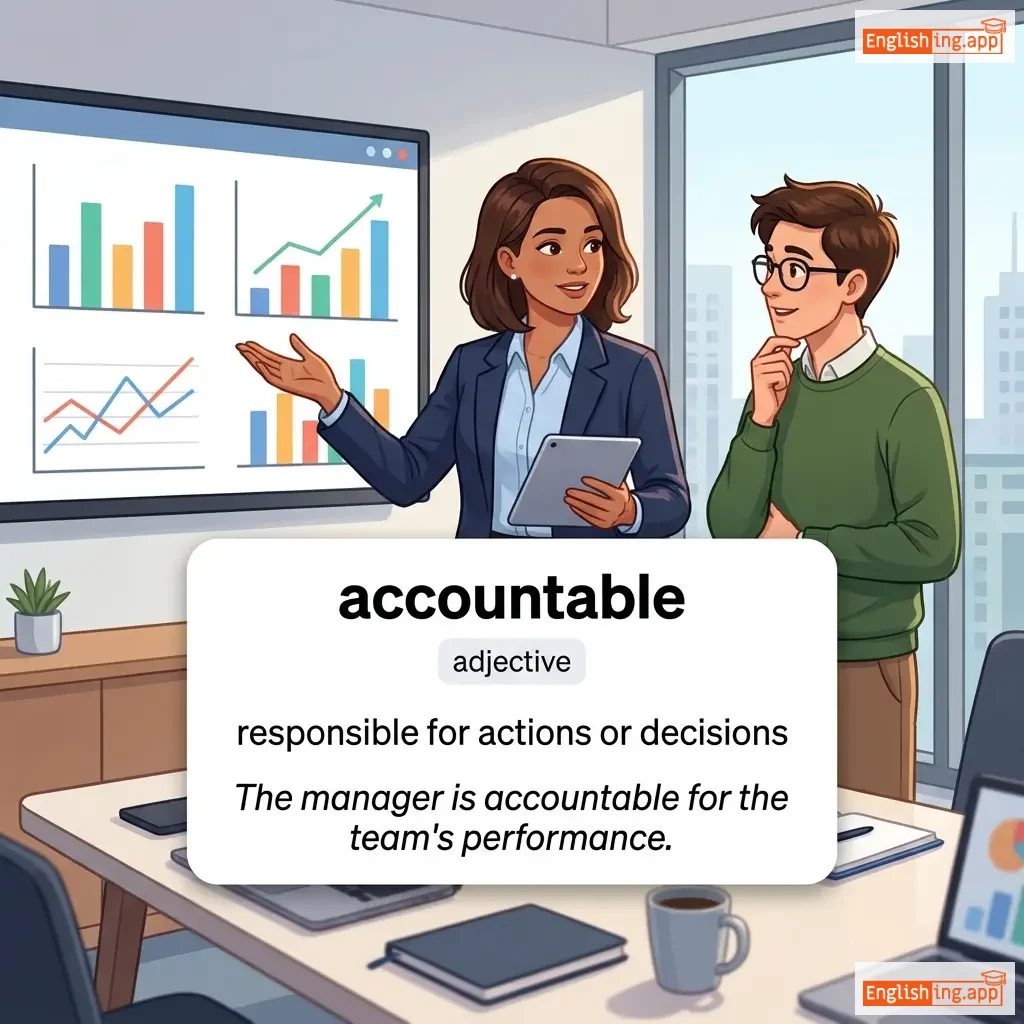
adjective
(ˈækəʊntəbəl)
••••••
|
|
负责的; 有责任的
fùzérèn de; yǒu zérèn de
••••••
|
- •••••• | - •••••• | - •••••• | - •••••• |
responsible for your decisions or actions and expected to explain them when you are asked
••••••
|
The government should be held accountable for its policies.
政府应该为其政策负责。
••••••
|
政府应该为其政策负责。
Zhèngfǔ yīnggāi wèi qí zhèngcè fùzérèn.
••••••
|
- •••••• | - •••••• | - •••••• |
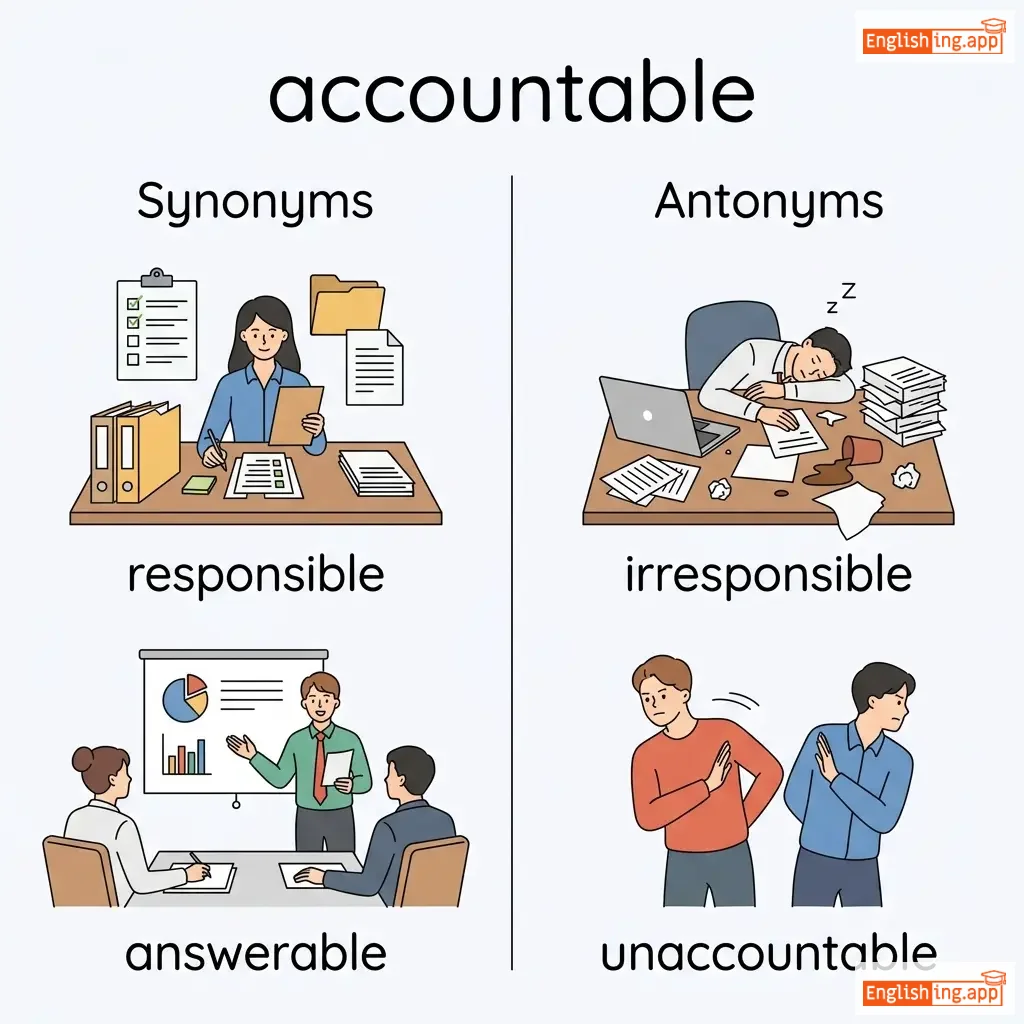
responsible, answerable, liable, culpable
••••••
|
unaccountable, irresponsible, exempt
••••••
|
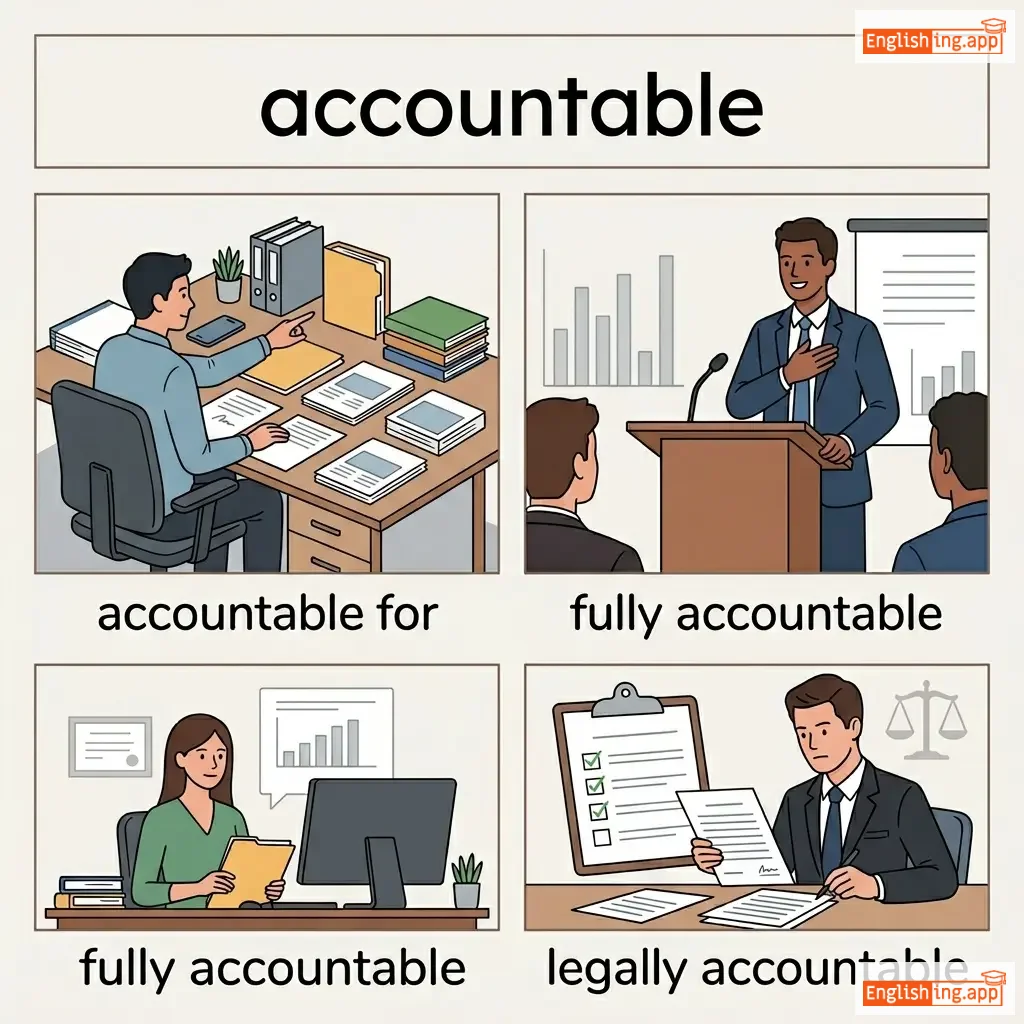
held accountable, accountable for, accountable to
••••••
|
Accountable means responsible, like the government being accountable for its policies.
••••••
|
|
#0
➕
|
/əˈdɪʃənəli/
adverb
(额外)
••••••
|
- •••••• |
此外
cihou
••••••
|
- •••••• | - •••••• | - •••••• | - •••••• |
in addition to what has been said or done
••••••
|
Additionally, we offer discounts for early bookings.
此外,我们为提前预订提供折扣。
••••••
|
此外,我们为提前预订提供折扣。
Cihou, women wei tiqian yuding tigong zhekou.
••••••
|
- •••••• | - •••••• | - •••••• |
furthermore, moreover, also, as well
••••••
|
however, nevertheless
••••••
|
additionally, additionally offer, additionally provide
••••••
|
Adding a plus sign ➕ shows more details (additionally)
••••••
|
|
#0
🎁
|
/ˌbɛnɪˈfɪʃəri/
noun
(受益人)
••••••
|
- •••••• |
受益人
shòuyì rén
••••••
|
- •••••• | - •••••• | - •••••• | - •••••• |
a person who receives something, especially money or property, from a will or insurance policy
••••••
|
She is the sole beneficiary of her father’s estate. |
她是她父亲遗产的唯一受益人。
Tā shì tā fùqīn yí chǎn de wéiyī shòuyì rén.
••••••
|
- •••••• | - •••••• | - •••••• |
recipient, heir, inheritor, grantee
••••••
|
donor, benefactor
••••••
|
sole beneficiary, named beneficiary, policy beneficiary, estate beneficiary
••••••
|
Beneficiary 意味着接受利益的人,就像保险单的受益人。
••••••
|
|
#0
🌀
|
/ˈkɒmplɪˌkeɪtɪd/
adjective
(kɒmplɪˌkeɪtɪd)
••••••
|
- •••••• |
复杂
fuza
••••••
|
- •••••• | - •••••• | - •••••• | - •••••• |
consisting of many interconnected parts; difficult to understand
••••••
|
The instructions for the machine are too complicated to follow. |
机器的说明书太复杂,无法跟随。
Ji qi de shuoming shu tai fuza, wu fa gensui.
••••••
|
make things complicated |
to make something unnecessarily difficult
••••••
|
使事情复杂
shi shi qing fuza
••••••
|
complex, difficult, intricate, involved, confusing
••••••
|
simple, easy, clear
••••••
|
complicated process, complicated situation, complicated issue, complicated relationship
••••••
|
复杂 = 困难,就像复杂的数学问题。
••••••
|
|
#0
🎶
|
/ˌkɒmpəˈzɪʃən/
noun
(kōngpòzīxiàn)
••••••
|
- •••••• |
作文
zuòwén
••••••
|
- •••••• | - •••••• | - •••••• | - •••••• |
the act of creating a piece of writing, music, or art; the way parts are arranged
••••••
|
Her composition won first prize in the contest. |
她的作文在比赛中获得了第一名。
Tā de zuòwén zài bǐsài zhōng huòdéle dì yī míng.
••••••
|
- •••••• | - •••••• | - •••••• |
essay, creation, arrangement, piece, structure
••••••
|
disorder, disorganization
••••••
|
musical composition, written composition, composition skills, composition contest
••••••
|
作文意味着创作艺术作品,就像在考试中写作文。
••••••
|
|
#0
🏅
|
/dɪˈstɪŋkʃən/
noun
••••••
|
- •••••• | - •••••• | - •••••• | - •••••• | - •••••• | - •••••• |
a difference or contrast between similar things or people; excellence that sets someone apart
••••••
|
She graduated with distinction from the university. |
- •••••• |
make a distinction |
to draw a clear difference between things
••••••
|
- •••••• |
difference, contrast, excellence, honor, separation
••••••
|
similarity, sameness, mediocrity
••••••
|
with distinction, fine distinction, make a distinction, subtle distinction
••••••
|
No •••••• |
|
#0
😳
|
/ɪmˈbærəst/
adjective
(embarrassed)
••••••
|
- •••••• |
尴尬
gan ga
••••••
|
- •••••• | - •••••• | - •••••• | - •••••• |
feeling awkward, ashamed, or self-conscious about something
••••••
|
He felt embarrassed when he forgot her name. |
当他忘记她的名字时,他感到尴尬。
Dang ta wangji tade mingzi shi, ta gandao gan ga.
••••••
|
embarrassed silence |
an uncomfortable quietness after something awkward happens
••••••
|
尴尬的沉默
gan ga de chen mo
••••••
|
ashamed, awkward, uneasy, flustered, humiliated
••••••
|
confident, proud, relaxed
••••••
|
feel embarrassed, look embarrassed, deeply embarrassed, embarrassed smile
••••••
|
Embarrassed 代表尴尬 - 你在做演讲时忘记名字,感到非常尴尬。
••••••
|
|
#0
🔒
|
/ɪkˈskluːsɪvli/
adverb
(ɪkˈskluːsɪvli)
••••••
|
- •••••• |
专门
zhuānmén
••••••
|
- •••••• | - •••••• | - •••••• | - •••••• |
only; not shared with others
••••••
|
This service is available exclusively to premium members. |
此服务仅限于高级会员。
Cǐ fúwù jǐn xiàn yú gāojí huìyuán.
••••••
|
- •••••• | - •••••• | - •••••• |
solely, only, entirely, uniquely, purely
••••••
|
jointly, commonly, generally
••••••
|
exclusively for, available exclusively, exclusively designed, exclusively produced
••••••
|
专门 - 仅为你而设!
••••••
|
|
#0
🏢
|
/ɪnˈkɔːpəreɪt/
verb
(in-kor-PO-rei-te)
••••••
|
|
融入
rongru
••••••
|
incorporated
in-kor-PO-rei-te-de
••••••
|
incorporated
in-kor-PO-rei-te-de
••••••
|
incorporates
in-kor-PO-rei-te-s
••••••
|
incorporating
in-kor-PO-rei-te-ing
••••••
|
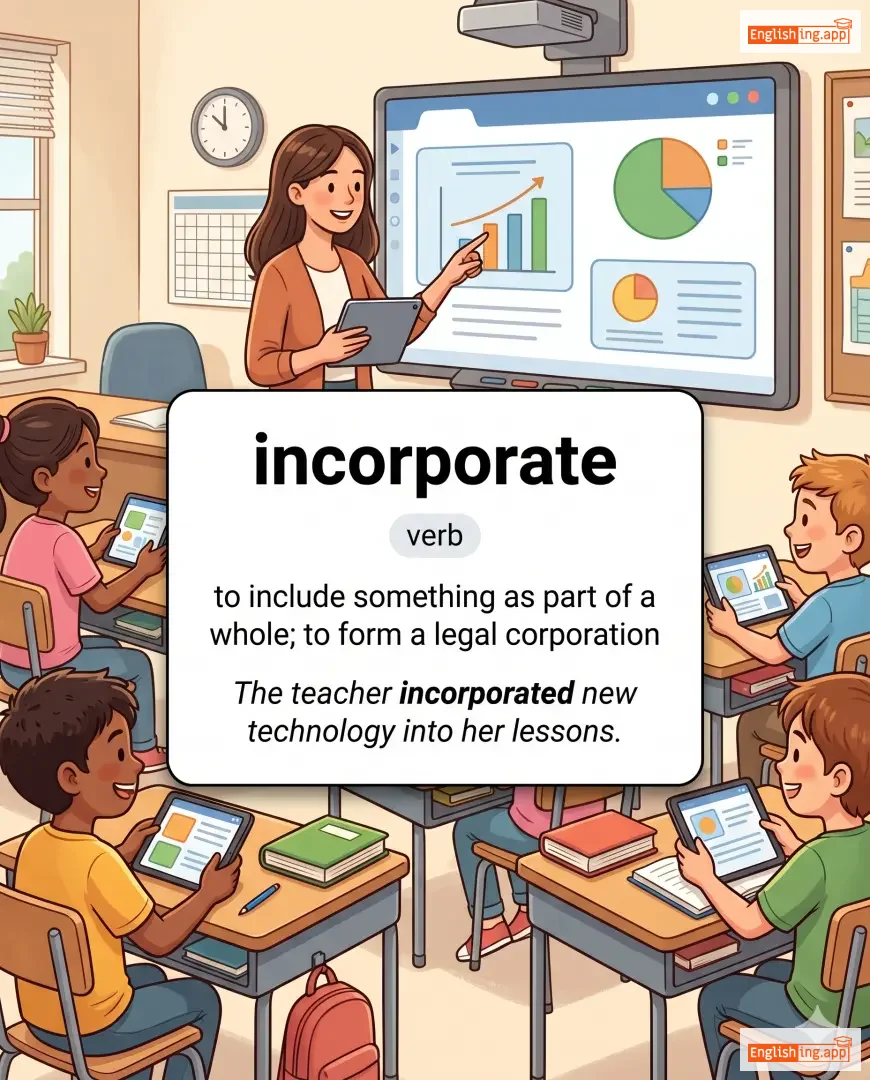
to include something as part of a whole; to form a legal corporation
••••••
|
The teacher incorporated new technology into her lessons.
老师将新技术融入到她的课程中。
••••••
|
老师将新技术融入到她的课程中。
Laoshi jiang xin jishu rongru dao ta de kecheng zhong.
••••••
|
incorporate into
融入到
••••••
|
to include something as part of a larger thing
••••••
|
融入到
rongru dao
••••••
|
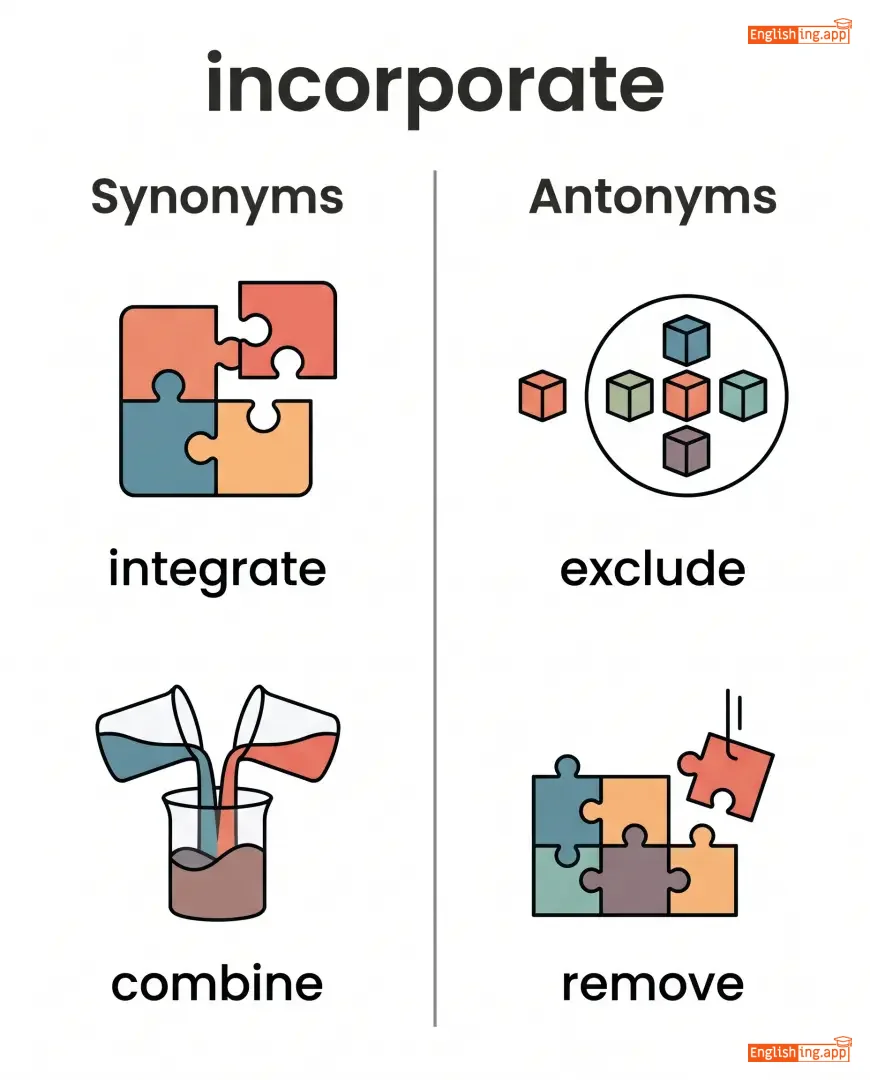
integrate, combine, include, merge, embody
••••••
|
exclude, remove, separate
••••••
|
incorporate into, incorporate ideas, incorporate changes
••••••
|
融入意味着把某个部分合并进一个更大的整体——就像拼图游戏。
••••••
|
|
#0
🏘️
|
/ˈneɪbərɪŋ/
adjective
(neibering)
••••••
|
- •••••• |
邻近的
linjin de
••••••
|
- •••••• | - •••••• | - •••••• | - •••••• |
situated near or next to another place; adjacent or nearby.
••••••
|
They visited a neighboring village for the festival.
他们去邻村参加节日活动。
••••••
|
他们去邻村参加节日活动。
Tāmen qù lín cūn cānjiā jiérì huódòng.
••••••
|
- •••••• | - •••••• | - •••••• |
adjacent, nearby, adjoining, close, proximate
••••••
|
distant, remote, far
••••••
|
neighboring country, neighboring house, neighboring state, neighboring area
••••••
|
邻近的表示接近,因此邻近的地方就是靠近的地方。
••••••
|
|
#0
🌦️
|
/əˈkeɪʒənəl/
adjective
(奥凯珍尔)
••••••
|
- •••••• |
偶尔的
ǒu'ěr de
••••••
|
- •••••• | - •••••• | - •••••• | - •••••• |
happening or done sometimes but not regularly or often
••••••
|
He makes occasional visits to his hometown. |
他偶尔访问他的家乡。
Tā ǒu'ěr fǎngwèn tā de jiāxiāng.
••••••
|
occasional table |
a small table used when needed
••••••
|
偶尔桌子
ǒu'ěr zhuōzi
••••••
|
infrequent, irregular, periodic, sporadic, intermittent
••••••
|
regular, constant, frequent
••••••
|
occasional visit, occasional rain, occasional use, occasional meeting
••••••
|
偶尔就像偶尔下的雨 – 偶尔才有 🌧️
••••••
|
|
#0
⚖️
|
/ˈriː.zən.ə.bli/
adverb
(rì zé nà bù lì)
••••••
|
- •••••• |
合理地; 合适地;
heli de; he shi de;
••••••
|
- •••••• | - •••••• | - •••••• | - •••••• |
in a sensible way; fairly; to a moderate degree
••••••
|
The hotel room was reasonably priced for the location. |
酒店房间根据位置的合理定价。
jiudian fangjian genju weizhi de heli dingjia.
••••••
|
- •••••• | - •••••• | - •••••• |
fairly, moderately, sensibly, logically
••••••
|
unreasonably, extremely, irrationally
••••••
|
reasonably priced, reasonably good, reasonably sure
••••••
|
In Chinese, 'heli' means reasonable, like 'reasonable'.
••••••
|
|
#0
2️⃣
|
/ˈsekənderi/
adjective
(sekendari)
••••••
|
- •••••• |
次要的
ci yao de
••••••
|
- •••••• | - •••••• | - •••••• | - •••••• |
Less important than something else; derived from or dependent on something primary.
••••••
|
Safety is our primary concern, while speed is only secondary. |
安全是我们的主要关注,而速度只是次要的。
Anquan shi women de zhuyao guanzhu, er sudu zhishi ci yao de.
••••••
|
secondary role |
A role of lesser importance compared to the main one.
••••••
|
次要角色
ci yao jue se
••••••
|
minor, subordinate, auxiliary, less important, dependent
••••••
|
primary, main, chief
••••••
|
secondary school, secondary importance, secondary effect
••••••
|
Secondary在中文里是次要的 ➡ 次要角色
••••••
|
|
#0
🎓
|
/ˈsɑːfmɔːr/
noun
(索夫莫尔)
••••••
|
- •••••• |
大二学生
dà èr xuéshēng
••••••
|
- •••••• | - •••••• | - •••••• | - •••••• |
a student in their second year of study at a university or high school
••••••
|
He’s a sophomore in college, studying computer science. |
他是大学的二年级学生,学习计算机科学。
Tā shì dàxué de èr nián jí xuéshēng, xuéxí jìsuànjī kēxué.
••••••
|
- •••••• | - •••••• | - •••••• |
second-year student
••••••
|
freshman, junior, senior
••••••
|
sophomore year, sophomore student, sophomore class
••••••
|
Sophomore让人想到'第二年',就像在大学的第二年一样。
••••••
|
|
#0
🎯
|
/ˈspɛʃəlti/
noun
(spe-shal-tee)
••••••
|
- •••••• |
专长
zhuan chang
••••••
|
- •••••• | - •••••• | - •••••• | - •••••• |
a particular area of study, work, or interest; something in which a person or place excels
••••••
|
Her specialty is pediatric medicine.
她的专业是儿科医学。
••••••
|
她的专业是儿科医学。
ta de zhuan chang shi er ke yi xue
••••••
|
house specialty
餐厅特色
••••••
|
a dish or item that a restaurant is particularly known for
••••••
|
餐厅特色
canting tese
••••••
|
expertise, forte, field, focus, skill
••••••
|
weakness, generality
••••••
|
medical specialty, house specialty, area of specialty, legal specialty
••••••
|
专长 = 你做得特别好的事情
••••••
|
|
#0
📏
|
/ˈstreɪtən/
verb
(斯特雷腾)
••••••
|
- •••••• |
整理
zhěnglǐ
••••••
|
straightened
斯特雷滕德
••••••
|
straightened
斯特雷滕德
••••••
|
straightens
斯特雷滕斯
••••••
|
straightening
斯特雷滕宁
••••••
|
to make something straight or tidy; to correct or organize
••••••
|
She straightened her hair before the meeting.
她在会议前整理了头发。
••••••
|
她在会议前整理了头发。
Tā zài huìyì qián zhěnglǐle tóufǎ.
••••••
|
straighten out
整理
••••••
|
to resolve a problem or confusion
••••••
|
解决问题或困惑
jiějué wèntí huò kùnhuò
••••••
|
align, adjust, organize, fix, arrange
••••••
|
bend, twist
••••••
|
straighten hair, straighten up, straighten out, straighten posture
••••••
|
Straighten = 整理,像整理头发一样。
••••••
|
|
#0
✅
|
/səˈfɪʃəntli/
adverb
(充分地)
••••••
|
- •••••• |
充分
chōngfèn
••••••
|
- •••••• | - •••••• | - •••••• | - •••••• |
to an adequate degree or extent
••••••
|
She studied sufficiently to pass the exam. |
她足够努力地学习,才能通过考试。
Tā zúgòu nǔlì de xuéxí, cáinéng tōngguò kǎoshì.
••••••
|
- •••••• | - •••••• | - •••••• |
adequately, enough, satisfactorily
••••••
|
insufficiently, inadequately
••••••
|
sufficiently prepared, sufficiently large, sufficiently skilled
••••••
|
Sufficiently = Just enough to reach the goal, like 'sufficient' = enough!
••••••
|
|
#0
🔭
|
/ˈtɛlɪˌskoʊp/
noun
(望远镜)
••••••
|
- •••••• |
望远镜
wangyuanjing
••••••
|
- •••••• | - •••••• | - •••••• | - •••••• |
An optical instrument used to make distant objects appear closer and larger by collecting and focusing light.
••••••
|
The astronomer used a telescope to observe the distant planets. |
天文学家使用望远镜观察遥远的行星。
Tianwenxuejia shiyong wangyuanjing guancha yaoyuan de xingxing.
••••••
|
turn the telescope on |
to focus on or direct attention toward something
••••••
|
打开望远镜
dakai wangyuanjing
••••••
|
scope, spyglass, binoculars, glass
••••••
|
microscope, naked eye
••••••
|
powerful telescope, optical telescope, space telescope, through a telescope
••••••
|
望远镜可以看到很远的地方,就像 telescope 一样。
••••••
|
|
#0
⏳
|
/ˈtɛmpərɛrɪli/
adverb
(临时)
••••••
|
- •••••• |
临时地
linshi de
••••••
|
- •••••• | - •••••• | - •••••• | - •••••• |
for a limited time; not permanently
••••••
|
The road is closed temporarily for repairs. |
道路因维修而暂时关闭。
Dàolù yīn wéixiū ér zhànshí guānbì.
••••••
|
- •••••• | - •••••• | - •••••• |
briefly, momentarily, temporarily, short-term
••••••
|
permanently, forever
••••••
|
temporarily closed, temporarily unavailable, temporarily suspended
••••••
|
Temporary is like a ‘time’ set in the clock – only for a short time!
••••••
|
|
#0
❌
|
/wɒtˈsəʊɛvər/
adverb
(wɒtˈsəʊɛvər)
••••••
|
- •••••• |
根本不
gēnběn bù
••••••
|
- •••••• | - •••••• | - •••••• | - •••••• |
used for emphasis after a negative statement to mean 'at all'
••••••
|
She has no interest in the matter whatsoever.
她对这个问题一点兴趣都没有。
••••••
|
她对这个问题一点兴趣都没有。
Tā duì zhège wèntí yīdiǎn xìngqù dōu méiyǒu.
••••••
|
- •••••• | - •••••• | - •••••• |
at all, in any way, in any respect
••••••
|
some, any, much
••••••
|
whatsoever reason, whatsoever means, whatsoever interest
••••••
|
Whatsoever sounds like 'wɒtˈsəʊɛvər', which can be remembered as '根本不' (not at all).
••••••
|
Vocabulary Quiz
Test your vocabulary by matching words with their translations or meanings.
Login to take the quiz
Comments (0)
Share your thoughts and join the discussion.
Join the discussion by logging in
Login to CommentNo comments yet
Be the first to share your thoughts!