

厨师的旅程
The Chef's Journey
莉娜是一位充满热情的 chef,她喜欢用传统孟加拉 food 做实验。她的梦想是开一家属于自己的 restaurant,在那里分享她独特的 recipes。
在不同的 kitchens 里 cooking 多年后,莉娜终于鼓起勇气开了自己的 restaurant。她精心设计了 menu——将传统 dishes 融入现代风格。
她的拿手好戏是融合 sauces 和 flavors。她知道如何用恰到好处的 pepper 和 spices 改变 dish's taste。
开业当天,只有几位顾客到来。莉娜亲自 cooked 每一道 meal,亲手端上每个 plate。当客人 tasted 她的 food 时,他们都惊叹不已。
一位顾客说:“这道 dish 太棒了!我从未 eaten 过这么美味的孟加拉 food。Recipe 是什么?”
莉娜微笑着说:“这是我祖母的传统 recipe,但我加入了特别的 spices 和独特的 sauce。秘诀是在 cooking 时不断 tasting,并完美调整 flavors。”
渐渐地,莉娜的 restaurant 变得受欢迎。人们会来这里 lunch、dinner 或庆祝特别的 dining 场合。她的 menu 很丰富——从轻便的 meals 到精致的多道式 dinners。
莉娜训练她的团队如何准备每道 dish,如何摆放 plates,甚至教客人如何正确使用 fork 进行 eating。
在 kitchen 里,她对质量非常严格。每个 meal 都有新鲜食材、恰当的 cooking 时间、精确的 spice 份量——一切都必须完美。
美食评论家参观了她的 restaurant 并给出了热烈的好评。他们写道:“Chef 对 flavors 的掌握、pepper 和 spices 的完美平衡、每个 plate 的精美呈现——共同创造了非凡的 dining 体验。”
如今,莉娜的 restaurant 已成为热门去处。人们愿意等上几个小时才能有座位。但莉娜从未忘记自己的根。她经常尝试新的 recipes,为传统 dishes 添加现代创意,并确保每一道 food 都用爱去 taste。
莉娜说:“Cooking 不只是制作 food,它是一门艺术。一个好的 chef 会遵循 recipes,而一个伟大的 chef 会创造 recipes。Menu 规划、dish 呈现、flavor 平衡——每一步都很重要。当我在 kitchen cook 时,我不断 tasting,调整 spices,完善 sauces。每一道 meal 都讲述一个故事,每个 plate 就像一幅用 flavors 绘制的画。Dining 不仅仅是 eating,它是一种体验。在我的 restaurant 中,无论是 lunch 还是 dinner,我希望人们不仅享受 food,还享受氛围、服务与呈现。完美 cooked dish,漂亮 plate,合适 fork,平衡的 pepper、芳香的 spices、浓郁的 sauces——这就是我的愿景。每一次 taste 都应令人难忘,每一顿 meal 都应特别。我将 recipes 传授给我的团队,培养新一代 chefs。因为美好的 food、精湛的 cooking、独特的 dining——都值得被传承与庆祝。”
莉娜的旅程激励了无数有志成为 chefs 的人,他们梦想开设自己的 restaurants。她的成功证明,只要你热爱 cooking、尊重传统 recipes,并不断创新 flavors,你就能创造打动人心的 food。每一道 dish、每一顿 meal、每一次 dining——共同构成了一个赞颂 taste、flavor 与 cooking 艺术的烹饪传奇。
Swipe left or right, or use the buttons. Tap image to zoom.
例句翻译
单词
The Chef's JourneyThe Chef's Journey - 遮罩切换
|
表情符号
|
单词 | Images | 翻译 | 过去时 | 过去分词 | 第三人称单数 | 动名词 | 含义 | 例句 | 例句翻译 | 示例表达 | 示例表达含义 | 示例表达翻译 | 同义词 | 反义词 | 搭配词 | 助记符 |
|---|---|---|---|---|---|---|---|---|---|---|---|---|---|---|---|---|---|
|
#0
👨🍳
|
/ʃɛf/
noun
••••••
|
|
- •••••• | - •••••• | - •••••• | - •••••• | - •••••• |
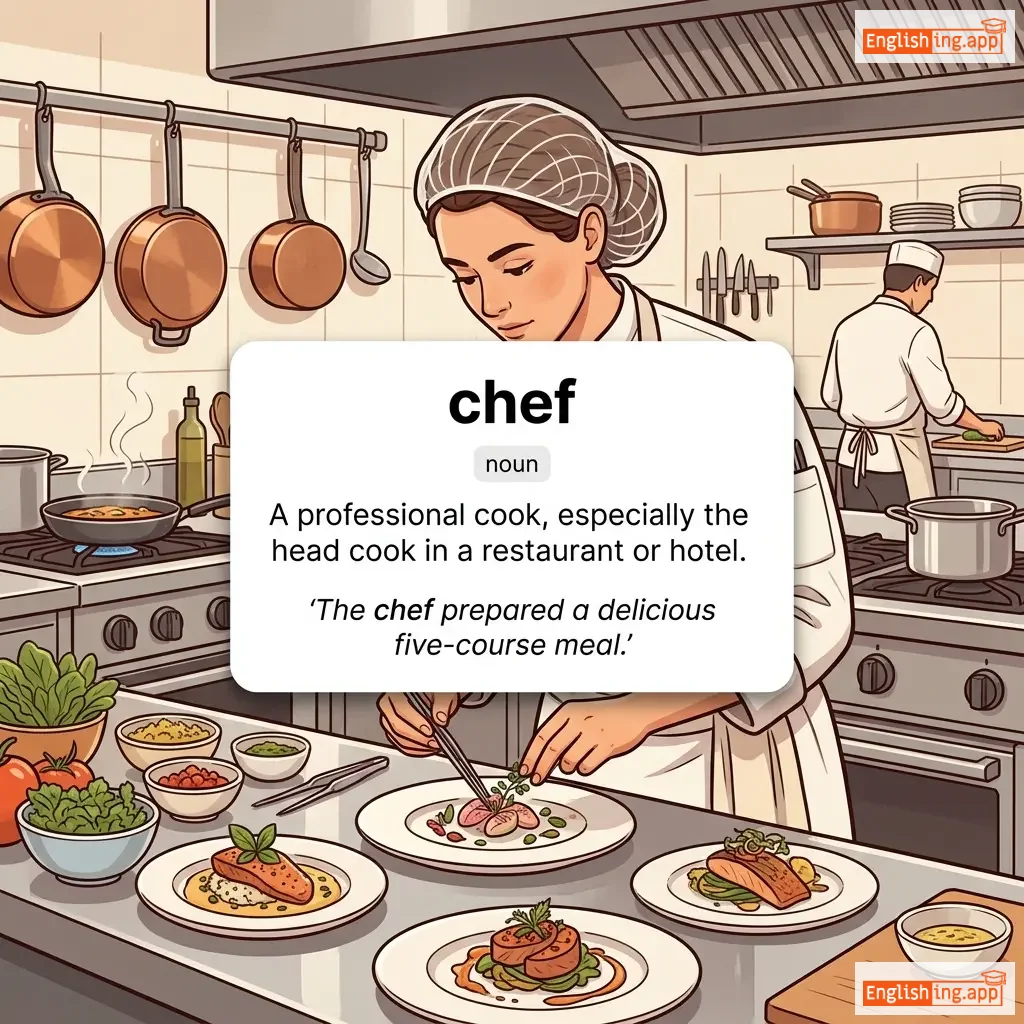
A professional cook, especially the head cook in a restaurant or hotel.
••••••
|
The chef prepared a delicious five-course meal. |
- •••••• |
too many chefs spoil the broth |
If too many people are involved in managing something, it may fail.
••••••
|
- •••••• |
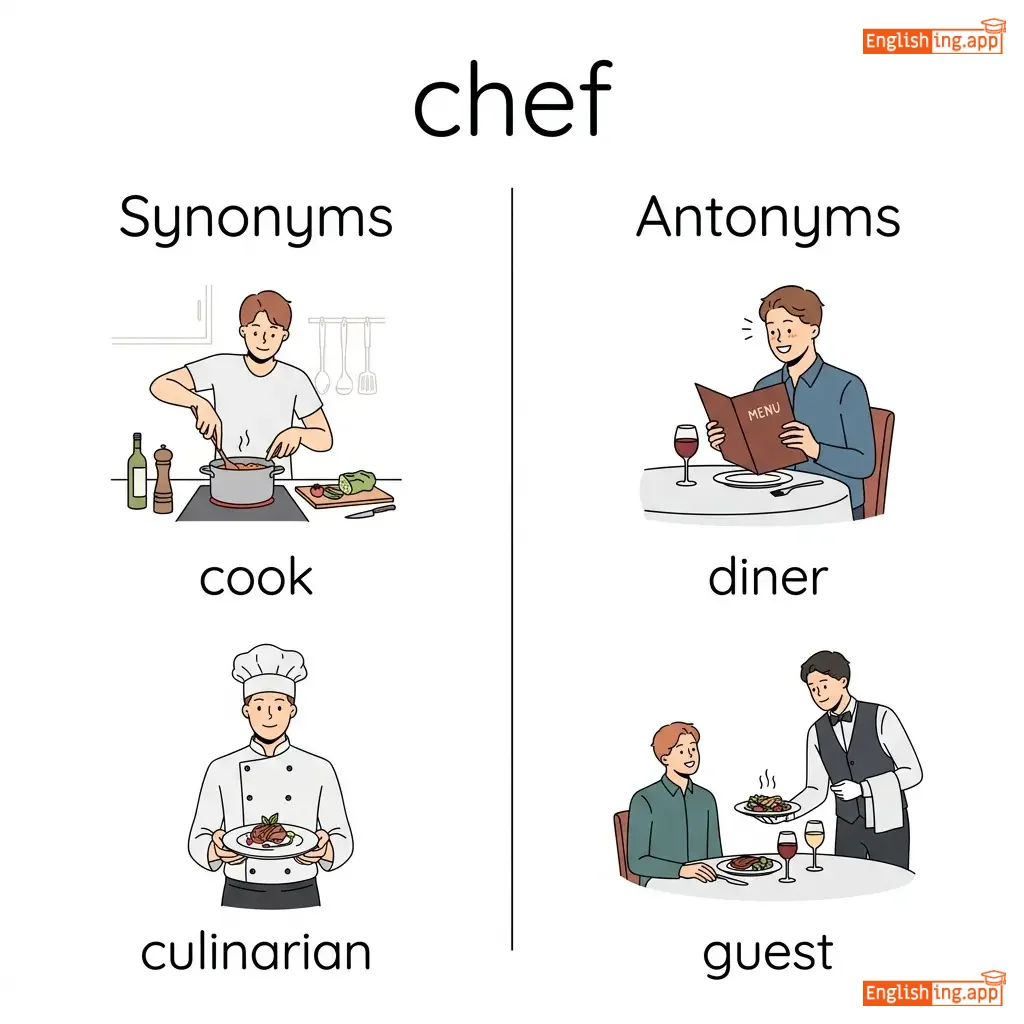
cook, culinarian, head cook, gourmet, culinary artist
••••••
|
diner, guest, customer
••••••
|
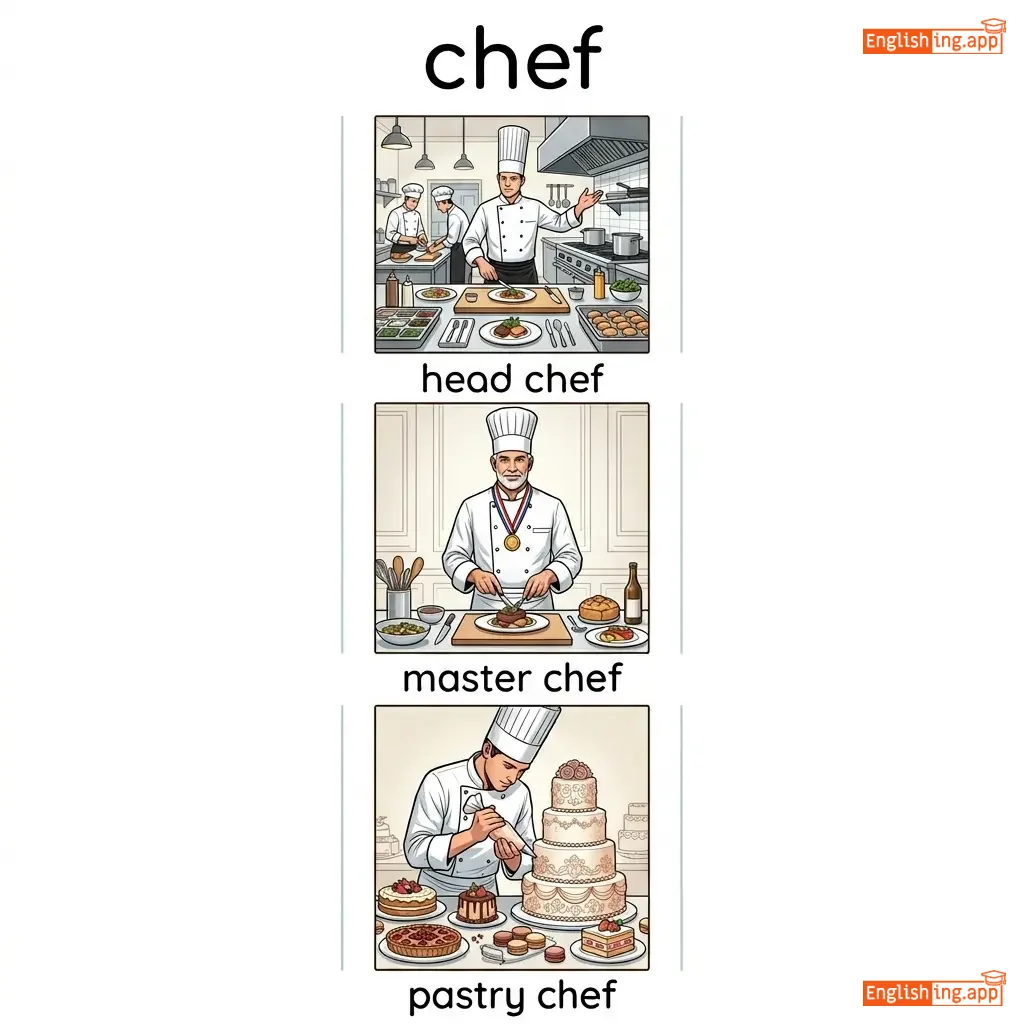
head chef, master chef, pastry chef, celebrity chef
••••••
|
No •••••• |
|
#0
👩🍳
|
/kʊk/
verb
(kùk)
••••••
|
|
做饭
zuòfàn
••••••
|
cooked
zuòzhì
••••••
|
cooked
zuòzhì
••••••
|
cooks
zuò
••••••
|
cooking
zuòzhī
••••••
|
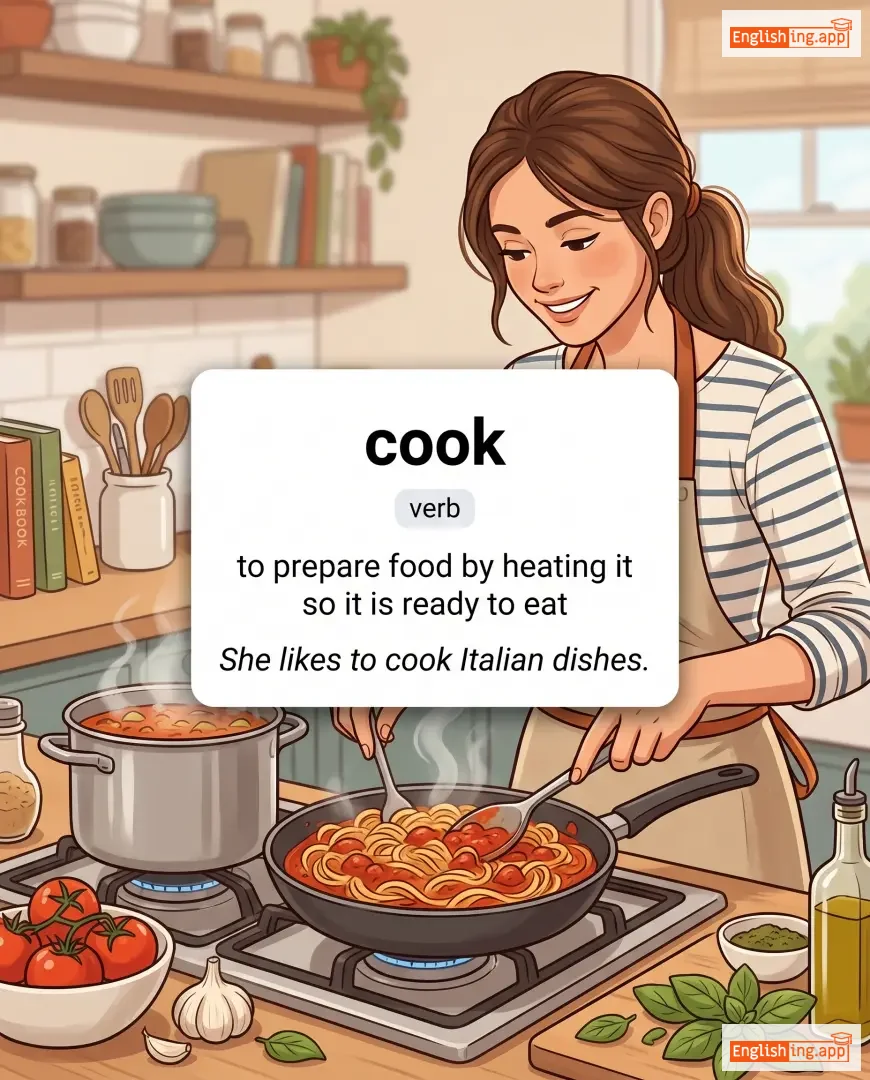
to prepare food by heating it so it is ready to eat
••••••
|
She likes to cook Italian dishes.
她喜欢做意大利菜。
••••••
|
她喜欢做意大利菜。
Tā xǐhuān zuò yìdàlì cài.
••••••
|
cook up a storm
烹饪风暴
••••••
|
to prepare a lot of food enthusiastically
••••••
|
热情地做许多饭
rèqíng dì zuò xǔduō fàn
••••••
|
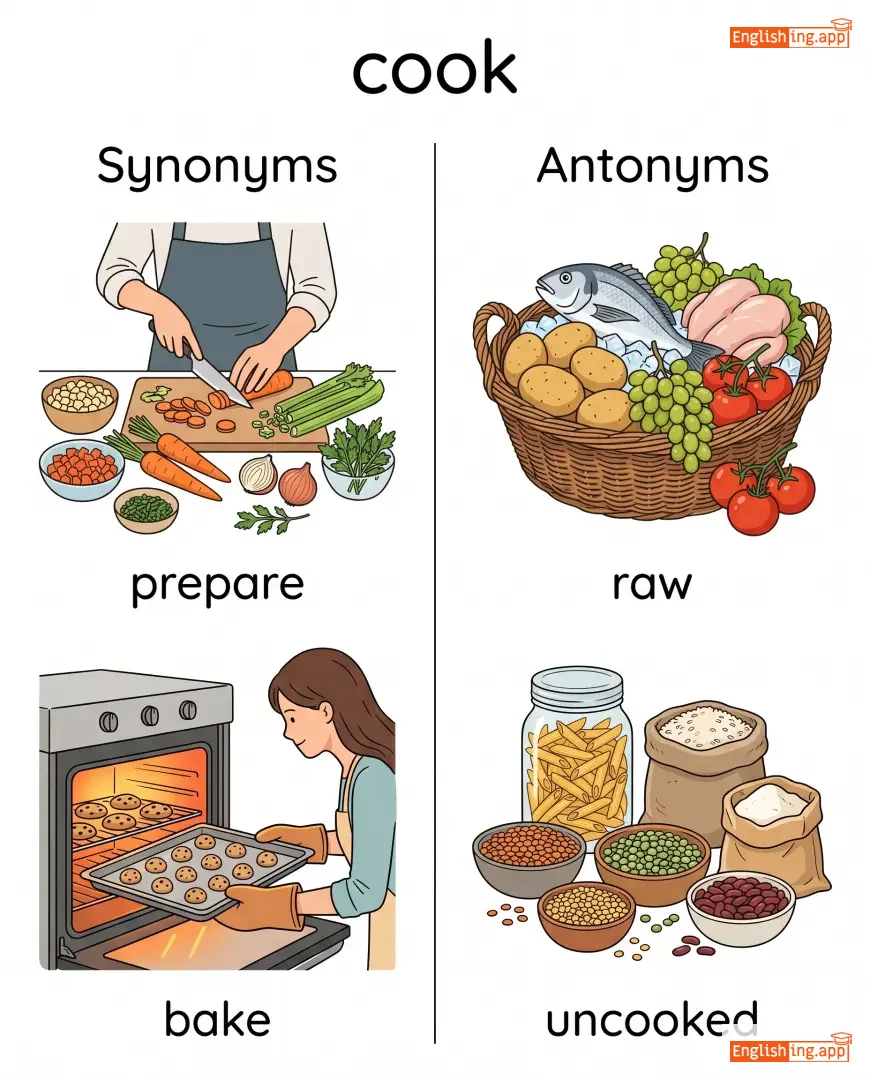
prepare, bake, fry, roast, grill
••••••
|
raw, uncooked, freeze
••••••
|
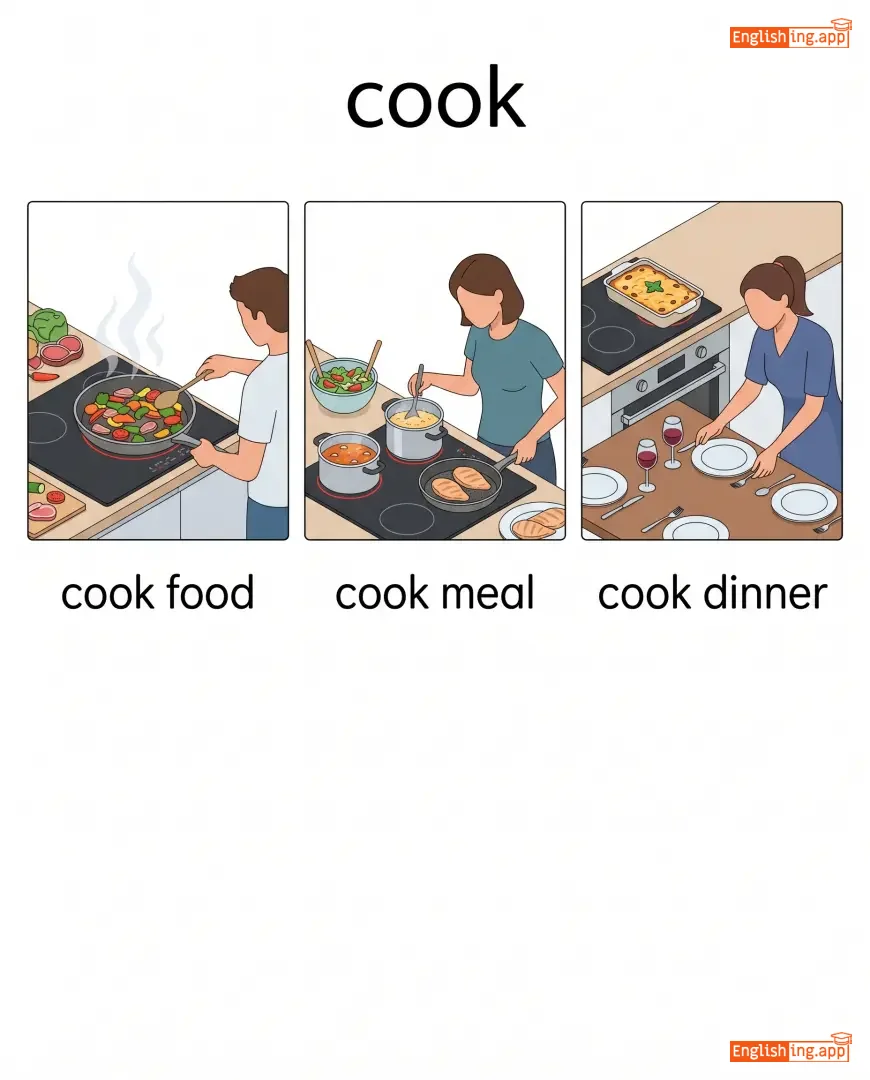
cook food, cook meal, cook dinner, cook rice
••••••
|
做饭不仅仅是吃,还很有趣!
••••••
|
|
#0
🍽️
|
/ˈdaɪnɪŋ/
noun
(dining)
••••••
|
- •••••• |
用餐
yòng cān
••••••
|
- •••••• | - •••••• | - •••••• | - •••••• |
the act of eating a meal, especially in a formal setting
••••••
|
We enjoyed fine dining at the new restaurant. |
我们在新餐厅享受了美味的用餐。
Wǒmen zài xīn cāntīng xiǎngshòu le měiwèi de yòngcān.
••••••
|
dining out |
eating at a restaurant instead of at home
••••••
|
外出用餐
wàichū yòngcān
••••••
|
eating, feasting, banqueting, having a meal
••••••
|
fasting, starving
••••••
|
fine dining, dining table, dining hall, dining out
••••••
|
用餐通常是在餐桌上的正式场合。
••••••
|
|
#0
🍽️
|
/ˈdɪnər/
noun
(晚餐)
••••••
|
- •••••• |
晚餐
wǎncān
••••••
|
- •••••• | - •••••• | - •••••• | - •••••• |
the main meal of the day, usually eaten in the evening
••••••
|
We had a lovely dinner at a new restaurant last night. |
我们昨晚在一家新餐厅吃了一顿美妙的晚餐。
Wo men zuó wǎn zài yī jiā xīn cān tīng chī le yī dùn měi miào de wǎn cān.
••••••
|
have someone for dinner |
to invite someone to eat dinner with you at your home
••••••
|
邀请某人共进晚餐
yāo qǐng mǒu rén gòng jìn wǎn cān
••••••
|
supper, feast, banquet, meal
••••••
|
breakfast, lunch
••••••
|
dinner table, dinner party, dinner plate, dinner invitation
••••••
|
晚餐就是晚上的主要餐 — 每到晚上,大家都问,'吃晚餐了吗?'
••••••
|
|
#0
🍽️
|
/dɪʃ/
noun
(迪什)
••••••
|
- •••••• |
盘子 / 菜肴
pánzi / càiyáo
••••••
|
- •••••• | - •••••• | - •••••• | - •••••• |
A shallow container for serving or preparing food; also a particular kind of food prepared.
••••••
|
She prepared a delicious pasta dish for dinner. |
她为晚餐准备了美味的意大利面菜肴。
Tā wèi wǎncān zhǔnbèile měiwèi de yìdàlì miàn càiyáo.
••••••
|
dish out |
To distribute or serve something, often food or criticism.
••••••
|
分发食物
fēn fā shíwù
••••••
|
plate, bowl, meal, course, recipe
••••••
|
drink, beverage
••••••
|
main dish, side dish, traditional dish, favorite dish
••••••
|
盘子意味着容器或菜肴,记住 - 妈妈的菜永远是最好的菜肴。
••••••
|
|
#0
🍽️
|
/ˈiːtɪŋ/
verb
(yīting)
••••••
|
- •••••• |
吃
chi
••••••
|
ate
è
••••••
|
eaten
yìtén
••••••
|
eats
yìs
••••••
|
eating
yīting
••••••
|
the act of consuming food
••••••
|
They were eating dinner when the phone rang.
他们在吃晚餐时,电话响了。
••••••
|
他们在吃晚餐时,电话响了。
Tāmen zài chī wǎncān shí, diànhuà xiǎngle.
••••••
|
eating habits
饮食习惯
••••••
|
the way someone eats or their regular food patterns
••••••
|
饮食习惯
yǐn shí xí guàn
••••••
|
consuming, devouring, chewing, swallowing
••••••
|
fasting, starving
••••••
|
healthy eating, eating disorder, eating habits, eating together
••••••
|
吃 = 生存!没有吃就没有生命!
••••••
|
|
#0
🍦
|
/ˈfleɪvər/
noun
(fuleiwei)
••••••
|
- •••••• |
味道
weidao
••••••
|
- •••••• | - •••••• | - •••••• | - •••••• |
The distinctive taste of a food or drink.
••••••
|
This ice cream has a delicious mango flavor.
这款冰淇淋有美味的芒果味。
••••••
|
这款冰淇淋有美味的芒果味。
Zhè kuǎn bīngqílín yǒu měiwèi de mángguǒ wèi.
••••••
|
taste of your own medicine
自食其果
••••••
|
Experiencing the same unpleasant treatment that one has given to others.
••••••
|
自食其果
zì shí qí guǒ
••••••
|
taste, savor, relish, tang, essence
••••••
|
blandness, tastelessness
••••••
|
flavor of ice cream, unique flavor, flavor profile, flavor combination
••••••
|
味道就是我们在嘴巴里感受到的 - 比如这款冰淇淋的芒果味 🍦
••••••
|
|
#0
🍲
|
/fuːd/
noun
(fud)
••••••
|
- •••••• |
食物
shiwu
••••••
|
- •••••• | - •••••• | - •••••• | - •••••• |
any nutritious substance that people or animals eat or drink to maintain life and growth
••••••
|
Rice is a common food in Asia. |
米饭是亚洲常见的食物。
Mifan shi Yazhou changjian de shiwu.
••••••
|
comfort food |
food that provides a sense of well-being or nostalgia
••••••
|
安慰食物
anwei shiwu
••••••
|
meal, dish, cuisine, nourishment, sustenance
••••••
|
poison, toxin
••••••
|
fast food, healthy food, food supply, food chain
••••••
|
Food 是食物 - 记住:Fast food 是快速食物。
••••••
|
|
#0
🍴
|
/fɔːk/
noun
(fɔrk)
••••••
|
- •••••• |
叉子
chāzi
••••••
|
- •••••• | - •••••• | - •••••• | - •••••• |
a tool with two or more prongs used for eating or serving food
••••••
|
He ate his salad with a fork. |
他用叉子吃了他的沙拉。
Tā yòng chāzi chīle tā de shālā.
••••••
|
at a fork in the road |
facing a point where a decision must be made
••••••
|
在路口
zài lùkǒu
••••••
|
utensil, prong, cutlery, divider
••••••
|
spoon, knife
••••••
|
dinner fork, salad fork, fork and knife, silver fork
••••••
|
Fork = 叉子。用叉子,保持双手清洁!
••••••
|
|
#0
🍳
|
/ˈkɪtʃən/
noun
(kitchen)
••••••
|
- •••••• |
厨房
chúfáng
••••••
|
- •••••• | - •••••• | - •••••• | - •••••• |
a room or area where food is prepared and cooked
••••••
|
The kitchen was filled with the smell of fresh bread.
The kitchen was filled with the smell of fresh bread.
••••••
|
厨房里充满了新鲜面包的香味。
Chúfáng lǐ chōngmǎnle xīnxiān miànbāo de xiāngwèi.
••••••
|
everything but the kitchen sink
everything but the kitchen sink
••••••
|
almost everything imaginable
••••••
|
除了厨房水槽以外的所有东西
chúle chúfáng shuǐcáo yǐwài de suǒyǒu dōngxī
••••••
|
cookhouse, galley, canteen, scullery
••••••
|
living room, bedroom
••••••
|
kitchen table, modern kitchen, clean the kitchen, kitchen utensils
••••••
|
厨房 = 美味佳肴的诞生地 🍳
••••••
|
|
#0
🥪
|
/lʌntʃ/
noun
(lunch)
••••••
|
- •••••• |
午餐
wucan
••••••
|
- •••••• | - •••••• | - •••••• | - •••••• |
a meal eaten in the middle of the day
••••••
|
We usually have lunch at 1 p.m. |
我们通常在下午1点吃午餐。
Women tongchang zai xiawu 1 dian chi wucan.
••••••
|
out to lunch |
not paying attention or unaware of what is happening
••••••
|
心不在焉
xin bu zai yan
••••••
|
midday meal, brunch, tiffin, repast
••••••
|
dinner, supper
••••••
|
have lunch, lunch break, business lunch, packed lunch
••••••
|
午餐意味着中午吃的饭——如果不吃,你的注意力会分散。
••••••
|
|
#0
🍽️
|
/miːl/
noun
(海皮尼斯)
••••••
|
- •••••• |
幸福
xingfu
••••••
|
- •••••• | - •••••• | - •••••• | - •••••• |
An occasion when food is eaten, or the food that is eaten on such an occasion.
••••••
|
We had a delicious meal at the restaurant. |
当她收到奖项时,她无法掩饰她的幸福。
Dang ta shoudao jiangxiang shi, ta wu fa yanshi ta de xingfu.
••••••
|
square meal |
a substantial, satisfying, and balanced meal
••••••
|
追求幸福
Zhuiqiu xingfu
••••••
|
dish, feast, food, banquet, repast
••••••
|
fast, hunger, starvation
••••••
|
have a meal, cook a meal, family meal, main meal
••••••
|
幸福 = 幸福 = 我们都在微笑中寻找幸福。
••••••
|
|
#0
📜
|
/ˈmɛnjuː/
noun
(菜单)
••••••
|
- •••••• |
菜单
càidān
••••••
|
- •••••• | - •••••• | - •••••• | - •••••• |
A list of food and drinks available at a restaurant or offered at a meal.
••••••
|
The restaurant updated its menu with new dishes. |
餐厅更新了他们的菜单,加入了新菜肴。
Cāntīng gēngxīnle tāmen de càidān, jiārùle xīn cài yáo.
••••••
|
set menu |
A fixed selection of dishes offered at a set price.
••••••
|
固定菜单
gùdìng càidān
••••••
|
bill of fare, food list, card, menu card, offerings
••••••
|
emptiness, nothingness
••••••
|
menu card, lunch menu, digital menu, special menu
••••••
|
菜单就是餐厅的食物清单,帮助你选择菜肴。
••••••
|
|
#0
🌶️
|
/ˈpɛpər/
noun
(胡椒)
••••••
|
- •••••• |
胡椒
hújiāo
••••••
|
- •••••• | - •••••• | - •••••• | - •••••• |
a pungent spice obtained from pepper plants, used to flavor food
••••••
|
I like to add pepper to my soup. |
我喜欢在我的汤里加胡椒。
Wǒ xǐhuān zài wǒ de tāng lǐ jiā hújiāo.
••••••
|
- •••••• | - •••••• | - •••••• |
spice, seasoning, chili, hot powder
••••••
|
sweet, bland
••••••
|
black pepper, red pepper, pepper shaker, ground pepper
••••••
|
Pepper makes food HOT (胡椒) and SPICY
••••••
|
|
#0
🍽️
|
/pleɪt/
noun
(plèit)
••••••
|
- •••••• |
盘子
panzi
••••••
|
- •••••• | - •••••• | - •••••• | - •••••• |
a flat, typically round dish used for serving or eating food
••••••
|
Please put the rice on your plate. |
请把米饭放到你的盘子里。
qǐng bǎ mǐfàn fàng dào nǐ de pánzi lǐ.
••••••
|
- •••••• | - •••••• | - •••••• |
dish, platter, saucer
••••••
|
bowl, cup
••••••
|
dinner plate, paper plate, clean plate
••••••
|
盘子是盛饭的工具,是圆的哦!
••••••
|
|
#0
🍰
|
/ˈrɛsɪpi/
noun
(食谱)
••••••
|
- •••••• |
食谱
shipu
••••••
|
- •••••• | - •••••• | - •••••• | - •••••• |
a set of instructions for preparing a particular dish, including a list of the ingredients required
••••••
|
I found a great recipe for chocolate cake.
我找到了一个很棒的巧克力蛋糕食谱。
••••••
|
我找到了一个很棒的巧克力蛋糕食谱。
Wo zhaodao le yige hen bang de qiaokeli dangao shipu.
••••••
|
- •••••• | - •••••• | - •••••• |
formula, method, instructions, procedure
••••••
|
improvisation, guesswork
••••••
|
recipe for disaster, secret recipe, traditional recipe
••••••
|
The RECIPE for success in the kitchen is making delicious food - remember it as 'Shipu'!
••••••
|
|
#0
🍴
|
/ˈrɛst(ə)rɒnt/
noun
(餐馆)
••••••
|
- •••••• |
餐馆
canguan
••••••
|
- •••••• | - •••••• | - •••••• | - •••••• |
a place where meals are prepared and served to customers
••••••
|
We went to the restaurant for dinner.
我们去餐馆吃晚餐。
••••••
|
我们去餐馆吃晚餐。
Wǒmen qù cānguǎn chī wǎncān.
••••••
|
- •••••• | - •••••• | - •••••• |
eatery, diner, bistro, café
••••••
|
home, kitchen, cafeteria
••••••
|
fine-dining restaurant, fast food restaurant, local restaurant, vegetarian restaurant
••••••
|
餐馆是吃饭的地方 (Cānguǎn shì chīfàn de dìfāng) - Go to the restaurant
••••••
|
|
#0
🥄
|
/sɔːs/
noun
(酱)
••••••
|
- •••••• |
酱
jiang
••••••
|
- •••••• | - •••••• | - •••••• | - •••••• |
a liquid or semi-liquid substance served with food to add moisture and flavor
••••••
|
She added tomato sauce to her pasta.
她在她的意大利面上加了番茄酱。
••••••
|
她在她的意大利面上加了番茄酱。
Ta zai ta de yidali mian shang jia le fanqie jiang.
••••••
|
- •••••• | - •••••• | - •••••• |
gravy, dressing, condiment
••••••
|
dry seasoning, solid food
••••••
|
tomato sauce, soy sauce, hot sauce, pasta sauce, sauce bottle
••••••
|
想象把番茄酱加到意大利面上,味道更丰富!
••••••
|
|
#0
🌶️
|
/spaɪs/
noun
(spais)
••••••
|
- •••••• |
香料
xiangliao
••••••
|
- •••••• | - •••••• | - •••••• | - •••••• |
a substance used to add flavor to food
••••••
|
She added a pinch of spice to the curry for extra flavor.
她在咖喱里加入了一撮香料以增加味道。
••••••
|
她在咖喱里加入了一撮香料以增加味道。
Tā zài gālí lǐ jiārù le yī cuǒ xiāngliào yǐ zēngjiā wèidào.
••••••
|
- •••••• | - •••••• | - •••••• |
seasoning, flavoring, condiment
••••••
|
blandness
••••••
|
add spice, spicy dish, curry spice
••••••
|
香料让食物更有味道,就像咖喱香料一样。
••••••
|
|
#0
👅
|
/teɪst/
verb
(tèst)
••••••
|
|
品尝
pǐncháng
••••••
|
tasted
tèstəd
••••••
|
tasted
tèstəd
••••••
|
tastes
tèsts
••••••
|
tasting
tèstɪng
••••••
|
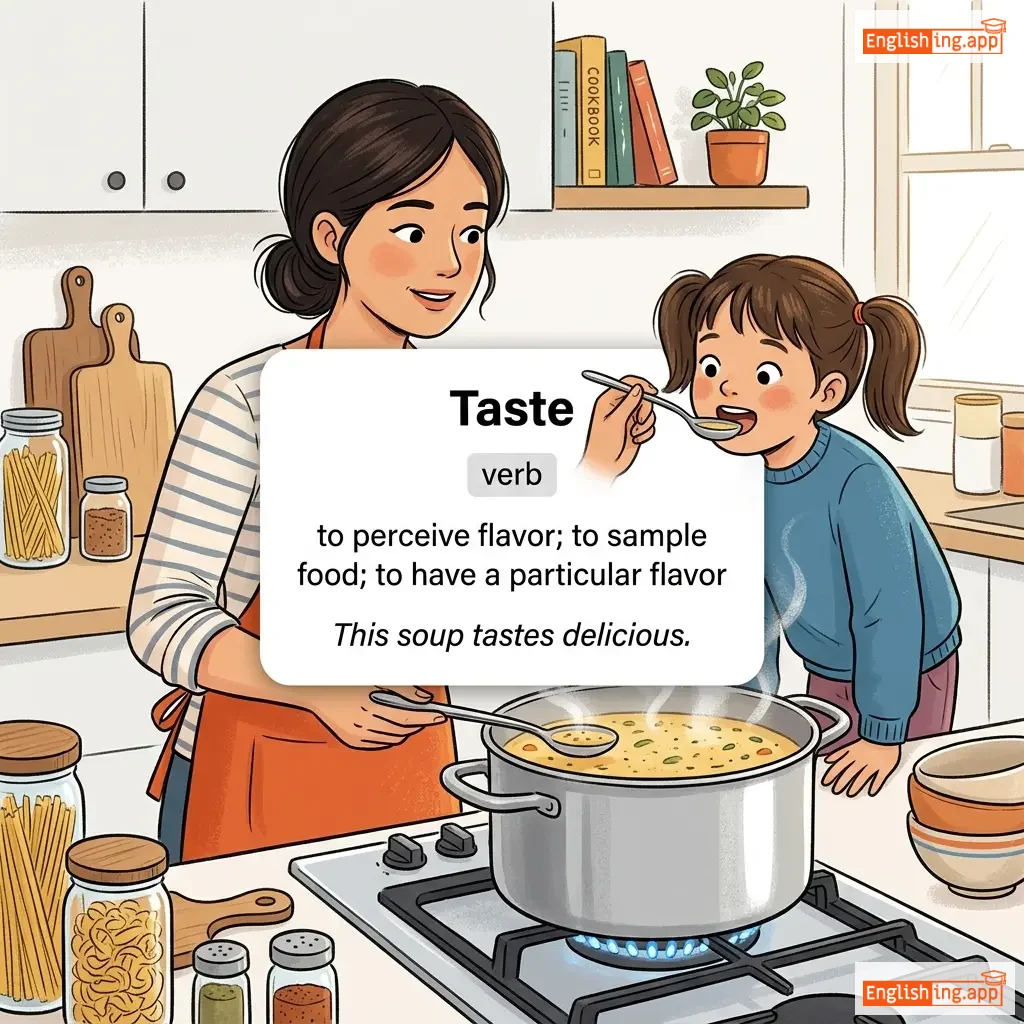
to perceive flavor; to sample food; to have a particular flavor
••••••
|
This soup tastes delicious.
这汤尝起来很美味。
••••••
|
这汤尝起来很美味。
Zhè tāng cháng qǐlái hěn měiwèi
••••••
|
- •••••• | - •••••• | - •••••• |
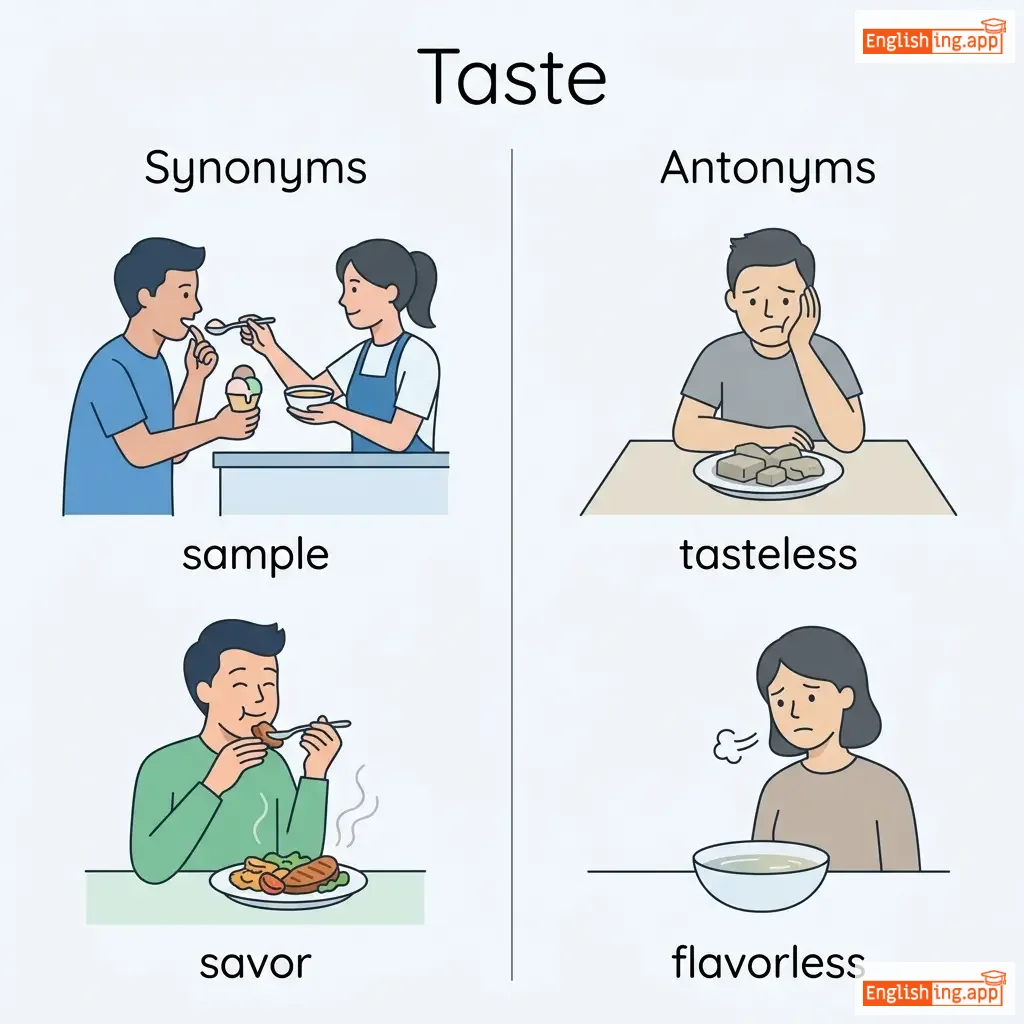
sample, savor, flavor, try
••••••
|
tasteless, flavorless
••••••
|
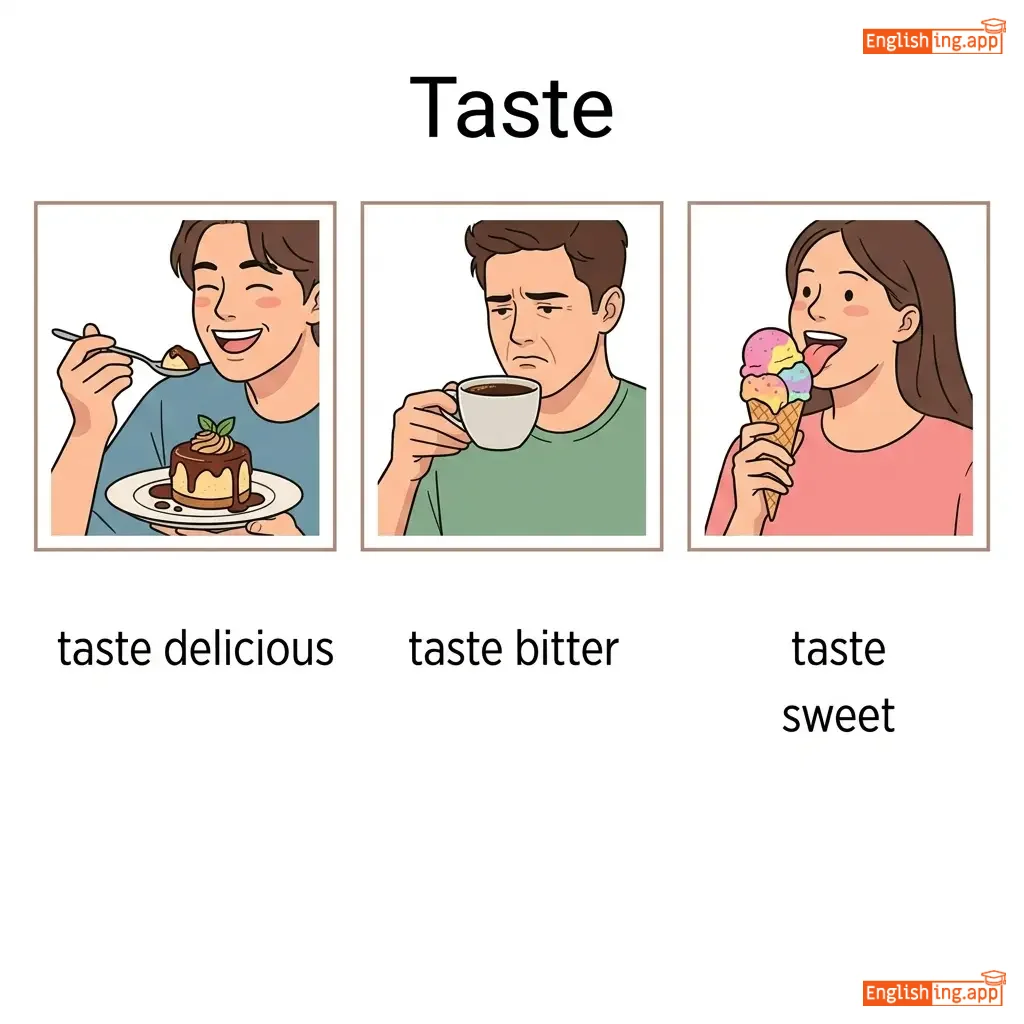
taste delicious, taste bitter, taste sweet, taste good, taste fresh
••••••
|
Taste in Chinese is '品尝', remember to savor each bite with 'pǐncháng'.
••••••
|
Vocabulary Quiz
Test your vocabulary by matching words with their translations or meanings.
Login to take the quiz
Comments (0)
Share your thoughts and join the discussion.
Join the discussion by logging in
Login to CommentNo comments yet
Be the first to share your thoughts!