

从失败到成功
From Failure to Success
娜迪娅失去了她的 job。她的 boss 因为 sales loss 而 fired 了她。"你 failed 了你的 task," boss 说。"我们不能留那些带来 losses 的 employees。"\n\n她非常沮丧。她的 career 似乎结束了,她的 income 消失了,她的 salary 没了。"我 failed 了," 她想。"我是一个 failure。"\n\n但娜迪娅是 capable 的。她决定不放弃。"我需要 apply 新的 jobs," 她决定。"我很 skilled,我可以再次 earn。"\n\n她开始到处 applying。每个 job 招聘,每个机会她都尝试。但拒绝接二连三。"不够 skilled," 有人说。"不够 capable," 其他人说。\n\n几个月过去了,她的积蓄快用光了。"也许我真的是个 failure," 她在黑暗的时刻想着。但后来她想起了一件事。\n\n"Failure 不是终点," 她对自己说。"我 failed 过一次,但我也能变得 successful。我只需要正确的 job、合适的 boss 和机会。"\n\n然后有一天,一家小型创业公司想要 hire 一个人。Salary 虽然很低,但他们需要 skilled sales 人员。"我们很小,我们经历过 losses," 老板说。"但我们需要 capable employees 来处理 tasks。"\n\n娜迪娅 applied 了。"我知道我之前 failed 过," 她坦诚地说。"但我从那次 failure 中学到了。我是 capable 的,我是 skilled 的,我不会再 fail 你。"\n\n他们 hired 了她。第一个月很艰难,tasks 具有挑战性,sales 目标看似不可能。但娜迪娅比任何 employee 都更努力。\n\n然后结果开始显现。她的 sales 提高了。公司的 loss 减少了。她的 boss 注意到了。"你完成了很棒的 tasks," 他说。"你非常 capable。"\n\n六个月后,娜迪娅成了最优秀的 sales 表现者。公司从 loss 变为盈利。她的 boss 打电话给她。"我们要给你 bonus," 他宣布。"还要提高你的 salary。你是我们最 successful employee。"\n\n娜迪娅简直不敢相信。从被 fired、从 failing、从 loss 和 failure——她走向了 success、好的 income、成为 successful 的人。\n\n"当我 failed 的时候," 她后来在一次研讨会上说,"当我的 boss fired 我,当我失去 job 和 income 时,我以为我的 career 结束了。我以为我不 capable,以为我是永久的 failure。但后来我明白,failing 一次并不会让你成为 failure。重要的是你是否再次 apply 自己。我 applied 了无数个 jobs。我愿意 earn 更少的 salary,承担更难的 tasks,证明我 skilled 且 capable。当有人终于决定 hire 我时,我全力以赴。每个 task、每个 sales 电话、每个挑战——我都面对它。是的,有 losses,也有 failed 的时候。但总体上,我变得 successful。现在我 earn 很好的 income,得到 bonus,有很棒的 boss,与优秀的 employees 一起工作。所以,如果你被 fired,如果你 fail,如果你面对 loss——记住这不是结束。你是 capable 的,你是 skilled 的。只要继续 applying,继续努力,不要让 failure 定义你。合适的 job 在那儿,合适的 boss 会 hire 你。机会终会到来。而当它来时,展示你 capable 成为 successful。把 losses 变成收获,把 failures 变成教训,把 tasks 变成成就。证明你能 earn,能成功,能成为有价值的 employee。Career 是一场马拉松,而不是短跑。一场 failure 不会终结它。继续前进,你会找到 success。"\n\n几年后,娜迪娅创办了自己的公司。她记得要 hire capable 的人,而不是完美的人。她明白那些曾经 failed 的 employees 常常会变得最 successful。她给出好的 salary、公平的 bonus、困难但可实现的 tasks。她的公司经历了起伏、losses 和收获。但有 skilled、capable employees,公司依然 successful。每当她 hired 新人、看到 employee failed task、或面对 sales loss 时,她都会想起自己的经历。想起被 fired、成为 failure、不断 applying、终于被 hired、重新 earning、变得 successful。那个记忆让她保持谦逊、善良,并始终相信第二次机会。


Swipe left or right, or use the buttons. Tap image to zoom.
例句翻译
单词
From Failure to SuccessFrom Failure to Success - 遮罩切换
|
表情符号
|
单词 | Images | 翻译 | 过去时 | 过去分词 | 第三人称单数 | 动名词 | 含义 | 例句 | 例句翻译 | 示例表达 | 示例表达含义 | 示例表达翻译 | 同义词 | 反义词 | 搭配词 | 助记符 |
|---|---|---|---|---|---|---|---|---|---|---|---|---|---|---|---|---|---|
|
#0
📄
|
/əˈplaɪ/
verb
(āpūlái)
••••••
|
- •••••• |
申请 / 应用
shēnqǐng / yìngyòng
••••••
|
applied
āpūláid
••••••
|
applied
āpūláid
••••••
|
applies
āpūlái zī
••••••
|
applying
āpūlái yīng
••••••
|
to make a formal request for something; to put into practice
••••••
|
He decided to apply for the scholarship.
他决定申请奖学金。
••••••
|
他决定申请奖学金。
Tā juédìng shēnqǐng jiǎngxuéjīn.
••••••
|
apply oneself
全力以赴
••••••
|
to make a serious effort to do something
••••••
|
全力以赴做某事
quánlì yǐfù zuò mǒu shì
••••••
|
request, use, implement, employ, submit
••••••
|
ignore, neglect
••••••
|
apply for a job, apply pressure, apply rules, apply cream
••••••
|
Apply意味着申请 — 申请更多,机会更多。
••••••
|
|
#0
💰
|
/ˈbəʊnəs/
noun
(bó nà sī)
••••••
|
- •••••• |
奖金
jiǎng jīn
••••••
|
- •••••• | - •••••• | - •••••• | - •••••• |
an extra payment or reward given in addition to what is usual or expected.
••••••
|
Employees received a year-end bonus for their hard work.
员工们因其辛勤工作而收到了年终奖金。
••••••
|
员工们因其辛勤工作而收到了年终奖金。
Yuángōngmen yīn qí xīnqín gōngzuò ér shōu dào le niánzhōng jiǎngjīn.
••••••
|
added bonus
额外奖金
••••••
|
an extra benefit or advantage.
••••••
|
额外的利益
éwài de lìyì
••••••
|
reward, incentive, gift, premium, perk
••••••
|
penalty, deduction
••••••
|
year-end bonus, performance bonus, cash bonus, annual bonus
••••••
|
Bonus – 就是你额外的奖励!
••••••
|
|
#0
👨💼
|
/bɒs/
noun
(bó sī)
••••••
|
- •••••• |
老板
lǎobǎn
••••••
|
- •••••• | - •••••• | - •••••• | - •••••• |
a person who is in charge of a worker, group, or organization
••••••
|
Her boss gave her a new project to complete. |
她的老板给她分配了一个新的项目来完成。
Tā de lǎobǎn gěi tā fēnpèi le yīgè xīn de xiàngmù lái wánchéng.
••••••
|
like a boss |
to do something with confidence and authority
••••••
|
像老板一样
xiàng lǎobǎn yīyàng
••••••
|
manager, supervisor, chief, head, leader
••••••
|
employee, worker, subordinate
••••••
|
boss at work, strict boss, talk to the boss, boss of the company
••••••
|
老板总是展现出决策的自信和强大的权威。
••••••
|
|
#0
💪
|
/ˈkeɪpəbl/
adjective
(凯布尔)
••••••
|
- •••••• |
有能力
yǒu nénglì
••••••
|
- •••••• | - •••••• | - •••••• | - •••••• |
having the ability, fitness, or quality necessary to do something
••••••
|
She is capable of handling difficult situations calmly. |
她能够冷静地处理困难的情况。
Tā nénggòu lěngjìng de chǔlǐ kùnnán de qíngkuàng.
••••••
|
capable of |
having the ability or capacity to do something
••••••
|
有能力
yǒu nénglì
••••••
|
able, competent, skilled, qualified, proficient
••••••
|
incapable, unfit, incompetent
••••••
|
capable leader, capable hands, fully capable, highly capable
••••••
|
有能力的意思就是 capable,能力就是能力。
••••••
|
|
#0
💼
|
/kəˈrɪər/
noun, verb
(kaˈɹiə)
••••••
|
- •••••• |
职业 / 事业
zhiye / shiye
••••••
|
careered
kaˈɹiəd
••••••
|
careered
kaˈɹiəd
••••••
|
careers
kaˈɹiərs
••••••
|
careering
kaˈɹiərɪŋ
••••••
|
As a noun: a person’s course of professional life; as a verb: to move swiftly and in an uncontrolled way.
••••••
|
She built a successful career in medicine.
她在医学领域建立了一个成功的职业生涯。
••••••
|
她在医学领域建立了一个成功的职业生涯。
Ta zai yixue lingyu jianli le yige chenggong de zhiye shengya.
••••••
|
career path
职业道路
••••••
|
The course of one's professional life or progress.
••••••
|
职业道路
zhiye daolu
••••••
|
profession, occupation, vocation, livelihood, calling
••••••
|
idleness, unemployment, joblessness
••••••
|
career development, career path, career opportunity, career growth
••••••
|
Career 意味着职业生涯 → Carry your life through work = 职业.
••••••
|
|
#0
💵
|
/ɜːrn/
verb
(ern)
••••••
|
|
赚取
zhuan qu
••••••
|
earned
ern-d
••••••
|
earned
ern-d
••••••
|
earns
ern-s
••••••
|
earning
ern-ing
••••••
|
To receive money or reward in return for work or service.
••••••
|
She worked hard to earn enough money for college.
她努力工作赚取足够的钱上大学。
••••••
|
她努力工作赚取足够的钱上大学。
Ta nuli gongzuo zhuan qu zu gou de qian shang daxue.
••••••
|
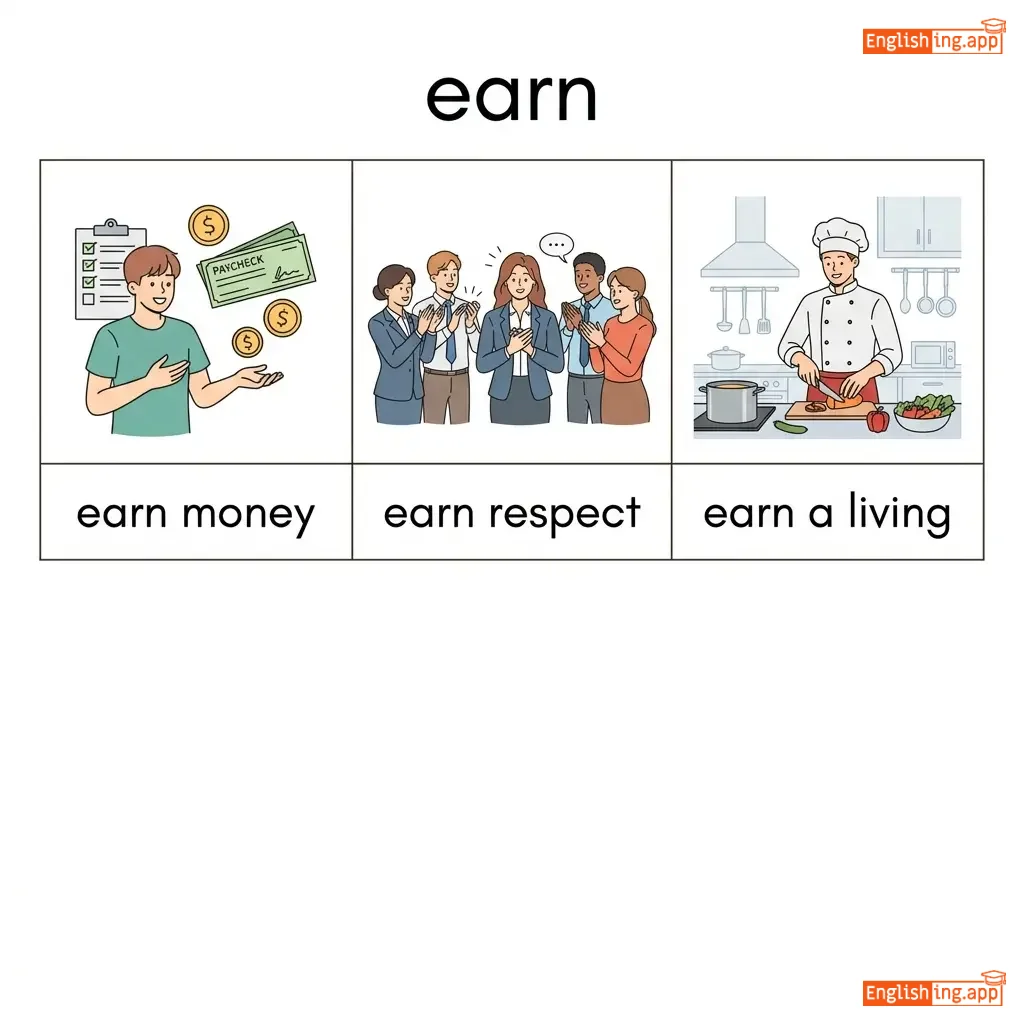
earn a living
谋生
••••••
|
To make enough money to support oneself financially.
••••••
|
谋生
mou sheng
••••••
|
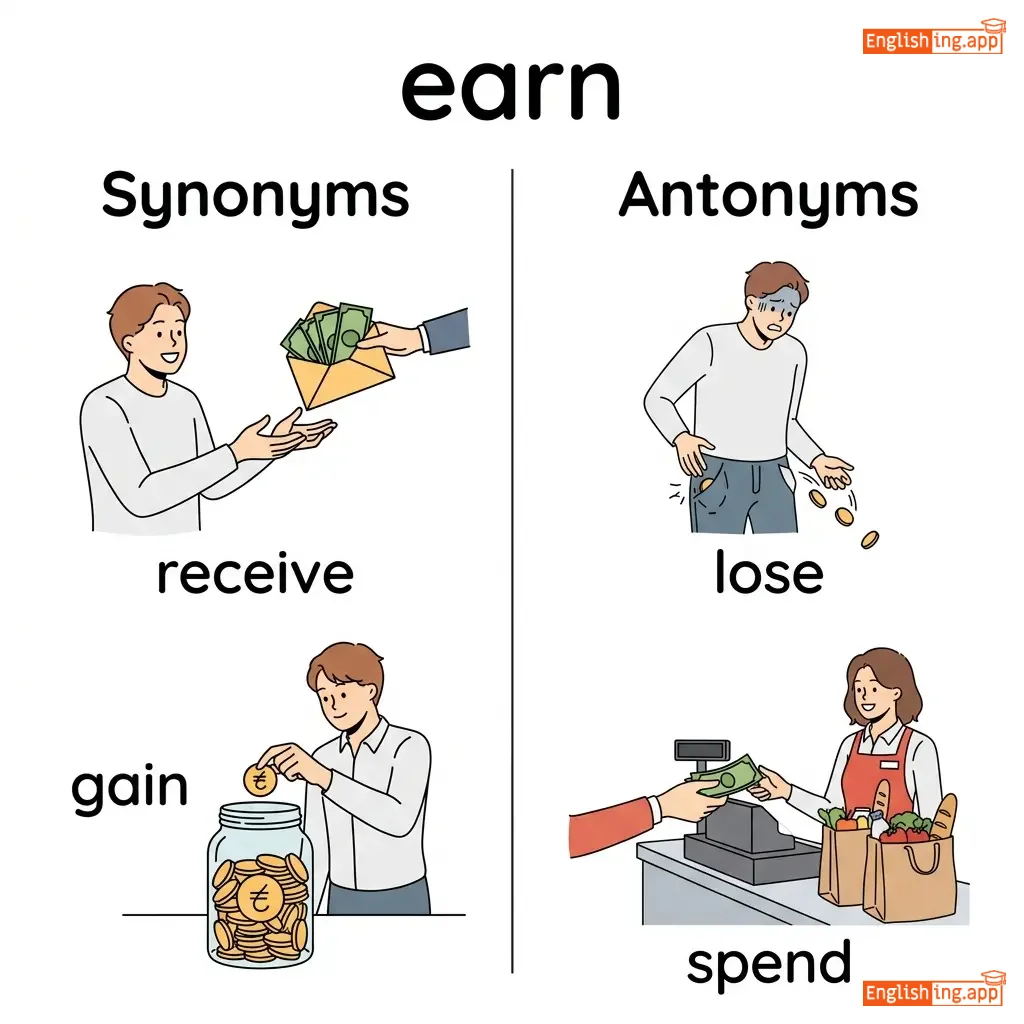
receive, gain, obtain, secure, acquire
••••••
|
lose, spend, forfeit
••••••
|
earn money, earn respect, earn a living, earn interest
••••••
|
Earn意味着'赚取' - 努力工作带来赚钱。
••••••
|
|
#0
👩💼
|
/ɛmˈplɔɪ.iː/
noun
(员工)
••••••
|
- •••••• |
员工
yuángōng
••••••
|
- •••••• | - •••••• | - •••••• | - •••••• |
A person who works for an organization or company in return for payment.
••••••
|
The company values each employee's contribution to its success. |
公司重视每个员工对成功的贡献。
Gongsi zhòngshì měi gè yuángōng duì chénggōng de gòngxiàn.
••••••
|
model employee |
An ideal worker who performs duties responsibly and well.
••••••
|
模范员工
mófàn yuángōng
••••••
|
worker, staff member, team member, personnel, laborer
••••••
|
employer, boss
••••••
|
loyal employee, new employee, company employee, hire employee
••••••
|
员工是公司里的工作人,'工作'就是员工的职责。
••••••
|
|
#0
❌
|
/feɪl/
verb
(fèil)
••••••
|
- •••••• |
失败
shībài
••••••
|
failed
fèild
••••••
|
failed
fèild
••••••
|
fails
fèils
••••••
|
failing
fèiling
••••••
|
To be unsuccessful in achieving a goal or expectation.
••••••
|
He failed the driving test.
他在驾驶考试中失败了。
••••••
|
他在驾驶考试中失败了。
Tā zài jiàshǐ kǎoshì zhōng shībài le.
••••••
|
fail miserably
彻底失败
••••••
|
to fail completely and badly
••••••
|
彻底失败
chèdǐ shībài
••••••
|
lose, flop, collapse, fall short, break down
••••••
|
succeed, achieve, pass
••••••
|
fail exam, fail test, fail to act, fail miserably
••••••
|
失败就像你在考试中被说‘你失败了’。
••••••
|
|
#0
❌
|
/feɪld/
adjective
(feild)
••••••
|
- •••••• |
失败
shibai
••••••
|
- •••••• | - •••••• | - •••••• | - •••••• |
not successful in achieving a desired result
••••••
|
The project failed to meet the expectations.
项目未能达到预期。
••••••
|
项目未能达到预期。
Xiangmu wei neng dadao yuqi.
••••••
|
- •••••• | - •••••• | - •••••• |
unsuccessful, defeated, unaccomplished, flawed
••••••
|
successful, victorious, accomplished
••••••
|
failed attempt, failed project, failed test
••••••
|
失败的项目无法成功
••••••
|
|
#0
❌
|
/ˈfeɪljər/
noun
(fēi liò)
••••••
|
- •••••• |
失败
shībài
••••••
|
- •••••• | - •••••• | - •••••• | - •••••• |
The lack of success in doing or achieving something.
••••••
|
The project was considered a failure due to poor planning. |
由于糟糕的规划,该项目被认为是失败。
yóuyú zāogāo de guīhuà, gāi xiàngmù bèi rènwéi shì shībài.
••••••
|
trial and error |
A method of solving problems by trying different solutions until one works.
••••••
|
试错法
shì cuò fǎ
••••••
|
defeat, breakdown, collapse, disaster, fiasco
••••••
|
success, achievement, victory
••••••
|
complete failure, business failure, engine failure, failure rate
••••••
|
失败意味着一切都尝试过,却没有成功 – 想到 '失败'。
••••••
|
|
#0
🔥
|
/ˈfaɪər/
noun/verb
(fāi'ěr)
••••••
|
- •••••• |
火 / 解雇
huǒ / jiěgù
••••••
|
fired
fāi'ěr dé
••••••
|
fired
fāi'ěr dé
••••••
|
fires
fāi'ěr sī
••••••
|
firing
fāi'ěr jīng
••••••
|
the phenomenon of combustion, or to dismiss someone from a job
••••••
|
The company decided to fire two employees last week.
公司上周决定解雇两名员工。
••••••
|
公司上周决定解雇两名员工。
Gōngsī shàng zhōu juédìng jiěgù liǎng míng yuángōng.
••••••
|
play with fire
玩火
••••••
|
to take dangerous risks
••••••
|
玩火
wán huǒ
••••••
|
blaze, flame, ignite, dismiss, sack
••••••
|
extinguish, hire
••••••
|
start a fire, put out fire, fire alarm, fire someone
••••••
|
火有危险,就像被解雇一样,都是不好的事。
••••••
|
|
#0
👔
|
/ˈhaɪə(r)/
verb
(hāi'ěr)
••••••
|
|
聘用
pìnyòng
••••••
|
hired
hāi'ěr-d
••••••
|
hired
hāi'ěr-d
••••••
|
hires
hāi'ěr-s
••••••
|
hiring
hāi'ěr-ing
••••••
|
to employ someone for a job or task
••••••
|
The company decided to hire more staff this year.
公司决定今年聘用更多员工。
••••••
|
公司决定今年聘用更多员工。
Gōngsī juédìng jīnnián pìnyòng gèng duō yuángōng.
••••••
|
hire and fire
聘用与解雇
••••••
|
to employ and dismiss workers frequently
••••••
|
聘用与解雇
pìnyòng yǔ jiěgù
••••••
|
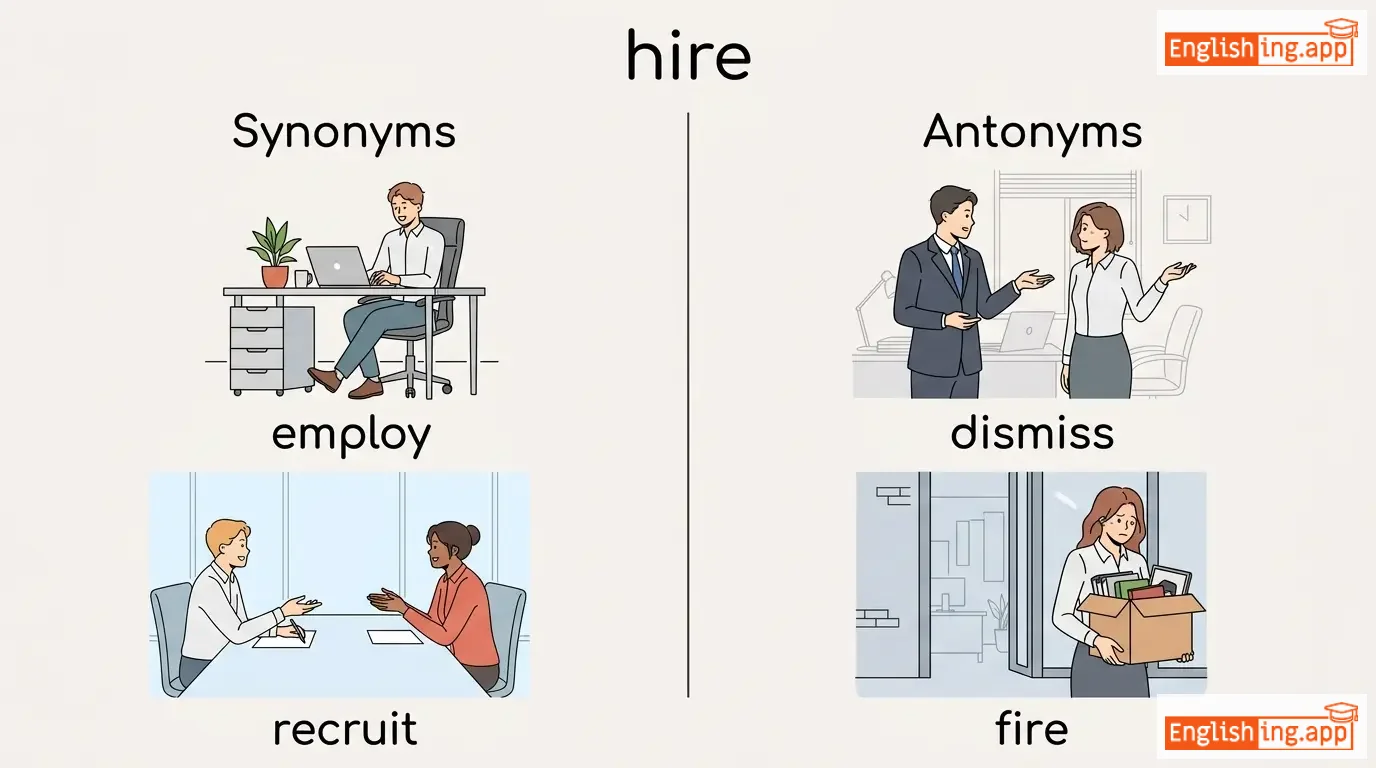
employ, recruit, appoint, engage, contract
••••••
|
dismiss, fire, discharge
••••••
|
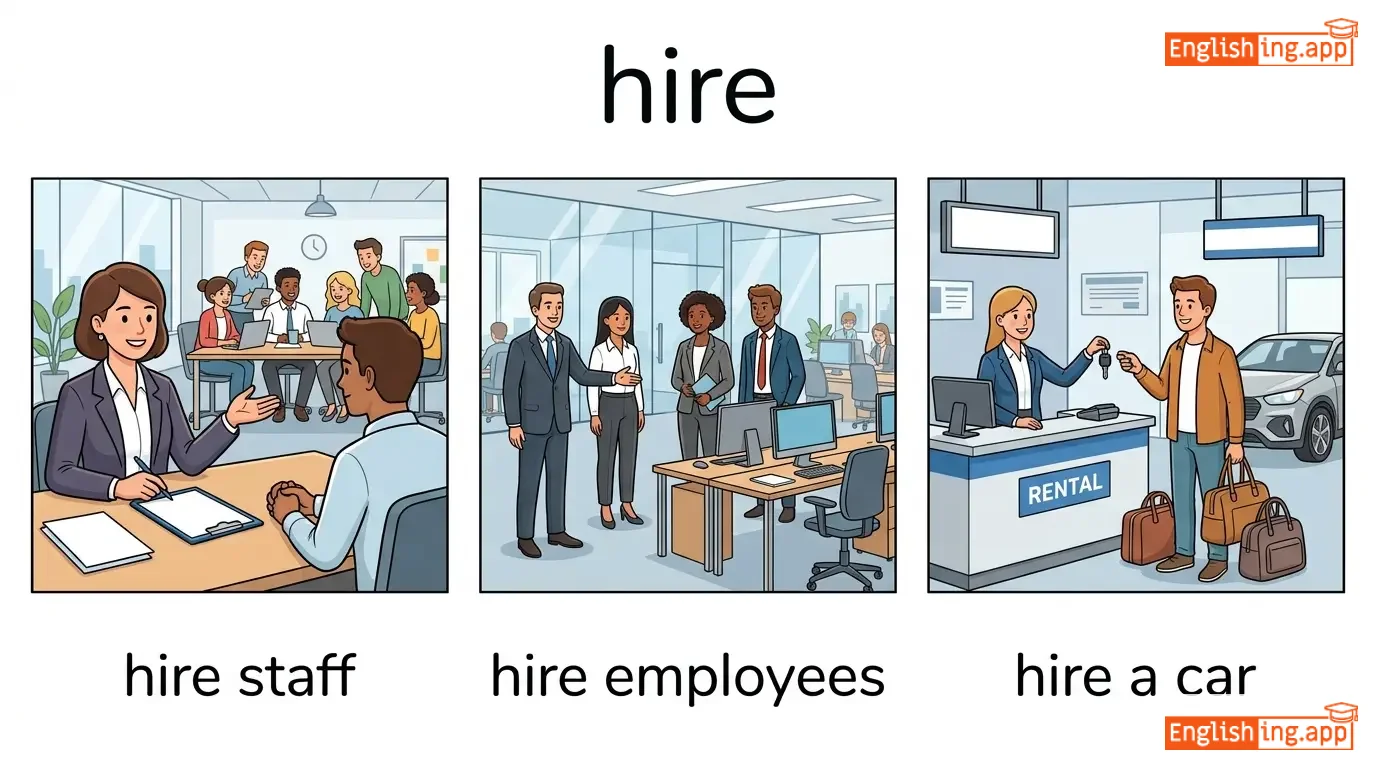
hire staff, hire employees, hire a car, hire services
••••••
|
聘用就像选拔优秀的人才加入你的团队。
••••••
|
|
#0
💰
|
/ˈɪnkʌm/
noun
(yīnkām)
••••••
|
- •••••• |
收入
shōurù
••••••
|
- •••••• | - •••••• | - •••••• | - •••••• |
money received for work or through investments
••••••
|
His monthly income is enough to support his family. |
他的月收入足以养家糊口。
Tā de yuè shōurù zúyǐ yǎngjiā húkǒu.
••••••
|
fixed income |
a regular and steady amount of income
••••••
|
固定收入
gùdìng shōurù
••••••
|
earnings, revenue, salary, wages, profit
••••••
|
expense, loss
••••••
|
income tax, income level, income growth
••••••
|
In+Come — 你的收入就像金钱流入
••••••
|
|
#0
💼
|
/dʒɑb/
verb
(dʒɑb)
••••••
|
|
工作
gongzuo
••••••
|
jobbed
dʒɑbd
••••••
|
jobbed
dʒɑbd
••••••
|
jobs
dʒɑbz
••••••
|
jobbing
dʒɑbɪŋ
••••••
|
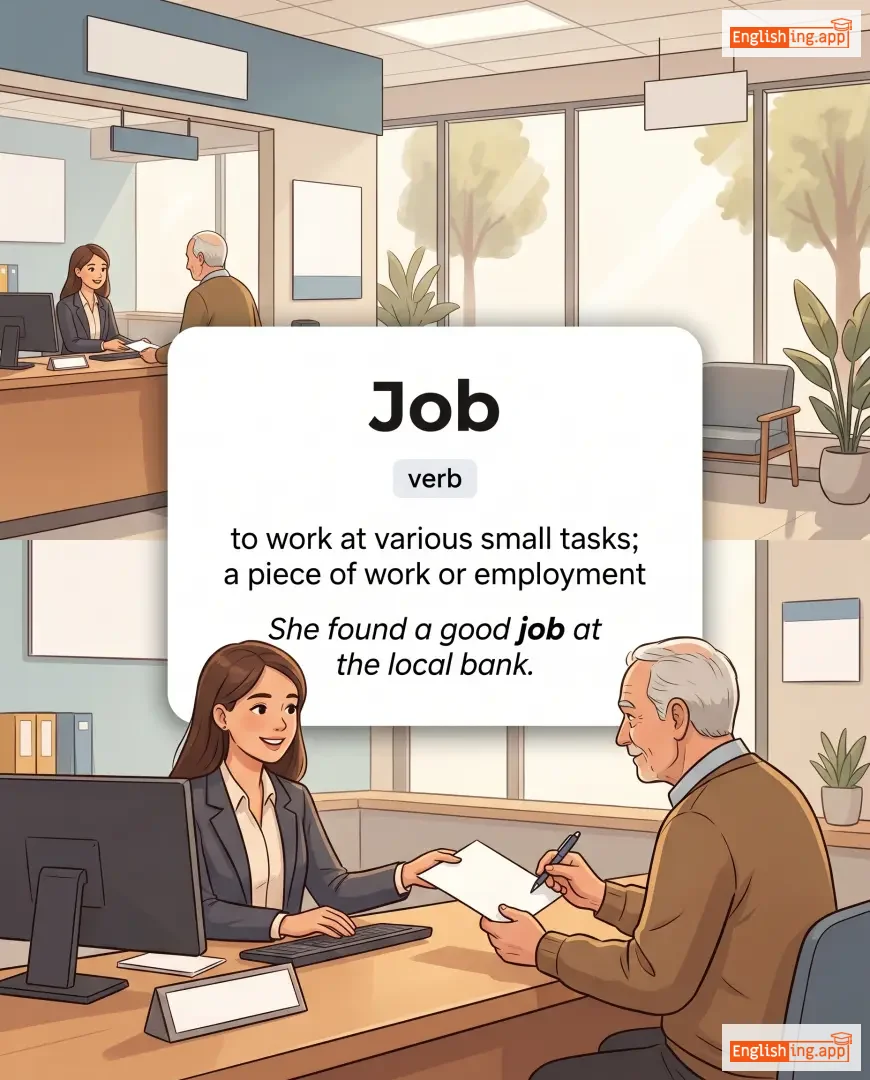
to work at various small tasks; a piece of work or employment
••••••
|
She found a good job at the local bank.
她在当地银行找到了一份好工作。
••••••
|
她在当地银行找到了一份好工作。
Tā zài dāngdì yínháng zhǎodàole yī fèn hǎo gōngzuò.
••••••
|
- •••••• | - •••••• | - •••••• |
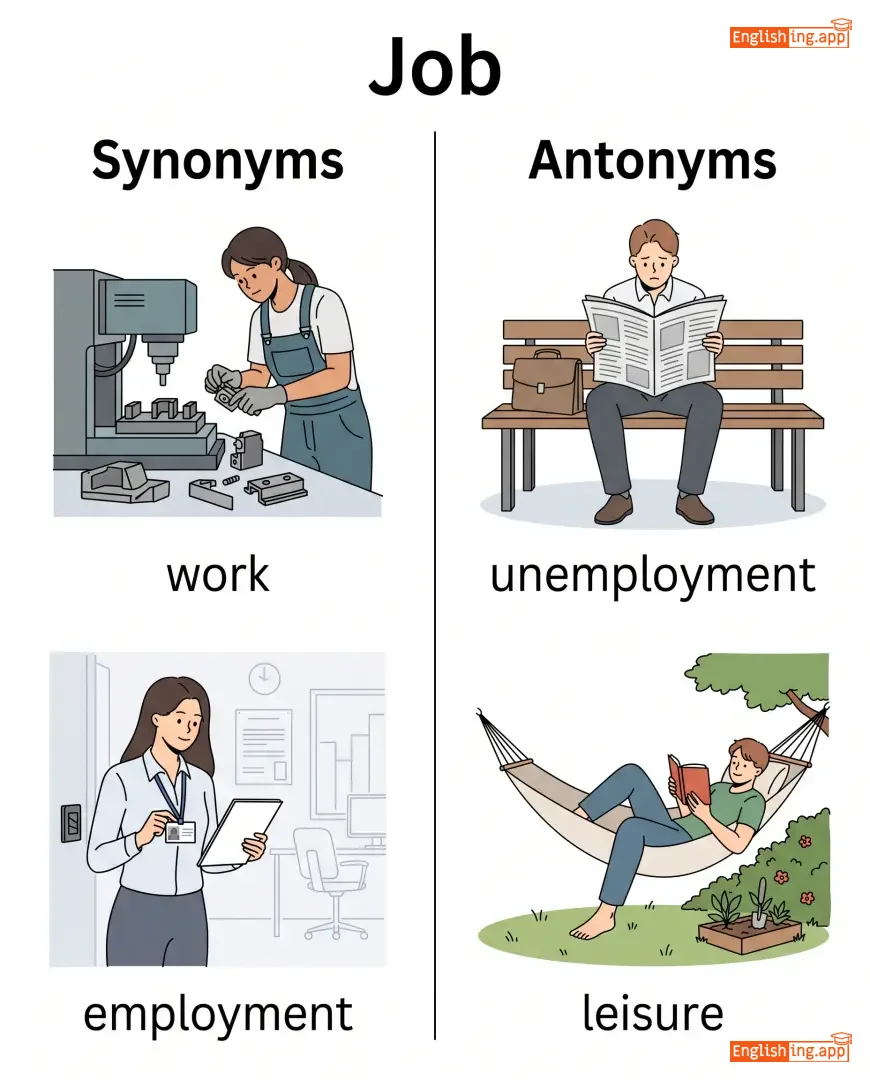
work, employment, occupation, position, task
••••••
|
unemployment, leisure, rest, vacation
••••••
|
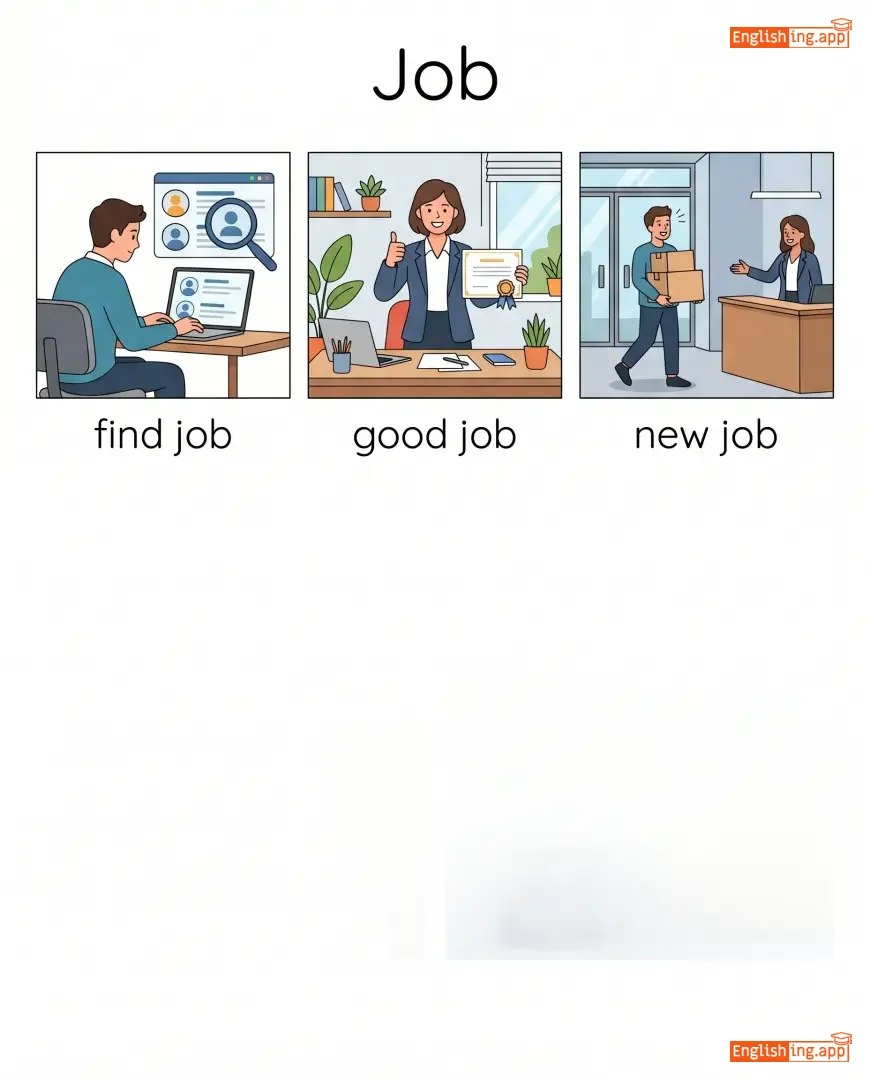
find job, good job, new job, dream job
••••••
|
工作(gongzuo)是你不断做的事情。
••••••
|
|
#0
📉
|
/lɒs/
noun
(lòu sī)
••••••
|
- •••••• |
损失
sǔn shī
••••••
|
- •••••• | - •••••• | - •••••• | - •••••• |
The state of no longer having something or someone; the harm resulting from losing.
••••••
|
The company suffered a huge financial loss last year. |
公司去年遭受了巨大的财务损失。
Gōngsī qùnián zāoshòu le jùdà de cáiwù sǔnhài.
••••••
|
at a loss |
to be puzzled or uncertain about what to do
••••••
|
损失
sǔn shī
••••••
|
damage, defeat, failure, decline, misfortune
••••••
|
gain, profit, success
••••••
|
suffer a loss, financial loss, at a loss, loss of life
••••••
|
损失意味着损失,像是📉 你失去了钱。
••••••
|
|
#0
💰
|
/ˈsæl.ər.i/
noun
(sæləri)
••••••
|
- •••••• |
薪水
xīn shuǐ
••••••
|
- •••••• | - •••••• | - •••••• | - •••••• |
a fixed regular payment, typically paid on a monthly basis
••••••
|
She receives a good salary for her work as a teacher. |
她作为教师的工作,得到了很好的薪水。
Tā zuòwéi jiàoshī de gōngzuò, dédàole hěn hǎo de xīn shuǐ
••••••
|
- •••••• | - •••••• | - •••••• |
wage, pay, income, earnings
••••••
|
debt, expense, cost
••••••
|
annual salary, monthly salary, basic salary, gross salary
••••••
|
Chinese '薪水' (xīn shuǐ) connects directly to salary, easy for monthly payments.
••••••
|
|
#0
📊
|
/seɪlz/
noun
••••••
|
- •••••• | - •••••• | - •••••• | - •••••• | - •••••• | - •••••• |
activities related to selling products or services
••••••
|
The company saw a significant increase in sales during the holiday season. |
- •••••• | - •••••• | - •••••• | - •••••• |
transactions, trade, business, commerce
••••••
|
purchase, buying
••••••
|
increase sales, sales target, boost sales, sales figures
••••••
|
No •••••• |
|
#0
🎯
|
/skɪld/
adjective
(斯基尔德)
••••••
|
- •••••• |
熟练
shulian
••••••
|
- •••••• | - •••••• | - •••••• | - •••••• |
having the ability, experience, or training to do something well
••••••
|
She is a highly skilled surgeon with years of experience.
她是一位经验丰富的高技能外科医生。
••••••
|
她是一位经验丰富的高技能外科医生。
Ta shi yi wei jingyan fengfu de gao jishun waike yisheng.
••••••
|
skilled labor
熟练劳动
••••••
|
work that requires specialized training or expertise
••••••
|
熟练劳动
shulian laodong
••••••
|
talented, expert, proficient, capable, competent
••••••
|
unskilled, inexperienced, amateur
••••••
|
skilled worker, skilled labor, highly skilled, skilled professional
••••••
|
Skilled意味着熟练 – 熟练的人有必要的技能做任何工作。
••••••
|
|
#0
💼
|
/səkˈsɛsfəl/
adjective
(səkˈsɛsfəl)
••••••
|
- •••••• |
成功的
chenggong de
••••••
|
- •••••• | - •••••• | - •••••• | - •••••• |
having achieved success; having attained wealth, position, or honor
••••••
|
He is a successful businessman. |
他是一个成功的商人。
Ta shi yi ge chenggong de shangren.
••••••
|
successful career |
a career in which one achieves prosperity and recognition
••••••
|
成功的职业生涯
chenggong de zhiye shengya
••••••
|
prosperous, accomplished, thriving, victorious, effective
••••••
|
unsuccessful, failing, defeated
••••••
|
successful career, successful attempt, successful person, successful strategy
••••••
|
成功的意思是成功 — 就像你通过考试,你就会成功
••••••
|
|
#0
📝
|
/tɑːsk/
noun
(tɑːsk)
••••••
|
- •••••• |
任务
rènwu
••••••
|
- •••••• | - •••••• | - •••••• | - •••••• |
a piece of work or duty to be done
••••••
|
He completed the task before the deadline.
他在截止日期前完成了任务。
••••••
|
他在截止日期前完成了任务。
Tā zài jiézhǐ rìqī qián wánchéngle rènwu.
••••••
|
- •••••• | - •••••• | - •••••• |
job, duty, assignment, chore
••••••
|
neglect, inactivity
••••••
|
complete a task, task manager, important task
••••••
|
TASK - 想象你每天必须做的一些小 '任务'。
••••••
|
Vocabulary Quiz
Test your vocabulary by matching words with their translations or meanings.
Login to take the quiz
Comments (0)
Share your thoughts and join the discussion.
Join the discussion by logging in
Login to CommentNo comments yet
Be the first to share your thoughts!