

穿越风暴的船长
The Captain Who Sailed Through Storms
Captain Ahmed 是一位经验丰富的水手,他操作着一艘 carrier 船。 他 closest 的梦想是探索一条位于 coastal 地区的 century 古老航线。 他创建了一个 catalog,记录了他之前的航程,所有细节都已 compiled。 他的船员们 closely 跟随他,因为他的决策 clearly 深思熟虑。 一天,一场风暴来临,所有人都感到紧张,甚至那个总是嘲笑 cartoons 的人也不例外。 Ahmed 知道他必须采取 certain 步骤才能生存。 他有 chronic 背部疼痛,但他 concealed 了它,不让船员们知道。 他领导下的 clarity 激励了其他人。 他决定 combine 传统与现代的导航技术。 一些船员想要 charter 到附近的港口,但 Ahmed 说那样太冒险了。 他的计划是以尊严为这次旅程找到 closure。 风暴中,所有人都很害怕,甚至做 chicken 咖喱的厨师也不例外。 Ahmed conceded 这对他来说是一次最艰难的挑战,但他不会放弃。 他的勇气和经验把他们安全地带出了 coastal 区域。 最后,他 confessed 给船员们,他也害怕过,但领导意味着要保持坚强。 他的故事成为了传奇,年轻的水手们把他当作偶像。


Swipe left or right, or use the buttons. Tap image to zoom.
例句翻译
单词
The Captain Who Sailed Through StormsThe Captain Who Sailed Through Storms - 遮罩切换
|
表情符号
|
单词 | Images | 翻译 | 过去时 | 过去分词 | 第三人称单数 | 动名词 | 含义 | 例句 | 例句翻译 | 示例表达 | 示例表达含义 | 示例表达翻译 | 同义词 | 反义词 | 搭配词 | 助记符 |
|---|---|---|---|---|---|---|---|---|---|---|---|---|---|---|---|---|---|
|
#0
🧑✈️
|
/ˈkæptɪn/
noun
(kèpíntīng)
••••••
|
- •••••• |
船长
chuánzhǎng
••••••
|
- •••••• | - •••••• | - •••••• | - •••••• |
the leader of a team, ship, or group
••••••
|
The captain led his team to victory. |
船长带领他的团队获得胜利。
Chuánzhǎng dàilǐng tā de tuánduì huòdé shènglì.
••••••
|
captain of industry |
a wealthy and powerful business leader
••••••
|
行业领袖
hángyè lǐngxiù
••••••
|
commander, leader, chief, skipper
••••••
|
follower, subordinate
••••••
|
team captain, ship captain, army captain, captain of industry
••••••
|
船长带领团队获得胜利,就像一个领导一样。
••••••
|
|
#0
🚚
|
/ˈkæriər/
noun
(凯瑞尔)
••••••
|
- •••••• |
承运人
chéngyùn rén
••••••
|
- •••••• | - •••••• | - •••••• | - •••••• |
A person or thing that carries, transports, or conveys something; also an organization that provides transport services.
••••••
|
The airline is the largest carrier in the country. |
航空公司是该国最大的承运人。
Hángkōng gōngsī shì gāiguó zuìdà de chéngyùn rén.
••••••
|
- •••••• | - •••••• | - •••••• |
transporter, courier, hauler, deliverer
••••••
|
receiver, consumer
••••••
|
airline carrier, mail carrier, disease carrier, telecom carrier
••••••
|
Carrier意味着承载和运输。
••••••
|
|
#0
🎨
|
/kɑːrˈtuːn/
noun
(kǎtūn)
••••••
|
- •••••• |
卡通片
katongpian
••••••
|
- •••••• | - •••••• | - •••••• | - •••••• |
a humorous or animated drawing, especially one in newspapers or television
••••••
|
Children love watching cartoons on TV. |
孩子们喜欢看电视上的卡通片。
Háizimen xǐhuān kàn diànshì shàng de kǎtōngpiàn.
••••••
|
- •••••• | - •••••• | - •••••• |
animation, comic, drawing, sketch, caricature
••••••
|
reality, live-action
••••••
|
cartoon show, cartoon character, cartoon series, funny cartoon
••••••
|
卡通片是那些能在电视上让每个人笑的动画片!
••••••
|
|
#0
📚
|
/ˈkætəlɔːɡ/
noun
(目录)
••••••
|
- •••••• |
目录
mùlù
••••••
|
cataloged
已分类
••••••
|
cataloged
已分类
••••••
|
catalogs
分类
••••••
|
cataloging
分类中
••••••
|
a complete list of items, typically arranged systematically
••••••
|
The library provides an online catalog of all available books.
图书馆提供所有可用书籍的在线目录。
••••••
|
图书馆提供所有可用书籍的在线目录。
Túshūguǎn tígōng suǒyǒu kěyòng shūjí de zàixiàn mùlù.
••••••
|
- •••••• | - •••••• | - •••••• |
list, register, directory, index, inventory
••••••
|
chaos, confusion
••••••
|
product catalog, library catalog, online catalog, sales catalog
••••••
|
目录就是列表 — 想象一只猫把所有东西都放进目录中。
••••••
|
|
#0
📆
|
/ˈsɛnʧəri/
noun
(shenjuri)
••••••
|
- •••••• |
世纪
shiji
••••••
|
- •••••• | - •••••• | - •••••• | - •••••• |
A period of one hundred years.
••••••
|
The 20th century saw significant technological progress. |
20世纪见证了显著的技术进步。
20 shiji jianzheng le xianzhu de jishu jinbu.
••••••
|
turn of the century |
the beginning of a new century
••••••
|
世纪之交
shiji zhi jiao
••••••
|
hundred years, era, age, period
••••••
|
moment, instant, second
••••••
|
century old, 21st century, century mark, past century
••••••
|
世纪就是Century; 在中国,100年被称作一个世纪。
••••••
|
|
#0
✅
|
/ˈsɜːr.tən/
adjective
(色腾)
••••••
|
- •••••• |
确定的
queding de
••••••
|
- •••••• | - •••••• | - •••••• | - •••••• |
Known for sure; having no doubt.
••••••
|
I am certain that she will succeed.
艾 爱目 色腾 达特 希 维尔 萨克希德。
••••••
|
我确定她会成功。
wo queding ta hui chenggong.
••••••
|
for certain
佛 色腾
••••••
|
Without any doubt.
••••••
|
确信无疑
quexin wu yi
••••••
|
sure, confident, definite, assured, convinced
••••••
|
uncertain, doubtful, unsure
••••••
|
certain circumstances, certain degree, certain way, certain level
••••••
|
Certain sounds like '设定', meaning something already fixed and known.
••••••
|
|
#0
📜
|
/ˈtʃɑːrtər/
noun/verb
(查特)
••••••
|
- •••••• |
包机 / 租赁
baoji / zulin
••••••
|
chartered
查特德
••••••
|
chartered
查特德
••••••
|
charters
查特斯
••••••
|
chartering
查特灵
••••••
|
a written document granting rights or privileges; to hire a vehicle or vessel for temporary use
••••••
|
The company decided to charter a bus for the trip.
公司决定为旅行租用一辆巴士。
••••••
|
公司决定为旅行租用一辆巴士。
Gongsi jueding wei lvxing zuyong yi liang bashi.
••••••
|
charter flight
包机航班
••••••
|
a flight hired for exclusive use rather than a scheduled service
••••••
|
包机航班
baoji hangban
••••••
|
license, permit, hire, lease, commission
••••••
|
prohibit, deny
••••••
|
charter flight, charter bus, charter school, royal charter
••••••
|
Charter意味着信📜 + 租赁,像charter bus = 租一辆巴士
••••••
|
|
#0
🐔
|
/ˈtʃɪkɪn/
noun
(鸡)
••••••
|
- •••••• |
鸡
ji
••••••
|
- •••••• | - •••••• | - •••••• | - •••••• |
a domestic bird kept for its eggs or meat
••••••
|
We had fried chicken for dinner.
我们晚餐吃了炸鸡。
••••••
|
我们晚餐吃了炸鸡。
Wo men wan can chi le zha ji.
••••••
|
chicken out
害怕做某事
••••••
|
to decide not to do something because of fear
••••••
|
害怕做某事
hai pa zuo mou shi
••••••
|
hen, fowl, poultry, rooster, chick
••••••
|
bravery, courage
••••••
|
fried chicken, roast chicken, chicken soup, chicken farm
••••••
|
Chicken 是鸡,但 'chicken out' 是害怕做某事。
••••••
|
|
#0
⏳
|
/ˈkrɒnɪk/
adjective
(克罗尼克)
••••••
|
- •••••• |
慢性
manxing
••••••
|
- •••••• | - •••••• | - •••••• | - •••••• |
Lasting for a long time or constantly recurring, often describing illness.
••••••
|
She suffers from chronic back pain.
她患有慢性的背痛。
••••••
|
她患有慢性的背痛。
Ta huan you manxing de bei tong.
••••••
|
chronic condition
慢性病
••••••
|
A long-lasting medical issue that persists over time.
••••••
|
慢性病
manxing bing
••••••
|
persistent, long-term, continual, constant, habitual
••••••
|
acute, temporary, short-term
••••••
|
chronic disease, chronic pain, chronic illness, chronic stress
••••••
|
Chronic意味着持久,像一个永远不消失的疼痛。
••••••
|
|
#0
🔍
|
/ˈklærəti/
noun
(klɛrɪti)
••••••
|
|
清晰
qīngxī
••••••
|
- •••••• | - •••••• | - •••••• | - •••••• |
the quality of being clear, easy to understand, or transparent
••••••
|
The teacher's clarity helped the students understand the complex topic. |
老师的清晰帮助学生理解了复杂的主题。
Lǎoshī de qīngxī bāngzhù xuéshēng lǐjiěle fùzá de zhǔtí.
••••••
|
crystal clarity |
complete and perfect clearness
••••••
|
水晶清晰
shuǐjīng qīngxī
••••••
|
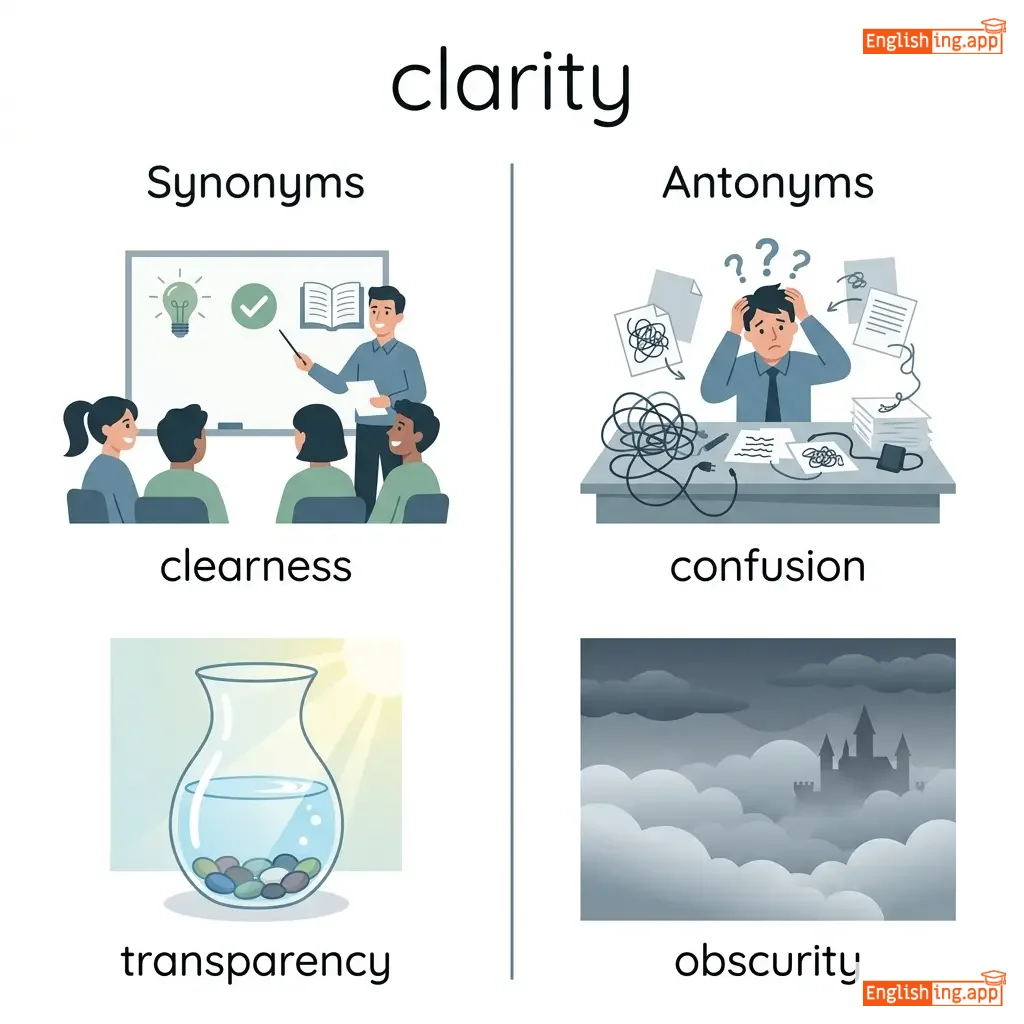
clearness, transparency, precision, lucidity, simplicity
••••••
|
confusion, obscurity, vagueness
••••••
|
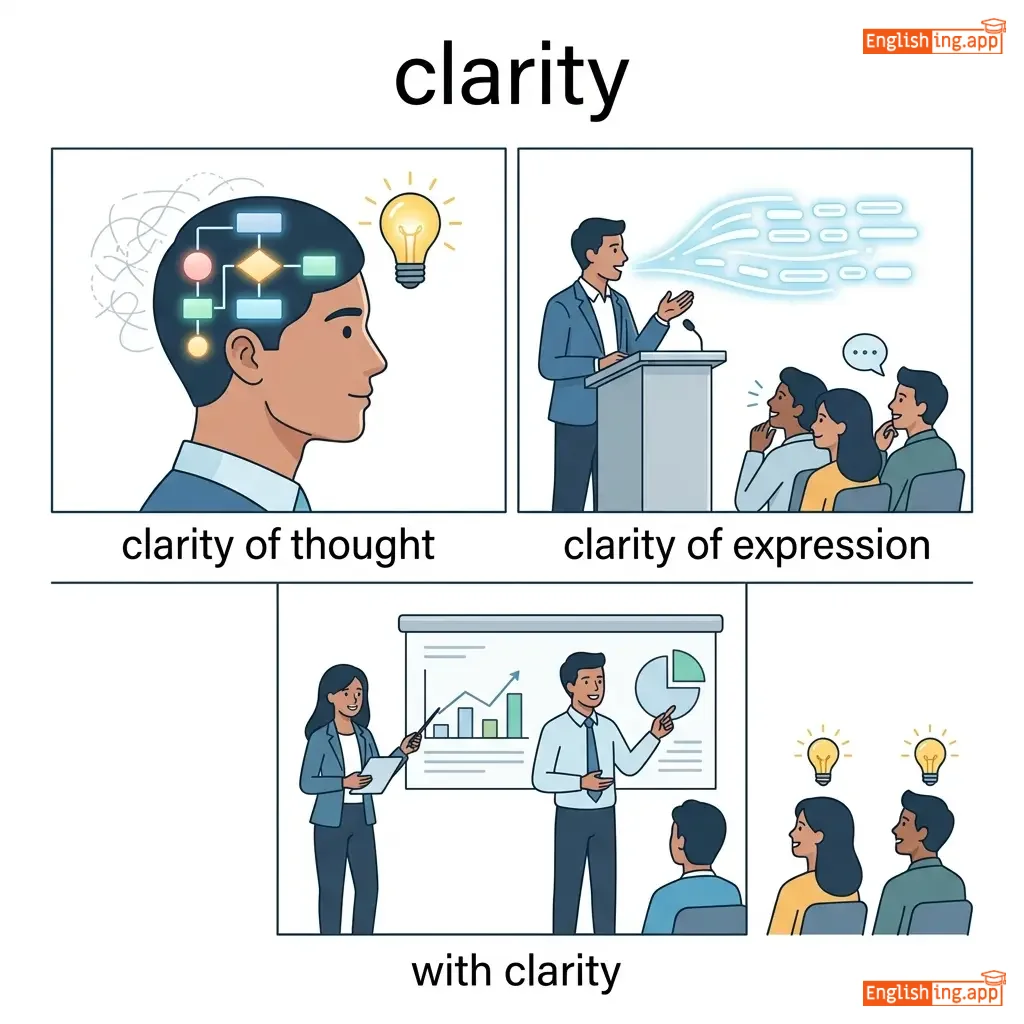
clarity of thought, clarity of expression, with clarity, lack of clarity
••••••
|
Clarity = clear + ity → 清楚或透明
••••••
|
|
#0
🔍
|
/ˈklɪrli/
adverb
(klieli)
••••••
|
- •••••• |
清楚地
qīngchǔ de
••••••
|
- •••••• | - •••••• | - •••••• | - •••••• |
In a way that is easy to perceive, understand, or see.
••••••
|
She spoke clearly so that everyone could understand. |
她清楚地说话,以便每个人都能理解。
Tā qīngchǔ de shuōhuà, yǐbiàn měi gèrén dōu néng lǐjiě.
••••••
|
- •••••• | - •••••• | - •••••• |
plainly, distinctly, obviously, transparently
••••••
|
vaguely, unclearly
••••••
|
speak clearly, see clearly, think clearly, explain clearly
••••••
|
Clearly 意味着清楚地 🔍 — '清楚地说话,大家都能清楚地明白。'
••••••
|
|
#0
🔍
|
/ˈkloʊsli/
adverb
(ˈhæpinəs)
••••••
|
- •••••• |
幸福
xìngfú
••••••
|
- •••••• | - •••••• | - •••••• | - •••••• |
in a way that is very near in space, time, or relationship; carefully and attentively
••••••
|
The detective examined the evidence closely. |
当她获得奖项时,她无法掩饰自己的幸福。
Dāng tā huòde jiǎngxiàng shí, tā wúfǎ yǎnshì zìjǐ de xìngfú.
••••••
|
watch closely |
to observe with great attention
••••••
|
追寻幸福
zhuīxún xìngfú
••••••
|
carefully, attentively, nearly, intently, minutely
••••••
|
carelessly, distantly
••••••
|
closely related, watch closely, follow closely, work closely
••••••
|
幸福就像是一个‘幸福’的感觉,中文也很简单!
••••••
|
|
#0
❤️
|
/ˈkloʊ.sɪst/
adjective
(kè-luò-sī-sī-tè)
••••••
|
- •••••• |
最近的
zuì jìn de
••••••
|
- •••••• | - •••••• | - •••••• | - •••••• |
nearest in distance or relationship
••••••
|
He is my closest friend. |
他是我最亲密的朋友。
Tā shì wǒ zuì qīnmì de péngyǒu.
••••••
|
close call |
a narrow escape from danger or disaster
••••••
|
紧急时刻
jǐn jí shí kè
••••••
|
nearest, dearest, intimate, best, adjoining
••••••
|
farthest, distant
••••••
|
closest friend, closest relative, closest match, closest point
••••••
|
Closest意味着最接近的 – 想象你的closest friend总是在你身边。
••••••
|
|
#0
❌
|
/ˈkloʊʒər/
noun
(kuo-zher)
••••••
|
- •••••• |
关闭
guanbi
••••••
|
- •••••• | - •••••• | - •••••• | - •••••• |
the action or process of closing something, or the sense of finality or resolution.
••••••
|
The closure of the company left many employees without jobs.
公司的关闭使许多员工失业。
••••••
|
公司的关闭使许多员工失业。
Gongsi de guanbi shi xuduo yuangong shiye.
••••••
|
- •••••• | - •••••• | - •••••• |
closure, termination, end, conclusion
••••••
|
opening, start, beginning
••••••
|
business closure, closure of a chapter, closure of an event
••••••
|
Closure in Chinese is '关闭' – means to shut down.
••••••
|
|
#0
🌊
|
/ˈkəʊstəl/
adjective
(kōsītǎo)
••••••
|
- •••••• |
沿海
yánhǎi
••••••
|
- •••••• | - •••••• | - •••••• | - •••••• |
relating to or near a coast or shoreline
••••••
|
They built a resort in a coastal area. |
他们在沿海地区建造了一个度假村。
Tāmen zài yánhǎi dìqū jiànzàole yīgè dùjiàcūn.
••••••
|
- •••••• | - •••••• | - •••••• |
marine, seaside, shore, littoral, oceanfront
••••••
|
inland, interior
••••••
|
coastal area, coastal city, coastal erosion, coastal region
••••••
|
Coastal意味着靠近海岸 — 沿海 🏖️
••••••
|
|
#0
⚙️
|
/kəmˈbaɪn/
verb
(kóngbáin)
••••••
|
- •••••• |
合并
hébìng
••••••
|
combined
kóngbáind
••••••
|
combined
kóngbáind
••••••
|
combines
kóngbáinz
••••••
|
combining
kóngbáining
••••••
|
To bring two or more things together to form a single unit.
••••••
|
They decided to combine their resources for the project.
他们决定将他们的资源合并到该项目中。
••••••
|
他们决定将他们的资源合并到该项目中。
Tāmen juédìng jiāng tāmen de zīyuán hébìng dào gāi xiàngmù zhōng.
••••••
|
combine forces
合并力量
••••••
|
To work together with others towards a common goal.
••••••
|
合并力量
hébìng lìliàng
••••••
|
merge, join, unite, blend, fuse
••••••
|
separate, split, divide
••••••
|
combine efforts, combine forces, combine ingredients, combine ideas
••••••
|
Come + Bine = 合并
••••••
|
|
#0
📝
|
/kəmˈpaɪl/
verb
(kōngpái)
••••••
|
- •••••• |
编制
bian zhi
••••••
|
compiled
kōngpáid
••••••
|
compiled
kōngpáid
••••••
|
compiles
kōngpáils
••••••
|
compiling
kōngpáilíng
••••••
|
to collect information or material and put it together in a list, report, or book
••••••
|
She compiled the research data into a detailed report.
她将研究数据编纂成一份详细报告。
••••••
|
她将研究数据编纂成一份详细报告。
Tā jiāng yánjiū shùjù biānzuǎn chéng yí fèn xiángxì bàogào.
••••••
|
compile a list
编制清单
••••••
|
to gather and arrange items in a list format
••••••
|
编制清单
biānzhì qīngdān
••••••
|
collect, assemble, gather, organize, arrange
••••••
|
scatter, disperse
••••••
|
compile data, compile report, compile information, compile list
••••••
|
Compile的意思是编制 — 就像计算机中的编译器将数据编制到一起。
••••••
|
|
#0
🤫
|
/kənˈsiːl/
verb
(kənˈsiːl)
••••••
|
- •••••• |
隐藏
yin cang
••••••
|
concealed
kənˈsiːld
••••••
|
concealed
kənˈsiːld
••••••
|
conceals
kənˈsiːlz
••••••
|
concealing
kənˈsiːlɪŋ
••••••
|
to hide something or keep it secret
••••••
|
He tried to conceal his disappointment behind a smile.
Hi traɪd tu kənˈsiːl hɪz dɪsəˈpɔɪntmənt bɪˈhaɪnd ə smaɪl.
••••••
|
他试图用微笑掩饰自己的失望。
Ta shitu yong weixiao yanshi ziji de shiwang.
••••••
|
conceal the truth
kənˈsiːl ðə truθ
••••••
|
to hide or withhold the truth from others
••••••
|
隐藏真相
yin cang zhenxiang
••••••
|
hide, cover, disguise, mask, secrete
••••••
|
reveal, expose, uncover
••••••
|
conceal identity, conceal weapon, conceal fact, conceal smile
••••••
|
隐藏就像把秘密藏在盒子里
••••••
|
|
#0
🙇
|
/kənˈsiːd/
verb
••••••
|
- •••••• | - •••••• |
conceded
••••••
|
conceded
••••••
|
concedes
••••••
|
conceding
••••••
|
to admit something is true or valid, often reluctantly
••••••
|
She finally conceded that she was wrong. |
- •••••• |
concede defeat |
to admit that you have lost
••••••
|
- •••••• |
admit, acknowledge, grant, allow, yield
••••••
|
deny, refuse, reject
••••••
|
concede defeat, concede point, concede ground, concede goal
••••••
|
No •••••• |
|
#0
🙏
|
/kənˈfɛs/
verb
(kənfɛs)
••••••
|
|
承认
chéngrèn
••••••
|
confessed
kənfɛsd
••••••
|
confessed
kənfɛsd
••••••
|
confesses
kənfɛsɪz
••••••
|
confessing
kənfɛsɪŋ
••••••
|
to admit that you have done something wrong or illegal
••••••
|
He confessed that he had stolen the money.
他承认他偷了钱。
••••••
|
他承认他偷了钱。
Tā chéngrèn tā tōu le qián.
••••••
|
confess one's sins
承认罪过
••••••
|
to admit to having done wrong, often in a religious context
••••••
|
承认罪过
chéngrèn zuìguò
••••••
|
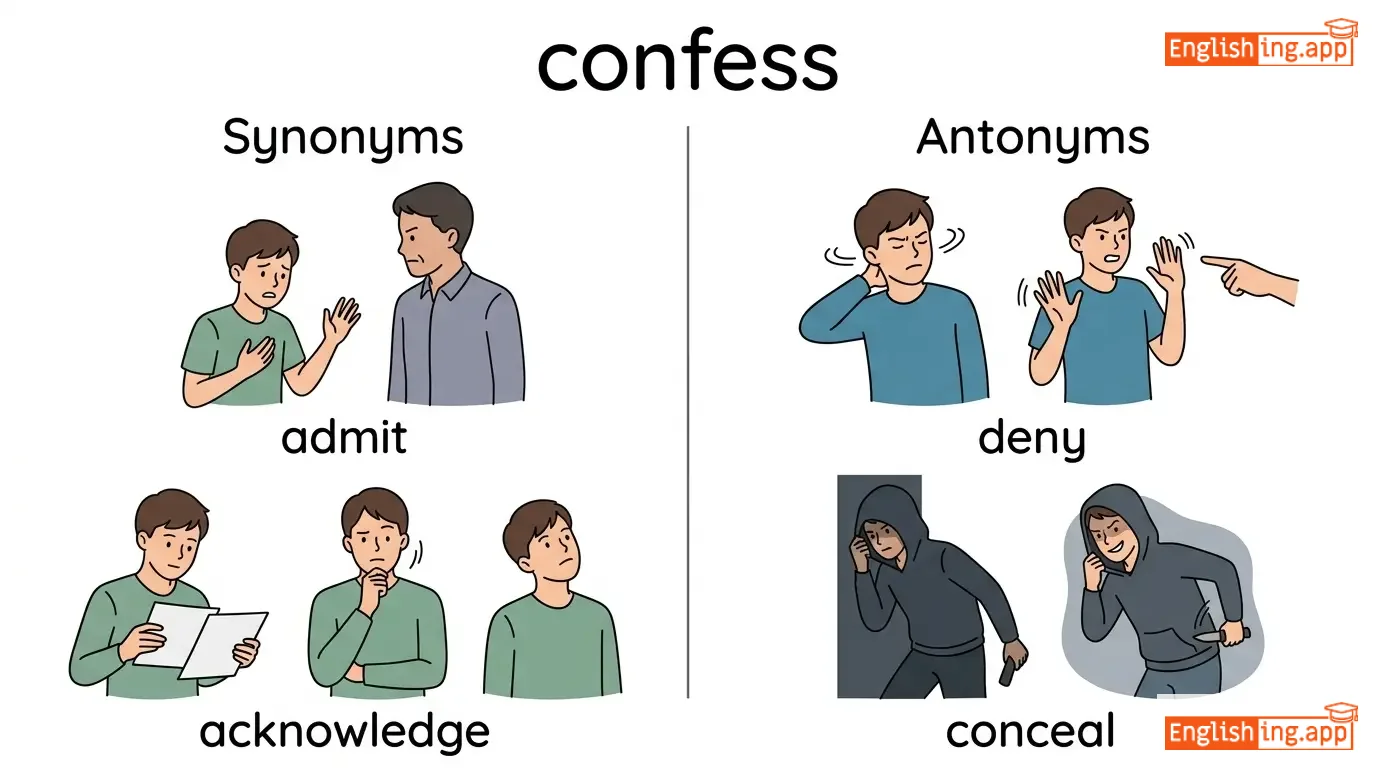
admit, acknowledge, disclose, reveal
••••••
|
deny, conceal
••••••
|
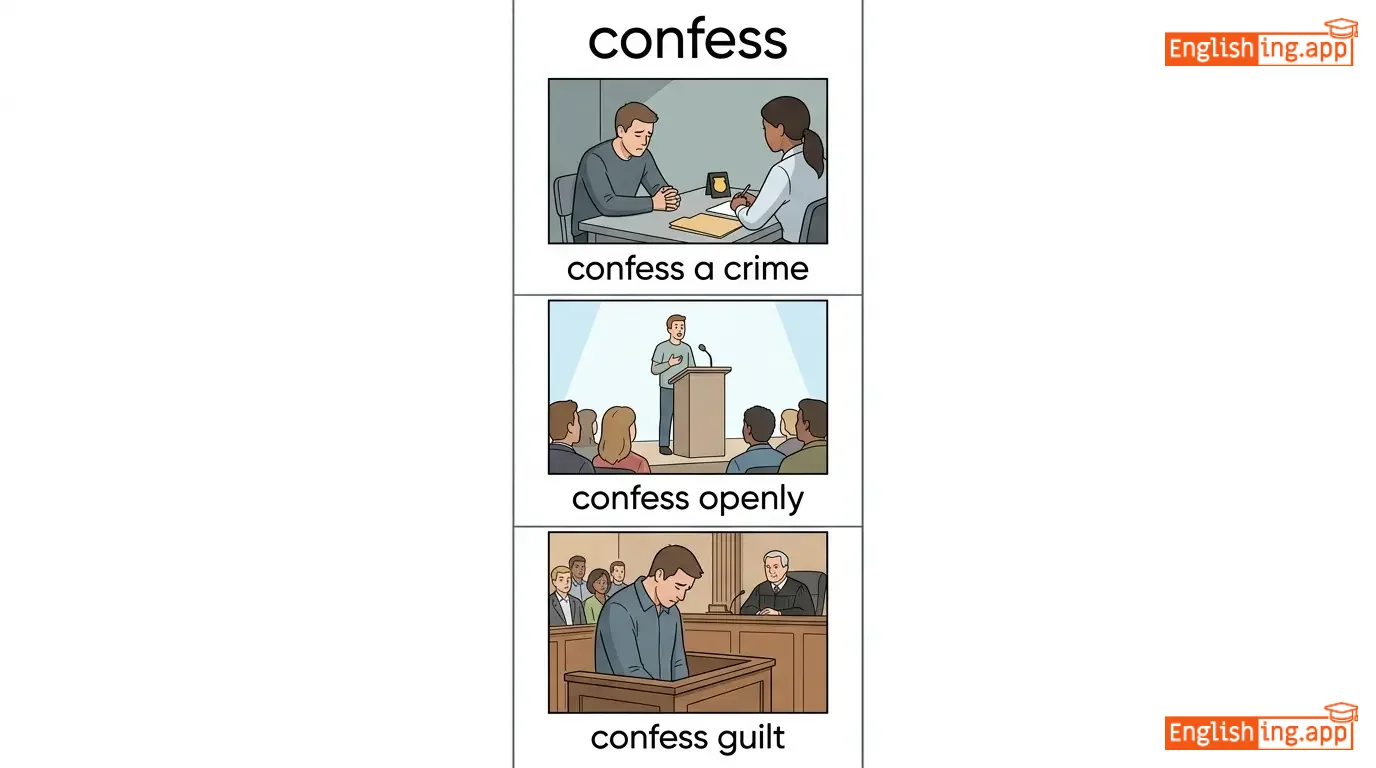
confess a crime, confess openly, confess guilt, confess sins
••••••
|
承认错误可以使心灵得到净化。
••••••
|
Vocabulary Quiz
Test your vocabulary by matching words with their translations or meanings.
Login to take the quiz
Comments (0)
Share your thoughts and join the discussion.
Join the discussion by logging in
Login to CommentNo comments yet
Be the first to share your thoughts!