

音乐家的梦想
The Musician's Dream
年轻的 artist Rony 正在制作他的最新 album。他梦想着有一天能在一个巨大的 arena 演唱。但是他的路并不容易。很多人称他的音乐为 alien,因为他的音乐风格有点不同。他决定参加一个 annual 音乐比赛。他的朋友们纷纷上前来 assist 他。比赛当天,他登上了舞台。评委中有一位著名的 actor。Rony 试图用他的音乐赢得评委们的心。他为他的歌曲带来了一个新的 angle。歌唱后,一位评委开始就他的音乐的 aspect 进行 argue。但是 Rony 冷静地给出了他的 answer。他 assert 他的音乐会在人们的心中占有一席之地。评委们被他的自信打动了。他们没有在 assessing Rony 的才华时犯错。Rony 被宣布为比赛的冠军。他朝着实现自己的梦想迈出了更大的步伐。


Swipe left or right, or use the buttons. Tap image to zoom.
例句翻译
单词
The Musician's DreamThe Musician's Dream - 遮罩切换
|
表情符号
|
单词 | Images | 翻译 | 过去时 | 过去分词 | 第三人称单数 | 动名词 | 含义 | 例句 | 例句翻译 | 示例表达 | 示例表达含义 | 示例表达翻译 | 同义词 | 反义词 | 搭配词 | 助记符 |
|---|---|---|---|---|---|---|---|---|---|---|---|---|---|---|---|---|---|
|
#0
🎭
|
/ˈæktər/
noun
(ˈæktɔr)
••••••
|
- •••••• |
演员
yǎnyuán
••••••
|
- •••••• | - •••••• | - •••••• | - •••••• |
a person who performs in plays, movies, or television
••••••
|
The actor received an award for his performance. |
演员因他的表演获得了奖项。
yǎnyuán yīn tā de biǎoyǎn huòdé le jiǎngxiàng.
••••••
|
leading actor |
the main performer in a play or movie
••••••
|
主角
zhǔjiǎo
••••••
|
performer, artist, star, entertainer
••••••
|
audience, spectator
••••••
|
famous actor, stage actor, Hollywood actor, professional actor
••••••
|
Actor 意味着演员——无论是主角还是配角,所有人都是演员。
••••••
|
|
#0
📔
|
/ˈælbəm/
noun
(相册)
••••••
|
- •••••• |
相册
xiangce
••••••
|
- •••••• | - •••••• | - •••••• | - •••••• |
A collection of songs or photographs compiled into a single book, record, or digital file.
••••••
|
She showed me her travel album full of beautiful pictures.
她给我看了她的旅行相册,里面有很多漂亮的照片。
••••••
|
她给我看了她的旅行相册,里面有很多漂亮的照片。
Ta gei wo kanle ta de luxing xiangce, limian you henduo piaoliang de zhaopian.
••••••
|
photo album
相册
••••••
|
A book in which photographs are collected and displayed.
••••••
|
照片相册
zhaopian xiangce
••••••
|
collection, compilation, record, scrapbook, anthology
••••••
|
single, piece
••••••
|
music album, photo album, debut album, family album
••••••
|
相册,或 AL-Boom,收集所有的照片或歌曲!
••••••
|
|
#0
👽
|
/ˈeɪ.li.ən/
noun, adjective
(外星人)
••••••
|
|
外星人
waixingren
••••••
|
- •••••• | - •••••• | - •••••• | - •••••• |
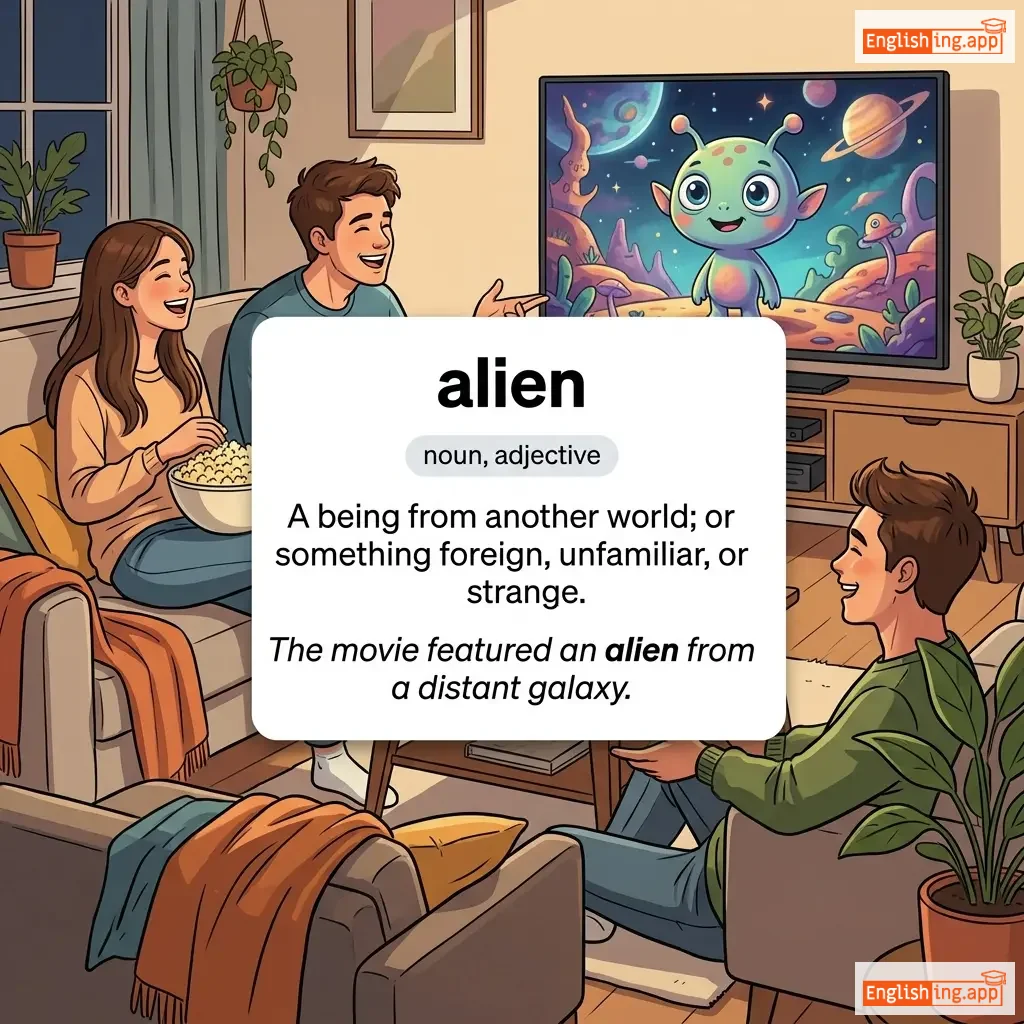
A being from another world; or something foreign, unfamiliar, or strange.
••••••
|
The movie featured an alien from a distant galaxy.
电影中出现了来自遥远星系的外星人。
••••••
|
电影中出现了来自遥远星系的外星人。
Dianying zhong chuxian le laizi yaoyuan xingxi de waixingren.
••••••
|
alien to
对…陌生
••••••
|
Something unfamiliar or strange to someone.
••••••
|
陌生的
mosheng de
••••••
|
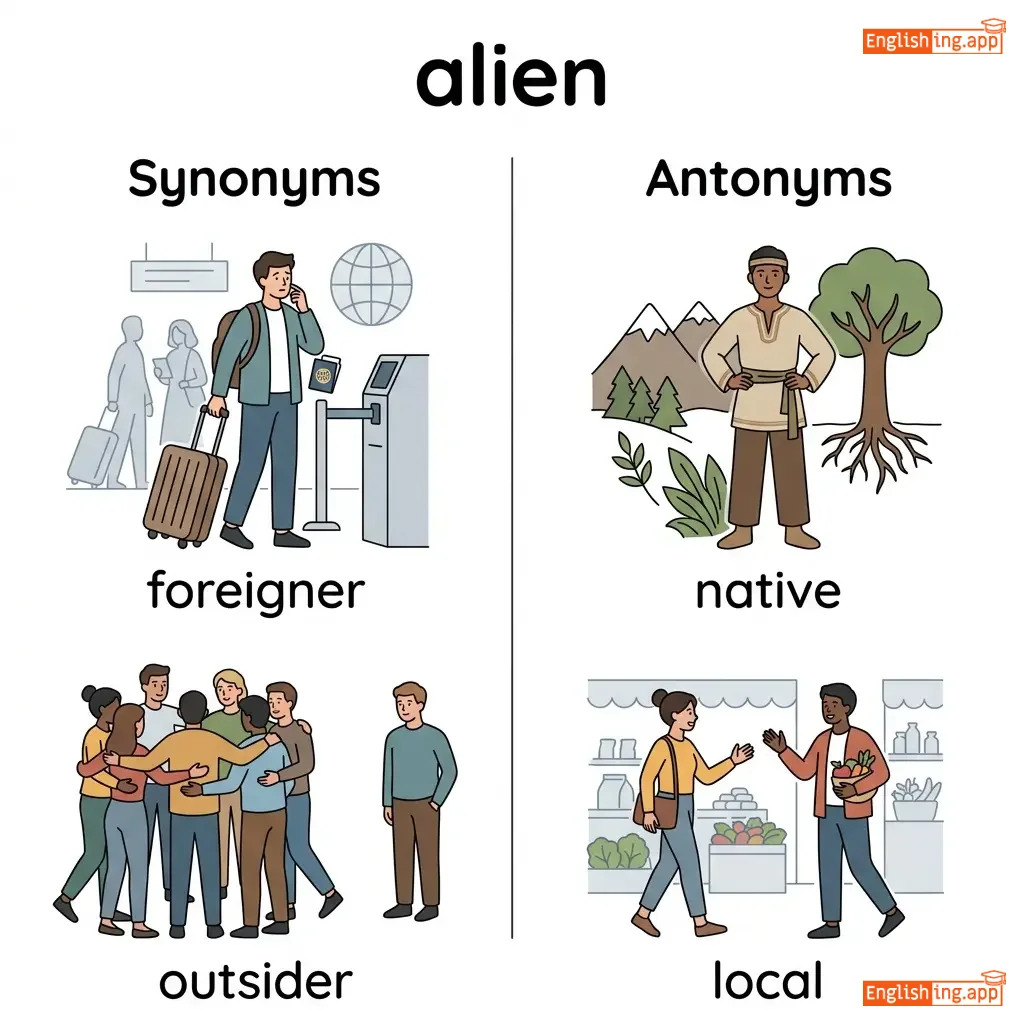
foreigner, outsider, stranger, extraterrestrial, immigrant
••••••
|
native, local, familiar
••••••
|
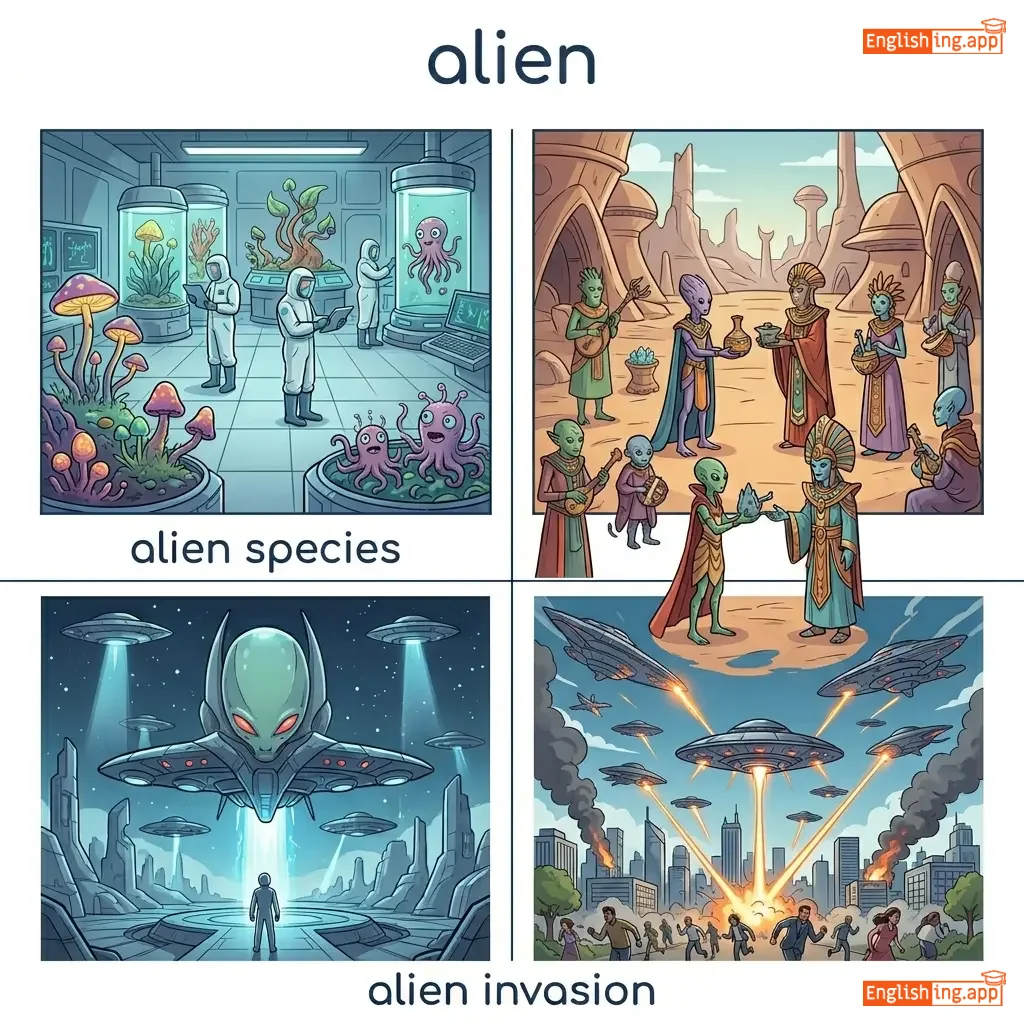
alien species, alien culture, alien invasion, alien to
••••••
|
外星人 - 来自遥远的星系,绝对陌生!
••••••
|
|
#0
📐
|
/ˈæŋɡl/
noun
(ānɡl)
••••••
|
- •••••• |
角度
jiaodu
••••••
|
- •••••• | - •••••• | - •••••• | - •••••• |
The space between two intersecting lines or surfaces at the point where they meet.
••••••
|
The teacher explained how to measure an angle in geometry. |
老师解释了如何在几何学中测量角度。
Lǎoshī jiěshìle rúhé zài jǐhéxué zhōng cèliàng jiǎodù.
••••••
|
different angle |
a new or alternative way of looking at something
••••••
|
不同的角度
bùtóng de jiǎodù
••••••
|
corner, viewpoint, perspective, slant
••••••
|
straight line, alignment
••••••
|
right angle, sharp angle, wide angle, camera angle
••••••
|
角度是两个线条交叉的地方,使用量角器来测量!
••••••
|
|
#0
📅
|
/ˈæn.ju.əl/
adjective
(年度)
••••••
|
- •••••• |
年度
niandu
••••••
|
- •••••• | - •••••• | - •••••• | - •••••• |
happening once every year
••••••
|
The company holds an annual meeting for all its shareholders. |
公司每年为所有股东举办年度会议。
Gongsi mei nian wei suoyou gudong juban niandu huiyi.
••••••
|
annual tradition |
a custom or event repeated every year
••••••
|
年度传统
niandu chuantong
••••••
|
yearly, once-a-year, periodic, regular
••••••
|
monthly, daily
••••••
|
annual meeting, annual report, annual budget, annual celebration
••••••
|
Annual代表每年一次,就像‘ANNUal’每年都到来。
••••••
|
|
#0
🗣️
|
/ˈænsər/
noun, verb
(ānsà)
••••••
|
|
答案
dá'àn
••••••
|
answered
ānsàd
••••••
|
answered
ānsàd
••••••
|
answers
ānsàr
••••••
|
answering
ānsàrīng
••••••
|
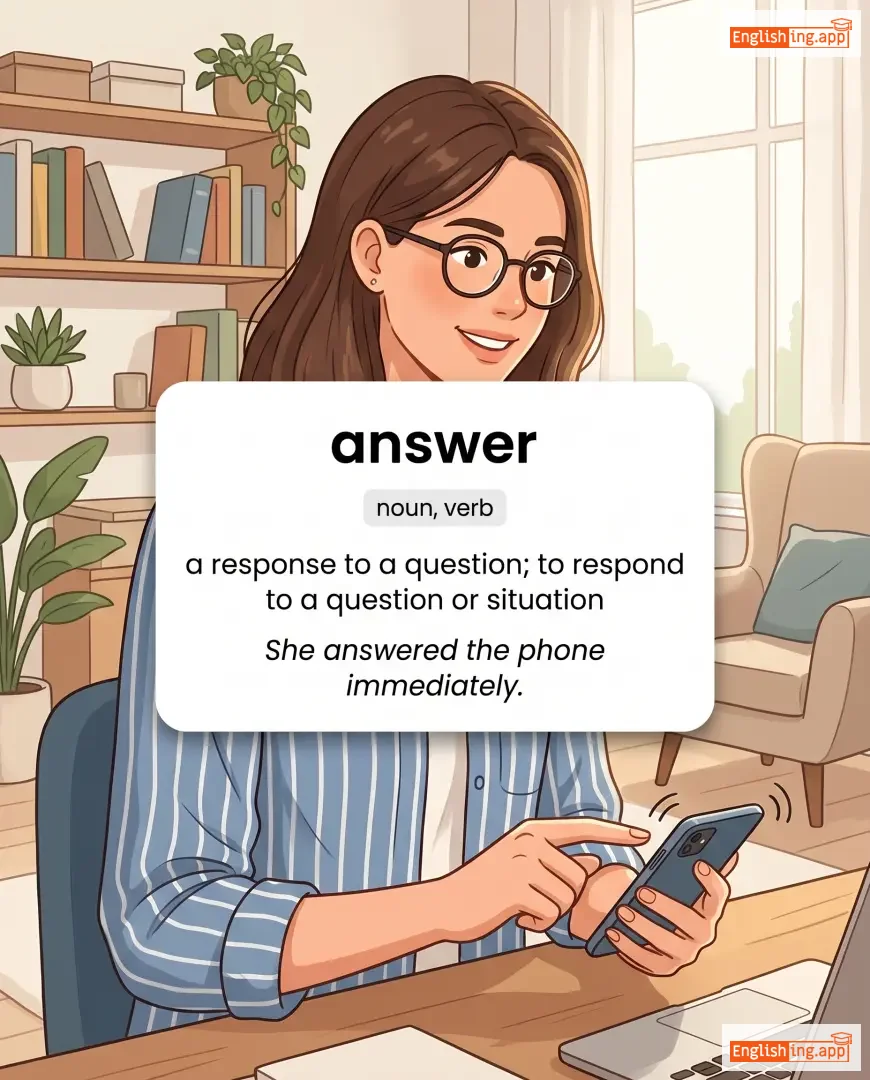
a response to a question; to respond to a question or situation
••••••
|
She answered the phone immediately.
她立即接了电话。
••••••
|
她立即接了电话。
Tā lìjí jiēle diànhuà.
••••••
|
have no answer
没有答案
••••••
|
to not know how to respond to a question or situation
••••••
|
没有答案
méiyǒu dá'àn
••••••
|
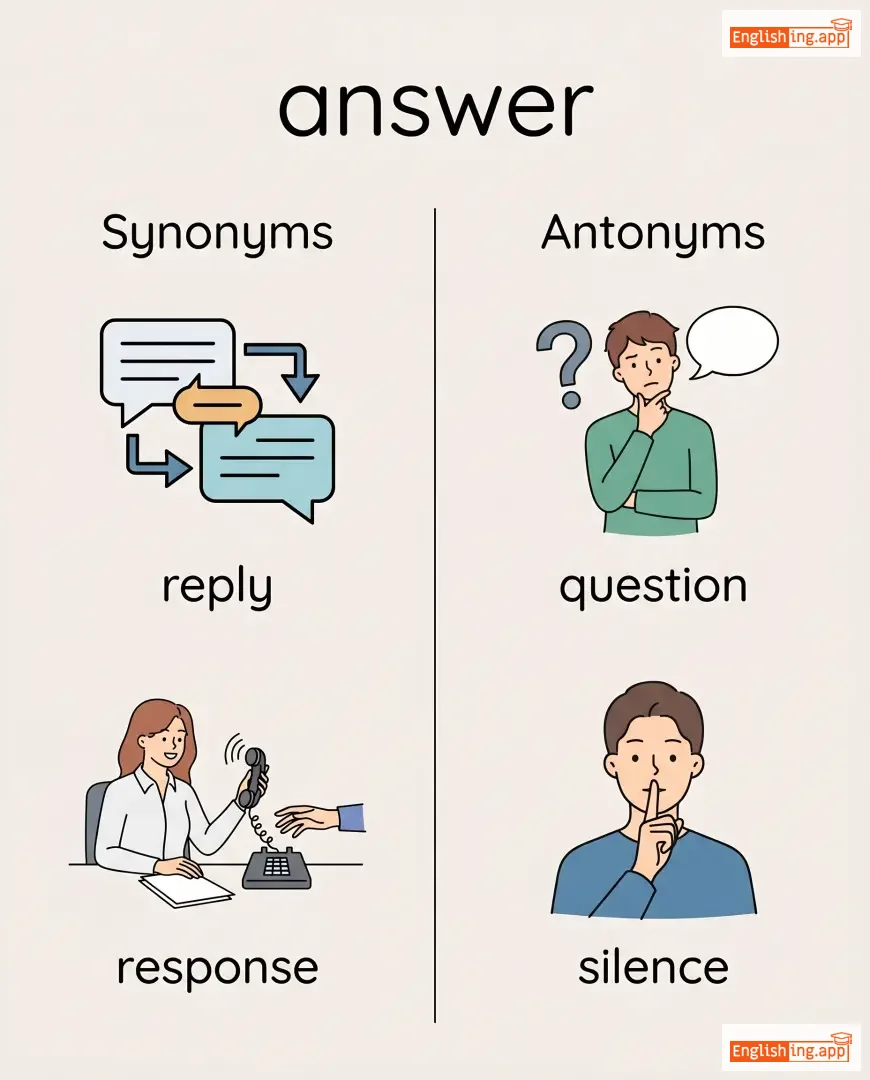
reply, response, solution, explanation, comeback
••••••
|
question, silence, ignorance
••••••
|
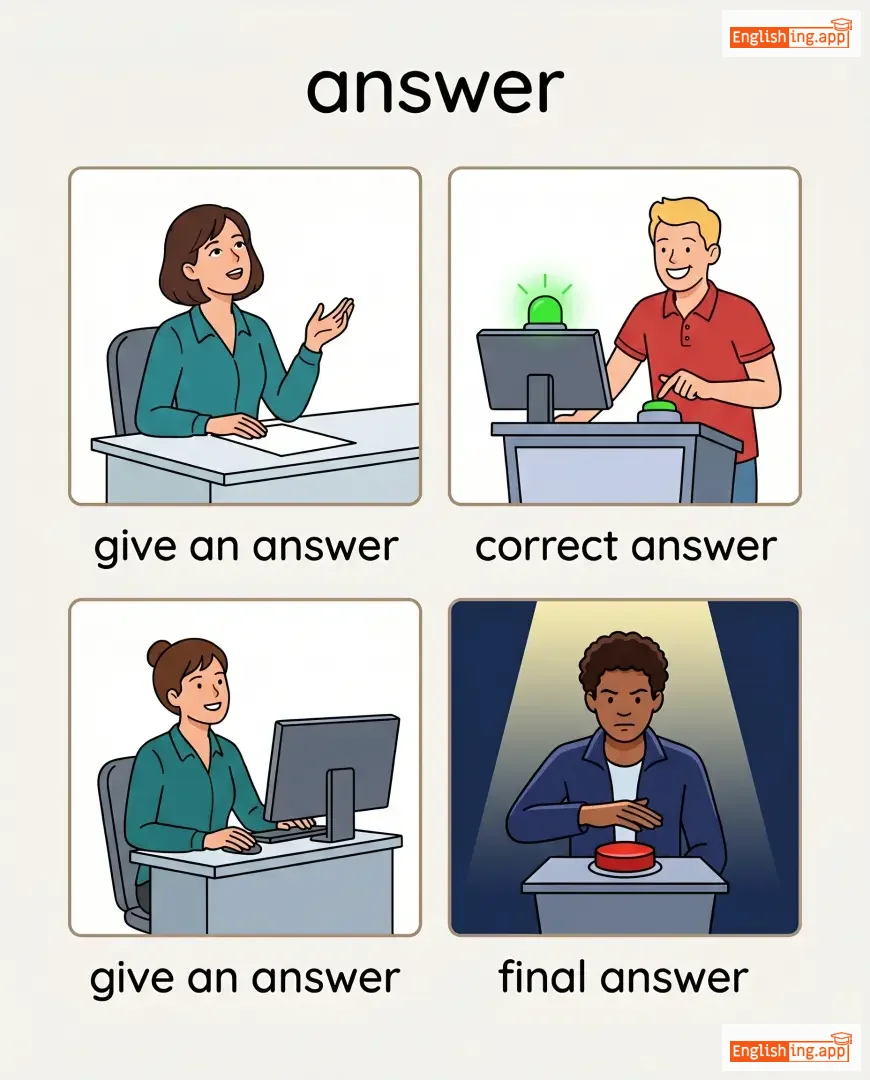
give an answer, correct answer, final answer, answer quickly
••••••
|
Answer是答案,意思是回答。
••••••
|
|
#0
➡️
|
/ˈɛniweɪ/
adverb
(èniwēi)
••••••
|
- •••••• |
无论如何
wúlùn rúhé
••••••
|
- •••••• | - •••••• | - •••••• | - •••••• |
used to emphasize a statement or to return to a previous subject; regardless of what happened
••••••
|
I was tired, but I went to the meeting anyway. |
我很累,但我还是去了会议。
Wǒ hěn lèi, dàn wǒ háishì qùle huìyì.
••••••
|
anyway you slice it |
no matter how you look at it
••••••
|
无论如何
wúlùn rúhé
••••••
|
regardless, nevertheless, still, anyhow, though
••••••
|
because, therefore
••••••
|
but anyway, anyway you, anyway possible
••••••
|
无论如何,他会去 – 无论怎么做,结果一样。
••••••
|
|
#0
📢
|
/əˈpiːl/
verb, noun
(āpí ěr)
••••••
|
- •••••• |
呼吁 / 吸引
hūyù / xīyǐn
••••••
|
appealed
āpí ěr dé
••••••
|
appealed
āpí ěr dé
••••••
|
appeals
āpí ěr sī
••••••
|
appealing
āpí ěr líng
••••••
|
to make a serious request; to be attractive or interesting; a formal request to a higher authority for a decision to be changed
••••••
|
The charity appealed to the public for donations.
慈善机构向公众呼吁捐款。
••••••
|
慈善机构向公众呼吁捐款。
Císhàn jīgòu xiàng gōngzhòng hūyù juānkuǎn.
••••••
|
make an appeal
提出呼吁
••••••
|
to formally ask for something, often publicly
••••••
|
提出呼吁
tíchū hūyù
••••••
|
request, petition, attraction, plea, entreaty
••••••
|
demand, order, repulsion
••••••
|
appeal to, appeal against, strong appeal, emotional appeal
••••••
|
Appeal = 呼吁,想象有人使用📢发出呼吁 — Appeal = 呼吁
••••••
|
|
#0
👀
|
/əˈpɪə/
verb
(á-pí-ér)
••••••
|
- •••••• |
出现
chūxiàn
••••••
|
appeared
á-pí-érd
••••••
|
appeared
á-pí-érd
••••••
|
appears
á-pí-érs
••••••
|
appearing
á-pí-éríng
••••••
|
to become visible or come into sight; to seem
••••••
|
She appeared suddenly at the door.
她突然出现在门口。
••••••
|
她突然出现在门口。
Tā túrán chūxiàn zài ménkǒu.
••••••
|
appear out of thin air
从空气中出现
••••••
|
to emerge suddenly and unexpectedly
••••••
|
凭空出现
píngkōng chūxiàn
••••••
|
emerge, show, arise, surface, seem
••••••
|
disappear, vanish, hide
••••••
|
appear suddenly, appear in court, appear likely
••••••
|
Chūxiàn: 就像突然从门口出现一样。
••••••
|
|
#0
🏟️
|
/əˈriːnə/
noun
(竞技场)
••••••
|
- •••••• |
竞技场, 场地
jingji chang, changdi
••••••
|
- •••••• | - •••••• | - •••••• | - •••••• |
a large area surrounded by seats for sports, entertainment, or other events
••••••
|
The basketball game will be held in the new arena downtown. |
篮球比赛将在市中心的新竞技场举行。
Lanqiu bisai jiang zai shizhongxin de xin jingji chang juxing.
••••••
|
political arena |
a field or sphere of political activity or debate
••••••
|
政治领域
zhengzhi lingyu
••••••
|
stadium, field, coliseum, auditorium, hall
••••••
|
wilderness, outside
••••••
|
sports arena, political arena, music arena, enter the arena
••••••
|
竞技场是一个活动的地方,比如体育比赛。🏟️
••••••
|
|
#0
🗣️
|
/ˈɑːrɡjuː/
verb
(ārgīu)
••••••
|
|
争论
zhēnglùn
••••••
|
argued
ārgīud
••••••
|
argued
ārgīud
••••••
|
argues
ārgīus
••••••
|
arguing
ārgīuīng
••••••
|
to give reasons for or against something; to dispute or debate
••••••
|
They often argue about politics during dinner.
他们常在晚餐时就政治问题争论。
••••••
|
他们常在晚餐时就政治问题争论。
Tāmen cháng zài wǎncān shí jiù zhèngzhì wèntí zhēnglùn.
••••••
|
argue the toss
争论投掷
••••••
|
to dispute or complain about a decision that has already been made
••••••
|
争论已做的决定
zhēnglùn yǐ zuò de juédìng
••••••
|
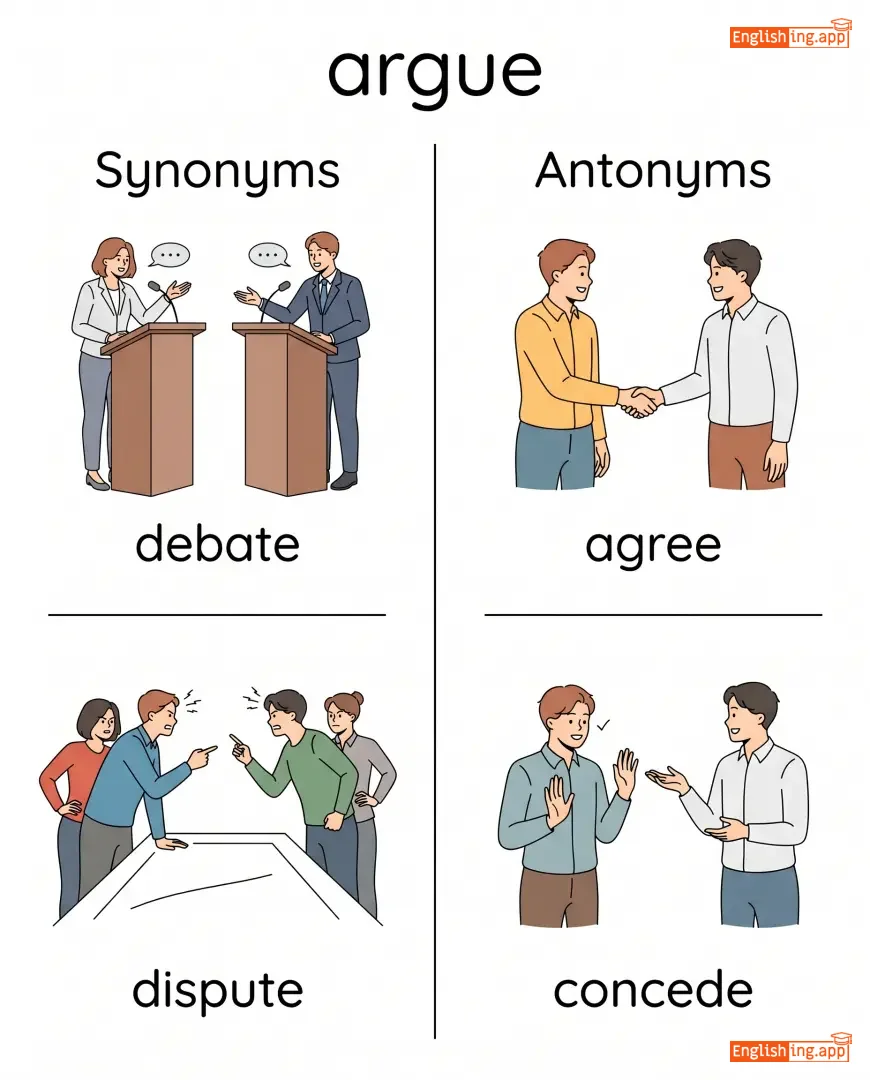
debate, dispute, contend, reason, quarrel
••••••
|
agree, concede, accept
••••••
|
argue strongly, argue convincingly, argue against, argue about
••••••
|
争论就是争议,像 argyu 在英文中一样。
••••••
|
|
#0
👩🎨
|
/ˈɑːrtɪst/
noun
(艺术家)
••••••
|
- •••••• |
艺术家
yishujia
••••••
|
- •••••• | - •••••• | - •••••• | - •••••• |
a person who creates art, especially paintings or drawings
••••••
|
The artist painted a beautiful landscape.
艺术家画了一幅美丽的风景画。
••••••
|
艺术家画了一幅美丽的风景画。
Yìshùjiā huàle yī fú měilì de fēngjǐnghuà.
••••••
|
con artist
骗子艺术家
••••••
|
a person who deceives others by gaining their trust
••••••
|
骗子
piànzi
••••••
|
painter, creator, illustrator, designer, performer
••••••
|
amateur, layman
••••••
|
famous artist, talented artist, street artist, young artist
••••••
|
Artist 👩🎨 意思是艺术家 - 艺术家画画。 但是 Con artist 意思是骗子。
••••••
|
|
#0
🔍
|
/ˈæs.pekt/
noun
(āsīpèkè)
••••••
|
- •••••• |
方面
fāngmiàn
••••••
|
- •••••• | - •••••• | - •••••• | - •••••• |
A particular part, feature, or view of something.
••••••
|
One important aspect of health is regular exercise. |
健康的一个重要方面是规律运动。
Jiànkāng de yīgè zhòngyào fāngmiàn shì guīlǜ yùndòng.
••••••
|
in every aspect |
in all parts or respects
••••••
|
在各个方面
zài gègè fāngmiàn
••••••
|
feature, element, angle, facet, perspective
••••••
|
whole, entirety, totality
••••••
|
important aspect, key aspect, in every aspect, different aspect
••••••
|
方面就像是观察一个事物的角度或视角。
••••••
|
|
#0
📢
|
/əˈsɜːrt/
verb
(阿瑟特)
••••••
|
|
断言
duàn yán
••••••
|
asserted
阿瑟特德
••••••
|
asserted
阿瑟特德
••••••
|
asserts
阿瑟特斯
••••••
|
asserting
阿瑟特英
••••••
|
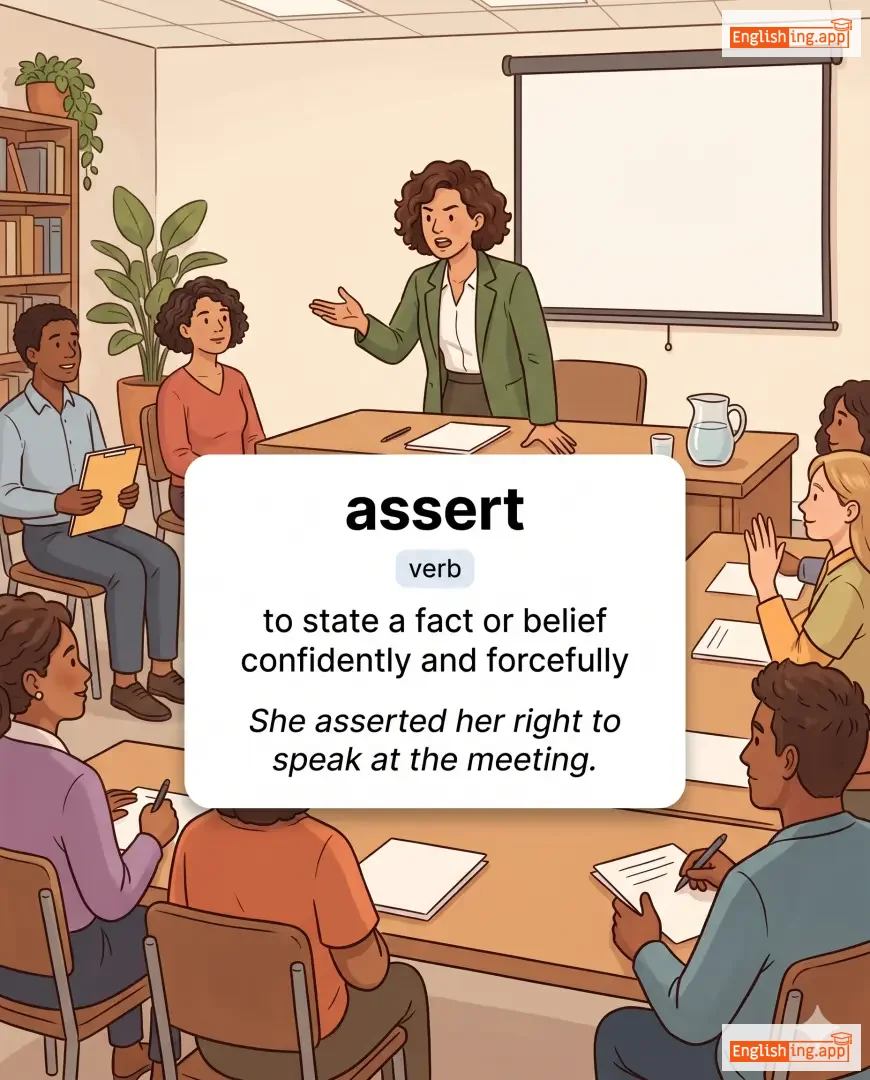
to state a fact or belief confidently and forcefully
••••••
|
She asserted her right to speak at the meeting.
她在会议中坚决声明了自己发言的权利。
••••••
|
她在会议中坚决声明了自己发言的权利。
Tā zài huì yì zhōng jiān jué shēng míng le zì jǐ fā yán de quán lì.
••••••
|
assert oneself
自信地表现自己
••••••
|
to behave confidently and firmly to make others respect your rights or opinions
••••••
|
自信地表现自己
zì xìn dì biǎo xiàn zì jǐ
••••••
|
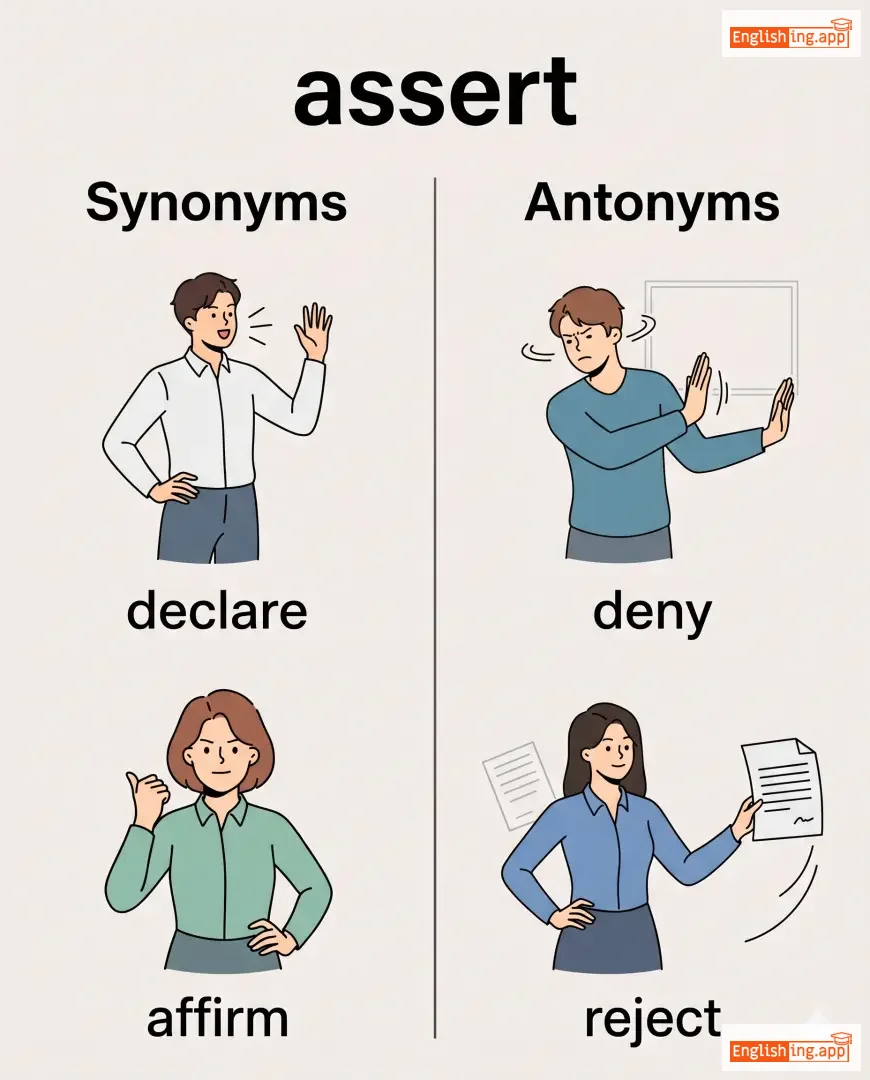
declare, affirm, maintain, insist, claim
••••••
|
deny, reject, abandon
••••••
|
assert rights, assert control, assert authority, assert independence
••••••
|
Assert的意思是断言,像'我们断言我们是对的'。
••••••
|
|
#0
📊
|
/əˈsɛs/
verb
(阿塞斯)
••••••
|
- •••••• |
评估
pinggu
••••••
|
assessed
阿塞斯德
••••••
|
assessed
阿塞斯德
••••••
|
assesses
阿塞塞斯
••••••
|
assessing
阿塞辛
••••••
|
to evaluate or estimate the nature, ability, or quality of something
••••••
|
The teacher assessed the students' progress.
老师评估了学生的进展。
••••••
|
老师评估了学生的进展。
Laoshi pinggu le xuesheng de jinzhang.
••••••
|
assess the situation
评估情况
••••••
|
to carefully evaluate the circumstances before acting
••••••
|
评估情况
pinggu qingkuang
••••••
|
evaluate, judge, appraise, estimate, measure
••••••
|
ignore, overlook, neglect
••••••
|
assess progress, assess damage, assess risk, assess value
••••••
|
Assess的意思是评估 — '在考试前评估你的准备情况。'
••••••
|
|
#0
📝
|
/əˈsaɪn/
verb
(āxīng)
••••••
|
- •••••• |
分配
fēnpèi
••••••
|
assigned
āxīnd
••••••
|
assigned
āxīnd
••••••
|
assigns
āxīns
••••••
|
assigning
āxīning
••••••
|
to give someone a task, duty, or responsibility
••••••
|
The manager will assign tasks to the new employees.
经理将给新员工分配任务。
••••••
|
经理将给新员工分配任务。
Jīnglǐ jiāng gěi xīn yuángōng fēnpèi rènwù.
••••••
|
assign blame
分配责任
••••••
|
to place responsibility for something on someone
••••••
|
分配责任
fēnpèi zérèn
••••••
|
allocate, appoint, designate, delegate, allot
••••••
|
withhold, refuse
••••••
|
assign tasks, assign roles, assign duties, assign responsibility
••••••
|
Assign 就是把任务分配给别人。
••••••
|
|
#0
🤲
|
/əˈsɪst/
verb
(阿西斯特)
••••••
|
- •••••• |
帮助
bangzhu
••••••
|
assisted
阿西斯特德
••••••
|
assisted
阿西斯特德
••••••
|
assists
阿西斯特斯
••••••
|
assisting
阿西斯廷
••••••
|
to help or support someone in doing something
••••••
|
The nurse will assist the doctor during the surgery.
护士将协助医生进行手术。
••••••
|
护士将协助医生进行手术。
Hushi jiang xiezhu yisheng jinxing shoushu.
••••••
|
assist in
协助于
••••••
|
to help someone with something
••••••
|
协助于
xiezhu yu
••••••
|
help, support, aid, facilitate, encourage
••••••
|
hinder, obstruct
••••••
|
assist someone, assist with, assist in, assist greatly
••••••
|
Assisting 就像帮朋友做事。
••••••
|
|
#0
🤔
|
/əˈsuːm/
verb
(阿修姆)
••••••
|
- •••••• |
假设
jiǎshè
••••••
|
assumed
阿修姆德
••••••
|
assumed
阿修姆德
••••••
|
assumes
阿修姆斯
••••••
|
assuming
阿修明
••••••
|
to think that something is true without proof
••••••
|
I assume he will be late to the meeting.
我假设他会迟到会议。
••••••
|
我假设他会迟到会议。
Wǒ jiǎshè tā huì chídào huìyì.
••••••
|
make an assumption
做出假设
••••••
|
to form an idea without evidence
••••••
|
做出假设
zuòchū jiǎshè
••••••
|
suppose, presume, imagine, believe, expect
••••••
|
doubt, question, deny
••••••
|
assume responsibility, assume control, assume the worst, assume a role
••••••
|
假设:'假'一假,'设'一设成。
••••••
|
|
#0
🤞
|
/əˈʃʊr/
verb
(asshúr)
••••••
|
- •••••• |
保证
baozheng
••••••
|
assured
asshúrd
••••••
|
assured
asshúrd
••••••
|
assures
asshúrs
••••••
|
assuring
asshúring
••••••
|
to make someone feel certain or confident about something
••••••
|
He assured her that everything would be fine.
他向她保证一切都会好。
••••••
|
他向她保证一切都会好。
Ta xiang ta baozheng yiqie dou hui hao.
••••••
|
rest assured
请放心
••••••
|
to be confident or certain about something
••••••
|
放心
fangxin
••••••
|
guarantee, promise, affirm, convince, ensure
••••••
|
doubt, question
••••••
|
assure someone, assure success, assure quality
••••••
|
保证就是给人确信 - 老师说REST ASSURED考试很容易。
••••••
|
|
#0
🏅
|
/ˈæθliːt/
noun
(æθliːt)
••••••
|
- •••••• |
运动员
yùndòngyuán
••••••
|
- •••••• | - •••••• | - •••••• | - •••••• |
a person who is trained or skilled in physical exercises, sports, or games requiring strength, agility, or stamina
••••••
|
The athlete trained hard for the upcoming Olympic Games. |
运动员为即将到来的奥林匹克运动会进行了艰苦训练。
Yùndòngyuán wèi jíjiāng dào lái de àolínpǐkè yùndònghuì jìnxíngle jiānkǔ xùnliàn.
••••••
|
professional athlete |
someone who competes in sports as a paid career
••••••
|
职业运动员
zhíyè yùndòngyuán
••••••
|
sportsman, competitor, player, runner, gymnast
••••••
|
spectator, amateur
••••••
|
professional athlete, Olympic athlete, star athlete, great athlete
••••••
|
运动员 = 竞技场的英雄 🏅 - 运动员 = 游戏的高手!
••••••
|
Vocabulary Quiz
Test your vocabulary by matching words with their translations or meanings.
Login to take the quiz
Comments (0)
Share your thoughts and join the discussion.
Join the discussion by logging in
Login to CommentNo comments yet
Be the first to share your thoughts!