

消防员的遗产
The Firefighter's Legacy
哈桑是达卡消防队的firefighter。他有specialized的高楼救援训练。他在学习新系统的configuration时遇到困难。Instructional手册非常复杂,processing也花费了很多时间。他决定将所有信息consolidate并创建一个简单的指南。然而,当旧方法与新方法之间产生冲突时,出现了complication。有一天,在一次大火中他犯了一个错误,这对他来说是一次embarrassment。Unfortunately没有人受伤,但他责怪了自己。与他的predecessor相比,他工作的similarity似乎较少。但他的知识sufficient,足以学习并前进。Withdrawal会很容易,但resignation不是他的性格。他的predecessor曾告诉他,永远不要permanently放弃。Importantly他理解到,从错误中学习才是最重要的。后来他开始differently思考。他安排了一个automatically更新系统的方式。他在decision-making方面变得更加小心。一年后,他以这样的方式训练了他的团队,以至于每个人都认为他是英雄。他创建的instructional指南现在在全国范围内使用。


Swipe left or right, or use the buttons. Tap image to zoom.
例句翻译
单词
The Firefighter's LegacyThe Firefighter's Legacy - 遮罩切换
|
表情符号
|
单词 | Images | 翻译 | 过去时 | 过去分词 | 第三人称单数 | 动名词 | 含义 | 例句 | 例句翻译 | 示例表达 | 示例表达含义 | 示例表达翻译 | 同义词 | 反义词 | 搭配词 | 助记符 |
|---|---|---|---|---|---|---|---|---|---|---|---|---|---|---|---|---|---|
|
#0
⚙️
|
/ˌɔːtəˈmætɪkli/
adverb
(自动)
••••••
|
- •••••• |
自动
zidong
••••••
|
- •••••• | - •••••• | - •••••• | - •••••• |
without human control or intervention; done by itself
••••••
|
The door closes automatically after you enter.
门在你进入后自动关闭。
••••••
|
门在你进入后自动关闭。
Men zai ni jinru hou zidong guanbi.
••••••
|
- •••••• | - •••••• | - •••••• |
instinctively, mechanically, involuntarily, spontaneously, unconsciously
••••••
|
manually, deliberately
••••••
|
open automatically, shut automatically, update automatically, restart automatically
••••••
|
Auto意味着自己,所以自动意味着某事自己发生 🌀
••••••
|
|
#0
🔍
|
/kəmˈpærɪsən/
noun
(康派瑞森)
••••••
|
- •••••• |
比较
bijiao
••••••
|
- •••••• | - •••••• | - •••••• | - •••••• |
The act or process of examining the similarities and differences between things.
••••••
|
A comparison of the two reports shows several inconsistencies.
啊 康派瑞森 欧夫 两个 报告 秀斯 几个 不一致。
••••••
|
对两份报告的比较显示出几个不一致之处。
dui liangfen baogao de bijiao xianshichu jige buyizhi zhichu
••••••
|
draw a comparison
德劳 啊 康派瑞森
••••••
|
To point out similarities or differences between two or more things
••••••
|
进行比较
jinxing bijiao
••••••
|
contrast, evaluation, juxtaposition, measurement
••••••
|
isolation, separation
••••••
|
make a comparison, draw a comparison, comparison chart, comparison between
••••••
|
Comparison → 比较 (bi-jiao) sounds like 'be jiao' – to compare!
••••••
|
|
#0
⚠️
|
/ˌkɒmplɪˈkeɪʃən/
noun
(kɑmplɪˈkeɪʃən)
••••••
|
- •••••• |
并发症
bingfa zheng
••••••
|
- •••••• | - •••••• | - •••••• | - •••••• |
A problem or difficulty that makes a situation harder to deal with.
••••••
|
His illness led to serious complications after surgery. |
他的病情在手术后导致了严重的并发症。
Tā de bìngqíng zài shǒushù hòu dǎozhìle yánzhòng de bìngfāzhèng.
••••••
|
- •••••• | - •••••• | - •••••• |
difficulty, obstacle, setback, issue, hindrance
••••••
|
solution, advantage, benefit
••••••
|
medical complication, unexpected complication, serious complication, complication arises
••••••
|
并发症 = 让事情变得更复杂的东西。
••••••
|
|
#0
🔧
|
/kənˌfɪɡəˈreɪʃən/
noun
(配置)
••••••
|
- •••••• |
配置
peizhi
••••••
|
- •••••• | - •••••• | - •••••• | - •••••• |
an arrangement of parts or elements in a particular form or structure
••••••
|
The configuration of the system needs to be adjusted for better performance.
系统配置需要调整以提高性能。
••••••
|
系统配置需要调整以提高性能。
Xitong peizhi xuyao tiaozheng yi tigao xingneng.
••••••
|
- •••••• | - •••••• | - •••••• |
arrangement, layout, setup, structure
••••••
|
disorder, chaos
••••••
|
system configuration, network configuration, device configuration
••••••
|
配置 = 系统如何安排元素
••••••
|
|
#0
🏢
|
/kənˈsɑːlɪdeɪt/
verb
(kənˈsɑːlɪdeɪt)
••••••
|
|
整合
zhěnghé
••••••
|
consolidated
kənˈsɑːlɪdeɪtəd
••••••
|
consolidated
kənˈsɑːlɪdeɪtəd
••••••
|
consolidates
kənˈsɑːlɪdeɪts
••••••
|
consolidating
kənˈsɑːlɪdeɪtɪŋ
••••••
|
to combine into a single, more effective or coherent whole
••••••
|
The company plans to consolidate its offices into one building.
公司计划将其办公室合并到一栋建筑中。
••••••
|
公司计划将其办公室合并到一栋建筑中。
Gōngsī jìhuà jiāng qí bàngōngshì hébìng dào yī dòng jiànzhú zhōng.
••••••
|
- •••••• | - •••••• | - •••••• |
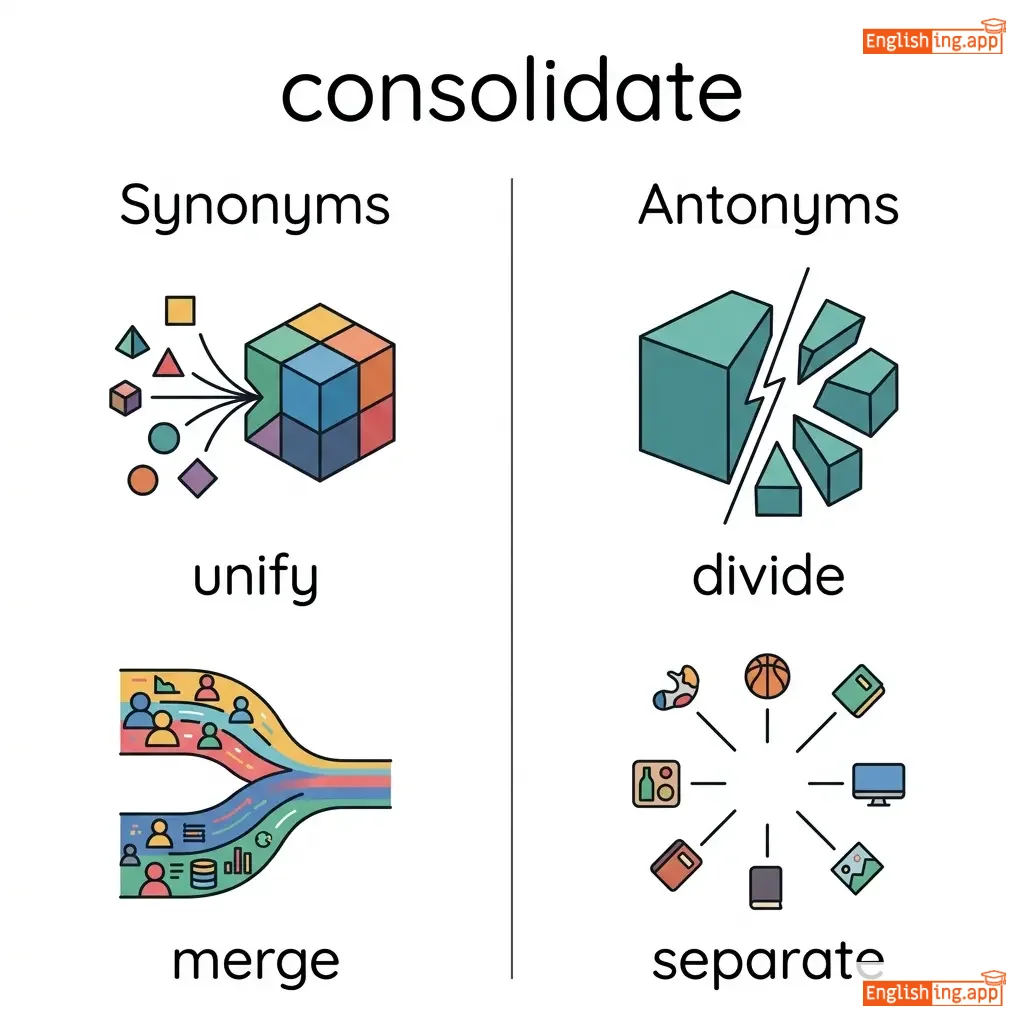
unify, merge, integrate, strengthen
••••••
|
divide, separate, scatter
••••••
|
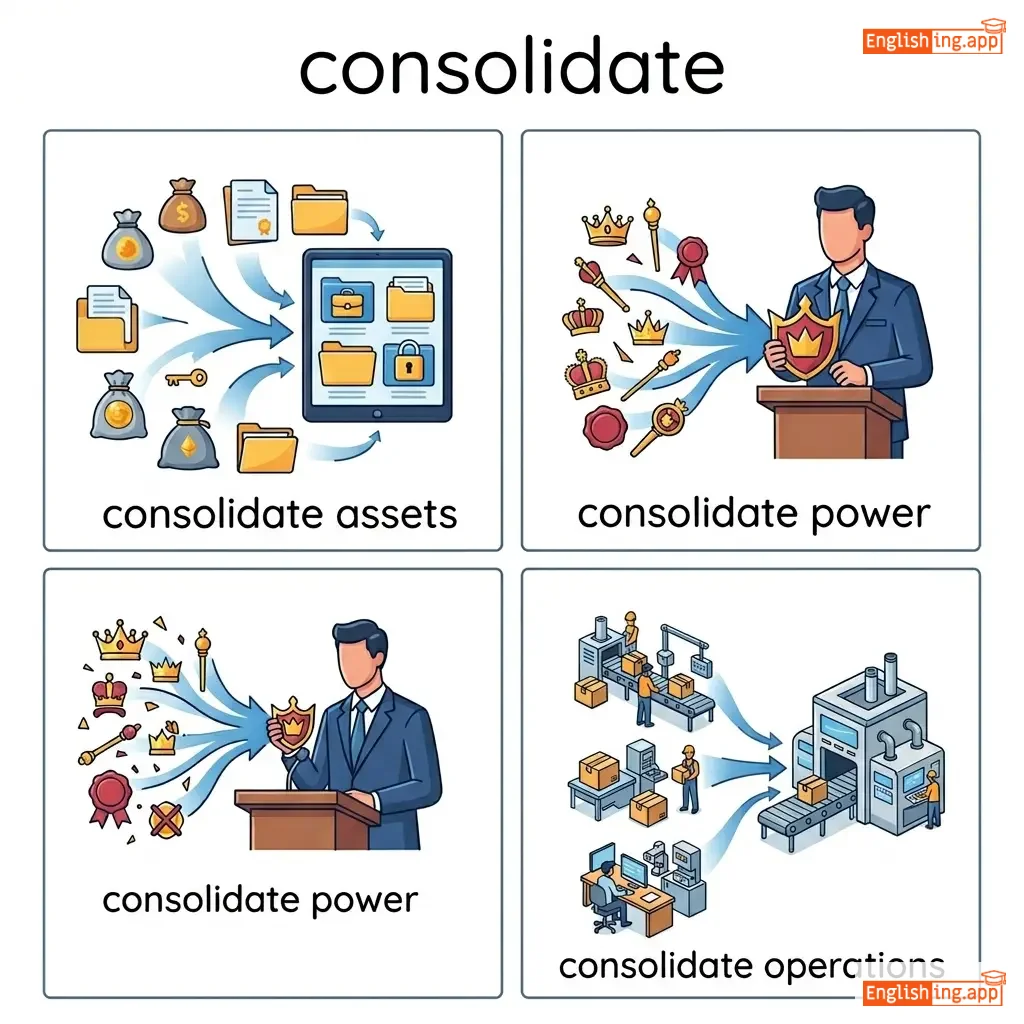
consolidate assets, consolidate power, consolidate operations
••••••
|
整合 = 将一切整齐地合并
••••••
|
|
#0
🧠
|
/dɪˈsɪʒənˌmeɪkɪŋ/
noun
(决策制定)
••••••
|
- •••••• |
决策制定
juécè zhìdìng
••••••
|
- •••••• | - •••••• | - •••••• | - •••••• |
the process of making decisions, especially important or business-related decisions
••••••
|
The CEO's decision-making was crucial for the success of the company. |
CEO的决策制定对公司成功至关重要。
CEO de juécè zhìdìng duì gōngsī chénggōng zhìguān zhòngyào.
••••••
|
- •••••• | - •••••• | - •••••• |
judgment, choice, determination, resolution
••••••
|
indecision, hesitation, uncertainty
••••••
|
effective decision-making, business decision-making, decision-making process
••••••
|
Decision making is like **决策 (juécè)** and **制定 (zhìdìng)** for a smart result.
••••••
|
|
#0
🔄
|
/ˈdɪfərəntli/
adverb
(diferenti)
••••••
|
- •••••• |
以不同方式
yi butong fangshi
••••••
|
- •••••• | - •••••• | - •••••• | - •••••• |
in a way that is not the same as another or as expected
••••••
|
She approached the problem differently than her colleagues. |
她以不同的方式解决了这个问题,比她的同事们更有创意。
Ta yi butong de fangshi jiejue le zhege wenti, bi ta de tongshi men geng you chuangyi.
••••••
|
- •••••• | - •••••• | - •••••• |
otherwise, uniquely, unusually, distinctly
••••••
|
similarly, alike
••••••
|
think differently, act differently, look differently, behave differently
••••••
|
以不同方式表示diffferently,即做事与他人或预期不同。
••••••
|
|
#0
😳
|
/ɪmˈbærəsmənt/
noun
(embarrassment)
••••••
|
- •••••• |
尴尬
ganga
••••••
|
- •••••• | - •••••• | - •••••• | - •••••• |
a feeling of self-consciousness, shame, or awkwardness
••••••
|
Her face turned red with embarrassment after the mistake. |
她因错误而羞愧得脸红了。
Ta yin cuowu er xiukui de lianhong le.
••••••
|
- •••••• | - •••••• | - •••••• |
shame, awkwardness, discomfort, humiliation
••••••
|
pride, confidence, composure
••••••
|
public embarrassment, social embarrassment, cause embarrassment
••••••
|
记住 '尴尬' 为 'embarrassment' - 错误后的尴尬感!
••••••
|
|
#0
👨🚒
|
/ˈfaɪəˌfaɪtə/
noun
(fāyàfàitā)
••••••
|
- •••••• |
消防员
xiāofángyuán
••••••
|
- •••••• | - •••••• | - •••••• | - •••••• |
a person whose job is to put out fires
••••••
|
The firefighter saved the family from the burning building. |
消防员从燃烧的大楼中救出了那家人。
Xiāofángyuán cóng ránshāo de dàlóu zhōng jiù chūle nà jiārén.
••••••
|
- •••••• | - •••••• | - •••••• |
fireman, firewoman, rescuer, emergency worker
••••••
|
arsonist, incendiary
••••••
|
brave firefighter, firefighter gear, firefighter training
••••••
|
消防员必须与火灾作斗争 - Firefighter has to fight fire!
••••••
|
|
#0
⚡
|
/ɪmˈpɔːtəntli/
adverb
(ɪmˈpɔːtəntli)
••••••
|
- •••••• |
重要地
zhòngyàode
••••••
|
- •••••• | - •••••• | - •••••• | - •••••• |
in a way that is of great significance or value
••••••
|
Importantly, the report highlights the need for immediate action. |
重要地,报告突出了立即采取行动的必要性。
Zhòngyàode, bàogào túchūle lìjí cǎiqǔ xíngdòng de bìyào xìng.
••••••
|
- •••••• | - •••••• | - •••••• |
significantly, notably, crucially, essentially, vitally
••••••
|
insignificantly, trivially, unimportantly
••••••
|
importantly, more importantly, very importantly, most importantly
••••••
|
Importantly在中文中是重要地,用来表达一种显著的、具有重大意义的方式。
••••••
|
|
#0
🎓
|
/ɪnˈstrʌkʃənəl/
adjective
(instruccional)
••••••
|
- •••••• |
教学的
jiaoxue de
••••••
|
- •••••• | - •••••• | - •••••• | - •••••• |
providing knowledge or information; intended to teach
••••••
|
The website offers many instructional videos for beginners. |
该网站提供许多教学视频,适合初学者。
Gai wangzhan tigong xuduo jiaoxue shipin, shihe chuxueshuo.
••••••
|
- •••••• | - •••••• | - •••••• |
educational, informative, didactic, teaching, training
••••••
|
noneducational, misleading, confusing
••••••
|
instructional material, instructional design, instructional video, instructional guide
••••••
|
Instructional 意味着教学的,就像教学视频一样,帮助学习!
••••••
|
|
#0
🔒
|
/ˈpɜː.mə.nənt.li/
adverb
(pəˈmænəntli)
••••••
|
- •••••• |
永久地
yǒng jiǔ de
••••••
|
- •••••• | - •••••• | - •••••• | - •••••• |
in a way that lasts or remains unchanged for a long time or forever
••••••
|
She moved to the city permanently after finishing her studies. |
她在完成学业后永久地搬到了这座城市。
Tā zài wánchéng xuéyè hòu yǒngjiǔ de bān dào le zhè zuò chéngshì.
••••••
|
- •••••• | - •••••• | - •••••• |
forever, eternally, indefinitely, for good
••••••
|
temporarily, briefly
••••••
|
permanently closed, permanently removed, permanently settled
••••••
|
永久地 - 永远不离开城市
••••••
|
|
#0
👤
|
/ˈpred.ə.ses.ər/
noun
(前任)
••••••
|
- •••••• |
前任
qiánrèn
••••••
|
- •••••• | - •••••• | - •••••• | - •••••• |
a person who held a job or office before the current holder; something that came before another thing
••••••
|
The new manager learned from his predecessor's mistakes. |
新经理从他的前任的错误中学习。
xīn jīnglǐ cóng tā de qiánrèn de cuòwù zhōng xuéxí.
••••••
|
- •••••• | - •••••• | - •••••• |
forerunner, antecedent, previous holder, former
••••••
|
successor, follower, descendant
••••••
|
immediate predecessor, worthy predecessor, predecessor company, predecessor's legacy
••••••
|
前任:曾经是,像你以前的老师。
••••••
|
|
#0
⚙️
|
/ˈprəʊsesɪŋ/
noun
(处理)
••••••
|
- •••••• |
处理
chuli
••••••
|
- •••••• | - •••••• | - •••••• |
processing
处理
••••••
|
the series of actions or steps taken to achieve a particular end, especially in data or food handling
••••••
|
Data processing takes place in the server.
数据处理在服务器上进行。
••••••
|
数据处理在服务器上进行。
Shuju chuli zai fuwuqi shang jinxing.
••••••
|
- •••••• | - •••••• | - •••••• |
handling, treatment, operation, computation, execution
••••••
|
neglect, ignoring
••••••
|
data processing, food processing, image processing, information processing
••••••
|
Processing意味着一步步完成工作 — '处理一切直到最后'.
••••••
|
|
#0
📄
|
/ˌrɛzɪɡˈneɪʃən/
noun
(rézìgnèishùn)
••••••
|
|
辞职
cizhi
••••••
|
- •••••• | - •••••• | - •••••• | - •••••• |
The act of giving up a job or position; acceptance of something undesirable but inevitable.
••••••
|
The CEO submitted his resignation yesterday. |
首席执行官昨天提交了辞职信。
Shǒuxí zhíxíngguān zuótiān tíjiāo le cízhi xìn.
••••••
|
with resignation |
Accepting something unpleasant without protest.
••••••
|
带着辞职
dàizhe cízhi
••••••
|
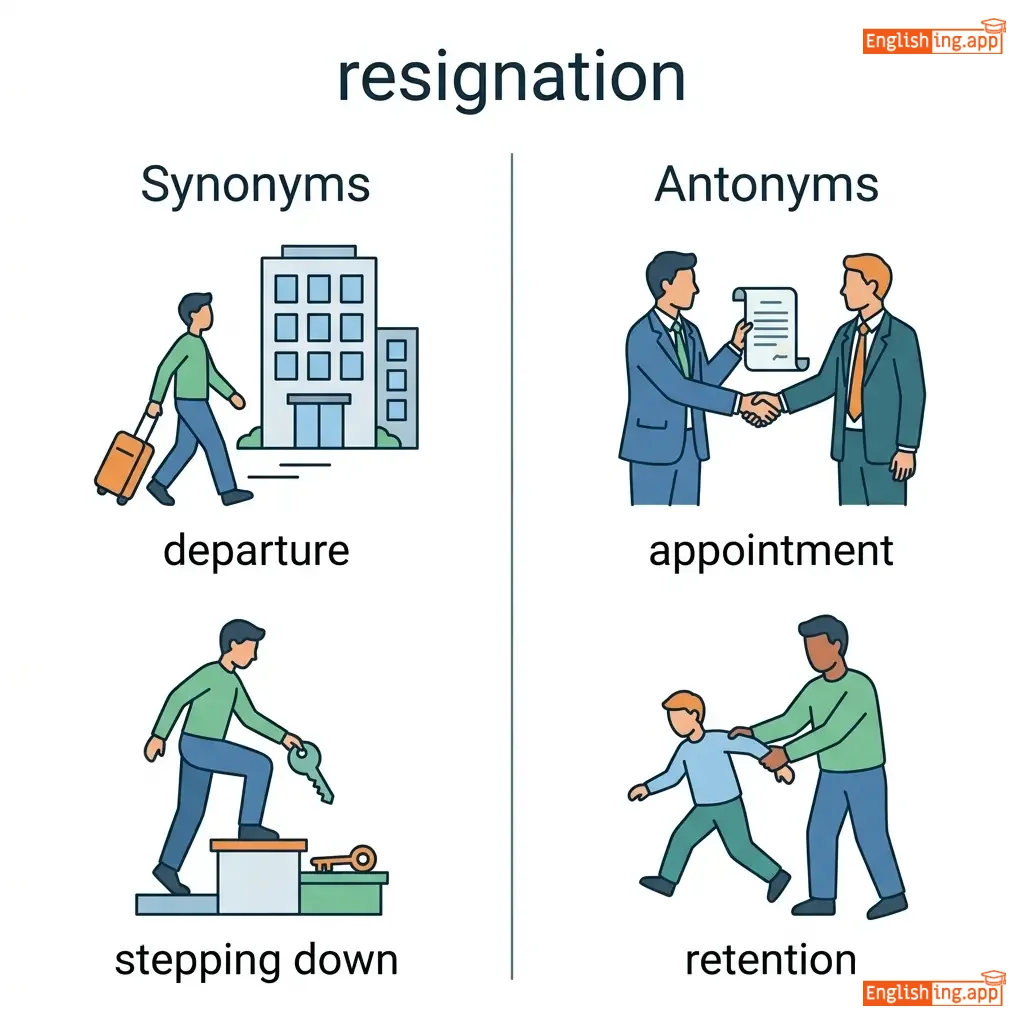
departure, stepping down, surrender, acceptance, renunciation
••••••
|
appointment, retention
••••••
|
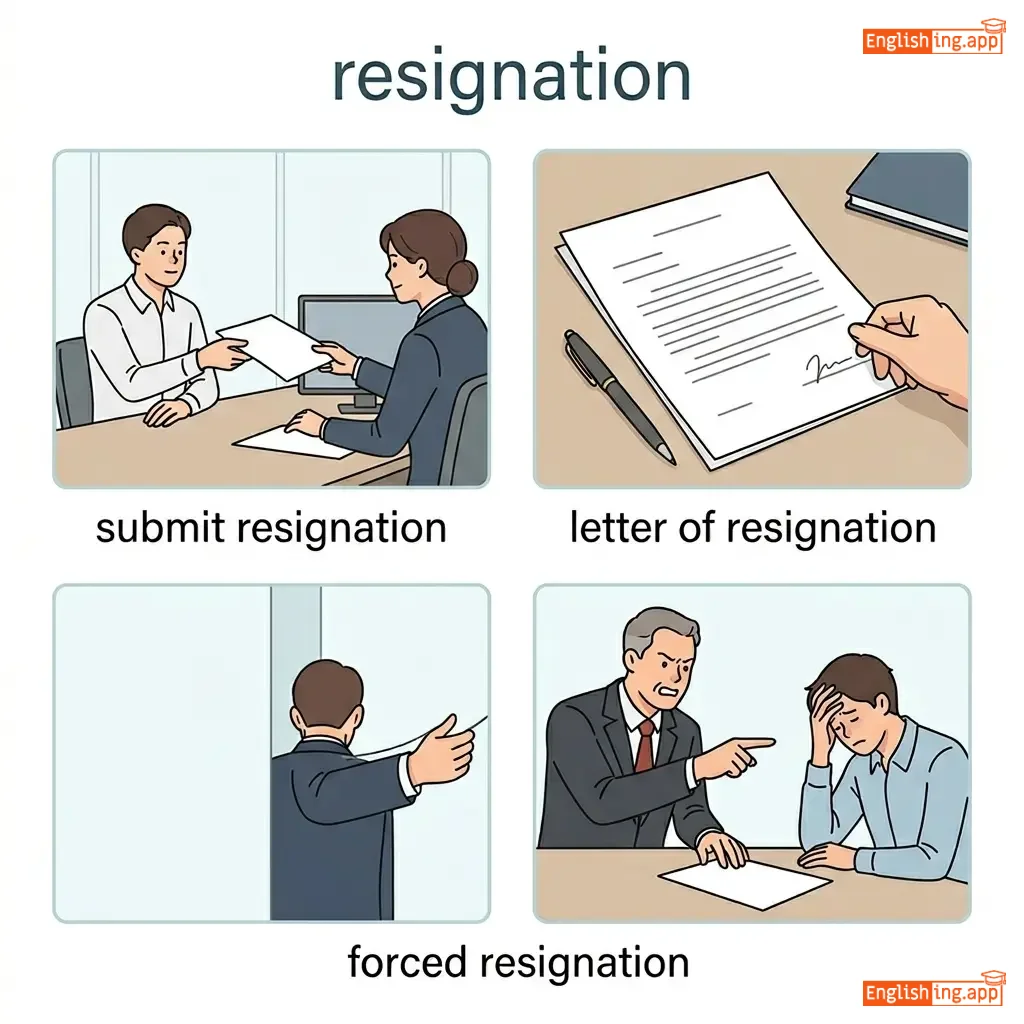
submit resignation, letter of resignation, forced resignation, resignation speech
••••••
|
辞职就等于Resignation,记住这个当你辞掉工作时。
••••••
|
|
#0
🔁
|
/ˌsɪmɪˈlærəti/
noun
(相似性)
••••••
|
- •••••• |
相似
xiangsi
••••••
|
- •••••• | - •••••• | - •••••• | - •••••• |
the state of being alike or having characteristics in common
••••••
|
There is a strong similarity between the two paintings. |
这两幅画之间有很强的相似性。
Zhe liang fu hua zhi jian you hen qiang de xiangsi.
••••••
|
family similarity |
resemblance among family members
••••••
|
家庭相似性
jiating xiangsi
••••••
|
likeness, resemblance, correspondence, equivalence, analogy
••••••
|
difference, dissimilarity, contrast
••••••
|
striking similarity, close similarity, family similarity, similarity score
••••••
|
Similarity → xiangsi; 记住:‘similar faces’ 意味着相似的面孔
••••••
|
|
#0
🔧
|
/ˈspɛʃəˌlaɪzd/
adjective
(speshálaizd)
••••••
|
- •••••• |
专门的
zhuānmén de
••••••
|
- •••••• | - •••••• | - •••••• | - •••••• |
designed or developed for a particular purpose or function
••••••
|
He has a specialized knowledge of ancient civilizations.
他对古代文明有专门的知识。
••••••
|
他对古代文明有专门的知识。
Tā duì gǔdài wénmíng yǒu zhuānmén de zhīshì.
••••••
|
- •••••• | - •••••• | - •••••• |
specialist, specific, expert
••••••
|
general, broad
••••••
|
specialized knowledge, specialized equipment, specialized skills
••••••
|
Specialized 意味着为特定目标 (mùdì) 开发的。
••••••
|
|
#0
✔️
|
/səˈfɪʃənt/
adjective
(苏菲西恩特)
••••••
|
- •••••• |
足够的
zúgòu de
••••••
|
- •••••• | - •••••• | - •••••• | - •••••• |
enough; adequate for a purpose
••••••
|
She had sufficient money to buy the dress. |
她有足够的钱买这件裙子。
Tā yǒu zúgòu de qián mǎi zhè jiàn qúnzi.
••••••
|
sufficient unto the day |
today's troubles are enough without worrying about the future
••••••
|
今天足够了
jīntiān zúgòu le
••••••
|
enough, adequate, ample, satisfactory
••••••
|
insufficient, inadequate, lacking
••••••
|
sufficient money, sufficient evidence, sufficient reason
••••••
|
Zúgòu de 意味着足够 ✔️ – 想象一个‘完美派对’
••••••
|
|
#0
😔
|
/ʌnˈfɔːrtʃənətli/
adverb
(安弗托尼特利)
••••••
|
- •••••• |
不幸地
unfortunately
••••••
|
- •••••• | - •••••• | - •••••• | - •••••• |
used to express regret or disappointment about something
••••••
|
Unfortunately, the weather was bad for our picnic.
很遗憾,天气不适合我们的野餐。
••••••
|
很遗憾,天气不适合我们的野餐。
henyihan tianqi bu shi he wo men de ye can
••••••
|
- •••••• | - •••••• | - •••••• |
sadly, regrettably, unluckily, unhappily
••••••
|
fortunately, luckily, happily
••••••
|
unfortunately true, unfortunately common, unfortunately necessary
••••••
|
UnforTuneItly 记作 不幸地 的 音节 图像, 想象 一只 panda 在 野餐 时 说 不 幸 地
••••••
|
|
#0
🏦
|
/wɪðˈdrɔːəl/
noun
(wɪðˈdrɔːəl)
••••••
|
- •••••• |
提款
tí kuǎn
••••••
|
- •••••• | - •••••• | - •••••• | - •••••• |
the act of taking something back or removing oneself from a situation
••••••
|
He made a withdrawal of $500 from his bank account. |
他从银行账户提取了500美元。
Tā cóng yínháng zhànghù tíqǔle 500 měiyuán.
••••••
|
withdrawal symptoms |
physical or mental effects after stopping a habit, like smoking or drugs
••••••
|
戒断症状
jièduàn zhèngzhuàng
••••••
|
removal, retreat, retraction, extraction, pullback
••••••
|
deposit, participation
••••••
|
bank withdrawal, cash withdrawal, troop withdrawal, withdrawal symptoms
••••••
|
提款机取款,就像 'withdrawal' 一样!
••••••
|
Vocabulary Quiz
Test your vocabulary by matching words with their translations or meanings.
Login to take the quiz
Comments (0)
Share your thoughts and join the discussion.
Join the discussion by logging in
Login to CommentNo comments yet
Be the first to share your thoughts!