

找到声音的村庄
The Village That Found Its Voice
在一个偏远的valley,有一个小村庄,人们在日常生活中wandered,但没有适当的voting系统。一位名叫Rahim的vendor说:"Unless我们united,我们的权利将vanish。"他的weekly会议开始了,来自varied背景的人们参加了。每个人都有一个目标:uphold民主的virtue。许多人认为voting与传统versus,但Rahim解释了它是如何useful的。随着他话语的volume增大,每一个viewer都受到了启发。人们的warmth和团结weakened了压迫性的系统。当地的地主拥有wealth,他试图将自己的影响力作为weapon来使用。但社区很强大,他们成为了改变的vessel。Rahim的virtue是他的诚实和奉献精神。Unless他们采取行动,什么都不会改变。最后,村庄举行了第一次公平的voting。人们的varied意见得到了倾听,民主胜利了。Rahim证明了即使是一个简单的vendor,也能带来改变,只要他upholds真理和virtue。村民们united并决定了自己的未来。现在他们的声音不会vanish,它已成为一个useful的工具,赋予了人们力量。Weekly会议现在成为了一种传统,大家分享他们的关切。



Swipe left or right, or use the buttons. Tap image to zoom.
例句翻译
单词
The Village That Found Its VoiceThe Village That Found Its Voice - 遮罩切换
|
表情符号
|
单词 | Images | 翻译 | 过去时 | 过去分词 | 第三人称单数 | 动名词 | 含义 | 例句 | 例句翻译 | 示例表达 | 示例表达含义 | 示例表达翻译 | 同义词 | 反义词 | 搭配词 | 助记符 |
|---|---|---|---|---|---|---|---|---|---|---|---|---|---|---|---|---|---|
|
#0
🤝
|
/juːˈnaɪtɪd/
adjective
(younaited)
••••••
|
- •••••• |
联合的; 一致的; 团结的
lianhe de; yizhi de; tuanjie de
••••••
|
- •••••• | - •••••• | - •••••• | - •••••• |
joined together for a common purpose; in agreement
••••••
|
The team was united in their goal to win. |
团队在他们的目标上达成了统一。
tuandui zai tamen de mubiao shang dacheng le tongyi.
••••••
|
- •••••• | - •••••• | - •••••• |
joined, combined, allied
••••••
|
divided, separated, split
••••••
|
united front, united effort, united nation
••••••
|
联合成一队向目标前进
••••••
|
|
#0
🚫
|
/ʌnˈlɛs/
conjunction
(anles)
••••••
|
- •••••• |
除非
chúfēi
••••••
|
- •••••• | - •••••• | - •••••• | - •••••• |
except if
••••••
|
We won't go unless it stops raining. |
除非雨停了,否则我们不去。
Chúfēi yǔ tíngle, fǒuzé wǒmen bù qù.
••••••
|
- •••••• | - •••••• | - •••••• |
except, without, but, if not
••••••
|
if, provided
••••••
|
unless otherwise stated, unless there is
••••••
|
Unless = 除非 (Chúfēi)
••••••
|
|
#0
⚖️
|
/ʌpˈhoʊld/
verb
(apohold)
••••••
|
- •••••• |
维护
wéihù
••••••
|
upheld
apohold
••••••
|
upheld
apohold
••••••
|
upholds
apoholds
••••••
|
upholding
apoholding
••••••
|
to maintain or support a principle, law, or decision
••••••
|
The judge promised to uphold justice at all costs.
法官承诺不惜一切代价维护正义。
••••••
|
法官承诺不惜一切代价维护正义。
Fǎguān chéngnuò bùxī yīqiè dàijià wéihù zhèngyì.
••••••
|
uphold the law
维持法律
••••••
|
to support and enforce legal rules
••••••
|
维持法律
wéihù fǎlǜ
••••••
|
support, maintain, defend, sustain, endorse
••••••
|
reject, overturn
••••••
|
uphold justice, uphold the law, uphold a decision, uphold rights
••••••
|
UP 维护意味着‘维持法律或原则’
••••••
|
|
#0
🔧
|
/ˈjuːs.fəl/
adjective
(yousiful)
••••••
|
- •••••• |
有用的; 实用的
youyong de; shiyong de
••••••
|
- •••••• | - •••••• | - •••••• | - •••••• |
having a beneficial purpose; practical
••••••
|
This tool is very useful for fixing problems.
这个工具对解决问题非常有用。
••••••
|
这个工具对解决问题非常有用。
zhe ge gong ju dui jie jue wen ti fei chang you yong.
••••••
|
- •••••• | - •••••• | - •••••• |
helpful, beneficial, practical, handy, valuable
••••••
|
useless, harmful, worthless, ineffective
••••••
|
useful tool, useful information, very useful, quite useful
••••••
|
Useful 就像这个有用的工具,帮助解决问题
••••••
|
|
#0
🏞️
|
/ˈvæl.i/
noun
(wèi lǐ)
••••••
|
- •••••• |
山谷
shāngǔ
••••••
|
- •••••• | - •••••• | - •••••• | - •••••• |
a low area of land between hills or mountains
••••••
|
The green valley stretched for miles between the mountains. |
绿色的山谷在山脉之间延伸了好几英里。
lǜsè de shāngǔ zài shānmài zhī jiān yánshēn le hǎo jǐ yīnglǐ
••••••
|
- •••••• | - •••••• | - •••••• |
dale, glen, hollow
••••••
|
mountain, hill, peak
••••••
|
river valley, mountain valley, fertile valley, deep valley
••••••
|
山谷中水流和绿草不断延伸,仿佛是绿色的波浪。
••••••
|
|
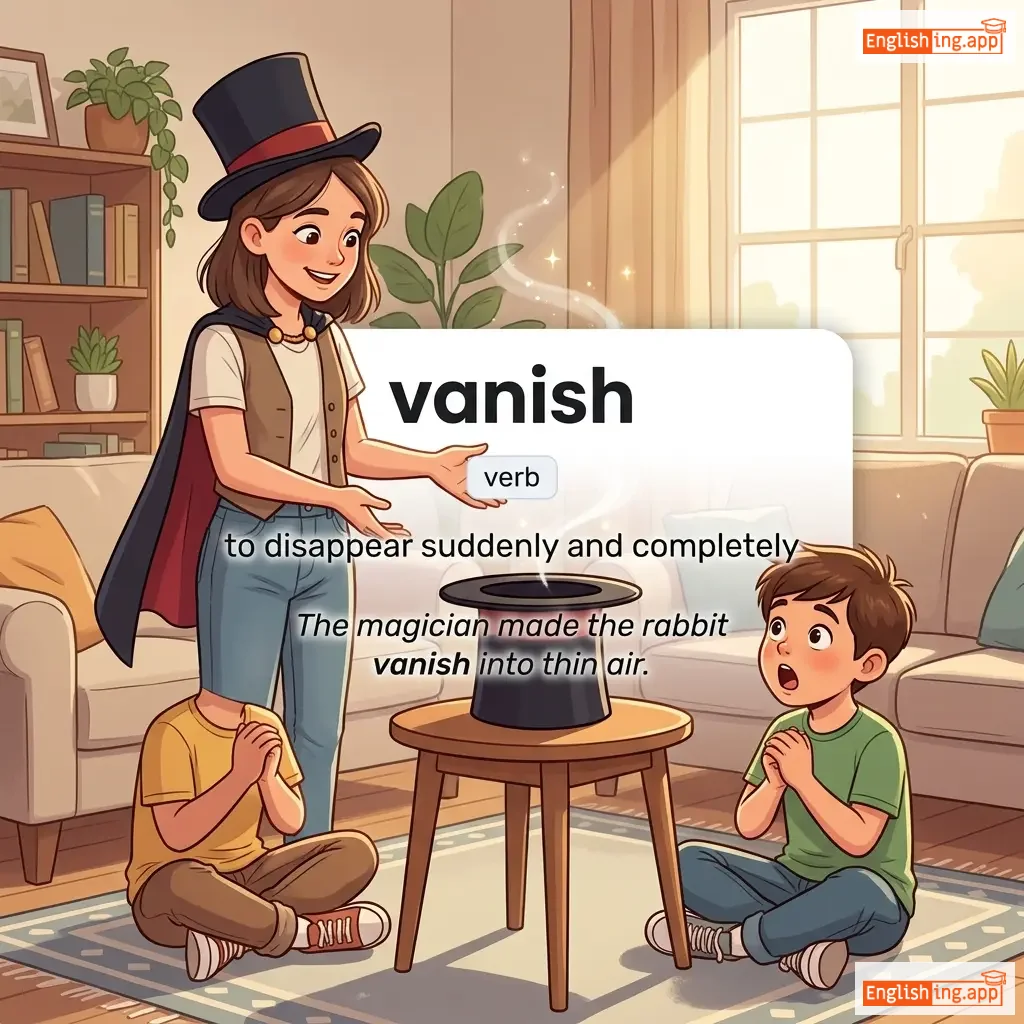
#0
✨
|
/ˈvæn.ɪʃ/
verb
(范尼什)
••••••
|
|
消失
xiaoshi
••••••
|
vanished
范尼什德
••••••
|
vanished
范尼什德
••••••
|
vanishes
范尼什斯
••••••
|
vanishing
范尼辛
••••••
|
to disappear suddenly and completely
••••••
|
The magician made the rabbit vanish into thin air.
魔术师让兔子在空气中消失。
••••••
|
魔术师让兔子在空气中消失。
Moshushi rang tuzi zai kongqi zhong xiaoshi.
••••••
|
vanish into thin air
消失在空气中
••••••
|
to disappear suddenly without a trace
••••••
|
消失在空气中
xiaoshi zai kongqi zhong
••••••
|
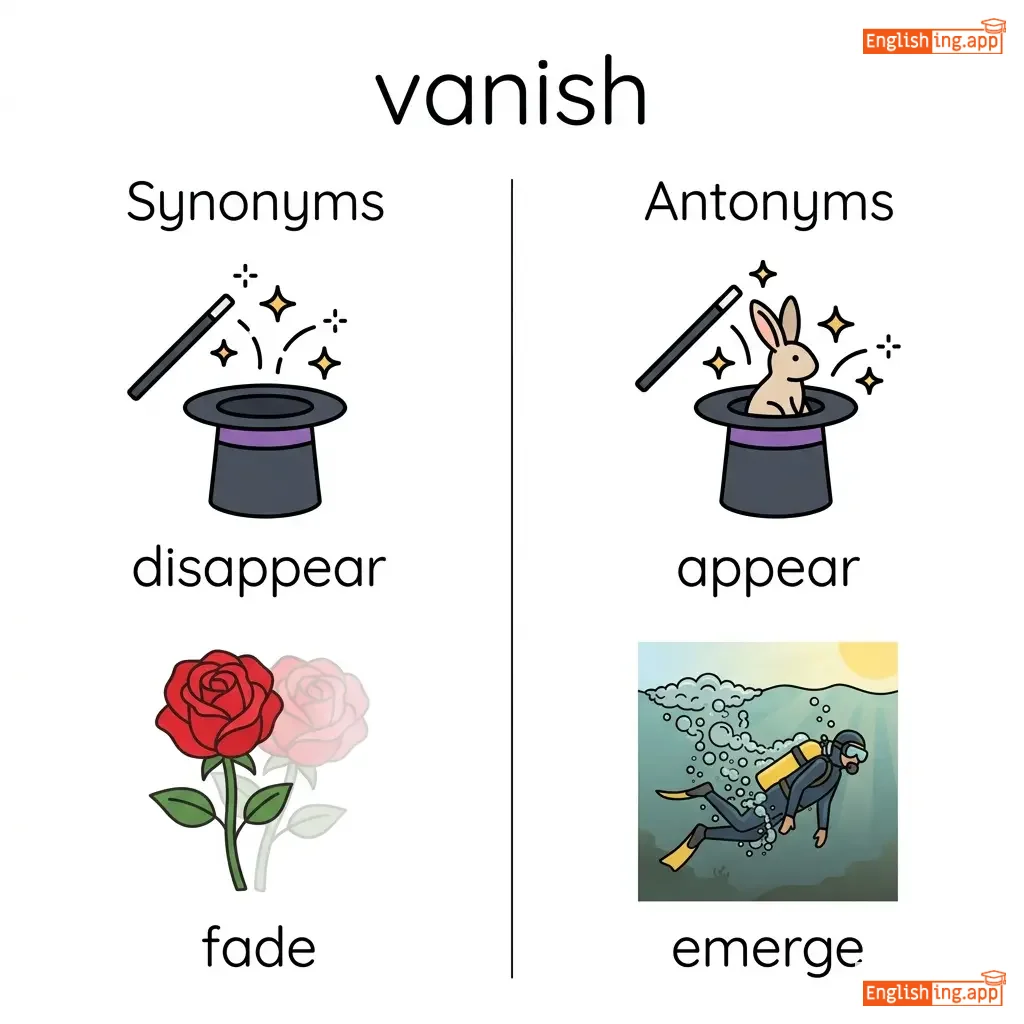
disappear, fade, evaporate, melt away
••••••
|
appear, emerge
••••••
|
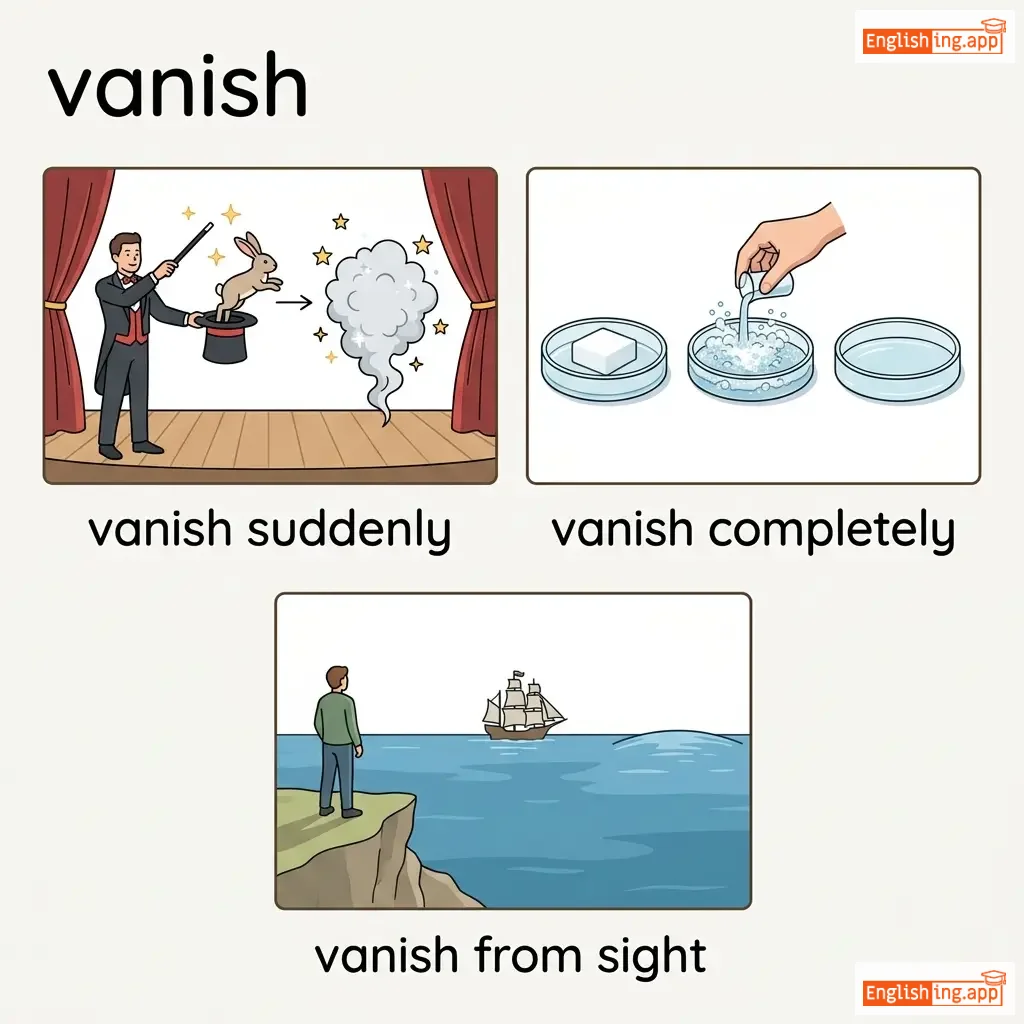
vanish suddenly, vanish completely, vanish from sight, vanish overnight
••••••
|
Vanish意味着消失 — 想象一个魔术师说: ‘Vanish!’ 然后兔子消失了。
••••••
|
|
#0
🎨
|
/ˈvɛərid/
adjective
(韦瑞德)
••••••
|
- •••••• |
多样的; 各种各样的
duōyàng de; gè zhǒng gè yàng de
••••••
|
- •••••• | - •••••• | - •••••• | - •••••• |
showing differences; diverse; containing different types
••••••
|
The museum has a varied collection of ancient artifacts. |
博物馆拥有各种各样的古代文物收藏。
Bówùguǎn yǒngyǒu gè zhǒng gè yàng de gǔdài wénwù shōucáng.
••••••
|
- •••••• | - •••••• | - •••••• |
diverse, mixed, assorted, different
••••••
|
uniform, identical, same, consistent
••••••
|
varied collection, varied experiences, varied diet, varied background
••••••
|
多样的东西就像色彩斑斓的画布,丰富多彩。
••••••
|
|
#0
🧑🍳
|
/ˈvɛndɔːr/
noun
(vendor)
••••••
|
- •••••• |
小贩
xiǎo fàn
••••••
|
- •••••• | - •••••• | - •••••• | - •••••• |
A person or company that sells goods or services.
••••••
|
The street vendor sold fresh fruits every morning.
街头小贩每天早晨卖新鲜水果。
••••••
|
街头小贩每天早晨卖新鲜水果。
Jiētóu xiǎo fàn měitiān zǎo chén mài xīnxiān shuǐguǒ.
••••••
|
vendor lock-in
供应商锁定
••••••
|
A situation where a customer becomes dependent on a vendor for products or services and cannot switch easily to another provider.
••••••
|
供应商锁定
gōngyìng shāng suǒdìng
••••••
|
seller, merchant, trader, dealer, supplier
••••••
|
buyer, customer, purchaser
••••••
|
street vendor, software vendor, vendor contract, vendor list
••••••
|
Vendor 就是一个卖东西的小贩,街头小贩每早都会卖水果。
••••••
|
|
#0
⚔️
|
/ˈvɜːsəs/
preposition
(对抗)
••••••
|
- •••••• |
对抗
duìkàng
••••••
|
- •••••• | - •••••• | - •••••• | - •••••• |
against (in a competition or conflict)
••••••
|
The team is playing versus their biggest rivals. |
团队正在与他们最大的竞争对手对抗。
Tuánduì zhèngzài yǔ tāmen zuìdà de jìngzhēng duìshǒu duìkàng.
••••••
|
- •••••• | - •••••• | - •••••• |
against, in opposition to
••••••
|
- •••••• |
team versus team, player versus player, man versus nature
••••••
|
Versus means 'against' - Think of teams facing each other in a competition!
••••••
|
|
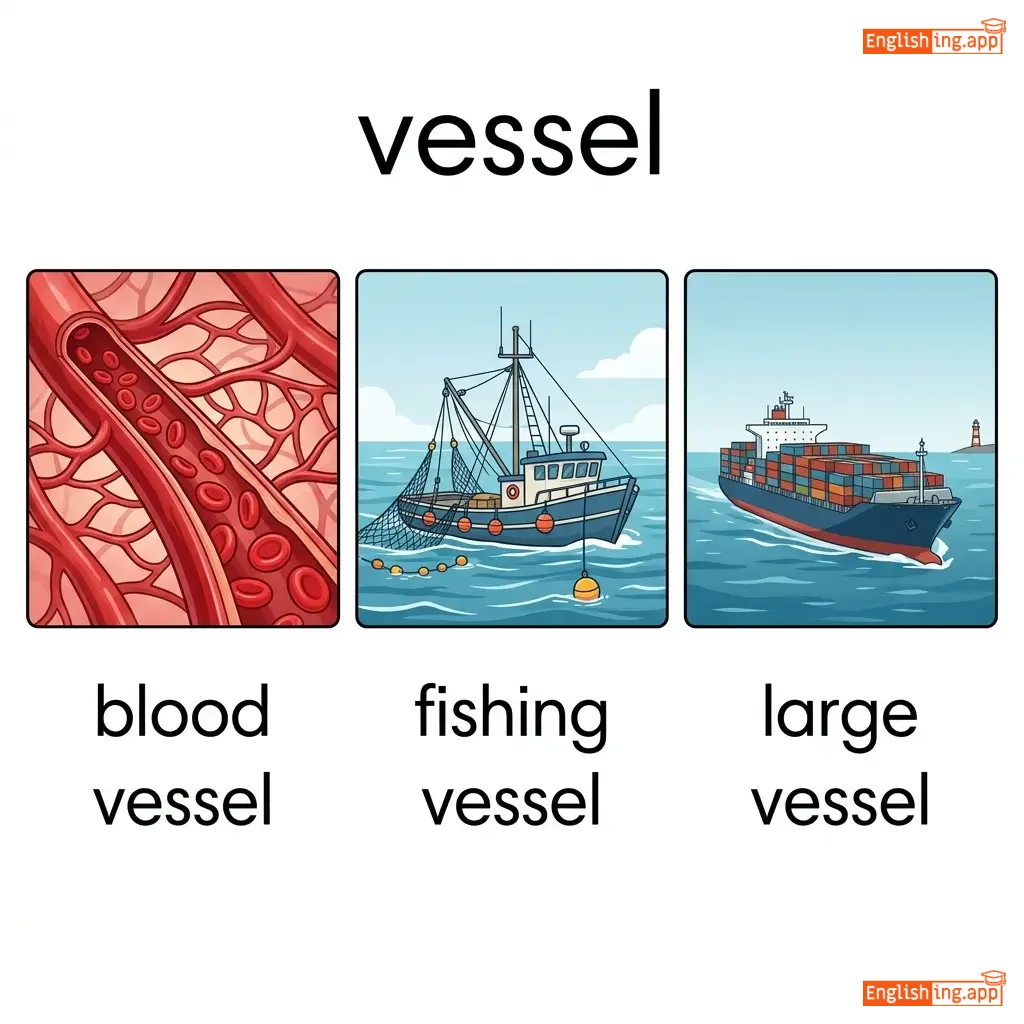
#0
🚢
|
/ˈvɛsəl/
noun
(vessel)
••••••
|
|
船只 / 容器
chuánzhī / róngqì
••••••
|
- •••••• | - •••••• | - •••••• | - •••••• |
A ship or large boat; also a container for holding liquids or a tube in the body that carries blood.
••••••
|
The fishing vessel returned safely to the harbor. |
渔船安全地返回港口。
Yú chuán ānquán de fǎnhuí gǎngkǒu.
••••••
|
blood vessel |
A tubular structure in the body that carries blood.
••••••
|
血管
xiěguǎn
••••••
|
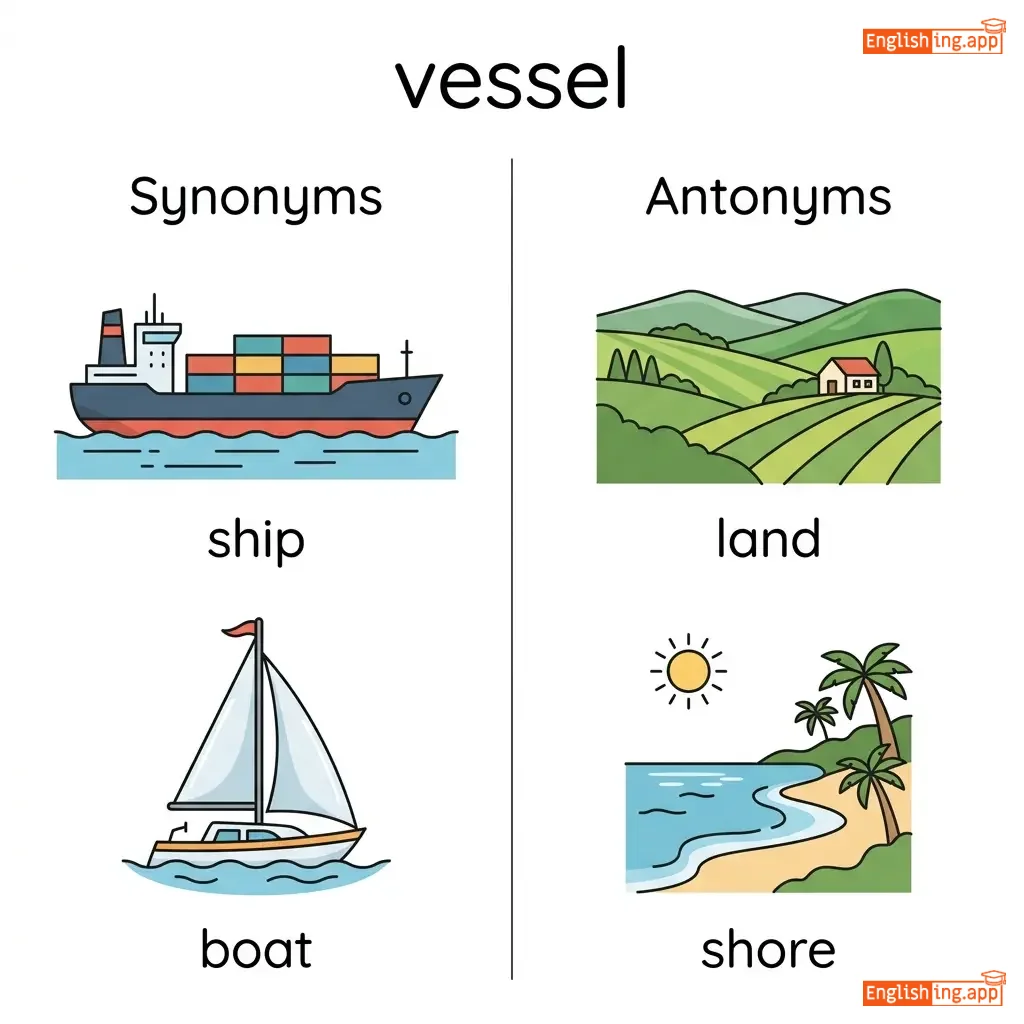
ship, boat, craft, container, receptacle
••••••
|
land, shore
••••••
|
blood vessel, fishing vessel, large vessel, sea vessel
••••••
|
Vessel 就像 🚢 船只或身体中的血管,想象船和血液!
••••••
|
|
#0
👁️
|
/ˈvɪərər/
noun
(维尤尔)
••••••
|
- •••••• |
观众
guānzhòng
••••••
|
- •••••• | - •••••• | - •••••• | - •••••• |
a person who watches something, especially television or video content
••••••
|
The viewer is able to switch channels with the remote control. |
观众可以使用遥控器切换频道。
Guānzhòng kěyǐ shǐyòng yáokòngqì qiēhuàn píndào.
••••••
|
- •••••• | - •••••• | - •••••• |
observer, watcher, spectator, audience
••••••
|
participant, actor
••••••
|
TV viewer, movie viewer, loyal viewer, viewer discretion
••••••
|
观众在看电视 (Guānzhòng zài kàn diànshì)
••••••
|
|
#0
🌟
|
/ˈvɜːrtʃuː/
noun
(féiērchū)
••••••
|
- •••••• |
美德
meidé
••••••
|
- •••••• | - •••••• | - •••••• | - •••••• |
High moral standards or a good quality considered morally good.
••••••
|
Patience is considered a great virtue. |
耐心被认为是一种伟大的美德。
Nàixīn bèi rènwéi shì yī zhǒng wěidà de měidé.
••••••
|
by virtue of |
because of; as a result of
••••••
|
凭借
píngjiè
••••••
|
morality, goodness, integrity, righteousness
••••••
|
vice, immorality, corruption
••••••
|
cardinal virtue, moral virtue, virtue of patience
••••••
|
美德 (meidé) 就是 virtue,在中文中也意味着良好的品质。
••••••
|
|
#0
🔊
|
/ˈvɒl.juːm/
noun
(vó lù mǔ)
••••••
|
- •••••• |
体积
tǐ jī
••••••
|
- •••••• | - •••••• | - •••••• | - •••••• |
the amount of space that a substance or object occupies, or that is enclosed within a container
••••••
|
The volume of water in the tank increased after the rain. |
雨后水箱中的体积增加了。
Yǔ hòu shuǐ xiāng zhōng de tǐ jī zēng jiā le.
••••••
|
- •••••• | - •••••• | - •••••• |
amount, quantity, size, magnitude
••••••
|
smallness, limitation
••••••
|
high volume, volume control, sound volume, large volume
••••••
|
体积,就像测量水箱中的水。
••••••
|
|
#0
🗳️
|
/ˈvoʊtɪŋ/
noun
(投票)
••••••
|
- •••••• |
投票
toupiao
••••••
|
- •••••• | - •••••• | - •••••• |
voting
投票
••••••
|
the act of making a choice in an election or decision by casting a vote
••••••
|
Voting is an important part of a democratic society.
投票是民主社会的重要组成部分。
••••••
|
投票是民主社会的重要组成部分。
Toupiao shi minzhu shehui de zhongyao zuzhi bufen.
••••••
|
voting rights
投票权
••••••
|
the legal rights to participate in elections by voting
••••••
|
投票权
toupiaoquan
••••••
|
balloting, election, poll, suffrage
••••••
|
abstaining, disenfranchisement
••••••
|
voting rights, voting system, voting booth, voting process
••••••
|
投票,投出未来的声音!
••••••
|
|
#0
🚶
|
/ˈwɒndər/
verb
(wāndé)
••••••
|
|
徘徊
páihuái
••••••
|
wandered
wāndèrd
••••••
|
wandered
wāndèrd
••••••
|
wanders
wāndéres
••••••
|
wandering
wāndèring
••••••
|
to move around aimlessly or without a fixed course
••••••
|
She loves to wander through the old streets of the city.
她喜欢在城市的老街上漫步。
••••••
|
她喜欢在城市的老街上漫步。
Tā xǐhuān zài chéngshì de lǎo jiē shàng mànbù.
••••••
|
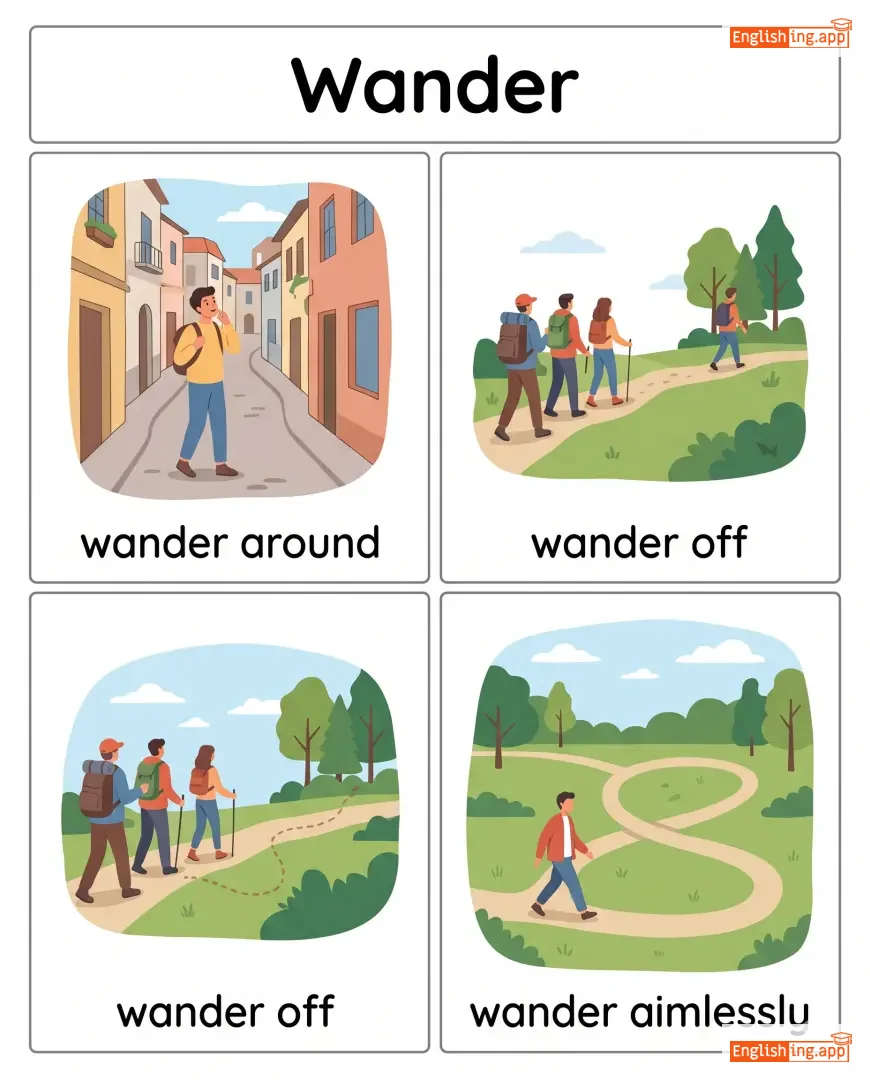
wander off
走远
••••••
|
to leave a place or group without telling anyone
••••••
|
走开
zǒu kāi
••••••
|
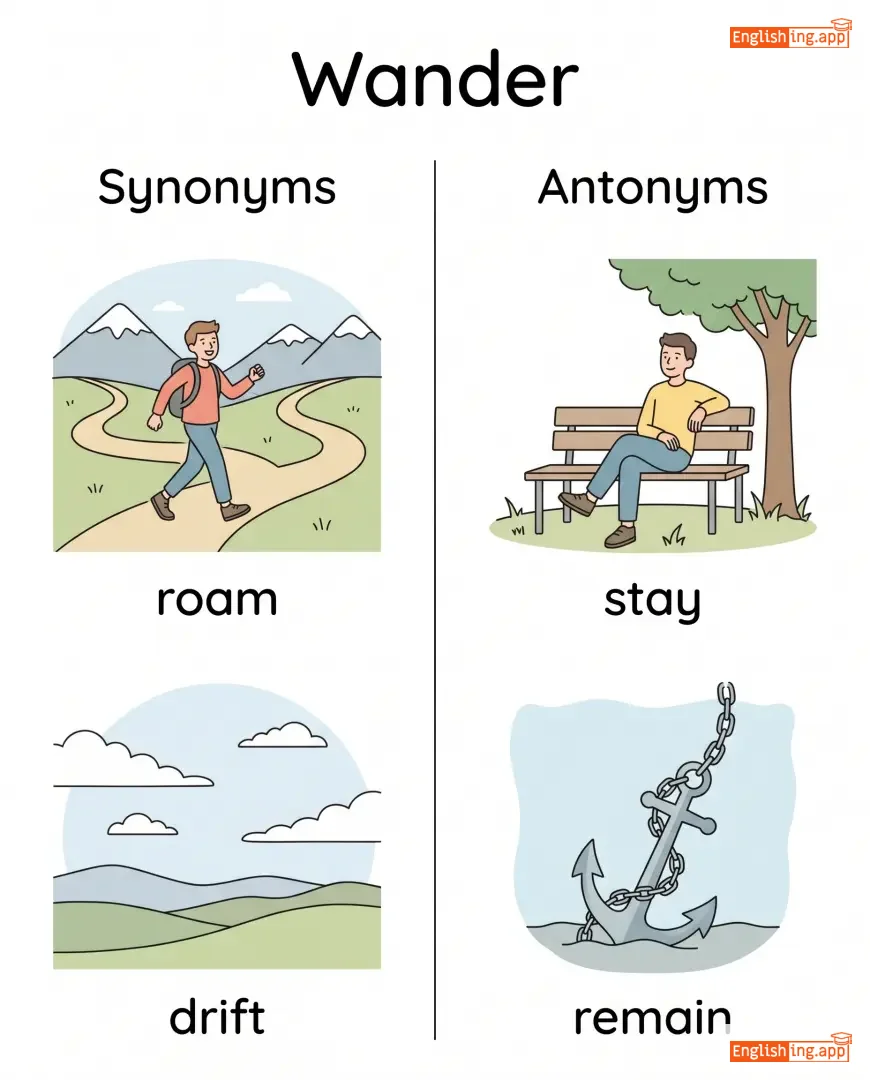
roam, drift, meander, stray, stroll
••••••
|
stay, remain, settle
••••••
|
wander around, wander off, wander aimlessly, wander through
••••••
|
Wander意味着徘徊,就像window shopping一样。
••••••
|
|
#0
☀️
|
/wɔːmθ/
noun
(wɔːmθ)
••••••
|
- •••••• |
温暖
wēnnuǎn
••••••
|
- •••••• | - •••••• | - •••••• | - •••••• |
the quality or state of being warm in temperature or feeling
••••••
|
She felt the warmth of the sun on her face.
她感受到了阳光照在脸上的温暖。
••••••
|
她感受到了阳光照在脸上的温暖。
Tā gǎnshòu dào le yángguāng zhào zài liǎn shàng de wēnnuǎn.
••••••
|
warmth of heart
内心的温暖
••••••
|
kindness and affection
••••••
|
内心的温暖
nèi xīn de wēn nuǎn
••••••
|
heat, coziness, affection, kindness, friendliness
••••••
|
coldness, chill, indifference
••••••
|
emotional warmth, inner warmth, warmth and love, warmth of the sun
••••••
|
Warmth意味着温暖 — ‘warm th’不仅仅是温度,还是内心的温暖与爱。
••••••
|
|
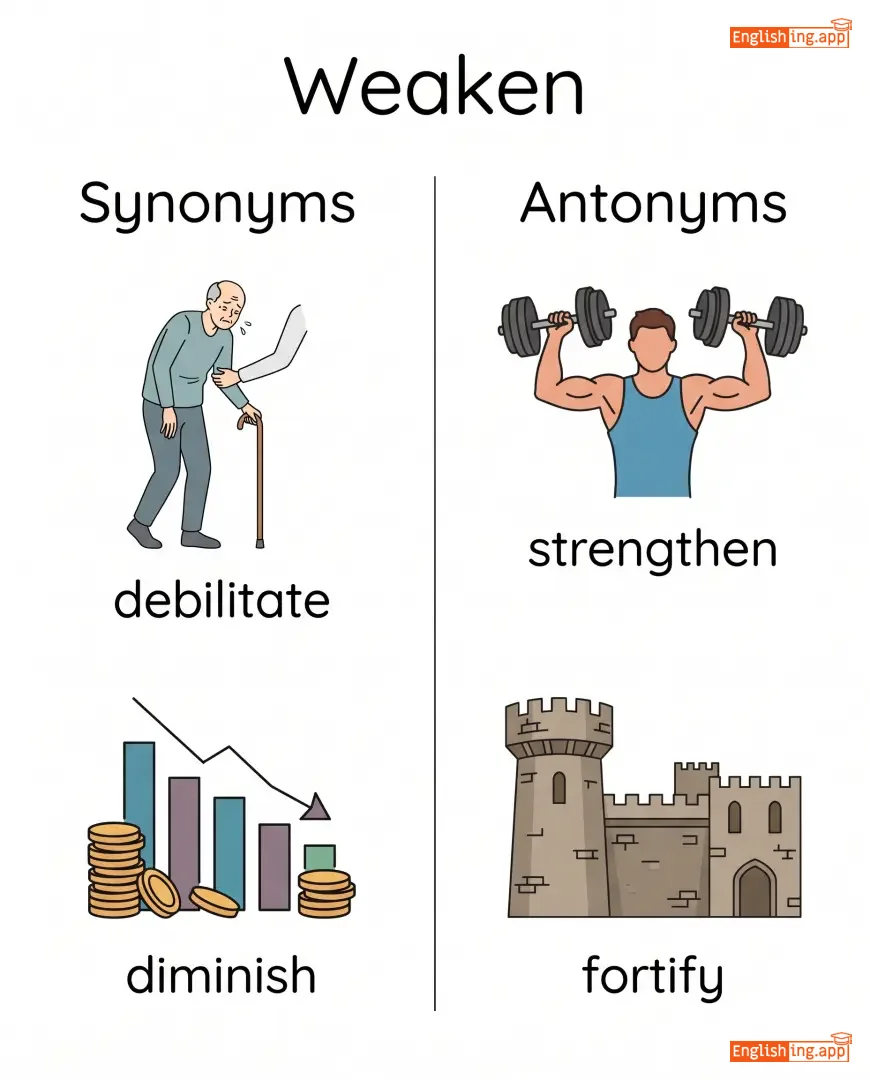
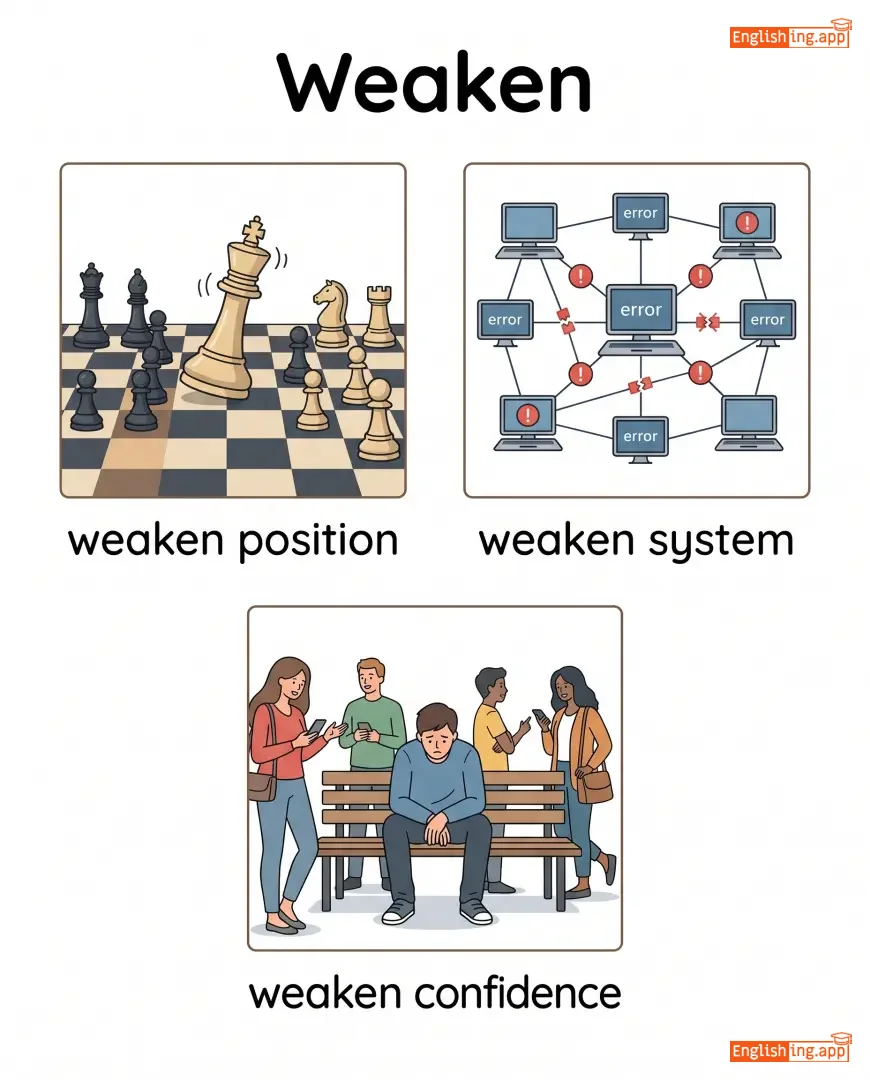
#0
💤
|
/ˈwiːkən/
verb
(wīken)
••••••
|
|
削弱
xuēruò
••••••
|
weakened
wīkend
••••••
|
weakened
wīkend
••••••
|
weakens
wīkens
••••••
|
weakening
wīkening
••••••
|
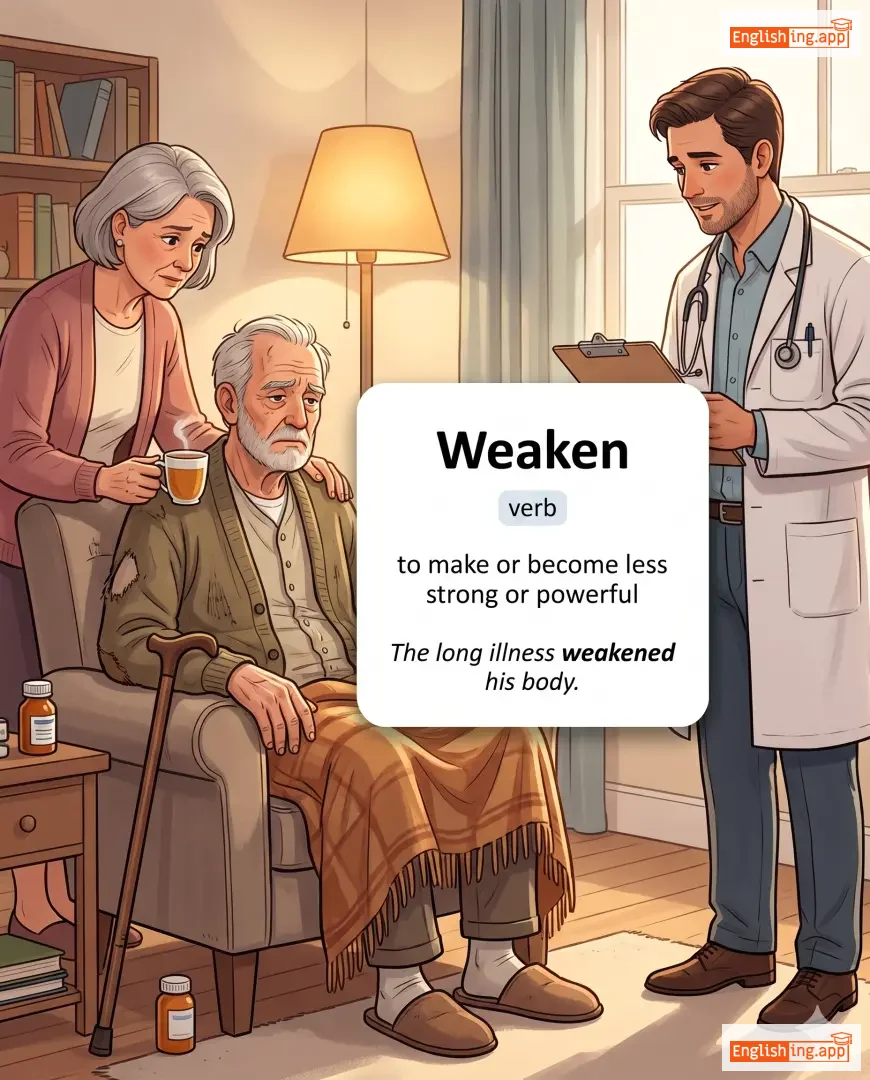
to make or become less strong or powerful
••••••
|
The long illness weakened his body.
De long illness wīkend his body.
••••••
|
长期的病痛削弱了他的身体。
Chángqī de bìngtòng xuēruòle tā de shēntǐ.
••••••
|
weaken someone's resolve
wīken someone's resolve
••••••
|
to make someone less determined or confident
••••••
|
削弱某人的决心
xuēruò mǒu rén de juéxīn
••••••
|
debilitate, diminish, reduce, impair, lessen
••••••
|
strengthen, fortify, empower
••••••
|
weaken position, weaken system, weaken confidence, weaken economy
••••••
|
Weaken意思是削弱,就像疾病使你变弱。
••••••
|
|
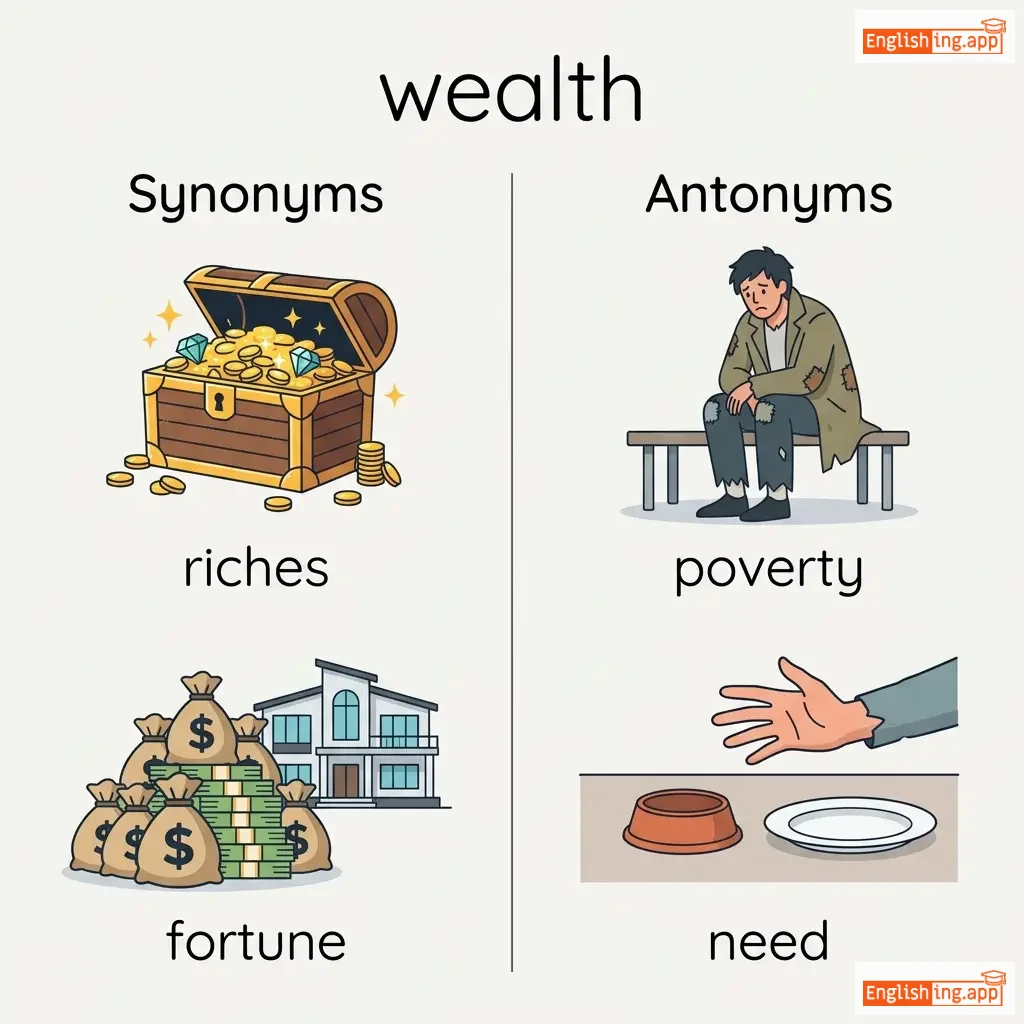
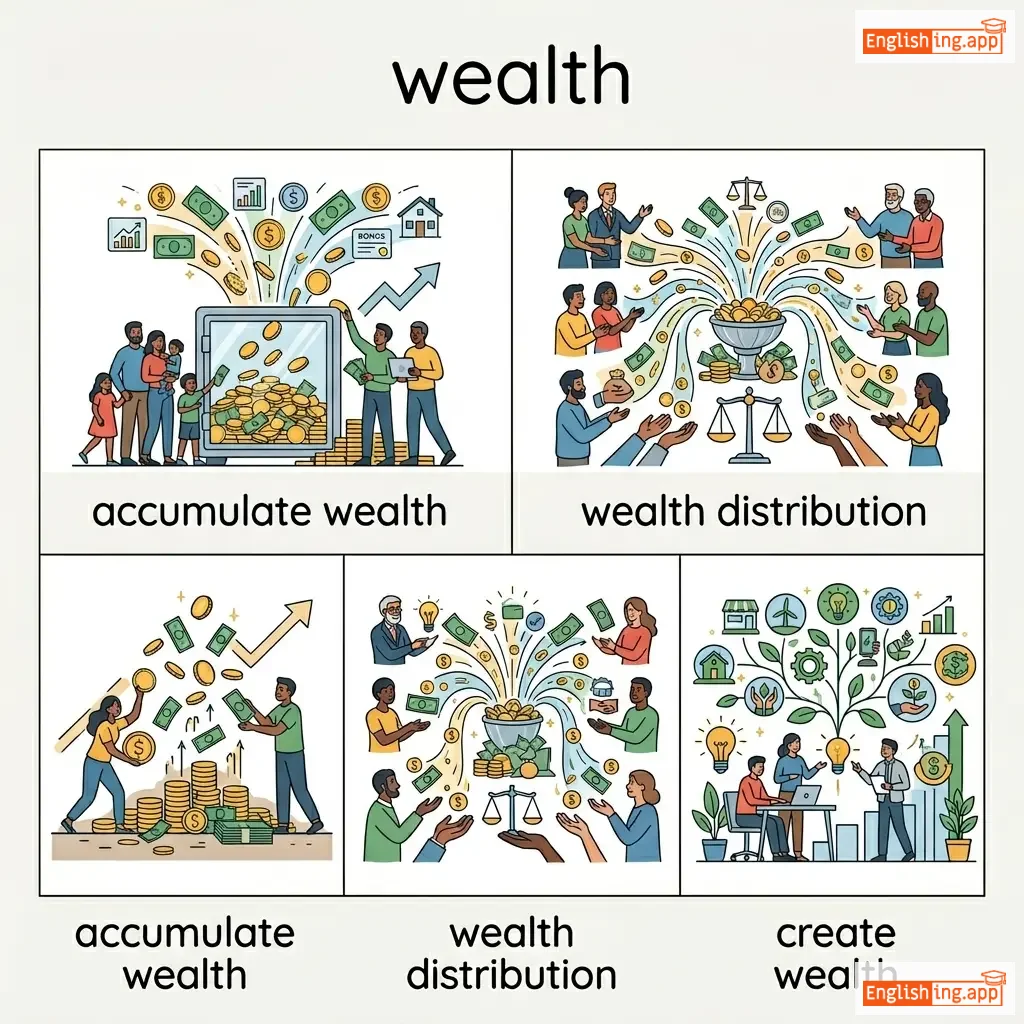
#0
💰
|
/wɛlθ/
noun
(wɛlθ)
••••••
|
|
财富
caifu
••••••
|
- •••••• | - •••••• | - •••••• | - •••••• |
an abundance of valuable possessions or money; prosperity
••••••
|
The businessman built his wealth through hard work and smart investments. |
商人通过努力工作和聪明的投资积累了他的财富。
Shāngrén tōngguò nǔlì gōngzuò hé cōngmíng de tóuzī jīlěi le tā de cáifù.
••••••
|
wealth of experience |
a large amount of knowledge or skill gained through practice or time
••••••
|
经验的财富
jīngyàn de cáifù
••••••
|
riches, fortune, prosperity, affluence
••••••
|
poverty, need, scarcity
••••••
|
accumulate wealth, wealth distribution, create wealth, family wealth
••••••
|
WEALTH意味着'财富' - 'We Earn And Live Through Hardwork' 💰
••••••
|
|
#0
🗡️
|
/ˈwep.ən/
noun
(wéipén)
••••••
|
- •••••• |
武器
wǔqì
••••••
|
- •••••• | - •••••• | - •••••• | - •••••• |
a thing designed or used for inflicting bodily harm or physical damage
••••••
|
The police found a dangerous weapon at the crime scene.
警方在犯罪现场找到了危险的武器。
••••••
|
警方在犯罪现场找到了危险的武器。
Jǐngfāng zài fànzuì xiànchǎng zhǎodào le wéixiǎn de wǔqì.
••••••
|
- •••••• | - •••••• | - •••••• |
arm, armament, firearm, tool of violence
••••••
|
shield, protection, defense, peace
••••••
|
deadly weapon, nuclear weapon, weapon of mass destruction, concealed weapon
••••••
|
武器是用来防守或者攻击的物品,可以用来保护自己或者伤害别人。
••••••
|
|
#0
📅
|
/ˈwiːkli/
adverb
(威克利)
••••••
|
- •••••• |
每周
mei zhou
••••••
|
- •••••• | - •••••• | - •••••• | - •••••• |
happening or done once every week; every week
••••••
|
I visit my grandmother weekly on Sundays.
我每个周日都去看望我的祖母。
••••••
|
我每个周日都去看望我的祖母。
Wo mei ge zhou ri dou qu kan wang wo de zumu
••••••
|
- •••••• | - •••••• | - •••••• |
every week, once a week, hebdomadally
••••••
|
daily, monthly, annually
••••••
|
weekly meeting, weekly report, weekly basis
••••••
|
Weekly = 每周, 想象一个时钟写着 WEekLY, 周日去看望 Grandma 的画面帮助记住每周的意思
••••••
|
Vocabulary Quiz
Test your vocabulary by matching words with their translations or meanings.
Login to take the quiz
Comments (0)
Share your thoughts and join the discussion.
Join the discussion by logging in
Login to CommentNo comments yet
Be the first to share your thoughts!