

团结分裂小镇的餐厅老板
The Restaurant Owner Who United a Divided Town
萨尔玛是一位有抱负的餐厅老板,她 could 带来改变。她的小镇被分裂——两个社区经常因琐事 clashed。萨尔玛的餐厅 catered 所有人,不分歧视。她会在蔬菜上 carved 出漂亮的图案——这项技巧让顾客印象深刻。餐厅的 debut 是在婚礼季节,当地一位 bride 订了餐饮服务。一些人试图 cheat,散布有关食物质量的谣言。但萨尔玛保持诚实。一群 bunch 青少年经常惹麻烦,但萨尔玛给了他们工作。生意成功并不容易——财务压力有时试图 crush 她的梦想。其他餐馆的竞争很激烈——几乎每条街的 curve 上都有另一家餐馆。有一天,两伙人之间在餐厅附近发生了 clash。萨尔玛迅速介入——她的 civil 态度让大家冷静下来。她不容忍 crude 的语言或行为。那些对他人 cruel 的人被请离开。一个有趣的时刻是,一位餐厅 clerk 不小心滑倒,蛋糕掉在某人的 cheek 上。大家都笑了——紧张气氛消失了。本地的 choir 在餐厅周年庆上表演。萨尔玛证明了食物能让人团结。一些人认为社区仇恨就像一个 demon——无法战胜。但萨尔玛没有放弃。她不需要去 chase 成功——它通过良好的服务自然到来。一位当地的 comic 在餐厅表演,带来了欢笑。萨尔玛的态度在压力下没有 cracked。餐厅成为一个中立的地方,前敌人们可以一起用餐 could。萨尔玛证明,小小的善意可以治愈深刻的分裂。
Swipe left or right, or use the buttons. Tap image to zoom.
例句翻译
单词
The Restaurant Owner Who United a Divided TownThe Restaurant Owner Who United a Divided Town - 遮罩切换
|
表情符号
|
单词 | Images | 翻译 | 过去时 | 过去分词 | 第三人称单数 | 动名词 | 含义 | 例句 | 例句翻译 | 示例表达 | 示例表达含义 | 示例表达翻译 | 同义词 | 反义词 | 搭配词 | 助记符 |
|---|---|---|---|---|---|---|---|---|---|---|---|---|---|---|---|---|---|
|
#0
👰
|
/braɪd/
noun
(buraid)
••••••
|
- •••••• |
新娘
xīnniáng
••••••
|
- •••••• | - •••••• | - •••••• | - •••••• |
a woman on her wedding day or just before and after the event
••••••
|
The bride looked stunning in her white dress.
新娘在她的白色婚纱里看起来很迷人。
••••••
|
新娘在她的白色婚纱里看起来很迷人。
Xīnniáng zài tā de báisè hūnshā lǐ kàn qǐlái hěn mírén.
••••••
|
blushing bride
害羞的新娘
••••••
|
a traditional phrase describing a happy or shy bride on her wedding day
••••••
|
害羞的新娘
hàixiū de xīnniáng
••••••
|
wife, newlywed, spouse, consort, partner
••••••
|
groom, bachelor
••••••
|
beautiful bride, bride and groom, blushing bride, the bride's family
••••••
|
Bride 就是新娘 — bride 是婚礼上最美的新娘!
••••••
|
|
#0
🌸
|
/bʌntʃ/
noun
(bànchī)
••••••
|
- •••••• |
一束
yī shù
••••••
|
- •••••• | - •••••• | - •••••• | - •••••• |
a group of things that are fastened, held, or growing together
••••••
|
She gave me a bunch of flowers for my birthday. |
她给了我一束花作为我的生日礼物。
Tā gěi le wǒ yī shù huā zuòwéi wǒ de shēngrì lǐwù.
••••••
|
a bunch of |
a large quantity of something
••••••
|
一束
yī shù
••••••
|
bundle, cluster, group, collection, pack
••••••
|
individual, single, one
••••••
|
a bunch of flowers, a bunch of grapes, a bunch of keys, whole bunch
••••••
|
Bunch意思是束 - 就像我生日时收到的花束一样。
••••••
|
|
#0
🔪
|
/kɑːrv/
verb
••••••
|
- •••••• | - •••••• |
carved
••••••
|
carved
••••••
|
carves
••••••
|
carving
••••••
|
To cut or shape something, especially wood or stone, into a desired form.
••••••
|
The artist carved a beautiful statue out of marble. |
- •••••• |
carve out a niche |
to create a special and secure position for oneself in a particular area
••••••
|
- •••••• |
engrave, sculpt, chisel, etch, shape
••••••
|
destroy, demolish, flatten
••••••
|
carve wood, carve stone, carve a statue, carve out
••••••
|
No •••••• |
|
#0
🍽️
|
/ˈkeɪtər/
verb
••••••
|
- •••••• | - •••••• |
catered
••••••
|
catered
••••••
|
caters
••••••
|
catering
••••••
|
To provide food, drinks, or services, usually for an event or group.
••••••
|
The company catered the wedding reception. |
- •••••• |
cater to |
To provide what is wanted or needed by someone, often excessively.
••••••
|
- •••••• |
provide, supply, serve, furnish, deliver
••••••
|
neglect, ignore
••••••
|
cater for, cater to needs, catering services, cater events
••••••
|
No •••••• |
|
#0
🏃♂️
|
/tʃeɪs/
verb
(chèisī)
••••••
|
|
追赶
zhuīgǎn
••••••
|
chased
chèisīde
••••••
|
chased
chèisīde
••••••
|
chases
chèisī
••••••
|
chasing
chèisīng
••••••
|
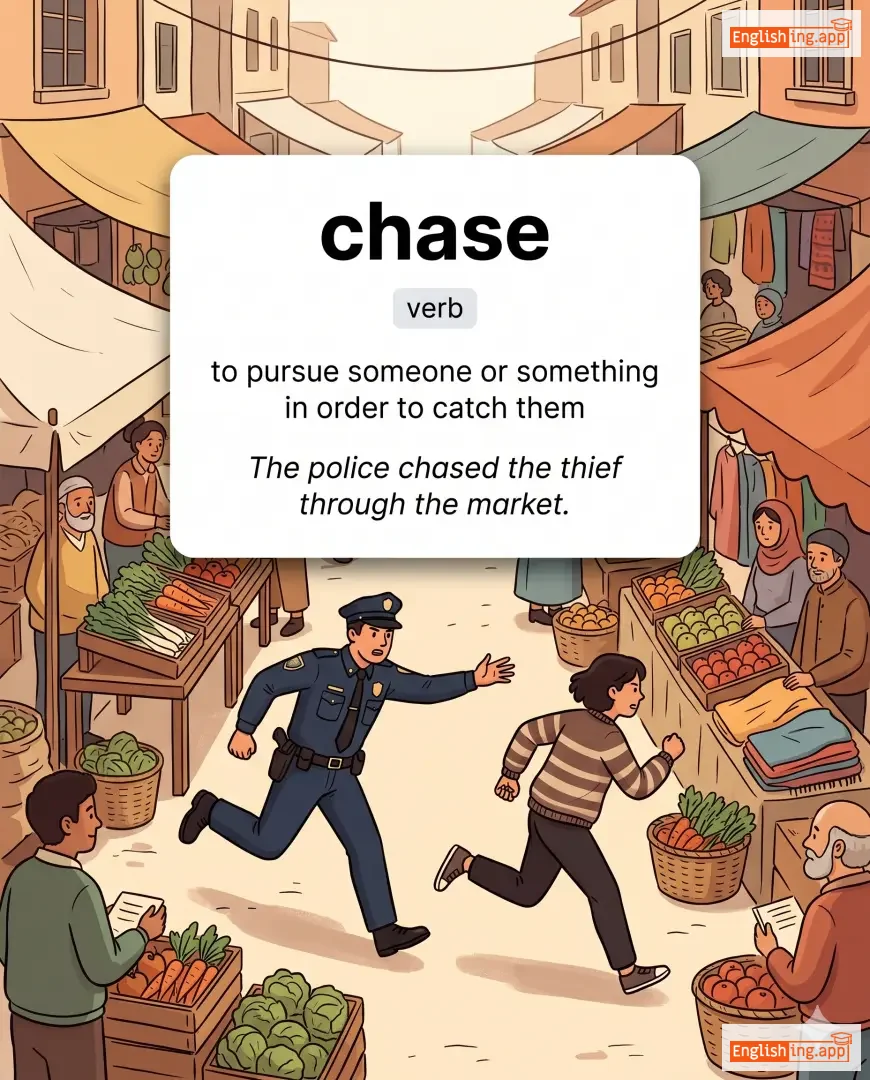
to pursue someone or something in order to catch them
••••••
|
The police chased the thief through the market.
警察在市场上追赶小偷。
••••••
|
警察在市场上追赶小偷。
Jǐngchá zài shìchǎng shàng zhuīgǎn xiǎotōu.
••••••
|
chase rainbows
追逐彩虹
••••••
|
to pursue unrealistic goals
••••••
|
追逐彩虹
zhuīzhú cǎihóng
••••••
|
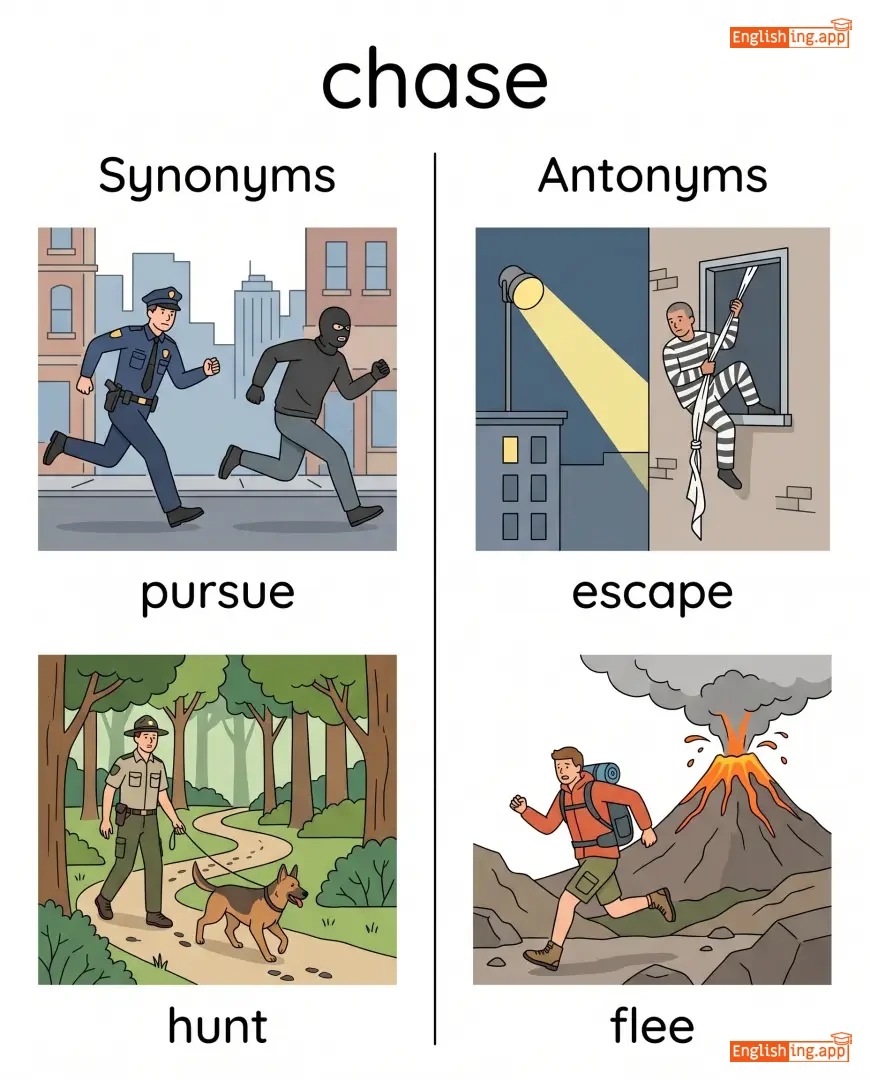
pursue, hunt, follow, track, run after
••••••
|
escape, flee, avoid
••••••
|
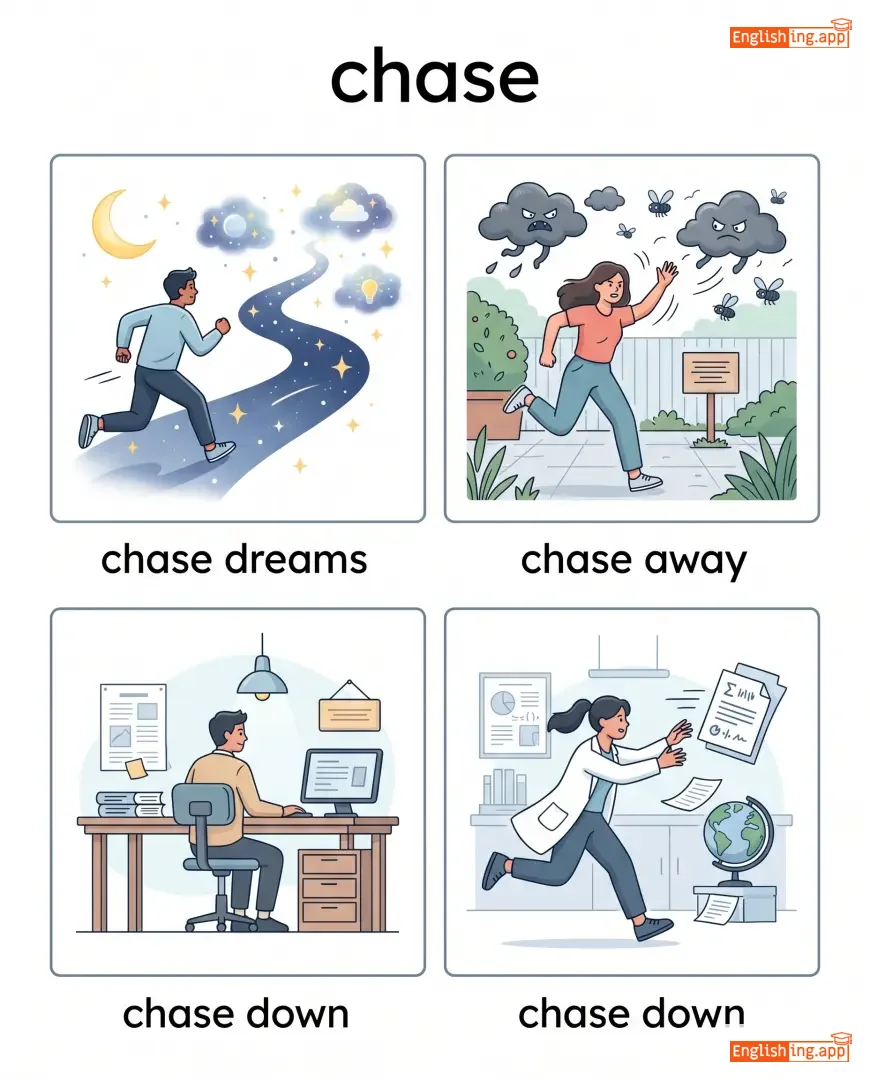
chase dreams, chase away, chase down, chase after
••••••
|
Chase 的意思是追赶,像孩子们在游戏中追逐一样。
••••••
|
|
#0
🤥
|
/tʃiːt/
verb
(hǎipīnèisī)
••••••
|
|
幸福
xìngfú
••••••
|
cheated
••••••
|
cheated
••••••
|
cheats
••••••
|
cheating
••••••
|
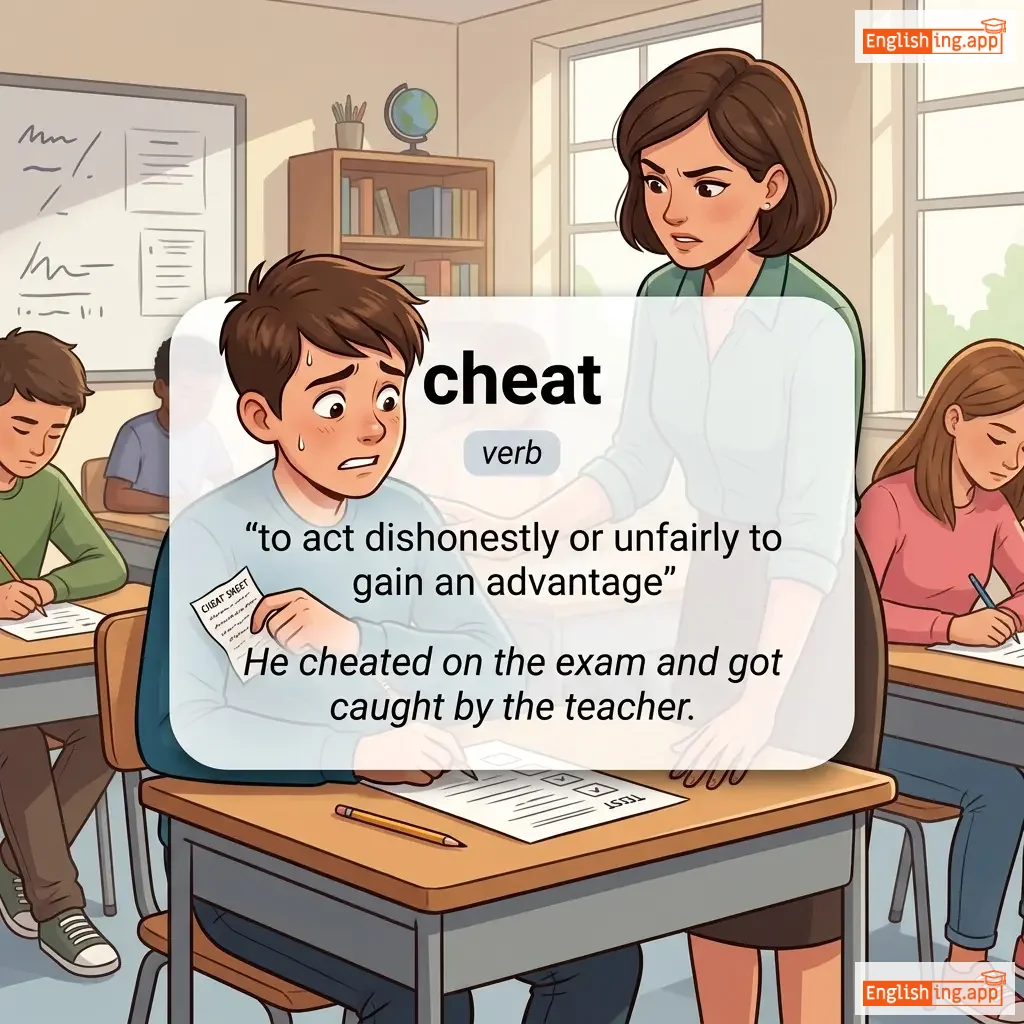
to act dishonestly or unfairly to gain an advantage
••••••
|
He cheated on the exam and got caught by the teacher. |
她在收到奖项时,无法掩饰自己的幸福。
Tā zài shōudào jiǎngxiàng shí, wúfǎ yǎnshì zìjǐ de xìngfú.
••••••
|
cheat death |
to narrowly escape death
••••••
|
追求幸福
zhuīqiú xìngfú
••••••
|
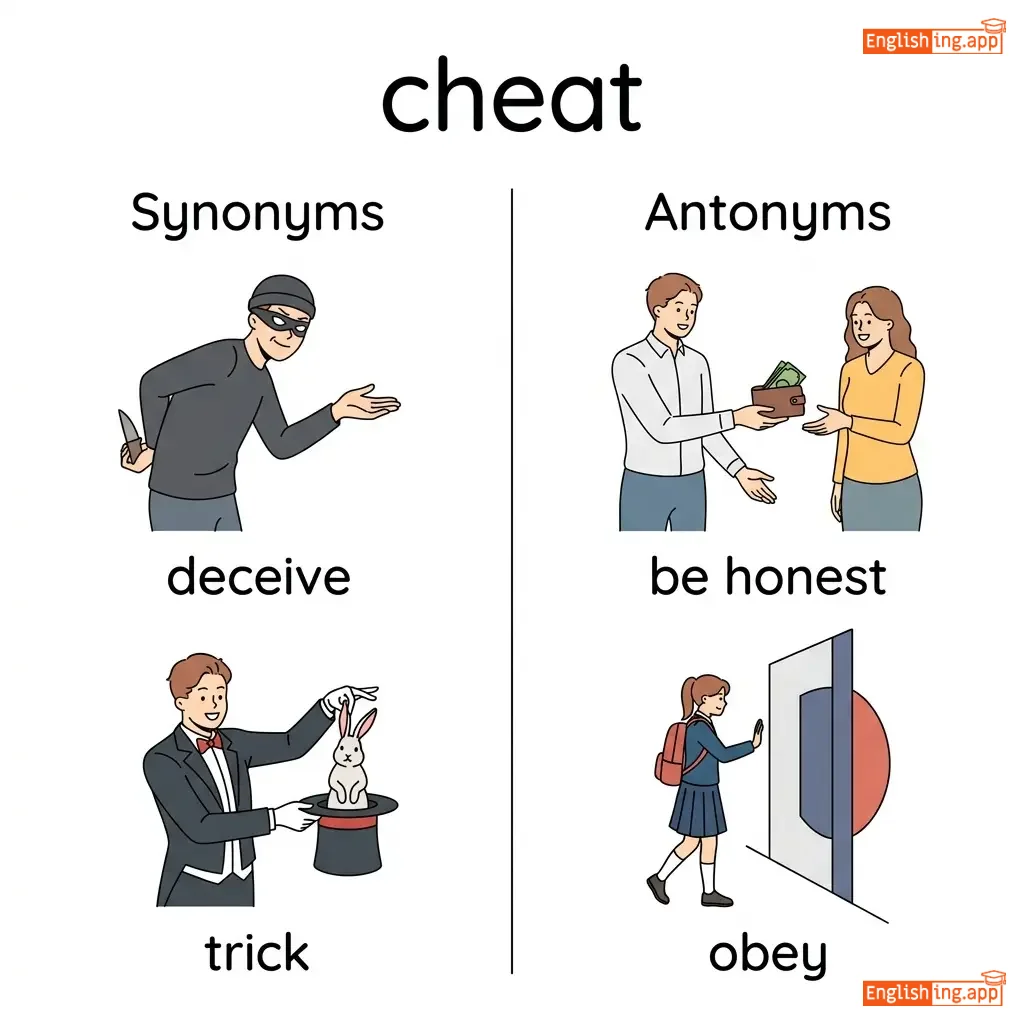
deceive, trick, defraud, mislead, con
••••••
|
be honest, obey
••••••
|
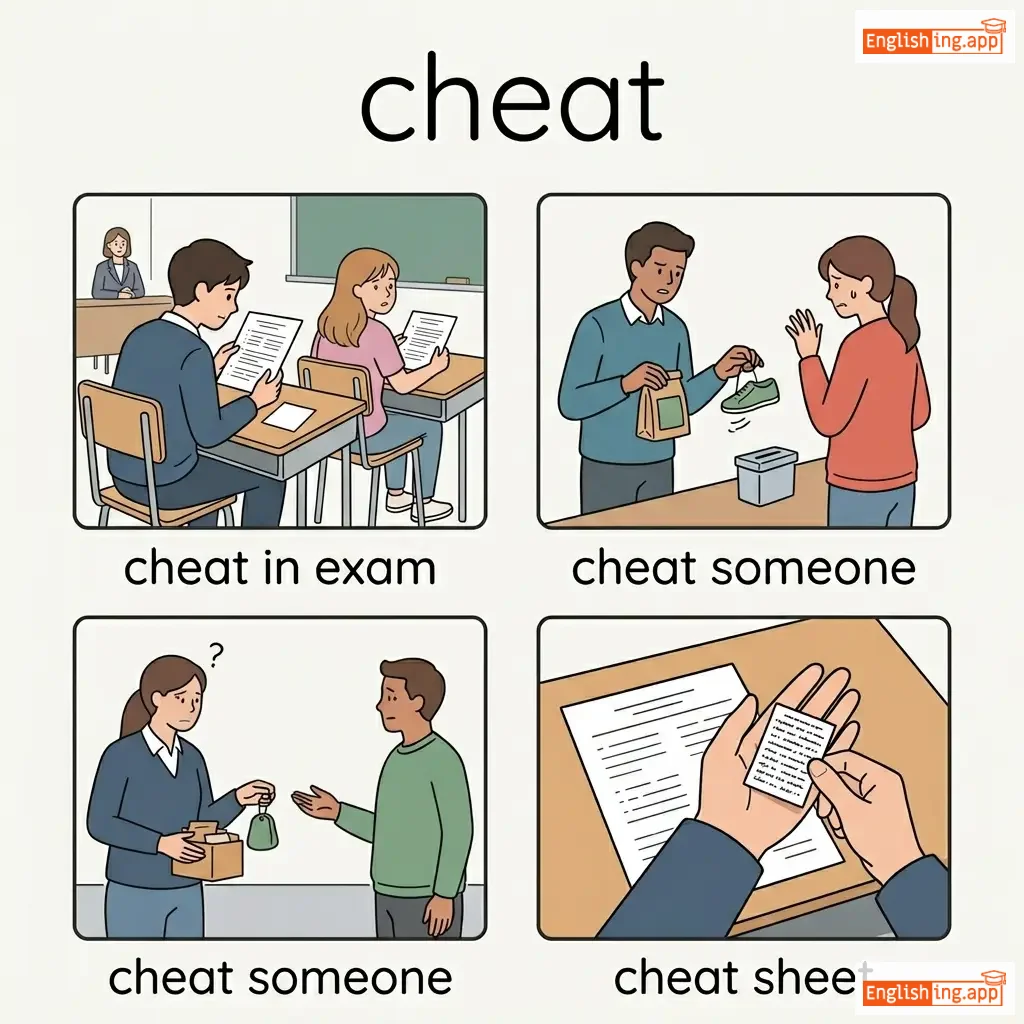
cheat in exam, cheat someone, cheat sheet, cheat code
••••••
|
幸福是走向美好生活的道路。
••••••
|
|
#0
😊
|
/tʃiːk/
noun
(chīk)
••••••
|
- •••••• |
脸颊
lianjia
••••••
|
- •••••• | - •••••• | - •••••• | - •••••• |
either side of the face below the eye; impudent boldness
••••••
|
She kissed him on the cheek. |
她亲吻了他的脸颊。
Tā qīnwěnle tā de liǎnjiá.
••••••
|
turn the other cheek |
to respond to an insult without retaliation
••••••
|
转过另一边脸颊
zhuǎn guò lìng yī biān liǎnjiá
••••••
|
face, boldness, nerve, audacity
••••••
|
politeness, humility
••••••
|
rosy cheek, kiss on cheek, slap on cheek, chubby cheeks
••••••
|
Cheek意味着脸颊 – 淘气的孩子总是亲吻脸颊
••••••
|
|
#0
🎶
|
/ˈkwaɪər/
noun
(kuái'ěr)
••••••
|
- •••••• |
合唱团
hechangtuan
••••••
|
- •••••• | - •••••• | - •••••• | - •••••• |
An organized group of singers, typically performing in church services or concerts.
••••••
|
The choir sang beautifully during the ceremony. |
合唱团在仪式中唱得非常美丽。
Hechangtuan zai yishi zhong chang de feichang meili.
••••••
|
angelic choir |
A choir whose singing is compared to the sound of angels.
••••••
|
天使合唱团
Tianshi hechangtuan
••••••
|
chorus, ensemble, singers, vocal group
••••••
|
solo, silence
••••••
|
church choir, school choir, join a choir, choir practice
••••••
|
Choir是指合唱团,就像教堂里的合唱团,大家一起唱歌。
••••••
|
|
#0
🤝
|
/ˈsɪvəl/
adjective
(sīwēi'ěr)
••••••
|
- •••••• |
公民的
gongmin de
••••••
|
- •••••• | - •••••• | - •••••• | - •••••• |
Relating to ordinary citizens and their concerns, or being polite and courteous.
••••••
|
They settled the matter through civil discussion. |
他们通过公民的讨论解决了这个问题。
Tāmen tōngguò gōngmín de tǎolùn jiějuéle zhège wèntí.
••••••
|
civil war |
a war between groups within the same country
••••••
|
内战
nèi zhàn
••••••
|
polite, courteous, civilian, domestic, respectful
••••••
|
rude, military, uncivil
••••••
|
civil rights, civil society, civil service, civil war
••••••
|
Civil意味着有礼,像公民 = 有礼的人
••••••
|
|
#0
💥
|
/klæʃ/
verb
(klæʃ)
••••••
|
- •••••• |
碰撞
pengzhuang
••••••
|
clashed
klæʃd
••••••
|
clashed
klæʃd
••••••
|
clashes
klæʃɪz
••••••
|
clashing
klæʃɪŋ
••••••
|
to come into conflict or collision with something or someone.
••••••
|
The two cars clashed in the intersection.
两辆车在交叉路口发生了碰撞。
••••••
|
两辆车在交叉路口发生了碰撞。
Liang liang che zai jiaochalu kou fasheng le pengzhuang.
••••••
|
- •••••• | - •••••• | - •••••• |
collide, confront, clash, conflict
••••••
|
reconcile, cooperate, agree
••••••
|
clash of interests, cultural clash, clash of opinions
••••••
|
Clash sounds like crash—就像两辆车发生碰撞
••••••
|
|
#0
🗂️
|
/klɑːrk/
noun
(克莱克)
••••••
|
- •••••• |
职员
zhiyuan
••••••
|
- •••••• | - •••••• | - •••••• | - •••••• |
A person employed in an office or bank to keep records, accounts, and undertake other routine administrative duties.
••••••
|
The clerk helped me find the correct form. |
职员帮助我找到了正确的表格。
Zhiyuan bangzhu wo zhaodao le zhengque de biaoge.
••••••
|
- •••••• | - •••••• | - •••••• |
assistant, cashier, teller, secretary, bookkeeper
••••••
|
manager, employer
••••••
|
office clerk, bank clerk, sales clerk, law clerk
••••••
|
职员是办公室里负责所有记录和文件的人员。
••••••
|
|
#0
😂
|
/ˈkɒmɪk/
adjective
(喜剧的)
••••••
|
- •••••• |
喜剧的
xǐjù de
••••••
|
- •••••• | - •••••• | - •••••• | - •••••• |
causing or meant to cause laughter
••••••
|
The movie had several comic scenes. |
这部电影有几个喜剧场景。
Zhè bù diànyǐng yǒu jǐ gè xǐjù chǎngjǐng.
••••••
|
comic relief |
a humorous break in a serious narrative
••••••
|
喜剧救援
xǐjù jiùyuán
••••••
|
funny, humorous, amusing, witty, entertaining
••••••
|
serious, tragic, solemn
••••••
|
comic book, comic strip, comic character, comic effect, comic scene
••••••
|
喜剧就是让你笑的东西
••••••
|
|
#0
🤔
|
/kʊd/
modal verb
(kud)
••••••
|
- •••••• |
可以
keyi
••••••
|
- •••••• | - •••••• | - •••••• | - •••••• |
Used to indicate possibility, ability, or permission in the past or as a polite suggestion.
••••••
|
He could swim when he was a child. |
他小时候可以游泳。
Tā xiǎoshíhòu kěyǐ yóuyǒng.
••••••
|
could not care less |
Used to express total lack of interest.
••••••
|
毫不在意
háo bù zàiyì
••••••
|
might, would, should, may
••••••
|
cannot, must not
••••••
|
could be, could have, could not, could possibly
••••••
|
Could 意味着可以 — 想象一下,如果你尝试了,你可以做 (keyi)。
••••••
|
|
#0
🪨
|
/kræk/
verb
(happiness)
••••••
|
- •••••• |
幸福
xìngfú
••••••
|
cracked
••••••
|
cracked
••••••
|
cracks
••••••
|
cracking
••••••
|
To break or cause to break without complete separation; to make a sharp sound.
••••••
|
The glass cracked when it was dropped on the floor. |
当她收到奖项时,她无法掩饰她的幸福。
Dāng tā shōu dào jiǎngxiàng shí, tā wúfǎ yǎnshì tā de xìngfú.
••••••
|
crack a joke |
To tell a joke.
••••••
|
追求幸福
zhuīqiú xìngfú
••••••
|
break, split, fracture, snap
••••••
|
fix, repair, mend
••••••
|
crack open, crack down, crack a smile, crack the code
••••••
|
幸福 = xìngfú, 当你觉得幸福,想起这个词!
••••••
|
|
#0
🛢️
|
/kruːd/
adjective
(kruːd)
••••••
|
- •••••• |
原油
yuányóu
••••••
|
- •••••• | - •••••• | - •••••• | - •••••• |
in a natural or raw state; not yet processed or refined
••••••
|
The crude oil is processed into fuel and chemicals. |
原油被加工成燃料和化学品。
Yuányóu bèi jiāgōng chéng ránliào hé huàxué pǐn.
••••••
|
- •••••• | - •••••• | - •••••• |
raw, unrefined, rough, unprocessed
••••••
|
refined, processed, pure
••••••
|
crude oil, crude nature, crude estimate
••••••
|
Crude 石油是原始的 - Crude oil is raw
••••••
|
|
#0
💔
|
/ˈkruːəl/
adjective
(克鲁尔)
••••••
|
- •••••• |
残忍
cánrěn
••••••
|
- •••••• | - •••••• | - •••••• | - •••••• |
Willfully causing pain or suffering to others, or feeling no concern about it.
••••••
|
It was cruel to make fun of the injured boy. |
嘲笑受伤的男孩是残忍的。
cháoxiào shòushāng de nán hái shì cánrěn de.
••••••
|
cruel and unusual punishment |
Punishment considered inhumane, degrading, or excessively harsh.
••••••
|
残忍和不寻常的惩罚
cánrěn hé bù xúncháng de chéngfá
••••••
|
harsh, brutal, unkind, ruthless, merciless
••••••
|
kind, gentle, compassionate
••••••
|
cruel joke, cruel act, cruel treatment, cruel world
••••••
|
Cruel 意味着残忍惩罚 – 残忍惩罚。
••••••
|
|
#0
💔
|
/krʌʃ/
verb
••••••
|
- •••••• | - •••••• |
crushed
••••••
|
crushed
••••••
|
crushes
••••••
|
crushing
••••••
|
to press or squeeze something so hard that it is damaged or destroyed
••••••
|
He accidentally crushed the paper cup in his hand. |
- •••••• |
have a crush on someone |
to have a romantic attraction toward someone
••••••
|
- •••••• |
squash, squeeze, compress, smash, flatten
••••••
|
build, repair, release
••••••
|
crush into pieces, crush under pressure, have a crush, crush completely
••••••
|
No •••••• |
|
#0
➰
|
/kɜːv/
noun
(kāo)
••••••
|
- •••••• |
曲线
quxian
••••••
|
- •••••• | - •••••• | - •••••• | - •••••• |
a smooth, continuous line that bends without angles
••••••
|
The road curved sharply to the left. |
道路急转弯向左。
daolu ji zhuanwan xiang zuo.
••••••
|
ahead of the curve |
to be more advanced or prepared than others
••••••
|
走在前沿
zou zai qianyan
••••••
|
bend, arc, twist, turn, loop
••••••
|
straight, line, flatness
••••••
|
sharp curve, gentle curve, curve line, curve ahead
••••••
|
曲线意味着弯曲 — 在路上,曲线意味着转弯
••••••
|
|
#0
🎤
|
/ˈdeɪ.bjuː/
noun, verb
(débyù)
••••••
|
- •••••• |
首演
shǒuyǎn
••••••
|
debuted
débyù
••••••
|
debuted
débyù
••••••
|
debuts
débyùs
••••••
|
debuting
débyùing
••••••
|
The first public appearance or performance of someone or something.
••••••
|
The young actor made his debut on the big stage.
年轻演员在大舞台上首次亮相。
••••••
|
年轻演员在大舞台上首次亮相。
Niánqīng yǎnyuán zài dà wǔtái shàng shǒucì liàngxiàng.
••••••
|
make a debut
首次亮相
••••••
|
To appear or perform publicly for the first time.
••••••
|
首次亮相
shǒucì liàngxiàng
••••••
|
first appearance, introduction, premiere, launch, entrance
••••••
|
retirement, farewell, exit
••••••
|
make debut, debut performance, debut album, debut match
••••••
|
Debut = ‘De + But’ – 第一场公开亮相。
••••••
|
|
#0
👹
|
/ˈdiːmən/
noun
(恶魔)
••••••
|
- •••••• |
恶魔
emó
••••••
|
- •••••• | - •••••• | - •••••• | - •••••• |
an evil spirit or devil
••••••
|
The story was about a demon who haunted the village.
这个故事是关于一个困扰村庄的恶魔。
••••••
|
这个故事是关于一个困扰村庄的恶魔。
Zhège gùshì shì guānyú yī gè kùnrǎo cūnzhuāng de èmó.
••••••
|
- •••••• | - •••••• | - •••••• |
devil, fiend, evil spirit, monster
••••••
|
angel, saint, good spirit
••••••
|
demon possession, demon spirit, evil demon
••••••
|
恶魔 sounds like 'Evil' - Evil spirit
••••••
|
Vocabulary Quiz
Test your vocabulary by matching words with their translations or meanings.
Login to take the quiz
Comments (0)
Share your thoughts and join the discussion.
Join the discussion by logging in
Login to CommentNo comments yet
Be the first to share your thoughts!