

冠军之路
The Championship Run
扎希德是一名有天赋的 四分卫,为他的大学队伍效力。他是一个著名的球员,表现出色。这个赛季,球队正在为赢得冠军而做准备。扎希德不断提升自己的技能,并在每一场比赛中都脱颖而出。他的连续胜利是荒谬的 - 他在五场比赛中打进了九个达阵。观众涌入体育场观看他,大家都在猜测他接下来的动作。然而,一个意外的巧合发生了 - 扎希德的一名队友被禁赛,球队的战术不得不根本改变。球队的发言人在新闻发布会上宣布他们将面对这个挑战。扎希德意识到,现在他必须承担更多的责任。对于对方队伍来说,扎希德的比赛风格是毁灭性的,因为他从不可预测。在半决赛中,他的表现如此出色,以至于评论员称他为传奇球员的未来继任者。教练教会了他如何与众不同。在冠军赛中,扎希德发挥出色,在最后一刻做出了制胜的达阵。观众疯狂庆祝,扎希德成了英雄。这场胜利不仅仅是赢得了一场比赛,而是辛勤工作和奉献的结果。扎希德的旅程证明了,即使有天赋,也需要不断练习。他那出色的赛季成为了大学体育历史的一部分。

Swipe left or right, or use the buttons. Tap image to zoom.
例句翻译
单词
The Championship RunThe Championship Run - 遮罩切换
|
表情符号
|
单词 | Images | 翻译 | 过去时 | 过去分词 | 第三人称单数 | 动名词 | 含义 | 例句 | 例句翻译 | 示例表达 | 示例表达含义 | 示例表达翻译 | 同义词 | 反义词 | 搭配词 | 助记符 |
|---|---|---|---|---|---|---|---|---|---|---|---|---|---|---|---|---|---|
|
#0
📢
|
/əˈnaʊnsmənt/
noun
(公告)
••••••
|
- •••••• |
公告
gonggao
••••••
|
- •••••• | - •••••• | - •••••• | - •••••• |
a public or formal statement giving information
••••••
|
The principal made an important announcement about the new schedule. |
校长关于新时间表做了一个重要的公告。
xiaozhang guanyu xin shijianbiao zuo le yi ge zhongyao de gonggao.
••••••
|
public announcement |
a formal declaration made to the general public
••••••
|
公共公告
gonggong gonggao
••••••
|
declaration, statement, proclamation, notice, notification
••••••
|
secret, silence, concealment
••••••
|
official announcement, public announcement, make an announcement, important announcement
••••••
|
公告 — 就像一个大喇叭告诉大家重要的消息!
••••••
|
|
#0
🏆
|
/ˈtʃæmpiənʃɪp/
noun
(championship)
••••••
|
- •••••• |
锦标赛
jinbiaosai
••••••
|
- •••••• | - •••••• | - •••••• | - •••••• |
a competition to decide who is the best in a particular sport or activity.
••••••
|
The championship will be held next month. |
锦标赛将在下个月举行。
jinbiaosai jiang zai xia ge yue juxing.
••••••
|
win the championship |
to become the victor of a major competition
••••••
|
赢得锦标赛
yingde jinbiaosai
••••••
|
tournament, contest, league, competition, cup
••••••
|
friendly match, practice
••••••
|
world championship, national championship, championship game, win championship
••••••
|
锦标赛就像是每个选手争夺冠军,最终会决出最好的选手。
••••••
|
|
#0
🎲
|
/koʊˈɪnsɪdəns/
noun
(kuò yīn sī dén sī)
••••••
|
- •••••• |
巧合
qiaohu
••••••
|
- •••••• | - •••••• | - •••••• | - •••••• |
A remarkable or surprising occurrence of events at the same time by chance.
••••••
|
It was pure coincidence that we met at the airport.
我们在机场相遇纯粹是偶然的。
••••••
|
我们在机场相遇纯粹是偶然的。
Wo men zai ji chang xiang yu chun tui shi ou ran de.
••••••
|
by coincidence
偶然地
••••••
|
happening by chance, not by planning
••••••
|
偶然地
ou ran de
••••••
|
chance, accident, serendipity, fluke, happenstance
••••••
|
intention, design, plan
••••••
|
strange coincidence, mere coincidence, pure coincidence, by coincidence
••••••
|
Coin 脑海中闪现巧合的场景
••••••
|
|
#0
🔢
|
/kənˈsɛkjʊtɪv/
adjective
(kənˈsɛkjʊtɪv)
••••••
|
- •••••• |
连续的
liánxù de
••••••
|
- •••••• | - •••••• | - •••••• | - •••••• |
following one after another without interruption
••••••
|
She won three consecutive matches. |
她赢得了三场连续的比赛。
Tā yíngdéle sān chǎng liánxù de bǐsài.
••••••
|
consecutive days |
days that come one after another in sequence
••••••
|
连续的日子
liánxù de rìzi
••••••
|
successive, sequential, continuous, uninterrupted, serial
••••••
|
sporadic, intermittent, irregular
••••••
|
consecutive days, consecutive years, consecutive matches, consecutive numbers
••••••
|
连续的日子一接一,像是比赛不间断的赢得
••••••
|
|
#0
🔄
|
/kənˈtɪnjuəli/
adverb
(持续地)
••••••
|
- •••••• |
持续地; 一再
chíxù de; yī zài
••••••
|
- •••••• | - •••••• | - •••••• | - •••••• |
without stopping; repeatedly
••••••
|
She continually checked her phone for messages.
她不断检查她的手机是否有新消息。
••••••
|
她不断检查她的手机是否有新消息。
Tā bùduàn jiǎnchá tā de shǒujī shìfǒu yǒu xīn xiāoxī.
••••••
|
- •••••• | - •••••• | - •••••• |
constantly, repeatedly, persistently, incessantly
••••••
|
occasionally, rarely, intermittently, sporadically
••••••
|
continually improving, continually evolving, continually changing
••••••
|
In Chinese, '持续' means 'continually', like your phone keeps buzzing continuously!
••••••
|
|
#0
💥
|
/ˈdevəsteɪtɪŋ/
adjective
••••••
|
- •••••• | - •••••• | - •••••• | - •••••• | - •••••• | - •••••• |
causing severe shock, distress, or destruction; extremely damaging or upsetting
••••••
|
The earthquake had a devastating effect on the city. |
- •••••• |
devastating blow |
a sudden event that causes great damage or distress
••••••
|
- •••••• |
destructive, ruinous, catastrophic, disastrous, crushing
••••••
|
beneficial, constructive, harmless
••••••
|
devastating effect, devastating impact, devastating news, devastating loss
••••••
|
No •••••• |
|
#0
🧩
|
/ˌdɪfəˈrɛnʃieɪt/
verb
(区分)
••••••
|
- •••••• |
区分
qufen
••••••
|
differentiated
区分了
••••••
|
differentiated
区分了
••••••
|
differentiates
区分
••••••
|
differentiating
区分中
••••••
|
To recognize or make a distinction between things.
••••••
|
It is important to differentiate between fact and opinion.
重要的是区分事实和意见。
••••••
|
重要的是区分事实和意见。
Zhongyao de shi qufen shishi he yijian.
••••••
|
differentiate yourself
区分你自己
••••••
|
To make oneself stand out as unique or distinct.
••••••
|
区分你自己
qufen ni ziji
••••••
|
distinguish, discern, separate, identify, contrast
••••••
|
confuse, equate, mix
••••••
|
differentiate clearly, differentiate products, differentiate features
••••••
|
区分意味着区分 - 记住事实与意见的区别。
••••••
|
|
#0
🔍
|
/dɪˈstɪŋɡwɪʃ/
verb
(迪斯廷圭什)
••••••
|
- •••••• |
区分
qūfēn
••••••
|
distinguished
迪斯廷圭什德
••••••
|
distinguished
迪斯廷圭什德
••••••
|
distinguishes
迪斯廷圭什斯
••••••
|
distinguishing
迪斯廷圭什英
••••••
|
to recognize or show the differences between two or more things; to set apart as different
••••••
|
It can be difficult to distinguish between truth and rumor.
区分真相和谣言可能很困难。
••••••
|
区分真相和谣言可能很困难。
Qūfēn zhēnxiàng hé yáoyán kěnéng hěn kùnnán.
••••••
|
distinguish oneself
与众不同
••••••
|
to do something that makes one notable or worthy of recognition
••••••
|
与众不同
Yǔ zhòng bùtóng
••••••
|
differentiate, discern, identify, separate, recognize
••••••
|
confuse, mix, combine
••••••
|
distinguish between, distinguish clearly, distinguish features, distinguish easily
••••••
|
Distinguish = 区分,辨别差异
••••••
|
|
#0
🌟
|
/ɪkˈsɛpʃənl/
adjective
(ɪkˈsɛpʃənl)
••••••
|
|
卓越
zhuóyuè
••••••
|
- •••••• | - •••••• | - •••••• | - •••••• |
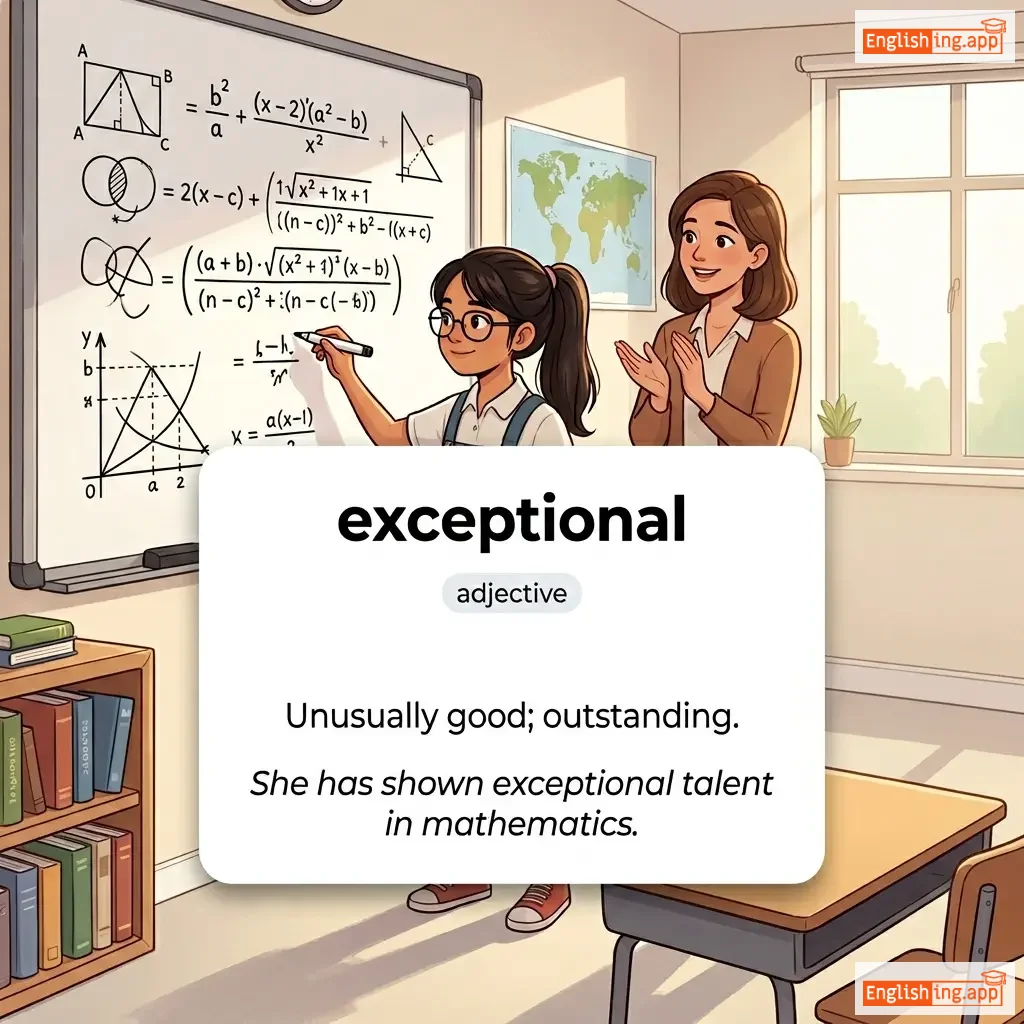
Unusually good; outstanding.
••••••
|
She has shown exceptional talent in mathematics. |
她在数学方面展现了卓越的才能。
Tā zài shùxué fāngmiàn zhǎnxiànle zhuóyuè de cáinéng.
••••••
|
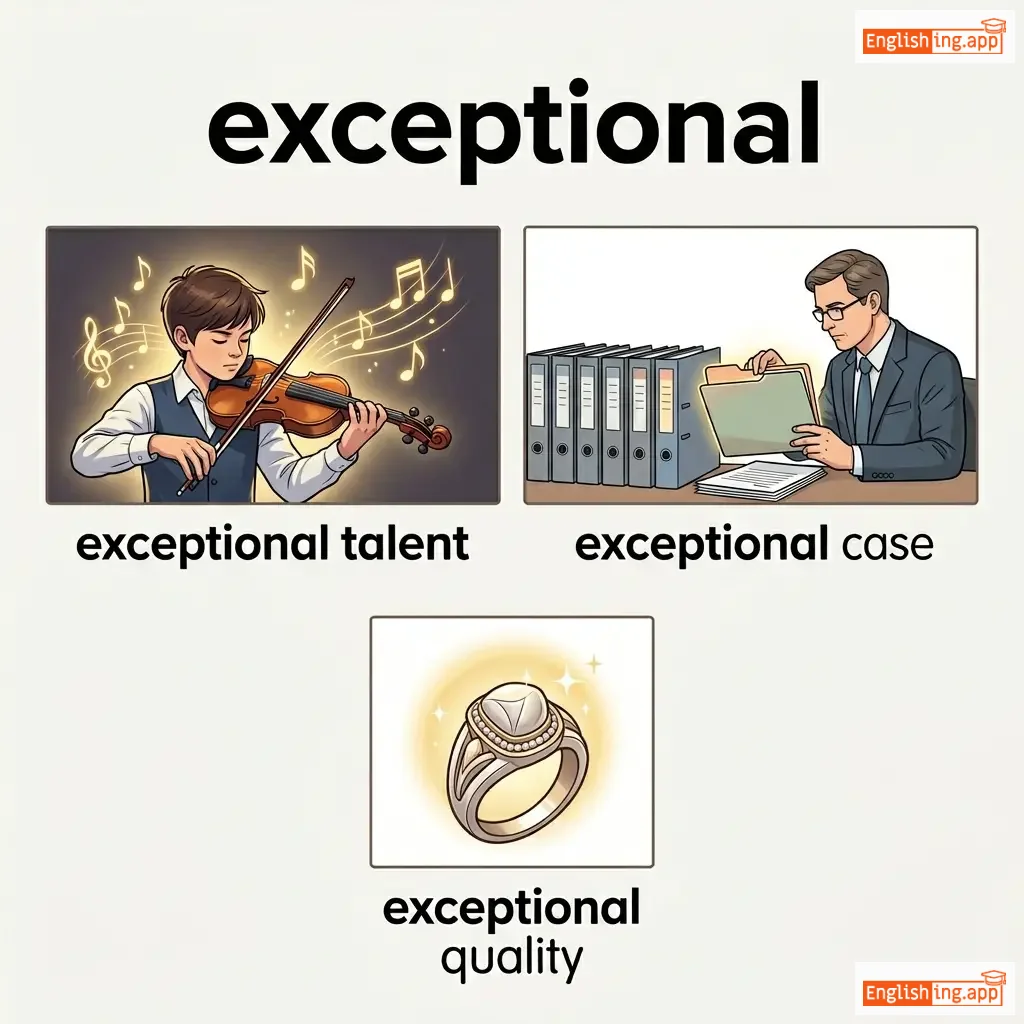
of exceptional quality |
something of very high or outstanding quality
••••••
|
卓越的品质
zhuóyuè de pǐnzhì
••••••
|
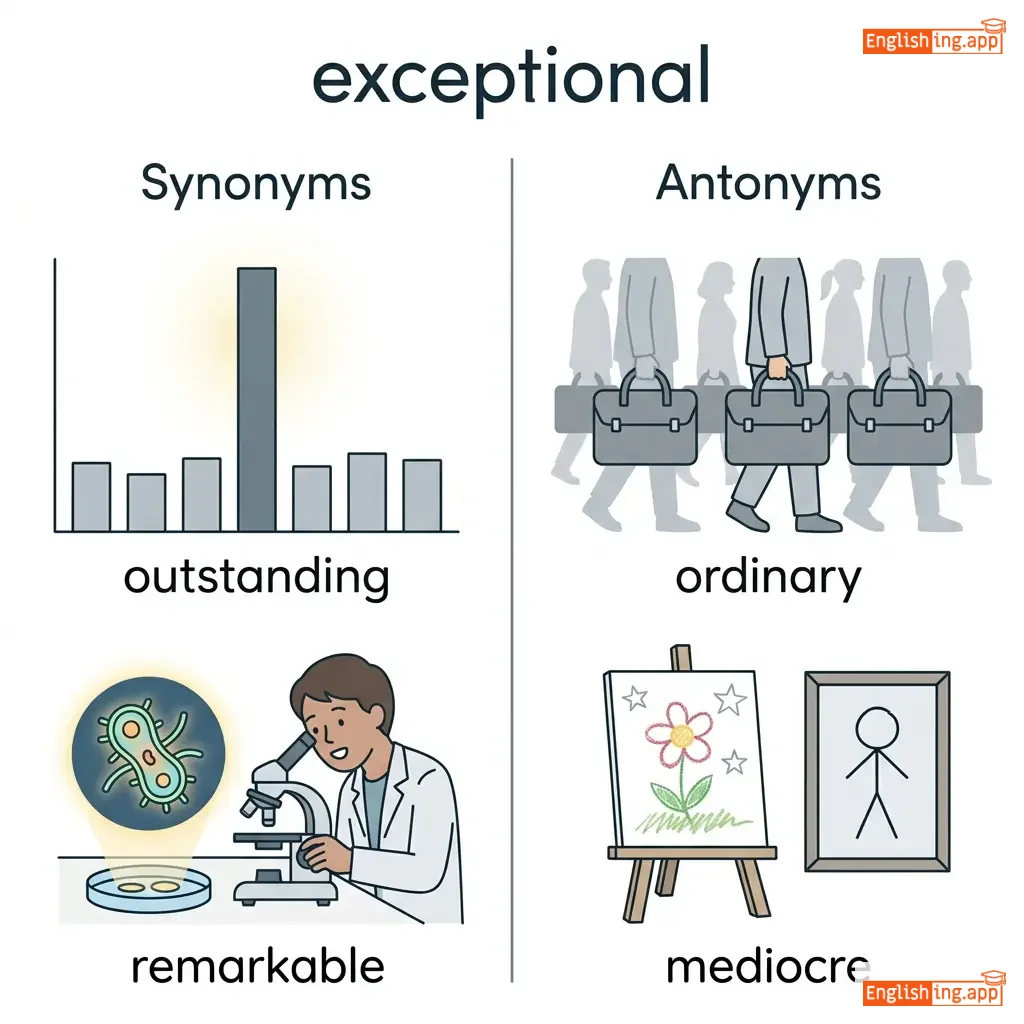
outstanding, remarkable, extraordinary, superb
••••••
|
ordinary, mediocre, common
••••••
|
exceptional talent, exceptional case, exceptional quality, exceptional opportunity
••••••
|
Exceptional = Extra Special → 卓越
••••••
|
|
#0
🔑
|
/ˌfʌndəˈmɛntəli/
adverb
(fūndamentāli)
••••••
|
- •••••• |
从根本上
cóng gēnběn shàng
••••••
|
- •••••• | - •••••• | - •••••• | - •••••• |
in a basic and important way; at the core
••••••
|
The two theories are fundamentally different.
这两个理论从根本上不同。
••••••
|
这两个理论从根本上不同。
Zhè liǎng gè lǐlùn cóng gēnběn shàng bùtóng.
••••••
|
- •••••• | - •••••• | - •••••• |
basically, essentially, primarily, principally
••••••
|
superficially, peripherally
••••••
|
fundamentally different, fundamentally important
••••••
|
Fundamentally = 从根本上 = 就像事情的核心!
••••••
|
|
#0
🔮
|
/prɪˈdɪktəbəl/
adjective
(预见的)
••••••
|
- •••••• |
可预测的
kě yù cè de
••••••
|
- •••••• | - •••••• | - •••••• | - •••••• |
able to be predicted or foreseen
••••••
|
His reactions were predictable based on his past behavior.
他的反应是可以预测的,基于他的过去行为。
••••••
|
他的反应是可以预测的,基于他的过去行为。
Tā de fǎnyìng shì kě yùcè de, jīyú tā de guòqù xíngwéi.
••••••
|
- •••••• | - •••••• | - •••••• |
foreseeable, expected, certain, inevitable
••••••
|
unpredictable, uncertain, surprising
••••••
|
predictable behavior, predictable outcome, predictable pattern
••••••
|
Predict + able = 这可以预测,就像未来的结果!
••••••
|
|
#0
🏈
|
/ˈkwɔːtərˌbæk/
noun
(kwòrtèrbàk)
••••••
|
- •••••• |
四分卫
sifènwèi
••••••
|
- •••••• | - •••••• | - •••••• | - •••••• |
the player who directs a team’s offense in American football
••••••
|
The quarterback threw a perfect pass.
四分卫传了一个完美的传球。
••••••
|
四分卫传了一个完美的传球。
Sifènwèi chuánle yīgè wánměi de chuánqiú.
••••••
|
- •••••• | - •••••• | - •••••• |
playmaker, leader, captain
••••••
|
follower, subordinates
••••••
|
quarterback role, quarterback pass, quarterback player
••••••
|
要成为一个出色的四分卫,你需要精准地传球。
••••••
|
|
#0
🤣
|
/rɪˈdɪkjʊləs/
adjective
(rídìkùləs)
••••••
|
- •••••• |
荒谬
huangmiu
••••••
|
- •••••• | - •••••• | - •••••• | - •••••• |
Deserving mockery; absurd or unreasonable.
••••••
|
The idea of flying pigs is ridiculous. |
飞猪的想法很荒谬。
Fei zhu de xiangfa hen huangmiu.
••••••
|
look ridiculous |
Appear very silly or absurd.
••••••
|
看起来荒谬
kan qilai huangmiu
••••••
|
absurd, laughable, ludicrous, silly, preposterous
••••••
|
reasonable, sensible, serious
••••••
|
utterly ridiculous, seem ridiculous, look ridiculous
••••••
|
荒谬意味着像个笑话,根本不现实。
••••••
|
|
#0
👀
|
/ˈspɛkteɪtər/
noun
(观众)
••••••
|
- •••••• |
观众
guānzhòng
••••••
|
- •••••• | - •••••• | - •••••• | - •••••• |
A person who watches an event, show, or game without taking part.
••••••
|
Thousands of spectators gathered to watch the football match. |
成千上万的观众聚集在一起观看足球比赛。
Chéng qiān shàng wàn de guānzhòng jùjí zài yīqǐ guānkàn zúqiú bǐsài.
••••••
|
mere spectator |
someone who is only watching without involvement
••••••
|
单纯的观众
dānchún de guānzhòng
••••••
|
viewer, observer, onlooker, audience
••••••
|
participant, player
••••••
|
sports spectator, theater spectator, excited spectator
••••••
|
Spectator 就像 'spectacle',看着但不参与。
••••••
|
|
#0
💭
|
/ˌspɛkjʊˈleɪʃən/
noun
(sīpèiɡuǎlèixīn)
••••••
|
|
猜测
caice
••••••
|
- •••••• | - •••••• | - •••••• | - •••••• |
the forming of ideas or theories without firm evidence; guesswork
••••••
|
There is a lot of speculation about who will win the election. |
关于谁将赢得选举,存在很多猜测。
Guanyu shei jiang yingde xuanju, cunzai henduo caice.
••••••
|
wild speculation |
an unproven or exaggerated theory or guess
••••••
|
狂妄猜测
kuangwang caice
••••••
|
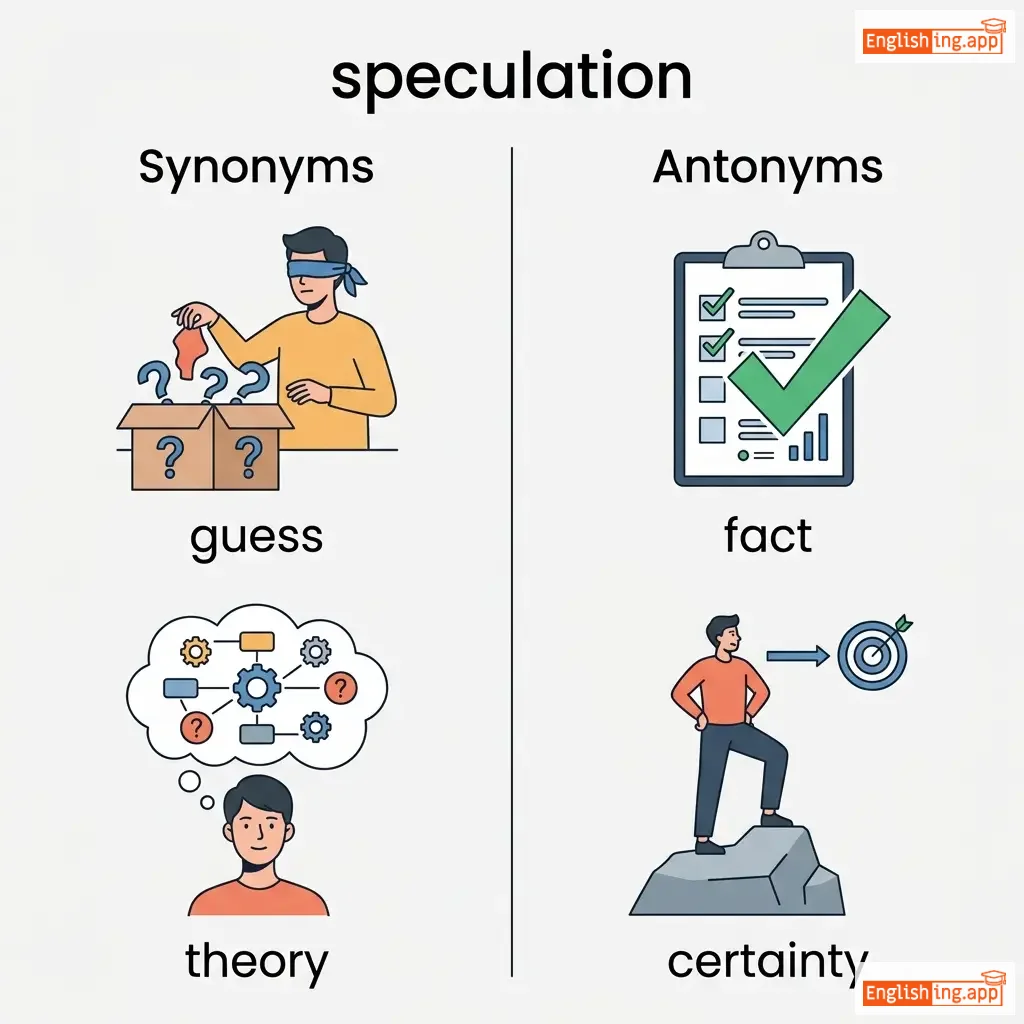
guess, theory, assumption, hypothesis, conjecture
••••••
|
fact, certainty
••••••
|
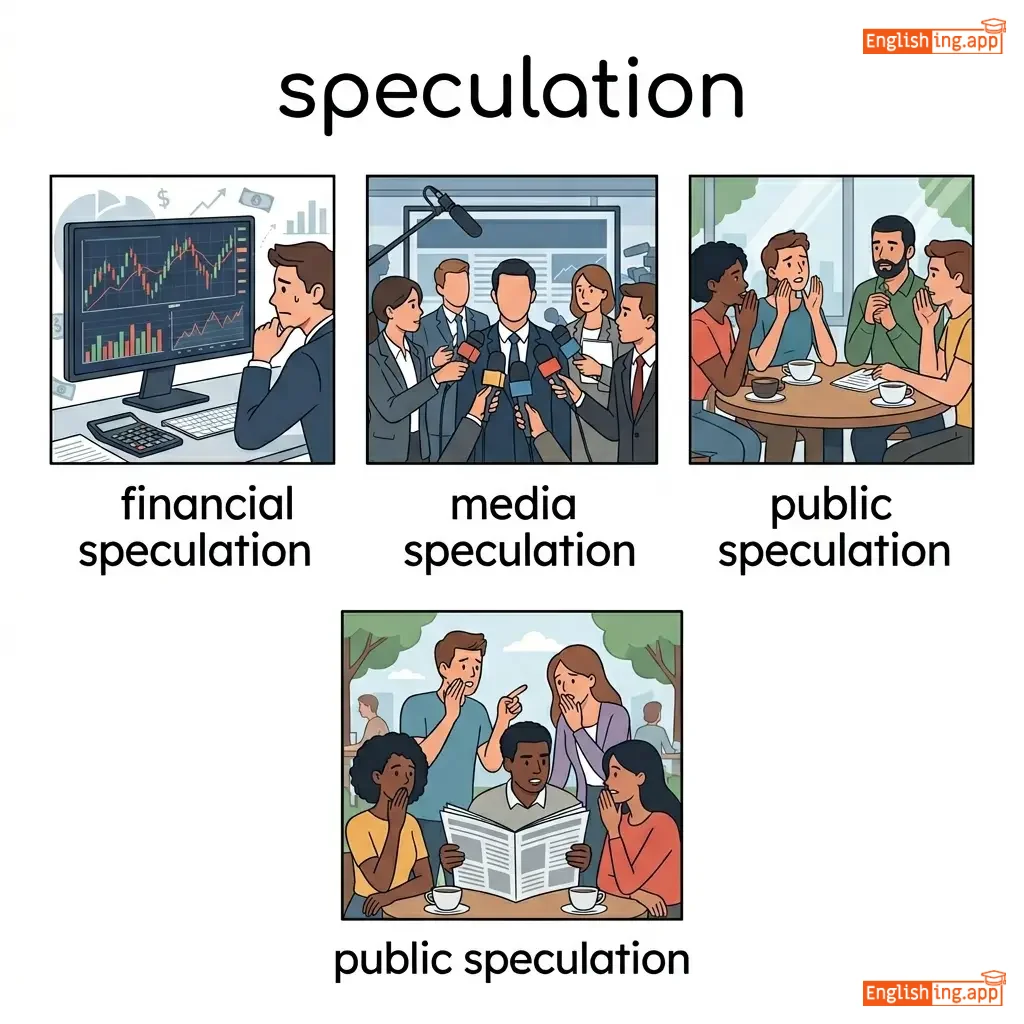
financial speculation, media speculation, public speculation, wild speculation
••••••
|
猜测就像没有证据的推测 — 只是脑海中的想法 💭
••••••
|
|
#0
👩💼
|
/ˈspəʊkswɪmən/
noun
(spóukswimén)
••••••
|
- •••••• |
发言人女性
fāyánrén nǚxìng
••••••
|
- •••••• | - •••••• | - •••••• | - •••••• |
a woman who speaks on behalf of a group or organization
••••••
|
The spokeswoman for the company announced the new product. |
公司的发言人宣布了新产品。
Gōngsī de fāyánrén xuānbùle xīn chǎnpǐn.
••••••
|
- •••••• | - •••••• | - •••••• |
representative, spokesperson, delegate, mouthpiece
••••••
|
opponent, adversary
••••••
|
spokeswoman for, female spokesperson, appointed spokeswoman
••••••
|
发言人女性,代表团体发声!
••••••
|
|
#0
👑
|
/səkˈsɛsər/
noun
(sàkèssuò)
••••••
|
- •••••• |
继任者
jìrènzhě
••••••
|
- •••••• | - •••••• | - •••••• | - •••••• |
A person or thing that follows another in a position, office, or role.
••••••
|
The company appointed a successor after the CEO retired. |
公司在CEO退休后任命了继任者。
Gōngsī zài CEO tuìxiū hòu rènmìngle jìrènzhě.
••••••
|
successor in title |
a person who legally takes over rights or property from another
••••••
|
职务继任者
zhíwù jìrènzhě
••••••
|
heir, inheritor, descendant, replacement, follower
••••••
|
predecessor, ancestor
••••••
|
successor to the throne, immediate successor, political successor, rightful successor
••••••
|
Success 后来的是继任者 — 继任者.
••••••
|
|
#0
⏸️
|
/səˈspɛnʃən/
noun
(suspension)
••••••
|
- •••••• |
停赛
tingsai
••••••
|
- •••••• | - •••••• | - •••••• | - •••••• |
The act of temporarily stopping something; also refers to a system in vehicles that absorbs shock.
••••••
|
The player received a three-game suspension for misconduct. |
该球员因不当行为被禁赛三场。
Gai qiu yuan yin budang xingwei bei jinsai san chang.
••••••
|
- •••••• | - •••••• | - •••••• |
pause, stoppage, interruption, postponement, delay
••••••
|
continuation, resumption, progress
••••••
|
suspension bridge, school suspension, temporary suspension, suspension system
••••••
|
停赛—如果做错事,不能比赛。
••••••
|
|
#0
🏈
|
/ˈtʌtʃ.daʊn/
noun
(ˈtʌtʃ.daʊn)
••••••
|
- •••••• |
着陆
zhuó lù
••••••
|
- •••••• | - •••••• | - •••••• | - •••••• |
the moment when an aircraft lands, or a score in American football
••••••
|
The plane made a smooth touchdown. |
飞机顺利着陆。
Fēijī shùnlì zhuó lù.
••••••
|
- •••••• | - •••••• | - •••••• |
landing, arrival, score, goal
••••••
|
takeoff, departure
••••••
|
smooth touchdown, successful touchdown, touchdown celebration, touchdown pass
••••••
|
着陆,像触地得分一样,平稳地着地。
••••••
|
|
#0
🌟
|
/ˌwelˈnoʊn/
adjective
(wēi ěr nòng)
••••••
|
- •••••• |
著名
zhuoming
••••••
|
- •••••• | - •••••• | - •••••• | - •••••• |
known by many people; famous or recognized
••••••
|
He is a well-known actor in his country. |
他是他国家的著名演员。
Ta shi ta guo jia de zhu ming yan yuan.
••••••
|
- •••••• | - •••••• | - •••••• |
famous, renowned, popular, prominent, recognized
••••••
|
unknown, obscure, unfamiliar
••••••
|
well-known fact, well-known person, well-known brand, well-known story
••••••
|
Well-known 意味着 '著名' — 人人都认识他!
••••••
|
Vocabulary Quiz
Test your vocabulary by matching words with their translations or meanings.
Login to take the quiz
Comments (0)
Share your thoughts and join the discussion.
Join the discussion by logging in
Login to CommentNo comments yet
Be the first to share your thoughts!