

Открытие студента второго курса
The Sophomore's Discovery
Айеша была sophomore в Университете Дакки. Её specialty была астрономия, но она не могла себя доказать. Однажды ночью она смотрела в небо через telescope на кампусе. Ей нужно было написать composition о звездах, но она чувствовала себя embarrassed, так как её знания казались secondary по сравнению с другими. У неё был occasional успех, но она reasonably считала себя слабой. Профессор Рахман сказал ей, что эта возможность была exclusively для неё, потому что она была единственной студенткой, которая заслуживала эту distinction. Ей нужно было incorporate новые методы в её исследование. Студенты из neighboring факультетов также хотели ей помочь. Хотя она была temporarily разочарована, additionally её мораль возросла. Исследование было complicated, но она не сдалась. Она поняла, что может стать beneficiary большого проекта. Она должна была быть accountable за свою работу. Она работала sufficiently и однажды открыла новую звезду. Не было whatsoever сомнений, что она добилась успеха. В тот день она straighten и поняла, что упорство — ключ к успеху.
Обновитесь для доступа ко всему словарю
Получите неограниченный доступ ко всем словам с подпиской Pro
Обновить до ProПеревод
Прошедшее
Причастие прошедшего времени
Третье лицо единственного числа
Герундий
Значение
Пример предложения
Перевод примера предложения
Синонимы
Антонимы
Коллокации
Мнемоника


Swipe left or right, or use the buttons. Tap image to zoom.
Обновитесь для доступа ко всем предложениям
Получите неограниченный доступ ко всем предложениям с подпиской Pro
Обновить до ProПеревод примера предложения
Слово
The Sophomore's DiscoveryThe Sophomore's Discovery - Переключатель маски
|
Эмодзи
|
Слово | Images | Перевод | Прошедшее | Причастие прошедшего времени | Третье лицо единственного числа | Герундий | Значение | Пример предложения | Перевод примера предложения | Пример выражения | Значение примера выражения | Перевод примера выражения | Синонимы | Антонимы | Коллокации | Мнемоника |
|---|---|---|---|---|---|---|---|---|---|---|---|---|---|---|---|---|---|
|
#0
⚖️
|
/əˈkaʊn.tə.bəl/
adjective
(ækˈaʊntəbəl)
••••••
|
|
ответственный; подотчетный
otvetsvenny; podotchetnyy
••••••
|
- •••••• | - •••••• | - •••••• | - •••••• |
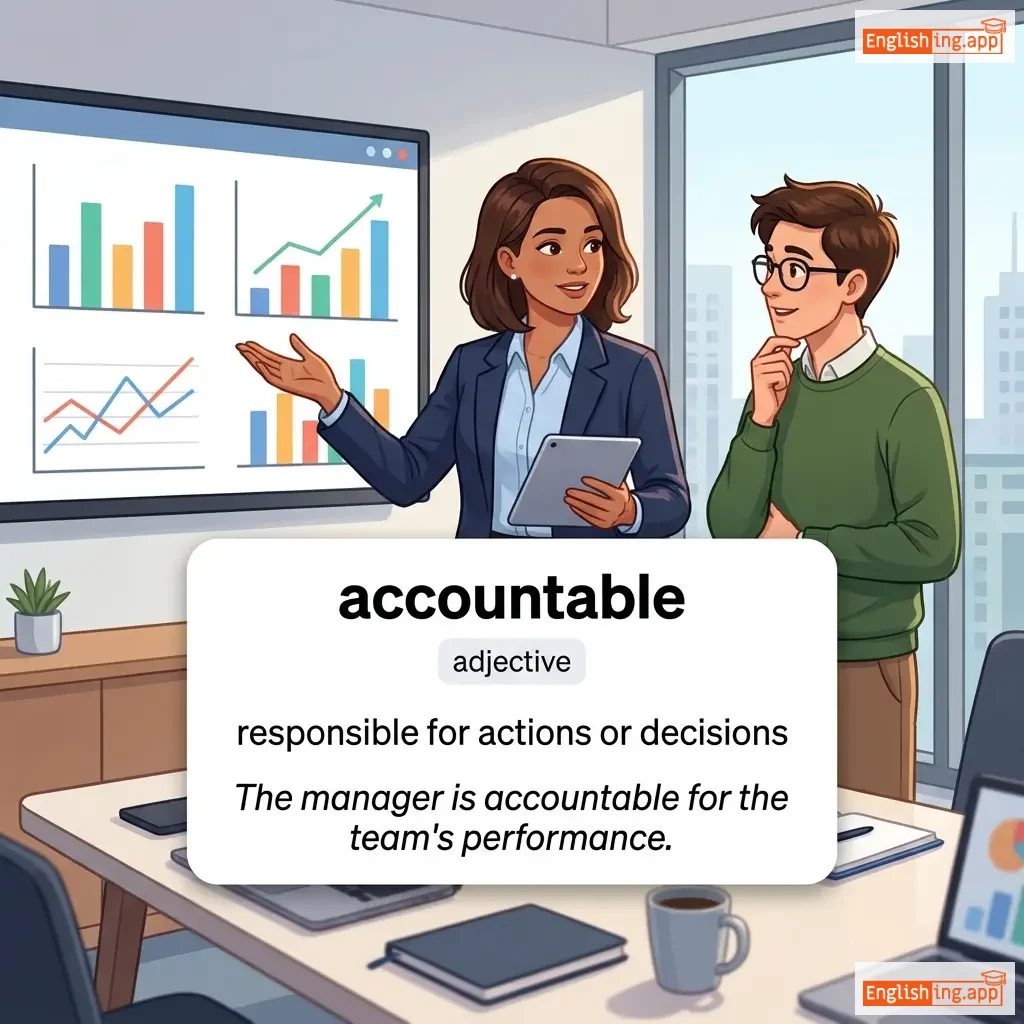
responsible for your decisions or actions and expected to explain them when you are asked
••••••
|
The government should be held accountable for its policies.
Правительство должно быть ответственным за свою политику.
••••••
|
Правительство должно быть ответственным за свою политику.
Pravitel'stvo dolzhno byt' otvetstvennym za svoiu politiku.
••••••
|
- •••••• | - •••••• | - •••••• |
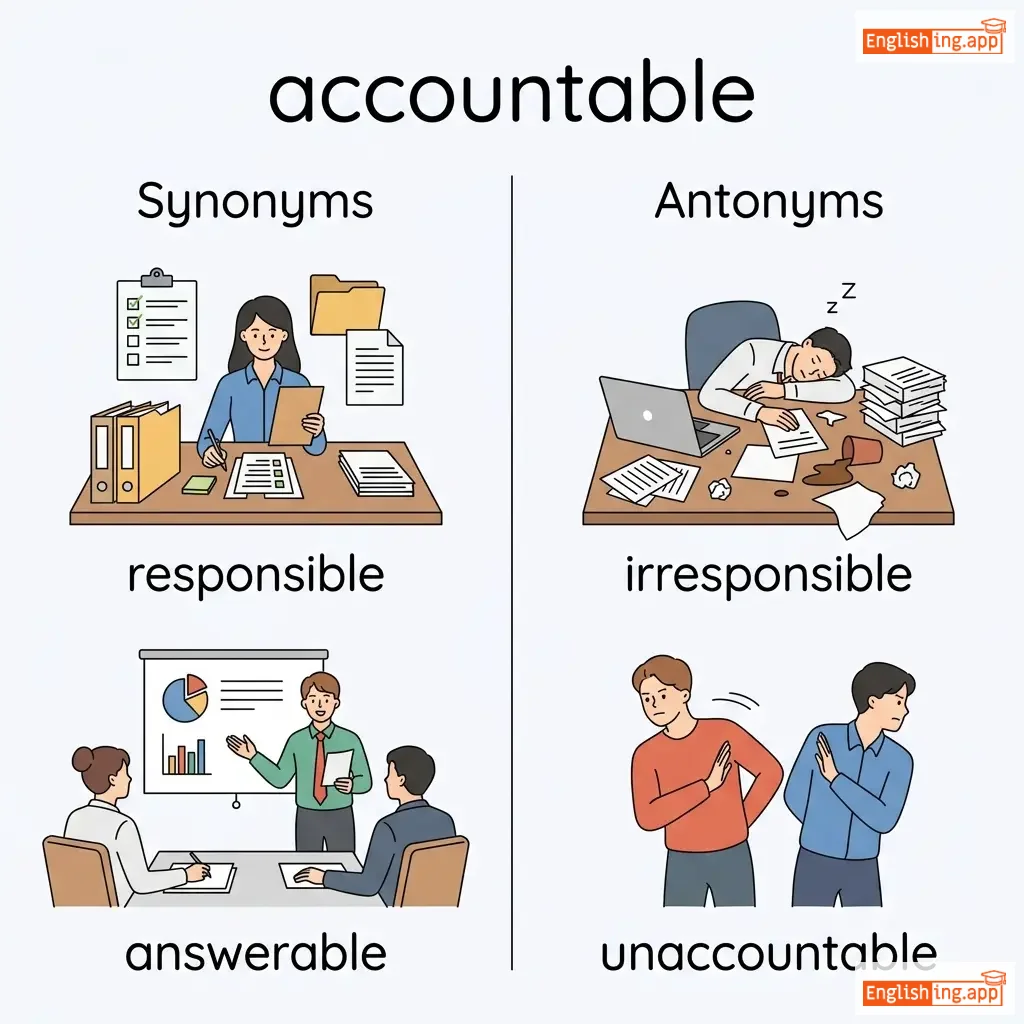
responsible, answerable, liable, culpable
••••••
|
unaccountable, irresponsible, exempt
••••••
|
held accountable, accountable for, accountable to
••••••
|
Accountable means taking responsibility, just like the government must be accountable for its actions.
••••••
|
|
#0
➕
|
/əˈdɪʃənəli/
adverb
(эдишналли)
••••••
|
- •••••• |
дополнительно
dopolnitel'no
••••••
|
- •••••• | - •••••• | - •••••• | - •••••• |
in addition to what has been said or done
••••••
|
Additionally, we offer discounts for early bookings.
Кроме того, мы предлагаем скидки для ранних бронирований.
••••••
|
Кроме того, мы предлагаем скидки для ранних бронирований.
Krome togo, my predlagaem skidki dlya rannyh bronirovaniy.
••••••
|
- •••••• | - •••••• | - •••••• |
furthermore, moreover, also, as well
••••••
|
however, nevertheless
••••••
|
additionally, additionally offer, additionally provide
••••••
|
Adding a plus sign ➕ shows more details (additionally)
••••••
|
|
#0
🎁
|
/ˌbɛnɪˈfɪʃəri/
noun
(бенефициарий)
••••••
|
- •••••• |
бенефициар
benefitsiar
••••••
|
- •••••• | - •••••• | - •••••• | - •••••• |
a person who receives something, especially money or property, from a will or insurance policy
••••••
|
She is the sole beneficiary of her father’s estate. |
Она является единственным бенефициаром имущества своего отца.
Ona yavljayetsya yedinym benefitiarom imushchestva svoego otca.
••••••
|
- •••••• | - •••••• | - •••••• |
recipient, heir, inheritor, grantee
••••••
|
donor, benefactor
••••••
|
sole beneficiary, named beneficiary, policy beneficiary, estate beneficiary
••••••
|
Beneficiary — это тот, кто получает выгоду, как бенефициар по страховке.
••••••
|
|
#0
🌀
|
/ˈkɒmplɪˌkeɪtɪd/
adjective
(komplikeɪtɪd)
••••••
|
- •••••• |
сложный
slozhnyy
••••••
|
- •••••• | - •••••• | - •••••• | - •••••• |
consisting of many interconnected parts; difficult to understand
••••••
|
The instructions for the machine are too complicated to follow. |
Инструкции к машине слишком сложные, чтобы их выполнить.
Instruktsii k mashine slishkom slozhnye, chtoby ikh vypolnit'.
••••••
|
make things complicated |
to make something unnecessarily difficult
••••••
|
усложнять вещи
uslozhnyat' veshchi
••••••
|
complex, difficult, intricate, involved, confusing
••••••
|
simple, easy, clear
••••••
|
complicated process, complicated situation, complicated issue, complicated relationship
••••••
|
Сложный = трудный, как сложные математические задачи.
••••••
|
|
#0
🎶
|
/ˌkɒmpəˈzɪʃən/
noun
(kəmˈpəzɪʃən)
••••••
|
- •••••• |
композиция
kompozitsiya
••••••
|
- •••••• | - •••••• | - •••••• | - •••••• |
the act of creating a piece of writing, music, or art; the way parts are arranged
••••••
|
Her composition won first prize in the contest. |
Ее композиция выиграла первый приз на конкурсе.
Eyo kompozitsiya viyigrala pervyy priz na konkurse.
••••••
|
- •••••• | - •••••• | - •••••• |
essay, creation, arrangement, piece, structure
••••••
|
disorder, disorganization
••••••
|
musical composition, written composition, composition skills, composition contest
••••••
|
Композиция - это создание чего-то, как написание композиции на экзамене.
••••••
|
|
#0
🏅
|
/dɪˈstɪŋkʃən/
noun
••••••
|
- •••••• | - •••••• | - •••••• | - •••••• | - •••••• | - •••••• |
a difference or contrast between similar things or people; excellence that sets someone apart
••••••
|
She graduated with distinction from the university. |
- •••••• |
make a distinction |
to draw a clear difference between things
••••••
|
- •••••• |
difference, contrast, excellence, honor, separation
••••••
|
similarity, sameness, mediocrity
••••••
|
with distinction, fine distinction, make a distinction, subtle distinction
••••••
|
No •••••• |
|
#0
😳
|
/ɪmˈbærəst/
adjective
(эмбаррасд)
••••••
|
- •••••• |
смущенный
smushchyonny
••••••
|
- •••••• | - •••••• | - •••••• | - •••••• |
feeling awkward, ashamed, or self-conscious about something
••••••
|
He felt embarrassed when he forgot her name. |
Он почувствовал себя смущенным, когда забыл ее имя.
On pochuvstvoval sebya smushchyonnym, kogda zabyl yeyo imya.
••••••
|
embarrassed silence |
an uncomfortable quietness after something awkward happens
••••••
|
смущенное молчание
smushchyonnoe molchaniye
••••••
|
ashamed, awkward, uneasy, flustered, humiliated
••••••
|
confident, proud, relaxed
••••••
|
feel embarrassed, look embarrassed, deeply embarrassed, embarrassed smile
••••••
|
Embarrassed – смущенный, когда забыл чье-то имя, ты смущен.
••••••
|
|
#0
🔒
|
/ɪkˈskluːsɪvli/
adverb
(ɪksˈkluːzɪvli)
••••••
|
- •••••• |
исключительно
isklyuchitel'no
••••••
|
- •••••• | - •••••• | - •••••• | - •••••• |
only; not shared with others
••••••
|
This service is available exclusively to premium members. |
Эта услуга доступна исключительно для премиум-участников.
Eta usluga dostupna iskljuchitel'no dlya premium-uchastnikov.
••••••
|
- •••••• | - •••••• | - •••••• |
solely, only, entirely, uniquely, purely
••••••
|
jointly, commonly, generally
••••••
|
exclusively for, available exclusively, exclusively designed, exclusively produced
••••••
|
Исключительно - только для тебя!
••••••
|
|
#0
🏢
|
/ɪnˈkɔːpəreɪt/
verb
(in-kor-PO-ret)
••••••
|
|
включить
vklyuchit
••••••
|
incorporated
in-kor-PO-rei-ted
••••••
|
incorporated
in-kor-PO-rei-ted
••••••
|
incorporates
in-kor-PO-rets
••••••
|
incorporating
in-kor-PO-rei-ting
••••••
|
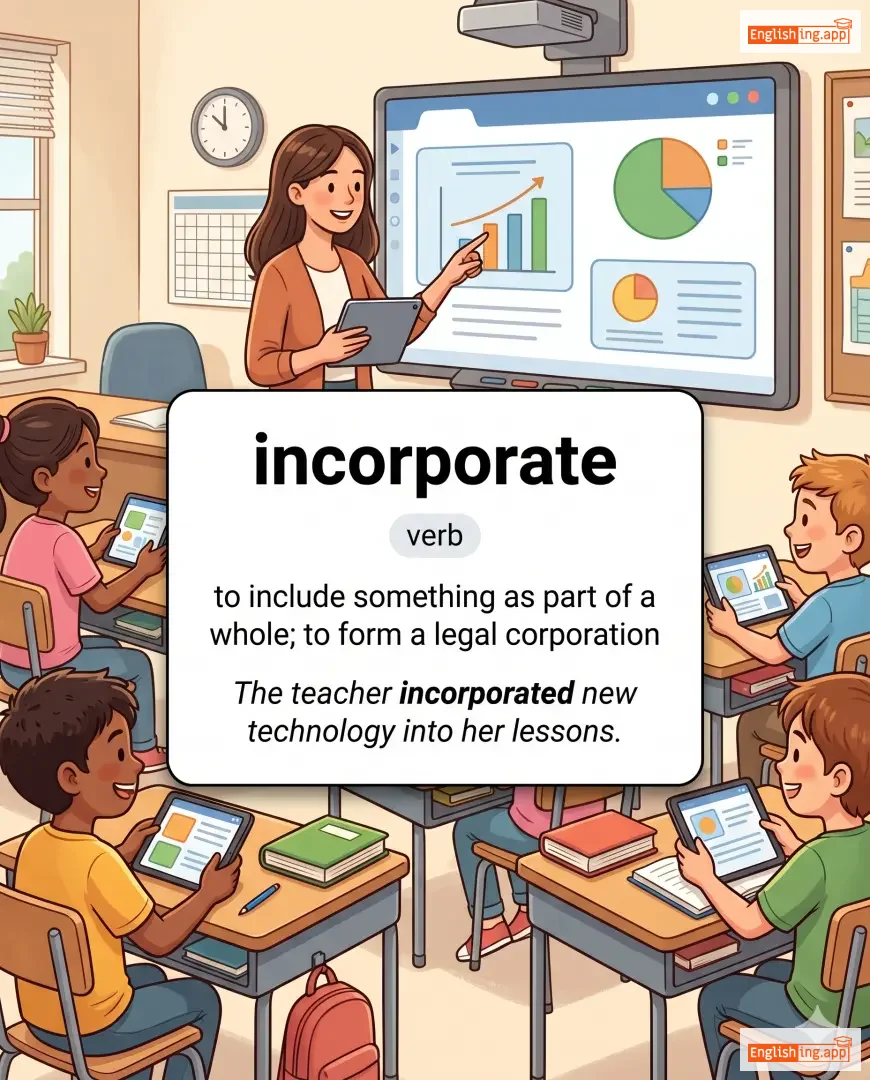
to include something as part of a whole; to form a legal corporation
••••••
|
The teacher incorporated new technology into her lessons.
Учитель включил новые технологии в свои уроки.
••••••
|
Учитель включил новые технологии в свои уроки.
Uchitel' vklyuchil novye tekhnologii v svoi uroki.
••••••
|
incorporate into
включить в
••••••
|
to include something as part of a larger thing
••••••
|
включить в
vklyuchit v
••••••
|
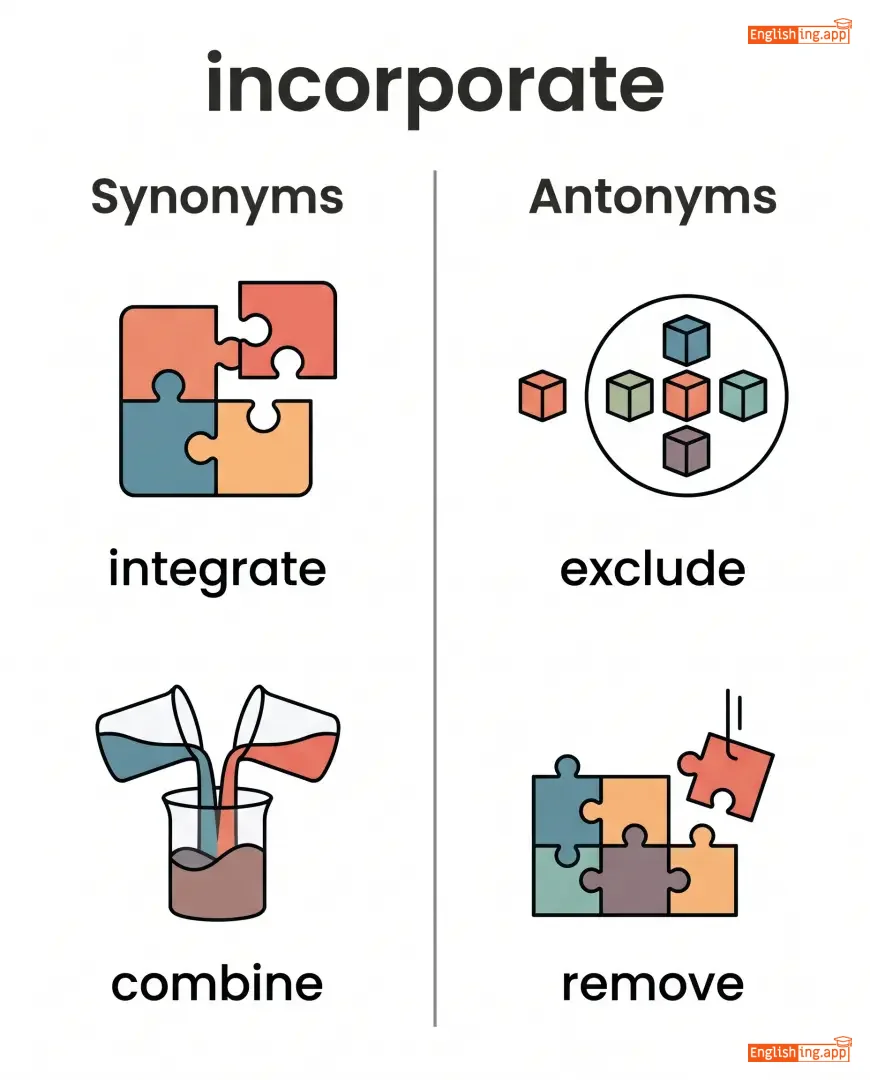
integrate, combine, include, merge, embody
••••••
|
exclude, remove, separate
••••••
|
incorporate into, incorporate ideas, incorporate changes
••••••
|
Включить означает добавить что-то в целое, как новый элемент в систему.
••••••
|
|
#0
🏘️
|
/ˈneɪbərɪŋ/
adjective
(neybiring)
••••••
|
- •••••• |
соседний
sosedniy
••••••
|
- •••••• | - •••••• | - •••••• | - •••••• |
situated near or next to another place; adjacent or nearby.
••••••
|
They visited a neighboring village for the festival.
Они посетили соседнюю деревню для фестиваля.
••••••
|
Они посетили соседнюю деревню для фестиваля.
Oni posetili sosednyuyu derevnyu dlya festivalya.
••••••
|
- •••••• | - •••••• | - •••••• |
adjacent, nearby, adjoining, close, proximate
••••••
|
distant, remote, far
••••••
|
neighboring country, neighboring house, neighboring state, neighboring area
••••••
|
Соседний означает рядом, поэтому соседние места находятся рядом.
••••••
|
|
#0
🌦️
|
/əˈkeɪʒənəl/
adjective
(окэйжнэл)
••••••
|
- •••••• |
случайный
sluchayny
••••••
|
- •••••• | - •••••• | - •••••• | - •••••• |
happening or done sometimes but not regularly or often
••••••
|
He makes occasional visits to his hometown. |
Он делает случайные визиты в свой родной город.
On delaet sluchaynye vizity v svoy rodnoy gorod.
••••••
|
occasional table |
a small table used when needed
••••••
|
случайный стол
sluchayny stol
••••••
|
infrequent, irregular, periodic, sporadic, intermittent
••••••
|
regular, constant, frequent
••••••
|
occasional visit, occasional rain, occasional use, occasional meeting
••••••
|
Случайный как случайный дождь – иногда 🌧️
••••••
|
|
#0
⚖️
|
/ˈriː.zən.ə.bli/
adverb
(rizonabli)
••••••
|
- •••••• |
разумно; в разумных пределах;
razumno; v razumnykh predelakh;
••••••
|
- •••••• | - •••••• | - •••••• | - •••••• |
in a sensible way; fairly; to a moderate degree
••••••
|
The hotel room was reasonably priced for the location. |
Номер в отеле был разумно оценен для этого местоположения.
Nomer v otele byl razumno otsenen dlya etogo mestopolozheniya.
••••••
|
- •••••• | - •••••• | - •••••• |
fairly, moderately, sensibly, logically
••••••
|
unreasonably, extremely, irrationally
••••••
|
reasonably priced, reasonably good, reasonably sure
••••••
|
In Russian, 'razumno' means rational or reasonable, reminding you of reasonable.
••••••
|
|
#0
2️⃣
|
/ˈsekənderi/
adjective
(sekendari)
••••••
|
- •••••• |
второстепенный
vtorostepennyy
••••••
|
- •••••• | - •••••• | - •••••• | - •••••• |
Less important than something else; derived from or dependent on something primary.
••••••
|
Safety is our primary concern, while speed is only secondary. |
Безопасность — наша основная забота, в то время как скорость лишь второстепенна.
Bezopasnost’ — nasha osnovnaya zabota, v to vremya kak skorost’ lish’ vtorostepennaya.
••••••
|
secondary role |
A role of lesser importance compared to the main one.
••••••
|
второстепенная роль
vtorostepennaya rol'
••••••
|
minor, subordinate, auxiliary, less important, dependent
••••••
|
primary, main, chief
••••••
|
secondary school, secondary importance, secondary effect
••••••
|
Второстепенный — это менее важный ➡ второстепенная роль
••••••
|
|
#0
🎓
|
/ˈsɑːfmɔːr/
noun
(софмор)
••••••
|
- •••••• |
студент второго курса
student vtorogo kursa
••••••
|
- •••••• | - •••••• | - •••••• | - •••••• |
a student in their second year of study at a university or high school
••••••
|
He’s a sophomore in college, studying computer science. |
Он студент второго курса в университете, изучающий информатику.
On student vtorogo kursa v universitete, izuchayushchiy informatiky.
••••••
|
- •••••• | - •••••• | - •••••• |
second-year student
••••••
|
freshman, junior, senior
••••••
|
sophomore year, sophomore student, sophomore class
••••••
|
Sophomore звучит как 'софа для второй ступени'.
••••••
|
|
#0
🎯
|
/ˈspɛʃəlti/
noun
(spe-shal-tee)
••••••
|
- •••••• |
специализация
specializatsiya
••••••
|
- •••••• | - •••••• | - •••••• | - •••••• |
a particular area of study, work, or interest; something in which a person or place excels
••••••
|
Her specialty is pediatric medicine.
Её специализация — педиатрия.
••••••
|
Её специализация — педиатрия.
eyo spetsializatsiya — pediatriya
••••••
|
house specialty
домашняя специальность
••••••
|
a dish or item that a restaurant is particularly known for
••••••
|
домашняя специальность
domashnyaya spetsial'nost'
••••••
|
expertise, forte, field, focus, skill
••••••
|
weakness, generality
••••••
|
medical specialty, house specialty, area of specialty, legal specialty
••••••
|
Специализация = то, что вы делаете особенно хорошо
••••••
|
|
#0
📏
|
/ˈstreɪtən/
verb
(стрейтэн)
••••••
|
- •••••• |
выпрямить
vypryamit
••••••
|
straightened
стрейтэнд
••••••
|
straightened
стрейтэнд
••••••
|
straightens
стрейтенс
••••••
|
straightening
стрейтенинг
••••••
|
to make something straight or tidy; to correct or organize
••••••
|
She straightened her hair before the meeting.
Она выпрямила волосы перед встречей.
••••••
|
Она выпрямила волосы перед встречей.
Ona vypryamilа volosy pered vstrechey.
••••••
|
straighten out
выпрямить
••••••
|
to resolve a problem or confusion
••••••
|
разрешить проблему или путаницу
razreshit' problemu ili putanitsu
••••••
|
align, adjust, organize, fix, arrange
••••••
|
bend, twist
••••••
|
straighten hair, straighten up, straighten out, straighten posture
••••••
|
Straighten = выпрямить волосы или вещи.
••••••
|
|
#0
✅
|
/səˈfɪʃəntli/
adverb
(суффициентли)
••••••
|
- •••••• |
достаточно
dostatochno
••••••
|
- •••••• | - •••••• | - •••••• | - •••••• |
to an adequate degree or extent
••••••
|
She studied sufficiently to pass the exam. |
Она училась достаточно, чтобы сдать экзамен.
Ona uchilas' dostatochno, chtoby sdat' ekzamen.
••••••
|
- •••••• | - •••••• | - •••••• |
adequately, enough, satisfactorily
••••••
|
insufficiently, inadequately
••••••
|
sufficiently prepared, sufficiently large, sufficiently skilled
••••••
|
Sufficiently = Just enough to reach the goal, like 'sufficient' = enough!
••••••
|
|
#0
🔭
|
/ˈtɛlɪˌskoʊp/
noun
(телескоп)
••••••
|
- •••••• |
телескоп
teleskop
••••••
|
- •••••• | - •••••• | - •••••• | - •••••• |
An optical instrument used to make distant objects appear closer and larger by collecting and focusing light.
••••••
|
The astronomer used a telescope to observe the distant planets. |
Астроном использовал телескоп для наблюдения за удалёнными планетами.
Astronom ispol'zoval teleskop dlya nablyudeniya za udalennymi planetami.
••••••
|
turn the telescope on |
to focus on or direct attention toward something
••••••
|
включить телескоп
vklyuchit' teleskop
••••••
|
scope, spyglass, binoculars, glass
••••••
|
microscope, naked eye
••••••
|
powerful telescope, optical telescope, space telescope, through a telescope
••••••
|
Telescope в русском - телескоп, чтобы увидеть далеко.
••••••
|
|
#0
⏳
|
/ˈtɛmpərɛrɪli/
adverb
(темпорарно)
••••••
|
- •••••• |
временно
vremenno
••••••
|
- •••••• | - •••••• | - •••••• | - •••••• |
for a limited time; not permanently
••••••
|
The road is closed temporarily for repairs. |
Дорога закрыта временно для ремонта.
Doroga zakryta vremenno dlya remonta.
••••••
|
- •••••• | - •••••• | - •••••• |
briefly, momentarily, temporarily, short-term
••••••
|
permanently, forever
••••••
|
temporarily closed, temporarily unavailable, temporarily suspended
••••••
|
Temporary is like a ‘time’ set in the clock – only for a short time!
••••••
|
|
#0
❌
|
/wɒtˈsəʊɛvər/
adverb
(хэтсоуэвэ)
••••••
|
- •••••• |
совсем не
sovsem ne
••••••
|
- •••••• | - •••••• | - •••••• | - •••••• |
used for emphasis after a negative statement to mean 'at all'
••••••
|
She has no interest in the matter whatsoever.
У нее нет никакого интереса к этому вопросу вообще.
••••••
|
У нее нет никакого интереса к этому вопросу вообще.
U neyo net nikakogo interesa k etomu voprosu voobsche.
••••••
|
- •••••• | - •••••• | - •••••• |
at all, in any way, in any respect
••••••
|
some, any, much
••••••
|
whatsoever reason, whatsoever means, whatsoever interest
••••••
|
Whatsoever sounds like 'хэтсоуэвэ', which can be remembered as 'совсем не' (not at all).
••••••
|
Vocabulary Quiz
Test your vocabulary by matching words with their translations or meanings.
Login to take the quiz
Comments (0)
Share your thoughts and join the discussion.
Join the discussion by logging in
Login to CommentNo comments yet
Be the first to share your thoughts!