

Переломный момент архитектора
The Architect's Turning Point
Рахул был intelligent архитектором, но последние несколько месяцев были для него troubled. Он получал одно rejection за другим от дизайнерских фирм и чувствовал себя глубоко frustrated. Каждое утро он продолжал thinking о том, почему его карьера стала такой difficult. Хотя его родители не discourage его, сам Рахул был uncertain относительно своего будущего. Однажды ночью он вспомнил своего старого профессора, который часто говорил: "Persistent люди — это те, кто в конечном итоге побеждает." Помня эти слова, Рахул решил еще больше развить свои навыки observation. Он понял, что быть творческим недостаточно; нужно быть realistic и понимать потребности клиентов. Используя свою reasoning способность, он принял новый подход. В его следующем проекте improvement был очевиден. Клиент был впечатлен его преданностью и commitment и дал ему большую opportunity. Рахул понял, что серьезное отношение к responsibility приводит к успеху. Через три месяца его проект добился remarkable успеха и был опубликован в архитектурном журнале. Те, кто раньше его disappointed, теперь были interested в сотрудничестве с ним. Этот achievement в жизни Рахула научил его никогда не сдаваться, продолжать бороться даже в трудные времена.
Обновитесь для доступа ко всему словарю
Получите неограниченный доступ ко всем словам с подпиской Pro
Обновить до ProПеревод
Прошедшее
Причастие прошедшего времени
Третье лицо единственного числа
Герундий
Значение
Пример предложения
Перевод примера предложения
Синонимы
Антонимы
Коллокации
Мнемоника



Swipe left or right, or use the buttons. Tap image to zoom.
Обновитесь для доступа ко всем предложениям
Получите неограниченный доступ ко всем предложениям с подпиской Pro
Обновить до ProПеревод примера предложения
Слово
The Architect's Turning PointThe Architect's Turning Point - Переключатель маски
|
Эмодзи
|
Слово | Images | Перевод | Прошедшее | Причастие прошедшего времени | Третье лицо единственного числа | Герундий | Значение | Пример предложения | Перевод примера предложения | Пример выражения | Значение примера выражения | Перевод примера выражения | Синонимы | Антонимы | Коллокации | Мнемоника |
|---|---|---|---|---|---|---|---|---|---|---|---|---|---|---|---|---|---|
|
#0
🏆
|
/əˈtʃiːvmənt/
noun
(achivmɛnt)
••••••
|
- •••••• |
достижение
dostizhenie
••••••
|
- •••••• | - •••••• | - •••••• | - •••••• |
Something that has been successfully completed or accomplished through effort or skill.
••••••
|
Graduating from university was her greatest achievement. |
Окончание университета было её величайшим достижением.
Okonchanie universiteta bylo yey velechayshim dostizheniem.
••••••
|
a sense of achievement |
a feeling of pride in accomplishing something
••••••
|
чувство достижения
chuvstvo dostizheniya
••••••
|
accomplishment, success, triumph, attainment, feat
••••••
|
failure, defeat
••••••
|
great achievement, outstanding achievement, sense of achievement, academic achievement
••••••
|
Achievement означает достижение; Если ты сдал экзамен, это твое достижение.
••••••
|
|
#0
🤝
|
/kəˈmɪtmənt/
noun
(коммитмент)
••••••
|
|
приверженность
kommitment
••••••
|
- •••••• | - •••••• | - •••••• | - •••••• |
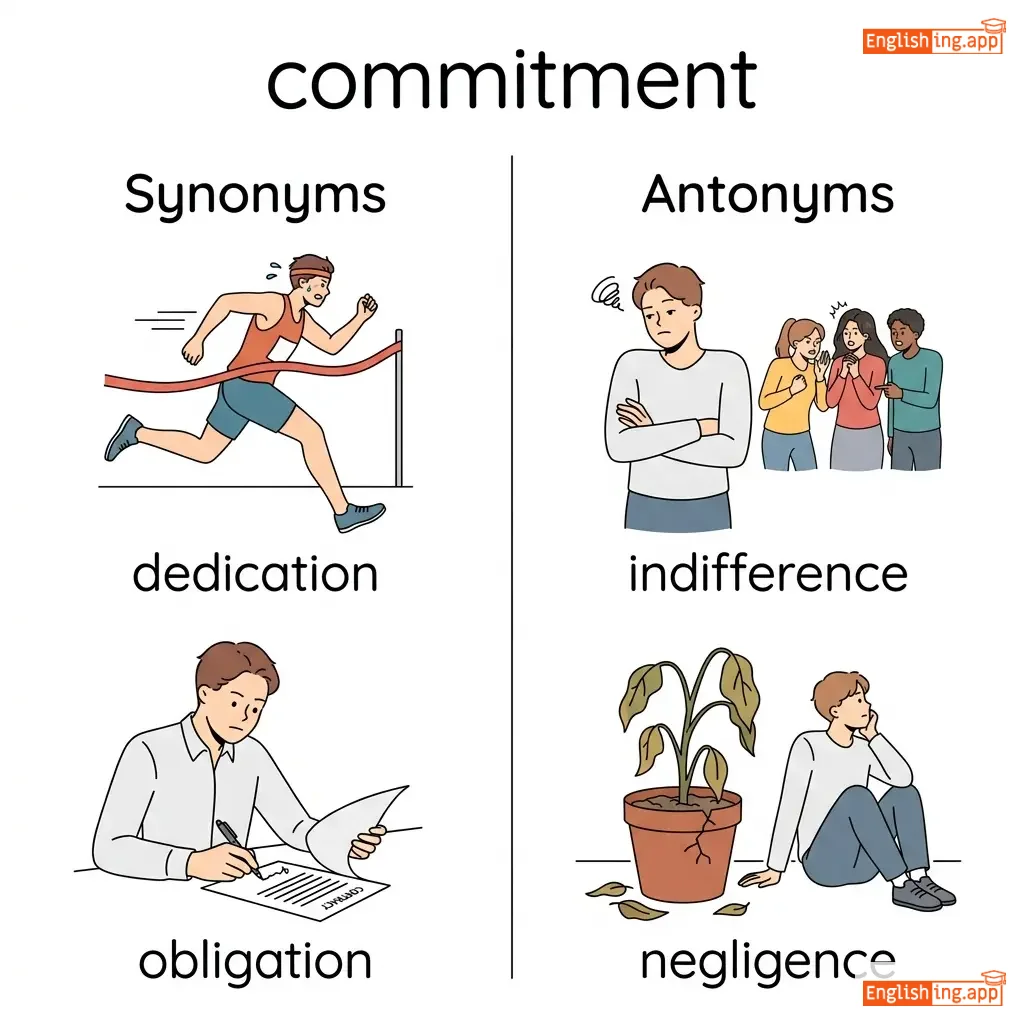
A promise or firm decision to do something; dedication or obligation to a cause or activity.
••••••
|
She showed great commitment to her studies.
Она проявила большую приверженность учёбе.
••••••
|
Она проявила большую приверженность учёбе.
Ona proyavila bolshuyu priverezhennost uchebe.
••••••
|
a lifelong commitment
пожизненная приверженность
••••••
|
A promise or responsibility that lasts for one's whole life.
••••••
|
пожизненная приверженность
pozhizennaya priverezhennost
••••••
|
dedication, obligation, devotion, promise, responsibility
••••••
|
indifference, negligence, irresponsibility
••••••
|
strong commitment, show commitment, commitment to, long-term commitment
••••••
|
Коммитмент = коммит + мент: держи обещание и приверженность навсегда
••••••
|
|
#0
😓
|
/ˈdɪf.ɪ.kəlt/
adjective
(дификалт)
••••••
|
|
сложный
slozhny
••••••
|
- •••••• | - •••••• | - •••••• | - •••••• |
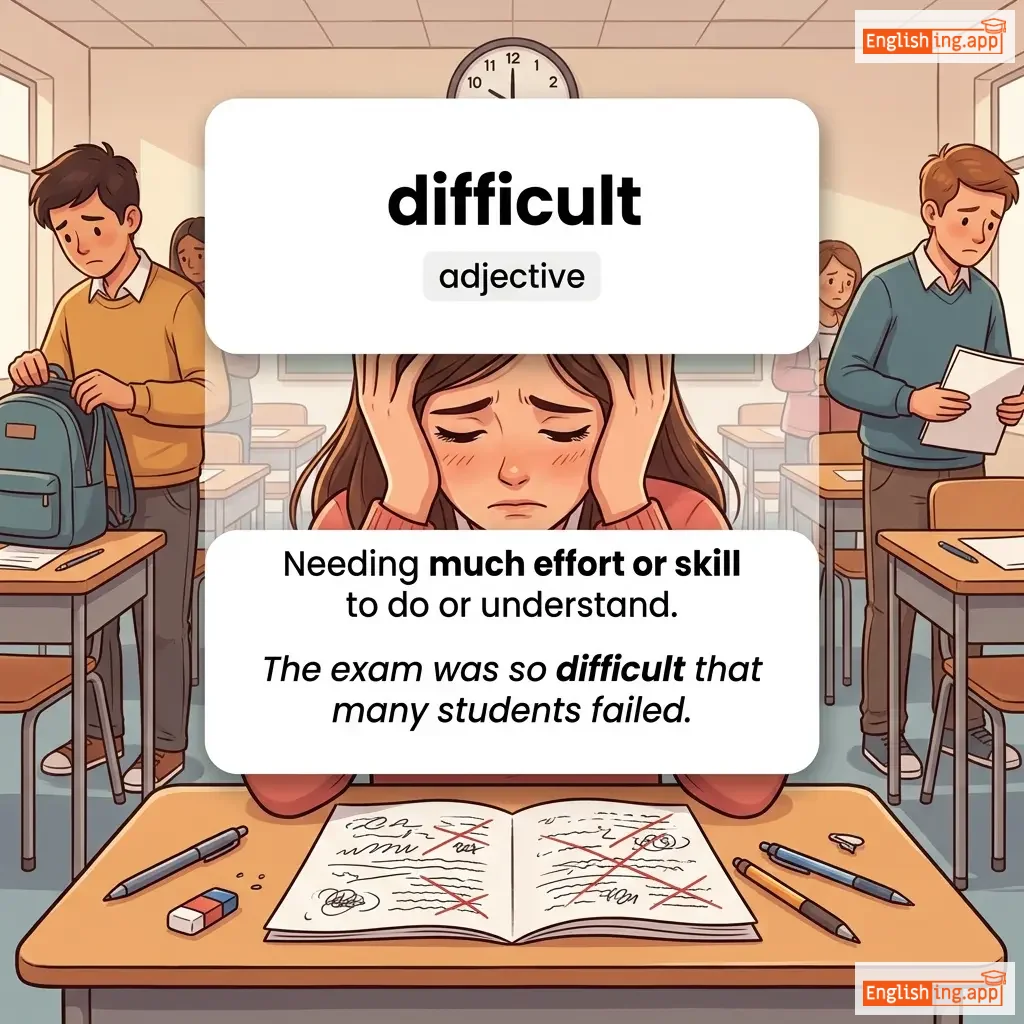
Needing much effort or skill to do or understand.
••••••
|
The exam was so difficult that many students failed. |
Экзамен был настолько сложным, что многие студенты не сдали.
Ekzamen byl nastol'ko slozhnym, chto mnogie studenty ne sdali.
••••••
|
difficult situation |
A situation that is hard to handle.
••••••
|
сложная ситуация
slozhnaya situatsiya
••••••
|
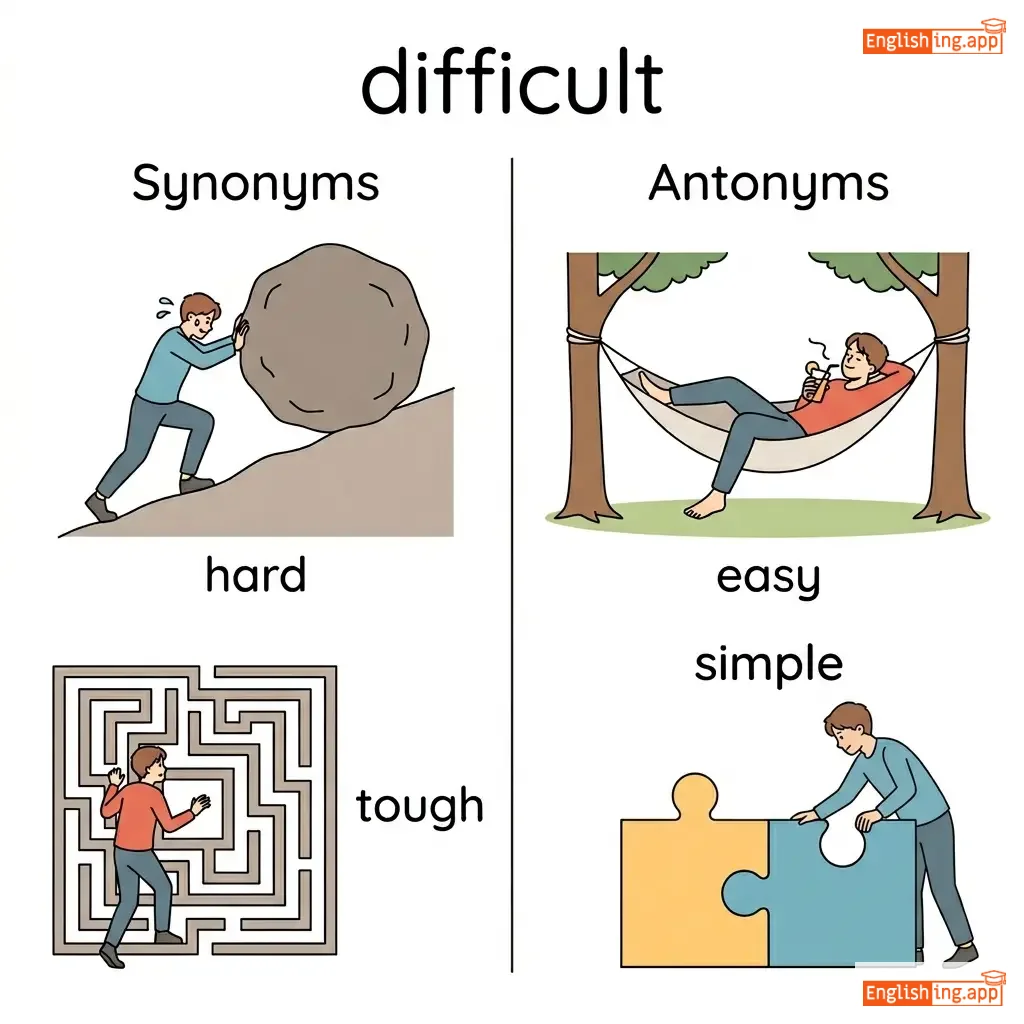
hard, tough, challenging, complicated, demanding
••••••
|
easy, simple, effortless
••••••
|
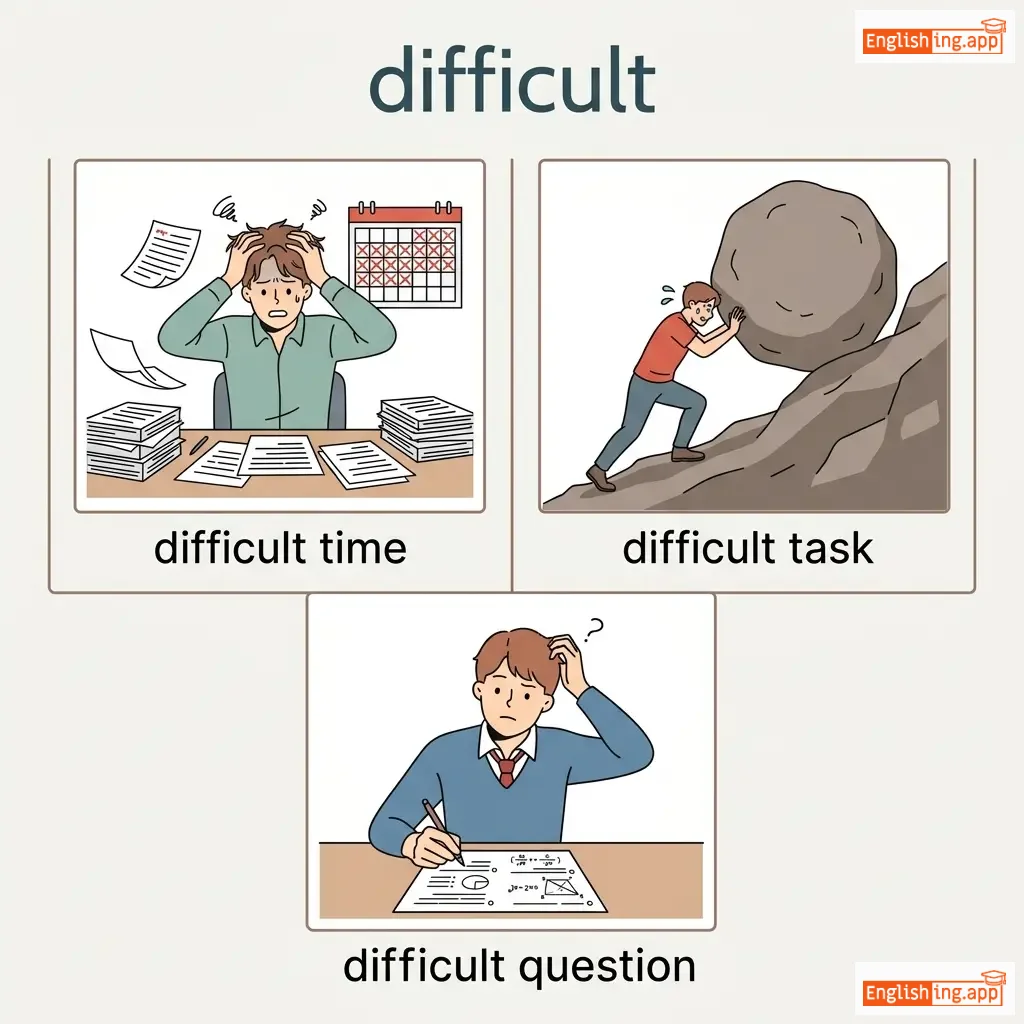
difficult time, difficult task, difficult question, difficult choice
••••••
|
Difficult означает сложный — представьте, что 'Di' означает сложный, а 'full' — полный; для выполнения нужно много усилий.
••••••
|
|
#0
😞
|
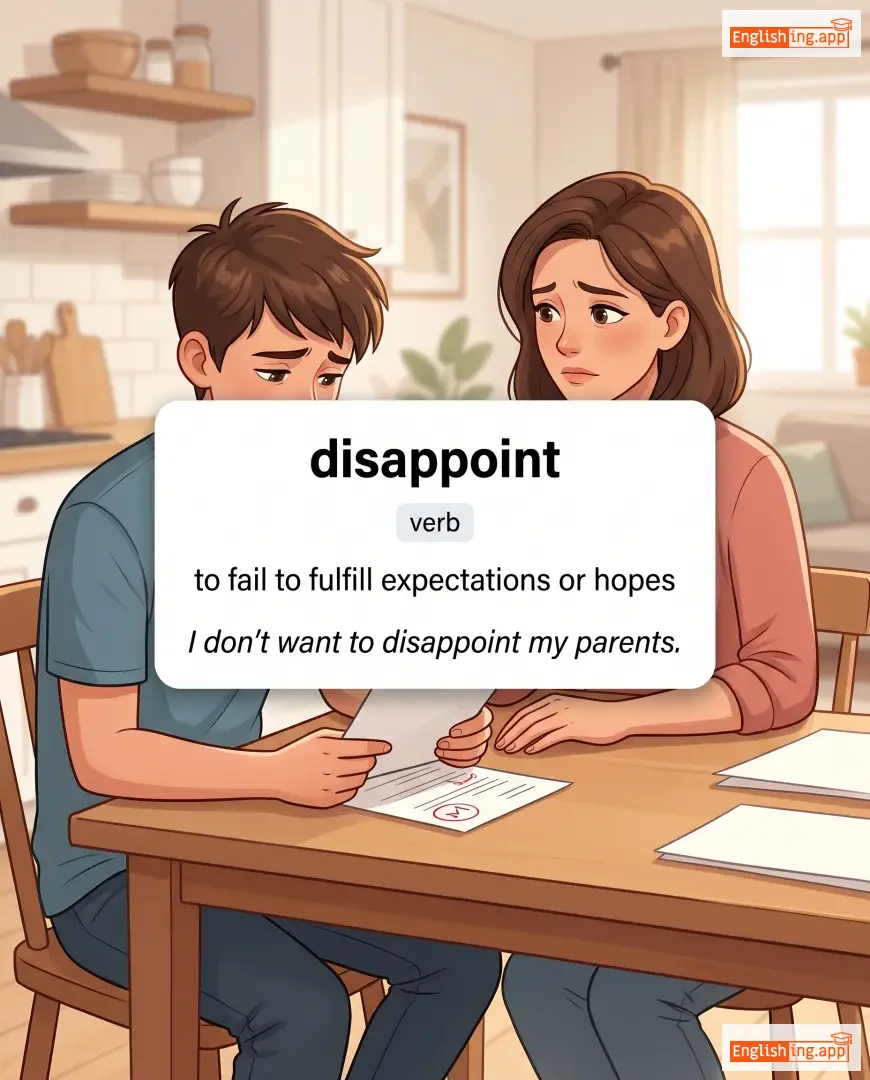
/ˌdɪsəˈpɔɪnt/
verb
(дисапо́инт)
••••••
|
|
разочаровывать
razocharovyvat'
••••••
|
disappointed
дисапо́интед
••••••
|
disappointed
дисапо́интед
••••••
|
disappoints
дисапо́интс
••••••
|
disappointing
дисапо́интинг
••••••
|
to fail to fulfill expectations or hopes
••••••
|
I don’t want to disappoint my parents.
Я не хочу разочаровать своих родителей.
••••••
|
Я не хочу разочаровать своих родителей.
Ya ne khochu razocharovat' svoikh roditeley.
••••••
|
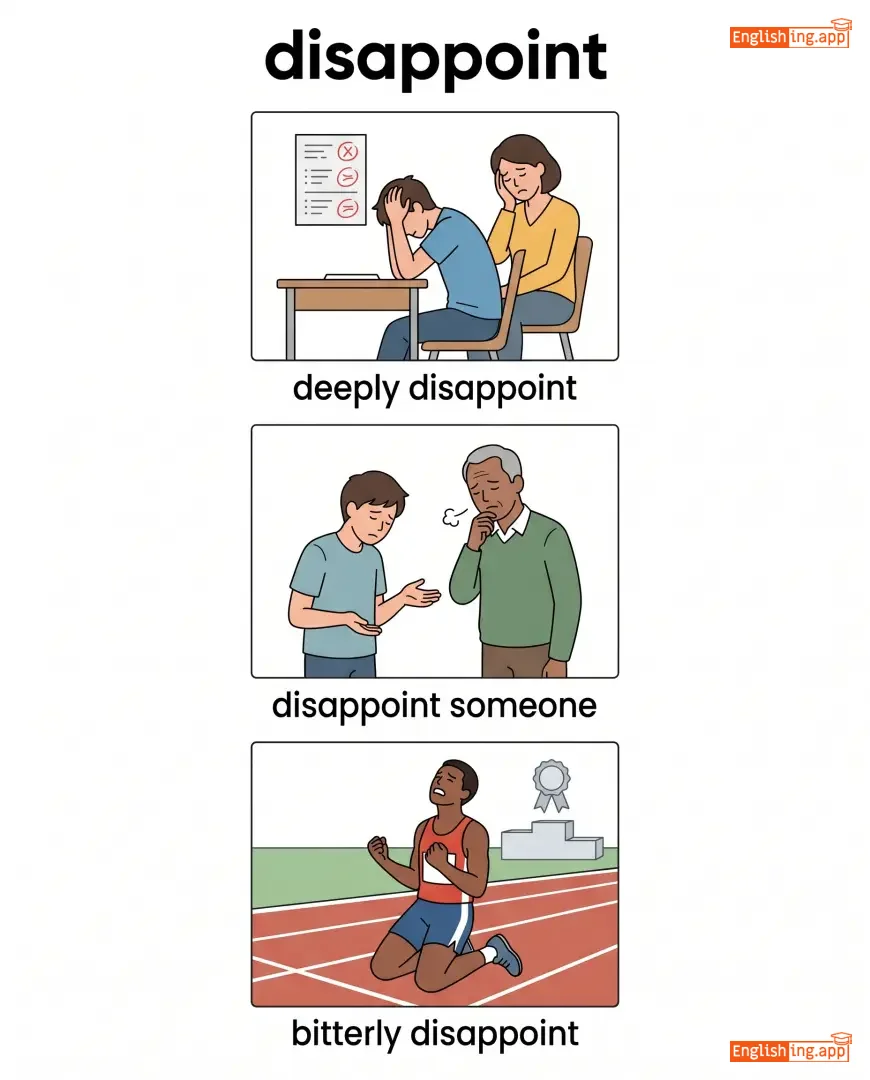
bitterly disappointed
горько разочарован
••••••
|
very unhappy due to unmet expectations
••••••
|
горько разочарован
gorko razocharovan
••••••
|
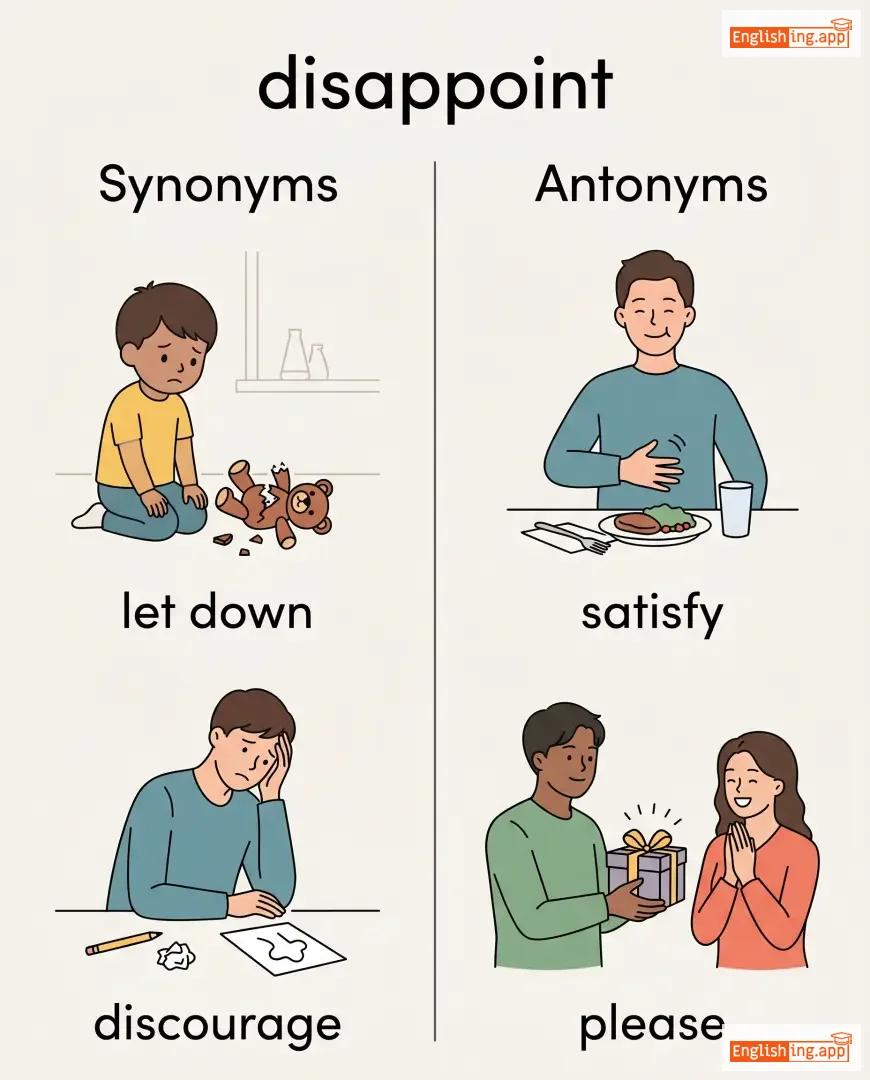
let down, discourage, upset, fail, frustrate
••••••
|
satisfy, please, fulfill
••••••
|
deeply disappoint, disappoint someone, bitterly disappoint
••••••
|
Разочаровать — это как 'не выполнить ожидания' — не оправдать их приводит к разочарованию.
••••••
|
|
#0
🙁
|
/dɪsˈkʌrɪdʒ/
verb
••••••
|
- •••••• | - •••••• |
discouraged
••••••
|
discouraged
••••••
|
discourages
••••••
|
discouraging
••••••
|
to make someone less confident or enthusiastic about doing something
••••••
|
Failure should not discourage you from trying again. |
- •••••• |
discourage someone from doing something |
to make someone not want to do something
••••••
|
- •••••• |
deter, dishearten, demotivate, depress, prevent
••••••
|
encourage, inspire, motivate
••••••
|
strongly discourage, discourage behavior, discourage effort, discourage action
••••••
|
No •••••• |
|
#0
😤
|
/ˈfrʌstreɪtɪd/
adjective
(фрустрэйтэд)
••••••
|
- •••••• |
фрустрированный
frustrirovannyj
••••••
|
- •••••• | - •••••• | - •••••• | - •••••• |
feeling annoyed or upset because of inability to achieve something
••••••
|
She felt frustrated after failing the exam. |
Она почувствовала разочарование после того, как не сдала экзамен.
Ona pochuvstvovala razocharovanie posle togo, kak ne sdala ekzamen.
••••••
|
- •••••• | - •••••• | - •••••• |
annoyed, upset, discouraged, disappointed
••••••
|
calm, content, pleased
••••••
|
feel frustrated, get frustrated, frustrated with
••••••
|
Фрустрированный — как 'замороженный' внутри, ничего не получается.
••••••
|
|
#0
🔧
|
/ɪmˈpruːvmənt/
noun
(imprúvment)
••••••
|
- •••••• |
улучшение
uluchsheniye
••••••
|
- •••••• | - •••••• | - •••••• | - •••••• |
the act of making something better
••••••
|
There has been a significant improvement in his health.
there has been a significant improvement in his health.
••••••
|
Произошло значительное улучшение его здоровья.
Proizoshlo znachitel'noe uluchsheniye ego zdorov'ya.
••••••
|
continuous improvement
kontinüus imprúvment
••••••
|
the ongoing effort to make things better
••••••
|
непрерывное улучшение
nepreryvnoe uluchshenie
••••••
|
progress, enhancement, advancement, growth, development
••••••
|
decline, deterioration, regression
••••••
|
health improvement, significant improvement, gradual improvement, scope for improvement
••••••
|
Improvement – это улучшение, что-то улучшается, а это и есть improvement.
••••••
|
|
#0
🧠
|
/ɪnˈtɛlɪdʒənt/
adjective
(интеллигент)
••••••
|
- •••••• |
умный
umnyy
••••••
|
- •••••• | - •••••• | - •••••• | - •••••• |
Having or showing high mental capacity, quick to learn and understand.
••••••
|
She is one of the most intelligent students in the class.
Она одна из самых умных студентов в классе.
••••••
|
Она одна из самых умных студентов в классе.
Ona odna iz samykh umnykh studentov v klasse.
••••••
|
intelligent guess
интеллектуальная догадка
••••••
|
A well-informed or reasonable guess based on available knowledge.
••••••
|
интеллектуальная догадка
intellektual'naya dogadka
••••••
|
clever, smart, bright, brainy, knowledgeable
••••••
|
stupid, dull, ignorant
••••••
|
intelligent design, intelligent choice, highly intelligent, intelligent system
••••••
|
Intel - это бренд умных компьютеров, как и это слово.
••••••
|
|
#0
🤔
|
/ˈɪntrəstɪd/
adjective
(Интересед)
••••••
|
- •••••• |
заинтересованный
zainteresovannyj
••••••
|
- •••••• | - •••••• | - •••••• | - •••••• |
Showing curiosity or concern about something.
••••••
|
She is very interested in learning new languages. |
Она очень заинтересована в изучении новых языков.
Ona ochen' zainteresovana v izuchenii novykh yazykov.
••••••
|
interested party |
a person or group concerned with a matter
••••••
|
заинтересованная сторона
zainteresovannaya storona
••••••
|
curious, eager, keen, attentive, engaged
••••••
|
uninterested, indifferent
••••••
|
interested in, very interested, interested party, interested buyer
••••••
|
Interested = интерес (любопытство) = заинтересованный
••••••
|
|
#0
👀
|
/ˌɑb.zɚˈveɪ.ʃən/
noun
(обзерˈвеɪшн)
••••••
|
- •••••• |
наблюдение
nablyudenie
••••••
|
- •••••• | - •••••• | - •••••• | - •••••• |
the action of watching something carefully; a comment or remark
••••••
|
The scientist made careful observations of the experiment.
Учёный тщательно наблюдал за экспериментом.
••••••
|
Учёный тщательно наблюдал за экспериментом.
Uchënyy tchatel'no nablyudal za eksperimentom.
••••••
|
- •••••• | - •••••• | - •••••• |
watching, monitoring, examination, remark
••••••
|
ignorance, neglect, inattention, oversight
••••••
|
careful observation, direct observation, under observation
••••••
|
Учёный внимательно следит за экспериментом.
••••••
|
|
#0
🌟
|
/ˌɒp.əˈtjuː.nə.ti/
noun
(оппортьюнити)
••••••
|
- •••••• |
возможность
vozmozhnost
••••••
|
- •••••• | - •••••• | - •••••• | - •••••• |
A favorable chance or set of circumstances that makes it possible to do something.
••••••
|
She seized the opportunity to study abroad. |
Она воспользовалась возможностью учиться за границей.
Ona vospol'zovalas' vozmozhnost'yu uchit'sya za granitsey.
••••••
|
once in a lifetime opportunity |
A very rare and unique chance that may never happen again.
••••••
|
единственная возможность в жизни
yedinственная vozmozhnost' v zhizni
••••••
|
chance, prospect, possibility, option, occasion
••••••
|
misfortune, disadvantage, obstacle
••••••
|
golden opportunity, missed opportunity, career opportunity, business opportunity
••••••
|
Возможность не ждёт, её нужно ловить!
••••••
|
|
#0
💪
|
/pəˈsɪs.tənt/
adjective
(пэрˈсистэнт)
••••••
|
- •••••• |
упорный
upornyy
••••••
|
- •••••• | - •••••• | - •••••• | - •••••• |
continuing to exist or endure over a prolonged period
••••••
|
Despite many setbacks, her persistent efforts led to success. |
Несмотря на многие неудачи, её упорные усилия привели к успеху.
Nesmotrya na mnogie neudachi, yeye upornye usiliya priveli k uspekhu.
••••••
|
- •••••• | - •••••• | - •••••• |
determined, tenacious, relentless, constant
••••••
|
sporadic, intermittent
••••••
|
persistent efforts, persistent problem, persistent illness
••••••
|
Упорный как человек, который не сдаётся
••••••
|
|
#0
🎯
|
/ˌriːəˈlɪstɪk/
adjective
(реалистик)
••••••
|
- •••••• |
реалистичный
realistichny
••••••
|
- •••••• | - •••••• | - •••••• | - •••••• |
having or showing a sensible and practical idea of what can be achieved or expected
••••••
|
She gave a realistic estimate of the project's cost. |
Она дала реалистичную оценку стоимости проекта.
Ona dala realistichnuyu otsenku stoimosti proyekte.
••••••
|
keep it realistic |
to remain practical and grounded about what is possible
••••••
|
держи это реалистично
derzhi eto realistichno
••••••
|
practical, sensible, rational, pragmatic, down-to-earth
••••••
|
unrealistic, idealistic, impractical
••••••
|
realistic goals, realistic approach, realistic expectations, realistic plan
••••••
|
Реалистичный означает быть реальным и практичным.
••••••
|
|
#0
🤔
|
/ˈriːzənɪŋ/
noun
(rizoning)
••••••
|
- •••••• |
рассуждение
rassuzhdeniye
••••••
|
- •••••• | - •••••• | - •••••• | - •••••• |
the process of thinking about something in a logical way in order to form a conclusion or judgment
••••••
|
Her reasoning for leaving was clear and logical. |
Её рассуждения по поводу ухода были ясными и логичными.
Yeyo rassuzhdeniya po povodu ukhoda byli yasnymi i logichnymi.
••••••
|
- •••••• | - •••••• | - •••••• |
thinking, logic, judgment, deduction
••••••
|
ignorance, irrationality
••••••
|
logical reasoning, sound reasoning, reasoning ability
••••••
|
Используй рассуждения для принятия логичных решений, как при формировании вывода
••••••
|
|
#0
❌
|
/rɪˈdʒɛkʃən/
noun
(riˈʐɛkʃən)
••••••
|
- •••••• |
отказ
otkaz
••••••
|
- •••••• | - •••••• | - •••••• | - •••••• |
the action of refusing or dismissing something or someone
••••••
|
Her rejection of the offer surprised everyone. |
Её отказ от предложения удивил всех.
Yeyo otkaz ot predlozheniya udivil vsekh.
••••••
|
- •••••• | - •••••• | - •••••• |
refusal, denial, dismissal, veto
••••••
|
acceptance, approval, approval
••••••
|
rejection of offer, rejection letter, rejection of idea
••••••
|
Rejection is like saying 'no' firmly, making the decision clear.
••••••
|
|
#0
⭐
|
/rɪˈmɑːrkəbl/
adjective
(rimarkabl)
••••••
|
- •••••• |
замечательный; исключительный; достойный внимания;
zamechatel'nyy; iskljuchitel'nyy; dostoynyy vnimaniya
••••••
|
- •••••• | - •••••• | - •••••• | - •••••• |
worthy of attention; extraordinary; notable;
••••••
|
His recovery from the illness was remarkable. |
Его выздоровление от болезни было замечательным.
Ego vyzdorovlenie ot bolezni bylo zamechatel'nym.
••••••
|
- •••••• | - •••••• | - •••••• |
extraordinary, outstanding, exceptional, amazing
••••••
|
ordinary, unremarkable, common, typical
••••••
|
remarkable achievement, remarkable progress, remarkable talent
••••••
|
Remarkable = замечательный + исключительный
••••••
|
|
#0
🛡️
|
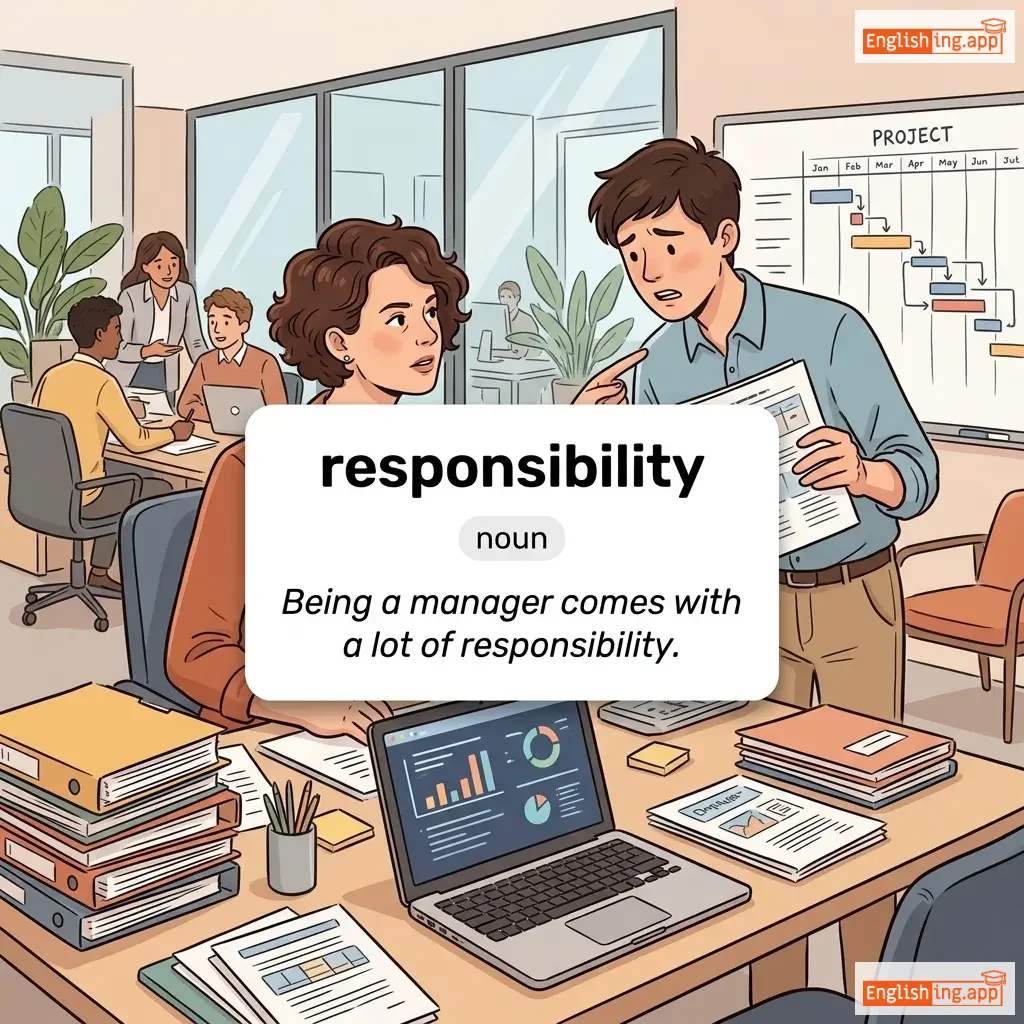
/rɪˌspɒn.sɪˈbɪl.ɪ.ti/
noun
(респонсибилити)
••••••
|
|
ответственность
ri spon si bi li ti
••••••
|
- •••••• | - •••••• | - •••••• | - •••••• |
the state or fact of having a duty to deal with something or of having control over someone
••••••
|
Taking responsibility for your actions shows maturity.
тейкинг респонсибилити фор йор экшнз шоуз мэтюрити
••••••
|
Принятие ответственности за свои действия демонстрирует зрелость.
prinyatie otvetstvennosti za svoi deystviya demonstiruet zrelost
••••••
|
- •••••• | - •••••• | - •••••• |
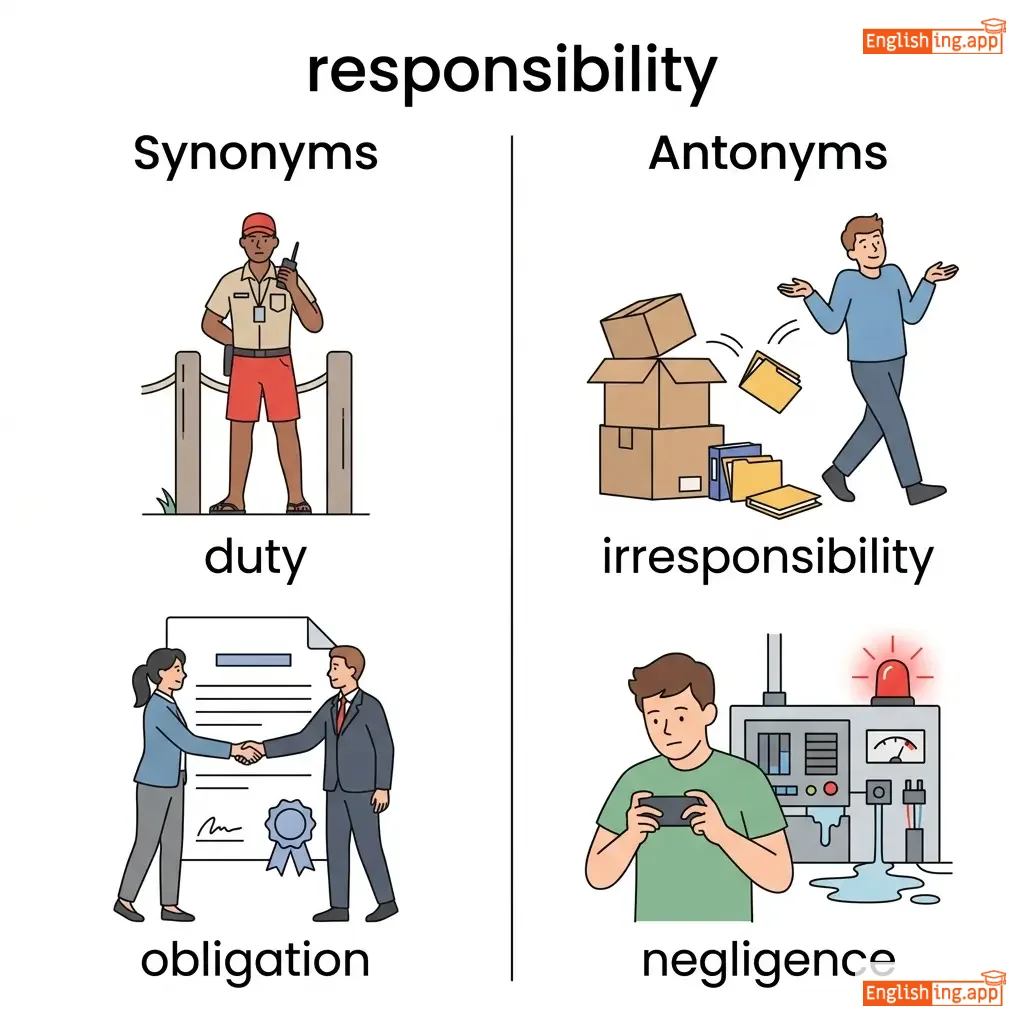
duty, obligation, accountability, liability
••••••
|
irresponsibility, carelessness, negligence
••••••
|
take responsibility, personal responsibility, full responsibility, social responsibility
••••••
|
РЕСПОНСИБИЛИТИ = Remember Every Situation, Personal Ownership; Помни каждую ситуацию, личная ответственность.
••••••
|
|
#0
💭
|
/ˈθɪŋkɪŋ/
noun
(ˈθɪŋkɪŋ)
••••••
|
- •••••• |
мышление
myshleniye
••••••
|
- •••••• | - •••••• | - •••••• | - •••••• |
the process of considering or reasoning about something
••••••
|
Her thinking was clear and precise. |
Ее мышление было ясным и точным.
Eyo myshleniye bylo yasnym i tochnym.
••••••
|
- •••••• | - •••••• | - •••••• |
thought, contemplation, reflection, reasoning
••••••
|
ignorance, confusion
••••••
|
critical thinking, logical thinking, abstract thinking
••••••
|
In Russian, 'мышление' means thinking, as if making wise decisions.
••••••
|
|
#0
😟
|
/ˈtrʌbəld/
adjective
(траблд)
••••••
|
- •••••• |
озабоченный
ozabochennyy
••••••
|
- •••••• | - •••••• | - •••••• | - •••••• |
experiencing or showing distress, anxiety, or worry
••••••
|
He looked deeply troubled after hearing the bad news. |
Он выглядел глубоко озабоченным после того, как услышал плохие новости.
On vyglyadel gluboko ozabochennym posle togo, kak uslyshal plokhie novosti.
••••••
|
troubled mind |
a mind filled with worry or anxiety
••••••
|
озабоченный ум
ozabochennyy um
••••••
|
worried, upset, anxious, distressed, uneasy
••••••
|
calm, relaxed, peaceful
••••••
|
troubled times, troubled relationship, deeply troubled, emotionally troubled
••••••
|
Troubled – озабоченный ум, наполненный тревогой
••••••
|
|
#0
🤔
|
/ʌnˈsɜːtən/
adjective
(アンセートン)
••••••
|
- •••••• |
неопределённый
neopredelyonnyy
••••••
|
- •••••• | - •••••• | - •••••• | - •••••• |
not sure or confident about something; not clearly known or decided
••••••
|
She felt uncertain about her future after graduation. |
Она чувствовала себя неуверенно относительно своего будущего после окончания учебы.
Ona chuvstvovala sebya neuverenno otnositel'no svoego budushchego posle okonchaniya ucheby.
••••••
|
in uncertain terms |
without being clear or definite
••••••
|
в неопределённых терминах
v neopredelyonnykh terminakh
••••••
|
unsure, doubtful, hesitant, indecisive, ambiguous
••••••
|
certain, confident, sure
••••••
|
uncertain future, uncertain times, uncertain outcome, feel uncertain
••••••
|
UN + определённый (не определённый) = неопределённый; помни, что 'uncertain означает неопределённое будущее'
••••••
|
Vocabulary Quiz
Test your vocabulary by matching words with their translations or meanings.
Login to take the quiz
Comments (0)
Share your thoughts and join the discussion.
Join the discussion by logging in
Login to CommentNo comments yet
Be the first to share your thoughts!