

Доктор, который спас жизнь
The Doctor Who Saved a Life
Доктор Карим был highly квалифицированным хирургом, работавшим в государственной больнице. During своей карьеры он провёл множество сложных операций, но пересадка kidney была его специальностью. Однажды поступил экстренный случай — молодой человек по имени Ракиб, у которого отказала kidney после серьёзной injury. Ракиб был former футболистом, injured в аварии. Его состояние было indeed критическим, и врачи не expect его выживания. Доктор Карим знал, что ему придётся endure долгую операцию. Из своего медицинского drawer он взял все необходимые инструменты. С помощью needle он начал процесс intake, внимательно следя за effect каждого лекарства. Его цель была enable Ракибу вести нормальную жизнь. Inside операционной вся entire команда была engaged в одной миссии. Операция была рискованной, и любая ошибка могла стать lethal. Доктор Карим аккуратно exposed повреждённый участок, following стандартный медицинский протокол. Его руки были устойчивыми, а концентрация абсолютной. During операции давление однажды упало, но команда быстро справилась. Посвящённость и опыт доктора Карима enabled успешную трансплантацию. После операции Ракиб постепенно начал восстанавливаться. Его семья была переполнена благодарностью. Доктор Карим доказал, что indeed, преданность и мастерство вместе могут спасти жизнь.
Обновитесь для доступа ко всему словарю
Получите неограниченный доступ ко всем словам с подпиской Pro
Обновить до ProПеревод
Прошедшее
Причастие прошедшего времени
Третье лицо единственного числа
Герундий
Значение
Пример предложения
Перевод примера предложения
Синонимы
Антонимы
Коллокации
Мнемоника





Swipe left or right, or use the buttons. Tap image to zoom.
Обновитесь для доступа ко всем предложениям
Получите неограниченный доступ ко всем предложениям с подпиской Pro
Обновить до ProПеревод примера предложения
Слово
The Doctor Who Saved a LifeThe Doctor Who Saved a Life - Переключатель маски
|
Эмодзи
|
Слово | Images | Перевод | Прошедшее | Причастие прошедшего времени | Третье лицо единственного числа | Герундий | Значение | Пример предложения | Перевод примера предложения | Пример выражения | Значение примера выражения | Перевод примера выражения | Синонимы | Антонимы | Коллокации | Мнемоника |
|---|---|---|---|---|---|---|---|---|---|---|---|---|---|---|---|---|---|
|
#0
🗄️
|
/ˈdrɔːər/
noun
(дроуэр)
••••••
|
- •••••• |
ящик
yashchik
••••••
|
- •••••• | - •••••• | - •••••• | - •••••• |
a box-shaped storage compartment that slides in and out of furniture
••••••
|
She kept her jewelry in the top drawer of the dresser.
Она положила свои украшения в верхний ящик комода.
••••••
|
Она положила свои украшения в верхний ящик комода.
Ona polozhila svoi ukrasheniya v verkhniy yashchik komoda.
••••••
|
- •••••• | - •••••• | - •••••• |
compartment, tray, storage, container, box
••••••
|
shelf, open space
••••••
|
desk drawer, top drawer, kitchen drawer, pull out drawer
••••••
|
Ящик = Является как Drawer, где хранятся вещи.
••••••
|
|
#0
⏳
|
/ˈdjʊərɪŋ/
preposition
(dyuring)
••••••
|
- •••••• |
во время
vo vremya
••••••
|
- •••••• | - •••••• | - •••••• | - •••••• |
throughout the course of a period of time
••••••
|
I fell asleep during the movie. |
Я заснул во время фильма.
Ya zasnul vo vremya fil'ma.
••••••
|
- •••••• | - •••••• | - •••••• |
throughout, amid, in, over
••••••
|
before, after, beyond
••••••
|
during the day, during the night, during the meeting, during the war
••••••
|
Во время означает 'в течение времени' (что-то происходит).
••••••
|
|
#0
✨
|
/ɪˈfɛkt/
noun
(и́фект)
••••••
|
- •••••• |
эффект
effekt
••••••
|
- •••••• | - •••••• | - •••••• | - •••••• |
a change that results from a particular action or cause
••••••
|
The new law had a positive effect on public safety. |
Новый закон оказал положительный эффект на общественную безопасность.
Novyy zakon okazal polozhitel'nyy effekt na obshchestvennuyu bezopasnost'.
••••••
|
take effect |
to begin to apply or produce results
••••••
|
вступить в силу
vstupit' v silu
••••••
|
result, outcome, consequence, impact, influence
••••••
|
cause, source, origin
••••••
|
positive effect, negative effect, cause and effect, special effect
••••••
|
Effekt на русском означает влияние, запомни через слово «эффект».
••••••
|
|
#0
🔓
|
/ɪˈneɪbəl/
verb
(энейбл)
••••••
|
|
включить
vklyuchit
••••••
|
enabled
энейблд
••••••
|
enabled
энейблд
••••••
|
enables
энейблс
••••••
|
enabling
энейблинг
••••••
|
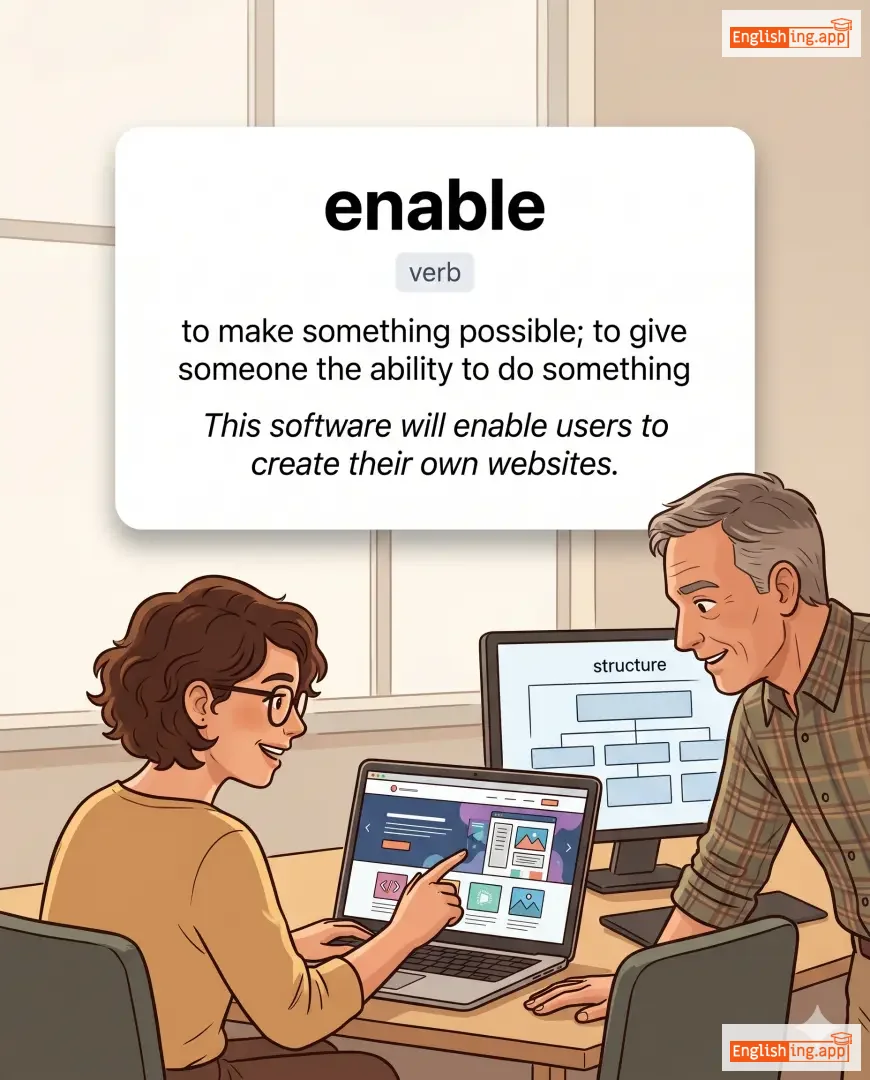
to make something possible; to give someone the ability to do something
••••••
|
This software will enable users to create their own websites.
Это программное обеспечение позволит пользователям создавать собственные сайты.
••••••
|
Это программное обеспечение позволит пользователям создавать собственные сайты.
Eto programmnoe obespechenie pozvolit pol'zovatelyam sozdavat' sobstvennye sayty.
••••••
|
enable access
включить доступ
••••••
|
to provide the ability to enter or use something
••••••
|
включить доступ
vklyuchit' dostup
••••••
|
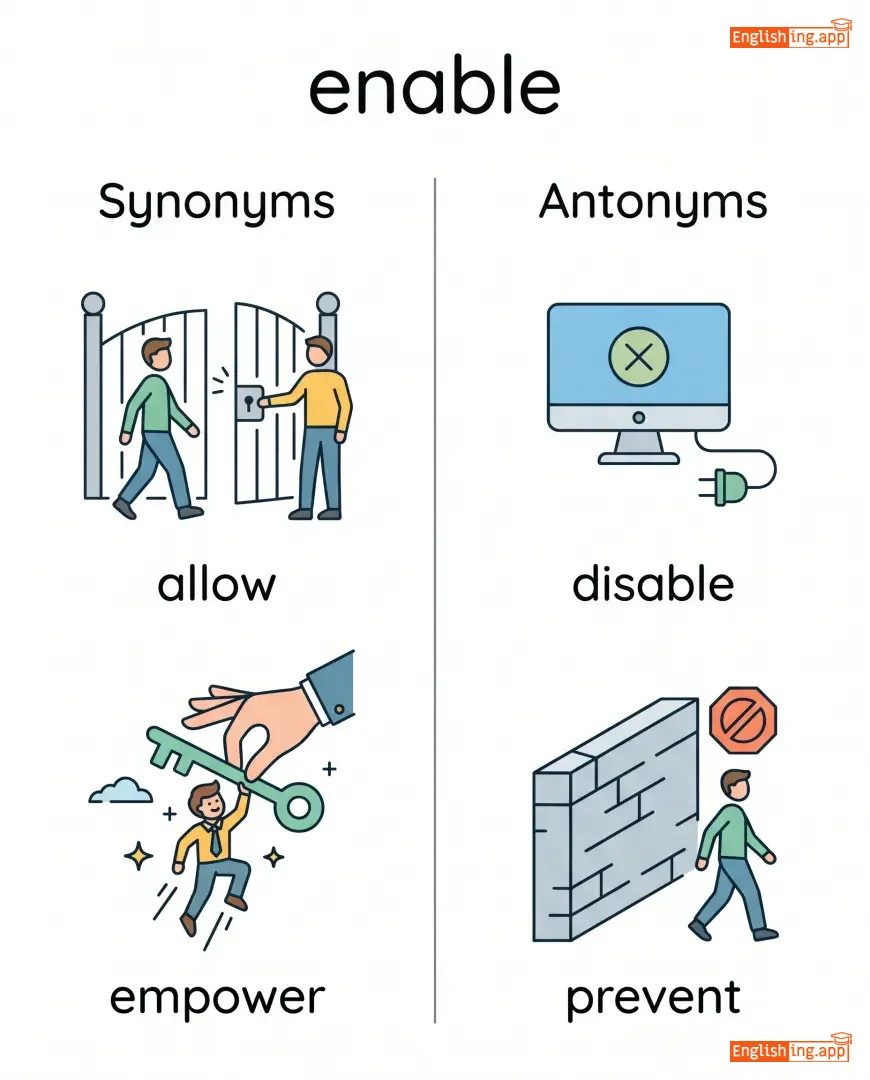
allow, empower, facilitate, permit, authorize
••••••
|
disable, prevent, hinder
••••••
|
enable users, enable system, enable feature, enable access
••••••
|
Enable — это дать возможность действовать, активировать.
••••••
|
|
#0
🧘
|
/ɪnˈdjʊər/
verb
(эндюр)
••••••
|
- •••••• |
терпеть
terpet'
••••••
|
endured
эндюрил
••••••
|
endured
эндюрен
••••••
|
endures
эндюрит
••••••
|
enduring
эндюринг
••••••
|
to suffer something difficult or unpleasant patiently
••••••
|
He had to endure years of hardship before achieving success.
Он должен был вытерпеть годы трудностей, прежде чем достичь успеха.
••••••
|
Он должен был вытерпеть годы трудностей, прежде чем достичь успеха.
On dolzhen byl vyterpet' gody trudnostey, prezhde chem dostich' uspekha.
••••••
|
endure the pain
вытерпеть боль
••••••
|
to tolerate or bear pain without giving up
••••••
|
терпеть боль
terpet' bol'
••••••
|
tolerate, withstand, suffer, persevere, bear
••••••
|
give up, quit, avoid
••••••
|
endure hardship, endure pain, endure suffering, endure stress
••••••
|
Endure напоминает 'end' (конец), что означает терпеть до самого конца.
••••••
|
|
#0
🎯
|
/ɪnˈɡeɪdʒ/
verb
(энˈɡеɪдж)
••••••
|
- •••••• |
вовлечь
vovlechat
••••••
|
engaged
энˈɡеɪджд
••••••
|
engaged
энˈɡеɪджд
••••••
|
engages
энˈɡеɪджес
••••••
|
engaging
энˈɡеɪджинг
••••••
|
To participate or become involved in; to attract or hold attention.
••••••
|
The teacher tried to engage the students in the discussion.
Учитель пытался вовлечь студентов в обсуждение.
••••••
|
Учитель пытался вовлечь студентов в обсуждение.
Uchitel' pytalsya vovlech' studentov v obsuzhdenie.
••••••
|
engage in
вовлечь в
••••••
|
To take part in or participate in something.
••••••
|
вовлечь в
vovlech' v
••••••
|
involve, participate, occupy, employ, captivate
••••••
|
ignore, disengage, neglect
••••••
|
engage students, engage in conversation, engage attention, engage actively
••••••
|
Вовлечь: быть вовлечённым в действия.
••••••
|
|
#0
🌍
|
/ɪnˈtaɪər/
adjective
(энтэир)
••••••
|
- •••••• |
целый
tsely
••••••
|
- •••••• | - •••••• | - •••••• | - •••••• |
whole; with no part left out
••••••
|
He spent the entire day reading books. |
Он провел весь день, читая книги.
On provel ves' den', chitaya knigi.
••••••
|
the entire world |
everywhere; globally
••••••
|
весь мир
ves' mir
••••••
|
whole, complete, full, total, all
••••••
|
partial, incomplete
••••••
|
entire day, entire life, entire system, entire team
••••••
|
Entire значит целый, все включено
••••••
|
|
#0
🤔
|
/ɪkˈspɛkt/
verb
(экспект)
••••••
|
|
ожидать
ozhidayt
••••••
|
expected
экспектед
••••••
|
expected
экспектед
••••••
|
expects
экспектс
••••••
|
expecting
экспектинг
••••••
|
to believe that something will happen or that someone will arrive; to anticipate
••••••
|
I expect the package to arrive tomorrow.
Я ожидаю, что пакет прибудет завтра.
••••••
|
Я ожидаю, что пакет прибудет завтра.
Ya ozhidayu, chto paket pribudet zavtra.
••••••
|
expect the unexpected
ожидать неожиданное
••••••
|
be prepared for surprises or unforeseen events
••••••
|
ожидать неожиданное
ozhidat' neozhidannoe
••••••
|
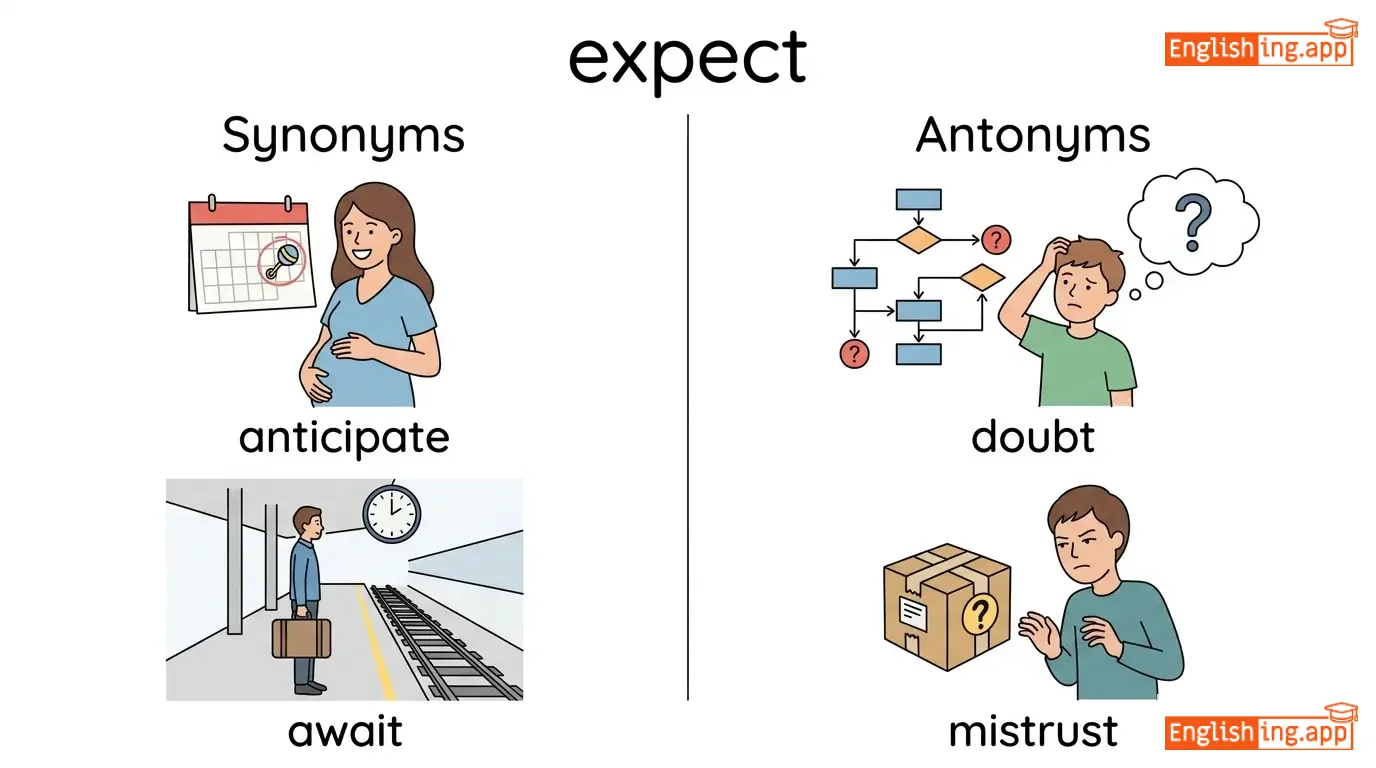
anticipate, await, foresee, predict, assume
••••••
|
doubt, mistrust, question
••••••
|
expect a baby, expect results, expect more, expect the worst
••••••
|
Expect - это ожидать, как ожидать результаты экзамена.
••••••
|
|
#0
🔎
|
/ɪkˈspoʊz/
verb
(eks-poz)
••••••
|
|
раскрывать
raskryvat
••••••
|
exposed
eks-poseyd
••••••
|
exposed
eks-poseyd
••••••
|
exposes
eks-pozit
••••••
|
exposing
eks-pozit
••••••
|
to reveal or uncover something hidden
••••••
|
The journalist tried to expose the corruption scandal.
Журналист попытался раскрыть коррупционный скандал.
••••••
|
Журналист попытался раскрыть коррупционный скандал.
Zhurnalist popytalsya raskryt' korrupcionnyj skandal.
••••••
|
expose the truth
раскрыть правду
••••••
|
to reveal the real facts
••••••
|
раскрыть правду
raskryt' pravdu
••••••
|
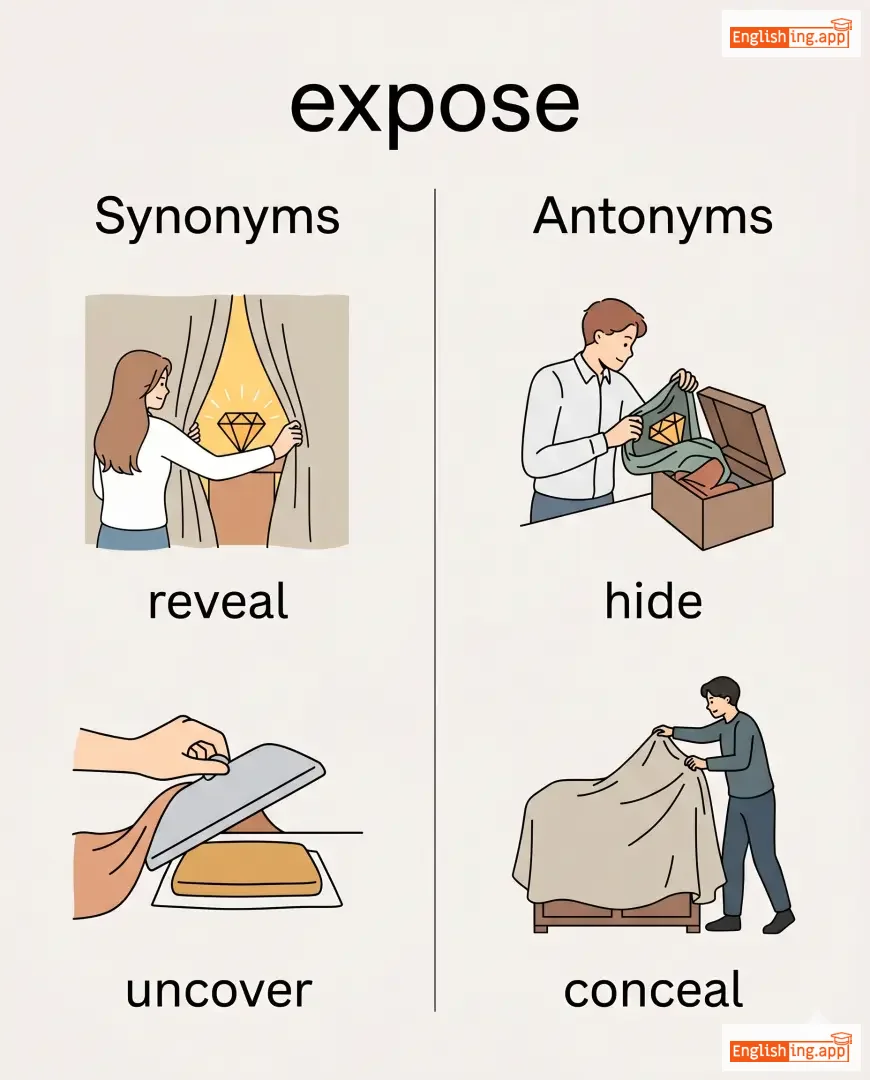
reveal, uncover, disclose, unveil
••••••
|
hide, conceal, cover
••••••
|
expose corruption, expose truth, expose secrets, expose fraud
••••••
|
Раскрыть – это как 'раскрывать коробку', внутри что-то скрытое.
••••••
|
|
#0
➡️
|
/ˈfɒloʊ/
verb
(фоло)
••••••
|
- •••••• |
следовать
sleduvat
••••••
|
followed
фоловед
••••••
|
followed
фоловед
••••••
|
follows
фоловс
••••••
|
following
фолоуинг
••••••
|
to move behind someone or something; to go after or come after
••••••
|
The children followed their teacher into the classroom.
Дети следовали за своим учителем в класс.
••••••
|
Дети следовали за своим учителем в класс.
Deti sleduvali za svoim uchitelem v klass.
••••••
|
follow suit
следовать примеру
••••••
|
to do the same as someone else has just done
••••••
|
следовать примеру
sleduvat primery
••••••
|
pursue, track, chase, obey, accompany
••••••
|
lead, precede, ignore
••••••
|
follow instructions, follow orders, follow closely, follow a path
••••••
|
Следовать - это делать то же самое, как кто-то другой, например, следовать в Инстаграме.
••••••
|
|
#0
⏳
|
/ˈfɔːrmər/
adjective
(фо́рмер)
••••••
|
- •••••• |
бывший
byvshiy
••••••
|
- •••••• | - •••••• | - •••••• | - •••••• |
Having been previously in a particular role or position.
••••••
|
He is a former president of the association. |
Он бывший президент ассоциации.
On byvshiy prezident assotsiatsii.
••••••
|
- •••••• | - •••••• | - •••••• |
previous, ex, prior, earlier
••••••
|
current, present
••••••
|
former president, former employee, former partner, former member
••••••
|
Former означает 'кто был раньше' → бывший человек.
••••••
|
|
#0
🌟
|
/ˈhaɪli/
adverb
(хаили)
••••••
|
- •••••• |
высоко
vysoko
••••••
|
- •••••• | - •••••• | - •••••• | - •••••• |
to a great degree; very
••••••
|
She is highly respected in her field. |
Она высоко уважает в своей области.
Ona vysoko uzhajet v svoey oblasti.
••••••
|
think highly of |
to admire or have a good opinion of someone
••••••
|
высоко думать о
vysoko dumat' o
••••••
|
greatly, very, extremely, exceedingly, intensely
••••••
|
slightly, poorly, inadequately
••••••
|
highly skilled, highly effective, highly unlikely, highly respected
••••••
|
Highly означает высоко — очень.
••••••
|
|
#0
✅
|
/ɪnˈdiːd/
adverb
(инди́д)
••••••
|
- •••••• |
действительно
deystvitel'no
••••••
|
- •••••• | - •••••• | - •••••• | - •••••• |
used to emphasize or confirm a statement
••••••
|
It was a long journey indeed.
Это было долгое путешествие, действительно.
••••••
|
Это было долгое путешествие, действительно.
Eto bylo dolgoye puteshestviye, deystvitel'no.
••••••
|
yes indeed
Да, действительно
••••••
|
used to strongly agree with someone
••••••
|
Да, действительно
Da, deystvitel'no
••••••
|
certainly, truly, really, actually, definitely
••••••
|
doubtfully, uncertainly
••••••
|
indeed true, yes indeed, thank you indeed
••••••
|
Indeed означает 'действительно' ✅ как 'In deed' означает 'в действии'.
••••••
|
|
#0
🤕
|
/ˈɪndʒər/
verb
(инджур)
••••••
|
- •••••• |
повредить
povredit
••••••
|
injured
инджёрд
••••••
|
injured
инджёрд
••••••
|
injures
инджёрс
••••••
|
injuring
инджуринг
••••••
|
to cause physical harm or damage to someone or something
••••••
|
He injured his leg while playing football.
Он инджёрд хиз лэг уайл плэйинг футбол.
••••••
|
Он повредил ногу, играя в футбол.
On povredil nogu, igraya v futbol.
••••••
|
injure someone's pride
инджур самван'с прайд
••••••
|
to hurt someone's feelings or sense of self-respect
••••••
|
повредить чью-то гордость
povredit ch'yuto gordost'
••••••
|
hurt, wound, damage, harm, bruise
••••••
|
heal, repair, cure
••••••
|
injure someone, injure badly, seriously injured, injure oneself
••••••
|
Injury + injure — Когда есть injury, нужно injure!
••••••
|
|
#0
🤕
|
/ˈɪndʒəri/
noun
(indzhuri)
••••••
|
- •••••• |
травма
travma
••••••
|
- •••••• | - •••••• | - •••••• | - •••••• |
Harm or damage to a person’s body caused by an accident or attack.
••••••
|
He suffered a serious injury during the football match. |
Он получил серьезную травму во время футбольного матча.
On poluchil seryoznuyu travmu vo vremya futbol'nogo matcha.
••••••
|
personal injury |
Physical harm to a person’s body caused by someone else’s actions.
••••••
|
личная травма
lichnaya travma
••••••
|
wound, harm, damage, trauma
••••••
|
healing, recovery
••••••
|
serious injury, minor injury, prevent injury, sports injury
••••••
|
Injury означает травма - в футболе часто случаются травмы.
••••••
|
|
#0
🏠
|
/ˌɪnˈsaɪd/
preposition/adverb/adjective/noun
(хэппинесс)
••••••
|
- •••••• |
счастье
schast'ye
••••••
|
- •••••• | - •••••• | - •••••• | - •••••• |
Situated within something; the inner part of something.
••••••
|
She waited inside the house until the rain stopped. |
Она не могла скрыть своего счастья, когда получила награду.
Ona ne mogla skryt' svoego schast'ya, kogda poluchila nagradu.
••••••
|
inside out |
Completely; with thorough knowledge or in reverse.
••••••
|
поиск счастья
poisk schast'ya
••••••
|
within, indoors, interior, inner, internal
••••••
|
outside, external, exterior
••••••
|
inside the house, inside the box, inside job, look inside
••••••
|
Schast'ye = чувство радости и удовлетворения.
••••••
|
|
#0
🍽️
|
/ˈɪnˌteɪk/
noun
(интэйк)
••••••
|
- •••••• |
потребление
potreblenie
••••••
|
- •••••• | - •••••• | - •••••• | - •••••• |
the process of taking something in, especially food or drink
••••••
|
He monitored his daily intake of calories to maintain a healthy diet. |
Он контролировал свое ежедневное потребление калорий, чтобы поддерживать здоровую диету.
On kontroliroval svoyo ezhednevnoe potreblenie kaloriy, chtoby podderzhivat' zdorovuyu dietu.
••••••
|
- •••••• | - •••••• | - •••••• |
consumption, absorption, intake amount
••••••
|
output, expulsion
••••••
|
calorie intake, food intake, daily intake
••••••
|
Потребление означает принимать что-то, как еду или напитки.
••••••
|
|
#0
🫘
|
/ˈkɪdni/
noun
(kídni)
••••••
|
- •••••• |
почка
pochka
••••••
|
- •••••• | - •••••• | - •••••• | - •••••• |
either of a pair of organs that filter waste products from the blood and produce urine
••••••
|
Drinking plenty of water helps keep your kidneys healthy.
Drinking plenty of water helps keep your kidneys healthy.
••••••
|
Пить много воды помогает поддерживать здоровье почек.
Pit' mnogo vody pomogaet podderzhivat' zdorov'e pochek.
••••••
|
- •••••• | - •••••• | - •••••• |
renal organ
••••••
|
- •••••• |
kidney disease, kidney stone, kidney function, kidney transplant
••••••
|
Почка - Употребление воды поддерживает здоровье почек.
••••••
|
|
#0
☠️
|
/ˈliːθəl/
adjective
(литхал)
••••••
|
- •••••• |
смертельный
smertel'nyy
••••••
|
- •••••• | - •••••• | - •••••• | - •••••• |
Able to cause death; deadly.
••••••
|
The snake's venom is extremely lethal. |
Яд змеи крайне смертелен.
Yad zmei krayne smertelen.
••••••
|
lethal weapon |
a weapon capable of killing
••••••
|
смертельное оружие
smertel'noe oruzhie
••••••
|
deadly, fatal, mortal, poisonous
••••••
|
harmless, safe, nonlethal
••••••
|
lethal weapon, lethal dose, lethal force, lethal injection
••••••
|
Lethal означает lethal weapon, то есть смертельное оружие.
••••••
|
|
#0
💉
|
/ˈniː.dəl/
noun, verb
(нидл)
••••••
|
- •••••• |
игла
igla
••••••
|
needled
нидлд
••••••
|
needled
нидлд
••••••
|
needles
нидлс
••••••
|
needling
нидлинг
••••••
|
a small thin metal tool with a point used for sewing or injecting; to provoke or annoy someone
••••••
|
The nurse used a sterile needle for the injection.
медсестра использовала стерильную иглу для инъекции.
••••••
|
Медсестра использовала стерильную иглу для инъекции.
Medsestra ispol'zovala sterileyu iglu dlya in'ektsii.
••••••
|
needle in a haystack
игла в стоге сена
••••••
|
something that is extremely difficult or impossible to find
••••••
|
что-то чрезвычайно трудное или почти невозможное найти
chto-to chrezvychayno trudnoye ili pochti nevozmozhno nayti
••••••
|
pin, syringe, prick, irritate, provoke
••••••
|
soothe, calm
••••••
|
sewing needle, injection needle, needle and thread, needle prick
••••••
|
Игла означает Needle — запомни: игла ‘нуждается’ в том, чтобы пройти в ткань!
••••••
|
Vocabulary Quiz
Test your vocabulary by matching words with their translations or meanings.
Login to take the quiz
Comments (0)
Share your thoughts and join the discussion.
Join the discussion by logging in
Login to CommentNo comments yet
Be the first to share your thoughts!