

Сила общения
The Power of Communication
Нишат была экспертом по communication, проводившей тренинги в корпоративном секторе. Её специализация заключалась в том, чтобы обучать людей, как communicate эффективно, как ясно express своё message.
Она замечала, что многие талантливые люди отстают только из-за слабых навыков communication. Они могли хорошо работать, но не умели articulate свои идеи. Чувствовали себя неуверенно в conversations, боялись участвовать в discussions.
Нишат разработала комплексную программу обучения. Первый lesson был listening. «Хорошее communication начинается с listening,» сказала она. «Когда вы правильно listen, вы лучше understand и можете лучше respond.»
Она учила студентов, как произносить ясную speech, как использовать уверенный voice. Verbal communication — это не только слова, это интонация, темп, ясность — всё вместе.
Студенты практиковали dialogues, разыгрывали различные сценарии: кто-то делал презентацию продаж, кто-то проходил собеседование, кто-то выступал с презентацией. В каждом сценарии акцент делался на чёткое communication.
Нишат также подчёркивала важность языка тела (language). «Communication — это не только speaking,» объясняла она. «Ваша осанка, жесты, зрительный контакт — всё это тоже communicate message.»
Она talked о linguistic разнообразии. В Бангладеш существует множество languages и диалектов. Эффективные communicators умеют адаптироваться под свою аудиторию.
Важным модулем программы было fluent communication — как speak без колебаний, как плавно вести conversations.
Постепенно студенты становились увереннее. Они научились interact на профессиональных встречах, вести сложные conversations, использовать убедительный language.
После прохождения тренинга Нишат карьера студентов значительно улучшилась. Теперь они могут уверенно speak на собраниях, проводить презентации, эффективно communicate свои идеи.
Один студент позже сказал: «Навыки communication изменили мою карьеру. Теперь я могу ясно express свои мысли, активно listen другим, участвовать в конструктивных dialogues. Эти навыки полезны не только в профессиональной, но и в личной жизни.»
Теперь Нишат проводит семинары в разных организациях. Она говорит: «Эффективное communication — это самый важный навык. Когда вы можете ясно speak, внимательно listen, обдуманно respond, вы строите лучшие отношения. Verbal и не-verbal communication одинаково важны. Ваш voice, ваша speech, ваш language — всё имеет значение. Fluent communication — это не просто быстрое speaking, это ясность, уверенность и эффективность. Каждый conversation — это возможность, каждый dialogue — шанс установить связь. Когда вы understand, как communicate, вы открываете бесконечные возможности. Хорошие communicators становятся лучшими лидерами, членами команды и профессионалами. Они умеют express своё видение, articulate сложные идеи и эффективно interact со всеми. В этом и заключается сила communication. Это linguistic навык, который развивается с практикой и остаётся ценным на всю жизнь.»
Тренинги Нишат меняют не только индивидуальные способности communication, но и корпоративную культуру communication. Когда команды эффективно communicate, улучшается сотрудничество, растёт продуктивность и приходит успех. Её работа доказывает, что хорошее communication — это основа любого достижения, а овладение этим навыком — инвестиция в будущее.
Обновитесь для доступа ко всему словарю
Получите неограниченный доступ ко всем словам с подпиской Pro
Обновить до ProПеревод
Прошедшее
Причастие прошедшего времени
Третье лицо единственного числа
Герундий
Значение
Пример предложения
Перевод примера предложения
Синонимы
Антонимы
Коллокации
Мнемоника
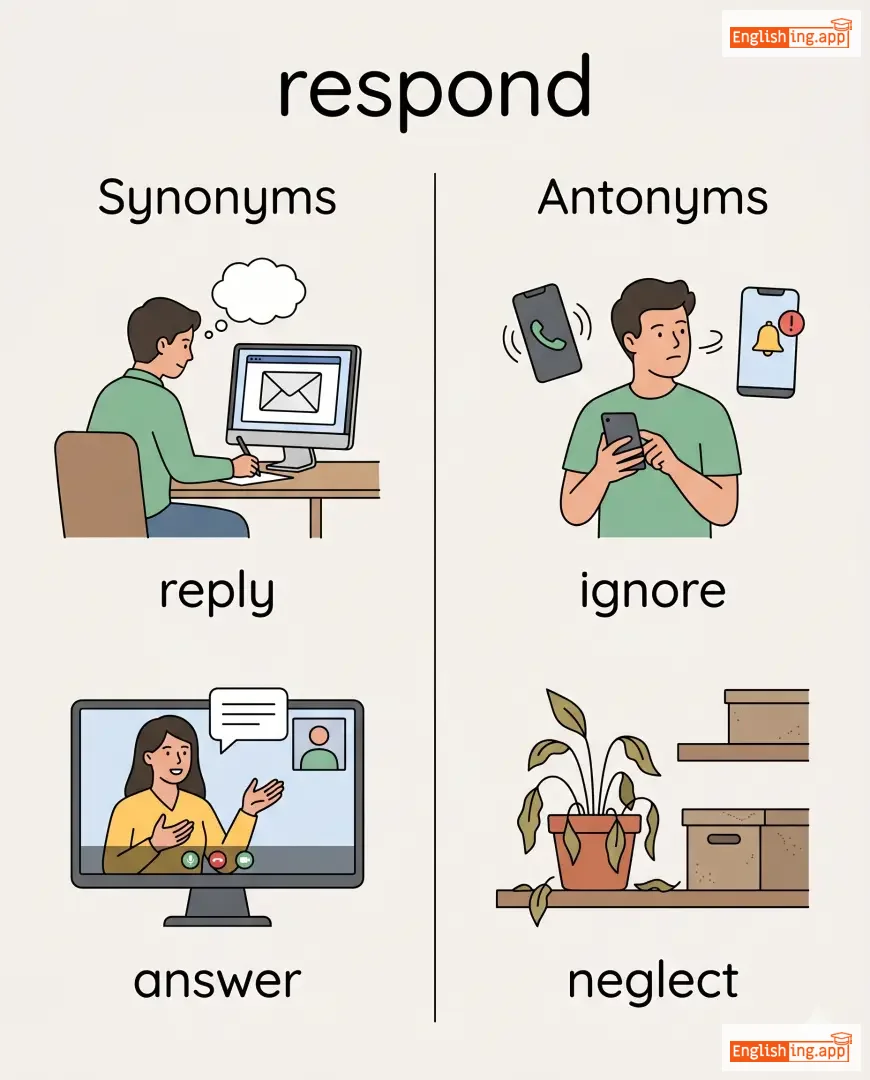
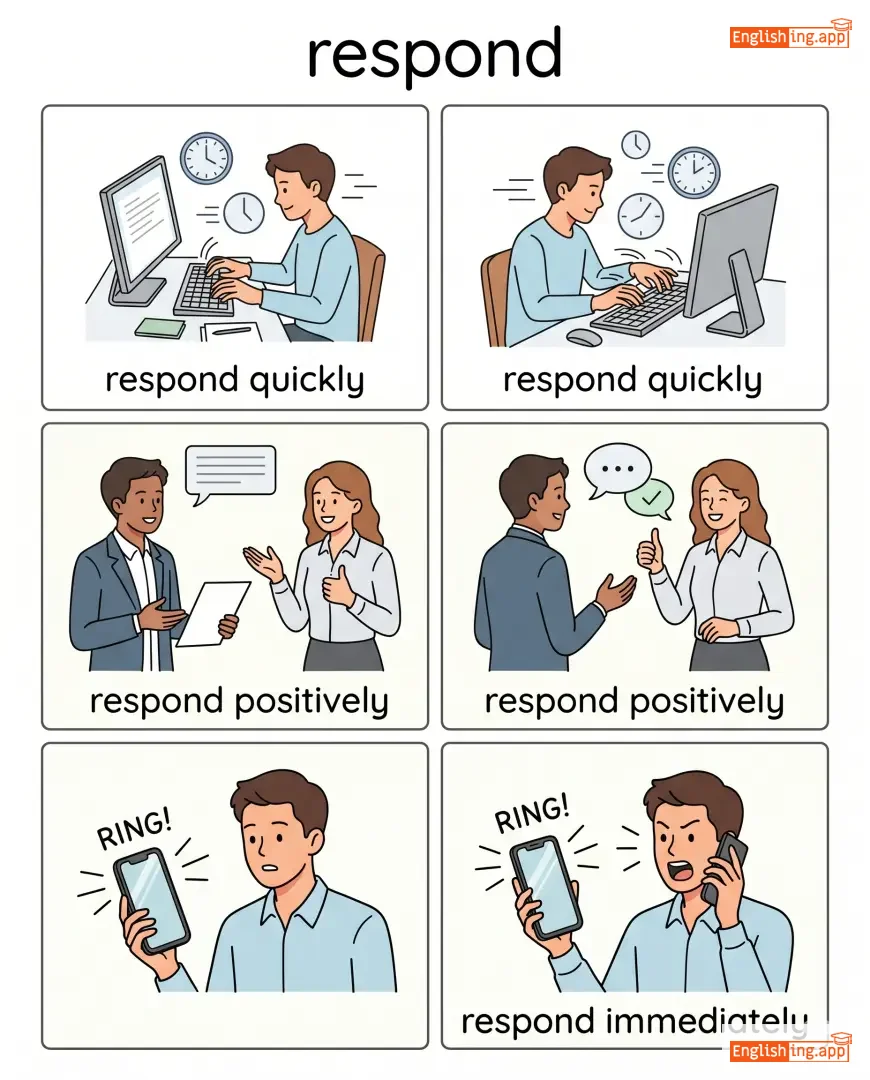

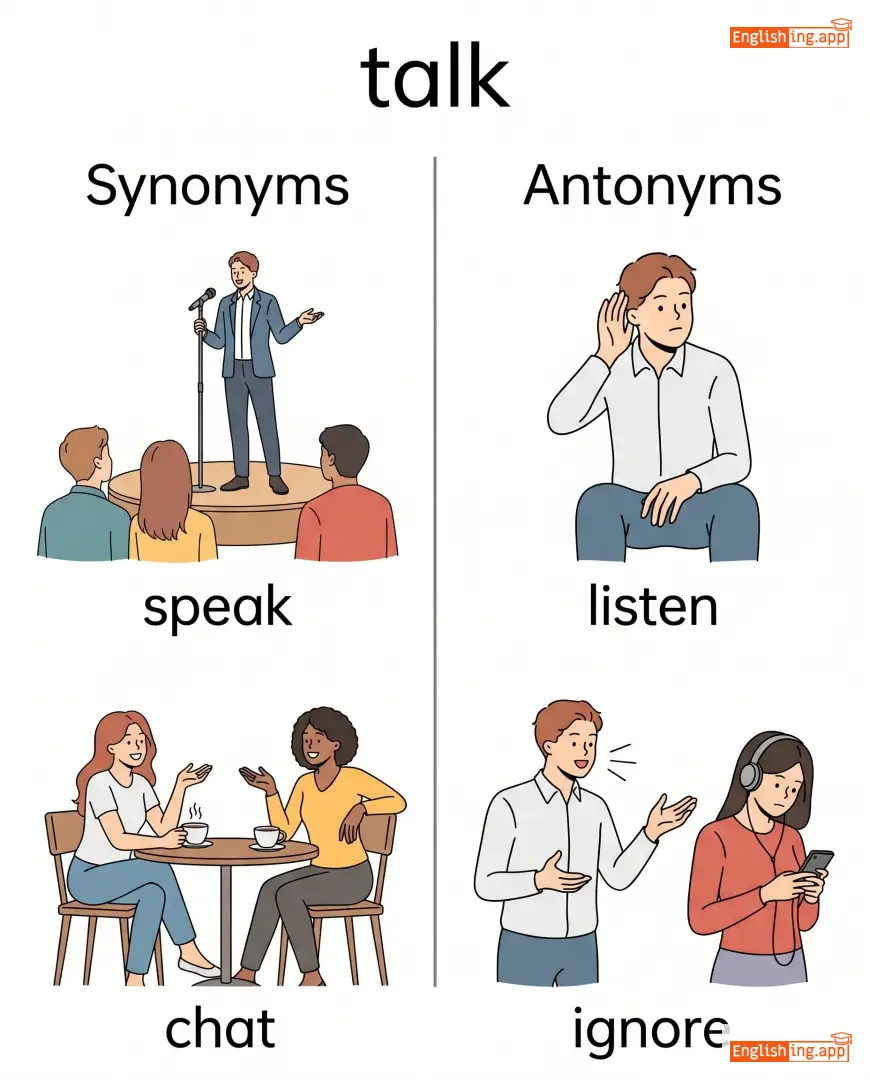
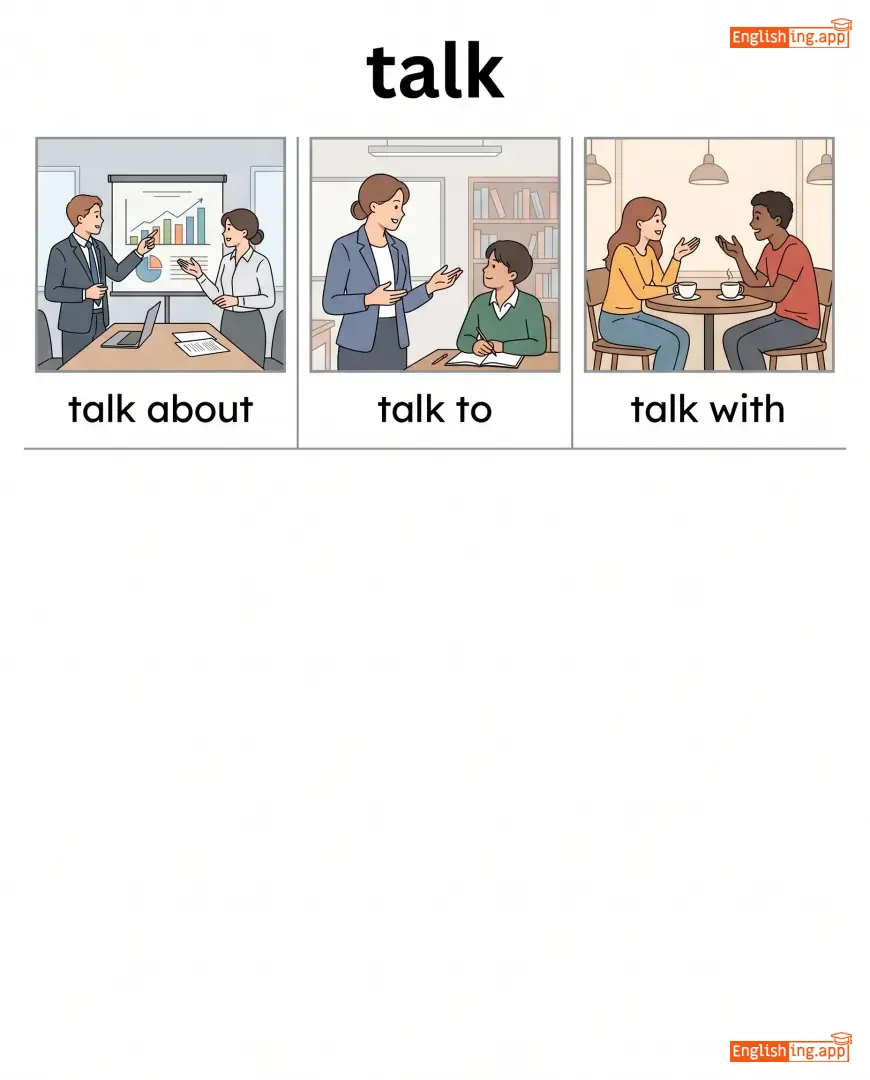

Swipe left or right, or use the buttons. Tap image to zoom.
Обновитесь для доступа ко всем предложениям
Получите неограниченный доступ ко всем предложениям с подпиской Pro
Обновить до ProПеревод примера предложения
Слово
The Power of CommunicationThe Power of Communication - Переключатель маски
|
Эмодзи
|
Слово | Images | Перевод | Прошедшее | Причастие прошедшего времени | Третье лицо единственного числа | Герундий | Значение | Пример предложения | Перевод примера предложения | Пример выражения | Значение примера выражения | Перевод примера выражения | Синонимы | Антонимы | Коллокации | Мнемоника |
|---|---|---|---|---|---|---|---|---|---|---|---|---|---|---|---|---|---|
|
#0
🗣️
|
/ɑːrˈtɪkjʊlət/
verb/adjective
(артикулировать)
••••••
|
- •••••• |
артикулировать
artikulirovat
••••••
|
articulated
артикулировал
••••••
|
articulated
артикулированный
••••••
|
articulates
артикулирует
••••••
|
articulating
артикулируя
••••••
|
to express thoughts or ideas clearly; having the ability to speak fluently and clearly
••••••
|
She was able to articulate her ideas during the meeting.
Она смогла артикулировать свои идеи на встрече.
••••••
|
Она смогла артикулировать свои идеи на встрече.
Ona smogla artikulirovat' svoi idei na vstreche.
••••••
|
articulate a vision
артикулировать видение
••••••
|
to clearly express or describe a goal or plan
••••••
|
артикулировать видение
artikulirovat' videnie
••••••
|
express, convey, enunciate, pronounce, clarify
••••••
|
mumble, mutter, unclear
••••••
|
articulate clearly, articulate ideas, articulate words, articulate speech
••••••
|
Articulate значит art+clear, по-русски — четко выразить.
••••••
|
|
#0
💬
|
/kəˈmjuː.nɪ.keɪt/
verb
••••••
|
- •••••• | - •••••• |
communicated
••••••
|
communicated
••••••
|
communicates
••••••
|
communicating
••••••
|
to share or exchange information, ideas, or feelings
••••••
|
They used gestures to communicate across the noisy room. |
- •••••• |
communicate clearly |
to express oneself in a way that others can easily understand
••••••
|
- •••••• |
convey, express, share, transmit, inform
••••••
|
conceal, suppress
••••••
|
communicate effectively, communicate directly, communicate through, communicate clearly
••••••
|
No •••••• |
|
#0
📞
|
/kəˌmjuː.nɪˈkeɪ.ʃən/
noun
(коммуникация)
••••••
|
|
коммуникация
kommunikatsiya
••••••
|
- •••••• | - •••••• | - •••••• | - •••••• |
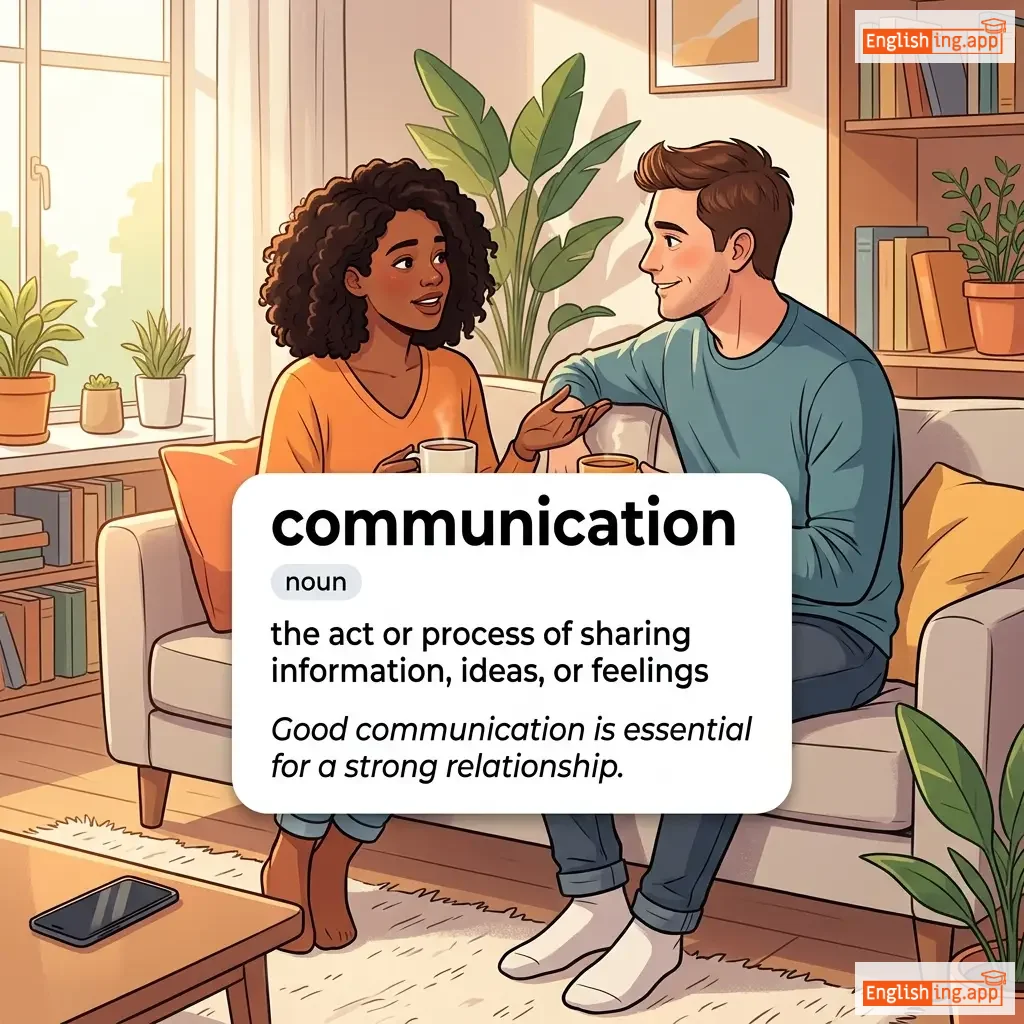
the act or process of sharing information, ideas, or feelings
••••••
|
Good communication is essential for a strong relationship. |
Хорошая коммуникация важна для крепких отношений.
Khoroshaya kommunikatsiya vazhna dlya krepkikh otnosheniy.
••••••
|
lines of communication |
the channels or methods by which people communicate
••••••
|
линии связи
linii svyazi
••••••
|
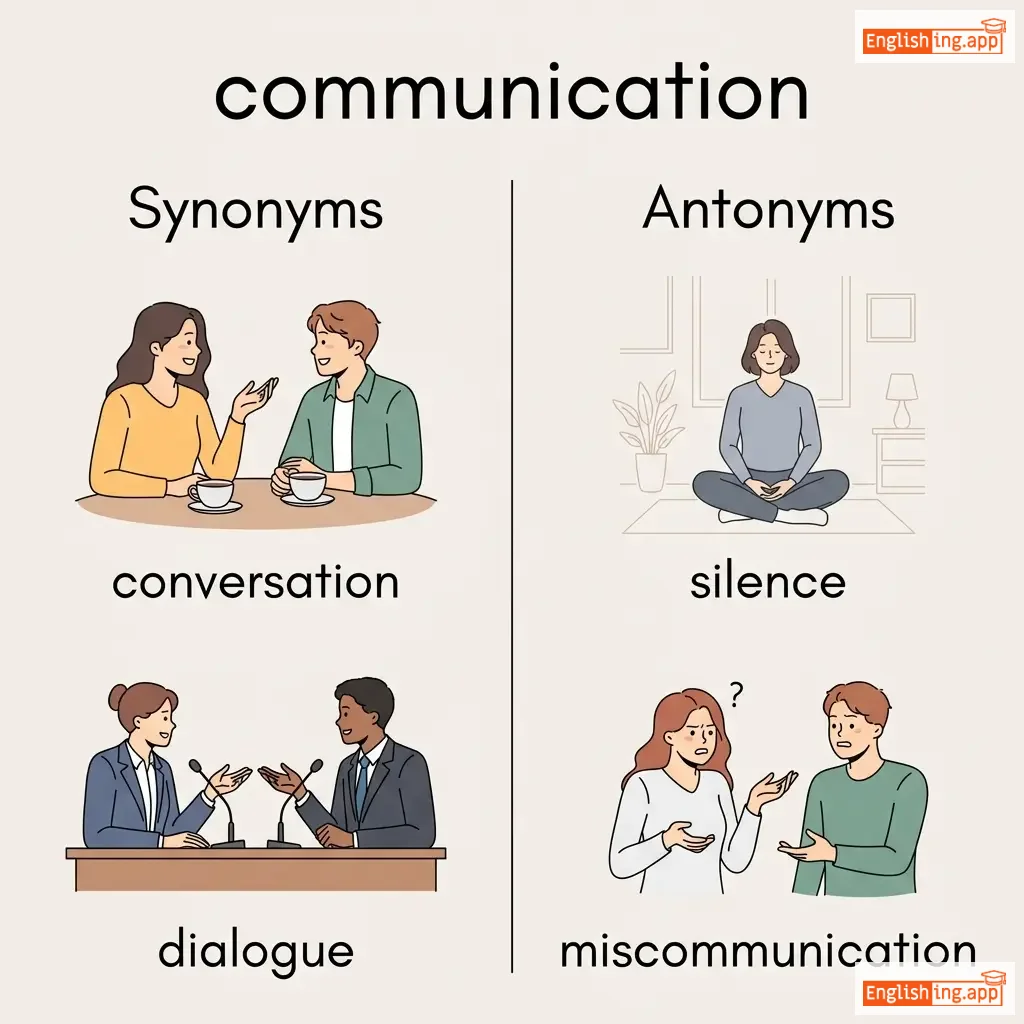
conversation, dialogue, exchange, correspondence, contact
••••••
|
silence, miscommunication
••••••
|
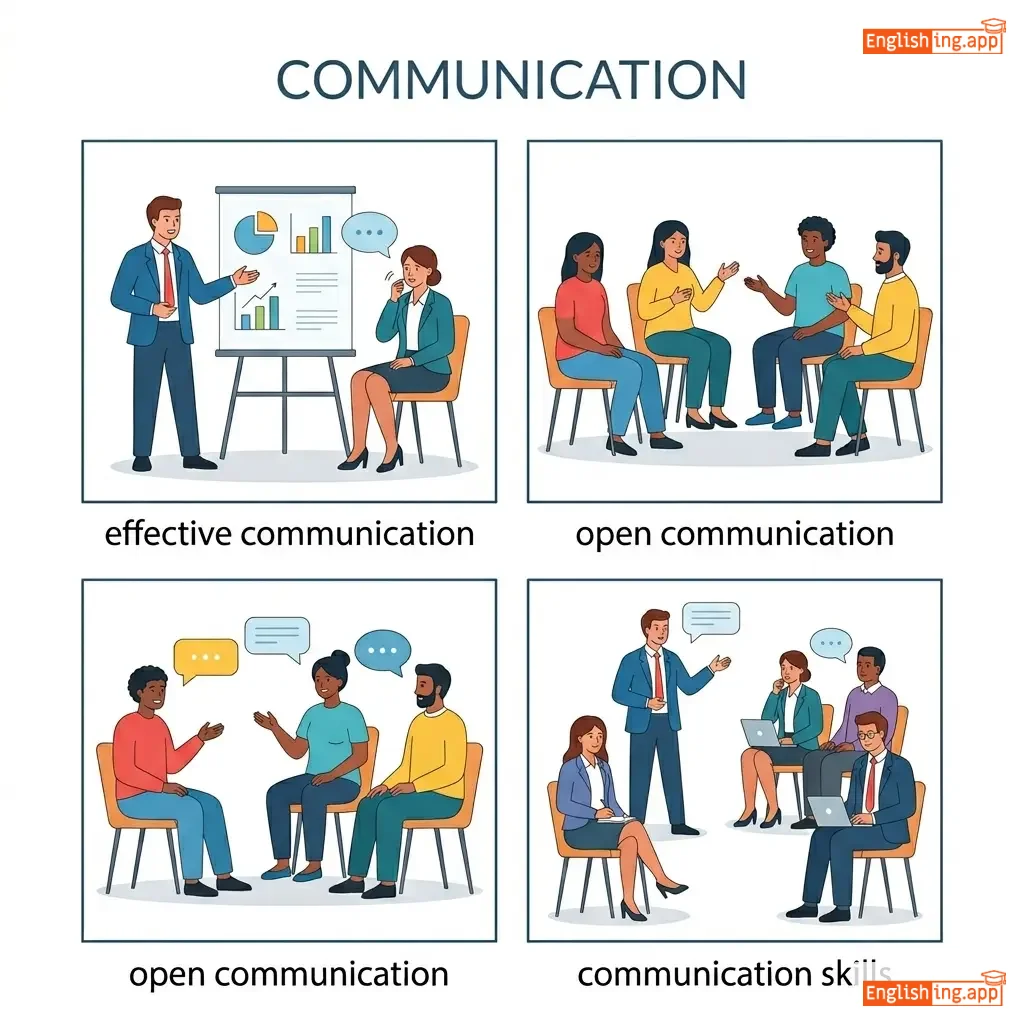
effective communication, open communication, communication skills, communication barrier
••••••
|
Коммуникация = сообщество + действие = обмен информацией в обществе
••••••
|
|
#0
💬
|
/ˌkɒnvəˈseɪʃn/
noun
(kɒnvəˈseɪʃn)
••••••
|
- •••••• |
разговор
razgovor
••••••
|
- •••••• | - •••••• | - •••••• | - •••••• |
an informal talk between two or more people, in which ideas, feelings, and thoughts are exchanged
••••••
|
We had a long conversation about future plans. |
Мы долго разговаривали о будущих планах.
My dolgo razgovarivali o budushchikh planakh.
••••••
|
make conversation |
to talk with someone to appear polite, often about trivial things
••••••
|
вести разговор
vesti razgovor
••••••
|
dialogue, talk, discussion, chat, exchange
••••••
|
silence, quiet, muteness
••••••
|
casual conversation, phone conversation, deep conversation, conversation starter
••••••
|
Разговор - это обмен идеями и мыслями.
••••••
|
|
#0
🗣️
|
/ˈdaɪəlɔːɡ/
noun
(диалог)
••••••
|
- •••••• |
диалог
dialog
••••••
|
- •••••• | - •••••• | - •••••• | - •••••• |
A conversation between two or more people, or a discussion aimed at reaching understanding.
••••••
|
The two countries engaged in a dialogue to resolve their differences. |
Две страны вступили в диалог, чтобы разрешить свои разногласия.
Dve strany vstupili v dialog, chtoby razreshit' svoi raznoglasiya.
••••••
|
open dialogue |
A transparent and constructive conversation.
••••••
|
открытый диалог
otkrytyy dialog
••••••
|
conversation, discussion, talk, exchange, communication
••••••
|
silence, monologue
••••••
|
constructive dialogue, political dialogue, open dialogue
••••••
|
Диалог = разговор → В русском языке диалог = разговор в фильме.
••••••
|
|
#0
💬
|
/dɪˈskʌs/
verb
(diskus)
••••••
|
- •••••• |
обсуждать
obshchushdat
••••••
|
discussed
diskust
••••••
|
discussed
diskust
••••••
|
discusses
diskuses
••••••
|
discussing
diskusing
••••••
|
To talk about something with another person or group in detail.
••••••
|
We need to discuss the project before finalizing it.
Нам нужно обсудить проект перед его завершением.
••••••
|
Нам нужно обсудить проект перед его завершением.
Nam nuzhno obshchusdat proyekt pered yego zaversheniem.
••••••
|
discuss matters
обсуждать дела
••••••
|
to talk about issues or problems
••••••
|
обсуждать вопросы
obshchushdat voprosy
••••••
|
talk, debate, confer, deliberate, examine
••••••
|
ignore, avoid
••••••
|
discuss a plan, discuss issues, discuss openly, discuss further
••••••
|
Обсуждать означает говорить о чём-то с другими.
••••••
|
|
#0
💬
|
/ɪkˈsprɛs/
verb
(экспресс)
••••••
|
- •••••• |
выражать
vyrazhat
••••••
|
expressed
выразил
••••••
|
expressed
выразил
••••••
|
expresses
выражает
••••••
|
expressing
выражая
••••••
|
to convey a thought, feeling, or idea in words, actions, or other forms
••••••
|
She expressed her gratitude with a warm smile.
Она выразила свою благодарность тёплой улыбкой.
••••••
|
Она выразила свою благодарность тёплой улыбкой.
Ona vyrazilas' svoi blagodarnost' tyoploi ulybkoi.
••••••
|
express yourself
вырази себя
••••••
|
to communicate one's thoughts and feelings openly
••••••
|
вырази себя
vyrazi sebya
••••••
|
convey, communicate, articulate, state, voice
••••••
|
suppress, conceal, hide
••••••
|
express feelings, express gratitude, express concern, express clearly
••••••
|
Выражай свои чувства, как художник — словами!
••••••
|
|
#0
🗣️
|
/ˈfluːənt/
adjective
(флûэнт)
••••••
|
- •••••• |
беглый
beglyy
••••••
|
- •••••• | - •••••• | - •••••• | - •••••• |
Able to speak, write, or express oneself smoothly and easily.
••••••
|
She is fluent in both English and Spanish. |
Она бегло говорит на английском и испанском.
Ona beglo govorit na angliyskom i ispanskom.
••••••
|
fluent speaker |
Someone who speaks a language smoothly and naturally.
••••••
|
беглый говорящий
beglyy govoryashchiy
••••••
|
articulate, expressive, eloquent, smooth, proficient
••••••
|
inarticulate, hesitant, awkward
••••••
|
fluent speaker, fluent English, fluent in, become fluent
••••••
|
Fluent – как беглый поток воды, легко текущее слово.
••••••
|
|
#0
🤝
|
/ˌɪntərˈækt/
verb
(интеракт)
••••••
|
|
взаимодействовать
vzaimodeystvovat
••••••
|
interacted
интерактед
••••••
|
interacted
интерактед
••••••
|
interacts
интерактс
••••••
|
interacting
интерактинг
••••••
|
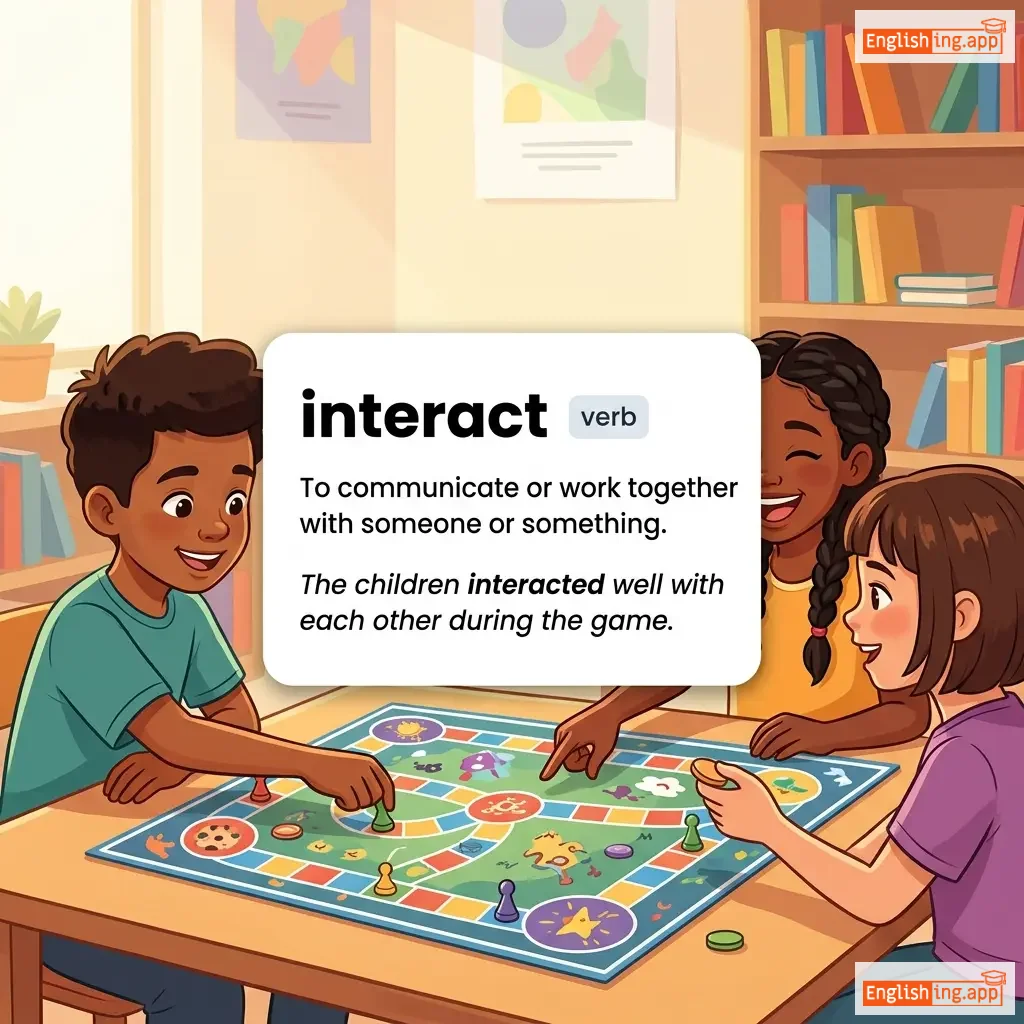
To communicate or work together with someone or something.
••••••
|
The children interacted well with each other during the game.
Дети хорошо взаимодействовали друг с другом во время игры.
••••••
|
Дети хорошо взаимодействовали друг с другом во время игры.
Deti khorosho vzaimodeystvovali drug s drugom vo vremya igry.
••••••
|
interact with
взаимодействовать с
••••••
|
to communicate or engage with someone or something
••••••
|
взаимодействовать с
vzaimodeystvovat s
••••••
|
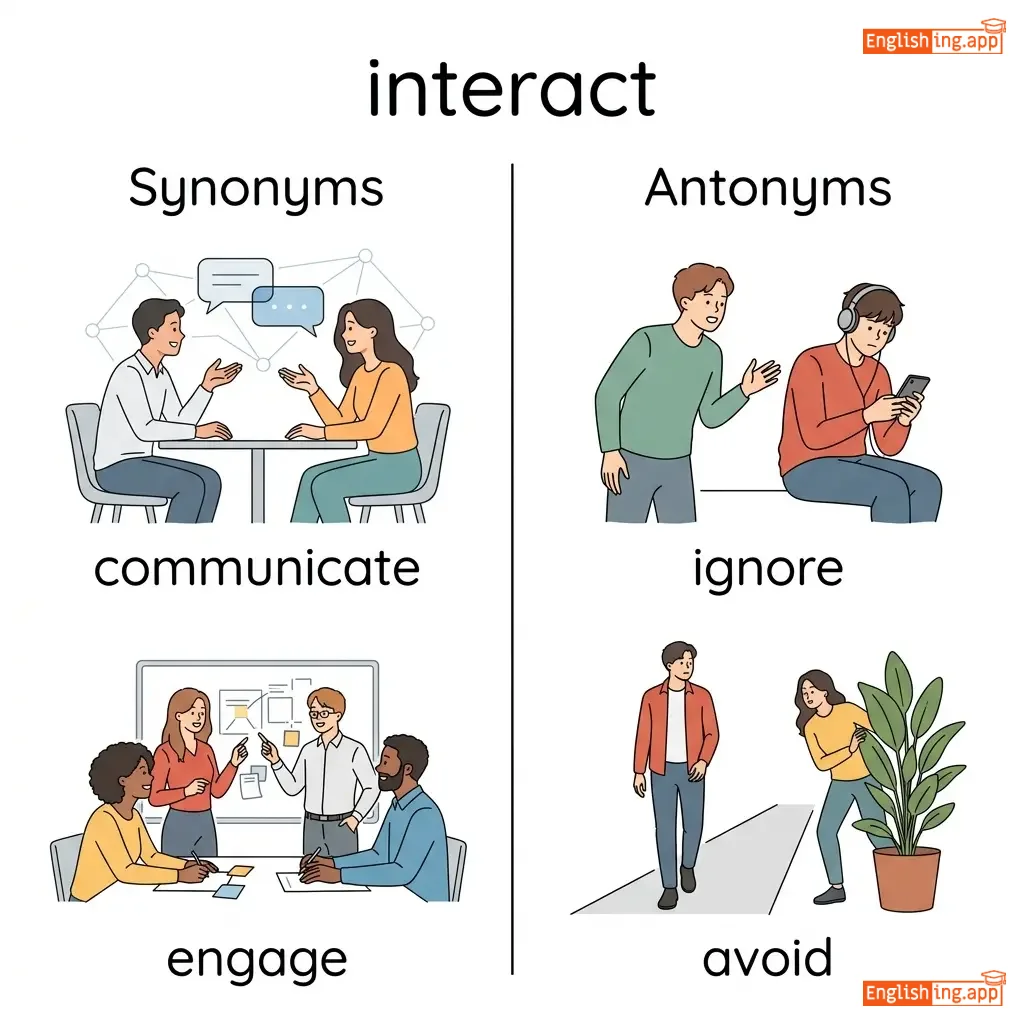
communicate, engage, connect, collaborate
••••••
|
ignore, avoid
••••••
|
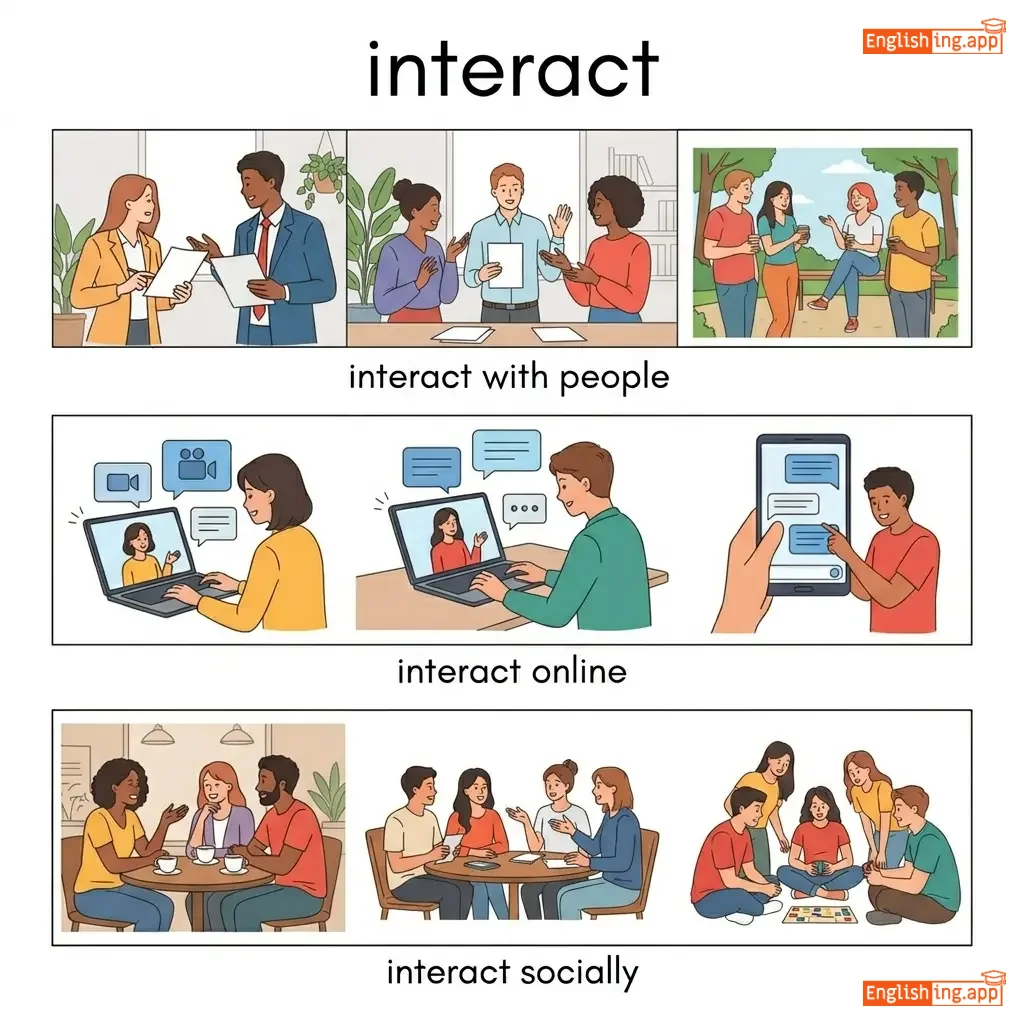
interact with people, interact online, interact socially
••••••
|
Взаимодействовать — это как взаимодействовать с другими во время игры.
••••••
|
|
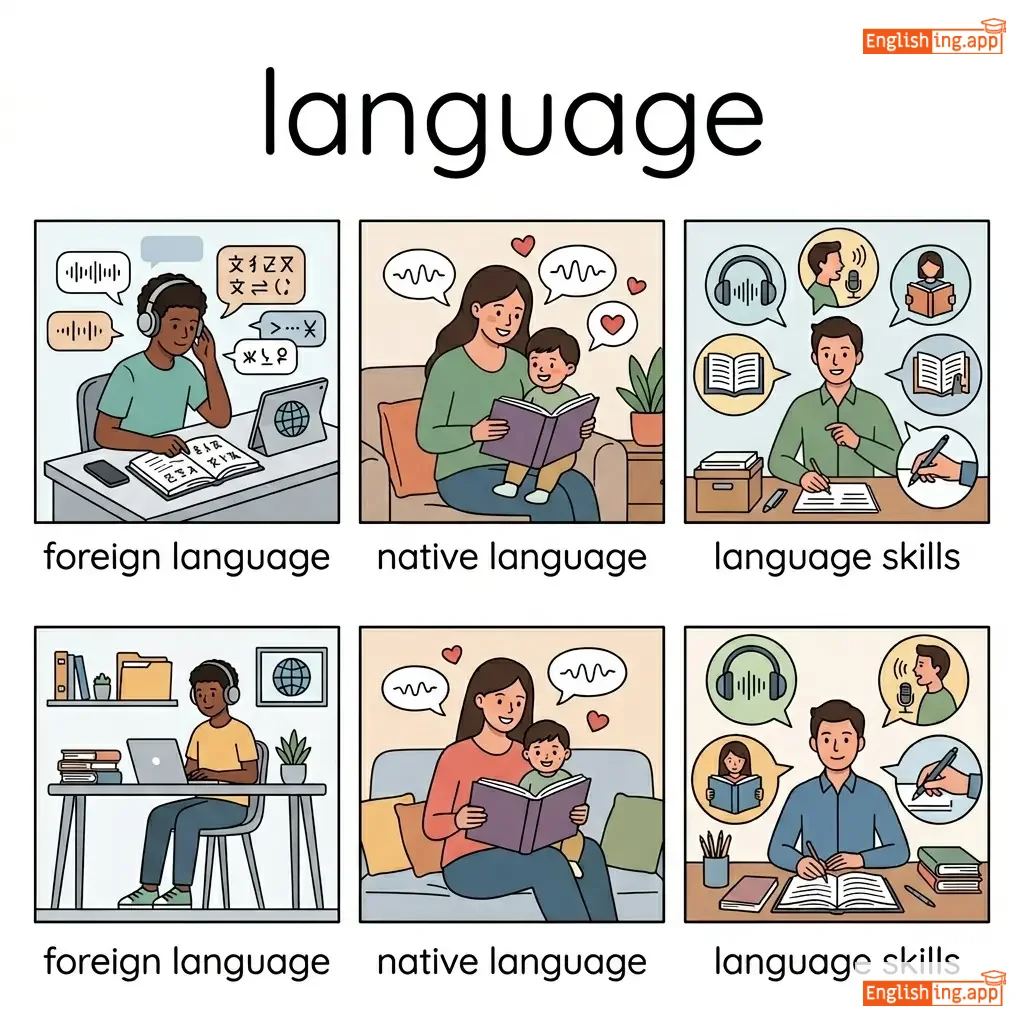
#0
🗣️
|
/ˈlæŋɡwɪdʒ/
noun
(lændwɪʤ)
••••••
|
|
язык
yazyk
••••••
|
- •••••• | - •••••• | - •••••• | - •••••• |
the system of communication used by a particular community, including spoken and written words
••••••
|
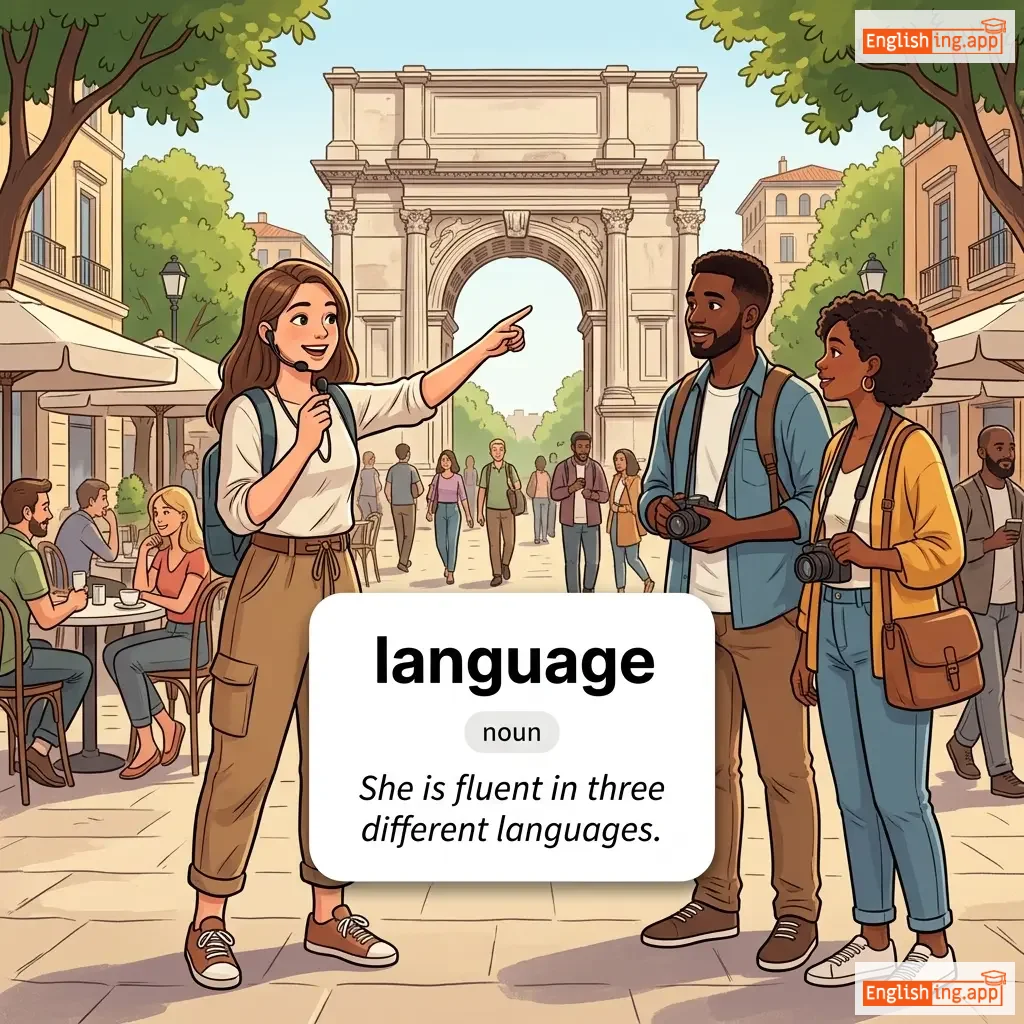
She is fluent in three different languages.
Она свободно говорит на трех разных языках.
••••••
|
Она свободно говорит на трех разных языках.
Ona svobodno govori na tryokh raznykh yazykaakh.
••••••
|
mother tongue
родной язык
••••••
|
a person's native language
••••••
|
родной язык
rodnoy yazyk
••••••
|
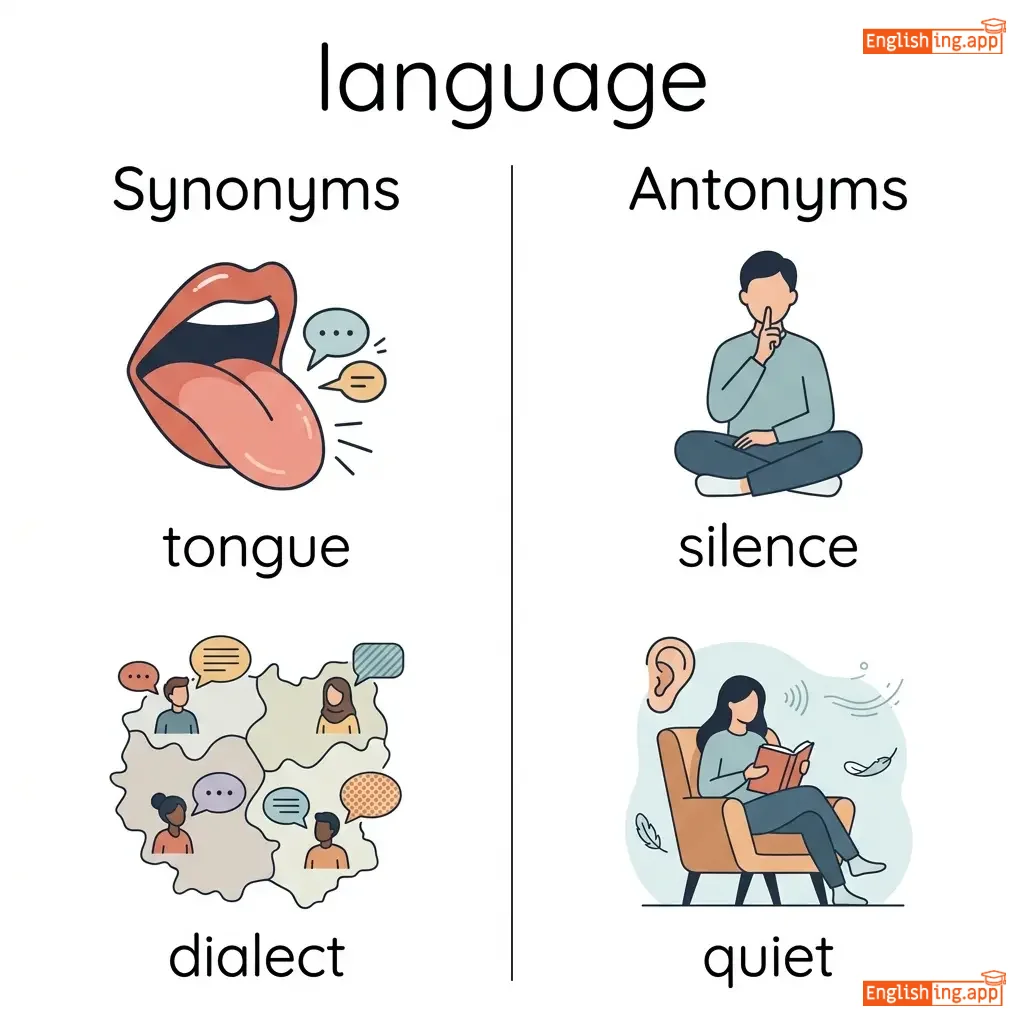
tongue, dialect, speech, lingo, communication
••••••
|
silence, quiet
••••••
|
foreign language, native language, language skills, language barrier
••••••
|
LANGUAGE означает ‘язык’ – как на русском языке, язык, и на английском языке, language
••••••
|
|
#0
📚
|
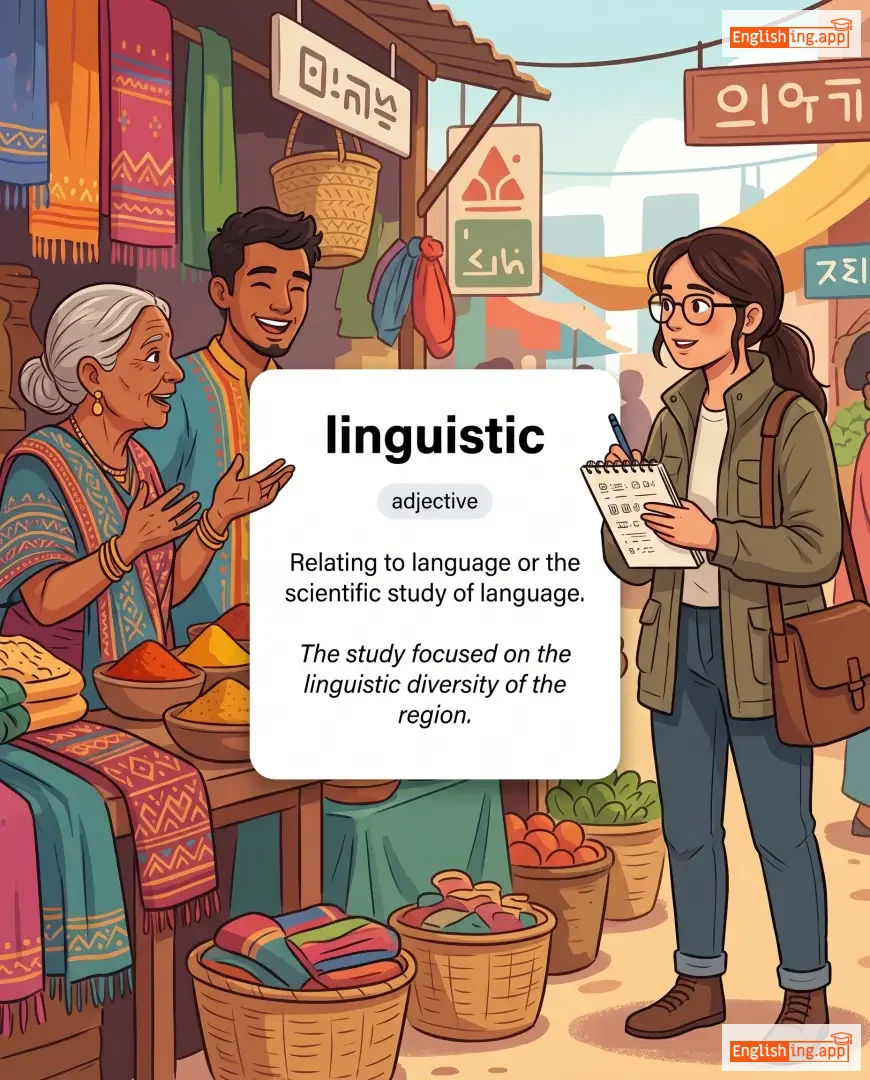
/lɪŋˈɡwɪstɪk/
adjective
(lʲɪŋˈɡwɪstɪk)
••••••
|
|
лингвистический
lingvisticheskiy
••••••
|
- •••••• | - •••••• | - •••••• | - •••••• |
Relating to language or the scientific study of language.
••••••
|
The study focused on the linguistic diversity of the region.
Исследование сосредоточилось на лингвистическом разнообразии региона.
••••••
|
Исследование сосредоточилось на лингвистическом разнообразии региона.
Issledovaniye sosredotochilos' na lingvisticheskom raznoobrazii regiona.
••••••
|
- •••••• | - •••••• | - •••••• |
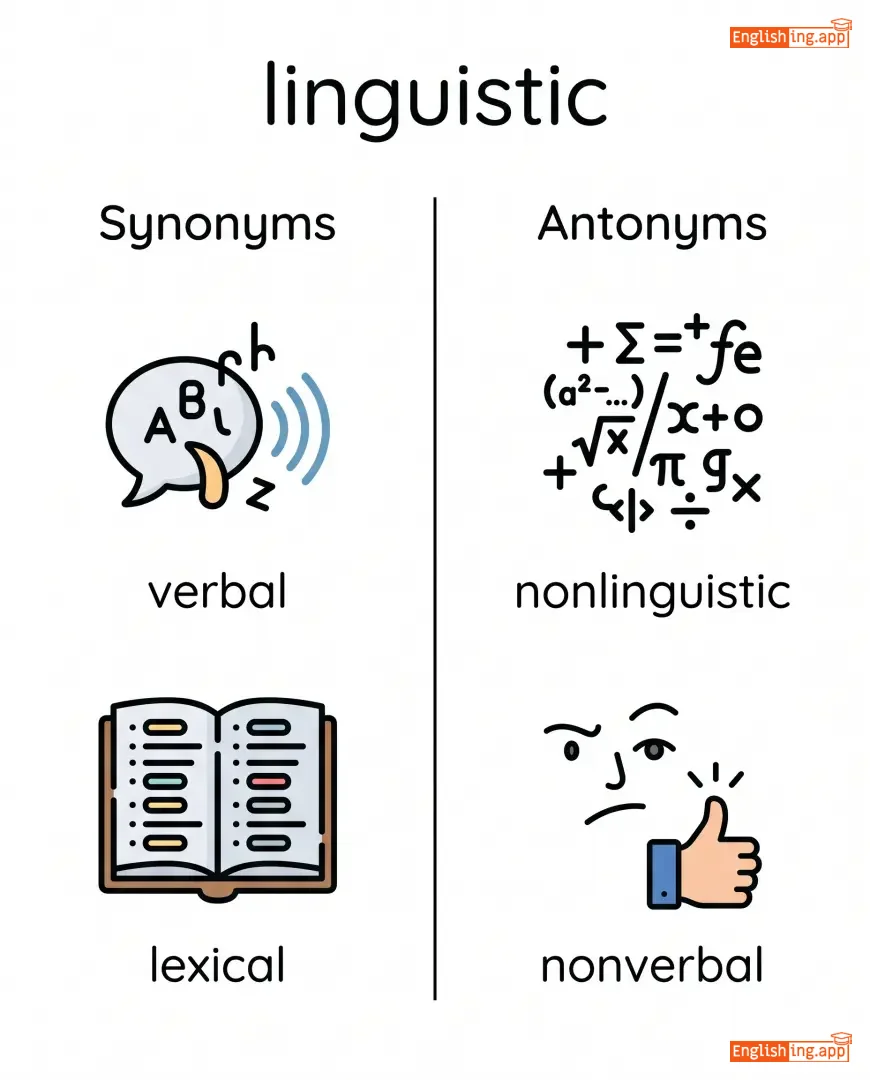
verbal, lexical, grammatical, philological
••••••
|
nonlinguistic, nonverbal
••••••
|
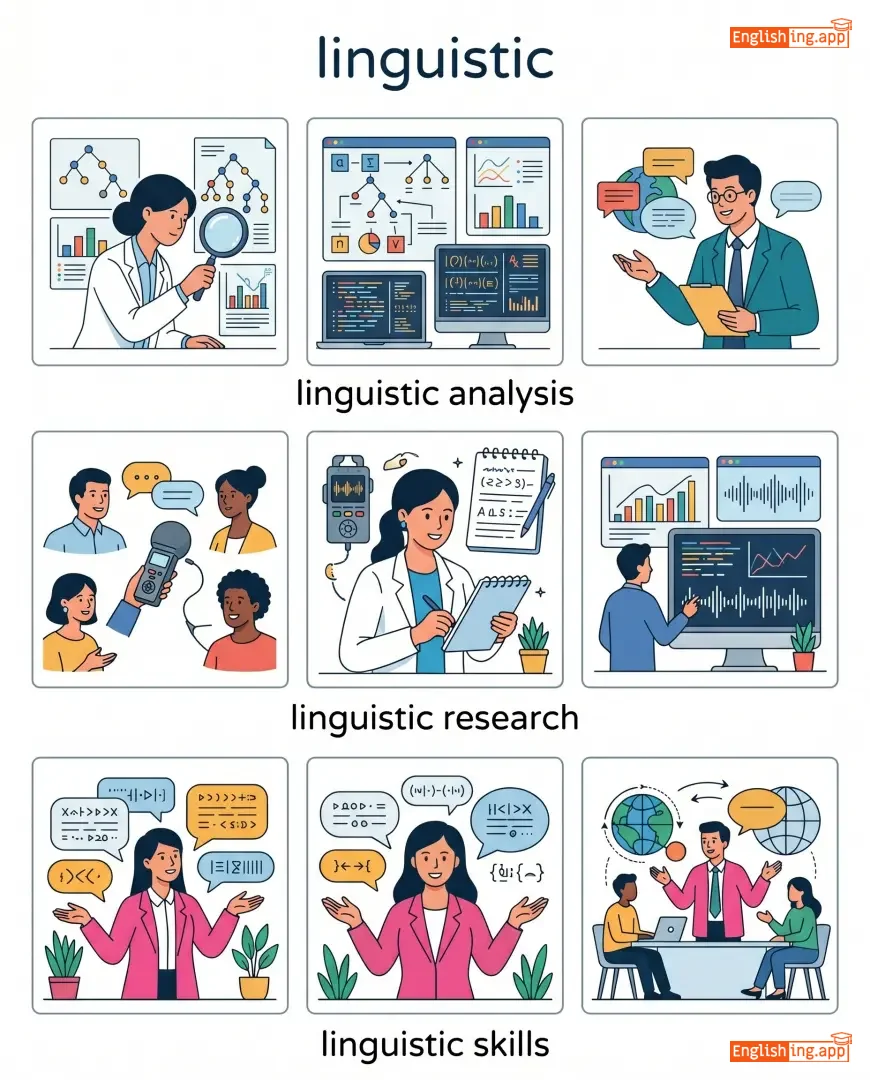
linguistic analysis, linguistic research, linguistic skills, linguistic diversity
••••••
|
Лингвистический = язык + ический = связанный с языком
••••••
|
|
#0
👂
|
/ˈlɪs.ən/
verb
(лиссен)
••••••
|
|
слушать
slushat'
••••••
|
listened
листенд
••••••
|
listened
листенд
••••••
|
listens
лиссенс
••••••
|
listening
лиссени
••••••
|
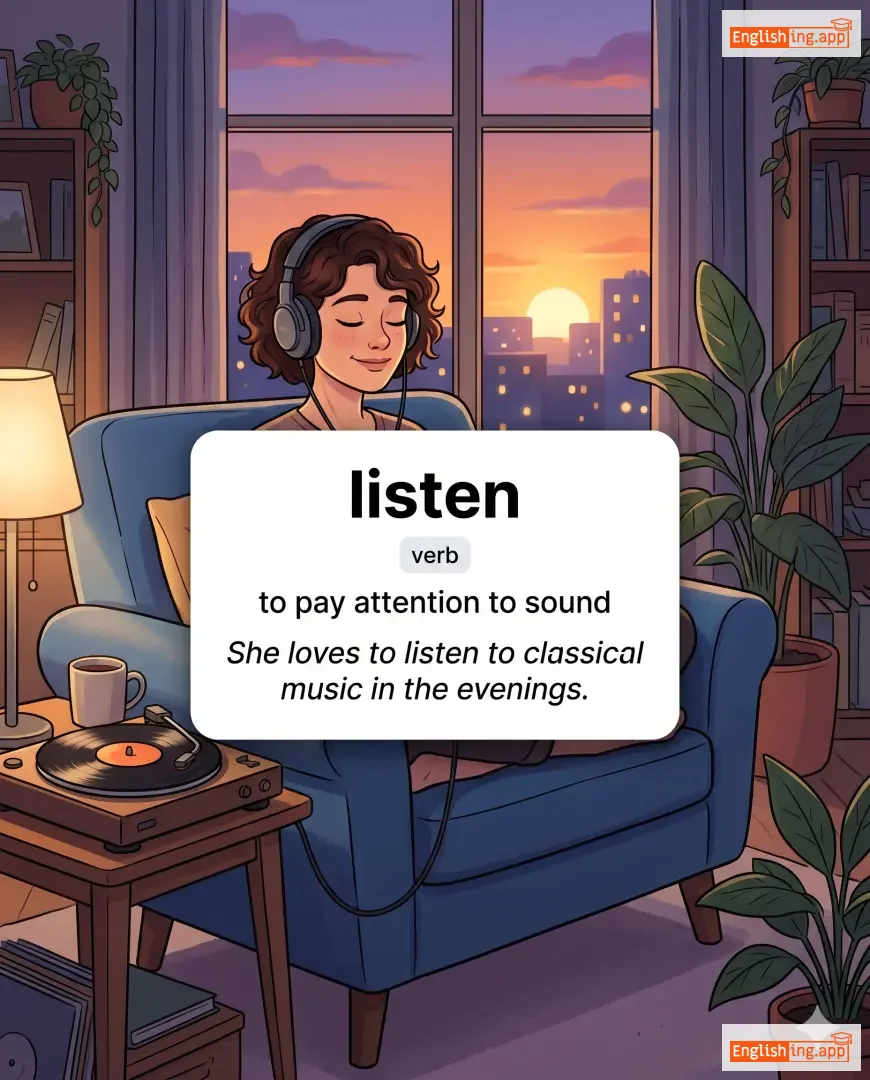
to pay attention to sound
••••••
|
She loves to listen to classical music in the evenings.
Ей нравится слушать классическую музыку по вечерам.
••••••
|
Ей нравится слушать классическую музыку по вечерам.
Ey nravitsya slushat' klassicheskuyu muzyku po vecheram.
••••••
|
listen up
слушай
••••••
|
used to tell people to pay attention
••••••
|
слушай
slushay
••••••
|
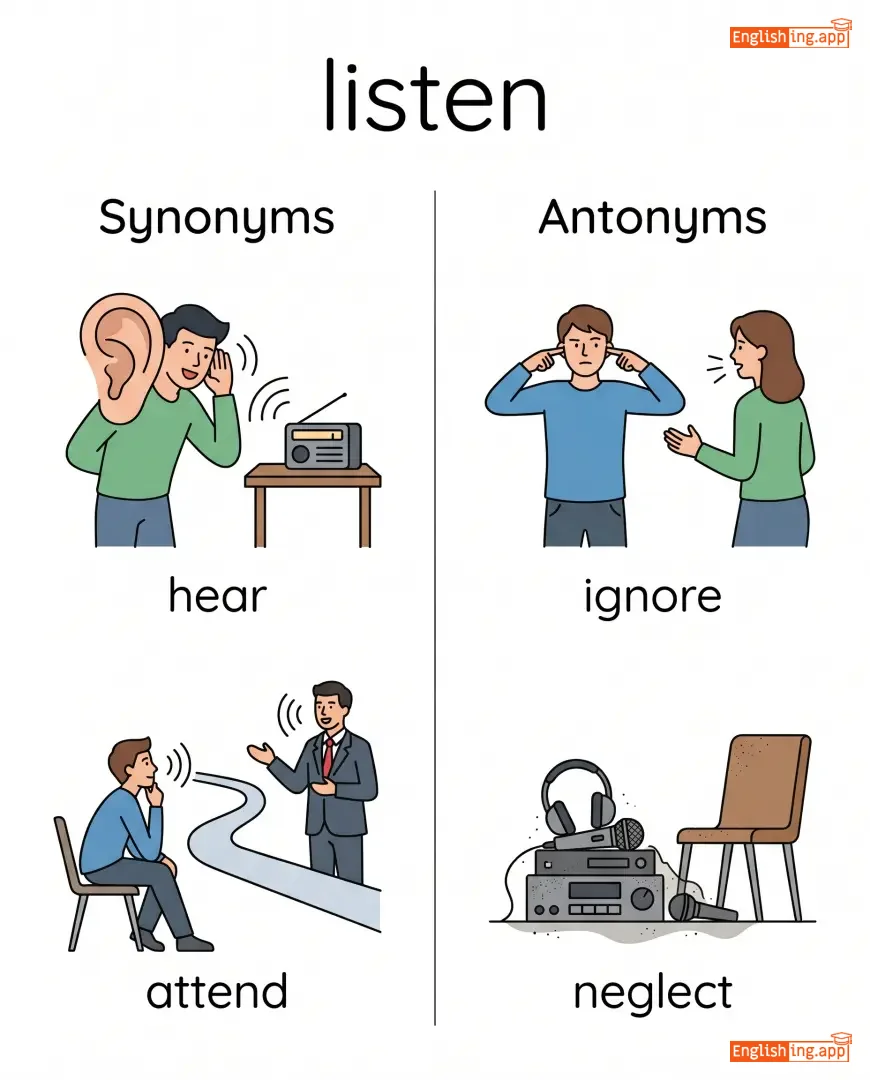
hear, attend, heed, concentrate, pay attention
••••••
|
ignore, neglect, disregard
••••••
|
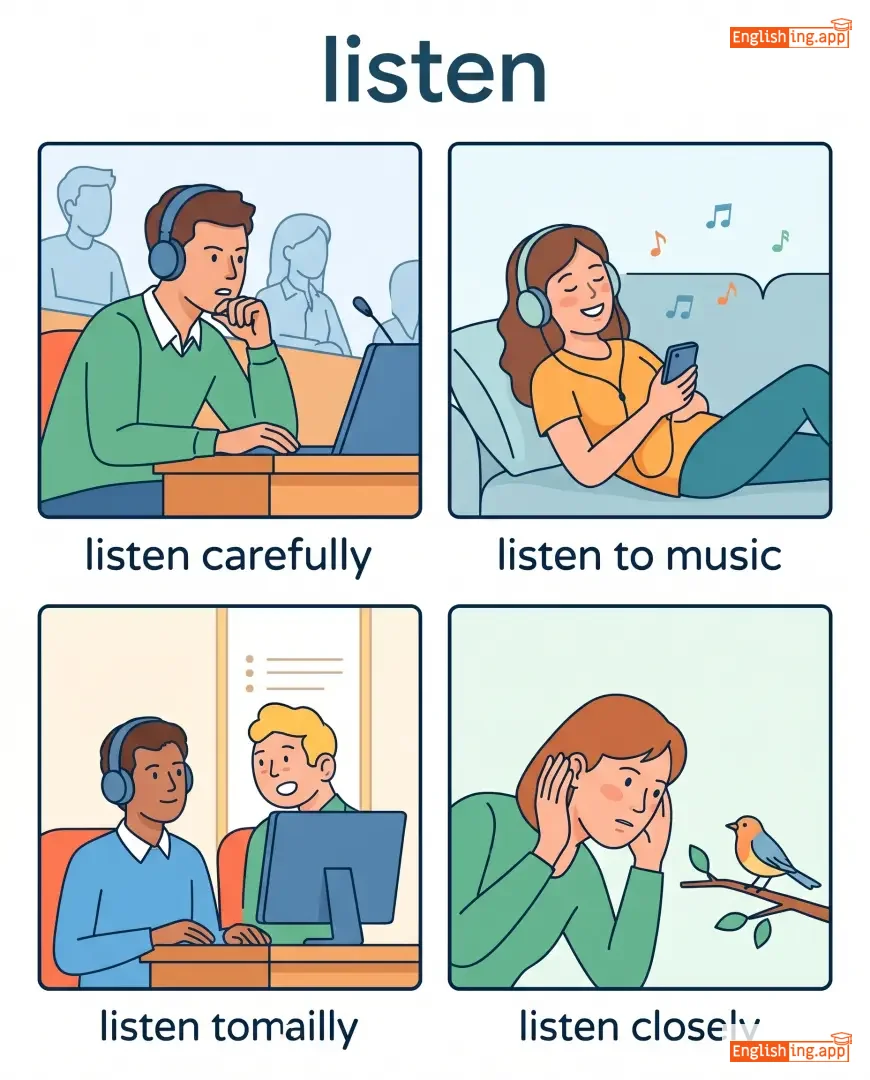
listen carefully, listen to music, listen closely, listen in
••••••
|
👂 Listen означает слушать – Слушай, мама говорит!
••••••
|
|
#0
📩
|
/ˈmɛsɪdʒ/
noun
(мɛсэдж)
••••••
|
- •••••• |
сообщение
soobshchenie
••••••
|
- •••••• | - •••••• | - •••••• | - •••••• |
A piece of information sent or communicated from one person to another.
••••••
|
I received a message from my friend yesterday. |
Я получил сообщение от своего друга вчера.
Ya poluchil soobshchenie ot svoego druga vchera.
••••••
|
get the message |
To understand the meaning or implication of something
••••••
|
понять сообщение
ponyat' soobshchenie
••••••
|
note, communication, letter, text, notification
••••••
|
silence, quiet
••••••
|
send a message, receive a message, leave a message, important message
••••••
|
MESSAGE означает сообщение—помни: 'SMS значит сообщение'
••••••
|
|
#0
💬
|
/rɪˈspɒnd/
verb
(респонд)
••••••
|
|
отвечать
otvechat
••••••
|
responded
респондед
••••••
|
responded
респондед
••••••
|
responds
респондс
••••••
|
responding
респондинг
••••••
|
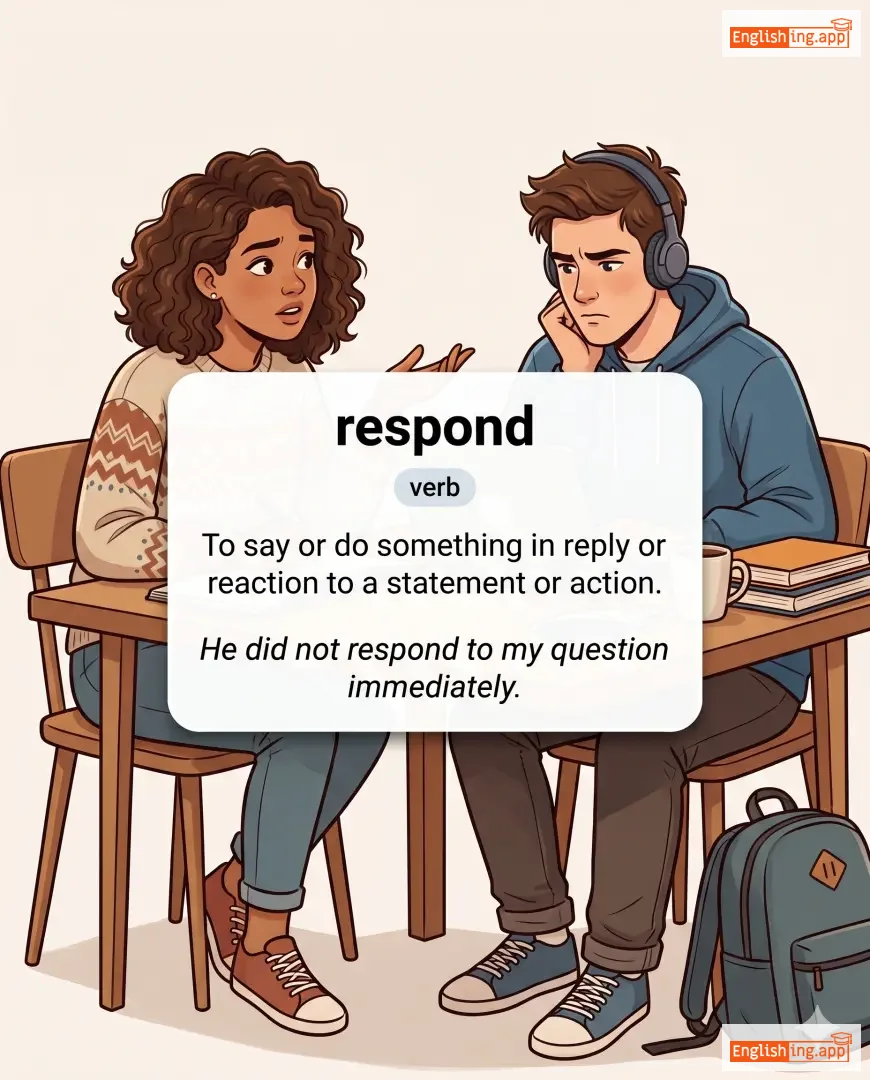
To say or do something in reply or reaction to a statement or action.
••••••
|
He did not respond to my question immediately.
Он не ответил на мой вопрос сразу.
••••••
|
Он не ответил на мой вопрос сразу.
On ne otvetil na moy vopros sradu.
••••••
|
respond to treatment
ответить на лечение
••••••
|
To show improvement after receiving medical treatment.
••••••
|
ответить на лечение
otvetit' na lechenie
••••••
|
reply, answer, react, acknowledge, retort
••••••
|
ignore, neglect, disregard
••••••
|
respond quickly, respond positively, respond immediately, respond appropriately
••••••
|
Ответить на вопрос, как ответить, так и отвечать.
••••••
|
|
#0
🗣️
|
/spiːk/
verb
(spik)
••••••
|
- •••••• |
говорить
govorit
••••••
|
spoke
spok
••••••
|
spoken
spouken
••••••
|
speaks
spiks
••••••
|
speaking
spiiking
••••••
|
to say something in order to convey information or express feelings
••••••
|
She speaks five languages fluently.
Она говорит на пяти языках бегло.
••••••
|
Она говорит на пяти языках бегло.
Ona govorit na pyati yazykakh beglo.
••••••
|
speak out
выразить мнение
••••••
|
to express one's opinion clearly and openly
••••••
|
выразить свое мнение
vyrazit' svoe mnenie
••••••
|
talk, converse, utter, communicate
••••••
|
be silent, mute, keep quiet
••••••
|
speak up, speak to, speak about, speak highly
••••••
|
Speak = 'S' for 'Say', 'P' for 'Project'.
••••••
|
|
#0
🎤
|
/spiːtʃ/
noun
(спич)
••••••
|
- •••••• |
речь; выступление;
rech; vystuplenie
••••••
|
- •••••• | - •••••• | - •••••• | - •••••• |
formal address or discourse delivered to an audience; the expression of thoughts in spoken words
••••••
|
The president gave an inspiring speech to the nation. |
Президент произнес вдохновляющую речь перед нацией.
Prezident proznes vdokhnovlyayushchuyu rech' pered natsiey.
••••••
|
- •••••• | - •••••• | - •••••• |
address, oration, discourse, talk
••••••
|
silence, muteness
••••••
|
keynote speech, public speech, acceptance speech, farewell speech
••••••
|
Speech in Russian: The powerful tool to connect and inspire.
••••••
|
|
#0
💬
|
/tɔːk/
verb
(ток)
••••••
|
|
говорить
govorit
••••••
|
talked
токд
••••••
|
talked
токд
••••••
|
talks
токс
••••••
|
talking
токинг
••••••
|
to speak; to communicate by speaking; to discuss
••••••
|
Let's talk about your future plans.
летс ток абаут ёр фьючер планс.
••••••
|
Давайте поговорим о ваших планах на будущее.
Davayte pogovorim o vashikh planakh na budushchee
••••••
|
- •••••• | - •••••• | - •••••• |
speak, communicate, converse, discuss
••••••
|
listen, be silent, stay quiet
••••••
|
talk about, talk to, talk over, small talk, talk shop
••••••
|
No •••••• |
|
#0
🤔
|
/ˌʌndərˈstænd/
verb
(ʌndərstænd)
••••••
|
|
понимать
ponimat'
••••••
|
understood
ʌndərstúd
••••••
|
understood
ʌndərstúd
••••••
|
understands
ʌndərstændz
••••••
|
understanding
ʌndərstændɪŋ
••••••
|
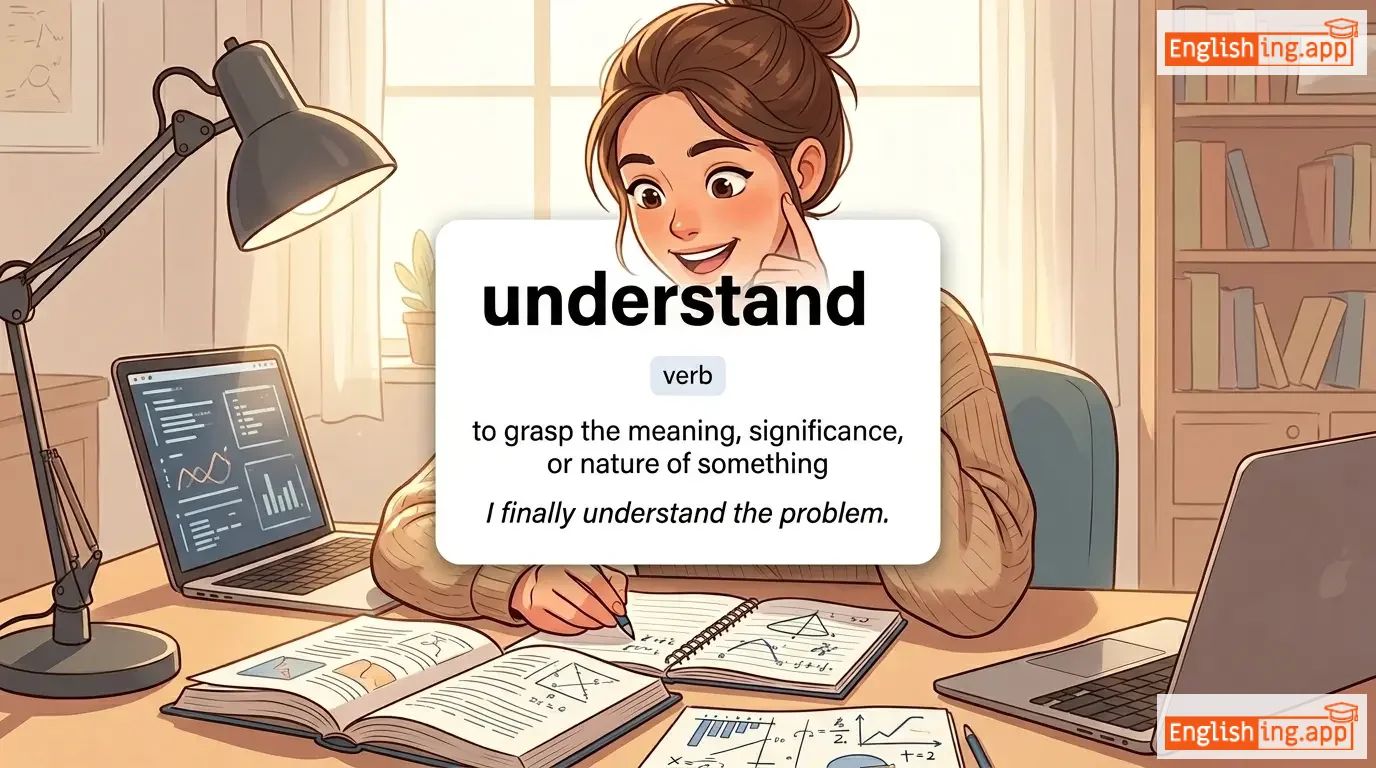
to grasp the meaning, significance, or nature of something
••••••
|
I finally understand the problem.
Я наконец понял проблему.
••••••
|
Я наконец понял проблему.
Ya nakonec ponyal problemu.
••••••
|
understand the situation
понимать ситуацию
••••••
|
to grasp the full context or details of a situation
••••••
|
понимать ситуацию
ponimat' situatsiyu
••••••
|
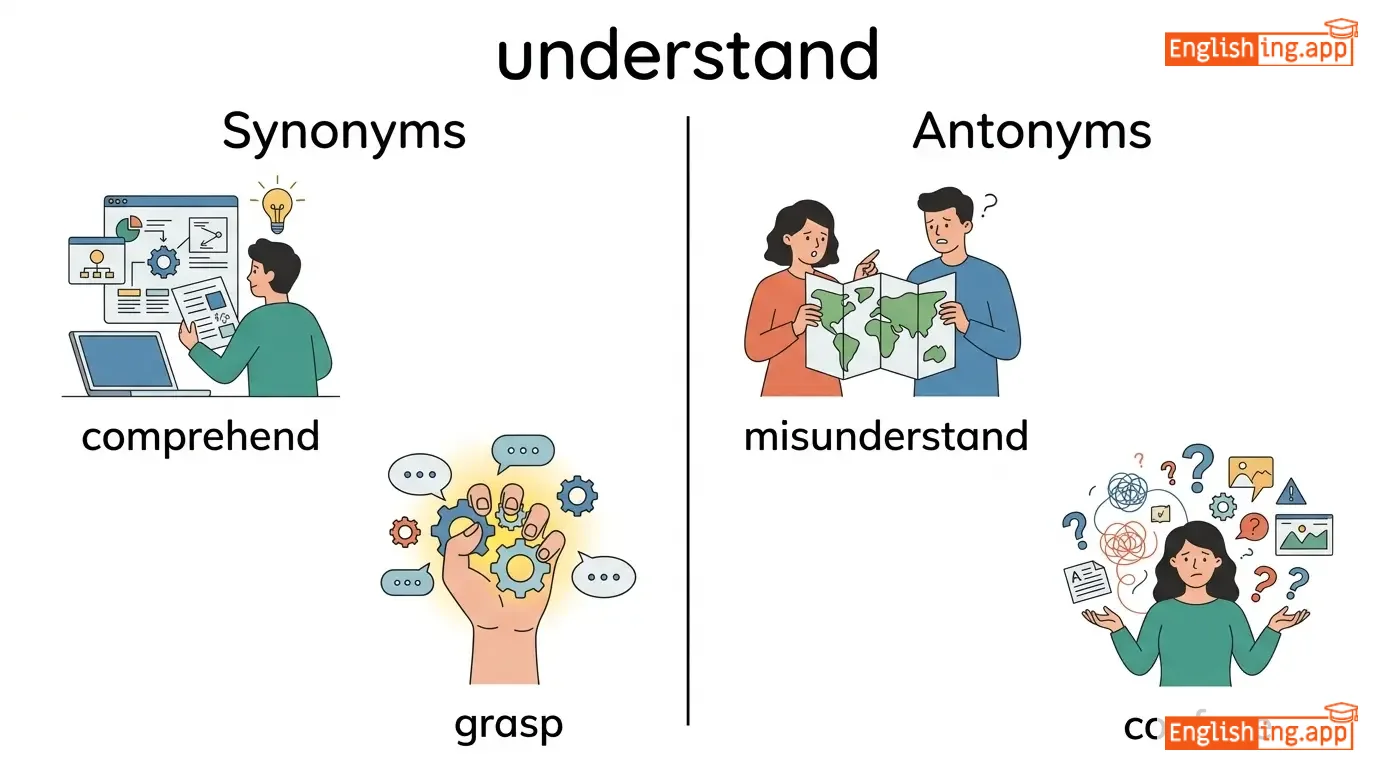
comprehend, grasp, perceive, realize
••••••
|
misunderstand, confuse
••••••
|
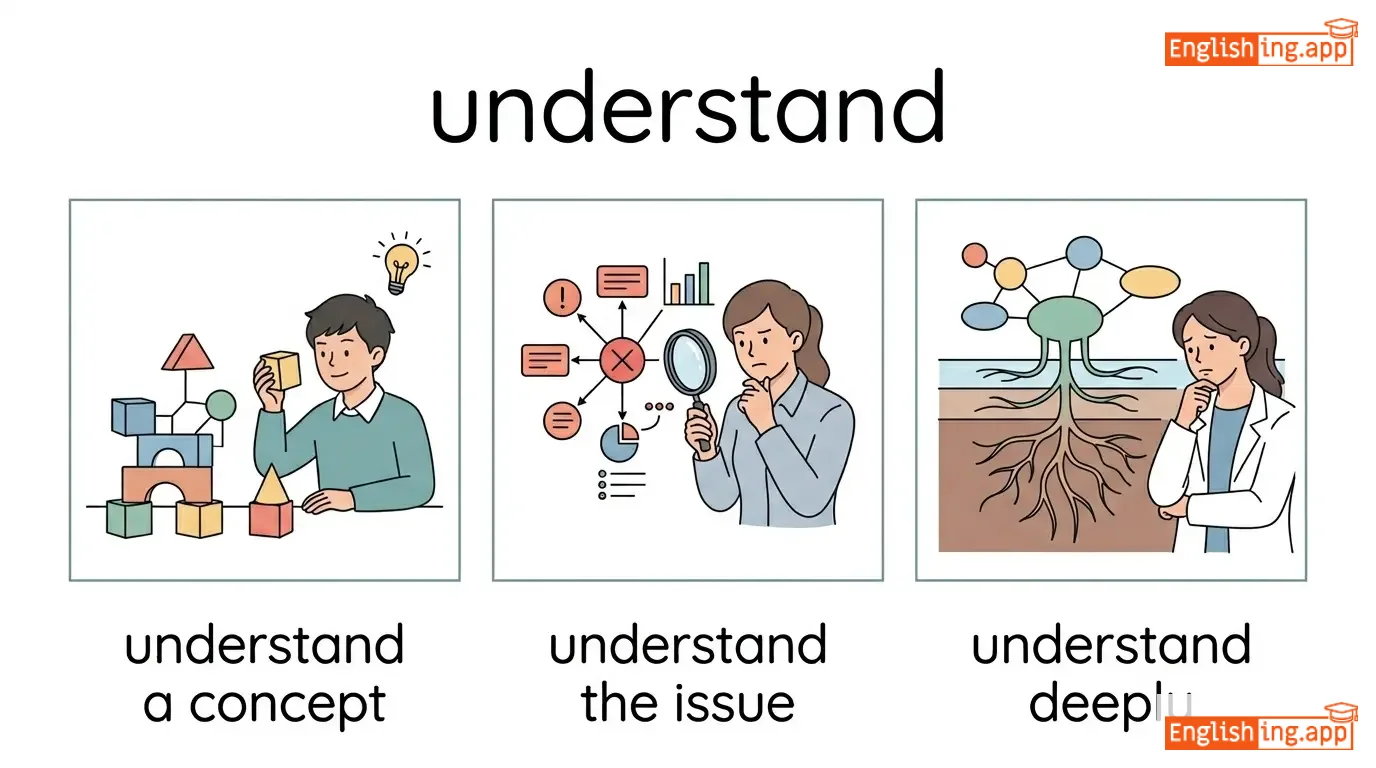
understand a concept, understand the issue, understand deeply
••••••
|
UNDERSTAND – Under the stand, I can grasp what's going on!
••••••
|
|
#0
🗣️
|
/ˈvɜː.bəl/
adjective
(вэрбал)
••••••
|
|
устный
ustnyy
••••••
|
- •••••• | - •••••• | - •••••• | - •••••• |
relating to words or speech rather than writing or action
••••••
|
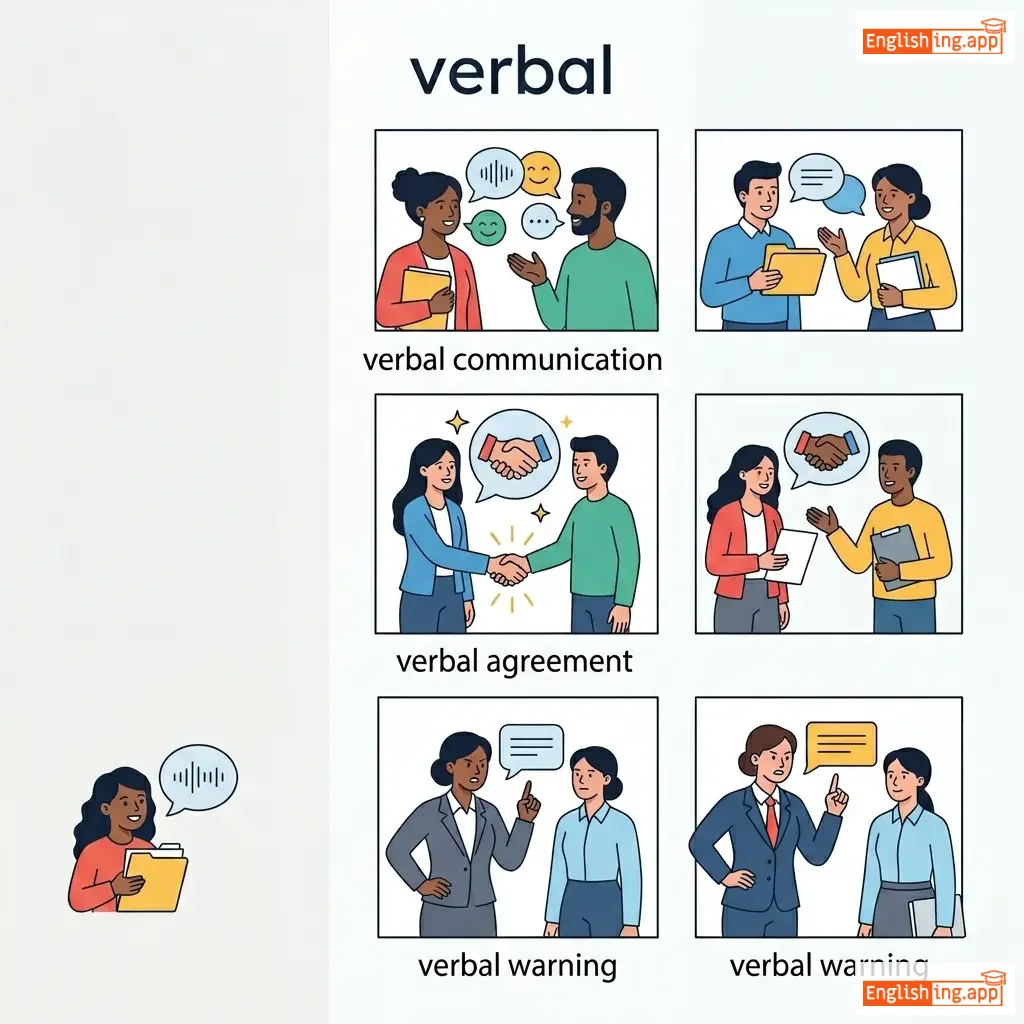
They had a verbal agreement instead of a written one. |
У них было устное соглашение, а не письменное.
U nikh bylo ustnoe soglashenie, a ne pis'mennoe.
••••••
|
verbal abuse |
the use of words to insult or hurt someone
••••••
|
устное оскорбление
ustnoe oskorblenie
••••••
|
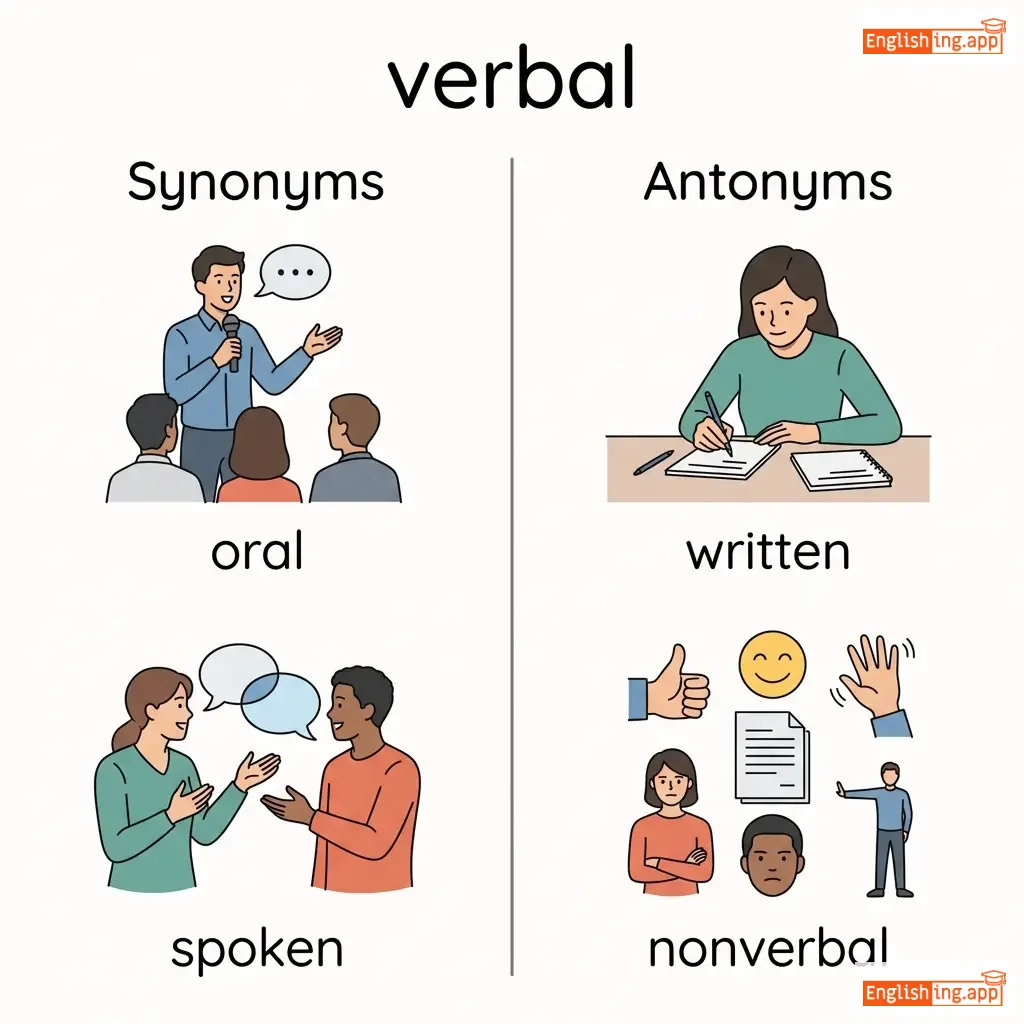
oral, spoken, expressed, linguistic
••••••
|
written, nonverbal
••••••
|
verbal communication, verbal agreement, verbal warning, verbal abuse
••••••
|
Verbal значит связано с словами — подумай о 'verb', значит verbal = слова!
••••••
|
|
#0
🗣️
|
/vɔɪs/
noun
(voys)
••••••
|
- •••••• |
голос
golos
••••••
|
- •••••• | - •••••• | - •••••• | - •••••• |
the sound produced by the vocal cords; the ability to speak or express oneself
••••••
|
She has a beautiful voice that captivates the audience. |
У неё красивый голос, который очаровывает зрителей.
U neyo krasivyy golos, kotoryy ocharovyvayet zryateley.
••••••
|
find your voice |
to begin expressing your thoughts or opinions
••••••
|
найти свой голос
nayti svoy golos
••••••
|
sound, speech, tone, vocalization
••••••
|
silence, muteness
••••••
|
loud voice, soft voice, speak with voice
••••••
|
VOICE - найдите свой голос (voice - naydite svoy golos) и выражайте свои мысли
••••••
|
Vocabulary Quiz
Test your vocabulary by matching words with their translations or meanings.
Login to take the quiz
Comments (0)
Share your thoughts and join the discussion.
Join the discussion by logging in
Login to CommentNo comments yet
Be the first to share your thoughts!