

The Woman Who Defended Her Land
Maya was a simple woman from a distant village who didn't know her life would fall into a dilemma. Her family had a small piece of land where the density of people was high, and everyone lived peacefully. One day, a powerful company deposited documents claiming this land was theirs. Maya understood they wanted to destroy her community. The company's lawyers tried to dictate the terms, but Maya was not ready to dismiss her rights. Her family had a diamond ring that her grandmother had given her, and she sold it for legal defense. Despite the financial deficit, Maya decided to fight. She knew her people deserved better, and no one could deprive them of their rights. A dispute started in court, and the company's lawyers tried to discard Maya's evidence. The judge said they needed to properly dispose of all documents. Maya's lawyer argued that the descent of land ownership was clear. Her family's dignity was at stake. During court proceedings, Maya once celebrated her daughter's birthday with a simple dessert. Her focus was only on getting justice. Seeing Maya's determination, many villagers descended to the court to show support. Finally, the judge ruled in favor of Maya, saying the company cannot dictate who owns what. Maya proved that despite obstacles, getting justice is possible when there's courage.
Upgrade to Access All Vocabulary
Get unlimited access to all vocabulary items with Pro membership
Upgrade to ProTranslation
Past
Past Participle
Third Person Singular
Gerund
Meaning
Example Sentence
Example Sentence Translation
Synonyms
Antonyms
Collocations
Mnemonic
Swipe left or right, or use the buttons. Tap image to zoom.
Upgrade to Access All Sentences
Get unlimited access to all sentences with Pro membership
Upgrade to ProExample Sentence Translation
Word
The Woman Who Defended Her Land - Mask Toggle
|
Emoji
|
Word | Images | Past | Past Participle | Third Person Singular | Gerund | Meaning | Example Sentence | Example Expression | Example Expression Meaning | Synonyms | Antonyms | Collocations |
|---|---|---|---|---|---|---|---|---|---|---|---|---|---|
|
#0
🛡️
|
/dɪˈfɛns/
noun
••••••
|
|
- •••••• | - •••••• | - •••••• | - •••••• |
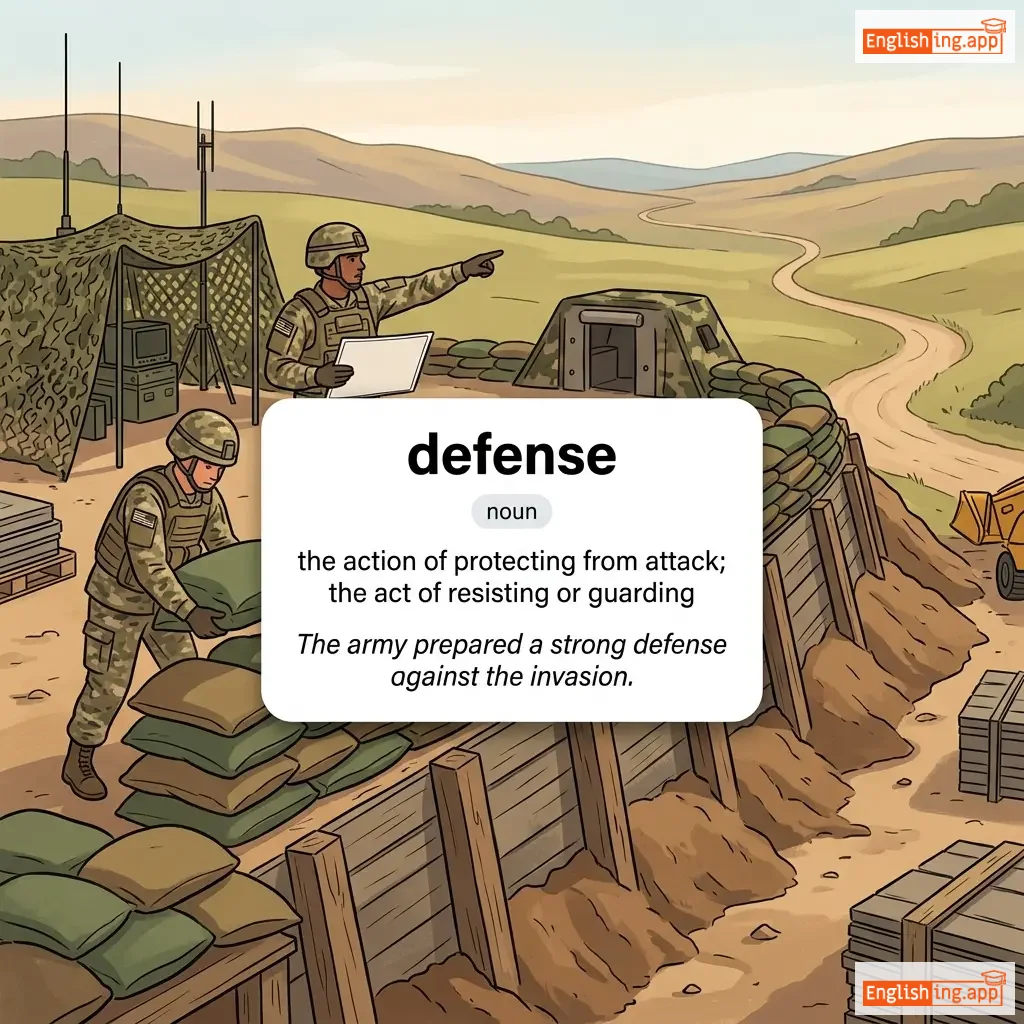
the action of protecting from attack; the act of resisting or guarding
••••••
|
The army prepared a strong defense against the invasion. |
defense mechanism |
an unconscious psychological strategy used to protect oneself from anxiety
••••••
|
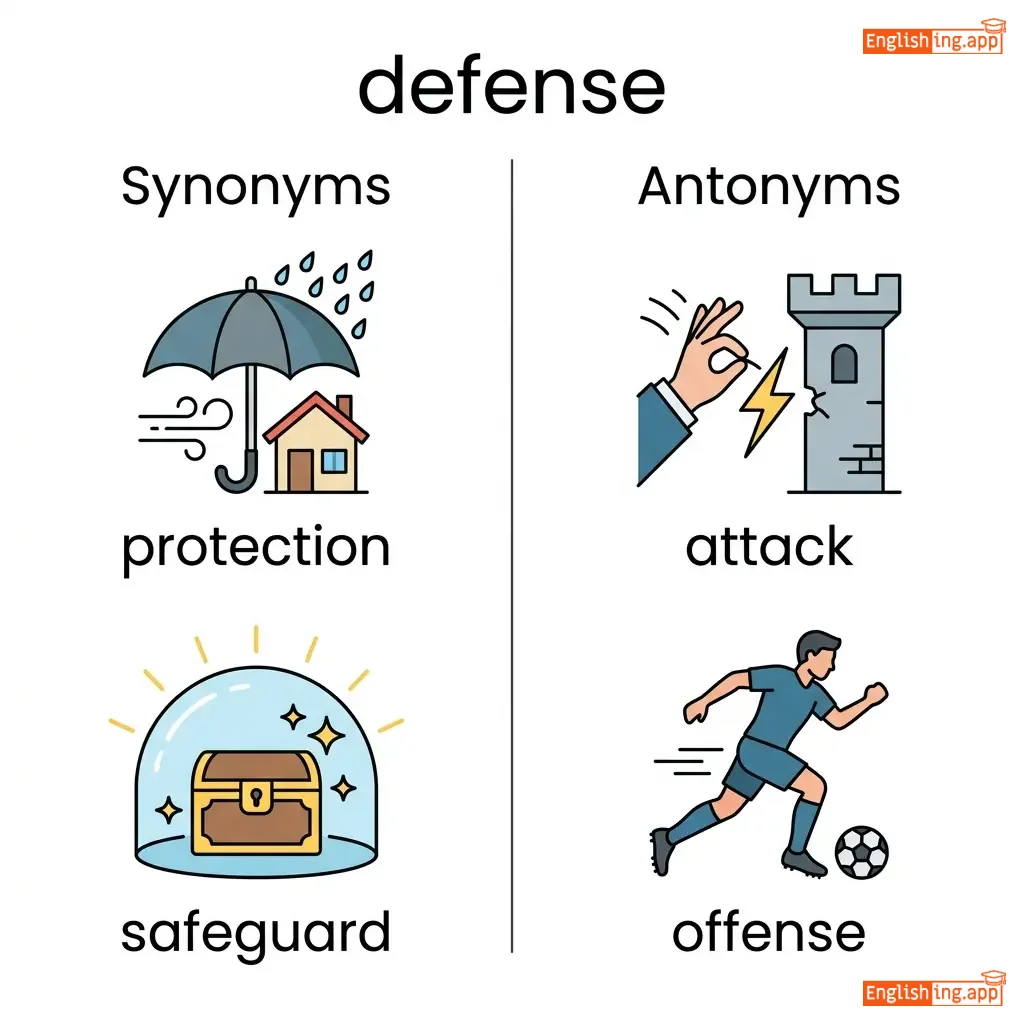
protection, safeguard, security, resistance
••••••
|
attack, offense
••••••
|
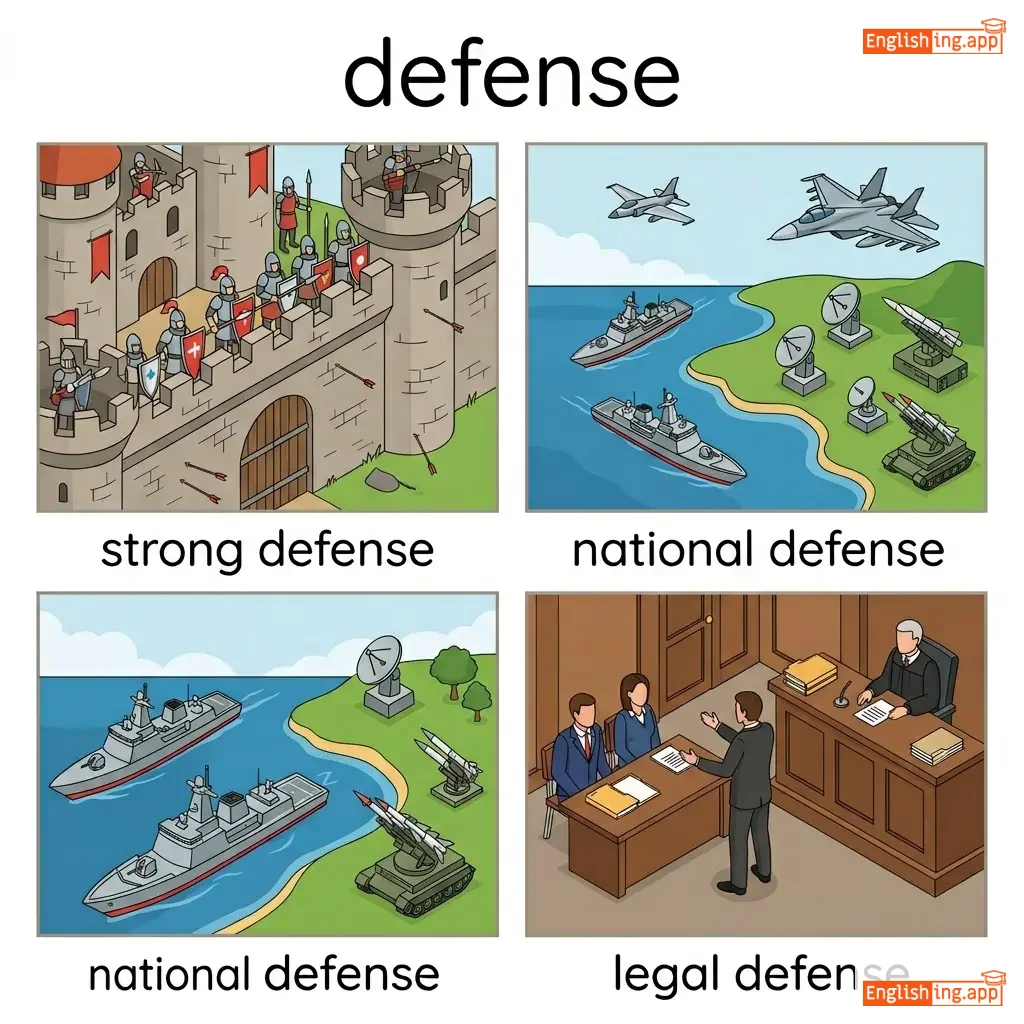
strong defense, national defense, legal defense, defense system
••••••
|
|
#0
📉
|
/ˈdɛfɪsɪt/
noun
••••••
|
- •••••• | - •••••• | - •••••• | - •••••• | - •••••• |
The amount by which something, especially money, is too small or lacking.
••••••
|
The government is trying to reduce the budget deficit. |
trade deficit |
The amount by which a country’s imports exceed its exports.
••••••
|
shortfall, shortage, lack, loss, gap
••••••
|
surplus, excess, profit
••••••
|
budget deficit, trade deficit, current deficit
••••••
|
|
#0
⚖️
|
/ˈdɛnsɪti/
noun
••••••
|
- •••••• | - •••••• | - •••••• | - •••••• | - •••••• |
the degree of compactness or thickness of a substance or object
••••••
|
The density of water is higher than that of air. |
population density |
the number of people living per unit area of land
••••••
|
thickness, concentration, solidity, compactness, mass
••••••
|
thinness, rarity, emptiness
••••••
|
high density, low density, population density, energy density
••••••
|
|
#0
🏦
|
/dɪˈpɑːzɪt/
noun/verb
••••••
|
- •••••• |
deposited
••••••
|
deposited
••••••
|
deposits
••••••
|
depositing
••••••
|
to place money in a bank account, or a sum paid in advance as security; a layer of material left naturally
••••••
|
She deposited $500 into her savings account. |
security deposit |
a sum of money held as a guarantee against damage or loss
••••••
|
payment, down payment, savings, pledge, lodgment
••••••
|
withdrawal, debt
••••••
|
make a deposit, deposit money, deposit account, security deposit
••••••
|
|
#0
🚫
|
/dɪˈpraɪv/
verb
••••••
|
- •••••• |
deprived
••••••
|
deprived
••••••
|
deprives
••••••
|
depriving
••••••
|
to take something away from someone, or prevent them from having it
••••••
|
The new law may deprive people of their rights. |
sleep-deprived |
lacking enough sleep
••••••
|
deny, strip, remove, dispossess, rob
••••••
|
grant, give, provide
••••••
|
deprive of rights, deprive someone of, deprive freedom, sleep deprived
••••••
|
|
#0
⬇️
|
/dɪˈsɛnd/
verb
••••••
|
- •••••• |
descended
••••••
|
descended
••••••
|
descends
••••••
|
descending
••••••
|
To move or fall downward; to come or go down from a higher place.
••••••
|
The hikers descended the steep mountain path. |
descend into chaos |
To fall into disorder or confusion
••••••
|
drop, fall, decline, lower, sink
••••••
|
ascend, rise, climb
••••••
|
descend slowly, descend rapidly, descend into
••••••
|
|
#0
⛰️
|
/dɪˈsɛnt/
noun
••••••
|
- •••••• | - •••••• | - •••••• | - •••••• | - •••••• |
the action of moving downward, falling, or dropping; ancestry or origin
••••••
|
The climbers began their descent from the mountain peak. |
descent into chaos |
a situation deteriorating into disorder or confusion
••••••
|
decline, drop, fall, ancestry, lineage
••••••
|
ascent, rise, progress
••••••
|
rapid descent, steep descent, descent into, descent from
••••••
|
|
#0
🏅
|
/dɪˈzɜːrv/
verb
••••••
|
- •••••• |
deserved
••••••
|
deserved
••••••
|
deserves
••••••
|
deserving
••••••
|
To be worthy of something, usually a reward or punishment.
••••••
|
She worked hard and deserves recognition. |
get what you deserve |
Receive the outcome that is merited by your actions.
••••••
|
merit, earn, warrant, justify, be entitled to
••••••
|
forfeit, lose
••••••
|
deserve praise, deserve attention, deserve respect
••••••
|
|
#0
💪
|
/dɪˈspaɪt/
preposition
••••••
|
- •••••• | - •••••• | - •••••• | - •••••• | - •••••• |
Without being affected by; in spite of.
••••••
|
He continued his work despite the difficulties. |
despite all odds |
Even though there were many challenges.
••••••
|
in spite of, regardless of, notwithstanding
••••••
|
because of, due to
••••••
|
despite difficulties, despite opposition, despite criticism
••••••
|
|
#0
🍰
|
/dɪˈzɜːrt/
noun
••••••
|
- •••••• | - •••••• | - •••••• | - •••••• | - •••••• |
the sweet course eaten at the end of a meal
••••••
|
We had ice cream for dessert after dinner. |
just deserts |
what one deserves, usually punishment
••••••
|
sweet, pudding, confection, pastry, treat
••••••
|
main course, appetizer
••••••
|
chocolate dessert, delicious dessert, dessert menu, frozen dessert
••••••
|
|
#0
💥
|
/dɪˈstrɔɪ/
verb
••••••
|
|
destroyed
••••••
|
destroyed
••••••
|
destroys
••••••
|
destroying
••••••
|
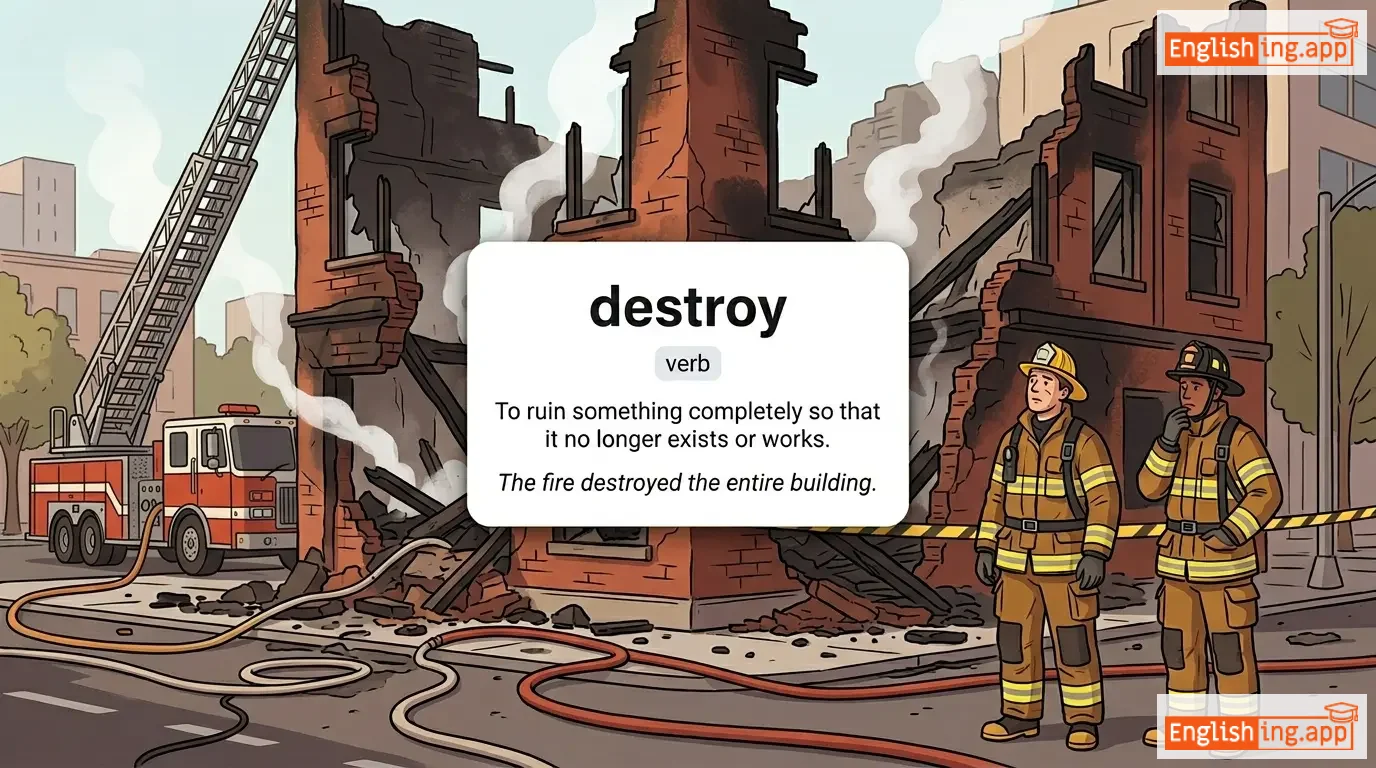
To ruin something completely so that it no longer exists or works.
••••••
|
The fire destroyed the entire building. |
self-destroy |
To cause one's own ruin.
••••••
|
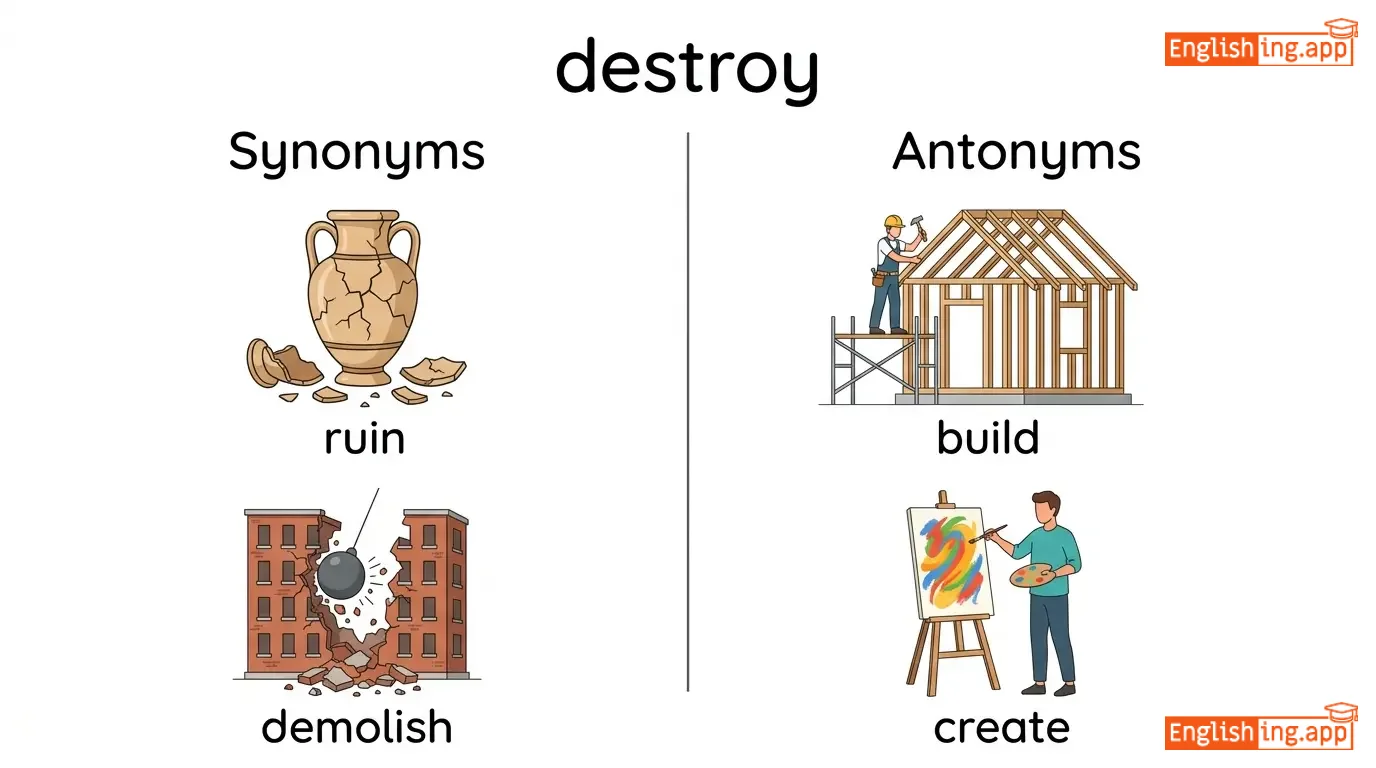
ruin, demolish, wreck, annihilate, obliterate
••••••
|
build, create, repair
••••••
|
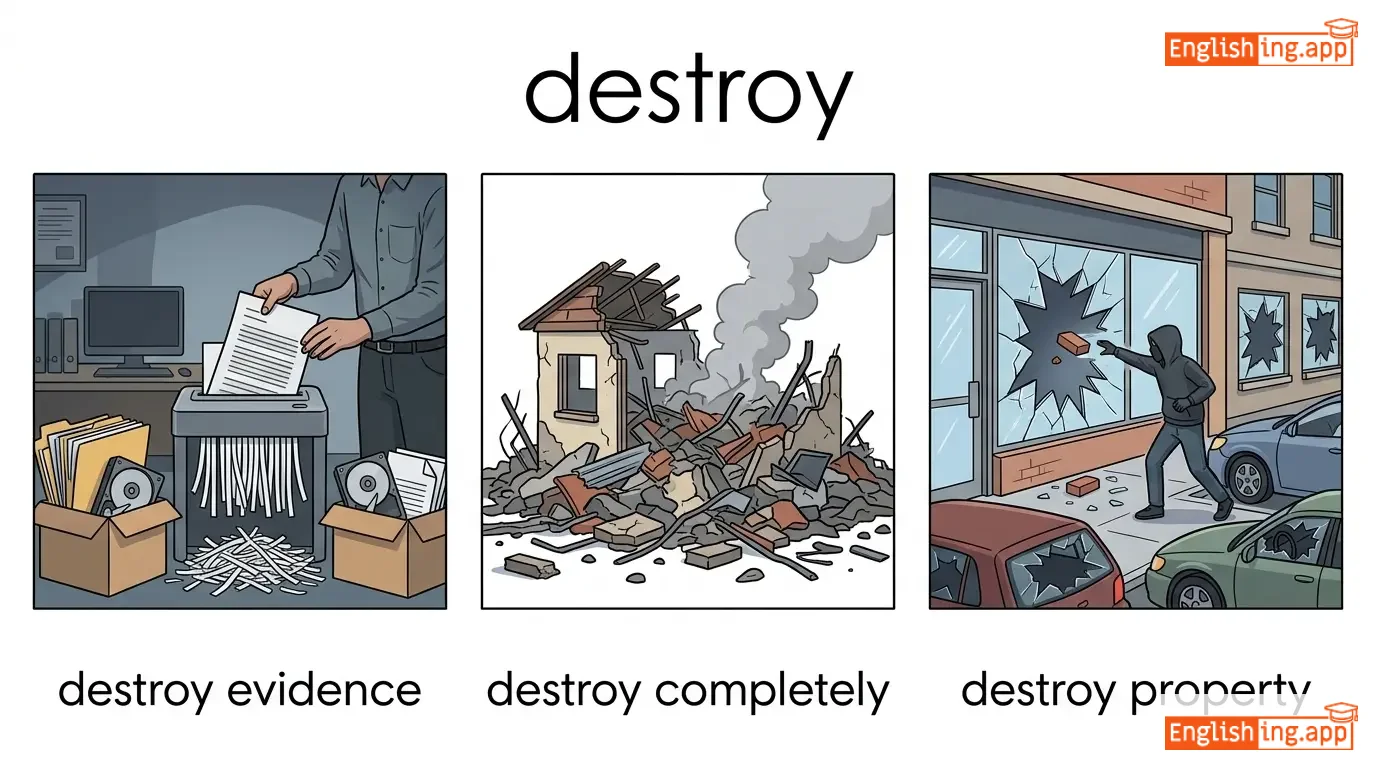
destroy evidence, destroy completely, destroy property, destroy reputation
••••••
|
|
#0
💎
|
/ˈdaɪəmənd/
noun
••••••
|
- •••••• | - •••••• | - •••••• | - •••••• | - •••••• |
a precious hard stone, usually clear and colorless, valued as a gemstone
••••••
|
She wore a beautiful diamond necklace at the party. |
diamond in the rough |
a person or thing with potential or talent but lacking polish or refinement
••••••
|
gem, jewel, crystal, stone, treasure
••••••
|
rock, pebble
••••••
|
diamond ring, diamond necklace, diamond mine, diamond shape
••••••
|
|
#0
📜
|
/dɪkˈteɪt/
verb
••••••
|
|
dictated
••••••
|
dictated
••••••
|
dictates
••••••
|
dictating
••••••
|
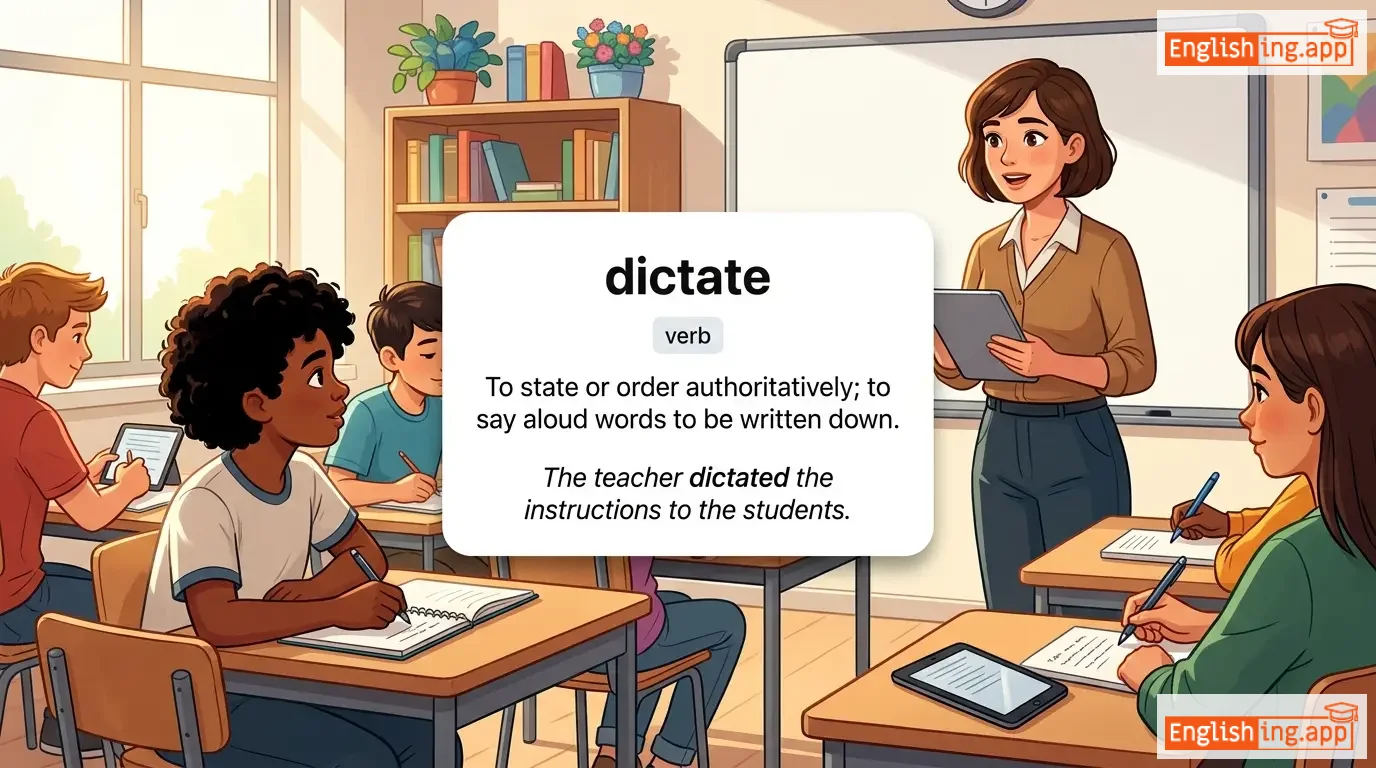
To state or order authoritatively; to say aloud words to be written down.
••••••
|
The teacher dictated the instructions to the students. |
dictate terms |
To impose rules or conditions on others.
••••••
|
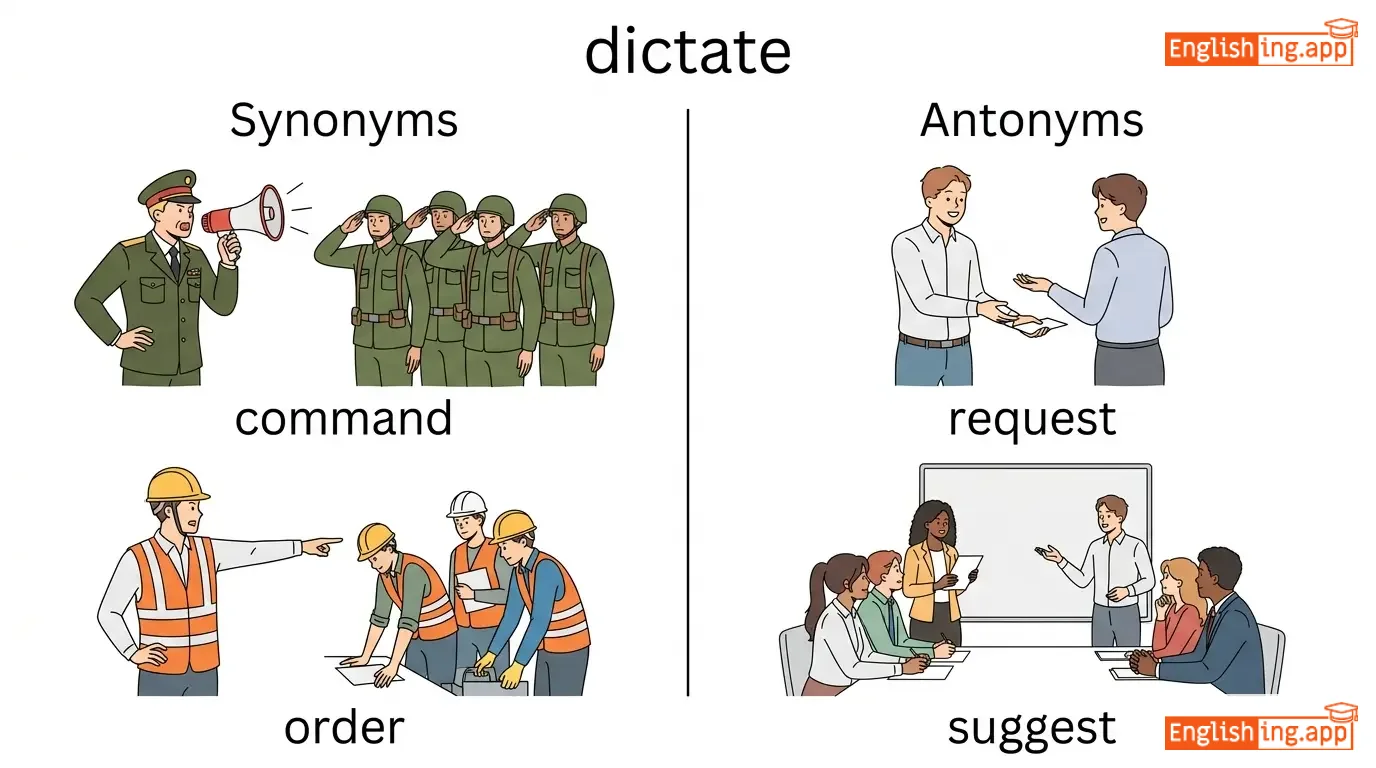
command, order, prescribe, decree
••••••
|
request, suggest
••••••
|
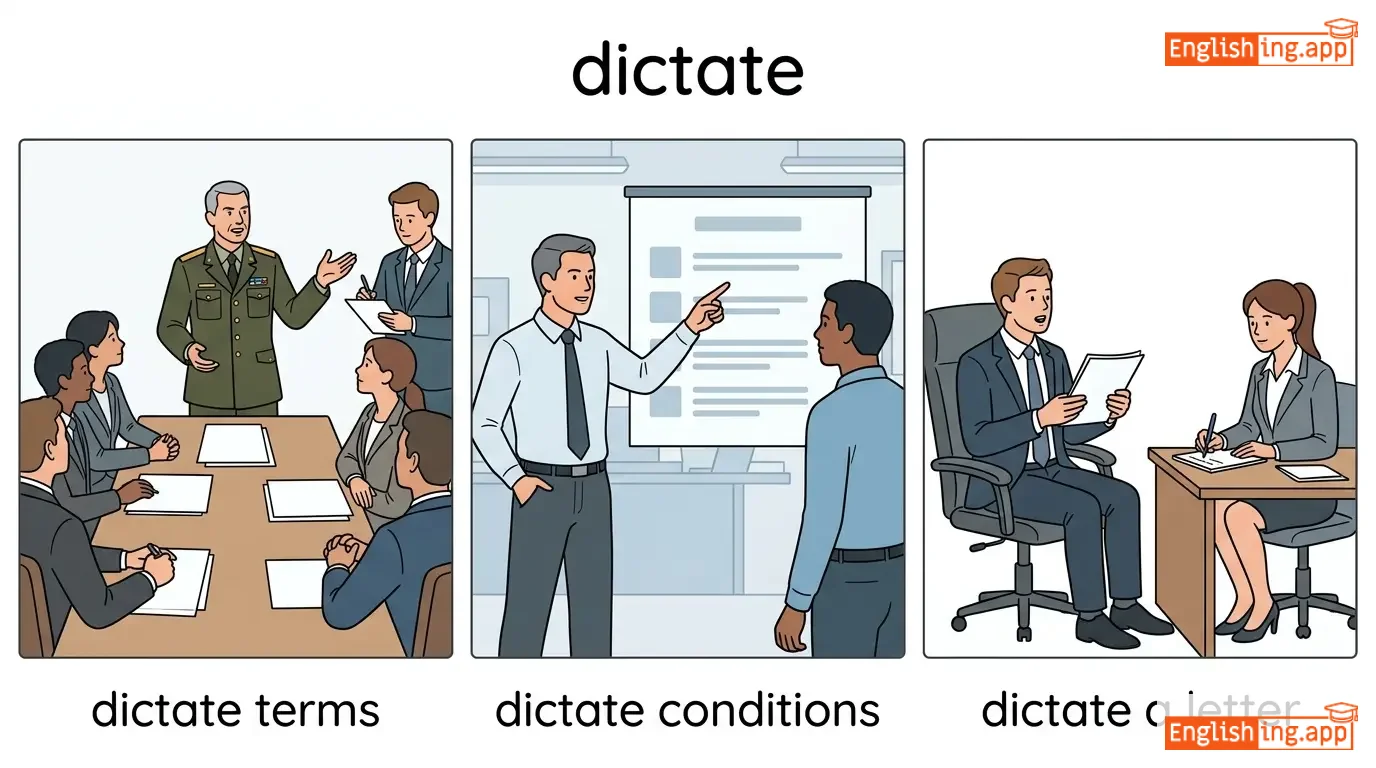
dictate terms, dictate conditions, dictate a letter
••••••
|
|
#0
🕊️
|
/ˈdɪɡnəti/
noun
••••••
|
- •••••• | - •••••• | - •••••• | - •••••• | - •••••• |
the state or quality of being worthy of respect or honor
••••••
|
He faced the difficult situation with calm and dignity. |
maintain one's dignity |
to behave respectfully and with self-control even in difficult situations
••••••
|
honor, self-respect, grace, pride, nobility
••••••
|
disgrace, humiliation, shame
••••••
|
human dignity, personal dignity, loss of dignity, with dignity
••••••
|
|
#0
🤔
|
/daɪˈlɛmə/
noun
••••••
|
|
- •••••• | - •••••• | - •••••• | - •••••• |
A situation in which a difficult choice has to be made between two or more alternatives.
••••••
|
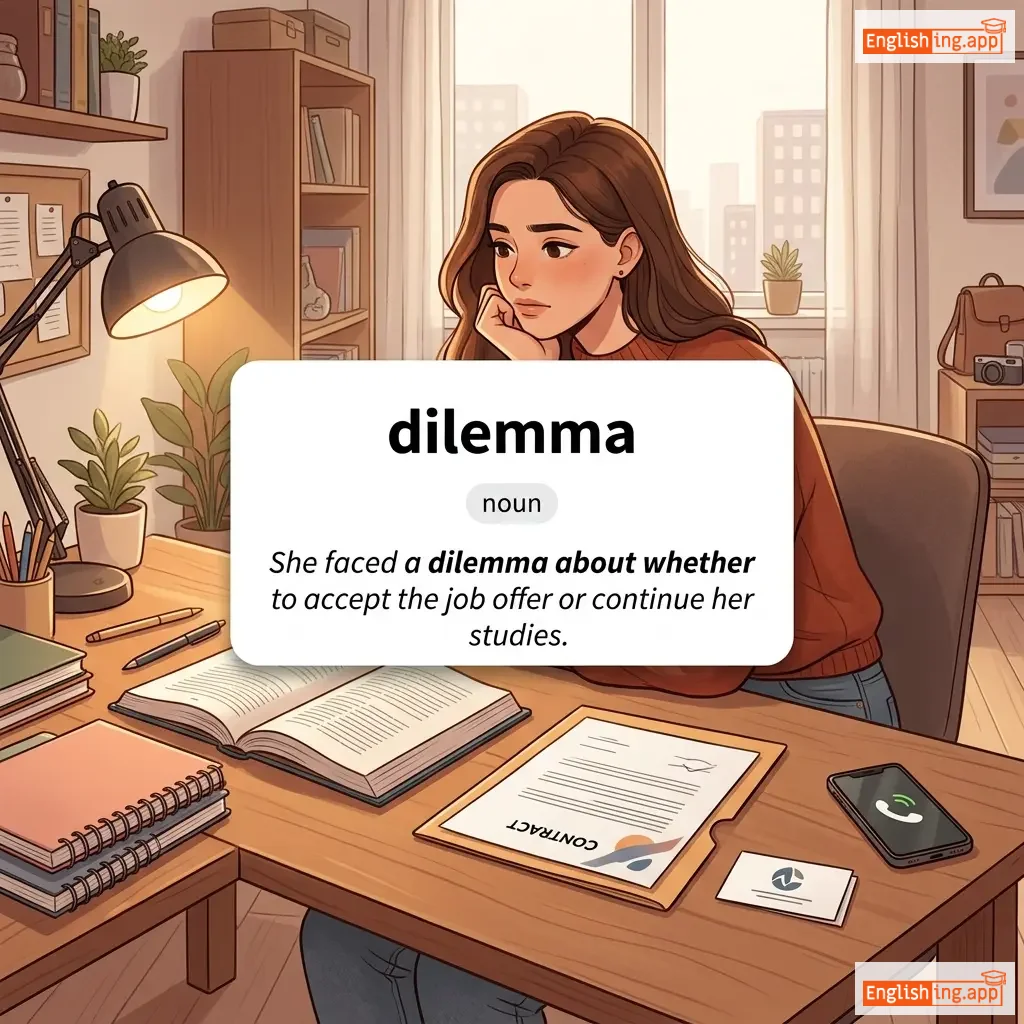
She faced a dilemma about whether to accept the job offer or continue her studies. |
moral dilemma |
A difficult choice involving a conflict of moral principles.
••••••
|
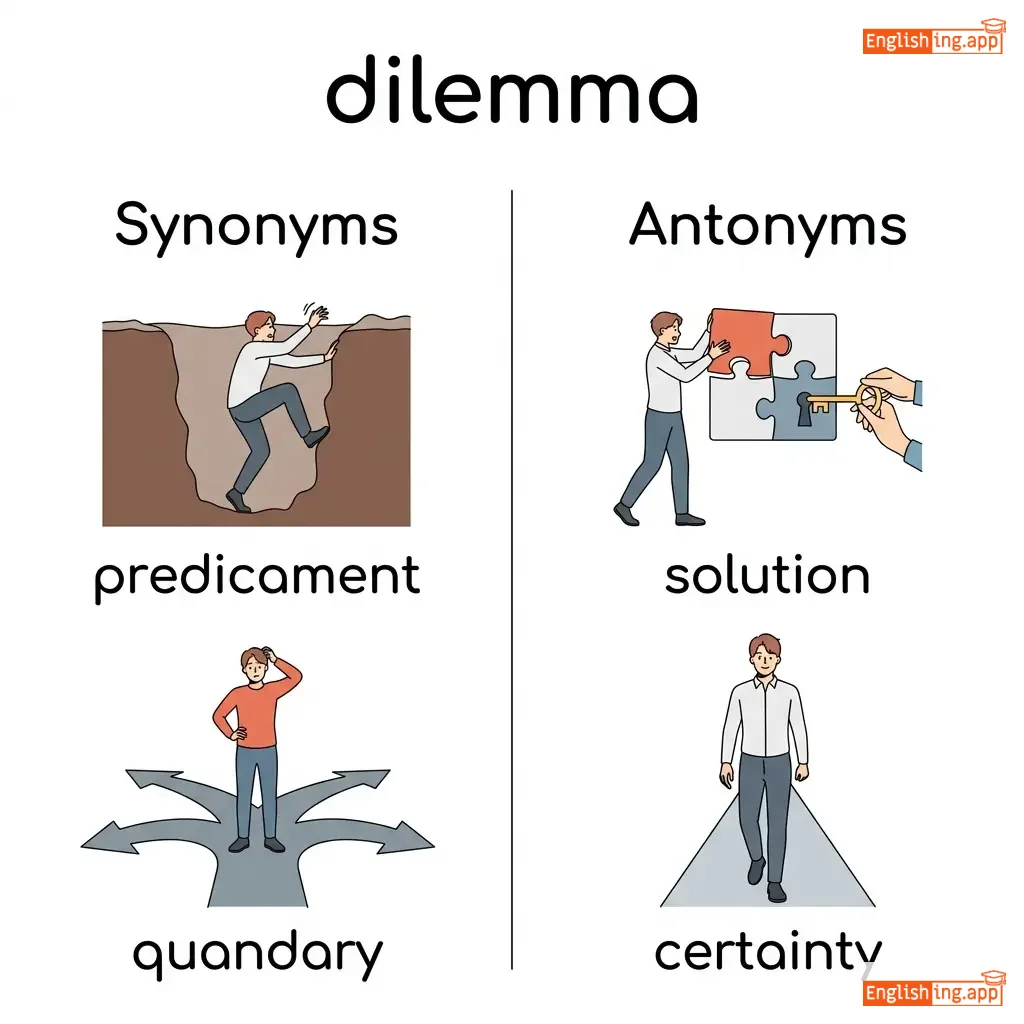
predicament, quandary, problem, difficulty
••••••
|
solution, certainty, clarity
••••••
|
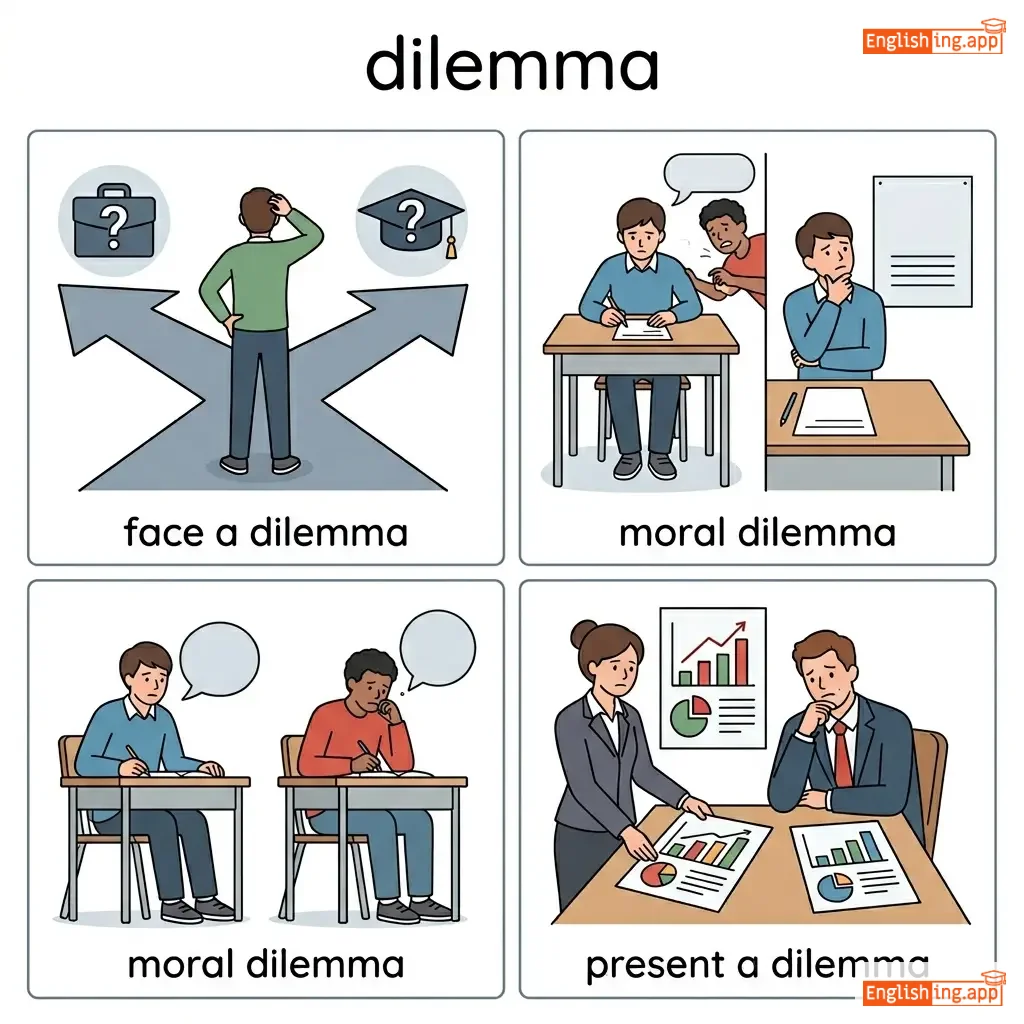
face a dilemma, moral dilemma, present a dilemma
••••••
|
|
#0
🗑️
|
/dɪsˈkɑːrd/
verb
••••••
|
- •••••• |
discarded
••••••
|
discarded
••••••
|
discards
••••••
|
discarding
••••••
|
to throw away something that is no longer needed
••••••
|
She decided to discard the old clothes. |
discard old habits |
to stop following old behaviors or practices
••••••
|
abandon, throw away, remove, get rid of
••••••
|
keep, retain, preserve
••••••
|
discard clothes, discard waste, discard items, discard habits
••••••
|
|
#0
🚪
|
/dɪsˈmɪs/
verb
••••••
|
|
dismissed
••••••
|
dismissed
••••••
|
dismisses
••••••
|
dismissing
••••••
|
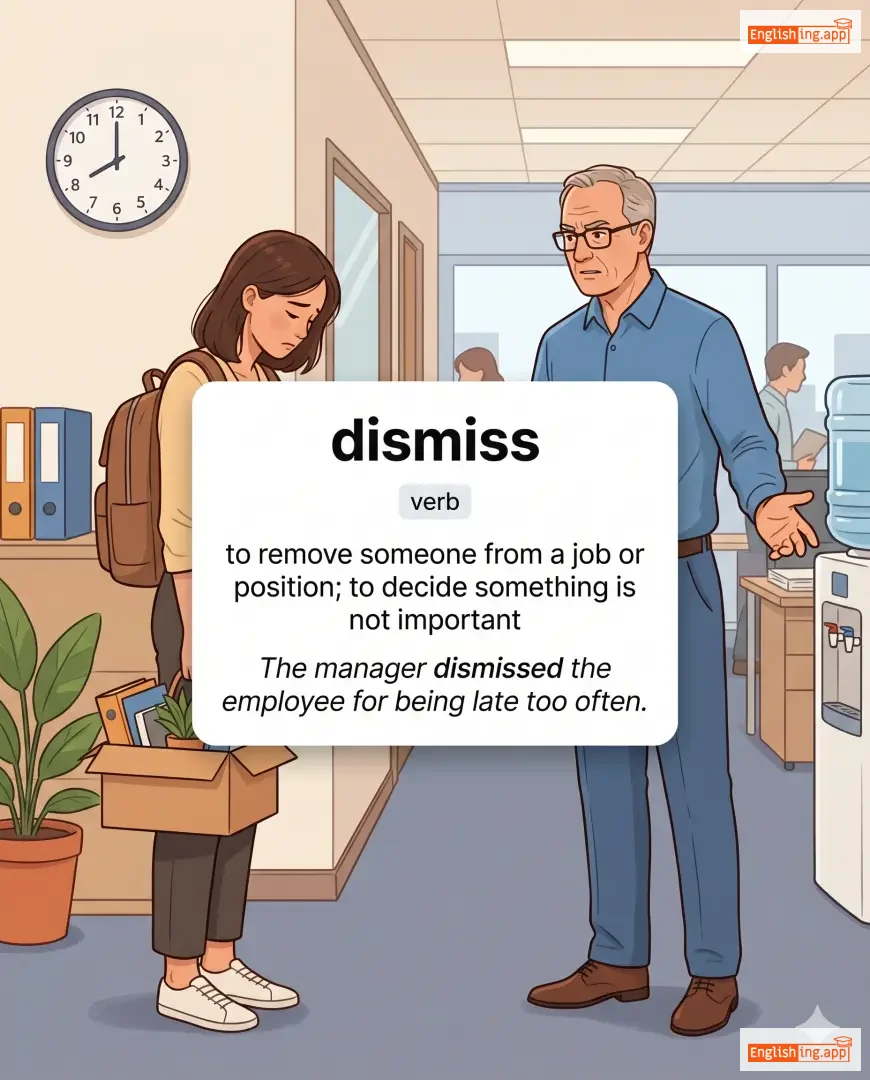
to remove someone from a job or position; to decide something is not important
••••••
|
The manager dismissed the employee for being late too often. |
dismiss out of hand |
to reject something immediately without considering it
••••••
|
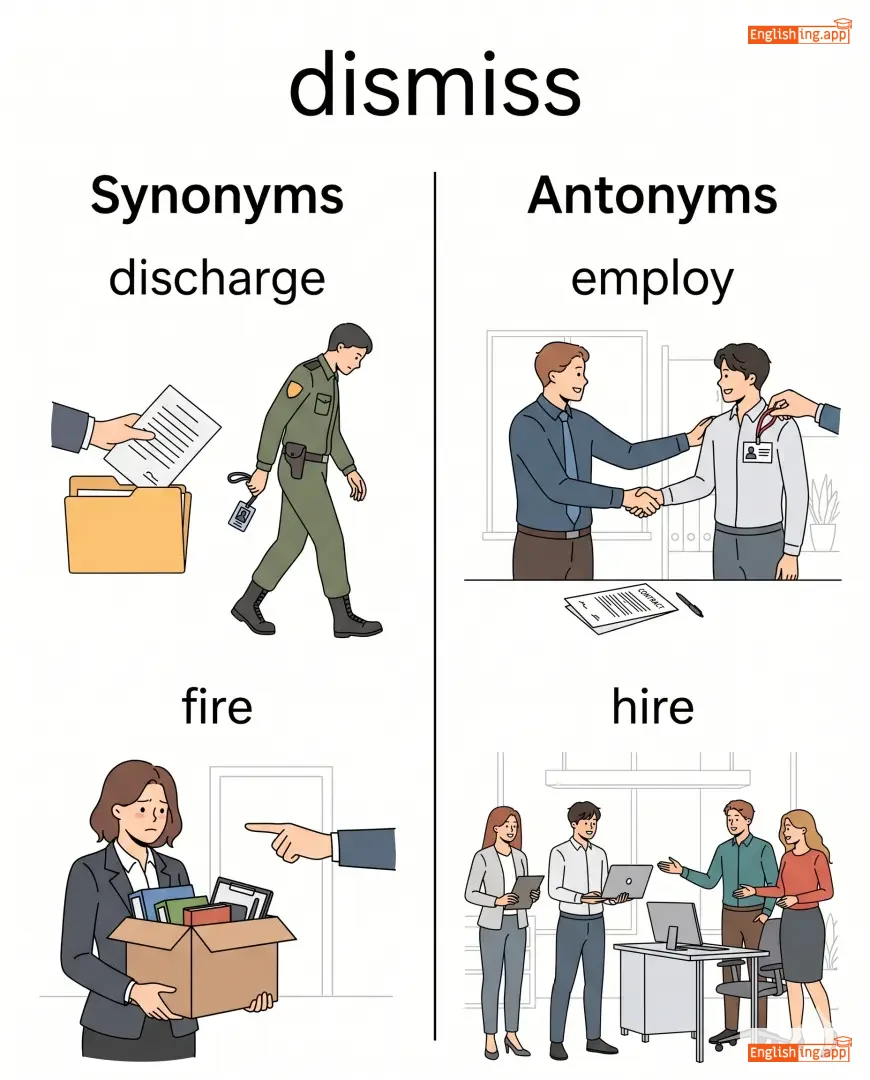
discharge, fire, release, reject, expel
••••••
|
employ, hire, accept
••••••
|
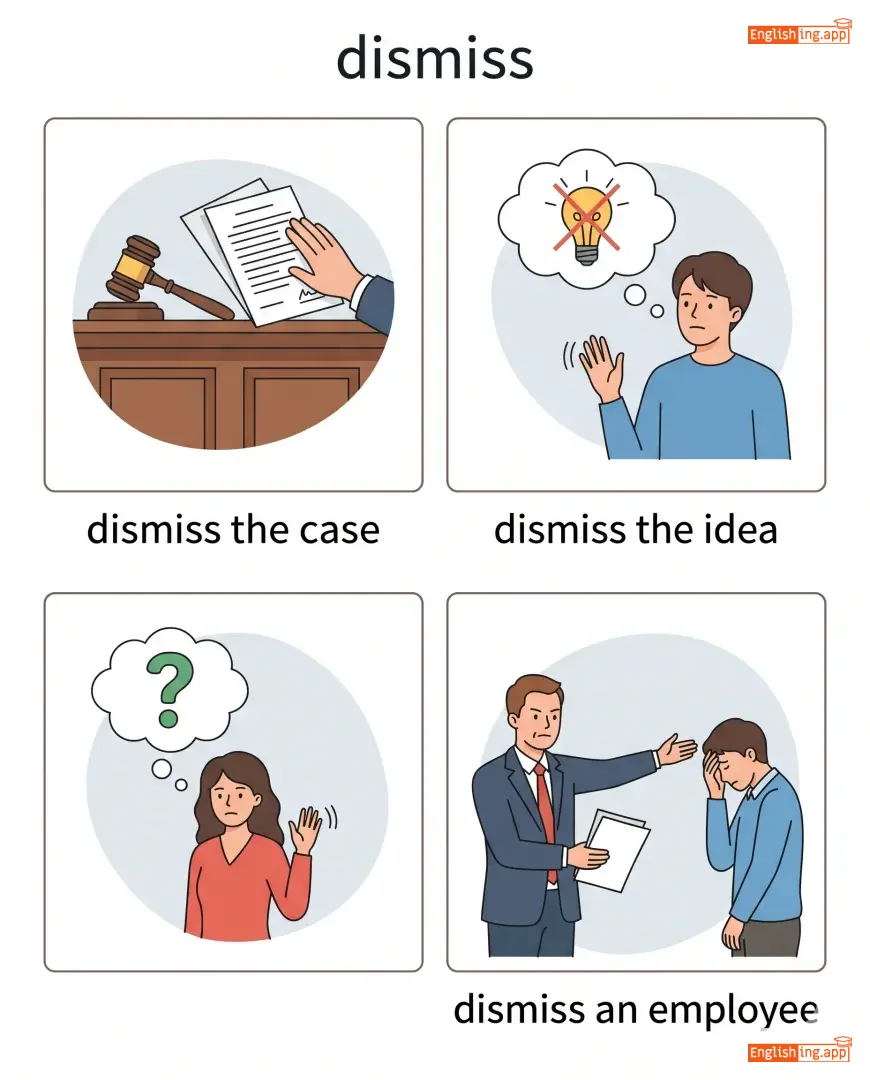
dismiss the case, dismiss the idea, dismiss an employee, dismiss charges
••••••
|
|
#0
🗑️
|
/dɪˈspoʊz/
verb
••••••
|
- •••••• |
disposed
••••••
|
disposed
••••••
|
disposes
••••••
|
disposing
••••••
|
To get rid of something, or to arrange or incline towards something.
••••••
|
He disposed of the old furniture responsibly. |
dispose of |
to throw away or get rid of something
••••••
|
discard, throw away, eliminate, arrange, incline
••••••
|
keep, retain, preserve
••••••
|
dispose of waste, properly dispose, dispose quickly, dispose carefully
••••••
|
|
#0
⚔️
|
/dɪˈspjuːt/
noun/verb
••••••
|
- •••••• |
disputed
••••••
|
disputed
••••••
|
disputes
••••••
|
disputing
••••••
|
a disagreement or argument about something important
••••••
|
The two countries are in dispute over the border issue. |
settle a dispute |
to resolve a disagreement
••••••
|
conflict, quarrel, argument, debate, disagreement
••••••
|
agreement, harmony, peace
••••••
|
trade dispute, legal dispute, border dispute, dispute resolution
••••••
|
|
#0
🌄
|
/ˈdɪstənt/
adjective
••••••
|
- •••••• | - •••••• | - •••••• | - •••••• | - •••••• |
far away in space or time
••••••
|
They could see the distant mountains from their home. |
distant relative |
a relative who is not closely related
••••••
|
far, remote, faraway, detached, aloof
••••••
|
near, close, friendly
••••••
|
distant land, distant memory, distant future, distant relative
••••••
|
Comments (0)
Share your thoughts and join the discussion.
Join the discussion by logging in
Login to CommentNo comments yet
Be the first to share your thoughts!