

The Economist Who Evaluated Progress
Liza was an economic analyst who specialized in development studies. Her role was to evaluate government programs. She studied whether citizens were eligible for benefits. Job market dynamics were complex. Many people struggled to find a decent employer. Liza's approach was entirely data-driven. She would send detailed reports in sealed envelopes to the ministry. The situation could escalate if unemployment continued rising. Liza would estimate job creation potential. During crises, the government had to evacuate industries from flooded areas. Economic stress was an external factor affecting mental health. Policy outcomes were sometimes fabulous, sometimes disappointing. Concepts needed to be familiar to common people. Politicians had favorite policies that aligned with ideology. A feminist economist argued for equal opportunities. Youth were tired of fighting for jobs. Policy announcements were like fireworks - flashy but short-lived. Citizens would touch their foreheads in worry over finances. Formerly prosperous industries had declined. Only a fraction of graduates found quality jobs. Economic breakdown left social fragments. Problems were frequent - unemployment, inflation, poverty. A freshman economist proposed innovative solutions. Liza viewed economic challenges as a new frontier. Her function was to bridge the gap between policy and reality. Gambling with the economy was dangerous. Rising gasoline prices affected everyone. Development should generate sustainable employment. Some compared the job crisis to genocide of opportunity. Success stories were glorious but rare. Policy makers needed to show more goodness and compassion. The governor announced a new economic package. Graphics in presentations showed stark inequalities. Liza remained grateful for the opportunity to contribute. Her work helped shape better economic policies that benefited ordinary people.
Upgrade to Access All Vocabulary
Get unlimited access to all vocabulary items with Pro membership
Upgrade to ProTranslation
Past
Past Participle
Third Person Singular
Gerund
Meaning
Example Sentence
Example Sentence Translation
Synonyms
Antonyms
Collocations
Mnemonic
Swipe left or right, or use the buttons. Tap image to zoom.
Upgrade to Access All Sentences
Get unlimited access to all sentences with Pro membership
Upgrade to ProExample Sentence Translation
Word
The Economist Who Evaluated Progress - Mask Toggle
|
Emoji
|
Word | Images | Past | Past Participle | Third Person Singular | Gerund | Meaning | Example Sentence | Example Expression | Example Expression Meaning | Synonyms | Antonyms | Collocations |
|---|---|---|---|---|---|---|---|---|---|---|---|---|---|
|
#0
💰
|
/ˌiːkəˈnɒmɪk/
adjective
••••••
|
|
- •••••• | - •••••• | - •••••• | - •••••• |
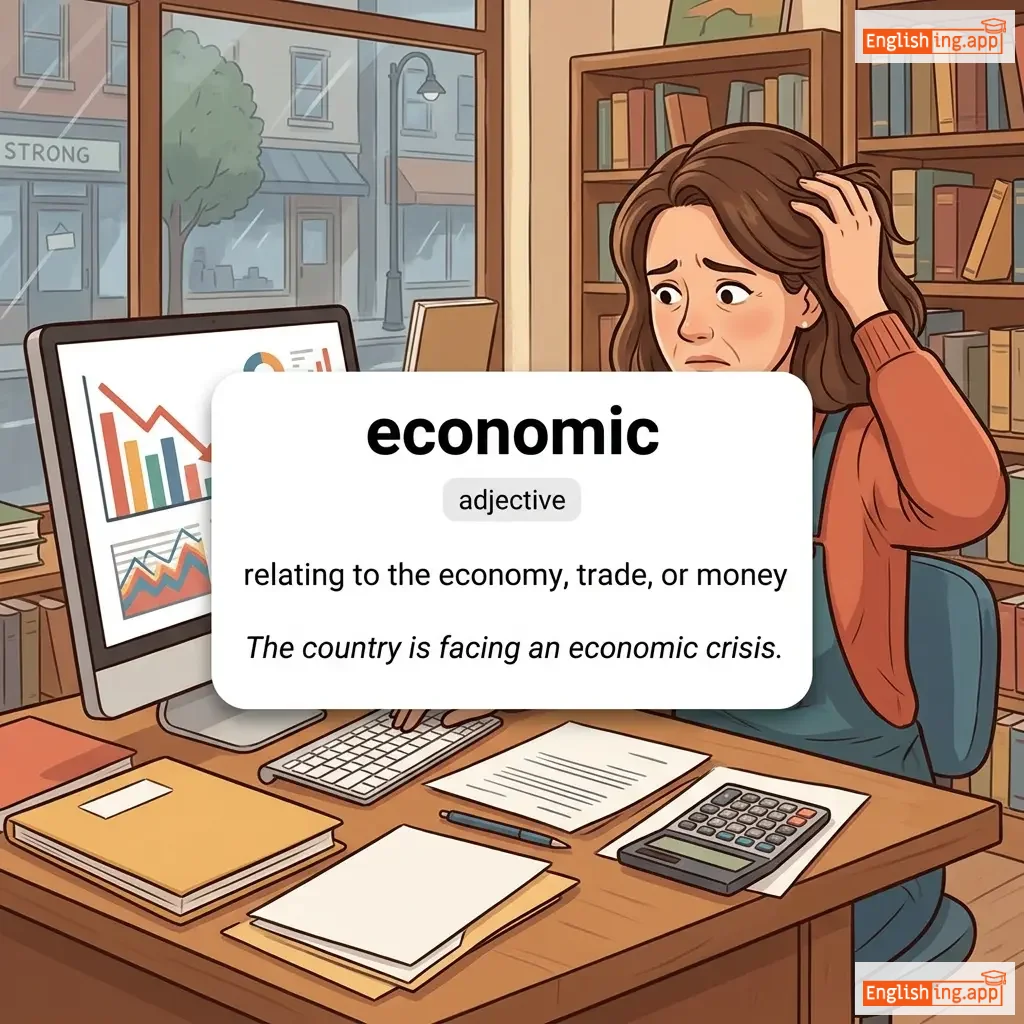
relating to the economy, trade, or money
••••••
|
The country is facing an economic crisis. |
economic growth |
increase in a country's production and wealth
••••••
|
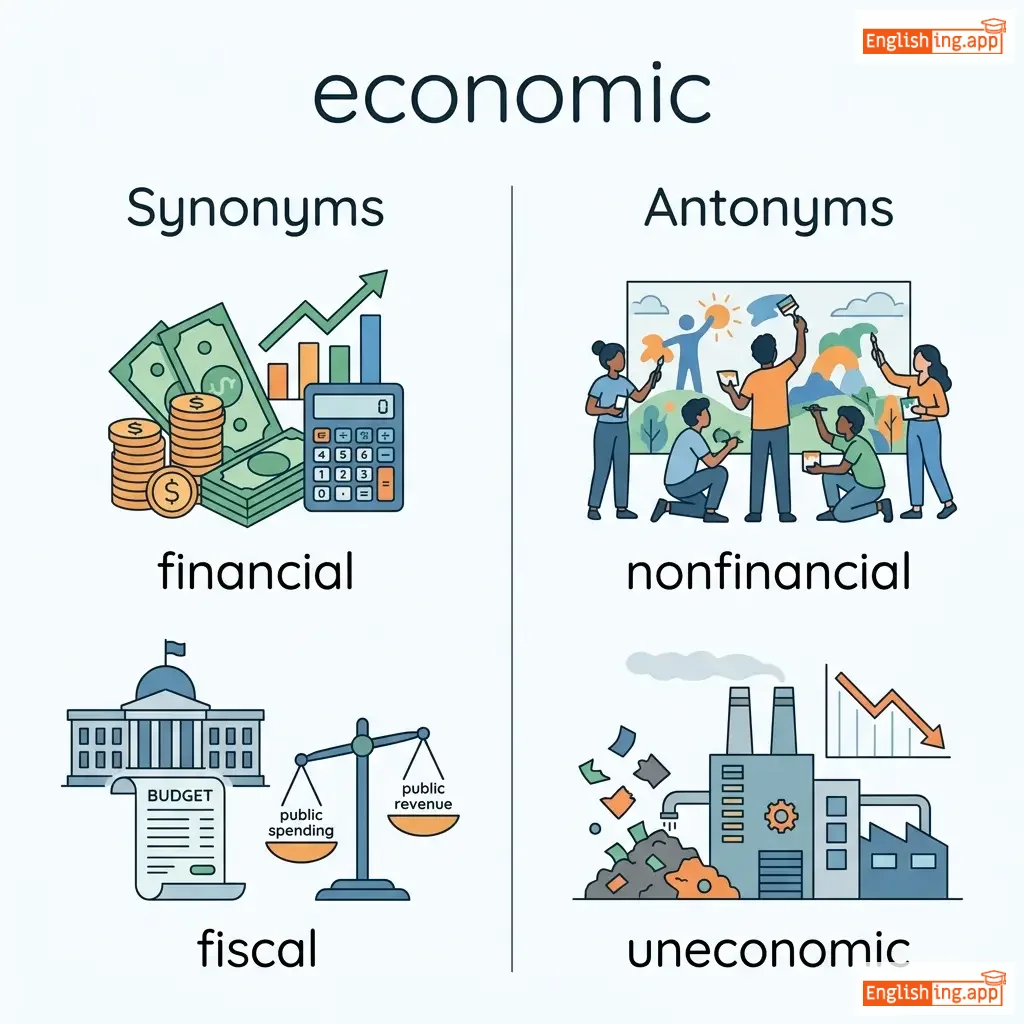
financial, fiscal, commercial, monetary
••••••
|
nonfinancial, uneconomic
••••••
|
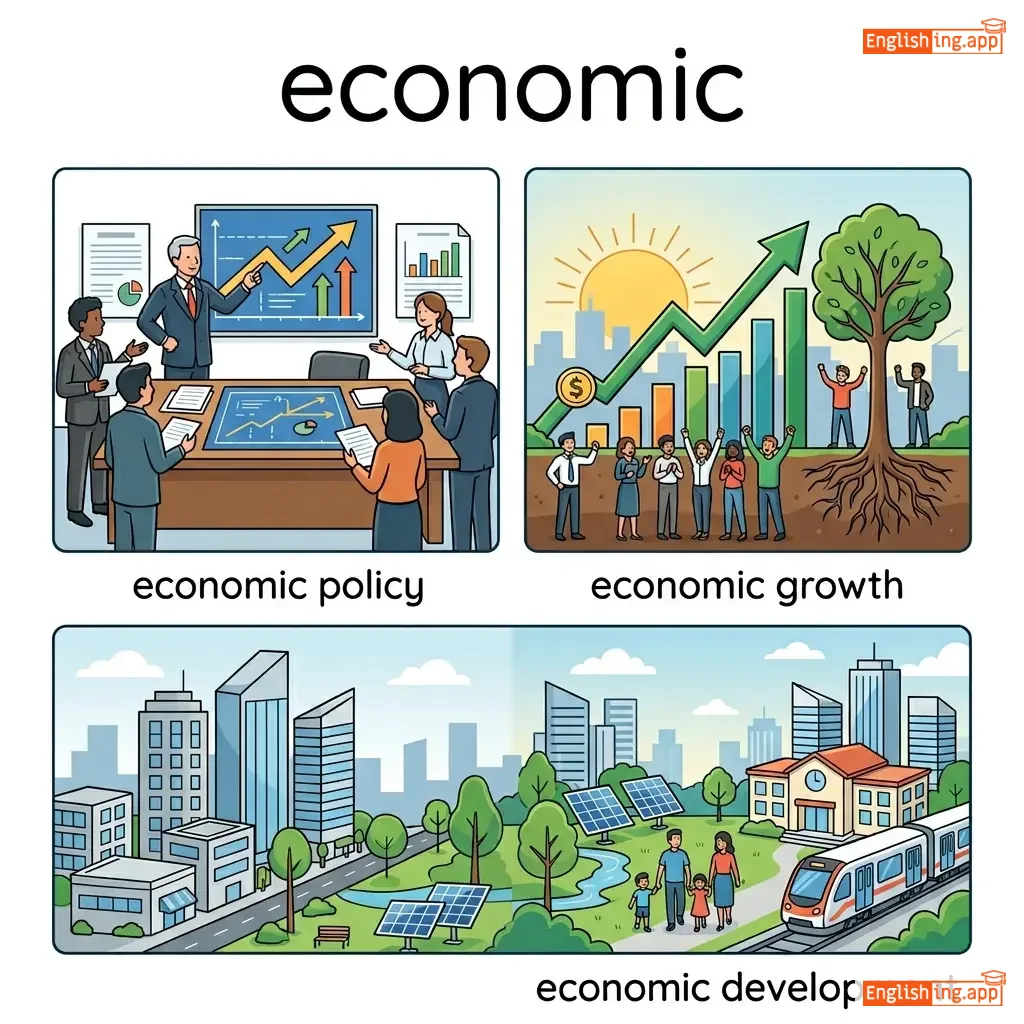
economic policy, economic growth, economic development, economic crisis
••••••
|
|
#0
✅
|
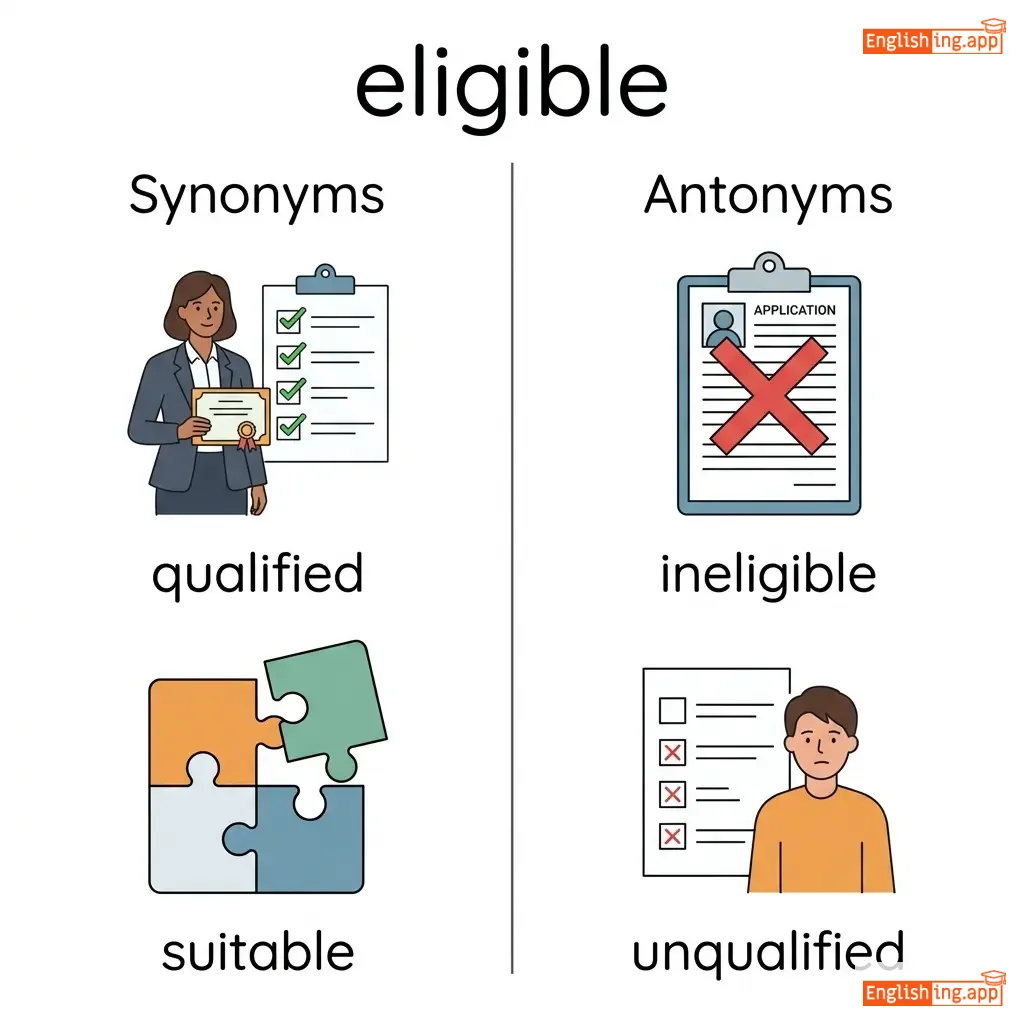
/ˈɛlɪdʒəbl/
adjective
••••••
|
|
- •••••• | - •••••• | - •••••• | - •••••• |
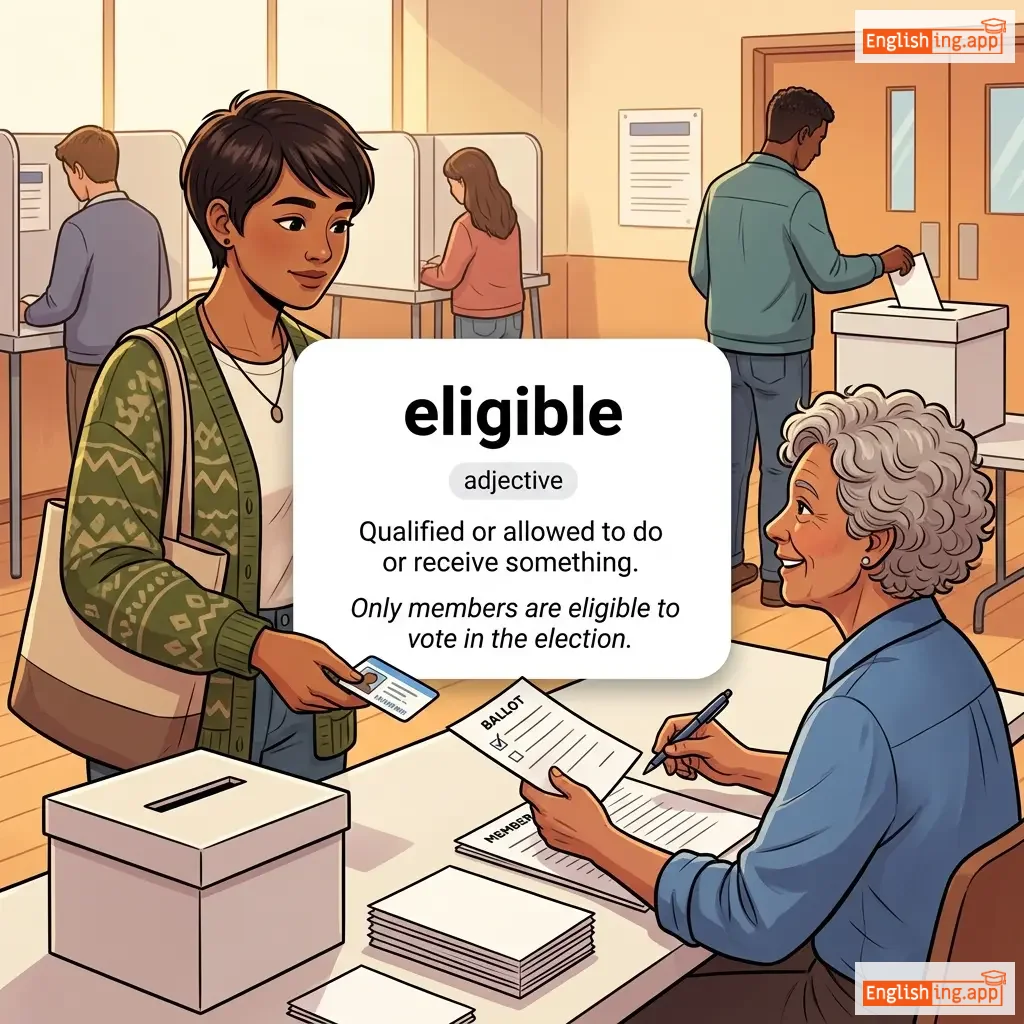
Qualified or allowed to do or receive something.
••••••
|
Only members are eligible to vote in the election. |
eligible bachelor |
a man considered suitable for marriage
••••••
|
qualified, suitable, entitled, acceptable
••••••
|
ineligible, unqualified, unsuitable
••••••
|
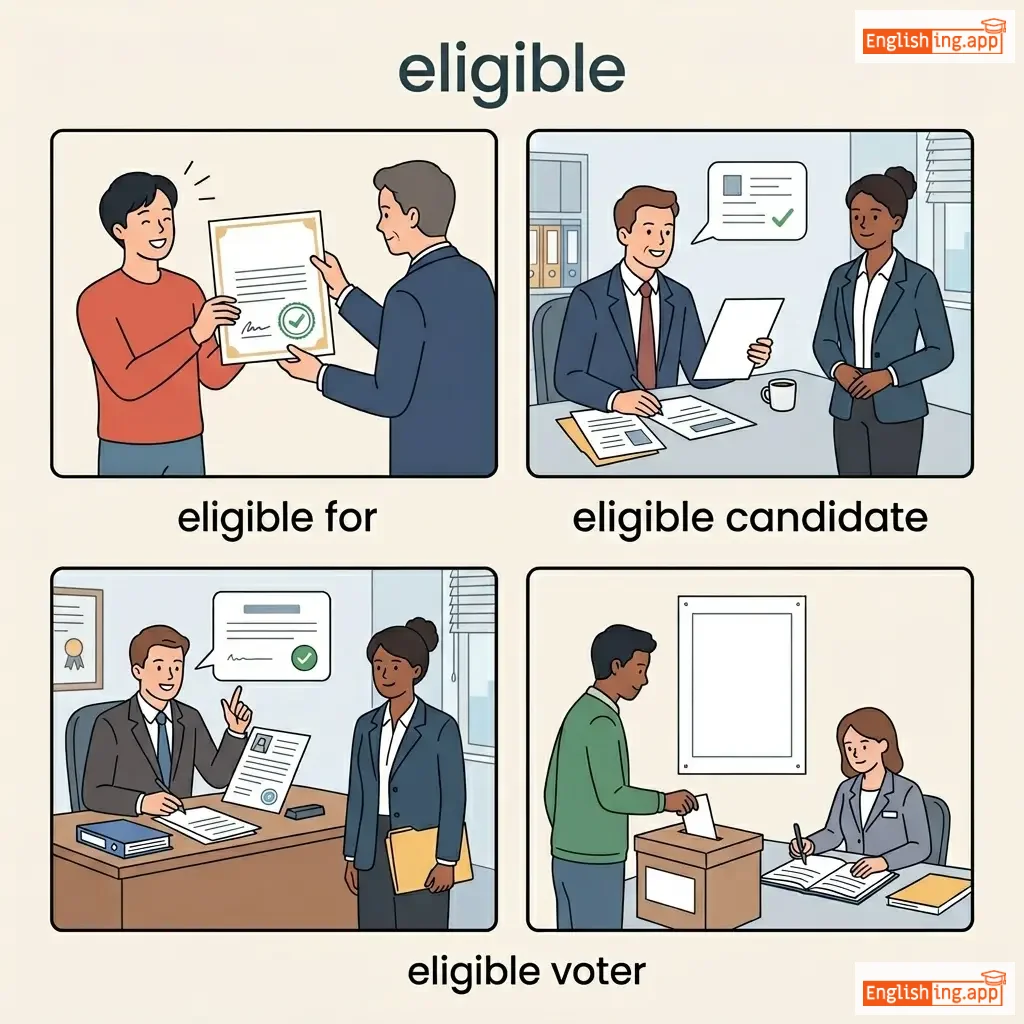
eligible for, eligible candidate, eligible voter, eligible participant
••••••
|
|
#0
👔
|
/ɪmˈplɔɪər/
noun
••••••
|
- •••••• | - •••••• | - •••••• | - •••••• | - •••••• |
A person or organization that hires and pays people to work.
••••••
|
The employer promised better benefits to attract skilled workers. |
good employer |
An employer who treats employees fairly and provides good conditions.
••••••
|
boss, manager, proprietor, recruiter, company
••••••
|
employee, worker
••••••
|
large employer, potential employer, current employer, future employer
••••••
|
|
#0
🔄
|
/ɪnˈtaɪərli/
adverb
••••••
|
- •••••• | - •••••• | - •••••• | - •••••• | - •••••• |
Completely or wholly.
••••••
|
She is entirely responsible for the project. |
entirely up to |
Completely dependent on someone or something
••••••
|
completely, fully, wholly, absolutely
••••••
|
partly, partially, incompletely
••••••
|
entirely responsible, entirely new, entirely different, not entirely
••••••
|
|
#0
✉️
|
/ˈɛnvəloʊp/
noun
••••••
|
- •••••• | - •••••• | - •••••• | - •••••• | - •••••• |
a flat paper container used to enclose a letter or document
••••••
|
She sealed the letter in an envelope and posted it. |
push the envelope |
to go beyond normal limits; to innovate or take risks
••••••
|
wrapper, cover, packet, casing, container
••••••
|
uncovering, exposure
••••••
|
seal an envelope, open an envelope, address an envelope, brown envelope
••••••
|
|
#0
📈
|
/ˈɛskəleɪt/
verb
••••••
|
|
escalated
••••••
|
escalated
••••••
|
escalates
••••••
|
escalating
••••••
|
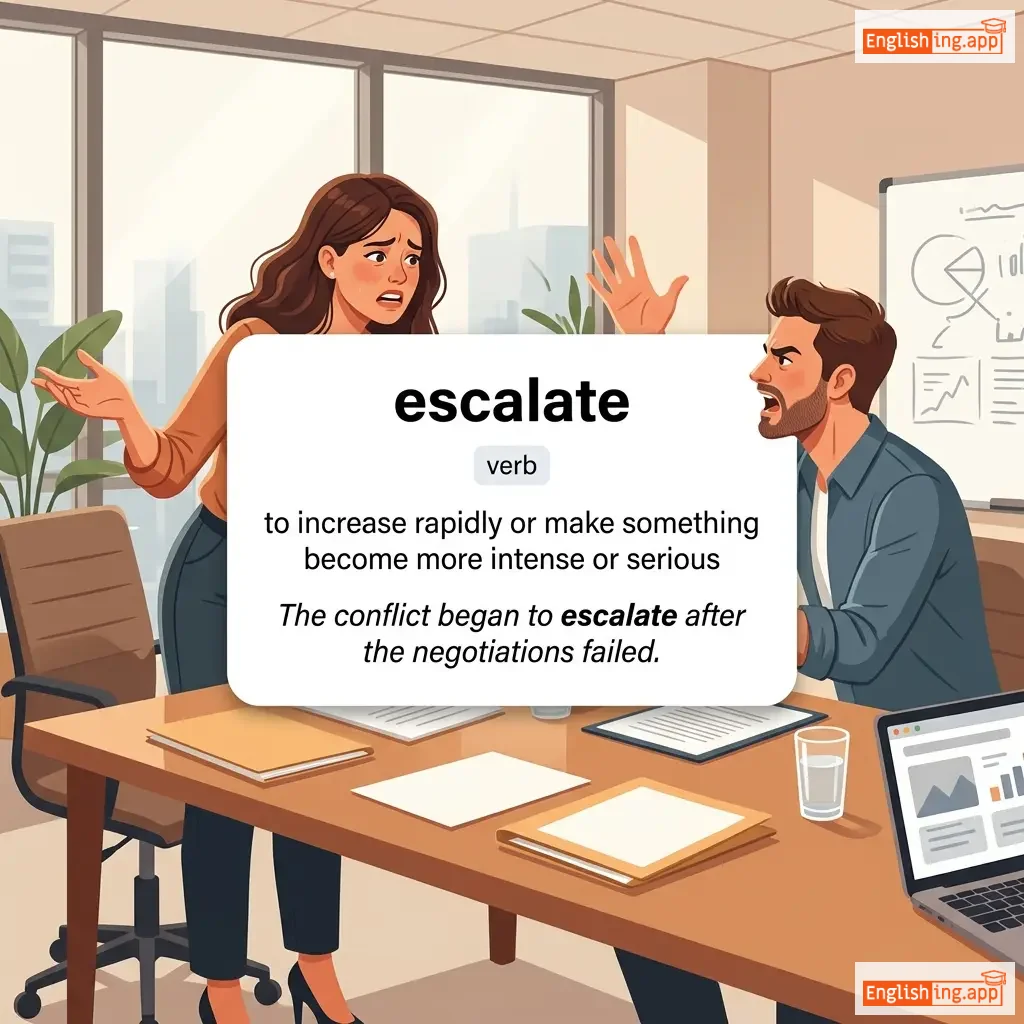
to increase rapidly or make something become more intense or serious
••••••
|
The conflict began to escalate after the negotiations failed. |
escalate the situation |
to make a problem or conflict more serious
••••••
|
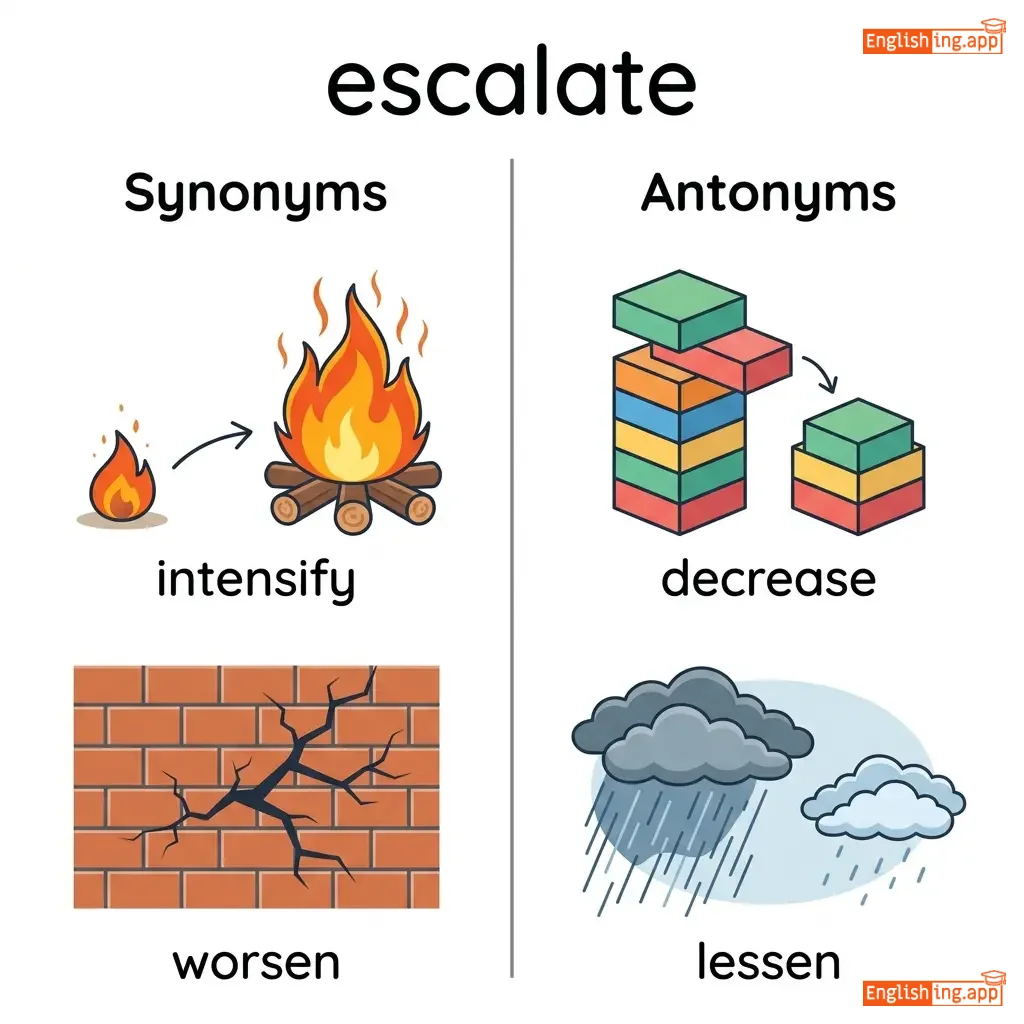
intensify, worsen, amplify, heighten, increase
••••••
|
decrease, lessen, reduce
••••••
|
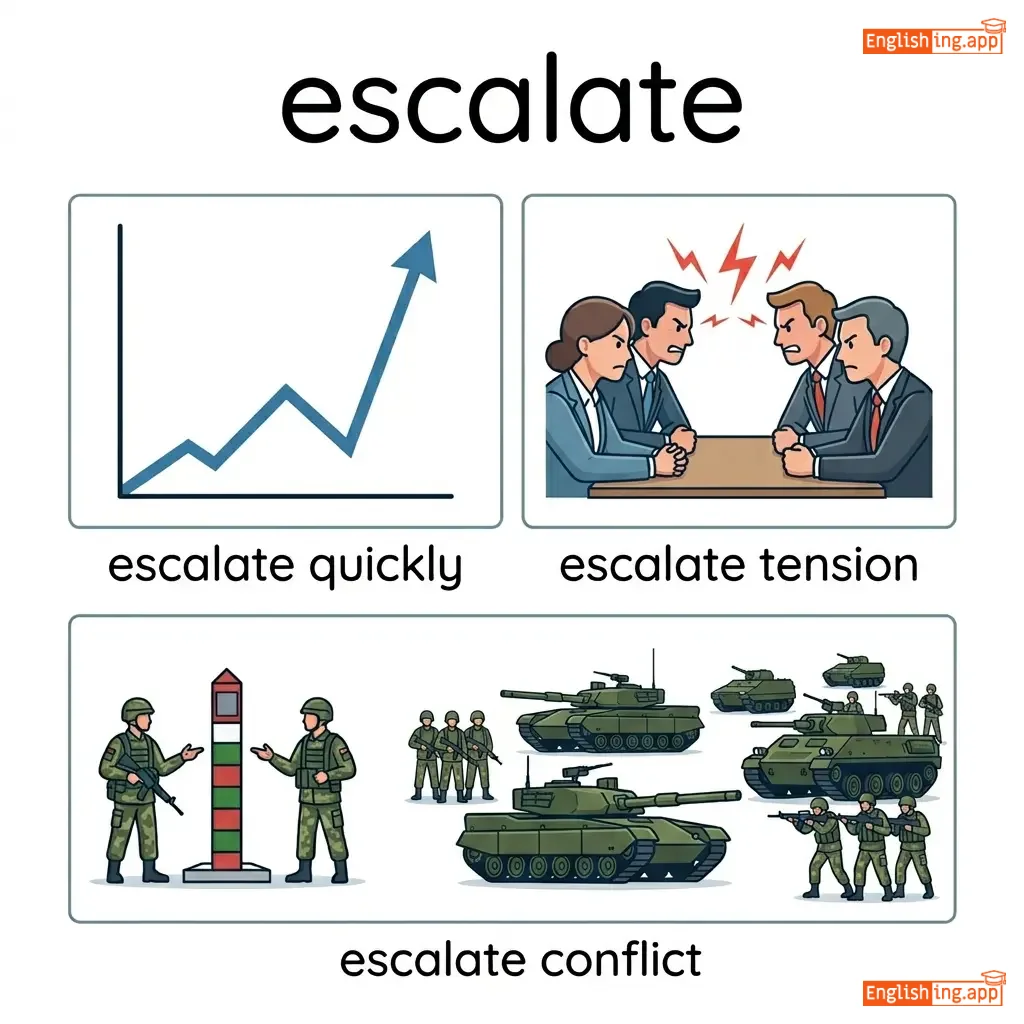
escalate quickly, escalate tension, escalate conflict, escalate costs
••••••
|
|
#0
📊
|
/ˈɛstɪˌmeɪt/
verb
••••••
|
- •••••• |
estimated
••••••
|
estimated
••••••
|
estimates
••••••
|
estimating
••••••
|
To roughly calculate or judge the value, number, quantity, or extent of something.
••••••
|
The engineer estimated the cost of the project at $5 million. |
rough estimate |
An approximate calculation
••••••
|
calculate, assess, evaluate, appraise, guess
••••••
|
measure exactly, determine
••••••
|
make an estimate, accurate estimate, cost estimate, estimate value
••••••
|
|
#0
🚨
|
/ɪˈvækjueɪt/
verb
••••••
|
- •••••• |
evacuated
••••••
|
evacuated
••••••
|
evacuates
••••••
|
evacuating
••••••
|
To remove people from a dangerous place to safety.
••••••
|
The residents were ordered to evacuate the building after the fire alarm. |
evacuate the premises |
To leave a building or area immediately for safety reasons.
••••••
|
clear, empty, vacate, withdraw
••••••
|
occupy, stay
••••••
|
evacuate building, evacuate area, evacuate residents, emergency evacuate
••••••
|
|
#0
📊
|
/ɪˈvæljueɪt/
verb
••••••
|
- •••••• |
evaluated
••••••
|
evaluated
••••••
|
evaluates
••••••
|
evaluating
••••••
|
To assess or judge the value, quality, or significance of something.
••••••
|
The teacher will evaluate the students’ projects tomorrow. |
evaluate the situation |
to carefully consider all aspects before deciding
••••••
|
assess, judge, appraise, analyze, review
••••••
|
ignore, neglect
••••••
|
evaluate performance, evaluate results, evaluate options
••••••
|
|
#0
🌐
|
/ɪkˈstɜrnəl/
adjective
••••••
|
- •••••• | - •••••• | - •••••• | - •••••• | - •••••• |
situated on or relating to the outside of something; coming from outside
••••••
|
The external factors affected the company's growth. |
external affairs |
matters concerning foreign relations
••••••
|
outer, outside, foreign, exterior
••••••
|
internal, inner
••••••
|
external factors, external affairs, external pressure
••••••
|
|
#0
✨
|
/ˈfæbjələs/
adjective
••••••
|
- •••••• | - •••••• | - •••••• | - •••••• | - •••••• |
Extremely good or wonderful; almost unbelievable
••••••
|
She looked fabulous in her new dress. |
fabulous fortune |
an extremely large amount of wealth
••••••
|
marvelous, amazing, incredible, astonishing, wonderful
••••••
|
ordinary, mediocre, dull
••••••
|
fabulous job, fabulous idea, fabulous wealth, look fabulous
••••••
|
|
#0
🙂
|
/fəˈmɪliər/
adjective
••••••
|
- •••••• | - •••••• | - •••••• | - •••••• | - •••••• |
Well known or easily recognized from previous experience.
••••••
|
The town looked familiar to me after so many years. |
familiar face |
Someone you recognize but may not know personally.
••••••
|
well-known, recognizable, acquainted, common, usual
••••••
|
unfamiliar, unknown, strange
••••••
|
familiar face, familiar voice, look familiar, become familiar
••••••
|
|
#0
⭐
|
/ˈfeɪvərɪt/
adjective, noun
••••••
|
- •••••• | - •••••• | - •••••• | - •••••• | - •••••• |
Preferred over all others; something or someone especially liked.
••••••
|
Chocolate is my favorite ice cream flavor. |
play favorites |
To give unfair advantage to one person over others.
••••••
|
preferred, beloved, liked, best, choice
••••••
|
hated, disliked
••••••
|
favorite song, favorite color, all-time favorite, crowd favorite
••••••
|
|
#0
♀️
|
/ˈfɛmənɪst/
noun
••••••
|
- •••••• | - •••••• | - •••••• | - •••••• | - •••••• |
a person who supports equal rights and opportunities for women and men
••••••
|
She proudly calls herself a feminist and fights for gender equality. |
feminist movement |
a social campaign for women's rights and equality
••••••
|
activist, advocate, campaigner, reformer
••••••
|
sexist, chauvinist
••••••
|
feminist movement, feminist theory, feminist perspective, feminist writer
••••••
|
|
#0
⚔️
|
/ˈfaɪtɪŋ/
noun/verb
••••••
|
- •••••• | - •••••• | - •••••• | - •••••• |
fighting
••••••
|
the act of engaging in a physical or verbal conflict
••••••
|
The soldiers were fighting bravely on the battlefield. |
keep fighting |
to continue making effort despite challenges
••••••
|
battle, combat, struggle, conflict, contest
••••••
|
peace, harmony, agreement
••••••
|
stop fighting, fighting spirit, fighting chance, fighting back
••••••
|
|
#0
🎆
|
/ˈfaɪəˌwɜːk/
noun
••••••
|
- •••••• | - •••••• | - •••••• | - •••••• | - •••••• |
a device that explodes or creates a display of lights and sounds, often used in celebrations
••••••
|
The fireworks lit up the sky during the New Year's Eve celebration. |
- •••••• | - •••••• |
sparkler, roman candle, display, pyrotechnics
••••••
|
whimper, silence
••••••
|
colorful fireworks, fireworks display, fireworks show
••••••
|
|
#0
👩
|
/ˈfɔːrˌhɛd/ or /ˈfɔːrɪd/
noun
••••••
|
- •••••• | - •••••• | - •••••• | - •••••• | - •••••• |
The part of the face above the eyebrows.
••••••
|
She wiped the sweat from her forehead. |
sweat on one's forehead |
A sign of hard work, nervousness, or exertion.
••••••
|
brow, temple, face, skull, cranium
••••••
|
chin, jaw
••••••
|
high forehead, wrinkled forehead, broad forehead, kiss on the forehead
••••••
|
|
#0
⏮️
|
/ˈfɔːrmərli/
adverb
••••••
|
- •••••• | - •••••• | - •••••• | - •••••• | - •••••• |
in the past; previously; at an earlier time
••••••
|
The building was formerly a school but is now a community center. |
- •••••• | - •••••• |
previously, earlier, before, once, in the past
••••••
|
currently, now, presently, lately, recently
••••••
|
formerly known as, formerly owned by, formerly called
••••••
|
|
#0
➗
|
/ˈfrækʃən/
noun
••••••
|
- •••••• | - •••••• | - •••••• | - •••••• | - •••••• |
A small part of something; in mathematics, a number that represents part of a whole.
••••••
|
Only a small fraction of the population attended the event. |
a fraction of |
A very small part of something
••••••
|
portion, segment, piece, part
••••••
|
whole, entirety
••••••
|
small fraction, significant fraction, fraction of time, fraction of cost
••••••
|
|
#0
🧩
|
/ˈfræɡmənt/
noun
••••••
|
- •••••• | - •••••• | - •••••• | - •••••• | - •••••• |
a small piece broken off something larger
••••••
|
He found a fragment of ancient pottery near the river. |
in fragments |
broken into small pieces
••••••
|
piece, shard, particle, portion, bit
••••••
|
whole, entirety
••••••
|
glass fragment, bone fragment, sentence fragment, broken fragment
••••••
|
Comments (0)
Share your thoughts and join the discussion.
Join the discussion by logging in
Login to CommentNo comments yet
Be the first to share your thoughts!