

The Power of Communication
Nishat was a communication expert who gave training in the corporate sector. Her specialty was teaching people how to communicate effectively, how to clearly express their message.
She saw that many talented people were lagging behind just because of poor communication skills. They could do good work, but couldn't articulate their ideas. Felt uncomfortable in conversations, feared participating in discussions.
Nishat designed a comprehensive training program. The first lesson was listening. "Good communication starts from listening," she said. "When you properly listen, you understand better, and can respond better."
She taught her students how to give clear speech, how to use confident voice. Verbal communication is not just words, it's tone, pace, clarity - everything.
Students practiced dialogues, role-played different scenarios. Some did sales pitch, some job interview, some presentation. In each scenario, the focus was clear communication.
Nishat also emphasized body language. "Communication is not just speaking," she explained. "Your posture, gestures, eye contact - these also communicate a message."
She also talked about linguistic diversity. Bangladesh has different languages and dialects. Effective communicators can adapt according to their audience.
An important module in the training program was fluent communication. How to speak without hesitation, how to smoothly flow conversations.
Students gradually became confident. They learned how to interact in professional meetings, how to navigate difficult conversations, how to use persuasive language.
After completing Nishat's training, students' careers significantly improved. They can now confidently speak in meetings, deliver presentations, effectively communicate their ideas.
One student later said, "Communication skills transformed my career. I can now clearly express my thoughts, actively listen to others, engage in constructive dialogues. These skills are helpful not just in professional life, but in personal life too."
Nishat now conducts workshops at various organizations. She says, "Effective communication is the most important skill. When you can clearly speak, attentively listen, thoughtfully respond, you build better relationships. Verbal and non-verbal communication, both are important. Your voice, your speech, your language - everything matters. Fluent communication doesn't just mean fast speaking, it means being clear, confident, and effective. Every conversation is an opportunity, every dialogue is a chance to connect. When you understand how to communicate, you unlock countless opportunities. Good communicators become better leaders, better team members, better professionals. They can express their vision, articulate complex ideas, and interact effectively with everyone. This is the power of communication. It's a linguistic skill that develops with practice, and remains valuable lifelong."
Nishat's training programs are transforming not just individuals' communication abilities, but entire organizational communication culture. When teams communicate effectively, collaboration improves, productivity increases, and success comes. Her work proves that good communication is the foundation of every achievement, and mastering this skill is investing in your future.
Upgrade to Access All Vocabulary
Get unlimited access to all vocabulary items with Pro membership
Upgrade to ProTranslation
Past
Past Participle
Third Person Singular
Gerund
Meaning
Example Sentence
Example Sentence Translation
Synonyms
Antonyms
Collocations
Mnemonic














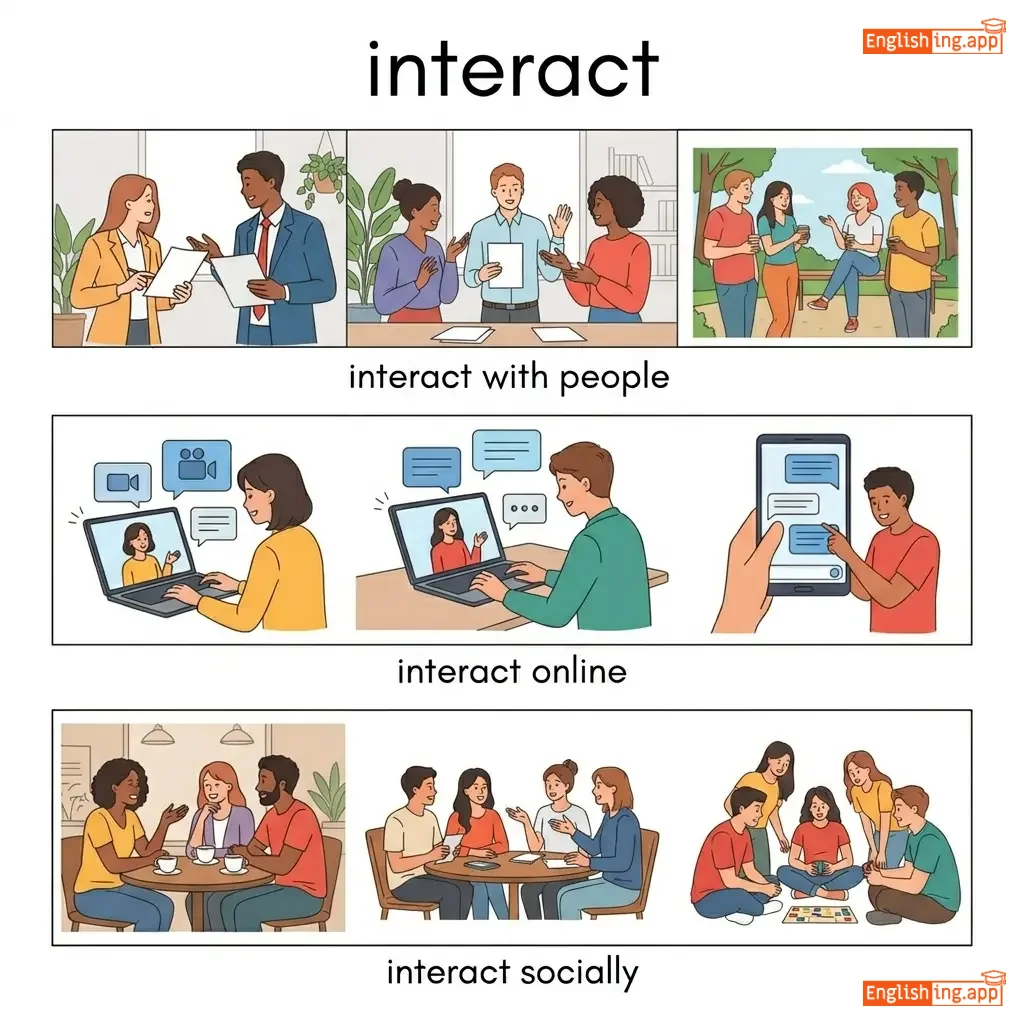
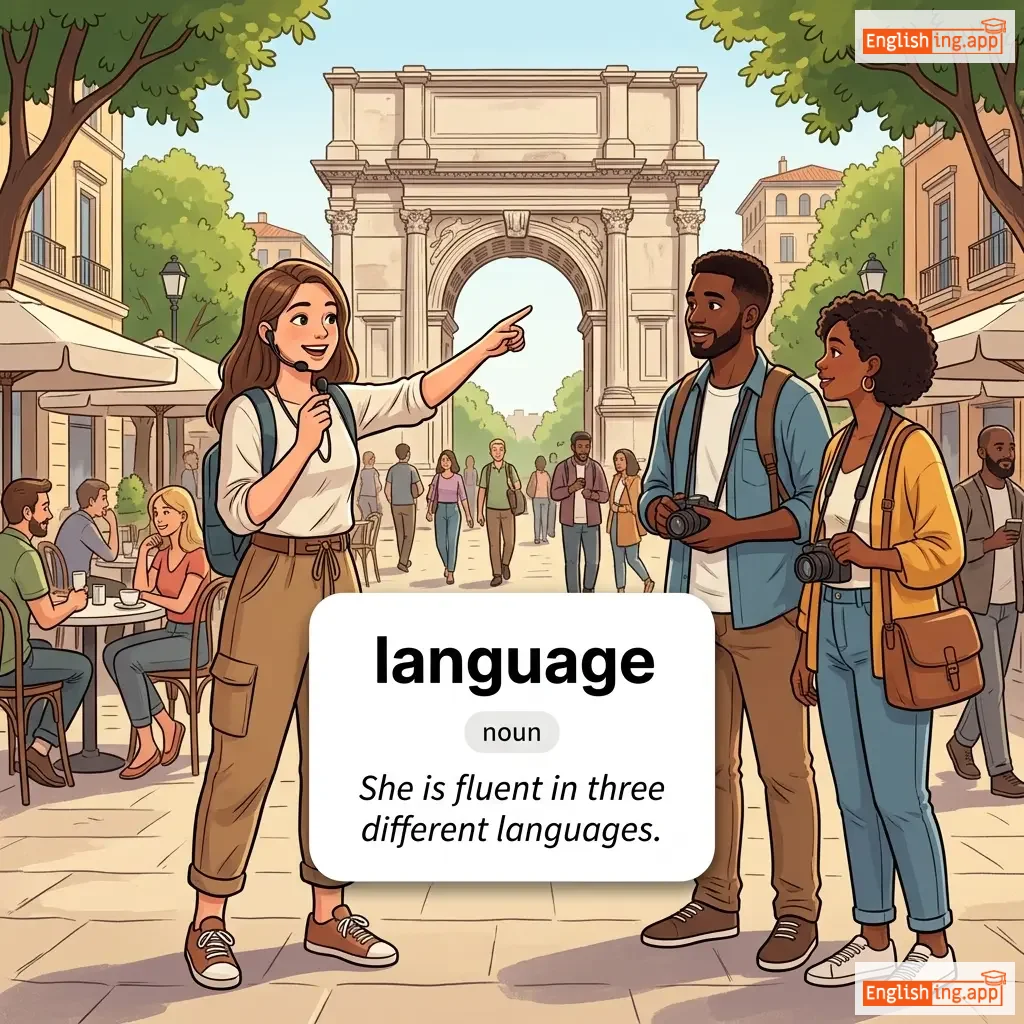
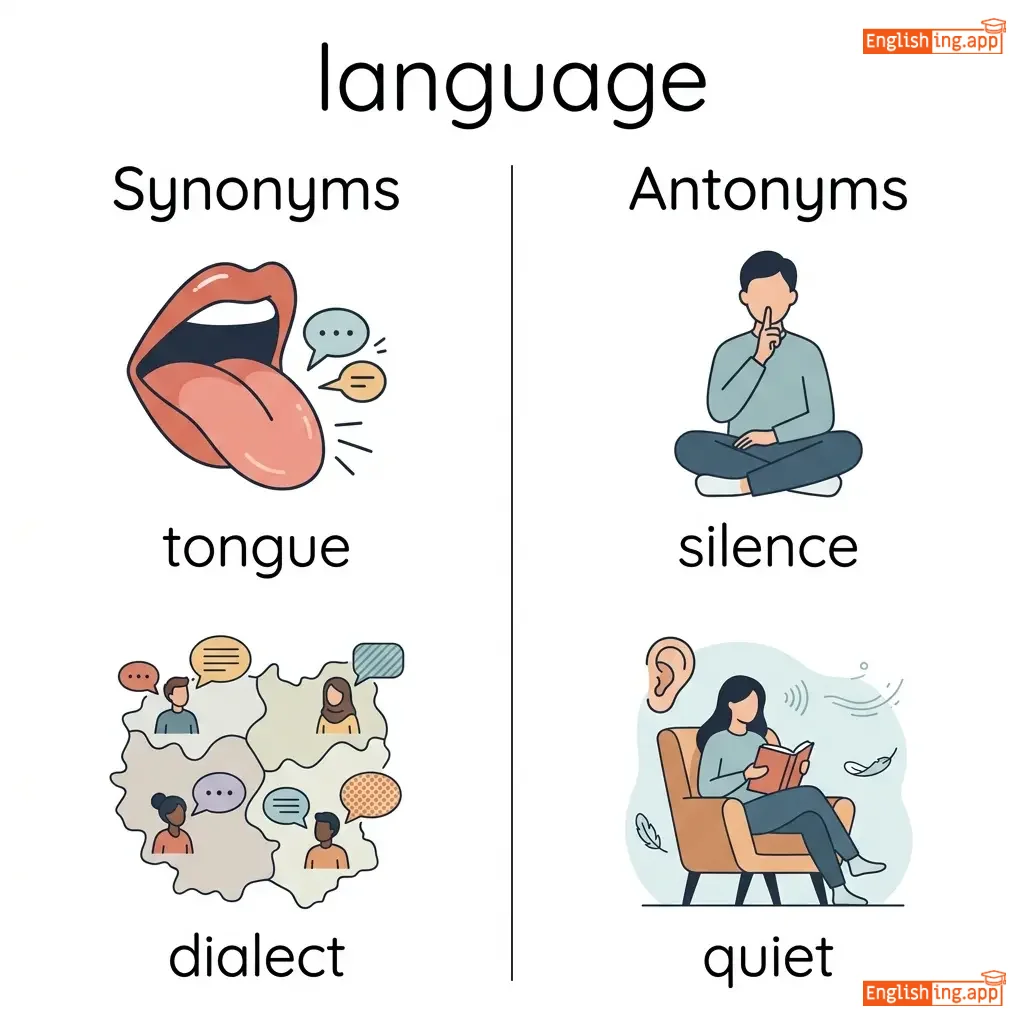
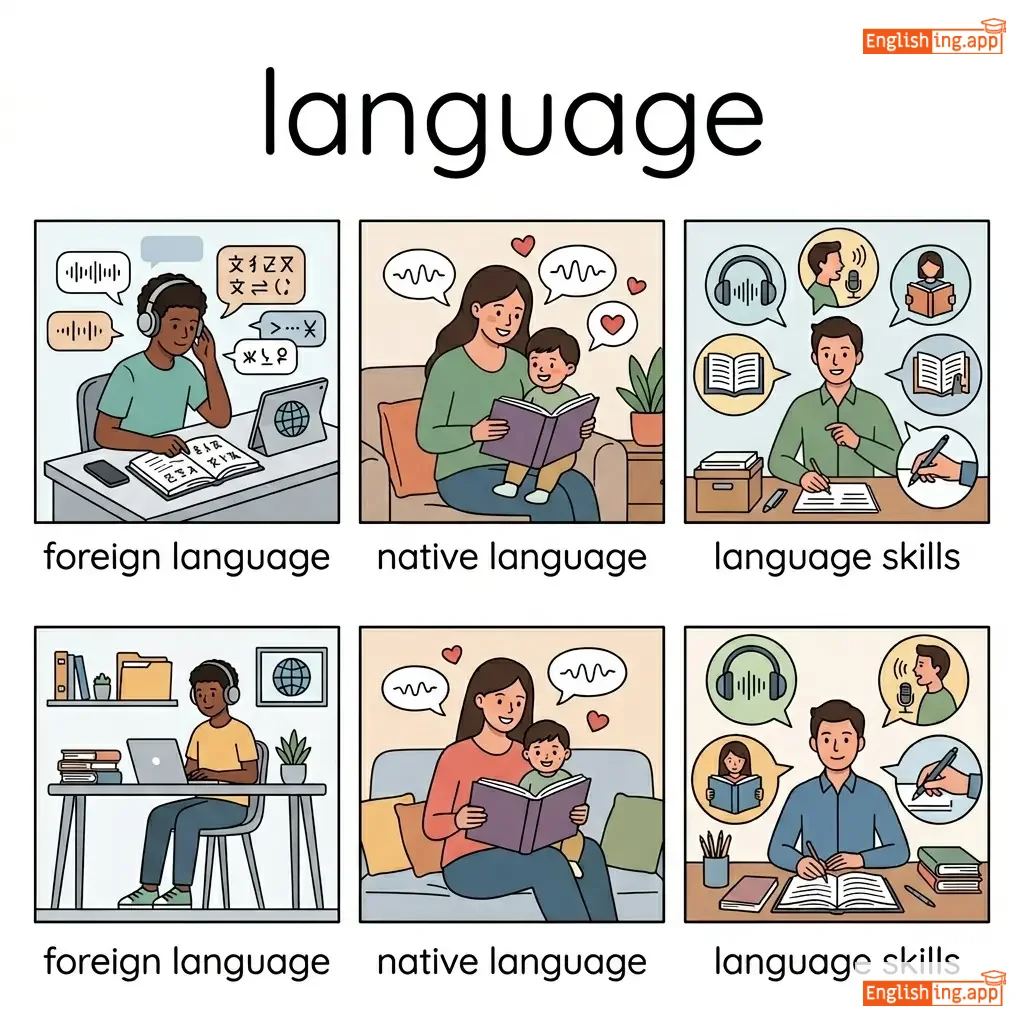




Swipe left or right, or use the buttons. Tap image to zoom.
Upgrade to Access All Sentences
Get unlimited access to all sentences with Pro membership
Upgrade to ProExample Sentence Translation
Word
The Power of Communication - Mask Toggle
|
Emoji
|
Word | Images | Past | Past Participle | Third Person Singular | Gerund | Meaning | Example Sentence | Example Expression | Example Expression Meaning | Synonyms | Antonyms | Collocations |
|---|---|---|---|---|---|---|---|---|---|---|---|---|---|
|
#0
🗣️
|
/ɑːrˈtɪkjʊlət/
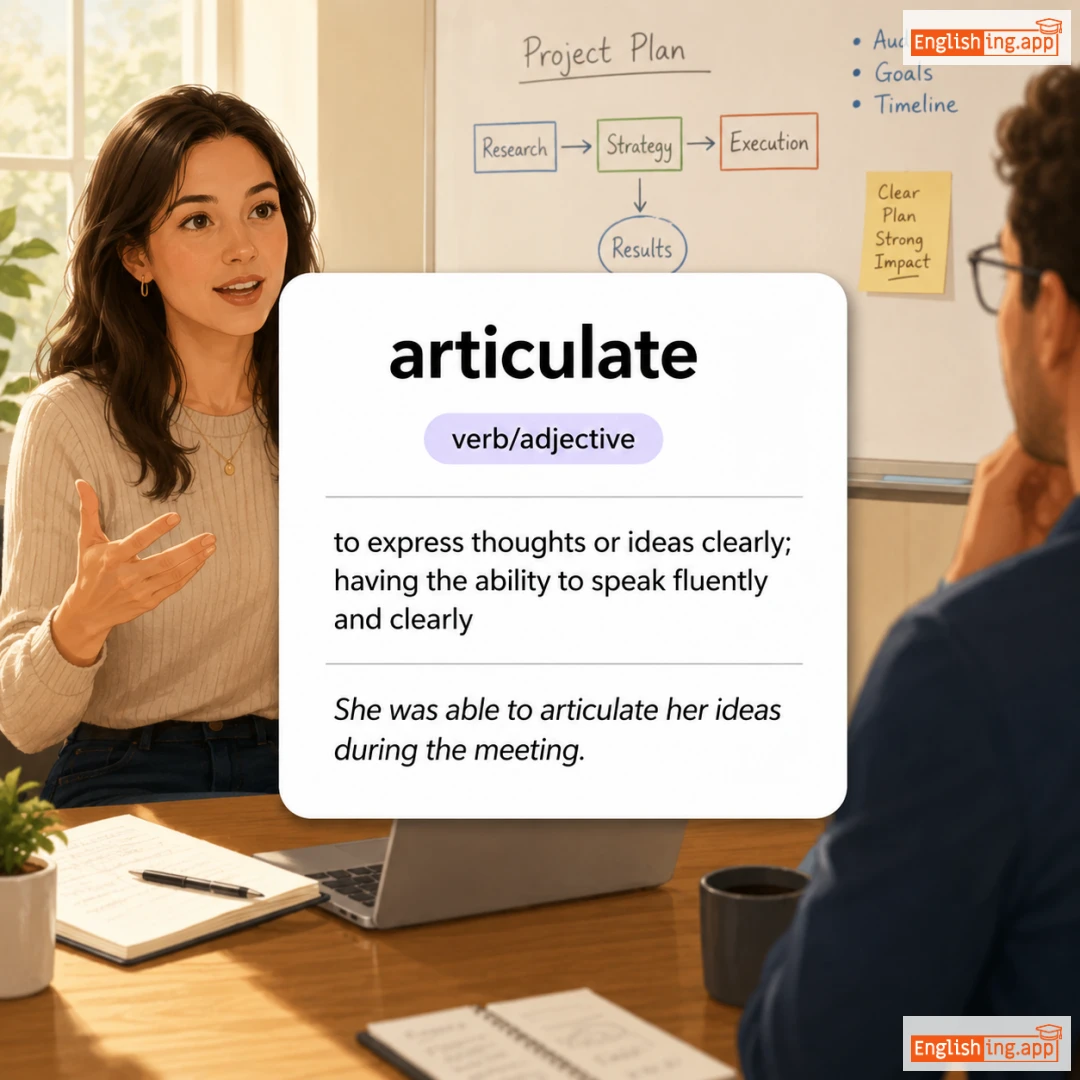
verb/adjective
••••••
|
|
articulated
••••••
|
articulated
••••••
|
articulates
••••••
|
articulating
••••••
|
to express thoughts or ideas clearly; having the ability to speak fluently and clearly
••••••
|
She was able to articulate her ideas during the meeting. |
articulate a vision |
to clearly express or describe a goal or plan
••••••
|
express, convey, enunciate, pronounce, clarify
••••••
|
mumble, mutter, unclear
••••••
|
articulate clearly, articulate ideas, articulate words, articulate speech
••••••
|
|
#0
💬
|
/kəˈmjuː.nɪ.keɪt/
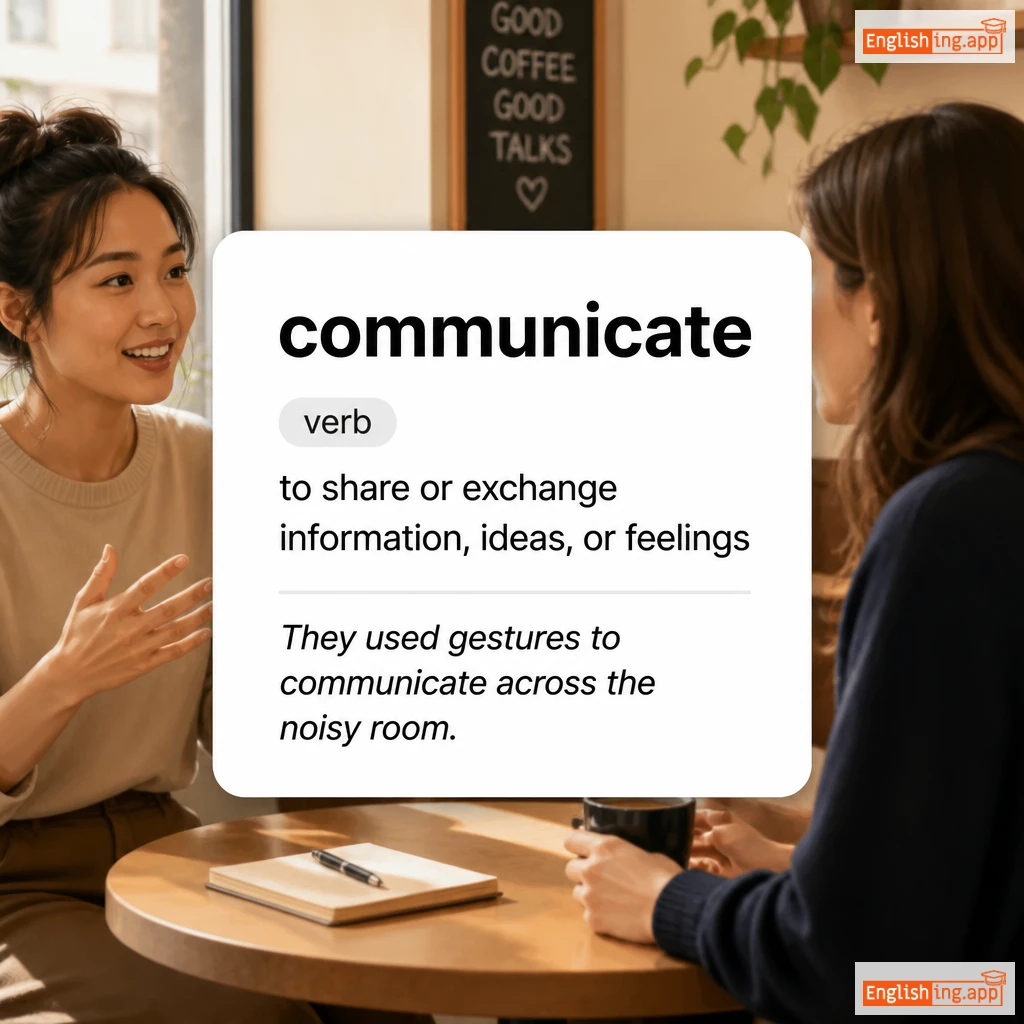
verb
••••••
|
|
communicated
••••••
|
communicated
••••••
|
communicates
••••••
|
communicating
••••••
|
to share or exchange information, ideas, or feelings
••••••
|
They used gestures to communicate across the noisy room. |
communicate clearly |
to express oneself in a way that others can easily understand
••••••
|
convey, express, share, transmit, inform
••••••
|
conceal, suppress
••••••
|
communicate effectively, communicate directly, communicate through, communicate clearly
••••••
|
|
#0
📞
|
/kəˌmjuː.nɪˈkeɪ.ʃən/
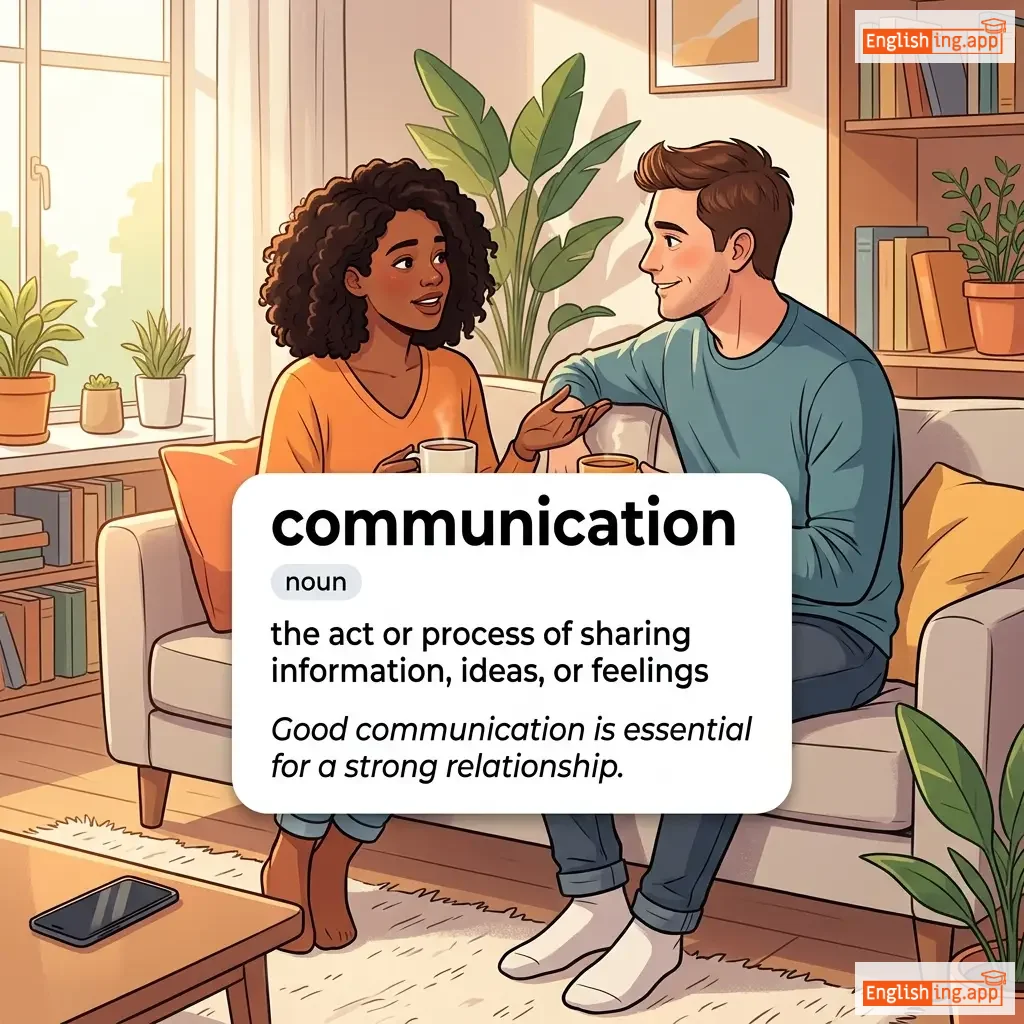
noun
••••••
|
|
- •••••• | - •••••• | - •••••• | - •••••• |
the act or process of sharing information, ideas, or feelings
••••••
|
Good communication is essential for a strong relationship. |
lines of communication |
the channels or methods by which people communicate
••••••
|
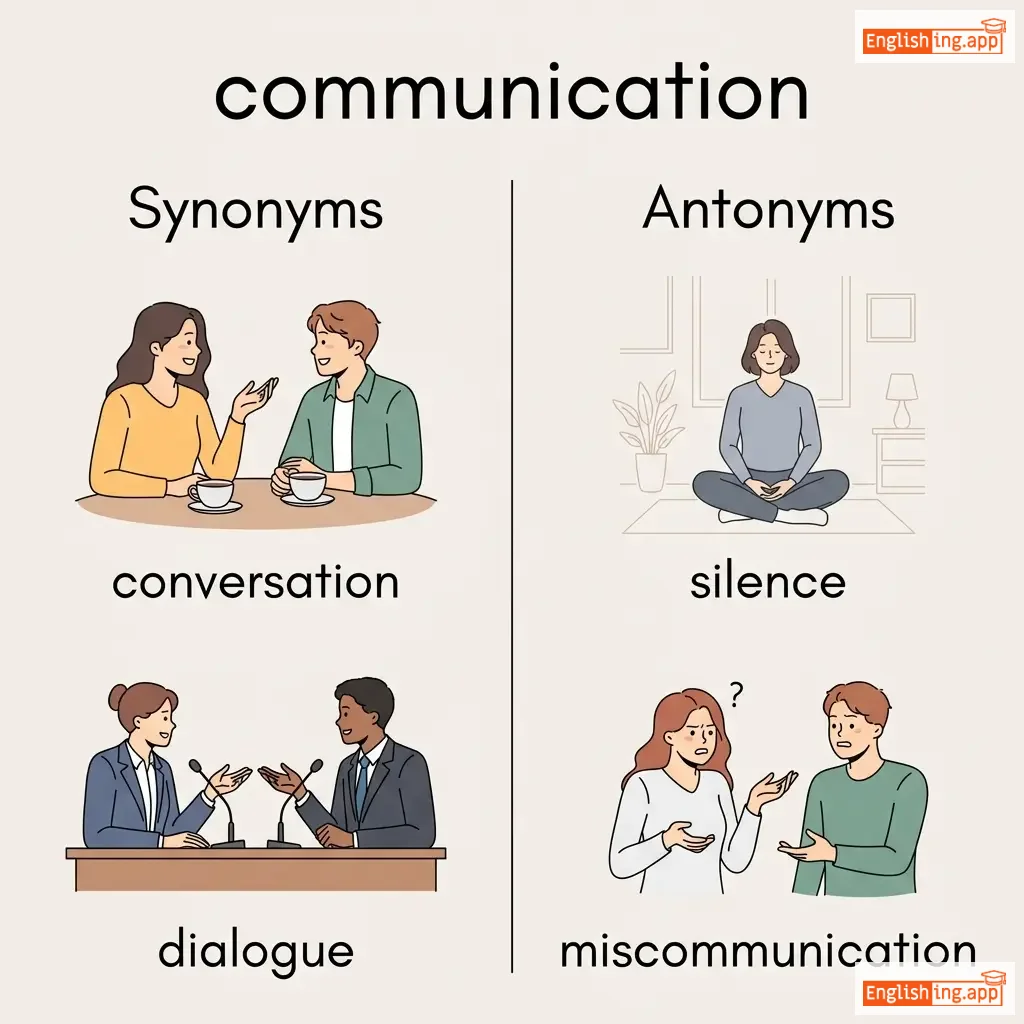
conversation, dialogue, exchange, correspondence, contact
••••••
|
silence, miscommunication
••••••
|
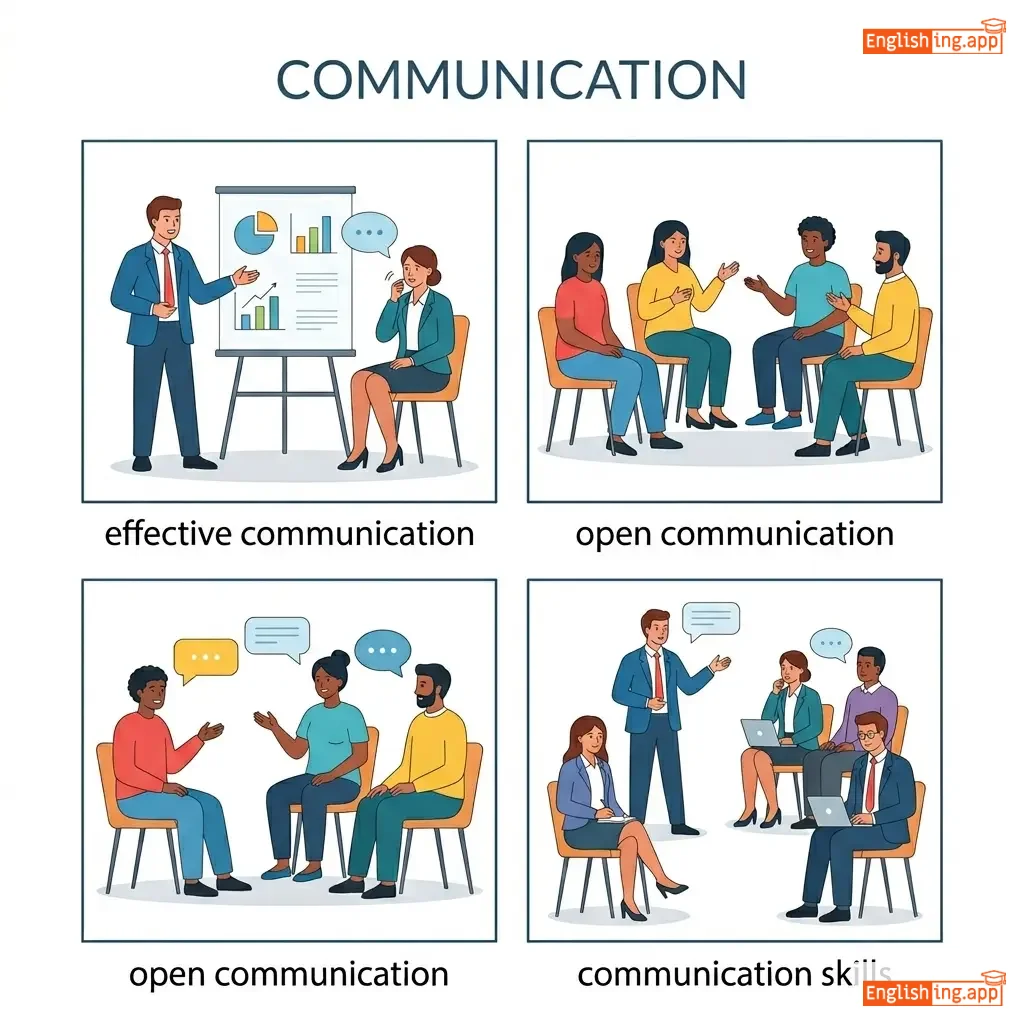
effective communication, open communication, communication skills, communication barrier
••••••
|
|
#0
💬
|
/ˌkɒnvəˈseɪʃn/
noun
••••••
|
|
- •••••• | - •••••• | - •••••• | - •••••• |
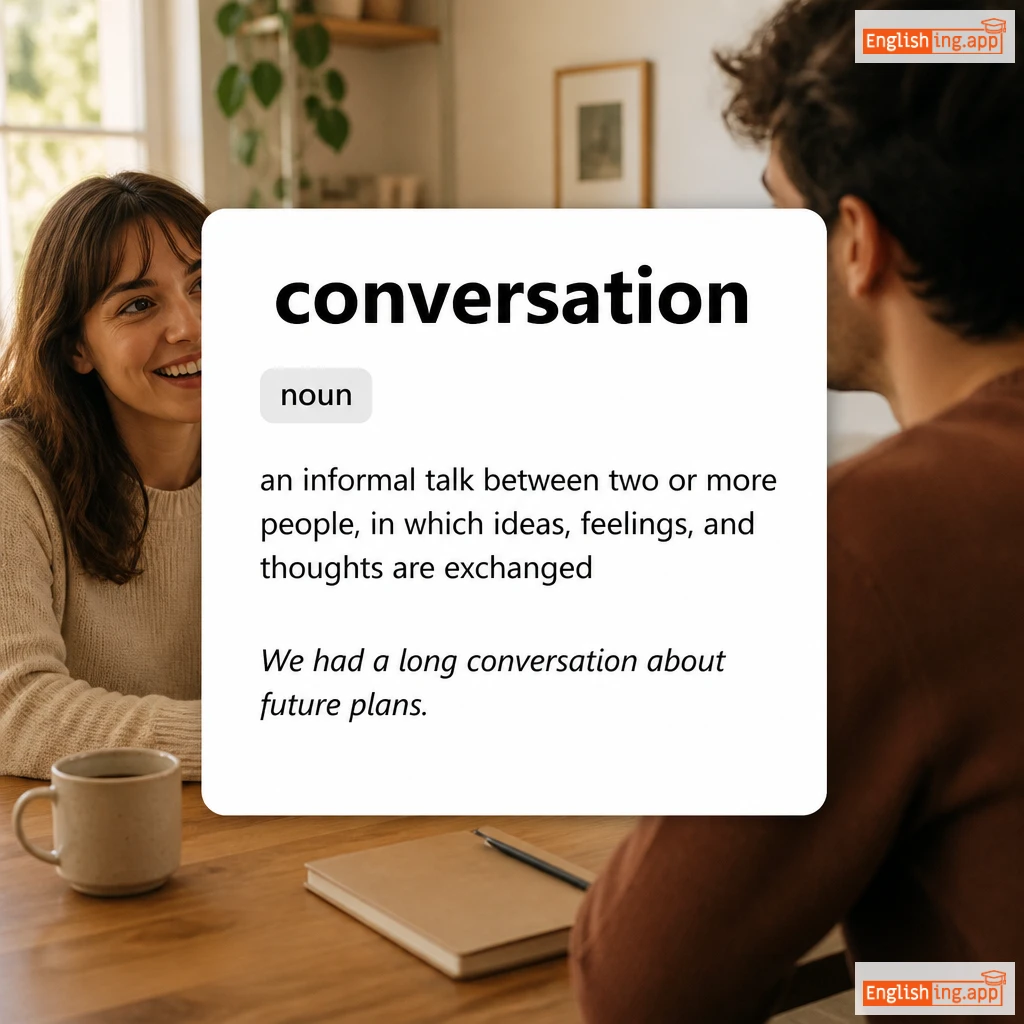
an informal talk between two or more people, in which ideas, feelings, and thoughts are exchanged
••••••
|
We had a long conversation about future plans. |
make conversation |
to talk with someone to appear polite, often about trivial things
••••••
|
dialogue, talk, discussion, chat, exchange
••••••
|
silence, quiet, muteness
••••••
|
casual conversation, phone conversation, deep conversation, conversation starter
••••••
|
|
#0
🗣️
|
/ˈdaɪəlɔːɡ/
noun
••••••
|
|
- •••••• | - •••••• | - •••••• | - •••••• |
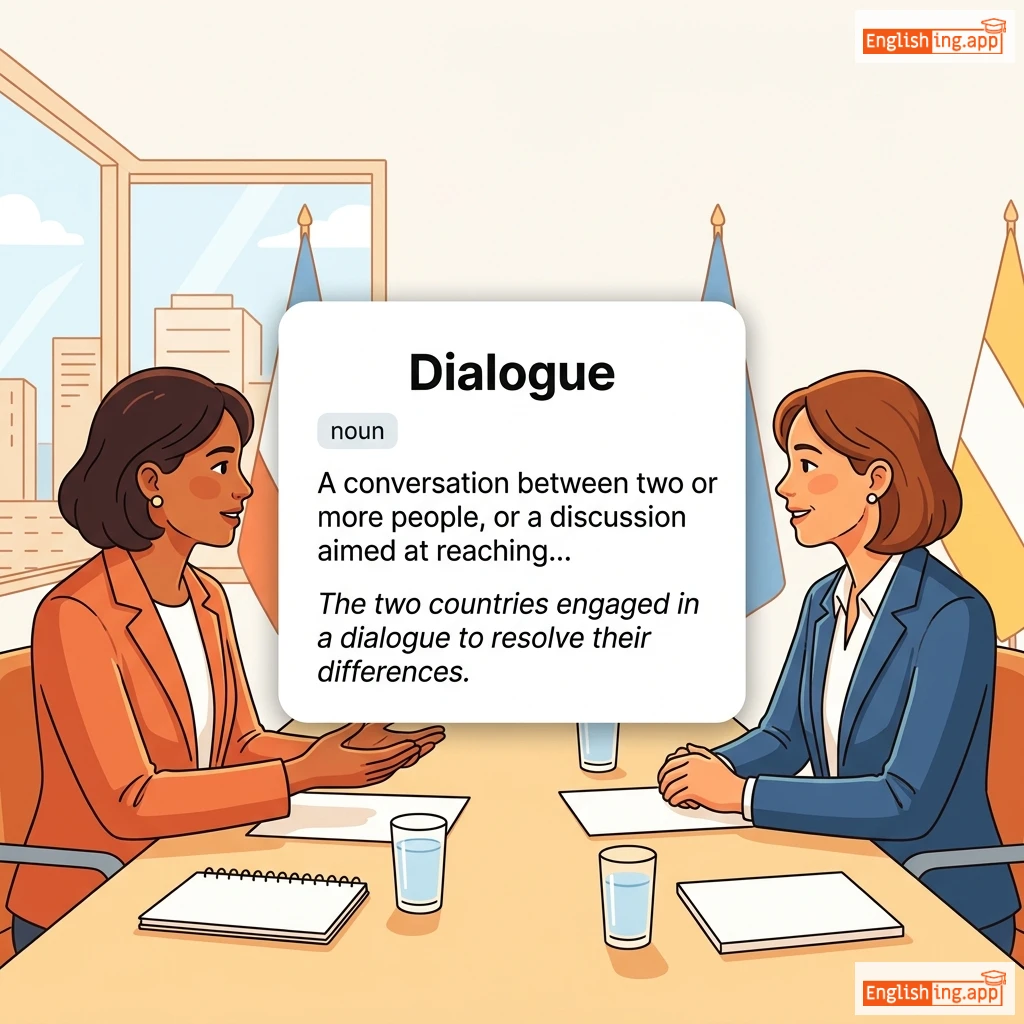
A conversation between two or more people, or a discussion aimed at reaching understanding.
••••••
|
The two countries engaged in a dialogue to resolve their differences. |
open dialogue |
A transparent and constructive conversation.
••••••
|
conversation, discussion, talk, exchange, communication
••••••
|
silence, monologue
••••••
|
constructive dialogue, political dialogue, open dialogue
••••••
|
|
#0
💬
|
/dɪˈskʌs/
verb
••••••
|
|
discussed
••••••
|
discussed
••••••
|
discusses
••••••
|
discussing
••••••
|
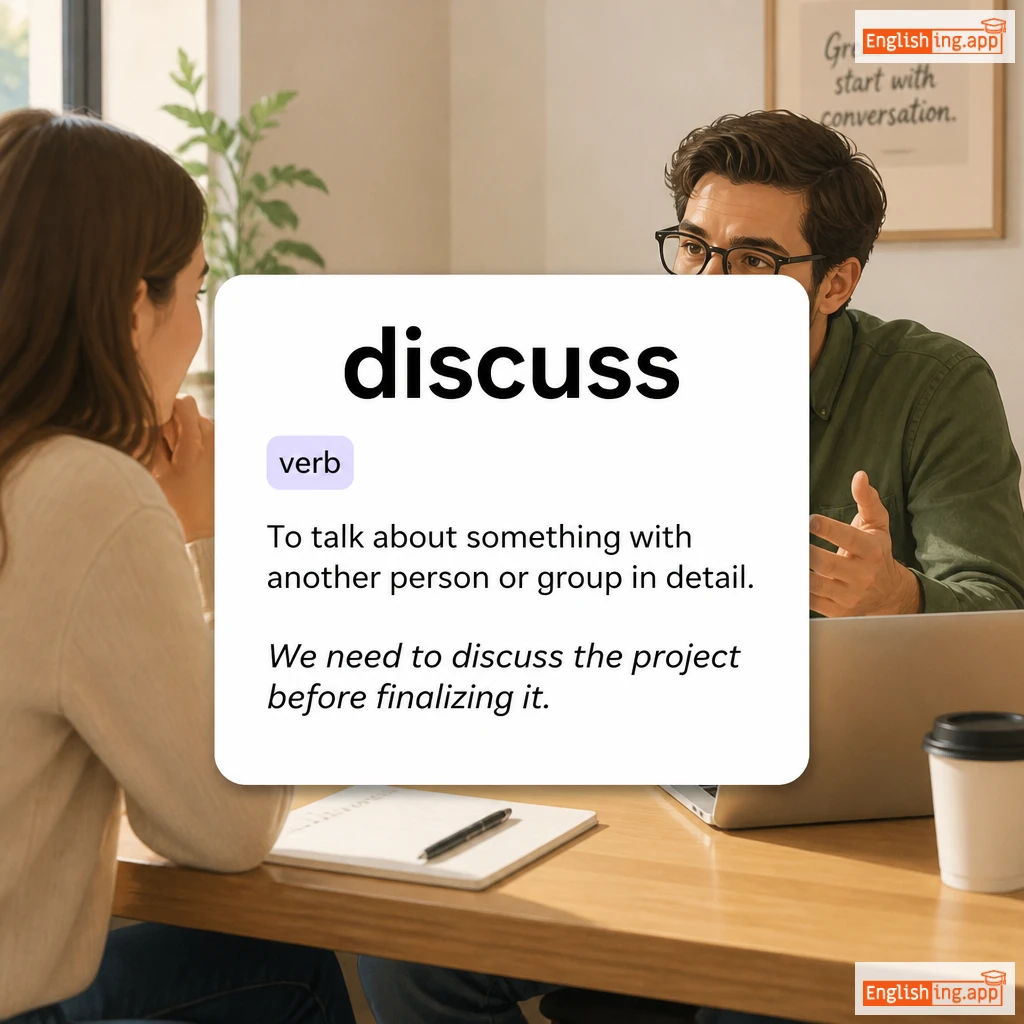
To talk about something with another person or group in detail.
••••••
|
We need to discuss the project before finalizing it. |
discuss matters |
to talk about issues or problems
••••••
|
talk, debate, confer, deliberate, examine
••••••
|
ignore, avoid
••••••
|
discuss a plan, discuss issues, discuss openly, discuss further
••••••
|
|
#0
💬
|
/ɪkˈsprɛs/
verb
••••••
|
|
expressed
••••••
|
expressed
••••••
|
expresses
••••••
|
expressing
••••••
|
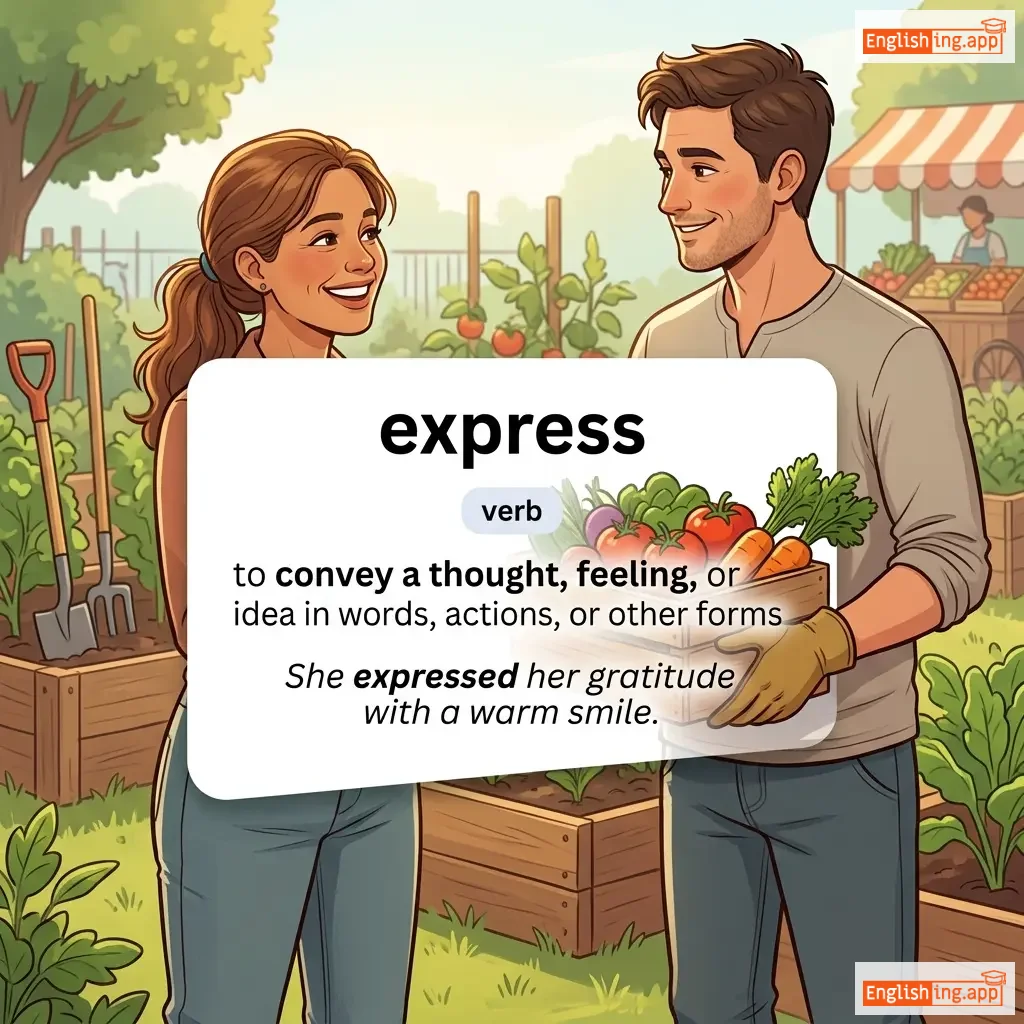
to convey a thought, feeling, or idea in words, actions, or other forms
••••••
|
She expressed her gratitude with a warm smile. |
express yourself |
to communicate one's thoughts and feelings openly
••••••
|
convey, communicate, articulate, state, voice
••••••
|
suppress, conceal, hide
••••••
|
express feelings, express gratitude, express concern, express clearly
••••••
|
|
#0
🗣️
|
/ˈfluːənt/
adjective
••••••
|
|
- •••••• | - •••••• | - •••••• | - •••••• |
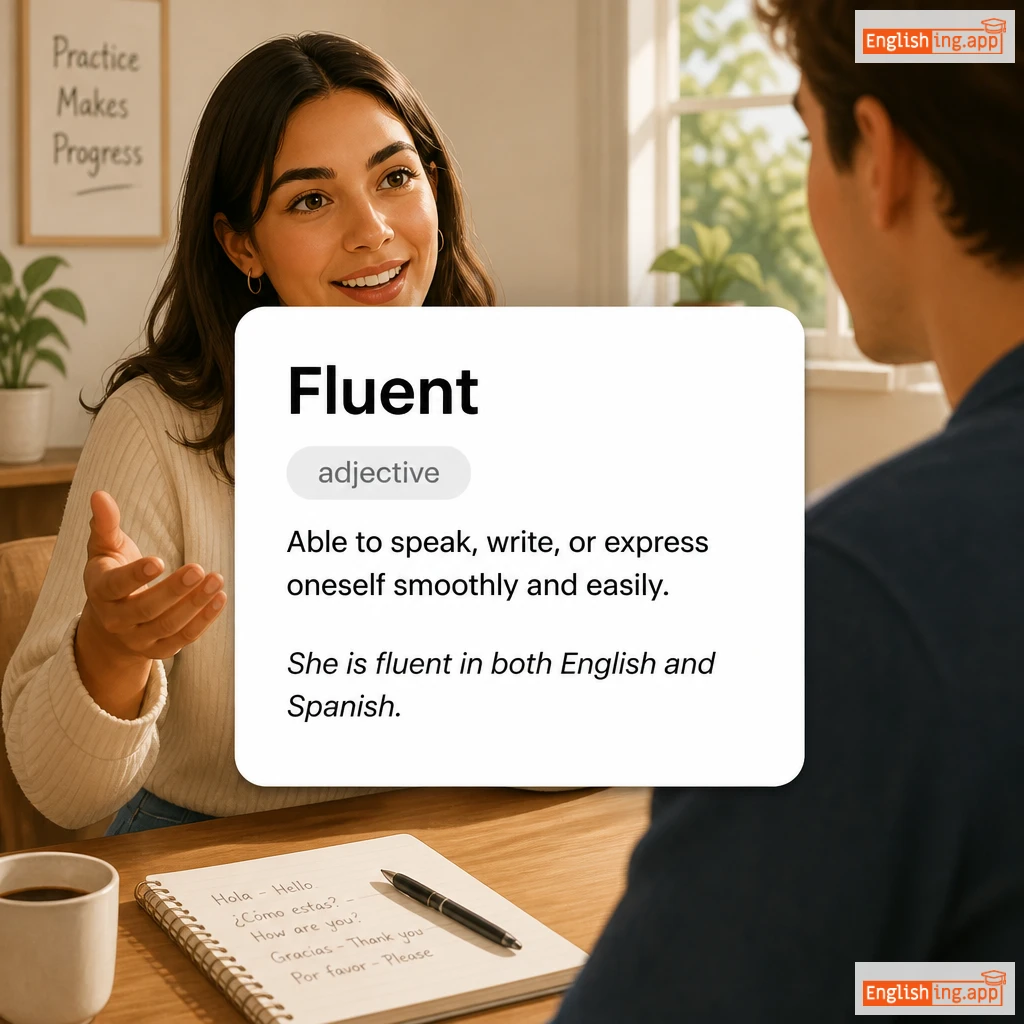
Able to speak, write, or express oneself smoothly and easily.
••••••
|
She is fluent in both English and Spanish. |
fluent speaker |
Someone who speaks a language smoothly and naturally.
••••••
|
articulate, expressive, eloquent, smooth, proficient
••••••
|
inarticulate, hesitant, awkward
••••••
|
fluent speaker, fluent English, fluent in, become fluent
••••••
|
|
#0
🤝
|
/ˌɪntərˈækt/
verb
••••••
|
|
interacted
••••••
|
interacted
••••••
|
interacts
••••••
|
interacting
••••••
|
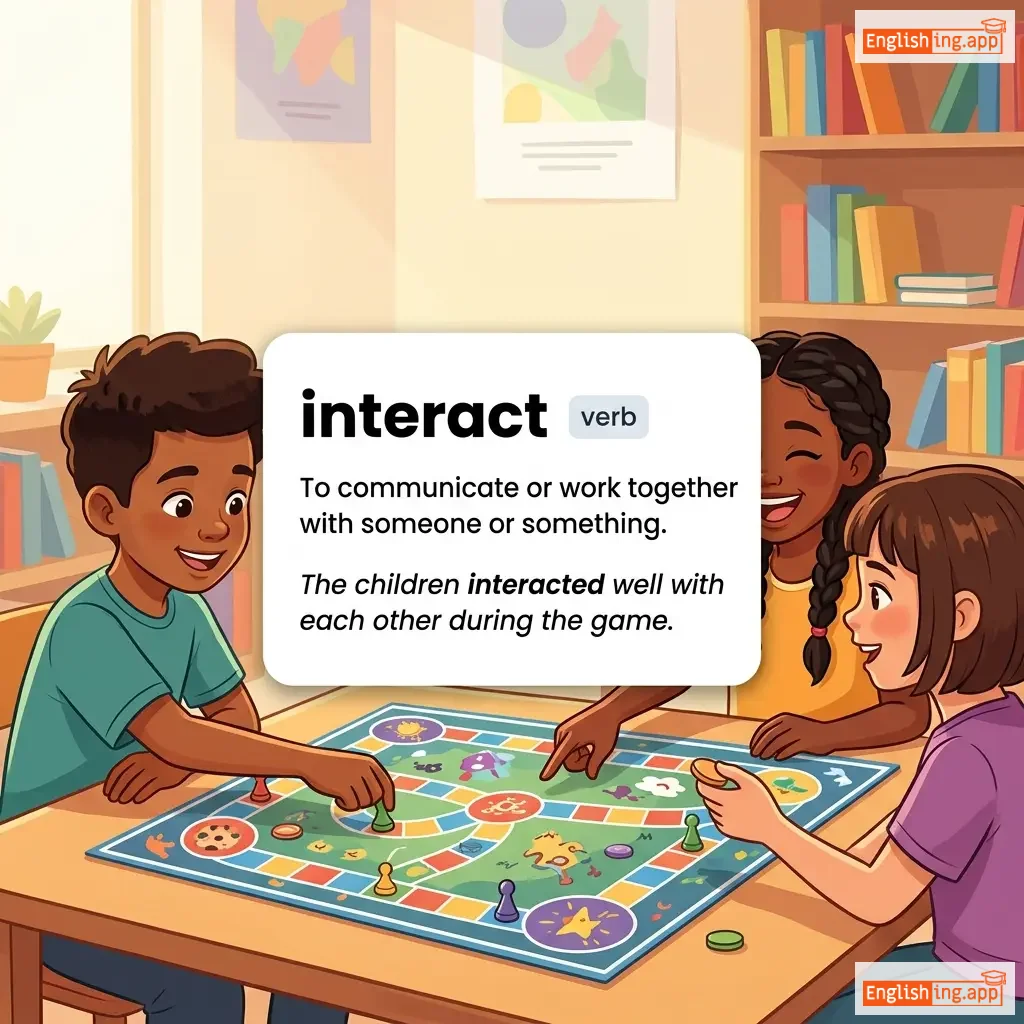
To communicate or work together with someone or something.
••••••
|
The children interacted well with each other during the game. |
interact with |
to communicate or engage with someone or something
••••••
|
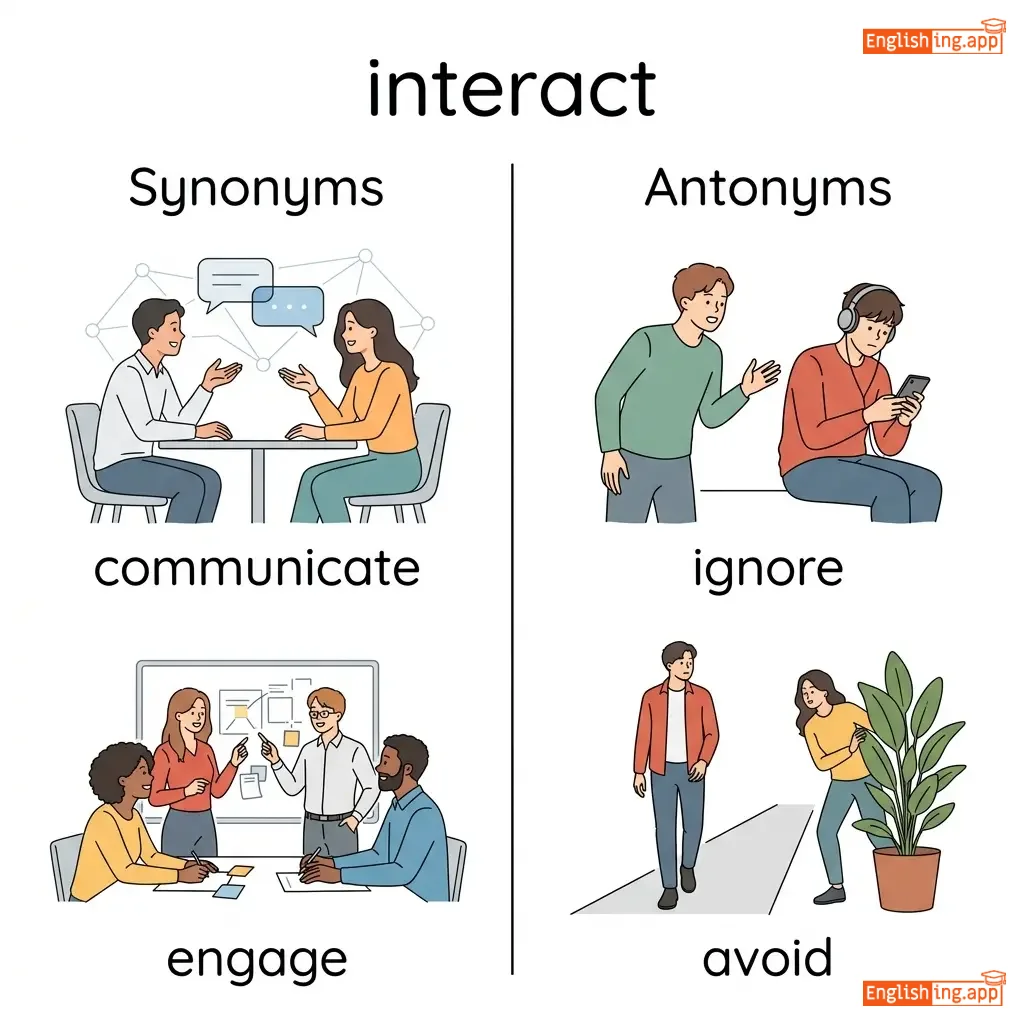
communicate, engage, connect, collaborate
••••••
|
ignore, avoid
••••••
|
interact with people, interact online, interact socially
••••••
|
|
#0
🗣️
|
/ˈlæŋɡwɪdʒ/
noun
••••••
|
|
- •••••• | - •••••• | - •••••• | - •••••• |
the system of communication used by a particular community, including spoken and written words
••••••
|
She is fluent in three different languages. |
mother tongue |
a person's native language
••••••
|
tongue, dialect, speech, lingo, communication
••••••
|
silence, quiet
••••••
|
foreign language, native language, language skills, language barrier
••••••
|
|
#0
📚
|
/lɪŋˈɡwɪstɪk/
adjective
••••••
|
|
- •••••• | - •••••• | - •••••• | - •••••• |
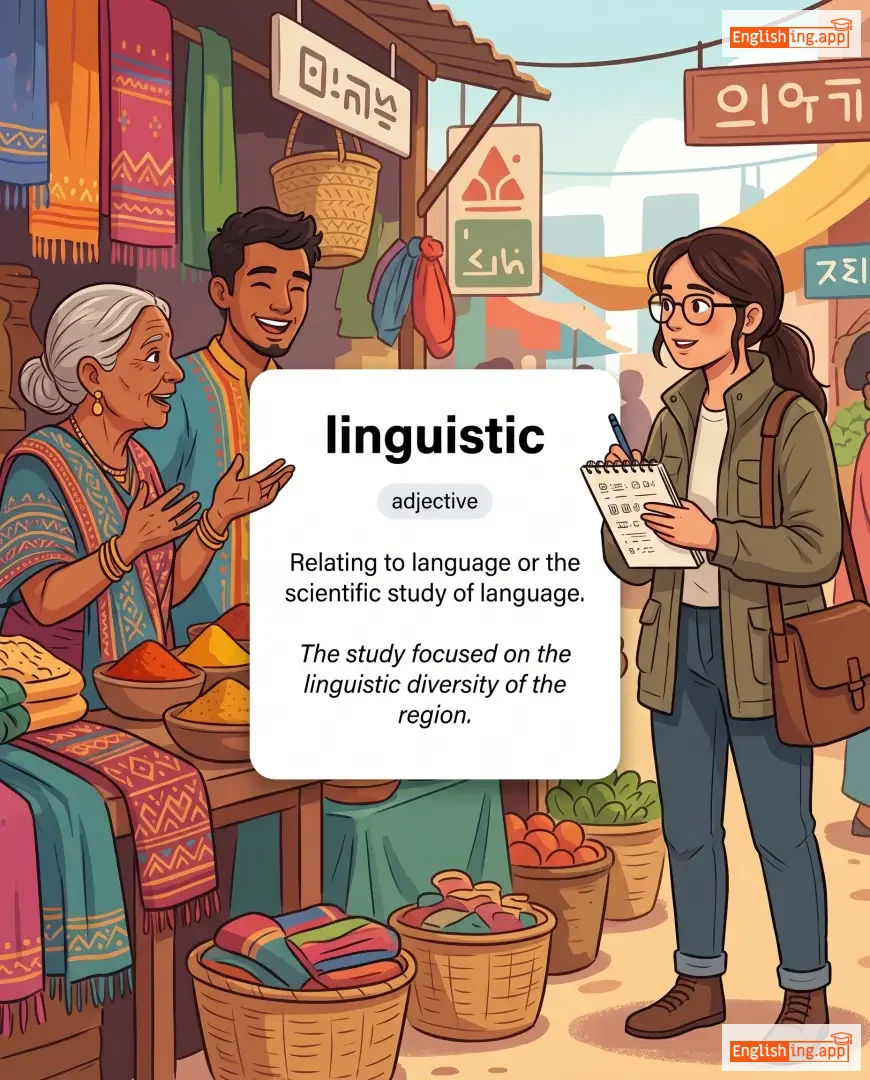
Relating to language or the scientific study of language.
••••••
|
The study focused on the linguistic diversity of the region. |
- •••••• | - •••••• |
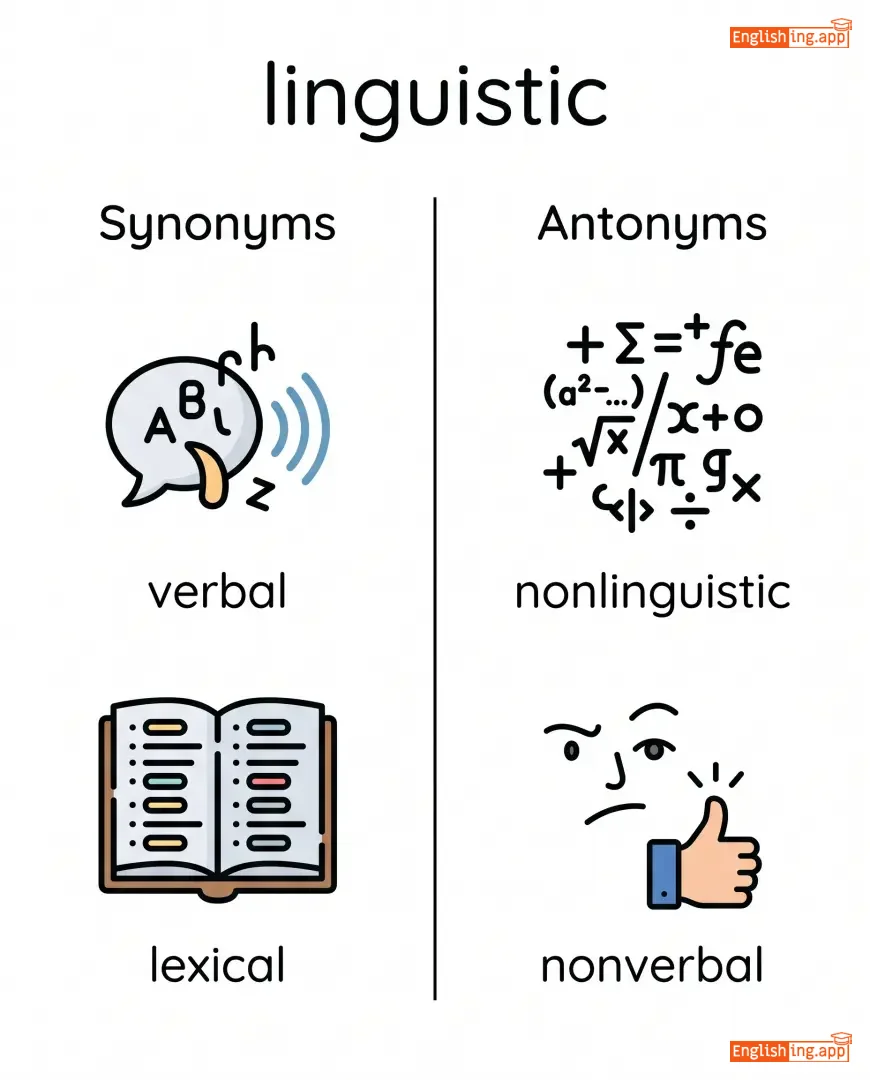
verbal, lexical, grammatical, philological
••••••
|
nonlinguistic, nonverbal
••••••
|
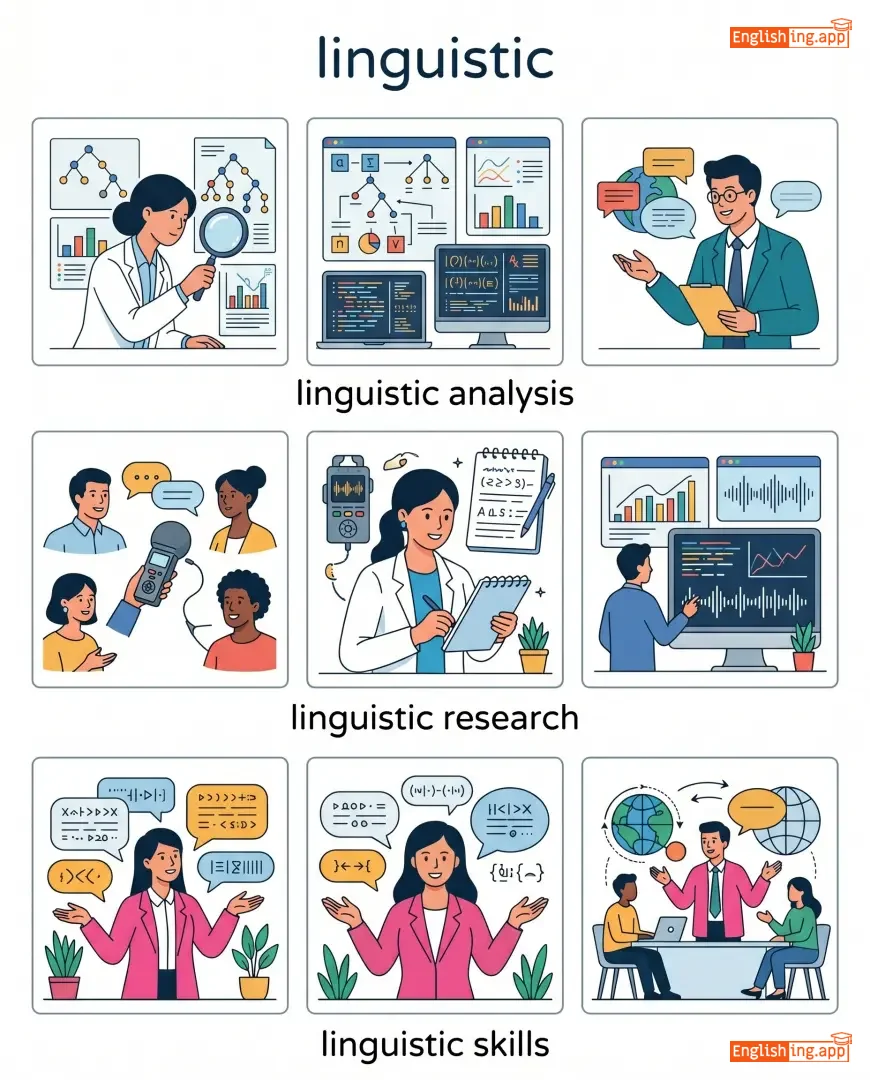
linguistic analysis, linguistic research, linguistic skills, linguistic diversity
••••••
|
|
#0
👂
|
/ˈlɪs.ən/
verb
••••••
|
|
listened
••••••
|
listened
••••••
|
listens
••••••
|
listening
••••••
|
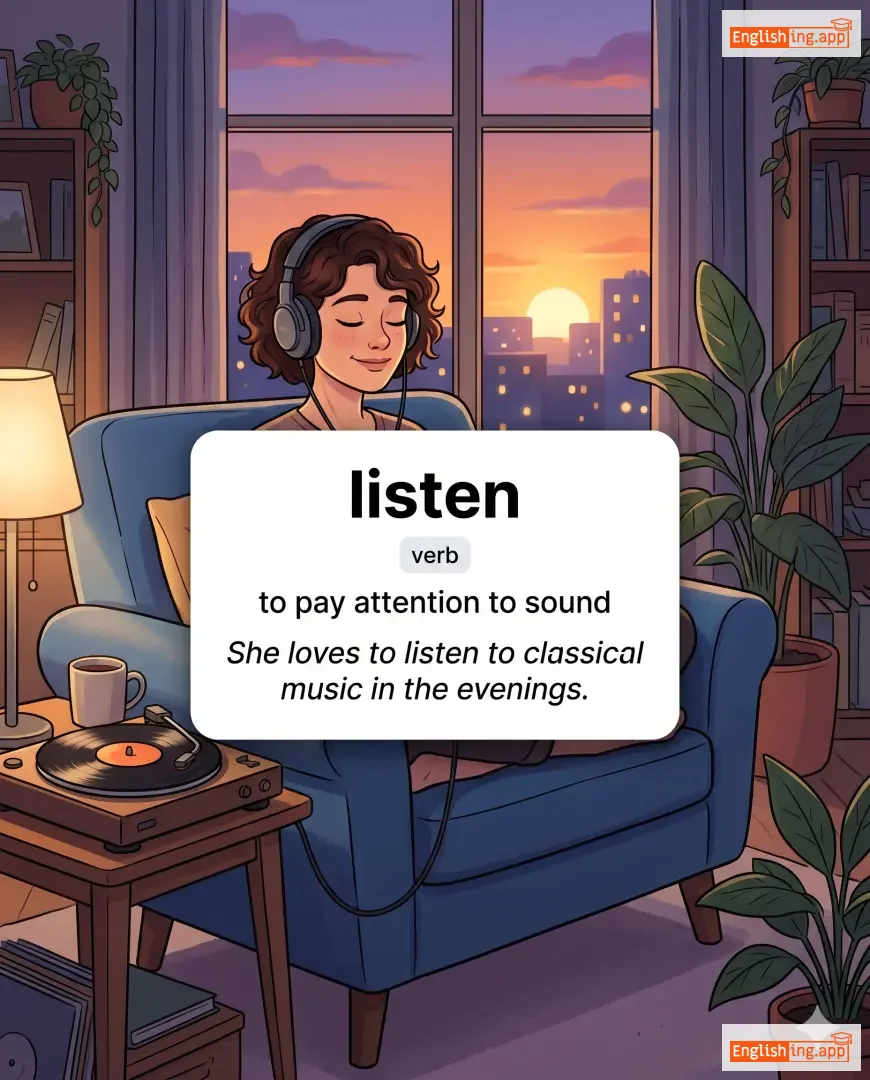
to pay attention to sound
••••••
|
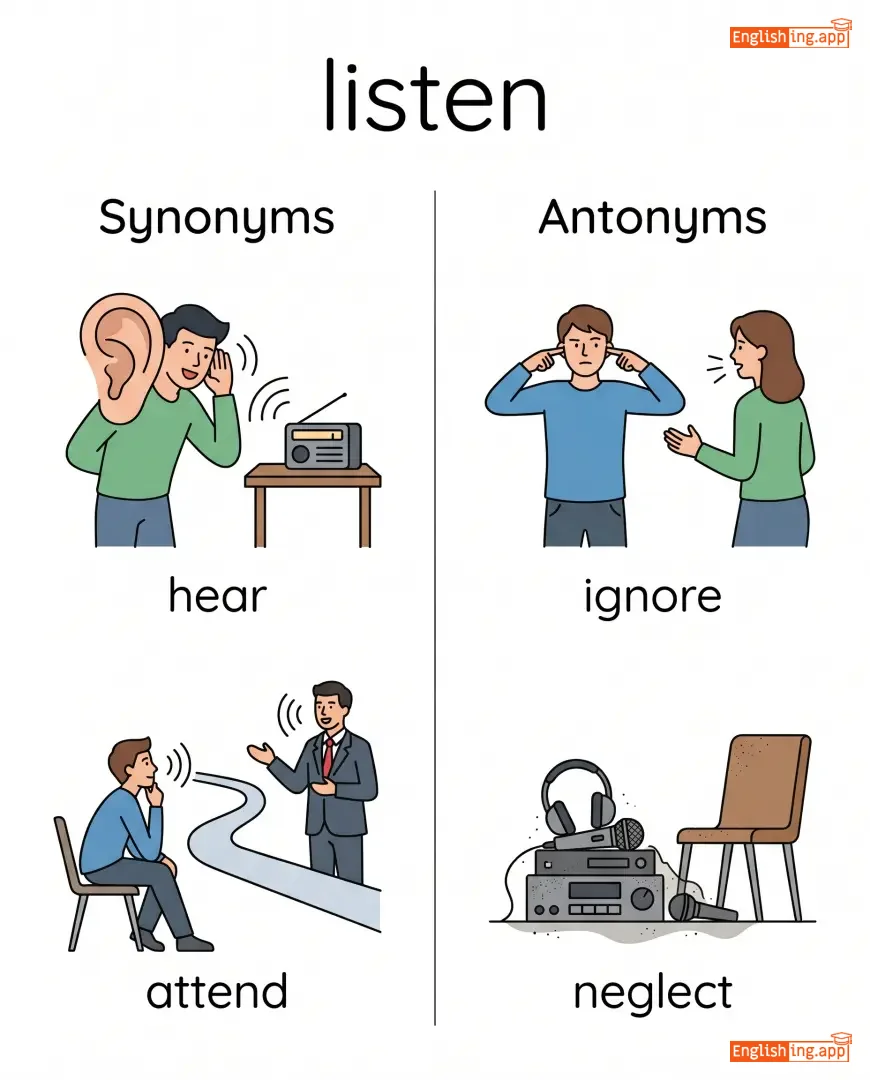
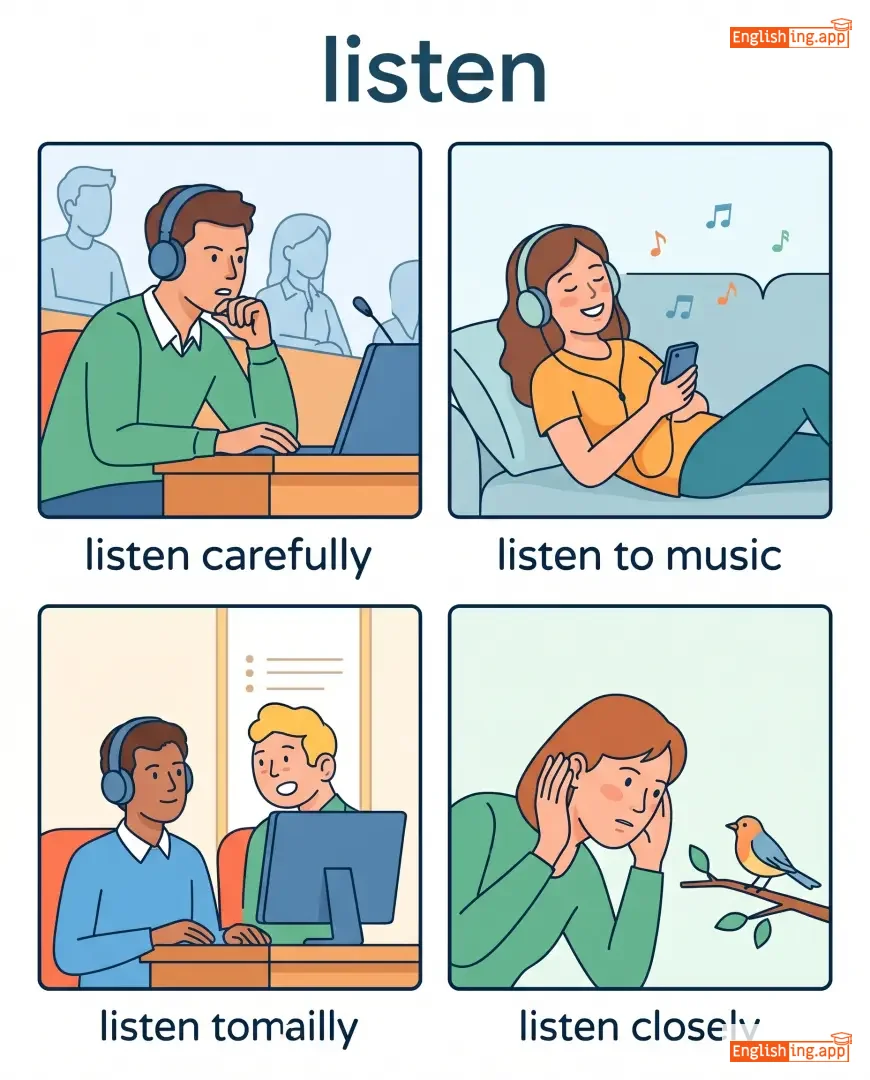
She loves to listen to classical music in the evenings. |
listen up |
used to tell people to pay attention
••••••
|
hear, attend, heed, concentrate, pay attention
••••••
|
ignore, neglect, disregard
••••••
|
listen carefully, listen to music, listen closely, listen in
••••••
|
|
#0
📩
|
/ˈmɛsɪdʒ/
noun
••••••
|
|
- •••••• | - •••••• | - •••••• | - •••••• |
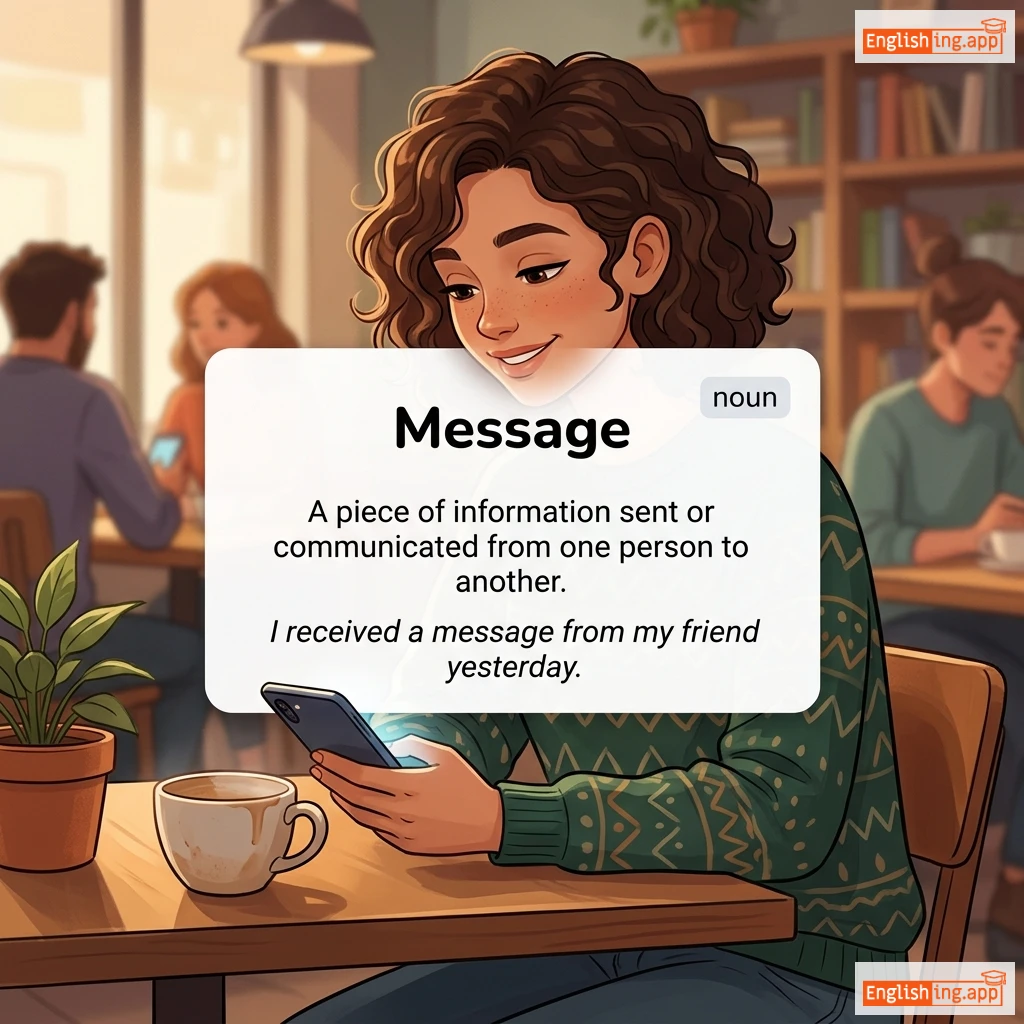
A piece of information sent or communicated from one person to another.
••••••
|
I received a message from my friend yesterday. |
get the message |
To understand the meaning or implication of something
••••••
|
note, communication, letter, text, notification
••••••
|
silence, quiet
••••••
|
send a message, receive a message, leave a message, important message
••••••
|
|
#0
💬
|
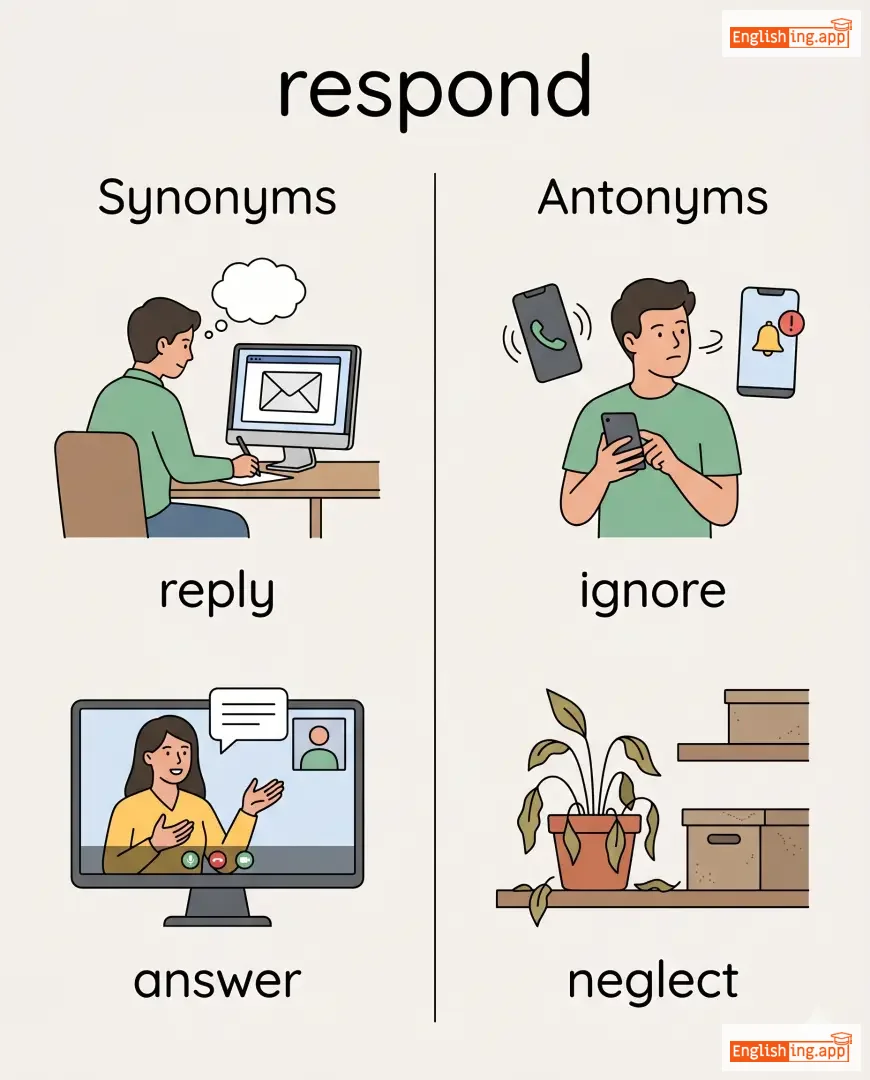
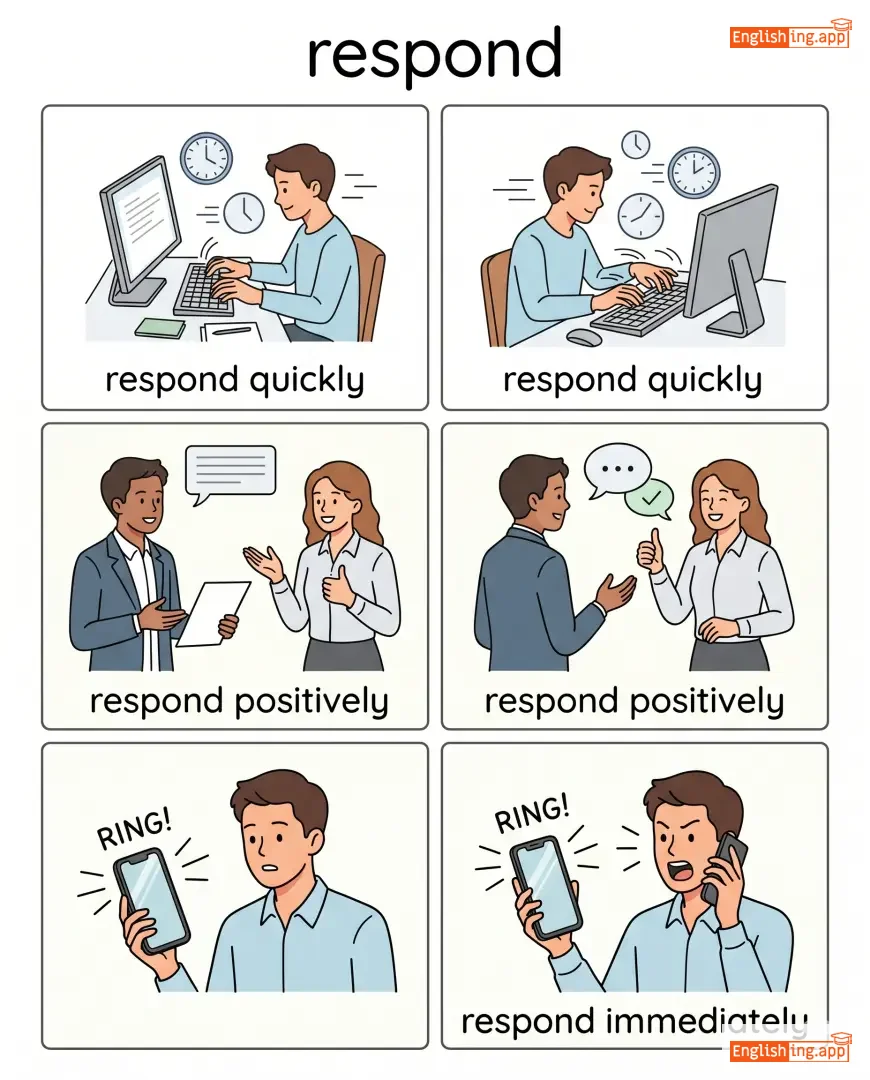
/rɪˈspɒnd/
verb
••••••
|
|
responded
••••••
|
responded
••••••
|
responds
••••••
|
responding
••••••
|
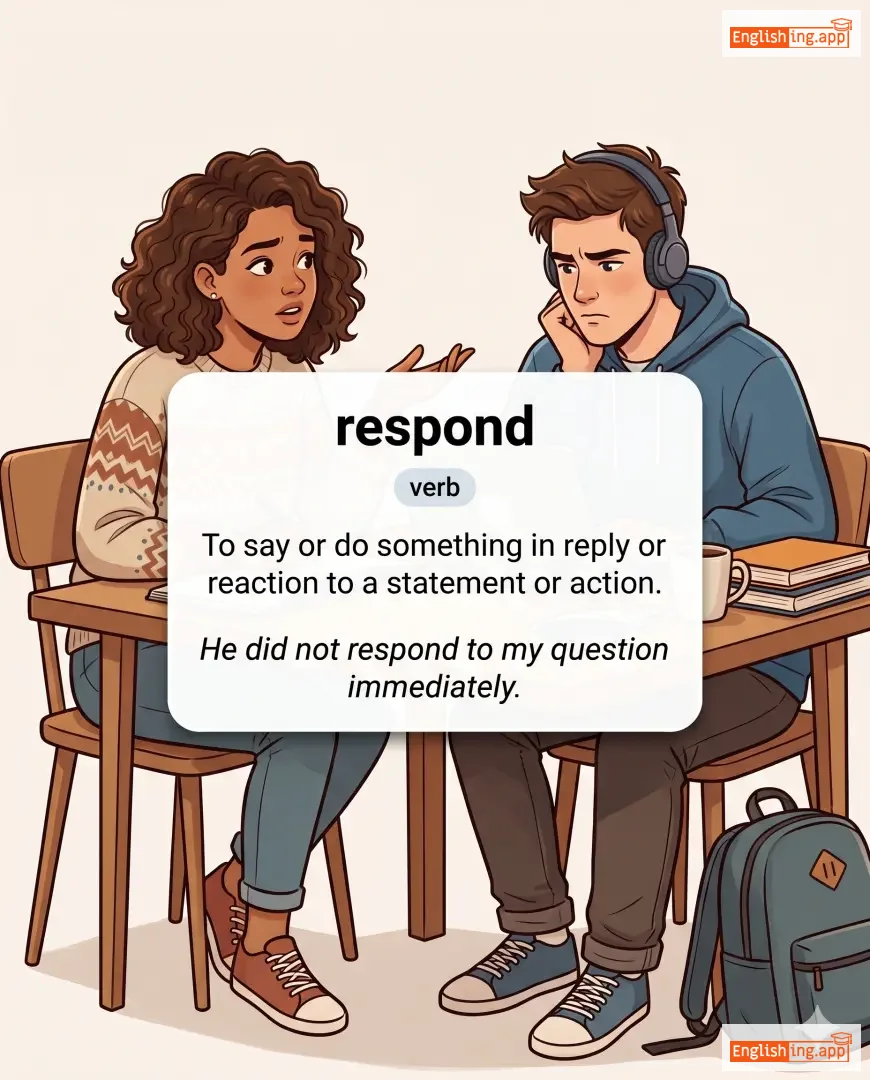
To say or do something in reply or reaction to a statement or action.
••••••
|
He did not respond to my question immediately. |
respond to treatment |
To show improvement after receiving medical treatment.
••••••
|
reply, answer, react, acknowledge, retort
••••••
|
ignore, neglect, disregard
••••••
|
respond quickly, respond positively, respond immediately, respond appropriately
••••••
|
|
#0
🗣️
|
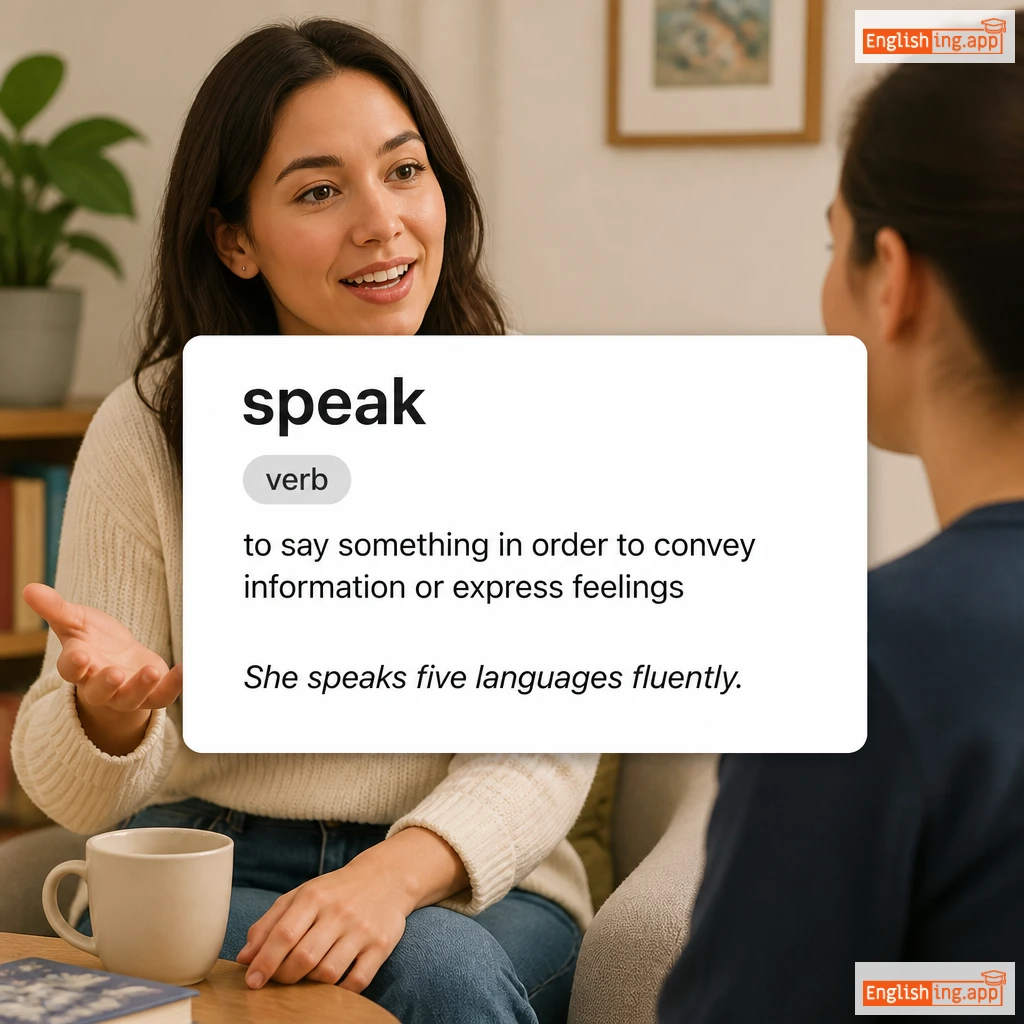
/spiːk/
verb
••••••
|
|
spoke
••••••
|
spoken
••••••
|
speaks
••••••
|
speaking
••••••
|
to say something in order to convey information or express feelings
••••••
|
She speaks five languages fluently. |
speak out |
to express one's opinion clearly and openly
••••••
|
talk, converse, utter, communicate
••••••
|
be silent, mute, keep quiet
••••••
|
speak up, speak to, speak about, speak highly
••••••
|
|
#0
🎤
|
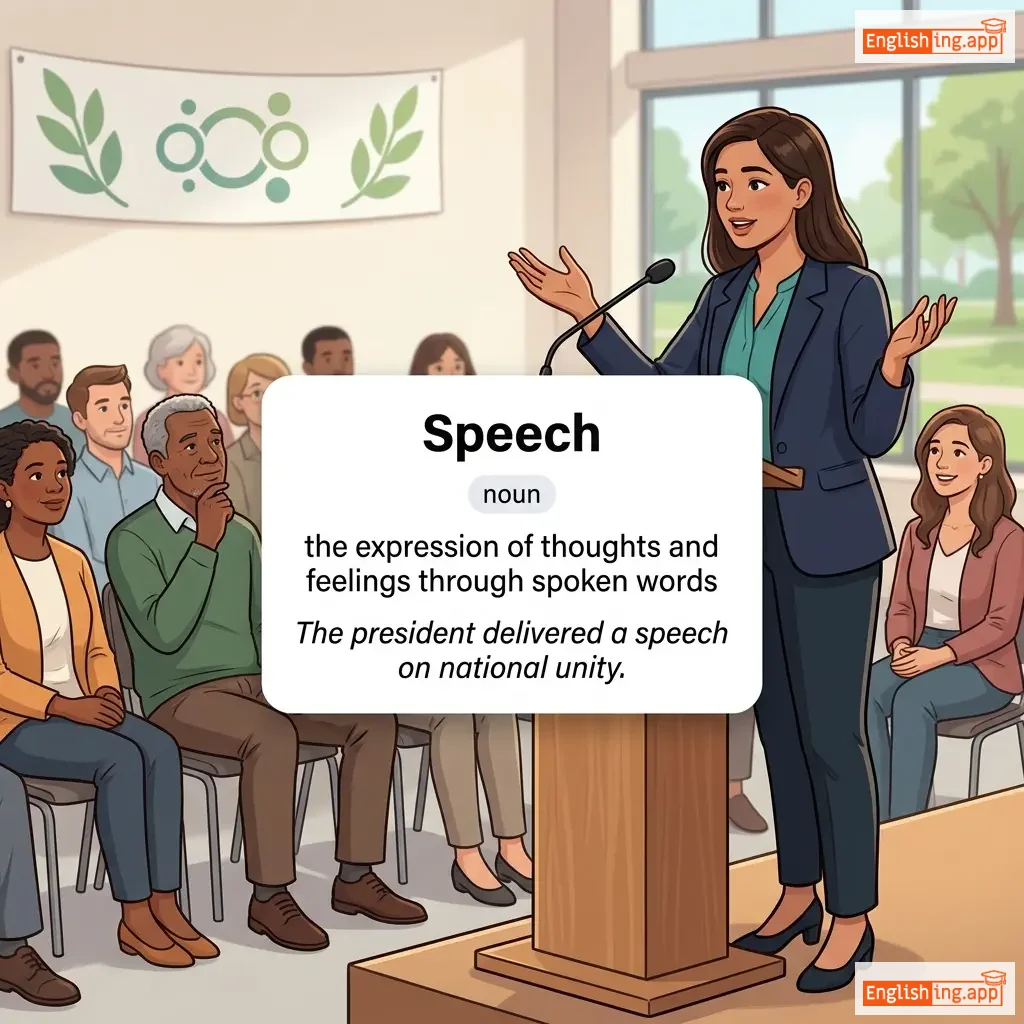
/spiːtʃ/
noun
••••••
|
|
- •••••• | - •••••• | - •••••• | - •••••• |
formal address or discourse delivered to an audience; the expression of thoughts in spoken words
••••••
|
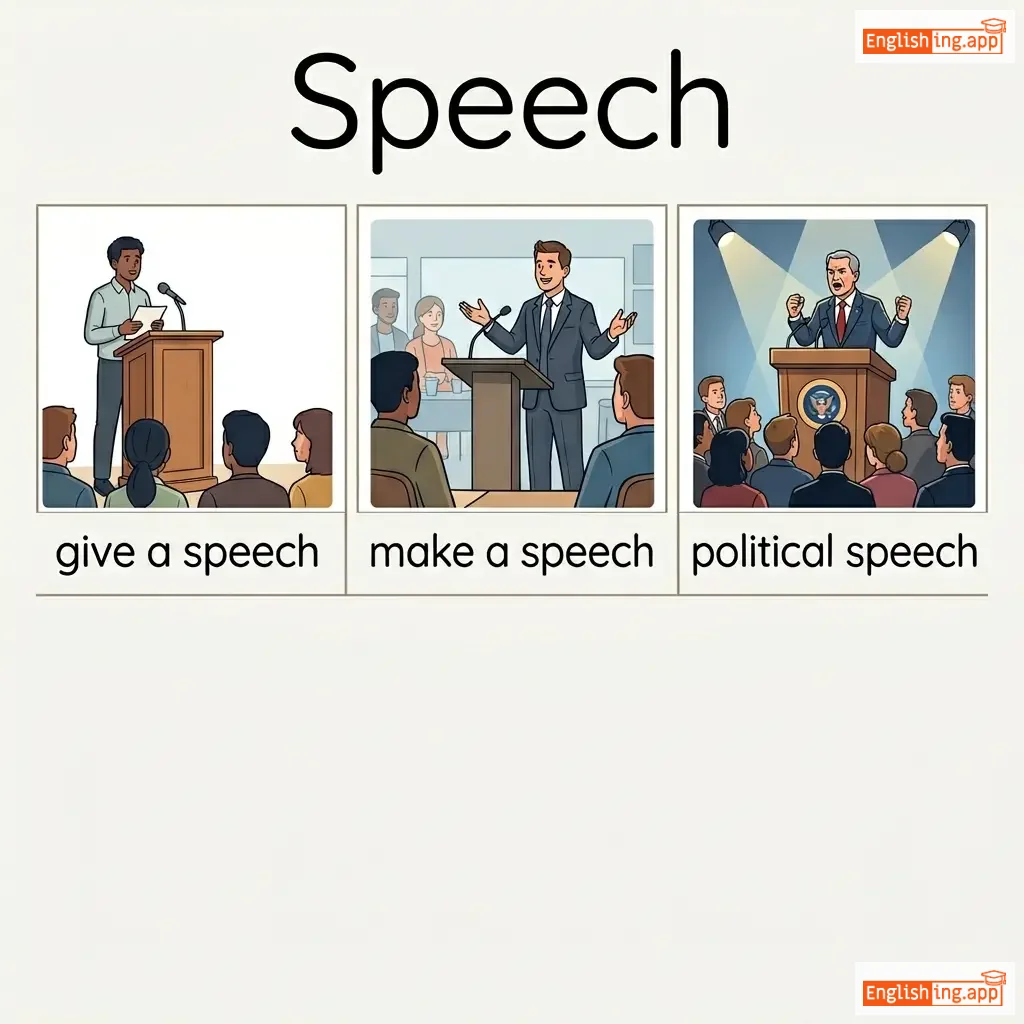
The president gave an inspiring speech to the nation. |
- •••••• | - •••••• |
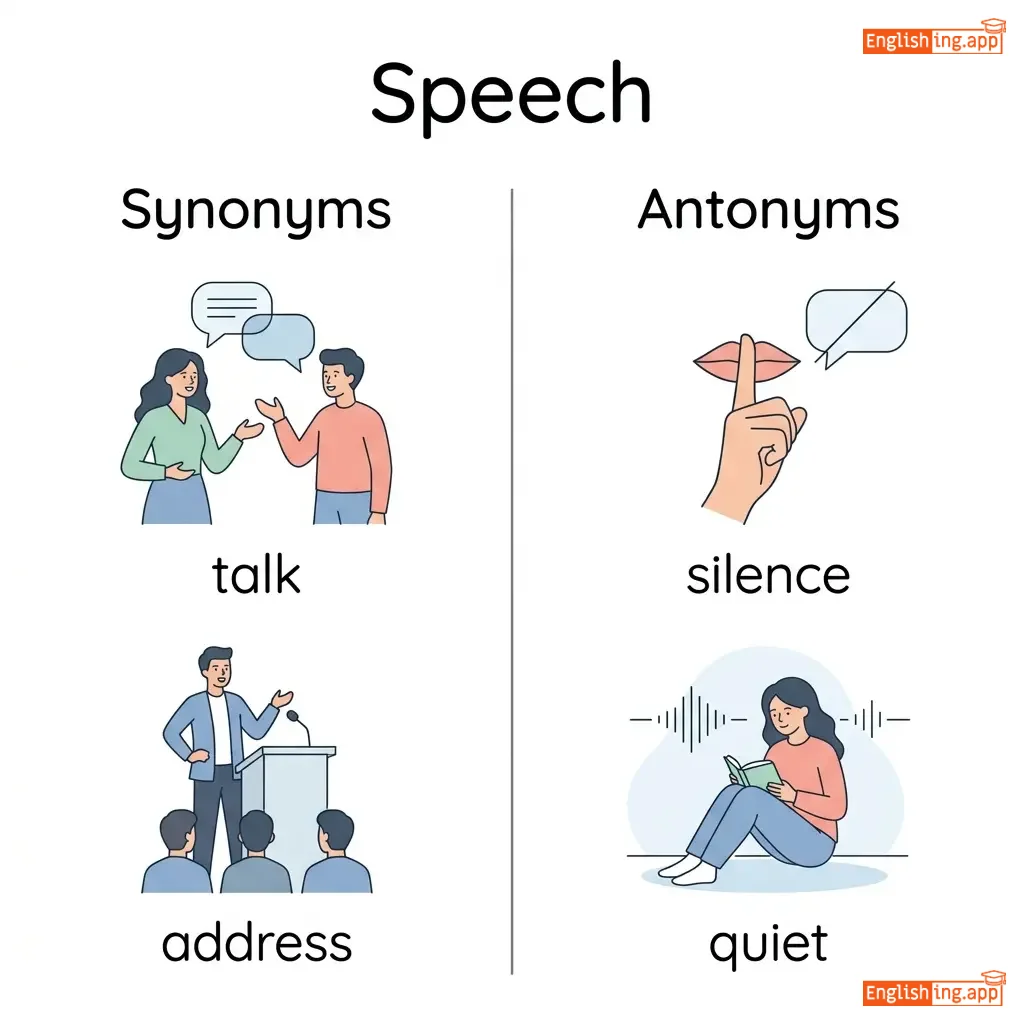
address, oration, discourse, talk
••••••
|
silence, muteness
••••••
|
keynote speech, public speech, acceptance speech, farewell speech
••••••
|
|
#0
💬
|
/tɔːk/
verb
••••••
|
|
talked
••••••
|
talked
••••••
|
talks
••••••
|
talking
••••••
|
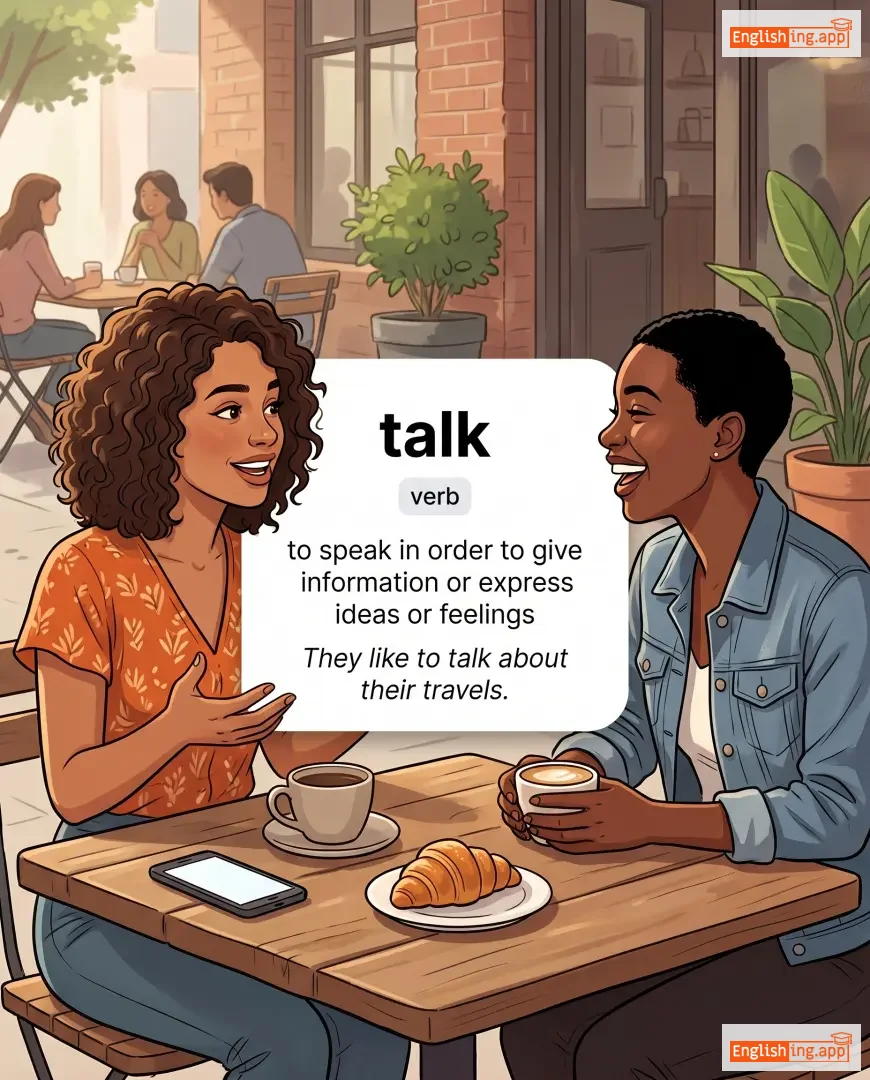
to speak; to communicate by speaking; to discuss
••••••
|
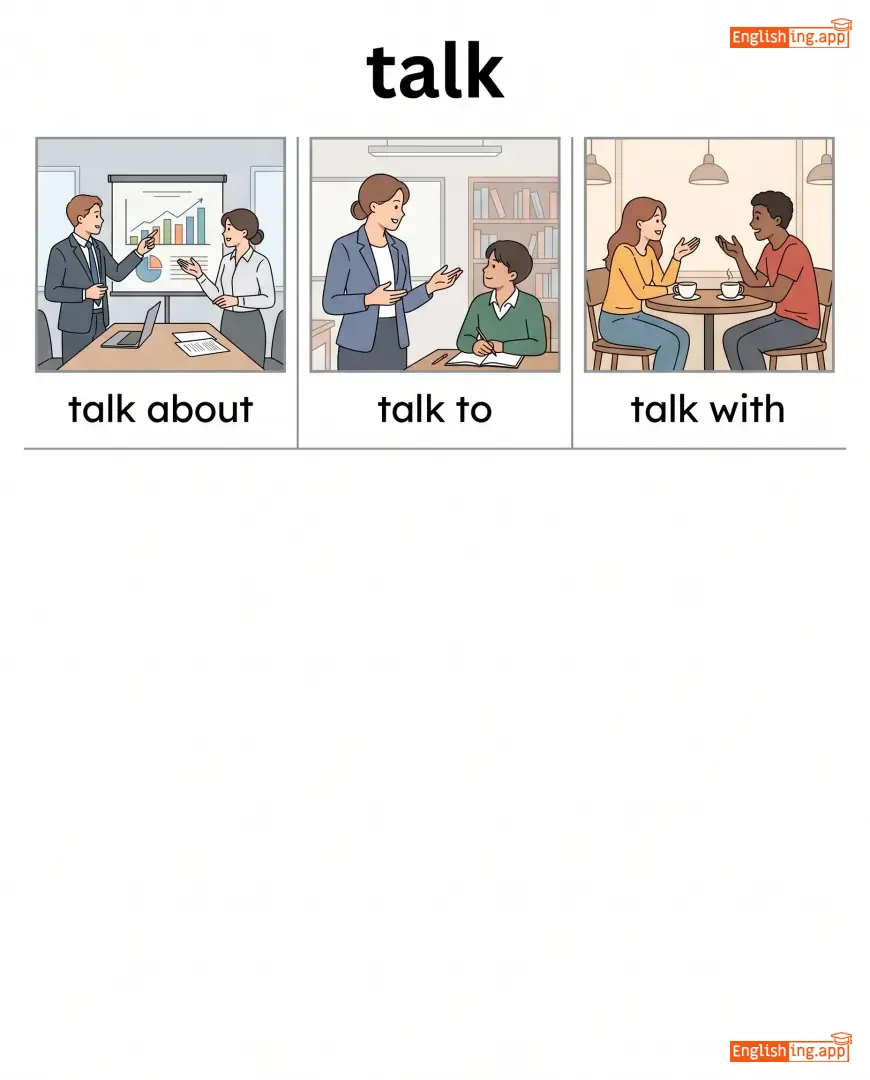
Let's talk about your future plans. |
- •••••• | - •••••• |
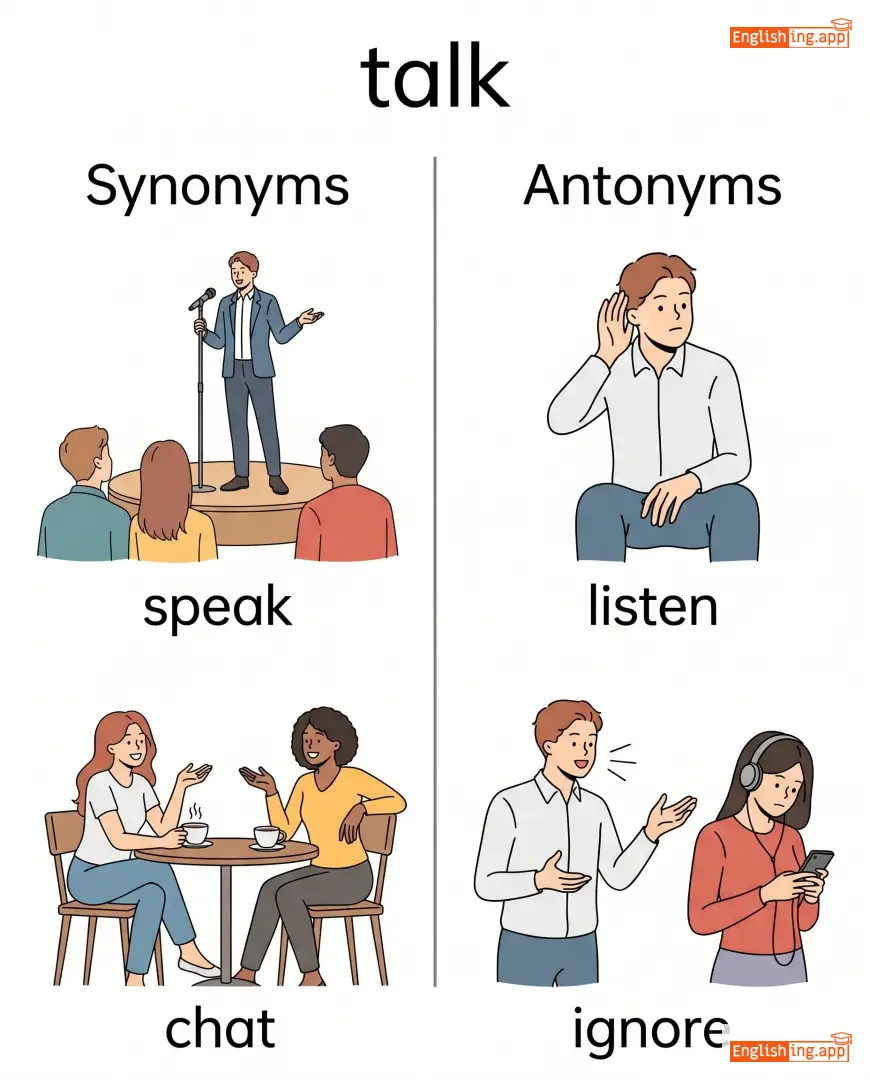
speak, communicate, converse, discuss
••••••
|
listen, be silent, stay quiet
••••••
|
talk about, talk to, talk over, small talk, talk shop
••••••
|
|
#0
🤔
|
/ˌʌndərˈstænd/
verb
••••••
|
|
understood
••••••
|
understood
••••••
|
understands
••••••
|
understanding
••••••
|
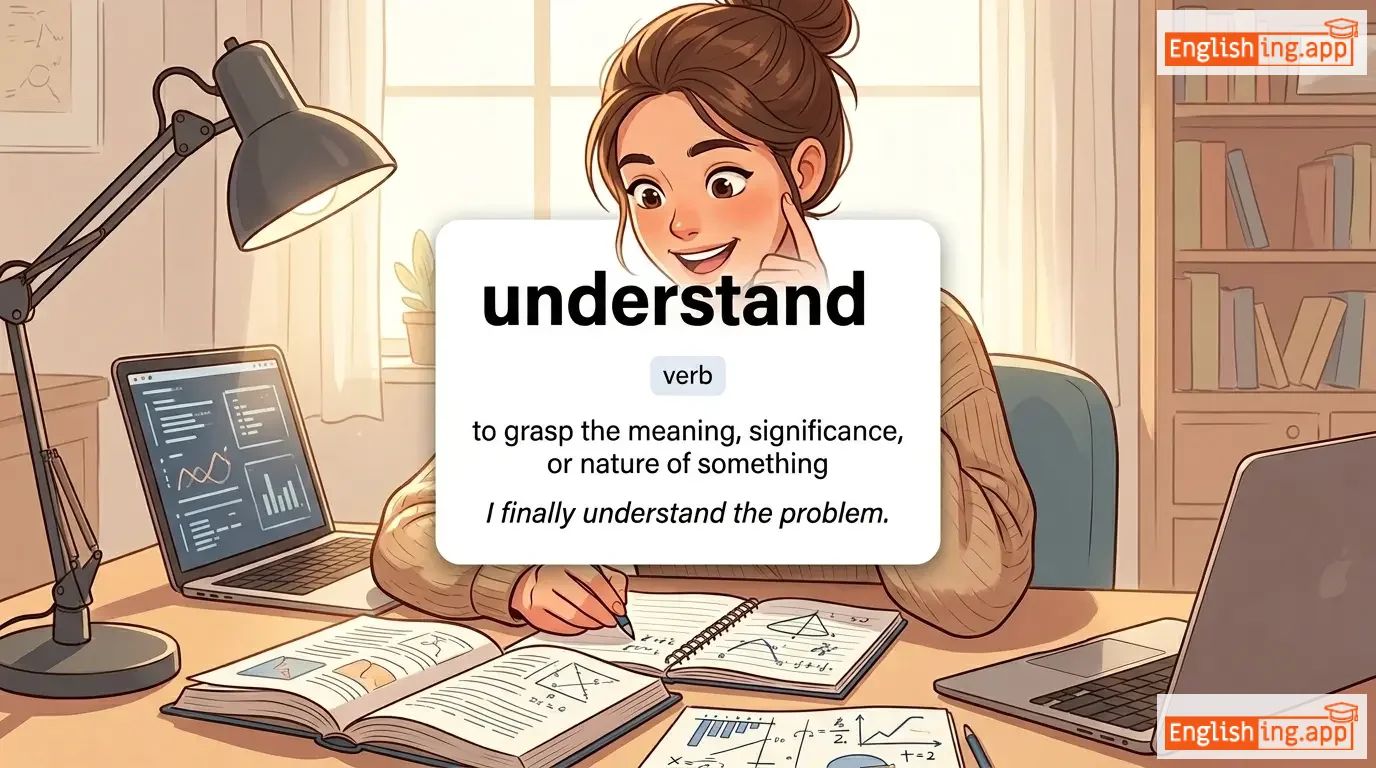
to grasp the meaning, significance, or nature of something
••••••
|
I finally understand the problem. |
understand the situation |
to grasp the full context or details of a situation
••••••
|
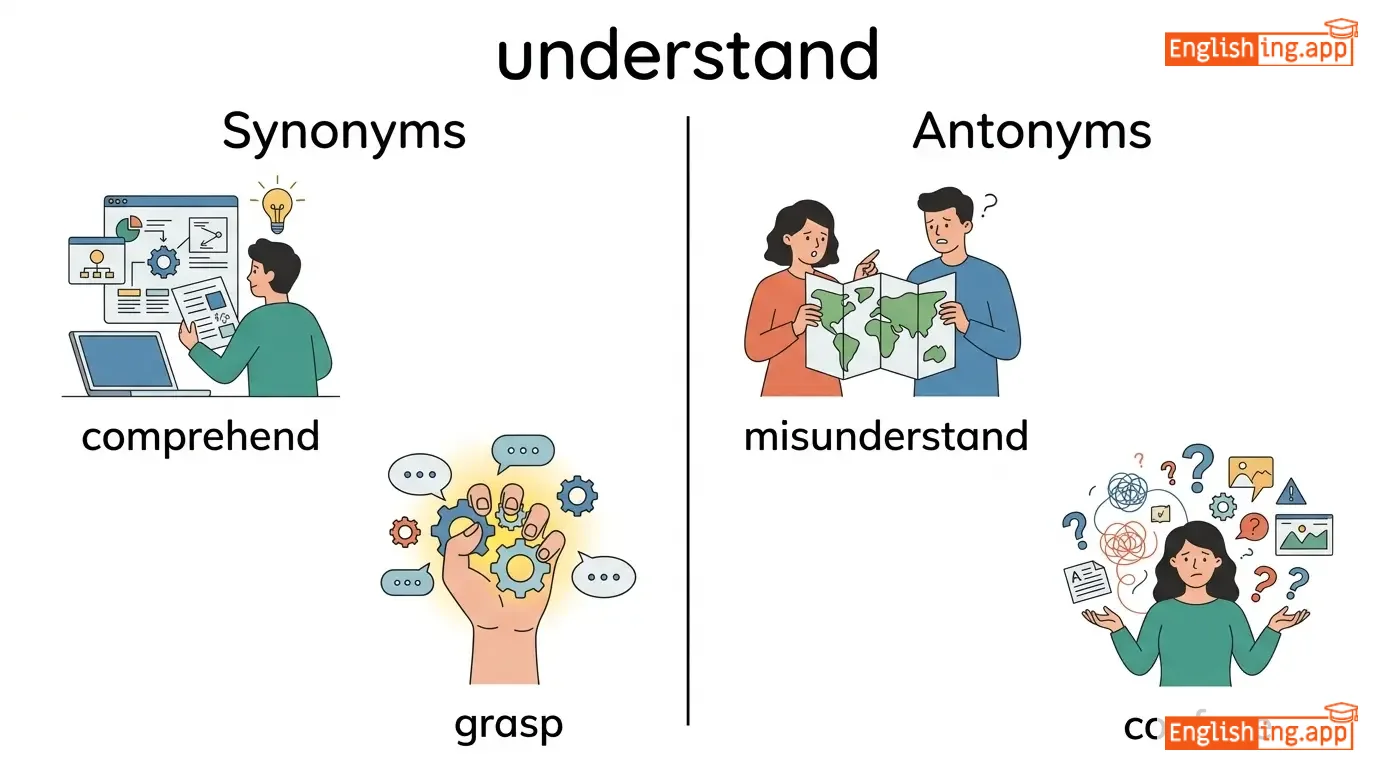
comprehend, grasp, perceive, realize
••••••
|
misunderstand, confuse
••••••
|
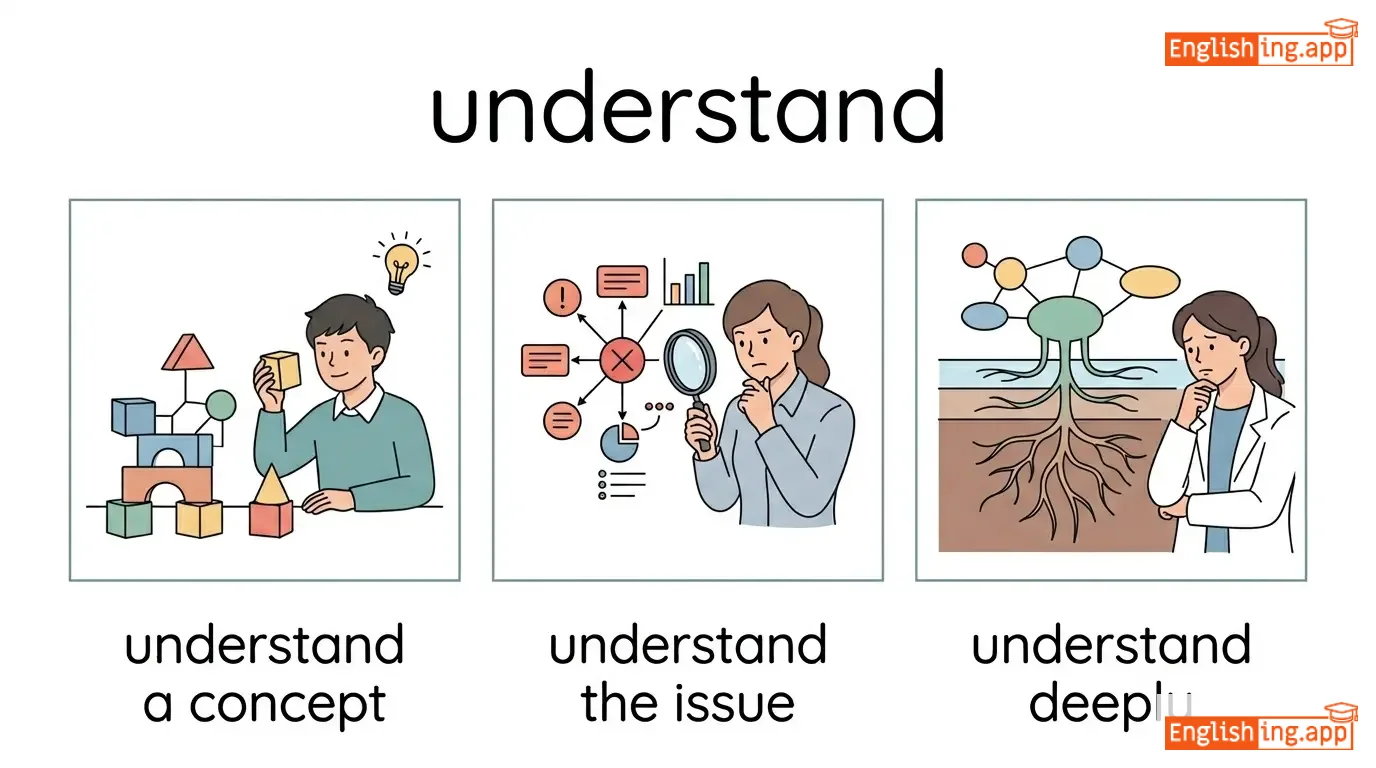
understand a concept, understand the issue, understand deeply
••••••
|
|
#0
🗣️
|
/ˈvɜː.bəl/
adjective
••••••
|
|
- •••••• | - •••••• | - •••••• | - •••••• |
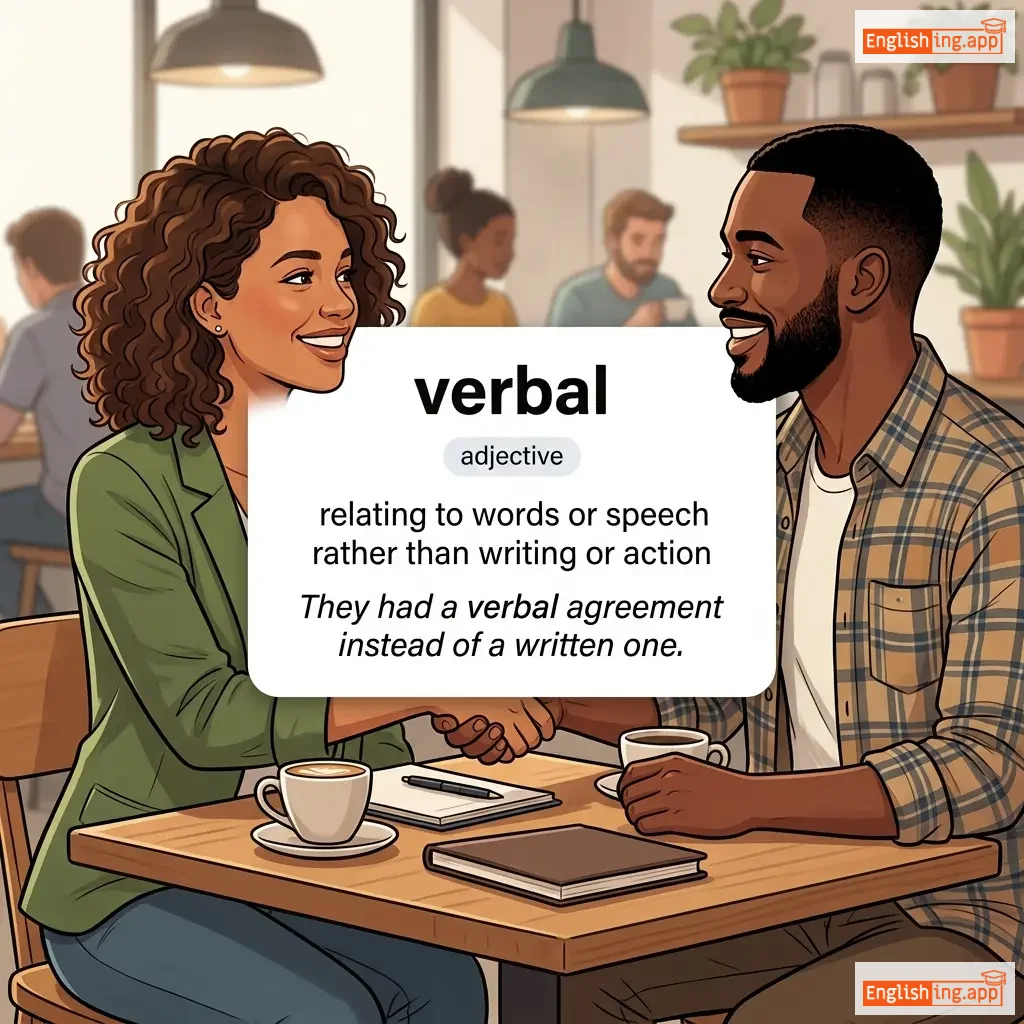
relating to words or speech rather than writing or action
••••••
|
They had a verbal agreement instead of a written one. |
verbal abuse |
the use of words to insult or hurt someone
••••••
|
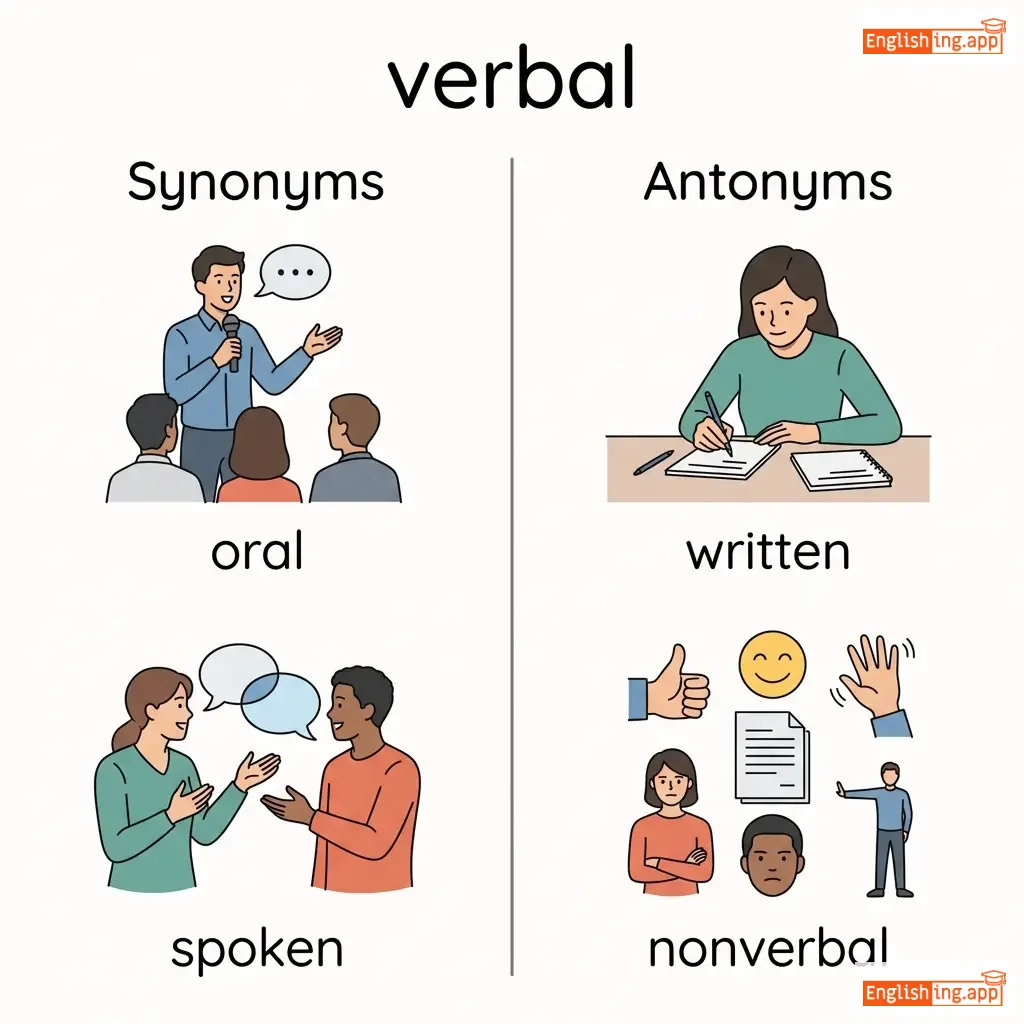
oral, spoken, expressed, linguistic
••••••
|
written, nonverbal
••••••
|
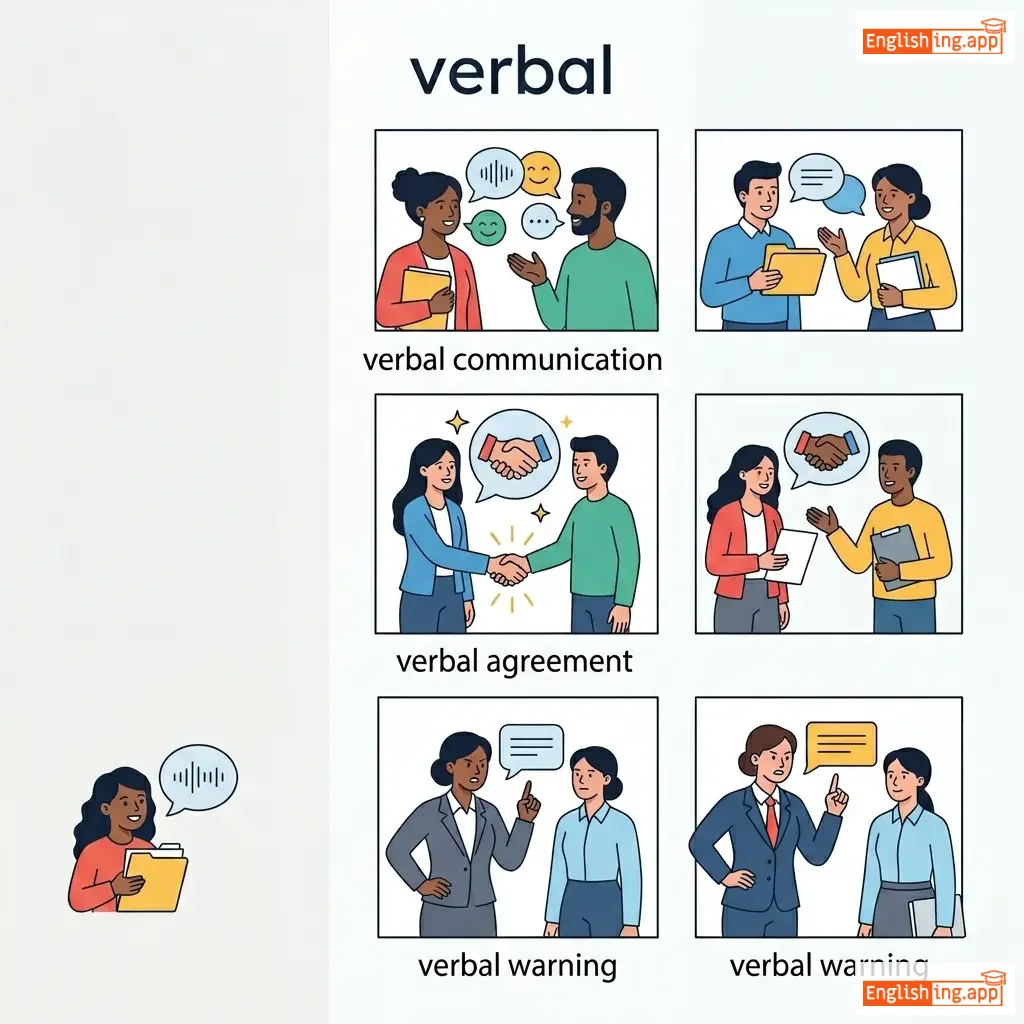
verbal communication, verbal agreement, verbal warning, verbal abuse
••••••
|
|
#0
🗣️
|
/vɔɪs/
noun
••••••
|
|
- •••••• | - •••••• | - •••••• | - •••••• |
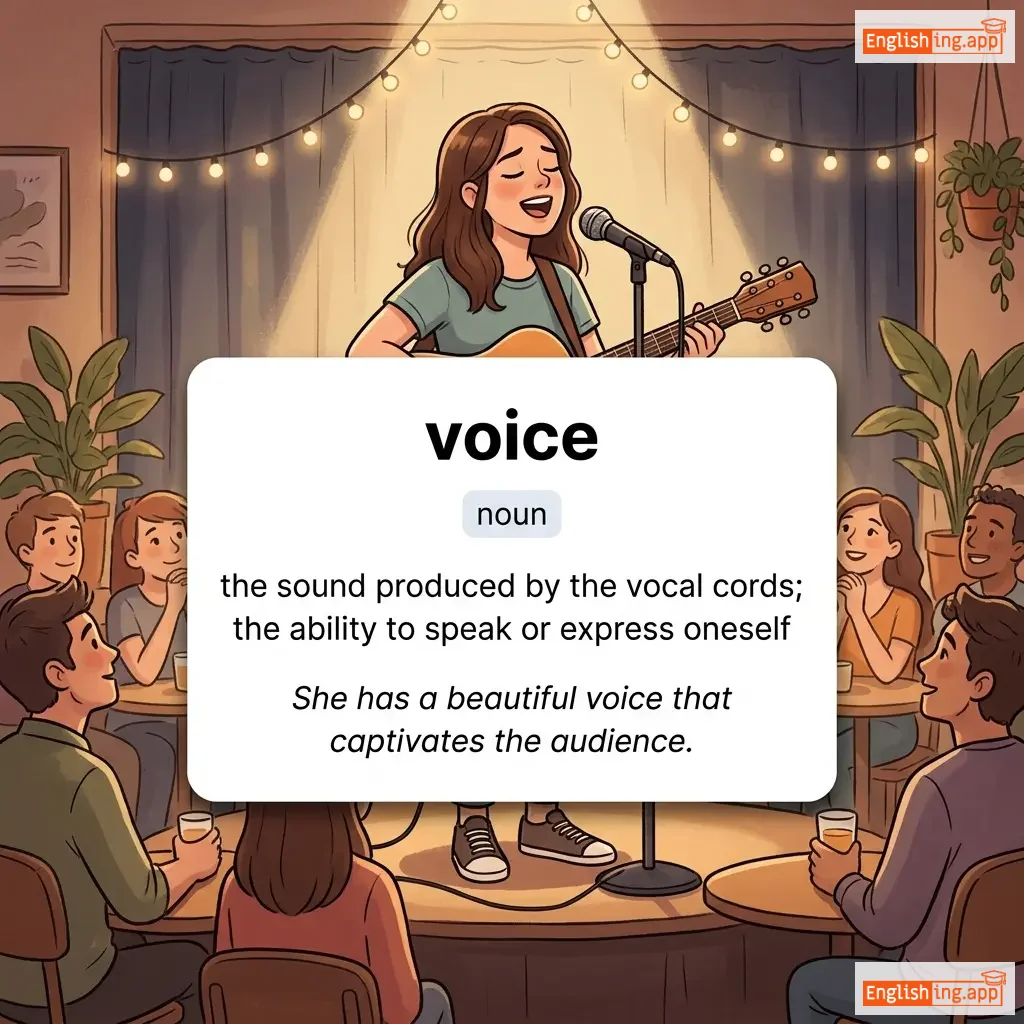
the sound produced by the vocal cords; the ability to speak or express oneself
••••••
|
She has a beautiful voice that captivates the audience. |
find your voice |
to begin expressing your thoughts or opinions
••••••
|
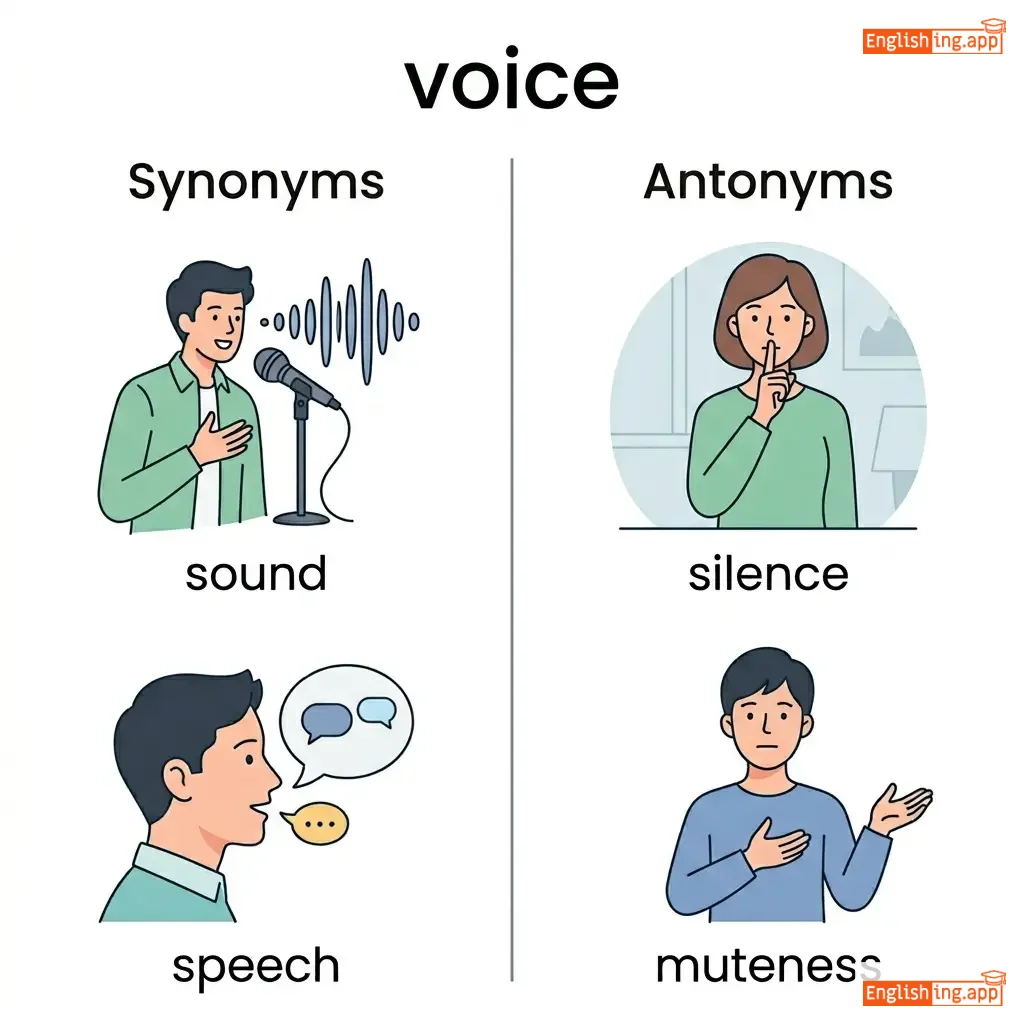
sound, speech, tone, vocalization
••••••
|
silence, muteness
••••••
|
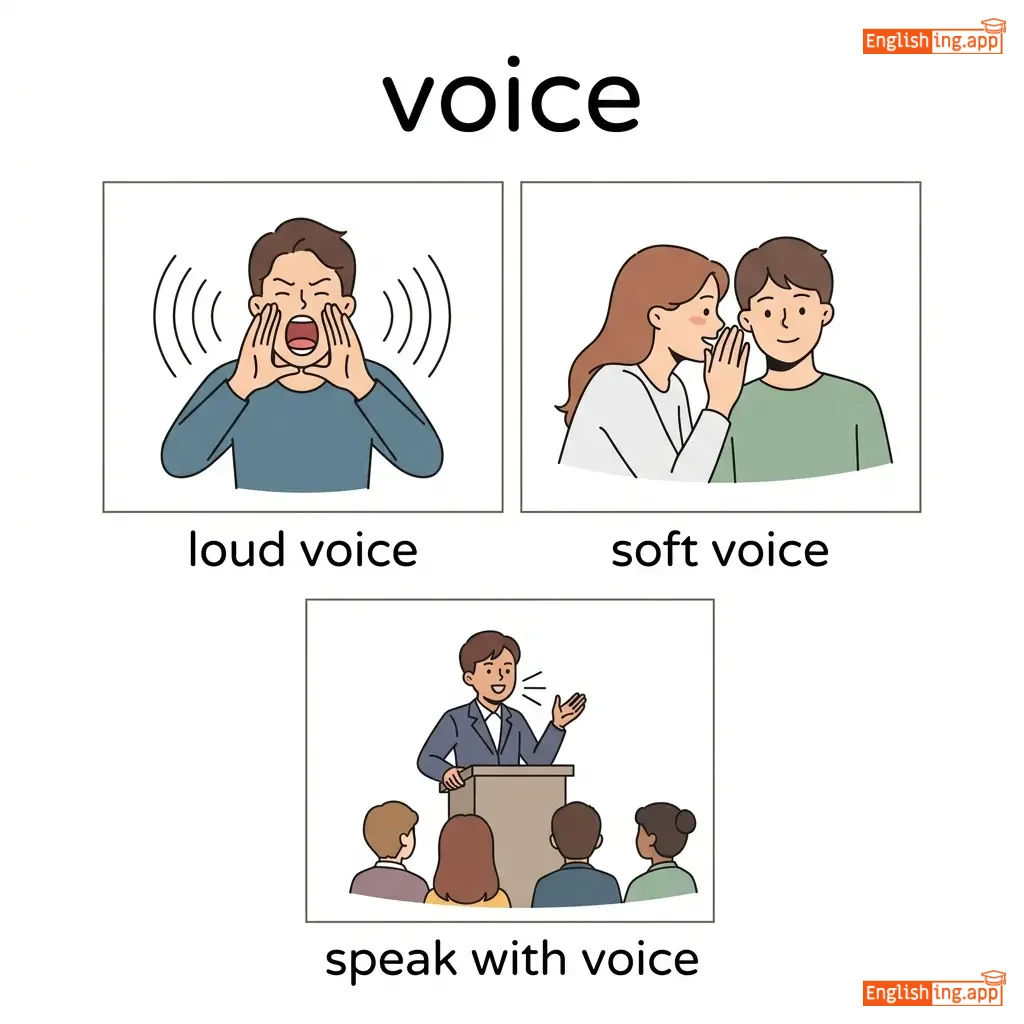
loud voice, soft voice, speak with voice
••••••
|
Comments (0)
Share your thoughts and join the discussion.
Join the discussion by logging in
Login to CommentNo comments yet
Be the first to share your thoughts!