

The Girl Who Crossed the Cliff
Lina lived in a small village. She wanted to cross the mountain cliff to reach the next village. But the path was harsh.
Her grandmother would say, "That cliff is dangerous. There's a dense forest. Some say giant bears live there. Others say ghosts haunt it."
"But I've been given courage," Lina said. "I'm human. I can do this."
She prepared. Took a knife. Filled a bag with flour - to make bread on the journey. She wore her best dress - not fancy, but strong. And took thick gloves - for climbing.
"Hello," she said to the mountain as she started her journey. "I will cross you."
The first day was okay. She followed the narrow path. But on the second day, the forest became dense. Trees were so thick, barely any light came through.
"This place haunts me," she whispered. Shadows looked like ghosts. Sounds seemed like giants walking.
But she continued. She used her knife to mark trees - so she wouldn't lose the path. Her hands, protected by gloves, cut through branches.
On the third day, she reached the cliff's edge. Below was a vast depth - thousands of feet drop. There was a wooden fence, but broken in many places.
"How do I cross this?" she thought. The cliff was too wide to jump. Too harsh to climb down and up.
Then she noticed - an old rope bridge. But it looked dangerous. Ropes were grinding against rocks. Any moment it could break.
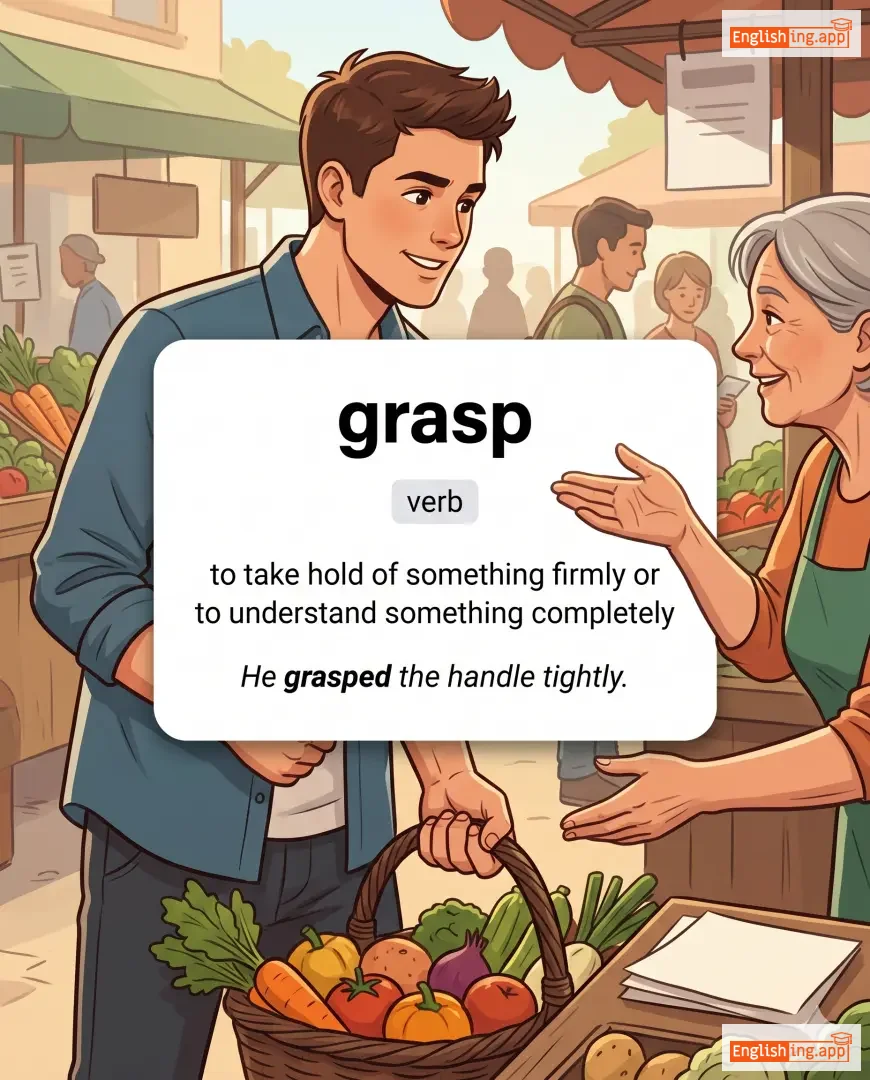
"I must grasp my courage," she told herself.
Step by step, she crossed the bridge. Every time wind blew, the bridge swayed. She held tight to the rope, her gloved hands preventing cuts.
Halfway across, a rope snapped. The bridge tilted. Lina's heart stopped.
"I'm human," she reminded herself. "I can survive."
She adjusted her balance. She moved faster but carefully. Finally, she reached the other side.
But then she heard a sound - fleet footsteps. Was it a giant? A ghost?
No. It was a wild horse - beautiful and free.
"Hello," Lina softly said. The horse stopped. It looked at her - not with fear, but with curiosity.
Lina slowly approached. She took out some flour - she had mixed it with water to make small cakes. She offered it to the horse.
The horse ate. Then it bowed - as if indicating Lina could ride.
"Thank you," Lina whispered. She climbed onto the horse. Together, they rode through the dense forest, crossed steep paths.
Years later, when Lina became a guide, she would tell young travelers:
"That journey taught me many things. Cliffs seem impossible, but there's always a way. Dense forests seem endless, but patience gets you through. Harsh conditions test you, but they don't define you."
"What about ghosts and giants?" someone asked.
"Those were my fears," Lina smiled. "What haunted me weren't real ghosts - but my own doubts. What seemed like giants were shadows. As a human, our biggest enemy is often our own mind."
"And the horse?"
"Nature helps those who are brave enough to say hello to it," Lina explained. "I was given not just courage that day - but a companion. Hence, I learned - in harsh wilderness, kindness matters. A simple offering of flour cakes created trust."
"Tell us about crossing the cliff," another asked.
"The cliff taught me depth - not just physical, but mental," Lina said. "When you stand at the edge, looking at the depth below, you must grasp your courage. Your gloves protect your hands, but what protects your heart? Your determination."
"The fence was broken," she continued. "In life, safety nets aren't always there. You must be your own safety. The rope bridge was grinding, wearing down - like how challenges wear us down. But if you keep moving, if you don't freeze in fear, you cross."
"I carried a knife for protection," Lina added. "But I never used it against any creature. I used it to mark my path, to cut obstacles. Tools are for solving problems, not creating them."
"Your dress -" someone noticed. "Why did you say it wasn't fancy?"
"Because fancy doesn't help in harsh conditions," Lina laughed. "Practical does. Beautiful dress tears in dense forest. Strong, simple clothing survives. Life is not about looking good - it's about being prepared."
"And when you felt haunted?"
"I remembered I'm human," Lina said seriously. "We feel fear. That's natural. But we also have reason, courage, determination. Ghosts haunt only if you let them. Giants scare only if you believe they're invincible. In reality, most fears are shadows given power by our imagination."
"Hence, the lesson?" the travelers asked.
Lina smiled. "Hence, the lesson is this - harsh journeys across dense forests, over cliff edges, through depth of challenges - these don't require you to be superhuman. They require you to grasp your humanity. Your given tools - courage, kindness, practical thinking. Your hello to challenges, not running away. Your gloves protecting what matters. Your knife solving problems. Your simple flour creating connections. Your strong dress, not fancy appearance. And most importantly - your human heart that doesn't let fears haunt, that doesn't see giants where there are shadows, that keeps grinding forward even when the fence breaks, that doesn't fear depth but respects it."
And the young travelers learned - adventure requires not magical powers, but human courage. Cliffs are crossed not by fleet feet alone, but by grasping determination. And sometimes, the harsh journey is the teacher, and the wild horse you befriend becomes the friend you needed, and the dense forest you feared becomes the path you mastered - all because you said hello to your challenge, accepted your given courage, and trusted your human strength.
Upgrade to Access All Vocabulary
Get unlimited access to all vocabulary items with Pro membership
Upgrade to ProTranslation
Past
Past Participle
Third Person Singular
Gerund
Meaning
Example Sentence
Example Sentence Translation
Synonyms
Antonyms
Collocations
Mnemonic
Swipe left or right, or use the buttons. Tap image to zoom.
Upgrade to Access All Sentences
Get unlimited access to all sentences with Pro membership
Upgrade to ProExample Sentence Translation
Word
The Girl Who Crossed the Cliff - Mask Toggle
|
Emoji
|
Word | Images | Past | Past Participle | Third Person Singular | Gerund | Meaning | Example Sentence | Example Expression | Example Expression Meaning | Synonyms | Antonyms | Collocations |
|---|---|---|---|---|---|---|---|---|---|---|---|---|---|
|
#0
⛰️
|
/klɪf/
noun
••••••
|
- •••••• | - •••••• | - •••••• | - •••••• | - •••••• |
a high, steep face of rock or earth
••••••
|
The waves crashed against the bottom of the cliff. |
on the edge of a cliff |
in a very dangerous or risky situation
••••••
|
precipice, bluff, escarpment, rock face
••••••
|
valley, plain
••••••
|
high cliff, sea cliff, steep cliff, rocky cliff
••••••
|
|
#0
🌲
|
/dɛns/
adjective
••••••
|
- •••••• | - •••••• | - •••••• | - •••••• | - •••••• |
Closely compacted in substance; having parts crowded together.
••••••
|
The forest was so dense that little sunlight reached the ground. |
dense fog |
Thick fog that reduces visibility.
••••••
|
thick, compact, crowded, heavy, solid
••••••
|
thin, sparse, light
••••••
|
dense forest, dense fog, dense population, dense crowd
••••••
|
|
#0
🌊
|
/dɛpθ/
noun
••••••
|
- •••••• | - •••••• | - •••••• | - •••••• | - •••••• |
The distance from the top to the bottom of something; the intensity or complexity of a subject.
••••••
|
The diver measured the depth of the ocean trench. |
in depth |
In great detail or thoroughly.
••••••
|
deepness, intensity, profoundness, extent, complexity
••••••
|
shallowness, surface, height
••••••
|
great depth, depth of knowledge, emotional depth, depth perception
••••••
|
|
#0
👗
|
/drɛs/
noun/verb
••••••
|
- •••••• |
dressed
••••••
|
dressed
••••••
|
dresses
••••••
|
dressing
••••••
|
a one-piece garment for women or girls; to put on clothes
••••••
|
She wore a beautiful red dress to the party. |
dressed to kill |
wearing clothes that are intended to impress others
••••••
|
outfit, attire, garment, clothing
••••••
|
undress, nakedness
••••••
|
wear a dress, long dress, summer dress, dress code
••••••
|
|
#0
🚧
|
/fɛns/
noun/verb
••••••
|
- •••••• |
fenced
••••••
|
fenced
••••••
|
fences
••••••
|
fencing
••••••
|
a barrier, usually made of wood or wire, that surrounds an area; to enclose with a barrier
••••••
|
They built a fence around the garden. |
sit on the fence |
to avoid making a decision or choosing a side
••••••
|
barrier, wall, enclosure, hedge
••••••
|
opening, gap
••••••
|
wooden fence, garden fence, high fence, electric fence
••••••
|
|
#0
🚢
|
/fliːt/
noun
••••••
|
- •••••• | - •••••• | - •••••• | - •••••• | - •••••• |
a group of ships, vehicles, or aircraft operating together under one command
••••••
|
The navy deployed its entire fleet for the exercise. |
a fleet of foot |
very fast and agile in movement
••••••
|
armada, squadron, convoy, flotilla, group
••••••
|
individual, single
••••••
|
naval fleet, fishing fleet, fleet of cars, merchant fleet
••••••
|
|
#0
🥖
|
/ˈflaʊ.ər/
noun
••••••
|
- •••••• | - •••••• | - •••••• | - •••••• | - •••••• |
a powder made by grinding grains, used for making bread, cakes, etc.
••••••
|
She bought a bag of flour to bake a cake. |
- •••••• | - •••••• |
meal, powder, starch, grain, ingredient
••••••
|
none, null
••••••
|
wheat flour, rice flour, all-purpose flour, cake flour
••••••
|
|
#0
👻
|
/ɡoʊst/
noun
••••••
|
- •••••• | - •••••• | - •••••• | - •••••• | - •••••• |
the spirit of a dead person that is believed to appear to the living
••••••
|
She felt as if a ghost was watching her in the dark hallway. |
give up the ghost |
to die or to stop working
••••••
|
spirit, phantom, specter, apparition, soul
••••••
|
body, reality
••••••
|
ghost story, ghost house, ghost town, ghost sighting
••••••
|
|
#0
🗿
|
/ˈdʒaɪənt/
noun
••••••
|
- •••••• | - •••••• | - •••••• | - •••••• | - •••••• |
an extremely large and powerful being or a very large person or thing
••••••
|
The company grew into a giant in the tech industry. |
gentle giant |
a person who is very large but kind and gentle
••••••
|
colossus, titan, behemoth, mammoth
••••••
|
dwarf, tiny
••••••
|
giant company, giant step, giant leap, giant figure
••••••
|
|
#0
✅
|
/ˈɡɪvən/
adjective
••••••
|
- •••••• | - •••••• | - •••••• | - •••••• | - •••••• |
Specified or stated; already decided or certain.
••••••
|
It is a given fact that hard work leads to success. |
take for granted |
To assume something as true or certain without questioning.
••••••
|
certain, established, fixed, determined
••••••
|
uncertain, doubtful
••••••
|
given situation, given fact, given conditions, given time
••••••
|
|
#0
🧤
|
/ɡlʌv/
noun
••••••
|
- •••••• | - •••••• | - •••••• | - •••••• | - •••••• |
A covering for the hand with separate parts for the fingers and thumb.
••••••
|
She wore gloves to protect her hands from the cold. |
fit like a glove |
To fit perfectly.
••••••
|
mitt, mitten, handwear, covering
••••••
|
barehand, uncovered
••••••
|
wear gloves, leather gloves, boxing gloves, winter gloves
••••••
|
|
#0
✊
|
/ɡrɑːsp/
verb
••••••
|
|
grasped
••••••
|
grasped
••••••
|
grasps
••••••
|
grasping
••••••
|
to take hold of something firmly or to understand something completely
••••••
|
He grasped the handle tightly. |
grasp the nettle |
to deal with a difficult situation with courage
••••••
|
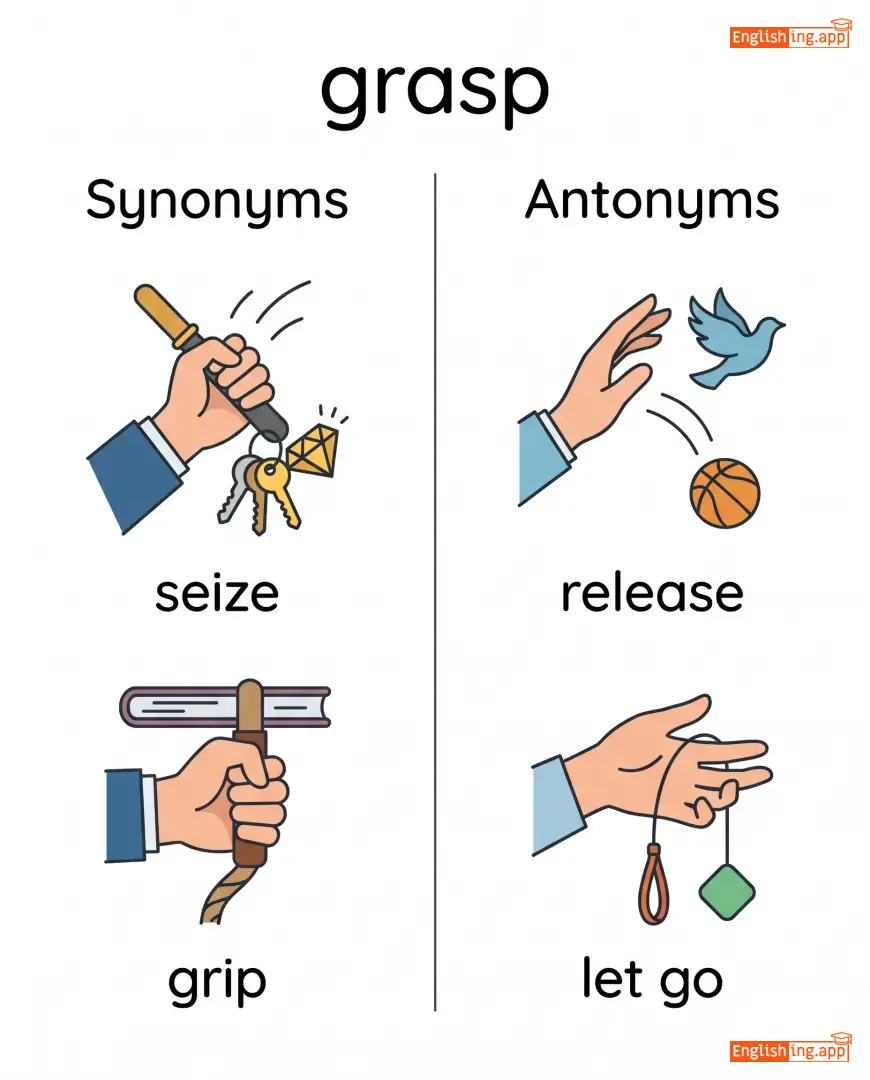
seize, grip, clutch, understand, comprehend
••••••
|
release, let go, misunderstand
••••••
|
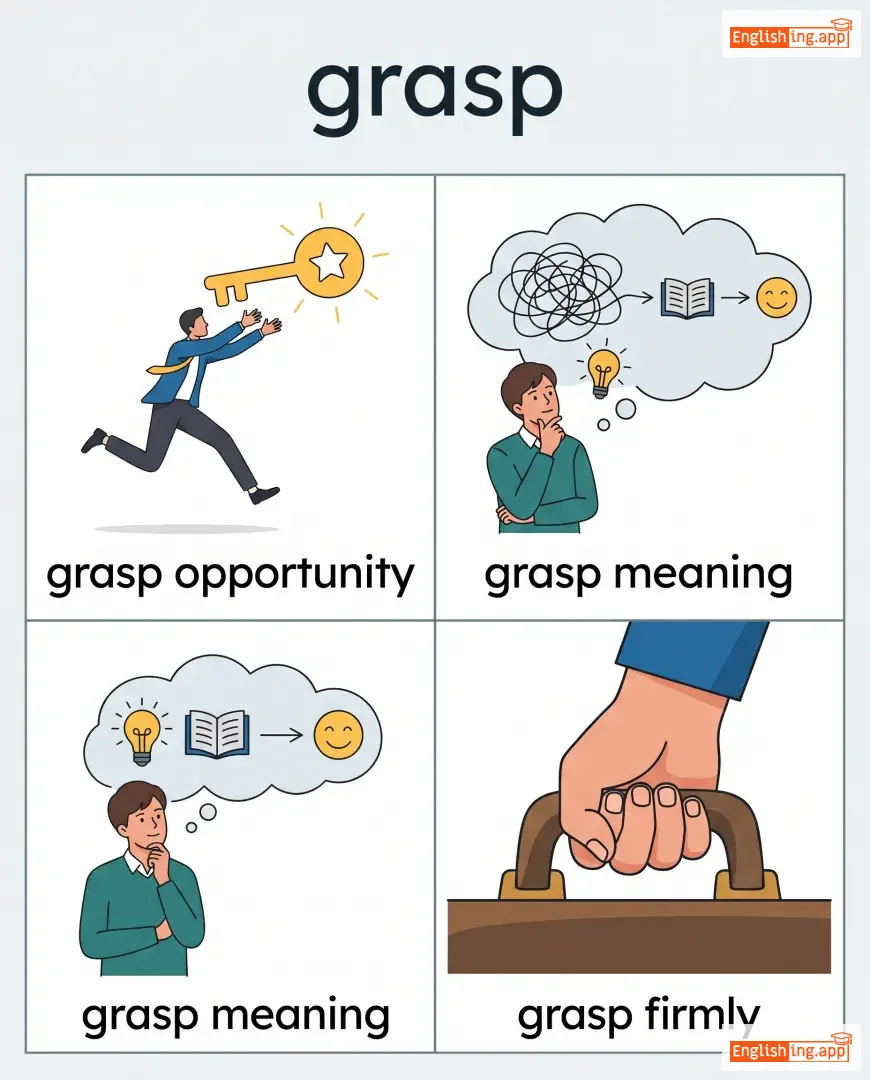
grasp opportunity, grasp meaning, grasp firmly, grasp concept
••••••
|
|
#0
⚙️
|
/ɡraɪnd/
verb
••••••
|
|
ground
••••••
|
ground
••••••
|
grinds
••••••
|
grinding
••••••
|
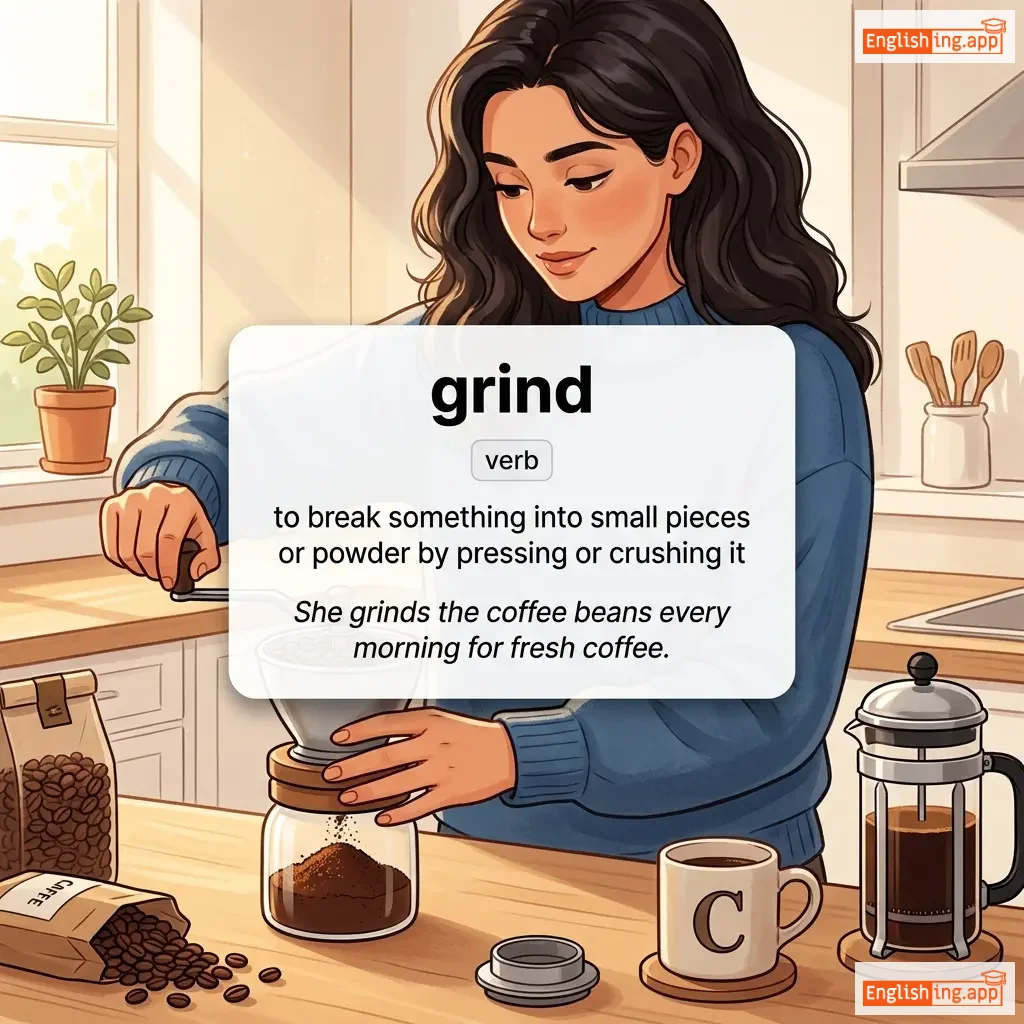
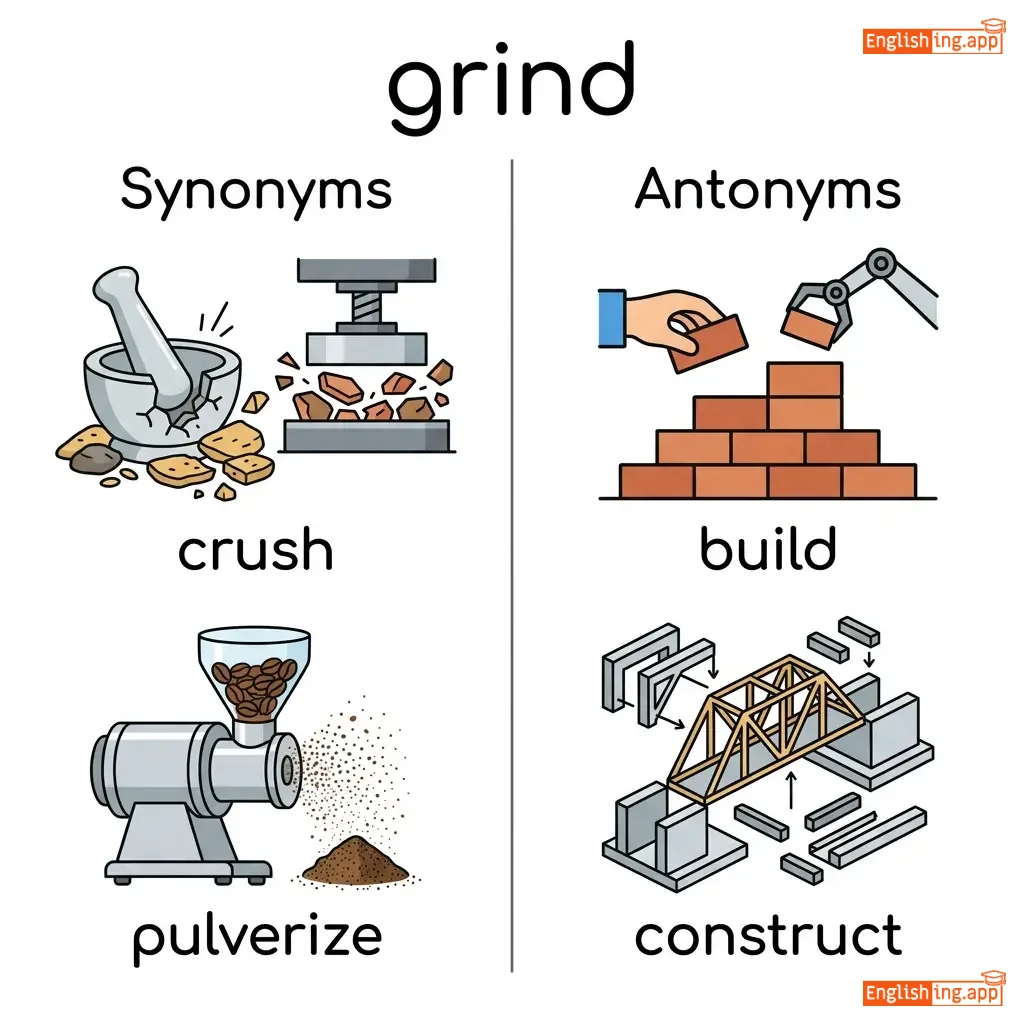
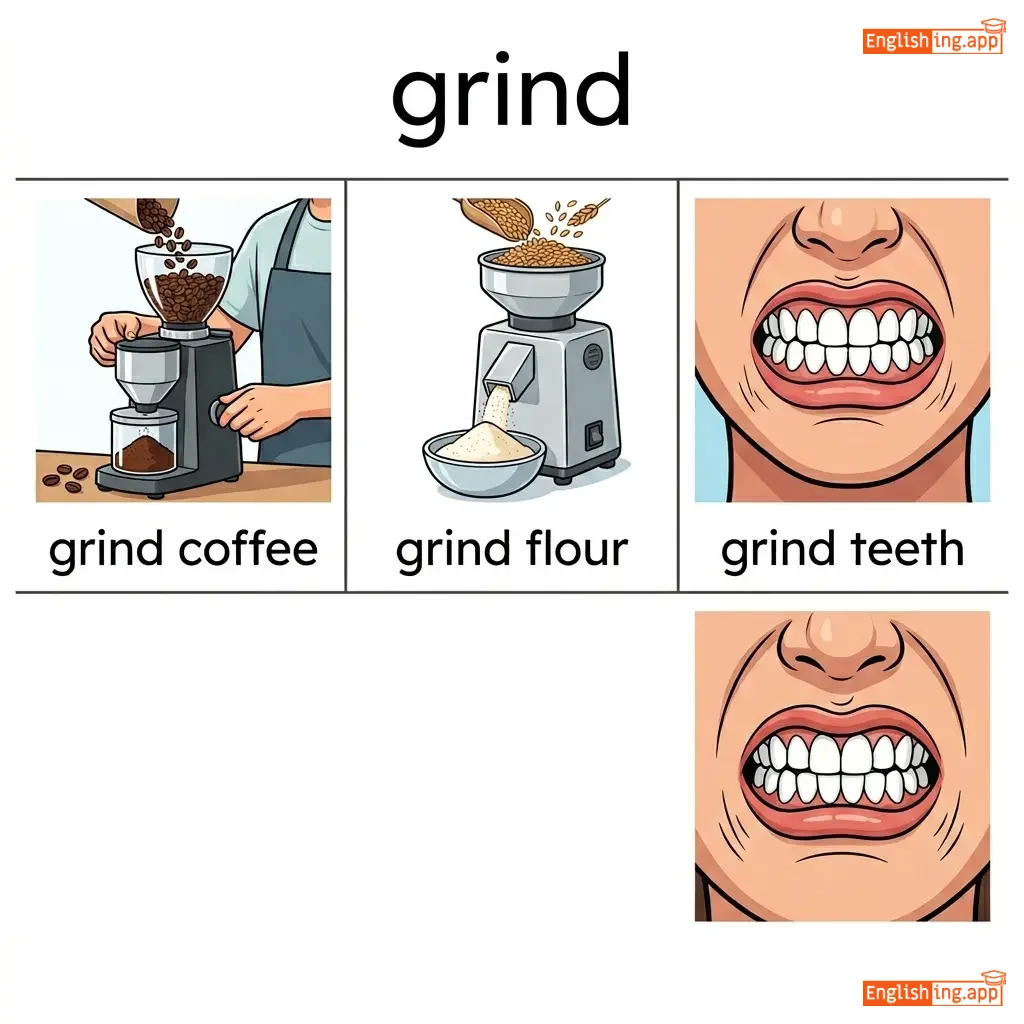
to crush into small particles; to work hard
••••••
|
She grinds coffee beans every morning. |
- •••••• | - •••••• |
crush, mill, pulverize, work hard
••••••
|
assemble, construct, relax, rest
••••••
|
grind coffee, grind slowly, grind finely, grind daily, grind fresh
••••••
|
|
#0
❄️
|
/hɑːrʃ/
adjective
••••••
|
- •••••• | - •••••• | - •••••• | - •••••• | - •••••• |
Unpleasantly rough or severe in sound, taste, conditions, or treatment.
••••••
|
The teacher's harsh tone frightened the students. |
harsh reality |
The unpleasant truth of a situation.
••••••
|
severe, stern, rough, cruel, brutal
••••••
|
gentle, mild, soft
••••••
|
harsh criticism, harsh reality, harsh conditions, harsh treatment
••••••
|
|
#0
👻
|
/hɔːnt/
verb
••••••
|
|
haunted
••••••
|
haunted
••••••
|
haunts
••••••
|
haunting
••••••
|
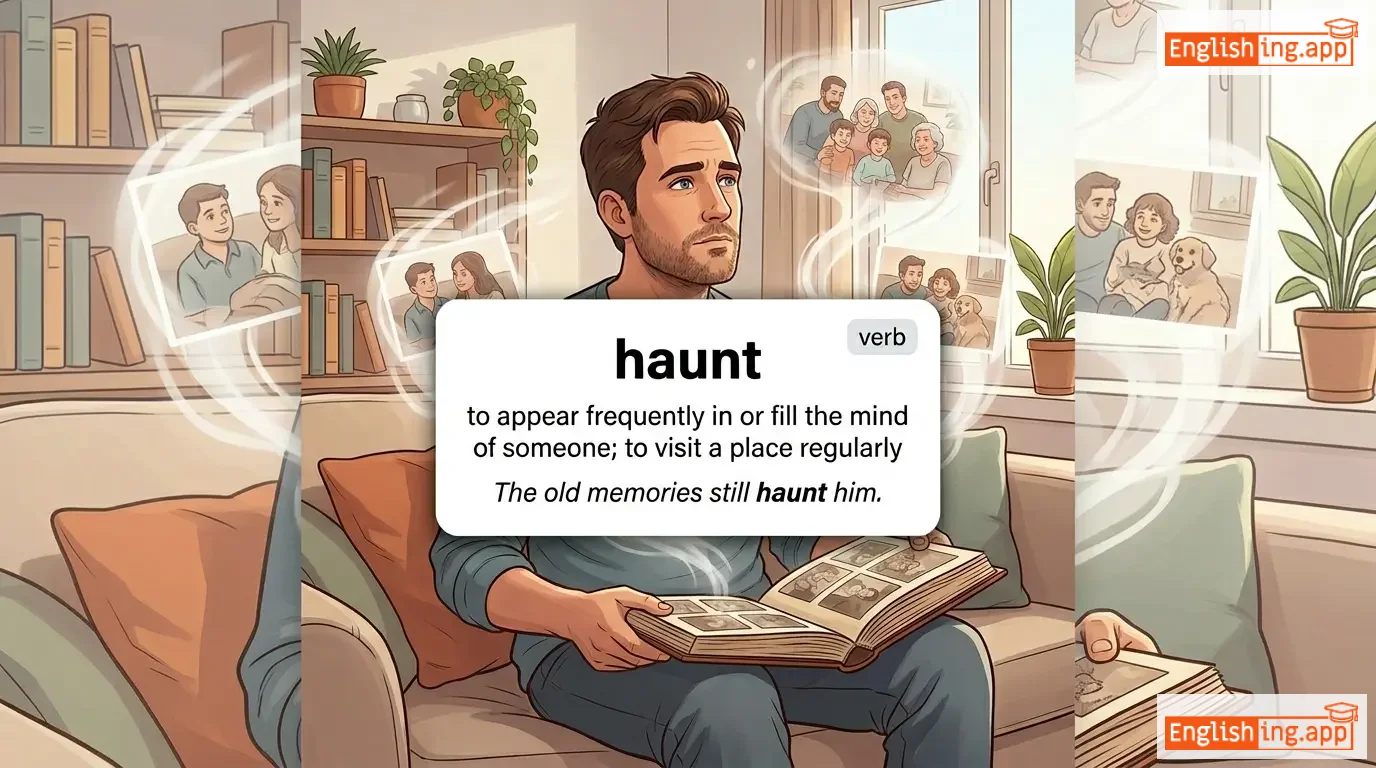
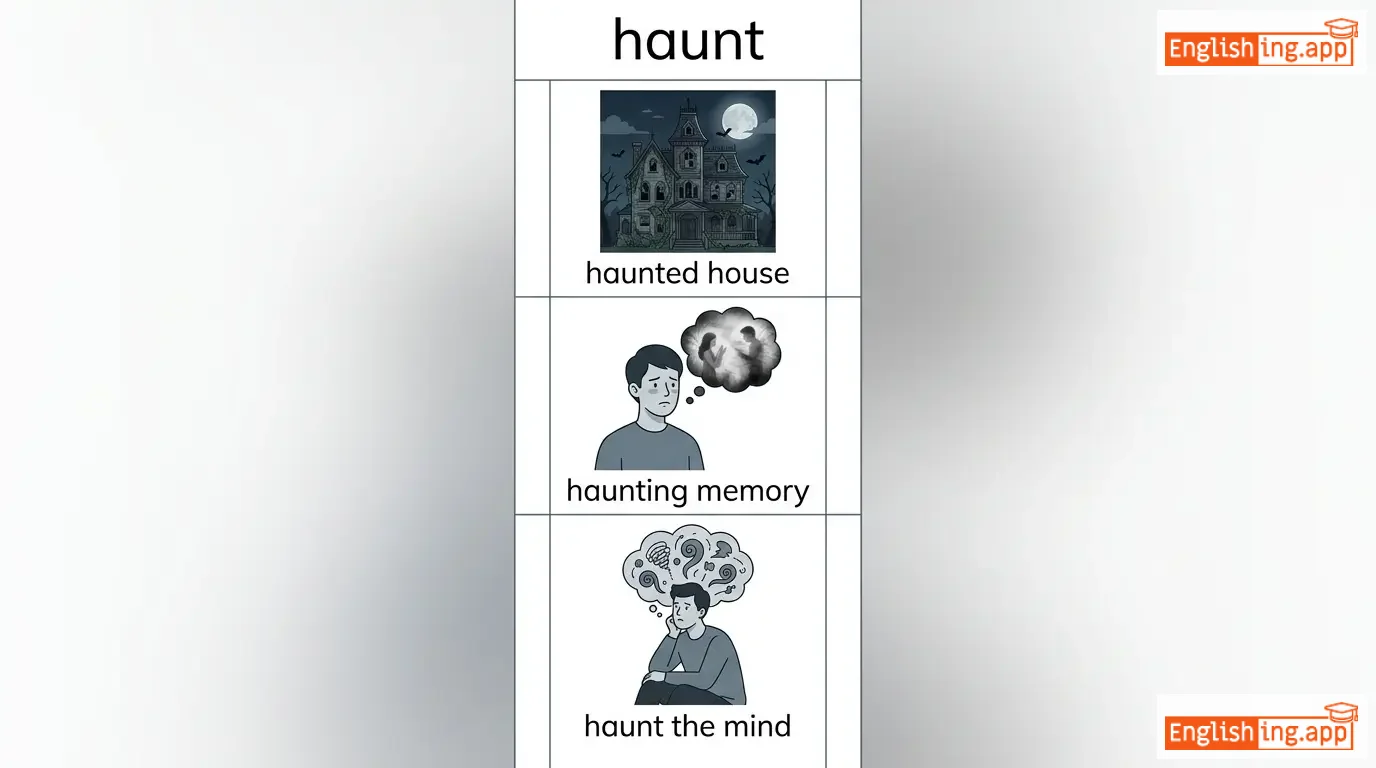
to appear frequently in or fill the mind of someone; to visit a place regularly
••••••
|
The old memories still haunt him. |
haunt one's dreams |
to repeatedly trouble or disturb someone mentally
••••••
|
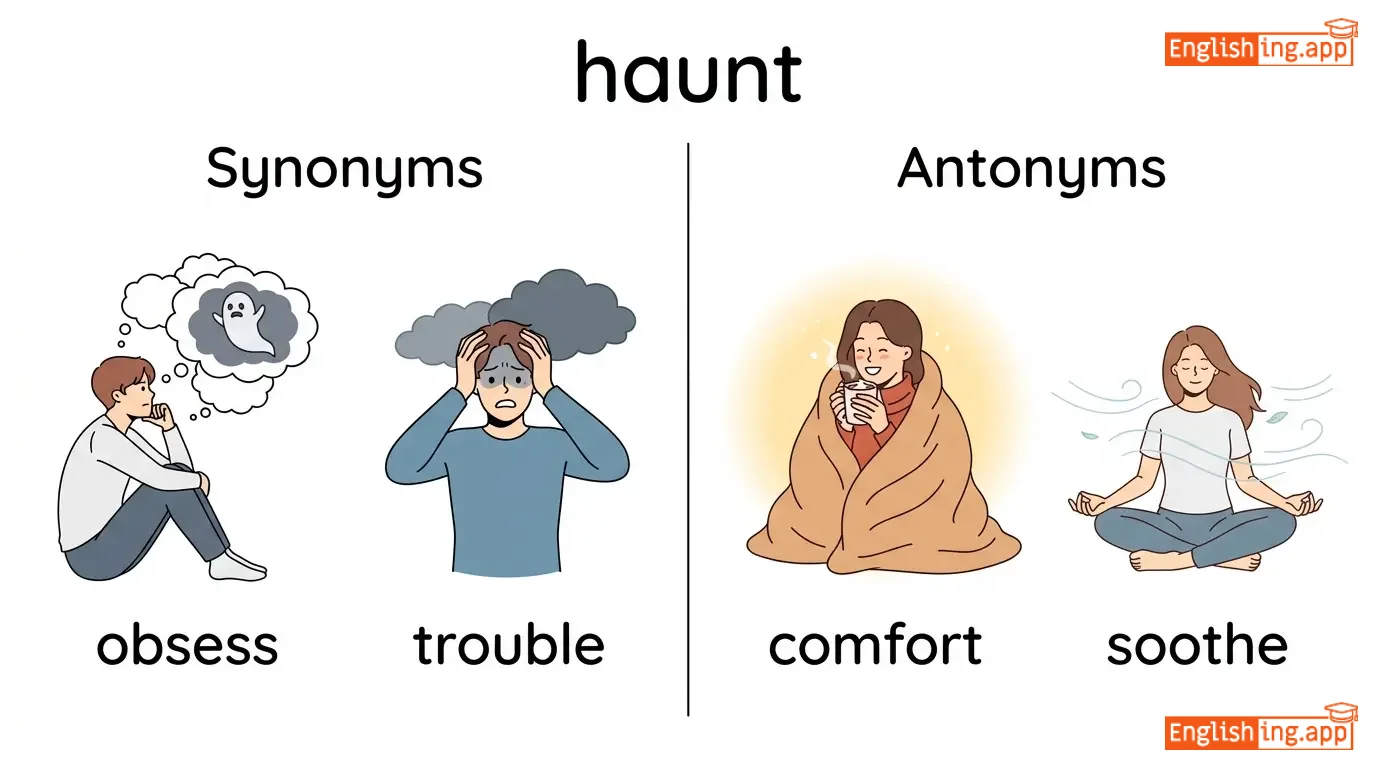
obsess, trouble, torment, visit, linger
••••••
|
comfort, soothe, forget
••••••
|
haunted house, haunting memory, haunt the mind, old haunt
••••••
|
|
#0
👋
|
/həˈloʊ/
interjection
••••••
|
- •••••• | - •••••• | - •••••• | - •••••• | - •••••• |
a greeting or expression used when meeting someone or starting a conversation
••••••
|
She answered the phone with a cheerful hello. |
say hello to |
to greet someone
••••••
|
hi, greetings, hey, howdy, welcome
••••••
|
goodbye, farewell
••••••
|
say hello, hello there, big hello, hello everyone
••••••
|
|
#0
➡️
|
/hɛns/
adverb
••••••
|
- •••••• | - •••••• | - •••••• | - •••••• | - •••••• |
for this reason; as a result
••••••
|
She was the best candidate, hence she was chosen for the job. |
hence the reason |
used to introduce the explanation for something
••••••
|
therefore, thus, consequently, accordingly
••••••
|
however, nevertheless
••••••
|
hence why, hence the need, hence the importance
••••••
|
|
#0
🐎
|
/hɔːrs/
noun
••••••
|
- •••••• | - •••••• | - •••••• | - •••••• | - •••••• |
a large, strong animal used for riding, racing, or carrying loads
••••••
|
The horse ran across the field. |
hold your horses |
wait or be patient
••••••
|
stallion, mare, pony, steed, nag
••••••
|
donkey, mule
••••••
|
ride a horse, wild horse, horse racing
••••••
|
|
#0
🧑
|
/ˈhjuːmən/
noun, adjective
••••••
|
|
- •••••• | - •••••• | - •••••• | - •••••• |
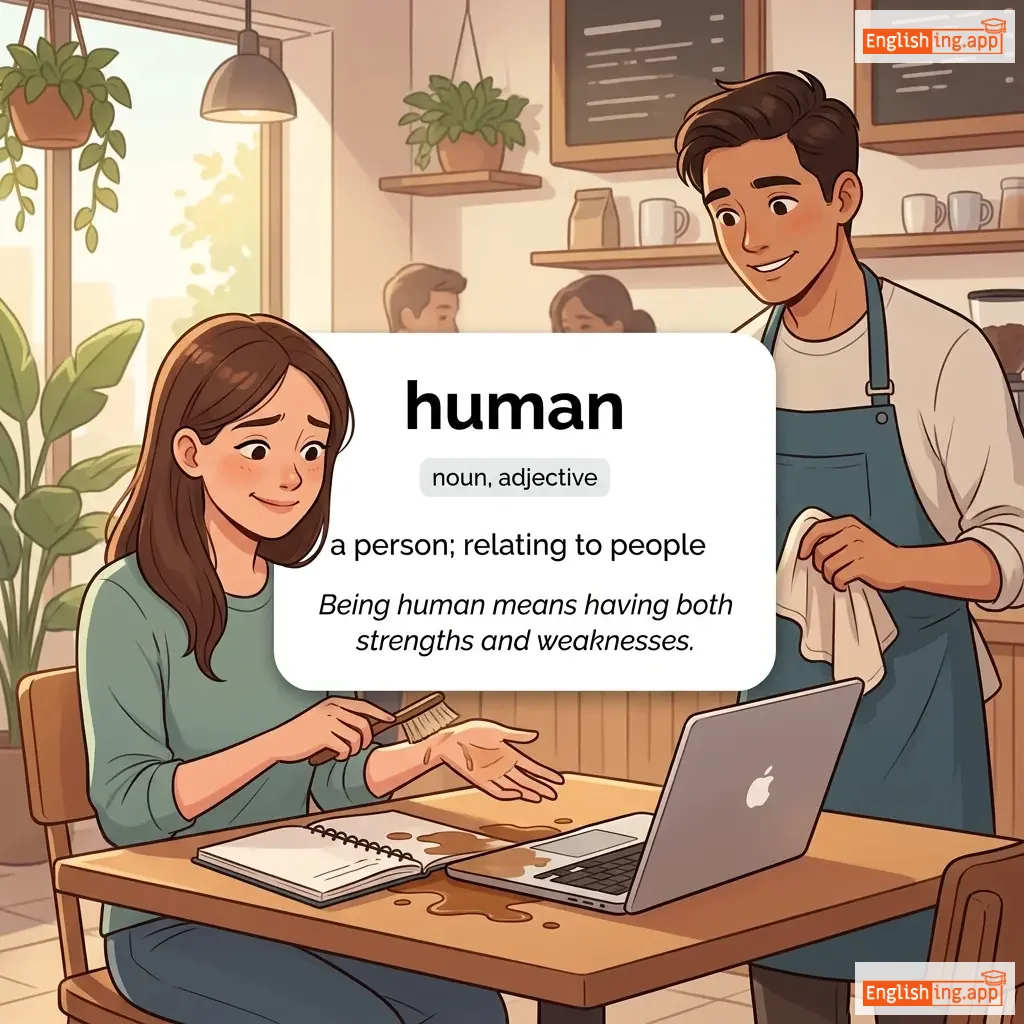
a person; relating to people
••••••
|
Being human means having both strengths and weaknesses. |
to err is human |
making mistakes is a natural part of being human
••••••
|
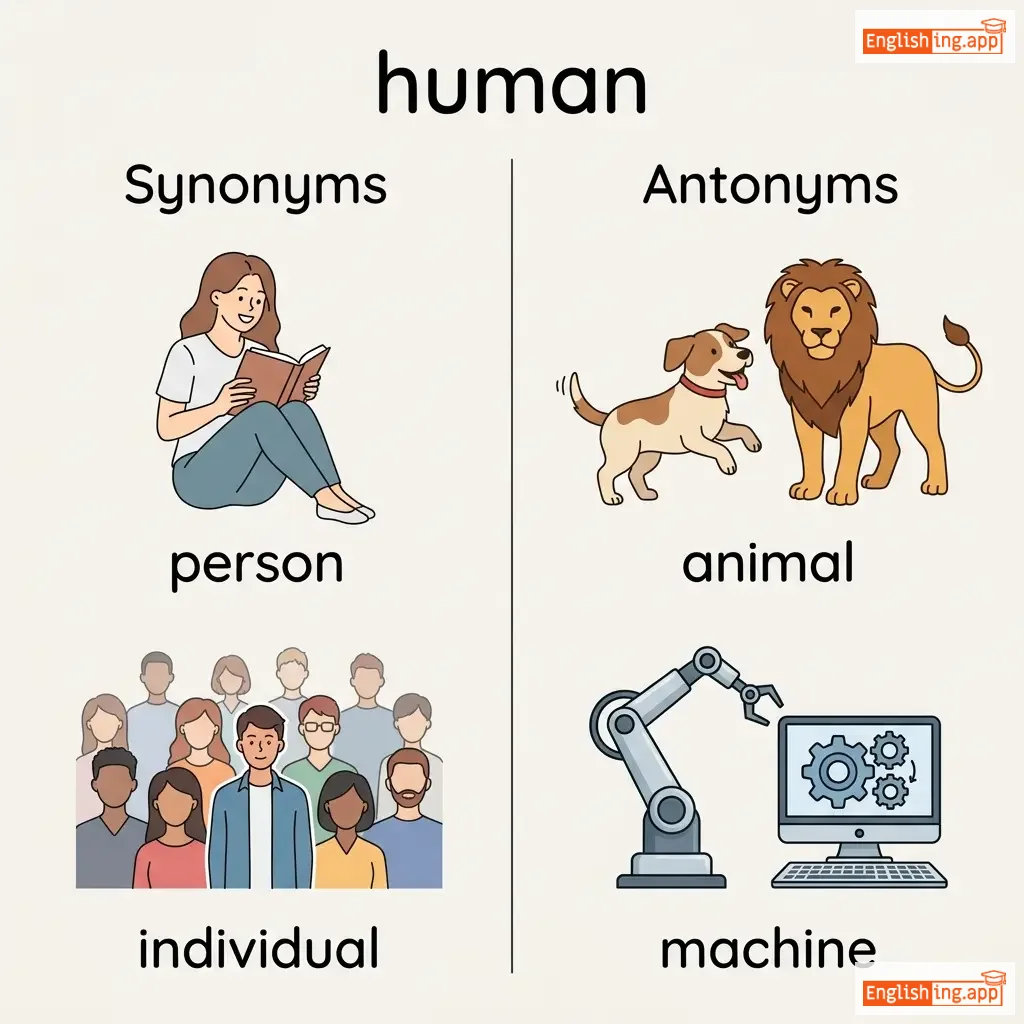
person, individual, mortal, man, woman
••••••
|
animal, machine, robot
••••••
|
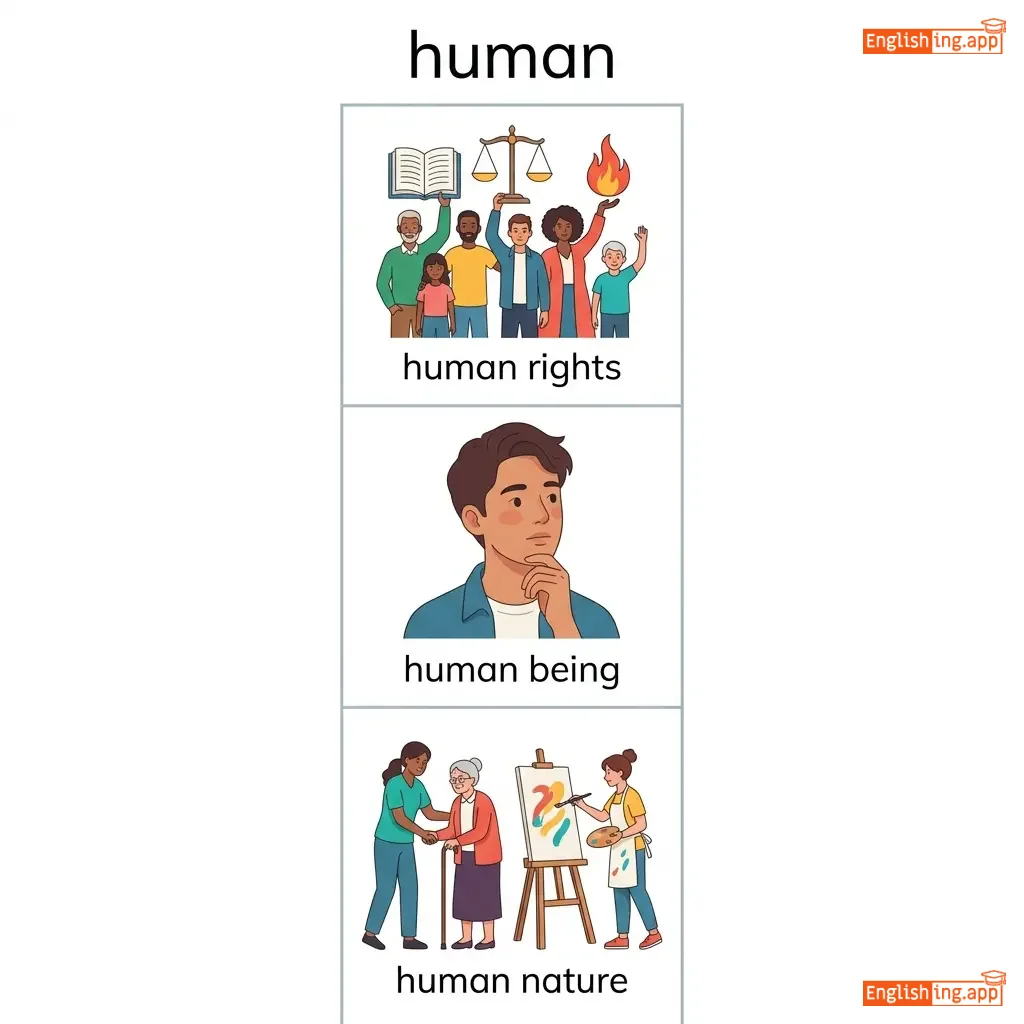
human rights, human being, human nature, human body
••••••
|
|
#0
🔪
|
/naɪf/
noun
••••••
|
- •••••• | - •••••• | - •••••• | - •••••• | - •••••• |
a tool or weapon with a blade and a handle, used for cutting
••••••
|
He used a sharp knife to cut the vegetables. |
at knife's edge |
in a very tense or dangerous situation
••••••
|
blade, cutter, dagger, utensil, scalpel
••••••
|
spoon, fork
••••••
|
sharp knife, kitchen knife, knife blade, knife attack
••••••
|
Comments (0)
Share your thoughts and join the discussion.
Join the discussion by logging in
Login to CommentNo comments yet
Be the first to share your thoughts!