

病院を救った管理者
The Administrator Who Saved the Hospital
サラは大規模な医療センターを oversaw していた病院管理者でした。彼女の monthly レポートによると、病院の状態は nowhere 理想的ではありませんでした。Nursing スタッフは過労で、設備も古くなっていました。Notable な問題は、obesity 患者のための適切な施設がなかったことです。サラは nervous でしたが、変革を決意していました。彼女の outlook は前向きで、nothing は不可能ではないと信じていました。病院の理事の中には問題を neglect しようとする人もいましたが、サラは neutral ではいられませんでした。Painful な事実は資金不足であり、obvious にも即座の行動が必要でした。彼女の最初のステップは、収益を生み出す新しい optical センターの opening でした。Neither 理事もスタッフも、それがすぐに成功するとは予想していませんでした。数人の医師は抵抗し、サラが改革を提案した際には offense を感じました。しかし彼女の overall ビジョンは明確でした。ある日、安全訓練中に誰かが誤って nuclear 緊急警報を火災報知器の代わりに作動させたという面白い出来事がありました。みんな混乱しましたが、サラは冷静に対処しました。地域住民の中には病院の削減を聞いて outrage を表明する人もいましたが、サラはそれが閉鎖ではなく再編だと説明しました。彼女の改革は徐々に改善をもたらし、病院は地域で最も優れたものとなりました。サラは、優れたリーダーシップと neutral なアプローチが、困難な組織さえも変えることができると証明しました。
翻訳
過去
過去分詞
三人称単数
動名詞
意味
例文
例文の翻訳
同義語
対義語
コロケーション
ニーモニック
Swipe left or right, or use the buttons. Tap image to zoom.
例文の翻訳
単語
The Administrator Who Saved the HospitalThe Administrator Who Saved the Hospital - マスクトグル
|
絵文字
|
単語 | Images | 翻訳 | 過去 | 過去分詞 | 三人称単数 | 動名詞 | 意味 | 例文 | 例文の翻訳 | 表現例 | 表現例の意味 | 表現例の翻訳 | 同義語 | 対義語 | コロケーション | ニーモニック |
|---|---|---|---|---|---|---|---|---|---|---|---|---|---|---|---|---|---|
|
#0
📅
|
/ˈmʌnθli/
adjective
(マンスリー)
••••••
|
- •••••• |
月次
getsuki
••••••
|
- •••••• | - •••••• | - •••••• | - •••••• |
happening, done, or published once a month
••••••
|
Employees receive their salary on a monthly basis. |
従業員は毎月給料を受け取ります。
Jūgyōin wa maitsuki kyūryō o ukemashimasu.
••••••
|
monthly report |
a report produced every month
••••••
|
月次報告書
getsuki hōkokusho
••••••
|
every month, periodic, regular, monthly-based
••••••
|
daily, weekly, yearly
••••••
|
monthly payment, monthly report, monthly meeting, monthly subscription
••••••
|
月次は毎月 — '月'を思い出せ!
••••••
|
|
#0
😔
|
/nɪˈɡlɛkt/
verb
(ネグレクト)
••••••
|
|
無視
mushi
••••••
|
neglected
ネグレクテッド
••••••
|
neglected
ネグレクテッド
••••••
|
neglects
ネグレクツ
••••••
|
neglecting
ネグレクティング
••••••
|
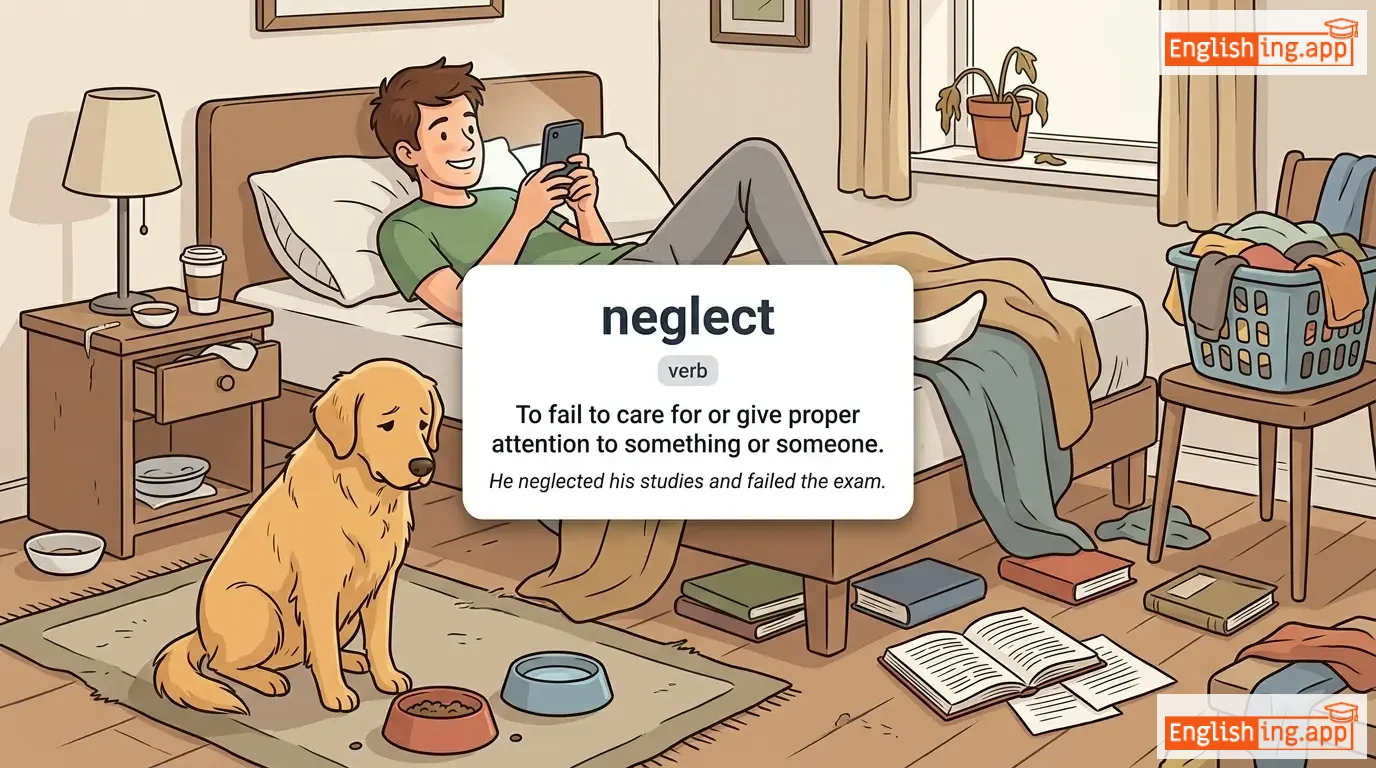
To fail to care for or give proper attention to something or someone.
••••••
|
He neglected his studies and failed the exam.
彼は勉強を怠けて試験に落ちました。
••••••
|
彼は勉強を怠け、試験に落ちました。
Kare wa benkyou o namakete, shiken ni ochimashita.
••••••
|
neglect of duty
義務の怠慢
••••••
|
Failure to fulfill one's responsibilities.
••••••
|
義務の怠慢
Gimu no taimani
••••••
|
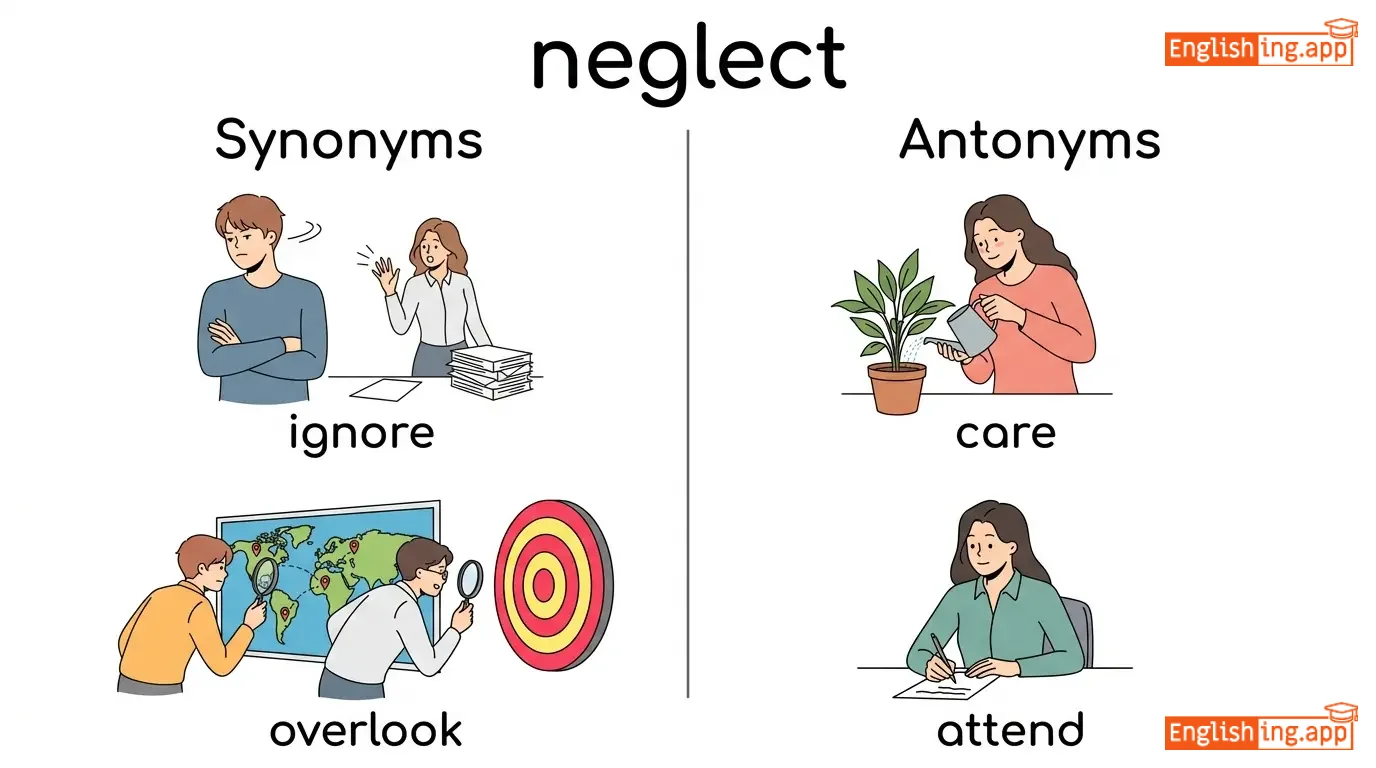
ignore, overlook, disregard, abandon, forget
••••••
|
care, attend, maintain
••••••
|
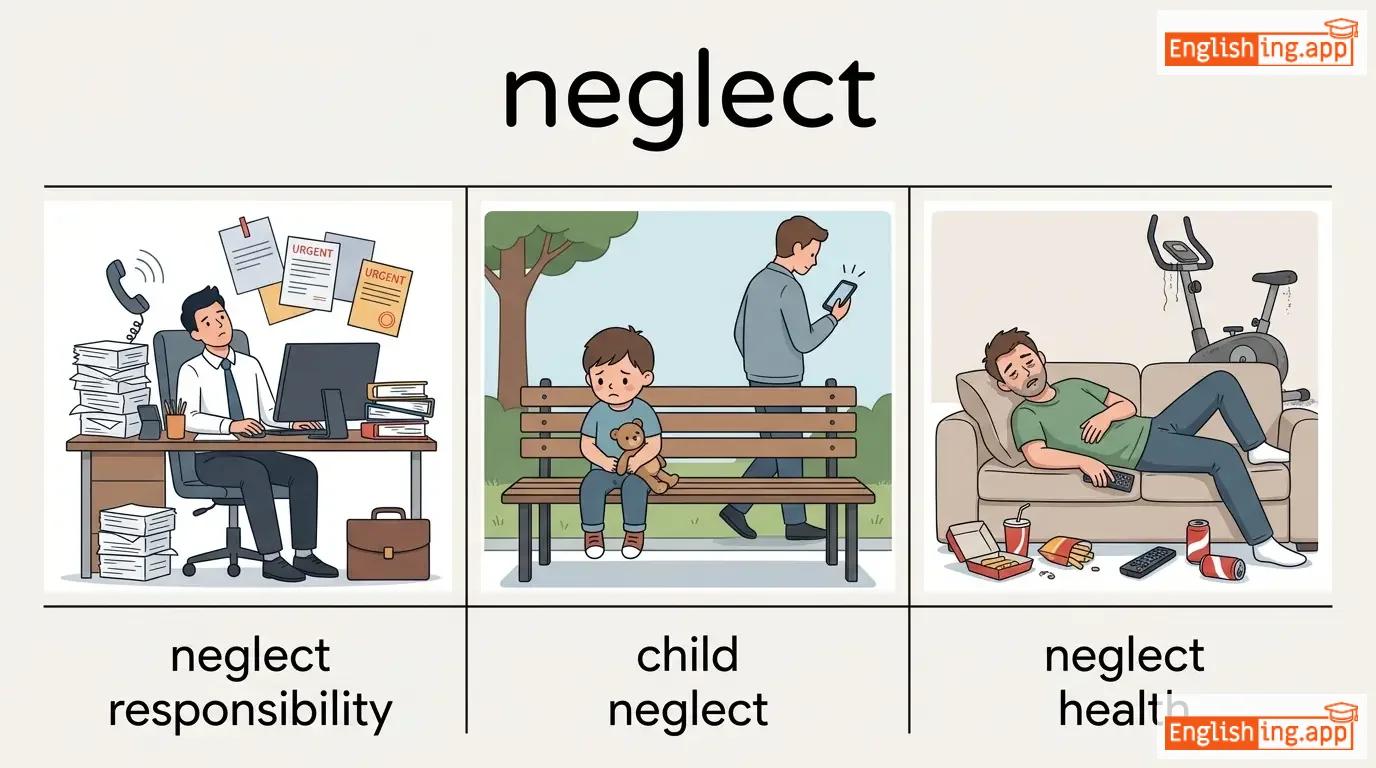
neglect responsibility, child neglect, neglect health, neglect work
••••••
|
Neglect は negative + collect → 何も集めない = 無視。
••••••
|
|
#0
🚫
|
/ˈniːðər/
conjunction
(ナイザー)
••••••
|
- •••••• |
どちらも〜ない
dochira mo nai
••••••
|
- •••••• | - •••••• | - •••••• | - •••••• |
used to connect two negative alternatives
••••••
|
Neither the manager nor the assistant could attend the meeting.
ナイザー ザ マネージャー ノア ザ アシスタント クッド アテンド ザ ミーティング。
••••••
|
マネージャーもアシスタントも会議に出席できなかった。
maneja mo ashisutanto mo kaigi ni shusseki dekinakatta
••••••
|
- •••••• | - •••••• | - •••••• |
nor, not either
••••••
|
either
••••••
|
neither nor, neither of them
••••••
|
Neither in Japanese: どちらも〜ない means neither of the two!
••••••
|
|
#0
😰
|
/ˈnɜːrvəs/
adjective
(ナーヴァス)
••••••
|
- •••••• |
緊張
kinchou
••••••
|
- •••••• | - •••••• | - •••••• | - •••••• |
anxious, worried, or fearful about something
••••••
|
She felt nervous before giving her presentation.
彼女はプレゼンテーションの前に緊張していた。
••••••
|
彼女はプレゼンテーションの前に緊張していた。
Kanojo wa purezentēshon no mae ni kinchou shite ita.
••••••
|
nervous wreck
神経質な壊滅的
••••••
|
a person who is very anxious, worried, or stressed
••••••
|
非常に緊張している人
hijou ni kinchou shite iru hito
••••••
|
anxious, uneasy, tense, restless, jittery
••••••
|
calm, relaxed, confident
••••••
|
nervous about, nervous smile, nervous feeling, nervous breakdown
••••••
|
試験中、みんな NERVOUS (緊張)
••••••
|
|
#0
⚖️
|
/ˈnjuːtrəl/
adjective
(ニュートラル)
••••••
|
|
中立
chūritsu
••••••
|
- •••••• | - •••••• | - •••••• | - •••••• |
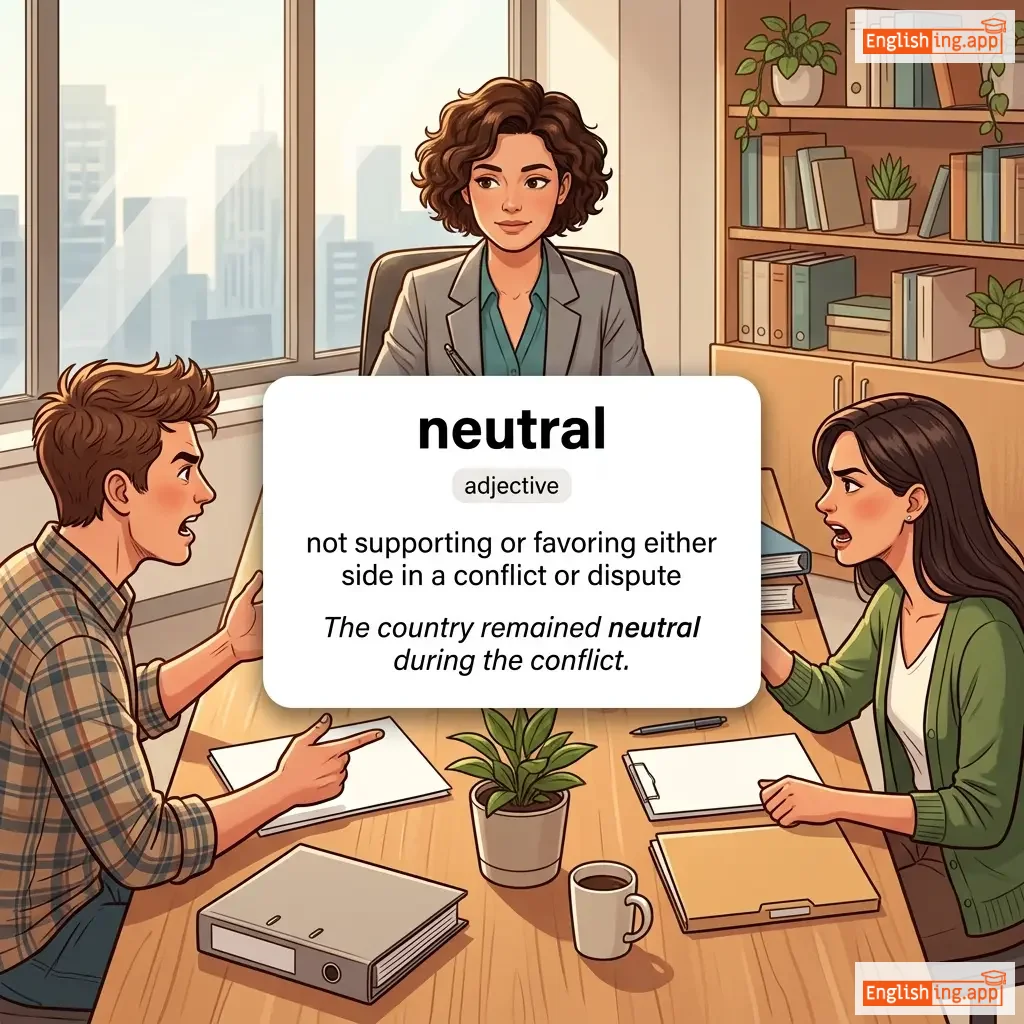
not supporting or favoring either side in a conflict or dispute
••••••
|
The country remained neutral during the conflict. |
その国は対立の間中立を保った。
Sono kuni wa tairitsu no aida chūritsu o tamotta.
••••••
|
neutral stance |
a position of not taking sides
••••••
|
中立の立場
chūritsu no tachiba
••••••
|
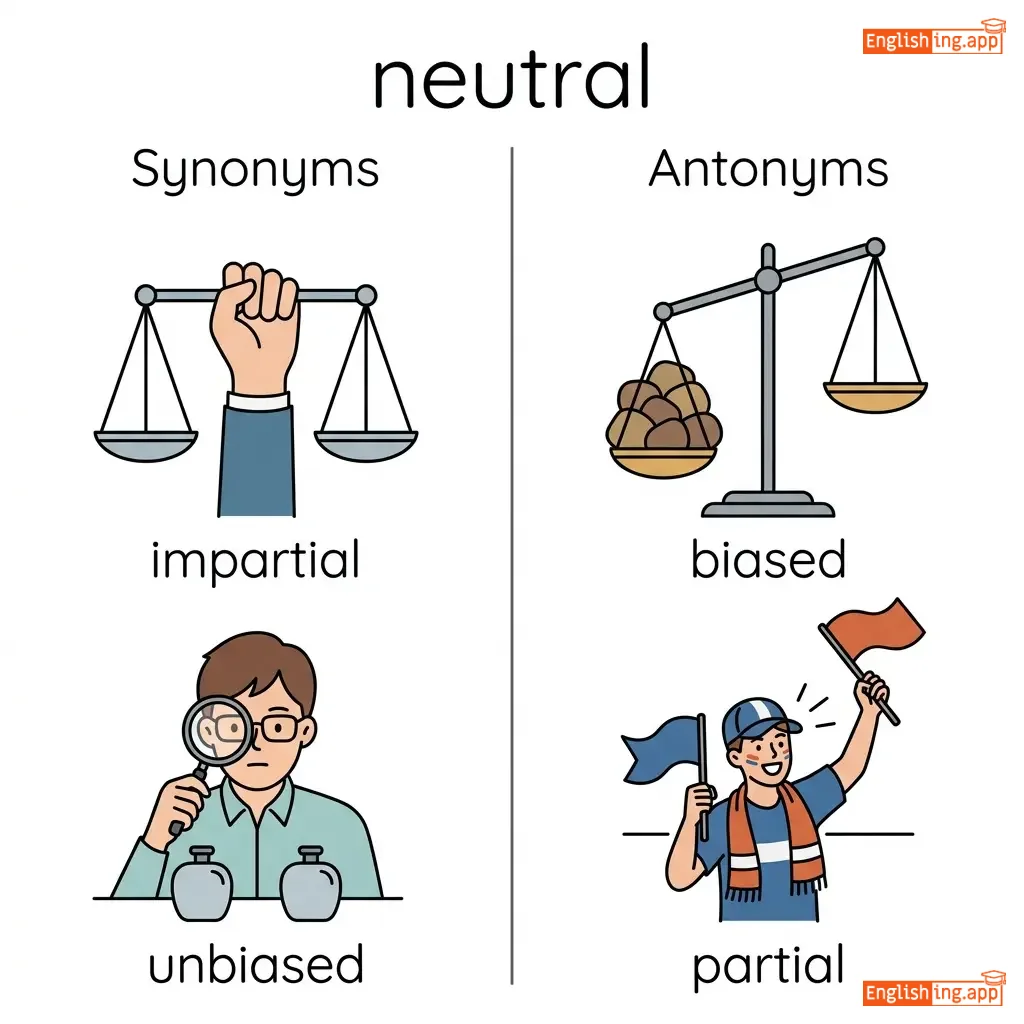
impartial, unbiased, nonpartisan, detached, indifferent
••••••
|
biased, partial, partisan
••••••
|
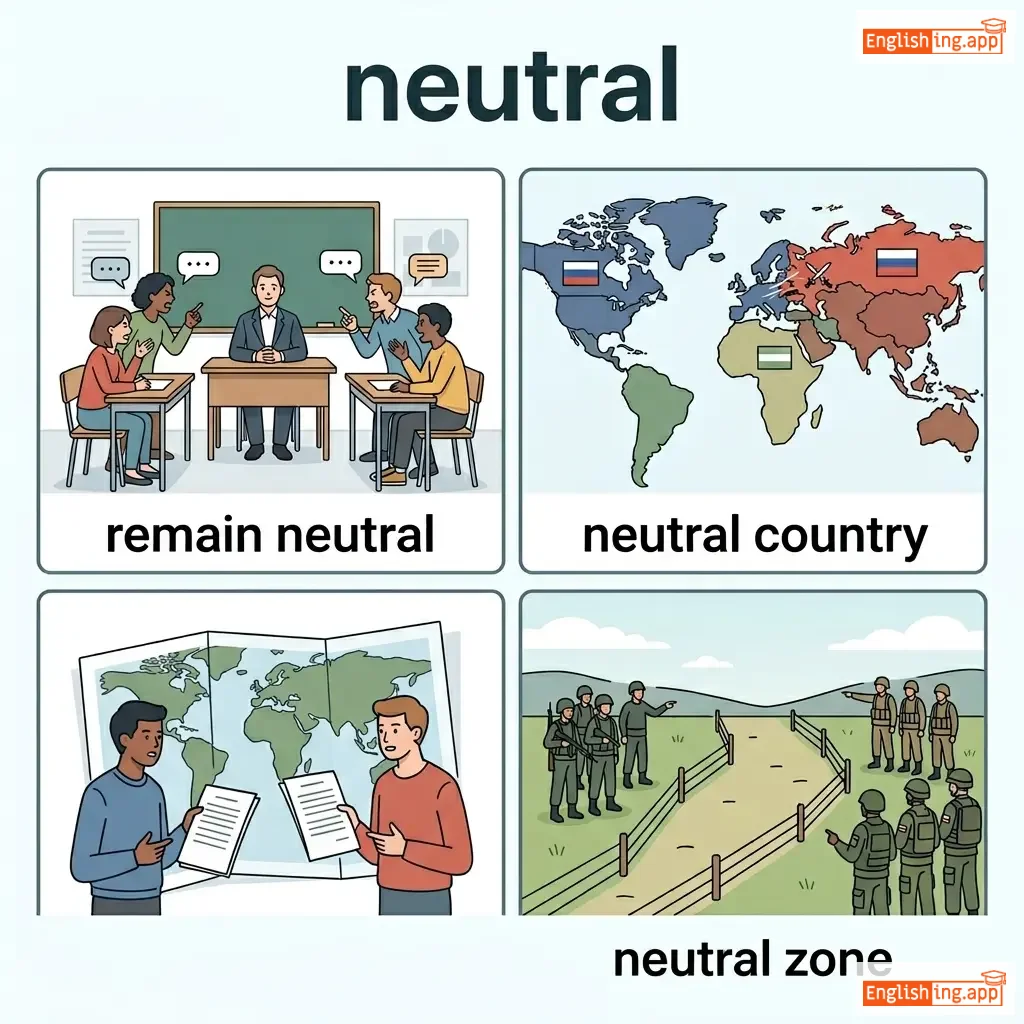
remain neutral, neutral country, neutral zone, neutral position
••••••
|
Neutralは '中立' の意味です — 争いごとの中で誰も偏らず、全員が中立の立場を取ります。
••••••
|
|
#0
⭐
|
/ˈnoʊtəbl/
adjective
(ノータブル)
••••••
|
- •••••• |
顕著な
kenchona
••••••
|
- •••••• | - •••••• | - •••••• | - •••••• |
worthy of attention or notice; remarkable
••••••
|
She made a notable contribution to the project.
彼女はプロジェクトに顕著な貢献をしました。
••••••
|
彼女はプロジェクトに顕著な貢献をしました。
Kanojo wa purojekuto ni kenchona kouken o shimashita.
••••••
|
- •••••• | - •••••• | - •••••• |
remarkable, significant, outstanding, important, noteworthy
••••••
|
ordinary, insignificant, unremarkable
••••••
|
notable achievement, notable figure, notable difference, notable contribution
••••••
|
Notable は日本語で顕著な、注目に値することを意味します。
••••••
|
|
#0
❌
|
/ˈnʌθɪŋ/
pronoun
(ナッシング)
••••••
|
- •••••• |
何もない
nanimo nai
••••••
|
- •••••• | - •••••• | - •••••• | - •••••• |
not anything; no thing
••••••
|
She has nothing to worry about. |
彼女は心配することは何もない。
Kanojo wa shinpai suru koto wa nanimo nai.
••••••
|
- •••••• | - •••••• | - •••••• |
zero, nil, nought
••••••
|
everything
••••••
|
nothing to do, nothing at all, nothing left
••••••
|
Nothing (何もない) – Imagine having nothing left to worry about!
••••••
|
|
#0
🚫
|
/ˈnoʊˌwɛr/
adverb
(ノウウェア)
••••••
|
- •••••• |
どこにも
doko nimo
••••••
|
- •••••• | - •••••• | - •••••• | - •••••• |
in or to no place; not anywhere
••••••
|
The missing keys were nowhere to be found.
失われた鍵はどこにも見つかりませんでした。
••••••
|
失われた鍵はどこにも見つかりませんでした。
Ushinawareta kagi wa doko ni mo mitsukarimasen deshita.
••••••
|
going nowhere
どこにも行っていない
••••••
|
making no progress or achieving nothing
••••••
|
進展なし
shinten nashi
••••••
|
not anywhere, absent, missing, lost
••••••
|
everywhere, somewhere
••••••
|
nowhere else, lead nowhere, from nowhere, go nowhere
••••••
|
ここにない, あそこにない, どこにもない (nowhere)
••••••
|
|
#0
☢️
|
/ˈnuːkliər/
adjective
(ニュークリア)
••••••
|
- •••••• |
原子力
genshiryoku
••••••
|
- •••••• | - •••••• | - •••••• | - •••••• |
relating to the nucleus of an atom or to nuclear energy
••••••
|
The country is developing nuclear energy. |
その国は原子力エネルギーを開発しています。
Sono kuni wa genshiryoku enerugī o kaihatsu shiteimasu.
••••••
|
- •••••• | - •••••• | - •••••• |
atomic, radioactive
••••••
|
non-nuclear
••••••
|
nuclear energy, nuclear power, nuclear weapon
••••••
|
Nuclear = New Clear! Imagine new, clear energy coming from atoms!
••••••
|
|
#0
👩⚕️
|
/ˈnɜːrsɪŋ/
noun
(ナーシング)
••••••
|
- •••••• |
看護
kango
••••••
|
- •••••• | - •••••• | - •••••• | - •••••• |
the profession or practice of caring for the sick or injured
••••••
|
She is studying nursing to become a healthcare professional.
彼女は医療専門職になるために看護学を学んでいます。
••••••
|
彼女は医療専門職になるために看護学を学んでいます。
Kanojo wa iryou senmon-shoku ni naru tame ni kangogaku o manandeimasu.
••••••
|
- •••••• | - •••••• | - •••••• |
healthcare, caregiving, medical care
••••••
|
neglect, abandonment
••••••
|
nursing home, nursing career, nursing profession
••••••
|
看護 (kango) は病気の人を助けるための職業です。
••••••
|
|
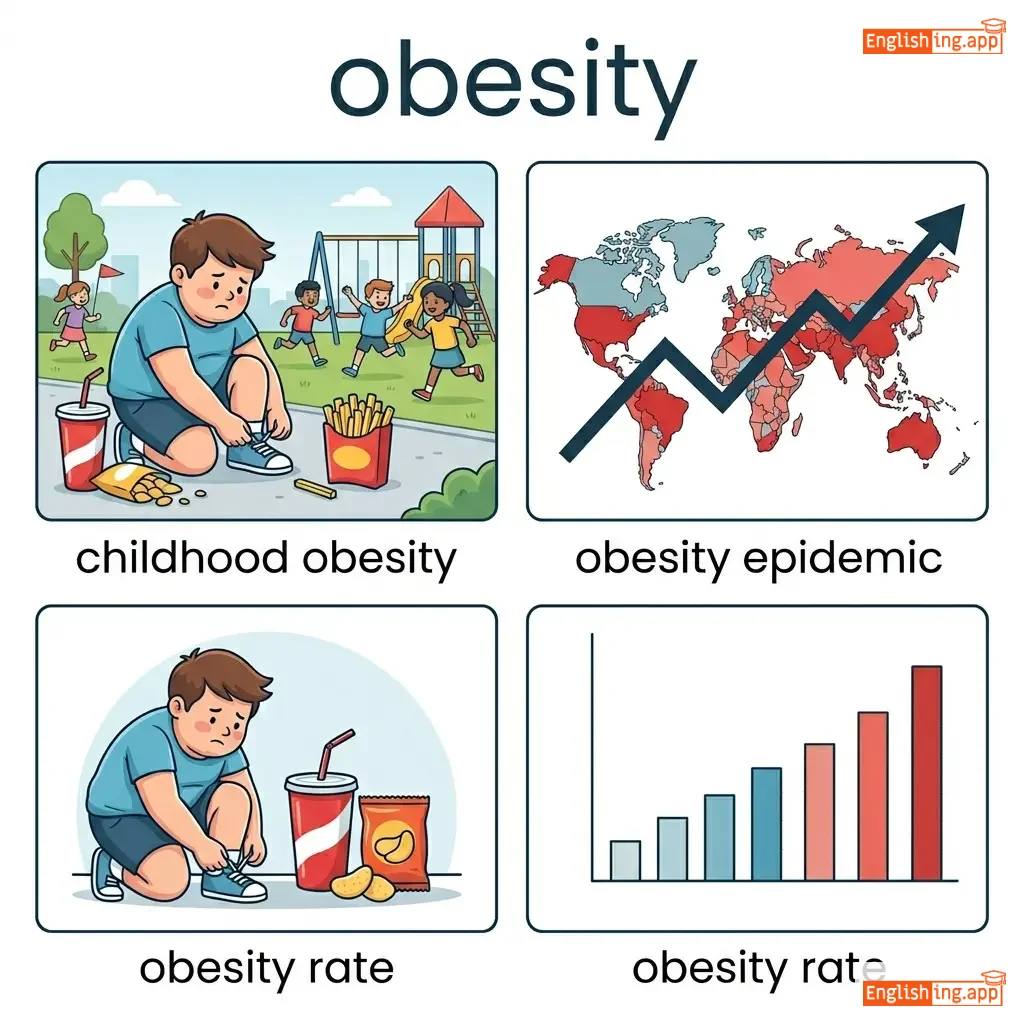
#0
🍔
|
/oʊˈbiːsəti/
noun
(オビシティ)
••••••
|
|
肥満
himan
••••••
|
- •••••• | - •••••• | - •••••• | - •••••• |
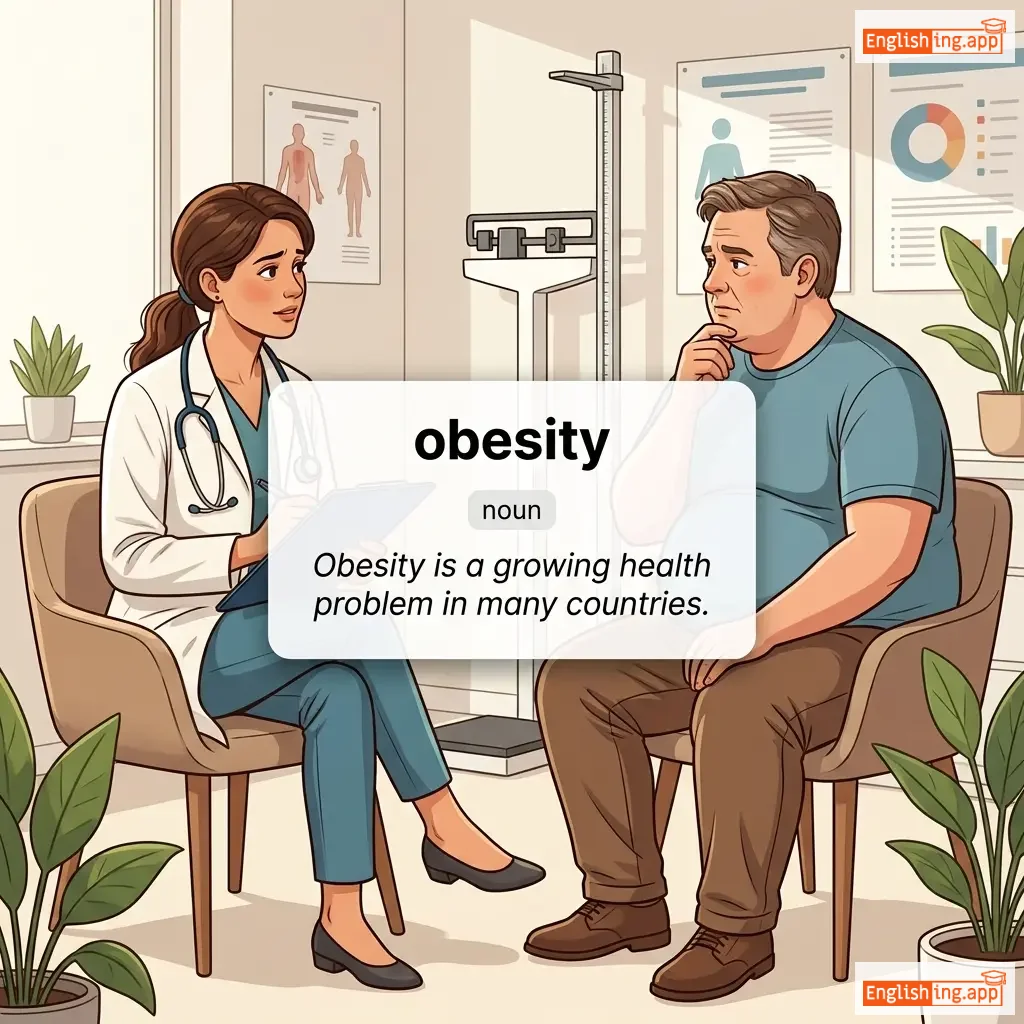
The condition of being very overweight, especially to a degree that it is harmful to health.
••••••
|
Obesity is a growing health problem in many countries. |
肥満は多くの国々で増加している健康問題です。
Himan wa ooku no kuniguni de zouka shiteiru kenkou mondai desu.
••••••
|
- •••••• | - •••••• | - •••••• |
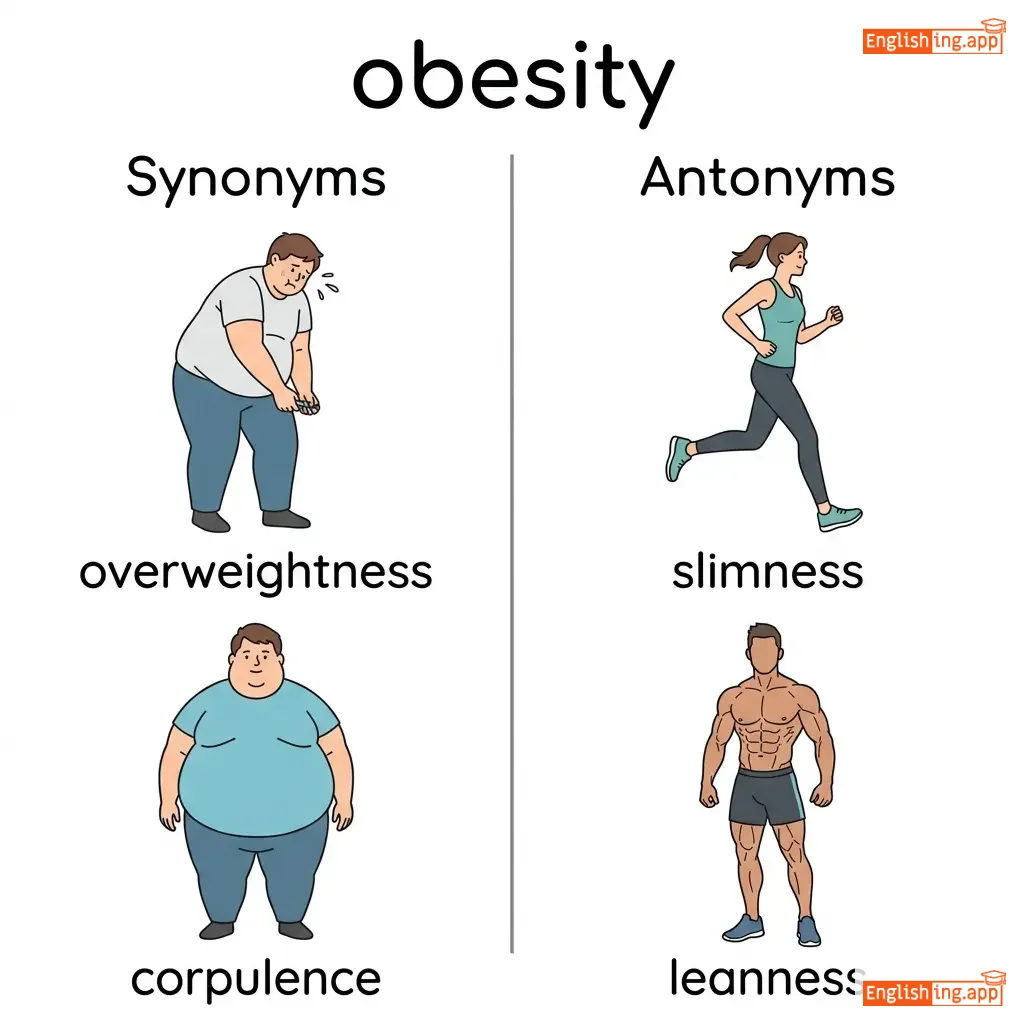
overweightness, corpulence, fatness, heaviness
••••••
|
slimness, leanness
••••••
|
childhood obesity, obesity epidemic, obesity rate, obesity problem
••••••
|
Obesity = Obese + ity → Obeseは肥満を意味します。
••••••
|
|
#0
👀
|
/ˈɒb.vi.əs/
adjective
(オブヴィアス)
••••••
|
- •••••• |
明白
meihaku
••••••
|
- •••••• | - •••••• | - •••••• | - •••••• |
easily perceived or understood; clear and apparent
••••••
|
It was obvious that she was upset after the meeting. |
会議後、彼女が動揺していることは明白でした。
Kaigi go, kanojo ga douyou shiteiru koto wa meihaku deshita.
••••••
|
the obvious choice |
something that is the most evident or suitable option
••••••
|
明白な選択
meihaku na sentaku
••••••
|
clear, evident, apparent, noticeable, plain
••••••
|
hidden, unclear, obscure
••••••
|
obvious reason, obvious fact, obvious mistake, obvious difference
••••••
|
明白 = 明らか、簡単にわかる。
••••••
|
|
#0
⚖️
|
/əˈfɛns/
noun
(オフェンス)
••••••
|
- •••••• |
犯罪
hanzai
••••••
|
- •••••• | - •••••• | - •••••• | - •••••• |
an illegal act; a crime
••••••
|
The offense was committed in broad daylight.
その罪は昼間に犯されました。
••••••
|
その罪は昼間に犯されました。
Sono zai wa hiruma ni okasaremashita.
••••••
|
- •••••• | - •••••• | - •••••• |
crime, wrongdoing, transgression, violation
••••••
|
defense, protection
••••••
|
criminal offense, serious offense, minor offense
••••••
|
Ofense は '犯罪' として、日本では違法行為とされます。
••••••
|
|
#0
🔓
|
/ˈoʊpənɪŋ/
noun
(オープニング)
••••••
|
- •••••• |
開店
kaiten
••••••
|
- •••••• | - •••••• | - •••••• | - •••••• |
an act or instance of beginning something
••••••
|
The opening of the new store was a huge success.
新しい店のオープニングは大成功でした。
••••••
|
新しい店のオープニングは大成功でした。
Atarashī mise no ōpuningu wa daiseikō deshita.
••••••
|
- •••••• | - •••••• | - •••••• |
start, beginning, initiation, launch
••••••
|
closing, ending
••••••
|
grand opening, store opening, job opening, opening ceremony
••••••
|
何かが新しく始まるとき、それは開店です。 - When something starts new, it’s an opening.
••••••
|
|
#0
👁️
|
/ˈɒptɪkəl/
adjective
(オプティカル)
••••••
|
- •••••• |
光学的
kōgakuteki
••••••
|
- •••••• | - •••••• | - •••••• | - •••••• |
related to or used in seeing or sight
••••••
|
The optical illusion fooled everyone at the exhibition. |
その光学的錯覚は展示会で皆を騙した。
Sono kōgakuteki sakaku wa tenjikai de mina o damashita.
••••••
|
- •••••• | - •••••• | - •••••• |
visual, sight, eye-related, optical
••••••
|
non-visual, invisible
••••••
|
optical illusion, optical lens, optical device
••••••
|
光学的は目や視覚に関連している意味で、光学メガネのようなものです。
••••••
|
|
#0
🔭
|
/ˈaʊtlʊk/
noun
(autorukku)
••••••
|
- •••••• |
展望, 予測
tenbō, yosoku
••••••
|
- •••••• | - •••••• | - •••••• | - •••••• |
a person's general attitude or view; a forecast or prospect
••••••
|
The economic outlook for the year is positive. |
今年の経済の展望は前向きです。
Kotoshi no keizai no tenbō wa maemuki desu.
••••••
|
bright outlook |
a positive or hopeful perspective about the future
••••••
|
明るい展望
akarui tenbō
••••••
|
perspective, view, forecast, attitude, expectation
••••••
|
pessimism, despair
••••••
|
positive outlook, global outlook, financial outlook, outlook on life
••••••
|
Outlookは未来を見つめること、ポジティブな展望です。
••••••
|
|
#0
😡
|
/ˈaʊtreɪdʒ/
noun/verb
(アウトレイジ)
••••••
|
- •••••• |
憤慨
fukai
••••••
|
outraged
アウトレイジド
••••••
|
outraged
アウトレイジド
••••••
|
outrages
アウトレイジズ
••••••
|
outraging
アウトレイジング
••••••
|
A strong feeling of anger and shock; to arouse anger or shock.
••••••
|
The unfair decision caused public outrage.
不公平な決定が公共の憤慨を引き起こしました。
••••••
|
不公平な決定が公共の憤慨を引き起こしました。
Fukōhei na kettei ga kōkyō no fukai o hikiokoshimashita.
••••••
|
cry of outrage
憤慨の叫び
••••••
|
A loud protest or complaint expressing anger or shock.
••••••
|
憤慨の叫び
Fukai no sakebi
••••••
|
indignation, fury, resentment, anger, shock
••••••
|
calm, contentment, satisfaction
••••••
|
public outrage, express outrage, cause outrage, cry of outrage
••••••
|
憤慨の反応 — Outrage.
••••••
|
|
#0
🌍
|
/ˈoʊvərɔːl/
adjective, adverb
(オーバーオール)
••••••
|
- •••••• |
全体的に
zentai-teki ni
••••••
|
- •••••• | - •••••• | - •••••• | - •••••• |
in general or as a whole
••••••
|
Overall, the project has been successful. |
全体的に、プロジェクトは成功しました。
Zentai-teki ni, purojekuto wa seikou shimashita.
••••••
|
- •••••• | - •••••• | - •••••• |
generally, broadly, in total
••••••
|
specifically, individually
••••••
|
overall view, overall performance, overall result
••••••
|
Overallは全体的に - 完全な成功
••••••
|
|
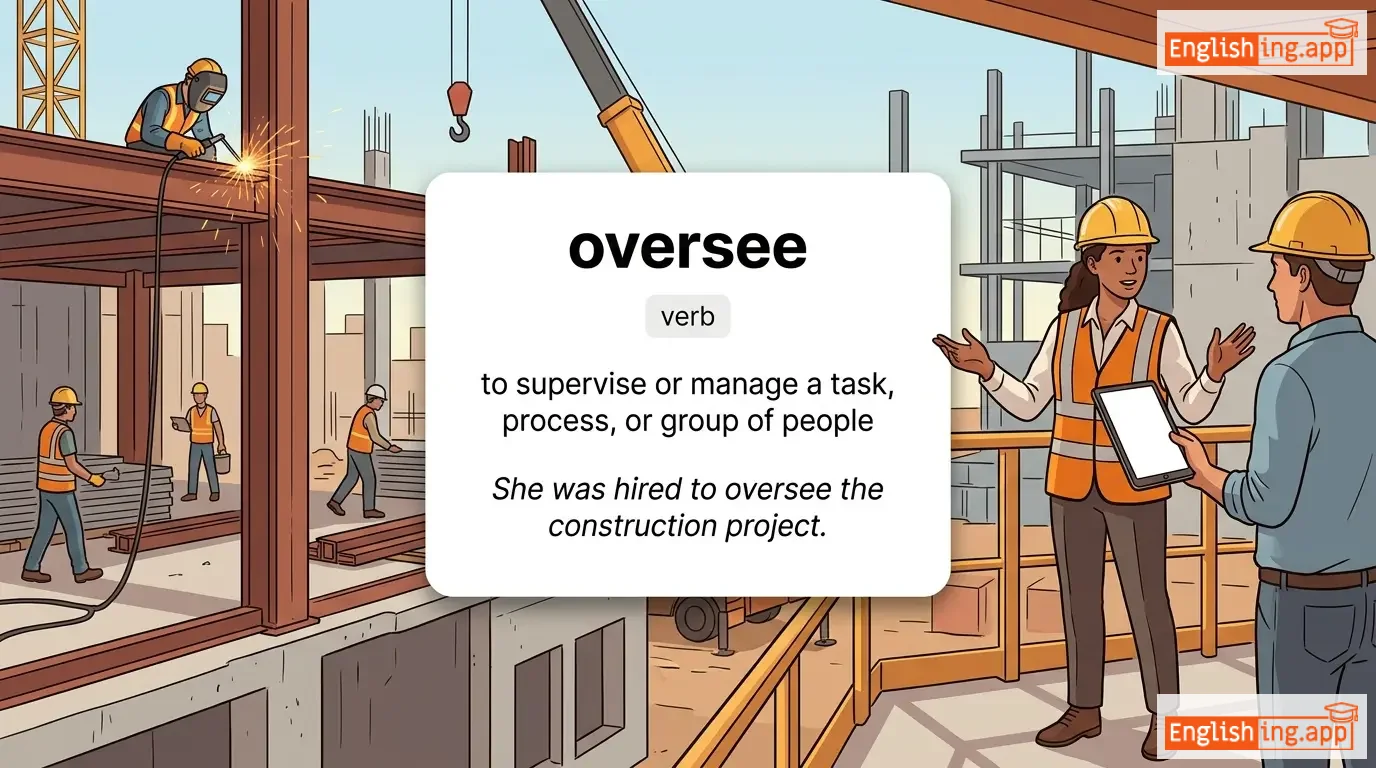
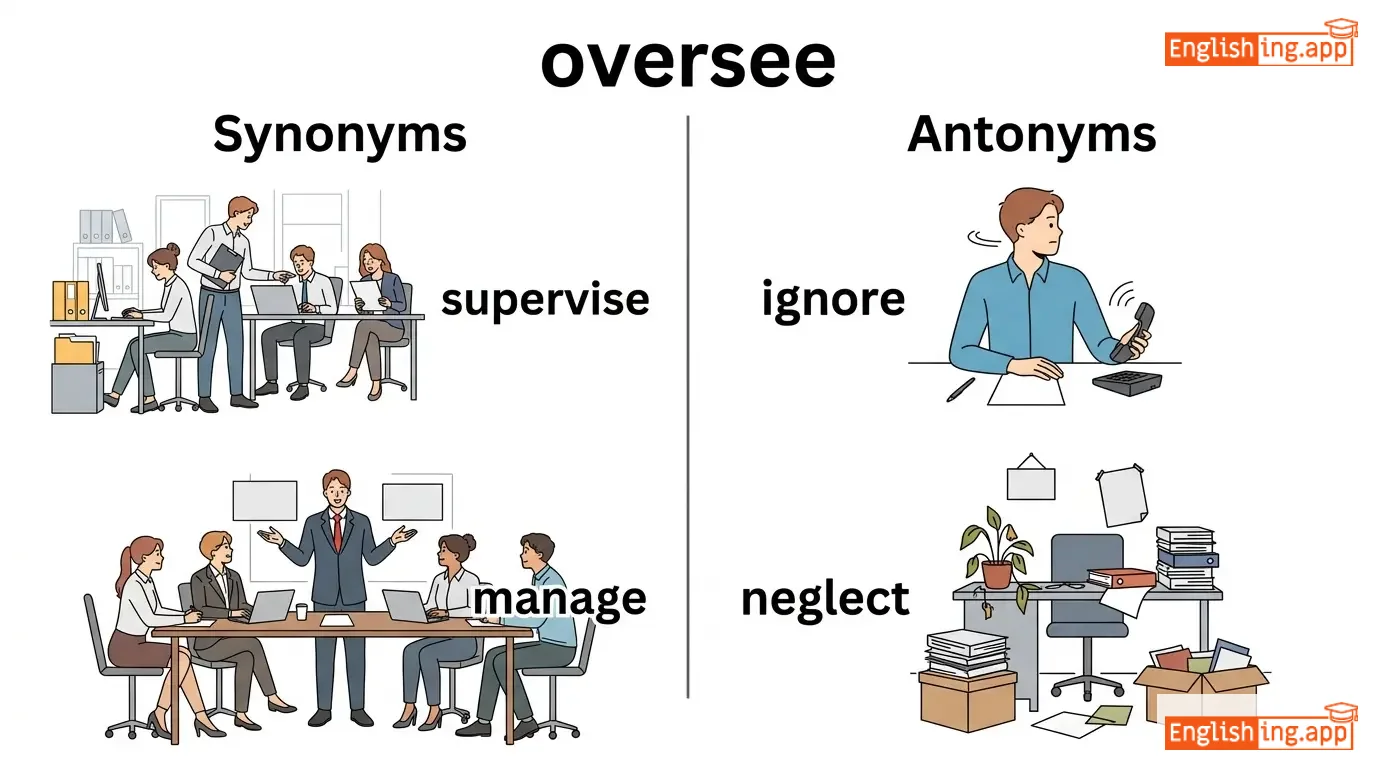
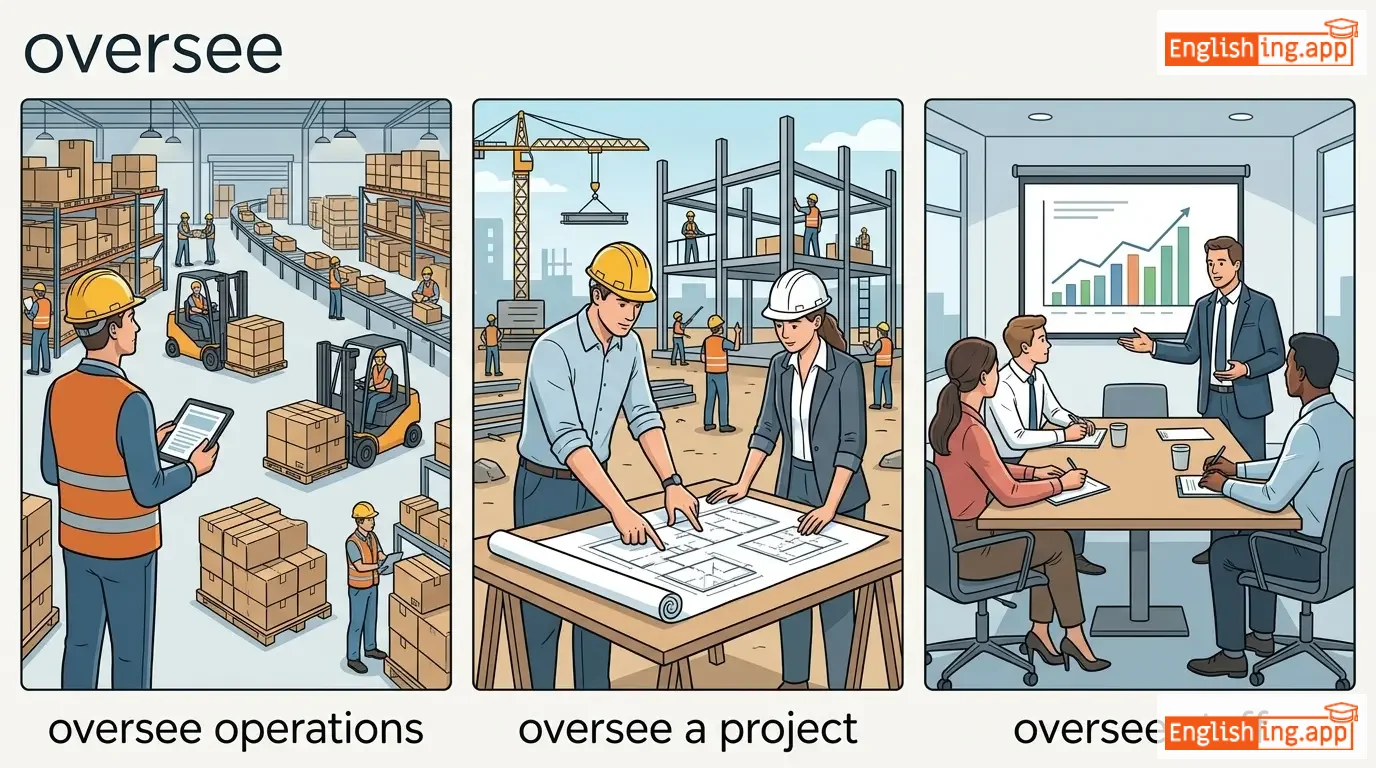
#0
👁️
|
/ˌoʊvərˈsiː/
verb
(オーバーシー)
••••••
|
|
監督する
kantoku suru
••••••
|
oversaw
オーバーソー
••••••
|
overseen
オーバーシーン
••••••
|
oversees
オーバーシーズ
••••••
|
overseeing
オーバーシーイング
••••••
|
to supervise or watch over something; to manage and direct
••••••
|
The manager will oversee the entire construction project.
マネージャーは全体の建設プロジェクトを監督します。
••••••
|
マネージャーは全体の建設プロジェクトを監督します。
Manējā wa zentai no Kensetsu purojekuto o kantoku shimasu.
••••••
|
- •••••• | - •••••• | - •••••• |
supervise, monitor, manage, direct
••••••
|
neglect, ignore, abandon, overlook
••••••
|
oversee operations, oversee projects, oversee carefully, directly oversee, oversee the work
••••••
|
Japanese '監督する' (kantoku suru) directly connects to overseeing or supervising.
••••••
|
|
#0
😖
|
/ˈpeɪn.fəl/
adjective
(ペインフル)
••••••
|
- •••••• |
痛みを伴う
itami wo tomonau
••••••
|
- •••••• | - •••••• | - •••••• | - •••••• |
causing physical or emotional pain
••••••
|
The injury was very painful, and he needed immediate care. |
その怪我は非常に痛みを伴い、すぐに治療が必要だった。
Sono kega wa hijō ni itami wo tomonai, sugu ni chiryō ga hitsuyō datta.
••••••
|
- •••••• | - •••••• | - •••••• |
aching, sore, excruciating, distressing
••••••
|
comfortable, painless, soothing
••••••
|
painful experience, painful injury, painful memories
••••••
|
Painful - ペインフル, 痛みが広がるように思い出して。
••••••
|
Vocabulary Quiz
Test your vocabulary by matching words with their translations or meanings.
Login to take the quiz
Comments (0)
Share your thoughts and join the discussion.
Join the discussion by logging in
Login to CommentNo comments yet
Be the first to share your thoughts!