

保護区の声
Voices in the Conservation Zone
会議で、環境保護活動家たちは早めに皆に警告しました。 彼らは言いました、「毎日反射ベストを着用してください。」 有害な雑草はコミュニティガーデンから取り除かれました。 水の井戸の周りに意識啓発のポスターが掲示されました。 西の川岸にセンサーが設置されました。 「では、実際に何をすべきでしょうか?」と誰かが尋ねました。 コーチは言いました、「まず、ネガティブな考えを振り払ってください。」 「そして、私たちには誰がいますか?」と別の人が尋ねました。 広々とした開けたフィールドにステージが建設されました。 恥ずかしがり屋の職人が新鮮なぶどうのワインジュースを寄付しました。 ドローンの小さな翼が川からデータをストリーミングしていました。 生物多様性チームは、川と協力しているパートナー団体のリストを作成しました。 物語では、どのように一匹の孤独な狼が水辺で避難所を見つけたかが描かれていました。 雨の後、虫が泥から表面に現れました。 ボランティアたちはボートにロープを巻き付けました。 子供たちはコミュニティの庭にデザインを描きました。 「はい、私たちはそれをやることができます」とリナは笑いました。 彼らは一緒に叫んでスローガンを言いました。 「この川はあなたの責任でもあります」と年配の教師が言いました。 最後に、皆が保護区で役割を分担しました。
翻訳
過去
過去分詞
三人称単数
動名詞
意味
例文
例文の翻訳
同義語
対義語
コロケーション
ニーモニック
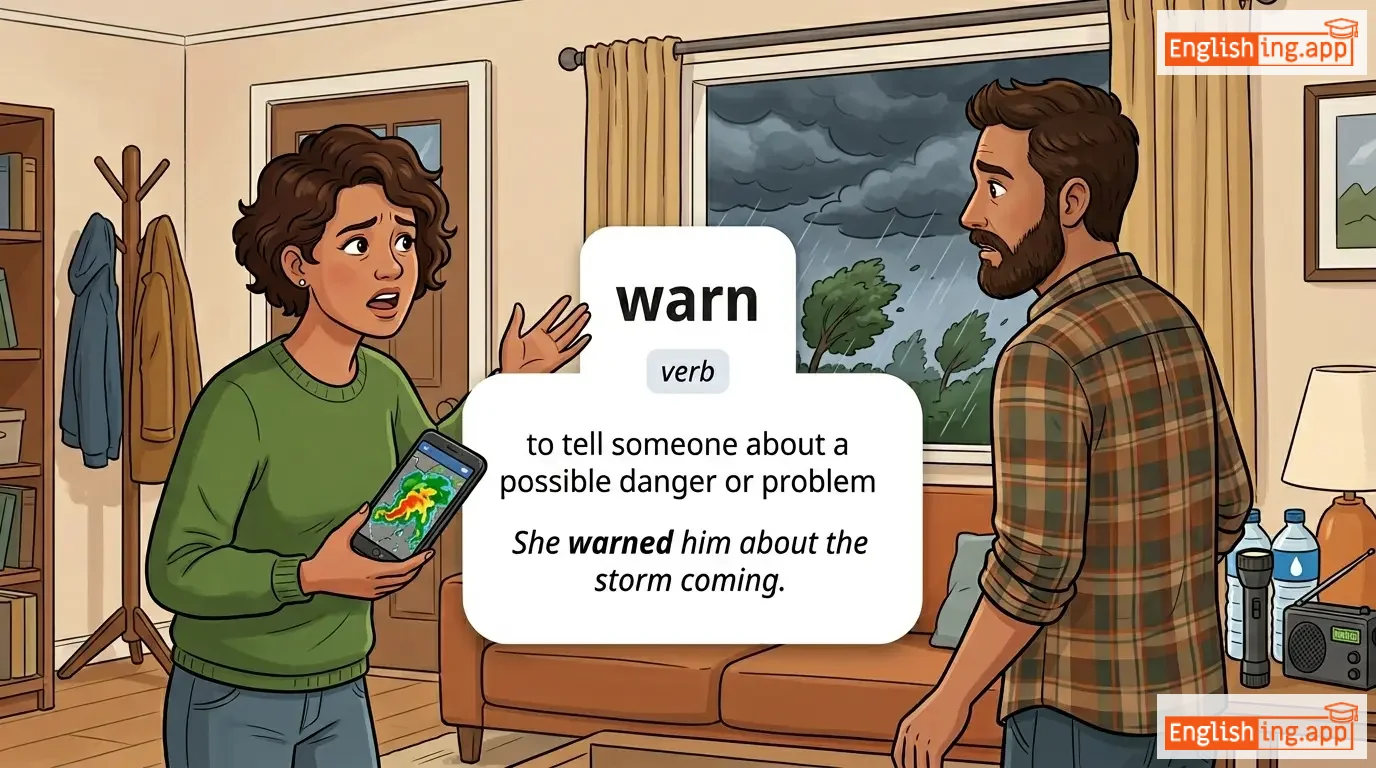
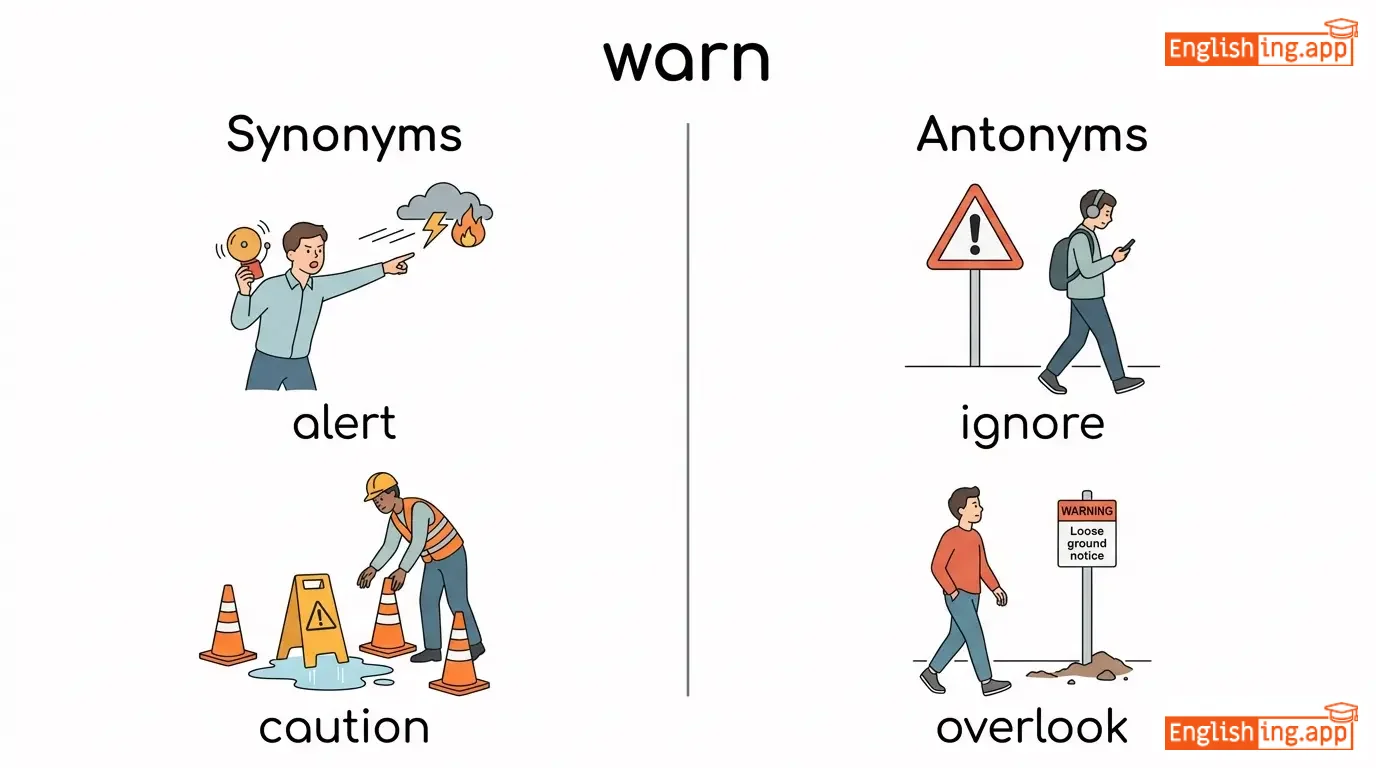
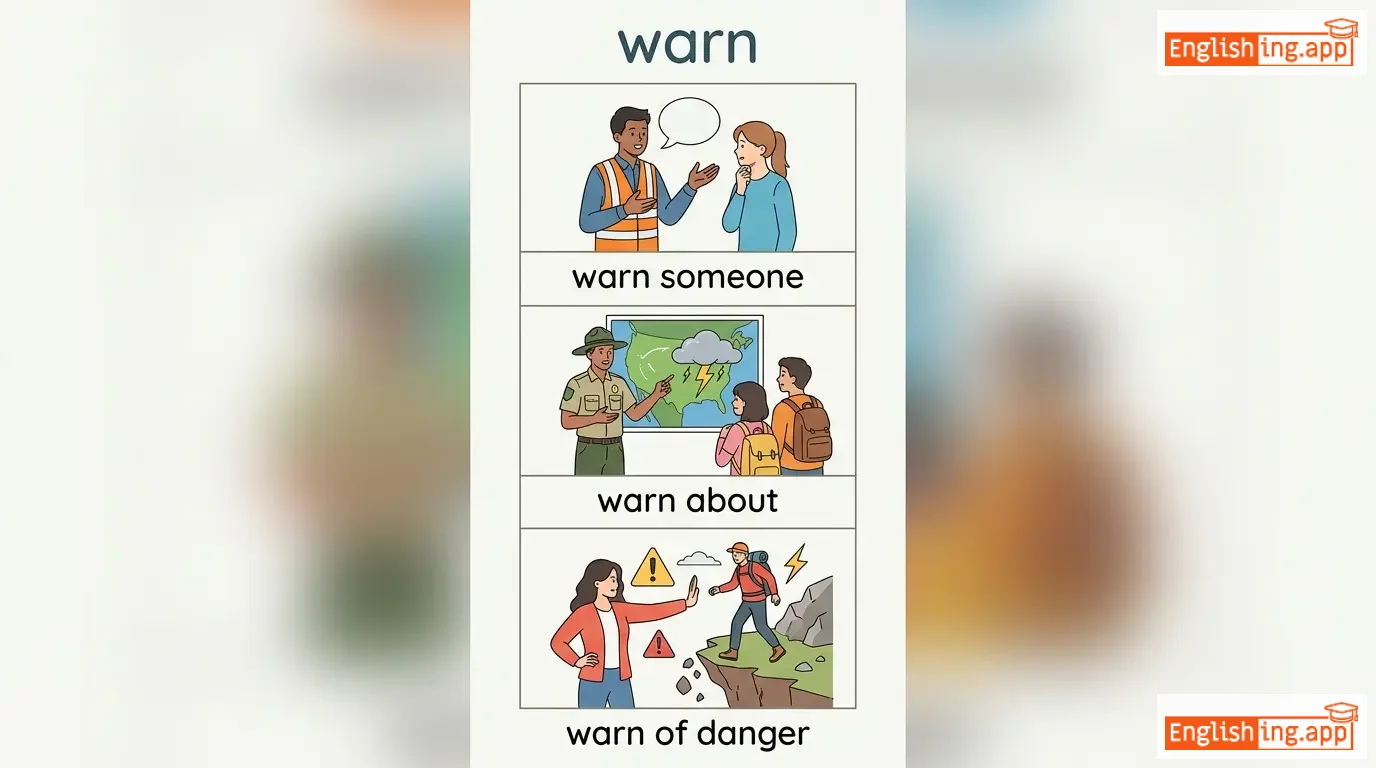
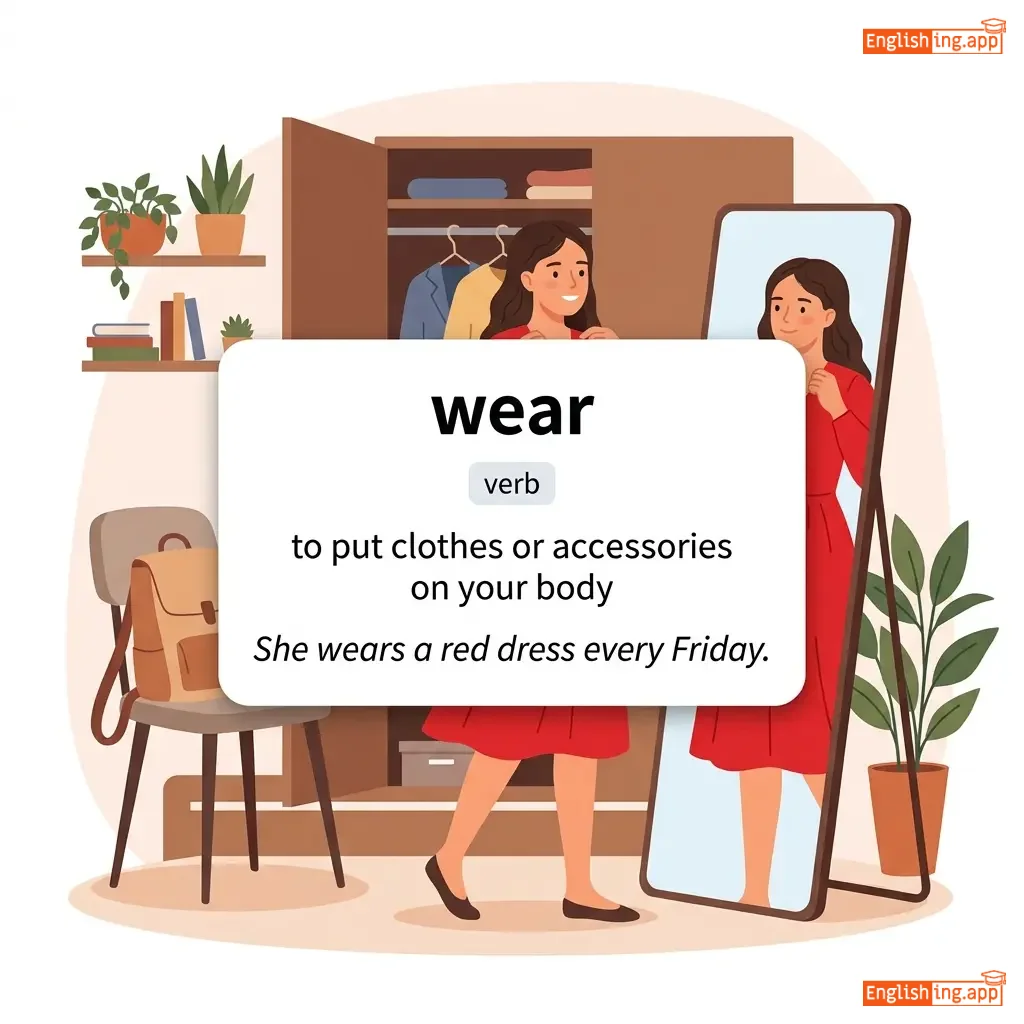
Swipe left or right, or use the buttons. Tap image to zoom.
例文の翻訳
単語
Voices in the Conservation ZoneVoices in the Conservation Zone - マスクトグル
|
絵文字
|
単語 | Images | 翻訳 | 過去 | 過去分詞 | 三人称単数 | 動名詞 | 意味 | 例文 | 例文の翻訳 | 表現例 | 表現例の意味 | 表現例の翻訳 | 同義語 | 対義語 | コロケーション | ニーモニック |
|---|---|---|---|---|---|---|---|---|---|---|---|---|---|---|---|---|---|
|
#0
⚠️
|
/wɔːrn/
verb
(ワーン)
••••••
|
|
警告する
keikoku suru
••••••
|
warned
ワーンド
••••••
|
warned
ワーンド
••••••
|
warns
ワーンズ
••••••
|
warning
ワーニング
••••••
|
to alert about danger; to give notice of risk
••••••
|
The weather service warns of heavy rain tonight.
気象サービスは今夜の大雨を警告しています。
••••••
|
気象サービスは今夜の大雨を警告しています。
Kishou saabisu wa konya no oame o keikoku shiteimasu.
••••••
|
- •••••• | - •••••• | - •••••• |
alert, caution, advise, notify, inform
••••••
|
mislead, deceive, ignore, conceal
••••••
|
warn against, warn about, warn of danger, warn someone, early warning
••••••
|
No •••••• |
|
#0
👕
|
/wɛr/
verb
(ウェア)
••••••
|
|
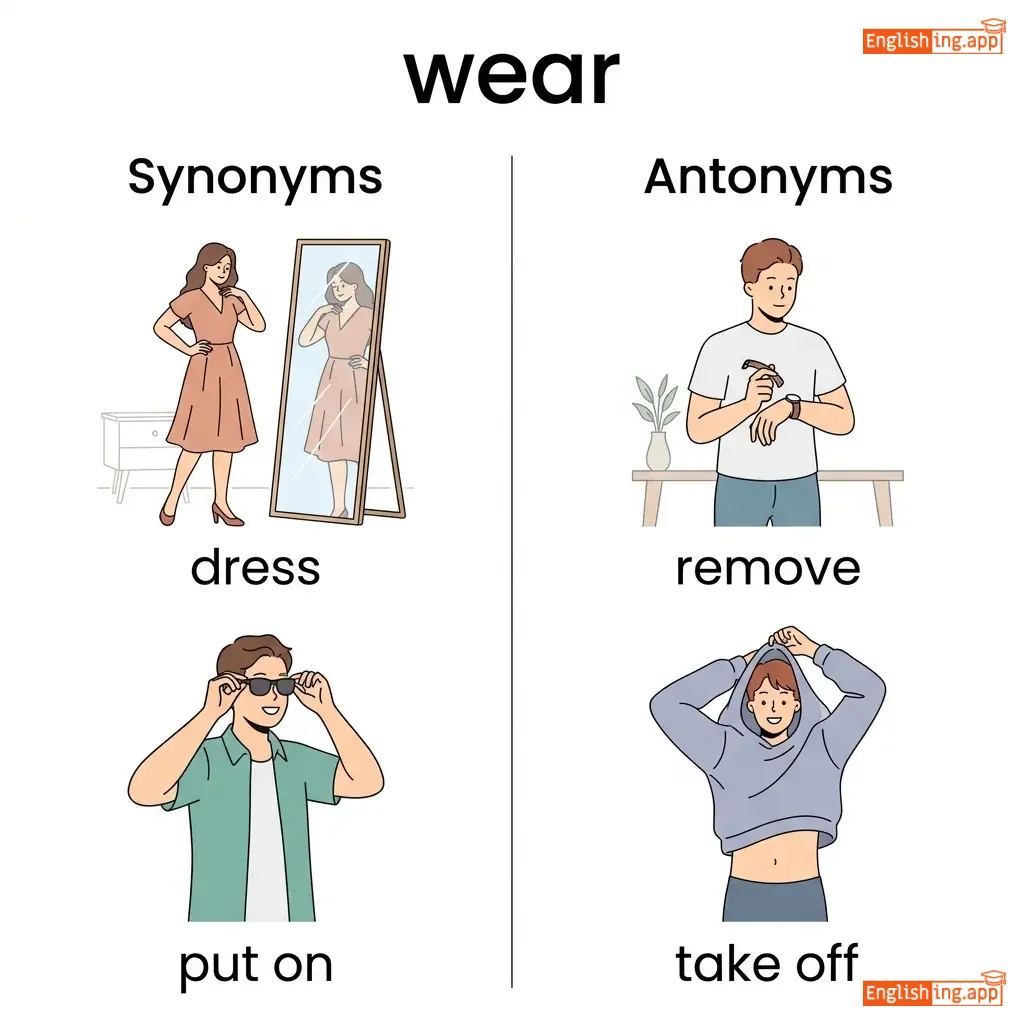
着る
kiru
••••••
|
wore
ウォー
••••••
|
worn
ウォーン
••••••
|
wears
ウェアズ
••••••
|
wearing
ウェアリング
••••••
|
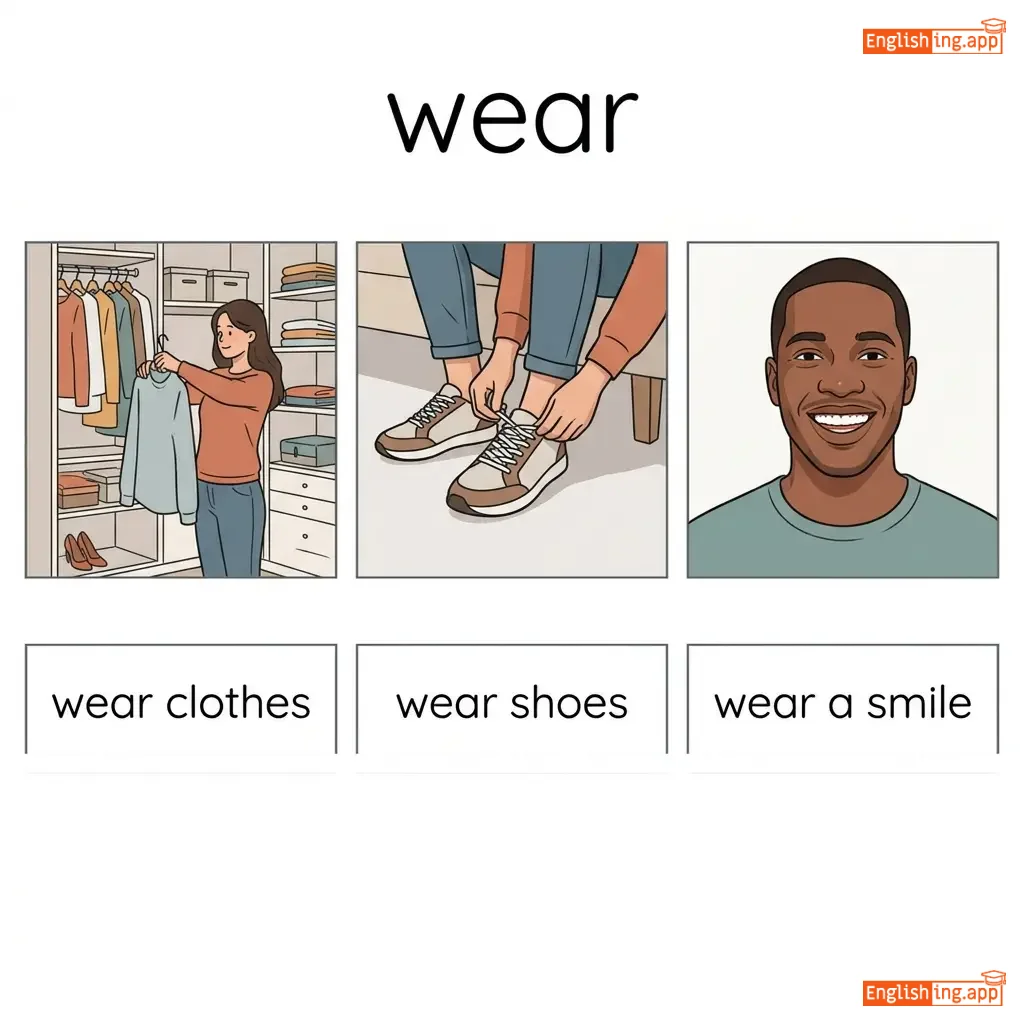
to have clothing or accessories on one's body
••••••
|
She likes to wear bright colors.
シー ライクス トゥ ウェア ブライト カラーズ
••••••
|
彼女は明るい色を着るのが好きです。
Kanojo wa akarui iro wo kiru no ga suki desu.
••••••
|
- •••••• | - •••••• | - •••••• |
don, put on, sport, carry
••••••
|
remove, take off, undress
••••••
|
wear clothes, wear jewelry, wear shoes, wear uniform, wear makeup, wear expression
••••••
|
No •••••• |
|
#0
🌿
|
/wiːd/
noun, verb
(ウィード)
••••••
|
|
雑草
zassou
••••••
|
weeded
ウィーデッド
••••••
|
weeded
ウィーデッド
••••••
|
weeds
ウィーズ
••••••
|
weeding
ウィーディング
••••••
|
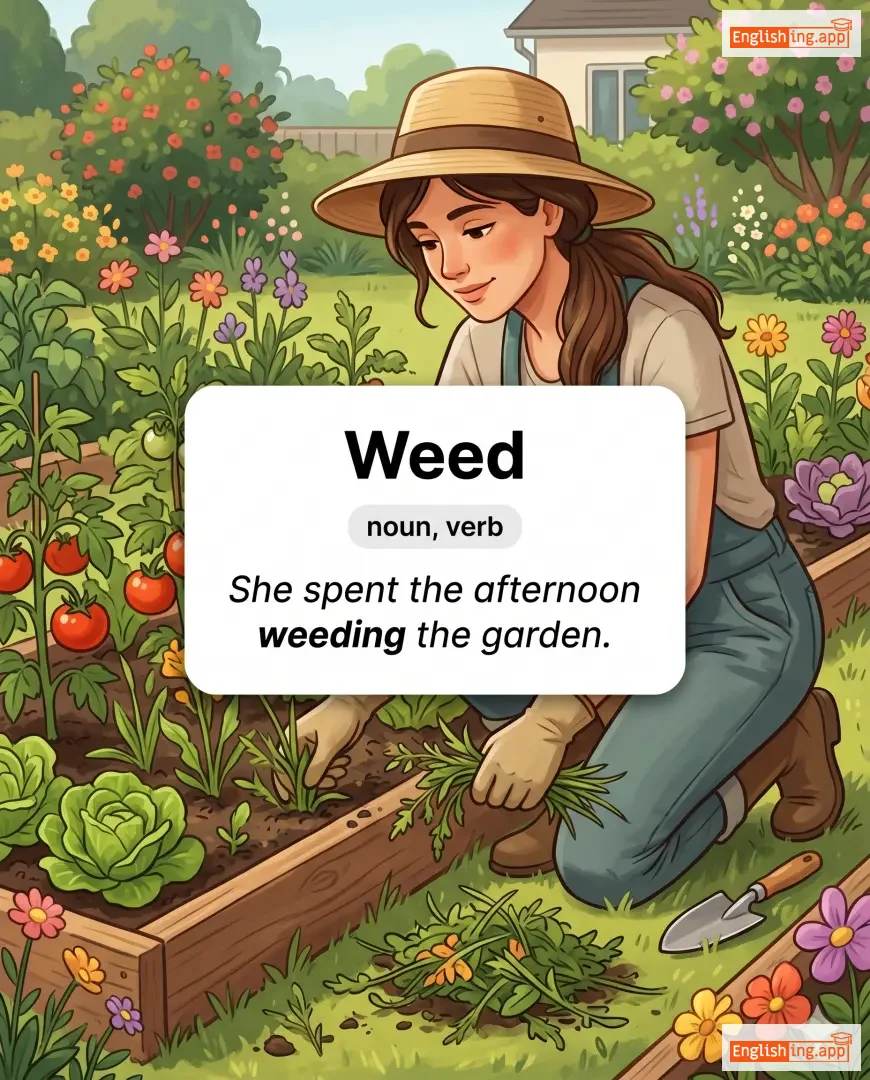
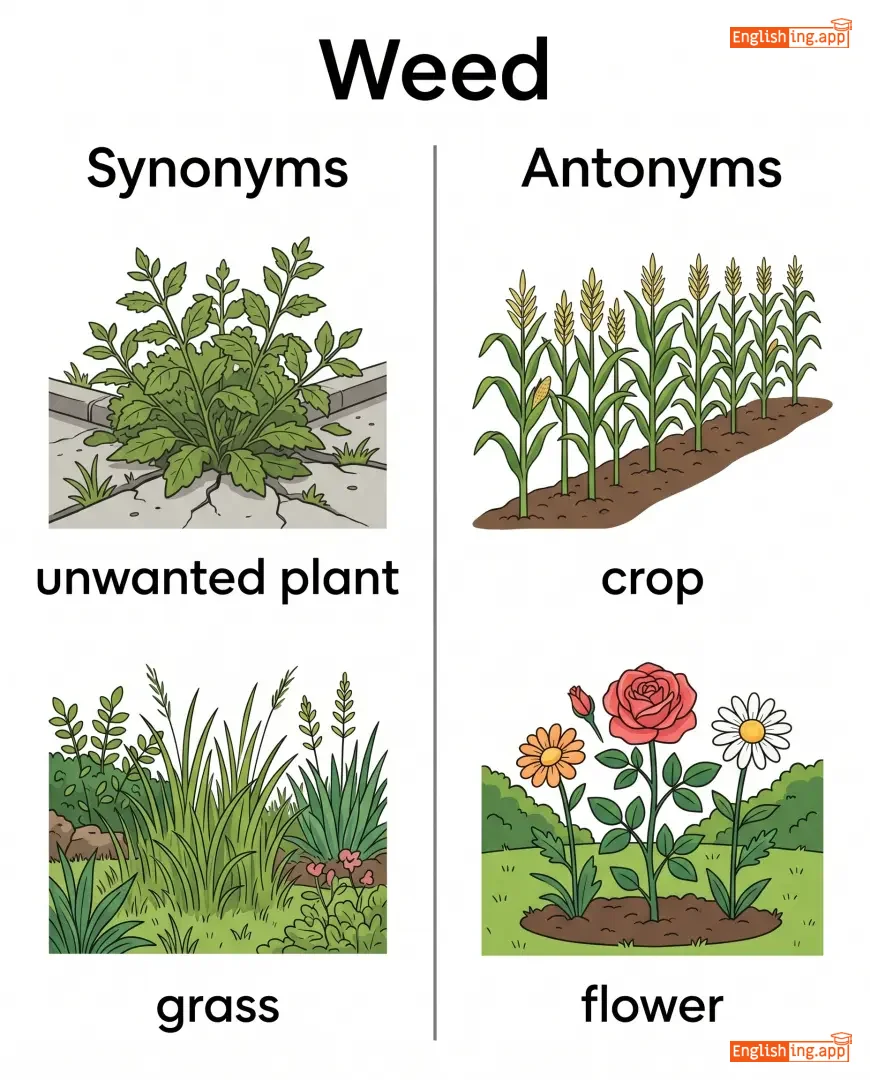
a wild plant growing where it is not wanted, especially among crops; to remove such plants
••••••
|
She spent the afternoon weeding the garden.
彼女は午後を庭の雑草取りに費やした。
••••••
|
彼女は午後を庭の雑草取りに費やした。
Kanojo wa gogo wo niwa no zassou tori ni tsuiyashita.
••••••
|
weed out
取り除く
••••••
|
to remove unwanted or less effective people or things
••••••
|
望ましくないまたは効果が薄い人々や物を取り除く
nozomashikunai matawa kouka ga usui hitobito ya mono wo torinoku
••••••
|
unwanted plant, grass, wild plant, pest plant, herb
••••••
|
crop, flower, plant
••••••
|
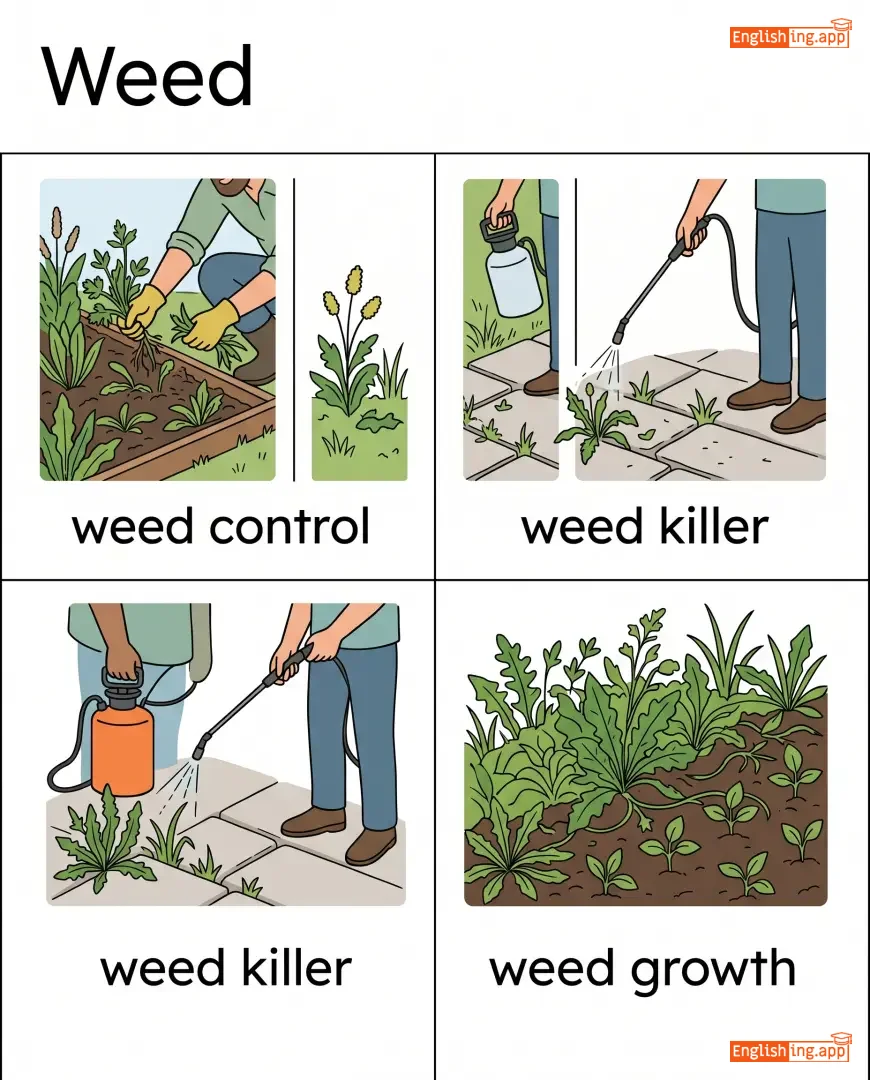
weed control, weed killer, weed growth, pull weeds, weed out
••••••
|
weed = 雑草, それを取り除く = 庭をきれいにする 🌱
••••••
|
|
#0
🕳️
|
/wel/
noun
(ウェル)
••••••
|
- •••••• |
井戸; 幸福;
ido; kōfuku
••••••
|
- •••••• | - •••••• | - •••••• | - •••••• |
a deep hole in the ground from which water is obtained
••••••
|
The villagers get water from the old well in the center of town.
村人たちは村の中心にある古い井戸から水を汲みます。
••••••
|
村人たちは村の中心にある古い井戸から水を汲みます。
Murabito-tachi wa mura no chūshin ni aru furui ido kara mizu o kumimasu.
••••••
|
- •••••• | - •••••• | - •••••• |
water hole, spring, bore
••••••
|
hill, mound, elevation
••••••
|
water well, oil well, deep well
••••••
|
井戸を思い出して、幸福を得るために水を得る。
••••••
|
|
#0
🌅
|
/wɛst/
noun
(ウエスト)
••••••
|
- •••••• |
西
nishi
••••••
|
- •••••• | - •••••• | - •••••• | - •••••• |
the direction to the left of the north and to the right of the south, typically associated with the sunset
••••••
|
The sun sets in the west. |
太陽は西に沈みます。
Taiyō wa nishi ni shizumimasu.
••••••
|
- •••••• | - •••••• | - •••••• |
sunset, occident
••••••
|
east, orient
••••••
|
west coast, west side, go west, western civilization
••••••
|
太陽は西に沈みます - The sun sets in the west.
••••••
|
|
#0
❓
|
/wɒt/
pronoun
(ワット)
••••••
|
- •••••• |
何
nani
••••••
|
- •••••• | - •••••• | - •••••• | - •••••• |
used to ask for information about something
••••••
|
What is your name? |
あなたの名前は何ですか?
Anata no namae wa nan desu ka?
••••••
|
- •••••• | - •••••• | - •••••• |
which, that
••••••
|
- •••••• |
what time, what happened, what are you doing
••••••
|
何 (nani) 質問をするために使われる - 'What' は質問をするために使われます。
••••••
|
|
#0
🥄
|
/wɪp/
verb
(ウィップ)
••••••
|
- •••••• |
ムチで打つ
muchi de utsu
••••••
|
whipped
ウィップト
••••••
|
whipped
ウィップト
••••••
|
whips
ウィップス
••••••
|
whipping
ウィッピング
••••••
|
to strike or beat with a flexible instrument such as a rope or cord
••••••
|
The trainer whipped the horse to make it run faster.
トレーナーは馬を速く走らせるために鞭で打った。
••••••
|
トレーナーは馬を速く走らせるために鞭で打った。
Toreenaa wa uma wo hayaku hashiraseru tame ni muchi de utta.
••••••
|
whip up
whip up
••••••
|
to quickly prepare or create something
••••••
|
素早く準備する
subayaku junbi suru
••••••
|
lash, beat, strike, thrash, flog
••••••
|
caress, soothe
••••••
|
whip cream, whip the horse, whip up enthusiasm, political whip
••••••
|
Whipはムチで打つ意味 — Whipで馬を速く走らせる!
••••••
|
|
#0
👤
|
/huːm/
pronoun
(フーム)
••••••
|
- •••••• |
誰に
dare ni
••••••
|
- •••••• | - •••••• | - •••••• | - •••••• |
used to refer to the person or people that something is done to
••••••
|
The man whom I met yesterday is my friend. |
昨日会ったその男性は私の友達です。
Kinō atta sono dansei wa watashi no tomodachi desu.
••••••
|
- •••••• | - •••••• | - •••••• |
who, that, the person
••••••
|
none
••••••
|
whom I met, whom I saw, to whom it may concern
••••••
|
Whom sounds like 'Dare ni' - 'Dare ni' as in the person you met.
••••••
|
|
#0
↔️
|
/waɪd/
adjective
(ワイド)
••••••
|
- •••••• |
広い; 広大
hiroi; kodai
••••••
|
- •••••• | - •••••• | - •••••• | - •••••• |
having a great distance from one side to the other; broad
••••••
|
The river is very wide at this point. |
この地点で川は非常に広いです。
Kono chiten de kawa wa hijou ni hiroi desu.
••••••
|
- •••••• | - •••••• | - •••••• |
broad, extensive, spacious, vast
••••••
|
narrow, thin, restricted
••••••
|
wide range, wide variety, wide open, wide awake
••••••
|
広い川、広大な空間。
••••••
|
|
#0
🍷
|
/waɪn/
noun
(ワイン)
••••••
|
- •••••• |
ワイン
waini
••••••
|
- •••••• | - •••••• | - •••••• | - •••••• |
an alcoholic drink made from fermented grapes or other fruits
••••••
|
They served a glass of red wine at the dinner.
彼らはディナーで赤ワインを一杯出しました。
••••••
|
彼らはディナーで赤ワインを一杯出しました。
Karera wa dinā de aka wain o ippai dashimashita.
••••••
|
- •••••• | - •••••• | - •••••• |
vino, beverage, drink, alcohol
••••••
|
water, juice
••••••
|
red wine, white wine, glass of wine, bottle of wine
••••••
|
Wine pairs with dinner—imagine a glass of red wine with a fancy meal!
••••••
|
|
#0
🪶
|
/wɪŋ/
verb
(ウィング)
••••••
|
|
翼で飛ぶ
tsubasa de tobu
••••••
|
winged
ウィングド
••••••
|
winged
ウィングド
••••••
|
wings
ウィングス
••••••
|
winging
ウィンギング
••••••
|
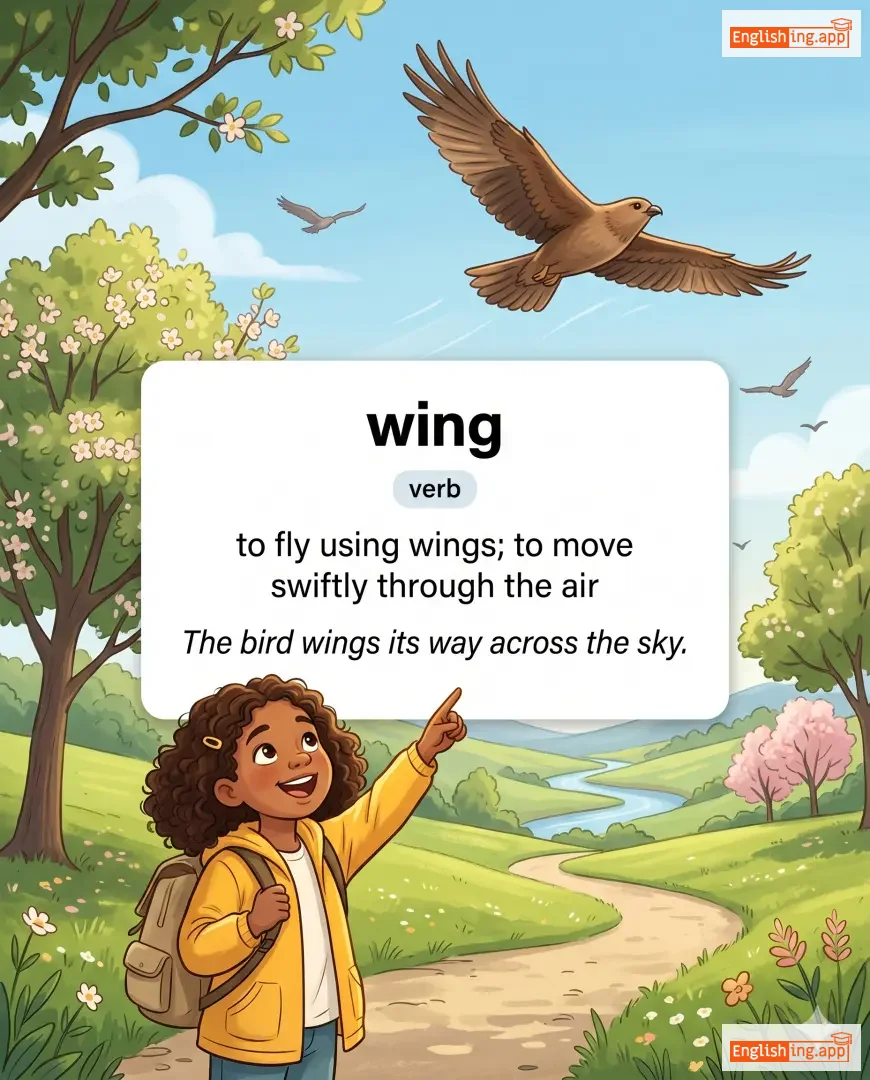
to fly using wings; to move swiftly through the air
••••••
|
The bird wings its way across the sky.
鳥は空を飛びます。
••••••
|
鳥は空を飛ぶ。
Tori wa sora o tobu.
••••••
|
- •••••• | - •••••• | - •••••• |
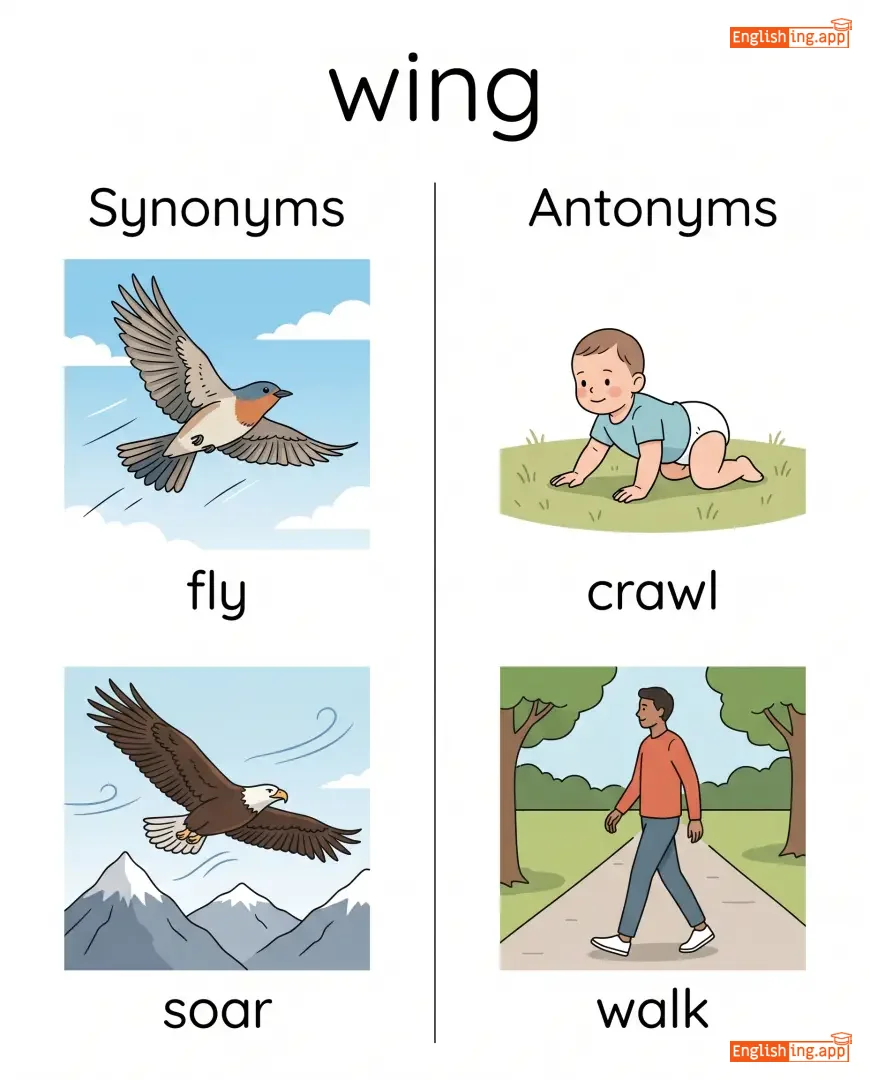
fly, soar, glide, flutter
••••••
|
crawl, walk, ground, land
••••••
|
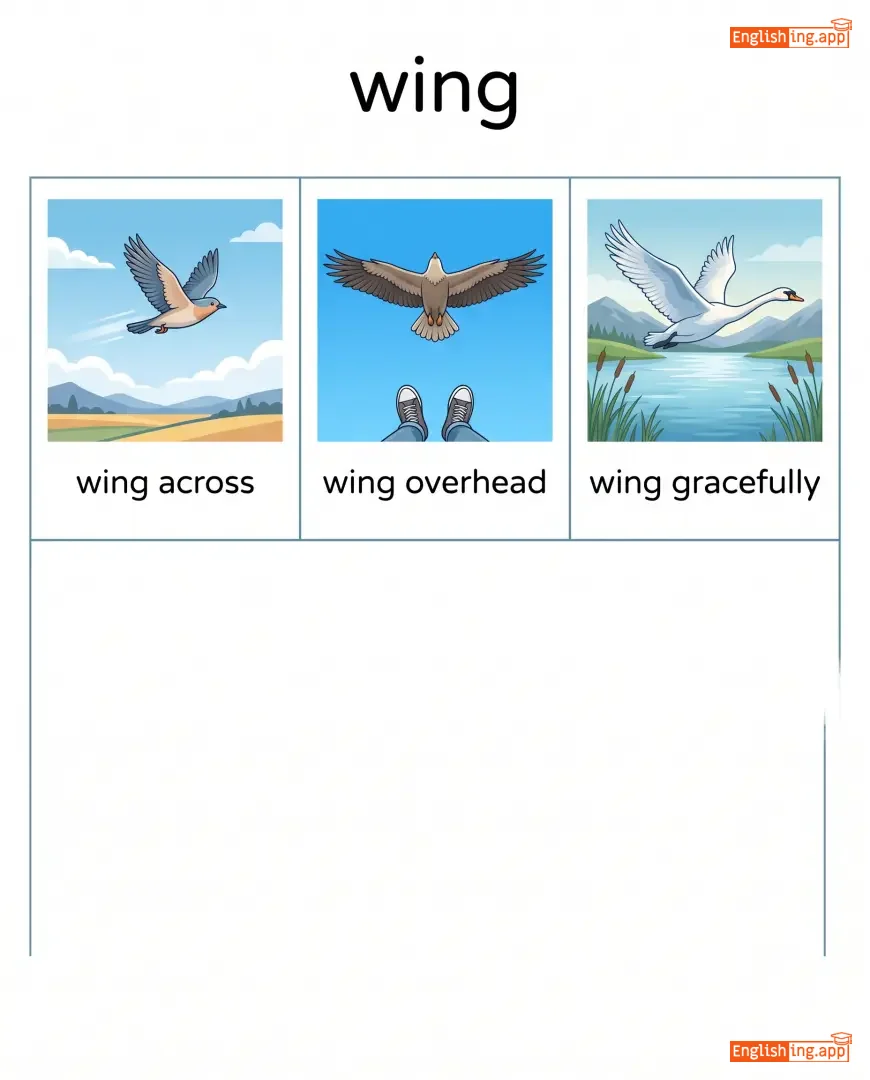
wing across, wing overhead, wing gracefully, wing swiftly
••••••
|
翼を広げて飛ぶ (翼で飛ぶ)
••••••
|
|
#0
🤝
|
/wɪð/
preposition
(ウィズ)
••••••
|
- •••••• |
と一緒に
to issho ni
••••••
|
- •••••• | - •••••• | - •••••• | - •••••• |
indicating the person or thing that is accompanying or involved with someone or something else
••••••
|
She went to the market with her friend. |
彼女は友達と一緒に市場に行きました。
Kanojo wa tomodachi to issho ni ichiba ni ikimashita.
••••••
|
- •••••• | - •••••• | - •••••• |
alongside, together, accompanied by, in company with
••••••
|
without, apart from
••••••
|
with me, with you, with them, with someone
••••••
|
ウィズ (with) 友達と一緒に楽しむ - With friends, you enjoy together.
••••••
|
|
#0
🐺
|
/wʊlf/
noun
(ウルフ)
••••••
|
- •••••• |
オオカミ
ōkami
••••••
|
- •••••• | - •••••• | - •••••• | - •••••• |
a wild carnivorous animal related to the dog, living and hunting in packs
••••••
|
The wolf howled loudly under the full moon. |
オオカミは満月の下で大声で遠吠えした。
Ōkami wa mangetsu no shita de ōgoe de tōboe shita.
••••••
|
cry wolf |
to raise a false alarm or exaggerate danger
••••••
|
狼が来たと叫ぶ
Ōkami ga kita to sakebu
••••••
|
canine, predator, beast, dog, gray wolf
••••••
|
sheep, prey
••••••
|
gray wolf, lone wolf, wolf pack, cry wolf
••••••
|
オオカミは日本語で 'オオカミ'。覚えておいて、オオカミは満月の下で遠吠えする 🐺
••••••
|
|
#0
🐛
|
/wɜːrm/
noun
(ワーム)
••••••
|
- •••••• |
ミミズ
mimizu
••••••
|
- •••••• | - •••••• | - •••••• | - •••••• |
a small, long, soft-bodied invertebrate animal
••••••
|
The gardener found a worm in the soil. |
庭師は土の中でミミズを見つけました。
Niwashi wa tsuchi no naka de mimizu o mitsukemashita.
••••••
|
- •••••• | - •••••• | - •••••• |
earthworm, grub, maggot, larva
••••••
|
none
••••••
|
fishing worm, earthworm, worm farm
••••••
|
ミミズは庭を育てる手助けをします! – Worms help the garden grow!
••••••
|
|
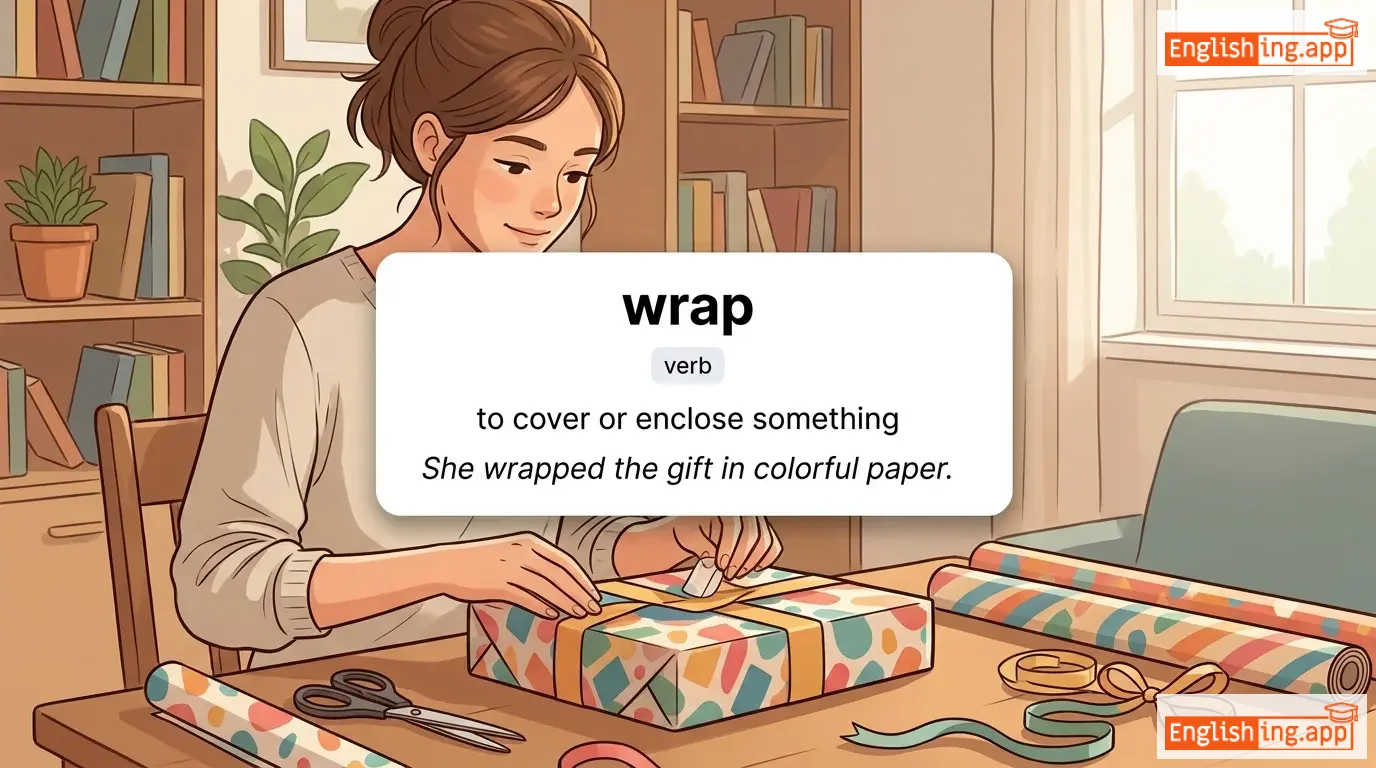
#0
🎁
|
/ræp/
verb
(ラップ)
••••••
|
|
包む
tsutsumu
••••••
|
wrapped
ラップド
••••••
|
wrapped
ラップド
••••••
|
wraps
ラップス
••••••
|
wrapping
ラッピング
••••••
|
to cover something completely with paper or cloth; to enclose
••••••
|
Please wrap the gift in colorful paper.
プレゼントをカラフルな紙で包んでください。
••••••
|
プレゼントをカラフルな紙で包んでください。
Purezento o karafuru na kami de tsutsunde kudasai.
••••••
|
- •••••• | - •••••• | - •••••• |
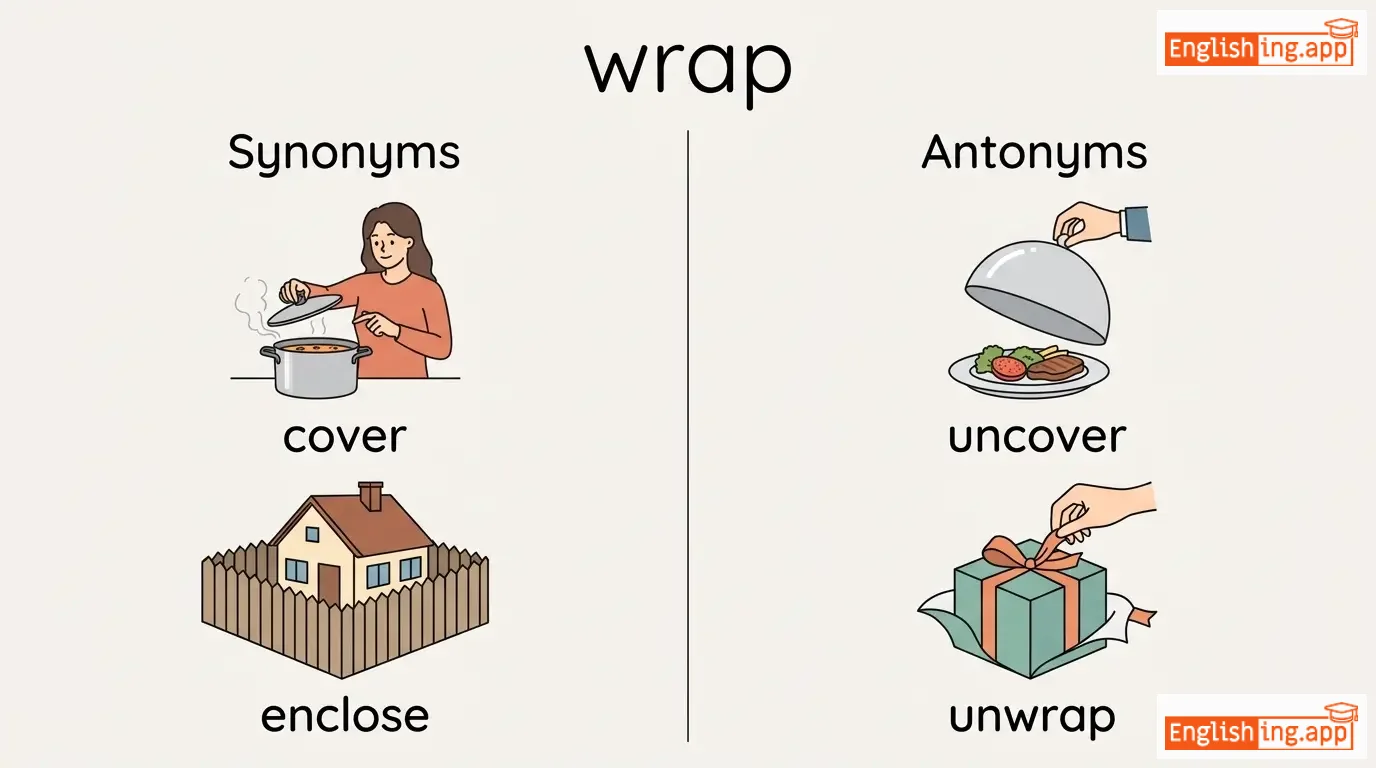
cover, enclose, package, bundle
••••••
|
unwrap, uncover, expose, open
••••••
|
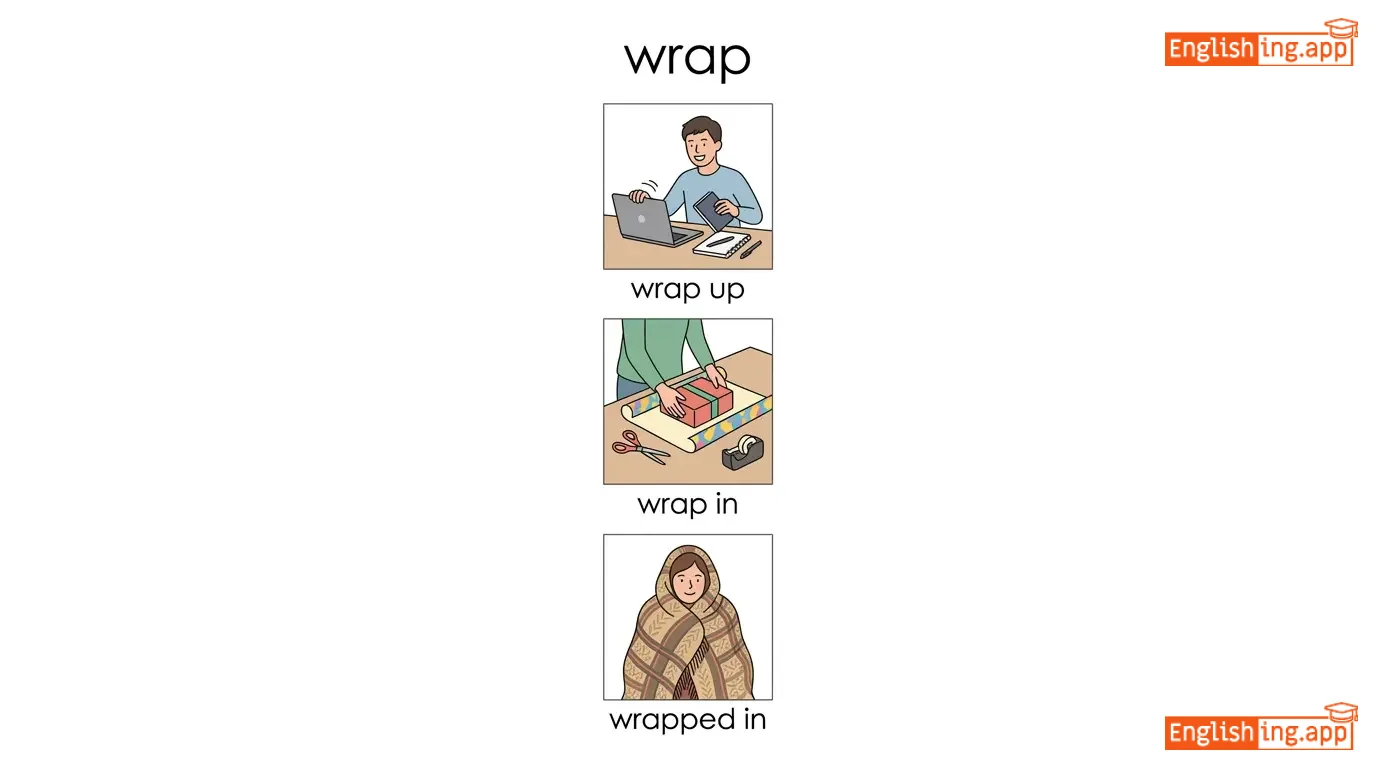
wrap up, gift wrap, plastic wrap, wrap around, wrap tightly
••••••
|
Wrap means 包む, like wrapping a gift for a friend
••••••
|
|
#0
🏡
|
/jɑːrd/
noun
(ヤード)
••••••
|
- •••••• |
庭; 家の隣の土地
niwa; ie no tonari no tochi
••••••
|
- •••••• | - •••••• | - •••••• | - •••••• |
a unit of linear measure equal to 3 feet; an area of land immediately adjacent to a building
••••••
|
The children played in the back yard. |
子供たちは裏庭で遊んでいました。
Kodomotachi wa uraniwa de asonde imashita
••••••
|
- •••••• | - •••••• | - •••••• |
courtyard, garden, measure, enclosure
••••••
|
indoor, interior, inside, building
••••••
|
back yard, front yard, school yard
••••••
|
Yard = 庭、子供たちが裏庭で遊んでいる
••••••
|
|
#0
👍
|
/jɛə/
interjection
(はい)
••••••
|
- •••••• |
はい
hai
••••••
|
- •••••• | - •••••• | - •••••• | - •••••• |
used to express agreement or affirmation
••••••
|
Yeah, I’ll go to the store with you. |
はい、私はあなたと一緒に店に行きます。
Hai, watashi wa anata to issho ni mise ni ikimasu.
••••••
|
- •••••• | - •••••• | - •••••• |
yes, certainly, absolutely, okay
••••••
|
no, never, not at all
••••••
|
yeah sure, yeah okay, yeah right, yeah I agree
••••••
|
Yeah, in Japanese we say 'Hai!' when agreeing.
••••••
|
|
#0
📣
|
/jɛl/
verb
(yel)
••••••
|
|
叫ぶ
sabu
••••••
|
yelled
yeld
••••••
|
yelled
yeld
••••••
|
yells
yels
••••••
|
yelling
yeling
••••••
|
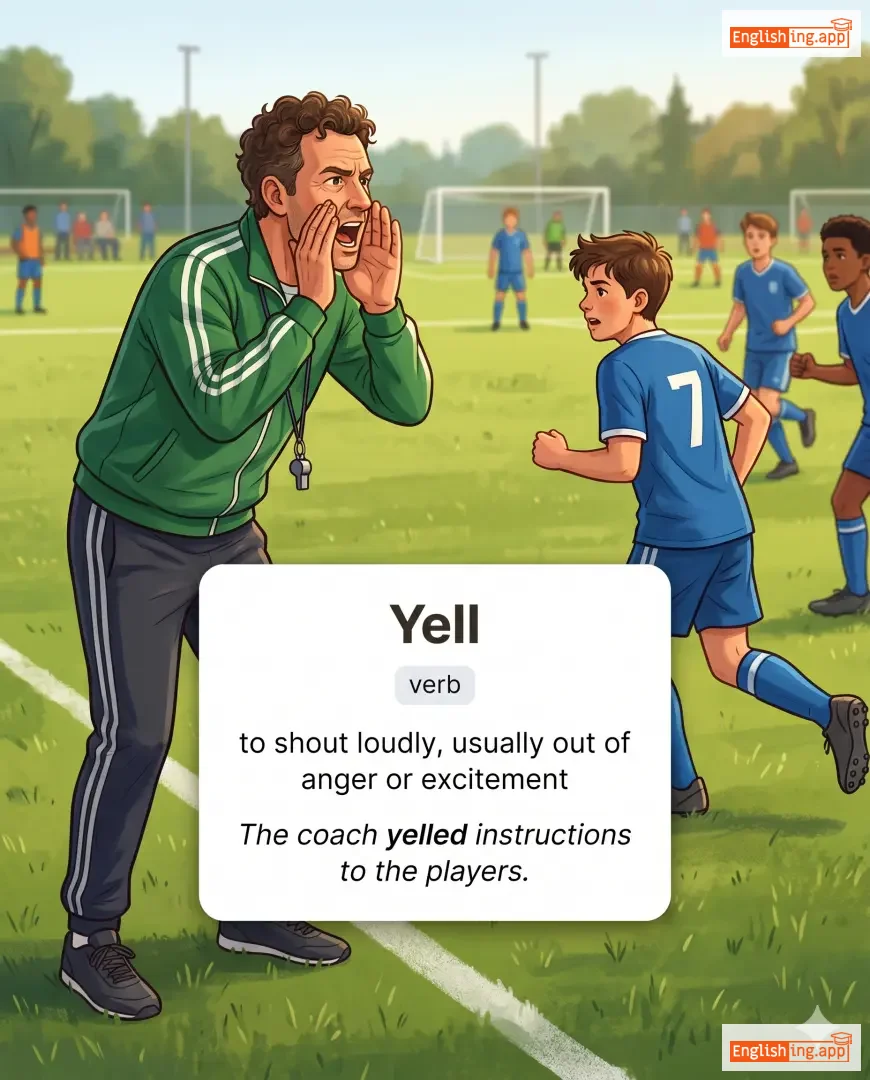
to shout loudly, usually out of anger or excitement
••••••
|
The coach yelled instructions to the players.
the coach yeld instructions to the players
••••••
|
コーチは選手たちに指示を叫びました。
Ko-chi wa senshu-tachi ni shiji o sakebimashita.
••••••
|
yell at
yel at
••••••
|
to shout at someone angrily
••••••
|
誰かに怒鳴る
dareka ni donaru
••••••
|
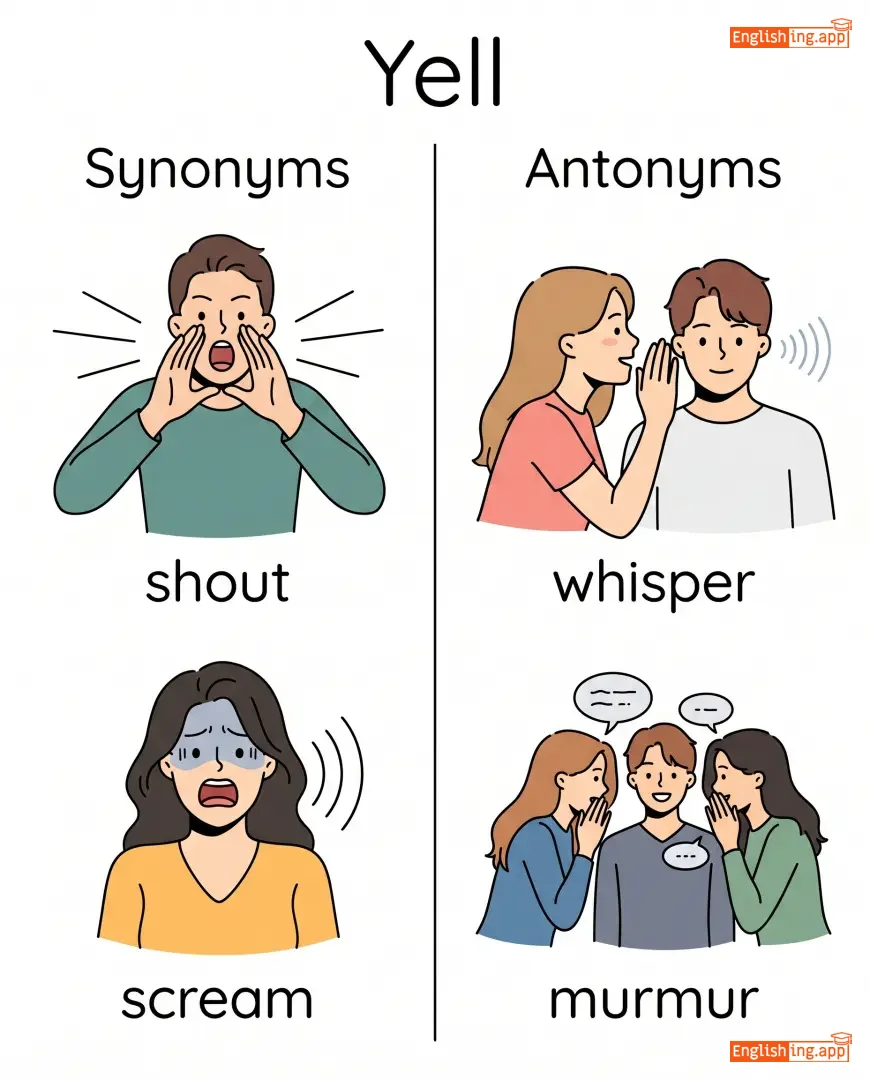
shout, scream, holler, cry, call
••••••
|
whisper, murmur
••••••
|
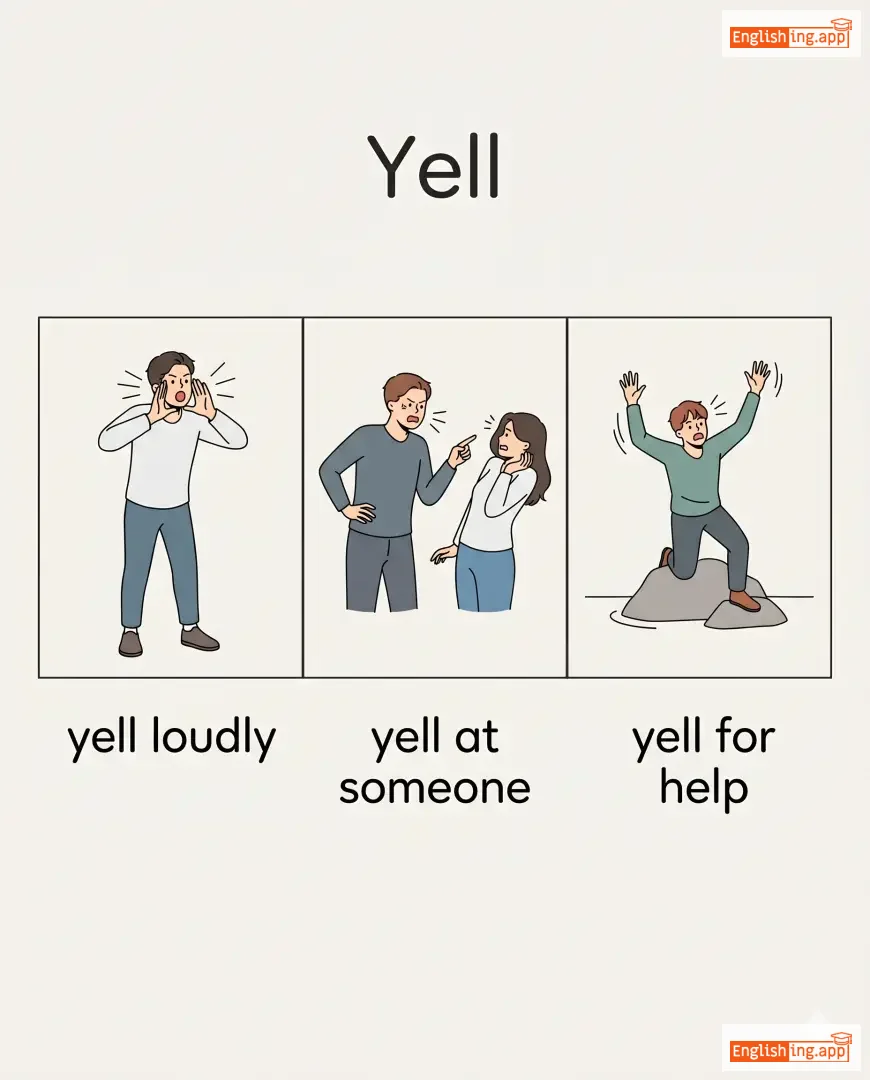
yell loudly, yell at someone, yell for help
••••••
|
Yellは叫ぶこと。怒ったり興奮した時に叫ぶ時に使う。
••••••
|
|
#0
📚
|
/jɔːr/
pronoun
(あなたの)
••••••
|
- •••••• |
あなたの
anata no
••••••
|
- •••••• | - •••••• | - •••••• | - •••••• |
used to indicate possession or association
••••••
|
Your book is on the table. |
あなたの本はテーブルの上にあります。
Anata no hon wa tēburu no ue ni arimasu.
••••••
|
- •••••• | - •••••• | - •••••• |
your own, belonging to you
••••••
|
my, theirs
••••••
|
your opinion, your responsibility, your time
••••••
|
あなたの本はテーブルの上にあります - Your book is on the table
••••••
|
|
#0
🌍
|
/zoʊn/
noun
(ゾーン)
••••••
|
|
ゾーン
zōn
••••••
|
- •••••• | - •••••• | - •••••• | - •••••• |
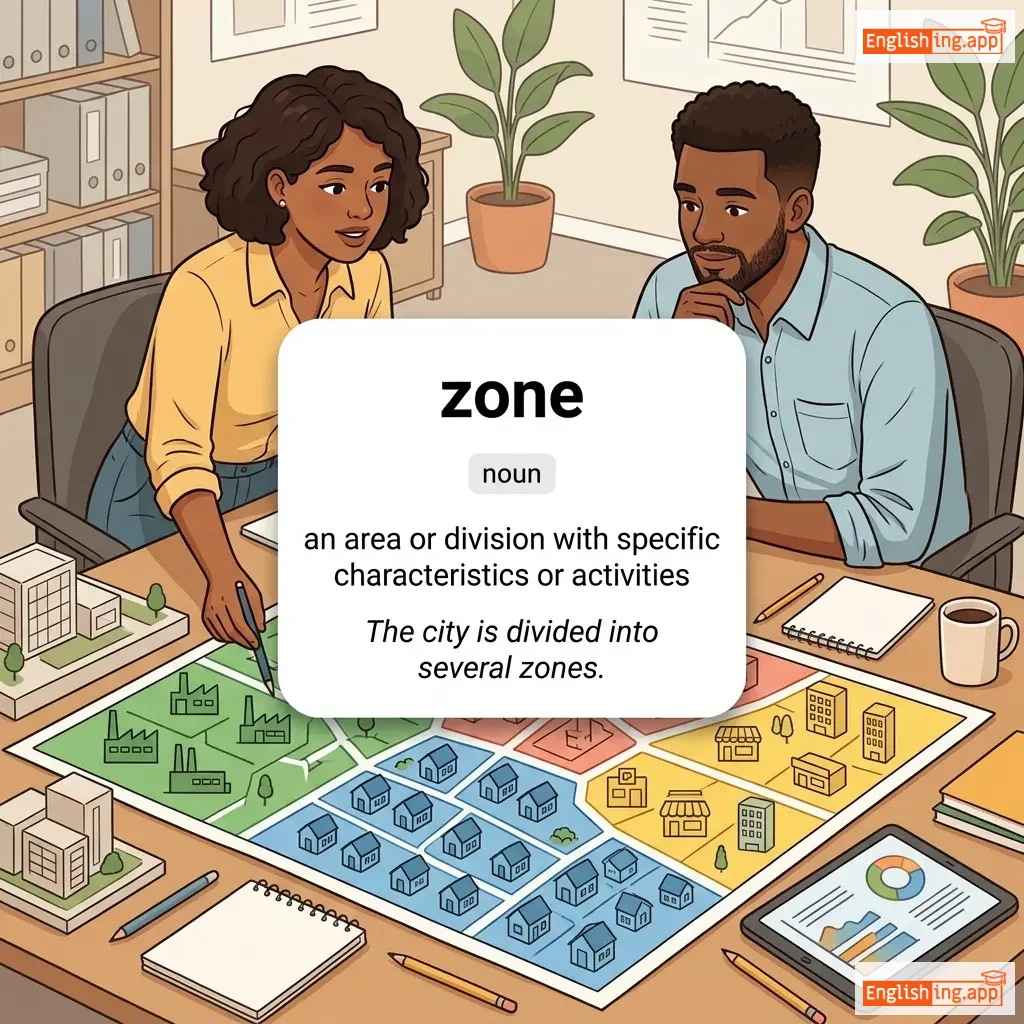
an area or division with specific characteristics or activities
••••••
|
The city is divided into several zones. |
この都市は複数のゾーンに分けられています。
Kono toshi wa fukusū no zōn ni wakerareteimasu.
••••••
|
- •••••• | - •••••• | - •••••• |
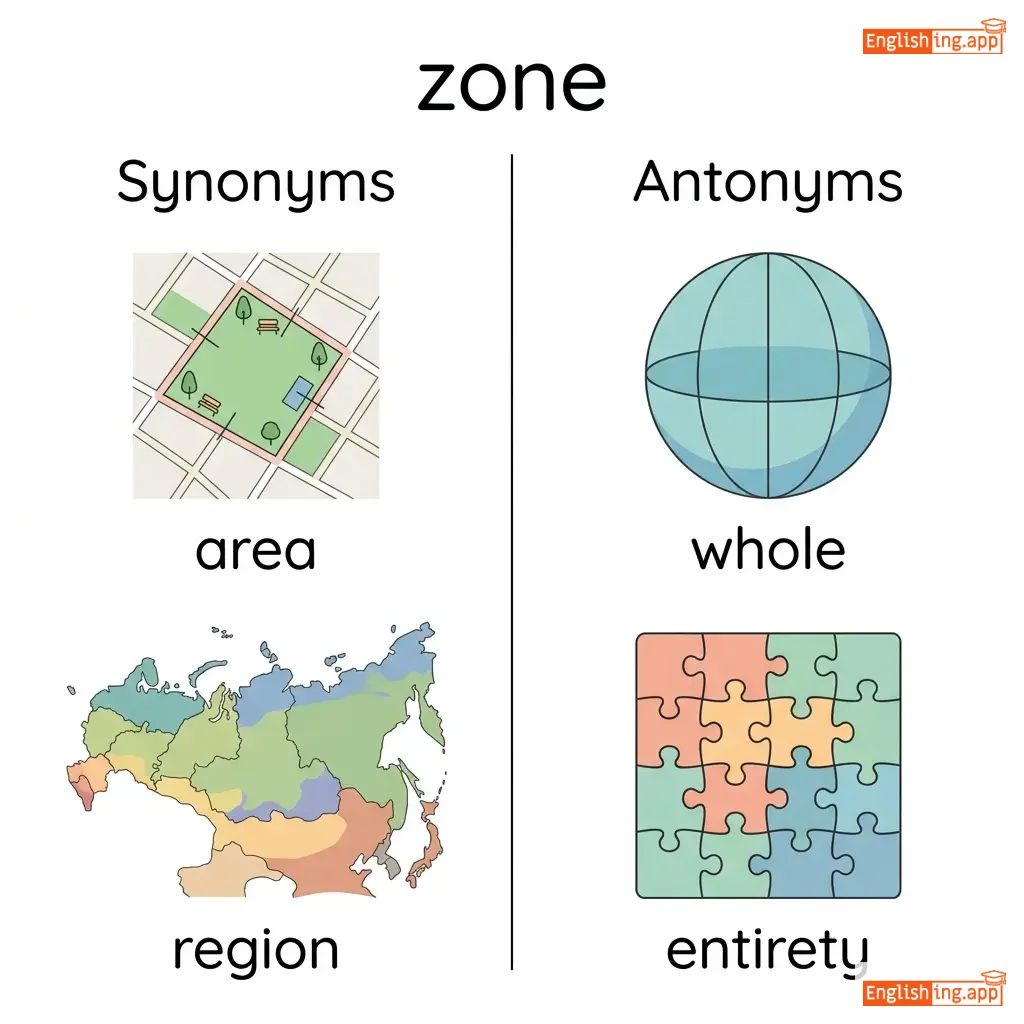
area, region, district
••••••
|
whole, entirety
••••••
|
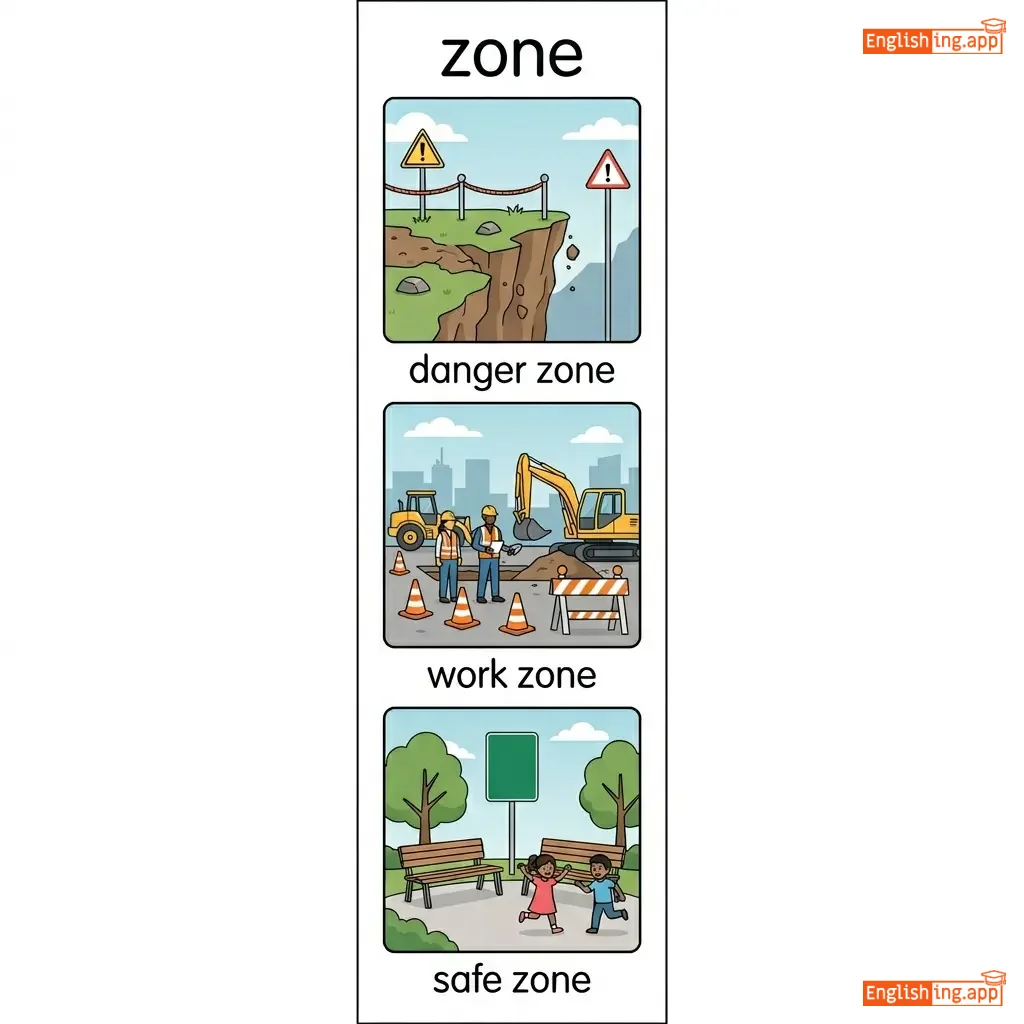
danger zone, work zone, safe zone
••••••
|
ゾーンに分けられた都市 (Zōn ni wakerareta toshi) - The city is divided into zones.
••••••
|
Vocabulary Quiz
Test your vocabulary by matching words with their translations or meanings.
Login to take the quiz
Comments (0)
Share your thoughts and join the discussion.
Join the discussion by logging in
Login to CommentNo comments yet
Be the first to share your thoughts!