

来た者は皆、清掃に残った
Whoever Came, Stayed to Clean
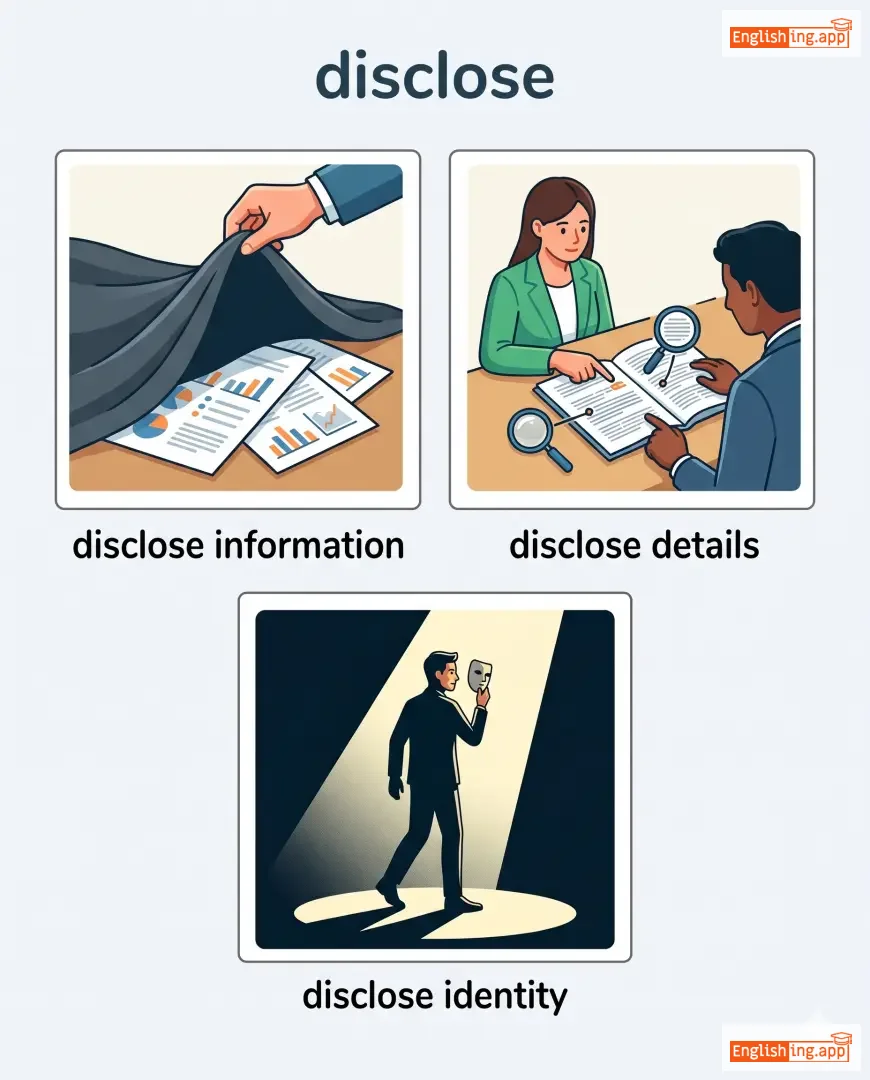
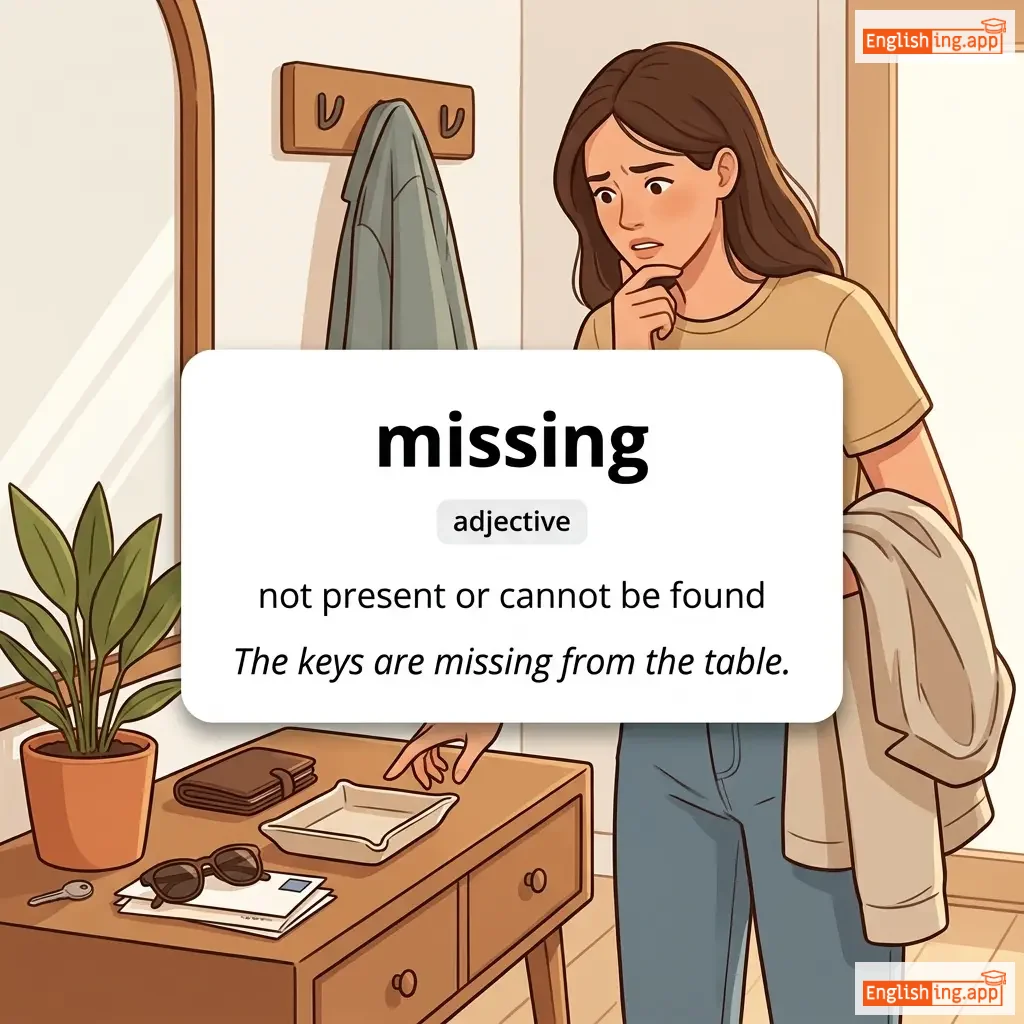
川の鳥の調査でいくつかの種が missing と記録された。 子どもたちは「川を守る monster は想像の中にしかいないの?」と尋ねた。 主催者たちは言った:「whoever この川を愛する人は、今日来てほしい。」 朝の霧は without 太陽の光の中で夢のような景色に溶け込んだ。 ボランティアたちは軽い workout で体を温めた。 彼らの夢は今や石に written された誓いとして立っている。 若い democrat の演説者が平等について語った。 彼は汚染者たちの政策を鋭い言葉で denounce した。 健康キャンプでは、川の水の意識が diabetes の人々にどう役立つかを教えた。 歴史家たちは、過去の dictator 政権時代に地図上の川の線がどう見えたかを指摘した。 彼らは、川を軽視することは人間性を diminish すると言った。 研究チームは現地データを directly センターに送信した。 ドキュメンタリーの director が撮影計画を説明した。 disabled 参加者のためにスロープが設置された。 誰かが提案に disagree した場合でも、敬意をもって意見が聞かれた。 財務チームはすべての寄付の詳細を disclose した。 販売者たちは川に優しい商品に追加の discount を提供した。 技術専門家たちは水文学的な disorder を特定した。 新しい避難計画は、モンスーン期に再び人々を displace しないことを目的としていた。 最後に清掃 disposal ポイントが安全に封鎖された。
翻訳
過去
過去分詞
三人称単数
動名詞
意味
例文
例文の翻訳
同義語
対義語
コロケーション
ニーモニック

Swipe left or right, or use the buttons. Tap image to zoom.
例文の翻訳
単語
Whoever Came, Stayed to CleanWhoever Came, Stayed to Clean - マスクトグル
|
絵文字
|
単語 | Images | 翻訳 | 過去 | 過去分詞 | 三人称単数 | 動名詞 | 意味 | 例文 | 例文の翻訳 | 表現例 | 表現例の意味 | 表現例の翻訳 | 同義語 | 対義語 | コロケーション | ニーモニック |
|---|---|---|---|---|---|---|---|---|---|---|---|---|---|---|---|---|---|
|
#0
🕊️
|
/ˈdɛməˌkræt/
noun
(デモクラット)
••••••
|
- •••••• |
民主主義者
minshu shugi sha
••••••
|
- •••••• | - •••••• | - •••••• | - •••••• |
a supporter of democracy or a member of the Democratic Party in the US
••••••
|
He is a strong democrat who believes in equal rights. |
彼は平等な権利を信じる強い民主主義者です。
Kare wa byoudou na kenri wo shinjiru tsuyoi minshu shugi sha desu.
••••••
|
- •••••• | - •••••• | - •••••• |
supporter, liberal, reformer, egalitarian
••••••
|
dictator, autocrat
••••••
|
loyal democrat, leading democrat, democrat leader, true democrat
••••••
|
Democratは民主主義者の意味
••••••
|
|
#0
📢
|
/dɪˈnaʊns/
verb
(ディナウンズ)
••••••
|
- •••••• |
非難する
hinan suru
••••••
|
denounced
ディナウンズド
••••••
|
denounced
ディナウンズド
••••••
|
denounces
ディナウンズセス
••••••
|
denouncing
ディナウンズイング
••••••
|
To publicly declare something to be wrong, evil, or condemn strongly.
••••••
|
The leader denounced corruption in his speech.
リーダーはスピーチで汚職を非難しました。
••••••
|
リーダーはスピーチで汚職を非難しました。
Rīdā wa supīchi de oshoku o hinan shimashita.
••••••
|
denounce in no uncertain terms
明確な言葉で非難する
••••••
|
To condemn very strongly and clearly.
••••••
|
明確な言葉で非難する
Meikaku na kotoba de hinan suru
••••••
|
condemn, criticize, censure, blame, accuse
••••••
|
praise, approve, endorse
••••••
|
publicly denounce, strongly denounce, denounce corruption, denounce violence
••••••
|
Denounceは 'announce'のように聞こえるが、強く公に非難することを意味します。
••••••
|
|
#0
💉
|
/ˌdaɪəˈbiːtiːz/
noun
(ハピネス)
••••••
|
- •••••• |
幸福
kōfuku
••••••
|
- •••••• | - •••••• | - •••••• | - •••••• |
a medical condition in which the body cannot properly control the level of sugar in the blood
••••••
|
He was diagnosed with type 2 diabetes last year. |
彼女は賞を受け取ったとき、幸せを隠せませんでした。
Kanojo wa shō o uketotta toki, kōfuku o kakusemasen deshita.
••••••
|
- •••••• | - •••••• | - •••••• |
hyperglycemia, metabolic disorder
••••••
|
good health, wellness
••••••
|
type 1 diabetes, type 2 diabetes, diabetes treatment, diabetes patient
••••••
|
幸福 = 幸 + 福
••••••
|
|
#0
👑
|
/dɪkˈteɪtə/
noun
(ディクテーター)
••••••
|
- •••••• |
独裁者
dokusaisya
••••••
|
- •••••• | - •••••• | - •••••• | - •••••• |
a ruler with total power over a country, typically one who has obtained control by force
••••••
|
The dictator ruled the country with an iron fist. |
独裁者は鉄の拳で国を支配した。
Dokusaisya wa tetsu no ken de kuni o shihai shita.
••••••
|
- •••••• | - •••••• | - •••••• |
tyrant, despot, autocrat
••••••
|
democrat, leader
••••••
|
dictator's regime, military dictator, cruel dictator
••••••
|
独裁者は強権で国を支配する - Dokusaisya wa kyōken de kuni o shihai suru
••••••
|
|
#0
⬇️
|
/dɪˈmɪnɪʃ/
verb
••••••
|
- •••••• | - •••••• |
diminished
••••••
|
diminished
••••••
|
diminishes
••••••
|
diminishing
••••••
|
to make or become less; to reduce in size, importance, or value
••••••
|
Over time, his influence in the company began to diminish. |
- •••••• |
diminish returns |
a situation where the benefit gained is less compared to the effort or investment put in
••••••
|
- •••••• |
reduce, decrease, lessen, weaken, dwindle
••••••
|
increase, enlarge, expand
••••••
|
diminish value, diminish importance, diminish role, diminish returns
••••••
|
No •••••• |
|
#0
📢
|
/dəˈrɛktli/ or /daɪˈrɛktli/
adverb
(ダイレクトリー)
••••••
|
- •••••• |
直接的に
chokusetsuteki ni
••••••
|
- •••••• | - •••••• | - •••••• | - •••••• |
in a straight line or manner; without anything in between
••••••
|
She spoke directly to the manager about her concerns. |
彼女は自分の懸念について、マネージャーに直接話しました。
Kanojo wa jibun no shinen ni tsuite, manējā ni chokusetsu hanashimashita.
••••••
|
directly involved |
personally connected or participating
••••••
|
直接関与
chokusetsu kan'yo
••••••
|
immediately, personally, straightforwardly, openly
••••••
|
indirectly, vaguely
••••••
|
directly responsible, directly affected, speak directly, directly proportional
••••••
|
Directly =そのまま、直接 — ダイレクトに進むこと。
••••••
|
|
#0
🎬
|
/dəˈrɛktər/ or /daɪˈrɛktər/
noun
(ダイレクター)
••••••
|
- •••••• |
監督
kantoku
••••••
|
- •••••• | - •••••• | - •••••• | - •••••• |
a person who manages or oversees a company, department, or film
••••••
|
The director gave final approval for the new movie script. |
監督は新しい映画の脚本に最終承認を与えました。
Kantoku wa atarashī eiga no kyakuhon ni saishū shōnin o ataemashita.
••••••
|
board of directors |
a group of people elected to manage a company
••••••
|
取締役会
torishimariyaku kai
••••••
|
manager, leader, chief, head, supervisor
••••••
|
employee, subordinate
••••••
|
film director, company director, executive director, board of directors
••••••
|
監督は映画や会社の管理を行う人物。
••••••
|
|
#0
♿
|
/dɪsˈeɪbld/
adjective
(ディセイブルド)
••••••
|
- •••••• |
障害者
shougaisya
••••••
|
- •••••• | - •••••• | - •••••• | - •••••• |
having a physical or mental condition that limits movements, senses, or activities
••••••
|
The park has special facilities for disabled people. |
公園には障害者用の特別な施設があります。
Kouen ni wa shougaisya-you no tokubetsuna shisetsu ga arimasu.
••••••
|
- •••••• | - •••••• | - •••••• |
handicapped, impaired, incapacitated, challenged
••••••
|
able-bodied, healthy, fit
••••••
|
disabled person, disabled access, physically disabled, disabled community
••••••
|
Dis + able = not able → 体が不自由な人は‘障害者’です。
••••••
|
|
#0
🙅
|
/ˌdɪsəˈɡriː/
verb
••••••
|
|
- •••••• |
disagreed
••••••
|
disagreed
••••••
|
disagrees
••••••
|
disagreeing
••••••
|
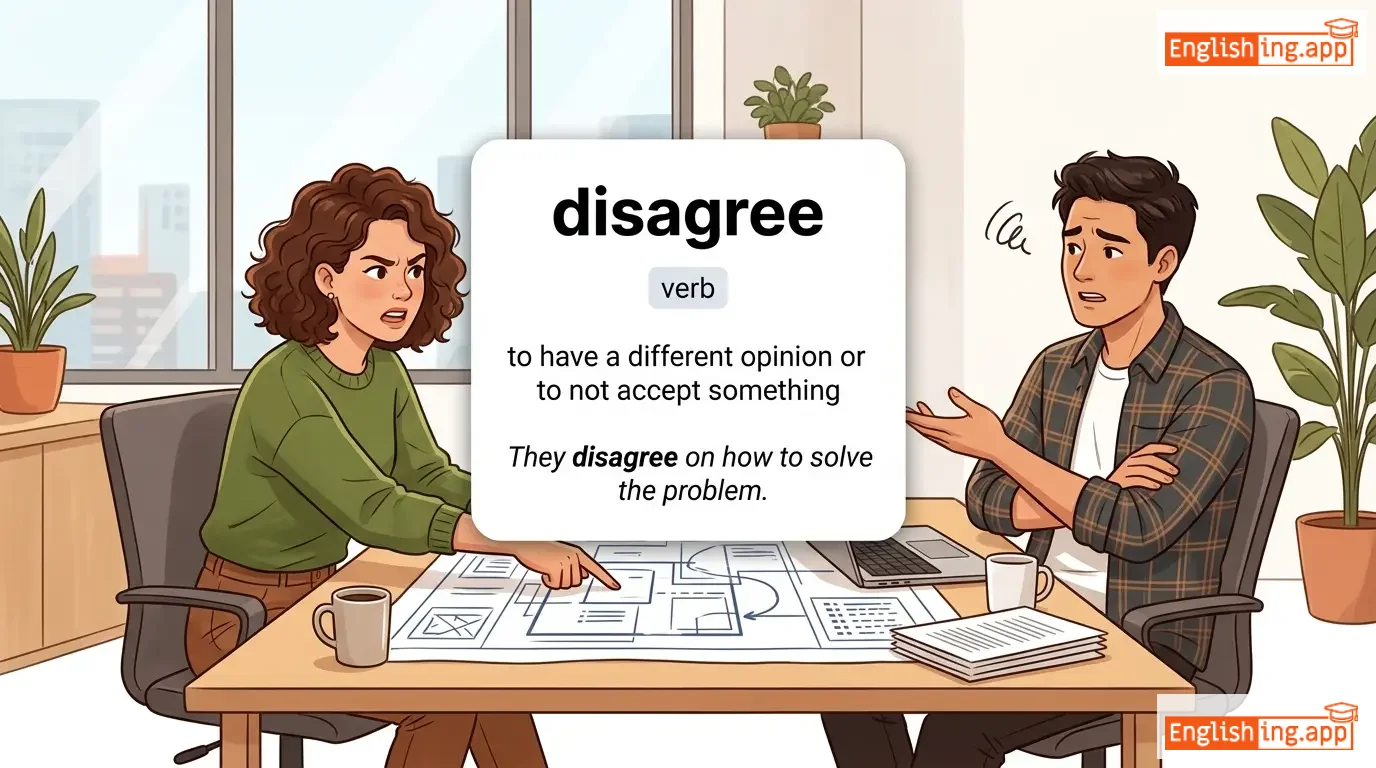
to have a different opinion or to not accept something
••••••
|
They disagree on how to solve the problem. |
- •••••• |
agree to disagree |
accept that two people will not reach the same opinion
••••••
|
- •••••• |
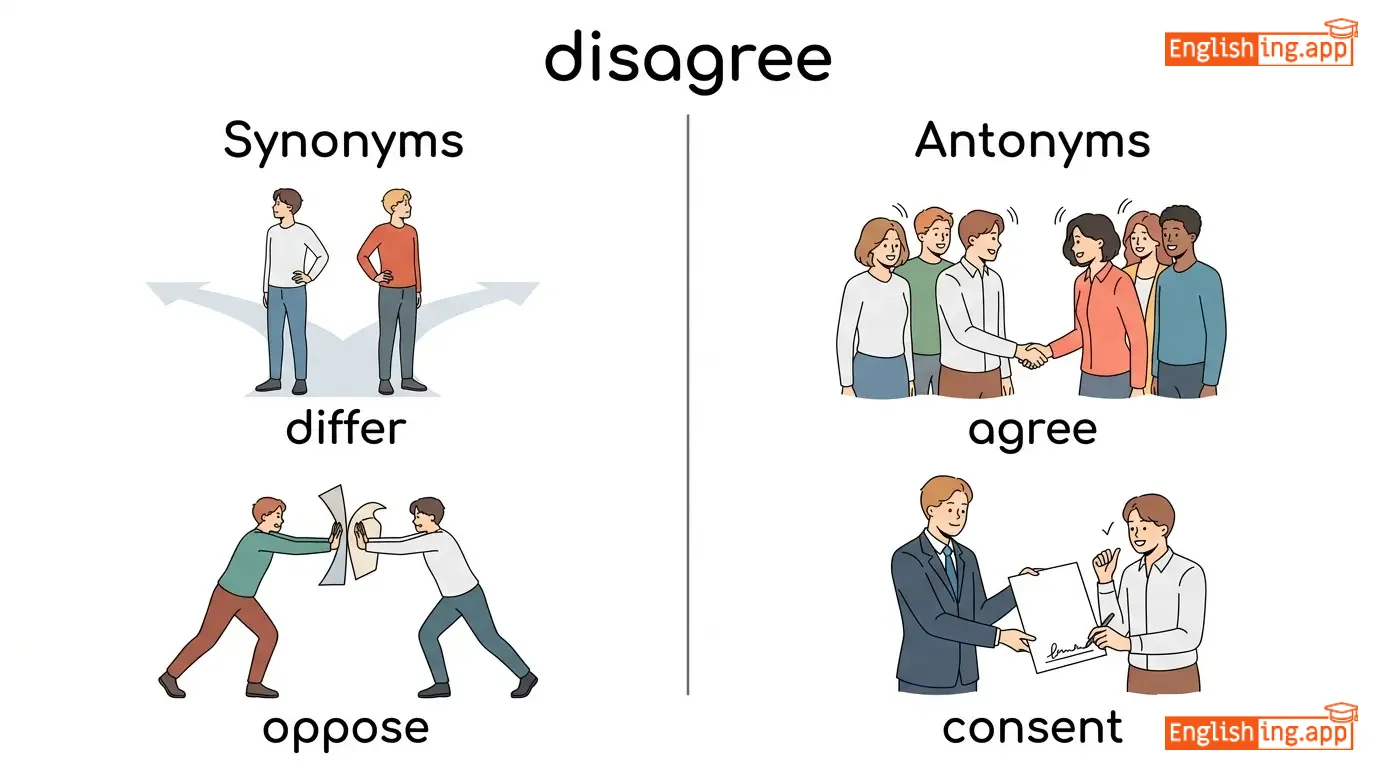
differ, oppose, contradict, dispute, object
••••••
|
agree, consent, approve
••••••
|
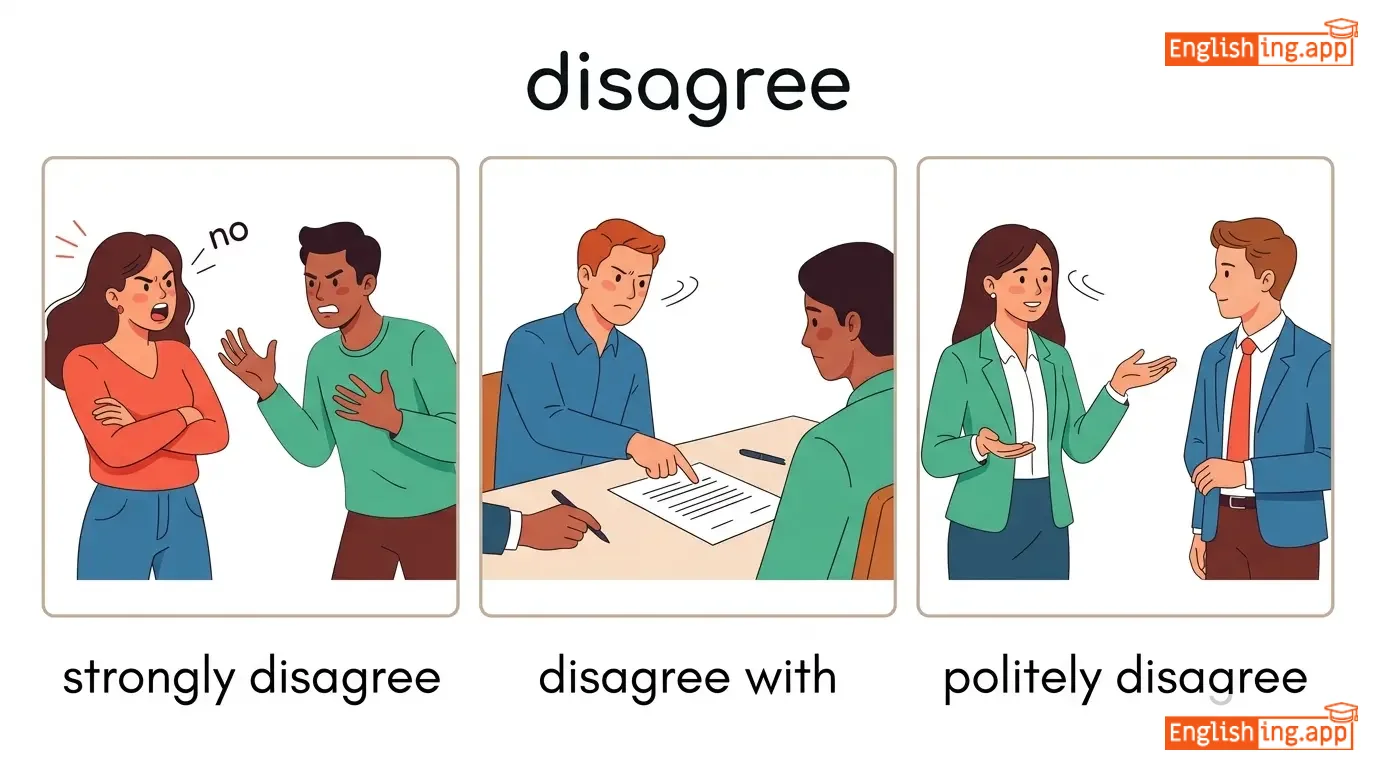
strongly disagree, disagree with, politely disagree
••••••
|
No •••••• |
|
#0
📢
|
/dɪsˈkloʊz/
verb
••••••
|
|
- •••••• |
disclosed
••••••
|
disclosed
••••••
|
discloses
••••••
|
disclosing
••••••
|
to make something known; to reveal information that was previously secret or hidden
••••••
|
The company refused to disclose details of the agreement. |
- •••••• |
full disclosure |
being completely open and honest about all relevant information
••••••
|
- •••••• |
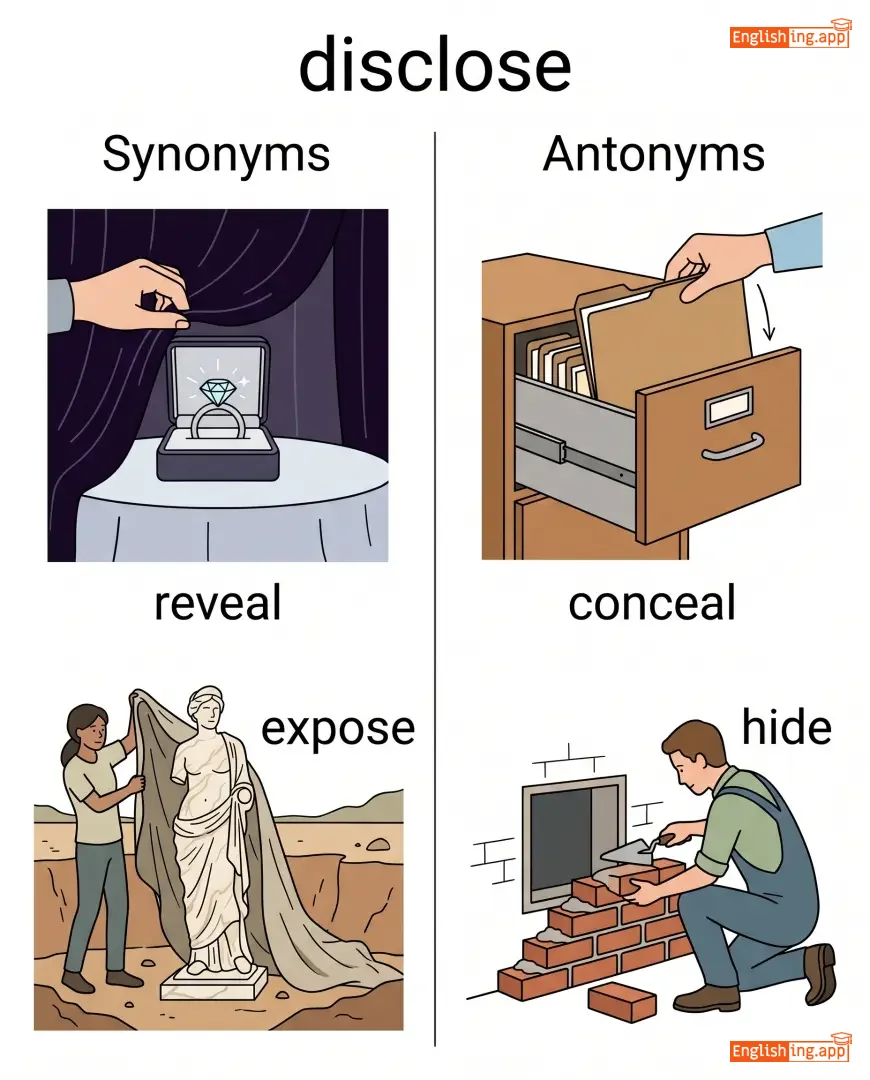
reveal, expose, uncover, divulge, announce
••••••
|
conceal, hide, suppress
••••••
|
disclose information, disclose details, disclose identity, disclose agreement
••••••
|
No •••••• |
|
#0
💸
|
/ˈdɪskaʊnt/
noun, verb
(ディスカウント)
••••••
|
- •••••• |
割引
waribiki
••••••
|
discounted
ディスカウントされた
••••••
|
discounted
ディスカウントされた
••••••
|
discounts
ディスカウントする
••••••
|
discounting
ディスカウントする
••••••
|
A reduction in the usual price of something; to reduce the price of something.
••••••
|
The store offered a 20% discount on all electronics.
その店はすべての電子製品に20%のディスカウントを提供しました。
••••••
|
その店はすべての電子製品に20%の割引を提供しました。
Sono mise wa subete no denshi seihin ni 20% no waribiki o teikyō shimashita.
••••••
|
discount rate
ディスカウント率
••••••
|
The interest rate charged to commercial banks by a central bank.
••••••
|
割引率
waribiki-ritsu
••••••
|
reduction, markdown, rebate, deduction, concession
••••••
|
surcharge, premium, markup
••••••
|
offer discount, receive discount, discount price, trade discount
••••••
|
割引は価格が下がること、財布にも優しい!
••••••
|
|
#0
⚠️
|
/dɪsˈɔːrdər/
noun
(ディスオーダー)
••••••
|
- •••••• |
障害
shōgai
••••••
|
- •••••• | - •••••• | - •••••• | - •••••• |
A state of confusion or lack of order; also a medical or mental condition.
••••••
|
The protest ended in disorder when the crowd became violent. |
抗議は群衆が暴力的になったときに障害に終わった。
Kōgi wa gunshū ga bōryokuteki ni natta toki ni shōgai ni owatta.
••••••
|
eating disorder |
A medical condition involving abnormal eating habits.
••••••
|
摂食障害
sesshoku shōgai
••••••
|
confusion, chaos, disturbance, illness, ailment
••••••
|
order, organization, harmony
••••••
|
mental disorder, physical disorder, cause disorder, public disorder
••••••
|
Disorderは障害を意味します、覚えておいて - 順序がなければ、障害があるということです。
••••••
|
|
#0
🏚️
|
/dɪsˈpleɪs/
verb
(ディスプレイス)
••••••
|
- •••••• |
追い出す
oidasu
••••••
|
displaced
ディスプレイスト
••••••
|
displaced
ディスプレイスト
••••••
|
displaces
ディスプレイセズ
••••••
|
displacing
ディスプレイシング
••••••
|
To force someone or something out of its usual place or position.
••••••
|
The flood displaced hundreds of families from their homes.
洪水は何百人もの家族を家から移動させました。
••••••
|
洪水は何百人もの家族を家から移動させました。
Kōzui wa nanbyakunin mo no kazoku o ie kara idō saserimashita.
••••••
|
displaced person
避難民
••••••
|
someone forced to leave their home, especially because of war or disaster
••••••
|
避難民
Hinannin
••••••
|
remove, replace, shift, expel, oust
••••••
|
retain, keep, maintain
••••••
|
displace workers, displace people, displace water, displace families
••••••
|
Displace は日本語で追い出す、家を追い出す意味です。
••••••
|
|
#0
🗑️
|
/dɪsˈpoʊzl/
noun
(ディスポーザル)
••••••
|
- •••••• |
廃棄
haiki
••••••
|
- •••••• | - •••••• | - •••••• | - •••••• |
the action or process of getting rid of something
••••••
|
The disposal of waste is crucial for maintaining a clean environment.
廃棄物の処理は清潔な環境を維持するために重要です。
••••••
|
廃棄物の処理は清潔な環境を維持するために重要です。
Haikibutsu no shori wa seiketsu na kankyou wo iji suru tame ni juuyou desu.
••••••
|
- •••••• | - •••••• | - •••••• |
removal, elimination, clearance, junking
••••••
|
retention, preservation
••••••
|
waste disposal, disposal process, proper disposal, disposal site
••••••
|
When you DISPOSE (廃棄) of waste, you 'dispose' of it into the trash can (ゴミ箱).
••••••
|
|
#0
❓
|
/ˈmɪsɪŋ/
adjective
(mísing)
••••••
|
|
行方不明
yūkōfumei
••••••
|
- •••••• | - •••••• | - •••••• | - •••••• |
not present or cannot be found
••••••
|
The keys are missing from the table.
de keys are missing from de table.
••••••
|
テーブルから鍵が行方不明です。
Tēburu kara kagi ga yūkōfumei desu.
••••••
|
missing in action
missing in aksion
••••••
|
not present or unaccounted for
••••••
|
行方不明の状態
yūkōfumei no jōtai
••••••
|
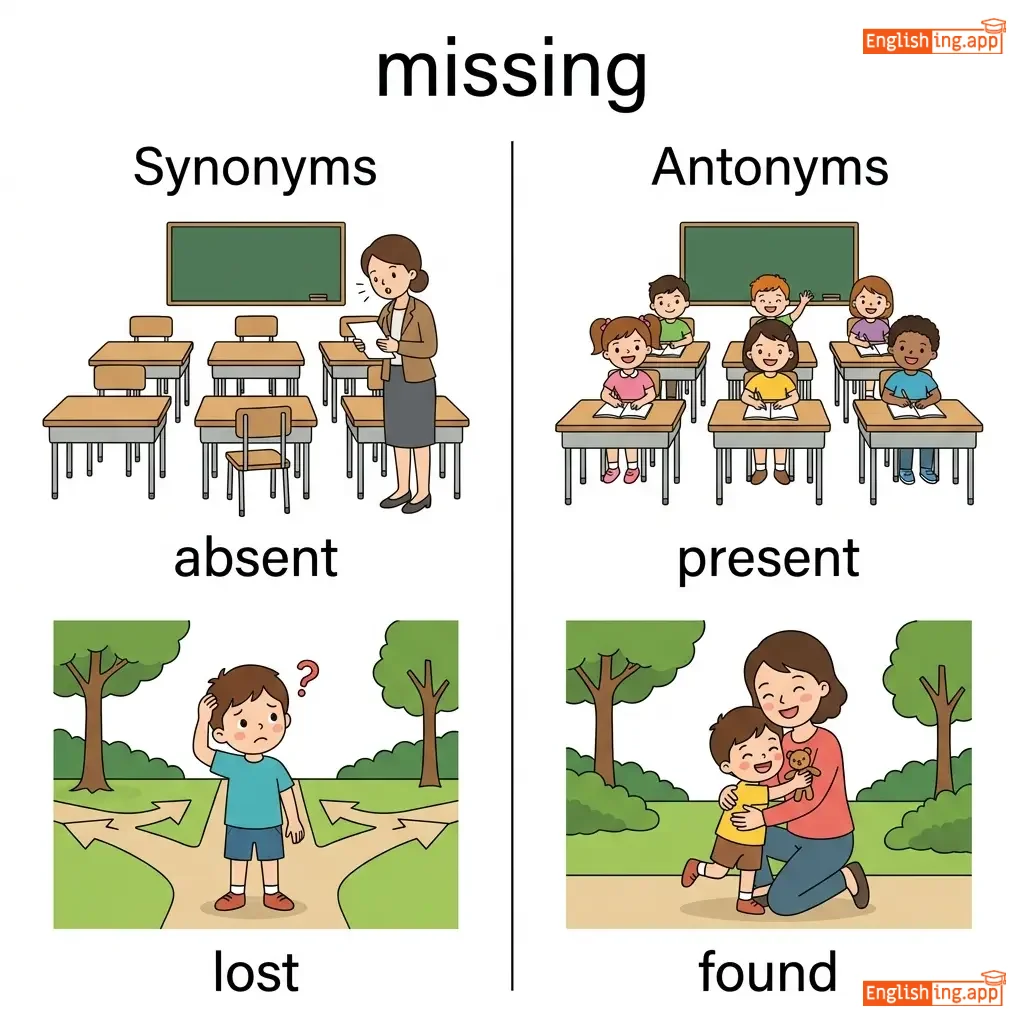
absent, lost, gone, vanished, misplaced
••••••
|
present, found
••••••
|
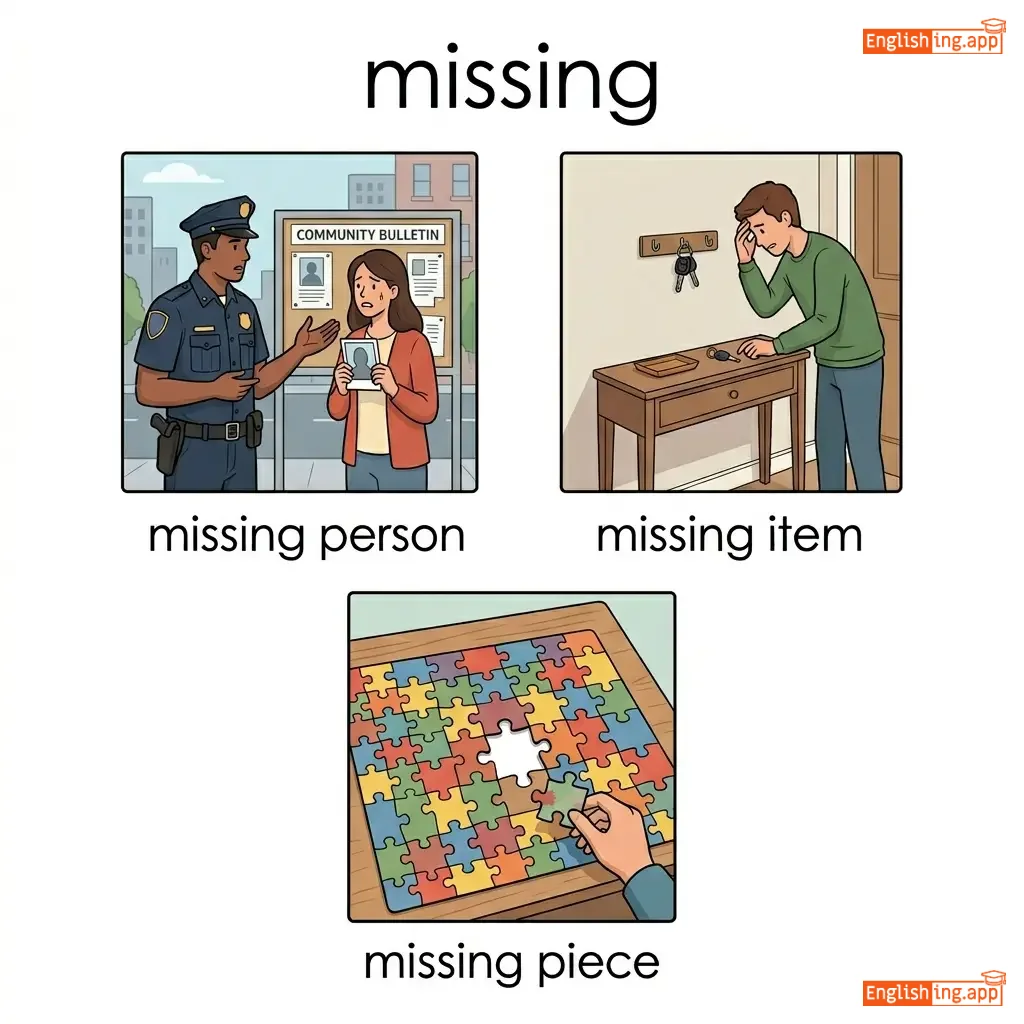
missing person, missing item, missing piece, missing child
••••••
|
Missing = 行方不明 – 何かが見つからない。
••••••
|
|
#0
👹
|
/ˈmɒnstər/
noun
(ハピネス)
••••••
|
- •••••• |
幸せ
shiawase
••••••
|
- •••••• | - •••••• | - •••••• | - •••••• |
an imaginary or large frightening creature
••••••
|
The child was afraid that a monster was hiding under the bed.
彼女は賞を受け取ったとき、自分の幸せを隠せなかった。
••••••
|
彼女は賞を受け取ったとき、自分の幸せを隠せなかった。
Kanojo wa shō o uketotta toki, jibun no shiawase o kakusenakatta.
••••••
|
monster hit
幸福の追求
••••••
|
a very successful or popular product or show
••••••
|
幸福の追求
kōfuku no suikyu
••••••
|
beast, creature, giant, demon, ogre
••••••
|
angel, human, friend
••••••
|
monster movie, sea monster, create a monster, monster hit
••••••
|
幸せ = Happiness — 幸せを求めて、いつも歩き続けよう!
••••••
|
|
#0
🙋♂️
|
/huːˈɛvər/
pronoun
(フーエヴァ)
••••••
|
- •••••• |
誰でも
dare demo
••••••
|
- •••••• | - •••••• | - •••••• | - •••••• |
any person who; no matter who
••••••
|
Whoever wants to join the trip must register today. |
誰でもこの旅行に参加したい場合は、今日中に登録する必要があります。
Dare demo kono ryokō ni sanka shitai baai wa, kyōjū ni tōroku suru hitsuyō ga arimasu.
••••••
|
- •••••• | - •••••• | - •••••• |
anyone, anybody, whosoever
••••••
|
none, nobody
••••••
|
whoever comes, whoever wants, whoever said, whoever did
••••••
|
Who + ever = 誰でも — whoever means 誰でも
••••••
|
|
#0
🚫
|
/wɪðˈaʊt/
preposition
(ウィズアウト)
••••••
|
- •••••• |
なし
nashi
••••••
|
- •••••• | - •••••• | - •••••• | - •••••• |
in the absence of, or not having something
••••••
|
He left without saying goodbye.
彼はさよならを言わずに出て行った。
••••••
|
彼はさよならを言わずに出て行った。
Kare wa sayonara o iwazu ni dete itta.
••••••
|
- •••••• | - •••••• | - •••••• |
lacking, absent, minus, excluding
••••••
|
with, having
••••••
|
without a doubt, without hesitation, without warning
••••••
|
なし (without) はすべてを失う、何も残らない
••••••
|
|
#0
🏋️♀️
|
/ˈwɜːrkaʊt/
noun
(ワークアウト)
••••••
|
- •••••• |
運動
undou
••••••
|
- •••••• | - •••••• | - •••••• | - •••••• |
a session of physical exercise or training to improve fitness or health
••••••
|
She does a full-body workout every morning before work. |
彼女は毎朝仕事の前に全身の運動をします。
Kanojo wa mai asa shigoto no mae ni zenshin no undou o shimasu.
••••••
|
intense workout |
a very demanding or vigorous exercise session
••••••
|
激しい運動
hageshii undou
••••••
|
exercise, training, session, fitness routine, practice
••••••
|
rest, inactivity, relaxation
••••••
|
daily workout, intense workout, gym workout, home workout
••••••
|
ジムでの ‘workout’ は体をフィットにするための運動 — 仕事前に運動する!
••••••
|
|
#0
✍️
|
/ˈrɪtən/
adjective
(リテン)
••••••
|
- •••••• |
書かれた
kakareta
••••••
|
- •••••• | - •••••• | - •••••• | - •••••• |
expressed in writing rather than spoken; composed or recorded in written form
••••••
|
The agreement must be in written form to be valid.
その契約は有効であるために書面でなければならない。
••••••
|
その契約は有効であるために書面でなければならない。
Sono keiyaku wa yūkō de aru tame ni shomen de nakereba naranai.
••••••
|
in black and white
白黒はっきり
••••••
|
clearly written or printed, leaving no doubt
••••••
|
白黒はっきり
shirokuro hakkiri
••••••
|
documented, recorded, drafted, inscribed, composed
••••••
|
spoken, oral, verbal
••••••
|
written form, written statement, written communication, written agreement
••••••
|
Written は日本語で書かれた、記録されたものを意味します ✍️
••••••
|
Vocabulary Quiz
Test your vocabulary by matching words with their translations or meanings.
Login to take the quiz
Comments (0)
Share your thoughts and join the discussion.
Join the discussion by logging in
Login to CommentNo comments yet
Be the first to share your thoughts!