

翻訳
過去
過去分詞
三人称単数
動名詞
意味
例文
例文の翻訳
同義語
対義語
コロケーション
ニーモニック
Swipe left or right, or use the buttons. Tap image to zoom.
例文の翻訳
単語
Lesson 58Lesson 58 - マスクトグル
|
絵文字
|
単語 | Images | 翻訳 | 意味 | 例文 | 例文の翻訳 | 同義語 | 対義語 | コロケーション | ニーモニック |
|---|---|---|---|---|---|---|---|---|---|---|
|
#1141
👍
|
/ˌrek.ə.menˈdeɪ.ʃən/
noun
(レコメンデーション)
••••••
|
- •••••• |
推薦
suisen
••••••
|
a suggestion that someone or something would be good or suitable for a particular job or purpose
••••••
|
I got this job based on a recommendation from my professor.
私は教授からの推薦でこの仕事を得ました。
••••••
|
私は教授からの推薦でこの仕事を得ました。
Watashi wa kyōju kara no suisen de kono shigoto o emashita.
••••••
|
suggestion, advice, endorsement, proposal
••••••
|
warning, discouragement, disapproval
••••••
|
make a recommendation, follow recommendations, letter of recommendation
••••••
|
推薦が成功への道を開く。
••••••
|
|
#1142
✨
|
/rɪˈfɔːr.mər/
noun
(リフォーマー)
••••••
|
- •••••• |
改革者
kaikakusha
••••••
|
a person who works to bring about positive changes in society or institutions
••••••
|
The social reformer dedicated her life to improving education for all children.
社会的な改革者は、すべての子供たちの教育を改善するために自分の人生を捧げました
••••••
|
社会的な改革者は、すべての子供たちの教育を改善するために自分の人生を捧げました。
shakaiteki na kaikakusha wa, subete no kodomotachi no kyoiku o kaizen suru tame ni jibun no jinsei o sasagemashita
••••••
|
revolutionary, progressive, activist, modernizer
••••••
|
conservative, traditionalist, reactionary
••••••
|
social reformer, political reformer, educational reformer, reform movement
••••••
|
A reformer changes society, just like a teacher changes a student's future.
••••••
|
|
#1143
🤝
|
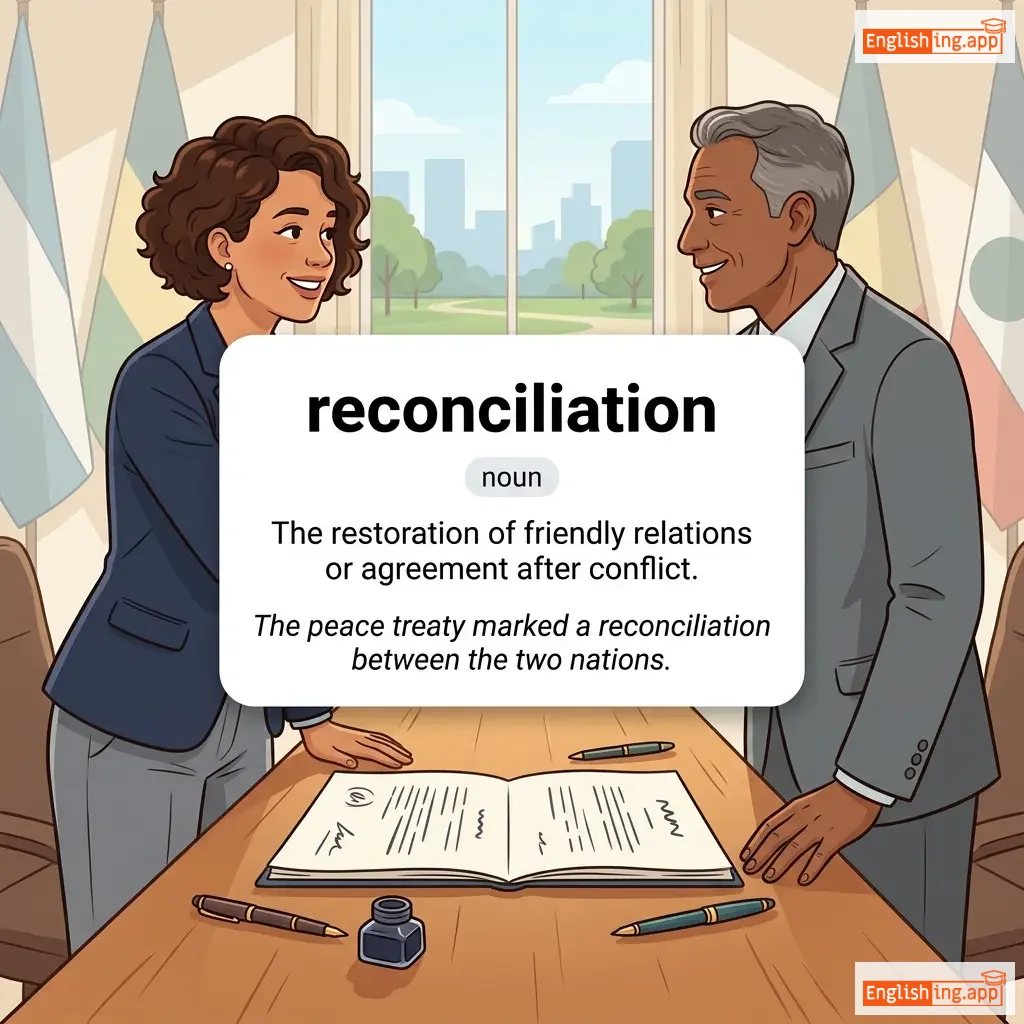
/ˌrek.ən.sɪl.iˈeɪ.ʃən/
noun
(和解)
••••••
|
|
和解
wakai
••••••
|
a situation in which two people or groups of people become friendly again after they have argued; the process of making two opposite beliefs, ideas, or situations agree
••••••
|
The reconciliation between the two families brought peace to the community. |
二つの家族の和解は、コミュニティに平和をもたらした。
Futatsu no kazoku no wakai wa, komyuniti ni heiwa o motarashita.
••••••
|
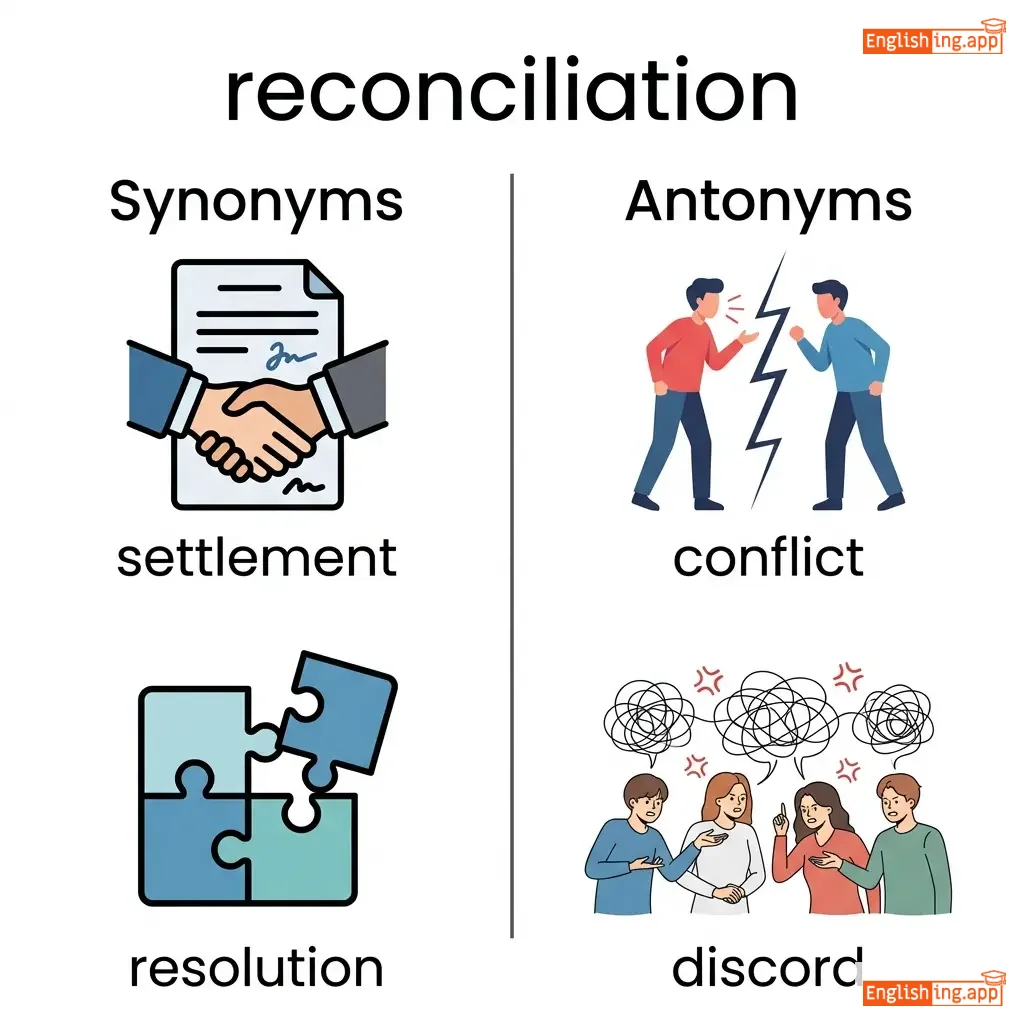
reunion, harmony, settlement, peace-making
••••••
|
conflict, discord, separation, estrangement
••••••
|
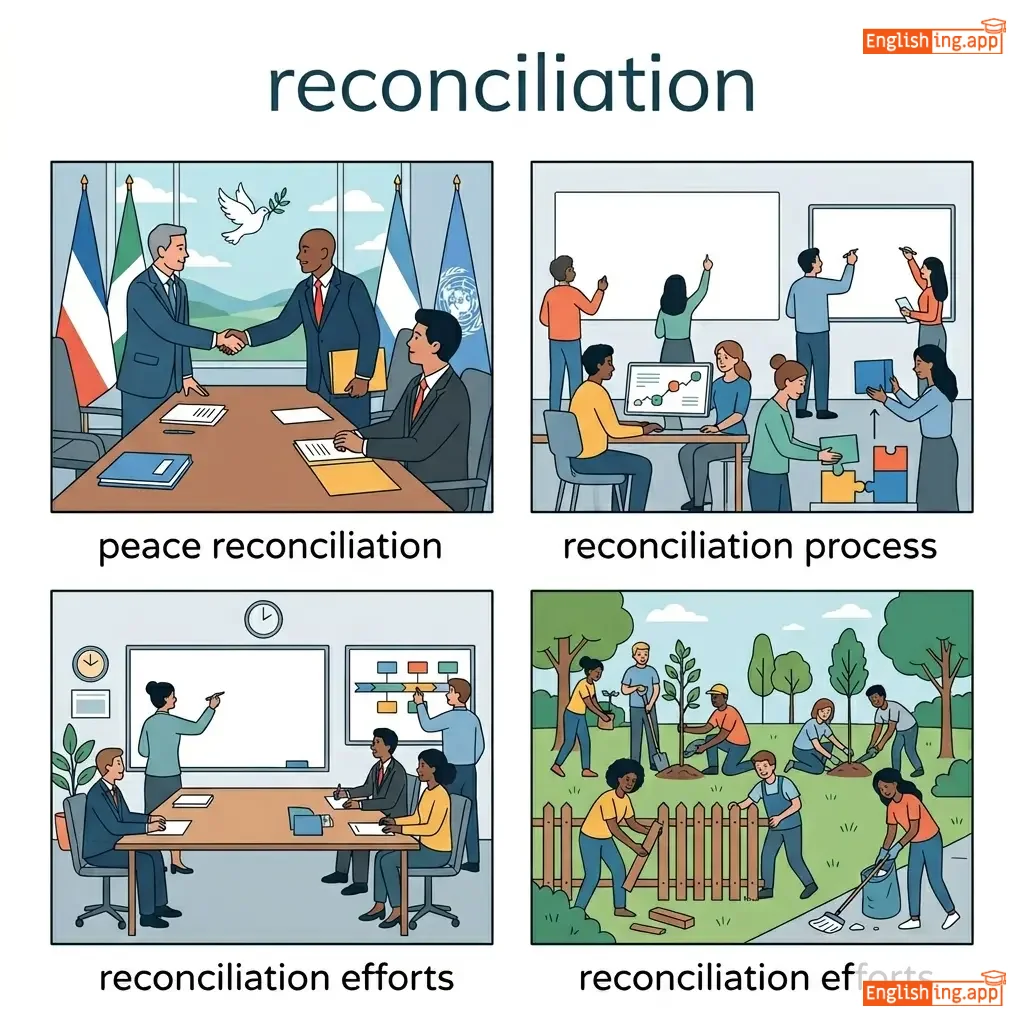
family reconciliation, national reconciliation, seek reconciliation
••••••
|
和解: 言い争いを終わらせ、友情を取り戻す
••••••
|
|
#1144
🥤
|
/rɪˈfreʃ.mənt/
noun
(リフレッシュメント)
••••••
|
- •••••• |
軽食
keishoku
••••••
|
food and drink that is served as a light meal; something that refreshes
••••••
|
We served light refreshments after the meeting. |
会議の後、軽食を提供しました。
kaigi no ato, keishoku o teikyō shimashita
••••••
|
snacks, drinks, food, beverages
••••••
|
main meal, feast, banquet
••••••
|
light refreshments, serve refreshments, refreshment break, refreshment stand
••••••
|
軽食 (keishoku) is a light snack, just like a refreshing drink after a long meeting.
••••••
|
|
#1145
🎮
|
/ˌrek.riˈeɪ.ʃən/
noun
(レクリエーション)
••••••
|
- •••••• |
レクリエーション活動; 何かを再び存在させるプロセス
rekurieeshon katsudou; nanika wo futatabi sonzai saseru purosesu
••••••
|
an activity that is done for enjoyment; the process of making something exist again
••••••
|
The park provides recreation facilities for children and adults. |
公園は子供と大人のためにレクリエーション施設を提供しています。
Kouen wa kodomo to otona no tame ni rekurieeshon shisetsu wo teikyou shiteimasu.
••••••
|
entertainment, amusement, leisure, fun
••••••
|
work, labor, duty, obligation
••••••
|
recreation center, outdoor recreation, recreation activities
••••••
|
レクリエーションで楽しい時間を過ごそう
••••••
|
|
#1146
🏠
|
/ˌref.jʊˈdʒiː/
noun
(レフュジー)
••••••
|
- •••••• |
難民
nanmin
••••••
|
a person who has been forced to leave their country in order to escape war, persecution, or natural disaster
••••••
|
The refugee camp provided temporary shelter for thousands of displaced families. |
難民キャンプは、何千人もの避難した家族に一時的な避難所を提供しました。
Nanmin kyanpu wa, nanzen-nin mo no hinan shita kazoku ni ichiji-teki na hinanjo wo teikyoushita
••••••
|
asylum seeker, displaced person, exile, migrant
••••••
|
citizen, resident, native
••••••
|
refugee camp, refugee crisis, political refugee, refugee status
••••••
|
難民 = 逃げるための避難
••••••
|
|
#1147
🔄
|
/rɪˈkɜr.əns/
noun
(リカーランス)
••••••
|
- •••••• |
再発
saihatsu
••••••
|
the fact of something happening again; an instance of something happening again
••••••
|
The doctor was concerned about the recurrence of the patient's symptoms.
医師は患者の症状の再発について懸念していました。
••••••
|
医師は患者の症状の再発について懸念していました。
Ishi wa kanja no shoujou no saihatsu ni tsuite kenen shite imashita.
••••••
|
repetition, return, reappearance, revival
••••••
|
cessation, ending, conclusion, finality
••••••
|
prevent recurrence, cancer recurrence, recurrence rate
••••••
|
再発 - 考えてみてください、何かが繰り返されること。
••••••
|
|
#1148
❌
|
/rɪˈfjuː.zəl/
noun
(リフューザル)
••••••
|
- •••••• |
拒否; 拒絶
rifyūzaru
••••••
|
the act of saying no to something or not accepting something
••••••
|
His refusal to cooperate made the project more difficult. |
彼の協力拒否はプロジェクトをさらに難しくした。
Kare no kyōryoku kyohi wa purojekuto o sara ni muzukashiku shita.
••••••
|
rejection, denial, decline, negation
••••••
|
acceptance, approval, agreement, consent
••••••
|
flat refusal, outright refusal, refuse to accept, refusal to comply
••••••
|
誰かが協力を拒否すると、すべてが難しくなります。
••••••
|
|
#1149
🙏
|
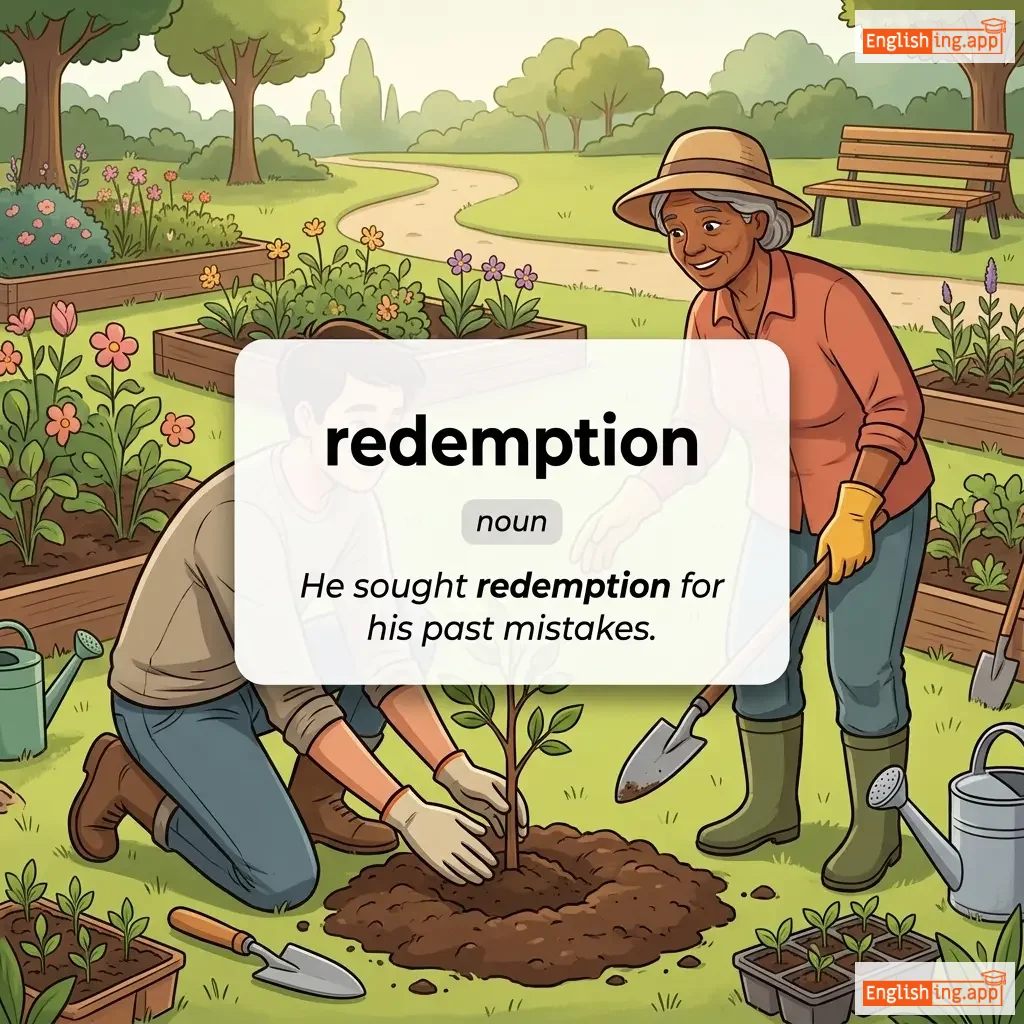
/rɪˈdemp.ʃən/
noun
(rɪˈdɛmpʃən)
••••••
|
|
贖い; 救い;
akune; sukui;
••••••
|
the act of saving or being saved from sin, error, or evil; the action of regaining or gaining possession of something in exchange for payment
••••••
|
He sought redemption for his past mistakes through charitable work.
彼は過去の過ちに対する贖いを慈善活動を通じて求めました。
••••••
|
彼は過去の過ちに対する贖いを慈善活動を通じて求めました。
Kare wa kako no ayamachi ni taisuru akune o jizen katsudō o tōshite motomemashita.
••••••
|
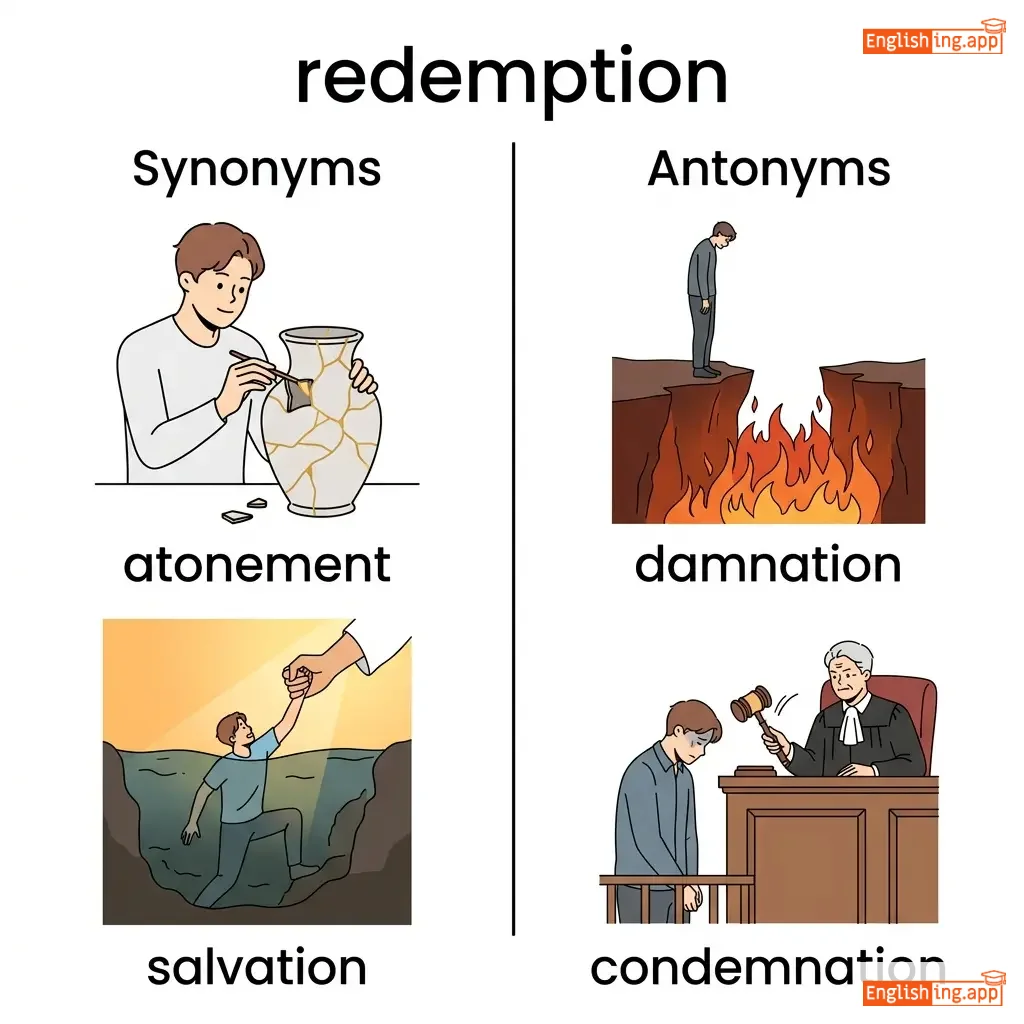
salvation, deliverance, recovery, atonement
••••••
|
damnation, condemnation, punishment, forfeiture
••••••
|
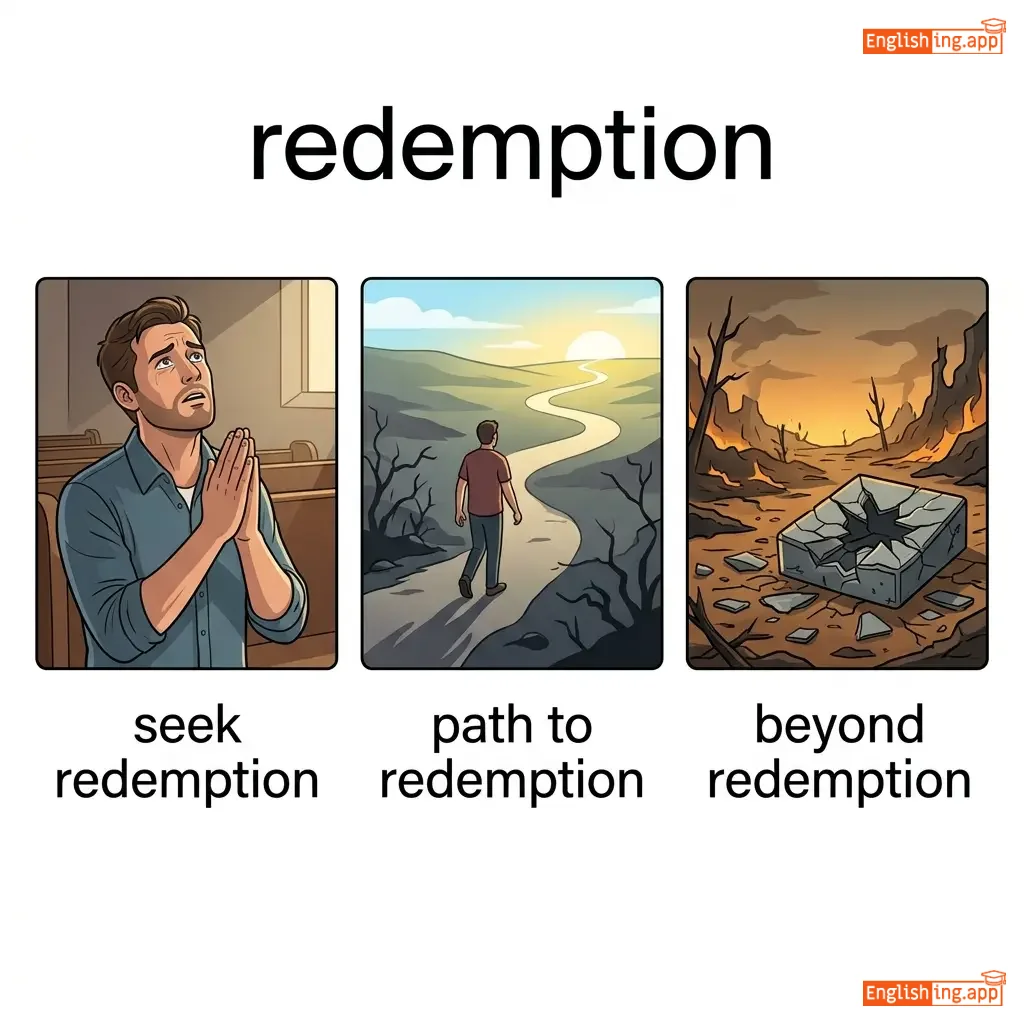
seek redemption, path to redemption, redemption value
••••••
|
慈善活動で過去の過ちを贖い、心の平和を得る
••••••
|
|
#1150
🗑️
|
/rɪˈfjuːz/
noun
(リフューズ)
••••••
|
- •••••• |
ゴミ; 拒否
rifyūzu
••••••
|
waste material; garbage; to decline or reject something
••••••
|
Please put the refuse in the designated bins.
指定されたゴミ箱にゴミを入れてください。
••••••
|
指定されたゴミ箱にゴミを入れてください。
Shitei sareta gomibako ni gomi o irete kudasai.
••••••
|
garbage, waste, trash, rubbish, decline, reject
••••••
|
accept, agree, treasure, valuables
••••••
|
refuse collection, household refuse, refuse disposal, refuse to answer
••••••
|
Refuse in Japanese means ゴミ (gomi), which is trash.
••••••
|
|
#1151
📉
|
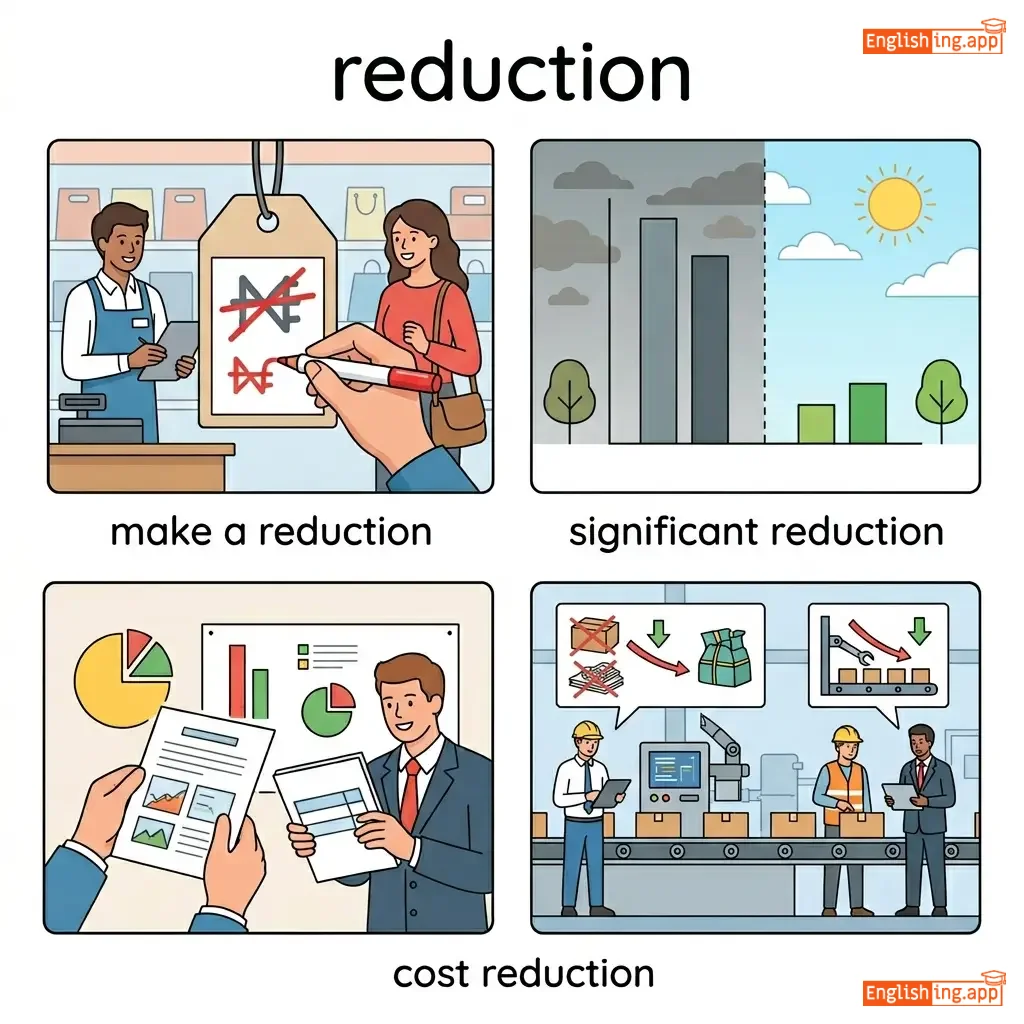
/rɪˈdʌk.ʃən/
noun
(リダクション)
••••••
|
|
削減
ridakushon
••••••
|
the action or fact of making a specified thing smaller or less in amount, degree, or size
••••••
|
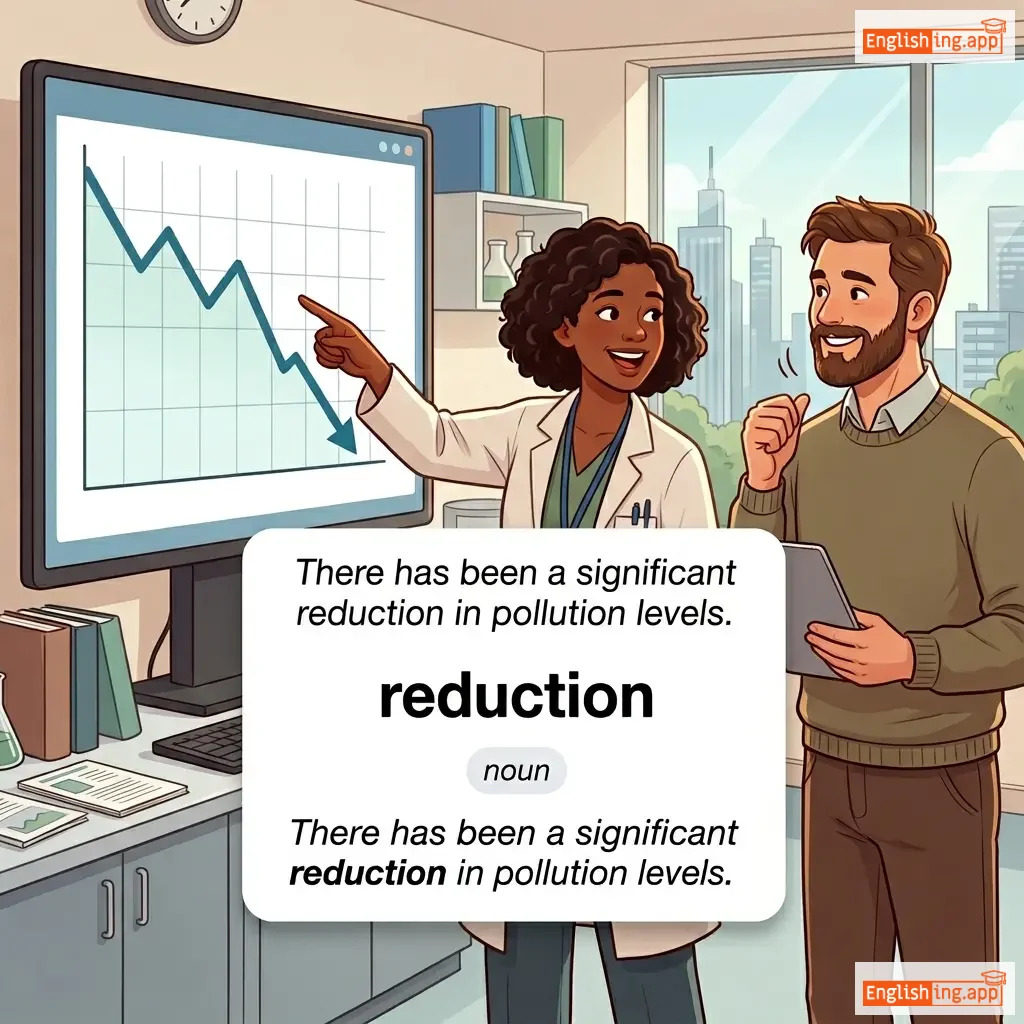
The company announced a reduction in staff to cut costs.
同社はコスト削減のために人員削減を発表した。
••••••
|
同社はコスト削減のために人員削減を発表した。
Dousha wa kosuto sakugen no tame ni jinin sakugen o happyou shita
••••••
|
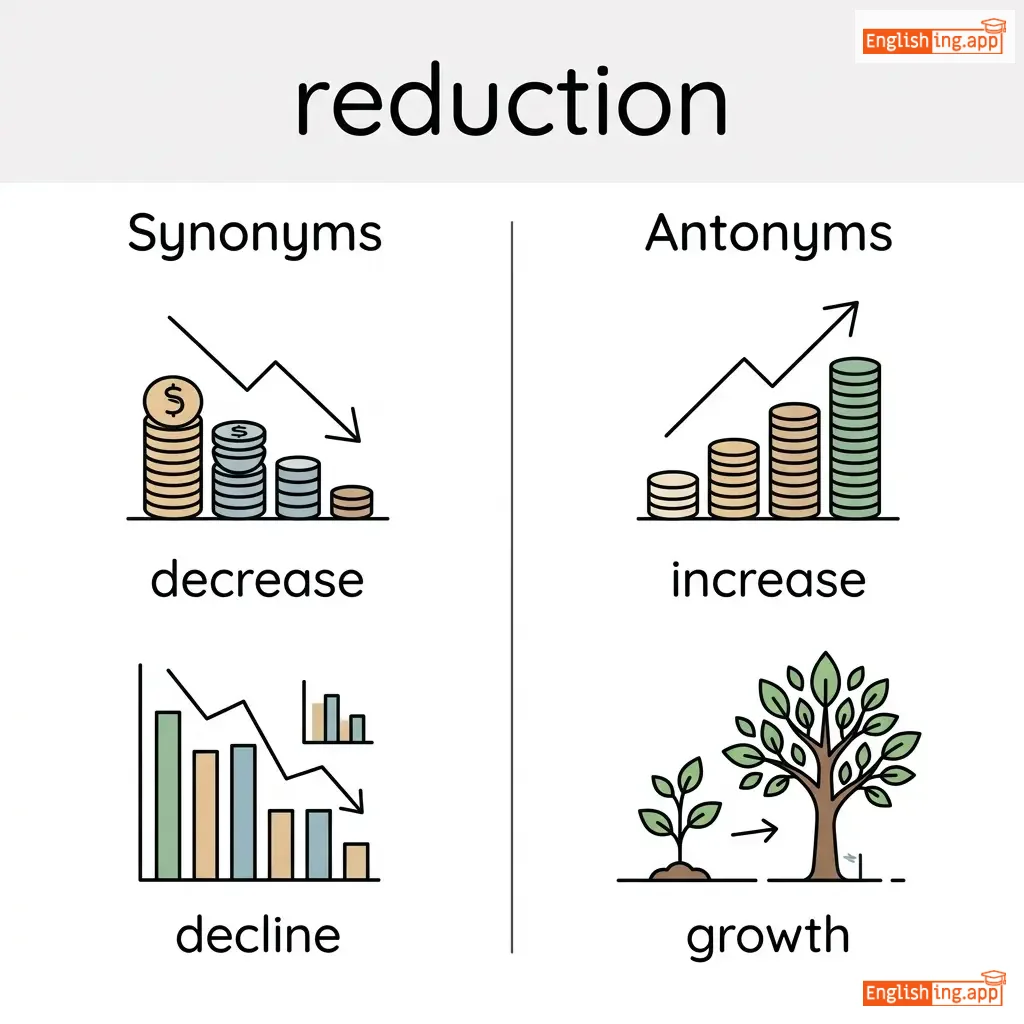
decrease, cut, decline, diminution
••••••
|
increase, growth, expansion, enlargement
••••••
|
cost reduction, price reduction, reduction in size
••••••
|
ridakushon: imagine a red U cutting costs, 削減をイメージしよう
••••••
|
|
#1152
🗺️
|
/ˈriː.dʒən/
noun
(rijon)
••••••
|
- •••••• |
地域; 区域; 地帯
chiiki; kuiki; chitai
••••••
|
a particular area or part of a country or the world
••••••
|
This region is famous for its wine production.
この地域はワイン生産で有名です。
••••••
|
この地域はワイン生産で有名です。
Kono chiiki wa wain seisan de yūmei desu.
••••••
|
area, zone, territory, district, province
••••••
|
center, point, specific location
••••••
|
geographical region, remote region, coastal region, mountainous region
••••••
|
Region in Japanese is a specific area of a larger whole!
••••••
|
|
#1153
♻️
|
/rɪˈdʌn.dəns/
noun
(リダンダンス)
••••••
|
- •••••• |
冗長
jōchō
••••••
|
the state of being not or no longer needed or useful; superfluous repetition of information
••••••
|
The document contained redundance that made it unnecessarily long. |
その文書には冗長性が含まれており、不必要に長くなっていました。
sono bunsho ni wa jōchō-sei ga fukumarete ori, fuhitsuyō ni nagaku natte imashita.
••••••
|
superfluity, excess, surplus, repetition
••••••
|
necessity, shortage, scarcity, deficiency
••••••
|
data redundance, redundance in writing, avoid redundance
••••••
|
必要以上に情報を繰り返すのは冗長です。
••••••
|
|
#1154
😞
|
/rɪˈɡret/
noun
(リグレット)
••••••
|
- •••••• |
後悔
kōkai
••••••
|
a feeling of sadness or disappointment about something that has happened or been done
••••••
|
She felt deep regret about her harsh words. |
彼女は自分の辛辣な言葉に深い後悔を感じていました。
Kanojo wa jibun no shinratsu na kotoba ni fukai kōkai o kanjite imashita.
••••••
|
remorse, sorrow, guilt, repentance
••••••
|
satisfaction, contentment, pride, joy
••••••
|
deep regret, express regret, regret deeply, no regrets
••••••
|
後悔 = 行ったことを後で振り返るときの感情
••••••
|
|
#1155
🤢
|
/riːk/
noun
(リーク)
••••••
|
- •••••• |
悪臭がする; 不快または望ましくない印象を与える
akushu ga suru; fukai matawa nozomashikunai inshou wo ataeru
••••••
|
to have a very unpleasant smell; to give a strong impression of something unpleasant or undesirable
••••••
|
The garbage can reeks of rotten food. |
ゴミ箱は腐った食べ物の臭いがする。
gomibako wa kusatta tabemono no nioi ga suru.
••••••
|
stink, smell, stench, emit odor
••••••
|
fragrance, perfume, sweet smell, aroma
••••••
|
reek of alcohol, reek with sweat, reek of corruption
••••••
|
ゴミ箱の臭い、まるで腐った食べ物
••••••
|
|
#1156
⏰
|
/ˌreɡ.jʊˈlær.ɪ.ti/
noun
(レギュラリティ)
••••••
|
- •••••• |
規則正しさ
kisoku tadashisa
••••••
|
the quality of being regular; occurring at fixed intervals or in a consistent pattern
••••••
|
The regularity of his exercise routine helped him stay healthy. |
彼の運動習慣の規則正しさが健康を維持するのに役立ちました。
kare no undō shūkan no kisoku tadashisa ga kenkō o iji suru no ni yakudachimashita
••••••
|
consistency, routine, pattern, frequency
••••••
|
irregularity, randomness, chaos, inconsistency
••••••
|
with regularity, mathematical regularity, clockwork regularity, maintain regularity
••••••
|
規則正しさは、毎日の習慣のように、生活に秩序をもたらします
••••••
|
|
#1157
📚
|
/ˈref.ər.əns/
noun
(リファレンス)
••••••
|
- •••••• |
参考文献
sankō bunken
••••••
|
the action of mentioning or alluding to something; a source of information
••••••
|
Please provide references to support your research claims. |
研究の主張を支持するために参考文献を提供してください。
kenkyū no shuchō o shiji suru tame ni sankō bunken o teikyō shite kudasai.
••••••
|
citation, source, mention, allusion
••••••
|
ignorance, omission, exclusion, disregard
••••••
|
make reference to, reference book, character reference
••••••
|
参考文献は研究をサポートします。
••••••
|
|
#1158
🎭
|
/rɪˈhɜːr.səl/
noun
(リハーサル)
••••••
|
- •••••• |
リハーサル; 公演の練習
rihasaru
••••••
|
a practice performance of a play, concert, or other work for later public performance
••••••
|
The final rehearsal before opening night went perfectly.
開幕前の最後のリハーサルは完璧でした。
••••••
|
開幕前の最後のリハーサルは完璧でした。
kaimaku mae no saigo no rihāsaru wa kanpeki deshita
••••••
|
practice, drill, run-through, preparation
••••••
|
performance, show, actual event
••••••
|
dress rehearsal, final rehearsal, wedding rehearsal, rehearsal dinner
••••••
|
リハーサル = 舞台で最後の練習をすること
••••••
|
|
#1159
🪞
|
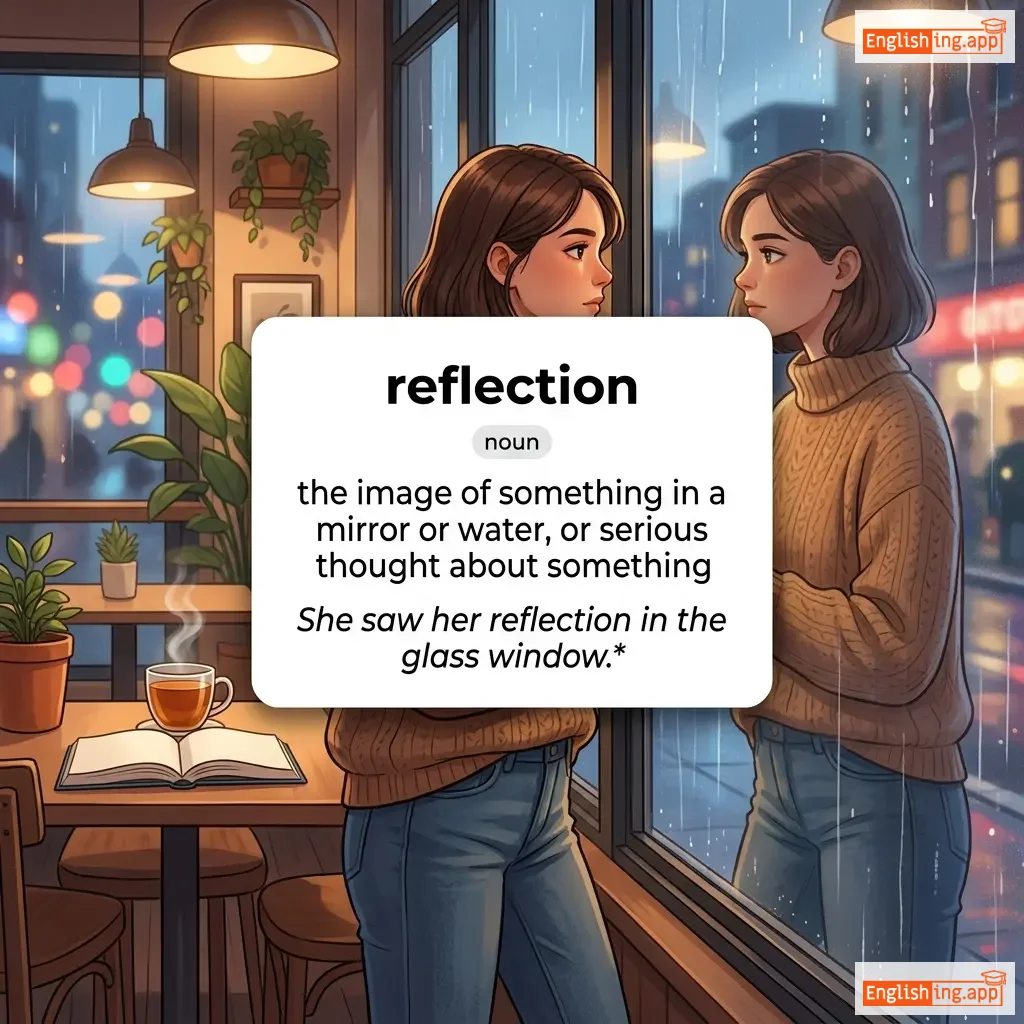
/rɪˈflek.ʃən/
noun
(リフレクション)
••••••
|
|
反射
hansha
••••••
|
the image of something in a mirror or on any reflective surface; serious thought or consideration
••••••
|
She saw her reflection in the water and started thinking deeply. |
彼女は水面に自分の反射を見て、深く考え始めました。
Kanojo wa minamo ni jibun no hansha o mite, fukaku kangae hajimemashita.
••••••
|
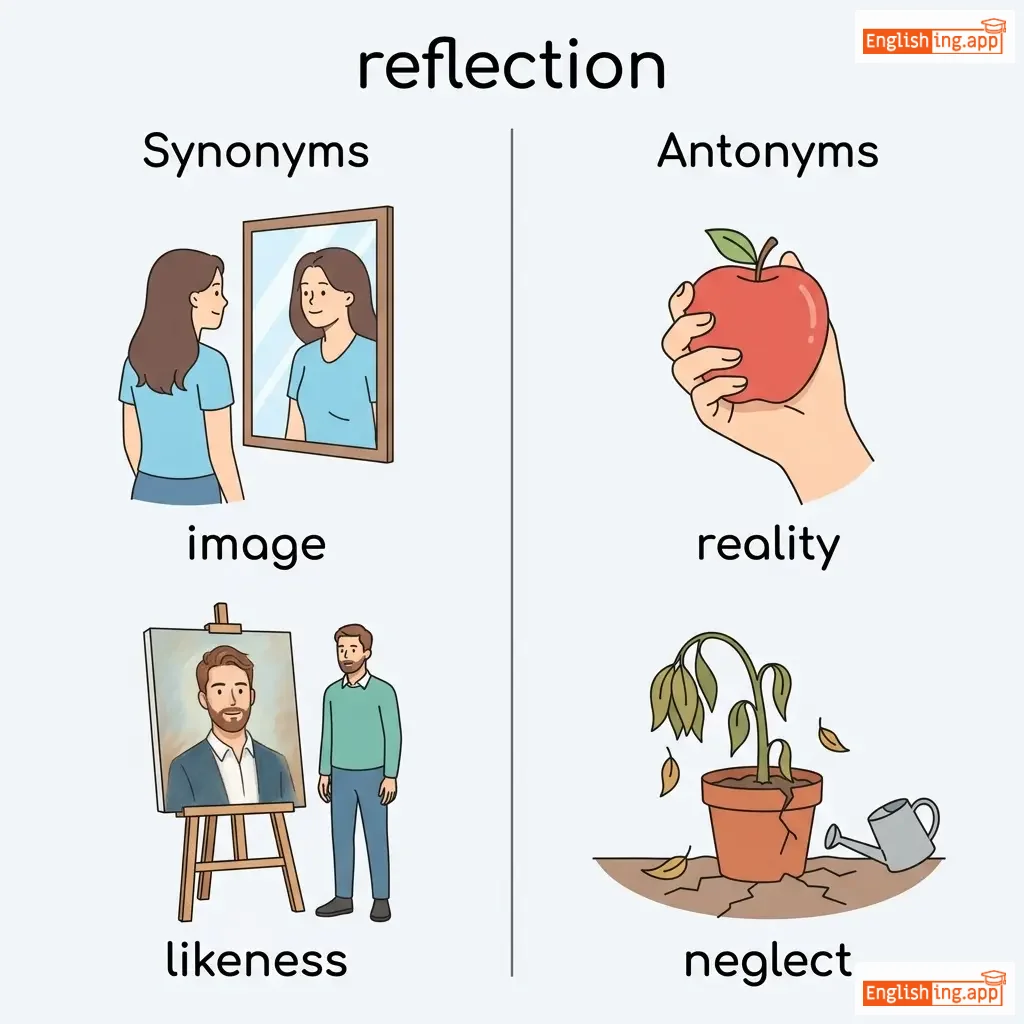
mirror image, contemplation, thought, consideration
••••••
|
reality, substance, impulsiveness, thoughtlessness
••••••
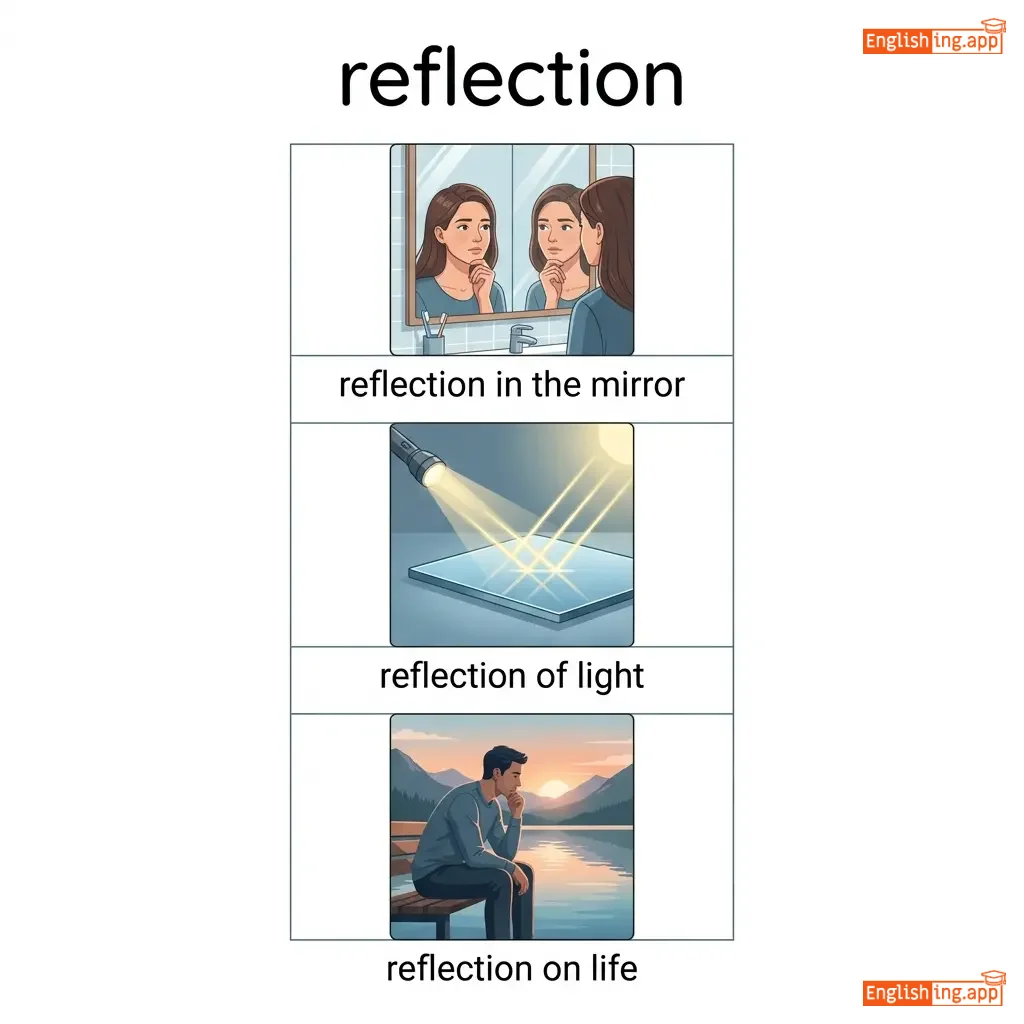
|
mirror reflection, deep reflection, reflection on life
••••••
|
反射は鏡の中での深い思考
••••••
|
|
#1160
👨👩👧👦
|
/rɪˈleɪ.ʃən/
noun
(リレーション)
••••••
|
- •••••• |
関係; 親戚
kankei; shinseki
••••••
|
the way in which two or more people or things are connected; a family member
••••••
|
They have a strong business relation that has lasted for years. |
彼らは長年続く強力なビジネス関係を持っています。
Karera wa naganen tsudzuku kyouryoku na bijinesu kankei wo motteimasu
••••••
|
relationship, connection, association, kinship
••••••
|
disconnection, separation, isolation
••••••
|
family relation, business relation, close relation, diplomatic relations
••••••
|
関係とは二者間、あるいは多者間のつながりで、たとえば家族関係のようなものです。
••••••
|
Vocabulary Quiz
Test your vocabulary by matching words with their translations or meanings.
Login to take the quiz
Comments (0)
Share your thoughts and join the discussion.
Join the discussion by logging in
Login to CommentNo comments yet
Be the first to share your thoughts!