

Обновитесь для доступа ко всему словарю
Получите неограниченный доступ ко всем словам с подпиской Pro
Обновить до ProПеревод
Прошедшее
Причастие прошедшего времени
Третье лицо единственного числа
Герундий
Значение
Пример предложения
Перевод примера предложения
Синонимы
Антонимы
Коллокации
Мнемоника


Swipe left or right, or use the buttons. Tap image to zoom.
Обновитесь для доступа ко всем предложениям
Получите неограниченный доступ ко всем предложениям с подпиской Pro
Обновить до ProПеревод примера предложения
Слово
Lesson 58Lesson 58 - Переключатель маски
|
Эмодзи
|
Слово | Images | Перевод | Значение | Пример предложения | Перевод примера предложения | Синонимы | Антонимы | Коллокации | Мнемоника |
|---|---|---|---|---|---|---|---|---|---|---|
|
#1141
👍
|
/ˌrek.ə.menˈdeɪ.ʃən/
noun
(рекомендация)
••••••
|
- •••••• |
рекомендация
rekomendatsiya
••••••
|
a suggestion that someone or something would be good or suitable for a particular job or purpose
••••••
|
I got this job based on a recommendation from my professor.
Я получил эту работу по рекомендации моего профессора.
••••••
|
Я получил эту работу по рекомендации моего профессора.
Ya poluchil etu rabotu po rekomendatsii moyego professora.
••••••
|
suggestion, advice, endorsement, proposal
••••••
|
warning, discouragement, disapproval
••••••
|
make a recommendation, follow recommendations, letter of recommendation
••••••
|
Рекомендации ведут к успеху.
••••••
|
|
#1142
✨
|
/rɪˈfɔːr.mər/
noun
(реформер)
••••••
|
- •••••• |
реформатор
reformator
••••••
|
a person who works to bring about positive changes in society or institutions
••••••
|
The social reformer dedicated her life to improving education for all children.
социальный реформатор посвятил свою жизнь улучшению образования для всех детей
••••••
|
Социальный реформатор посвятил свою жизнь улучшению образования для всех детей.
social'nyy reformator posvyatil svoyu zhizn' uluchsheniyu obrazovaniya dlya vsekh detey
••••••
|
revolutionary, progressive, activist, modernizer
••••••
|
conservative, traditionalist, reactionary
••••••
|
social reformer, political reformer, educational reformer, reform movement
••••••
|
A reformer works to change society, like a gardener works to cultivate plants.
••••••
|
|
#1143
🤝
|
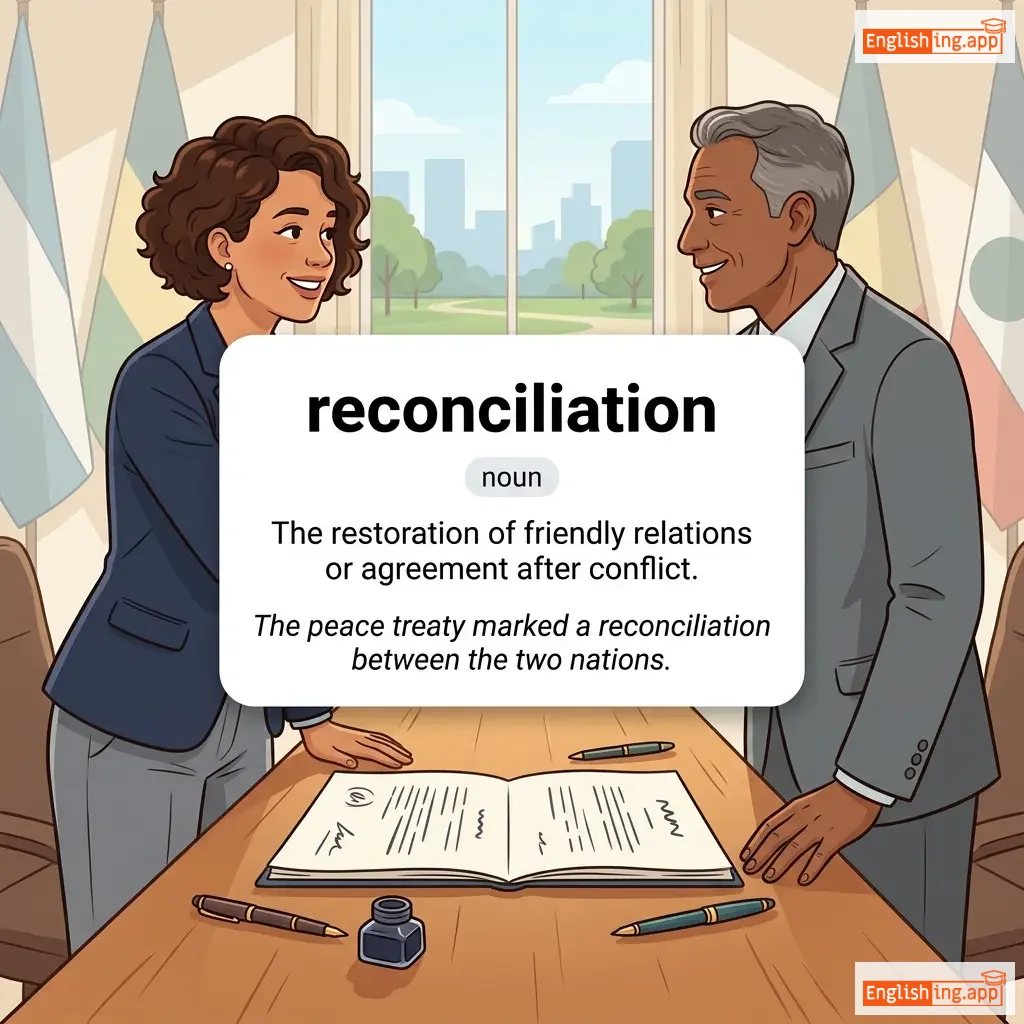
/ˌrek.ən.sɪl.iˈeɪ.ʃən/
noun
(реконсилиация)
••••••
|
|
примирение
prимирeniye
••••••
|
a situation in which two people or groups of people become friendly again after they have argued; the process of making two opposite beliefs, ideas, or situations agree
••••••
|
The reconciliation between the two families brought peace to the community. |
Примирение между двумя семьями принесло мир в сообщество.
Primireniye mezhdu dvumya sem'yami prineslo mir v soobshchestvo.
••••••
|
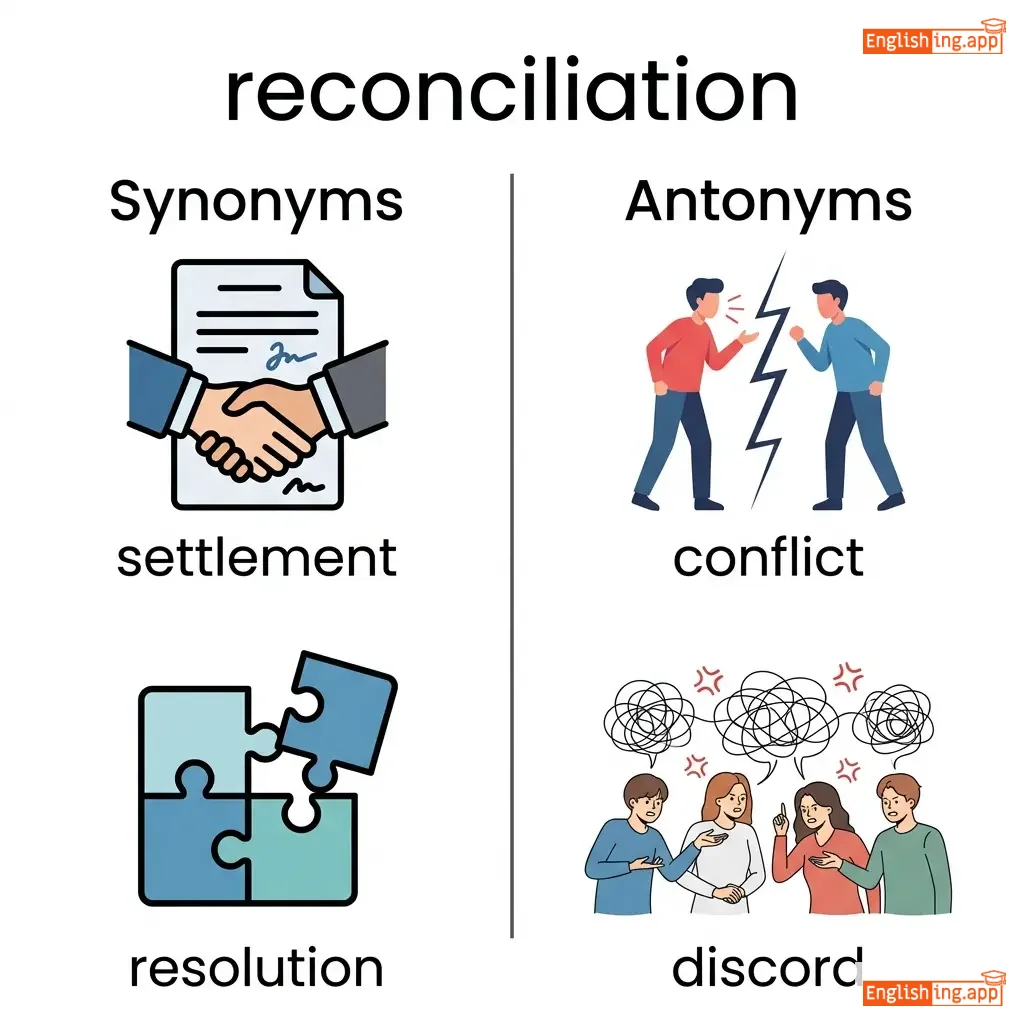
reunion, harmony, settlement, peace-making
••••••
|
conflict, discord, separation, estrangement
••••••
|
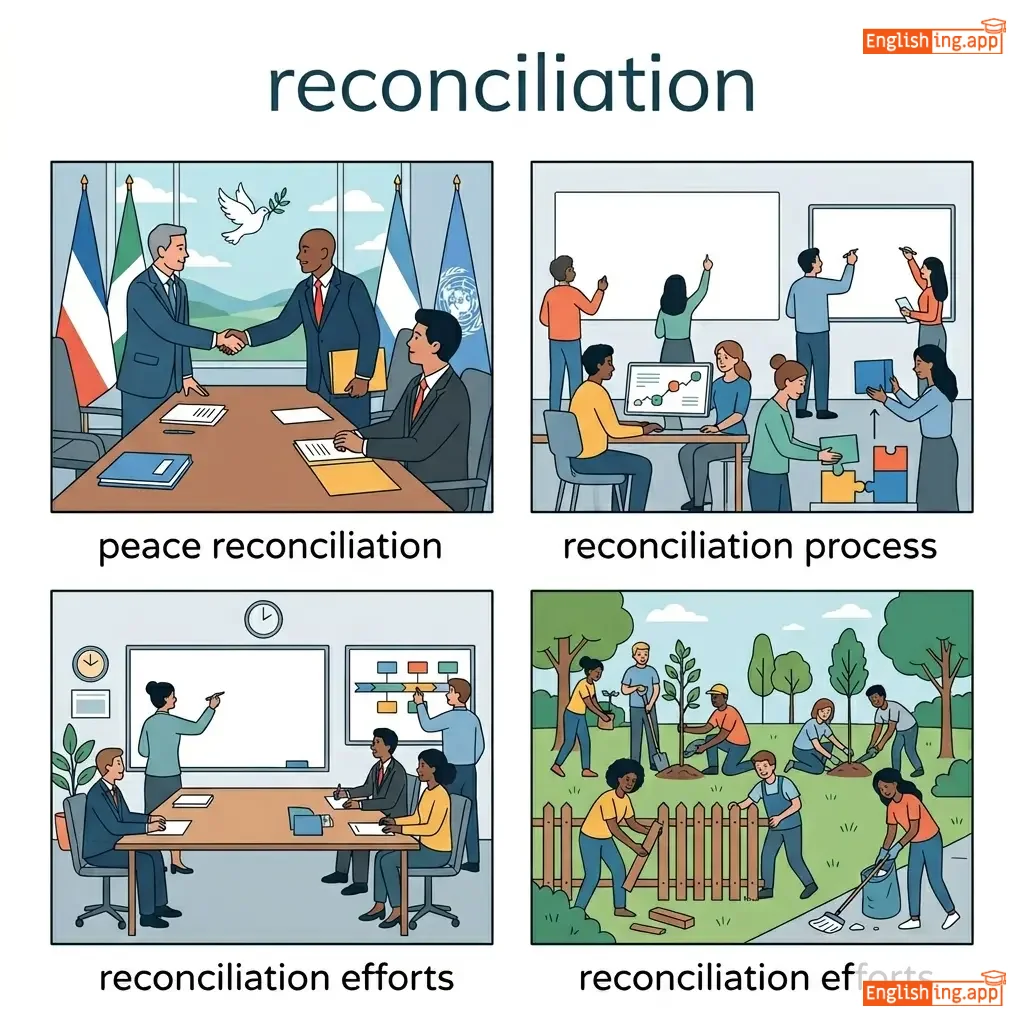
family reconciliation, national reconciliation, seek reconciliation
••••••
|
Примирение: Два человека, которые снова становятся друзьями.
••••••
|
|
#1144
🥤
|
/rɪˈfreʃ.mənt/
noun
(рифрешмент)
••••••
|
- •••••• |
освежение
osvezhenie
••••••
|
food and drink that is served as a light meal; something that refreshes
••••••
|
We served light refreshments after the meeting. |
Мы подали легкие освежения после встречи.
my podali legkie osvezheniya posle vstrechi
••••••
|
snacks, drinks, food, beverages
••••••
|
main meal, feast, banquet
••••••
|
light refreshments, serve refreshments, refreshment break, refreshment stand
••••••
|
Освежение is like a snack that refreshes you, just like a cold drink after work.
••••••
|
|
#1145
🎮
|
/ˌrek.riˈeɪ.ʃən/
noun
(рекреация)
••••••
|
- •••••• |
досуг; процесс возрождения чего-либо
dosug; protsess vozrozhdeniya chego-libo
••••••
|
an activity that is done for enjoyment; the process of making something exist again
••••••
|
The park provides recreation facilities for children and adults. |
Парк предоставляет развлекательные объекты для детей и взрослых.
Park predostavlyaet razvlekatel'nye ob'ekty dlya detey i vzroslykh.
••••••
|
entertainment, amusement, leisure, fun
••••••
|
work, labor, duty, obligation
••••••
|
recreation center, outdoor recreation, recreation activities
••••••
|
Досуг наполняет нас радостью.
••••••
|
|
#1146
🏠
|
/ˌref.jʊˈdʒiː/
noun
(рефюжи)
••••••
|
- •••••• |
беженец
bezhenets
••••••
|
a person who has been forced to leave their country in order to escape war, persecution, or natural disaster
••••••
|
The refugee camp provided temporary shelter for thousands of displaced families. |
Лагерь беженцев предоставил временное укрытие тысячам перемещенных семей.
Lagier bezhentsev predostavil vremennoye ukrytiye tysyacham peremeshchennykh semey
••••••
|
asylum seeker, displaced person, exile, migrant
••••••
|
citizen, resident, native
••••••
|
refugee camp, refugee crisis, political refugee, refugee status
••••••
|
Беженец = убегающий от бедствий и войн
••••••
|
|
#1147
🔄
|
/rɪˈkɜr.əns/
noun
(рекурренция)
••••••
|
- •••••• |
рецидив
retsidiv
••••••
|
the fact of something happening again; an instance of something happening again
••••••
|
The doctor was concerned about the recurrence of the patient's symptoms.
Доктор был обеспокоен повторением симптомов пациента.
••••••
|
Доктор был обеспокоен повторением симптомов пациента.
Doktor byl obespokoyen povtoryeniem simptomov patsiyenta.
••••••
|
repetition, return, reappearance, revival
••••••
|
cessation, ending, conclusion, finality
••••••
|
prevent recurrence, cancer recurrence, recurrence rate
••••••
|
Рецидив - подумай о повторяющихся болезнях.
••••••
|
|
#1148
❌
|
/rɪˈfjuː.zəl/
noun
(rifyuzal)
••••••
|
- •••••• |
отказ; отклонение
otkaz; otkloneniye
••••••
|
the act of saying no to something or not accepting something
••••••
|
His refusal to cooperate made the project more difficult. |
Его отказ сотрудничать усложнил проект.
Yego otkaz sotrudnichat' uslozhnil proyekt.
••••••
|
rejection, denial, decline, negation
••••••
|
acceptance, approval, agreement, consent
••••••
|
flat refusal, outright refusal, refuse to accept, refusal to comply
••••••
|
Когда кто-то отказывается, все становится сложнее.
••••••
|
|
#1149
🙏
|
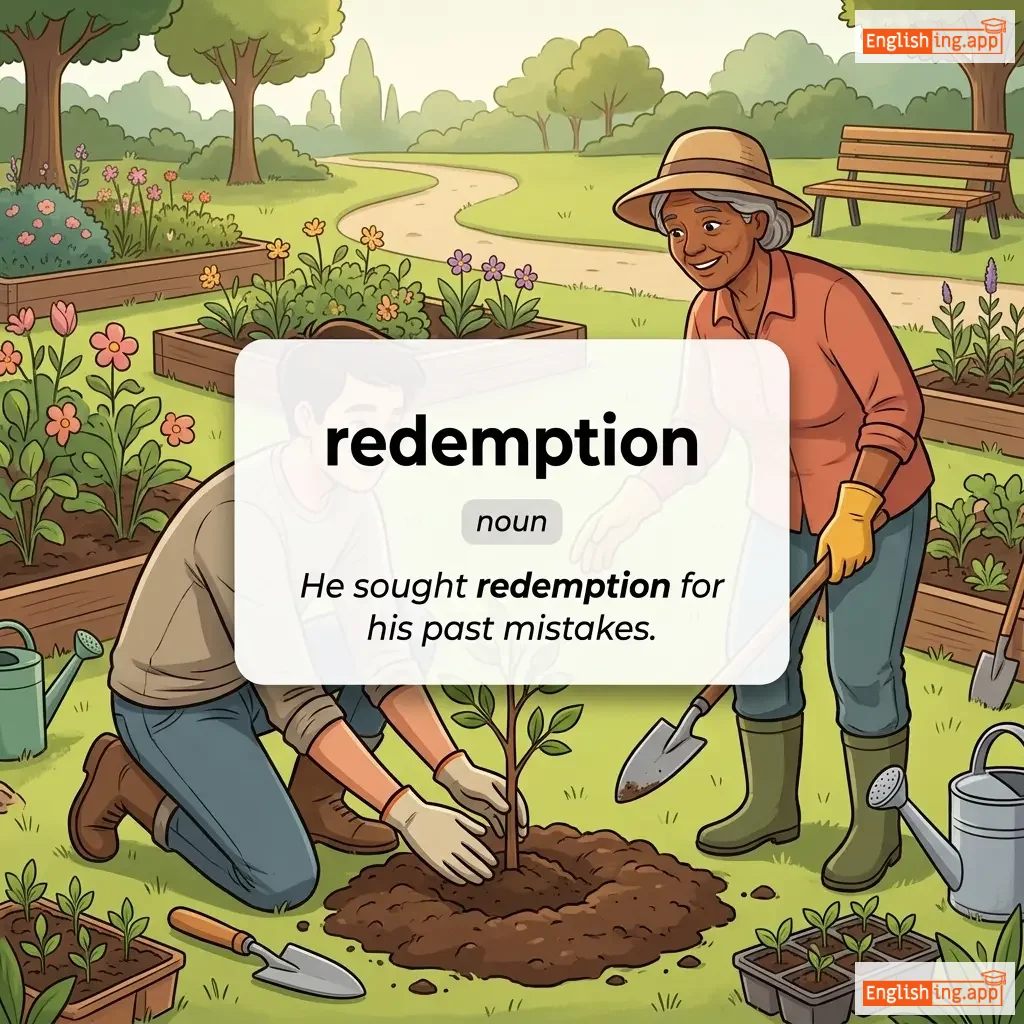
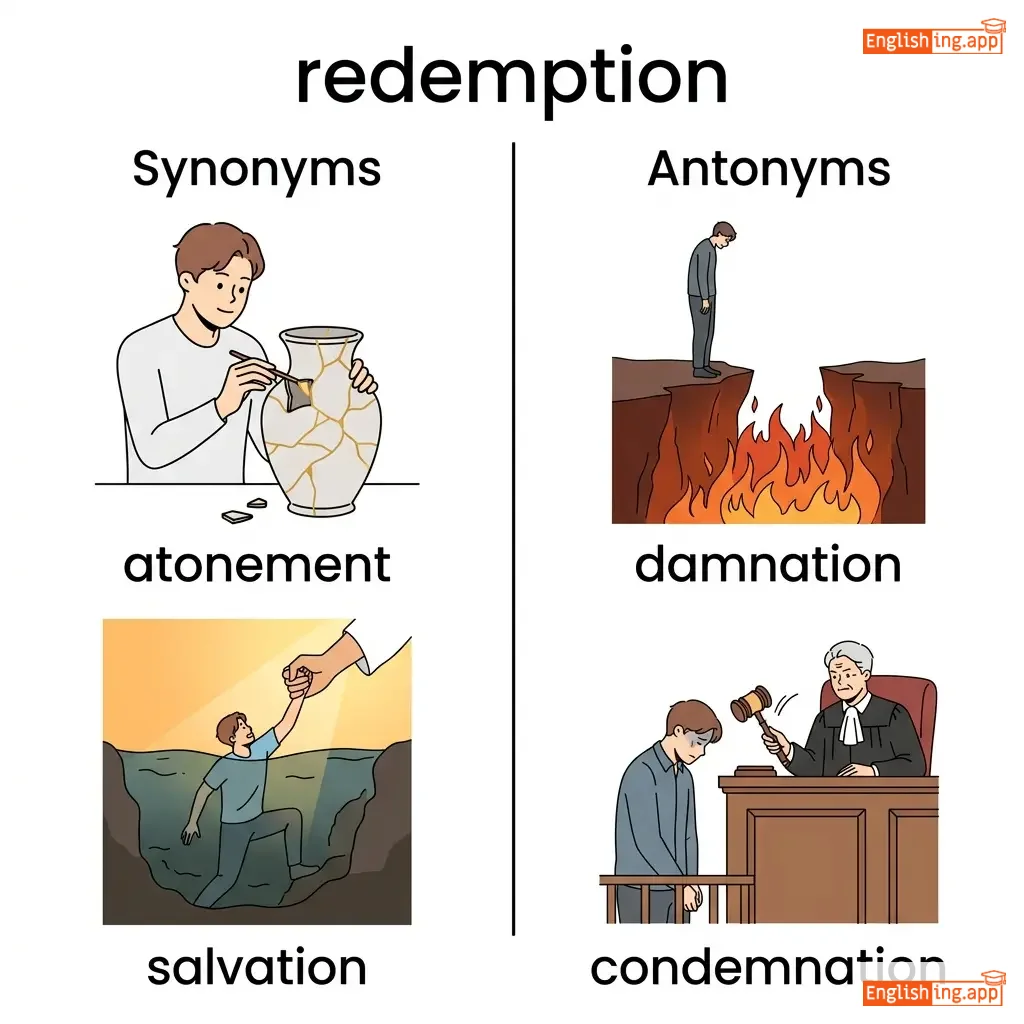
/rɪˈdemp.ʃən/
noun
(rɪˈdɛmpʃən)
••••••
|
|
искупление; спасение;
iskuplenie; spasenie;
••••••
|
the act of saving or being saved from sin, error, or evil; the action of regaining or gaining possession of something in exchange for payment
••••••
|
He sought redemption for his past mistakes through charitable work.
Он искал искупление за свои прошлые ошибки через благотворительную работу.
••••••
|
Он искал искупление за свои прошлые ошибки через благотворительную работу.
On iskal iskuplyeniye za svoi proshlye oshibki cherez blagotvoritel'nuyu rabotu.
••••••
|
salvation, deliverance, recovery, atonement
••••••
|
damnation, condemnation, punishment, forfeiture
••••••
|
seek redemption, path to redemption, redemption value
••••••
|
Искупление через служение, что приводит к внутреннему освобождению.
••••••
|
|
#1150
🗑️
|
/rɪˈfjuːz/
noun
(рифьюз)
••••••
|
- •••••• |
мусор; отказ
rifyuz
••••••
|
waste material; garbage; to decline or reject something
••••••
|
Please put the refuse in the designated bins.
Пожалуйста, положите мусор в назначенные контейнеры.
••••••
|
Пожалуйста, положите мусор в назначенные контейнеры.
Pozhaluysta, polozhite musor v naznachennye konteynerы.
••••••
|
garbage, waste, trash, rubbish, decline, reject
••••••
|
accept, agree, treasure, valuables
••••••
|
refuse collection, household refuse, refuse disposal, refuse to answer
••••••
|
Refuse in Russian means 'мусор' (musor), just like garbage or waste.
••••••
|
|
#1151
📉
|
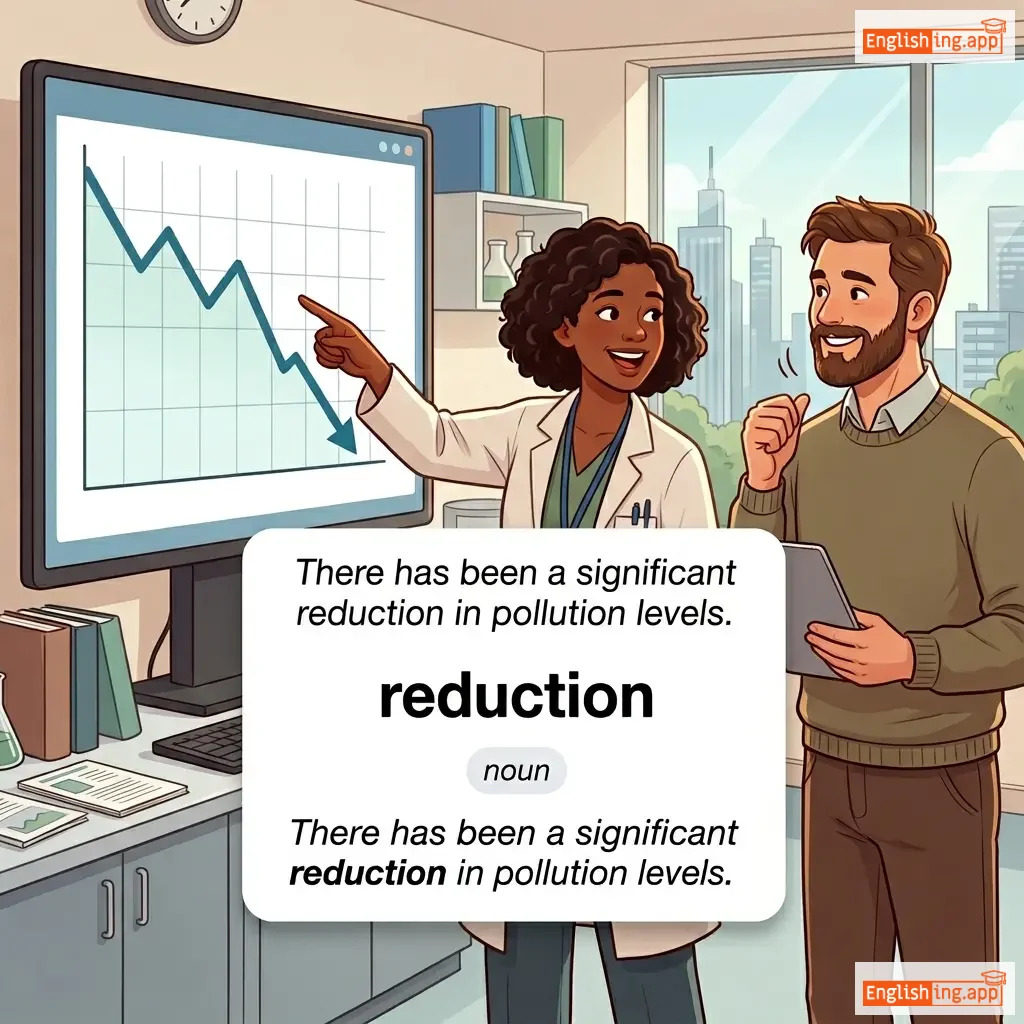
/rɪˈdʌk.ʃən/
noun
(ридакшн)
••••••
|
|
уменьшение
umenshenie
••••••
|
the action or fact of making a specified thing smaller or less in amount, degree, or size
••••••
|
The company announced a reduction in staff to cut costs.
Компания объявила о сокращении штатов для снижения затрат.
••••••
|
Компания объявила о сокращении штатов для снижения затрат.
Kompaniya obyavila o sokrashchenii shtatov dlya snizheniya zatrat.
••••••
|
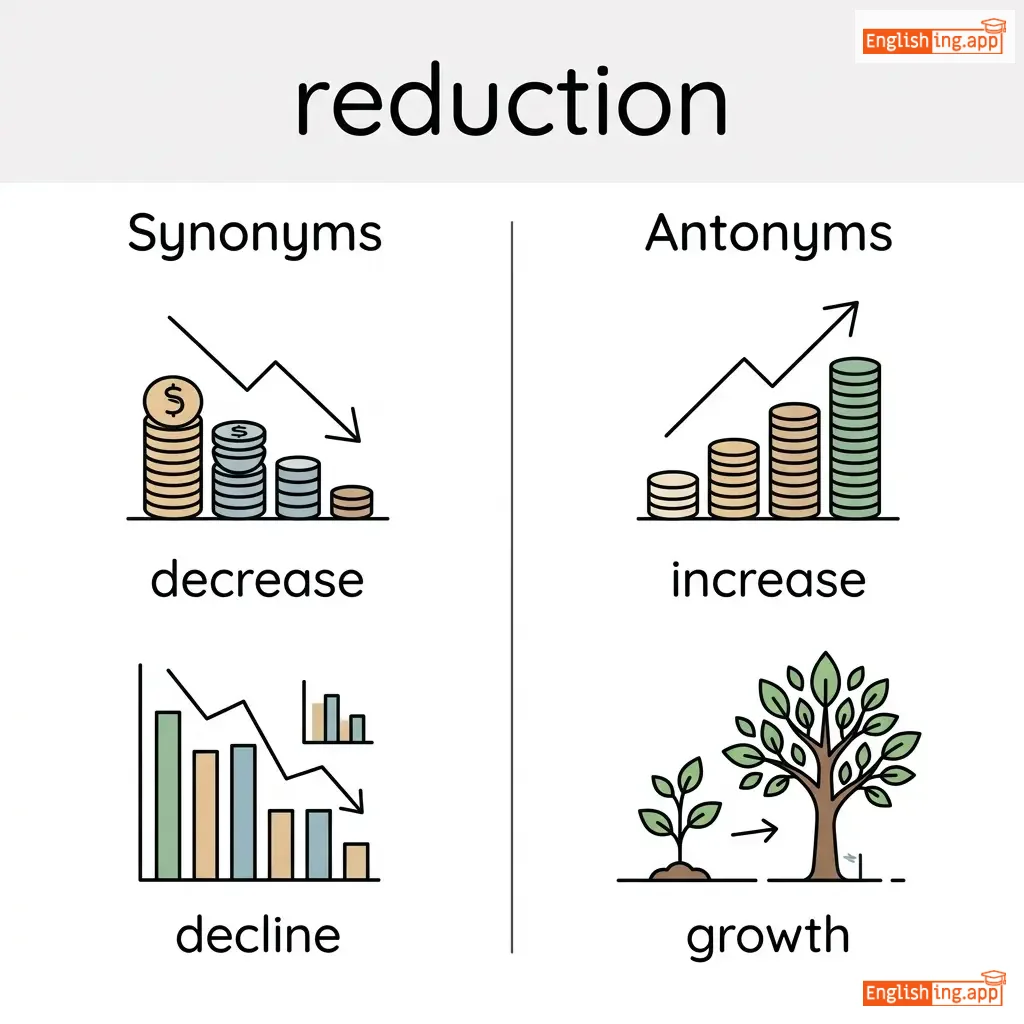
decrease, cut, decline, diminution
••••••
|
increase, growth, expansion, enlargement
••••••
|
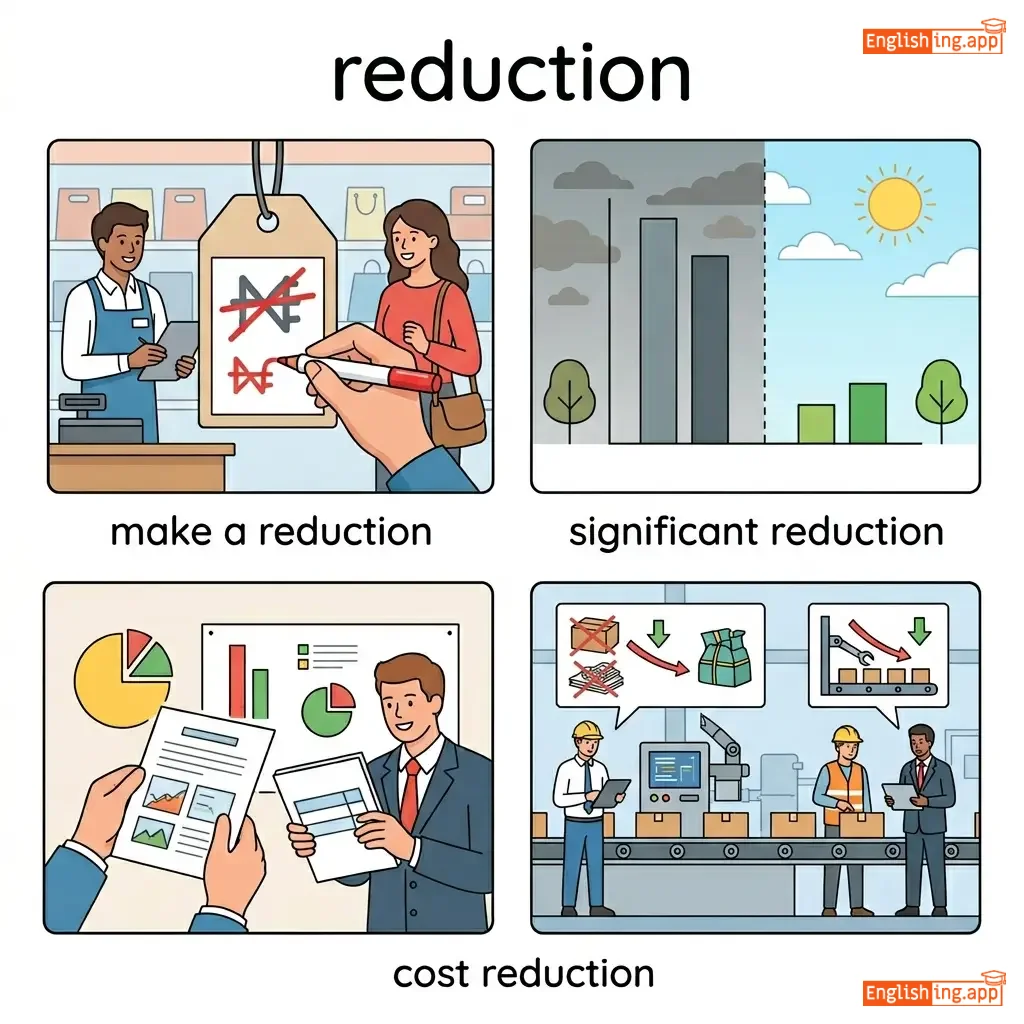
cost reduction, price reduction, reduction in size
••••••
|
REDUCTION = REDUCE + SHENIE; REDUCE means уменьшать, SHENIE hints the ending -enie, so it helps remember уменьшение
••••••
|
|
#1152
🗺️
|
/ˈriː.dʒən/
noun
(rijon)
••••••
|
- •••••• |
регион; зона; область
region; zona; oblast
••••••
|
a particular area or part of a country or the world
••••••
|
This region is famous for its wine production.
Этот регион знаменит своим винным производством.
••••••
|
Этот регион знаменит своим винным производством.
Etot region znamenit svoim vinnym proizvodstvom.
••••••
|
area, zone, territory, district, province
••••••
|
center, point, specific location
••••••
|
geographical region, remote region, coastal region, mountainous region
••••••
|
Region in Russian means a specific part of a place!
••••••
|
|
#1153
♻️
|
/rɪˈdʌn.dəns/
noun
(рɪˈдʌн.дэнс)
••••••
|
- •••••• |
редундантность
redundantnost
••••••
|
the state of being not or no longer needed or useful; superfluous repetition of information
••••••
|
The document contained redundance that made it unnecessarily long. |
Документ содержал избыточность, из-за чего он стал ненужным длинным.
Dokument soderzhil izbytochnost', iz-za chego on stal nenuzhnym dlinym.
••••••
|
superfluity, excess, surplus, repetition
••••••
|
necessity, shortage, scarcity, deficiency
••••••
|
data redundance, redundance in writing, avoid redundance
••••••
|
Когда информация повторяется без необходимости, это редундантность.
••••••
|
|
#1154
😞
|
/rɪˈɡret/
noun
(ригрет)
••••••
|
- •••••• |
сожаление
sozhzhalenie
••••••
|
a feeling of sadness or disappointment about something that has happened or been done
••••••
|
She felt deep regret about her harsh words. |
Она почувствовала глубокое сожаление о своих резких словах.
Ona pochuvstvovala glubokoe sozhzhalenie o svoikh rezkikh slovakh.
••••••
|
remorse, sorrow, guilt, repentance
••••••
|
satisfaction, contentment, pride, joy
••••••
|
deep regret, express regret, regret deeply, no regrets
••••••
|
сожаление = когда понимаешь, что сказал или сделал что-то не так
••••••
|
|
#1155
🤢
|
/riːk/
noun
(рик)
••••••
|
- •••••• |
пахнуть плохо; производить сильное впечатление чего-то неприятного или нежелательного
pahnut' plokho; proizvodit' sil'noe vpechatlenie chego-to nepriyatnogo ili nezhelatelnogo
••••••
|
to have a very unpleasant smell; to give a strong impression of something unpleasant or undesirable
••••••
|
The garbage can reeks of rotten food. |
Ведро для мусора пахнет гнилыми продуктами.
Viedro dlya musora pahnet gnilymi produktami.
••••••
|
stink, smell, stench, emit odor
••••••
|
fragrance, perfume, sweet smell, aroma
••••••
|
reek of alcohol, reek with sweat, reek of corruption
••••••
|
Пахнуть как мусорное ведро
••••••
|
|
#1156
⏰
|
/ˌreɡ.jʊˈlær.ɪ.ti/
noun
(регулярити)
••••••
|
- •••••• |
регулярность
regulyarnost
••••••
|
the quality of being regular; occurring at fixed intervals or in a consistent pattern
••••••
|
The regularity of his exercise routine helped him stay healthy. |
Регулярность его тренировочного расписания помогла ему оставаться здоровым.
Regulyarnost' ego trenirovochnogo raspisaniya pomogla yemu ostavat'sya zdorovym
••••••
|
consistency, routine, pattern, frequency
••••••
|
irregularity, randomness, chaos, inconsistency
••••••
|
with regularity, mathematical regularity, clockwork regularity, maintain regularity
••••••
|
Регулярность, как часы: помогает поддерживать порядок
••••••
|
|
#1157
📚
|
/ˈref.ər.əns/
noun
(референс)
••••••
|
- •••••• |
ссылка
ssylka
••••••
|
the action of mentioning or alluding to something; a source of information
••••••
|
Please provide references to support your research claims. |
Пожалуйста, предоставьте ссылки для поддержки ваших исследовательских утверждений.
Pozhaluysta, predostav'te ssylki dlya podderzhki vashikh issledovatelskikh utverzhdeniy.
••••••
|
citation, source, mention, allusion
••••••
|
ignorance, omission, exclusion, disregard
••••••
|
make reference to, reference book, character reference
••••••
|
Ссылка помогает подтвердить ваши исследования.
••••••
|
|
#1158
🎭
|
/rɪˈhɜːr.səl/
noun
(rihərsal)
••••••
|
- •••••• |
репетиция; тренировка выступления
rihersal
••••••
|
a practice performance of a play, concert, or other work for later public performance
••••••
|
The final rehearsal before opening night went perfectly.
Последняя репетиция перед вечерним открытием прошла идеально.
••••••
|
Последняя репетиция перед открытием ночи прошла идеально.
Poslednyaya repeticiya pered otkrytiyem nochi proshla ideal'no.
••••••
|
practice, drill, run-through, preparation
••••••
|
performance, show, actual event
••••••
|
dress rehearsal, final rehearsal, wedding rehearsal, rehearsal dinner
••••••
|
репетиция = репетировать, прежде чем выйти на сцену
••••••
|
|
#1159
🪞
|
/rɪˈflek.ʃən/
noun
(рефлексия)
••••••
|
|
отражение
otrazhenie
••••••
|
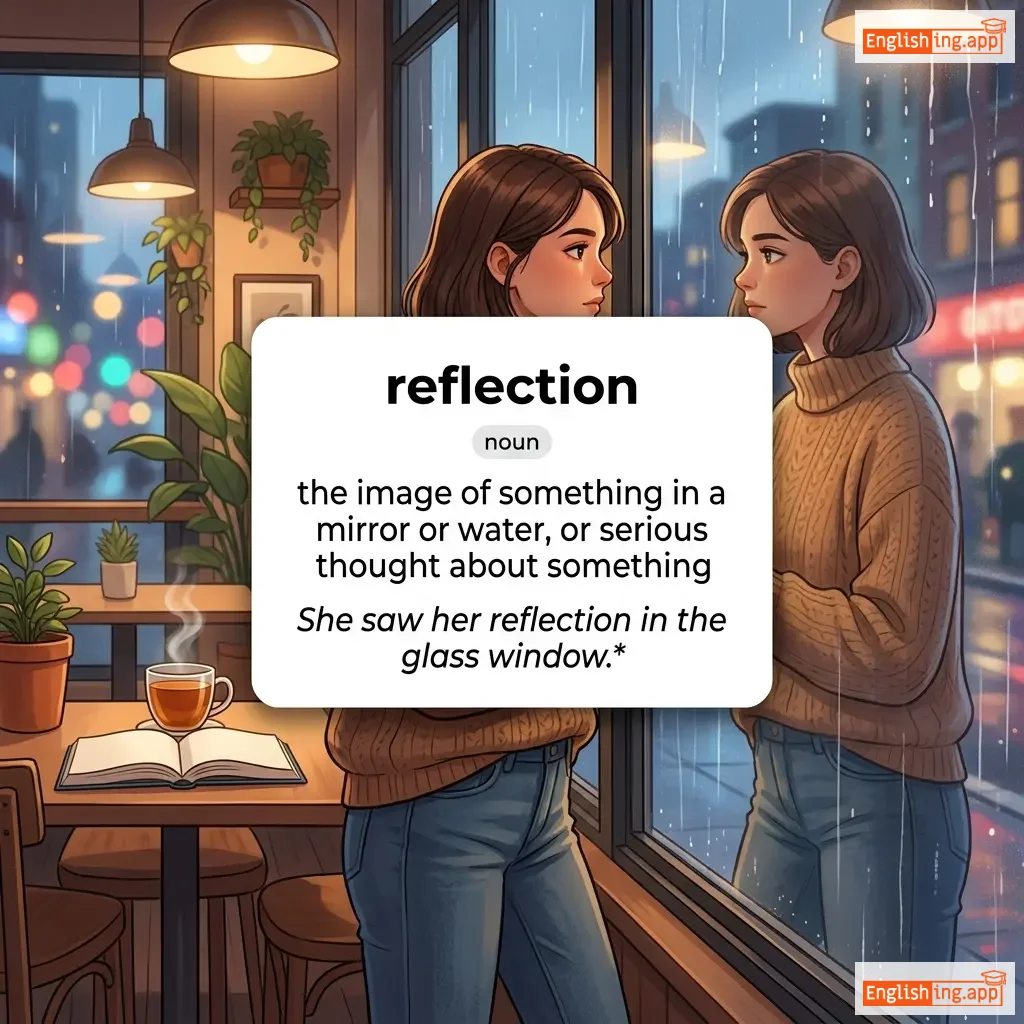
the image of something in a mirror or on any reflective surface; serious thought or consideration
••••••
|
She saw her reflection in the water and started thinking deeply. |
Она увидела свое отражение в воде и начала думать глубоко.
Ona uvidela svoe otrazhenie v vodo i nachala dumat' gluboko.
••••••
|
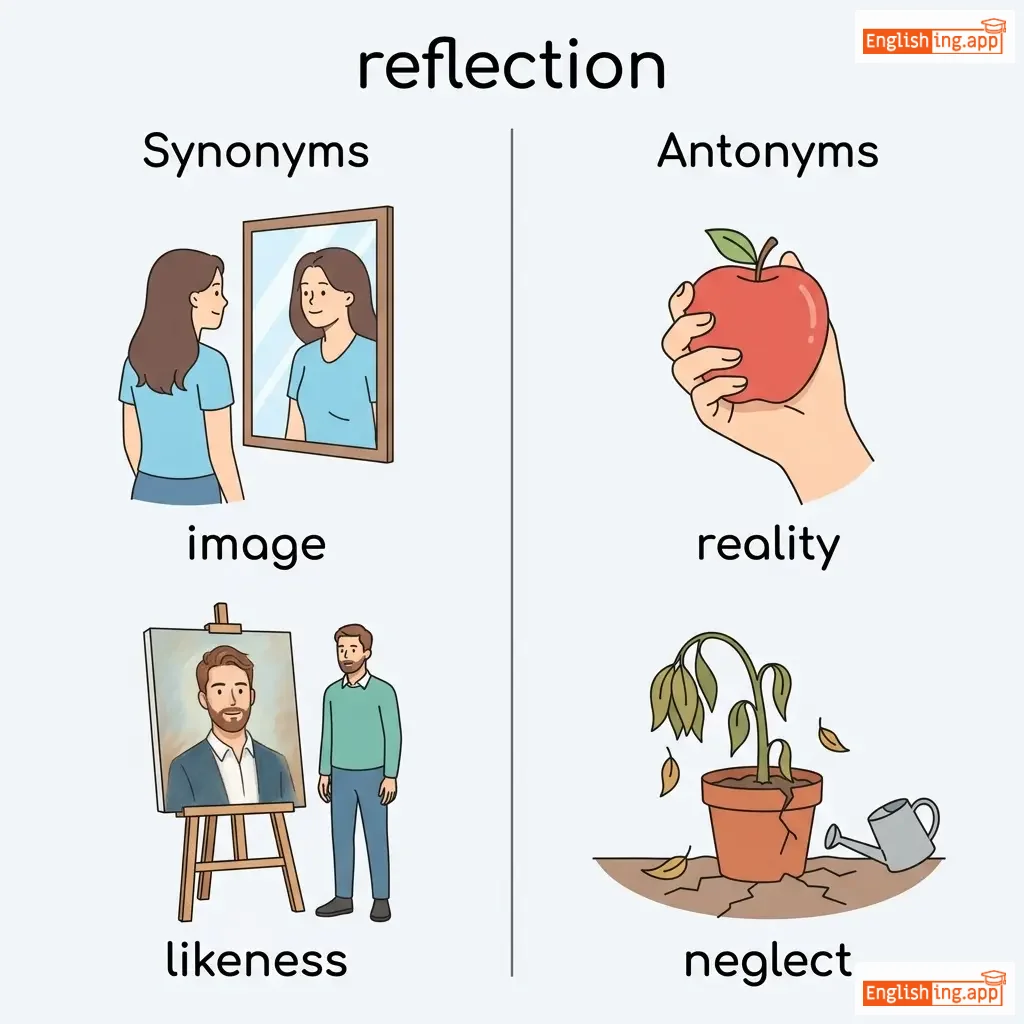
mirror image, contemplation, thought, consideration
••••••
|
reality, substance, impulsiveness, thoughtlessness
••••••
|
mirror reflection, deep reflection, reflection on life
••••••
|
размышления о том, что в зеркале
••••••
|
|
#1160
👨👩👧👦
|
/rɪˈleɪ.ʃən/
noun
(ри-ле-йшн)
••••••
|
- •••••• |
отношение; родство
otnoshenie; rodstvo
••••••
|
the way in which two or more people or things are connected; a family member
••••••
|
They have a strong business relation that has lasted for years. |
У них есть крепкие деловые отношения, которые длится уже много лет.
U nikh est' krepkiye delovyye otnosheniya, kotoryye dlitsya uzhe mnogo let
••••••
|
relationship, connection, association, kinship
••••••
|
disconnection, separation, isolation
••••••
|
family relation, business relation, close relation, diplomatic relations
••••••
|
Отношение - это связь, например, родственные отношения.
••••••
|
Vocabulary Quiz
Test your vocabulary by matching words with their translations or meanings.
Login to take the quiz
Comments (0)
Share your thoughts and join the discussion.
Join the discussion by logging in
Login to CommentNo comments yet
Be the first to share your thoughts!