

Обновитесь для доступа ко всему словарю
Получите неограниченный доступ ко всем словам с подпиской Pro
Обновить до ProПеревод
Прошедшее
Причастие прошедшего времени
Третье лицо единственного числа
Герундий
Значение
Пример предложения
Перевод примера предложения
Синонимы
Антонимы
Коллокации
Мнемоника



Swipe left or right, or use the buttons. Tap image to zoom.
Обновитесь для доступа ко всем предложениям
Получите неограниченный доступ ко всем предложениям с подпиской Pro
Обновить до ProПеревод примера предложения
Слово
Lesson 69Lesson 69 - Переключатель маски
|
Эмодзи
|
Слово | Images | Перевод | Значение | Пример предложения | Перевод примера предложения | Синонимы | Антонимы | Коллокации | Мнемоника |
|---|---|---|---|---|---|---|---|---|---|---|
|
#1361
👀
|
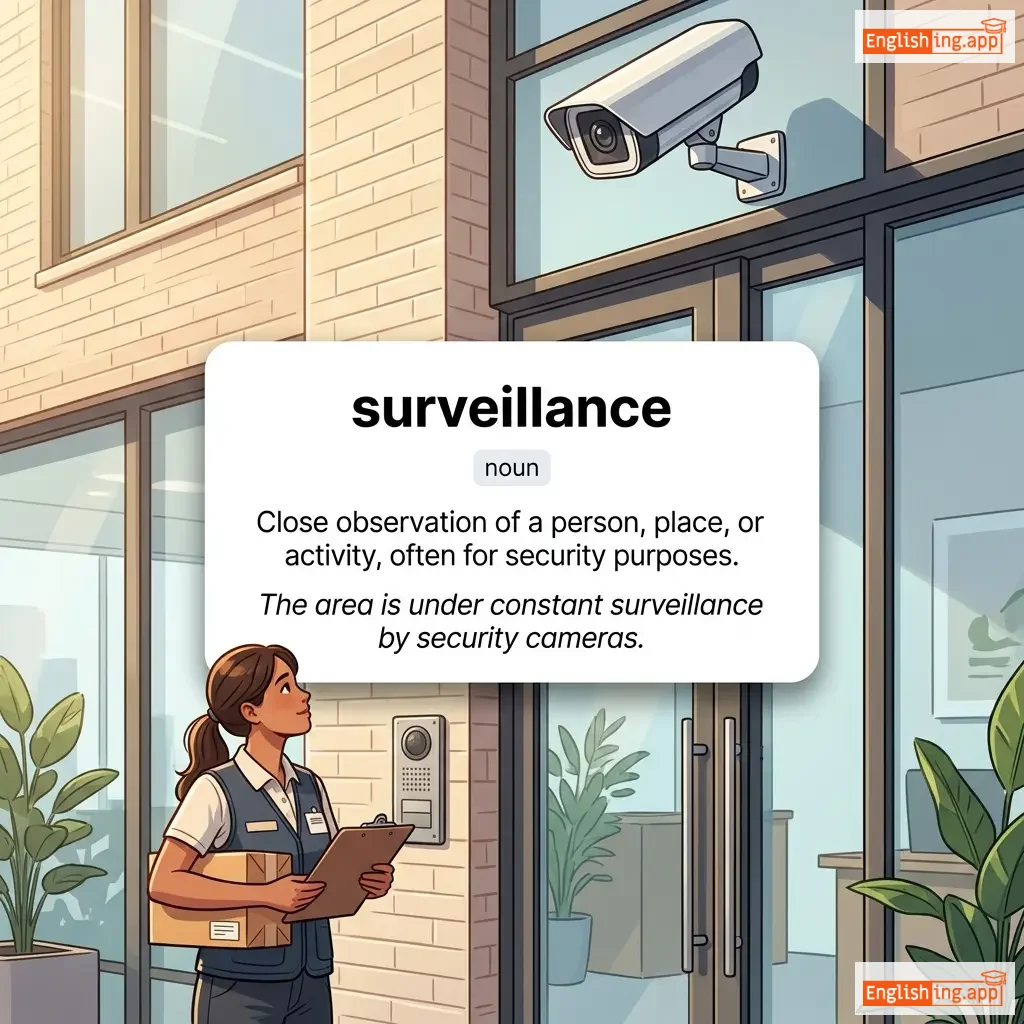
/sɜːˈveɪləns/
noun
(сёрвейлэнс)
••••••
|
|
наблюдение
nablyudenie
••••••
|
close observation, especially of a suspected spy or criminal
••••••
|
The police kept the suspect under surveillance for weeks. |
Полиция вела наблюдение за подозреваемым несколько недель.
Politsiya vela nablyudenie za podozrevaemym neskol'ko nedeley.
••••••
|
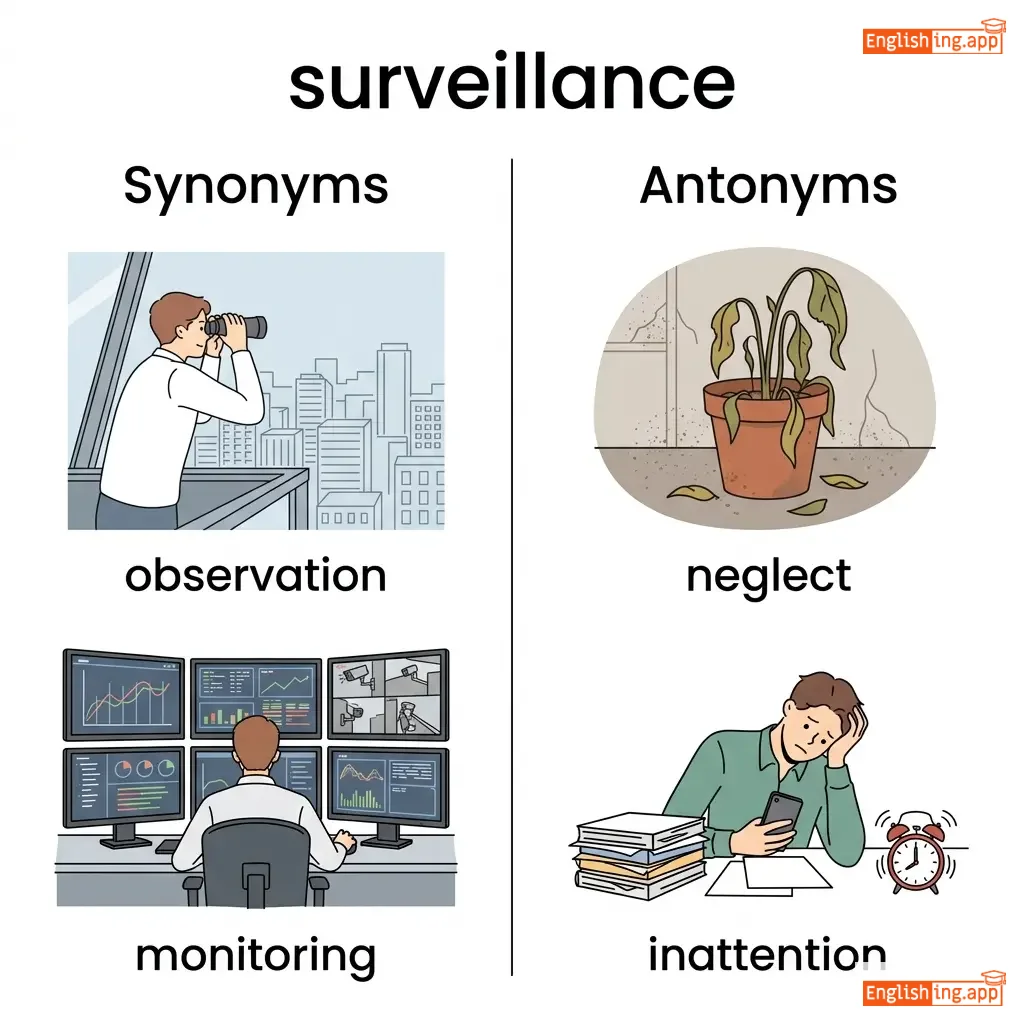
observation, monitoring, watching, scrutiny
••••••
|
neglect, ignorance, inattention
••••••
|
under surveillance, surveillance camera, surveillance system, police surveillance
••••••
|
Наблюдение = Никакой злодей не ускользнет от нас.
••••••
|
|
#1362
🎯
|
/ˈtæk.tɪk/
noun
(тактика)
••••••
|
- •••••• |
тактика; стратегия
taktika; strategiia
••••••
|
a plan or method for achieving something; a strategy used to accomplish a goal
••••••
|
The coach used a new tactic to win the game. |
Тренер использовал новую тактику, чтобы выиграть игру.
Trener ispol'zoval novuyu taktiku, chtoby viigrat' igru.
••••••
|
strategy, approach, method, plan, technique
••••••
|
improvisation, spontaneity
••••••
|
military tactic, defensive tactic, clever tactic, winning tactic
••••••
|
Команде нужна тактика, чтобы выиграть игру.
••••••
|
|
#1363
💪
|
/sərˈvaɪvər/
noun
(выживший)
••••••
|
- •••••• |
человек, который выжил, особенно человек, оставшийся в живых после события, в котором другие погибли
chelovek, kotoryj vyzhil, osobenno chelovek, ostavshijsya v zhivykh posle sobytija, v kotorom drugie pogibli
••••••
|
a person who survives, especially a person remaining alive after an event in which others have died
••••••
|
She is a cancer survivor who now helps other patients. |
Она выжившая от рака, которая теперь помогает другим пациентам.
Ona vyzhivshaya ot raka, kotorya teper' pomogaet drugim patsientam.
••••••
|
victor, overcomer, endurer, fighter
••••••
|
victim, casualty, fatality
••••••
|
cancer survivor, disaster survivor, sole survivor, survivor guilt
••••••
|
Выжившие — это те, кто остался живым после беды.
••••••
|
|
#1364
🗸
|
/teɪnt/
noun
(теɪнт)
••••••
|
- •••••• |
пятно; пятно; коррупция или загрязнение
pyatno; pyatno; korruptsiya ili zagryaznenie
••••••
|
a stain or mark that spoils something; corruption or contamination
••••••
|
The scandal left a permanent taint on his reputation.
Этот скандал оставил неизгладное пятно на его репутации.
••••••
|
Этот скандал оставил неизгладное пятно на его репутации.
Etot skandal ostavil neizgladnoe pyatno na ego reputatsii.
••••••
|
stain, blemish, corruption, contamination, stigma
••••••
|
purity, cleanliness, honor
••••••
|
moral taint, permanent taint, taint of corruption
••••••
|
Taint как пятно, которое нельзя стереть, оно остается навсегда.
••••••
|
|
#1365
😰
|
/səˈspens/
noun
(səsˈpɛns)
••••••
|
- •••••• |
напряжение
napryazhenie
••••••
|
a feeling of excited or anxious uncertainty about what will happen
••••••
|
The movie kept us in suspense until the very end.
Фильм держал нас в напряжении до самого конца.
••••••
|
Фильм держал нас в напряжении до самого конца.
Film derzhal nas v napryazhenii do samogo kontsa.
••••••
|
tension, anxiety, uncertainty, anticipation
••••••
|
certainty, relief, resolution, clarity
••••••
|
in suspense, suspense thriller, build suspense, suspense novel
••••••
|
Напряжение на экране — осталось лишь ожидать конец.
••••••
|
|
#1366
📊
|
/ˈtæl.i/
noun
(tali)
••••••
|
- •••••• |
счёт; запись; баллы
schet; zapic; bally
••••••
|
a count or record of a number or amount; a score or total
••••••
|
Keep a tally of how many books you read this month.
keep a tally of how many books you read this month.
••••••
|
Ведите подсчёт того, сколько книг вы прочитали в этом месяце.
Vedite podschyot togo, skol'ko knig vy prochitali v etom mesyatse.
••••••
|
count, total, score, record, sum
••••••
|
estimate, guess
••••••
|
running tally, final tally, tally marks, keep tally
••••••
|
Считайте количество книг, чтобы получить свой итог.
••••••
|
|
#1367
🤔
|
/səˈspɪʃən/
noun
(səsˈpɪʃən)
••••••
|
- •••••• |
подозрение
podozreniye
••••••
|
a feeling or thought that someone is guilty of an illegal or dishonest activity
••••••
|
The police arrested him on suspicion of theft.
Полиция арестовала его по подозрению в краже.
••••••
|
Полиция арестовала его по подозрению в краже.
Politsiya arestovala yego po podozreniyu v krazhe.
••••••
|
doubt, mistrust, distrust, wariness
••••••
|
trust, confidence, certainty, faith
••••••
|
under suspicion, suspicion of, arouse suspicion, cast suspicion
••••••
|
Подозрение – это красный флаг, когда что-то не так.
••••••
|
|
#1368
🎯
|
/ˈtɑːr.ɡɪt/
noun
(таргет)
••••••
|
|
цель
tsel
••••••
|
an object or goal that is aimed at; a person or thing that is the focus of attention or attack
••••••
|
The company set a sales target of one million dollars.
Компания установила цель продаж в один миллион долларов.
••••••
|
Компания установила цель продаж в один миллион долларов.
Kompaniya ustanovila tsely prodazh v odin million dollarov.
••••••
|
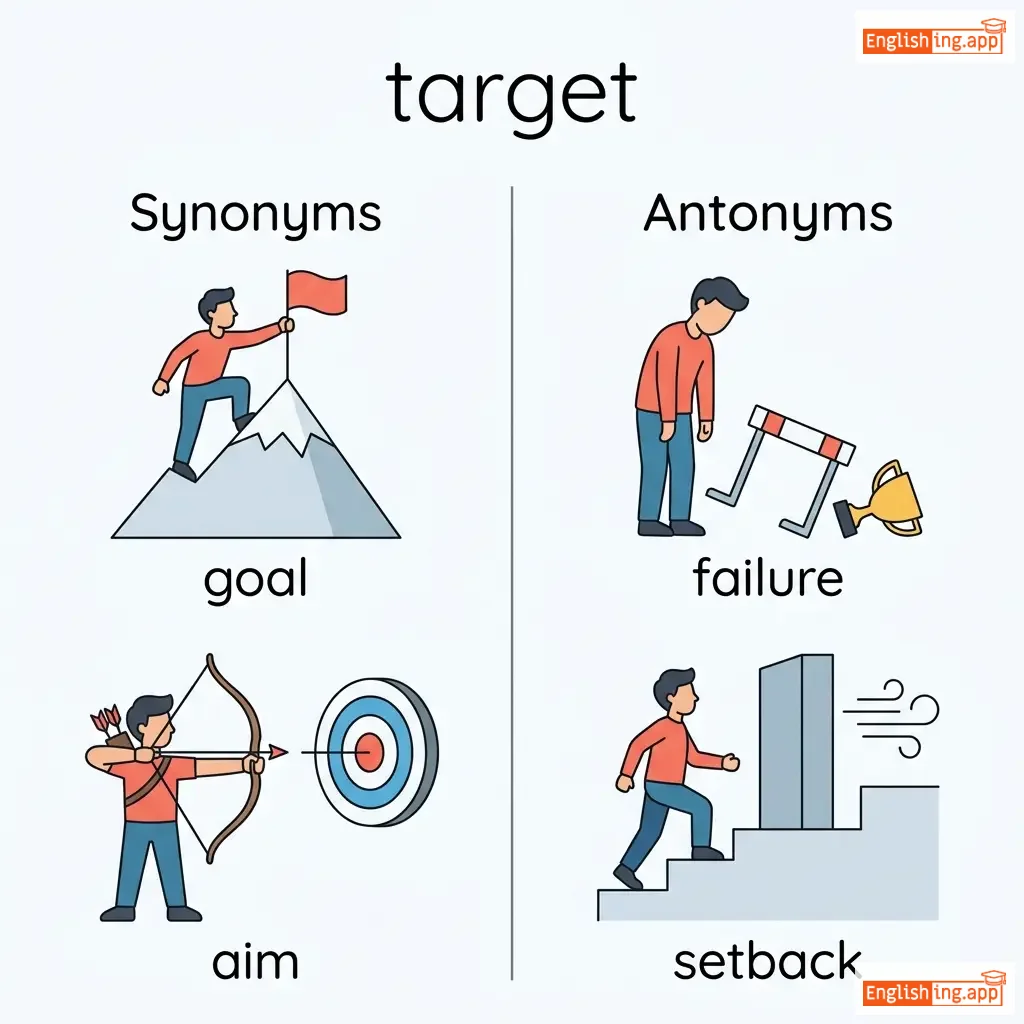
goal, objective, aim, destination, mark
••••••
|
origin, starting point
••••••
|
sales target, moving target, target audience, hit the target
••••••
|
Цель in Russian reminds you of aiming for something, just like targeting a goal.
••••••
|
|
#1369
💦
|
/swet/
noun
(сует)
••••••
|
- •••••• |
пот
pot
••••••
|
moisture exuded through the pores of the skin, typically as a reaction to heat, physical exertion, fever, or fear
••••••
|
After running for an hour, he was covered in sweat. |
После часа бега он был покрыт потом.
Posle chasa bega on byl pokryt potem.
••••••
|
perspiration, moisture, dampness
••••••
|
dryness, coolness
••••••
|
break into sweat, sweat glands, cold sweat, sweat profusely
••••••
|
Пот помогает охлаждать тело после нагрузки
••••••
|
|
#1370
👅
|
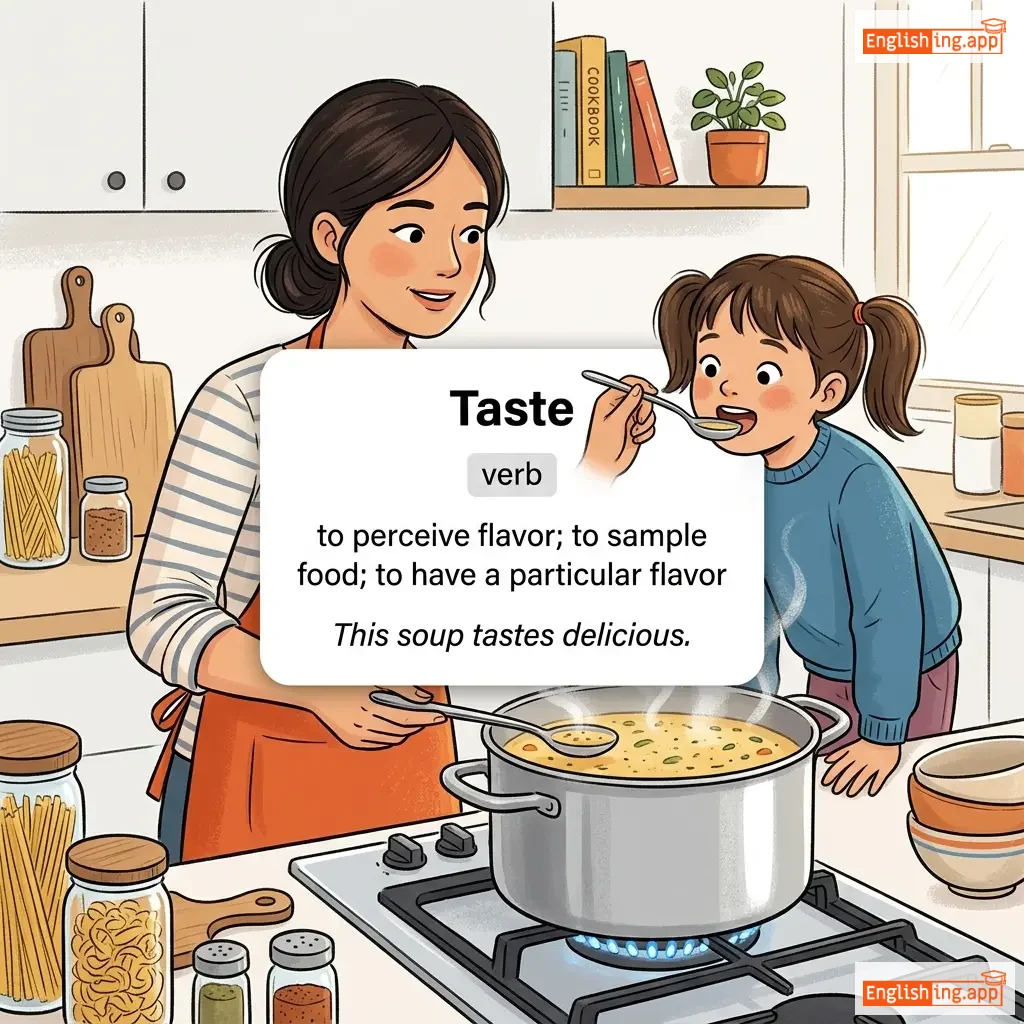
/teɪst/
noun
(тэист)
••••••
|
|
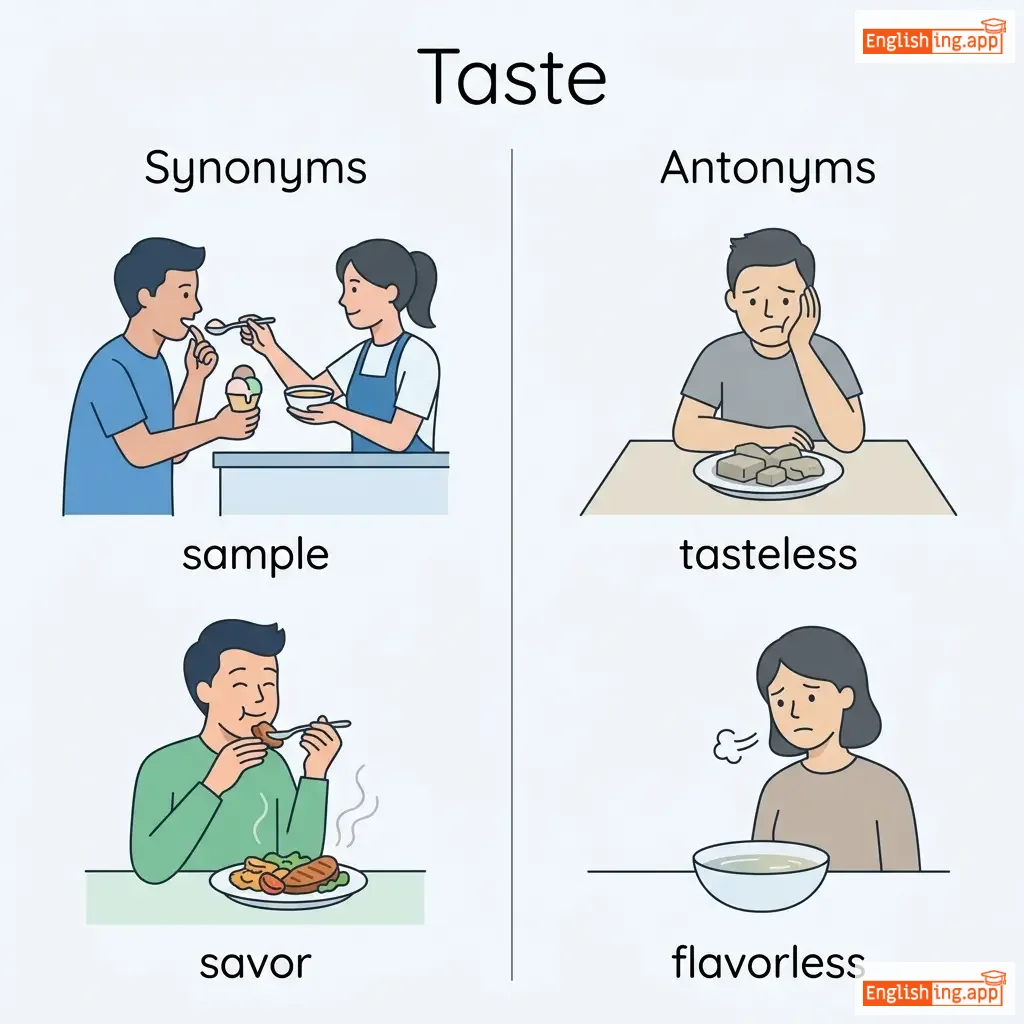
вкус; личные предпочтения
vkus; lichnye predpochteniya
••••••
|
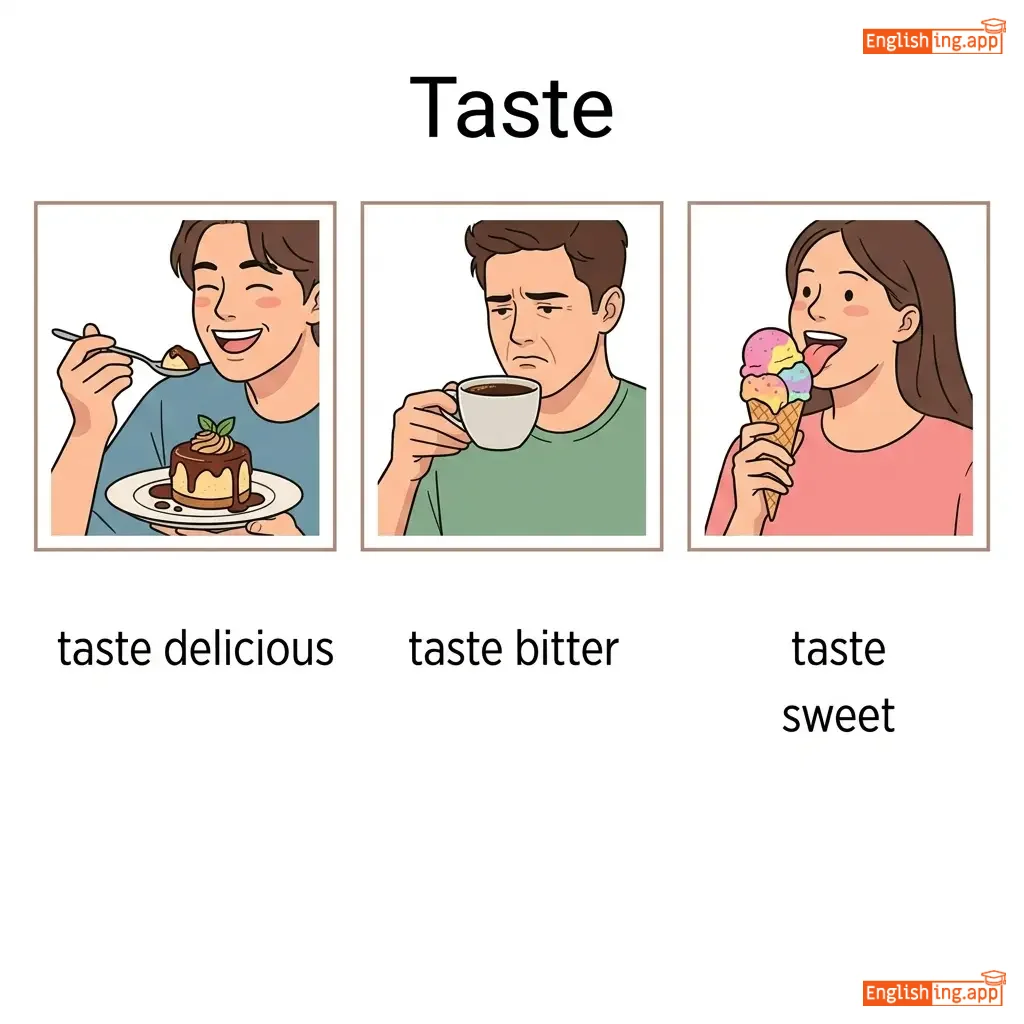
the sensation produced when food touches the tongue; personal preference or liking
••••••
|
This cake has a sweet taste that I really enjoy. |
Этот торт имеет сладкий вкус, который мне действительно нравится.
Etot tort imeyet sladkiy vkus, kotoryy mne deystvitel'no nravitsya.
••••••
|
flavor, savor, palate, preference, style
••••••
|
blandness, tastelessness
••••••
|
good taste, bitter taste, taste buds, acquire taste
••••••
|
Вкус (vkus) и предпочтения (predpochteniya) — как сладкий торт, который нам нравится.
••••••
|
|
#1371
🌀
|
/swɪŋ/
noun
(свинг)
••••••
|
|
качели
kacheli
••••••
|
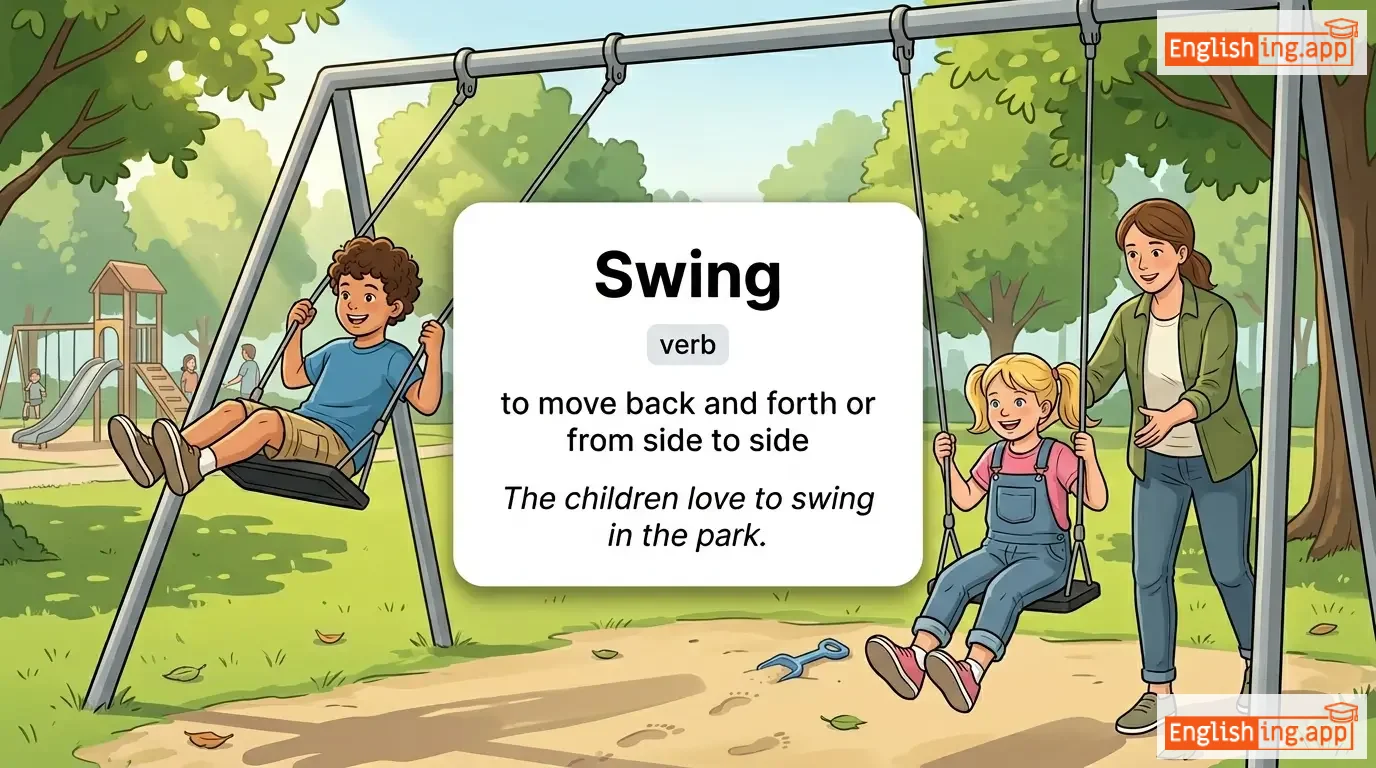
move or cause to move back and forth or from side to side while suspended or on an axis
••••••
|
The children love to swing in the park.
Дети любят качаться в парке.
••••••
|
Дети любят качаться в парке.
Deti lyubyat kachat'sya v parke.
••••••
|
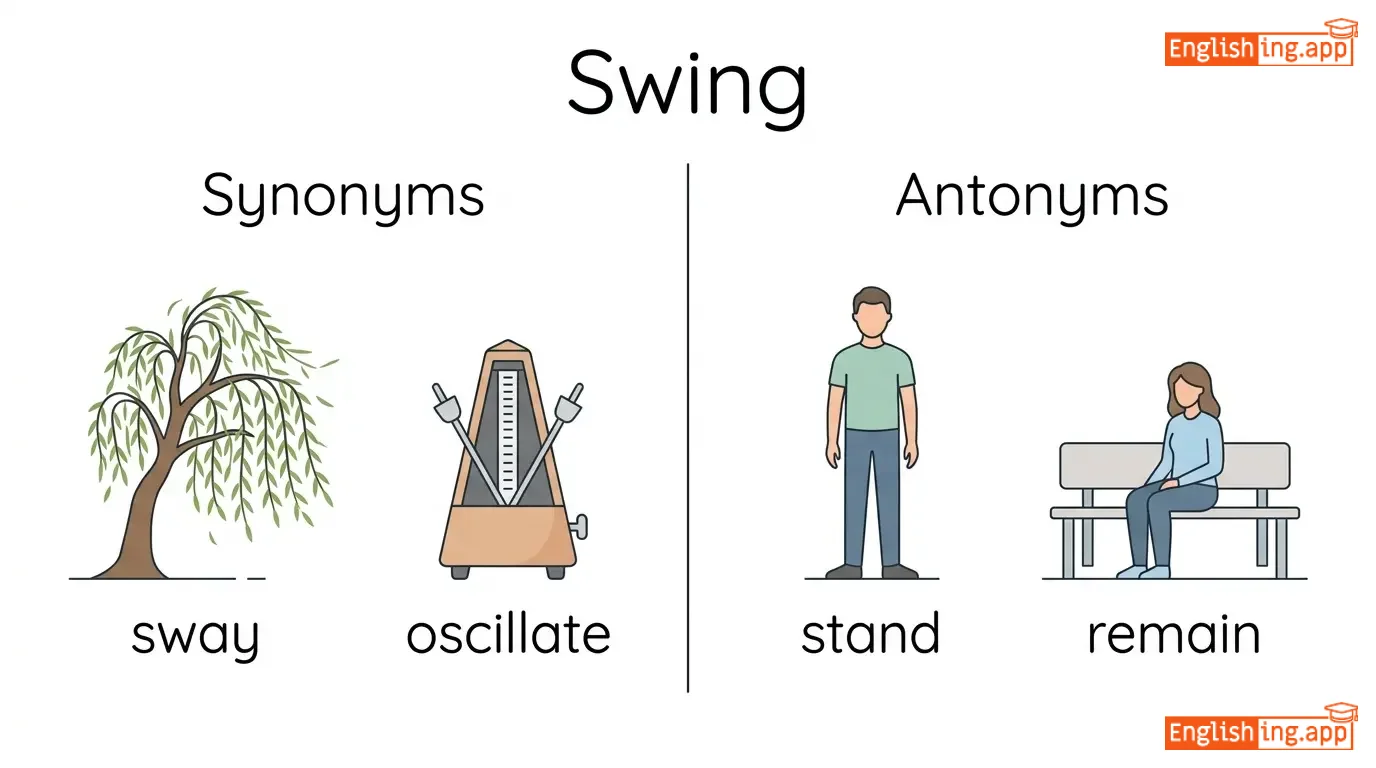
sway, oscillate, rock, pendulate
••••••
|
stillness, stability, fixedness
••••••
|
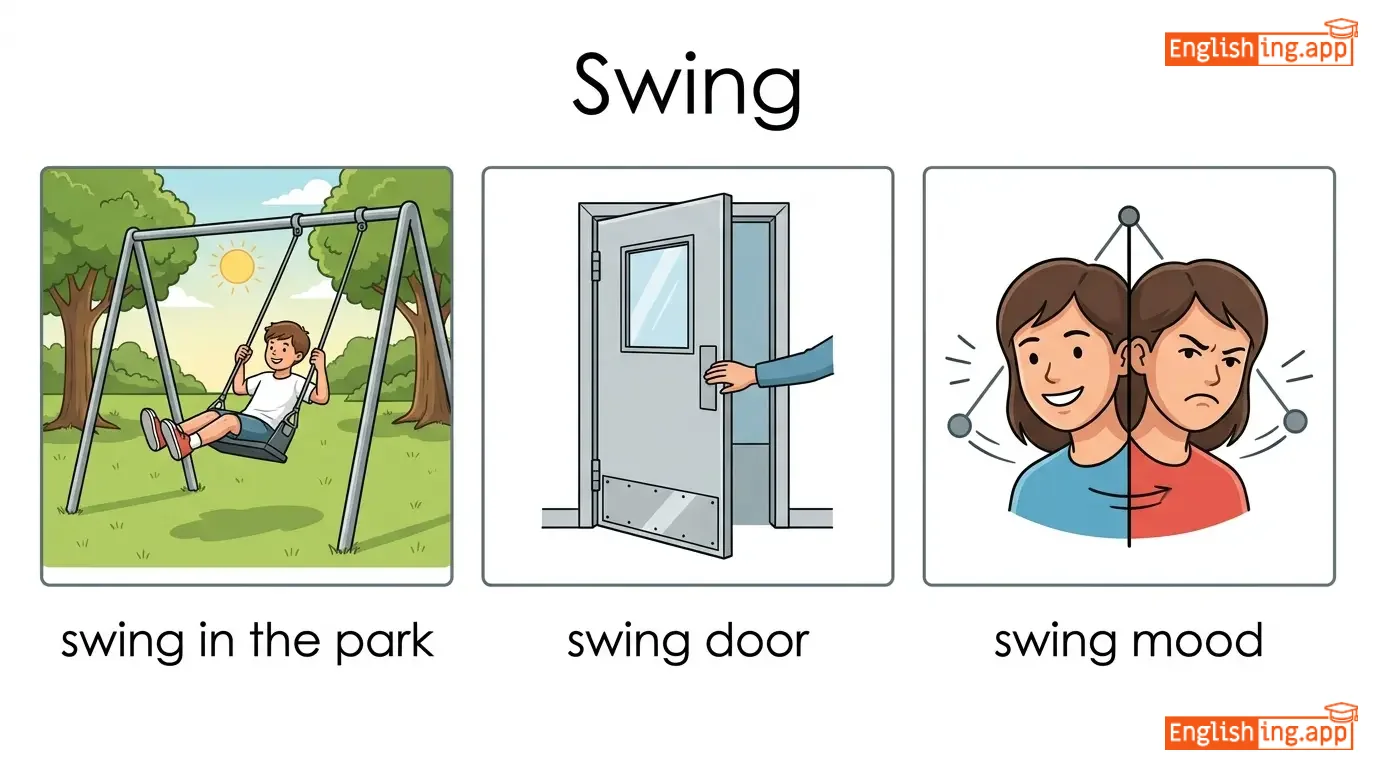
swing back and forth, playground swing, swing music, mood swing
••••••
|
Дети качаются, как на качелях, точно как на Swing!
••••••
|
|
#1372
😤
|
/ˈtem.pər.ə.mənt/
noun
(темперамент)
••••••
|
- •••••• |
темперамент; настроение; природная склонность
temperament; nastroenie; prirodnaya sklonnost
••••••
|
a person's natural disposition or mood; characteristic behavior patterns
••••••
|
She has a calm temperament that helps her handle stress well. |
У неё спокойный темперамент, что помогает ей хорошо справляться с стрессом.
U nee spokoynyy temperament, chto pomogaet yey khorosho spravlyat'sya s stressom.
••••••
|
disposition, nature, character, personality, mood
••••••
|
inconsistency, variability
••••••
|
calm temperament, fiery temperament, artistic temperament, volatile temperament
••••••
|
Темперамент как тёплый ветер - спокойный и уравновешенный.
••••••
|
|
#1373
🔣
|
/ˈsɪmbəl/
noun
(символ)
••••••
|
- •••••• |
символ
simvol
••••••
|
a mark or character used as a conventional representation of an object, function, or process
••••••
|
The dove is a symbol of peace.
Голубь - это символ мира.
••••••
|
Голубь - это символ мира.
Golub' - eto simvol mira.
••••••
|
sign, emblem, token, representation
••••••
|
reality, substance, literalness
••••••
|
symbol of peace, religious symbol, mathematical symbol, status symbol
••••••
|
Символ мира в виде голубя
••••••
|
|
#1374
🌡️
|
/ˈtem.pər.ə.tʃər/
noun
(температу́ра)
••••••
|
|
температура
temperatura
••••••
|
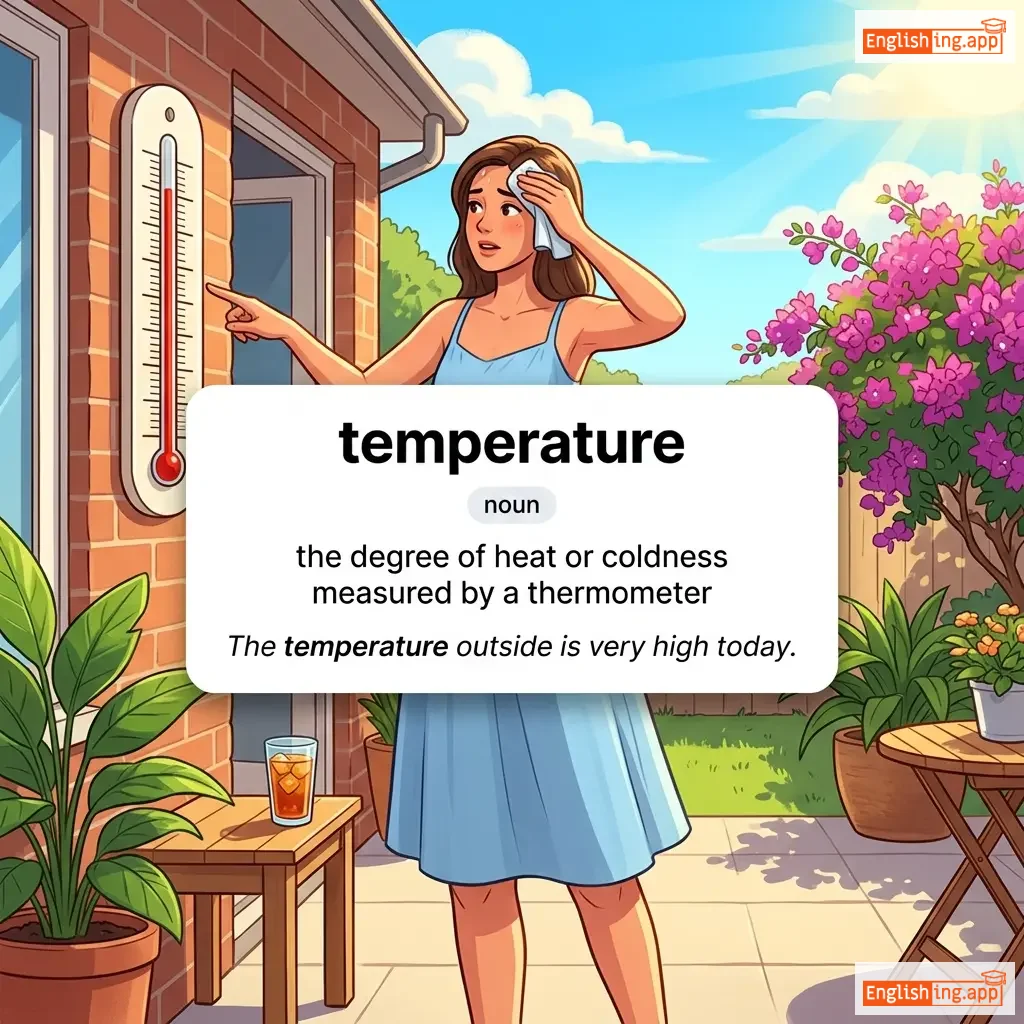
the degree of heat or cold in the atmosphere, body, or substance
••••••
|
The temperature today is twenty-five degrees Celsius. |
Температура сегодня двадцать пять градусов Цельсия.
Temperatura segodnya dvadtsat' pyat' gradusov Tsel'siya.
••••••
|
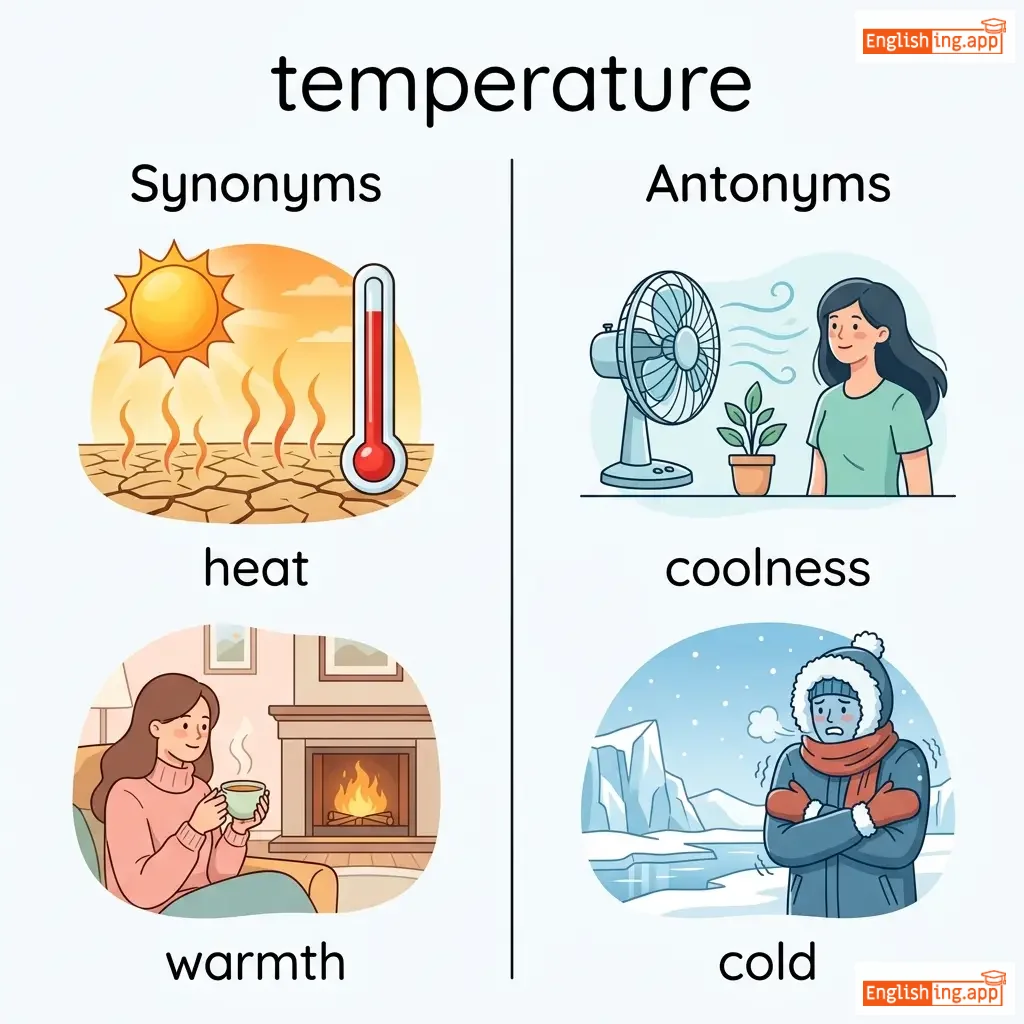
heat, warmth, thermal reading, degree
••••••
|
absolute zero
••••••
|
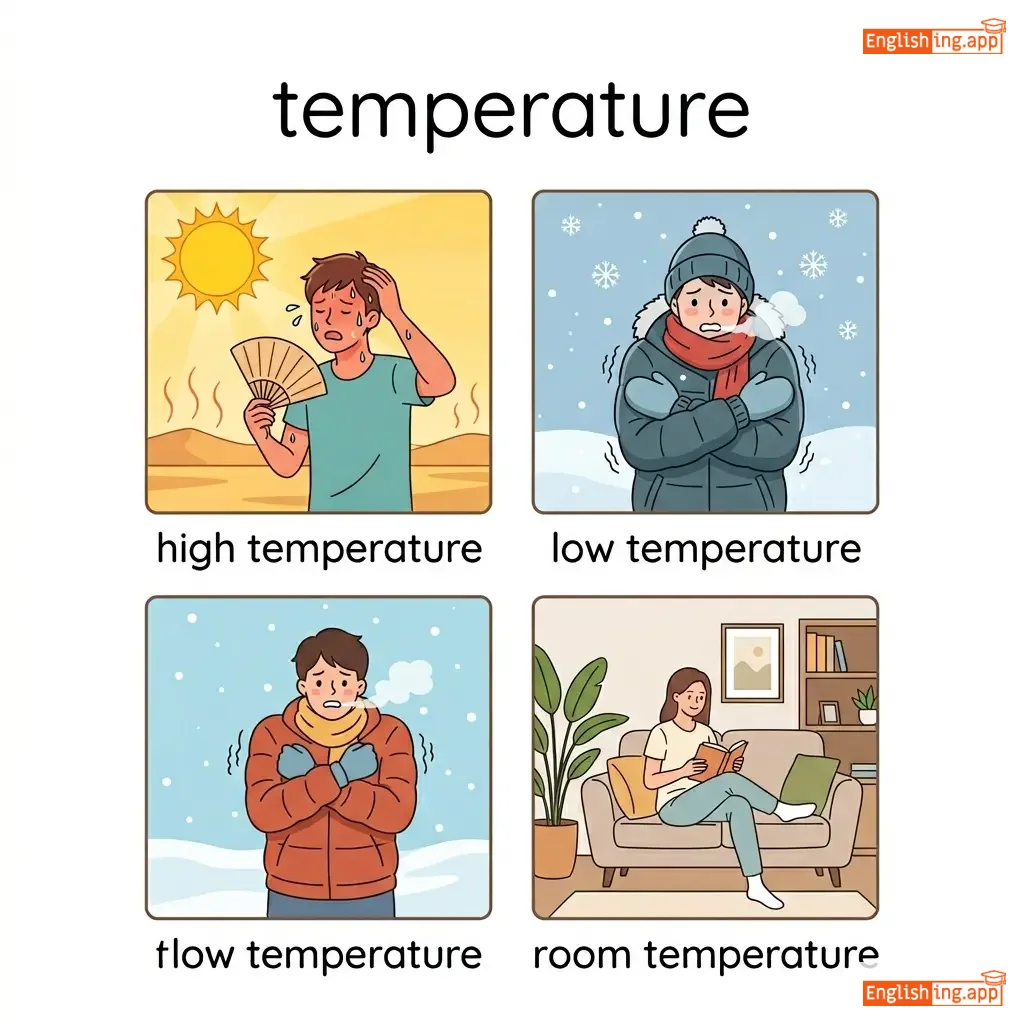
body temperature, room temperature, high temperature, take temperature
••••••
|
Temperatura на русском языке аналогична 'temperature' на английском
••••••
|
|
#1375
🤗
|
/ˈsɪmpəθi/
noun
(симпатия)
••••••
|
- •••••• |
сочувствие
sochuvstvie
••••••
|
feelings of pity and sorrow for someone else's misfortune
••••••
|
She expressed her sympathy for the victims of the accident.
Она выразила свое сочувствие жертвам аварии.
••••••
|
Она выразила свое сочувствие жертвам аварии.
Ona vyrazila svoe sochuvstvie zhertvam avarii.
••••••
|
compassion, pity, understanding, empathy
••••••
|
indifference, cruelty, antipathy, hostility
••••••
|
express sympathy, deep sympathy, sympathy card, show sympathy
••••••
|
Сочувствие сочетает в себе 'соч' (сочувствовать) и 'чувствие' (чувства).
••••••
|
|
#1376
⛈️
|
/ˈtem.pɪst/
noun
(темпест)
••••••
|
- •••••• |
шторм
shtorm
••••••
|
a violent storm with strong winds; a state of great disturbance or tumult
••••••
|
The sailors struggled to navigate through the fierce tempest. |
Моряки боролись с тем, чтобы пройти через яростный шторм.
Moryaki borolis' s tem, chtoby proyti cherez yarostnyy shtorm.
••••••
|
storm, hurricane, gale, typhoon, turbulence
••••••
|
calm, tranquility, stillness
••••••
|
fierce tempest, violent tempest, tempest at sea
••••••
|
Шторм на море – буря на душе
••••••
|
|
#1377
🎼
|
/ˈsɪmfəni/
noun
(Симфония)
••••••
|
- •••••• |
симфония
Simfoniya
••••••
|
an elaborate musical composition for full orchestra, typically in four movements
••••••
|
The orchestra performed Beethoven's Fifth Symphony.
Оркестр исполнил Пятую симфонию Бетховена.
••••••
|
Оркестр исполнил Пятую симфонию Бетховена.
Orkestr ispolnil Pyatuyu simfoniyu Betkhovena.
••••••
|
composition, concerto, orchestral work, musical piece
••••••
|
discord, cacophony, noise
••••••
|
symphony orchestra, classical symphony, symphony hall, perform a symphony
••••••
|
СИМФОНИЯ = SIM + FON + Я: представь SIM карту, которая создаёт фон звука и поёт Я, и сразу виден большой оркестр
••••••
|
|
#1378
🍎
|
/temp.ˈteɪ.ʃən/
noun
(темпˈтэйшн)
••••••
|
- •••••• |
искушение
iskushenie
••••••
|
the desire to do something wrong or unwise; an urge to have or do something
••••••
|
He resisted the temptation to eat the entire chocolate cake. |
Он сопротивлялся искушению съесть весь шоколадный торт.
On soprotivlyalsya iskusheniyu s'yest' ves' shokoladnyy tort.
••••••
|
allure, attraction, enticement, lure, seduction
••••••
|
resistance, restraint, self-control
••••••
|
resist temptation, fall to temptation, great temptation, constant temptation
••••••
|
Не поддавайтесь искушению, ищите лучшее
••••••
|
|
#1379
📝
|
/ˈsɪnənɪm/
noun
(синоним)
••••••
|
- •••••• |
синоним
sinonim
••••••
|
a word or phrase that means exactly or nearly the same as another word or phrase in the same language
••••••
|
Happy and joyful are synonyms.
счастливый и радостный - синонимы.
••••••
|
Счастливый и радостный - синонимы.
Schastlivyy i radostnyy - sinonimy.
••••••
|
equivalent, alternative, substitute
••••••
|
antonym, opposite, contrary
••••••
|
synonym for, close synonym, perfect synonym, synonym dictionary
••••••
|
Синонимы - это слова, которые означают одно и то же, как 'счастливый' и 'радостный'.
••••••
|
|
#1380
🏠
|
/ˈten.ənt/
noun
(тэ-нэнт)
••••••
|
- •••••• |
арендатор
arendator
••••••
|
a person who rents and occupies property owned by someone else
••••••
|
The landlord met with the new tenant to sign the lease agreement. |
Арендодатель встретился с новым арендатором, чтобы подписать договор аренды.
Arendodatel' vstretilsya s novym arendatorom, chtoby podpisat' dogovor arendy.
••••••
|
renter, lessee, occupant, lodger
••••••
|
landlord, owner, lessor
••••••
|
new tenant, former tenant, tenant rights, tenant agreement
••••••
|
Арендатор платит арендную плату владельцу
••••••
|
Vocabulary Quiz
Test your vocabulary by matching words with their translations or meanings.
Login to take the quiz
Comments (0)
Share your thoughts and join the discussion.
Join the discussion by logging in
Login to CommentNo comments yet
Be the first to share your thoughts!