

Обновитесь для доступа ко всему словарю
Получите неограниченный доступ ко всем словам с подпиской Pro
Обновить до ProПеревод
Прошедшее
Причастие прошедшего времени
Третье лицо единственного числа
Герундий
Значение
Пример предложения
Перевод примера предложения
Синонимы
Антонимы
Коллокации
Мнемоника


Swipe left or right, or use the buttons. Tap image to zoom.
Обновитесь для доступа ко всем предложениям
Получите неограниченный доступ ко всем предложениям с подпиской Pro
Обновить до ProПеревод примера предложения
Слово
Lesson 57Lesson 57 - Переключатель маски
|
Эмодзи
|
Слово | Images | Перевод | Значение | Пример предложения | Перевод примера предложения | Синонимы | Антонимы | Коллокации | Мнемоника |
|---|---|---|---|---|---|---|---|---|---|---|
|
#1121
💀
|
/kwaɪˈiːtəs/
noun
(квайэтус)
••••••
|
- •••••• |
смерть или что-то, что вызывает смерть; окончательное решение
smert' ili chto-to, chto vyzyvaet smert'; okonchatel'noe reshenie
••••••
|
death or something that causes death; a final settlement
••••••
|
The hero received his quietus from the villain's sword.
герой получил свой квиэтус от меча злодея.
••••••
|
Герой получил свой квиэтус от меча злодея.
geroy poluchil svoy kvietus ot mecha zlodeya.
••••••
|
death, demise, end, termination
••••••
|
birth, beginning, life, start
••••••
|
final quietus, receive quietus, give quietus
••••••
|
quietus = последнее слово = конец пути
••••••
|
|
#1122
🌍
|
/riˈæl.ə.ti/
noun
(реали́ти)
••••••
|
|
реальность
real'nost'
••••••
|
the state of things as they actually exist; the actual situation
••••••
|
We need to face the reality of the situation. |
Нам нужно столкнуться с реальностью ситуации.
Nam nuzhno stolknut'sya s real'nost'yu situatsii.
••••••
|
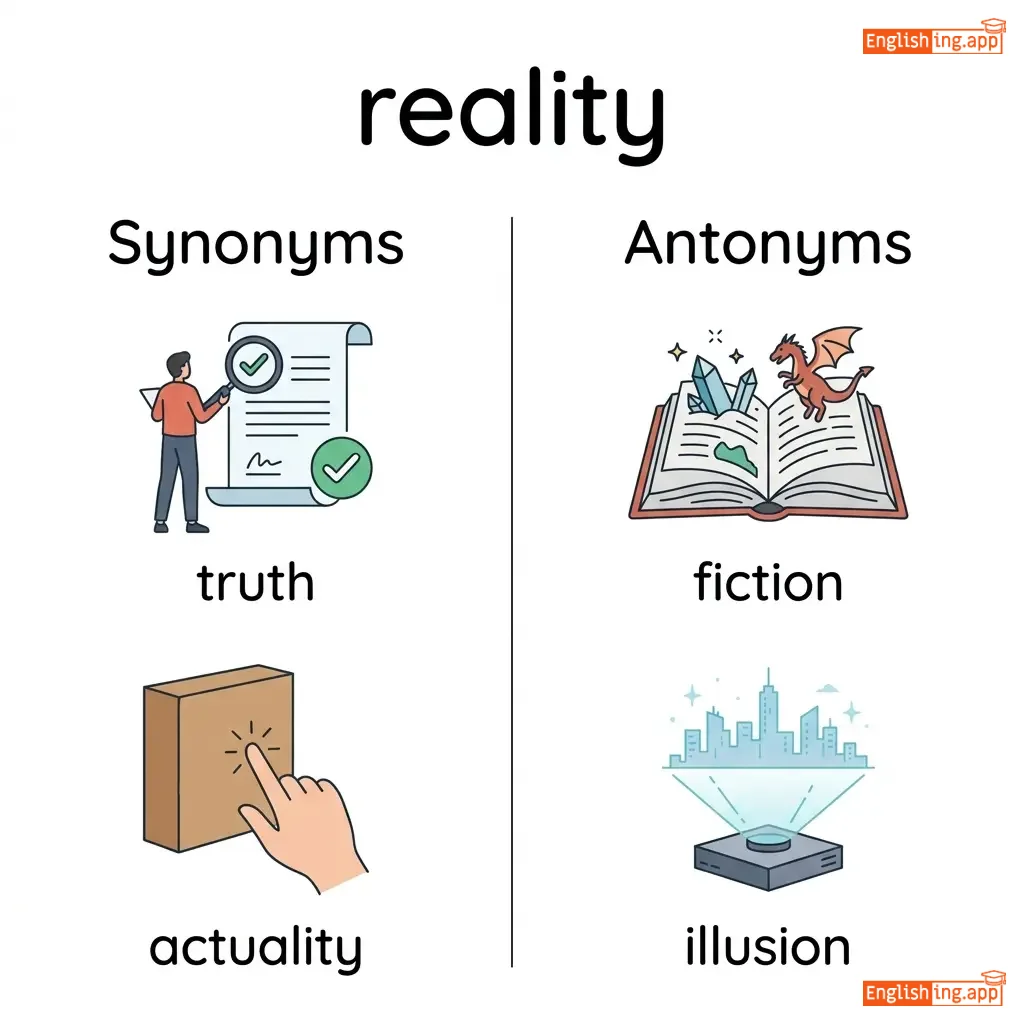
actuality, truth, fact
••••••
|
fantasy, illusion, fiction
••••••
|
face reality, harsh reality, virtual reality
••••••
|
Реальность = то, что реально существует.
••••••
|
|
#1123
🤪
|
/kwɜːrk/
noun
(квирк)
••••••
|
- •••••• |
привычка; странность
prikhychka; strannost
••••••
|
a peculiar behavioral habit; an unexpected turn or twist
••••••
|
Her quirk of always wearing mismatched socks made her unique.
Ее странность всегда носить разные носки делала ее уникальной.
••••••
|
Ее странность всегда носить разные носки делала ее уникальной.
Eye strannost' vsegda nosit' raznye noski delala eye unikal'noy.
••••••
|
peculiarity, idiosyncrasy, trait, habit
••••••
|
normalcy, conformity, regularity, predictability
••••••
|
personal quirk, strange quirk, little quirk
••••••
|
Странности, которые делают нас уникальными, напоминают о квирке.
••••••
|
|
#1124
🤗
|
/ˌriː.əˈʃʊr.əns/
noun
(riʌˈʃʊrənсe)
••••••
|
- •••••• |
успокоение
uspokoenie
••••••
|
comfort or confidence given to someone to remove their fears or doubts
••••••
|
She needed reassurance that everything would be okay. |
Ей было нужно успокоение, что все будет в порядке.
Ey bylo nuzhno uspokoenie, chto vse budet v poryadke.
••••••
|
comfort, encouragement, support
••••••
|
discouragement, doubt, uncertainty
••••••
|
seek reassurance, provide reassurance, need reassurance
••••••
|
Успокоение — это уверенность, которая устраняет сомнения.
••••••
|
|
#1125
👥
|
/ˈræbəl/
noun
(рэбл)
••••••
|
- •••••• |
толпа
tolpa
••••••
|
a disorderly crowd; the common people regarded as socially inferior
••••••
|
The politician dismissed the protesters as mere rabble. |
Политик отверг протестующих как простую толпу.
Politik otvergn protestuyushchikh kak prostuyu tolpu.
••••••
|
mob, crowd, masses, horde
••••••
|
elite, aristocracy, nobility, gentry
••••••
|
angry rabble, unruly rabble, common rabble
••••••
|
Толпа в беспорядке похожа на 'rabble', народ.
••••••
|
|
#1126
✊
|
/ˈreb.əl/
noun
(ребел)
••••••
|
- •••••• |
бунтарь
buntar
••••••
|
a person who resists authority or control
••••••
|
The young rebel refused to follow the school rules. |
Молодой бунтарь отказался следовать школьным правилам.
Molodoj buntar' otkazalsya sleduvat' shkol'nym pravilam.
••••••
|
revolutionary, insurgent, dissenter
••••••
|
conformist, loyalist, supporter
••••••
|
teenage rebel, rebel leader, rebel forces
••••••
|
Бунтарь всегда идет против системы.
••••••
|
|
#1127
🗣️
|
/ˌrækənˈtɜːr/
noun
(хэппинесс)
••••••
|
- •••••• |
счастье
schastye
••••••
|
a person who tells anecdotes in a skillful and amusing way
••••••
|
The old man was a gifted raconteur who entertained everyone with his stories. |
Она не могла скрыть свое счастье, когда получила награду.
Ona ne mogla skryt' svoje schast'ye, kogda poluchila nagradu.
••••••
|
storyteller, narrator, anecdotalist, spinner
••••••
|
listener, audience, silent person, introvert
••••••
|
gifted raconteur, accomplished raconteur, entertaining raconteur
••••••
|
Счастье в каждом моменте жизни.
••••••
|
|
#1128
⚔️
|
/rɪˈbel.jən/
noun
(революция)
••••••
|
- •••••• |
восстание
vostanie
••••••
|
an act of armed resistance to an established government or leader
••••••
|
The rebellion against the king lasted for three years.
Революция против короля длилась три года.
••••••
|
Революция против короля длилась три года.
Revolyutsiya protiv korolya dlyilas' tree goda.
••••••
|
revolt, uprising, insurrection
••••••
|
obedience, submission, compliance
••••••
|
armed rebellion, suppress rebellion, lead rebellion
••••••
|
Восстание = Воля + Сопротивление (борьба за волю)
••••••
|
|
#1129
🧽
|
/ræɡ/
noun
(рэг)
••••••
|
- •••••• |
тряпка; изношенная одежда, используемая для уборки
tryapka; iznoshennaya odezhda, ispol'zuyemaya dlya uborki
••••••
|
a piece of old cloth used for cleaning; worn-out clothing
••••••
|
She used an old rag to clean the dusty table. |
Она использовала старую тряпку для того, чтобы вытереть пыль с стола.
Ona ispol'zovala staruyu tryapku dlya togo, chtoby vyteret' pyl' s stola.
••••••
|
cloth, towel, wipe, fabric
••••••
|
new cloth, fine fabric, silk, luxury textile
••••••
|
cleaning rag, old rag, dirty rag
••••••
|
Тряпка, использованная для уборки
••••••
|
|
#1130
📞
|
/rɪˈsiː.vər/
noun
(рисивер)
••••••
|
- •••••• |
приемник
priemyannik
••••••
|
a person or thing that receives something; the part of a telephone containing the earpiece and mouthpiece
••••••
|
She picked up the receiver to answer the phone call.
Она подняла трубку, чтобы ответить на телефонный звонок.
••••••
|
Она подняла трубку, чтобы ответить на телефонный звонок.
Ona podnyala trubku, chtoby otvetit' na telefonnij zvonok.
••••••
|
recipient, beneficiary, addressee
••••••
|
sender, transmitter, giver
••••••
|
phone receiver, radio receiver, pick up receiver
••••••
|
Приемник получает звонок, как телефонный приемник.
••••••
|
|
#1131
🧹
|
/reɪk/
noun
(рэйк)
••••••
|
- •••••• |
грабли
grably
••••••
|
a garden tool with a long handle and prongs for gathering leaves; to gather with a rake
••••••
|
He used a rake to gather the fallen autumn leaves.
Он использовал грабли, чтобы собрать опавшие осенние листья.
••••••
|
Он использовал грабли, чтобы собрать опавшие осенние листья.
On ispol'zoval grably, chtoby sobrat' opavshiye osen'niye list'ya.
••••••
|
tool, implement, scraper, gatherer
••••••
|
scatter, spread, disperse, strew
••••••
|
garden rake, leaf rake, rake leaves
••••••
|
Грабли: Собирать осенние листья с помощью граблей.
••••••
|
|
#1132
🎉
|
/rɪˈsep.ʃən/
noun
(reception)
••••••
|
- •••••• |
прием; встреча; мероприятие;
priyem; vstrecha; meropriyatiye;
••••••
|
the action of receiving something or someone; a formal social occasion held to welcome someone
••••••
|
The wedding reception was held at a beautiful hotel.
свадебный прием прошел в прекрасном отеле.
••••••
|
Свадебный прием прошел в прекрасном отеле.
Svadebnyy priyem proshel v prekrasnom otele.
••••••
|
welcome, gathering, party
••••••
|
rejection, dismissal, farewell
••••••
|
wedding reception, hotel reception, reception desk
••••••
|
Прием – Событие, организованное для встречи гостей, например, на свадьбе.
••••••
|
|
#1133
🎲
|
/ˈrændəm/
adjective
(рандом)
••••••
|
- •••••• |
случайный
sluchaynyy
••••••
|
without pattern or predetermined order; happening by chance
••••••
|
She selected a random book from the library shelf.
Она выбрала случайную книгу с полки библиотеки.
••••••
|
Она выбрала случайную книгу с полки библиотеки.
Ona vybrala sluchaynuju knigu s polki biblioteki.
••••••
|
arbitrary, chance, haphazard, accidental
••••••
|
planned, systematic, organized, deliberate
••••••
|
random selection, random number, random choice
••••••
|
Слово 'случайный' в русском языке описывает что-то происходящее без планирования, как случайный выбор.
••••••
|
|
#1134
🎁
|
/rɪˈsɪp.i.ənt/
noun
(rɪˈsɪpɪənt)
••••••
|
- •••••• |
получатель
poluchatel
••••••
|
a person who receives something
••••••
|
She was the recipient of the prestigious award. |
Она была получателем престижной премии.
Ona byla poluchatelem prestizhnoy premii
••••••
|
receiver, beneficiary, addressee
••••••
|
donor, giver, sender
••••••
|
award recipient, scholarship recipient, organ recipient
••••••
|
Recipient = получатель (Recipient = poluchatel)
••••••
|
|
#1135
💎
|
/ˈrerəti/
noun
(reriti)
••••••
|
- •••••• |
состояние быть редким; что-то необычное или редкое
sostoyanie byt' redkim; chto-to neobychnoye ili redkoye
••••••
|
the state of being rare; something that is uncommon or scarce
••••••
|
The antique vase was a rarity worth thousands of dollars. |
Антикварная ваза была редкостью, стоящей тысячи долларов.
Antikvarnaya vaza byla redkost'yu, stoyashchiyey tysyachi dollarov.
••••••
|
scarcity, uniqueness, novelty, oddity
••••••
|
commonality, abundance, frequency, normalcy
••••••
|
great rarity, extreme rarity, museum rarity
••••••
|
Редкие предметы, такие как антиквариат, имеют ценность из-за своей редкости, как и слово 'rarity'.
••••••
|
|
#1136
🎭
|
/ˌres.ɪˈteɪ.ʃən/
noun
(реситация)
••••••
|
- •••••• |
декламация
deklamatsiya
••••••
|
the action of reciting or repeating aloud from memory
••••••
|
The poetry recitation contest was held in the auditorium.
Конкурс по чтению стихов прошел в аудитории.
••••••
|
Конкурс по декламации стихов прошел в аудитории.
Konkurs po deklamatsii stikhov proshel v auditorii.
••••••
|
recital, reading, performance
••••••
|
silence, muteness, listening
••••••
|
poetry recitation, Quran recitation, recitation contest
••••••
|
Russian 'декламация' connects to 'recitation,' linking performance art and memory.
••••••
|
|
#1137
✅
|
/ˌrætɪfɪˈkeɪʃən/
noun
(ратификация)
••••••
|
- •••••• |
ратификация
ratifikaciya
••••••
|
the action of signing or giving formal consent to a treaty, contract, or agreement
••••••
|
The treaty required ratification by both countries' parliaments.
Договор потребовал ратификации обоими парламентами стран.
••••••
|
Договор потребовал ратификации обоими парламентами стран.
Dogovor potreboval ratifikatsii oboimi parlamentami stran.
••••••
|
approval, confirmation, endorsement, validation
••••••
|
rejection, denial, disapproval, veto
••••••
|
treaty ratification, formal ratification, parliamentary ratification
••••••
|
Ратификация как завершающий этап соглашения, важный шаг.
••••••
|
|
#1138
🏆
|
/ˌrek.əɡˈnɪʃ.ən/
noun
(рекогнишн)
••••••
|
|
признание; идентификация
priznanie; identifikatsiya
••••••
|
acknowledgment of the existence, validity, or legality of something
••••••
|
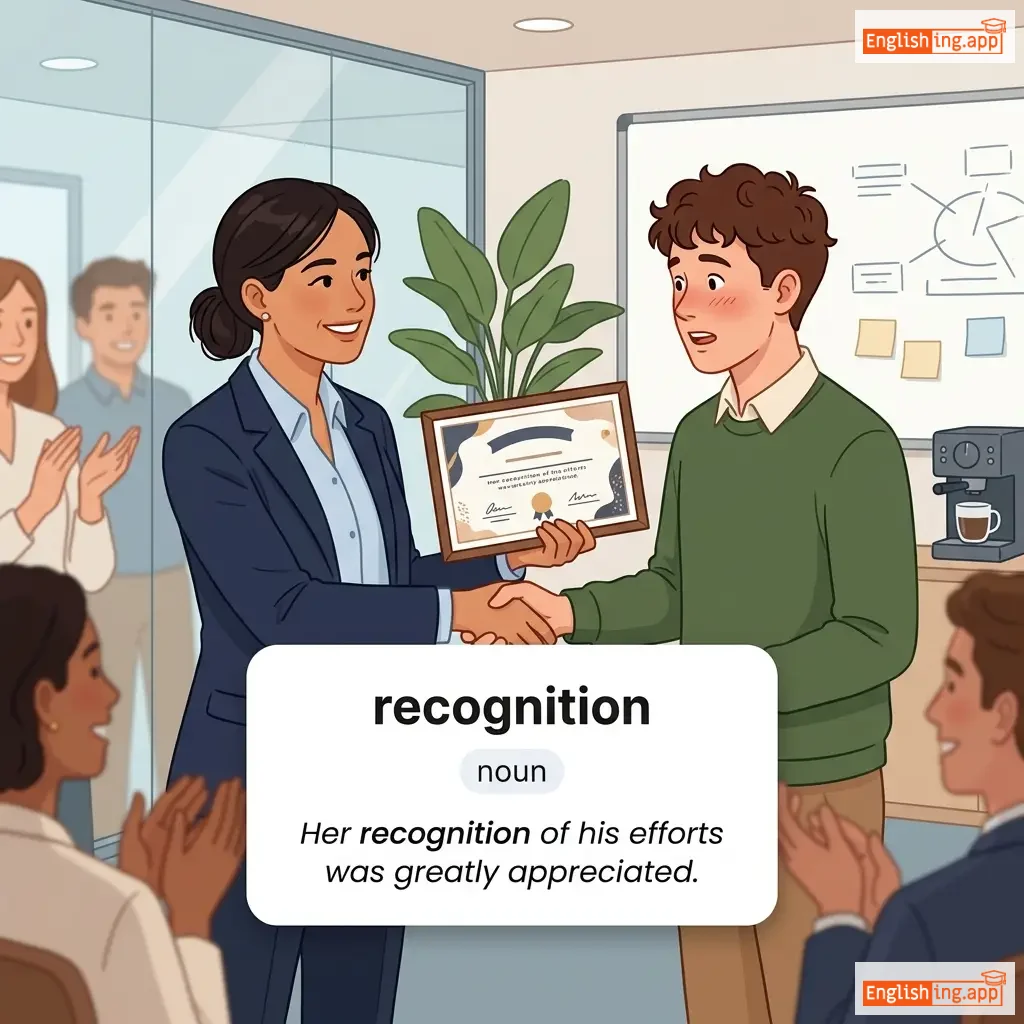
His hard work finally received recognition from the management. |
Его усердная работа наконец получила признание от руководства.
Yego usyerdnaya rabota nakonechno poluchila priznanie ot rukovodstva.
••••••
|
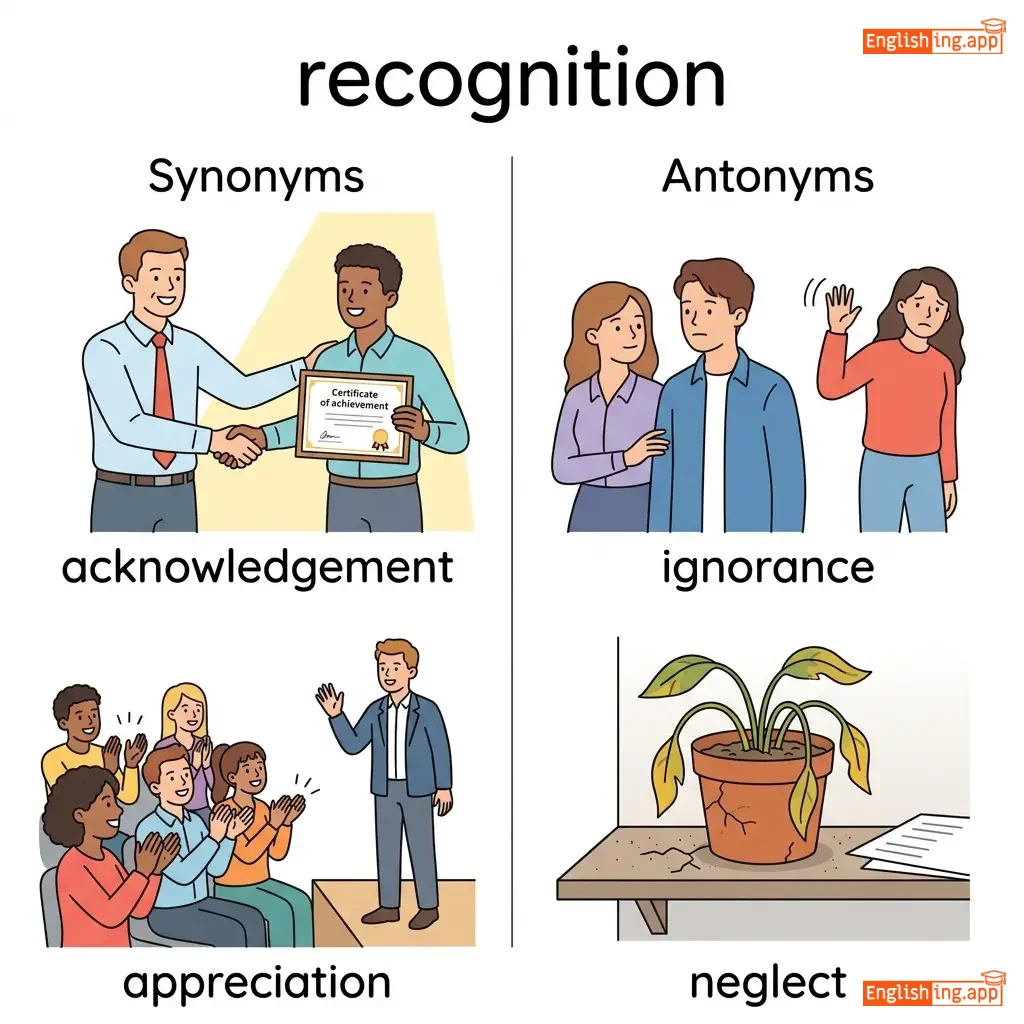
acknowledgment, appreciation, acceptance
••••••
|
ignorance, denial, rejection
••••••
|
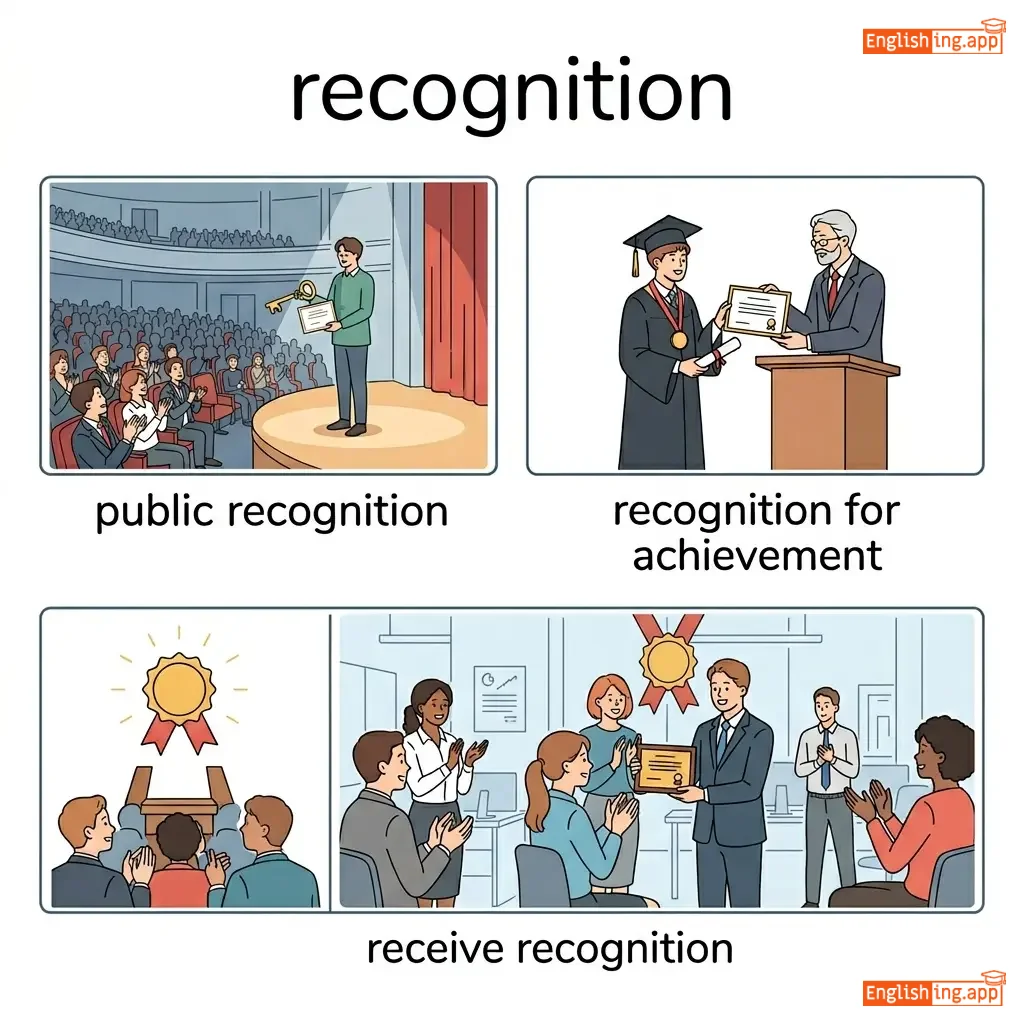
gain recognition, facial recognition, public recognition
••••••
|
In Russian, 'priznanie' means recognition, giving acknowledgment to someone's efforts.
••••••
|
|
#1139
⚡
|
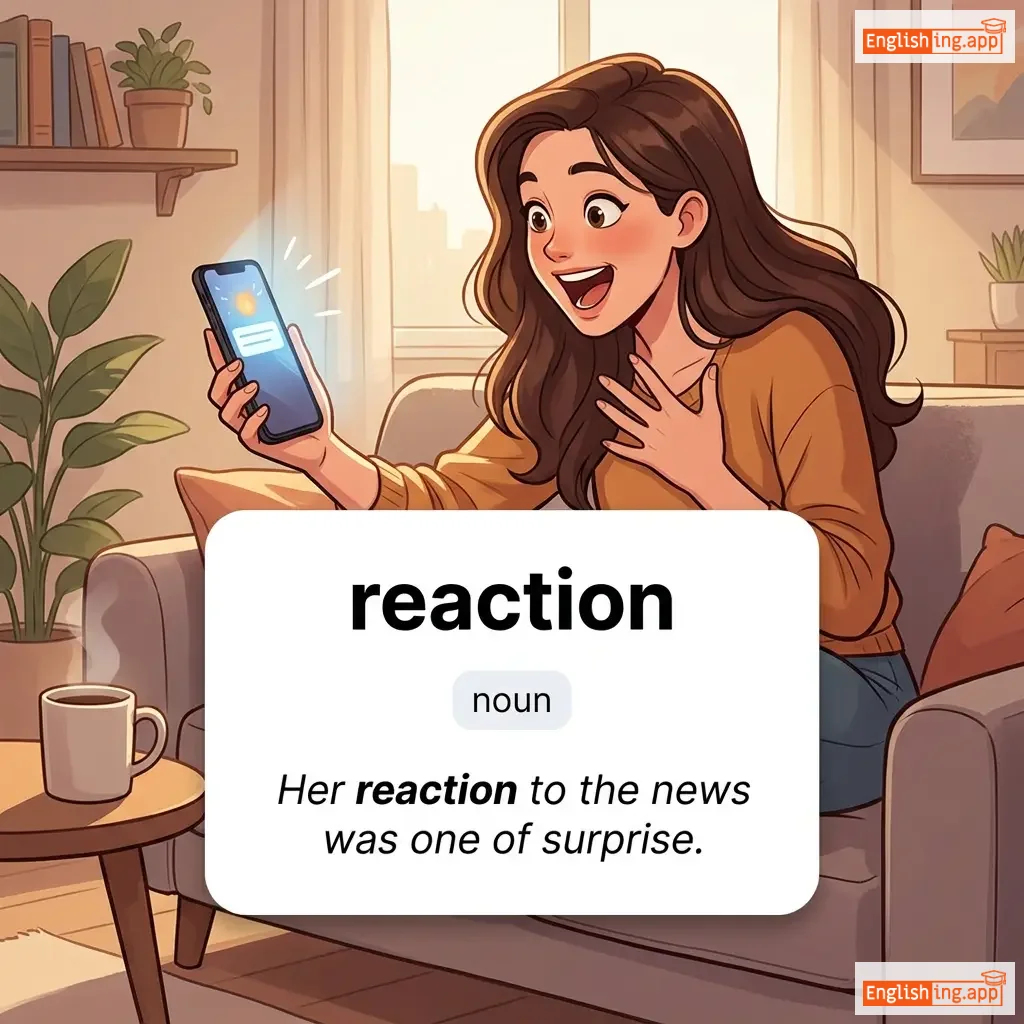
/riˈækʃən/
noun
(riˈækʃən)
••••••
|
|
реакция
reaktsiya
••••••
|
an action performed or a feeling experienced in response to a situation or event
••••••
|
Her reaction to the surprise party was pure joy. |
Её реакция на сюрприз-пати была чистой радостью.
Eyo reaktsiya na syurpriz-pati byla chistoy radost'yu
••••••
|
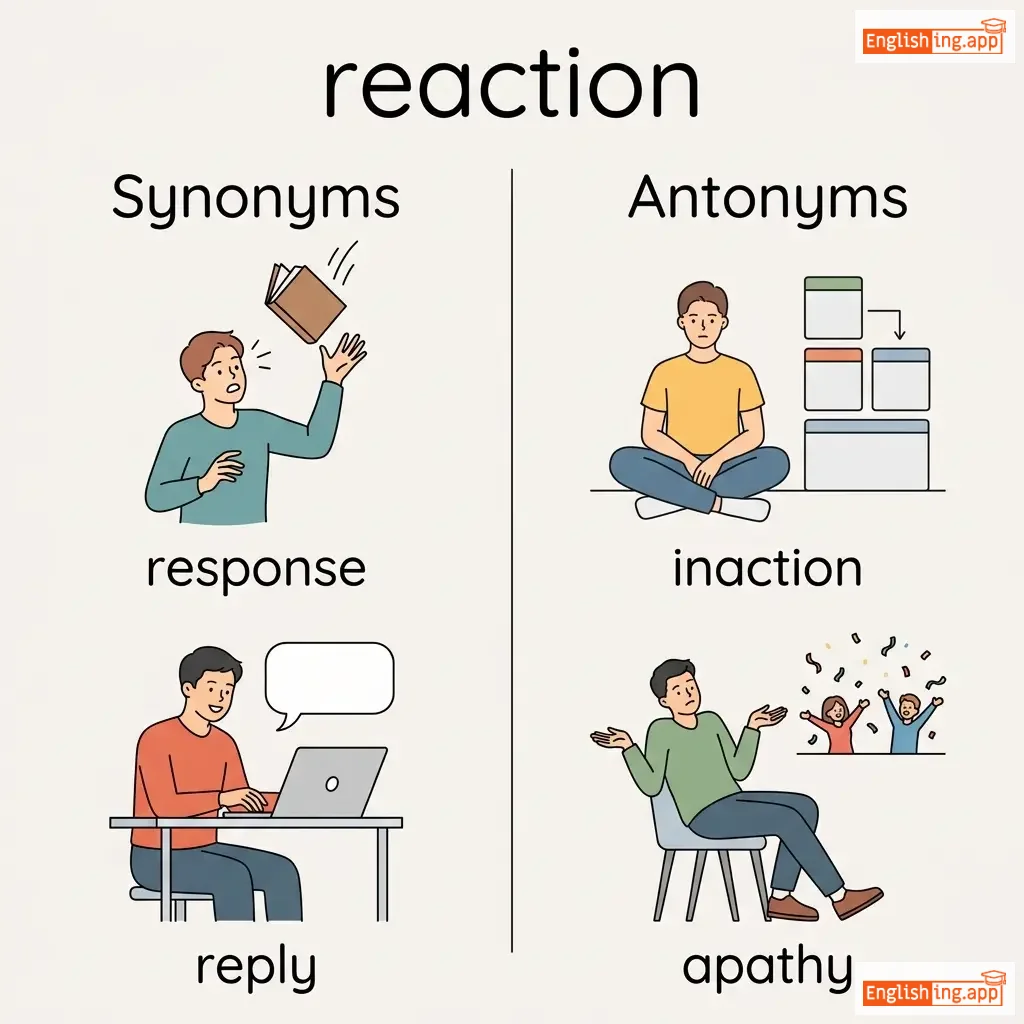
response, reply, feedback, consequence
••••••
|
action, cause, stimulus, initiative
••••••
|
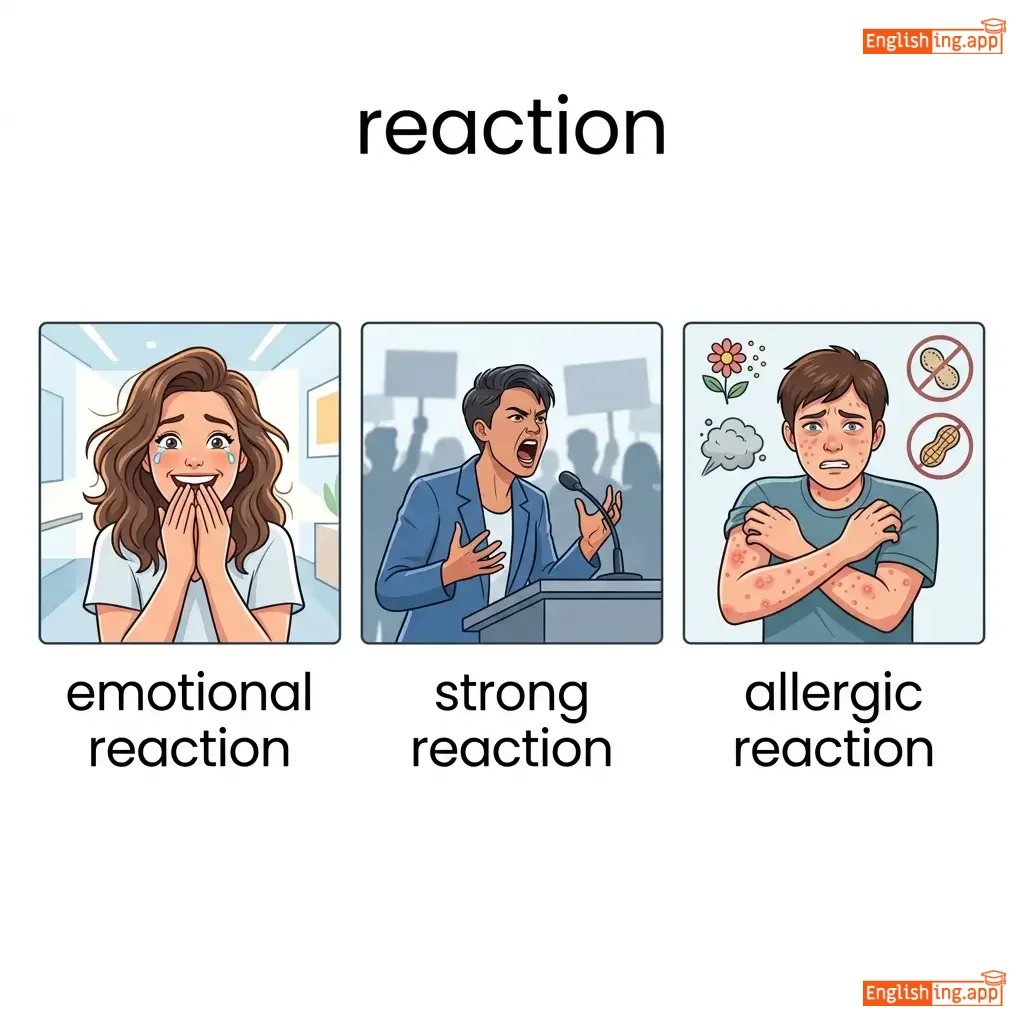
immediate reaction, strong reaction, chemical reaction
••••••
|
реакция - это то, что мы чувствуем или делаем в ответ на что-то
••••••
|
|
#1140
🧠
|
/ˌrek.əˈlek.ʃən/
noun
(рɪˈкɔлɛкʃэн)
••••••
|
|
воспоминание
vospominanie
••••••
|
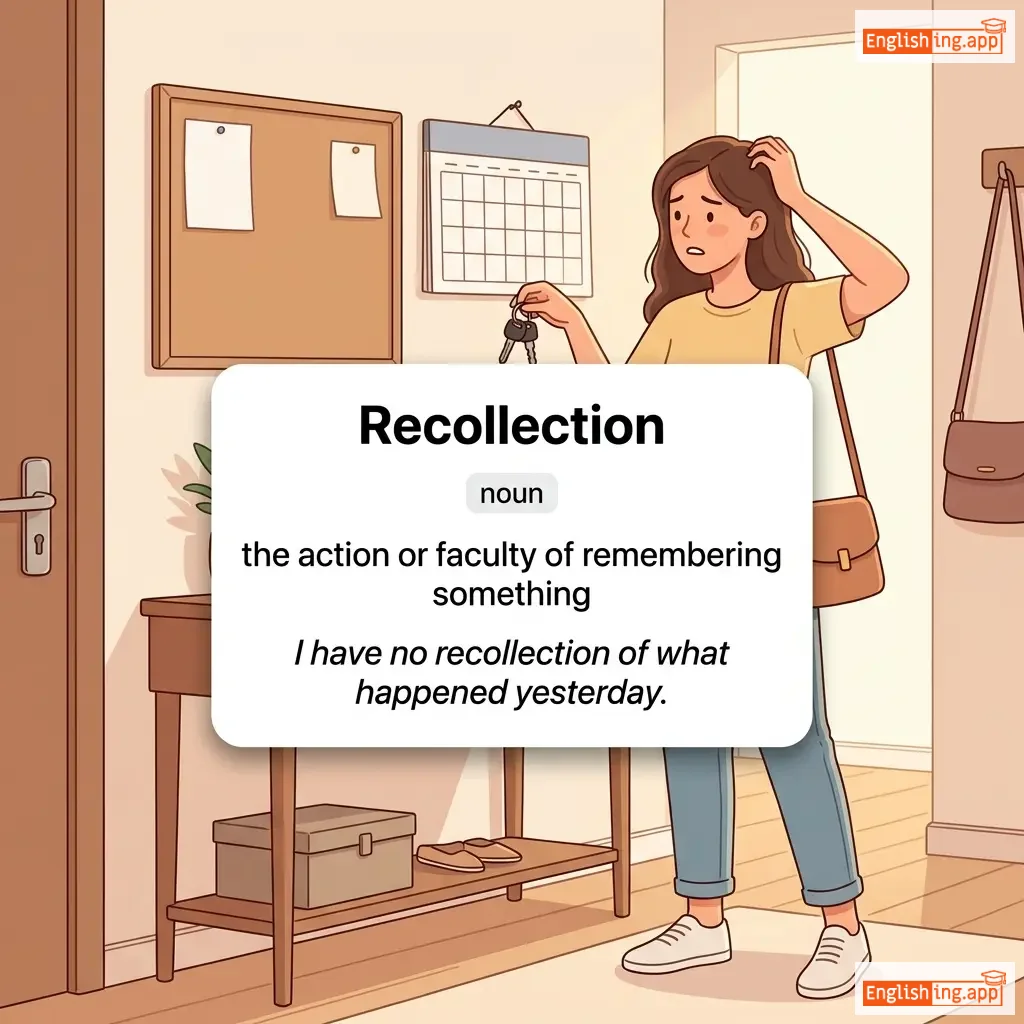
the action or faculty of remembering something
••••••
|
I have no recollection of what happened yesterday. |
У меня нет воспоминаний о том, что случилось вчера.
U menya net vospominaniy o tom, chto sluchilos' vchera.
••••••
|
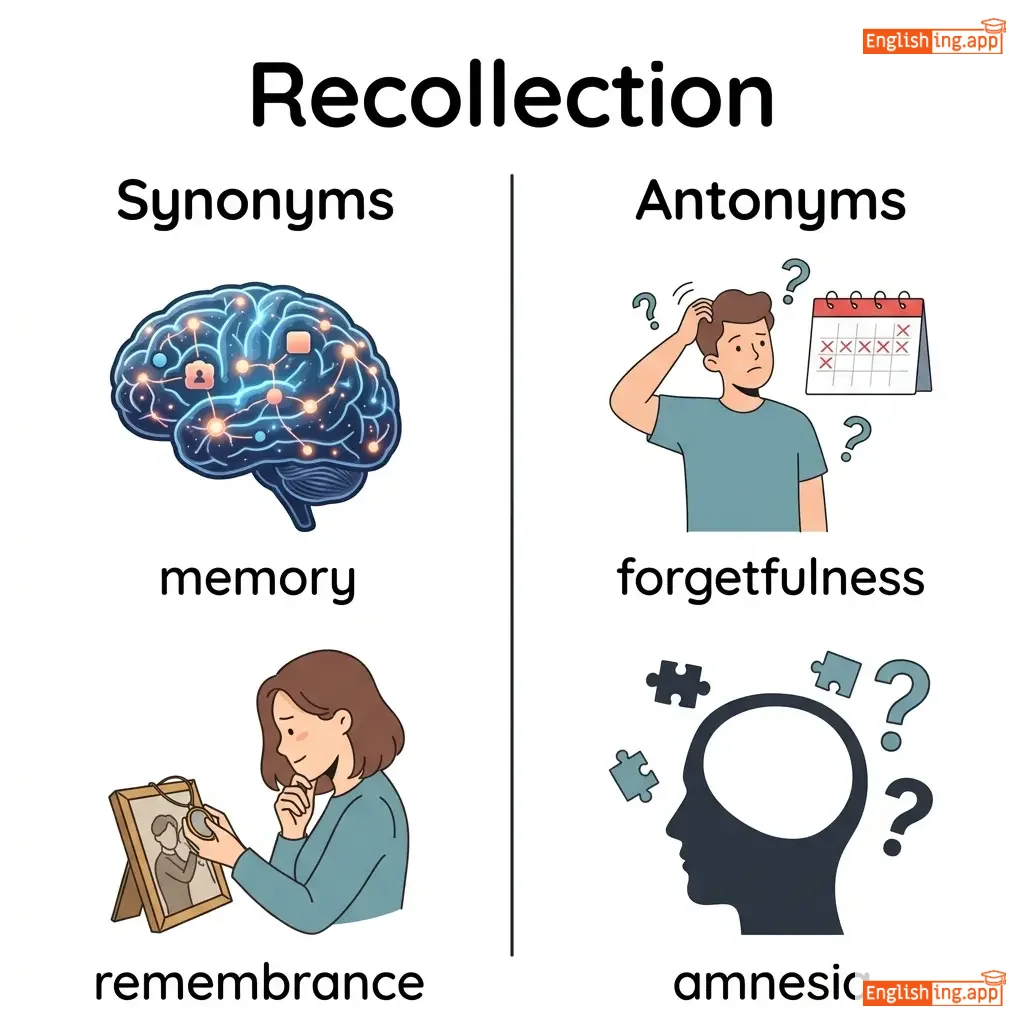
memory, remembrance, recall
••••••
|
forgetfulness, amnesia, oblivion
••••••
|
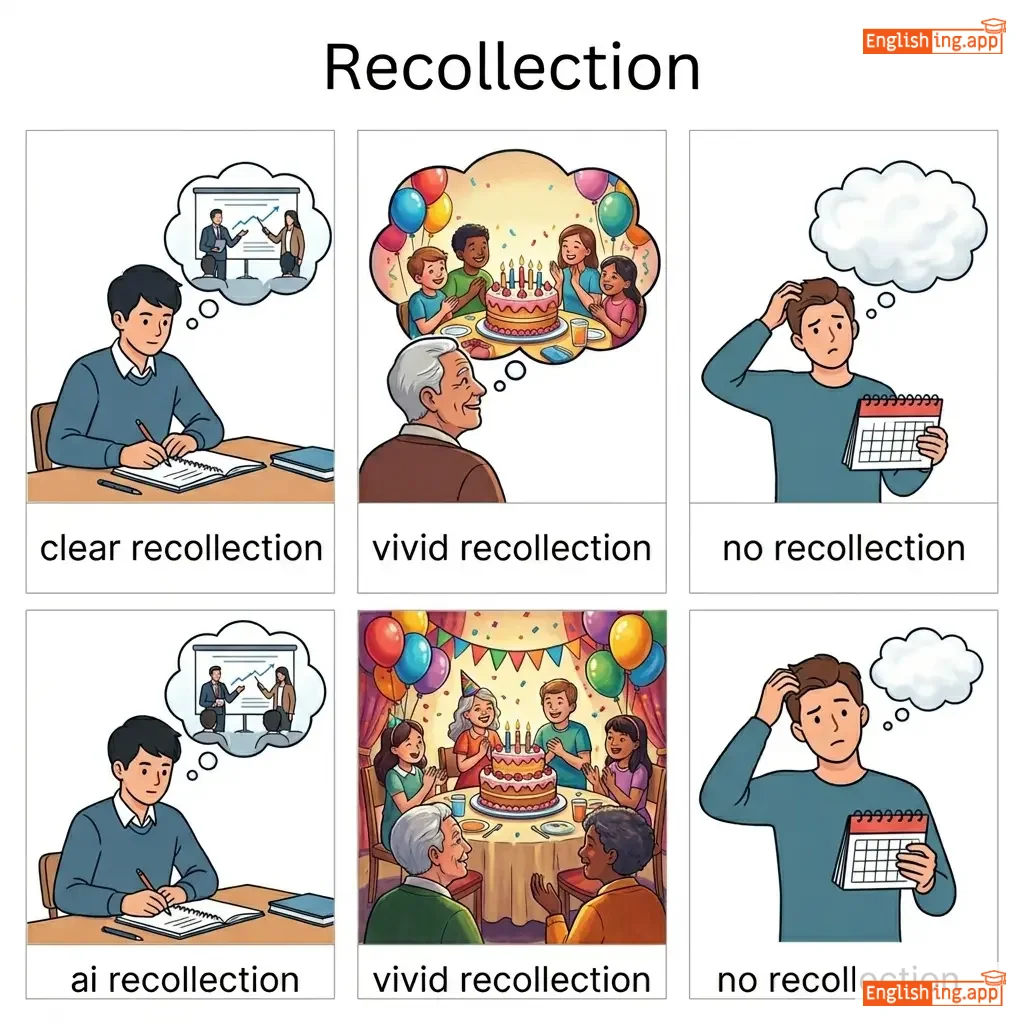
clear recollection, vivid recollection, no recollection
••••••
|
Recalling past events, like remembering a childhood story
••••••
|
Vocabulary Quiz
Test your vocabulary by matching words with their translations or meanings.
Login to take the quiz
Comments (0)
Share your thoughts and join the discussion.
Join the discussion by logging in
Login to CommentNo comments yet
Be the first to share your thoughts!