



Swipe left or right, or use the buttons. Tap image to zoom.
例句翻译
单词
Lesson 57Lesson 57 - 遮罩切换
|
表情符号
|
单词 | Images | 翻译 | 含义 | 例句 | 例句翻译 | 同义词 | 反义词 | 搭配词 | 助记符 |
|---|---|---|---|---|---|---|---|---|---|---|
|
#1121
💀
|
/kwaɪˈiːtəs/
noun
(kwaiétus)
••••••
|
- •••••• |
死亡或导致死亡的事物;最终解决
sǐwáng huò dǎozhì sǐwáng de shìwù; zuìzhōng jiějué
••••••
|
death or something that causes death; a final settlement
••••••
|
The hero received his quietus from the villain's sword.
英雄从反派的剑下获得了他的安息。
••••••
|
英雄从反派的剑下获得了他的安息。
yīngxióng cóng fǎnpài de jiàn xià huòdé le tā de ānxī.
••••••
|
death, demise, end, termination
••••••
|
birth, beginning, life, start
••••••
|
final quietus, receive quietus, give quietus
••••••
|
quietus = 最终结局 = 死亡的终结
••••••
|
|
#1122
🌍
|
/riˈæl.ə.ti/
noun
(现实)
••••••
|
|
现实
xianshi
••••••
|
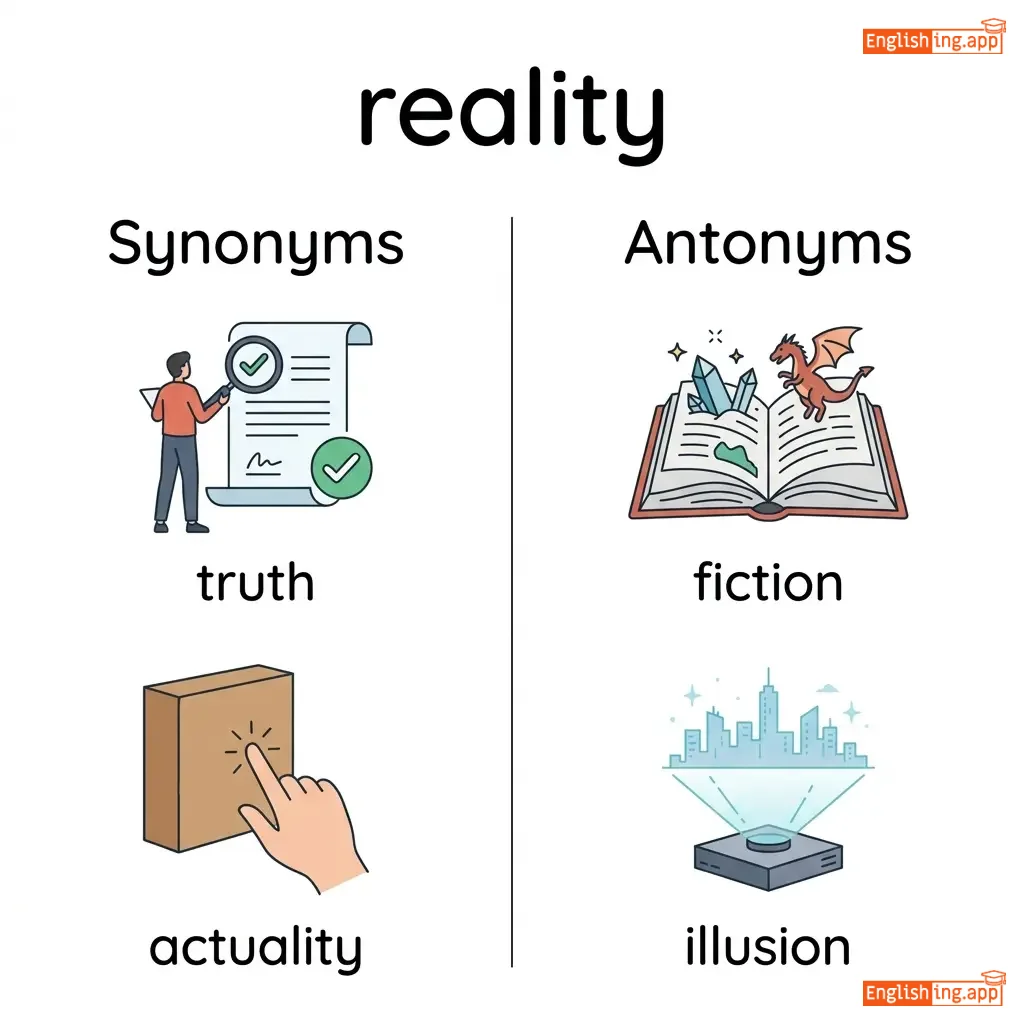
the state of things as they actually exist; the actual situation
••••••
|
We need to face the reality of the situation. |
我们需要面对现实情况。
wǒmen xūyào miànduì xiànshí qíngkuàng.
••••••
|
actuality, truth, fact
••••••
|
fantasy, illusion, fiction
••••••
|
face reality, harsh reality, virtual reality
••••••
|
现实 = 真正存在的事物
••••••
|
|
#1123
🤪
|
/kwɜːrk/
noun
(kwɜːrk)
••••••
|
- •••••• |
怪癖; 习惯
guàipǐ; xíguàn
••••••
|
a peculiar behavioral habit; an unexpected turn or twist
••••••
|
Her quirk of always wearing mismatched socks made her unique.
她总是穿着不配的袜子,这个怪癖使她与众不同。
••••••
|
她总是穿着不配的袜子,这个怪癖使她与众不同。
Tā zǒng shì chuānzhuó bù pèi de wàzi, zhège guàipǐ shǐ tā yǔ zhòng bùtóng.
••••••
|
peculiarity, idiosyncrasy, trait, habit
••••••
|
normalcy, conformity, regularity, predictability
••••••
|
personal quirk, strange quirk, little quirk
••••••
|
记住,一种怪癖可能是让你与别人不同的原因。
••••••
|
|
#1124
🤗
|
/ˌriː.əˈʃʊr.əns/
noun
(rì ā xiǔ rěn sī)
••••••
|
- •••••• |
安慰
ān wèi
••••••
|
comfort or confidence given to someone to remove their fears or doubts
••••••
|
She needed reassurance that everything would be okay. |
她需要得到安慰,以确认一切都会好起来。
Tā xūyào dédào ānwèi, yǐ quèrèn yīqiè dōu huì hǎo qǐlái.
••••••
|
comfort, encouragement, support
••••••
|
discouragement, doubt, uncertainty
••••••
|
seek reassurance, provide reassurance, need reassurance
••••••
|
安慰就是一种消除疑虑的信心。
••••••
|
|
#1125
👥
|
/ˈræbəl/
noun
(雷布尔)
••••••
|
- •••••• |
乌合之众
wū hé zhī zhòng
••••••
|
a disorderly crowd; the common people regarded as socially inferior
••••••
|
The politician dismissed the protesters as mere rabble. |
政治家将抗议者视为仅仅是乌合之众。
zhèngzhìjiā jiāng kàngyì zhě shìwéi jǐn jǐn shì wū hé zhī zhòng.
••••••
|
mob, crowd, masses, horde
••••••
|
elite, aristocracy, nobility, gentry
••••••
|
angry rabble, unruly rabble, common rabble
••••••
|
乌合之众就像是没有秩序的'雷布尔'。
••••••
|
|
#1126
✊
|
/ˈreb.əl/
noun
(rèbèiěr)
••••••
|
- •••••• |
叛徒
pàntú
••••••
|
a person who resists authority or control
••••••
|
The young rebel refused to follow the school rules. |
那个年轻的叛徒拒绝遵守学校的规定。
Nàgè niánqīng de pàntú jùjué zūnshǒu xuéxiào de guīdìng.
••••••
|
revolutionary, insurgent, dissenter
••••••
|
conformist, loyalist, supporter
••••••
|
teenage rebel, rebel leader, rebel forces
••••••
|
叛徒总是反抗那些限制他的人或规则。
••••••
|
|
#1127
🗣️
|
/ˌrækənˈtɜːr/
noun
(海皮尼斯)
••••••
|
- •••••• |
幸福
xingfu
••••••
|
a person who tells anecdotes in a skillful and amusing way
••••••
|
The old man was a gifted raconteur who entertained everyone with his stories. |
当她获得奖项时,她无法掩饰自己的幸福。
Dāng tā huòdé jiǎngxiàng shí, tā wúfǎ yǎnshì zìjǐ de xìngfú.
••••••
|
storyteller, narrator, anecdotalist, spinner
••••••
|
listener, audience, silent person, introvert
••••••
|
gifted raconteur, accomplished raconteur, entertaining raconteur
••••••
|
幸福是生活中最美好的礼物。
••••••
|
|
#1128
⚔️
|
/rɪˈbel.jən/
noun
(起义)
••••••
|
- •••••• |
起义
qiyi
••••••
|
an act of armed resistance to an established government or leader
••••••
|
The rebellion against the king lasted for three years.
反抗国王的起义持续了三年。
••••••
|
反抗国王的起义持续了三年。
Fankang guowang de qiyi chixu le san nian.
••••••
|
revolt, uprising, insurrection
••••••
|
obedience, submission, compliance
••••••
|
armed rebellion, suppress rebellion, lead rebellion
••••••
|
起义 = 战斗 + 抗议 (反抗的行动)
••••••
|
|
#1129
🧽
|
/ræɡ/
noun
(拉格)
••••••
|
- •••••• |
旧布;用来清洁的破旧衣物
jiu bu; yong lai qingjie de pojiu yifu
••••••
|
a piece of old cloth used for cleaning; worn-out clothing
••••••
|
She used an old rag to clean the dusty table. |
她用一块旧布擦拭了满是灰尘的桌子。
Ta yong yi kuai jiu bu cashi le man shi huichen de zhuozi.
••••••
|
cloth, towel, wipe, fabric
••••••
|
new cloth, fine fabric, silk, luxury textile
••••••
|
cleaning rag, old rag, dirty rag
••••••
|
旧布,用来清洁
••••••
|
|
#1130
📞
|
/rɪˈsiː.vər/
noun
(接收器)
••••••
|
- •••••• |
接收器
jieshouqi
••••••
|
a person or thing that receives something; the part of a telephone containing the earpiece and mouthpiece
••••••
|
She picked up the receiver to answer the phone call.
她拿起听筒接听电话。
••••••
|
她拿起听筒接听电话。
Ta naqi tingtong jieting dianhua.
••••••
|
recipient, beneficiary, addressee
••••••
|
sender, transmitter, giver
••••••
|
phone receiver, radio receiver, pick up receiver
••••••
|
接收器就像接收电话一样,接收所有的通讯。
••••••
|
|
#1131
🧹
|
/reɪk/
noun
(reɪk)
••••••
|
- •••••• |
耙子
pázi
••••••
|
a garden tool with a long handle and prongs for gathering leaves; to gather with a rake
••••••
|
He used a rake to gather the fallen autumn leaves.
他用耙子收集掉落的秋天叶子。
••••••
|
他用耙子收集掉落的秋天叶子。
Tā yòng pázi shōují diàoluò de qiūtiān yèzi.
••••••
|
tool, implement, scraper, gatherer
••••••
|
scatter, spread, disperse, strew
••••••
|
garden rake, leaf rake, rake leaves
••••••
|
耙子: 用耙子收集掉落的秋叶。
••••••
|
|
#1132
🎉
|
/rɪˈsep.ʃən/
noun
(接待)
••••••
|
- •••••• |
接待; 欢迎; 活动;
jiēdài; huānyíng; huódòng;
••••••
|
the action of receiving something or someone; a formal social occasion held to welcome someone
••••••
|
The wedding reception was held at a beautiful hotel.
婚礼接待在一家漂亮的酒店举行。
••••••
|
婚礼接待在一家漂亮的酒店举行。
hūnlǐ jiēdài zài yījiā piàoliang de jiǔdiàn jǔxíng.
••••••
|
welcome, gathering, party
••••••
|
rejection, dismissal, farewell
••••••
|
wedding reception, hotel reception, reception desk
••••••
|
接待 – 这是一个为了欢迎客人而举办的正式活动,类似婚礼的接待。
••••••
|
|
#1133
🎲
|
/ˈrændəm/
adjective
(随机)
••••••
|
- •••••• |
随机
suiji
••••••
|
without pattern or predetermined order; happening by chance
••••••
|
She selected a random book from the library shelf.
她从书架上挑选了一本随机的书。
••••••
|
她从书架上挑选了一本随机的书。
Ta cong shujia shang tiaoxuanyile yiben suiji de shu.
••••••
|
arbitrary, chance, haphazard, accidental
••••••
|
planned, systematic, organized, deliberate
••••••
|
random selection, random number, random choice
••••••
|
中文中的'随机'描述了没有计划的事件,就像随机选择一本书。
••••••
|
|
#1134
🎁
|
/rɪˈsɪp.i.ənt/
noun
(rɪˈsɪpɪənt)
••••••
|
- •••••• |
接收者
jieshouzhe
••••••
|
a person who receives something
••••••
|
She was the recipient of the prestigious award. |
她是这个著名奖项的接收者。
Ta shi zhege zhuming jiangxiang de jieshouzhe
••••••
|
receiver, beneficiary, addressee
••••••
|
donor, giver, sender
••••••
|
award recipient, scholarship recipient, organ recipient
••••••
|
Recipient = 接收者 (Recipient = Jieshouzhe)
••••••
|
|
#1135
💎
|
/ˈrerəti/
noun
(rè dìtì)
••••••
|
- •••••• |
稀有的状态; 不常见或稀缺的东西
xī yǒu de zhuàngtài; bù chángjiàn huò xīquē de dōngxī
••••••
|
the state of being rare; something that is uncommon or scarce
••••••
|
The antique vase was a rarity worth thousands of dollars. |
古董花瓶是一种稀有物品,价值数千美元。
gǔdǒng huāpíng shì yī zhǒng xīyǒu wùpǐn, jiàzhí shù qiān měiyuán.
••••••
|
scarcity, uniqueness, novelty, oddity
••••••
|
commonality, abundance, frequency, normalcy
••••••
|
great rarity, extreme rarity, museum rarity
••••••
|
像古董这样的稀有物品非常宝贵,正如“rarity”一词所示。
••••••
|
|
#1136
🎭
|
/ˌres.ɪˈteɪ.ʃən/
noun
(朗诵)
••••••
|
- •••••• |
朗诵
lǎngsòng
••••••
|
the action of reciting or repeating aloud from memory
••••••
|
The poetry recitation contest was held in the auditorium.
诗歌朗诵比赛在礼堂举行。
••••••
|
诗歌朗诵比赛在礼堂举行。
shīgē lǎngsòng bǐsài zài lǐtáng jǔxíng.
••••••
|
recital, reading, performance
••••••
|
silence, muteness, listening
••••••
|
poetry recitation, Quran recitation, recitation contest
••••••
|
Chinese '朗诵' conveys the act of reciting poetry aloud, connected to public speaking.
••••••
|
|
#1137
✅
|
/ˌrætɪfɪˈkeɪʃən/
noun
(拉蒂菲凯申)
••••••
|
- •••••• |
批准
pīzhǔn
••••••
|
the action of signing or giving formal consent to a treaty, contract, or agreement
••••••
|
The treaty required ratification by both countries' parliaments.
该条约要求两国议会的批准。
••••••
|
该条约要求两国议会的批准。
gāi tiáoyuē yāoqiú liǎng guó yìhuì de pīzhǔn.
••••••
|
approval, confirmation, endorsement, validation
••••••
|
rejection, denial, disapproval, veto
••••••
|
treaty ratification, formal ratification, parliamentary ratification
••••••
|
批准作为条约最后的签字,至关重要。
••••••
|
|
#1138
🏆
|
/ˌrek.əɡˈnɪʃ.ən/
noun
(rèkèngníshén)
••••••
|
|
认可; 识别
renke; shibie
••••••
|
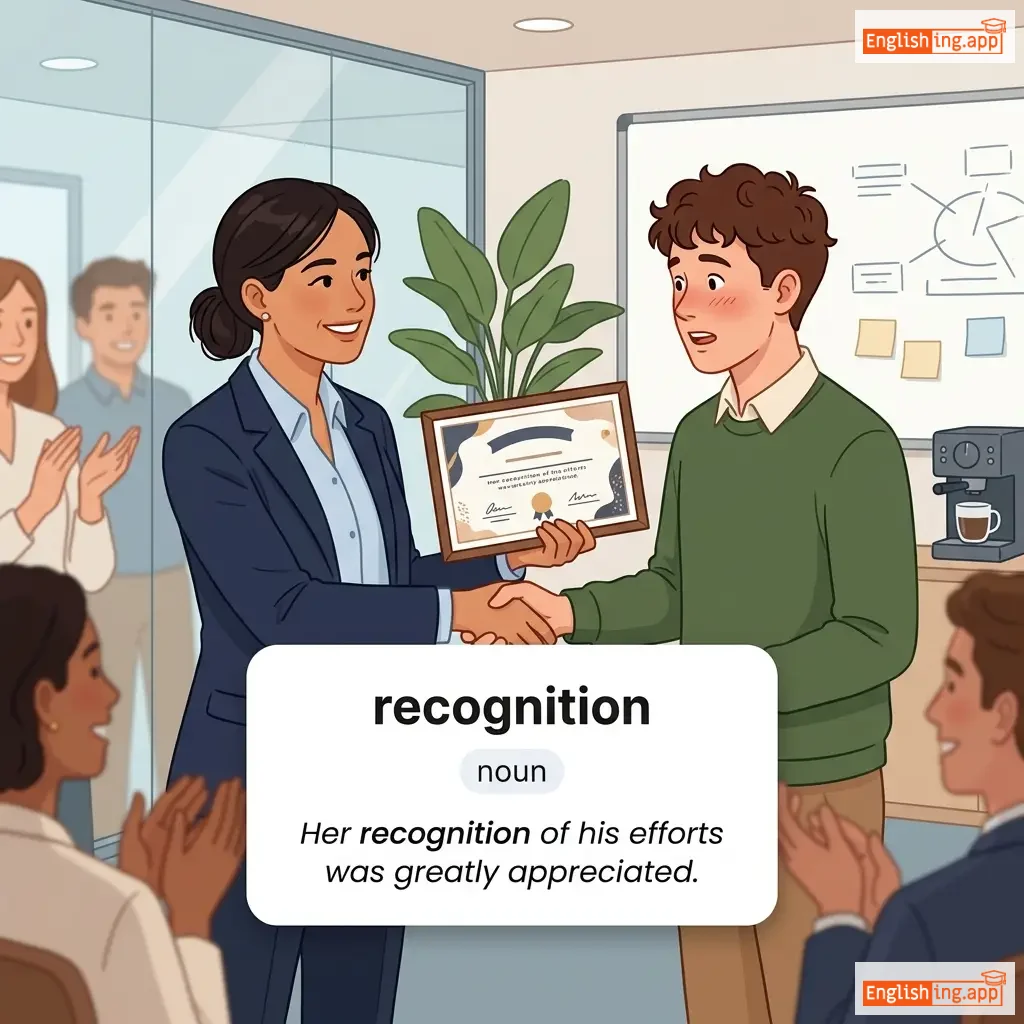
acknowledgment of the existence, validity, or legality of something
••••••
|
His hard work finally received recognition from the management. |
他的辛勤工作终于得到了管理层的认可。
Tā de xīnqín gōngzuò zhōngyú dédàole guǎnlǐcéng de rènkě.
••••••
|
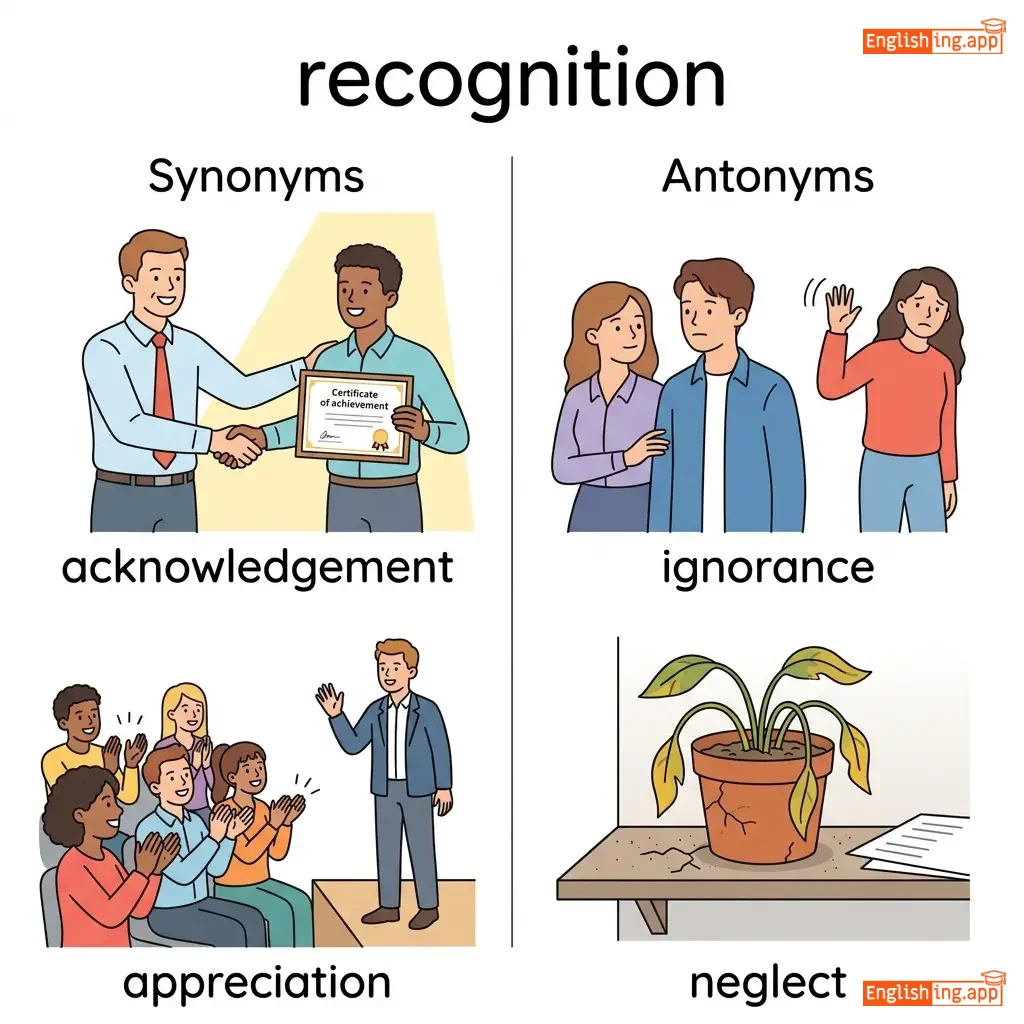
acknowledgment, appreciation, acceptance
••••••
|
ignorance, denial, rejection
••••••
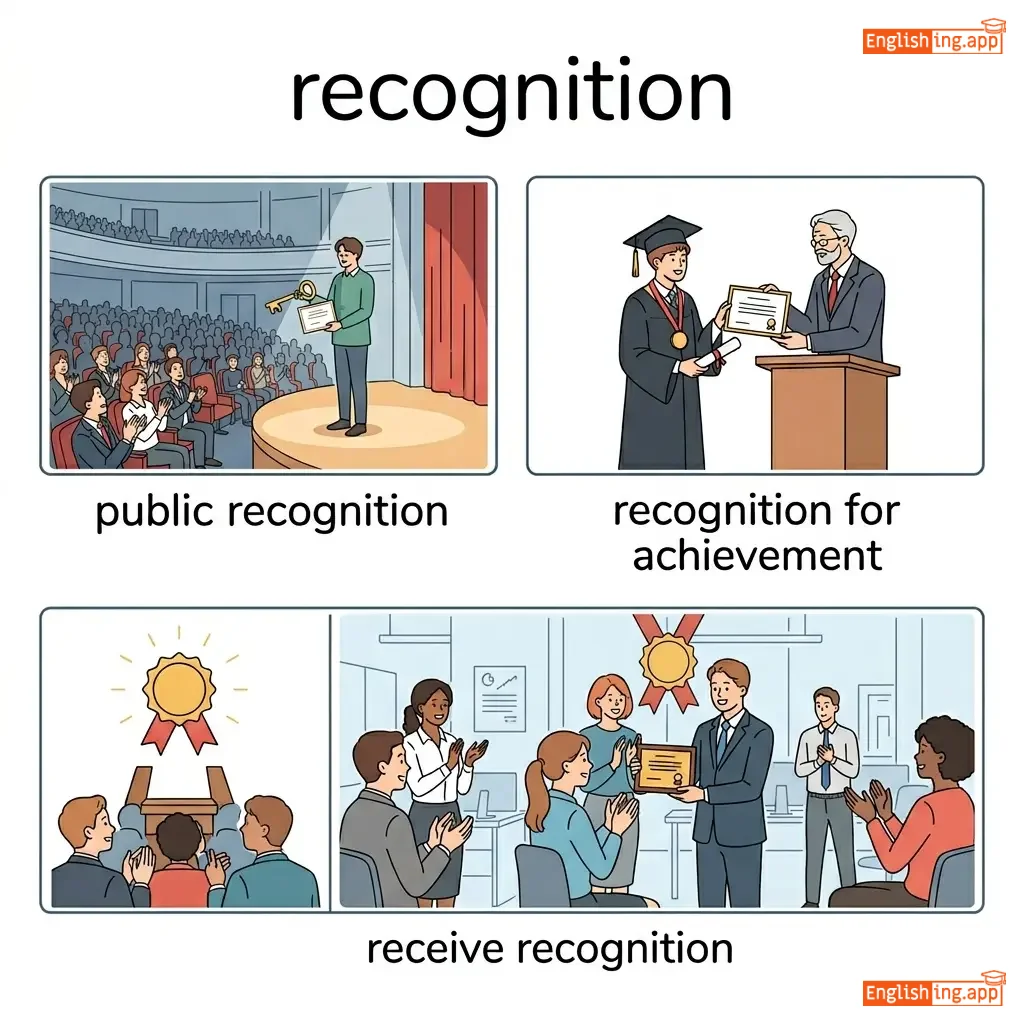
|
gain recognition, facial recognition, public recognition
••••••
|
In Chinese, '认可' means recognition, acknowledging something important.
••••••
|
|
#1139
⚡
|
/riˈækʃən/
noun
(riˈækʃən)
••••••
|
|
反应
fǎnyìng
••••••
|
an action performed or a feeling experienced in response to a situation or event
••••••
|
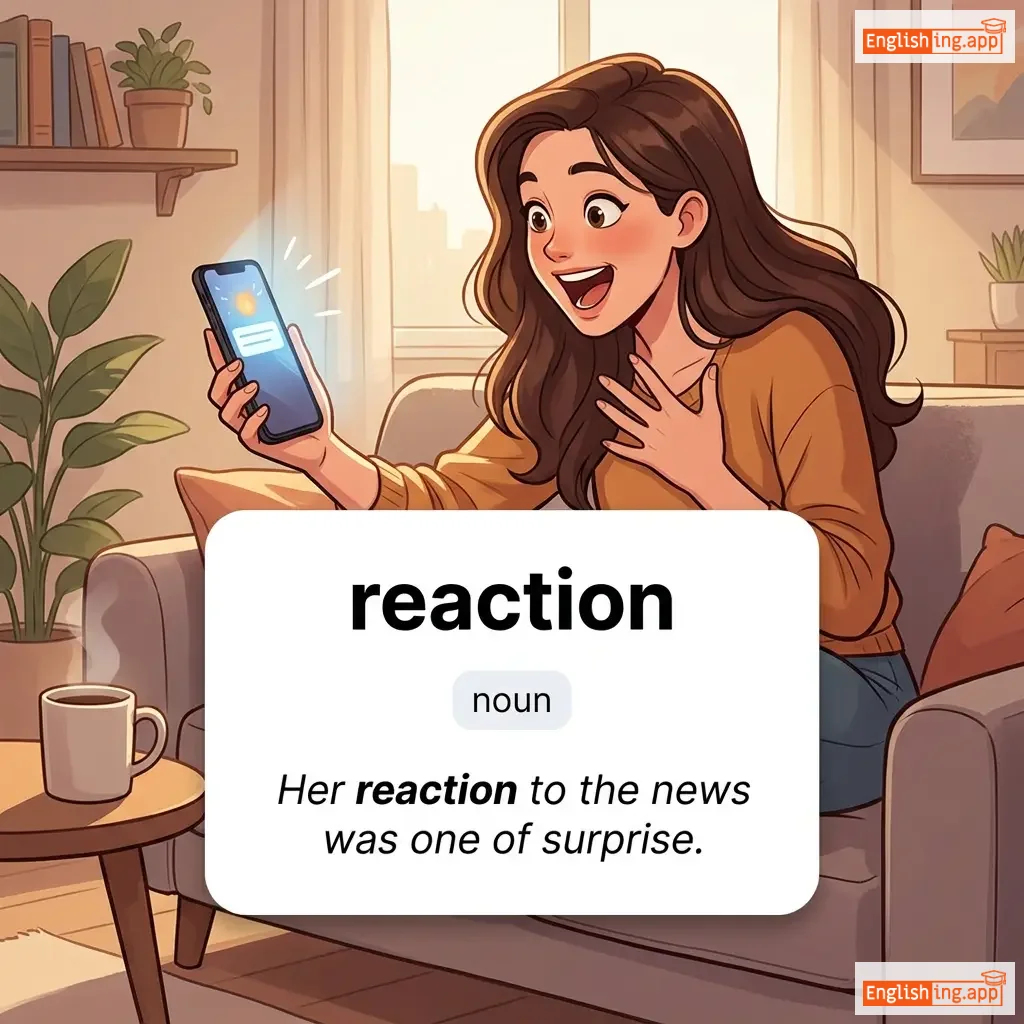
Her reaction to the surprise party was pure joy. |
她对惊喜派对的反应是纯粹的喜悦。
Tā duì jīngxǐ pàiduì de fǎnyìng shì chúncuì de xǐyuè
••••••
|
response, reply, feedback, consequence
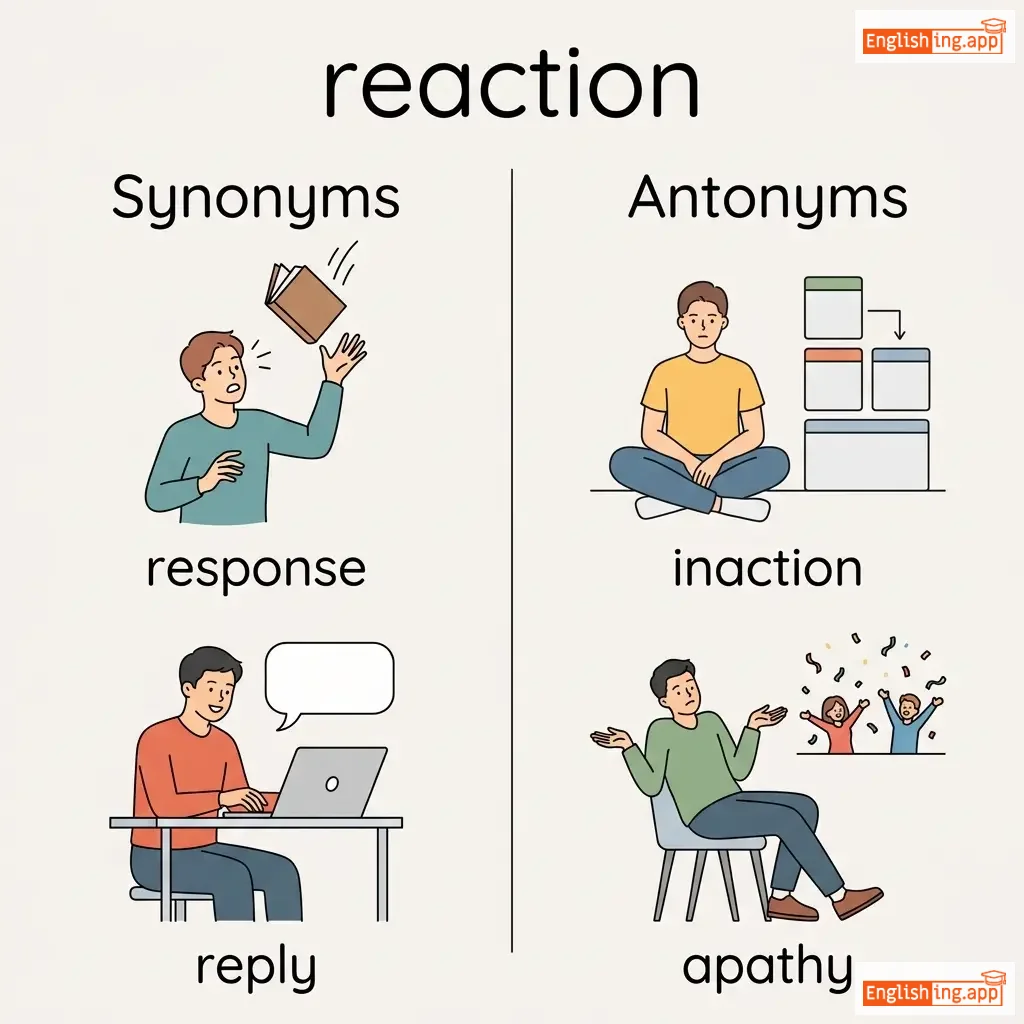
••••••
|
action, cause, stimulus, initiative
••••••
|
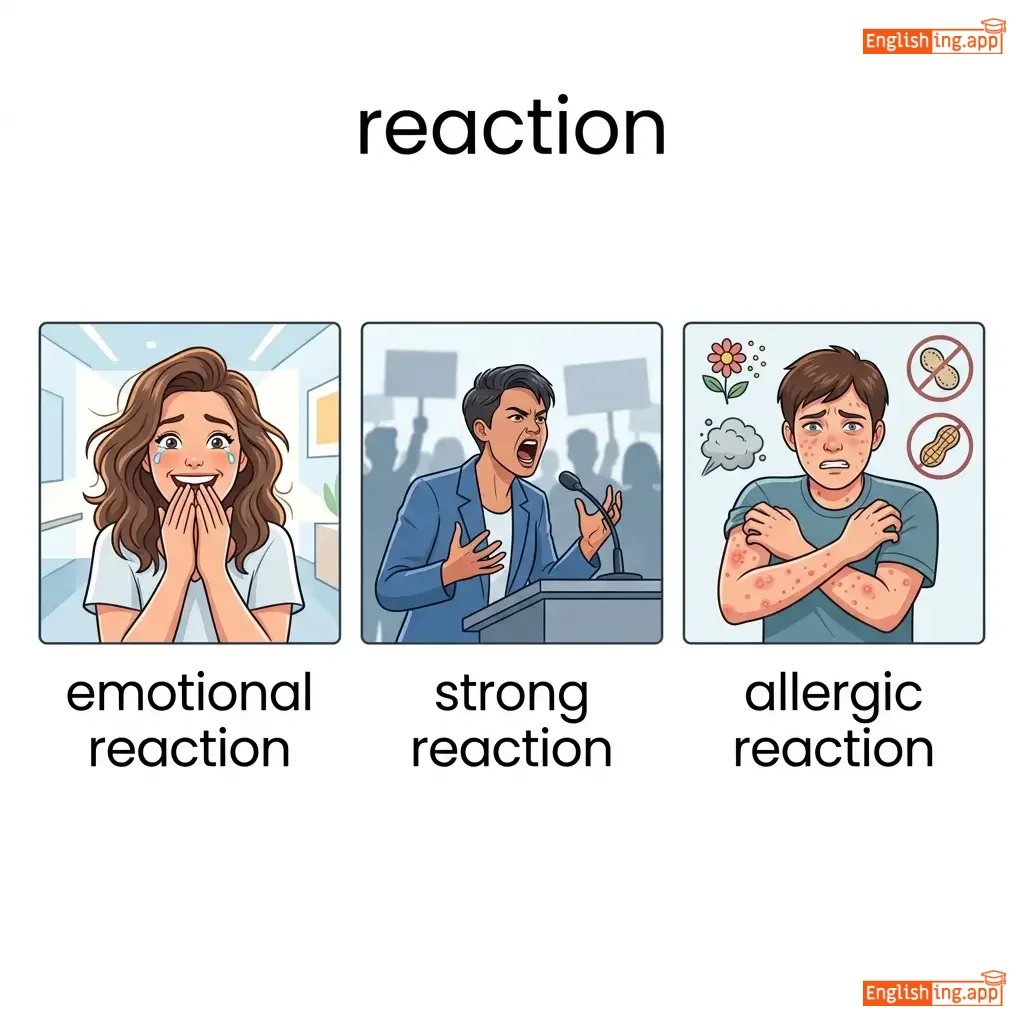
immediate reaction, strong reaction, chemical reaction
••••••
|
反应是我们对某件事情的反应或感受
••••••
|
|
#1140
🧠
|
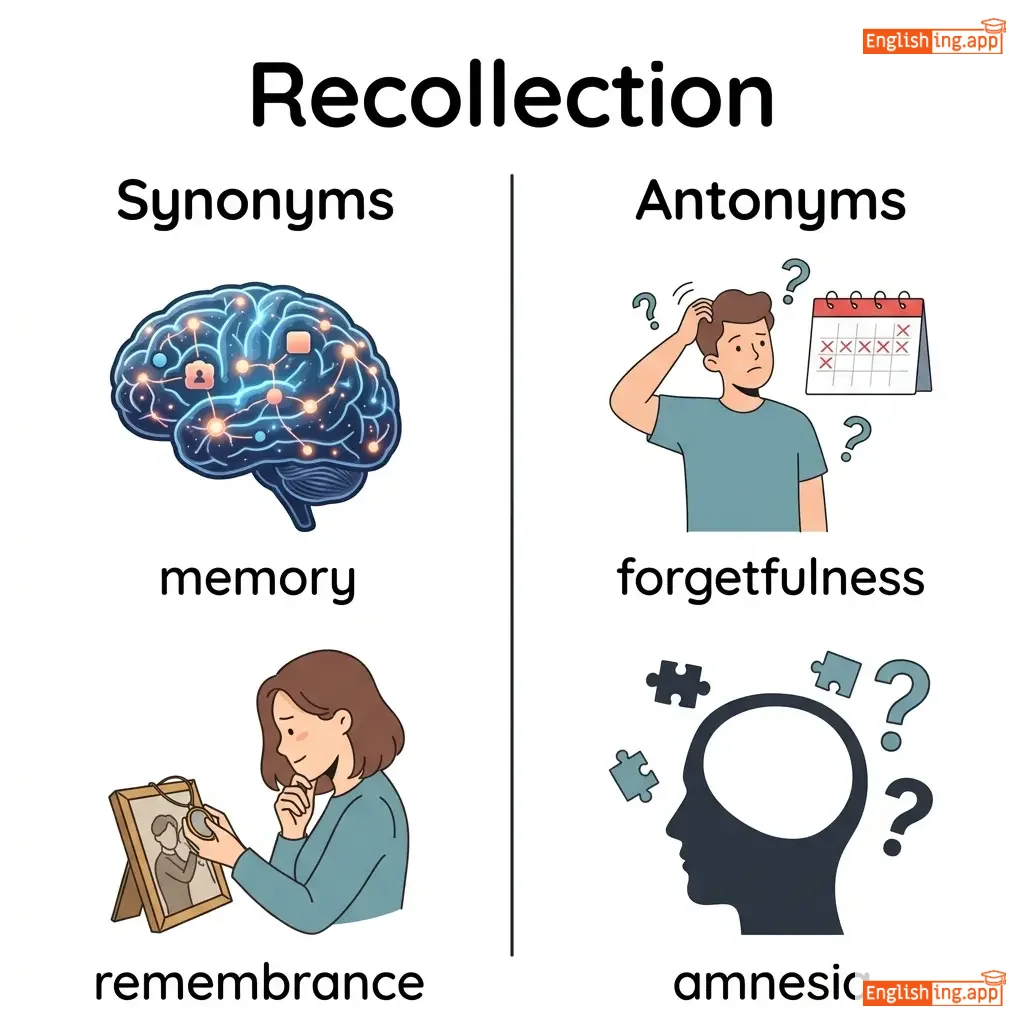
/ˌrek.əˈlek.ʃən/
noun
(rèkàlèkshən)
••••••
|
|
回忆
huiyi
••••••
|
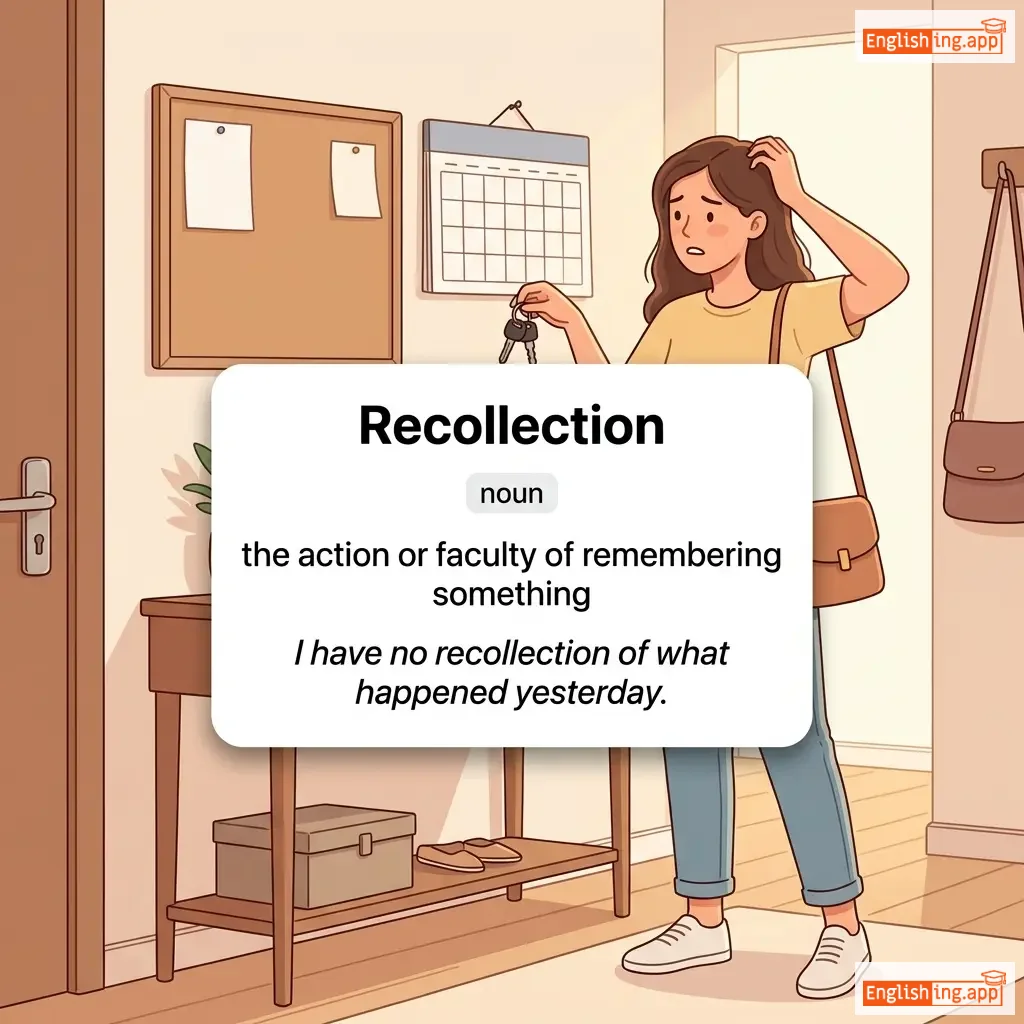
the action or faculty of remembering something
••••••
|
I have no recollection of what happened yesterday. |
我不记得昨天发生了什么。
Wǒ bù jìdé zuótiān fāshēngle shénme.
••••••
|
memory, remembrance, recall
••••••
|
forgetfulness, amnesia, oblivion
••••••
|
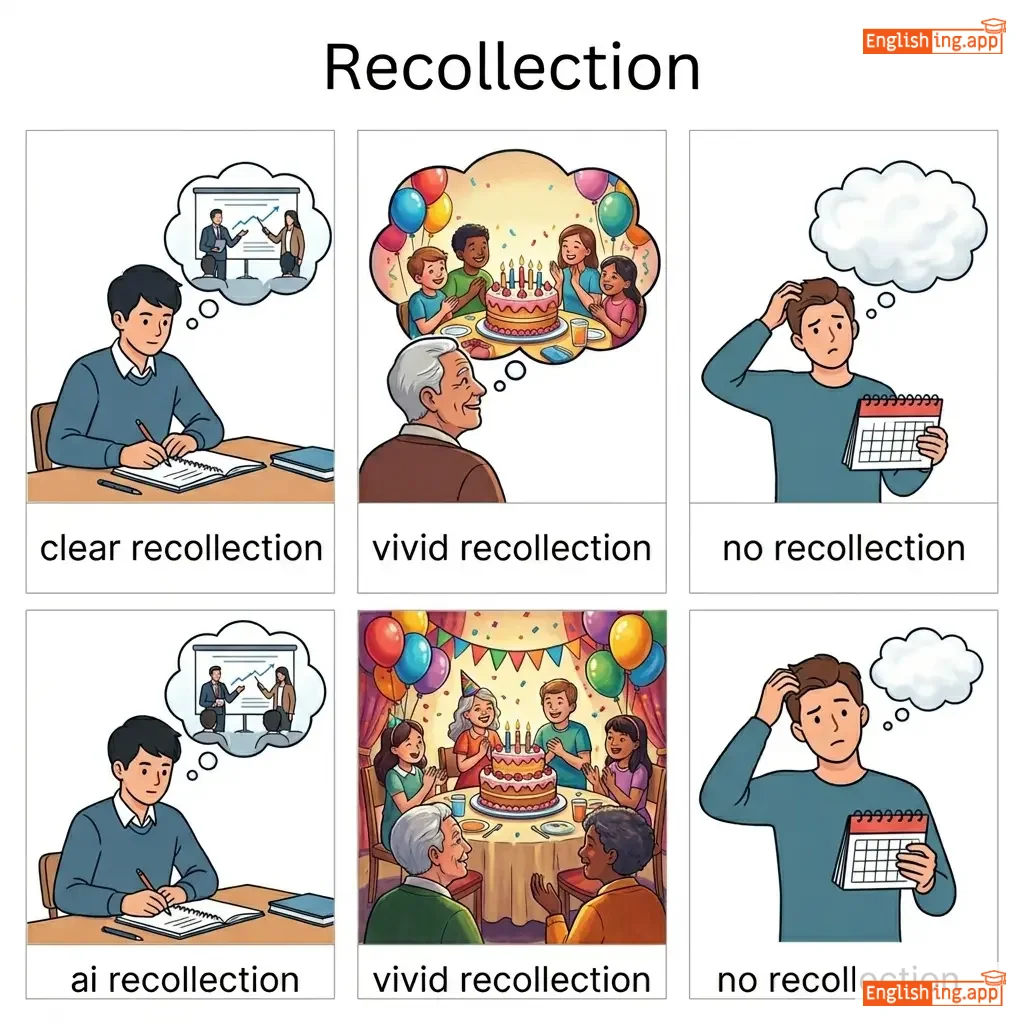
clear recollection, vivid recollection, no recollection
••••••
|
Recalling a memory, like remembering a childhood friend
••••••
|
Vocabulary Quiz
Test your vocabulary by matching words with their translations or meanings.
Login to take the quiz
Comments (0)
Share your thoughts and join the discussion.
Join the discussion by logging in
Login to CommentNo comments yet
Be the first to share your thoughts!