


Swipe left or right, or use the buttons. Tap image to zoom.
例句翻译
单词
Lesson 60Lesson 60 - 遮罩切换
|
表情符号
|
单词 | Images | 翻译 | 含义 | 例句 | 例句翻译 | 同义词 | 反义词 | 搭配词 | 助记符 |
|---|---|---|---|---|---|---|---|---|---|---|
|
#1181
🚫
|
/rɪˈpreʃən/
noun
(里普瑞申)
••••••
|
- •••••• |
压制
li pu rui shen
••••••
|
the action of subduing someone or something by force; the restraint, prevention, or inhibition of a feeling, impulse, etc.
••••••
|
The government's repression of free speech sparked widespread protests.
政府对言论自由的压制引发了广泛的抗议。
••••••
|
政府对言论自由的压制引发了广泛的抗议。
zheng fu dui yan lun zi you de ya zhi yin fa le guang fan de kang yi
••••••
|
suppression, oppression, subjugation, constraint
••••••
|
liberation, freedom, expression, release
••••••
|
political repression, state repression, brutal repression, repression of rights
••••••
|
Repression 里普瑞申 - 想象 emo 被 压回 里 的 心灵 神殿, 让 情感 冲动 被 抑制
••••••
|
|
#1182
🛡️
|
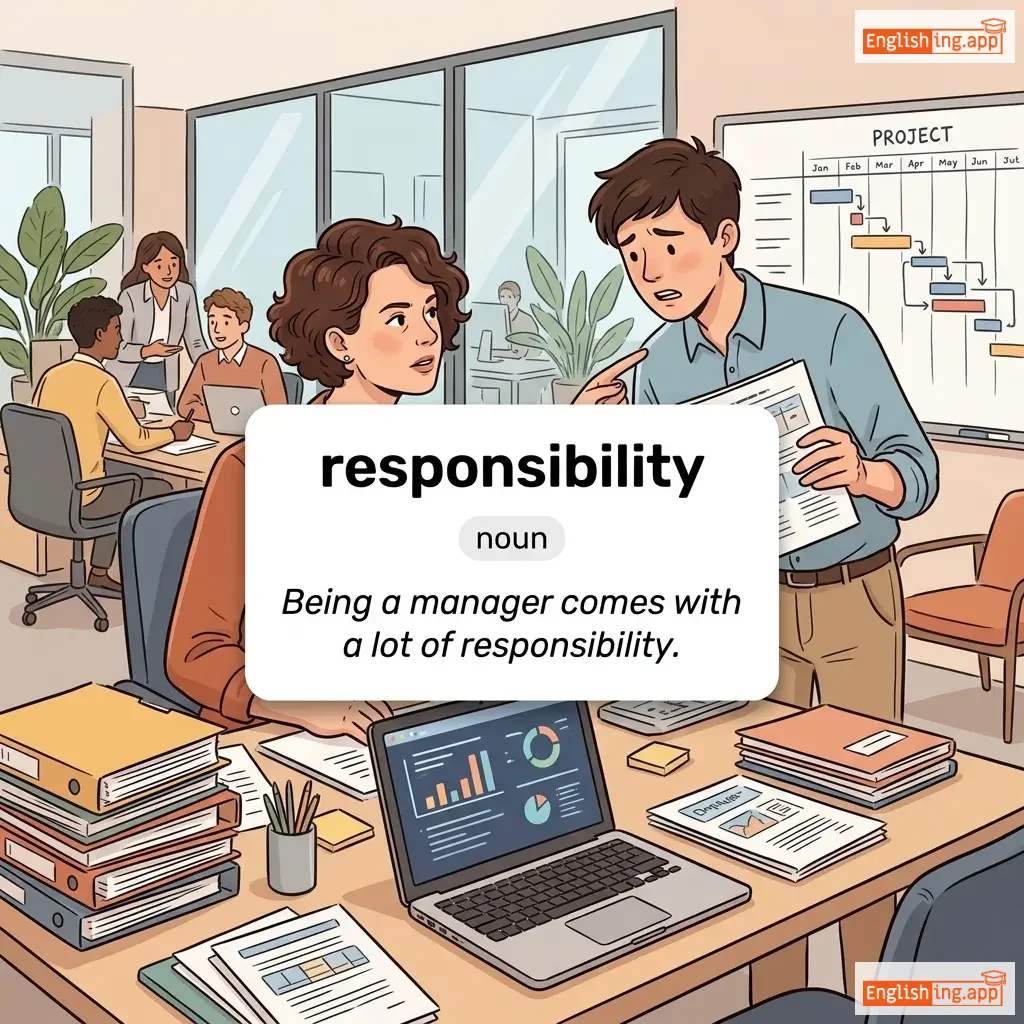
/rɪˌspɒn.sɪˈbɪl.ɪ.ti/
noun
(里斯邦西比尔伊蒂)
••••••
|
|
责任
ze ren
••••••
|
the state or fact of having a duty to deal with something or of having control over someone
••••••
|
Taking responsibility for your actions shows maturity.
为自己的行为负责,展现出成熟。
••••••
|
为自己的行为负责,展现出成熟。
wei zi ji de xing wei fu ze ren zhan xian chu cheng shu
••••••
|
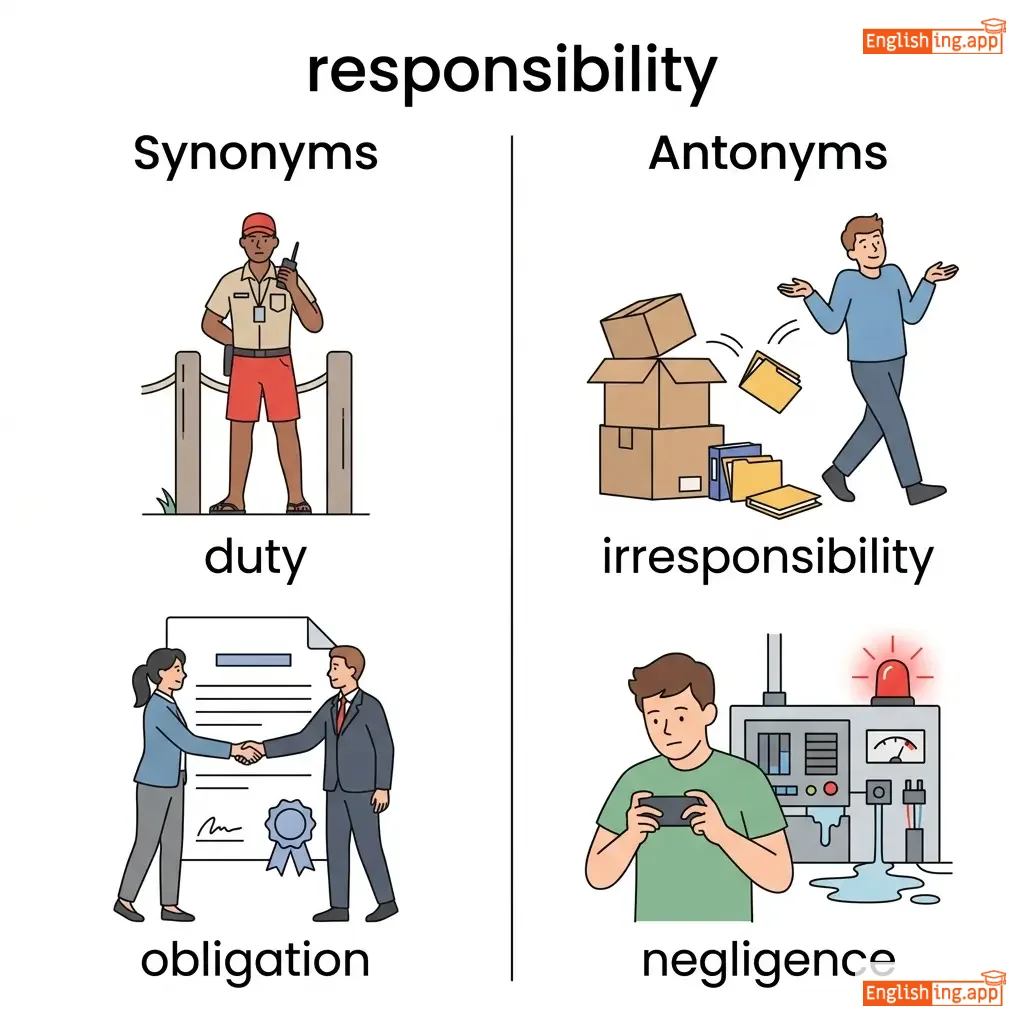
duty, obligation, accountability, liability
••••••
|
irresponsibility, carelessness, negligence
••••••
|
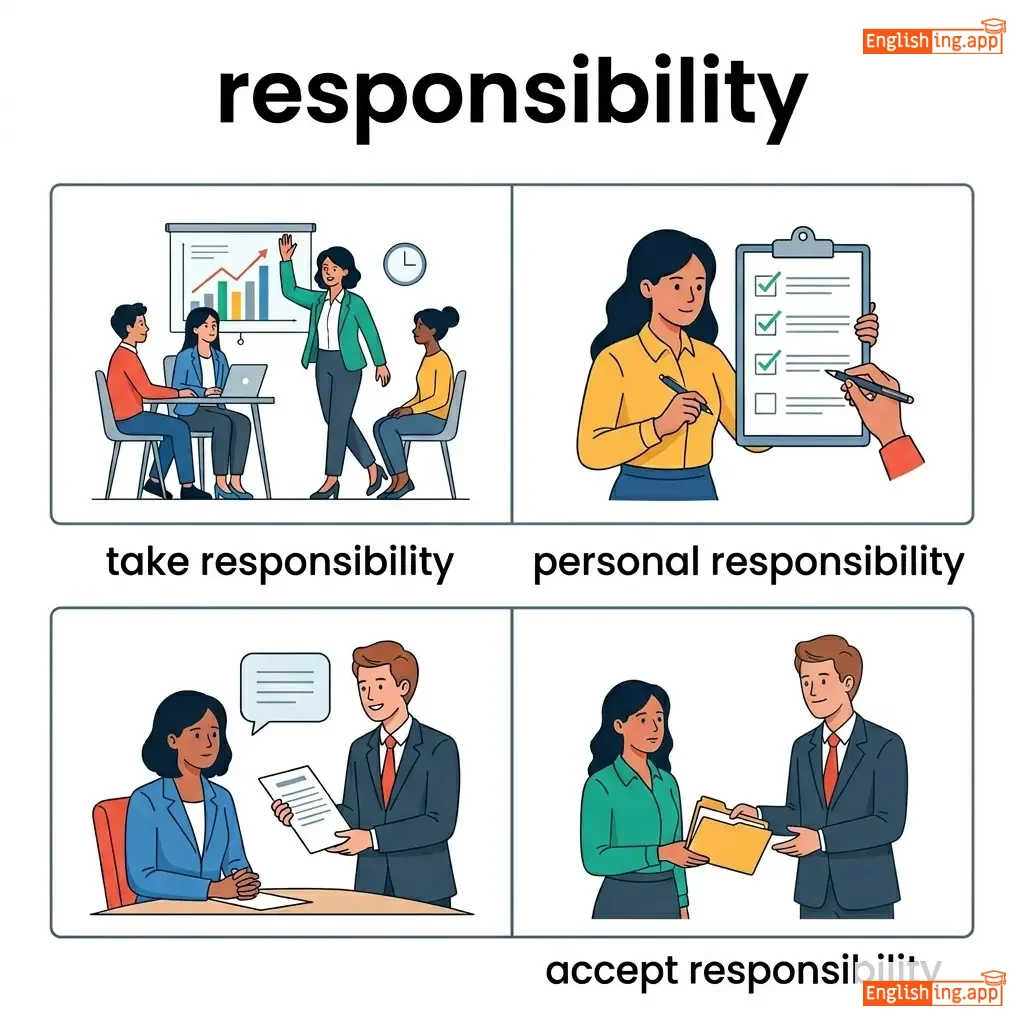
take responsibility, personal responsibility, full responsibility, social responsibility
••••••
|
Be Responsible = 成为 责任人; 想象你手里拿着一个 锁 键, 锁着 '责任' 的 门, 门后是 成熟 (mature) 的你。
••••••
|
|
#1183
🤢
|
/rɪˈpʌlʃən/
noun
(里普勒申)
••••••
|
- •••••• |
排斥
ripulshun
••••••
|
a feeling of intense distaste or disgust; a force under the influence of which objects tend to move away from each other
••••••
|
She felt a strong repulsion towards the idea of eating insects.
她对吃昆虫这个想法感到强烈的排斥。
••••••
|
她对吃昆虫这个想法感到强烈的排斥。
ta dui chi kunchong zhege xiangfa gandao qianglie de pai chi
••••••
|
disgust, revulsion, aversion, distaste
••••••
|
attraction, appeal, fascination, allure
••••••
|
magnetic repulsion, strong repulsion, mutual repulsion, repulsion force
••••••
|
RePulsion = Re pulse on -> 再来一次 脉冲 就 让 物体 向外 推离
••••••
|
|
#1184
🔒
|
/rɪˈstreɪnt/
noun
(限制)
••••••
|
- •••••• |
克制; 自我控制
kèzhì; zìwǒ kòngzhì
••••••
|
the action of keeping someone or something under control; self-control
••••••
|
She showed great restraint in not responding to the criticism.
她在不回应批评时表现出极大的克制。
••••••
|
她在不回应批评时表现出极大的克制。
Tā zài bù huíyīng pīpíng shí biǎoxiàn chū jí dà de kèzhì.
••••••
|
control, self-control, discipline, moderation
••••••
|
freedom, indulgence, excess, abandon
••••••
|
show restraint, exercise restraint, physical restraint, self-restraint
••••••
|
Restraint in Chinese is '克制', meaning to hold back and control.
••••••
|
|
#1185
😰
|
/ˈrest.ləs.nəs/
noun
(rest-lès-nès)
••••••
|
- •••••• |
不安
bù'ān
••••••
|
the inability to rest or relax as a result of anxiety or boredom
••••••
|
His restlessness during the long meeting was obvious to everyone. |
在长时间的会议中,他的不安对每个人都很明显。
zài cháng shíjiān de huìyì zhōng, tā de bù'ān duì měi gè rén dōu hěn míngxiǎn.
••••••
|
agitation, unease, anxiety, fidgeting
••••••
|
calmness, peace, tranquility, stillness
••••••
|
growing restlessness, inner restlessness, nervous restlessness
••••••
|
不安就像无法放松的感觉
••••••
|
|
#1186
⭐
|
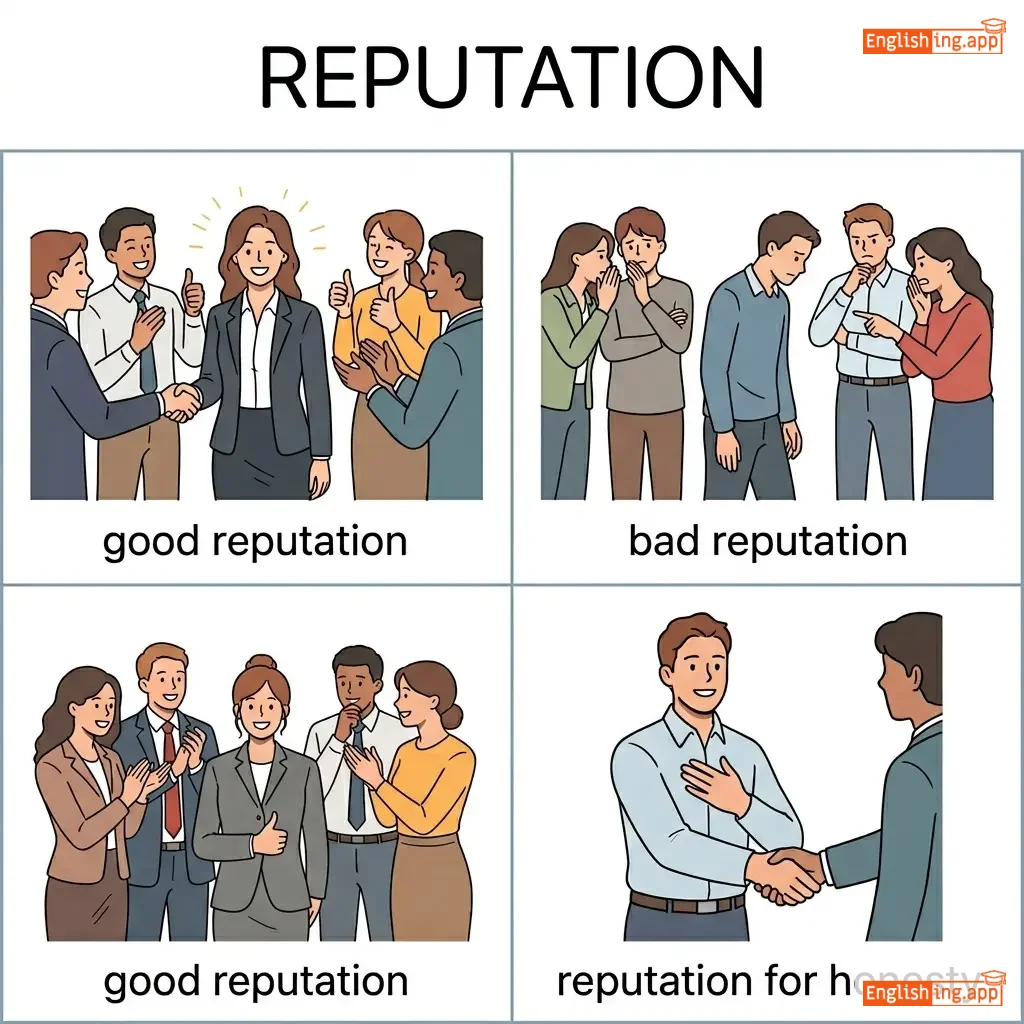
/ˌrepjʊˈteɪʃən/
noun
(声誉)
••••••
|
|
声誉
shengyu
••••••
|
the beliefs or opinions that are generally held about someone or something; a widespread belief that someone or something has a particular habit or characteristic
••••••
|
The company has built a solid reputation for quality products.
公司凭借优质产品建立了牢固的声誉。
••••••
|
公司凭借优质产品建立了牢固的声誉。
Gongsi pingjie youzhi chanpin jianli le laogu de shengyu.
••••••
|
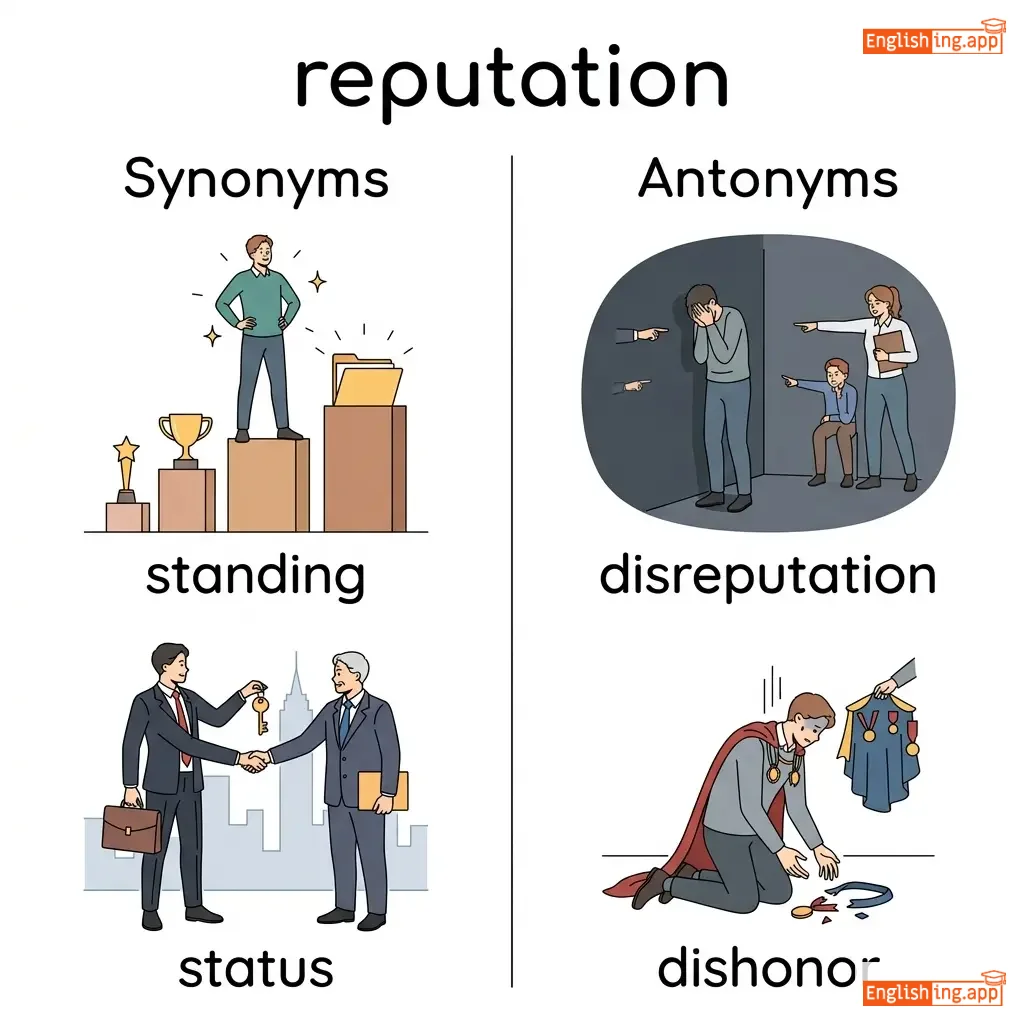
fame, standing, status, renown
••••••
|
infamy, disgrace, dishonor, notoriety
••••••
|
good reputation, stellar reputation, reputation for excellence, damage reputation
••••••
|
声誉与质量挂钩,就像一个顶尖公司。
••••••
|
|
#1187
👭
|
/rɪˈzembləns/
noun
(rèzēnbùlǎns)
••••••
|
- •••••• |
相似
xiangsi
••••••
|
the state of being alike or similar; similarity in appearance or character
••••••
|
There's a strong resemblance between the two sisters. |
这两个姐妹之间有着强烈的相似性。
Zhe liang ge jiemei zhijian youzhe qianglie de xiangsi xing.
••••••
|
similarity, likeness, correspondence, parallel
••••••
|
difference, dissimilarity, contrast, distinction
••••••
|
strong resemblance, close resemblance, family resemblance, bear resemblance
••••••
|
相似就像两颗相同的星星。
••••••
|
|
#1188
🚫
|
/rɪˈstrɪk.ʃən/
noun
(限制)
••••••
|
- •••••• |
限制; 限定; 控制
xianzhi; xian ding; kongzhi
••••••
|
a limiting condition or measure; the limitation or control of someone or something
••••••
|
There are strict restrictions on smoking in public places. |
在公共场所吸烟有严格的限制。
Zai gonggong changsuo xiyan you yange de xianzhi.
••••••
|
limitation, constraint, ban, prohibition
••••••
|
freedom, permission, allowance, liberty
••••••
|
impose restrictions, travel restrictions, age restrictions, strict restrictions
••••••
|
限制就像墙壁,阻挡了你的自由。
••••••
|
|
#1189
😠
|
/rɪˈzentmənt/
noun
(rɪˈzɛntmənt)
••••••
|
|
怨恨
yuànhèn
••••••
|
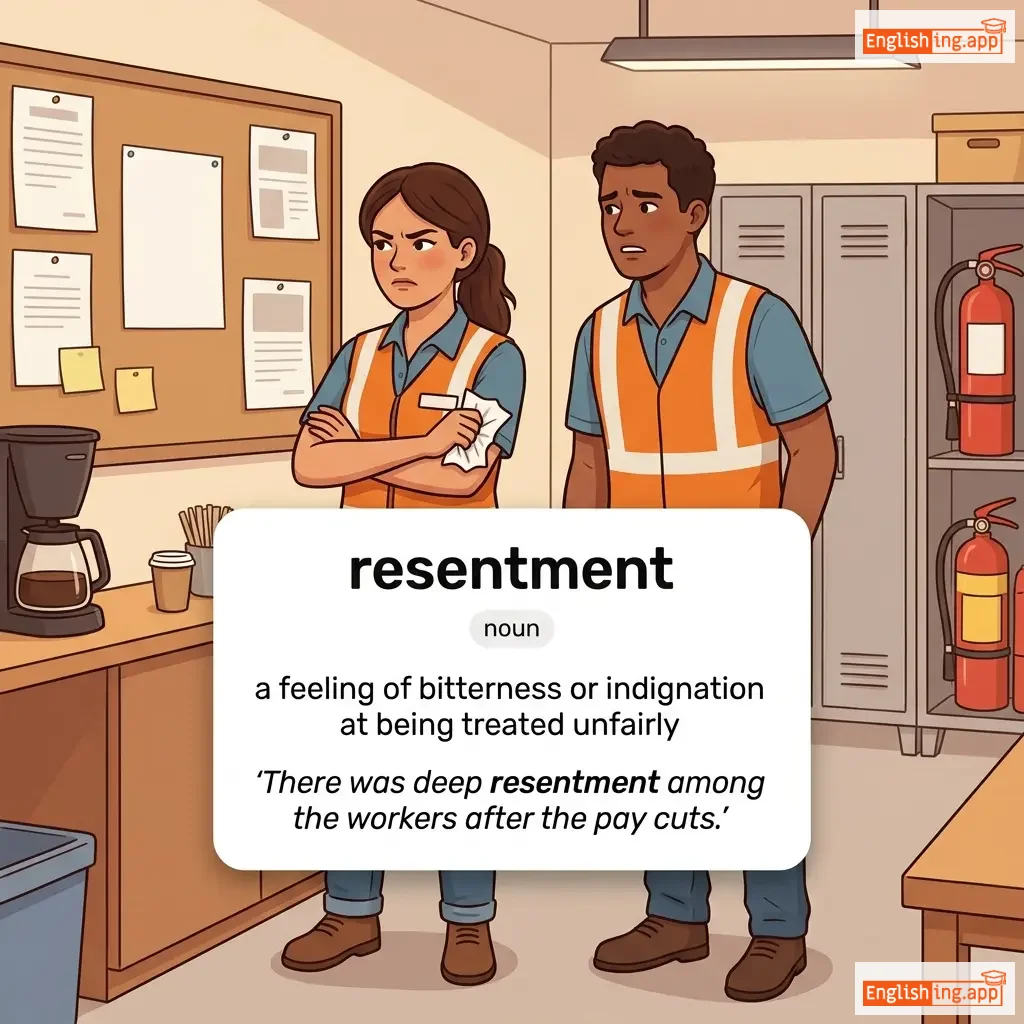
bitter indignation at having been treated unfairly; anger and displeasure resulting from some injury, mistreatment, or slight
••••••
|
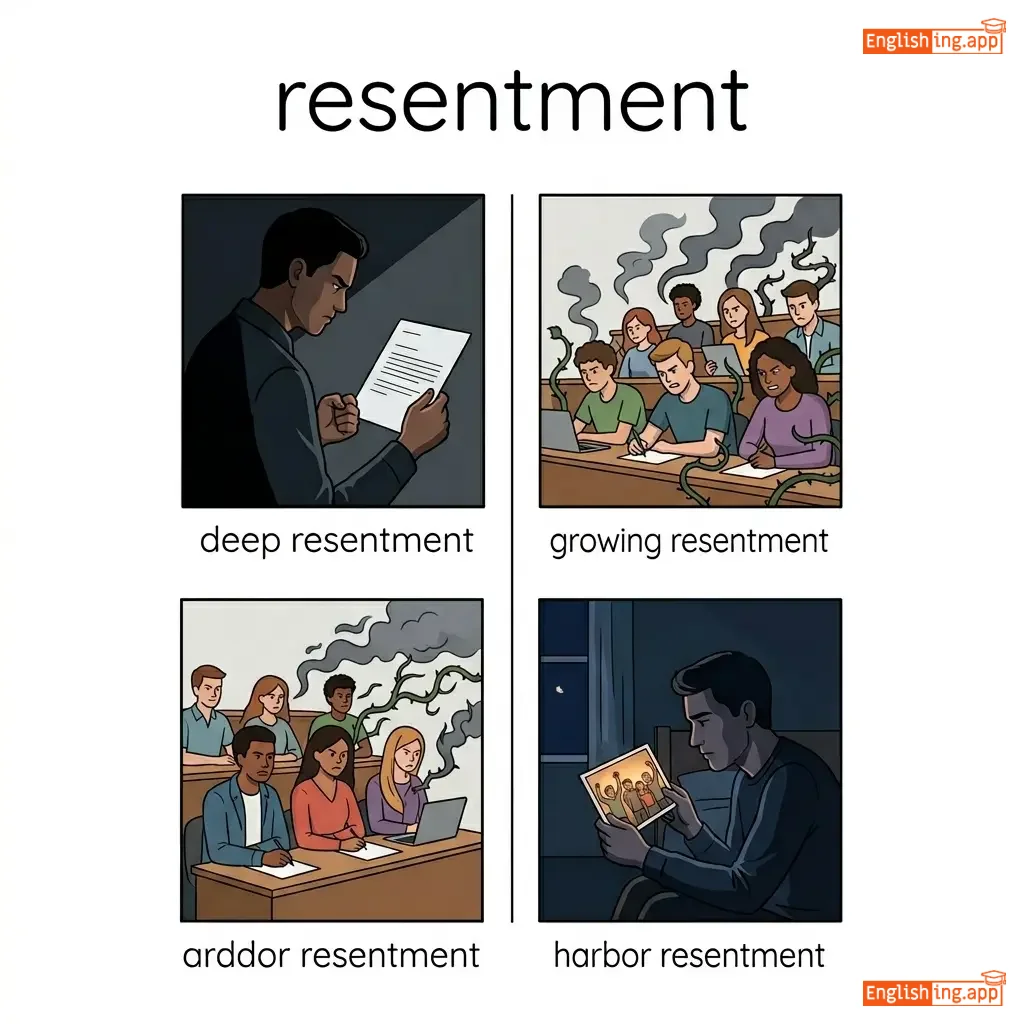
He harbored deep resentment against his former boss. |
他对以前的老板怀有深深的怨恨。
Tā duì yǐqián de lǎobǎn huái yǒu shēnshēn de yuànhèn.
••••••
|
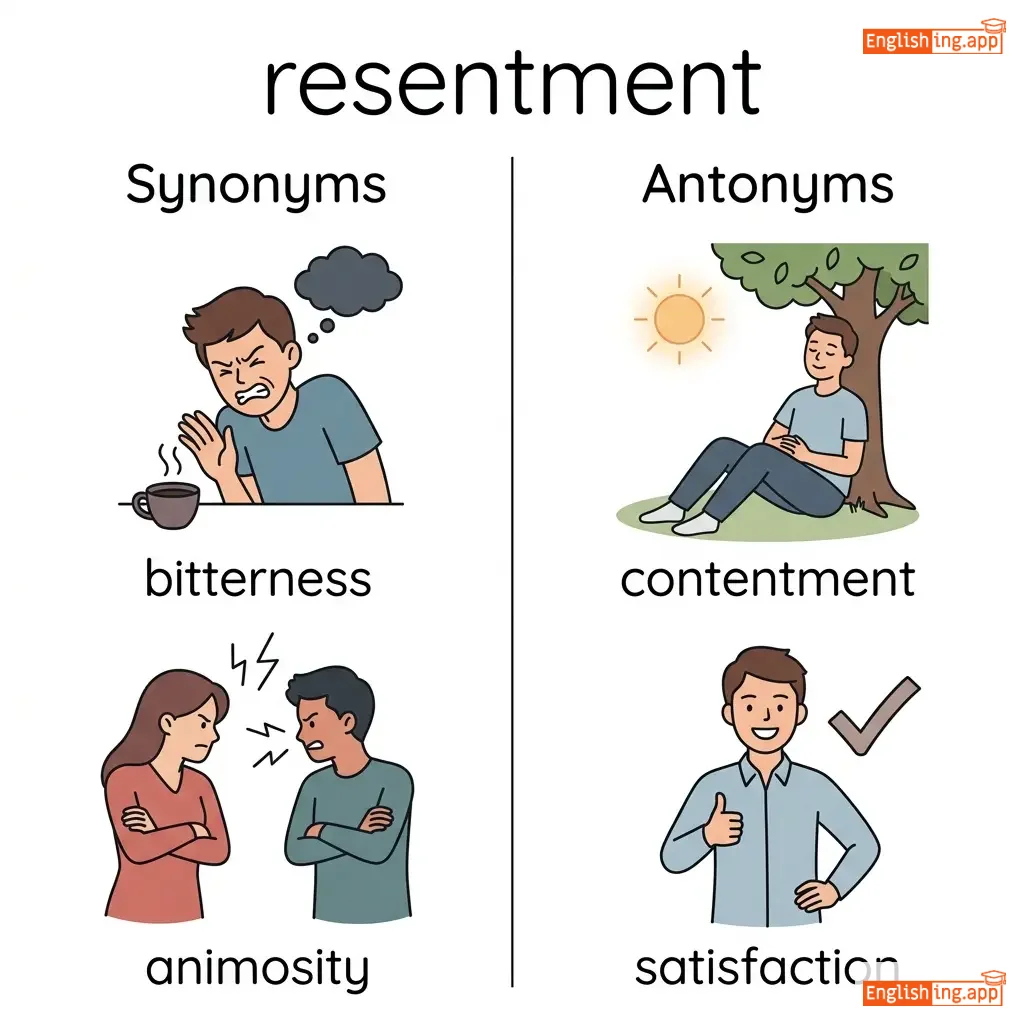
bitterness, anger, indignation, grudge
••••••
|
forgiveness, acceptance, contentment, satisfaction
••••••
|
deep resentment, harbor resentment, growing resentment, resentment towards
••••••
|
怨恨代表着因不公平而产生的深深愤怒
••••••
|
|
#1190
▶️
|
/rɪˈzʌmp.ʃən/
noun
(rízāmpíng)
••••••
|
- •••••• |
恢复
huīfù
••••••
|
the action of beginning something again after a pause or interruption
••••••
|
The resumption of classes will be announced next week.
下周将宣布课程的恢复。
••••••
|
下周将宣布课程的恢复。
Xià zhōu jiāng xuānbù kèchéng de huīfù.
••••••
|
restart, renewal, continuation, recommencement
••••••
|
suspension, interruption, cessation, halt
••••••
|
resumption of work, resumption of talks, resumption of services
••••••
|
恢复意味着在中断之后重新开始,如课程恢复上课。
••••••
|
|
#1191
📝
|
/ˌrezəˈveɪʃən/
noun
(rèzévéɪʃən)
••••••
|
- •••••• |
预订
yùdìng
••••••
|
the action of reserving something; an arrangement whereby something is reserved for a particular person; a qualification to an expression of agreement or approval
••••••
|
I made a reservation at the restaurant for tonight. |
我为今晚在餐厅做了一个预定。
wǒ wèi jīnwǎn zài cāntīng zuòle yīgè yùdìng.
••••••
|
booking, arrangement, doubt, hesitation
••••••
|
cancellation, certainty, confidence, assurance
••••••
|
hotel reservation, dinner reservation, make reservation, cancel reservation
••••••
|
想象你在餐厅做'预订'就像在坐位上提前安排。
••••••
|
|
#1192
⚔️
|
/rɪˌtæl.iˈeɪ.ʃən/
noun
(rɪˌtæl.iˈeɪ.ʃən)
••••••
|
- •••••• |
报复
bàofù
••••••
|
the action of returning a military attack; counterattack; revenge for an injury or wrong
••••••
|
The country threatened retaliation against any act of aggression.
该国威胁对任何侵略行为进行报复。
••••••
|
该国威胁对任何侵略行为进行报复。
gāi guó wēixié duì rènhé qīnlüè xíngwéi jìnxíng bàofù.
••••••
|
revenge, reprisal, payback, vengeance
••••••
|
forgiveness, mercy, pardon, reconciliation
••••••
|
fear of retaliation, swift retaliation, military retaliation
••••••
|
Bàofù in Chinese means retaliation – like countering an attack with revenge.
••••••
|
|
#1193
🏠
|
/ˈrezɪdənt/
noun
(rèxīdiàntè)
••••••
|
- •••••• |
居民
jūmín
••••••
|
a person who lives somewhere permanently or on a long-term basis; living in a particular place
••••••
|
She has been a resident of this city for over ten years.
她已经是这个城市的居民超过十年了。
••••••
|
她已经是这个城市的居民超过十年了。
Tā yǐjīng shì zhège chéngshì de jūmín chāoguò shí nián le.
••••••
|
inhabitant, dweller, citizen, occupant
••••••
|
visitor, tourist, transient, outsider
••••••
|
permanent resident, local resident, senior resident, resident doctor
••••••
|
Jūmín - A person who lives in one place for a long time.
••••••
|
|
#1194
👴
|
/rɪˈtaɪə.mənt/
noun
(rɪˈtaɪə.mənt)
••••••
|
- •••••• |
退休
tuìxiū
••••••
|
the action or fact of leaving one's job and ceasing to work; the period of life after leaving work
••••••
|
He is planning his retirement after 40 years of service. |
他在工作40年后计划退休。
Tā zài gōngzuò 40 nián hòu jìhuà tuìxiū.
••••••
|
pension, superannuation, withdrawal, resignation
••••••
|
employment, work, career, service
••••••
|
early retirement, retirement age, retirement plan, forced retirement
••••••
|
退休意味着放松享受晚年
••••••
|
|
#1195
⚡
|
/rɪˈzɪstəns/
noun
(抵抗)
••••••
|
|
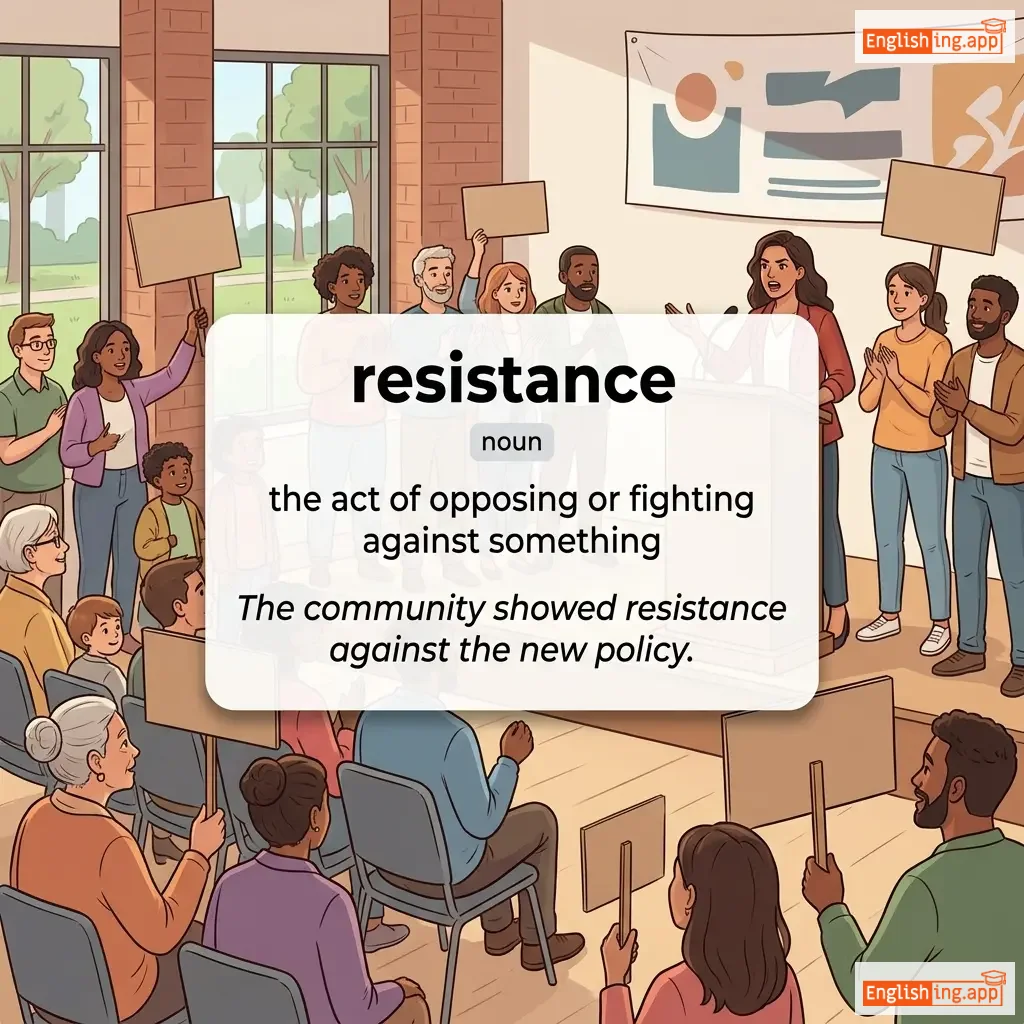
抵抗
dǐkàng
••••••
|
the refusal to accept or comply with something; the attempt to prevent something by action or argument; the ability not to be affected by something
••••••
|
The bacteria showed resistance to the antibiotic treatment. |
细菌对抗生素治疗表现出抵抗力。
xìjūn duì kàngshēngsù zhìliáo biǎoxiàn chū dǐkànglì.
••••••
|
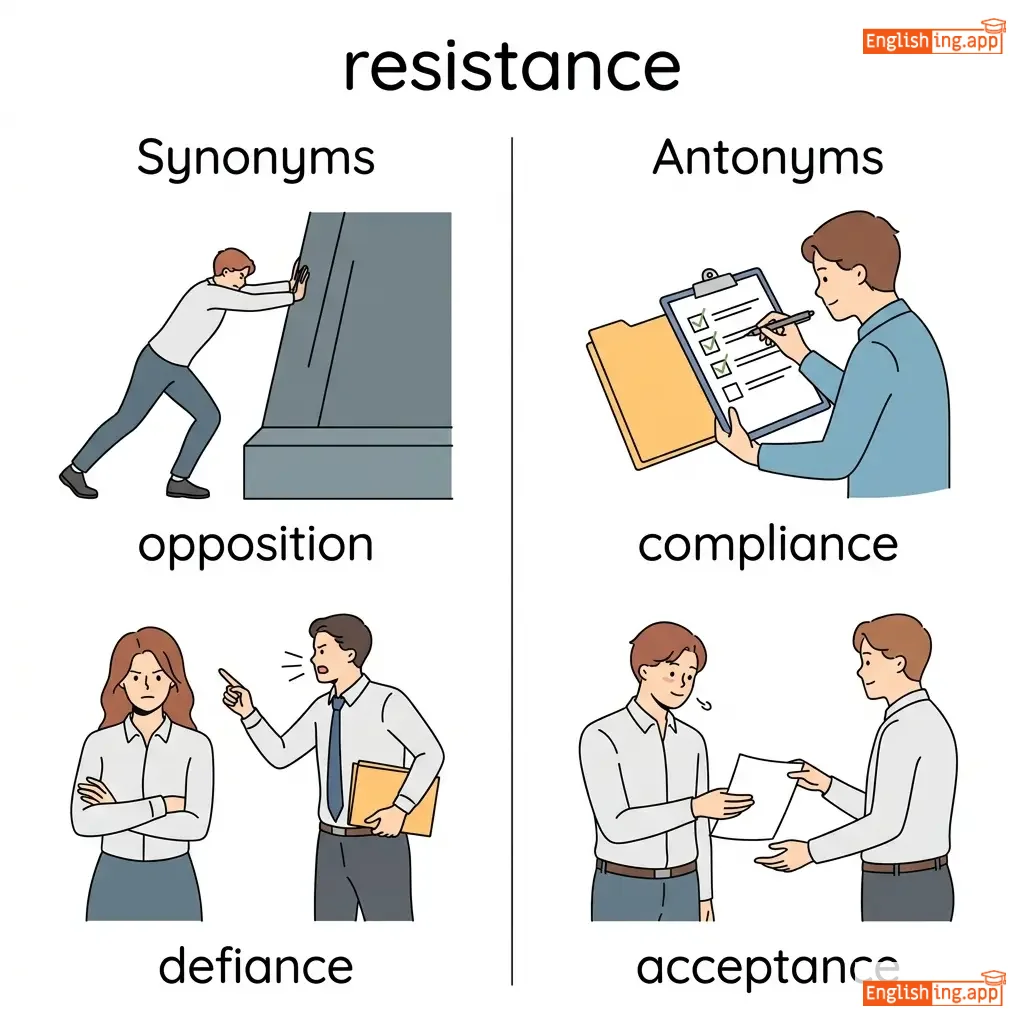
opposition, defiance, immunity, endurance
••••••
|
acceptance, compliance, submission, vulnerability
••••••
|
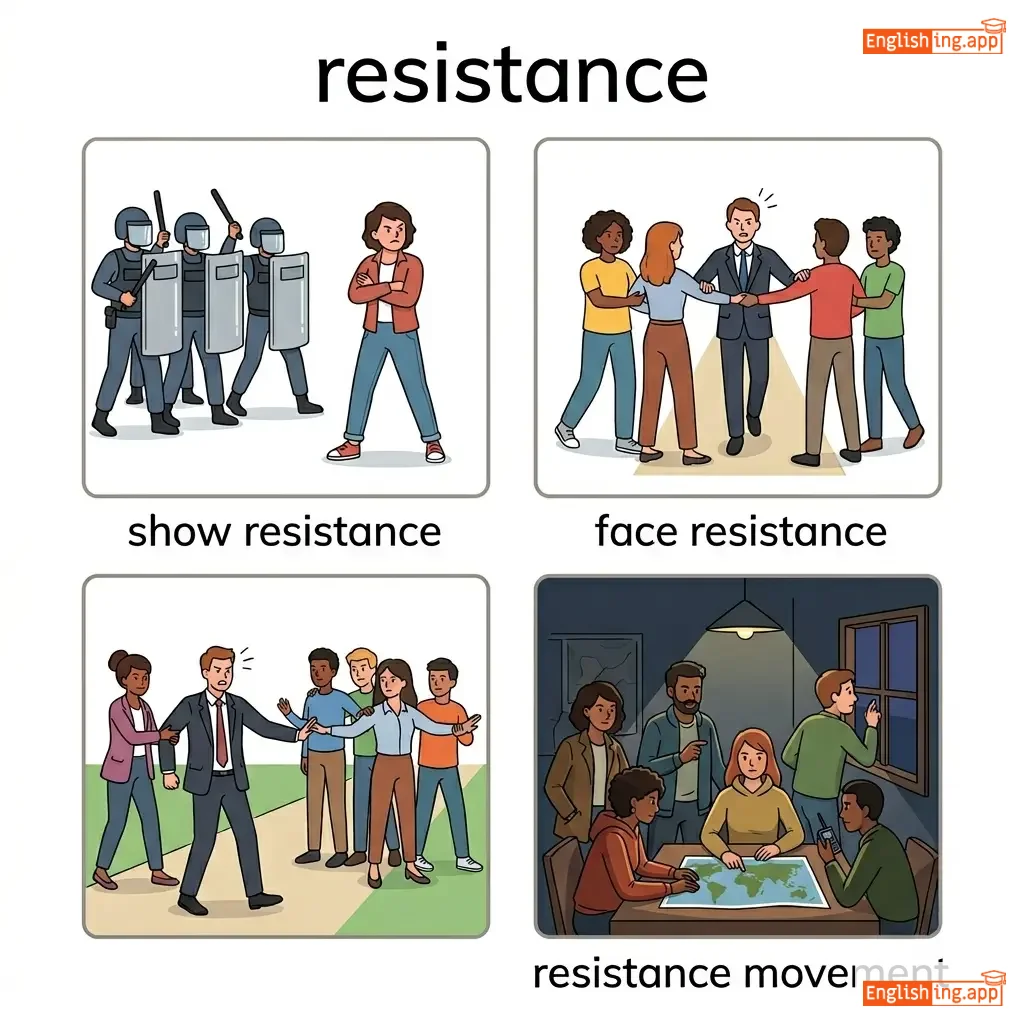
drug resistance, passive resistance, resistance movement, offer resistance
••••••
|
抵抗 (dǐkàng) means 'resist' in Chinese!
••••••
|
|
#1196
😠
|
/rɪˈvendʒ/
noun
(rɪˈvɛndʒ)
••••••
|
- •••••• |
复仇
fùchóu
••••••
|
the action of inflicting hurt or harm on someone for an injury or wrong suffered at their hands
••••••
|
She sought revenge against those who betrayed her trust. |
她寻求复仇,针对那些背叛她信任的人。
Ta xunqiu fuchou, zhandui naxie beipan ta xìnrèn de rén.
••••••
|
vengeance, retaliation, payback, retribution
••••••
|
forgiveness, mercy, pardon, compassion
••••••
|
seek revenge, sweet revenge, plot revenge, revenge attack
••••••
|
复仇 in Chinese is revenge, remember '复' means repeated action and '仇' means hatred.
••••••
|
|
#1197
🎯
|
/ˌrezəˈluːʃən/
noun
(里泽路修申)
••••••
|
|
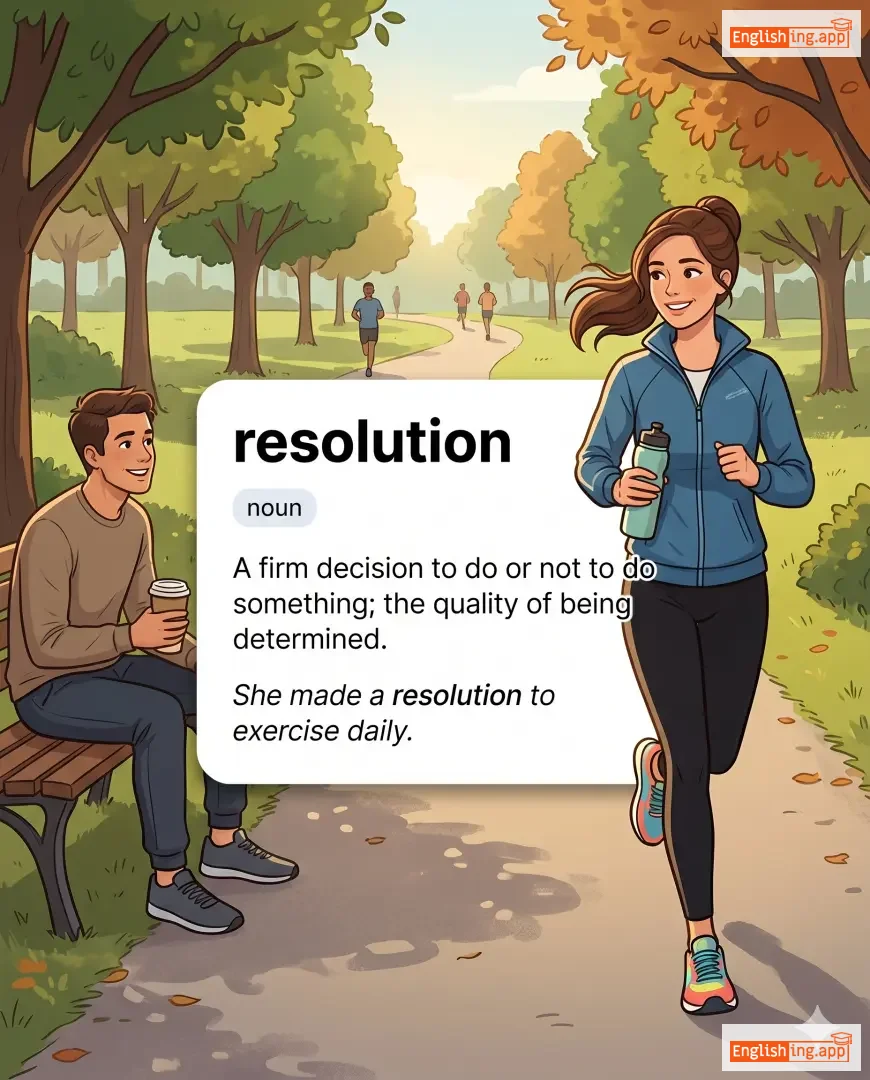
坚决的决定/决心;解决问题的行动;分辨率
rezulushun
••••••
|
a firm decision to do or not to do something; the action of solving a problem, dispute, or contentious matter; the degree of detail visible in a photographic or television image
••••••
|
Her New Year's resolution was to exercise more regularly.
她的新年决定是更规律地锻炼身体。
••••••
|
她的新年决定是要更规律地锻炼。
ta de xinnian jueding shi yao geng guilv de duanlian shenti
••••••
|
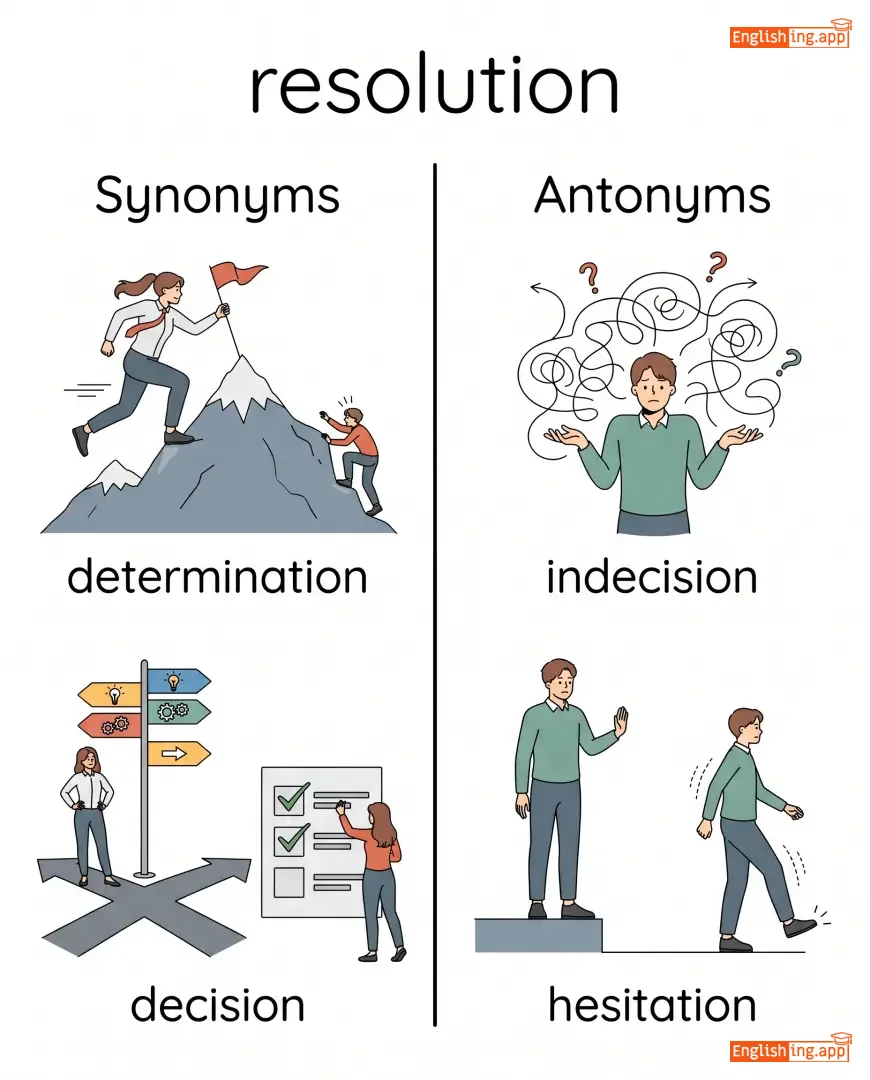
determination, decision, resolve, solution
••••••
|
indecision, hesitation, problem, complication
••••••
|
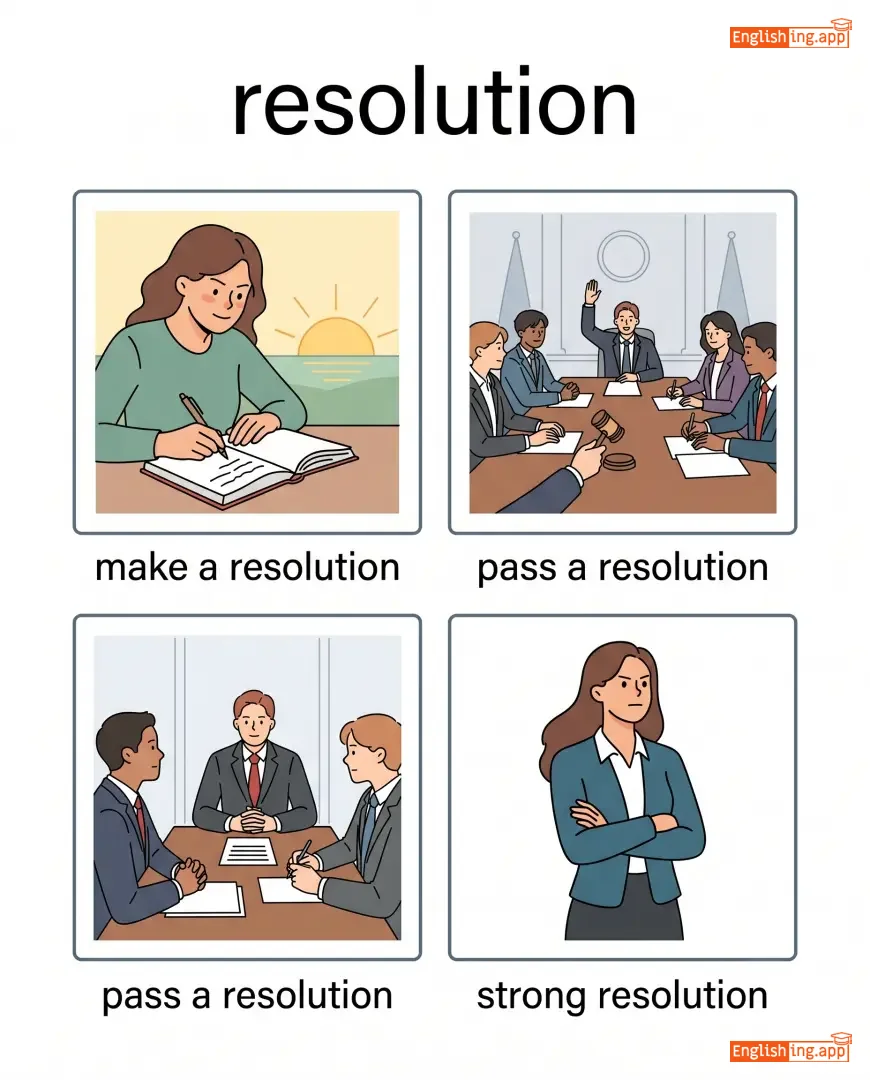
New Year's resolution, conflict resolution, high resolution, pass resolution
••••••
|
Resolution = 决心 (resolve) + 解决 (solve) + image 清晰度, 记住 三步走: 决心 -> 解决 -> 分辨率
••••••
|
|
#1198
📝
|
/rɪˈvɪʒ.ən/
noun
(修订)
••••••
|
- •••••• |
修订; 修订版
xiuding; xiudingban
••••••
|
the action of revising; a revised edition or form of something; review of subject matter
••••••
|
The students spent hours doing revision for their final exams.
学生们花了几个小时做最后考试的复习。
••••••
|
学生们花了几个小时做最后考试的复习。
Xueshengmen hua le jige xiaoshi zuo zuihou kaoshi de fuxi.
••••••
|
review, amendment, modification, alteration
••••••
|
original, first draft, initial version
••••••
|
revision notes, exam revision, thorough revision, last-minute revision
••••••
|
修订: 就像复习考试前的资料一样!
••••••
|
|
#1199
💬
|
/rɪˈspɒns/
noun
(rè-sī-puǎnsī)
••••••
|
- •••••• |
回应; 反应
hui ying; fan ying
••••••
|
a reaction to something; an answer or reply; the way in which something reacts to external stimulus
••••••
|
The government's response to the crisis was swift and decisive. |
政府对危机的回应迅速而果断。
Zhengfu dui weiji de huiying xunsu er guodan.
••••••
|
reply, answer, reaction, feedback
••••••
|
question, inquiry, silence, ignorance
••••••
|
quick response, positive response, emergency response, in response to
••••••
|
In Chinese, the response is quick like a Chinese 'hui ying'.
••••••
|
|
#1200
🌱
|
/rɪˈvaɪ.vəl/
noun
(revival)
••••••
|
- •••••• |
复兴
fùxīng
••••••
|
an improvement in the condition or strength of something; renewed interest in or attention to something
••••••
|
There has been a revival of interest in traditional crafts.
ðɛr hæz bīn ə rɪˈvaɪvəl ʌv ˈɪntrɛst ɪn trædɪˈʃənl kræfts.
••••••
|
传统手工艺的兴趣得到了复兴。
Chuántǒng shǒugōng yì de xìngqù dédàole fùxīng.
••••••
|
renewal, resurgence, renaissance, rebirth
••••••
|
decline, deterioration, downfall, demise
••••••
|
economic revival, cultural revival, revival meeting, revival of fortunes
••••••
|
复兴 = 使事物重新焕发活力
••••••
|
Vocabulary Quiz
Test your vocabulary by matching words with their translations or meanings.
Login to take the quiz
Comments (0)
Share your thoughts and join the discussion.
Join the discussion by logging in
Login to CommentNo comments yet
Be the first to share your thoughts!