


Swipe left or right, or use the buttons. Tap image to zoom.
例句翻译
单词
Lesson 68Lesson 68 - 遮罩切换
|
表情符号
|
单词 | Images | 翻译 | 含义 | 例句 | 例句翻译 | 同义词 | 反义词 | 搭配词 | 助记符 |
|---|---|---|---|---|---|---|---|---|---|---|
|
#1341
🏗️
|
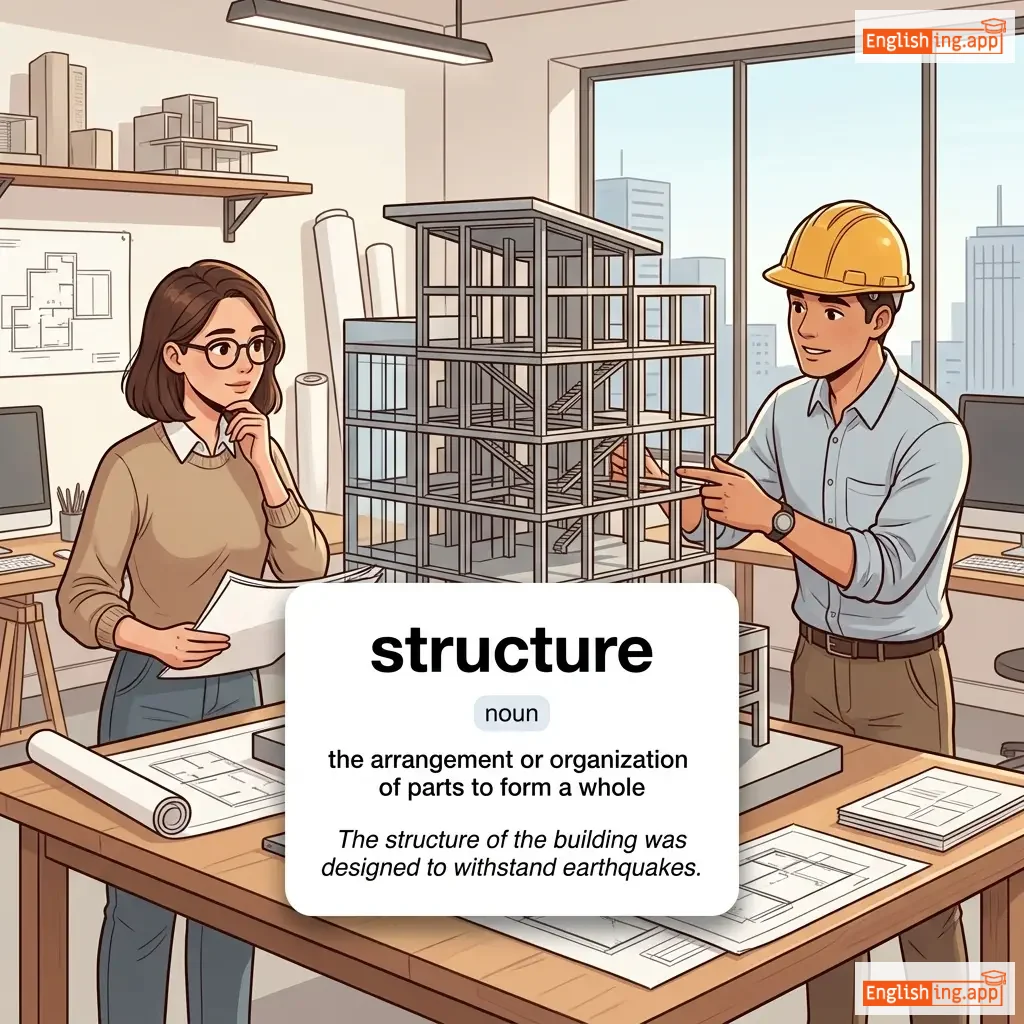
/ˈstrʌk.tʃər/
noun
(sī tʂu)
••••••
|
|
结构
jiegou
••••••
|
the arrangement of parts in a complex entity; the way something is organized or built
••••••
|
The building has a steel structure that makes it earthquake resistant.
zhè zuò jiànzhú yǒu yī gè gāng tiě de jiégòu, ràng tā chéngwéi dì zhuó lì shǒu dǎo zhì de duì zhèngmiàn kòngzhì.
••••••
|
建筑物有钢铁结构,使它能够抵抗地震。
Jianzhuwu you gangtie jiegou, shi ta nenggou dikang dizhen.
••••••
|
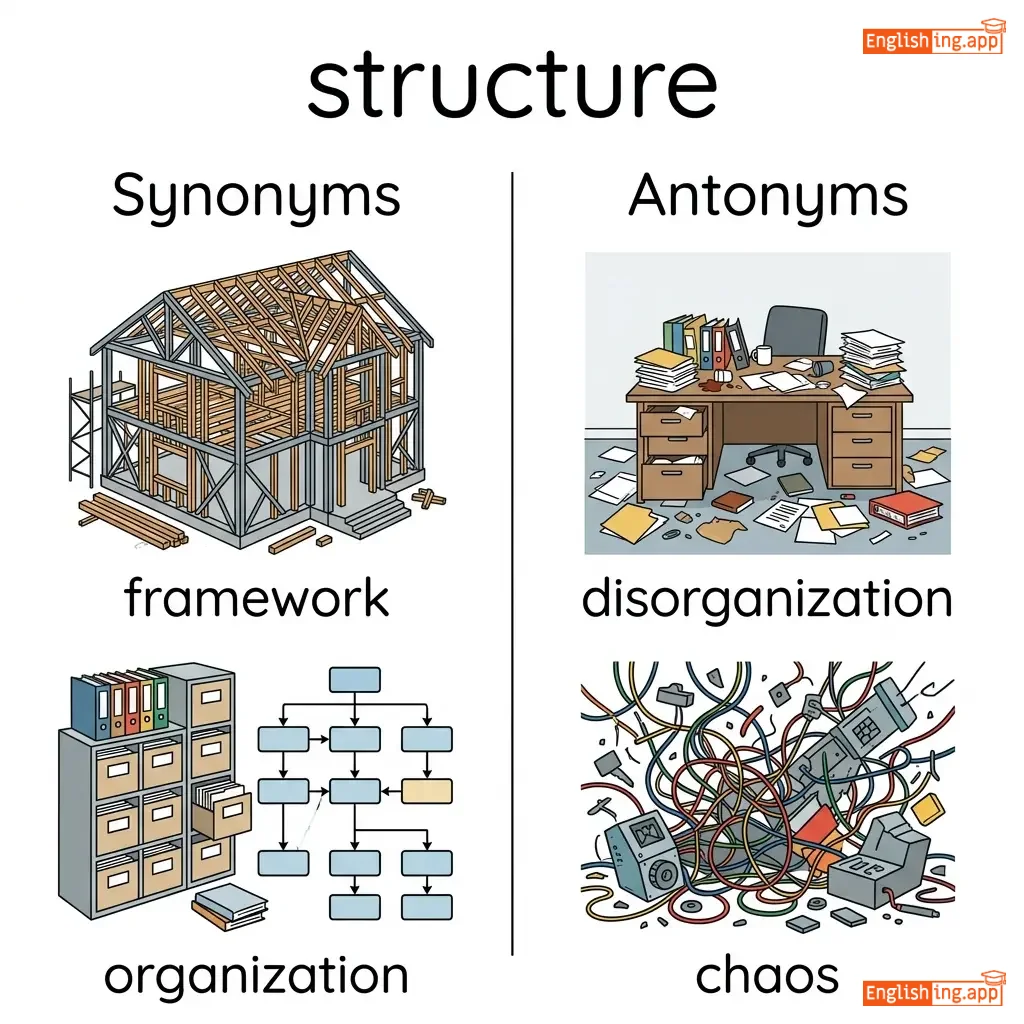
framework, organization, arrangement, construction
••••••
|
chaos, disorder, disorganization
••••••
|
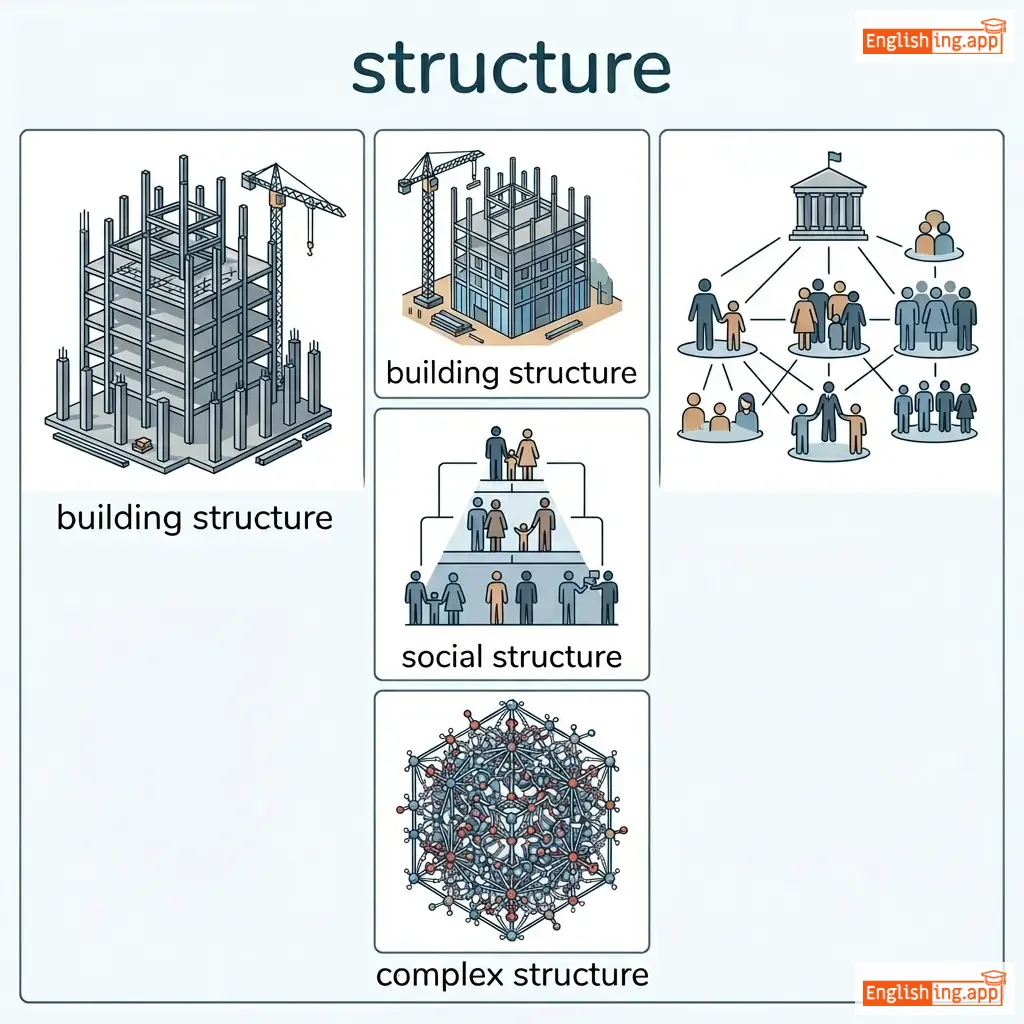
social structure, building structure, organizational structure, data structure
••••••
|
结构就是像建筑的骨架支撑一切。
••••••
|
|
#1342
⚠️
|
/ˈsuː.ɪ.saɪd/
noun
(自杀)
••••••
|
- •••••• |
自杀
zìshā
••••••
|
the act of intentionally killing oneself
••••••
|
Mental health professionals work to prevent suicide. |
心理健康专家致力于预防自杀。
xīnlǐ jiànkāng zhuānjiā zhìlì yú yùfáng zìshā.
••••••
|
self-destruction, self-harm
••••••
|
survival, life preservation
••••••
|
commit suicide, suicide prevention, suicide rate
••••••
|
心理健康专家帮助防止自杀
••••••
|
|
#1343
💅
|
/staɪl/
noun
(sītǎi'ěr)
••••••
|
- •••••• |
风格
fēnggé
••••••
|
a particular way of doing something; a distinctive appearance or manner of expression
••••••
|
She has her own unique style of writing that captivates readers.
她有自己独特的写作风格,吸引了读者。
••••••
|
她有自己独特的写作风格,吸引了读者。
Tā yǒu zìjǐ dútè de xiězuò fēnggé, xīyǐnle dúzhě.
••••••
|
manner, way, approach, fashion, method
••••••
|
uniformity, standardization
••••••
|
writing style, fashion style, leadership style, architectural style
••••••
|
‘Style’ 在英语中是 ‘风格’ 在中文的对应,表示个人的表达方式。
••••••
|
|
#1344
🌅
|
/ˈsʌn.raɪz/
noun
(sʊnraɪz)
••••••
|
- •••••• |
日出
rìchū
••••••
|
the time in the morning when the sun appears above the horizon
••••••
|
We watched the beautiful sunrise from the mountain top.
我们从山顶观看了美丽的日出。
••••••
|
我们从山顶观看了美丽的日出。
Wǒmen cóng shāndǐng guānkànle měilì de rìchū.
••••••
|
dawn, daybreak, morning
••••••
|
sunset, dusk, nightfall
••••••
|
sunrise time, beautiful sunrise, watch sunrise
••••••
|
日出是太阳从地平线升起的时刻。
••••••
|
|
#1345
📱
|
/səbˈskrɪp.ʃən/
noun
(sabskripshon)
••••••
|
- •••••• |
订阅
dingyue
••••••
|
a payment for regular delivery of a service or product; an arrangement to receive something regularly
••••••
|
I canceled my Netflix subscription because I wasn't watching it enough.
我取消了我的Netflix订阅,因为我没有足够看它。
••••••
|
我取消了我的Netflix订阅,因为我没有足够看它。
Wo quxiao le wode Netflix dingyue, yinwei wo mei you zuguo kan ta.
••••••
|
membership, enrollment, registration
••••••
|
cancellation, termination
••••••
|
monthly subscription, magazine subscription, streaming subscription, subscription fee
••••••
|
订阅是获取服务的长期安排,类似于服务包或者定期更新的订阅。
••••••
|
|
#1346
🌇
|
/ˈsʌn.set/
noun
(sunset)
••••••
|
- •••••• |
日落
riluo
••••••
|
the time in the evening when the sun disappears below the horizon
••••••
|
The romantic sunset painted the sky in golden colors.
浪漫的日落把天空涂上金色。
••••••
|
浪漫的日落把天空涂上金色。
Langman de riluo ba tiankong tushang jinse.
••••••
|
dusk, evening, twilight
••••••
|
sunrise, dawn, daybreak
••••••
|
beautiful sunset, sunset view, watch sunset
••••••
|
日落时,金色的阳光照亮天空。
••••••
|
|
#1347
🧪
|
/ˈsʌb.stəns/
noun
(sʌbstæns)
••••••
|
- •••••• |
物质
wuzhi
••••••
|
a particular kind of matter with uniform properties; the essential nature of something; material or content
••••••
|
The scientist analyzed the unknown substance in the laboratory.
科学家在实验室分析了未知物质。
••••••
|
科学家在实验室分析了未知物质。
Kēxuéjiā zài shíyànshì fēnxīle wèizhī wùzhì.
••••••
|
material, matter, essence, content
••••••
|
emptiness, void, superficiality
••••••
|
chemical substance, controlled substance, substance abuse, essential substance
••••••
|
实验室中的物质被细心分析,以确保结果的准确性。
••••••
|
|
#1348
🌞
|
/ˈsʌn.stroʊk/
noun
(日射病)
••••••
|
- •••••• |
中暑
zhongshu
••••••
|
a serious condition caused by overheating from prolonged exposure to high temperatures
••••••
|
The worker suffered from sunstroke after working outside all day.
工人在外面工作了一整天后中暑了。
••••••
|
工人在外面工作了一整天后中暑了。
Gongren zai waimian gongzuo le yi zheng tian hou zhongshu le
••••••
|
heatstroke, heat exhaustion
••••••
|
hypothermia, frostbite
••••••
|
suffer sunstroke, prevent sunstroke, sunstroke symptoms
••••••
|
想象在阳光下工作太久,你会中暑!
••••••
|
|
#1349
🏘️
|
/ˈsʌb.ɜːb/
noun
(郊区)
••••••
|
- •••••• |
郊区
jiao qu
••••••
|
a residential area outside the central part of a city; an outlying district of a city
••••••
|
They moved to a quiet suburb to raise their children away from city noise.
他们搬到了一个安静的郊区,把孩子们远离城市的喧嚣。
••••••
|
他们搬到了一个安静的郊区,把孩子们远离城市的喧嚣。
Tāmen bān dào le yī gè ānjìng de jiāoqū, bǎ háizimen yuǎn lí chéngshì de xuānxiāo.
••••••
|
outskirts, residential area, subdivision
••••••
|
city center, downtown, urban core
••••••
|
quiet suburb, residential suburb, suburban life, suburb development
••••••
|
想象你生活在一个远离城市喧嚣的安静郊区。
••••••
|
|
#1350
🏆
|
/suː.pɪər.iˈɔːr.ə.ti/
noun
(超级优越)
••••••
|
- •••••• |
优越性
yōuyuèxìng
••••••
|
the quality or state of being superior; higher rank or quality
••••••
|
His superiority in mathematics was evident from his test scores. |
他在数学上的优越性从他的考试成绩中显而易见。
Tā zài shùxué shàng de yōuyuèxìng cóng tā de kǎoshì chéngjī zhōng xiǎn'ér yìjiàn.
••••••
|
excellence, dominance, supremacy
••••••
|
inferiority, weakness, subordination
••••••
|
show superiority, superiority complex, moral superiority
••••••
|
优越性意味着在某些方面比别人做得更好。
••••••
|
|
#1351
🚇
|
/ˈsʌb.weɪ/
noun
(sabwei)
••••••
|
- •••••• |
地铁
ditie
••••••
|
an underground railway system; an underground passage for pedestrians
••••••
|
I take the subway to work every morning because it's faster than driving.
我每天早上乘地铁上班,因为它比开车更快。
••••••
|
我每天早上乘地铁上班,因为它比开车更快。
Wo mei tian zao shang cheng ditie shangban, yinwei ta bi kaiche geng kuai.
••••••
|
underground, metro, tube, underground railway
••••••
|
overground, surface transport
••••••
|
subway station, subway train, subway system, subway map
••••••
|
地铁 - 地下的快速交通工具!
••••••
|
|
#1352
🔮
|
/ˌsuː.pərˈstɪʃ.ən/
noun
(迷信)
••••••
|
- •••••• |
迷信
mixin
••••••
|
a belief or practice considered irrational or supernatural
••••••
|
Breaking a mirror brings seven years of bad luck is a common superstition. |
打破镜子带来七年的厄运,这是一种常见的迷信。
dapo jingzi dalai qinian de e yun, zhe shi yizhong changjian de mixin
••••••
|
myth, folklore, belief
••••••
|
science, fact, reality
••••••
|
common superstition, old superstition, believe superstition
••••••
|
A broken mirror brings bad luck, a superstition in Chinese as well!
••••••
|
|
#1353
🏆
|
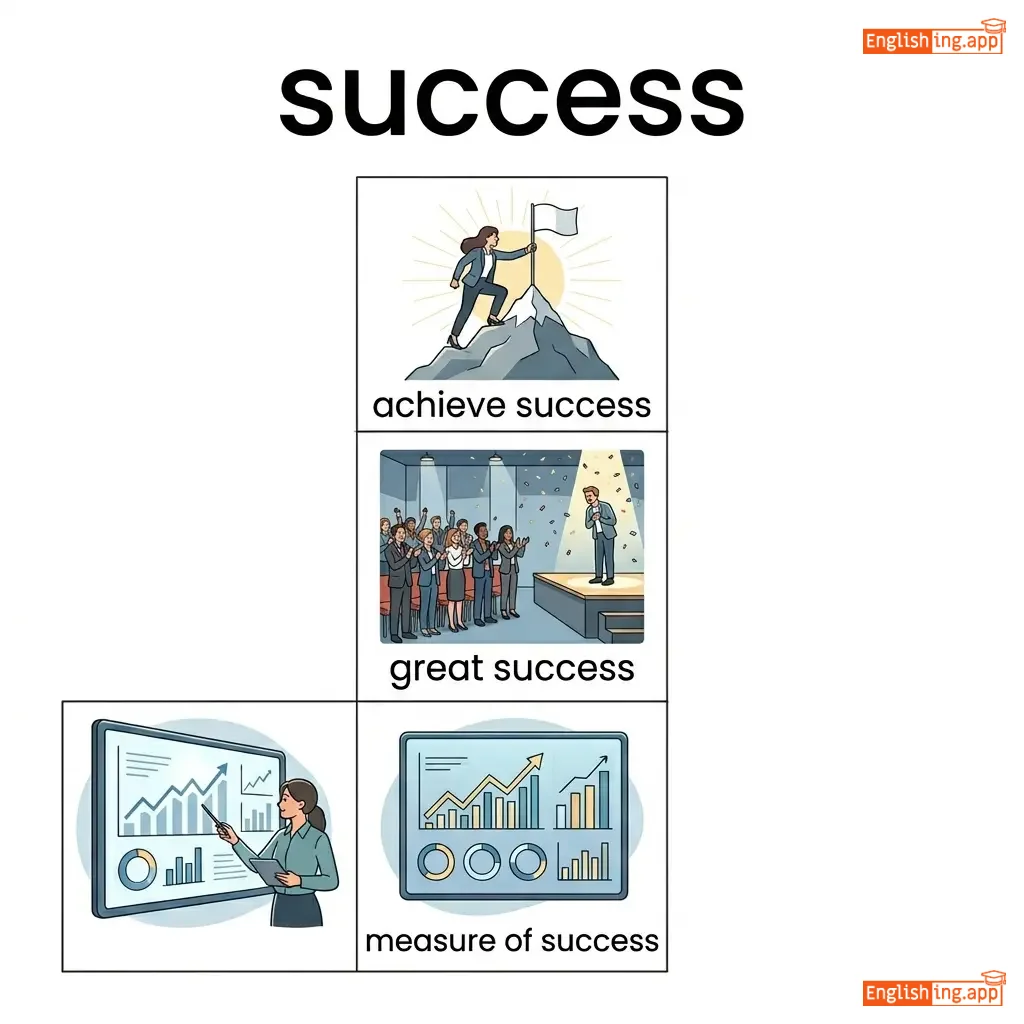
/səkˈses/
noun
(sikesi)
••••••
|
|
成功; 达到目标
chenggong; dádào mùbiāo
••••••
|
the accomplishment of an aim or purpose; the achievement of desired goals
••••••
|
Her success in business came from years of hard work and dedication.
她在商业中的成功来自多年的努力和奉献。
••••••
|
她在商业中的成功来自多年的努力和奉献。
ta zai shangye zhong de chenggong laizi duonian de nuli he fengxian.
••••••
|
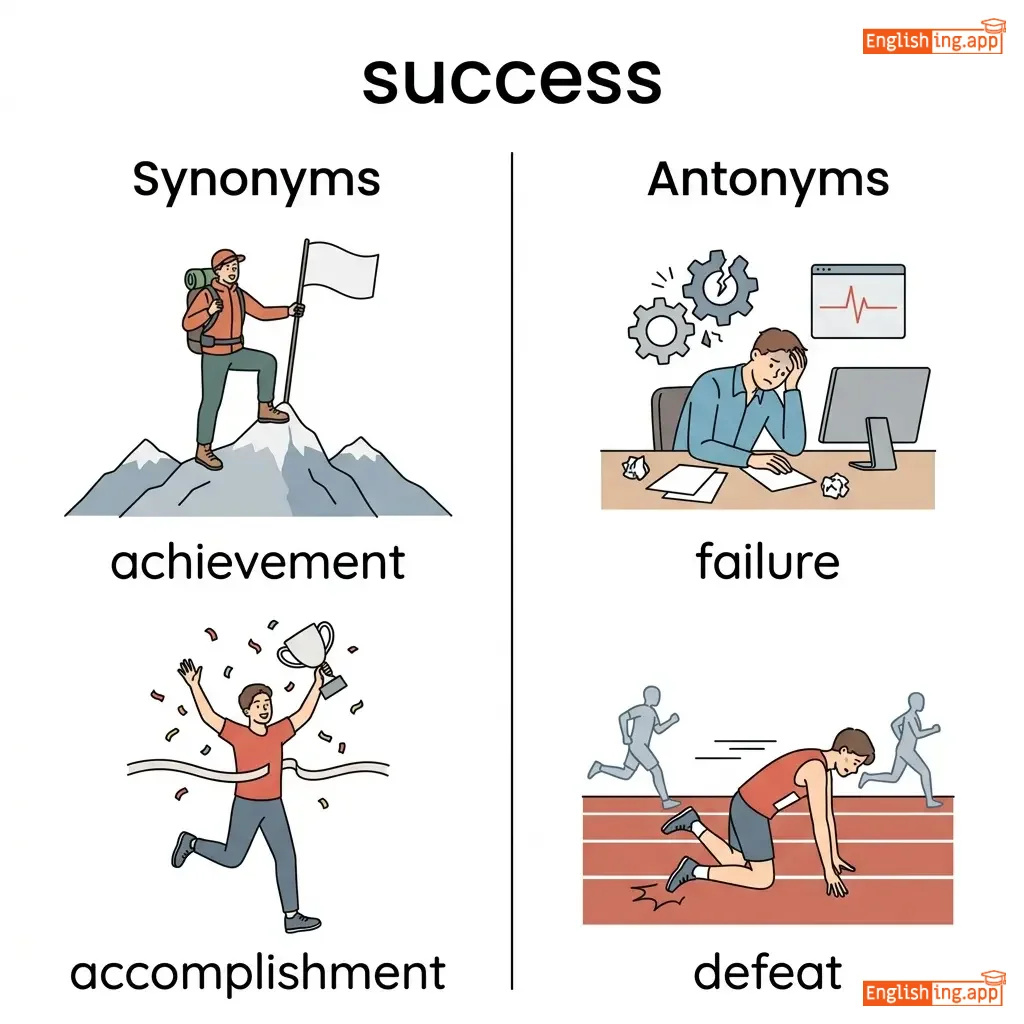
achievement, accomplishment, triumph, victory
••••••
|
failure, defeat, disappointment
••••••
|
great success, business success, academic success, overnight success
••••••
|
成功 (Success) 来自于努力和奉献。
••••••
|
|
#1354
💊
|
/ˈsʌ.plɪ.mənt/
noun
(补充)
••••••
|
- •••••• |
补充
buchong
••••••
|
something that completes or adds to something else; a dietary product
••••••
|
She takes vitamin supplements to maintain her health.
她服用维生素补充剂来保持她的健康。
••••••
|
她服用维生素补充剂来保持她的健康。
ta fuyong weishengsu buchongji lai baochi ta de jiankang
••••••
|
addition, complement, extra
••••••
|
deficiency, lack, shortage
••••••
|
vitamin supplement, dietary supplement, take supplements
••••••
|
维生素补充剂让身体完整。
••••••
|
|
#1355
👑
|
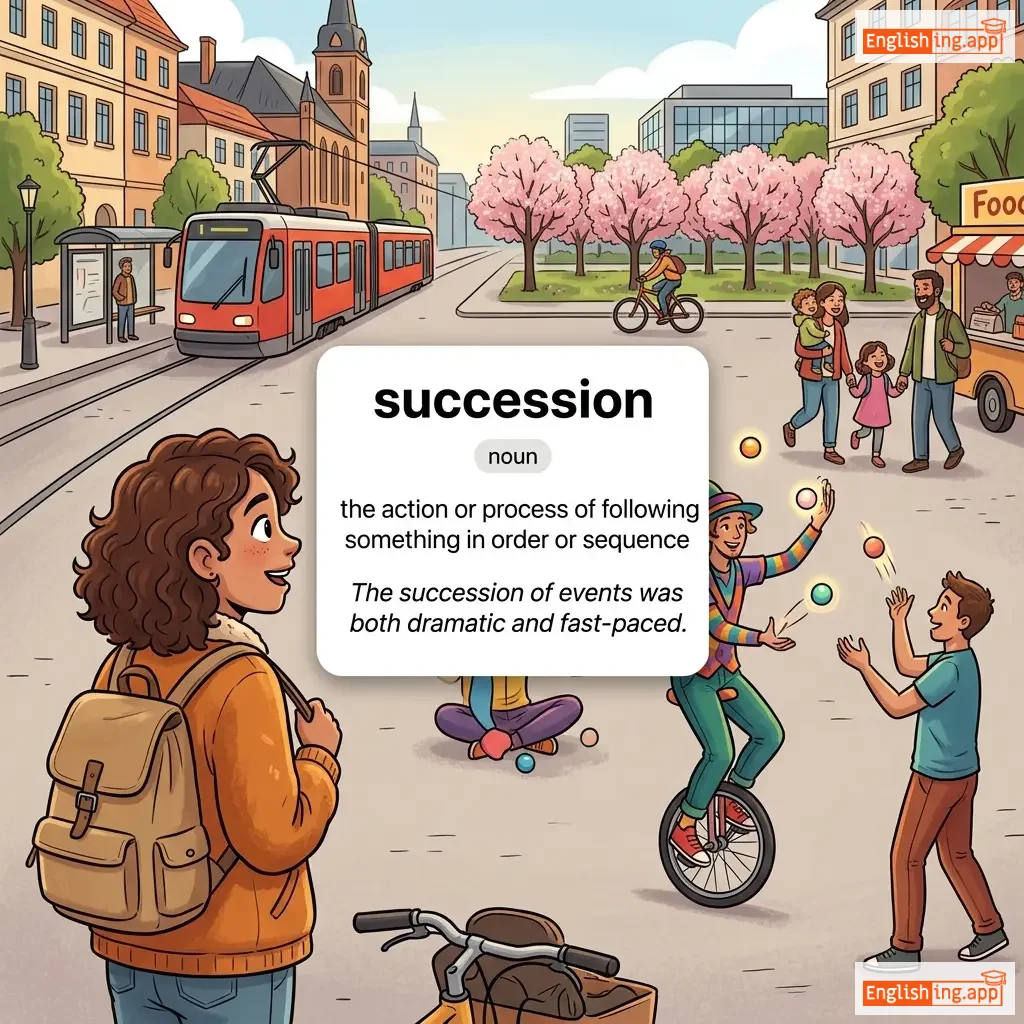
/səkˈseʃ.ən/
noun
(sùkèxiǎn)
••••••
|
|
继承
jicheng
••••••
|
a series of people or things following one after another; the process of inheriting a title or position
••••••
|
The succession of kings in that dynasty lasted for over 300 years. |
那个王朝的国王继承历时超过300年。
nage wangchao de guowang jicheng lishi chao guo 300 nian
••••••
|
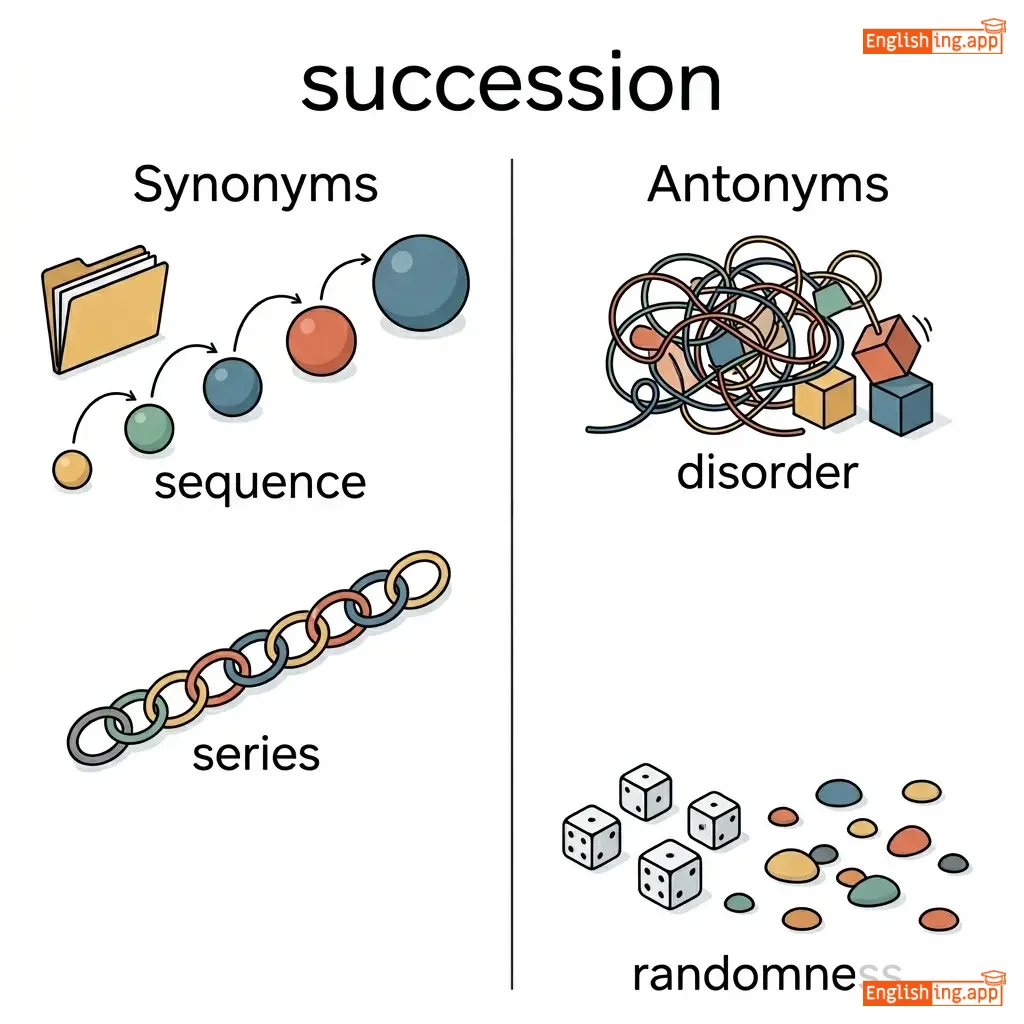
sequence, series, inheritance, lineage
••••••
|
interruption, discontinuation
••••••
|
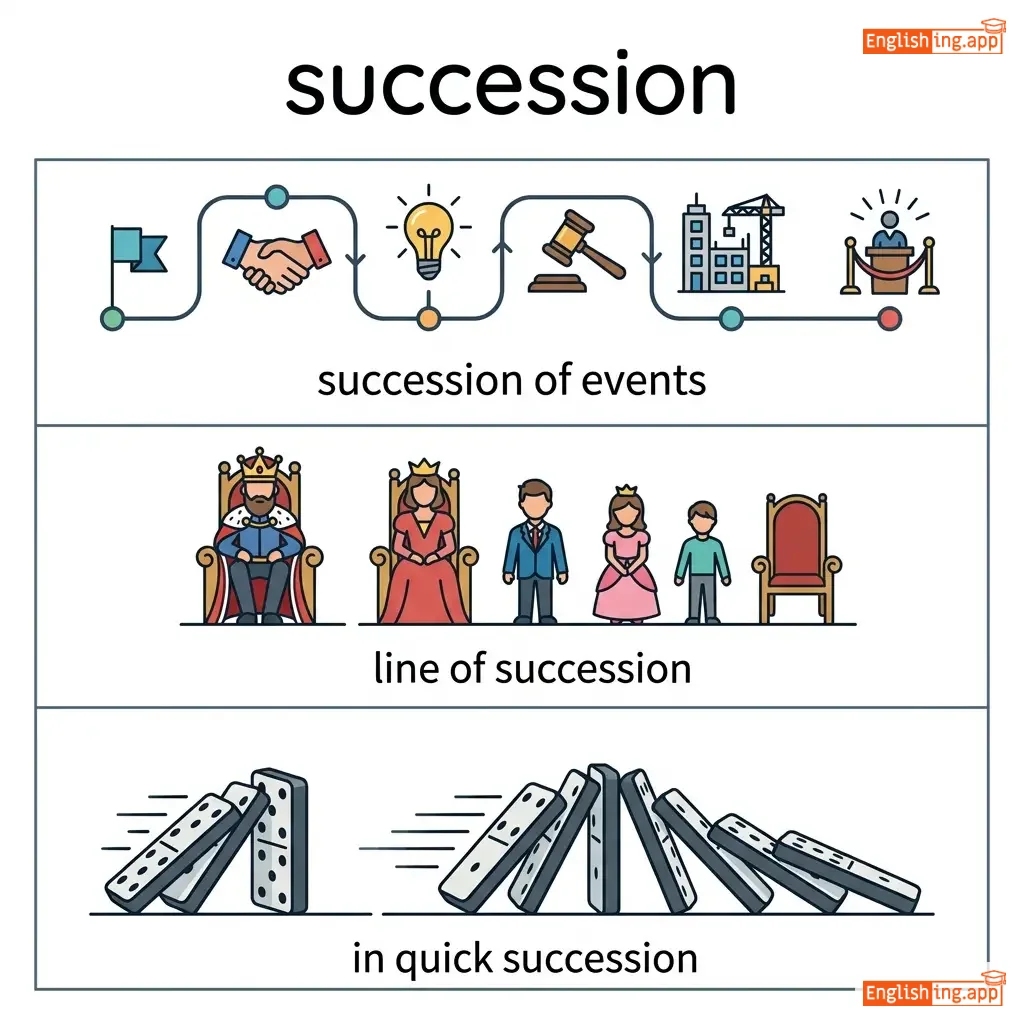
royal succession, succession planning, line of succession, succession crisis
••••••
|
想象一个接连不断的王朝继承过程,每一代都延续下去。
••••••
|
|
#1356
👑
|
/suˈpriː.mə.si/
noun
(至高无上)
••••••
|
- •••••• |
至高无上;最高权力或权威
zhì gāo wú shàng
••••••
|
the state of being supreme; highest authority or power
••••••
|
The country established naval supremacy in the region.
该国在该地区建立了海军至高无上的地位。
••••••
|
该国在该地区建立了海军至高无上的地位。
Gāi guó zài gāi dìqū jiànlìle hǎijūn zhìgāo wú shàng de dìwèi.
••••••
|
dominance, authority, control
••••••
|
subordination, inferiority, submission
••••••
|
military supremacy, establish supremacy, naval supremacy
••••••
|
Supremacy = The highest status, like a supreme power.
••••••
|
|
#1357
👤
|
/səkˈses.ər/
noun
(sùkè sà)
••••••
|
- •••••• |
继任者
jìrènzhě
••••••
|
a person who succeeds another in office; someone who takes over a position or role
••••••
|
The CEO announced his retirement and named his successor for the company.
首席执行官宣布了退休,并为公司指定了继任者。
••••••
|
首席执行官宣布了退休,并为公司指定了继任者。
Shǒuxí zhíxíng guān xuānbùle tuìxiū, bìng wèi gōngsī zhǐdìngle jìrènzhě.
••••••
|
heir, replacement, inheritor, follower
••••••
|
predecessor, former holder
••••••
|
chosen successor, potential successor, successor company, successor state
••••••
|
继任者是接替他人的职位的人,好比接任一个领导角色。
••••••
|
|
#1358
🌊
|
/ˈsɜr.fɪs/
noun
(sàfēisī)
••••••
|
- •••••• |
表面; 上层
biǎomiàn; shàngcéng
••••••
|
the outside part or uppermost layer of something
••••••
|
The submarine emerged to the surface of the ocean.
潜水艇浮出海面。
••••••
|
潜水艇浮出海面。
Qiánshuǐ tǐng fúchū hǎimiàn.
••••••
|
exterior, top, face
••••••
|
interior, depth, bottom
••••••
|
water surface, surface area, smooth surface
••••••
|
表面是我们能看到的上面。
••••••
|
|
#1359
💡
|
/səˈdʒes.tʃən/
noun
(sʌdʒɛsˈtʃən)
••••••
|
- •••••• |
建议; 建议
jianyi; jianyi
••••••
|
an idea or plan put forward for consideration; advice or recommendation
••••••
|
Do you have any suggestions for improving our team's productivity? |
你有什么建议可以提高我们团队的生产力吗?
Nǐ yǒu shénme jiànyì kěyǐ tígāo wǒmen tuánduì de shēngchǎnlì ma?
••••••
|
recommendation, proposal, advice, idea
••••••
|
command, order, demand
••••••
|
helpful suggestion, practical suggestion, suggestion box, make a suggestion
••••••
|
建议总是推动进步 (Jiànyì zǒng shì tuīdòng jìnbù)
••••••
|
|
#1360
📛
|
/ˈsɜr.neɪm/
noun
(sɜrneɪm)
••••••
|
- •••••• |
姓氏
xìngshì
••••••
|
a hereditary name common to all members of a family; family name
••••••
|
Please write your first name and surname on the form. |
请在表格上写下您的名字和姓氏。
qǐng zài biǎogé shàng xiěxià nín de míngzì hé xìngshì.
••••••
|
family name, last name
••••••
|
first name, given name
••••••
|
family surname, change surname, maiden surname
••••••
|
姓氏是我们家族的名字,代代相传。
••••••
|
Vocabulary Quiz
Test your vocabulary by matching words with their translations or meanings.
Login to take the quiz
Comments (0)
Share your thoughts and join the discussion.
Join the discussion by logging in
Login to CommentNo comments yet
Be the first to share your thoughts!