



Swipe left or right, or use the buttons. Tap image to zoom.
例句翻译
单词
Lesson 58Lesson 58 - 遮罩切换
|
表情符号
|
单词 | Images | 翻译 | 含义 | 例句 | 例句翻译 | 同义词 | 反义词 | 搭配词 | 助记符 |
|---|---|---|---|---|---|---|---|---|---|---|
|
#1141
👍
|
/ˌrek.ə.menˈdeɪ.ʃən/
noun
(推荐)
••••••
|
- •••••• |
推荐
tuījiàn
••••••
|
a suggestion that someone or something would be good or suitable for a particular job or purpose
••••••
|
I got this job based on a recommendation from my professor.
我通过教授的推荐得到了这份工作。
••••••
|
我通过教授的推荐得到了这份工作。
Wǒ tōngguò jiàoshòu de tuījiàn dédàole zhè fèn gōngzuò.
••••••
|
suggestion, advice, endorsement, proposal
••••••
|
warning, discouragement, disapproval
••••••
|
make a recommendation, follow recommendations, letter of recommendation
••••••
|
推荐让你走向成功。
••••••
|
|
#1142
✨
|
/rɪˈfɔːr.mər/
noun
(改革者)
••••••
|
- •••••• |
改革者
gaigezhe
••••••
|
a person who works to bring about positive changes in society or institutions
••••••
|
The social reformer dedicated her life to improving education for all children.
社会改革者致力于改善所有儿童的教育
••••••
|
社会改革者致力于改善所有儿童的教育。
shehui gaigezhe zhili yu gaishan suoyou ertong de jiaoyu
••••••
|
revolutionary, progressive, activist, modernizer
••••••
|
conservative, traditionalist, reactionary
••••••
|
social reformer, political reformer, educational reformer, reform movement
••••••
|
A reformer shapes society like a sculptor shapes stone.
••••••
|
|
#1143
🤝
|
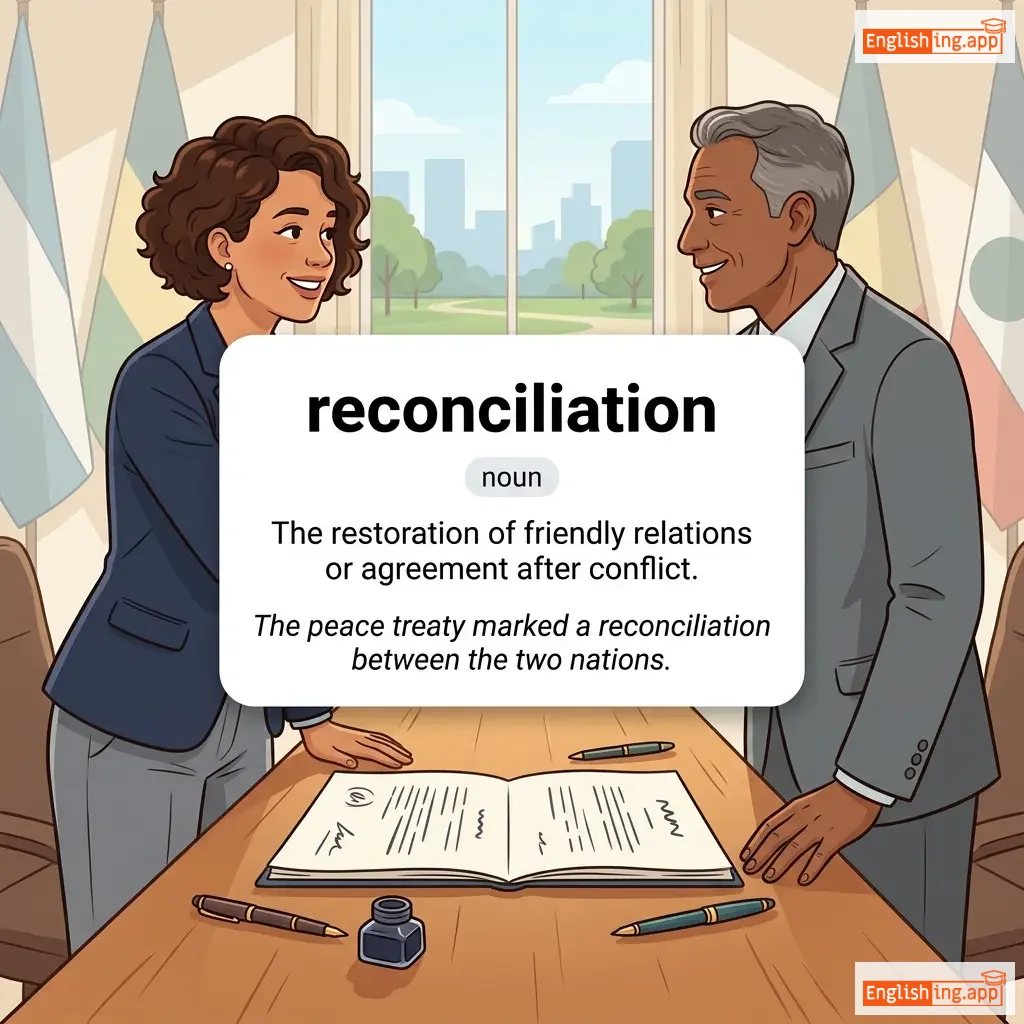
/ˌrek.ən.sɪl.iˈeɪ.ʃən/
noun
(和解)
••••••
|
|
和解
hejie
••••••
|
a situation in which two people or groups of people become friendly again after they have argued; the process of making two opposite beliefs, ideas, or situations agree
••••••
|
The reconciliation between the two families brought peace to the community. |
两家人之间的和解为社区带来了和平。
Liang jia ren zhijian de hejie wei shequ dai laile heping.
••••••
|
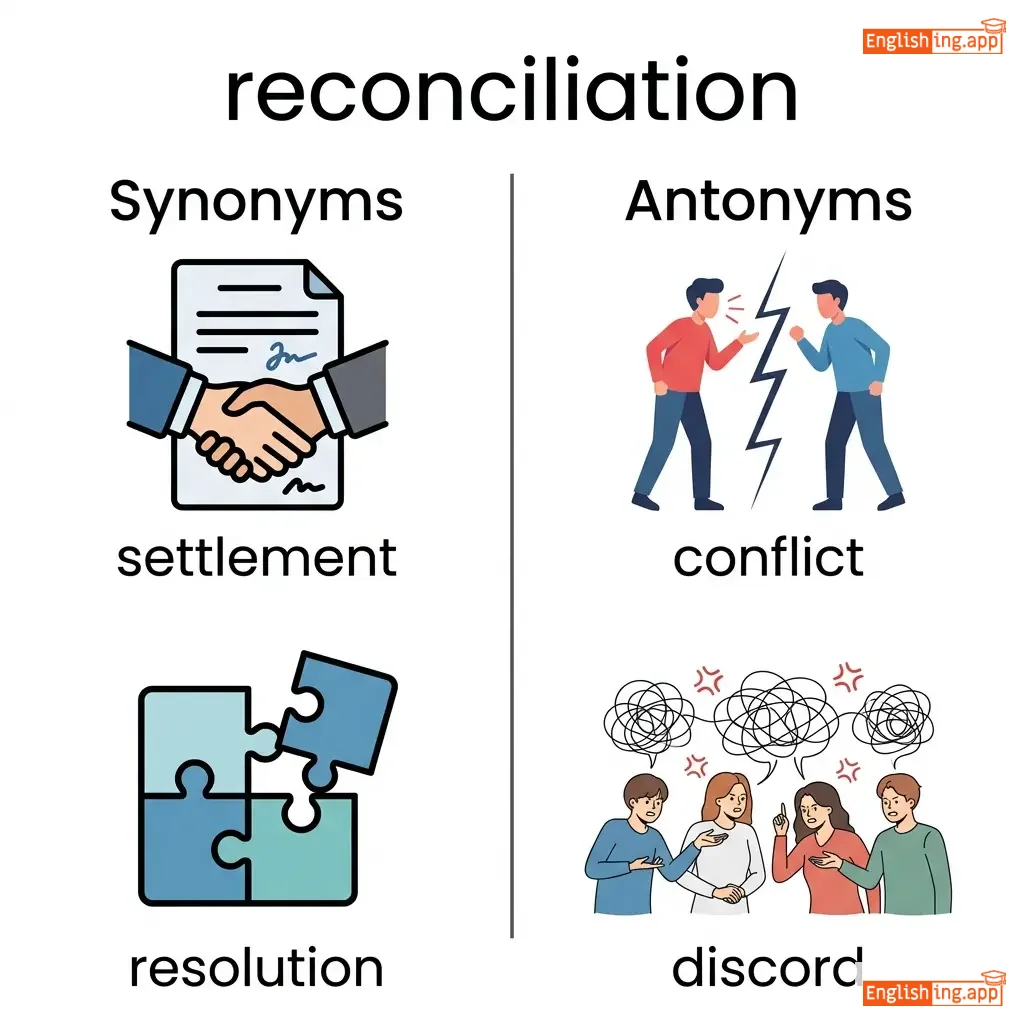
reunion, harmony, settlement, peace-making
••••••
|
conflict, discord, separation, estrangement
••••••
|
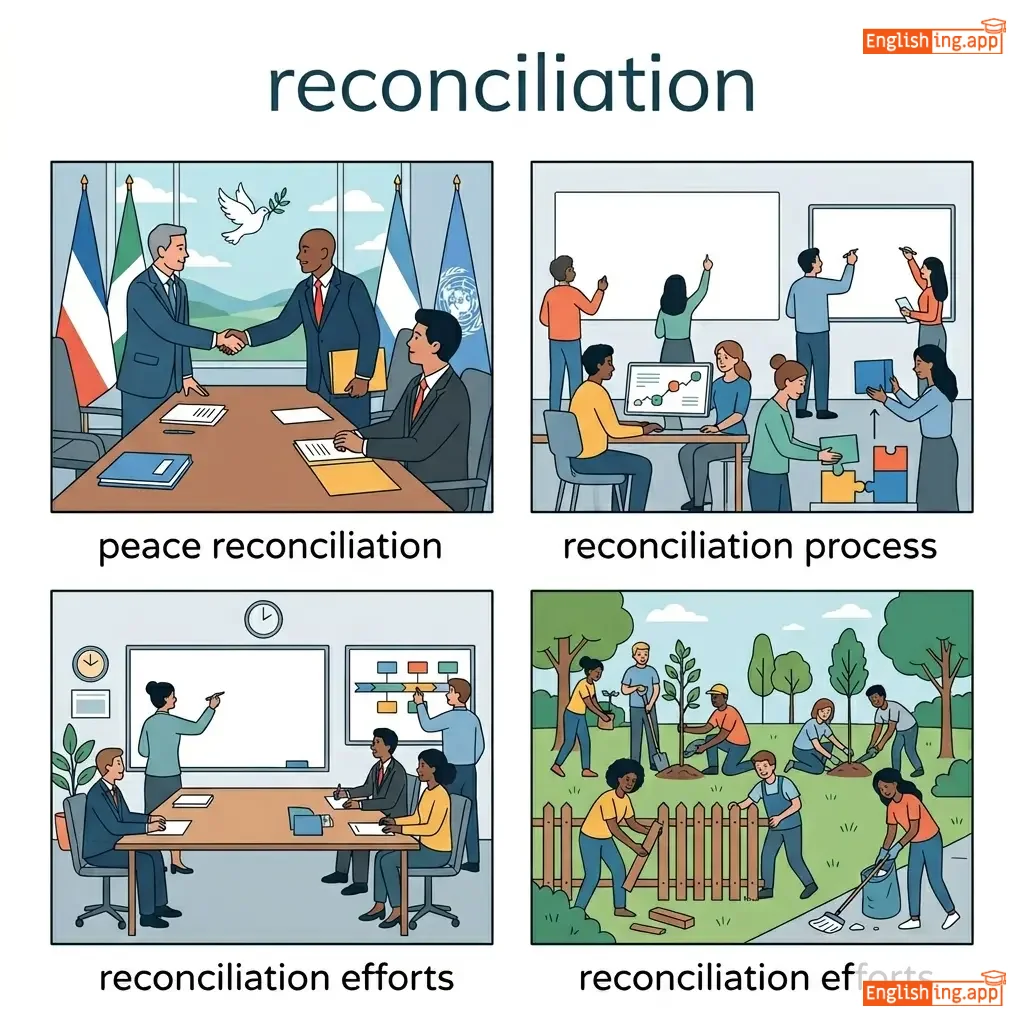
family reconciliation, national reconciliation, seek reconciliation
••••••
|
和解: 通过解决争执让人们再次成为朋友
••••••
|
|
#1144
🥤
|
/rɪˈfreʃ.mənt/
noun
(瑞福什门特)
••••••
|
- •••••• |
茶点
chadian
••••••
|
food and drink that is served as a light meal; something that refreshes
••••••
|
We served light refreshments after the meeting. |
我们在会议后提供了轻便的茶点。
wo men zai hui yi hou ti gong le qing bian de cha dian
••••••
|
snacks, drinks, food, beverages
••••••
|
main meal, feast, banquet
••••••
|
light refreshments, serve refreshments, refreshment break, refreshment stand
••••••
|
茶点 (chadian) sounds like snack. It's a refreshing way to treat yourself.
••••••
|
|
#1145
🎮
|
/ˌrek.riˈeɪ.ʃən/
noun
(娱乐)
••••••
|
- •••••• |
娱乐活动; 使某物再次存在的过程
yúlè huódòng; shǐ mǒu wù zài cì cúnzài de guòchéng
••••••
|
an activity that is done for enjoyment; the process of making something exist again
••••••
|
The park provides recreation facilities for children and adults. |
公园为儿童和成人提供娱乐设施。
Gōngyuán wèi értóng hé chéngrén tígōng yúlè shèshī.
••••••
|
entertainment, amusement, leisure, fun
••••••
|
work, labor, duty, obligation
••••••
|
recreation center, outdoor recreation, recreation activities
••••••
|
娱乐使我们快乐并放松。
••••••
|
|
#1146
🏠
|
/ˌref.jʊˈdʒiː/
noun
(难民)
••••••
|
- •••••• |
难民
nanmin
••••••
|
a person who has been forced to leave their country in order to escape war, persecution, or natural disaster
••••••
|
The refugee camp provided temporary shelter for thousands of displaced families. |
难民营为成千上万的流离失所的家庭提供了临时庇护。
Nanmin ying wei chengqian shangwan de liuli shisuo de jiating tigong le linshi bihu
••••••
|
asylum seeker, displaced person, exile, migrant
••••••
|
citizen, resident, native
••••••
|
refugee camp, refugee crisis, political refugee, refugee status
••••••
|
难民 = 离开家园,寻找庇护
••••••
|
|
#1147
🔄
|
/rɪˈkɜr.əns/
noun
(复发)
••••••
|
- •••••• |
复发
fuhua
••••••
|
the fact of something happening again; an instance of something happening again
••••••
|
The doctor was concerned about the recurrence of the patient's symptoms.
医生对病人症状的复发感到担忧。
••••••
|
医生对病人症状的复发感到担忧。
Yi sheng dui bing ren zheng zhuang de fu fa gan dao dan you.
••••••
|
repetition, return, reappearance, revival
••••••
|
cessation, ending, conclusion, finality
••••••
|
prevent recurrence, cancer recurrence, recurrence rate
••••••
|
复发 - 想想那些会一再发生的事情。
••••••
|
|
#1148
❌
|
/rɪˈfjuː.zəl/
noun
(rìfùzál)
••••••
|
- •••••• |
拒绝; 拒绝接受
jùjué; jùjué jiēshòu
••••••
|
the act of saying no to something or not accepting something
••••••
|
His refusal to cooperate made the project more difficult. |
他拒绝合作让项目变得更难。
Tā jùjué hézuò ràng xiàngmù biàn dé gèng nán.
••••••
|
rejection, denial, decline, negation
••••••
|
acceptance, approval, agreement, consent
••••••
|
flat refusal, outright refusal, refuse to accept, refusal to comply
••••••
|
当有人拒绝参与时,一切变得更加困难。
••••••
|
|
#1149
🙏
|
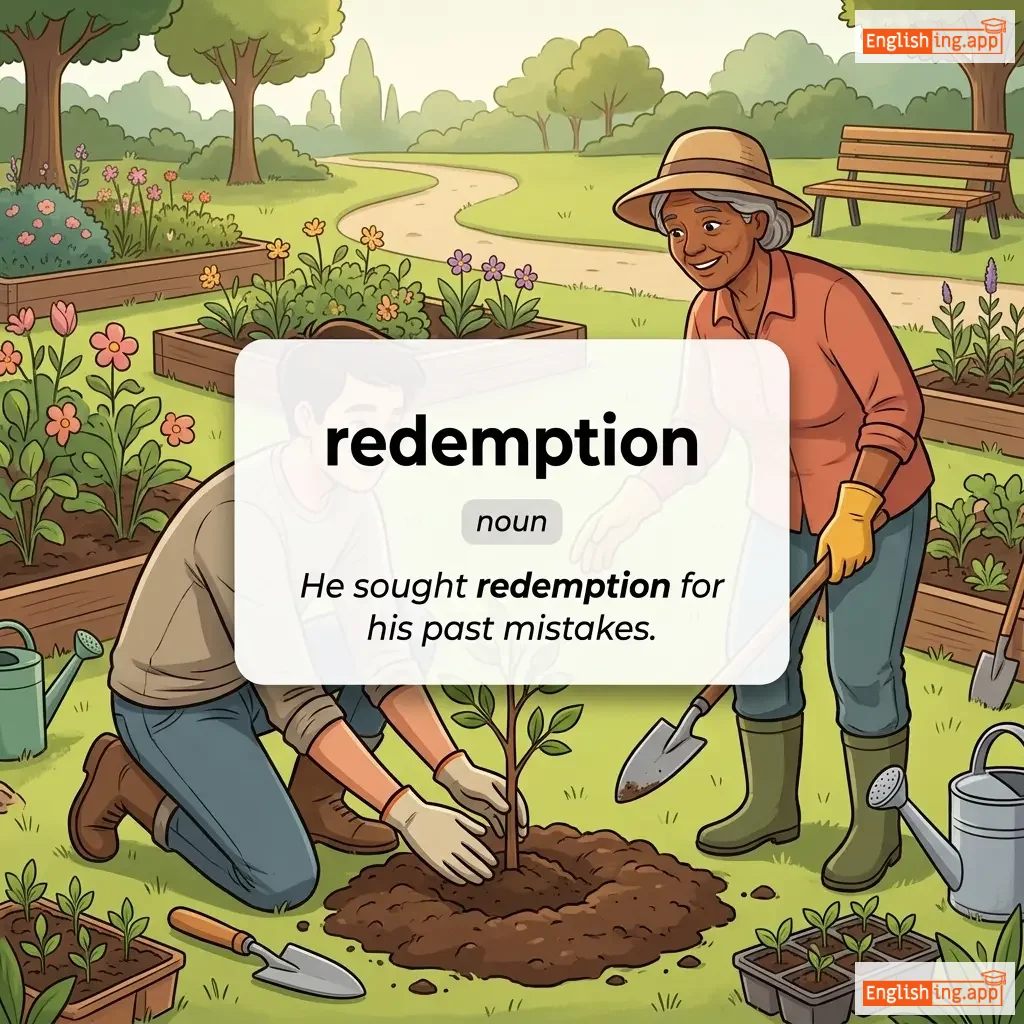
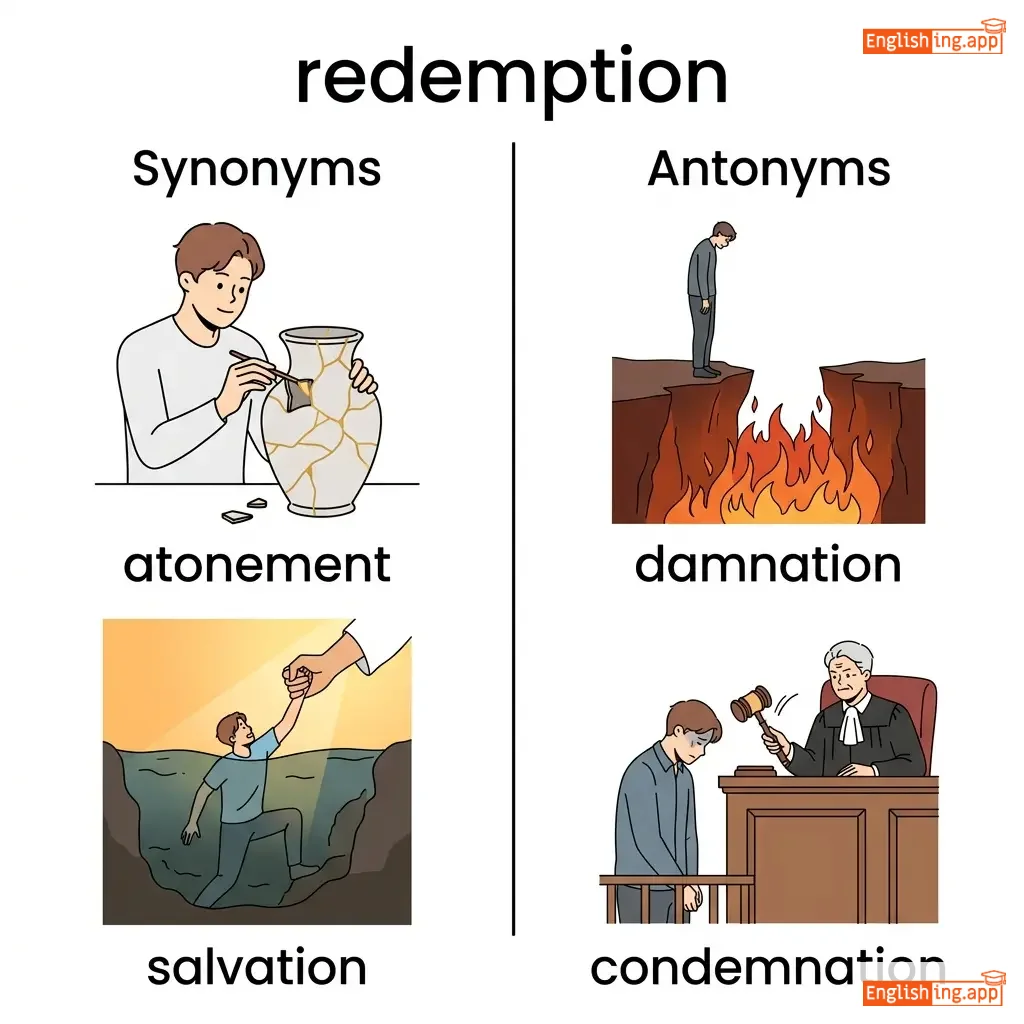
/rɪˈdemp.ʃən/
noun
(rɪˈdɛmpʃən)
••••••
|
|
救赎; 拯救;
jiùshú; zhěngjiù;
••••••
|
the act of saving or being saved from sin, error, or evil; the action of regaining or gaining possession of something in exchange for payment
••••••
|
He sought redemption for his past mistakes through charitable work.
他通过慈善工作寻求对过去错误的赎回。
••••••
|
他通过慈善工作寻求对过去错误的赎回。
Tā tōngguò císhàn gōngzuò xúnqiú duì guòqù cuòwù de jiùshú.
••••••
|
salvation, deliverance, recovery, atonement
••••••
|
damnation, condemnation, punishment, forfeiture
••••••
|
seek redemption, path to redemption, redemption value
••••••
|
通过慈善和悔过获得救赎,找到内心的和平。
••••••
|
|
#1150
🗑️
|
/rɪˈfjuːz/
noun
(rǐfúzī)
••••••
|
- •••••• |
垃圾; 拒绝
rifuzi
••••••
|
waste material; garbage; to decline or reject something
••••••
|
Please put the refuse in the designated bins.
请将垃圾放入指定的垃圾桶。
••••••
|
请将垃圾放入指定的垃圾桶。
Qing jiang laji fang ru zhiding de laji tong.
••••••
|
garbage, waste, trash, rubbish, decline, reject
••••••
|
accept, agree, treasure, valuables
••••••
|
refuse collection, household refuse, refuse disposal, refuse to answer
••••••
|
Refuse in Chinese translates as 垃圾 (laji), just like trash.
••••••
|
|
#1151
📉
|
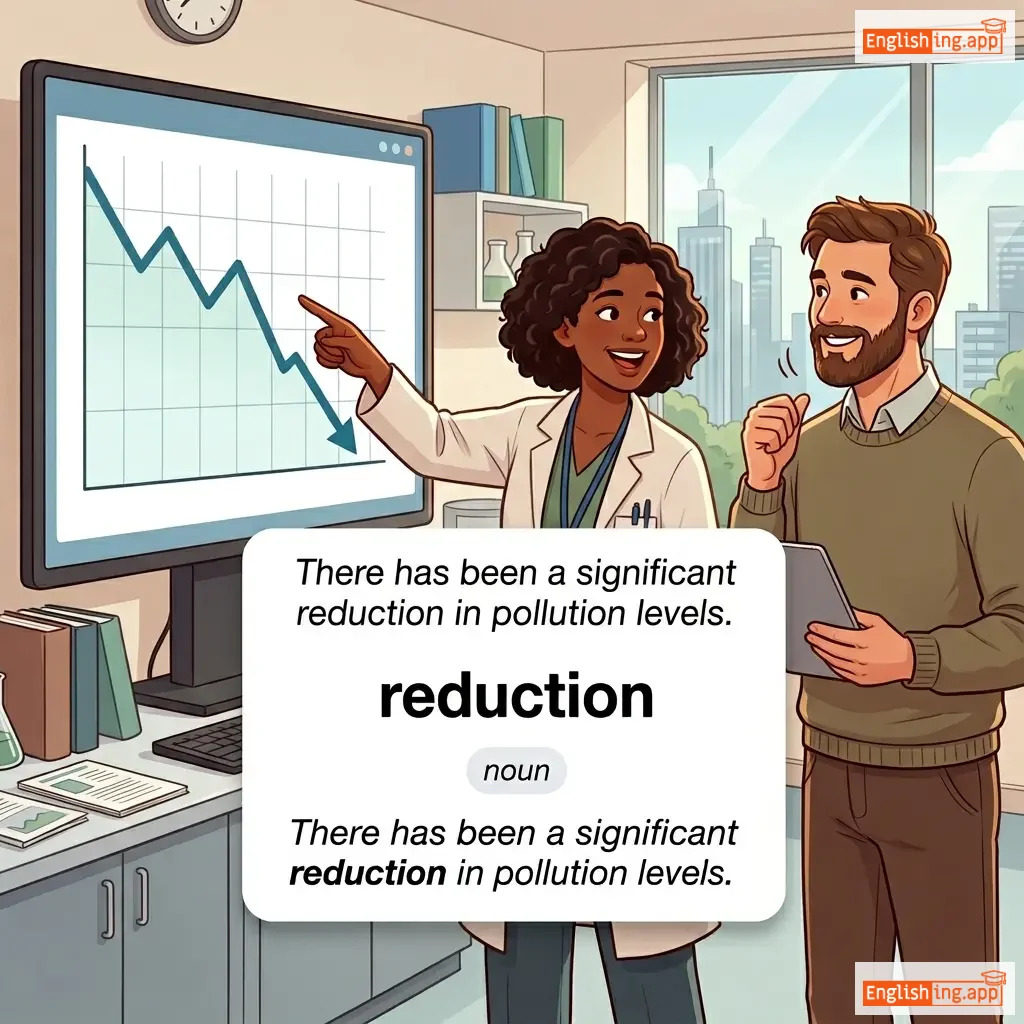
/rɪˈdʌk.ʃən/
noun
(里杜克申)
••••••
|
|
减少
ri du ke shun
••••••
|
the action or fact of making a specified thing smaller or less in amount, degree, or size
••••••
|
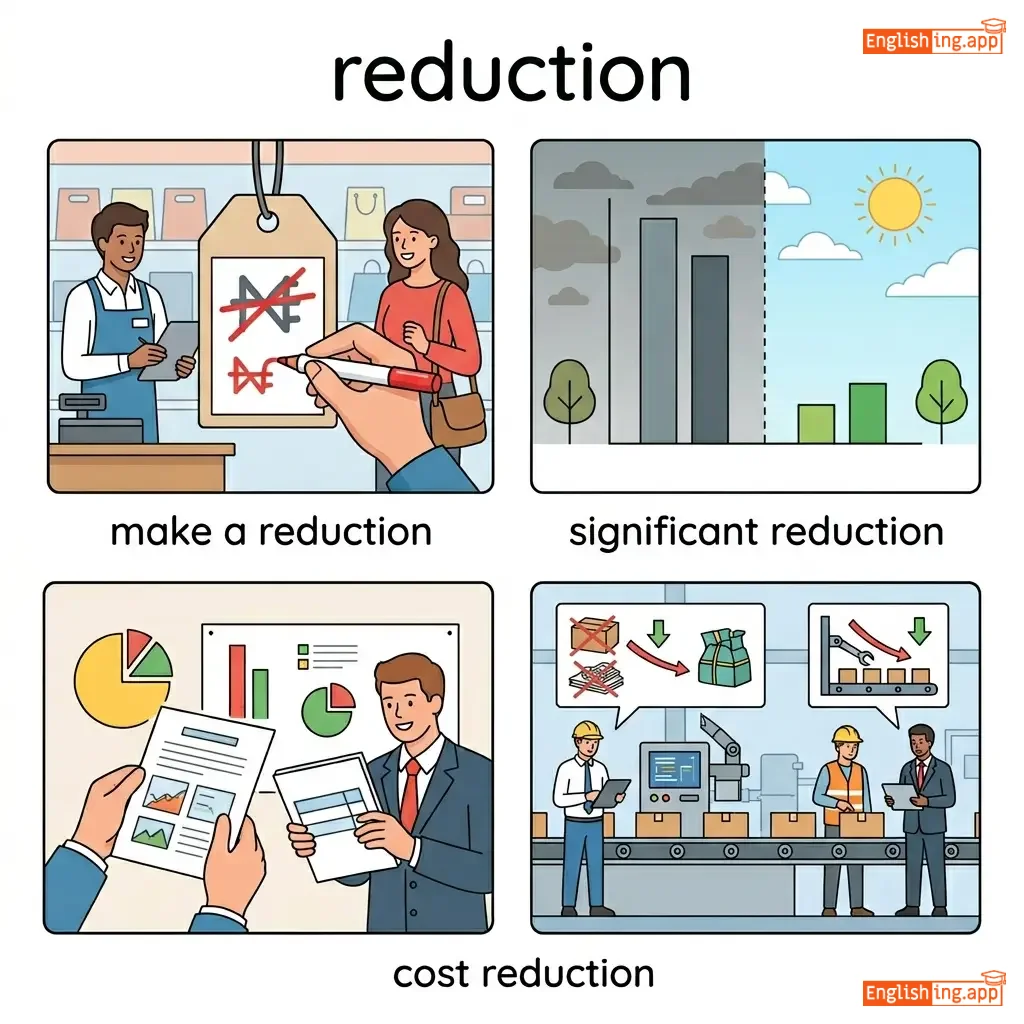
The company announced a reduction in staff to cut costs.
公司宣布裁员以降低成本。
••••••
|
公司宣布裁员以降低成本。
gongsi xuanbu caiyuan yi jiangdi chengben
••••••
|
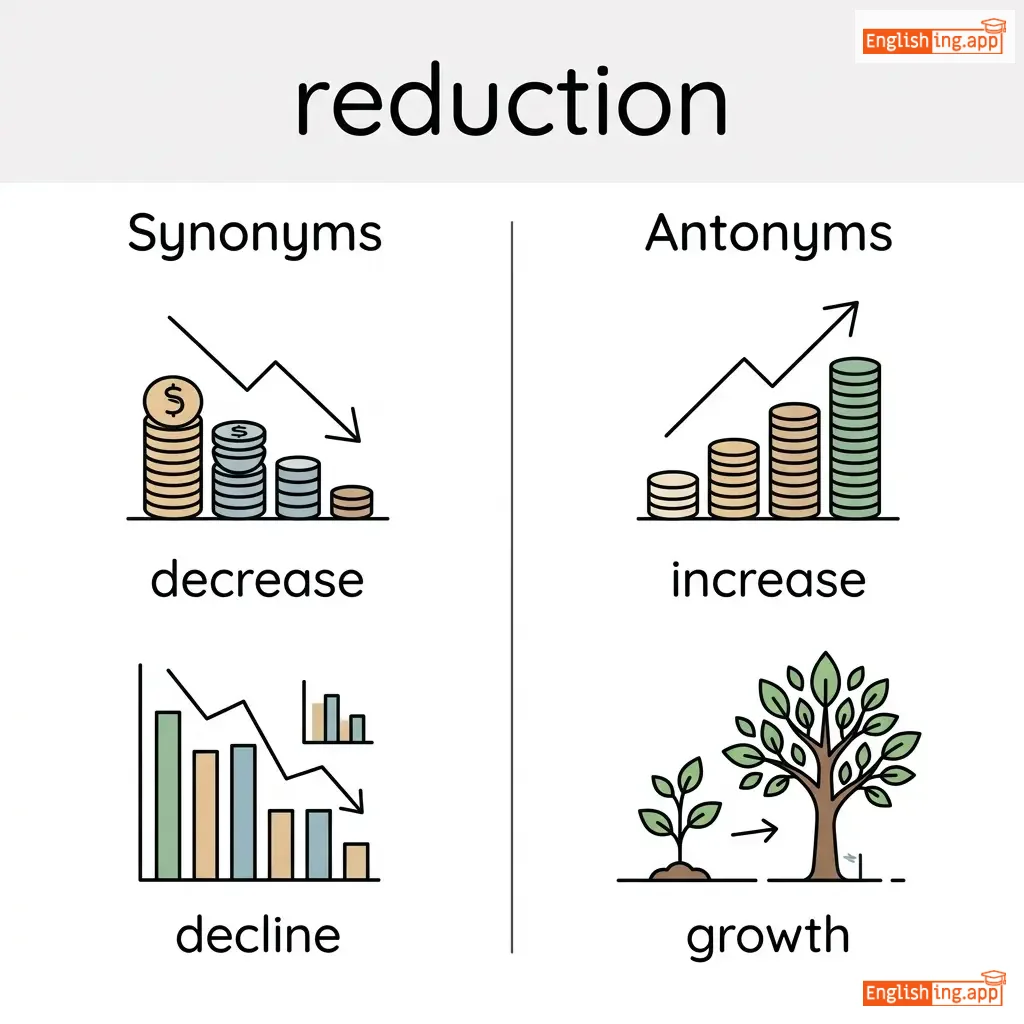
decrease, cut, decline, diminution
••••••
|
increase, growth, expansion, enlargement
••••••
|
cost reduction, price reduction, reduction in size
••••••
|
Re + duction = 再减, 想象成本被再一次减下去的画面
••••••
|
|
#1152
🗺️
|
/ˈriː.dʒən/
noun
(lìyù)
••••••
|
- •••••• |
地区; 区域; 地带
diqu; quyu; dizai
••••••
|
a particular area or part of a country or the world
••••••
|
This region is famous for its wine production.
这个地区因其葡萄酒生产而闻名。
••••••
|
这个地区因其葡萄酒生产而闻名。
Zhe ge diqu yin qi putaojiu shengchan er wenming.
••••••
|
area, zone, territory, district, province
••••••
|
center, point, specific location
••••••
|
geographical region, remote region, coastal region, mountainous region
••••••
|
Region in Chinese is a part of the larger whole!
••••••
|
|
#1153
♻️
|
/rɪˈdʌn.dəns/
noun
(rɪˈdʌn.dəns)
••••••
|
- •••••• |
冗余
rǒngyú
••••••
|
the state of being not or no longer needed or useful; superfluous repetition of information
••••••
|
The document contained redundance that made it unnecessarily long. |
该文档包含冗余内容,使其变得不必要地长。
gāi wéndàng bāohán rǒngyú nèiróng, shǐqí biàn dé bù bìyào de cháng.
••••••
|
superfluity, excess, surplus, repetition
••••••
|
necessity, shortage, scarcity, deficiency
••••••
|
data redundance, redundance in writing, avoid redundance
••••••
|
重复的无用信息就是冗余。
••••••
|
|
#1154
😞
|
/rɪˈɡret/
noun
(riguéreté)
••••••
|
- •••••• |
遗憾
yí hàn
••••••
|
a feeling of sadness or disappointment about something that has happened or been done
••••••
|
She felt deep regret about her harsh words. |
她对她的尖锐话语深感遗憾。
Tā duì tā de jiānruì huàyǔ shēn gǎn yíhàn.
••••••
|
remorse, sorrow, guilt, repentance
••••••
|
satisfaction, contentment, pride, joy
••••••
|
deep regret, express regret, regret deeply, no regrets
••••••
|
遗憾 = 感到做错事后留下的遗憾
••••••
|
|
#1155
🤢
|
/riːk/
noun
(reek)
••••••
|
- •••••• |
有臭味; 给人强烈的不愉快或不想要的印象
you chòuwèi; gěi rén qiángliè de bù yúkuài huò bù xiǎng yào de yìnxiàng
••••••
|
to have a very unpleasant smell; to give a strong impression of something unpleasant or undesirable
••••••
|
The garbage can reeks of rotten food. |
垃圾桶有腐烂食物的臭味。
Lājī tǒng yǒu fǔlàn shíwù de chòuwèi.
••••••
|
stink, smell, stench, emit odor
••••••
|
fragrance, perfume, sweet smell, aroma
••••••
|
reek of alcohol, reek with sweat, reek of corruption
••••••
|
垃圾桶有臭味,就像坏掉的食物
••••••
|
|
#1156
⏰
|
/ˌreɡ.jʊˈlær.ɪ.ti/
noun
(règuǐlárìtí)
••••••
|
- •••••• |
规律性
guīlǜxìng
••••••
|
the quality of being regular; occurring at fixed intervals or in a consistent pattern
••••••
|
The regularity of his exercise routine helped him stay healthy. |
他锻炼的规律性帮助他保持健康。
tā duànliàn de guīlǜxìng bāngzhù tā bǎochí jiànkāng
••••••
|
consistency, routine, pattern, frequency
••••••
|
irregularity, randomness, chaos, inconsistency
••••••
|
with regularity, mathematical regularity, clockwork regularity, maintain regularity
••••••
|
规律性像时钟一样,带来一致性和稳定性
••••••
|
|
#1157
📚
|
/ˈref.ər.əns/
noun
(参考)
••••••
|
- •••••• |
参考资料
cānkǎo zīliào
••••••
|
the action of mentioning or alluding to something; a source of information
••••••
|
Please provide references to support your research claims. |
请提供参考资料以支持您的研究声明。
qǐng tígōng cānkǎo zīliào yǐ zhīchí nín de yánjiū shēngmíng.
••••••
|
citation, source, mention, allusion
••••••
|
ignorance, omission, exclusion, disregard
••••••
|
make reference to, reference book, character reference
••••••
|
参考资料为研究提供支持,帮助理解。
••••••
|
|
#1158
🎭
|
/rɪˈhɜːr.səl/
noun
(rihérsàl)
••••••
|
- •••••• |
彩排; 演出排练
rihersal
••••••
|
a practice performance of a play, concert, or other work for later public performance
••••••
|
The final rehearsal before opening night went perfectly.
最后的彩排在开幕夜之前完美进行。
••••••
|
开幕夜前的最后一次彩排非常完美。
kaimu yeqian de zuihou yici cǎipái fēicháng wánměi
••••••
|
practice, drill, run-through, preparation
••••••
|
performance, show, actual event
••••••
|
dress rehearsal, final rehearsal, wedding rehearsal, rehearsal dinner
••••••
|
彩排 = 在舞台上进行最后的练习
••••••
|
|
#1159
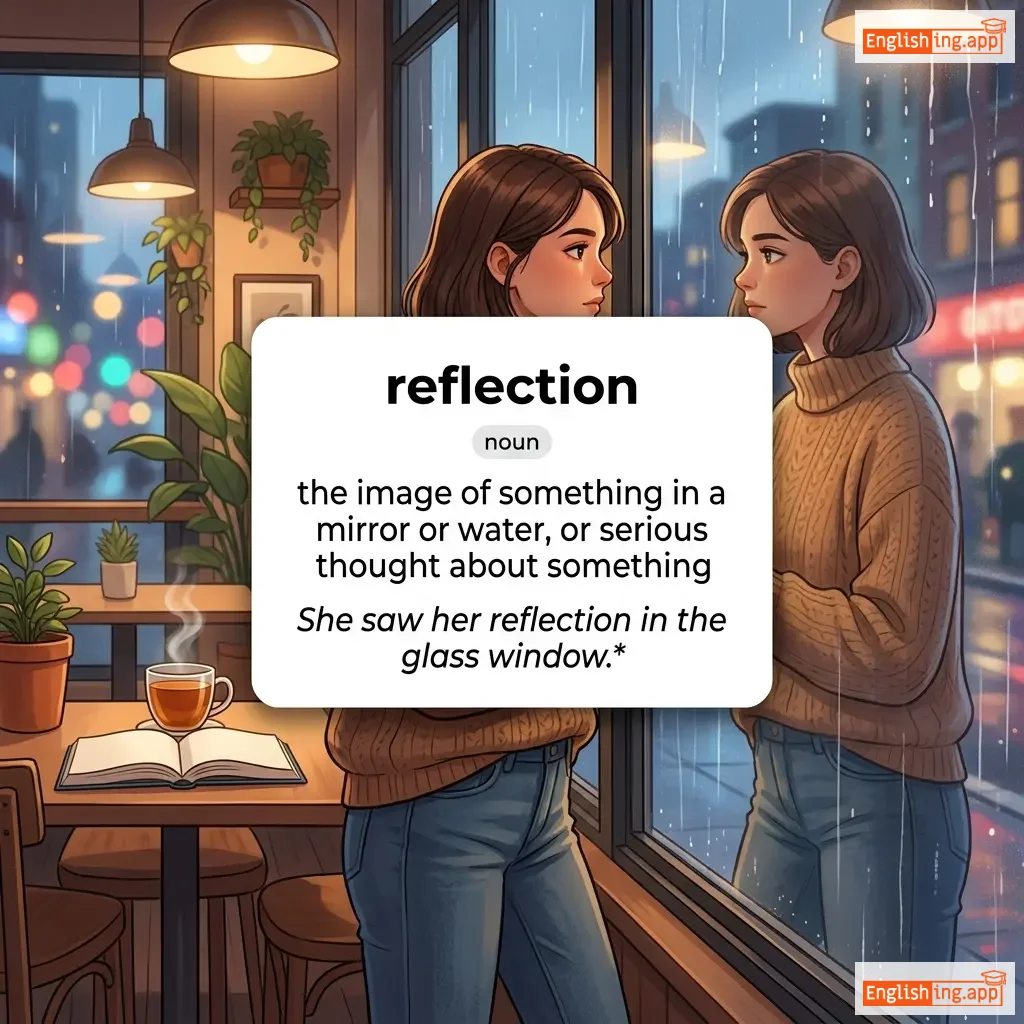
🪞
|
/rɪˈflek.ʃən/
noun
(反射)
••••••
|
|
反射
fǎnshè
••••••
|
the image of something in a mirror or on any reflective surface; serious thought or consideration
••••••
|
She saw her reflection in the water and started thinking deeply. |
她在水中看到了自己的倒影,开始深入思考。
Tā zài shuǐ zhōng kàn dào le zìjǐ de dào yǐng, kāishǐ shēn rù sīkǎo.
••••••
|
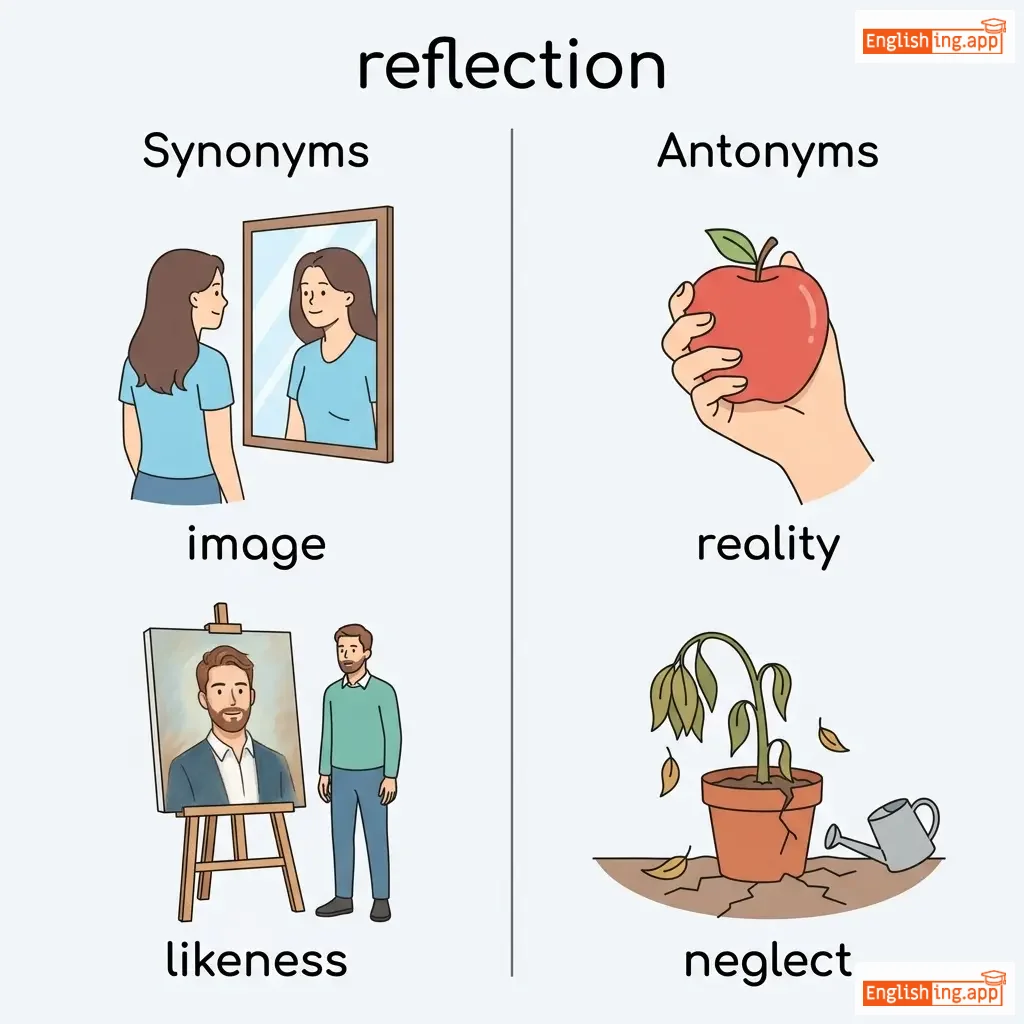
mirror image, contemplation, thought, consideration
••••••
|
reality, substance, impulsiveness, thoughtlessness
••••••
|
mirror reflection, deep reflection, reflection on life
••••••
|
反射是镜子中的深刻思考
••••••
|
|
#1160
👨👩👧👦
|
/rɪˈleɪ.ʃən/
noun
(rì léi shén)
••••••
|
- •••••• |
关系; 亲戚
guanxi; qinqi
••••••
|
the way in which two or more people or things are connected; a family member
••••••
|
They have a strong business relation that has lasted for years. |
他们有一个强大的商业关系,已经持续了多年。
Tamen you yi ge qiangda de shangye guanxi, yijing chixu le duonian
••••••
|
relationship, connection, association, kinship
••••••
|
disconnection, separation, isolation
••••••
|
family relation, business relation, close relation, diplomatic relations
••••••
|
关系是两者或多者之间的联系,例如家庭成员的亲戚关系。
••••••
|
Vocabulary Quiz
Test your vocabulary by matching words with their translations or meanings.
Login to take the quiz
Comments (0)
Share your thoughts and join the discussion.
Join the discussion by logging in
Login to CommentNo comments yet
Be the first to share your thoughts!