



Swipe left or right, or use the buttons. Tap image to zoom.
例句翻译
单词
Lesson 32Lesson 32 - 遮罩切换
|
表情符号
|
单词 | Images | 翻译 | 含义 | 例句 | 例句翻译 | 同义词 | 反义词 | 搭配词 | 助记符 |
|---|---|---|---|---|---|---|---|---|---|---|
|
#621
⛪
|
/ɪmˈpaɪ.ə.ti/
noun
(impaieri)
••••••
|
- •••••• |
亵渎
xièdú
••••••
|
lack of piety or reverence, especially for a god; disrespect or irreverence toward religious matters
••••••
|
His impiety shocked the religious community when he mocked their sacred ceremonies.
他的不敬让宗教团体震惊,当他嘲笑他们的神圣仪式时。
••••••
|
他的不敬让宗教团体震惊,当他嘲笑他们的神圣仪式时。
Tā de bù jìng ràng zōngjiào tuántǐ zhènjīng, dāng tā cháoxiào tāmen de shénshèng yíshì shí.
••••••
|
irreverence, blasphemy, sacrilege, ungodliness
••••••
|
piety, reverence, devotion, religiousness
••••••
|
religious impiety, shocking impiety, acts of impiety
••••••
|
亵渎是对神圣的不尊重。
••••••
|
|
#622
💰
|
/ɪnˈdem.nə.ti/
noun
(赔偿)
••••••
|
- •••••• |
赔偿
peichang
••••••
|
security or protection against a loss or other financial burden; compensation for damage or loss
••••••
|
The insurance company provided full indemnity for the damages caused by the flood.
保险公司为洪水造成的损失提供了完全的赔偿。
••••••
|
保险公司为洪水造成的损失提供了完全的赔偿。
Baoxian gongsi wei hongshui zaocheng de sunshi tigong le wanquan de peichang.
••••••
|
compensation, reimbursement, restitution, reparation
••••••
|
liability, debt, obligation, penalty
••••••
|
indemnity insurance, full indemnity, indemnity clause
••••••
|
Peichang = 'pay charm' – think indemnity as paying for the damages!
••••••
|
|
#623
⚖️
|
/ˌɪm.pəˈzɪʃ.ən/
noun
(强加)
••••••
|
- •••••• |
强加; 负担; 不公平的要求
qiángjiā, fùdān, bù gōngpíng de yāoqiú
••••••
|
the action or process of imposing something or of being imposed; an unfair burden or demand
••••••
|
The imposition of new taxes without consultation angered the citizens greatly. |
未经咨询强加的新税让市民极为愤怒。
Wèijīng zīxún qiángjiā de xīn shuì ràng shìmín jíwéi fènnù.
••••••
|
burden, enforcement, infliction, requirement
••••••
|
removal, relief, freedom, liberation
••••••
|
tax imposition, unwelcome imposition, imposition of rules
••••••
|
Imposition = 强加不公正的负担
••••••
|
|
#624
👉
|
/ˌɪn.dɪˈkeɪ.ʃən/
noun
(yīndìkēshùn)
••••••
|
- •••••• |
指示;标志
zhishi; biaozhi
••••••
|
a sign or piece of information that indicates something; a suggestion or hint
••••••
|
The dark clouds were a clear indication that a storm was approaching the area. |
乌云是明显的迹象,表明暴风雨正在接近该地区。
Wuyun shi mingxian de jixiang, biaoming baofengyu zhengzai jiejin gai diqu.
••••••
|
sign, signal, clue, evidence
••••••
|
concealment, hiding, obscurity, uncertainty
••••••
|
clear indication, strong indication, early indication
••••••
|
Indication = Indicating a storm coming.
••••••
|
|
#625
🎭
|
/ɪmˈpɒs.tər/
noun
(冒充者)
••••••
|
- •••••• |
冒充者; 欺诈者
màochōng zhě, qīzhà zhě
••••••
|
a person who pretends to be someone else in order to deceive others; a fraud
••••••
|
The impostor convinced everyone he was a doctor until his fake credentials were discovered.
冒充者说服了每个人,直到他的假证书被发现。
••••••
|
冒充者说服了每个人,直到他的假证书被发现。
Màochōng zhě shuōfúle měi gè rén, zhídào tā de jiǎ zhèngshū bèi fāxiàn.
••••••
|
fraud, fake, charlatan, pretender
••••••
|
genuine person, authentic individual, real doctor, legitimate person
••••••
|
exposed impostor, clever impostor, impostor syndrome
••••••
|
冒充者有时藏在阴影中,假装别人但无法隐藏自己的真面目。
••••••
|
|
#626
😐
|
/ɪnˈdɪf.ər.əns/
noun
(冷漠)
••••••
|
- •••••• |
冷漠; 漠视; 冷淡
lěngmò, mòshì, lěngdàn
••••••
|
lack of interest, concern, or sympathy; the state of not caring about something
••••••
|
His indifference to his studies resulted in poor grades throughout the semester. |
他对学业的冷漠导致了整个学期的成绩很差。
ta1 dui4 xue2ye4 de leng3mo4 dao3zhi4 le zheng3ge4 xue2qi1 de cheng2ji4 hen3 cha4.
••••••
|
apathy, unconcern, detachment, disinterest
••••••
|
interest, concern, passion, enthusiasm
••••••
|
complete indifference, show indifference, attitude of indifference
••••••
|
‘冷漠’ 就像英文的‘indifference’,表示不关心
••••••
|
|
#627
🎪
|
/ɪmˈpɒs.tʃər/
noun
(冒充者)
••••••
|
- •••••• |
冒充; 欺诈; 欺骗
màochōng, qīzhà, qīpiàn
••••••
|
the practice of deceiving others by pretending to be someone else; fraudulent deception
••••••
|
The elaborate imposture lasted for months before investigators uncovered the truth.
这个精心设计的欺骗持续了几个月,直到调查员揭露了真相。
••••••
|
这个精心设计的欺骗持续了几个月,直到调查员揭露了真相。
Zhège jīngxīn shèjì de qīpiàn chíxùle jǐ gè yuè, zhídào diàocháyuán jiēlùle zhēnxiàng.
••••••
|
deception, fraud, masquerade, pretense
••••••
|
honesty, authenticity, genuineness, truth
••••••
|
elaborate imposture, criminal imposture, expose imposture
••••••
|
Imposter = 欺骗的骗子
••••••
|
|
#628
😤
|
/ɪnˈdɪɡ.nə.ti/
noun
(因迪格尼提)
••••••
|
- •••••• |
耻辱
indignity
••••••
|
treatment or circumstances that cause one to feel shame or loss of dignity; humiliation
••••••
|
She refused to suffer the indignity of being searched without proper cause.
她拒绝忍受在没有正当理由的情况下被搜身所带来的耻辱。
••••••
|
她拒绝忍受在没有正当理由的情况下被搜身所带来的耻辱。
She refused to suffer the indignity of being searched without proper cause.
••••••
|
humiliation, degradation, shame, dishonor
••••••
|
dignity, honor, respect, esteem
••••••
|
suffer indignity, personal indignity, heap indignity
••••••
|
Indignity mnemonic: in + dignity 的 absence -> 耻辱
••••••
|
|
#629
🎲
|
/ɪmˌprɒb.əˈbɪl.ə.ti/
noun
(improbability)
••••••
|
- •••••• |
不可能性
bù kěnéng xìng
••••••
|
the quality or state of being improbable; unlikely to be true or to happen
••••••
|
The improbability of winning the lottery twice didn't stop her from buying tickets. |
两次赢得彩票的可能性几乎为零,但她仍然买了票。
liǎng cì yíngdé cǎipiào de kěnéng xìng jīhū wéi líng, dàn tā réngrán mǎi le piào.
••••••
|
unlikelihood, doubtfulness, uncertainty, implausibility
••••••
|
probability, likelihood, certainty, possibility
••••••
|
statistical improbability, sheer improbability, degree of improbability
••••••
|
No •••••• |
|
#630
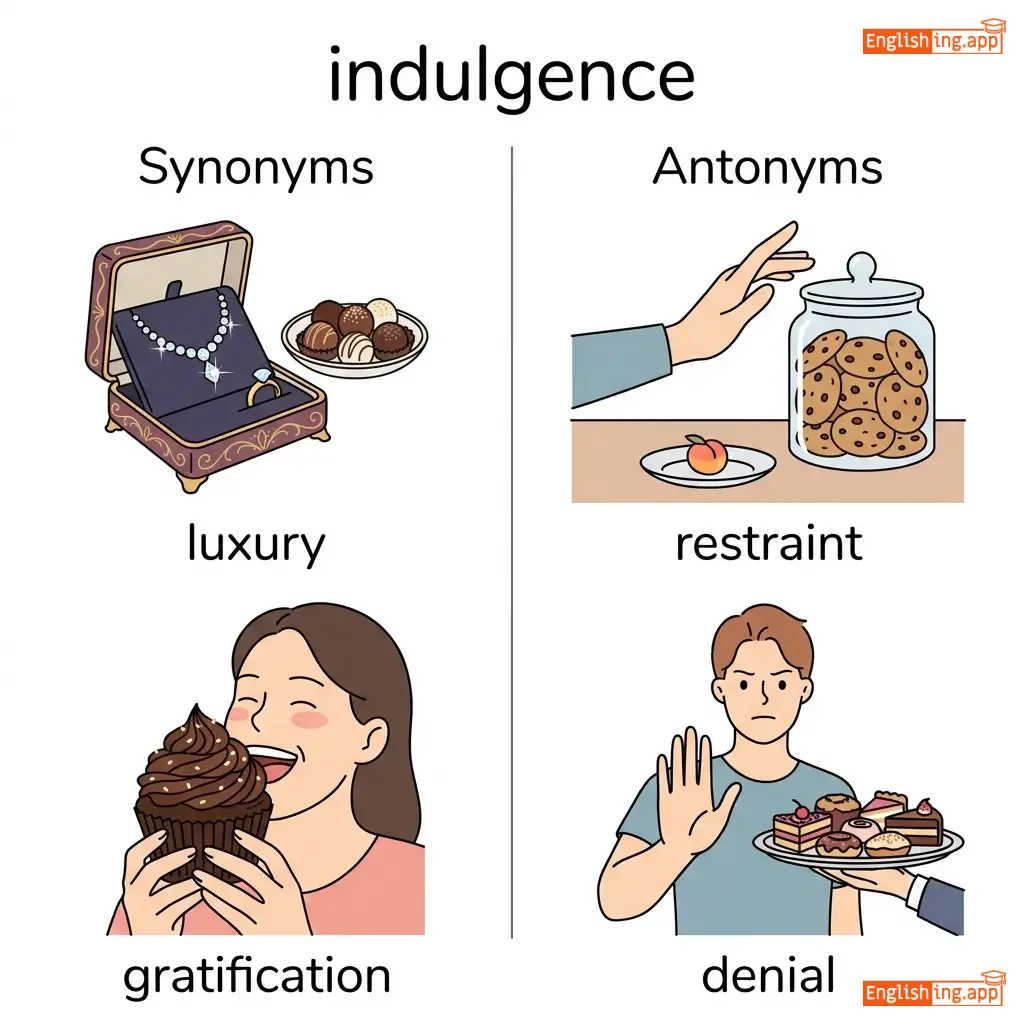
🍰
|
/ɪnˈdʌl.dʒəns/
noun
(印达尔詹斯)
••••••
|
|
纵容; 过度满足欲望
zongrong, guodu manzu yuwang
••••••
|
the practice of allowing yourself to have something enjoyable; excessive gratification of desires
••••••
|
After months of dieting, she allowed herself the indulgence of a chocolate cake. |
在几个月的节食之后,她允许自己享受一块巧克力蛋糕。
zai jige yue de jieshi zhihou, ta yunxu ziji xiangshou yikuai qiaokeli dangao
••••••
|
luxury, treat, gratification, excess
••••••
|
restraint, abstinence, moderation, self-denial
••••••
|
guilty indulgence, sweet indulgence, allow indulgence
••••••
|
No •••••• |
|
#631
⚠️
|
/ɪmˈpruː.dəns/
noun
(不谨慎)
••••••
|
- •••••• |
轻率; 粗心; 不小心
qīngshuài; cūxīn; bù xiǎoxīn
••••••
|
the quality of being imprudent; lack of care for consequences; recklessness
••••••
|
His financial imprudence led to bankruptcy within just two years. |
他的财务不谨慎导致了两年内破产。
tā de cáiwù bù jǐnshèn dǎozhìle liǎng nián nèi pòchǎn.
••••••
|
recklessness, carelessness, foolishness, indiscretion
••••••
|
prudence, caution, wisdom, careful planning
••••••
|
financial imprudence, youthful imprudence, acts of imprudence
••••••
|
Imprudence (不谨慎) - 没有谨慎管理钱财,最终导致破产!
••••••
|
|
#632
⏰
|
/ˌɪn.ɪˈfɪʃ.ən.si/
noun
(低效)
••••••
|
|
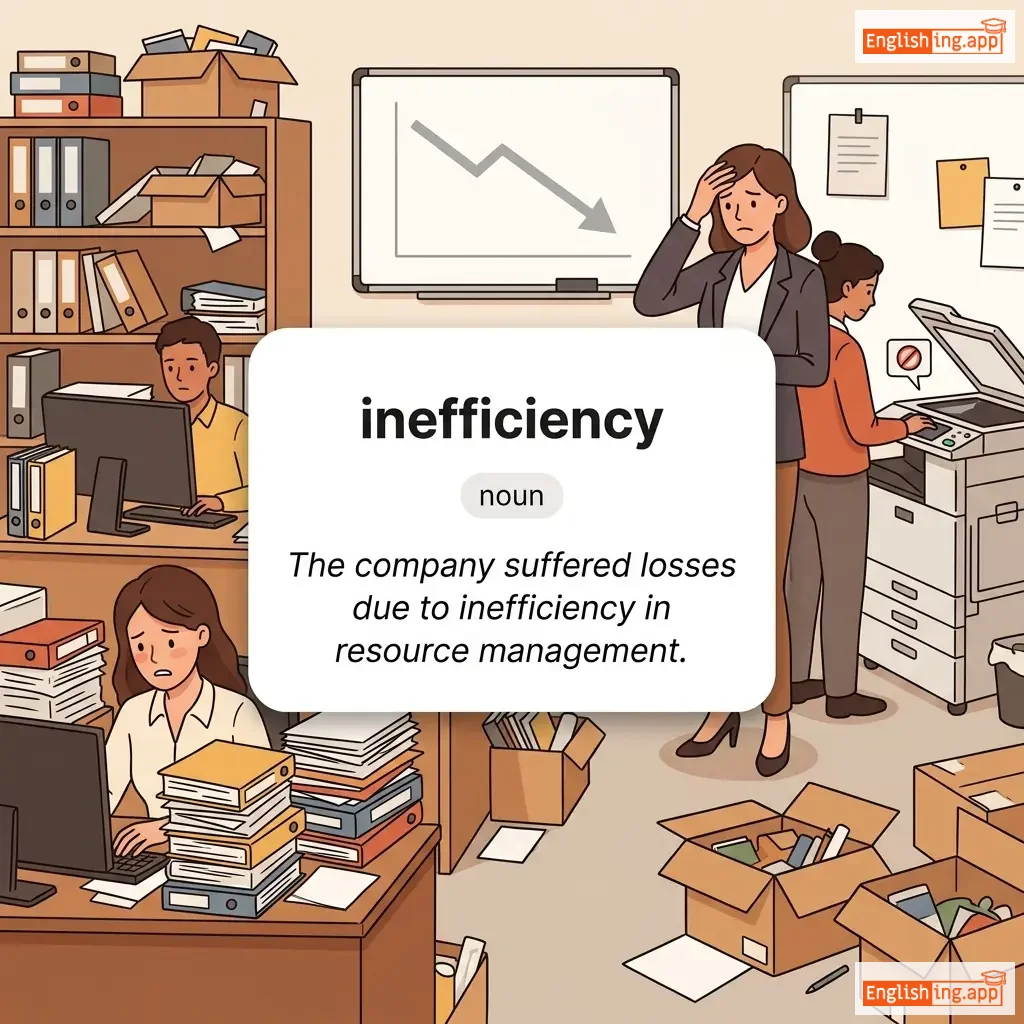
低效; 资源浪费
dī xiào; zī yuán làng fèi
••••••
|
the state of not achieving maximum productivity; wasteful use of resources
••••••
|
The company's inefficiency led to significant losses and eventual bankruptcy.
公司的低效导致了重大损失和最终破产。
••••••
|
公司的低效导致了重大损失和最终破产。
Gōngsī de dī xiào dǎozhìle zhòngdà sǔnshī hé zuìzhōng pòchǎn.
••••••
|
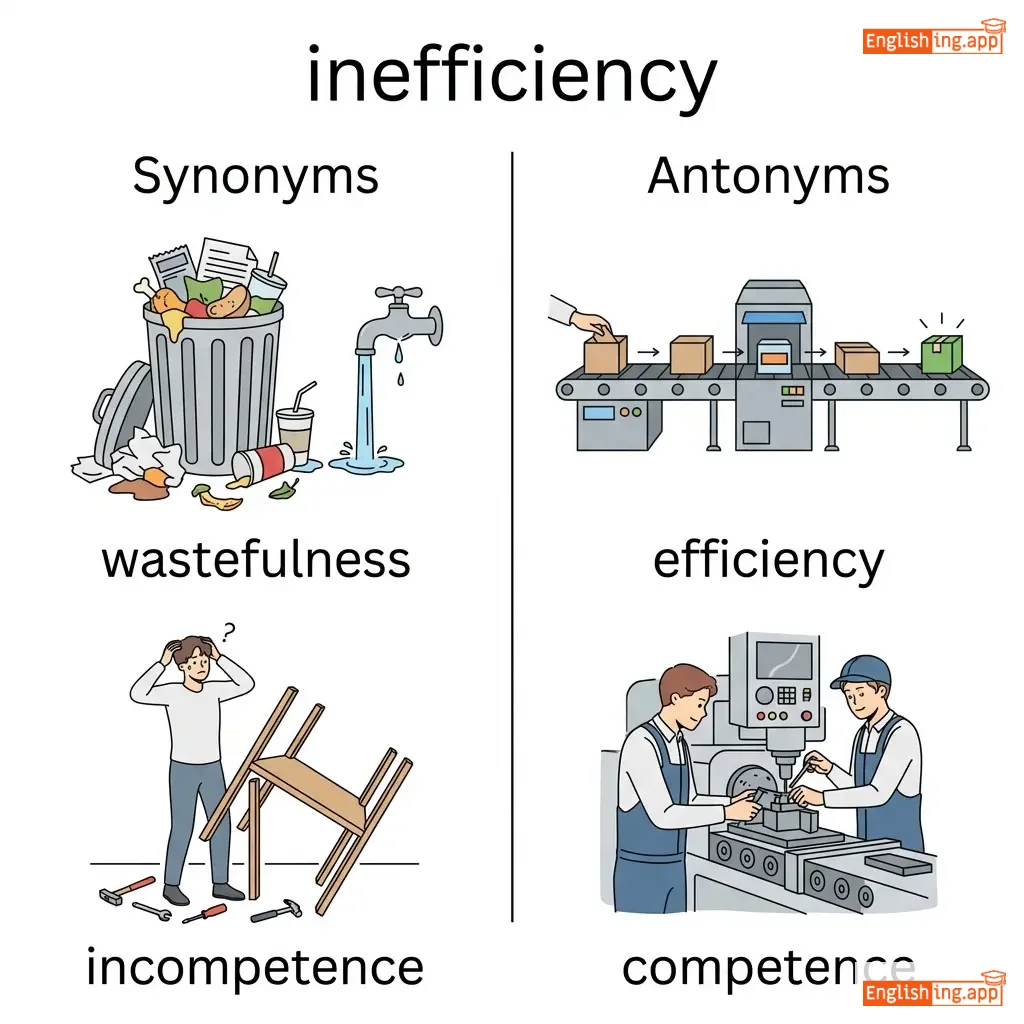
incompetence, inadequacy, waste, unproductiveness
••••••
|
efficiency, competence, productivity, effectiveness
••••••
|
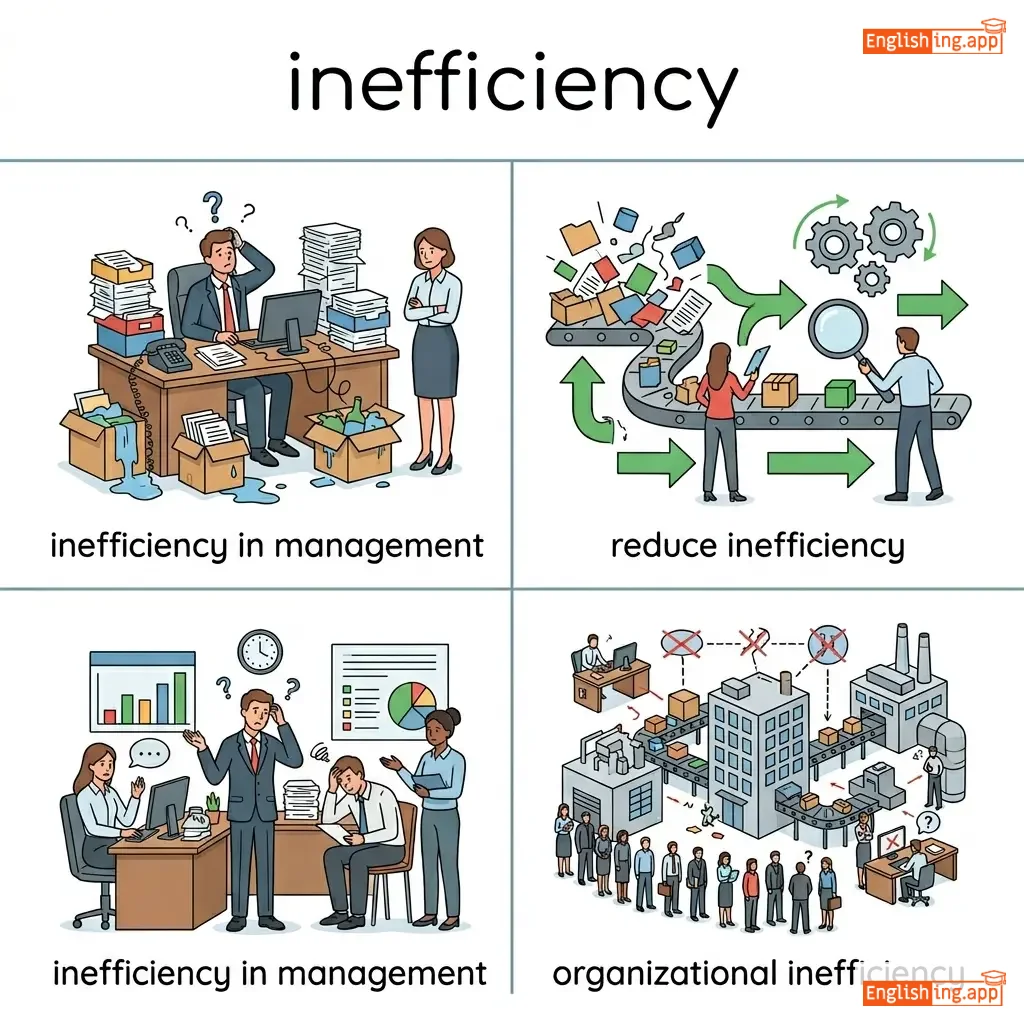
organizational inefficiency, gross inefficiency, bureaucratic inefficiency
••••••
|
Inefficiency 是低效,在中文中也有类似的词语。
••••••
|
|
#633
⚡
|
/ˈɪm.pʌls/
noun
(冲动)
••••••
|
- •••••• |
冲动; 突然的欲望
chōngdòng; tūrán de yùwàng
••••••
|
a sudden strong and unreflective urge or desire to act; a driving force or motivation
••••••
|
She bought the expensive dress on impulse and later regretted the purchase. |
她冲动购买了那件昂贵的衣服,后来对这笔购买感到后悔。
Tā chōngdòng gòumǎi le nà jiàn ángguì de yīfú, hòulái duì zhè bǐ gòumǎi gǎndào hòuhuǐ.
••••••
|
urge, instinct, whim, compulsion
••••••
|
restraint, deliberation, self-control, careful thought
••••••
|
sudden impulse, impulse buying, resist impulse
••••••
|
No •••••• |
|
#634
🐌
|
/ɪˈnɜː.ʃə/
noun
(惯性)
••••••
|
- •••••• |
惯性;缺乏活动
guànxìng, quēfá huódòng
••••••
|
a tendency to do nothing or remain unchanged; lack of activity or movement
••••••
|
The team's inertia prevented them from adapting to the rapidly changing market conditions.
团队的惯性阻止了他们适应迅速变化的市场条件。
••••••
|
团队的惯性阻止了他们适应迅速变化的市场条件。
tuánduì de guànxìng zǔzhǐle tāmen shìyìng xùnsù biànhuà de shìchǎng tiáojiàn.
••••••
|
lethargy, sluggishness, passivity, stagnation
••••••
|
activity, momentum, energy, dynamism
••••••
|
overcome inertia, institutional inertia, political inertia
••••••
|
想象惯性是一个永不动的物体。
••••••
|
|
#635
🎯
|
/ɪnˈsen.tɪv/
noun
(ɪnˈsɛntɪv)
••••••
|
- •••••• |
激励; 鼓励
jīlì, gǔlì
••••••
|
a thing that motivates or encourages someone to do something; a reward or penalty that influences behavior
••••••
|
The company offered a cash incentive to employees who exceeded their sales targets. |
公司向超额完成销售目标的员工提供了现金激励。
Gōngsī xiàng chāo'é wánchéng xiāoshòu mùbiāo de yuángōng tígōngle xiànjīn jīlì.
••••••
|
motivation, encouragement, stimulus, reward
••••••
|
disincentive, discouragement, deterrent, penalty
••••••
|
financial incentive, performance incentive, tax incentive
••••••
|
想象一个奖励或激励鼓励你完成目标,就像公司的激励措施一样。
••••••
|
|
#636
🦠
|
/ɪnˈfek.ʃən/
noun
(感染)
••••••
|
- •••••• |
感染
gǎnrǎn
••••••
|
the process of infecting or the state of being infected; a disease caused by germs
••••••
|
The doctor prescribed antibiotics to treat the bacterial infection in her throat. |
医生开了抗生素来治疗她喉咙的细菌感染。
Yīshēng kāile kàngshēngsù lái zhìliáo tā hóulóng de xìjùn gǎnrǎn.
••••••
|
contamination, contagion, disease, illness
••••••
|
health, cure, healing, recovery
••••••
|
bacterial infection, viral infection, prevent infection
••••••
|
感染在中文中代表感染,和英语发音差不多。
••••••
|
|
#637
📈
|
/ˈɪŋ.krə.mənt/
noun
(增量)
••••••
|
- •••••• |
增加
zengjia
••••••
|
an increase or addition, especially one of a series on a fixed scale; a regular increase in salary
••••••
|
He received an annual increment of five percent in his salary this year. |
他今年获得了五个百分点的年终增加。
ta jinnian huodele wu ge百分比 de niandong zengjia.
••••••
|
increase, addition, raise, growth
••••••
|
decrease, reduction, cut, decline
••••••
|
salary increment, annual increment, pay increment
••••••
|
Chinese: '增加' (zengjia) means increase, English: 'increment' – both linked to growth!
••••••
|
|
#638
⛪
|
/ˈɪn.fɪ.del/
noun
(不信教者)
••••••
|
- •••••• |
异教徒
yì jiàotú
••••••
|
a person who does not believe in religion or whose religious beliefs differ from one's own
••••••
|
In historical contexts, crusaders often referred to their enemies as infidels. |
在历史背景中,十字军常常把他们的敌人称为异教徒。
Zài lìshǐ bèijǐng zhōng, shízìjūn chángcháng bǎ tāmen de dírén chēng wéi yìjiàotú.
••••••
|
unbeliever, heathen, heretic, non-believer
••••••
|
believer, faithful, devout person, religious person
••••••
|
religious infidel, branded infidel, call someone infidel
••••••
|
Used to describe someone who follows a different faith or no faith.
••••••
|
|
#639
🤔
|
/ˌɪn.dɪˈsɪʒ.ən/
noun
(犹豫)
••••••
|
- •••••• |
优柔寡断; 怀疑; 犹豫不决
yóuróuguǎduàn; huáiyí; yóuyùbùjué
••••••
|
the inability to make decisions quickly; uncertainty about what to do
••••••
|
Her indecision about which job offer to accept caused her to miss both opportunities. |
她对接受哪个工作机会的犹豫导致她错过了两个机会。
Tā duì jiēshòu nǎge gōngzuò jīhuì de yóuyù dǎozhì tā cuòguòle liǎng gè jīhuì.
••••••
|
uncertainty, hesitation, doubt, vacillation
••••••
|
decisiveness, determination, certainty, resolution
••••••
|
chronic indecision, moment of indecision, paralyzed by indecision
••••••
|
No •••••• |
|
#640
🏥
|
/ɪnˈfɜː.mə.ti/
noun
(因弗米提)
••••••
|
- •••••• |
虚弱;疾病;虚弱
xūruò, jíbìng, xūruò
••••••
|
physical or mental weakness; a disease or ailment; frailty
••••••
|
Despite his advanced age and various infirmities, he remained mentally sharp and alert.
尽管他年事已高,且有多种病痛,他仍保持着敏捷和警觉。
••••••
|
尽管他年事已高,且有多种病痛,他仍保持着敏捷和警觉。
Jǐnguǎn tā niánshì yǐ gāo, qiě yǒu duō zhǒng bìngtòng, tā réng bǎochí zhe mǐnjié hé jǐngjué.
••••••
|
weakness, frailty, ailment, disability
••••••
|
strength, health, vigor, robustness
••••••
|
physical infirmity, age-related infirmity, suffer from infirmity
••••••
|
Infirmity sounds weak and fragile, similar to how a person with illness appears fragile in Chinese.
••••••
|
Vocabulary Quiz
Test your vocabulary by matching words with their translations or meanings.
Login to take the quiz
Comments (0)
Share your thoughts and join the discussion.
Join the discussion by logging in
Login to CommentNo comments yet
Be the first to share your thoughts!