




Swipe left or right, or use the buttons. Tap image to zoom.
例句翻译
单词
Lesson 12Lesson 12 - 遮罩切换
|
表情符号
|
单词 | Images | 翻译 | 含义 | 例句 | 例句翻译 | 同义词 | 反义词 | 搭配词 | 助记符 |
|---|---|---|---|---|---|---|---|---|---|---|
|
#221
🔄
|
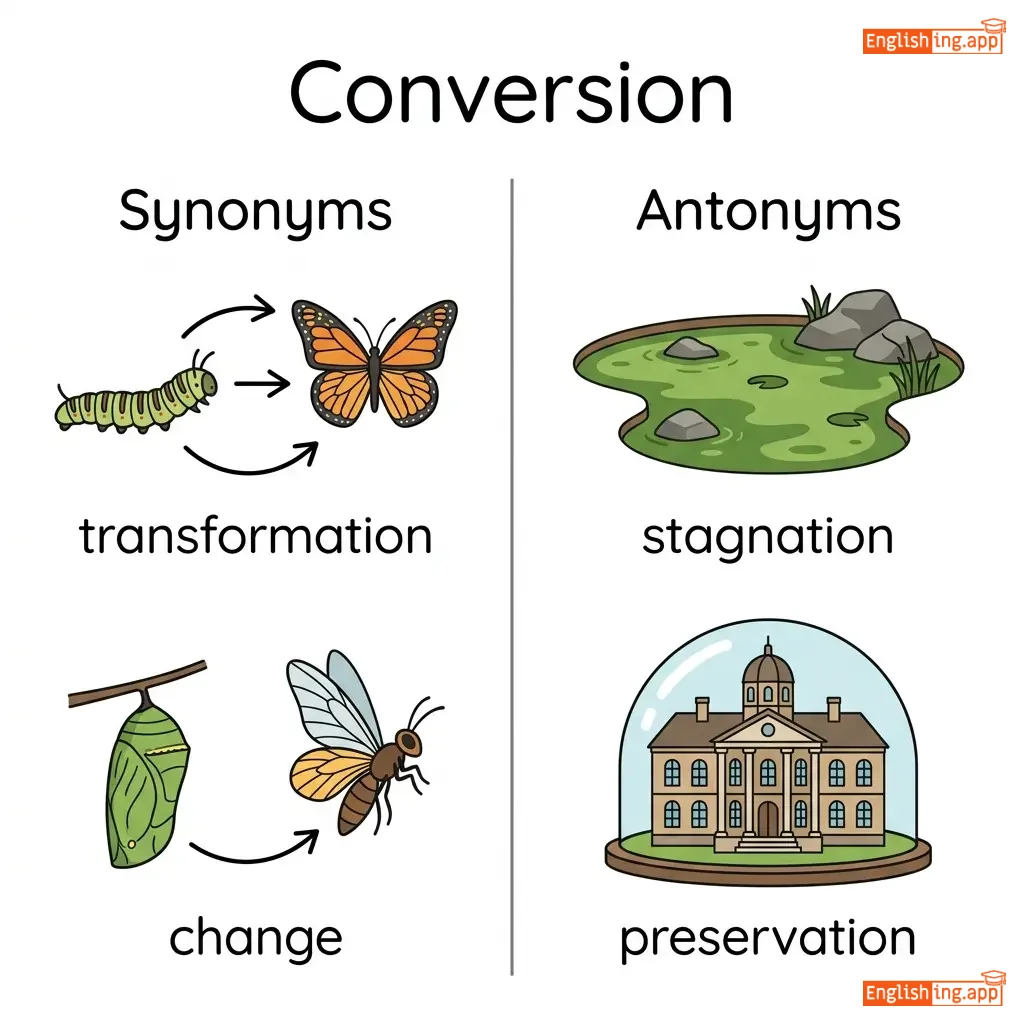
/kənˈvɜr.ʃən/
noun
(kāng wěi shēn)
••••••
|
|
转变; 转换; 改变
zhuǎnbiàn, zhuǎnhuàn, gǎibiàn
••••••
|
the process of changing or causing something to change from one form to another; the act of changing one's religion or beliefs
••••••
|
The conversion of the old factory into a modern shopping center took two years.
将旧工厂转变为现代购物中心花了两年时间。
••••••
|
将旧工厂转变为现代购物中心花了两年时间。
Jiāng jiù gōngchǎng zhuǎnbiàn wéi xiàndài gòuwù zhōngxīn huāle liǎng nián shíjiān.
••••••
|
transformation, change, alteration, switch
••••••
|
preservation, maintenance, stagnation
••••••
|
religious conversion, conversion rate, energy conversion
••••••
|
转变 = 信仰转换
••••••
|
|
#222
🤔
|
/ˌkjʊr.iˈɑs.ɪ.ti/
noun
(kīuriósìtì)
••••••
|
- •••••• |
好奇心; 不寻常或有趣的物品或事实
hàoqí xīn; bù xúncháng huò yǒuqù de wùpǐn huò shìshí
••••••
|
a strong desire to know or learn something; an unusual or interesting object or fact
••••••
|
Her curiosity about different cultures led her to travel around the world.
她对不同文化的好奇心促使她环游世界。
••••••
|
她对不同文化的好奇心促使她环游世界。
Tā duì bùtóng wénhuà de hàoqí xīn cùshǐ tā huán yóu shìjiè.
••••••
|
inquisitiveness, interest, wonder, fascination
••••••
|
indifference, apathy, disinterest, unconcern
••••••
|
natural curiosity, intellectual curiosity, satisfy curiosity
••••••
|
好奇心就像是想探索新事物,去不同的文化和地方。
••••••
|
|
#223
🤝
|
/ˌkɔr.diˈæl.ɪ.ti/
noun
(kordiali ti)
••••••
|
- •••••• |
热情; 友善
rèqíng; yǒushàn
••••••
|
sincere affection and kindness; warm and friendly behavior
••••••
|
The host's cordiality made all the guests feel welcome and comfortable.
主人的热情使所有客人都感到受欢迎和舒适。
••••••
|
主人的热情使所有客人都感到受欢迎和舒适。
Zhǔrén de rèqíng shǐ suǒyǒu kèrén dōu gǎndào shòu huānyíng hé shūshì.
••••••
|
warmth, friendliness, geniality, hospitality
••••••
|
hostility, coldness, unfriendliness, rudeness
••••••
|
genuine cordiality, warm cordiality, show cordiality
••••••
|
热情像朋友的拥抱,让你感到温暖和欢迎。
••••••
|
|
#224
🐁
|
/kɜːrl/
noun
(kè ěr)
••••••
|
- •••••• |
卷发; 螺旋形状
juan fa; luoxuan xingzhuang
••••••
|
a piece of hair that curves or coils; something with a spiral or curved shape
••••••
|
She had beautiful natural curls that framed her face perfectly.
她有美丽的自然卷发,完美地框住了她的脸。
••••••
|
她有美丽的自然卷发,完美地框住了她的脸。
Tā yǒu měilì de zìrán juǎn fa, wánměi de kuàng zhùle tā de liǎn.
••••••
|
coil, ringlet, wave, spiral
••••••
|
straight line, straightness
••••••
|
hair curl, natural curl, tight curl
••••••
|
Curl = 卷发 = 如同卷曲的头发。
••••••
|
|
#225
📬
|
/ˌkɔr.əˈspɑn.dəns/
noun
(通信)
••••••
|
- •••••• |
通信;相似或等价;通过交换信件进行的沟通
tongxin; xiangsi huo dengjia; tongguo jiaohu xinjian jinxing de goutong
••••••
|
letters sent or received; similarity or equivalence; communication by exchange of letters
••••••
|
The historical correspondence between the two famous writers was recently published. |
两位著名作家之间的历史通信最近已发布。
Liang wei zhuming zuojia zhijian de lishi tongxin zuijin yi fabu.
••••••
|
letters, communication, mail, similarity
••••••
|
silence, difference, dissimilarity
••••••
|
business correspondence, private correspondence, email correspondence
••••••
|
通信就像通过信件来交换思想和信息。
••••••
|
|
#226
🌀
|
/kɜːrv/
noun
(kɜːrv)
••••••
|
- •••••• |
曲线; 转弯
quxian; zhuanwan
••••••
|
a line or outline that gradually deviates from being straight; a bend or turn in a road or path
••••••
|
The driver slowed down as he approached the sharp curve in the mountain road. |
当司机接近山路中的急转弯时,他减慢了速度。
Dang sījī jiējìn shānlù zhōng de jí zhuǎn wān shí, tā jiǎn mànle sùdù.
••••••
|
bend, arc, bow, turn
••••••
|
straight line, angle, straightness
••••••
|
sharp curve, gentle curve, curve in the road
••••••
|
Think of a winding mountain path, where each curve leads you forward.
••••••
|
|
#227
💰🚫
|
/kəˈrʌp.ʃən/
noun
(腐败)
••••••
|
- •••••• |
腐败
fubai
••••••
|
dishonest or fraudulent conduct by those in power; the process of decay or decomposition
••••••
|
The government launched a campaign to fight corruption in public offices.
政府发起了一个打击公共办公室腐败的运动。
••••••
|
政府发起了一个打击公共办公室腐败的运动。
Zhengfu faqi le yige daji gonggong bangongshi fubai de yundong.
••••••
|
dishonesty, bribery, fraud, decay
••••••
|
honesty, integrity, purity, incorruptibility
••••••
|
government corruption, fight corruption, corruption scandal
••••••
|
腐败像是从权力中开始腐烂的毒瘤。
••••••
|
|
#228
🔑
|
/kʌˈstoʊ.di.ən/
noun
(kas-tó-di-an)
••••••
|
- •••••• |
看门人; 守护者; 管理员
kan-men-ren; shou-hu-zhe; guan-li-yuan
••••••
|
a person who has responsibility for or looks after something; a caretaker or guardian
••••••
|
The school custodian ensures that all buildings are clean and secure.
学校管理员确保所有建筑物干净和安全。
••••••
|
学校管理员确保所有建筑物干净和安全。
Xue-xiao guan-li-yuan que-bao suo-you jian-zhu-wu gan-jing he an-quan.
••••••
|
caretaker, guardian, keeper, janitor
••••••
|
neglector, abandoner
••••••
|
school custodian, building custodian, custodian of records
••••••
|
Chinese '看门人' (kan-men-ren) connects to 'custodian', as both relate to overseeing buildings.
••••••
|
|
#229
🦁
|
/ˈkɜːr.ɪdʒ/
noun
(kuiridʒ)
••••••
|
|
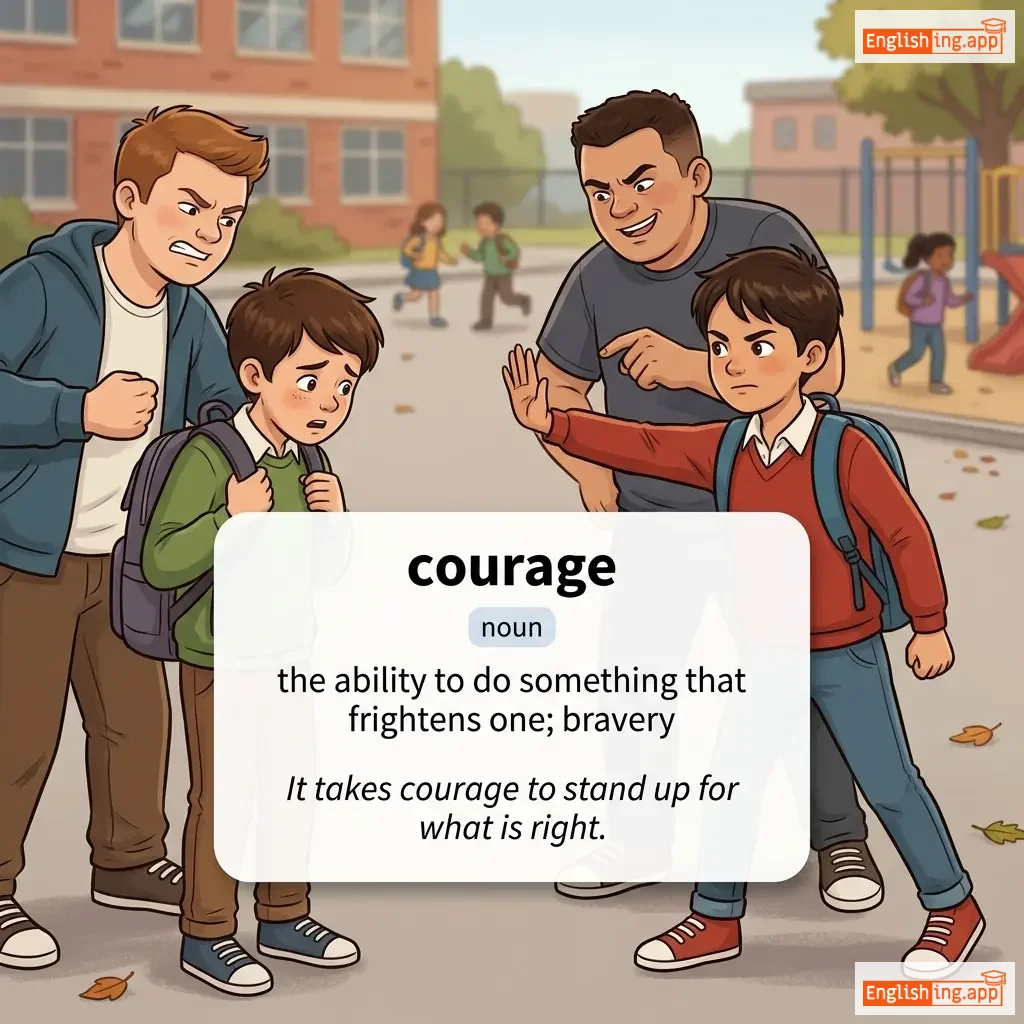
勇气
yongqi
••••••
|
the ability to do something that frightens one; strength in the face of pain or grief
••••••
|
It took great courage for her to speak up against the injustice.
It took great courage for her to speak up against the injustice.
••••••
|
她为了站出来反对不公正,付出了巨大的勇气。
Tā wèi le zhàn chūlái fǎnduì bù gōng zhèng, fù chūle jù dà de yǒngqì.
••••••
|
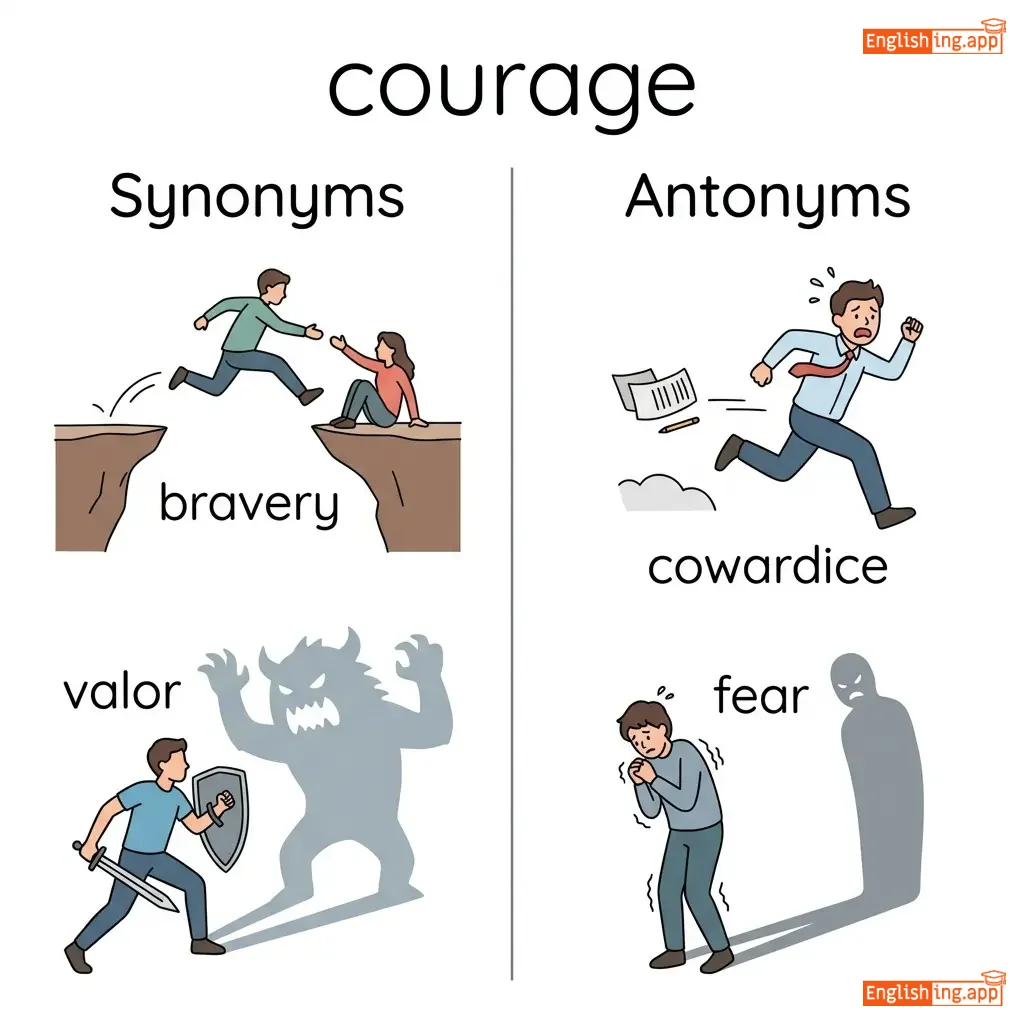
bravery, valor, boldness, heroism
••••••
|
cowardice, fear, timidity, weakness
••••••
|
moral courage, show courage, courage under fire
••••••
|
勇气 (yongqi) sounds like 'young chi' in English, meaning courage!
••••••
|
|
#230
🔒
|
/ˈkʌˈs.tə.di/
noun
(kʌs.tə.di)
••••••
|
- •••••• |
监护; 拘留; 保护
jianhu, jujiu, baohu
••••••
|
the protective care or guardianship of someone or something; imprisonment or detention
••••••
|
After the divorce, they shared custody of their children equally.
离婚后,他们平等地分享了孩子的监护权。
••••••
|
离婚后,他们平等地分享了孩子的监护权。
Líhūn hòu, tāmen píngděng de fēnxiǎngle háizi de jiānhùquán.
••••••
|
care, guardianship, detention, safekeeping
••••••
|
freedom, release, abandonment
••••••
|
child custody, police custody, in custody
••••••
|
Custody = 监护 = 保护孩子像保护自己一样
••••••
|
|
#231
😇
|
/ˈkɜːr.tə.si/
noun
(kèrtèxī)
••••••
|
- •••••• |
礼貌; 客气;
lǐmào, kèqì
••••••
|
the showing of politeness in one's attitude and behavior toward others; a polite gesture or remark
••••••
|
He showed great courtesy by holding the door open for elderly people.
他通过为老年人打开门来表现出极大的礼貌。
••••••
|
他通过为老年人打开门来表现出极大的礼貌。
Tā tōngguò wèi lǎonián rén dǎkāi mén lái biǎoxiàn chū jí dà de lǐmào.
••••••
|
politeness, civility, respect, good manners
••••••
|
rudeness, impoliteness, incivility, discourtesy
••••••
|
common courtesy, professional courtesy, extend courtesy
••••••
|
Chinese '礼貌' is tied to acts of politeness like holding doors open.
••••••
|
|
#232
🌍
|
/ˈkʌˈs.təm/
noun
(卡斯托姆)
••••••
|
- •••••• |
习俗; 风俗; 关税;
xísú, fēngsú, guānshuì
••••••
|
a traditional practice or behavior; duties levied on imports; habitual practice
••••••
|
It is a local custom to remove shoes before entering someone's home. |
在进入别人家之前,脱鞋是当地的习俗。
Zài jìnrù biérén jiā zhīqián, tuō xié shì dāngdì de xísú.
••••••
|
tradition, practice, habit, convention
••••••
|
innovation, novelty, exception
••••••
|
local custom, ancient custom, cultural custom
••••••
|
Custom sounds like 'kā sī tuō mǔ' in Chinese, and 'xísú' means custom.
••••••
|
|
#233
😨
|
/ˈkaʊ.ərd/
noun
(kao-wu-er-de)
••••••
|
- •••••• |
懦夫
nuo fu
••••••
|
a person who lacks the courage to do or endure dangerous or unpleasant things
••••••
|
He called himself a coward for not standing up to the bully.
他自称为懦夫,因为他没有站出来反对恶霸。
••••••
|
他自称为懦夫,因为他没有站出来反对恶霸。
Ta zi cheng wei nuo fu, yin wei ta mei you zhan chu lai fan dui e ba.
••••••
|
weakling, chicken, scaredy-cat, craven
••••••
|
hero, brave person, champion, warrior
••••••
|
moral coward, complete coward, coward's way out
••••••
|
Nuo fu means coward in Chinese.
••••••
|
|
#234
🙄
|
/ˈsɪ.nɪk/
noun
(悲观主义者)
••••••
|
- •••••• |
愤世嫉俗者; 怀疑主义者
fenshijisuzhe; huaijizhuyi zhe
••••••
|
a person who believes that people are motivated purely by self-interest; someone who is skeptical about human nature
••••••
|
The old cynic believed that politicians only cared about getting votes. |
那个老愤世嫉俗者相信政治家只关心获得选票。
na ge lao fenshijisuzhe xiangxin zhengzhijia zhi guanxin huode xuanpiao.
••••••
|
skeptic, pessimist, doubter, misanthrope
••••••
|
optimist, believer, idealist, trustful person
••••••
|
old cynic, confirmed cynic, cynic's view
••••••
|
愤世嫉俗者认为政治家只看中选票
••••••
|
|
#235
✨
|
/kriˈeɪ.ʃən/
noun
(kriˈeɪʃən)
••••••
|
- •••••• |
创作; 作品
chuàngzuò, zuòpǐn
••••••
|
the action or process of bringing something into existence; something that has been made or invented
••••••
|
The artist's latest creation was displayed at the modern art gallery.
这位艺术家的最新创作被展示在现代艺术画廊。
••••••
|
这位艺术家的最新创作被展示在现代艺术画廊。
Zhè wèi yìshùjiā de zuìxīn chuàngzuò bèi zhǎnshì zài xiàndài yìshù huàláng.
••••••
|
formation, invention, making, production
••••••
|
destruction, demolition, annihilation
••••••
|
artistic creation, job creation, creation of life
••••••
|
创作就像是艺术家的创造力在画廊展现。
••••••
|
|
#236
👾
|
/dəˈkɔɪt/
noun
(dakuai)
••••••
|
- •••••• |
强盗
qiángdào
••••••
|
a member of an armed gang of robbers; a bandit, especially in India and Myanmar
••••••
|
The village was terrorized by a gang of dacoits who robbed travelers. |
这个村庄被一群强盗所恐吓,他们抢劫了旅行者。
Zhège cūnzhuāng bèi yī qún qiángdào suǒ kǒnghè, tāmen qiǎngjié le lǚxíng zhě.
••••••
|
bandit, robber, brigand, outlaw
••••••
|
protector, defender, law enforcer
••••••
|
gang of dacoits, dacoit attack, notorious dacoit
••••••
|
强盗 = 强 (大) + 盗 (偷) = 强盗
••••••
|
|
#237
😢
|
/ˈkruː.əl.ti/
noun
(kruèlti)
••••••
|
- •••••• |
残忍; 非人道的待遇; 导致疼痛的行为
cánrěn, fēi réndào de dàiyù, dǎozhì téngtòng de xíngwéi
••••••
|
behavior that causes pain or suffering to others; the quality of being cruel
••••••
|
The documentary exposed the cruelty of factory farming to animals. |
纪录片揭示了工厂养殖对动物的残忍行为。
Jìlùpiàn jiēshìle gōngchǎng yǎngzhí duì dòngwù de cánrěn xíngwéi.
••••••
|
brutality, harshness, callousness, inhumanity
••••••
|
kindness, compassion, mercy, gentleness
••••••
|
animal cruelty, acts of cruelty, unnecessary cruelty
••••••
|
残忍是一种伤害动物的行为
••••••
|
|
#238
🐄
|
/ˈdeə.ri/
noun
(dairy)
••••••
|
- •••••• |
一个生产牛奶的建筑或农场;奶制品;一家销售牛奶和奶制品的商店
yī gè shēngchǎn niúnǎi de jiànzhú huò nóngchǎng; nǎi zhìpǐn; yī jiā xiāoshòu niúnǎi hé nǎi zhìpǐn de shāngdiàn
••••••
|
a building or farm where milk is produced; products made from milk; a shop selling milk and milk products
••••••
|
The local dairy provides fresh milk and cheese to the entire neighborhood.
当地的乳品店向整个社区提供新鲜的牛奶和奶酪。
••••••
|
当地的乳品店向整个社区提供新鲜的牛奶和奶酪。
Dāngdì de rǔpǐn diàn xiàng zhěnggè shèqū tígōng xīnxiān de niúnǎi hé nǎilào.
••••••
|
creamery, milk farm, dairy farm
••••••
|
non-dairy, vegan alternatives
••••••
|
dairy farm, dairy products, local dairy
••••••
|
乳品店提供新鲜的牛奶和奶酪
••••••
|
|
#239
🎭
|
/ˈkʌl.tʃər/
noun
(文化)
••••••
|
- •••••• |
文化
wenhua
••••••
|
the arts and other manifestations of human intellectual achievement; the customs and beliefs of a particular society
••••••
|
Learning about different cultures helps us understand and appreciate diversity.
学习不同的文化帮助我们理解和欣赏多样性。
••••••
|
学习不同的文化帮助我们理解和欣赏多样性。
Xuexi butong de wenhua bangzhu women lijie he xinshang duoyangxing.
••••••
|
civilization, heritage, tradition, customs
••••••
|
barbarism, ignorance, uncultured behavior
••••••
|
popular culture, cultural heritage, culture shock
••••••
|
The Chinese term '文化' (wenhua) connects directly to the idea of intellectual and social culture.
••••••
|
|
#240
🎭
|
/ˈdeɪ.ɪs/
noun
(台子)
••••••
|
- •••••• |
讲台
jiangtai
••••••
|
a raised platform, typically at one end of a room or hall, for speakers or honored guests
••••••
|
The principal stood on the dais to address the entire school assembly. |
校长站在讲台上,向全体学校大会发表演讲。
Xiàozhǎng zhàn zài jiǎngtái shàng, xiàng quántǐ xuéxiào dàhuì fābiǎo yǎnjiǎng.
••••••
|
platform, stage, podium, rostrum
••••••
|
floor level, ground level
••••••
|
speaker's dais, raised dais, step onto the dais
••••••
|
讲台就是展现力量的地方。
••••••
|
Vocabulary Quiz
Test your vocabulary by matching words with their translations or meanings.
Login to take the quiz
Comments (0)
Share your thoughts and join the discussion.
Join the discussion by logging in
Login to CommentNo comments yet
Be the first to share your thoughts!