

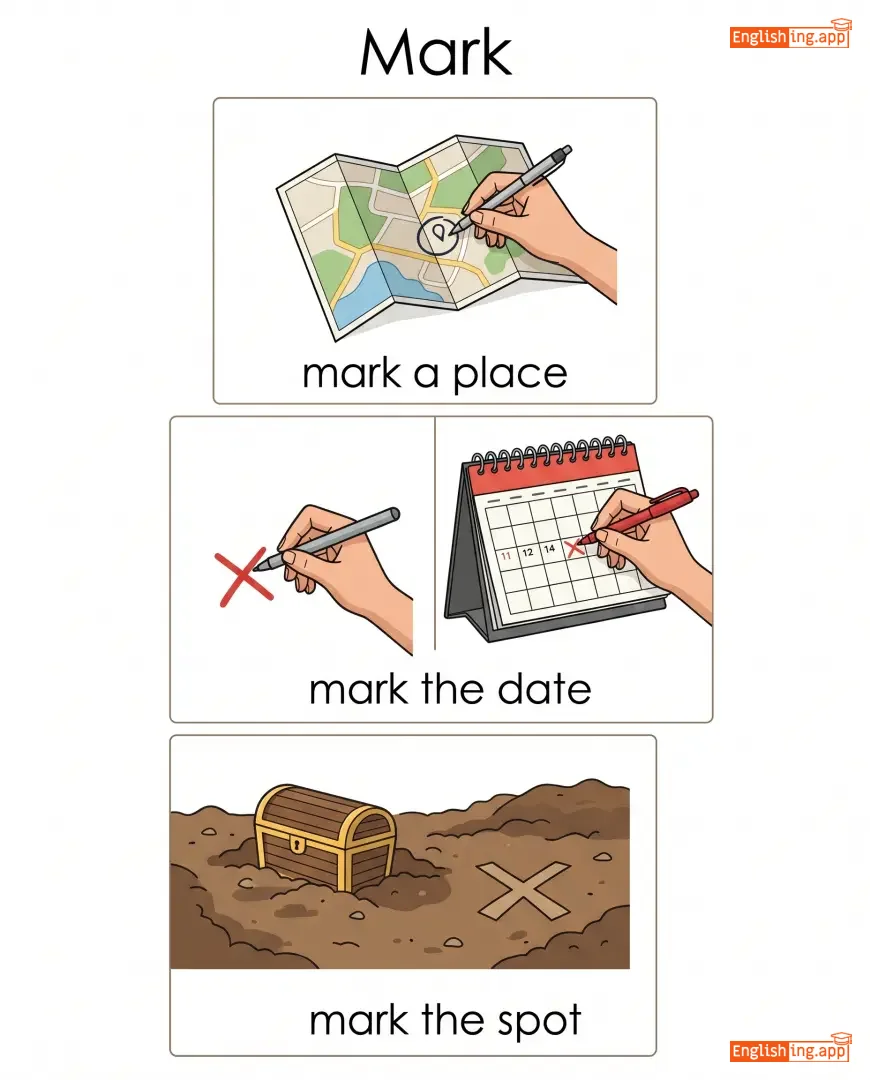
Swipe left or right, or use the buttons. Tap image to zoom.
例句翻译
单词
Lesson 42Lesson 42 - 遮罩切换
|
表情符号
|
单词 | Images | 翻译 | 含义 | 例句 | 例句翻译 | 同义词 | 反义词 | 搭配词 | 助记符 |
|---|---|---|---|---|---|---|---|---|---|---|
|
#821
🎭
|
/ˈmænəˌrɪzəm/
noun
(马内里主义)
••••••
|
- •••••• |
习惯行为
xíguàn xíngwéi
••••••
|
A habitual gesture or way of speaking or behaving; an idiosyncrasy
••••••
|
His constant throat clearing had become an annoying mannerism. |
他不断清嗓子已成为一种恼人的习惯行为。
Tā bùduàn qīngsǎngzi yǐ chéngwéi yī zhǒng nǎo rén de xíguàn xíngwéi.
••••••
|
habit, quirk, idiosyncrasy, peculiarity, trait
••••••
|
naturalness, spontaneity, genuineness, authenticity
••••••
|
nervous mannerism, annoying mannerism, characteristic mannerism, peculiar mannerism
••••••
|
一种无处不在的烦人习惯
••••••
|
|
#822
🎨
|
/ˈmæstərpiːs/
noun
(mǎsītèpǐsī)
••••••
|
- •••••• |
杰作
jiezou
••••••
|
A work of outstanding artistry, skill, or workmanship
••••••
|
The Mona Lisa is considered one of the greatest masterpieces of all time. |
蒙娜丽莎被认为是所有时代最伟大的杰作之一。
Méngnàlìshā bèi rènwéi shì suǒyǒu shídài zuì wěidà de jiézuò zhī yī.
••••••
|
magnum opus, chef-d'oeuvre, classic, gem, work of art
••••••
|
failure, disaster, botch, mediocrity
••••••
|
artistic masterpiece, literary masterpiece, create a masterpiece, timeless masterpiece
••••••
|
杰作指的是精湛的艺术成就,就像蒙娜丽莎一样伟大。
••••••
|
|
#823
🚶♂️
|
/mɑːrtʃ/
noun
(march)
••••••
|
- •••••• |
行进
xingjin
••••••
|
An act of walking in a regular measured tread; a protest demonstration
••••••
|
The soldiers performed a ceremonial march in front of the palace.
士兵们在宫殿前举行了仪式性游行。
••••••
|
士兵们在宫殿前举行了仪式性游行。
Shìbīngmen zài gōngdiàn qián jǔxíngle yíshìxìng yóuxíng.
••••••
|
parade, procession, demonstration, walk, trek
••••••
|
retreat, withdrawal, standstill, halt
••••••
|
protest march, military march, ceremonial march, forced march
••••••
|
March in Chinese is '行进', resembling the same idea of a formal march.
••••••
|
|
#824
🏆
|
/ˈmæstəri/
noun
(màstērī)
••••••
|
- •••••• |
精通; 专长;
jīngtōng; zhuāncháng
••••••
|
Great skill or expertise in a subject or activity
••••••
|
His mastery of the violin impressed audiences around the world.
他在小提琴上的造诣给全球观众留下了深刻印象。
••••••
|
他在小提琴上的造诣给全球观众留下了深刻印象。
tā zài xiǎo tíqín shàng de zàoyì gěi quánqiú guānzhòng liúxià le shēnkè yìnxiàng.
••••••
|
expertise, skill, proficiency, command, competence
••••••
|
incompetence, inexperience, amateurism, ignorance
••••••
|
complete mastery, mastery of language, achieve mastery, demonstrate mastery
••••••
|
想要成为大师,你需要通过练习来达到精通!
••••••
|
|
#825
📄
|
/ˈmɑːrdʒɪn/
noun
(mǎrjìn)
••••••
|
- •••••• |
边缘; 边际
bianyuan; bianji
••••••
|
The edge or border of something; an amount allowed beyond what is needed
••••••
|
Please write your notes in the margin of the page. |
请在页面的边缘写下你的笔记。
Qǐng zài yèmiàn de biānyuán xiěxià nǐ de bǐjì.
••••••
|
edge, border, boundary, rim, periphery
••••••
|
center, middle, core, interior
••••••
|
profit margin, safety margin, narrow margin, wide margin
••••••
|
边缘是你可以写笔记的地方,就像页面的空白部分。
••••••
|
|
#826
🧱
|
/məˈtɪəriəl/
noun
(材料)
••••••
|
- •••••• |
材料; 织物; 物质
cailiao
••••••
|
The matter from which a thing is or can be made; fabric or cloth
••••••
|
The building was constructed using the finest materials available.
这座建筑是用最好的材料建造的。
••••••
|
这座建筑是用最好的材料建造的。
Zhezuo jianzhu shi yong zui hao de cailiao jianzao de.
••••••
|
substance, matter, fabric, stuff, component
••••••
|
immaterial, spiritual, abstract, intangible
••••••
|
raw material, building material, study material, material wealth
••••••
|
Material forms the basis of everything; think 'dream' = material.
••••••
|
|
#827
✏️
|
/mɑːrk/
noun
(马克)
••••••
|
|
标记; 符号; 分数
mark
••••••
|
A sign, symbol, or stain; a grade or score
••••••
|
She received the highest mark in the mathematics examination. |
她在数学考试中获得了最高分。
Ta zai shuxue kao shi zhong huo de le zui gao fen.
••••••
|
sign, symbol, trace, score, grade
••••••
|
blank, clean, unmarked, spotless
••••••
|
high mark, passing mark, distinctive mark, birth mark
••••••
|
Mark 在中文中意味着一个成绩或分数,帮助你识别任务完成情况。
••••••
|
|
#828
💰
|
/məˈtɪəriəlɪzəm/
noun
(物质主义)
••••••
|
- •••••• |
物质主义
wùzhì zhǔyì
••••••
|
A tendency to consider material possessions more important than spiritual values
••••••
|
The rise of materialism in modern society concerns many philosophers. |
现代社会物质主义的崛起让许多哲学家感到担忧。
xiàndài shèhuì wùzhì zhǔyì de juéqǐ ràng xǔduō zhéxuéjiā gǎndào dānyōu.
••••••
|
consumerism, greed, acquisitiveness, commercialism
••••••
|
spiritualism, idealism, asceticism, minimalism
••••••
|
rampant materialism, consumer materialism, cultural materialism, fight materialism
••••••
|
物质主义 (materialism) 让人重视物品多于精神生活
••••••
|
|
#829
🦴
|
/ˈmæroʊ/
noun
(骨髓)
••••••
|
- •••••• |
骨髓
gǔsuǐ
••••••
|
A soft fatty substance in the cavities of bones; the essence of something
••••••
|
The bone marrow produces blood cells in the human body. |
骨髓在人体内产生血细胞。
Gǔsuǐ zài réntǐ nèi chǎnshēng xuè xìbāo.
••••••
|
essence, core, heart, pith, substance
••••••
|
surface, exterior, shell, periphery
••••••
|
bone marrow, marrow transplant, spinal marrow, marrow donation
••••••
|
骨髓,血液的来源。
••••••
|
|
#830
🤱
|
/məˈtɜːrnəti/
noun
(马特尔尼提)
••••••
|
- •••••• |
母性
mǔxìng
••••••
|
The state of being a mother; motherhood
••••••
|
The hospital has an excellent maternity ward for new mothers.
医院为新妈妈提供了一个优秀的产科病房。
••••••
|
医院为新妈妈提供了一个优秀的产科病房。
Yīyuàn wèi xīn māmā tígōngle yīgè yōuxiù de chǎnkē bìngfáng.
••••••
|
motherhood, pregnancy, childbirth, parenthood
••••••
|
paternity, fatherhood, childlessness
••••••
|
maternity leave, maternity ward, maternity clothes, maternity hospital
••••••
|
母性 = 成为母亲的状态,为新妈妈提供温馨的医院环境
••••••
|
|
#831
🔴
|
/mɑːrz/
noun
(火星)
••••••
|
- •••••• |
火星
Huǒxīng
••••••
|
The fourth planet from the Sun; the Roman god of war
••••••
|
Scientists are planning a manned mission to Mars in the next decade.
科学家们正在计划在下一个十年进行载人火星任务。
••••••
|
科学家们正在计划在下一个十年进行载人火星任务。
Kēxuéjiāmen zhèngzài jìhuà zài xià yīgè shínián jìnxíng zàirén huǒxīng rènwù.
••••••
|
red planet, fourth planet, Martian world
••••••
|
Earth, Venus, Jupiter, other planets
••••••
|
planet Mars, Mars mission, Mars exploration, Mars rover
••••••
|
火星 (Huǒxīng) is the Chinese name for Mars, the red planet.
••••••
|
|
#832
🌱
|
/məˈtʃʊrəti/
noun
(成熟)
••••••
|
- •••••• |
成熟
chengshou
••••••
|
The state of being mature; full development physically or emotionally
••••••
|
With age comes wisdom and emotional maturity.
随着年龄的增长,智慧和情感成熟随之而来。
••••••
|
随着年龄的增长,智慧和情感成熟随之而来。
Suizhe nianling de zengzhang, zhihui he qinggan chengshou suizhi erlai.
••••••
|
adulthood, development, ripeness, wisdom, responsibility
••••••
|
immaturity, childishness, youth, inexperience
••••••
|
emotional maturity, physical maturity, reach maturity, lack maturity
••••••
|
成熟就像果实一样,需要时间和适当的条件。
••••••
|
|
#833
🌿
|
/mɑːrʃ/
noun
(沼泽)
••••••
|
- •••••• |
沼泽
zhaoze
••••••
|
An area of low-lying land that is flooded in wet seasons or at high tide
••••••
|
The endangered birds built their nests in the protected marsh. |
濒危的鸟类在受保护的沼泽中筑巢。
Binwei de niaolui zai shou baohu de zhaoze zhong zhuchao
••••••
|
swamp, wetland, bog, fen, mire
••••••
|
desert, highland, mountain, dry land
••••••
|
salt marsh, freshwater marsh, tidal marsh, marsh gas
••••••
|
Marsh in English is '沼泽' in Chinese, both refer to swampy wetlands.
••••••
|
|
#834
🌀
|
/meɪz/
noun
(méiz)
••••••
|
- •••••• |
迷宫
mígōng
••••••
|
A network of paths designed as a puzzle; a confusing situation
••••••
|
The children got lost in the corn maze at the harvest festival.
孩子们在丰收节的玉米迷宫里迷路了。
••••••
|
孩子们在丰收节的玉米迷宫里迷路了。
Háizimen zài fēngshōu jié de yùmǐ mígōng lǐ mílùle.
••••••
|
labyrinth, puzzle, tangle, web, confusion
••••••
|
straight path, clarity, simplicity, directness
••••••
|
corn maze, hedge maze, navigate a maze, lost in a maze
••••••
|
迷宫是你会迷路的地方,就像谜题一样。
••••••
|
|
#835
⛪
|
/ˈmɑːrtər/
noun
(马提尔)
••••••
|
- •••••• |
烈士
lieshi
••••••
|
A person who is killed because of their religious or political beliefs
••••••
|
He became a martyr for the cause of freedom and democracy.
他 比凯姆 啊 马提尔 福 自由 和 民主 的 事业。
••••••
|
他为了自由和民主的事业成为了烈士。
ta weile ziyou he minzhu de shiye chengweile lieshi
••••••
|
victim, sacrifice, hero, sufferer, saint
••••••
|
persecutor, oppressor, survivor, coward
••••••
|
religious martyr, political martyr, martyr complex, become a martyr
••••••
|
‘Lieshi’ means martyr—think of one who stands firm for belief.
••••••
|
|
#836
🌾
|
/ˈmedoʊ/
noun
(梅多)
••••••
|
- •••••• |
草地
meido
••••••
|
A piece of grassland, especially one used for hay
••••••
|
The cows grazed peacefully in the green meadow. |
奶牛在绿色的草地上安静地吃草。
Nai niu zai lüse de caodi shang anjing de chi cao.
••••••
|
pasture, grassland, field, prairie, lea
••••••
|
desert, wasteland, forest, city
••••••
|
grassy meadow, flower meadow, meadow grass, alpine meadow
••••••
|
草地是牛享受自然的地方,就像‘绿草如茵’
••••••
|
|
#837
🕊
|
/ˈmɑːrtərdəm/
noun
(mǎtírùdùn)
••••••
|
- •••••• |
殉道
xùndào
••••••
|
The suffering of death on account of adherence to a cause or principle
••••••
|
His martyrdom inspired countless others to join the freedom movement.
他的殉道激励了无数其他人加入自由运动。
••••••
|
他的殉道激励了无数其他人加入自由运动。
Tā de xùndào jīlì le wúshù qítā rén jiārù zìyóu yùndòng.
••••••
|
sacrifice, suffering, death, persecution, torture
••••••
|
survival, escape, comfort, safety, protection
••••••
|
seek martyrdom, embrace martyrdom, martyrdom complex, path to martyrdom
••••••
|
殉道是为了自由而死的象征。
••••••
|
|
#838
💭
|
/ˈmiːnɪŋ/
noun
(míníng)
••••••
|
- •••••• |
意义; 目的
meaning
••••••
|
What is meant by a word, text, or concept; significance or purpose
••••••
|
The teacher explained the meaning of the difficult word to the students. |
老师向学生解释了这个难单词的意思。
Lǎoshī xiàng xuéshēng jiěshìle zhège nán dāncí de yìsi.
••••••
|
sense, significance, definition, interpretation, purpose
••••••
|
meaninglessness, nonsense, confusion, absurdity
••••••
|
true meaning, hidden meaning, deeper meaning, literal meaning
••••••
|
Meaning代表着理解的目的,是一个重要的线索
••••••
|
|
#839
🎨
|
/ˈmæstər/
noun
(大师)
••••••
|
- •••••• |
大师; 专家;
dàshī
••••••
|
A skilled practitioner of a particular art or activity; a teacher or expert
••••••
|
Leonardo da Vinci was a master of both painting and sculpture.
列奥纳多·达·芬奇是绘画和雕塑的高手。
••••••
|
列奥纳多·达·芬奇是绘画和雕塑的高手。
Liè ào nà duō · dá · fēn qí shì huìhuà hé diāosù de gāoshǒu.
••••••
|
expert, professional, guru, teacher, specialist
••••••
|
student, apprentice, novice, beginner, amateur
••••••
|
master craftsman, master plan, master key, chess master
••••••
|
大师 (dàshī) 是这个领域的专家。
••••••
|
|
#840
😡
|
/ˈmiːnnəs/
noun
(米内斯)
••••••
|
- •••••• |
恶意; 吝啬
mines
••••••
|
The quality of being unkind, spiteful, or unfair; stinginess
••••••
|
His meanness towards the poor children shocked everyone in the neighborhood. |
他对贫困孩子的恶意让邻里的人都感到震惊。
Ta dui pinkun haizi de eyi rang linli de ren dou gandao zhenjing.
••••••
|
cruelty, nastiness, spite, malice, stinginess
••••••
|
kindness, generosity, niceness, goodness, benevolence
••••••
|
sheer meanness, act of meanness, petty meanness, cruel meanness
••••••
|
米内斯在中文中表示的是恶意或吝啬。
••••••
|
Vocabulary Quiz
Test your vocabulary by matching words with their translations or meanings.
Login to take the quiz
Comments (0)
Share your thoughts and join the discussion.
Join the discussion by logging in
Login to CommentNo comments yet
Be the first to share your thoughts!