

Swipe left or right, or use the buttons. Tap image to zoom.
例句翻译
单词
Lesson 50Lesson 50 - 遮罩切换
|
表情符号
|
单词 | Images | 翻译 | 含义 | 例句 | 例句翻译 | 同义词 | 反义词 | 搭配词 | 助记符 |
|---|---|---|---|---|---|---|---|---|---|---|
|
#981
📝
|
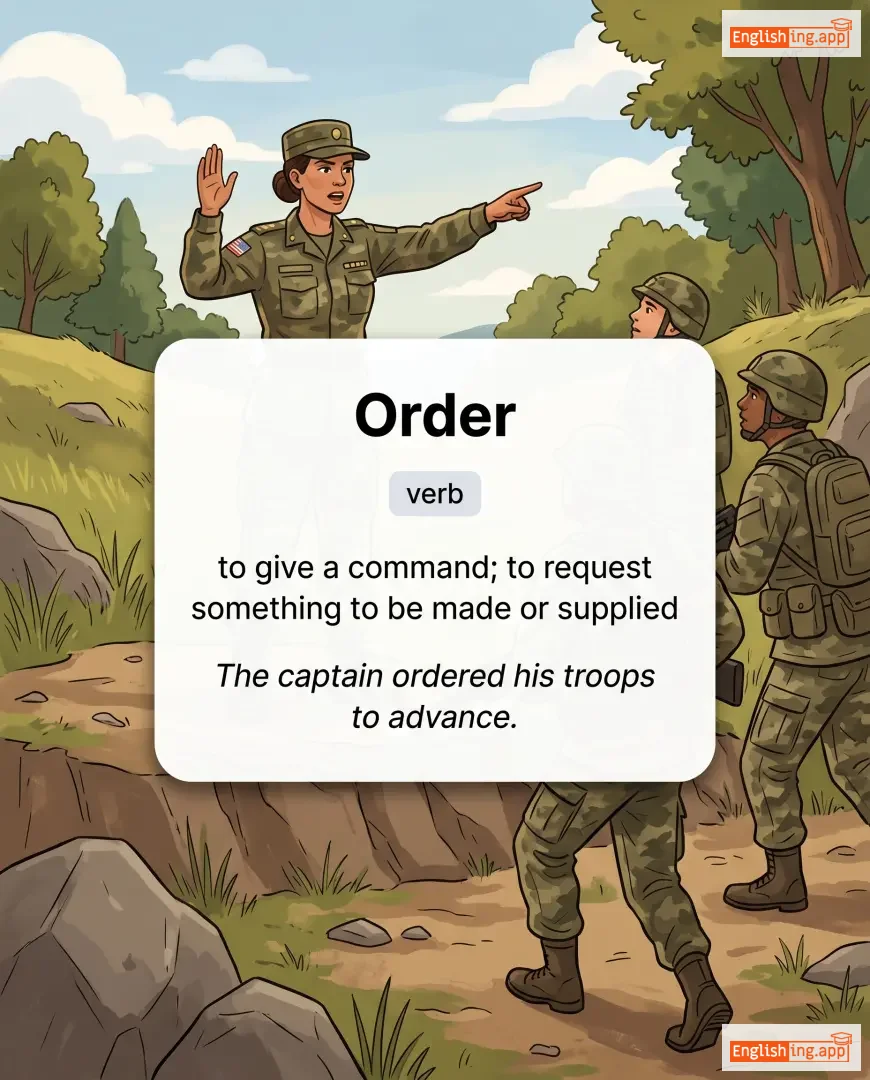
/ˈɔr.dər/
noun
(命令)
••••••
|
|
命令; 顺序
mìnglìng; shùnxù
••••••
|
a command or instruction; the arrangement of things following a particular sequence
••••••
|
The teacher gave an order to sit down quietly.
老师下达了安静坐下的命令。
••••••
|
老师下达了安静坐下的命令。
Lǎoshī xiàdále ānjìng zuò xià de mìnglìng.
••••••
|
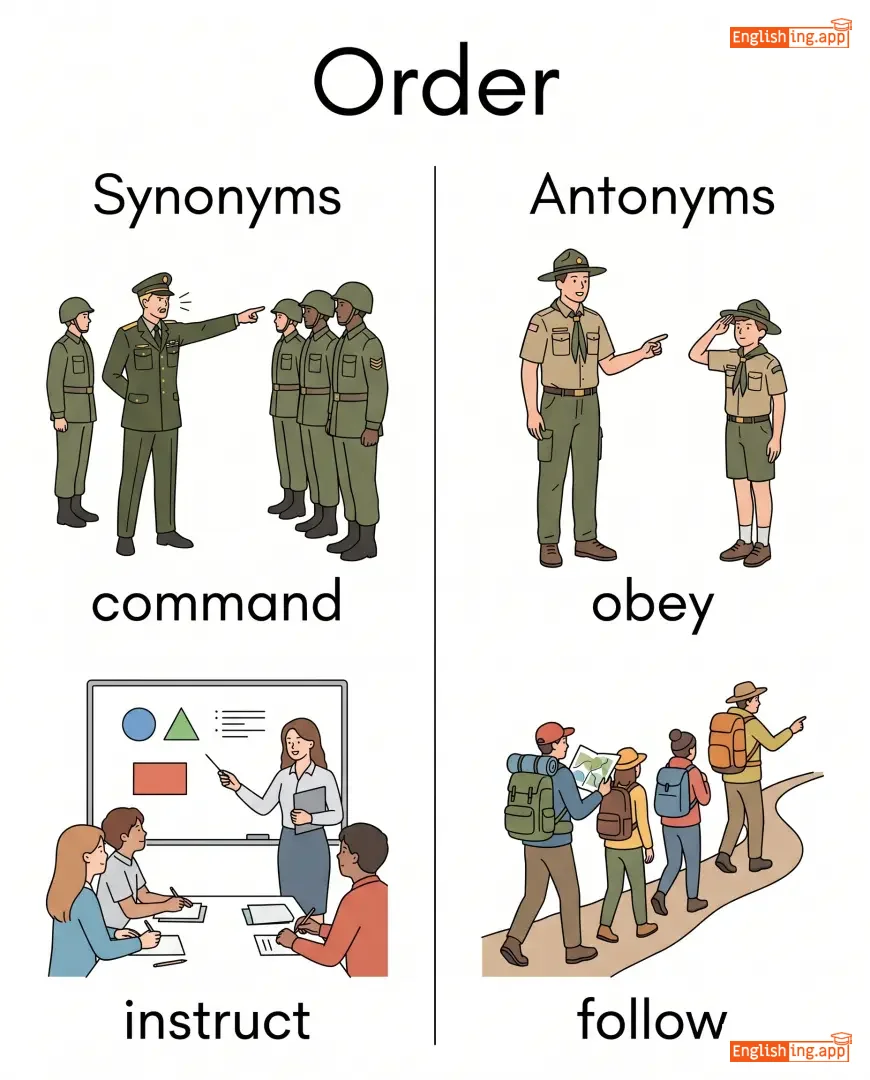
command, instruction, arrangement, sequence
••••••
|
chaos, disorder, confusion, anarchy
••••••
|
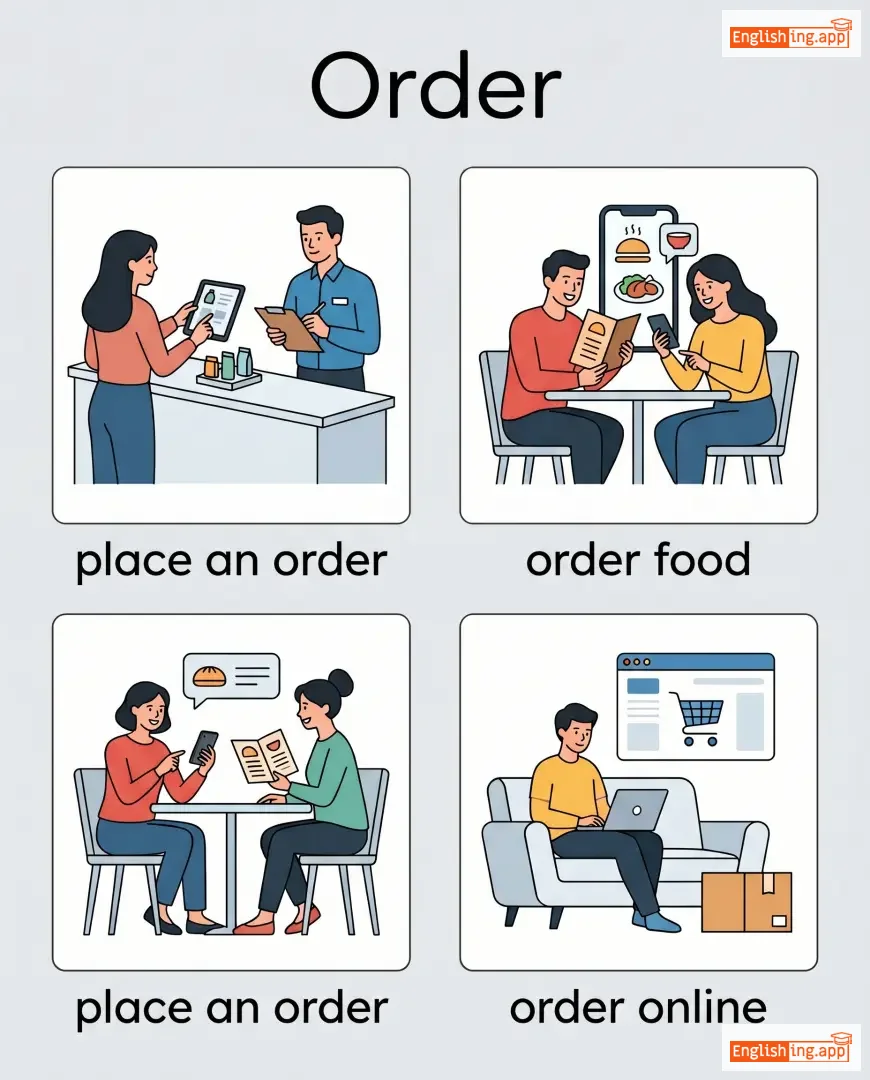
give order, follow order, in order
••••••
|
命令帮助我们记住顺序,像坐下的指示。
••••••
|
|
#982
🌿
|
/ˈoʊ.vər ɡroʊθ/
noun
(欧弗 格劳斯)
••••••
|
- •••••• |
过度生长
overgrowth
••••••
|
excessive growth beyond normal size; too much development or expansion
••••••
|
The overgrowth of weeds made the garden look untidy.
德 欧弗格劳斯 奥夫 维德斯 梅德 德 加登 路克 安提迪
••••••
|
杂草的过度生长让花园显得不整洁。
the overgrowth of weeds made the garden look untidy
••••••
|
excessive growth, overgrowth, proliferation, expansion
••••••
|
undergrowth, stunted growth, reduction, decline
••••••
|
vegetation overgrowth, cancer overgrowth, prevent overgrowth
••••••
|
Overgrowth 过度生长: 想象 一个 big Over 的 growth monster 在 花园 里 无休止 地 长, 于是 记住 over=过度 growth=生长
••••••
|
|
#983
🌅
|
/ˈɔr.i.ənt/
noun
(欧瑞安特)
••••••
|
- •••••• |
东方,尤其是东亚国家
dong fang, you qi shi dong ya guo jia
••••••
|
the East, especially countries of eastern Asia; to determine one's position or direction
••••••
|
Many spices come from the Orient. |
许多香料来自东方。
xu duo xiang liao lai zi dong fang.
••••••
|
East, eastern countries, Asia, Far East
••••••
|
Occident, West, western countries
••••••
|
Far Orient, Orient Express, orient oneself
••••••
|
东方的香料,来自东方
••••••
|
|
#984
🌊
|
/ˈoʊ.vər spɪl/
noun
(òu fēr spīl)
••••••
|
- •••••• |
溢出
yī chū
••••••
|
the overflow of liquid from a container; excess that cannot be contained
••••••
|
The overspill from the river flooded nearby farms.
河水溢出导致附近的农田被淹没。
••••••
|
河水溢出导致附近的农田被淹没。
He shui yi chu da zhi fu jin de nong tian bei yan mo.
••••••
|
overflow, spillage, excess, surplus
••••••
|
containment, shortage, deficit, underflow
••••••
|
water overspill, population overspill, prevent overspill
••••••
|
溢出就是液体从容器里溢出来,比如河水溢出淹没了农田。
••••••
|
|
#985
🌱
|
/ˈɔr.ə.ʒɪn/
noun
(起源)
••••••
|
- •••••• |
起源
qǐyuán
••••••
|
the point or place where something begins, arises, or is derived; the source
••••••
|
Scientists are studying the origin of the universe. |
科学家正在研究宇宙的起源。
Kēxuéjiā zhèngzài yánjiū yǔzhòu de qǐyuán.
••••••
|
source, beginning, start, root
••••••
|
end, conclusion, result, outcome
••••••
|
country of origin, origin story, trace origin
••••••
|
起源是指某物的开始,就像 'origin' 一样。
••••••
|
|
#986
💼
|
/ˈoʊ.nər/
noun
(ōu nà)
••••••
|
- •••••• |
所有者
suǒyǒu zhě
••••••
|
a person who owns something; someone who has legal possession of property
••••••
|
The owner of the restaurant greeted us warmly. |
餐厅的所有者热情地迎接了我们。
cāntīng de suǒyǒu zhě rèqíng de yíngjiē le wǒmen.
••••••
|
proprietor, possessor, holder, landlord
••••••
|
tenant, renter, borrower, user
••••••
|
business owner, property owner, car owner
••••••
|
In Chinese, '所有者' is the one who owns something, just like an 'owner'.
••••••
|
|
#987
✨
|
/əˌrɪʒ.əˈnæl.ə.ti/
noun
(海皮尼提)
••••••
|
- •••••• |
原创性
yuanchuangxing
••••••
|
the quality of being novel or unusual; the ability to think independently and creatively
••••••
|
The artist's work showed great originality and creativity.
艺术家的作品展示了极大的海皮尼提和创造力。
••••••
|
艺术家的作品展示了极大的原创性和创造力。
yishujia de zuopin zhanshile ji da de yuanchuangxing he chuangzaoli
••••••
|
creativity, innovation, novelty, uniqueness
••••••
|
imitation, copying, conventionality, conformity
••••••
|
show originality, lack originality, creative originality
••••••
|
Think of 'yuanchuangxing' as 'yuan' (original) + 'chuang' (create).
••••••
|
|
#988
🤝
|
/pækt/
noun
(pàkè)
••••••
|
- •••••• |
协议;契约
xiéyì; qìyuē
••••••
|
a formal agreement between individuals or parties; a treaty or contract
••••••
|
The two countries signed a peace pact to end the war. |
两国签署了一项和平协议以结束战争。
Liǎng guó qiānshǔ le yī xiàng hépíng xiéyì yǐ jiéshù zhànzhēng.
••••••
|
agreement, treaty, contract, deal
••••••
|
disagreement, conflict, dispute, breach
••••••
|
peace pact, trade pact, sign pact
••••••
|
签署和平协议,结束冲突
••••••
|
|
#989
👶
|
/ˈɔr.fən/
noun
(ɔːfən)
••••••
|
- •••••• |
孤儿
gū ér
••••••
|
a child whose parents are dead; someone without protective support
••••••
|
The orphan was adopted by a loving family. |
孤儿被一户充满爱心的家庭收养了。
gū ér bèi yī hù chōngmǎn àixīn de jiātíng shōuyǎng le.
••••••
|
foundling, waif, abandoned child
••••••
|
biological child, wanted child
••••••
|
adopt orphan, orphan child, care for orphan
••••••
|
一户充满爱心的家庭收养孤儿。
••••••
|
|
#990
🌾
|
/ˈpæd.i/
noun
(padi)
••••••
|
- •••••• |
未加工的稻米; 稻田
wei jia gong de dao mi; dao tian
••••••
|
rice in its natural state before processing; a field where rice is grown
••••••
|
The farmers worked hard in the paddy fields during harvest season. |
农民们在收割季节里在稻田里辛勤工作。
nong min men zai shou ge ji jie li zai dao tian li xin qin gong zuo.
••••••
|
rice field, rice paddy, rice cultivation
••••••
|
processed rice, milled rice
••••••
|
paddy field, paddy cultivation, paddy harvest
••••••
|
稻田里的辛勤工作换来丰收
••••••
|
|
#991
🏠
|
/ˈɔr.fən.ɪʒ/
noun
(孤儿院)
••••••
|
- •••••• |
孤儿院
gū'éryuàn
••••••
|
an institution for the care and education of children who have lost their parents
••••••
|
The charity built a new orphanage for homeless children. |
慈善机构为无家可归的孩子建了一个新孤儿院。
Císhàn jīgòu wèi wújiā kě guī de háizi jiànle yīgè xīn gū'éryuàn.
••••••
|
children's home, foster home, care institution
••••••
|
family home, biological family
••••••
|
run orphanage, orphanage staff, children's orphanage
••••••
|
孤儿院是没有父母孩子的家,他们可以在这里找到爱与关怀。
••••••
|
|
#992
⛩️
|
/ˈpeɪ.ɡən/
noun
(帕根)
••••••
|
- •••••• |
异教徒
pagen
••••••
|
a person holding religious beliefs other than the main world religions; a heathen
••••••
|
Ancient Romans considered early Christians to be pagans.
古罗马人认为早期基督徒是异教徒。
••••••
|
古罗马人认为早期基督徒是异教徒。
gu luo ma ren ren wei zao qi ji du tu shi yi jiao tu
••••••
|
heathen, non-believer, idolater, infidel
••••••
|
believer, Christian, Muslim, religious person
••••••
|
pagan rituals, pagan beliefs, ancient pagan
••••••
|
Pagan = Pai Gen, 想象 Pai 与 Gen 在 ancient temple 前举着自己的信仰, 不走 mainstream.
••••••
|
|
#993
🚨
|
/ˈaʊt.breɪk/
noun
(奥特布雷克)
••••••
|
- •••••• |
爆发
owt-breyk
••••••
|
a sudden occurrence or eruption of something, especially disease or violence
••••••
|
The outbreak of flu affected many students in the school.
流感的爆发影响了学校的许多学生。
••••••
|
流感的爆发影响了学校的许多学生。
liugan de baofa yingxiang le xuexiao de xuduo xuesheng
••••••
|
eruption, epidemic, flare-up, onset
••••••
|
containment, control, suppression, end
••••••
|
disease outbreak, outbreak of violence, contain outbreak
••••••
|
Out-break = Out 拥抱 break, 观察疫情像花一样突然绽放的画面
••••••
|
|
#994
😢
|
/peɪn/
noun
(pein)
••••••
|
- •••••• |
疼痛; 身体的痛苦或情感困扰
téngtòng; shēntǐ de tòngkǔ huò qínggǎn kùnrǎo
••••••
|
physical suffering or discomfort; mental or emotional distress
••••••
|
The patient felt severe pain in his back.
病人感到背部剧烈的疼痛。
••••••
|
病人感到背部剧烈的疼痛。
bìngrén gǎndào bèibù jùliè de téngtòng.
••••••
|
ache, suffering, agony, discomfort
••••••
|
pleasure, comfort, relief, ease
••••••
|
severe pain, chronic pain, feel pain
••••••
|
想到 'pain' 这个词,它和 '疼痛' 相关。
••••••
|
|
#995
🏆
|
/ˈaʊt.kʌm/
noun
(àotèkāng)
••••••
|
- •••••• |
结果; 后果;
jieguo; houguo
••••••
|
the result or consequence of an action or situation; the final product
••••••
|
The outcome of the election surprised everyone.
选举的结果让所有人感到惊讶。
••••••
|
选举的结果让所有人感到惊讶。
Xuanju de jieguo rang suoyouren gandu jingya.
••••••
|
result, consequence, conclusion, end result
••••••
|
beginning, cause, input, start
••••••
|
positive outcome, final outcome, predict outcome
••••••
|
结果 = 最终的结果
••••••
|
|
#996
👅
|
/ˈpæl.ət/
noun
(palate)
••••••
|
- •••••• |
上腭; 区分不同味道的能力
shàng'è; qūfēn bùtóng wèidào de nénglì
••••••
|
the roof of the mouth; a person's ability to distinguish between different flavors
••••••
|
The chef created dishes to please every palate. |
厨师创造了让每个味蕾都满足的菜肴。
chúshī chuàngzàole ràng měi gè wèilěi dōu mǎnzú de càiyáo.
••••••
|
taste, flavor sense, roof of mouth
••••••
|
tastelessness, flavor blindness
••••••
|
refined palate, develop palate, please palate
••••••
|
上腭 (shàng'è) 是我们品味世界的地方。
••••••
|
|
#997
🗺️
|
/ˈaʊt.laɪn/
noun
(àutuláin)
••••••
|
- •••••• |
大纲; 轮廓; 摘要
dàgāng; lúnkuò; zhāiyào
••••••
|
a general description or plan showing the essential features of something; the main points
••••••
|
The teacher provided an outline of the course syllabus. |
老师提供了课程大纲。
Lǎoshī tígōngle kèchéng dàgāng.
••••••
|
summary, plan, draft, framework
••••••
|
detail, elaboration, full content
••••••
|
course outline, project outline, detailed outline
••••••
|
大纲是帮助理解重点的轮廓。
••••••
|
|
#998
⚰️
|
/pɔl/
noun
(pào)
••••••
|
- •••••• |
覆盖在棺材上的布; 一层暗淡的覆盖物,创造出阴沉的氛围
fu gai zai guan cai shang de bu; yi ceng an dan de fu gai wu, chuang zao chu yin chen de fen wei
••••••
|
a cloth spread over a coffin; a dark covering that creates a gloomy atmosphere
••••••
|
A pall of smoke hung over the burning building. |
一层烟雾悬挂在燃烧的建筑物上方。
Yi ceng yan wu xuán guà zài rán shāo de jiàn zhù wù shàng fāng.
••••••
|
shroud, covering, cloak, veil
••••••
|
brightness, clarity, openness, light
••••••
|
pall of smoke, funeral pall, cast pall
••••••
|
一个覆盖棺材的布,像烟雾一样给一切带来阴影。
••••••
|
|
#999
🚫
|
/ˈaʊt.saɪ.dər/
noun
(aʊt-saɪdər)
••••••
|
- •••••• |
局外人
júwàirén
••••••
|
a person who does not belong to a particular group; someone not accepted by a group
••••••
|
As an outsider, he found it difficult to understand their traditions.
作为外人,他发现很难理解他们的传统。
••••••
|
作为外人,他发现很难理解他们的传统。
Zuòwéi wàirén, tā fāxiàn hěn nán lǐjiě tāmen de chuántǒng.
••••••
|
stranger, foreigner, alien, newcomer
••••••
|
insider, member, local, native
••••••
|
complete outsider, political outsider, remain outsider
••••••
|
局外人无法理解传统
••••••
|
|
#1000
💓
|
/ˌpæl.pɪˈteɪ.ʃən/
noun
(心悸)
••••••
|
- •••••• |
由于激动或医学状况引起的明显快速、强烈或不规则的心跳
yóu yú jīdòng huò yīxué zhuàngkuàng yǐnqǐ de míngxiǎn kuàisù, qiángliè huò bù guīzé de xīntiào
••••••
|
a noticeably rapid, strong, or irregular heartbeat due to agitation or medical condition
••••••
|
She experienced palpitations before her job interview. |
她在面试前感受到了心悸。
Tā zài miànshì qián gǎnshòu dàole xīnjì.
••••••
|
rapid heartbeat, heart flutter, irregular pulse
••••••
|
normal heartbeat, steady pulse, calm heart
••••••
|
heart palpitations, experience palpitations, cause palpitations
••••••
|
心悸 (palpitation) = 心 (heart) + 悸 (jitter) = 面试前心跳加速
••••••
|
Vocabulary Quiz
Test your vocabulary by matching words with their translations or meanings.
Login to take the quiz
Comments (0)
Share your thoughts and join the discussion.
Join the discussion by logging in
Login to CommentNo comments yet
Be the first to share your thoughts!