

翻訳
過去
過去分詞
三人称単数
動名詞
意味
例文
例文の翻訳
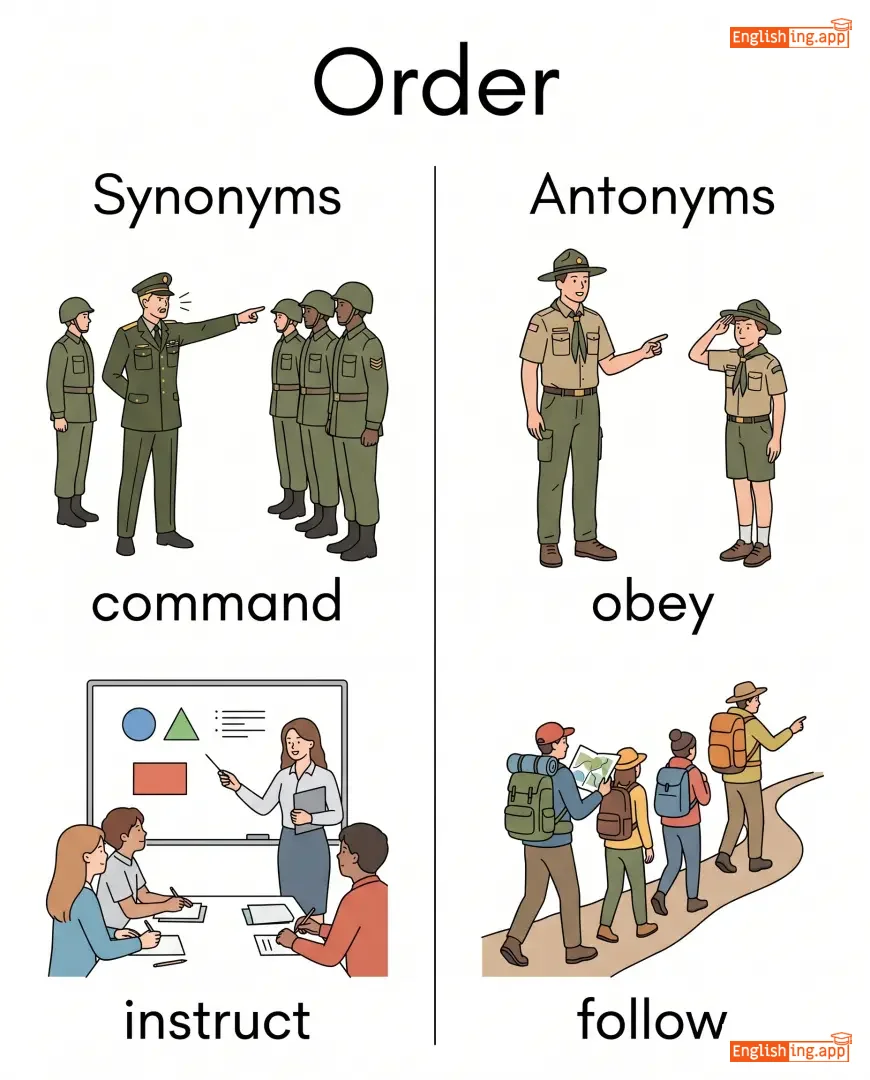
同義語
対義語
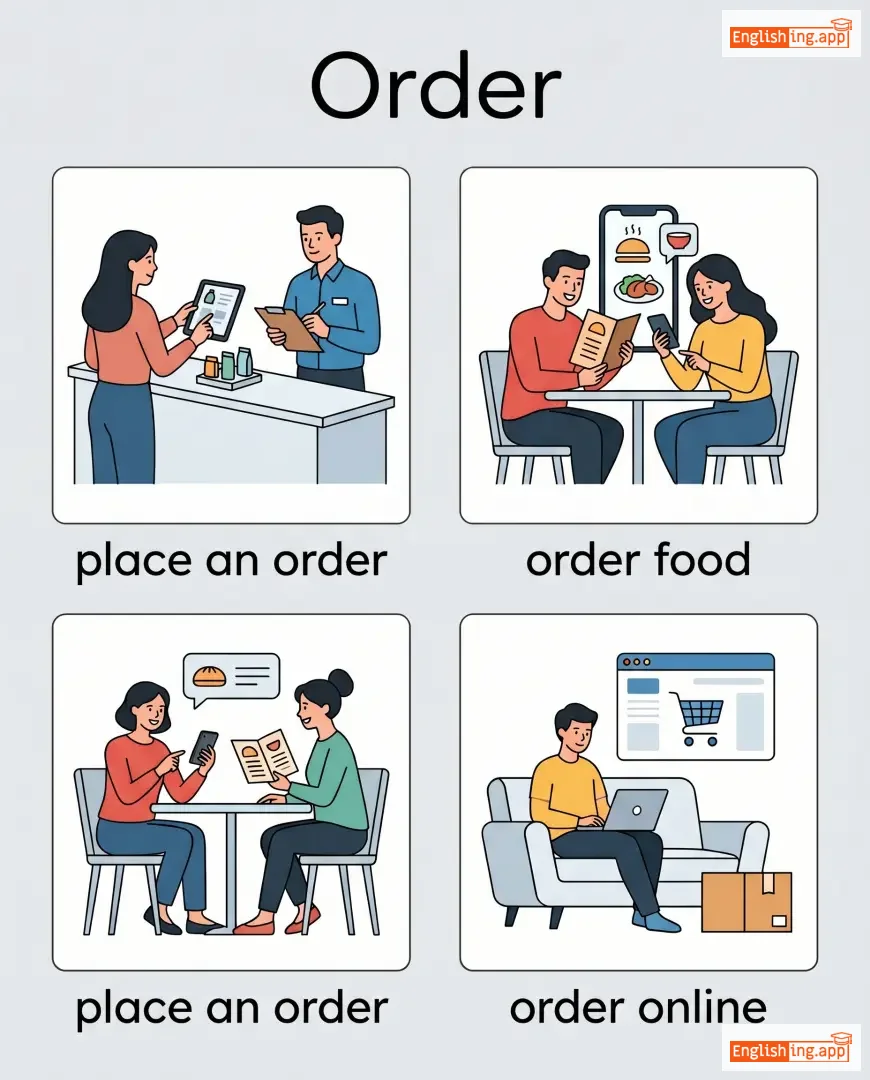
コロケーション
ニーモニック
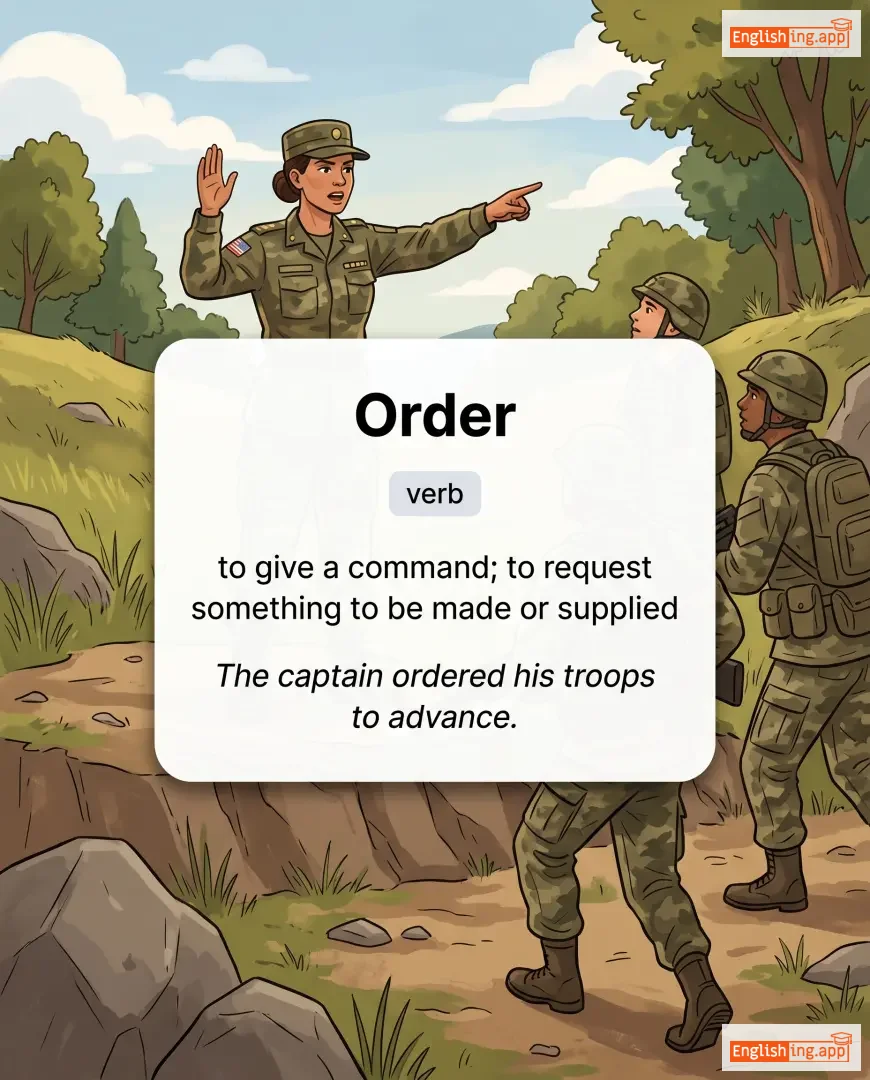
Swipe left or right, or use the buttons. Tap image to zoom.
例文の翻訳
単語
Lesson 50Lesson 50 - マスクトグル
|
絵文字
|
単語 | Images | 翻訳 | 意味 | 例文 | 例文の翻訳 | 同義語 | 対義語 | コロケーション | ニーモニック |
|---|---|---|---|---|---|---|---|---|---|---|
|
#981
📝
|
/ˈɔr.dər/
noun
(オーダー)
••••••
|
|
命令; 順序
meirei; junjo
••••••
|
a command or instruction; the arrangement of things following a particular sequence
••••••
|
The teacher gave an order to sit down quietly.
教師は静かに座るよう命じました。
••••••
|
教師は静かに座るよう命じました。
Kyoushi wa shizuka ni suwaru you meijimashita.
••••••
|
command, instruction, arrangement, sequence
••••••
|
chaos, disorder, confusion, anarchy
••••••
|
give order, follow order, in order
••••••
|
オーダーは指示です、静かに座る順序を思い出させます。
••••••
|
|
#982
🌿
|
/ˈoʊ.vər ɡroʊθ/
noun
(オーバーグロース)
••••••
|
- •••••• |
過剰成長
kajouseichou
••••••
|
excessive growth beyond normal size; too much development or expansion
••••••
|
The overgrowth of weeds made the garden look untidy.
雑草の過剰な繁茂が庭を乱雑に見せた。
••••••
|
雑草の過剰な繁茂が庭を乱雑に見せた。
zassounokajounahanmouganiwaoranzatsunimeseta
••••••
|
excessive growth, overgrowth, proliferation, expansion
••••••
|
undergrowth, stunted growth, reduction, decline
••••••
|
vegetation overgrowth, cancer overgrowth, prevent overgrowth
••••••
|
Imagine a garden sign saying OVER GROWTH towering over a tiny sprout, and the label 過剰成長 (kajouseichou) reminding you of excess growth
••••••
|
|
#983
🌅
|
/ˈɔr.i.ənt/
noun
(オリエント)
••••••
|
- •••••• |
東洋、特に東アジアの国々
touyou, tokuni higashi ajia no kuniguni
••••••
|
the East, especially countries of eastern Asia; to determine one's position or direction
••••••
|
Many spices come from the Orient. |
多くの香辛料がオリエントから来ています。
ooku no koushinryou ga orient kara kiteimasu.
••••••
|
East, eastern countries, Asia, Far East
••••••
|
Occident, West, western countries
••••••
|
Far Orient, Orient Express, orient oneself
••••••
|
オリエントから来る香辛料、東から
••••••
|
|
#984
🌊
|
/ˈoʊ.vər spɪl/
noun
(オーバースピル)
••••••
|
- •••••• |
オーバーフロー
ōbāfurō
••••••
|
the overflow of liquid from a container; excess that cannot be contained
••••••
|
The overspill from the river flooded nearby farms.
川の溢れが近くの農場を水浸しにした。
••••••
|
川の溢れが近くの農場を水浸しにした。
Kawa no afure ga chikaku no nōjō o mizushinishi ni shita.
••••••
|
overflow, spillage, excess, surplus
••••••
|
containment, shortage, deficit, underflow
••••••
|
water overspill, population overspill, prevent overspill
••••••
|
オーバーフローは液体が容器から溢れ出すこと、たとえば川の水が溢れて農場を浸水させることです。
••••••
|
|
#985
🌱
|
/ˈɔr.ə.ʒɪn/
noun
(オリジン)
••••••
|
- •••••• |
起源
kigen
••••••
|
the point or place where something begins, arises, or is derived; the source
••••••
|
Scientists are studying the origin of the universe. |
科学者たちは宇宙の起源を研究しています。
Kagakusha-tachi wa uchū no kigen o kenkyū shiteimasu.
••••••
|
source, beginning, start, root
••••••
|
end, conclusion, result, outcome
••••••
|
country of origin, origin story, trace origin
••••••
|
起源は何かの始まりを意味し、'origin'と似ています。
••••••
|
|
#986
💼
|
/ˈoʊ.nər/
noun
(ōnā)
••••••
|
- •••••• |
所有者
shoyūsha
••••••
|
a person who owns something; someone who has legal possession of property
••••••
|
The owner of the restaurant greeted us warmly. |
レストランの所有者は私たちを温かく迎え入れてくれました。
resutoran no shoyūsha wa watashitachi o atatakai kakeirete kuremashita.
••••••
|
proprietor, possessor, holder, landlord
••••••
|
tenant, renter, borrower, user
••••••
|
business owner, property owner, car owner
••••••
|
In Japanese, '所有者' means the one who owns, just like an 'owner'.
••••••
|
|
#987
✨
|
/əˌrɪʒ.əˈnæl.ə.ti/
noun
(オリジナリティ)
••••••
|
- •••••• |
独創性
dokusoosei
••••••
|
the quality of being novel or unusual; the ability to think independently and creatively
••••••
|
The artist's work showed great originality and creativity.
アーティストの作品は大きなオリジナリティとクリエイティビティを示した。
••••••
|
アーティストの作品は大きな独創性と創造性を示した。
aatisuto no sakuhin wa ookina dokusoosei to sozosei o shimeshita
••••••
|
creativity, innovation, novelty, uniqueness
••••••
|
imitation, copying, conventionality, conformity
••••••
|
show originality, lack originality, creative originality
••••••
|
‘Dokusoosei’ means being original—think of ‘do’ (unique) + ‘sosei’ (creation).
••••••
|
|
#988
🤝
|
/pækt/
noun
(パクト)
••••••
|
- •••••• |
協定; 契約
kyōtei; keiyaku
••••••
|
a formal agreement between individuals or parties; a treaty or contract
••••••
|
The two countries signed a peace pact to end the war. |
二国は戦争を終わらせるために平和協定に署名した。
Nikoku wa sensō o owaraseru tame ni heiwa kyōtei ni shomei shita.
••••••
|
agreement, treaty, contract, deal
••••••
|
disagreement, conflict, dispute, breach
••••••
|
peace pact, trade pact, sign pact
••••••
|
戦争を終わらせるための平和協定
••••••
|
|
#989
👶
|
/ˈɔr.fən/
noun
(オーファン)
••••••
|
- •••••• |
孤児
koji
••••••
|
a child whose parents are dead; someone without protective support
••••••
|
The orphan was adopted by a loving family. |
その孤児は愛情深い家族に養子として迎えられました。
sono koji wa aijou fukai kazoku ni youshi toshite mukaeraremashita.
••••••
|
foundling, waif, abandoned child
••••••
|
biological child, wanted child
••••••
|
adopt orphan, orphan child, care for orphan
••••••
|
愛情深い家族が孤児を迎え入れる。
••••••
|
|
#990
🌾
|
/ˈpæd.i/
noun
(パディ)
••••••
|
- •••••• |
未加工の米; 稲田
mikagou no kome; inada
••••••
|
rice in its natural state before processing; a field where rice is grown
••••••
|
The farmers worked hard in the paddy fields during harvest season. |
農家は収穫の季節に稲田で懸命に働きました。
nouka wa shuukaku no kisetsu ni inada de kenmei ni hatarakimashita.
••••••
|
rice field, rice paddy, rice cultivation
••••••
|
processed rice, milled rice
••••••
|
paddy field, paddy cultivation, paddy harvest
••••••
|
稲田での努力が豊作をもたらす
••••••
|
|
#991
🏠
|
/ˈɔr.fən.ɪʒ/
noun
(オーファネージ)
••••••
|
- •••••• |
孤児院
kojiin
••••••
|
an institution for the care and education of children who have lost their parents
••••••
|
The charity built a new orphanage for homeless children. |
チャリティーはホームレスの子供たちのために新しい孤児院を建てました。
Charitī wa hōmuresu no kodomotachi no tame ni atarashī kojiin o tatemashita.
••••••
|
children's home, foster home, care institution
••••••
|
family home, biological family
••••••
|
run orphanage, orphanage staff, children's orphanage
••••••
|
孤児院は親を失った子供たちに新しい家と愛を提供します。
••••••
|
|
#992
⛩️
|
/ˈpeɪ.ɡən/
noun
(パガン)
••••••
|
- •••••• |
異教徒
pagan
••••••
|
a person holding religious beliefs other than the main world religions; a heathen
••••••
|
Ancient Romans considered early Christians to be pagans.
kodai roomajin wa shoki no kirisuto-kyouto o ikyouto da to minashite ita.
••••••
|
古代ローマ人は初期のキリスト教徒を異教徒だとみなしていた。
kodai roomajin wa shoki no kirisuto-kyouto o ikyouto da to minashite ita.
••••••
|
heathen, non-believer, idolater, infidel
••••••
|
believer, Christian, Muslim, religious person
••••••
|
pagan rituals, pagan beliefs, ancient pagan
••••••
|
Pa-Ga-N: Pa は パ, Ga は ガ, N は ン; gates of many gods につながる道を思い描き、そこを通る人が 異教徒
••••••
|
|
#993
🚨
|
/ˈaʊt.breɪk/
noun
(アウトブレーク)
••••••
|
- •••••• |
発生
autobureeku
••••••
|
a sudden occurrence or eruption of something, especially disease or violence
••••••
|
The outbreak of flu affected many students in the school.
インフルエンザの流行は学校の多くの生徒に影響を与えた。
••••••
|
インフルエンザの流行は学校の多くの生徒に影響を与えた。
infuruenza no ryuukou wa gakkou no ooku no seito ni eikyou wo ataeta
••••••
|
eruption, epidemic, flare-up, onset
••••••
|
containment, control, suppression, end
••••••
|
disease outbreak, outbreak of violence, contain outbreak
••••••
|
OUT + BREAK の合体イメージ アウトブレーク は 外へ出るときに BREAK が起こると考えると 発生 の意味を思い出せる
••••••
|
|
#994
😢
|
/peɪn/
noun
(pein)
••••••
|
- •••••• |
痛み; 体の苦しみや感情的な苦痛
itami; karada no kurushimi ya kanjōteki na kutsū
••••••
|
physical suffering or discomfort; mental or emotional distress
••••••
|
The patient felt severe pain in his back.
患者は背中にひどい痛みを感じました。
••••••
|
患者は背中にひどい痛みを感じました。
Kanja wa senaka ni hidoi itami o kanjimashita.
••••••
|
ache, suffering, agony, discomfort
••••••
|
pleasure, comfort, relief, ease
••••••
|
severe pain, chronic pain, feel pain
••••••
|
‘Pain’ という言葉を日本語で '痛み' と覚えましょう。
••••••
|
|
#995
🏆
|
/ˈaʊt.kʌm/
noun
(autokamu)
••••••
|
- •••••• |
結果; 結末;
kekka; ketsumatsu
••••••
|
the result or consequence of an action or situation; the final product
••••••
|
The outcome of the election surprised everyone.
選挙の結果は皆を驚かせました。
••••••
|
選挙の結果は皆を驚かせました。
Senki no kekka wa mina o odorokasemashita.
••••••
|
result, consequence, conclusion, end result
••••••
|
beginning, cause, input, start
••••••
|
positive outcome, final outcome, predict outcome
••••••
|
結果 = 最後の結果
••••••
|
|
#996
👅
|
/ˈpæl.ət/
noun
(パレット)
••••••
|
- •••••• |
口蓋; 味を区別する能力
kōgai; aji o kubetsu suru nōryoku
••••••
|
the roof of the mouth; a person's ability to distinguish between different flavors
••••••
|
The chef created dishes to please every palate. |
シェフはすべての味覚を満足させる料理を作りました。
shefu wa subete no mikaku o manzoku saseru ryōri o tsukurimashita.
••••••
|
taste, flavor sense, roof of mouth
••••••
|
tastelessness, flavor blindness
••••••
|
refined palate, develop palate, please palate
••••••
|
口蓋 (kōgai) で味が広がり、料理の芸術が生まれる。
••••••
|
|
#997
🗺️
|
/ˈaʊt.laɪn/
noun
(アウトライン)
••••••
|
- •••••• |
アウトライン; 概要; 計画
autolain; gaiyō; keikaku
••••••
|
a general description or plan showing the essential features of something; the main points
••••••
|
The teacher provided an outline of the course syllabus. |
先生はコースのアウトラインを提供しました。
Sensei wa kōsu no autolain o teikyō shimashita.
••••••
|
summary, plan, draft, framework
••••••
|
detail, elaboration, full content
••••••
|
course outline, project outline, detailed outline
••••••
|
アウトラインは、簡単に内容を理解するための計画です。
••••••
|
|
#998
⚰️
|
/pɔl/
noun
(ポール)
••••••
|
- •••••• |
棺の上に広げる布; 陰鬱な雰囲気を作り出す暗いカバー
kutsu no ue ni hirogeru nuno; in'utsu na fun'iki o tsukuridasu kurai kabā
••••••
|
a cloth spread over a coffin; a dark covering that creates a gloomy atmosphere
••••••
|
A pall of smoke hung over the burning building. |
煙のヴェールが燃える建物の上に掛かっていた。
Kemuri no vēru ga moeru tatemono no ue ni kakatte ita.
••••••
|
shroud, covering, cloak, veil
••••••
|
brightness, clarity, openness, light
••••••
|
pall of smoke, funeral pall, cast pall
••••••
|
ポールは棺の上に広がる暗い布で、全てを覆い隠す煙のように雰囲気を作り出します。
••••••
|
|
#999
🚫
|
/ˈaʊt.saɪ.dər/
noun
(アウトサイダー)
••••••
|
- •••••• |
アウトサイダー
autosaidā
••••••
|
a person who does not belong to a particular group; someone not accepted by a group
••••••
|
As an outsider, he found it difficult to understand their traditions.
アウトサイダーとして、彼は彼らの伝統を理解するのが難しいと感じました。
••••••
|
アウトサイダーとして、彼は彼らの伝統を理解するのが難しいと感じました。
Autosaidā to shite, kare wa karera no dentō o rikai suru no ga muzukashī to kanjimashita.
••••••
|
stranger, foreigner, alien, newcomer
••••••
|
insider, member, local, native
••••••
|
complete outsider, political outsider, remain outsider
••••••
|
アウトサイダーが伝統を理解するのは難しい
••••••
|
|
#1000
💓
|
/ˌpæl.pɪˈteɪ.ʃən/
noun
(パルピテーション)
••••••
|
- •••••• |
興奮や医学的状態による顕著な速く、強い、または不規則な心拍
koufun ya igakuteki joutai ni yoru kencho na hayaku, tsuyoi, matawa fukisoku na shinpaku
••••••
|
a noticeably rapid, strong, or irregular heartbeat due to agitation or medical condition
••••••
|
She experienced palpitations before her job interview. |
彼女は面接前にパルピテーションを感じました。
Kanojo wa mensetsu mae ni parupitēshon o kanjimashita.
••••••
|
rapid heartbeat, heart flutter, irregular pulse
••••••
|
normal heartbeat, steady pulse, calm heart
••••••
|
heart palpitations, experience palpitations, cause palpitations
••••••
|
パルピテーション (palpitation) = パル (pal) + ピテーション (pit) = 面接前に心拍が速くなる
••••••
|
Vocabulary Quiz
Test your vocabulary by matching words with their translations or meanings.
Login to take the quiz
Comments (0)
Share your thoughts and join the discussion.
Join the discussion by logging in
Login to CommentNo comments yet
Be the first to share your thoughts!