

翻訳
過去
過去分詞
三人称単数
動名詞
意味
例文
例文の翻訳
同義語
対義語
コロケーション
ニーモニック

Swipe left or right, or use the buttons. Tap image to zoom.
例文の翻訳
単語
Lesson 7Lesson 7 - マスクトグル
|
絵文字
|
単語 | Images | 翻訳 | 意味 | 例文 | 例文の翻訳 | 同義語 | 対義語 | コロケーション | ニーモニック |
|---|---|---|---|---|---|---|---|---|---|---|
|
#121
🧱
|
/ˈbrɪk.bæt/
noun
(ブリックバット)
••••••
|
- •••••• |
レンガの破片; 厳しい批判または非難
renga no hahen; kibishii hihan matawa hinan
••••••
|
a piece of brick, especially one used as a missile; harsh criticism or censure
••••••
|
The angry protesters threw brickbats at the building windows. |
怒った抗議者たちは建物の窓にレンガの破片を投げた。
Okotta kougisha-tachi wa tatemono no mado ni renga no hahen wo nageta.
••••••
|
missile, projectile, criticism, censure
••••••
|
praise, compliment, support
••••••
|
throw brickbats, face brickbats, verbal brickbats
••••••
|
レンガを投げながら厳しく批判するイメージ
••••••
|
|
#122
📦
|
/bʌlk/
noun
(バルク)
••••••
|
- •••••• |
塊; 大部分;
katamari, daibubun
••••••
|
the mass or size of something large; the greater part or majority of something
••••••
|
The bulk of the work was completed before the deadline. |
仕事の大部分は締め切り前に終わりました。
Shigoto no daibubun wa shimekiri mae ni owarimashita.
••••••
|
majority, mass, volume, size
••••••
|
minority, small part, fraction
••••••
|
bulk of work, in bulk, bulk purchase
••••••
|
Bulkは大きな塊、例えば仕事の大部分が完了すること.
••••••
|
|
#123
🪣
|
/ˈbʌk.ɪt/
noun
(バケツ)
••••••
|
- •••••• |
バケツ
baketsu
••••••
|
a roughly cylindrical open container with a handle, used to hold and carry liquids
••••••
|
The farmer filled the bucket with fresh water from the well. |
農夫は井戸から新鮮な水でバケツを満たしました。
Nōfu wa ido kara shinsen na mizu de baketsu o mitashimashita.
••••••
|
pail, container, vessel
••••••
|
cup, small container
••••••
|
water bucket, metal bucket, fill bucket
••••••
|
Baketsu is used to carry liquids, just like a bucket.
••••••
|
|
#124
🧹
|
/brum/
noun
(ブルーム)
••••••
|
- •••••• |
ほうき
houki
••••••
|
a long-handled brush of bristles or twigs, used for sweeping
••••••
|
She used an old broom to sweep the fallen leaves from the porch.
彼女は古いほうきを使って、ポーチから落ちた葉を掃きました。
••••••
|
彼女は古いほうきを使って、ポーチから落ちた葉を掃きました。
Kanojo wa furui houki o tsukatte, pōchi kara ochita ha o hakimashita.
••••••
|
brush, sweeper, besom
••••••
|
vacuum cleaner, mop
••••••
|
old broom, sweep with broom, new broom
••••••
|
ほうきで掃除する、掃き方がきれいなほうきで清掃を!
••••••
|
|
#125
🎩
|
/brɪm/
noun
(ブリム)
••••••
|
- •••••• |
縁; ヘリ
fuchi,heri
••••••
|
the projecting edge of a hat; the edge or lip of something
••••••
|
The wide brim of his hat protected him from the scorching sun. |
彼の帽子の広い縁は彼を焼けつくような太陽から守ってくれた。
Kare no boushi no hiroi fuchi wa kare o yaketsuku you na taiyou kara mamotte kureta.
••••••
|
edge, rim, border, margin
••••••
|
center, middle, interior
••••••
|
hat brim, wide brim, cup brim
••••••
|
ブリム (brim) は帽子の縁で日差しから守ってくれます。
••••••
|
|
#126
📄
|
/brif/
noun
(ブリーフ)
••••••
|
- •••••• |
簡潔な; 短い
kanketsuna, mijikai
••••••
|
a concise statement of the facts; a set of instructions given to a person about a job or task
••••••
|
The lawyer received a detailed brief about the upcoming court case.
弁護士は次の裁判に関する詳細なブリーフを受け取った。
••••••
|
弁護士は次の裁判についての詳細なブリーフを受け取った。
bengoshi wa tsugi no saiban ni tsuite no shōsai na burīfu o uketotta.
••••••
|
summary, outline, synopsis, instructions
••••••
|
detailed report, lengthy document
••••••
|
legal brief, detailed brief, brief summary
••••••
|
ブリーフ (brief) は簡潔で短い説明です。
••••••
|
|
#127
🐎
|
/ˈbraɪ.dəl/
noun
(ブライドル)
••••••
|
- •••••• |
手綱; 騎馬用具
tazuna, kiba yougu
••••••
|
the headgear used to control a horse, consisting of buckled straps and a bit
••••••
|
The rider adjusted the horse's bridle before mounting for the race.
騎手はレースの前に馬の手綱を調整した。
••••••
|
騎手はレースの前に馬の手綱を調整した。
Kishū wa rēsu no mae ni uma no tazuna o chōsei shita.
••••••
|
harness, reins, headgear, restraint
••••••
|
freedom, liberty
••••••
|
horse bridle, leather bridle, pull bridle
••••••
|
馬の手綱を調整するように、結婚式で新婦のドレスを調整する
••••••
|
|
#128
🌉
|
/brɪdʒ/
noun
(burijji)
••••••
|
- •••••• |
橋
kyo
••••••
|
a structure carrying a road, path, railway, etc. across a river, road, or other obstacle
••••••
|
The old stone bridge has connected the two towns for over a century. |
古い石橋は1世紀以上にわたって二つの町を結びつけてきました。
Furui ishibashi wa 1 seiki ijou ni watatte futatsu no machi o musubitsukete kimashita.
••••••
|
span, crossing, overpass, viaduct
••••••
|
barrier, obstacle, gap
••••••
|
stone bridge, suspension bridge, cross bridge
••••••
|
橋 - 二つの場所をつなぐ構造物
••••••
|
|
#129
🤵
|
/ˈbraɪd.ɡrʊm/
noun
(braidgrum)
••••••
|
- •••••• |
新郎
shinrou
••••••
|
a man on his wedding day or just before and after the event
••••••
|
The nervous bridegroom waited at the altar for his bride to arrive.
緊張した新郎は祭壇で花嫁の到着を待っていた。
••••••
|
緊張した新郎は祭壇で花嫁の到着を待っていた。
Kinchou shita shinrou wa saidan de hanayome no touchaku o matte ita.
••••••
|
groom, husband-to-be, betrothed
••••••
|
bride
••••••
|
nervous bridegroom, handsome bridegroom, bride and bridegroom
••••••
|
新郎は結婚式の前にいつも緊張しています。
••••••
|
|
#130
👰
|
/braɪd/
noun
(braɪd)
••••••
|
- •••••• |
花嫁
hanayome
••••••
|
a woman on her wedding day or just before and after the event
••••••
|
The beautiful bride walked down the aisle in her white wedding dress.
美しい花嫁は白いウェディングドレスを着て通路を歩いた。
••••••
|
美しい花嫁は白いウェディングドレスを着て通路を歩いた。
Utsukushii hanayome wa shiroi wedingudoresu o kite tsūro o aruita.
••••••
|
newlywed, wife-to-be, betrothed
••••••
|
groom, bridegroom
••••••
|
beautiful bride, blushing bride, bride and groom
••••••
|
In Japanese, '花嫁' refers to the bride, who makes her way down the aisle in a beautiful wedding dress.
••••••
|
|
#131
😡
|
/bʊr/
noun
(ブール)
••••••
|
- •••••• |
野蛮人; 無礼な人
yabanjin, burei na hito
••••••
|
a rough and bad-mannered person; someone who lacks refinement or culture
••••••
|
The wealthy businessman was actually a boor who showed no respect for others. |
その裕福なビジネスマンは実際には他の人々に対して敬意を示さなかった野蛮人でした。
sono yūfukuna bijinesuman wa jissai ni wa hoka no hitobito ni taishite keii o shimesanakkatta yabanjin deshita
••••••
|
lout, oaf, barbarian, philistine
••••••
|
gentleman, sophisticate, cultured person
••••••
|
complete boor, ignorant boor, ill-mannered boor
••••••
|
Boor – 他の人を尊敬しない野蛮人のようなもの
••••••
|
|
#132
💰
|
/braɪb/
noun
(ブライブ)
••••••
|
- •••••• |
賄賂
wairo
••••••
|
a sum of money or something valuable given to someone to persuade them to do something dishonest or illegal
••••••
|
The corrupt official was caught accepting a bribe from the construction company.
その腐敗した役人は建設会社からの賄賂を受け取っているところを捕まえられました。
••••••
|
その腐敗した役人は建設会社からの賄賂を受け取っているところを捕まえられました。
sono fuhai shita yakunin wa kensetsu kaisha kara no wairo o uketotte iru tokoro o tsukamaeraremashita.
••••••
|
payoff, kickback, hush money, graft
••••••
|
honesty, integrity, fairness
••••••
|
take bribe, offer bribe, accept bribe
••••••
|
賄賂は違法であり、避けるべきです。
••••••
|
|
#133
🍃
|
/briz/
noun
(breeze)
••••••
|
- •••••• |
そよ風
soyokaze
••••••
|
a gentle wind; something that is achieved with ease
••••••
|
The cool ocean breeze made the hot summer day more pleasant. |
涼しい海のそよ風が暑い夏の日をもっと快適にしました。
suzushii umi no soyokaze ga atsui natsu no hi wo motto kaiteki ni shimashita.
••••••
|
wind, draft, gust, air current
••••••
|
storm, gale, hurricane
••••••
|
gentle breeze, cool breeze, ocean breeze
••••••
|
そよ風のように軽やかで楽に感じる風のような存在。
••••••
|
|
#134
🦁
|
/ˈbreɪ.vər.i/
noun
(ブレイヴェリー)
••••••
|
|
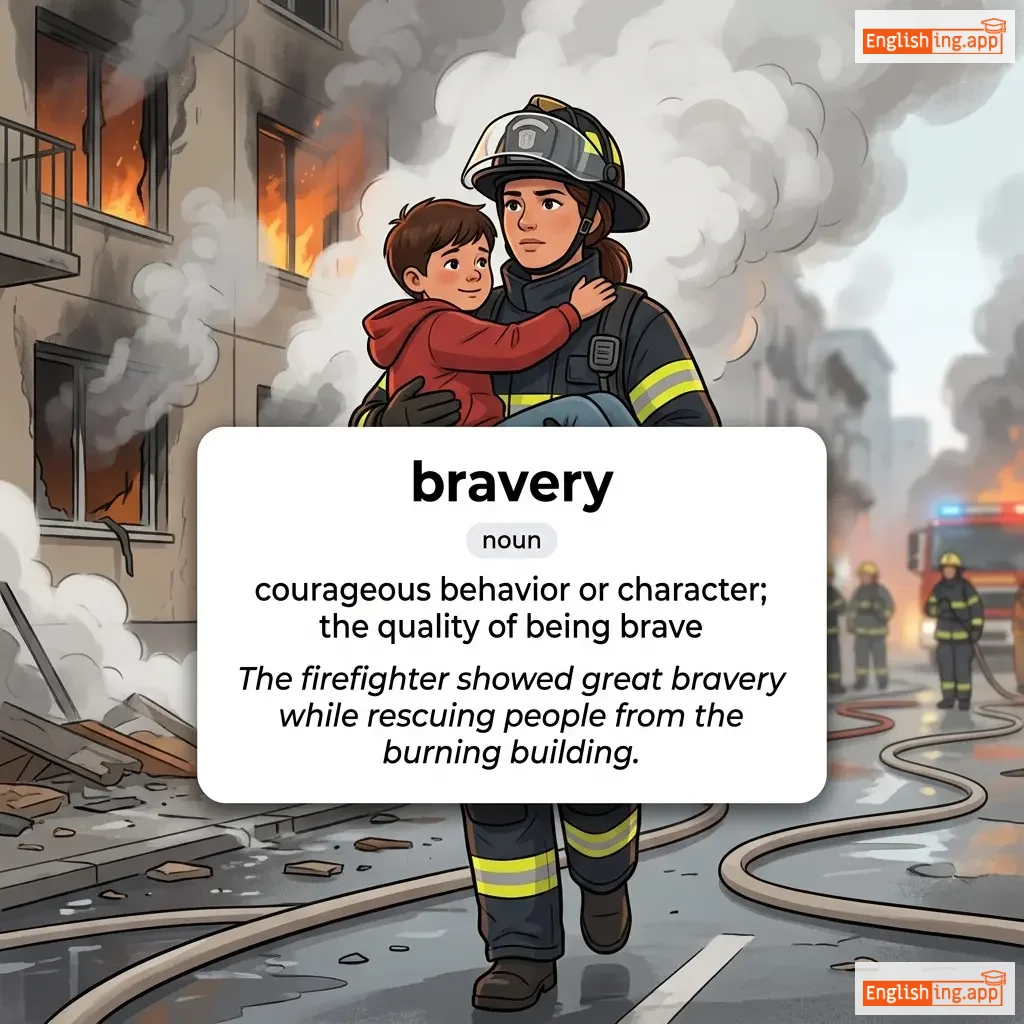
勇気
yūki
••••••
|
courageous behavior or character; the quality of being brave
••••••
|
The firefighter showed great bravery while rescuing people from the burning building. |
消防士は燃えている建物から人々を救出する際に大きな勇気を示しました。
Shōbōshi wa moete iru tatemono kara hitobito o kyūshutsu suru sai ni ōkina yūki o shimeshimasita.
••••••
|
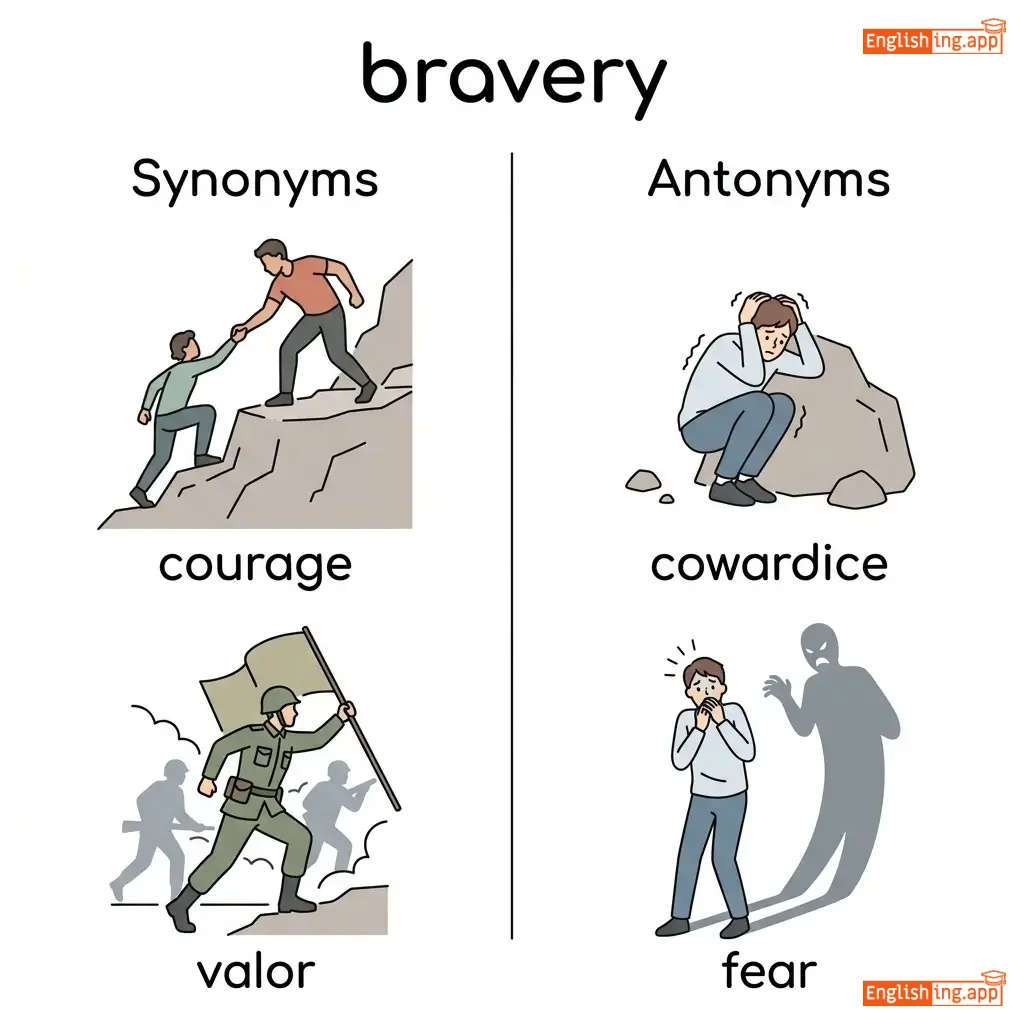
courage, valor, heroism, gallantry
••••••
|
cowardice, fear, timidity
••••••
|
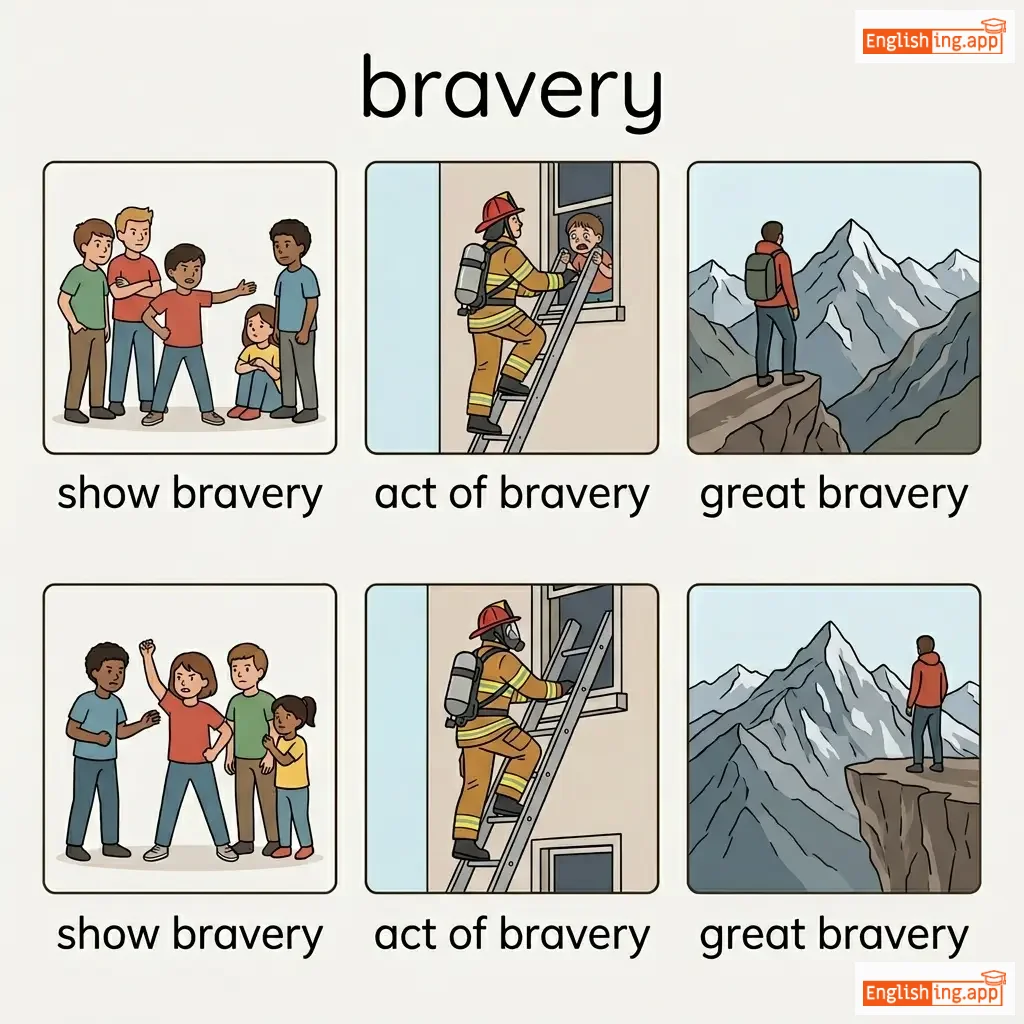
show bravery, act of bravery, great bravery
••••••
|
Bravery is about showing courage under extreme situations, like a firefighter.
••••••
|
|
#135
🧠
|
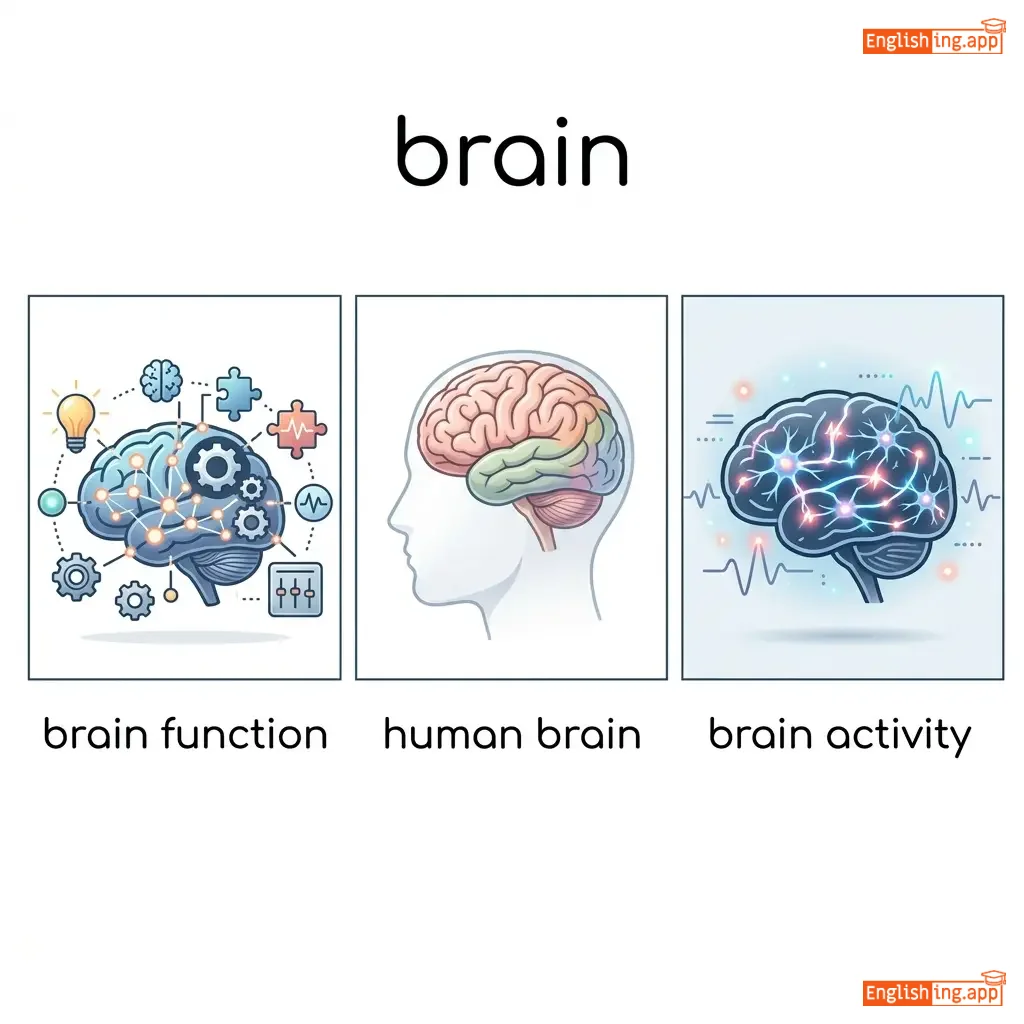
/breɪn/
noun
(bren)
••••••
|
|
脳
nō
••••••
|
an organ of soft nervous tissue contained in the skull of vertebrates, functioning as the coordinating center of sensation and intellectual activity
••••••
|
The human brain is capable of processing incredible amounts of information. |
人間の脳は信じられないほどの情報を処理できます。
Ningen no nō wa shinjirarenai hodo no jōhō o shori dekimasu.
••••••
|
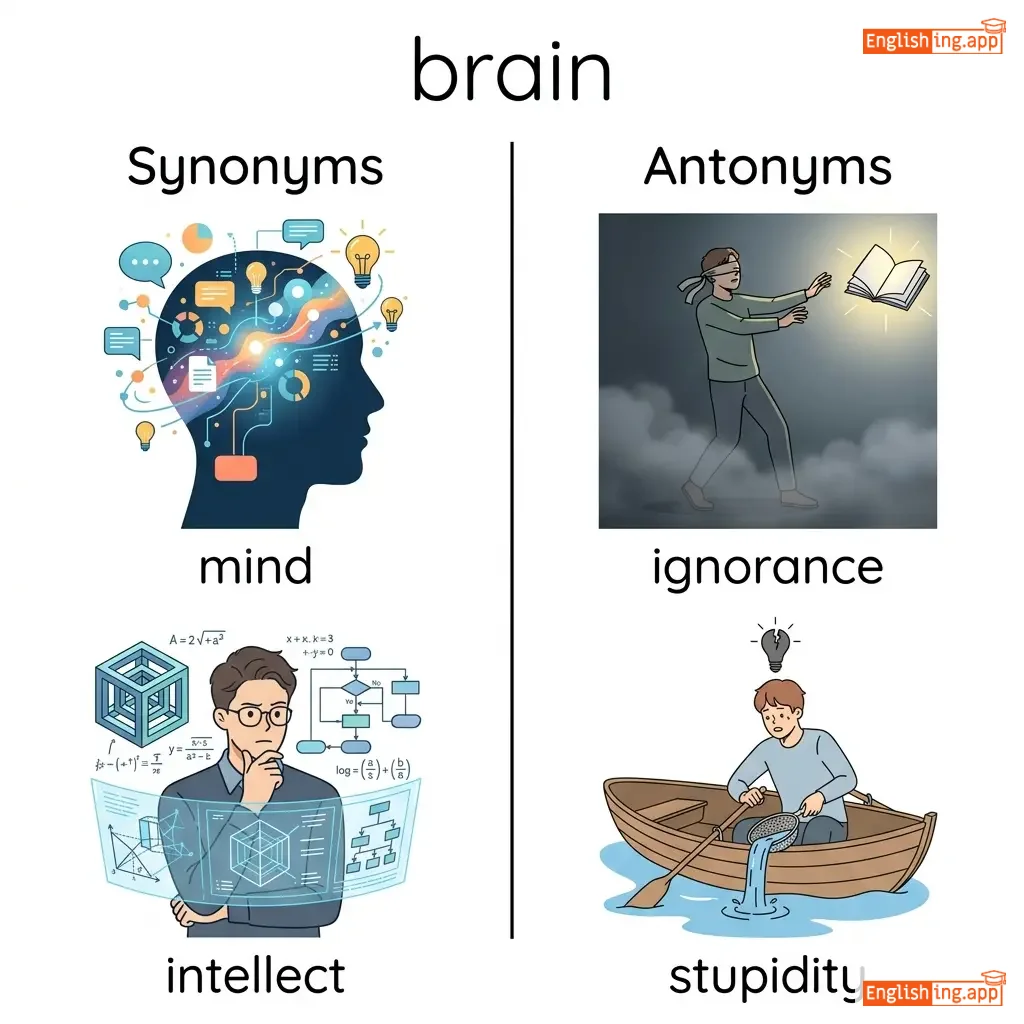
mind, intellect, cerebrum, grey matter
••••••
|
brawn, muscle, body
••••••
|
human brain, brain power, brain function
••••••
|
脳(nō)を使って頭を良くする
••••••
|
|
#136
🍲
|
/boʊl/
noun
(ボウル)
••••••
|
- •••••• |
ボウル
booru
••••••
|
a round, deep dish or basin used for food or liquid
••••••
|
She served the soup in a large ceramic bowl.
彼女は大きな陶器のボウルにスープを盛った。
••••••
|
彼女は大きな陶器のボウルにスープを盛った。
Kanojo wa ookina touki no booru ni suupu o motta.
••••••
|
dish, basin, container, vessel
••••••
|
plate, flat surface
••••••
|
soup bowl, mixing bowl, cereal bowl
••••••
|
ボウルは食べ物や液体を入れるための容器です。
••••••
|
|
#137
🥊
|
/baʊt/
noun
(バウト)
••••••
|
- •••••• |
試合; ラウンド; 時期;
shiai, raundo, jiki
••••••
|
a short period of intense activity of a specified kind; a wrestling or boxing match
••••••
|
After a bout of illness, she finally recovered and returned to work. |
病気の一段落後、彼女はついに回復し、仕事に戻りました。
byouki no ichidannraku go, kanojo wa tsuini kaifuku shi, shigoto ni modorimashita
••••••
|
episode, spell, attack, period
••••••
|
calm period, stability, wellness
••••••
|
bout of illness, wrestling bout, drinking bout
••••••
|
No •••••• |
|
#138
💐
|
/buˈkeɪ/
noun
(ブーケ)
••••••
|
- •••••• |
花束
hanataba
••••••
|
an attractively arranged bunch of flowers, especially one presented as a gift or carried at a ceremony
••••••
|
The bride carried a beautiful bouquet of white roses down the aisle. |
花嫁は白いバラの美しい花束を持って歩きました。
Hanayome wa shiroi bara no utsukushī hanataba o motte arukimashita.
••••••
|
bunch, arrangement, posy, spray
••••••
|
single flower, wilted flowers
••••••
|
bridal bouquet, flower bouquet, wedding bouquet
••••••
|
花束は結婚式や特別な日によく使われる美しい花の束です。
••••••
|
|
#139
🔽
|
/ˈbɑt.əm/
noun
(ボトム)
••••••
|
- •••••• |
底; 最下部
soko; saikabu
••••••
|
the lowest point or part of something; the ground under a body of water
••••••
|
The treasure chest was lying at the bottom of the ocean.
宝物の箱は海の底にあった。
••••••
|
宝物の箱は海の底にあった。
Takaramono no hako wa umi no soko ni atta.
••••••
|
base, floor, foundation, depths
••••••
|
top, summit, peak, surface
••••••
|
rock bottom, bottom line, from bottom to top
••••••
|
底 = 最も下にあるもの。
••••••
|
|
#140
🏴
|
/ˈbɔr.dər/
noun
(ボーダー)
••••••
|
- •••••• |
国境
kokkyou
••••••
|
a line separating two political or geographical areas, especially countries
••••••
|
They crossed the border between France and Spain by train. |
彼らは電車でフランスとスペインの間の国境を越えました。
Karera wa densha de Furansu to Supein no aida no kokkyou wo koemashita.
••••••
|
boundary, frontier, edge, perimeter
••••••
|
center, interior, middle
••••••
|
cross border, international border, border control
••••••
|
国境は2つの国を分けるライン
••••••
|
Vocabulary Quiz
Test your vocabulary by matching words with their translations or meanings.
Login to take the quiz
Comments (0)
Share your thoughts and join the discussion.
Join the discussion by logging in
Login to CommentNo comments yet
Be the first to share your thoughts!